Graduate Theses and Dissertations
2017
Developing Teacher Capacity with Culturally
Responsive Classroom Management Practices
Sarah PhillipsFollow this and additional works at:http://pilotscholars.up.edu/etd Part of theEducation Commons
This Doctoral Dissertation is brought to you for free and open access by Pilot Scholars. It has been accepted for inclusion in Graduate Theses and Dissertations by an authorized administrator of Pilot Scholars. For more information, please [email protected].
Recommended Citation
Phillips, Sarah, "Developing Teacher Capacity with Culturally Responsive Classroom Management Practices" (2017).Graduate Theses and Dissertations. 22.
Developing Teacher Capacity with Culturally Responsive Classroom Management Practices
by Sarah Phillips
A dissertation submitted in partial fulfillment of the requirements for the degree of
Doctor of Education in
Learning and Leading University of Portland School of Education
Abstract
As elementary classrooms are becoming more diverse, school staffs remain predominantly White, with a perspective of mainstream sociocultural norms. Additionally, research has shown a disproportionate number of minority students receiving behavioral referrals. The cultural mismatch between teachers and students combined with the disproportionality seen in discipline data indicate that change is needed. The purpose of this quantitative study is to investigate the development of educators’ capacity to foster their own identity development and use culturally responsive classroom management practices that meet the needs of diverse students through a series of professional learning experiences. Additionally, this study will examine the relationship between educator self-reported perceptions of their capacity to meet the needs of diverse students and the number of discipline referrals retrieved from School-Wide Information System (SWIS). The study included 35 certified staff members from a Pre-K through fifth grade elementary school in Oregon. Pre- and post-survey data were collected using the Teacher Multicultural Attitude Survey (TMAS) and the Survey of Behaviour Management Practices (SOBMP). A paired-sample t-test indicated a statistically significantly higher mean scores on the post TMAS (p = .036). A Pearson’s r indicated there was not a statistically significant relationship at the p < .05 probability level between the number of disciplinary
the SOBMP for those who participated in the Circles book study than those who did not (p = .037). These findings supported the importance of understanding how
privilege and bias impact how individuals interact with others and how learning about other cultures can change how a person then interacts with/or understands those different than himself. Additionally, it highlighted the effectiveness of the Circles book study on increasing capacity for culturally responsive classroom management practices. A lack of findings in regard to the relationship between behavioral referrals and a change in teacher capacity could be due to the length of the study. Additional results, opportunities for future study, and program recommendations are presented.
Acknowledgements
Without the guidance of my chair and committee members, openness of the study school administrator and teachers, and support my family, I would never have been able to complete my dissertation.
I would like to express my deepest gratitude for my chair, Dr. Jacqueline Waggoner. I would have not begun this journey without her encouragement and support. Her patience, kind words, and guidance throughout the dissertation process made my research possible. Additionally, I would like to thank my committee
members, Dr. Richard Christen and Dr. Hillary Merk. I greatly appreciate the support and feedback they have provided me the past three years. Their expert knowledge in the area of culturally responsive practices ensured that my dissertation accurately reflected the field of CRCM. The topics covered my first semester with Dr. Christen led me to identifying a need for culturally responsive practices in schools and a desire to investigate the impact that professional learning in this area would have on teachers and students.
I would also like to express my gratitude for the administrator and teachers at the study school. Without the support and flexibility of the administrator, this study would not have been possible. He ensured that I had the time and space to provide professional learning on culturally responsive practices to the staff and was
the openness of the staff in sharing their opinions and beliefs, especially when the conversations were difficult. They were flexible to try new classroom management practices and reflective about the implementation process. Their commitment to the process made this study possible.
Finally, I would like to thank my family. They were there to cheer me on throughout the process. They provided me space to work and words of encouragement when I was feeling discouraged or overwhelmed. They were there to listen when I needed to talk through my ideas. Completing this dissertation would not have been possible without strong family support and guidance.
Dedication
For my children, Alex, Nickolas, and Makayla, I could not have done this without your love and support. My hope is that one day, you too, will reach for your dreams and know that anything is possible. I love you all to the moon and back.
Table of Contents
Abstract………..iii
Acknowledgements……….v
Dedication……….vii
List of Tables……….xi
List of Figures………..xii
Chapter I: Introduction………....1
Purpose of the Study………...3
Research Questions……….4
Summary of the Research Design………...4
Significance of the Study………5
Theoretical/Conceptual Framework………7
Operational Definitions………...8
Summary………...10
Chapter II: Literature Review………...11
Overview………...11
Identity Development………12
Adult Learning………..21
My Contribution to the Literature……….37
Chapter III: Methodology………...39
Research Questions………...39
Rationale for Methodology………...40
Participants and Setting……….41
Design and Procedure………...44
Instruments………50
Teacher Multicultural Attitude Survey (TMAS)………..50
Survey of Behaviour Management Practices (SOBMP)………...52
School-Wide Information System (SWIS)………...53
Ethical Considerations………..54
Data Analysis………54
Limitations………56
Summary………...58
Chapter IV: Results………...60
Research Questions………...60
Data Analysis for Cultural Competence………...63
Data Analysis for Culturally Responsive Classroom Management Practices……….68
Data Analysis for Disciplinary Referrals………..71
Chapter V: Conclusions………74
Change in Cultural Competencies……….74
Change in Culturally Responsive Classroom Management Practices………..79
Change in Disciplinary Referrals………..86
Role of Limitations………...87
Implications and Recommendations……….88
Future Research……….91
Summary………...92
List of Tables
Table Page
Table 1: Professional Learning Experiences by Month………45
Table 2: Data Analysis Tests Calculated for Data Sets……….56
Table 3: Statistics of Survey Data……….62
Table 4: Participant Scores on Teacher Multicultural Attitude Survey………64
Table 5: Participant Scores on Survey of Behaviour Management Practices Based on Participation in Book Study………...69
List of Figures
Figure Page
Figure 1: The critical elements of teacher capacity………9
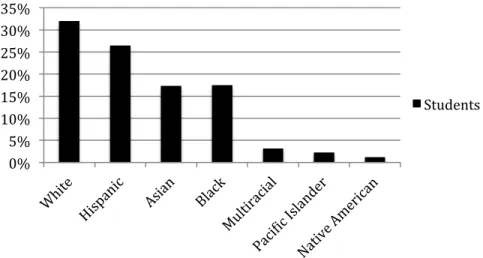
Figure 2: The ethnicity distribution of students………42
Figure 3: Participant roles……….42
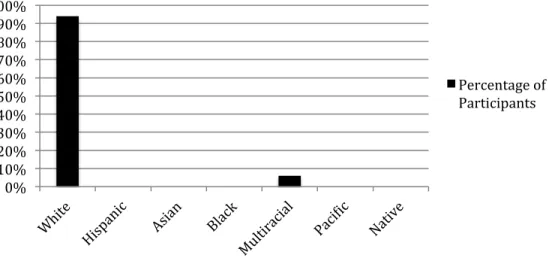
Figure 4: The ethnic distribution of participants………...43
Figure 5: Years of experience for study participants………43
Figure 6: Scores on the pre-TMAS………...62
Figure 7: Scores on the post TMAS………..62
Figure 8: Scores on the pre-SOBMP……….63
Figure 9: Scores on the post SOBMP………...63
Chapter I: Introduction
As elementary classrooms are becoming more diverse, school staffs remain predominantly White, with a perspective of mainstream sociocultural norms.
According to a 2014 report from the Center for American Progress, almost half of the public school population is made up of students of color, while the teaching profession is 18% teachers of color. This divide has grown by 3% in the past three years. Based on this same report, the statistics for Oregon show percentages for teachers of color and students of color to be slightly lower than the national average. Oregon’s teaching profession is 11% teachers of color, while 34% of the student population is made up of students of color. The diversity index for Oregon, which looks at the demographic differences between teacher and student populations, is 22. The National diversity index is 30. Ullucci (2011) posited that this cultural mismatch between teachers and students requires thoughtful study.
While schools are believed to be less segregated now than 30 years ago, the opposite is actually true. Schools went through a period of resegregation, and education was not equal for all students. Stroub and Richards (2013) posited that segregation in schools increased throughout the 1990s, especially in the South. Segregation was worsening for Blacks and Hispanics, and in the mid 1990s Black students were more segregated than they were in the early 1970s. Further, desegration orders have been removed in the 21st century, which may have facilitated the
resegregation occurring in schools. However, Stroub and Richards have found that by 2009, segregation in schools had begun to decline. The segregation of Black students has declined more rapidly than that of Hispanic students, though. Hispanic students
were 4.8% more segregated from White students in 2009 than in 1993. Kozol (2005) explained that students in the poorest and most segregated sections of cities are becoming more isolated. These disadvantaged students often feel hidden and
unvalued. The gentrification of neighborhoods is further contributing to these issues of segregation.
At the same time, research has shown a disproportionate number of minority students receiving behavioral referrals or being suspended. In 2014, the U.S.
Department of Education Office for Civil Rights reported that 16% of Black students are suspended, compared to 5% of White students. A 2013 report from the ACLU shows that 3% of Oregon’s student population is composed of Black students, while 7% of all out-of-school suspensions are received by Black students. A 2012 report from the Multnomah County Commission on Children, Families & Community found that in Multnomah County, 23 out of every 100 students of color are excluded from school, which is twice the rate of White students. According to Carter, Fine, and Russell (2014), the discipline disparities were not present for clearly defined infractions like violence, drugs, or weapons, but rather were present for more
subjective infractions like defiance, disruption, insubordination, clothing, or “talking back.” These subjective infractions could be due to cultural misunderstandings on the teacher’s part. In an effort to combat this unconscious bias against minority students, Oregon passed Senate Bill 553 in 2015, which limits when students younger than fifth grade can be suspended out of school or expelled.
Due to the growing issue of disproportionate discipline, the Discipline Disparities Research to Practice Collaborative convened throughout the country to
investigate and assess discipline disparities. This group looked at research, policy, student experiences, student outcomes, and structural conditions. Carter, Fine, and Russell (2014) shared the findings of this Collaborative. It was found that promising intervention strategies that addressed discipline disparities included Restorative Justice, building strong and sustained relationships, using cooperative approaches rather than punitive approaches to discipline, and being attentive to bias and issues of race and ethnicity. Introducing and implementing these culturally responsive practices will aid schools in addressing and reducing the disproportionality being seen in discipline data. As these interventions are beginning to be introduced into teacher preparation programs, there is a need for on-site trainings for in-service teachers who would not have had the opportunity to study these interventions in their teacher preparation programs.
The cultural mismatch between teachers and students seen in classrooms combined with the disproportionality seen in discipline data indicates that change is needed. Prior research has demonstrated the need for teachers and students to develop their sense of racial identity to create common understandings and clear up
misconceptions. This cultural mismatch in classrooms can also be addressed through the implementation of culturally responsive classroom management practices
(Weinstein, Tomlinson-Clarke, & Curran, 2004; Carter, Fine, & Russell, 2014).
Purpose of the Study
The purpose of this quantitative study is to investigate the development of educators’ capacity to foster their own identity development and use culturally responsive classroom management strategies that meet the needs of diverse students.
This study will examine the relationship between educator self-reported perceptions of their capacity to foster their own identity development and meet the needs of diverse students and the number of discipline referrals retrieved from SWIS (School-Wide Information System).
Research Questions
Given the statistics that students of color are disciplined at a disproportionate rate than their White peers, and that there is a cultural mismatch in schools between students and school staff, it is imperative that steps are taken to address these issues and that professional learning experiences are designed to aid teachers in meeting the needs of the current student body. This study addresses these needs by examining the answers to the following research questions.
1. Do educators develop a change in self-reported capacity for cultural competencies after participating in a series of professional learning experiences?
2. Do educators develop a change in self-reported capacity for culturally responsive classroom management practices after participating in a series of professional learning experiences?
3. Is there a relationship between a change in educator self-reported capacity and the number of discipline referrals received by students in the
educator’s classroom?
Summary of the Research Design
In order to investigate the development of educators’ capacity with culturally responsive classroom management practices and examine the relationship of the
change in capacity to disciplinary referrals and suspensions, a diverse school setting was identified. The participants in this study are educators at a Pre-K through fifth grade elementary school in Multnomah County. Based on school discipline data and changing school demographics, the educators at the school determined there was a need for learning about the various cultures represented in the school and developing classroom management practices that were more effective for the students. The educators will complete the Teacher Multicultural Attitude Survey and the Survey of Behaviour Management Practices at the beginning and end of the study to evaluate a change in capacity and personal identity development. A paired sample t-test tested for significant changes in teacher capacity and personal identity development. Educators participated in bimonthly professional learning experiences focusing on identifying White privilege and personal bias, developing an understanding of other cultures, and investigating culturally responsive classroom management practices. Disciplinary referrals and suspensions were collected through the School-Wide Information System (SWIS) to examine a relationship between disciplinary events and educator capacity.
Significance of the Study
This study is significant, because it addressed gaps in current literature
regarding culturally responsive classroom management practices. These gaps include a lack of research about changing teacher capacity or developing identity of in-service teachers, the generalizability of past studies due to low participant numbers, and a lack of studies on professional development for in-service teachers on how to work with a diverse student population.
Most literature about changing teacher capacity and developing identity revolved around pre-service teachers (Bloom, Peters, Margolin, & Fragnoli, 2015; Wiseman, 2014; Chang, Anagnostopoulos, & Omae, 2011). The changes called for in these studies were changes for teacher education programs and how to better prepare future teachers for the diverse classrooms they would experience in the field. Any research conducted on in-service teachers studied why teachers were successful in the field in relation to culturally responsive classroom management practices. Instead of investigating how to change capacity of teachers already in the field, the research discussed what strategies were successful for specific teachers in urban schools (Bondy, Ross, Gallingane, & Hambacher, 2007; Ullucci, 2009).
Another gap in the research is the generalizability of existing studies. The majority of studies conducted on developing identity or developing culturally
responsive classroom management practices had very small participant sample sizes, with only four participants in one study (Han, West-Olatunji, & Thomas, 2010-2011) and six in another (Ullucci, 2011). Because most studies were qualitative, a small number of teachers were studied, making it difficult to generalize the results to the general population. Prior studies also have not investigated a correlation between teacher capacity with culturally responsive classroom management practices and discipline referrals and suspensions.
Finally, it was difficult to find studies describing professional development that could be conducted with in-service teachers to increase their capacity to work with diverse students. The studies examined in the literature review focused on strategies that would be successful for teachers to implement in their classrooms in
order to be more culturally responsive (Bondy, Ross, Gallingane, & Hambacher, 2007; Ullucci, 2009).
Through the exploration of the research questions, this study filled some of these gaps in the literature and contributed to the field of culturally responsive practices by highlighting potential solutions to disparities in discipline practices and contributed to the literature on professional learning for in-service teachers. First, this study was focused on changing the capacity of in-service teachers, specifically the staff of an urban elementary school, through the development of professional learning experiences. This was a quantitative study, which explored the correlation between a change in teacher capacity and the number of disciplinary referrals. While the sample size of this study was small, with only 35 participants, the number was larger than the four or six participants in prior studies and has provided a starting point for further research in the area that could become more generalizable.
Theoretical/Conceptual Framework
To gain insight into how teachers are able to build the skills necessary for developing cultural competencies and culturally responsive classroom management practices that meet the needs of diverse students, racial identity development theory and literature about identity development, adult learning, and culturally responsive classroom management were explored. For students to become more successful in schools, it is imperative that teachers use practices that meet the needs of students. Helms’ (1990) racial identity development theory, specifically White Racial Identity Theory, focused on exploring oneself as a racial being and increasing the awareness of one’s own whiteness. Literature on developing identity has focused on
how educators begin to develop an understanding of their own identity and how their perceptions impact how they relate to students through teacher education and
professional development (Han, West-Olatunji, & Thomas, 2010-2011; Gushue et al., 2013; Bloom, Peters, Margolin, & Fragnoli, 2015; Ullucci, 2011; McGowan & Kern, 2014). As educators gain a stronger sense of identity, they become open to changes in practice. Literature about adult learning has focused on how to address the learning needs of adults. An understanding of adult learning allows for the development of effective professional learning experiences (Knowles, Holton, & Swanson, 2005; Knowles, 1972; Mezirow, 1978). Transformative learning literature further explained that while deeper learning occurs when perspectives begin to change, an exposure to opposite perspectives can also create resistance (Mezirow, 1978; DeMulder, Stribling & Day, 2014; Christie, Carey, Robertson & Grainger, 2015). The literature about culturally responsive classroom management practices has provided ideas for how teachers can frame their classroom management approaches and create a classroom community to be inclusive and welcoming for diverse students (Bondy, Ross, Gallingane, & Hambacher, 2007; Ullucci, 2009; Weinstein, Curran, & Tomlinson-Clarke, 2003; Dray & Wisneski, 2011; Weinstein, Tomlinson-Tomlinson-Clarke, &Curran, 2004).
Operational Definitions
For the purpose of this study, it is essential to define significant terms. Capacity will be defined as “the perceived abilities, skills, and expertise of school leaders, teachers, faculties, and staffs … to execute or accomplish something specific” (“Capacity,” 2013, para. 1). Building capacity is further defined as “any effort being made to improve the abilities, skills, and expertise of educators” (“Capacity,” 2013,
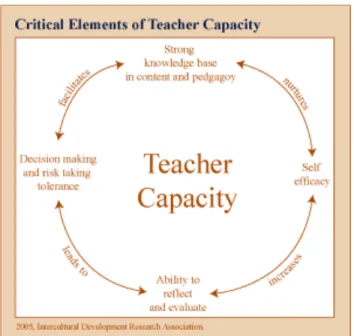
para. 2). Villarreal (2005) visually displayed the elements of teacher capacity in Figure 1.
Figure 1. The critical elements of teacher capacity. This figure visually illustrates the cyclical nature of the elements of teacher capacity.
Culturally responsive classroom management is defined as providing “all students with equitable opportunities for learning by minimizing discriminatory school discipline practices that occur when the behaviors of nondominant populations are misinterpreted” (Finley, 2014, para. 13). Finley explained that a focus on building relationships was far more effective than bolstering authority. Understanding how cultures resolve conflict is an important component of culturally responsive classroom management. Finley explained that in Asian cultures, open conflict is avoided. Instead, allowing students to solve the conflict in a written form may be more effective and culturally responsive. Finally, expectations need to be clear and modeled. For example, when students are asked to work in partners, teachers should demonstrate how helping a partner differs from doing the partner’s work.
Summary
As the cultural mismatch between educators and students continues to grow, and students of color are excluded from school due to disciplinary issues at a higher rate than their White peers, it is necessary to investigate approaches that will aid school staff in becoming more culturally responsive in their classroom management practices. The goal of this study was to investigate the change in educators’ capacity with culturally responsive classroom management practices and examine whether there was a relationship between the change in capacity of the school staff and the number of disciplinary referrals and suspensions awarded to the students of those individuals who demonstrated a change in capacity. In Chapter 2, the literature review explores White Racial Identity Theory, identity development, adult learning theory, and culturally responsive classroom management practices. In Chapter 3, there is a description of the methods of this current study, including a description of the
participants, survey tool, professional learning experiences, and data analysis tools. In Chapter 4, there is a description of the results of this study. In Chapter 5, there is a discussion of the results and what future research is needed in this area.
Chapter II Literature Review Overview
In order to investigate the impact of new professional learning experiences on teacher capacity with cultural competencies and culturally responsive classroom management practices and examine the relationship of the capacity change on student discipline referrals, relevant literature was reviewed. This literature review explores White Racial Identity Theory, identity development, adult learning theory, and culturally responsive classroom management practices.
Helms’ (1990) racial identity development theory, specifically White Racial Identity Theory, focused on exploring oneself as a racial being and increasing the awareness of one’s own whiteness. Literature (Han, West-Olatunji, & Thomas, 2010-2011; Gushue et al., 2013; Bloom, Peters, Margolin, & Fragnoli, 2015; Ullucci, 2010-2011; McGowan & Kern, 2014) on developing identity has focused on how educators begin to develop an understanding of their own identity and how their perceptions impact how they relate to students through teacher education and professional development. As educators gain a stronger sense of identity, they become open to changes in practice.
Mezirow (1978) introduced the idea of transformative learning as a means to recognize the dimension of adult learning that allows one to recognize or reassess assumptions and expectations, which form one’s frame of reference. Mezirow and Taylor (2009) further explained that transformative learning is a process, which transforms problematic frames of reference, resulting in creating inclusive, open, and reflective frames of reference. These new frames will then generate beliefs and actions
that are more justified in guiding action. Transformative learning literature (Mezirow, 1978; DeMulder, Stribling & Day, 2014; Christie, Carey, Robertson & Grainger, 2015) explains the conflicts and benefits that arise when perspectives begin to change. Literature about adult learning has focused on how to address the learning needs of adults (Knowles, Holton, &Swanson, 2005; Knowles, 1972; Mezirow, 1978). An understanding of adult learning allows for the development of effective professional learning experiences.
Finally, literature about culturally responsive classroom management practices has provided ideas for how teachers can frame their classroom management
approaches and create a classroom community to be inclusive and welcoming for diverse students (Bondy, Ross, Gallingane, & Hambacher, 2007; Ullucci, 2009; Weinstein, Curran, & Tomlinson-Clarke, 2003; Dray & Wisneski, 2011; Weinstein, Tomlinson-Clarke, & Curran, 2004).
Identity Development
Historially when researchers have discussed identity development, the discussion has focused on White vs. Black. While the diversity is greater now, the literature presented maintains that focus due to a lack of the inclusion of diverse populations in older research. White Racial Identity Theory, developed by Janet E. Helms (1990), explored the need for the development of racial identity and how one might develop such an identity. Helms explained that the progress of racism and the development of White identity are connected. It is more difficult to develop a positive White identity if the extent of racism present is great. Individual, institutional, and cultural racism are all pieces of the White person’s racial identity. To develop a
positive racial identity, a person needs to overcome the forms of racism in his or her personal life. White racial identity refers to a person’s unspoken thoughts, beliefs, and experiences about himself and his relationships to others. Helms further contended that one must be accepting of one’s Whiteness, accept the cultural implications of being White, and develop a new view of self that is not reliant on being superior to another group. For this process to occur, two processes need to be accomplished, the abandonment of racism and the development of a positive White identity.
The abandonment of racism and the development of a positive White identity is a linear process that can be accomplished in six stages. Helms (1990) stated that how a White person progresses through these stages differs and depends on the extent to which the person acknowledges racism and his or her own consciousness of
Whiteness. The final stage of this development results in an awareness of one’s personal responsibility for racism and an understanding of his Whiteness.
According to Helms (1990), the first three stages address the abandonment of racism. The first stage is known as the Contact stage of identity. In this stage one benefits for institutional and cultural racism, but is not conscious that he is doing so. In this stage, a person may claim to be color-blind and does not see himself as having biases or prejudices. Interactions with other races are limited. Because experience with other cultures and races is limited, individuals are oblivious of the historical
oppression and racism on people of color. The length of time a person remains in this first stage is dependent upon his experiences with Blacks, especially in regards to racial issues. Disintegration is the second stage. In this stage, a person becomes conscious of his Whiteness, but is conflicted. He begins to question the racial realities
that he has been taught. One begins to realize that Blacks and Whites are not
considered equal. An awareness of being between two racial groups develops, and one must decide how to proceed. Does he choose to remove himself from interracial environments, or does he choose to work to change others’ attitudes? The final stage in this first process is the Reintegration stage. Now one consciously acknowledges his White identity, but regression is seen. He believes that racism is the White person’s due and tends to conform to stereotypes. It is in this stage that acts of violence or exclusion to protect White privilege can be seen. Racial minorities are blamed for their problems, and there is a stronger belief in White superiority. This is an easy stage to remain in, and it often takes a jarring event, like a painful encounter with Black people or an event such as the Civil Rights Movement, to cause people to question their racial identity (Helms, 1990).
The final three stages address the development of a positive White identity. Helms (1990) explained that the first stage in this process is known as the Pseudo-Independent stage. Here, one begins to actively question the belief that Blacks are innately inferior to Whites. He begins to understand the role Whites play in racism. Now, not comfortable with one’s racist identity, he begins to search for ways to redefine his identity. An understanding of racial and cultural differences begins to develop, and one begins to reach out to minority group members. At this point, the person does not have a negative or positive White identity. He is also met with suspicion from Whites and Blacks. The next stage is known as the
Immersion/Emersion stage. Now, White and Black myths and stereotypes are replaced with accurate information about what it means to be White. One begins to search for
answers to questions about who he is racially and who he wants to be. The goal becomes changing White people instead of changing Black people. One
re-experiences emotions that were denied or distorted in the past and begins to deal with his own biases. Now he is able to address racism and oppression. The final stage is the Autonomy stage. In this stage, one internalizes, nurtures, and applies his new
definition of Whiteness. There is no longer a need to oppress people based on race. He abandons cultural and institutional racism. One seeks to learn from other cultural groups and works to eliminate other forms of oppression (Helms, 1990).
In order to assess attitudes related to the stages of White racial identity, Helms (1990) created the White Racial Identity Attitude Scale. This tool was created due to the belief that racial identity development is propelled by one's attitudes about Whites, Whiteness, White culture, Blacks, Blackness, and Black culture. Each stage in identity development is measured by ten items using a Likert scale. The results are used to establish in which stage an individual resides (Helms, 1990).
Empirical research has used the ideas and tools provided by White Racial Identity Theory. Han, West-Olatunji, and Thomas (2010-2011), Carter, Helms, and Juby (2004), and Gushue et al. (2013) used this theory and the White racial identity attitude scale to explore cultural competence among teachers and students. The researchers surveyed teachers and students to determine their understanding of their racial identity development. Han, West-Olatunji, and Thomas (2010-2011) and Gushue et al. (2013) also investigated how the racial identity development of their participants impacted their perspectives of culturally diverse individuals.
Gushue et al. (2013) conducted a study using the White racial identity scale and the differentiation of self inventory. The differentiation of self inventory explored emotional reactivity, the ability to define oneself and stand by one’s convictions, emotional cutoff, and fusion with others. The purpose of the study was to explore a relationship between the two measures and to examine if the results help to understand social interactions in a racially diverse society. It was found that White participants displayed attitudes of racial openness and engagement when they were less likely to withdraw when experiencing interpersonal anxiety. This would reflect that the participants were in the pseudo-independent or autonomy stages of identity
development. They also had a clearly defined sense of self. Gushue et al. (2013) also found that the awareness of how White privilege and racism operate, as well as the ability to identify strengths and deficits across cultural perspectives, increases with a differentiated sense of self. It was found that for people of color, those with an
externally defined sense of self and greater emotional reactivity showed conformity to racial identity attitudes. However, if they display a strong sense of self and have lower emotional reactivity, participants are more likely to appreciate their own cultural values and the cultural values of others. Gushue et al. (2013) further posited that the racial identity status of individuals influences their perceptions and responses to racial issues at school, work, or in interactions with others.
For the purpose of their study, Han, West-Olatunji, and Thomas (2010-2011) shared stories from teachers to give concrete examples of what would be seen in each of the stages of identity development. The researchers found that the teachers residing in the Contact stage had limited cross-racial experiences and this limited their
perspectives in working with diverse students, which supports Helms’ (1990)
description. It was found that those teachers in the Disintegration stage had emerging consciousness of racial/cultural differences, and experienced dilemmas in teaching diverse students. For example, one teacher feared that if she spent too much time teaching about Martin Luther King, Jr., she would upset the White parents (Han, West-Olatunji, & Thomas, 2010-2011). Han, West-Olatunji, and Thomas (2010-2011) shared that teachers in the Reintegration stage became defensive when asked about White privilege. They also lacked an understanding of the minority students in their classrooms. Teachers who were able to demonstrate attitudes associated with the Autonomy stage showed an appreciation of multicultural education and were aware of the impact of their identity on teaching diverse students. One teacher explained that people are not all the same, and that it is important to know where children are coming from in order to meet their needs. Further, it was found that the racial identities of the teachers did influence their teaching and understanding of diverse students (Han, West-Olatunji, & Thomas, 2010-2011). Han, West-Olatunji, and Thomas (2010-2011) concluded by stating that higher statuses of White racial identity are associated with an increased ability to accept, understand, and appreciate cultural differences. This helps them become more effective teachers for their diverse student population.
Carter, Helms, and Juby (2004) explored the relationship between racism and racial identity for White Americans. White college students were surveyed in this study using the White Racial Identity Attitude Scale developed by Helms (1990), and the scoring protocol was used to identify racial attitudes of participants. Carter, Helms, and Juby (2004) found that the most common profile in the sample was flat or
undifferentiated. Participants with this profile show no particular commitment to any one stage. This may be due to socialization regarding race. This profile has higher racism scores. According to White Racial Identity Theory, this would be due to an individual being influenced by society’s view of race, so he tends to endorse subtle racist beliefs (Carter, Helms, & Juby, 2004). Carter, Helms, and Juby (2004) also found that the Autonomy profile had higher racism scores. This contradicts the theory, but it could be due to the fact that the Autonomy status has not been studied in relation to other statuses. It could also be due to the small number of participants in the study.
Bloom, Peters, Margolin, and Fragnoli (2015) examined the White racial identity growth of preservice teachers. The researchers believed that addressing issues of institutional racism should be a component of teacher preparation programs.
Participants responded to questions at the end of their student teaching. It was found that initial assumptions about the school and community differed based on the diversity of the placement. Those placed in diverse placements responsed with negative expectations of the school and community, while those in nondiverse placements responded with positive expectations. However, those in diverse placements explained that their impressions changed over time. Bloom, Peters, Margolin, and Fragnoli (2015) asked students about how the diversity of their
placement made them think about their own ethnic background and social status. Half of those placed in diverse settings answered that they were more aware of the
differences between them and their students, as well as, how they have privileges and advantages not experienced by their students. Only 22.9% of those placed in
experience did not change their thoughts about their own backgrounds. Being aware of White privilege is the first step in developing a positive White racial identity. Bloom, Peters, Margolin, and Fragnoli (2015) found that the placement of student teachers in diverse settings is important in understanding the differences and privileges given to those of different races and ethnicities. Some participants in both groups expressed a belief that all students are equal and that race does not play a role in education. This is known as the color-blind approach. While this may seem to be positive, in reality it does not foster culturally responsive practices. Finally, Bloom, Peters, Margolin, and Fragnoli (2015) explained that many answered that they needed to provide additional support to diverse students. This belief indicates a perception that students of color need more assistance in the classroom.
Chang, Anagnostopoulos, and Omae (2011) studied the impact of multicultural learning of pre-service teachers on their awareness of their own biases, awareness of cultural diversity and structural inequities, and their commitment to disadvantaged student populations. It was found that engaging in discussions was critical in
developing an awareness of their own beliefs and the inequities that exist. It was also found that multicultural learning assists pre-service teachers in overcoming the negative perceptions they may have of students who are racially different than them
Ullucci (2011) explained why the need for developing identity is necessary in schools. Through conversations with pre-service and in-service teachers, the
researcher shared hearing that Latino students struggle in school because of poor parenting and a lack of effort. Some resent discussing race. Other teachers believe that race matters in school and can see the injustices reflected in tracking and special
education placement. These teachers understand that racism is not a historical issue, but rather is one that still exists today. This study investigated how some White teachers became successful educators in urban schools. The goal was to focus on the teachers’ lived experiences that shaped them into effective educators, instead of focusing on the difficulties White educators have in urban schools. Ullucci (2011) was interested in examining teachers’ experience before and after their studies in
education. Teachers’ interactions with students from many racial backgrounds was also explored.
Ullucci (2011) claimed that three common themes developed throughout the study. These themes were the importance of shared life experiences with people of color, understanding how equity did or did not function in the community, and lessons gained through personal struggle. Participating teachers attended diverse schools, lived in multiracial neighborhoods growing up, and had friends from other races. They had shared experiences of seeing the challenges that people of color faced in their
neighborhoods. These were lessons that could not be learned in school. Their
understanding of diversity was not built on assumptions but rather on the experiences of day-to-day life. Ullucci (2011) further alleged that these teachers were better suited for empathizing with students due to their own experiences with violence, poverty, being a poor student, and feeling like an outsider. They understood what it felt like to be marginalized and can see pieces of themselves in their students. While it is often believed that White teachers have not explored their own racial biases and identities, stories like those in this study build an understanding of how shared experiences build relationships necessary to be a successful educator in urban schools.
Adult Learning
In order to develop effective professional learning experiences for in-service teachers, there needs to be an understanding of adult learning. Knowles, Holton, and Swanson (2005) and Knowles (1972) posited that an andragogical model was an effective model to use when planning professional learning for adults. The
andragogical model is based on six assumptions. The first assumption is that adults need to know why they need to learn something before they begin to learn it. Another assumption is that adults want to be responsible for their own decisions. Adults may resent trainings if they feel that other people’s ideas are being forced upon them. The third assumption is the role of the adult learner’s experiences. Professional learning opportunites should be focused on tapping into the experience of the learners. The readiness to learn is the next assumption. Adults have a readiness to learn when the topics covered help them cope with real-life situations. The fifth assumption is the orientation to learning. Adults have a life-centered orientation to learning. Adults are motivated to learn when they believe the learning will help them with tasks or
problems they confront in their daily lives. The final assumption is motivation. Adults respond to internal motivators like the desire for increased job satisfaction and self-esteem, however, these motivators can be blocked by a negative self-concept, time constraints, or the inaccessibility of opportunities.
The andragogical model is a process model, not a content model. Knowles, Holton, and Swanson (2005) shared eight steps in the andragogical model. The first step begins with preparing learners. Realistic expectations are developed and learners begin thinking about the content that will be covered. Next, a climate conducive to
learning is established. The climate needs to be relaxed, trusting, respectful,
collaborative, open, and supportive. The third step is creating a mechanism for mutual planning. Members of the planning group must have influence in the decision making process. Adults have a difficult time committing to any decision that they feel they did not have an opportunity to influence. The fourth step is a diagnosis of needs. The setting of objectives is the fifth step. The objective should help the learner understand what he or she should be doing as a result of the learning. The sixth step is designing learning plans and these plans should be sequenced by readiness levels. Conducting the learning activities is the seventh step. Experimental, or inquiry based, techniques should be used in the learning activities. The final step is evaluation. It is imperative to collect data from the learners about what they liked and did not like about the
experience. It is also important to gather data on what knowledge and skills the learners have gained from the learning experience. Following these steps will aid in impmenting effective professional learning experiences for adult learners.
Mezirow (1978) introduced the concept of transformative learning. Transformative learning explained the dimension of adult learning that enables learners to recognize and reassess the assumptions and expectations that frame their thinking, feeling, and acting. This perspective allows a learner to set priorities for action and gives the learner a feeling that he can change his situation through his own initiative. Mezirow further posited that transformation cannot occur with simply acquiring new information. Transformation occurs when the learner takes the perspective of others.
Transformative learning literature further explained that while deeper learning occurs when perspectives begin to change, an exposure to opposite perspectives can also create resistance. DeMulder, Stribling, and Day (2014) conducted a study focused on helping teachers develop as critical educators. During the learning sessions,
teachers were given the opportunity to experience the perspective of others through readings, film clips, and panel discussions. As the teachers gained a new perspective, they were better able to understand the challenges of their students and work to make changes to their practice. Providing multiple perspectives allowed teachers to develop a deeper understanding of the issues. However, other participants were resisting the learning because they felt their personal experience was not being honored. This anger and resistance inhibited these particular teachers from deeper learning. Resistance was also noted when the learning was focused on social change due to a fear of losing power.
Culturally Responsive Classroom Management
Weinstein, Curran, and Tomlinson-Clarke (2003) examined strategies for developing culturally responsive classroom management. Teachers often respond to student behavior from the perspective of the mainstream culture or from
predetermined stereotypes. When this is done, students from minority groups are discriminated against. This discrimination occurs when teachers do not recognize that their behavior is influenced by culture and when they do not see that their
management practices marginalize some students and privilege others. According to Weinstein, Curran, and Tomlinson-Clarke (2003), culturally responsive classroom management begins with understanding self. It is imperative that one recognizes that
he has his own beliefs, biases, and assumptions. Once cultural biases become
conscious through the recognition of personal beliefs, biases, and assumptions, one is less likely to misinterpret behaviors of diverse students. It is also imperative that teachers acknowledge that differences in culture, race, and class exist. Learning about family backgrounds, cultural norms, parent expectations, and how various cultures treat time and space allow teachers to be open and willing to learn about cultural aspects that are important to students. Finally, Weinstein, Curran, and Tomlinson-Clarke (2003) asserted that culturally responsive classroom management requires that teachers understand how schools reflect and perpetuate discriminatory practices. Differences are linked to power and the structure of schools can privilege some students, but marginalize or segregate others. Tracking, the uneven distribution of resources, and standardized testing are examples of how school structures have created privilege for some groups and marginalization or segregation of others.
There are six strategies for developing culturally responsive classroom
management. Weinstein, Curran, and Tomlinson-Clarke (2003) provided explanations of the six strategies. The first strategy is organizing the physical environment.
Weinstein, Curran, and Tomlinson-Clarke (2003) and Ullucci (2009) claimed that teachers should use the classroom environment to communicate respect for diversity and avoid marginalizing students. Displayed books should promote diversity and community. These books should also be used to teach core concepts. Being from another culture is respected and celebrated. All students know that they belong. Desks should be arranged in clusters to allow collaboration, discussions, and material
sharing. This desk arrangement aids in ensuring that everyone is able to participate in discussions and is engaged in the content.
According to Weinstein, Curran, and Tomlinson-Clarke (2003), the second strategy is establishing expectations for behavior. Weinstein, Curran, and Tomlinson-Clarke (2003) and Ullucci (2009) argued that expectations should be clear and students should have an understanding of what specific behaviors meet the
expectations. It is important that teachers are explicit with their expectations, allow students to discuss them, model the expected behavior, and allow students to practice the behavior. Boundaries are set, but students are not controlled. Ullucci (2009) further contended that classroom management is not about being obedient, but rather learning how to thrive with others. They learn how to be productive and be a good neighbor. Clear expectations aid students in understanding how to be a member of a classroom community and how to demonstrate respect and compassion for those in their
community.
Weinstein, Curran, and Tomlinson-Clarke (2003) explained that the third strategy is communicating with students in culturally consistent ways. There are differences in how cultures communicate and this can impact student behavior. Some cultures are accustomed to straight-forward directives, while the dominant culture favors indirect discourse. If indirect discourse is used in the classroom, explicit lessons need to be taught on how these are a code for direct commands. Ullucci (2009) shared that teacher directions were clear and direct. Instead of asking students to do a task, they were told.
The fourth strategy according to Weinstein, Curran, and Tomlinson-Clarke (2003) is creating caring, inclusive classrooms. One way to create caring relationships is to share personal stories and learn about students’ interests and activities. Listening to student concerns and ideas also contributes to caring, inclusive classrooms.
Weinstein, Curran, and Tomlinson-Clarke (2003) and Ullucci (2009) claimed that valuing the various languages spoken by students and including content from other cultures in teaching shows the teacher values diversity. Caring for students also involves communicating high expectations and holding students accountable for high-quality work. Weinstein, Curran, and Tomlinson-Clarke (2003) and Ullucci (2009) contended that creating a sense of community also contributes to this caring
classroom. Creating a meeting space for community meetings help students build a sense of cohesion. This is a chance for students to share their worries and the good things that are happening in their lives. Students learn to empathize with characters in books and explain how they felt in different situations. Focusing on students’
emotions in community meetings allows a teacher to connect with students. Students are given a chance to be heard. Weinstein, Curran, and Tomlinson-Clarke (2003) also argued that it is also imperative that teasing and bullying are not acceptable in the classroom. Ullucci (2009) further posited that community building should come before management tactics. The initial focus should be on relationship building and instilling a sense of belonging in students.
According to Weinstein, Curran, and Tomlinson-Clarke (2003), the fifth strategy is working with families. Working with families is an integral, yet challenging part of classroom management. When teachers and families come from different
cultural backgrounds, challenges can occur. It is important to understand that differing levels of parental involvement in school could be due to different perspectives about parent involvement, not a lack of interest. Teachers should work with parents to better understand a child’s culture or prior experiences. It is also a chance to learn about cultural conflicts the child may be experiencing.
Weinstein, Curran, and Tomlinson-Clarke (2003) explained that the sixth strategy is dealing with problem behaviors. Teachers should reflect on the behaviors they view to be problematic and how they may be related to race and culture. When a teacher is able to view behavior as a reflection of the student’s cultural norms, he is able to remain calm and nondefensive. Ullucci (2009) shared how teachers use feelings to help students understand the consequences of behavior. They teach students the language they need to explain their feelings. It is also an opportunity to examine how race and culture influence disciplinary consequences. Minority students are often disproportionately referred for behavior problems (Weinstein, Curran, & Tomlinson-Clarke, 2003).
Bondy, Ross, Gallingane, and Hambacher (2007) investigated how culturally responsive classroom management strategies establish an environment that supports students. The two key findings of this study were developing relationships and
establishing expectations. The importance of building relationships was communicated the first day of school. The teachers explained that for students to succeed and face academic challenges, they need to feel supported. Relationships are the core of a learning community.
Bondy, Ross, Gallingane, and Hambacher (2007) explained that building relationships is based on multiple practices. First, knowing the teacher is important. Sharing personal experiences, stories, and pictures allow the teacher to connect to the students. Connecting the personal stories to classroom activities and student feelings creates a connection between teacher and student. Second, it is imperative that students know and care about each other. Teachers aid students in talking with one another and in identifying similarities and differences between them. The teachers also played games with the students to help them get to know one another. Through these activities, students were also taught about the importance of respecting one another and being kind to others (Bondy, Ross, Gallingane, & Hambacher, 2007).
Establishing expectations was the second key task explored by Bondy, Ross, Gallingane, and Hambacher (2007). Teaching rules and procedures set students up for success. Some teachers assume that students know what appropriate behavior looks like. However, the teachers in this study explicitly communicate rules and procedures to students. These rules and procedures were developed with students and introduced within the first two hours of school. Establishing the rules takes more than a week and should be retaught throughout the year. The teachers were explicit with the
expectations, modeled the desired behavior, and asked students for examples. A rationale for the rules was also provided to students. These teachers also understood that inappropriate behavior was the result of failing to be explicit with the
expectations. Bondy, Ross, Gallingane, and Hambacher (2007) further stated that the teachers also developed consequences, both positive and negative. Teachers also communicated their expectations for success. Students were told explicitly that the
teacher believed in them. Teachers believed that all students had the capacity to succeed.
According to Bondy, Ross, Gallingane, and Hambacher (2007), it is also imperative that teachers hold students accountable for meeting expectations. Students were not allowed to continue behaviors that failed to meet the expectations set by the teacher. While repeating requests, teachers remained respectful. Consequences for failing to meet expectations were delivered calmly. Teachers continued to be kind and caring when implementing consequences, never punitive or threatening.
Bondy, Ross, Gallingane, and Hambacher (2007) also investigated how teachers communicate in culturally responsive ways. Teachers in this study use terms of endearment and humor to communicate with students. Humor was used to build bonds with students, not sarcastically or in a manner that hurt students. Teachers also used words and expressions that were familiar to students. The call-and-response pattern was also used in classroom instruction. This style of communication was familiar to students and encouraged them to participate actively.
Developing the skills necessary to implement culturally responsive classroom management practices begins in pre-service teacher education courses. Gay (2010) and Gay and Kirkland (2003) argued that developing attitudes and beliefs about diversity should be a major component of teacher education programs. Gay and Kirkland (2003) claimed that self-reflection and cultural critical consciousness are key to improving the education for students of color. It is imperative that pre-service teachers understand their own culture and the cultures of other groups. It is also important to understand how this understanding impacts teaching and learning.
There are obstacles that pose a challenge for self-reflection in pre-service teachers. Gay and Kirkland (2003) maintained that a lack of understanding on how to self-reflect impacts pre-service teachers. Another obstacle is that students have limited opportunities for guided practice in self-reflection. Traditional beliefs about teaching can also hinder the development of self-reflection skills. An example of such a belief is that all students should be treated the same, no matter who they are. Developing critical consciousness about race and cultural diversity can be hindered when pre-service teachers try to divert attention away from the topic of race and diversity. For example, when discussing the achievement of students of color, pre-service teachers will often they cite trends or reasons they have heard from others for why
discrepancies exist without examining their own beliefs, questioning the common explanations, or analyzing the influence of culture, class, or race (Gay & Kirkland, 2003; Gay, 2010). Silence is also used to avoid having conversations about their own thoughts, biases, or behaviors about race and culture. Gay and Kirkland (2003) and Gay (2010) asserted that the final obstacle to thinking critically about race is a feeling of guilt about oppression or marginalization. Many feel that feeling guilty about racism is enough to make them supporters of equality. However, the causes and depth of their guilt is not examined in order to find ways to ensure that these actions do not continue in the future. Some even believe that racism no longer occurs in school and that racial problems in schools were solved in the past.
To combat the obstacles for developing critical consciousness and self-reflection, teacher education programs should create learning environments in which self-reflection is a part of the normal routine. Gay and Kirkland (2003) explained that
pre-service teachers should have the opportunity to have discussions with others about racial and culturally diverse issues in education. When students are able to process new knowledge, share it with others, and receive feedback, they receive valuable practice in self-reflection and critical consciousness. Students were also assigned projects that allowed them to analyze the cultural values embedded in schools and society that are often taken for granted. Students learn to modify content and practices to make them more responsive for diverse students (Gay & Kirkland, 2003).
Gay (2010) further explored the idea of developing pre-service teachers’ attitudes and beliefs about race and culture. These attitudes and beliefs significantly shape teacher conceptions and actions, but are not thoroughly developed in teacher education programs. When teachers have limited experience with and knowledge of culturally diverse groups, their attitudes and beliefs interfere with teaching and
learning. Gay (2010) argued that teacher education programs should facilitate students in examining the causes of the beliefs and attitudes they have about different cultural groups. Problems in teaching related to cultural diversity cannot be solved until they are recognized and confronted. There cannot be a fear to discuss the issues. Cultural diversity should be seen as a valuable resource in teaching, yet it is often seen as a threat that needs to be avoided (Gay, 2010). Teacher education programs should also prepare teachers to understand how instructional behaviors are influenced by beliefs about race, class, and culture. When examples are given during instruction to support the content being studied, the examples often exclude diverse students. Many
examples provided in formal curriculum convey strong beliefs about cultural diversity, many being biased. Teacher education programs can help pre-service teachers develop
skills to modify examples to be culturally diverse and use multiple culturally diverse examples to support teaching concepts, knowledge, and skills (Gay, 2010).
While the need for developing the skills necessary to implement culturally responsive classroom management practices is needed in pre-service teacher education courses, there is also a need to develop the same practices with in-service teachers. Dray and Wisneski (2011) claimed that in-service teachers are not always aware that their interpretation of students’ actions and how they interact with students is impacted by diversity. In order to accept and embrace diversity in the classroom, a teacher needs to first reflect on the challenges that can interfere with acceptance. If cultural and individual differences are not given attention, some students may have limited opportunities to succeed. One way in which to combat misunderstandings between teachers and students is to develop reflective practices. In order for teachers to be sensitive to diversity, they need to be able to take an emotional risk and examine how their beliefs, assumptions, and biases can affect how they treat students. Teachers may also need to consider new ways to communicate with students in their classrooms (Dray & Wisneski, 2011). A person’s life experiences and cultural background
influence how one responds to others. Dray and Wisneski (2011) posited that teachers working in diverse settings should be aware of their own background and experiences and the cultural norms of others in order to avoid prejudice and overgeneralizations.
Dray and Wisneski (2011) presented a framework for mindful reflection, which is a process for teachers to follow when they are working to understand the meaning of behavior in their classrooms. This reflection process should help teachers transform historically deficit views and responses. This process also helps teachers
become aware of their biases so that they can become more culturally responsive in their practices. The first step is to unpack the attributions that one has about the
student. Multiple incidents should be analyzed and the student should not be labeled or blamed in this step. The teacher should focus on listening and observing, while being open to learn something new. The second step asks the teacher to write out and reflect on his feelings and thoughts when working with the student. Were issues of prejudice or overgeneralizations present? While the answer to this question may be
uncomfortable, it is an opportunity to rethink the response. Step three asks the teacher to consider alternative explanations for the behavior by reviewing the documentation and reflections. The teacher analyzes how he communicates and perceives the student. This is also the time to compare the student’s behavior to other behavior in the
classroom. Step four is a chance to check assumptions. In this step, the teacher shares his reflections with colleagues, parents, or community members. This provides an opportunity to develop alternative explanations for the behavior or to identify biases. It is also an opportunity to learn about the perceptions and ideas of the family. The purpose of this step is to find more productive solutions and positive outcomes for students. Step five is to make a plan. In this step, teachers work to change their behavior. The plan should focus on changing the classroom environment or teacher actions. The final step is to continuously revisit this process to reassess the progress being made with the student. It is important to evaluate whether or not the changes are supporting student success (Dray & Wisneski, 2011).
In order to implement culturally responsive classroom management practices, Weintein, Tomlinson-Clarke, and Curran (2004) posited that there needs to be a
commitment to creating caring classroom communities. Vaandering (2013) and Boyes-Watson and Pranis (2015) explained that implementing Circles in the classroom aid in creating caring classroom communities. Boyes-Watson and Pranis explained that Circles are a structured process of communication that creates a safe space for all participants to have their voices heard and move towards being their best self. Circles help build a healthy community so that all participants feel connected and respected. Circles are a tool that guide a community to work out how they will be together. This includes how relationships will be built and how the community will work through differences. All members of the classroom community sit in a circle during discussions and have a talking stick that is passed around the circle to ensure that all members have an equal voice in the discussion. Boyes-Watson and Pranis explained that many classroom behaviors and disruptions occur because students feel powerless and are trying to gain power in their lives. Circles helped students
experience healthy power by giving every student a voice and showing that each student is valued. As students gain a sense of power, the need to act out behaviorally decreases. Vaandering explained that schools need to make an explicit effort to ensure students are heard in order to create an even distribution of power. Boyes-Watson and Pranis posited that a sense of belonging promotes learning and cooperative functions. It is important for schools to promote a sense of belonging because the pain and fear of not belonging are the basis of violence and harm in schools. Helping all students belong in school can lead to a decrease in behavioral problems in the classroom.
Vaandering (2013) posited that when adults create time and space for student perspectives to be articulated and heard, school culture changes occur. Further, Circles
should provide opportunities for students to address harm and formulate solutions for the future. Boyes-Watson and Pranis (2015) explained that restoring relationships ensures that both parties feel there is mutual respect and that the outcome is fair and just. This is fundamental to maintaining a healthy school culture.
Another culturally responsive classroom management practice, which can be implemented in schools, is Collaborative Problem Solving. Greene (2011) reasoned that behavioral challenges should be responded to in the same manner as academic challenges. When students struggle academically, interventions focus on the lagging skills. The same should be true for behavioral challenges. When students struggle behaviorally, staff should identify the lagging skills and then support students in developing these skills. Schaubman, Stetson, and Plog (2011) posited that misbehavior should not be viewed as a way to manipulate others, but rather a child trying to solve a problem without having the necessary skills.
In Collaborative Problem Solving (CPS), adults learn to understand challenging behavior, to communicate with students, and how to work together to solve problems. Schaubman, Stetson, and Plog (2011) explained that as teachers learned how to communicate and problem solve with students more effectively, students were able to remain in the classroom and not miss instructional time. Greene (2011) described the themes of CPS. The first is that students do well if they can. If a student is not doing well, it is because of interfering lagging skills. Second, doing well is preferable to not doing well. A lack of motivation is not the cause of not doing well. If a student had well developed skills, he would do well. Third, challenging behavior needs to be viewed within the context of a child’s development. The fourth theme is
that every challenging behavior is caused by a lagging skill and a demand for that skill. When the demands of the environment conflict with lagging skills, a challenging behavior is likely to occur. This is often seen in schools when students struggle to begin an assignment or have problems interacting with peers. The fifth theme is that problems should be handled proactively. Often times, problems are solved reactively. It would be more productive to solve the problem before it occurs. Finally, problems should be solved collaboratively. If a student is lacking a skill, it is very difficult for him to handle the expectation being handed down from an authority figure. Instead, the student should participate in the process of problem solving.
Collaborative Problem Solving includes three steps. Greene (2011) shared that the process begins with gathering information from the student in order to gain an understanding of his perspective of the problem. Then the adult shares his perspective or concern with the same problem. The student and adult then work together to brainstorm possible solutions to the problem. The solutions have to be realistic and satisfactory to both parties. Using CPS improves relationships between adults, students, and parents. It allows for students to feel that they are heard and that their concerns will be addressed. The process provides teachers with skills to handle challenging problems as they come up in the classroom. Schaubman, Stetson, and Plog (2011) conducted a study on CPS. They found that the use of Collaborative Problem Solving reduced teacher stress and problem behaviors. There were increased opportunities for positive interactions, which improved the school climate.