Pathogens
Author(s)
Chasman, Deborah; Walters, Kevin B.; Lopes, Tiago J. S.;
Eisfeld, Amie J.; Kawaoka, Yoshihiro; Roy, Sushmita
Citation
PLOS Computational Biology (2016), 12(7)
Issue Date
2016-07-12
URL
http://hdl.handle.net/2433/218703
Right
© 2016 Chasman et al. This is an open access article
distributed under the terms of the Creative Commons
Attribution License, which permits unrestricted use,
distribution, and reproduction in any medium, provided the
original author and source are credited.
Type
Journal Article
Integrating Transcriptomic and Proteomic
Data Using Predictive Regulatory Network
Models of Host Response to Pathogens
Deborah Chasman1, Kevin B. Walters2¤, Tiago J. S. Lopes2, Amie J. Eisfeld2,Yoshihiro Kawaoka2,3,4,5, Sushmita Roy1,6,7*
1Wisconsin Institute for Discovery, University of Wisconsin—Madison, Madison, Wisconsin, United States of America,2Influenza Research Institute, Department of Pathobiological Sciences, School of Veterinary Medicine, University of Wisconsin—Madison, Madison, Wisconsin, United States of America,3Division of Virology, Department of Microbiology and Immunology, Institute of Medical Science, University of Tokyo, Tokyo, Japan,4Department of Special Pathogens, International Research Center for Infectious Diseases, Institute of Medical Science, University of Tokyo, Tokyo, Japan,5Laboratory of Bioresponses Regulation, Department of Biological Responses, Institute for Virus Research, Kyoto University, Kyoto, Japan,
6Department of Computer Sciences, University of Wisconsin—Madison, Madison, Wisconsin, United States of America,7Department of Biostatistics and Medical Informatics, University of Wisconsin—Madison, Madison, Wisconsin, United States of America
¤ Current address: Southern Research, Frederick, Maryland, United States of America *[email protected]
Abstract
Mammalian host response to pathogenic infections is controlled by a complex regulatory network connecting regulatory proteins such as transcription factors and signaling proteins to target genes. An important challenge in infectious disease research is to understand molecular similarities and differences in mammalian host response to diverse sets of patho-gens. Recently, systems biology studies have produced rich collections of omic profiles measuring host response to infectious agents such as influenza viruses at multiple levels. To gain a comprehensive understanding of the regulatory network driving host response to multiple infectious agents, we integrated host transcriptomes and proteomes using a net-work-based approach. Our approach combines expression-based regulatory network infer-ence, structured-sparsity based regression, and network information flow to infer putative physical regulatory programs for expression modules. We applied our approach to identify regulatory networks, modules and subnetworks that drive host response to multiple influ-enza infections. The inferred regulatory network and modules are significantly enriched for known pathways of immune response and implicate apoptosis, splicing, and interferon sig-naling processes in the differential response of viral infections of different pathogenicities. We used the learned network to prioritize regulators and study virus and time-point specific networks. RNAi-based knockdown of predicted regulators had significant impact on viral replication and include several previously unknown regulators. Taken together, our inte-grated analysis identified novel module level patterns that capture strain and pathogenicity-specific patterns of expression and helped identify important regulators of host response to influenza infection.
a11111
OPEN ACCESS
Citation:Chasman D, Walters KB, Lopes TJS, Eisfeld AJ, Kawaoka Y, Roy S (2016) Integrating Transcriptomic and Proteomic Data Using Predictive Regulatory Network Models of Host Response to Pathogens. PLoS Comput Biol 12(7): e1005013. doi:10.1371/journal.pcbi.1005013
Editor:Christina S. Leslie, Memorial Sloan-Kettering Cancer Center, UNITED STATES
Received:June 29, 2015
Accepted:June 6, 2016
Published:July 12, 2016
Copyright:© 2016 Chasman et al. This is an open access article distributed under the terms of the
Creative Commons Attribution License, which permits unrestricted use, distribution, and reproduction in any medium, provided the original author and source are credited.
Data Availability Statement:Analysis was based on previously published data that is publicly available from the GEO database and other databases (citations are in the manuscripts under Materials and Methods). New validation data for this study are available in Supporting Information files.
Funding:This project was funded in part with funds from the National Institute of Allergy and Infectious Diseases, National Institutes of Health, grant U19AI106772 to YK, and in part by a Sloan Foundation research fellowship to SR and University of Wisconsin—Madison startup funds to SR. This
Author Summary
An important challenge in infectious disease research is to understand how the human immune system responds to different types of pathogenic infections. An important com-ponent of mounting proper response is the transcriptional regulatory network that speci-fies the context-specific gene expression program in the host cell. However, our
understanding of this regulatory network and how it drives context-specific transcrip-tional programs is incomplete. To address this gap, we performed a network-based analy-sis of host response to influenza viruses that integrated high-throughput mRNA- and protein measurements and protein-protein interaction networks to identify virus and pathogenicity-specific modules and their upstream physical regulatory programs. We inferred regulatory networks for human cell line and mouse host systems, which recapitu-lated several known regulators and pathways of the immune response and viral life cycle. We used the networks to study time point and strain-specific subnetworks and to priori-tize important regulators of host response. We predicted several novel regulators, both at the mRNA and protein levels, and experimentally verified their role in the virus life cycle based on their ability to significantly impact viral replication.
Introduction
To combat infections from diverse pathogens, mammalian immune systems must be able to mount appropriate and specific responses to pathogenic infections. A key challenge in current infectious disease research is to understand the molecular mechanisms that make the host immune system more or less susceptible to a particular strain of a pathogen, for example, dif-ferent influenza A virus strains, than another. Transcriptional regulatory networks that con-nect regulatory proteins to target genes are central players in how mammalian cells mount appropriate responses to different pathogenic infections. Because the components and connec-tivity of these networks are largely not known, a significant amount of effort has been invested to collect high-throughput datasets that provide a comprehensive molecular characterization of host response to multiple viruses at multiple levels, including the transcriptome and prote-ome [1–4]. These genomic datasets provide unique opportunities to identify molecular net-work components of host response that are conserved across multiple viruses or specific to a virus of a particular pathogenicity. Such networks can be used to prioritize regulators for follow up validation studies that provide greater insight into the mechanisms by which the host cell perceives and responds to different pathogenic infections.
Network- and module-based approaches for analyzing omic datasets have been powerful for dissecting mammalian cellular response to different environmental perturbations, includ-ing response to various pathogenic infections [5,6]. The majority of these approaches have used genome-wide transcriptomic data and can be grouped into those that infer correlational networks [3,7–12], or Module Networks, in which regulators are inferred for groups of co-expressed genes called modules [9,13,14]. A few approaches have integrated additional data types, e.g. physical protein-protein or signaling networks with transcriptional data [15–20], that vary in the number of samples needed to infer networks. While these approaches have pro-vided important insights into the host response, they have not integrated multiple types of omic measurements (e.g. mRNA and protein levels), which can differ in quality and sample size. A second challenge is that experimental validation of large-scale predictions is expensive and most of the generated predictions have not been validated experimentally. Although
publication was made possible in part by USEPA grant (83573701). Its contents are solely the responsibility of the grantee and do not necessarily represent the official views of the USEPA. Further, USEPA does not endorse the purchase of any commercial products or services mentioned in the publication. The funders had no role in study design, data collection and analysis, decision to publish, or preparation of the manuscript.
Competing Interests:The authors have declared that no competing interests exist.
several network-based prioritization methods have been proposed, the results of a prioritiza-tion scheme have been followed up with experimental validaprioritiza-tion in a handful of studies [21]. To gain a more complete understanding of the molecular networks driving host response, we integrated transcriptomic and proteomic measurements of mammalian host response with existing protein-protein interactions. These omic measurements capture human and mouse cellular response to multiple Influenza A viruses exhibiting different levels of pathogenicities. Our starting point is an expression-based regulatory network connecting transcription factors and signaling proteins to target genes and gene modules. We then use proteomic measure-ments to predict additional regulators of gene modules by applying a structured sparsity-induc-ing regression approach, Multi-Task Group LASSO, to find proteins whose levels are
predictive of mRNA levels of entire modules. By decoupling the mRNA and protein-based regression into two steps, our approach is less sensitive to varying sample size for each type of omic data. Finally, we predict physical regulatory programs connecting mRNA and protein-based regulators through a small number intermediate nodes using Integer Linear Program-ming (ILP)-based network information flow.
We used our integrated regulatory networks to study the host response across the different viruses. We tested prioritized regulators using small interfering RNAs and found several regu-lators that significantly impact viral replication, five of which have not been previously associ-ated with influenza relassoci-ated response. We examined host response dynamics at the network level, identifying regulatory network components that are active or missing under different viral treatments. Our inferred gene modules capture strain- and pathogenicity-specific patterns of mammalian immune response to influenza infections that recapitulate and expand upon known immune response pathways. In particular, we identified one module that was enriched for interferon signaling and exhibited repressed expression in the high-pathogenicity wild-type H5N1, but was induced in low pathogenicity H1N1 strains. Another module suggests that apo-ptosis-related pathways might be down-regulated in low-pathogenicity viruses. Our findings of host regulatory modules together with their upstream regulatory programs suggest that our network-based approach is a powerful way to systematically characterize immune response to diverse pathogenic infections.
Results
Inferred regulatory modules and network interactions captured immune
response processes and identified conservation between host systems
To perform a systematic, integrative analysis of transcriptome and proteome measurements of host response to influenza virus infections, we began by inferring a regulatory module network in two stages, followed by three major downstream analyses (Fig 1). We (1) infer a regulatory module network based on changes in mRNA abundance under viral infection and (2) predict protein regulators whose abundances are predictive of gene expression in the modules. This integrated regulatory module network enabled (3) prioritization of regulators for validation of their ability to modulate viral replication, (4) an examination of network dynamics across virus treatments, and (5) a further integration with external protein-protein interactions to predict directed physical connections between the mRNA, protein-based regulators and known influ-enza host response genes.
The first component of our approach, a regulatory network inference algorithm, was needed because mammalian regulatory networks are incomplete for most biological processes. We used a recently developed network inference algorithm, 'Modular regulatory network learning with per gene information' (MERLIN [22]) that uses genome-wide mRNA levels from multiple biological samples (time points or treatments) to predict regulatory relationships between
regulators (e.g. transcription factors or signaling proteins) and target genes. Our rationale for selecting MERLIN was to enable the study of host response regulatory networks both at the individual gene level and at the module level. Alternative methods either infer the regulators for individual genes [23] or for gene modules [13,24], but not both. We applied MERLIN within a stability selection framework to the host transcriptional measurements of mouse lungs
Fig 1. Integrative inference of regulatory networks controlling host response to influenza infection.The main components of our approach are: (1) MERLIN to learn regulatory networks and modules from genome-wide host mRNA profiles from multiple independent virus infections, (2) Multi-Task Group LASSO (MTG-LASSO) approach to predict protein-level regulators (dark blue squares) of mRNA-based modules, (3) construction of active network components for different virus strains and time points, (4) siRNA-based validation of predicted regulators, (5) predicting upstream signaling networks for each module by identifying minimal physical subnetworks that connect module regulators (dark blue squares and light blue ellipses) with a small number of intermediate nodes (yellow diamonds).
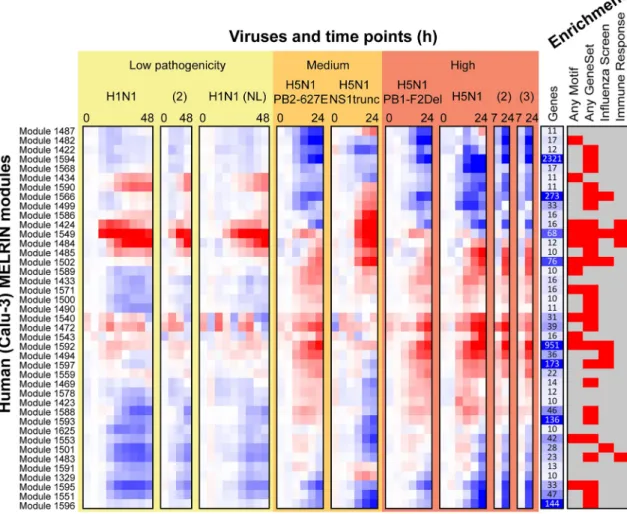
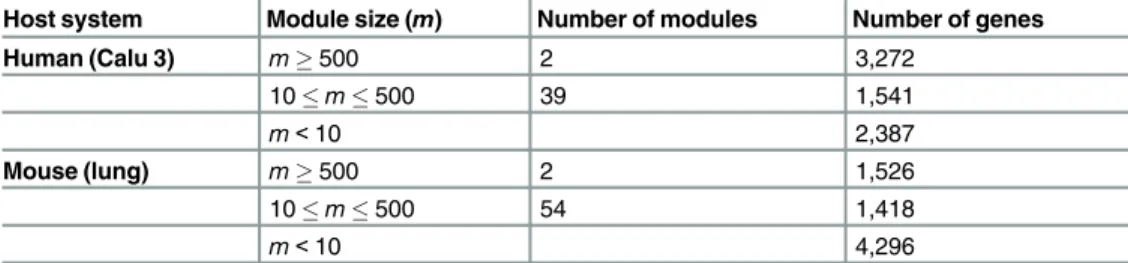
and human bronchial epithelial cells (Calu-3 cell line) infected with one of six influenza virus strains exhibiting a range of pathogenicity levels (Materials and Methods). On the human Calu-3 cell line (Fig 2), we identified 41 consensus modules of at least 10 genes comprising a total of 4,801 genes (~67% of the input,Table 1). On the mouse data, we identified 56 modules, encompassing 2,944 genes (41% of the input,Table 1). The average expression patterns in each inferred module revealed commonalities and differences between strains and pathogenicity lev-els (Fig 2,Calu-3;S1 Fig,mouse). Based on a hypergeometric test with FDR correction (FDR<0.05), 32 out of the 41 human Calu-3 modules (40 of 56 mouse modules) exhibited enrichment in one or more of the annotation categories representing Gene Ontology processes, KEGG pathways, and influenza related gene sets identified from 10 high-throughput RNAi studies and viral-host protein-protein interaction screens (Fig 2,S1 Fig,S1 Table,S2 Table). Moreover, 17 of the human modules were enriched specifically for immune response related
Fig 2. Overview of human influenza response module expression patterns.Shown are 41 human Calu-3 modules with at least 10 genes. The red-blue heat map shows mean expression of all genes in each module. The more red an entry the higher the expression in infected versus mock, while the more blue the entry, the higher the expression in mock compared to the infected sample. Under“Viruses and time points (h)”, each virus treatment's time series is shown separately, and viruses are ordered from low to high pathogenicity. Low-pathogenicity samples labeled H1N1 used A/CA/ 04/09 H1N1 unless labeled '(NL)' for A/Netherlands/602/09. Samples labeled H5N1 used A/VN/1203/04 H5N1 and laboratory mutants thereof. The“Genes”column shows the size of each module; larger values are shown in darker blue. Under“Enrichment”, a red box indicates module enrichment with any MSigDB motif, any MSigDB gene set, any Gene ontology process, any influenza screen set, or any immune response gene set (Methods).
processes (Fig 3A) suggesting that the modules were biologically coherent and relevant to immune response to influenza infections. Importantly, compared to ordinary expression-based gene clusters (identified by Gaussian Mixture Modeling, 40 clusters), MERLIN modules exhib-ited greater fold enrichment in innate immune system categories and motif-based targets of transcription factors (S3 Table). In particular, MERLIN modules had enrichment for targets of immune response-relevant regulatory elements IRF1, 2, 7 and ISRE and targets of inflamma-tory response regulator NF-kB, while expression-based clusters were not enriched or enriched at a lower level.
In addition to the modules, we defined consensus regulatory networks for the Calu-3 and mouse transcriptome data by selecting regulatory edges with a confidence at least 0.3 ( Materi-als and Methods). The consensus networks predicted regulatory connections between 1,250 regulators (signaling proteins and TFs) and 7,132 target genes in human, and 1,252 regulators and 7,134 target genes in mouse (S4 Table,S5 Table). Both Calu-3 and mouse regulatory net-works were significantly enriched in transcription factor target interactions cataloged in MSigDB (Fig 3B, Conserved Motifs(MSigDB)) suggesting that the predicted regulatory-tar-get connections are supported by sequence specific motifs. We also compared the inferred MERLIN mouse network to two additional networks: a pathogen-responsive regulatory net-work inferred from gene expression profiles after RNAi-based transcription factor knockdowns (Fig 3B, Mouse pathogen, siRNA[5]), and a computationally constructed regulatory network for Th17 cellular response to LPS stimulation (Fig 3B, Mouse Th17, Yosef, [21]). The MER-LIN mouse network significantly overlaps with both of these networks (Fold enrichment>1.5, Fig 3B), indicating that MERLIN’s predicted regulatory network interactions are recapitulated in other immune response regulatory networks.
To more directly test the predicted edges of MERLIN, we compared the predicted targets of four (IRF7, NMI, STAT1, TCEB1) of our top ranked regulators using two published experi-mentally generated networks obtained from genome-wide expression profiles in single-gene knockdown siRNA screens in other cell lines [25,26]. We found significant overlap
(FDR<0.05) between the MERLIN and independently identified targets of three regulators (IRF7, NMI, STAT1), suggesting that the edges predicted in the MERLIN network are associ-ated with functional changes in expression.
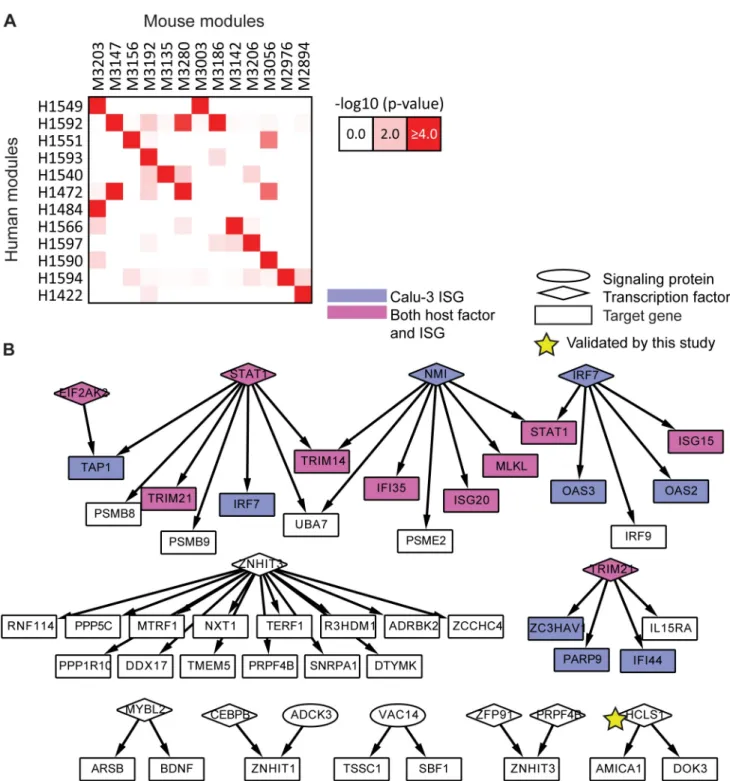
As a final type of evaluation we compared the extent of conservation of immune response of our two host systems to influenza infection (Materials and Methods). At the module level, we estimated the significance of overlap of genes for all module pairs between the two species according to a hypergeometric test. We identified 15 pairs of modules that significantly over-lapped in the gene content (p-value<0.05) between the two species (Fig 4A). The number of genes involved in this overlap was fairly modest, illustrating the challenges of integrating data
Table 1. Catalog of MERLIN modules for human and mouse systems.
Host system Module size (m) Number of modules Number of genes
Human (Calu 3) m500 2 3,272 10m500 39 1,541 m<10 2,387 Mouse (lung) m500 2 1,526 10m500 54 1,418 m<10 4,296
"Module size" refers to the number of genes in a module. 'Number of genes' gives the number of genes covered by modules of a given size.
Fig 3. Overview of human influenza response modules and top predicted regulators. A.A selection of sixteen human modules (grey, center), with their top predicted regulators (shapes on left, connected to modules), and enriched gene sets relevant to immune response or viral life cycle (colored boxes, right). Modules were included in this figure if they were enriched for one of the following categories: (a) influenza host genes (pink) identified by RNAi, protein-protein interactions, expert curation (Zhang et al. 2009), or enrichment for other virus life cycle gene sets (from GO or KEGG); (b) motifs (green) for transcriptional regulators whose annotations indicate relevance to the innate immune response; (c) innate immune response gene sets (blue) from experimental results or manual curation. One module, Cluster 1593, is also included because its consensus regulator set (but not targets) was enriched for host proteins that are involved in the influenza life cycle from Watanabe et al (2014). Also shown are seventeen
from two separate organisms, with the mouse lung system being significantly more complex and heterogeneous than the human cell line system. Despite the low overlap in the number of genes, some of the cross-species module pairs shared enriched annotation categories. Specifi-cally, Module 1549 in human and Module 3203 in mouse were both enriched for antigen pro-cessing and interferon-stimulated genes (ISGs), and human Module 1549 also had a significant overlap with mouse Module 3003, which was associated with cytokine signaling and innate immune system response. In another case, the mouse Module 3203 significantly overlapped with human Module 1484, with both being enriched with hallmarks of the adaptive immune response, namely, antigen processing, B cell activation and leukocyte and lymphocyte activa-tion. Analogously, at the network level, the networks overlap significantly (hypergeometric test
p-value<1e-4, fold enrichment 2.9,Fig 3B), including a core set of 96 interactions, 48 of which form subnetworks with at least 3 genes (Fig 4B). This conserved regulatory network contained many key players from the interferon production and JAK-STAT pathways (STAT1, NMI, IRF7; [27,28]) as well as regulators about which little is known, perhaps representing new rele-vant host processes. One conserved regulator with many conserved targets was ZNHIT3 (also known as TRIP3), a zinc finger HIT domain-containing protein that binds to thyroid hormone receptor [29], but which is otherwise poorly characterized in the pathway databases.
In summary, the enrichment of immune related functions, motif instances of known immune response TFs, agreement with existing computational and experimentally generated immune response related networks, and the conservation of the key immune related modules and networks between two distinct host systems is indicative of valid regulatory programs that can be explored with further experimental analysis.
Predictive regulatory network-based prioritization and validation of
regulators
We used the MERLIN inferred networks to develop a regulator prioritization strategy wherein regulators were ranked according to the loss in the MERLIN model's predictive accuracy when a regulator was omitted from its targets' regulatory programs (Materials and Methods;S6 Table). In comparison to three other ranking schemes (outgoing regression weight, out-degree, and right eigenvector centrality;S1 Text), this strategy identified the most known influenza host genes among high-ranking regulators (S2 Fig).
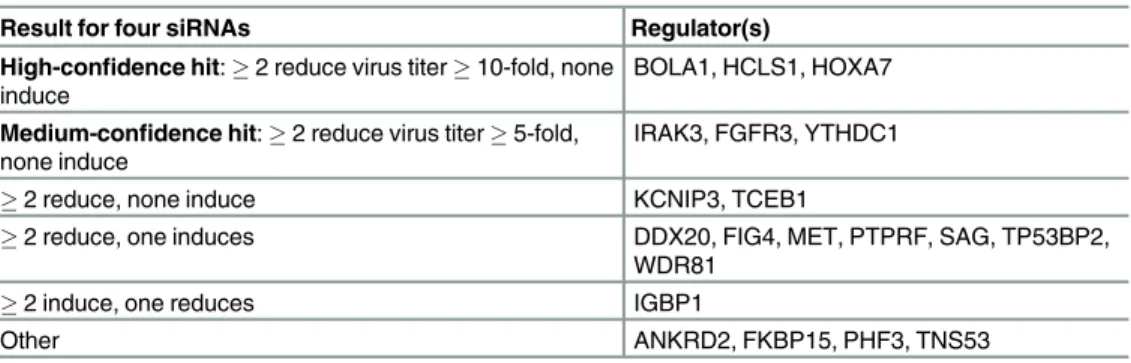
We next used these rankings to guide our experimental validation (Materials and Meth-ods). We selected 20 regulators based primarily on the human rankings, the known annota-tions of the regulators, expression of the regulator’s module and to exclude well-studied immune response regulators (IRF7, NMI, STAT1). To experimentally validate our network-based prioritization scheme, we measured H1N1 virus replication in human lung epithelial cells (A549) following knockdown of predicted human regulators of host response by siRNA (Materials and Methods,S7 Table). For each gene, four siRNAs were used, in order to miti-gate off-target or cytotoxic effects of single siRNAs. We called a gene a high confidence hit using a stringent criteria requiring at least two siRNAs (out of four used for each gene) to yield a statistically significant (t-testp-value<0.05) and high-magnitude (10 fold) change in virus titer compared to negative controls, and if none of the siRNAs yielded a significant change in
(ellipses and diamonds) predicted mRNA-level regulators, and ten predicted protein regulators (hexagons), that are associated with these modules. Regulators with evidence for influenza relevance are shaded in pink. Host genes that significantly impact viral replication identified by this study (APP, FGFR3, HCLS1, HOXA7, SERPINA3) are indicated with yellow stars.B.Comparison of the MERLIN inferred mouse and human influenza response networks ("Influenza (this study, other system)") to each other and to other regulatory networks. Fold enrichment of shared edges over expected fraction is visualized in the heat map, with significant comparisons marked with asterisks (hypergeometricp-value<0.05).
the opposite direction. Using these strict criteria, three out of the twenty tested regulators were called hits: BOLA1, HCLS1, and HOXA7 (Table 2). Three additional regulators were medium-confidence hits with>5 fold change but significant and consistent effects in multiple siRNAs:
Fig 4. Conservation between human and mouse subnetworks. A.Modules conserved between human and mouse. There were fifteen (red shading) significantly overlapping module pairs (hypergeometric p-value<0.0001), including 12 human modules and 13 mouse modules.
B.A core set of interactions conserved between the human and mouse consensus regulatory networks. Shown are the 48 of 96 shared interactions that belong to subnetworks with at least three nodes. Shading indicates Calu-3 ISGs (violet) and nodes identified both as known host genes and ISGs (magenta). Star indicates a gene that significantly impacted viral replication on knockdown as identified in this study.
FGFR3, IRAK3, and YTHDC1. Knockdown of all six of the above consistently resulted in reduced virus titer, suggesting that the genes are important for virus production. Other tested regulators had multiple significant siRNAs, but conferred lower fold changes or showed diver-gent changes in viral titer between different siRNAs for the same gene. We note that some of the genes in our study for which multiple siRNAs had statistically significant but inconclusive direction or magnitude of effects were identified as hits by genome-wide screens (S7 Table). While understanding the detailed role of these predicted regulators in viral replication will require further experiments, these results suggest that our network inference and prioritization method can successfully identify important regulators of host response.
MTG-LASSO enables integration of protein level regulators for gene
modules
To integrate proteomic measurements with the host transcriptional response, we used a predic-tive modeling approach to identify proteins whose levels are predicpredic-tive of the mRNA levels of gene modules. In theory, the MERLIN network inference algorithm could be used to integrate these proteins as additional regulators of a target gene’s expression levels. However, there were three reasons that prevented us from doing this. First, entire time courses of protein measure-ments were missing, and integration into the initial network inference step would require either extensive interpolation of entire time courses or excluding many mRNA measurements. Sec-ond, only ~20% of our candidate regulators (signaling proteins and TFs) with available mRNA levels were measured at the protein levels (S4 Table,S5 Table). Third, compared to mRNA lev-els of regulators, protein levlev-els were not good as predictors of target gene mRNA level, likely because of the smaller dynamic range of proteomic measurements (S3 Fig).
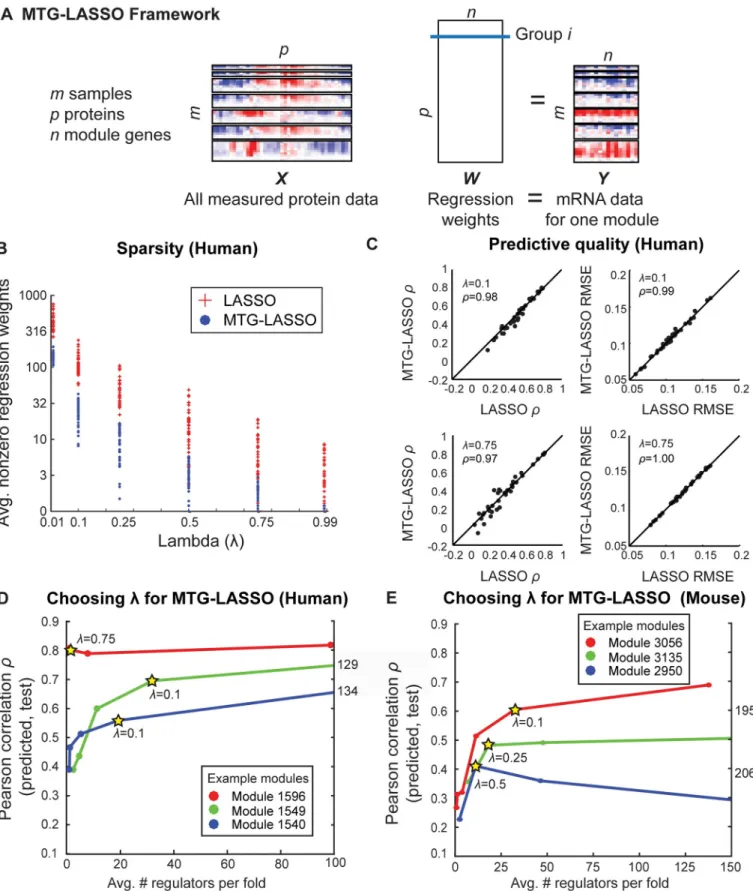
Our predictive modeling approach used a structured-sparsity based regression framework, called Multi-Task Group LASSO (MTG-LASSO,Fig 5A) [30,31]. Our approach is based on using group LASSO for multi-task feature selection [30,31]. Unlike LASSO [32], which solves one regression problem at a time, MTG-LASSO aims to solve multiple regression problems simultaneously, one for each gene in a module. Our regression formulation has two properties: (a) multi-task regression (where each task is the regression problem of each gene in a module) and (b) group LASSO, to enable selection of the same regulators (with possibly different regres-sion weights) for all genes in a module. LASSO-based approaches have been applied extensively for mRNA-based regulatory network inference [24,33]; however, to our knowledge, our MTG-LASSO approach is the first to employ grouping structure in order to integrate sparse
Table 2. Summary of results of siRNA validation study of twenty regulators predicted by MERLIN. Result for four siRNAs Regulator(s)
High-confidence hit:2 reduce virus titer10-fold, none induce
BOLA1, HCLS1, HOXA7
Medium-confidence hit:2 reduce virus titer5-fold, none induce
IRAK3, FGFR3, YTHDC1
2 reduce, none induce KCNIP3, TCEB1
2 reduce, one induces DDX20, FIG4, MET, PTPRF, SAG, TP53BP2, WDR81
2 induce, one reduces IGBP1
Other ANKRD2, FKBP15, PHF3, TNS53
Four siRNAs were used per gene. siRNA results are reported for significant changes in viral titer as assessed by T-test compared to negative control. Hits are defined as those that show a strong, significant and consistent effect across multiple siRNAs. Full data and results are available inS7 Table.
Fig 5. Multi-task Group LASSO (MTG-LASSO) structured-sparsity approach for integration of protein data with expression-based regulatory module networks. A.Illustration of MTG-LASSO framework for predicting protein regulators for one module (Methods). Horizontal separations in theXandYdata boxes represent different virus time course. Rows ofXandYrepresent time points. Columns ofXcorrespond to
protein-level data with comparatively higher-coverage mRNA-level data. A module-based regression enables us to pool information from all genes in the module to select regulators that are informative for all genes in the module.
The MTG-LASSO regression problem is illustrated inFig 5A.The full protein data matrix, Xconsists ofmsamples forpproteins. Allpproteins are used as covariates. The target gene expression matrix for a module,Yis anm X nmatrix, each column representing the expression profile of a gene in the module. The regression weight matrix,Wis ap X nmatrix, each row representing the regression weight of a protein for allngenes. In the group LASSO framework, a pre-defined grouping structure of covariates is used to select or de-select a group of coeffi-cients together. We define a group as the set of regression weights for a single protein’s associa-tion to all module genes, resulting inpgroups. The framework uses a mixed L1/L2-norm penalty to impose smoothness and sparsity: the number of proteins (groups) with any nonzero regression weights should be small, and the weights within a group should be similar.
We compared the performance of the MTG-LASSO models to models learned from ran-domized protein data (using one-sample z-tests;Materials and Methods). About half of the human modules, and all but two mouse modules, were predicted better than chance for multi-pleλvalues. This result was consistent for both RMSE and Pearson correlation measures of predictive quality. From this analysis, we concluded that the protein data does indeed contain predictive signal for many modules; however, it should be used conservatively as predictive quality is not equally good across modules.
The alternative to our MTG-LASSO approach is to perform traditional LASSO for each gene independently, ignoring the module structure. To assess the advantage of MTG-LASSO over regular LASSO, we applied both methods to each module separately. We compared the methods on the basis of (i) sparsity of the model measured by the average number of regulators chosen for a module across the 10 folds, and (ii) prediction quality measured by Pearson's cor-relation and the root mean square error (RMSE) between the measured and predicted set using 10-fold cross-validation. Both MTG-LASSO and LASSO have a regularization term,λ, which controls the tradeoff between the model complexity penalty and a model's predictive power. We examined five settings ofλ, between 0.99 (highest penalty imposed, requiring few regula-tors) and 0.01 (least penalty imposed, allowing many regularegula-tors). The regularization termλis a number between 0 and 1. It denotes a fraction ofλmax(maximum possible regularization before
reaching a 0 solution), and is comparable between MTG-LASSO and LASSO (seeMaterials and Methods).
First, we observe that LASSO identified more regulators per module at every value ofλ com-pared to MTG-LASSO (Fig 5B,S4A Fig). Second, when matched at the sameλ, MTG-LASSO and LASSO yielded highly similar predictive quality scores per module based on both Pearson correlation and RMSE values (Fig 5C,S4B and S4C Fig). The comparable predictive power of MTG-LASSO is observed over all modules and values ofλcompared (two-sided Kolmogorov-Smirnov test: humanp-value = 1.0 Pearson, 0.98 RMSE; mousep-value = 1.0 Pearson, 0.58 RMSE).
proteins and columns ofYcorrespond to mRNA levels of genes in a module.B.Comparison of number of nonzero regression weights identified by MTG-LASSO and LASSO. Each dot (MTG-LASSO) or plus sign (LASSO) represents the number of non-zero regression weights for one setting ofλ (the sparsity parameter) for one module. Number of nonzero weights is averaged over 10 folds of cross-validation.C.Comparison of cross-validation predictive quality between MTG-LASSO and LASSO. Results are shown forλ= {0.10, 0.75}; results for other settings are inS4 Fig.In each scatterplot, there is one point per module. Left two plots compare methods based on Pearson correlation (ρ) of predicted to actual expression values; right plots compare on the basis of root mean squared error (RMSE). Insetρgives Pearson correlation between MTG-LASSO and LASSO scores. Diagonal line is shown for comparison.D/E.Examples of curves used to selectλfor individual modules; human (D) and mouse (E). Y-axis gives Pearson correlation (cross-validation predictive quality); X-axis gives the average number of nonzero regression weights for that module; this value is higher than the final number of high-confidence, high-weight regulators. Stars indicate the chosen value ofλfor the example modules.
The proteins selected by MTG-LASSO were contained within and important to the LASSO models. In particular, when the LASSO proteins were ranked by their average absolute outgo-ing weight for the sameλ, the MTG-LASSO regulators appeared at the top of the list. We quan-tified the ranking by the area under ROC curve (AUROC), treating MTG-LASSO as the positive class and the additional LASSO regulators as the negative class. The AUROC gives the probability that a randomly chosen MTG-LASSO regulator ranks above a randomly chosen LASSO regulator. For human, AUROC ranged between 0.96–0.99, and for mouse 0.91–0.98 when considering all genes together. The high ranking of MTG-LASSO regulators in the LASSO selected regulators is observed on a per-module level as well (S4D and S4E Fig).
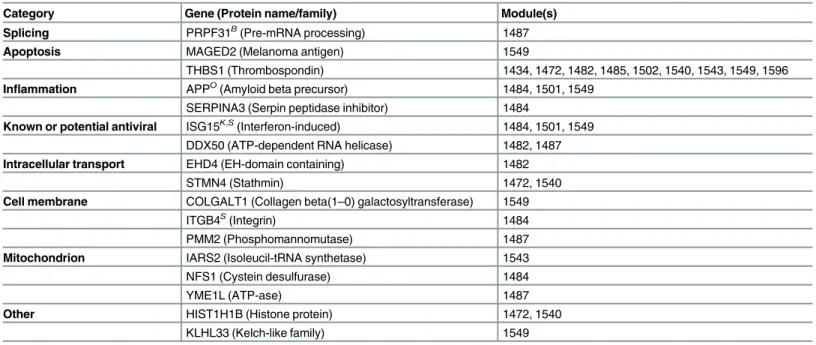
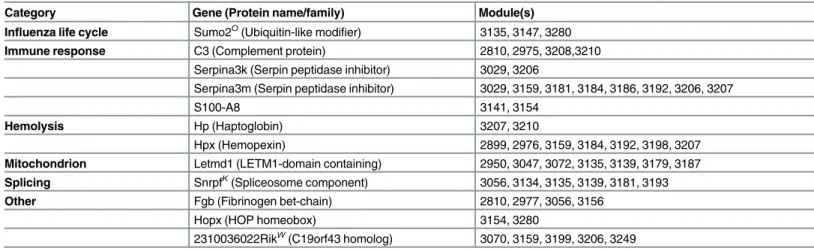
Because MTG-LASSO learned a subset of the LASSO regulators, we asked if the regulators that were identified by LASSO but not MTG-LASSO were known to be important based on existing siRNA screening studies. Focusing on modules that were predicted better than random (11 in human and 36 in mouse), we defined consensus regulators per-module as regulators that were selected in at least 6 of 10 folds of cross-validation after determining a module-spe-cific value ofλ(Materials and Methods,Fig 5Dand5E). Our analysis identified a total of 17 human consensus protein regulators for 11 modules in human (1–6 protein regulators per module,Table 3;selected regulators shown inFig 3A) and a total of 33 consensus protein reg-ulators predicted for 36 modules in mouse (1–6 regulators per module,Table 4,S8 Table). A similar analysis for LASSO identified 60 different regulators for human and 79 for mouse, which contained the MTG-LASSO regulators entirely (S9 Table). Comparable proportions of the consensus regulators identified by each method have been found as hits in published influ-enza screening studies (for human, MTG-LASSO 23.5% and 18% LASSO; for mouse,
MTG-LASSO 18% and LASSO 20%). Because the MTG-LASSO regulators were included in the LASSO rankings we also computed the precision after excluding the MTG-LASSO regula-tors. In human the precision was markedly lower (16.3%), and slightly lower in mouse (19.6%).
Table 3. Consensus human protein regulators identified by MTG-LASSO.
Category Gene (Protein name/family) Module(s)
Splicing PRPF31B(Pre-mRNA processing) 1487
Apoptosis MAGED2 (Melanoma antigen) 1549
THBS1 (Thrombospondin) 1434, 1472, 1482, 1485, 1502, 1540, 1543, 1549, 1596
Inflammation APPO(Amyloid beta precursor) 1484, 1501, 1549 SERPINA3 (Serpin peptidase inhibitor) 1484
Known or potential antiviral ISG15K,S(Interferon-induced) 1484, 1501, 1549 DDX50 (ATP-dependent RNA helicase) 1482, 1487
Intracellular transport EHD4 (EH-domain containing) 1482
STMN4 (Stathmin) 1472, 1540
Cell membrane COLGALT1 (Collagen beta(1–0) galactosyltransferase) 1549
ITGB4S(Integrin) 1484
PMM2 (Phosphomannomutase) 1487
Mitochondrion IARS2 (Isoleucil-tRNA synthetase) 1543
NFS1 (Cystein desulfurase) 1484
YME1L (ATP-ase) 1487
Other HIST1H1B (Histone protein) 1472, 1540
KLHL33 (Kelch-like family) 1549
Genes are categorized by major biological annotation according to NCBI Entrez, GeneCards, or UniProt. The Module column lists the MTG-LASSO predicted target modules of a protein regulator. Genes that have been identified as relevant to influenza by a screening or literature study are marked with a superscript: Brass et al. 2009B; Karlas et al. 2010K, König et al. 2010O; Shapira et al. 2009S.
Thus for the human cell line data, there is a distinct advantage of using MTG-LASSO to quickly identify the important regulators. The mouse data is more challenging likely due to the hetero-geneous nature of the cell populations. Together, these results suggests that MTG-LASSO is able to learn as good a predictive model as regular LASSO, and is particularly advantageous for identifying regulators at the module level. Below we further experimentally validate the MTG-LASSO regulators.
MTG-LASSO predicts protein-level regulators of host response with
significant effects on virus replication
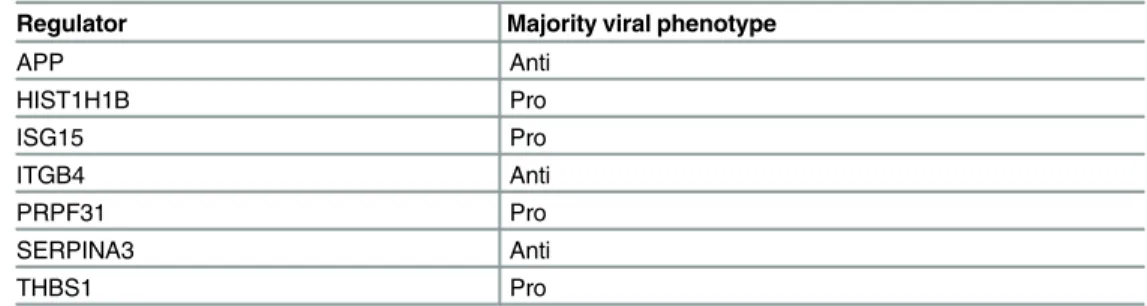
We first qualitatively examined our regulators based on known literature and annotation of these regulators. Several of our MTG-LASSO protein regulators are known to be associated with immune response pathways, cellular membranes and intracellular transport, RNA splic-ing machinery, mitochondrial inflammation, and may be involved in viral replication, entry or transport within the cell(Tables3and4). We experimentally validated seven of the 17 human MTG-LASSO regulators for which we already had siRNA libraries(Table 5,S7 Table), trans-fecting cells with 4 siRNAs per regulator. For all seven regulators at least two of the four siR-NAs resulted in a significant change in virus titer, and had at least one siRNA resulted in a fold-change far beyond 10-fold. Unlike in the mRNA case, where most of the significant and high magnitude changes were in one direction, for several of the protein regulators, different siRNAs targeting the same gene resulted in both significant and high magnitude increase and decrease in viral replication. We therefore used a majority rule on the significant changes to phenotypically characterize the effect of knockdown of a particular protein regulation. Specifi-cally, a gene was called“pro”viral replication if the number of significant decreases in viral rep-lication was greater than the number of significant increases. Similarly, a gene was called“anti” viral replication if knocking it down resulted in more significant increases than decreases in viral replication. Among the seven proteins that were tested, four were classified as“pro”viral replication with more significant decreases in viral replication (HIST1HB, ISG15, PRPF31, THBS1), while three were called as“anti”viral replication with significant increase in viral
Table 4. Top consensus mouse protein regulators identified by MTG-LASSO.
Category Gene (Protein name/family) Module(s)
Influenza life cycle Sumo2O(Ubiquitin-like modifier) 3135, 3147, 3280
Immune response C3 (Complement protein) 2810, 2975, 3208,3210 Serpina3k (Serpin peptidase inhibitor) 3029, 3206
Serpina3m (Serpin peptidase inhibitor) 3029, 3159, 3181, 3184, 3186, 3192, 3206, 3207
S100-A8 3141, 3154
Hemolysis Hp (Haptoglobin) 3207, 3210
Hpx (Hemopexin) 2899, 2976, 3159, 3184, 3192, 3198, 3207
Mitochondrion Letmd1 (LETM1-domain containing) 2950, 3047, 3072, 3135, 3139, 3179, 3187
Splicing SnrpfK(Spliceosome component) 3056, 3134, 3135, 3139, 3181, 3193
Other Fgb (Fibrinogen bet-chain) 2810, 2977, 3056, 3156
Hopx (HOP homeobox) 3154, 3280
2310036022RikW(C19orf43 homolog) 3070, 3159, 3199, 3206, 3249
Genes are categorized by major biological annotation according to NCBI Entrez, GeneCards, or UniProt. The Module column lists the MTG-LASSO predicted target modules of a protein regulator. Because there were 33 total, we limit presentation here to twelve regulators that were linked to at least two modules. A full list of consensus proteins is available inS8 Table. Genes for which human homologs have been identified as relevant to influenza by a screening or literature study are marked with a superscript: Karlas et al. 2010K; König et al.2010O; Watanabe et al. 2014W.
replication (APP, ITGB4, SERPINA3). PRPF31, which had the strongest, consistent effect across all significant siRNAs, is a pre-mRNA splicing factor that was previously implicated in viral replication by a genome-wide screen. It is known that the host RNA splicing machinery is hijacked by influenza virus [34]. ISG15 is a ubiquitin-like protein that is stimulated by inter-feron alpha and beta and is associated with diverse cellular functions including cell-to-cell sig-naling and anti-viral activity. Hence, ISG15’s pro-viral phenotype was surprising. However, this protein has been observed to be attached to both host and viral proteins [35] and has been previously shown to reduce viral replication on knockdown in a previous study [36]. THBS1 is a ligand of CD47 and an inhibitor of T and dendritic cells and may play a role in inhibiting inflammation [37]. SERPINA3 and APP in particular are interesting candidates as potential inhibitors of viral replication. The serine protease inhibitor SERPINA3 (module 1484) and its mouse homologs Serpina3k (two modules) and Serpina3m (eight modules) were identified independently for both species. SERPINA3 belongs to the family of serine protease inhibitors that have diverse roles in innate immunity [38–40]. While SERPINA3 has not been shown to affect viral replication, another member of this family, SERPINE1, was shown to reduce the infectivity of the virus particle [41]. APP has been mostly studied for its role in neurodegenera-tive diseases: beta amyloid plaques are associated with neuronal cell death in Alzheimer’s Dis-ease [42] but a recent study also suggests it may have an antiviral role, based on observations of decreased influenza A replication (H1N1 and H3N2) in cells treated with beta amyloid [43], consistent with the increase in viral titer observed in this study.
Taken together, our results indicate that MTG-LASSO can identify regulator candidates that are relevant to immune responses to viral infections. Overall MTG-LASSO's ability to highly rank the most relevant regulators is an important factor for tractable downstream inter-pretation and validation of selected regulators.
Active network components across time points and virus treatments
We next used the integrated mRNA and protein-based networks to examine the temporal dynamics of host response. This type of analysis can be used to predict which network compo-nents may be repressed or differentially wired in response to different viruses. We builttime point-specific active networksby overlaying time point-specific expression on the integrated regulatory network connecting both mRNA and protein regulators to their target genes. For each time point and virus, we obtained a time point-specific regulatory network by including
Table 5. Summary of results of siRNA validation study of seven human protein regulators predicted by MTG-LASSO.
Regulator Majority viral phenotype
APP Anti HIST1H1B Pro ISG15 Pro ITGB4 Anti PRPF31 Pro SERPINA3 Anti THBS1 Pro
Four siRNAs were used per gene. All genes had multiple siRNAs with significant effects, and all had at least one at least ten-fold. However, for most genes, different siRNAs resulted in different effects on virus titer; therefore we characterize each by its majority viral phenotype among the significant siRNAs. Full data and results are available inS7 Table.
inferred edges between regulator nodes (mRNA or proteins) and target genes (mRNA) that were significantly up-regulated (z-score2, compared to all expression values at that time point). For this analysis we focused on the Calu-3 data set.
Examination of the active network size (number of edges, regulators and targets) over time showed that the size of networks for each viral treatment tended to change by adding more edges over time (S5 Fig), with the H5N1 mutants and wild-type achieving the largest networks. Interestingly, H1N1 NL's network grew more slowly than that of H1N1 CA04 (S5 Fig), although the networks for the two viruses were highly similar in terms of which nodes and edges they contained by the last time point (S6 Fig).
To identify network components that were common to a subset of viruses or time-points, we clustered the edges from the active networks according to their presence-absence pattern across all samples (Materials and Methods,Fig 6). We obtained five clusters of edges (Fig 6A) four of which included edges active at multiple early time points (Fig 6A; Clusters A-D) and a fifth containing edges that were only present in the 18-hour (very late) time points for medium or high-pathogenicity viruses (Fig 6A; Cluster E). Further, Clusters A-C exhibited a sustained pattern of edge presence with edges present through the entire time course, while Cluster D was associated with edges present during the later time points.
Clustering was strongly driven by presence-absence pattern of edges in viruses rather than individual time points. Edges from the two low-pathogenicity H1N1 strains (CA04 and NL) tended to be placed in the same cluster (Fig 6, Clusters A, B), and edges from the medium-pathogenicity (PB2-627E) and two high-medium-pathogenicity strains (PB1-F2Del, H5N1 wildtype) did as well (Cluster B, C, D). The networks for the medium and high pathogenicity mutants additionally distinguished activation responses that occurred at later time points (Cluster A, D) from those that were present at all time points (Clusters B, C).
To identify specific processes that were associated with these edge clusters, we tested them for enrichment of pathways (Table 6, Materials and Methods). Cluster A was signifi-cantly enriched with immune response processes, namely anti-viral and interferon response. This cluster was active for H1N1 infections as well as H5N1 NS1trunc. Predicted regulators in this cluster included key immune response regulators at the mRNA (e.g. IRF7, STAT1, TRIM21, NMI) and the protein level (ISG15p). In terms of pathogenicity, the NS1trunc virus is more lethal than the H1N1 strains; however, truncated NS1 protein disrupts the virus' ability to effectively suppress host immune response. The H5N1 NS1trunc mutant in particular displayed an interesting clustering pattern across the other clusters. It was repre-sented in two clusters that represent late response to other medium- and high-pathogenicity viruses (Clusters D, E), but absent from a cluster that represents early-onset sustained edges among H5N1 strains (Cluster C) as well as from Cluster B, which included edges from all other viral strains. Cluster B and Cluster C, which are associated with the two highly patho-genic viruses are associated with GPCR signaling and muscle contraction and include some of our siRNA based regulators (YTHDC1, Cluster B) and (HCLS1, HOXA7, Cluster C). Both Clusters D and E, which include active edges primarily from the high and medium pathogenicity viruses, are associated with signaling pathways including Wnt signaling and the circadian clock. Wnt signaling has been implicated in influenza infections [14,44], while disruptions in circadian clocks have been shown to increase susceptibility of the immune system to infections [45].
In summary, our active network analysis identifies different subnetwork components that are specific to different viruses, and implicates additional processes that might be relevant in a strain-specific manner.
Fig 6. Time-point and virus-specific active subnetwork clusters. A.Clusters identified using hierarchical clustering of edges based on the presence/ absence pattern of edges across time and virus strain. Each row represents an edge. All clusters are uniformly scaled to the same height, but comprise varying numbers of edges (shown on left).B.Active subnetworks defined by clusters inAfor each virus. The subnetwork for each virus is defined by
Physical subnetworks suggest putative mechanistic connections
between module regulators
Our analyses thus far inferred two sets of regulators for each module: (1) mRNA-based regula-tors, signaling proteins and TFs, predicted by MERLIN based on transcriptome changes, and (2) protein-based regulators predicted by MTG-LASSO based on proteome and transcriptome changes. Both these types of regulators were predicted based on patterns of co-variation of reg-ulators and targets (at the individual gene or module levels). What is missing is information about the underlying physical mechanisms that connect the signaling proteins to transcription factors, and the protein-level regulators to the mRNA-level regulators. To gain insight into the underlying physical mechanisms that connect the regulators, and to link them to host genes identified from functional screening studies, we integrated the predicted regulators with physi-cal protein-protein interactions, transcription factor-target interactions, and metabolic reac-tions from multiple public databases (Materials and Methods). Typically, the interaction data do not provide evidence for direct interactions between regulators, requiring the identification of additional intermediate nodes that connect these regulators. However, even allowing only one intermediate node can result in large subnetworks that are unwieldy for interpretation (see for exampleFig 7A). Furthermore, because available interactions are not condition-specific, they may contain false positive interactions and may be missing relevant connections. To iden-tify high-confidence physical subnetworks that are easily interpretable, we formulated a con-strained optimization problem to find directed paths that connect MERLIN-identified signaling proteins to transcription factors and MTG-LASSO-identified proteins to MERLIN regulators using a minimal set of intermediate nodes (Materials and Methods), prioritizing the inclusion of host genes that were recently identified by Watanabe et al. [46] using both
taking the union of all edges present at any time point for that virus. Dark nodes/edges are active in both the cluster and any time-point for the virus; light nodes/edges are active in all other viruses and part of this cluster.
doi:10.1371/journal.pcbi.1005013.g006
Table 6. Characterization of time- and virus-specific subnetworks. Cluster Timing In-cluster viruses Out-of-cluster
viruses
Enriched pathways Enriched regulators
A Sustained H1N1 CA04 and NL; H5N1 NS1trunc
H5N1 WT, PB1-F2del, PB2-627E
JAK-STAT signaling*, antiviral and interferon response, many immune-response pathways, cell cycle
FOSL1, IRF7, ISG15p, LMO2, MAFF, MLKL, NFS1p, NMI, NUPR1, SP110, SSTR2, STAT1, TRIM21, TRIM5
B Sustained H1N1 CA04 and NL; H5N1 WT, PB1-F2del, PB2-627E
NS1trunc GPCR signaling SAG, YTHDC1
C Sustained H5N1 WT, PB1-F2del, PB2-627E
H1N1 CA04 and NL; H5N1 NS1trunc
Muscle contraction DDR2, HCLS1, HOXA7, SAG, TAL2, YTHDC1 D Mid-late H5N1 WT, NS1trunc, PB1-F2del, PB2-627E H1N1 CA04 and NL PPARA*, SCF KIT*, NFG*, FGFR* mutant signaling pathways
CCRN4L, CDKL2, CDKL3, CITED2, ETV3, MXD1, NR4A2, PAPOLG, PPP1R10, SNAI1, TCEB1, TOB1, WNK4
E Very late H5N1 WT, NS1trunc, PB1-F2del, PB2-627E
H1N1 CA04 and NL
Circadian clock, Wnt signaling ACVR1B, ERCC2, FBXL19, FOXH1, NKX2-5, PPP1R11, SAP30BP, TLX2
"Timing" describes the general timing under which the cluster is active; a value of 'sustained means that the cluster appears active throughout every time course. "In-cluster" lists the viruses represented in the cluster. 'Out-of-cluster' lists the viruses mostly absent from the cluster. "Enriched pathways" lists major enriched pathway terms
*indicates that the pathway was enriched only among regulators of the cluster network. "Enriched regulators" are the subset of cluster regulators for which their targets are statistically enriched in the cluster relative to all clusters.
Fig 7. Integration of expression- and protein-based regulators into a physical subnetwork for module 1549. A.Candidate subnetwork for module 1549 given as input to the Integer Linear Programming (ILP) approach to find a minimal network. The candidate subnetwork is extracted from the background interaction network by connecting MERLIN (mRNA) and MTG-LASSO (protein) regulators through at most one intermediate node and mRNA signaling proteins to TFs (Materials and Methods). Nodes with dark outlines are input to the ILP-based subnetwork inference method: MERLIN regulators (diamonds and ellipses), protein regulators (octagons), and host genes for influenza identified by Watanabe et al (2014) (boxes). Nodes without borders are candidate intermediates between two regulators and were not given special treatment by the method. Node color indicates host genes involved in influenza obtained from siRNA or protein interaction studies and Calu-3 ISGs (as inFig 3); this information is for visualization purposes and is not used in the subnetwork inference method. Only edges between intermediate nodes and input nodes are shown. Additional available protein-protein interactions between intermediate nodes are not shown for visual clarity.B.Minimal subnetwork for Cluster 1549's regulators inferred using ILP. Yellow stars indicate host genes for which siRNA knockdown significantly impacted viral replication. Also shown are interactions between Watanabe host genes and viral proteins (yellow hexagons). Grey edges are input to the method but not selected by the approach. All selected edges and all nodes other than YWHAZ, TP53, SNW1 (brown boxes) had FDR0.10. FDR was assessed based on permutation tests.
RNAi and co-immunoprecipitation with viral proteins. Such nodes are important in the virus-specific protein-protein interaction network and provide additional context for interpreting our predicted transcriptome and proteome-based regulators. We applied an Integer Linear Programming (ILP) approach to solve this optimization problem, which has been shown to find more precise solutions compared to heuristic algorithms [47–49].
Using our ILP approach we identified high-confidence physical subnetworks for 16 human modules, which included between 0–8 intermediate nodes, including a subset of the Watanabe hits and protein interaction partners (S2 Text,S1 Table, Supporting Website). Nine of the module subnetworks included predicted protein regulators. The high-confidence subnetworks were able to connect more true regulators with fewer intermediate nodes than subnetworks inferred from random regulators with the same degree distribution, suggesting that the sparsity of the high-confidence physical subnetworks was not merely due to the degree of the input reg-ulators in the physical interaction network (S3 Text). We also used the random input subnet-works to compute an empirical FDR for each protein by measuring the frequency at which the protein appears randomly, and found that it ranged from 0–0.4, demonstrating that many of the proteins used in the subnetworks are unlikely to be identified by chance (Materials and Methods). A low FDR is a conservative measure of a protein's importance, as many relevant proteins are network hubs and are likely to be identified by chance.
These modules, together with their subnetworks, provide an integrated view of different types of regulators that are interacting to drive the downstream expression pattern of the host response. We discuss several below and provide all others on aSupporting Website.
Core integrated regulatory module networks represent an interplay of
interferon signaling, inflammation and apoptosis components of
mammalian immune response
Our integrated network analysis identified several modules that captured different components of the host immune response machinery. One of these modules was Module 1549, which was associated with immune response-related processes by many of our computational analyses (Figs7and8). Module 1549 exhibited a particularly interesting strain-specific pattern of induced expression under infection with low-pathogenicity viruses and the medium pathoge-nicity virus, H5N1-NS1trunc, and repressed expression under infection with high pathogenic-ity viruses (Fig 8). Module 1549 is also enriched for genes associated with interferon signaling, which are critical for mounting the innate immune response. The influenza NS1 ('non-struc-tural') protein is already known to inhibit the host's antiviral type I interferon response [50], suggesting that this module would be a good candidate for further investigation into the mech-anism of action of NS1. Furthermore, the genes in Module 1549 overlapped significantly with two mouse modules (Fig 4A), and its regulators featured prominently in the conserved regula-tory network identified by the intersection of the human and mouse consensus networks (Fig 4B).This module is associated with NFS1, APP, SERPINA3, and ITGBP protein regulators, and IRF7, NMI, and STAT1 mRNA regulators, which are well-known members of the inter-feron response and JAK-STAT antiviral response pathway [27,28]. The subnetwork analysis applied to the regulators of this module highlighted HSPA4, also known as Hsp70, as a hub that connects gene members from multiple immune response pathways(Fig 7B). HSPA4 has been proposed as both an antiviral factor [51] as well as a chaperone required for viral replica-tion [52]. HSPA4's direct subnetwork connections include members and modulators of the antiviral JAK-STAT pathway (ISG15[53], FGFR3, STAT1) and also inflammation (APP). FGFR3 was a hit in our MERLIN-network based prioritization siRNA study and acts as a mod-ulator of the JAK-STAT pathway in growth disorders such as achondroplasia (OMIM). APP
was identified as an inhibitor of viral replication in our siRNA validation. Other important genes in this subnetwork are the protein regulator THBS1 and an mRNA-based regulator, MLKL. THBS1 is involved in apoptosis [54] and potentially inhibiting inflammation [37], and our siRNA validation results classify it as a pro-viral replication gene, while MLKL induces necroptosis (inflammatory cell death; [55]). As a whole, the subnetwork for Module 1549 ties together multiple immune response pathways, namely, antiviral interferon signaling, inflam-mation and apoptosis.
In contrast to Module 1549, Module 1540 (Fig 9A) shows a pattern of repressed expression in response to low-pathogenicity viruses, and increased expression over time in response to high-pathogenicity viruses. The subnetwork analysis revealed connections between the mRNA (ANKDRD2, SET) and protein-based regulators (HIST1HB1, THBS1) of this module via inter-mediate nodes, SIRT1 and ELAVL1 and the Watanabe host gene, TP53 (Fig 9B). The SIRT family of proteins have been identified as antiviral factors for multiple viruses [56]. The subnet-work suggests that part of its antiviral activity is mediated through interactions with anti-apo-ptotic signaling protein SET [57] as well as through direct interactions with histones. The other proteins in the subnetwork have roles in apoptosis and the p53 pathway: TP53 (p53) itself, ELAVL1 (which stabilizes p53 mRNA; [57]), ANKRD2 [58], and THBS1. In summary, Module 1540 identified interactions between histone proteins and various pro- and anti-apoptotic fac-tors, some of which may explain the independently observed antiviral activity of SIRT1.
A third characteristic pattern was exhibited by Module 1472 (S7 Fig). Genes in this module were associated with a general pattern of induced expression but differed in the intensity of induction (stronger induction in the high pathogenicity strains compared to the low pathoge-nicity strains). This module was predicted to be regulated by several transcription factors (ANKRD2, EMX1, EN2, FOXC2, SOX17, RLX2, ZNF205) and two signaling proteins, GRIN1 and SIK1. SIK1 is a protein kinase which is involved in phosphorylation of HDACs (histone deacetylases) which can in turn modulate innate anti-viral responses [59] and interferon sig-naling genes [60]. Moreover, the subnetwork analysis linked SIK1 to the predicted protein reg-ulator THBS1 (an inflammation inhibitor) through the intermediate node FYN, a tyrosine kinase with potential role in NFKB-mediated adaptive immunity.
Finally, a fourth module of interest was Module 1482 (S8 Fig), which exhibited a pattern of high expression in the low pathogenicity viruses compared to both high and medium pathoge-nicity viruses. Both the candidate and minimal subnetworks for this module provided useful information for generating hypotheses about mechanistic interactions between the regulators. The module was associated with both mRNA and protein regulators as well as hits from the Watanabe study: SNW1, which interacts with viral NS1 protein, and PSMC1, which interacts with viral HA, M1, NA, PA, PB1, and PB2 proteins. The subnetwork analysis connects pre-dicted mRNA regulators (SRC, BTRC, PPM1F) and protein-based regulators (THBS1, EHD4) through SNW1 and PSMC1 (S8C Fig). EHD4 is a regulator of endocytosis [61], suggesting a role in virus entry, and SRC is a tyrosine kinase that has been identified to be involved in antivi-ral signaling [62].
Taken together, our integrated analysis identified the major regulatory modules of host transcriptional response and predicted mechanistic regulatory programs associated with these
Fig 8. Target and regulator expression profile of human Module 1549.In the“Regs”columns, consensus regulators for each gene are marked with purple boxes. In“Motifs”, genes containing MSigDB regulatory motifs, including miRNA motifs, are marked in green. Motifs shown are only those that are enriched in the module. Next, colored boxes indicate host genes identified from screening studies (salmon) and immune response gene sets (violet). Below the rows for module genes are rows for MERLIN-predicted mRNA regulators and MTGLASSO-predicted protein regulators. Gene expression values are scaled (-2,2); protein values are scaled (-1,1) to improve visibility. Time courses entirely missing at the protein level are indicated as“No protein data”.
Fig 9. Target and regulator expression profile and the physical regulatory program of Module 1540. A.Heatmap visualization of module 1540 genes and regulators. In the“Regs”columns, consensus MERLIN regulators for each gene are marked with purple boxes. Next, genes with SREBP binding motif are marked in green. Below the heatmap for module genes are rows for MERLIN-predicted mRNA regulators and MTGLASSO-predicted protein regulators. Gene expression values are scaled (-2,2); protein values are scaled (-1,1) to improve visibility.B.Original subnetwork for Cluster 1540. Black edges link regulators to intermediates; these are provided as input to the ILP method. Additional interactions from the background network between regulators and intermediates are shown in grey. SeeFig 7Bfor additional legend details.C.
Minimal subnetwork for Cluster 1540, output from the ILP-based subnetwork inference method. Compared to the original subnetwork, the minimal subnetwork prunes away one protein: HIST1H3A. SeeFig 7Bfor legend.
modules. The modules exhibited pathogenicity or strain-specific patterns and were enriched in immune related processes and predicted to be regulated by genes from diverse pathways including innate immune response and apoptosis. These module case studies support our regu-lators as important players of host response and provide an integrated view of how host response may be regulated at multiple levels, from mRNA, to protein, to interaction networks.
Discussion
Identification of the molecular networks that underlie host response to different pathogenic infections is important to understand both the mechanisms of immune response as well as to design better therapeutics. Towards this end, we performed an integrative regulatory network-based analysis that combines transcriptomic, proteomic and existing molecular interaction datasets to identify important genes, modules and subnetworks. We found that the key compo-nents of innate immune response processes namely, interferon production and signaling, and important regulators of immune response (STAT1, NMI, IRF7), were conserved between a human cell-line (in vitro) and mouse lung (in vivo) model system. Our approach was able to predict novel regulators at the mRNA and protein level and implicate molecular pathways that may drive virus-specific host responses.
Prioritization of predictions, including important genes, interactions and networks, is important in systems biology studies, which can easily generate a large number of hypotheses. While a large number of prioritization methods, including network-based strategies, have been proposed [63] and computationally validated, relatively few have been used to inform experi-mental validation in a medium to high-throughput manner [21,64]. Towards this end we used our inferred MERLIN networks to prioritize important regulators of host response and test 20 regulators using siRNA. Six of the 20 regulators exhibited highly significant and consistent effects on viral replication and included 4 novel mRNA regulators (BOLA1, HOXA1, HCLS1, FGFR3) in addition to IRAK3 and YTHDC1, which were identified by genome-wide studies using a different influenza virus [65,66]. Mice lacking IRAK3 have an increased mortality rate compared to wild type in influenza-induced pneumonia [67]. BOLA1 is a mitochondrial pro-tein, which helps maintain mitochondrial morphology and oxidative stress [68]. Mitochondria provide important innate immune functions, including cellular response to double-stranded viral DNA by induction of cytokines through the MAVS (mitochondrion antiviral signaling) protein [69]. Influenza A virus proteins have also been shown to translocate to mitochondrial membranes and promote mitochondrial fragmentation [70]. HCLS1, which is a hematopoetic lineage specific protein [71], is also interesting due to its role in signal transduction pathways in B and T cells [72,73]. HOXA7 is a member of the homeobox family of transcription factors, known to have critical roles in differentiation and embryonic development. The HOXA7 gene has to our knowledge not been associated with specific immune related functions, however, a closely related gene, HOXA9 was shown to be involved in lymphoid and B cell development, which are important cell types of the immune system [74]. The HOXA7 gene was also shown to code an antigen in specific tumor types [75] and could be involved in differentiation pro-grams of immune cell types in response to influenza infections. Finally, FGFR3, a fibroblast growth factor receptor gene is known to have diverse roles in multiple cellular functions [76– 78]. The FGFR1-4 genes were investigated for their role in influenza A viruses [79]. FGFR1 was shown to significantly impact cellular internalization of two influenza A viruses but FGFR3 was not expressed in the cell line tested, leaving open the possibility of its potential role in the influenza life cycle. To our knowledge, these regulators have no previously known role in influ-enza response, but serve as promising leads for further in-depth validation studies usingin vivo
While approaches to infer and examine networks from mRNA are routinely used in systems biology studies of complex responses [2,6,80], examining proteomic datasets and especially integrating them with transcriptomic data to gain insight into regulatory mechanisms is an open challenge that has been addressed by relatively few approaches [7,49,81]. This is because, unlike mRNA levels, proteomic technologies are still maturing and datasets have lower genome coverage and higher frequency of missing values [82]. To tackle this challenge we introduced a novel structured sparsity inducing approach, Multi-task Group LASSO (MTG-LASSO), which enabled us to leverage the overall signature of expression at the level of modules. Our experi-ments confirmed that while the MTG-LASSO and LASSO achieved comparable prediction per-formance on held-aside data, the MTG-LASSO approach identified a sparser set of regulators per module. Proteins with the strongest contributions to module expression prediction were involved in innate immune response pathways, RNA splicing, membrane organization and transport, that are relevant to different parts of virus life cycle. Experimental validation of these regulators further associated pro or anti-viral replication functions with them. Both directions are interesting from the point of view of understanding the mechanisms of immune response as well as for designing vaccines that could disrupt viral replication and growth. PRPF31, which is involved in RNA splicing, was particularly notable as an example of a pro-viral repli-cation regulator, given the emerging role of post-transcriptional process in diverse pathogenic infections including bacterial pathogens [83]. SERPINA3 (anti-viral, serine protease inhibitor) is also interesting as a candidate anti-viral drug target due to the known roles of serpins in innate immunity [38–40]. We also predict a pro-viral role of ISG15, an interferon stimulated protein and that is involved in diverse processes including anti-viral activity. Importantly, sev-eral predictive protein regulators were not identified as differentially expressed at the mRNA level (7/17 for human; 22/33 for mouse;S4 Table,S5 Table), emphasizing the importance of measuring multiple types of cellular components.
These results were further bolstered with our subnetwork analysis that combined the mRNA and protein regulators through physical interactions (identified as interaction partners in the physical subnetwork). Even though no information about known relevant pathways was provided as input, our approach was able to give interaction-driven predictions for how these different regulators are coordinated. A notable example was a newly identified gene, HSPA4, in module 1549’s regulatory program, that connected FGFR3 (discussed above), STAT1 (a mem-ber of the JAK-STAT signaling pathway), and inflammation and cell death pathways (repre-sented by THBS1 and APP). Without the subnetwork analysis, it would not be possible to identify HSPA4, as it was not part of the input set of mRNA and protein regulators.
Our approach identified several important modules that exhibit strain and pathogenic spe-cific patterns of expression. In particular, Module 1549, which was associated with interferon signaling and interferon-stimulated genes, exhibited a striking pattern of differential expression of repression in the wild-type H5N1 virus. Our results are consistent with those of [84], who observed a differential pattern of expression of the ISG genes and showed that the differential expression of these genes were inherently tied to host response. Another module, Module 1540 exhibited an opposite pattern of expression and is associated with cell-cell signaling. One caveat to the validation was that we tested the siRNAs only in pandemic H1N1 and therefore we do not know how impact of these regulators in different virulent strains. The physical regulatory programs together with the expression phenotype associated with these modules enables us to make intriguing hypothesis of potential mechanisms by which upstream regulatory networks drive context-specific expression, which could be followed by further validation.
Some of the same mRNA time courses have been previously studied with computational network approaches [8,85], offering additional points of reference against which to compare our inferred multi-virus regulatory network. Mitchell et al. [8] prioritized influenza host genes