STATUS OF SKILLS DEVELOPMENT IN THE FINANCIAL SECTOR
(A NAMIBIA CASE STUDY)
HERITHA NANKOLE MUYOBA (STUDENT NUMBER: MYBHER001)
A Dissertation submitted in partial fulfilment of the requirements for the award of the Degree of Master of Philosophy in People Management
Faculty of Commerce
University of Cape Town
August 2019
University
of
Cape
The copyright of this thesis vests in the author. No
quotation from it or information derived from it is to be
published without full acknowledgement of the source.
The thesis is to be used for private study or
non-commercial research purposes only.
Published by the University of Cape Town (UCT) in terms
of the non-exclusive license granted to UCT by the author.
University
of
Cape
i
COMPULSORY DECLARATION:
This work has not been previously submitted in whole, or in part, for the award of any degree. It is solely my work. Each significant contribution of or reference to any work of other authors in this dissertation has been duly acknowledged, cited and referenced.
ii
Acknowledgements
I wish to express my sincere appreciation to Professor Suki Goodman, my supervisor, for her sagacious advice and unfailing patience and support, and to the financial institutions and their staff who comprised a portion of the population, served as samples for this study, for their helpfulness and graciousness, and for granting me access to corporate information.
iii
Abstract
A financial sector establishes stability on the capabilities and skills of its human resources, which comprises the essential material for its growth. Therefore, it is essential that the financial service sector improves the quality of its human resources in order to ensure enough human capital that fosters ongoing growth. The Namibian Government identified the shortage of skills in the financial sector as one of the biggest obstacles in realising economic growth targets set out in Namibia’s Vision 2030. Namibia suffers from a shortage of skills in the areas of auditing, actuarial science, chartered accountancy, information technology, investment banking, property evaluation, and compliance and risk management.
The objectives of the study were to investigate the nature of strategies implemented in the financial service sector in order to address skills shortages experienced by this industry, to examine development challenges encountered by the financial sector, to identify critical and scarce skills within the financial industry and to investigate skills development funding mechanisms currently utilised by employers in the financial sector in Namibia. The study aimed to document the status of skills in the financial sector since the inception of the Namibian Financial Sector Strategy and Charter in 2012
Stratified sampling was used to select a sample from the 174 institutions classified as the study population. The banking and non-banking entities sampled were categorised according to characteristics they had in common which would identify them as homogeneous. Therefore, participants were divided into sub-sector categories. The database built from surveying those institutions was stratified according to the characteristics. The research instruments were two questionnaires, one for employers and the other for universities, which were utilised to collect data.
The essential finding of the research maintains that skills shortages, the expenditure budget allocated for training and the overall labour turnover in the financial sector hinders its skills development. A discussion of the study’s findings was presented and concluded with recommendations for future research. The shortage of skills and a lack of experience in the workplace, coupled with labour turnover, were identified as challenges experienced by the industry. What is evident from the study is that these challenges are not unique to Namibia but
iv affect the global labour marketplace as well. The situation could, in part, be due to the process of globalisation.
v Table of Contents
Acknowledgements ... ii
Abstract ... iii
List of Tables ... viii
List of figures ... ix
List of Abbreviations ... x
CHAPTER 1: INTRODUCTION AND BACKGROUND... 1
1.1 Introduction ... 1
1.2 Background of the study ... 2
1.3 Problem statement ... 6
1.4 Aim of the study ... 7
1.5 Objectives of the study ... 7
1.6 Research questions ... 7
CHAPTER 2: LITERATURE REVIEW ... 8
2.1 Introduction ... 8
2.2 A significant relationship: skills shortages vs. labour turnover ... 8
2.2.1 Skills shortage ... 8
2.2.2 The relation between skills shortage and labour turnover ... 10
2.2.3 Implications of skills shortages in the financial sector ... 10
2.3 Skills shortages in Namibia’s financial sector ... 11
2.4 Reasons for skills shortages ... 13
2.4.1 Increase in demand for financial services ... 13
2.4.2 Outsourcing financial services ... 13
2.4.3 Low student intake ... 13
2.4.4 Role of professional bodies in controlling supply ... 14
2.5 Reasons for skills development ... 14
2.5.1 Skills Development in Namibia’s financial sector ... 15
2.6 Brief review of Financial Skills challenges ... 16
2.6.1 A Global Perspective ... 16
2.6.2 An African perspective ... 20
2.6.3 African skills challenges in the financial sector ... 20
2.7 Conclusion ... 22
CHAPTER 3: RESEARCH METHOD ... 23
3.1 Research design ... 23
vi
3.3 Sample and sampling procedure ... 24
3.4 Sample characteristics ... 24
3.4.1 Characteristics of institutions surveyed ... 24
3.4.2 Gender composition of the financial institutions surveyed ... 25
3.4.3 Average age of employees from the financial institutions surveyed ... 26
3.5 Research instruments ... 27 3.5.1 Employer survey ... 28 3.5.2 Universities survey ... 28 3.6 Procedure ... 29 3.6.1 Research ethics ... 29 3.6.2 Data analysis ... 30 3.6 Conclusion ... 30 CHAPTER 4: FINDINGS ... 32 4.1 Introduction ... 32
4.2 Short- and long-term skills-development strategies ... 32
4.2.1 Sector funding of skills-development interventions ... 33
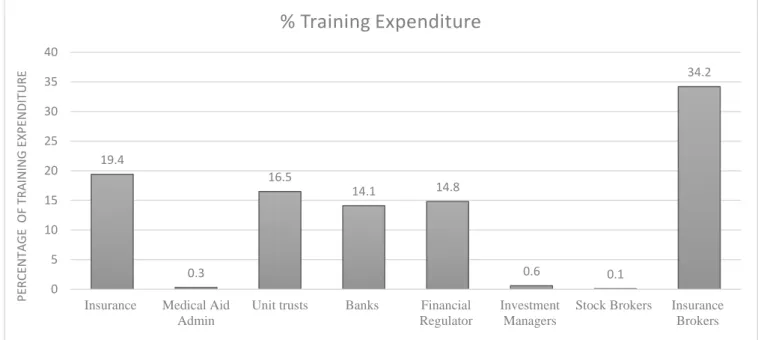
4.2.2 Training expenditure per sub-sector ... 33
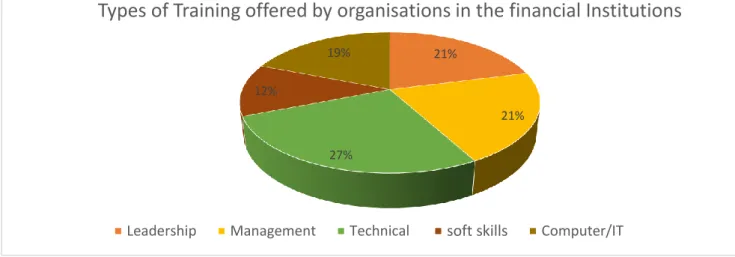
4.2.3 Training offered by financial institutions ... 34
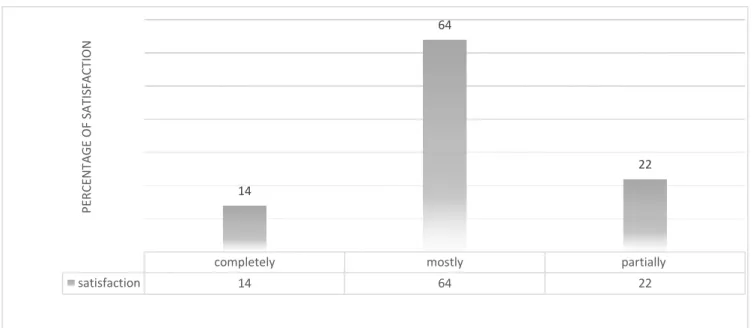
4.2.4 Satisfaction with training provided ... 35
4.2.5 Cross- tabulated results- Training satisfaction level as per surveyed participants ... 35
4.3 Financial assistance from financial institutions ... 36
4.3.1 Types of assistance offered to staff ... 36
4.4 Academic institutions offering finance-related programmes/qualifications ... 37
4.4.1 Number of NUST graduates from 2012 to 2015 ... 37
4.5 Skills development challenges ... 38
4.5.1 Cross- tabulated results- skills challenges in the financial sector... 38
4.6 Overall labour turnover ... 38
4.6.1 Labour turnover per sub-sector ... 39
4.7 Cross tabulated results - critical and scarce skills required in the Namibian financial……40
4.7.1 Cross tabulated results -Reasons for skills shortage ... 42
4.8 Overall bursary-scheme distribution ... 42
4.9 Conclusion ... 43
CHAPTER 5: DISCUSSION ... 44
5.1 Introduction ... 44
vii
5.3 Skills-development challenges identified ... 45
5.4 Financial-sector skills shortages ... 47
5.5 Skills retention in the financial sector ... 48
5.6 Funding mechanisms ... 49
5.7 Recommendation for sectorial stakeholder collaboration ... 50
5.8 Study Limitations... 51
5.9 Areas for future research ... 51
5.10 Conclusion ... 52
REFERENCES ... 53
APPENDICES ... 58
Appendix A: Employer Questionnaire ... 58
viii
List of Tables
Table 2.1: Skills demand in Namibia’s Financial sector………...12 Table 2.2: Top-ten scarce skills for 2015/16 in the Southern African financial
sector….……….…21 Table 3.1: Survey participants: Namibian financial, non-financial institutions and
Universities...24 Table 3.2: Average age of employees from the institutions surveyed………...26 Table 4.1: Training satisfaction level as per the banking and non-banking institutions ………….……….35-36 Table 4.2: Skills development challenges in the financial sector………...38 Table 4.3: Critical and scarce skills required in the Namibian financial sector...…...40-41
ix
List of figures
Figure 1.1: Net demand per sector (National Planning Commission) …....……….4
Figure 1.2: Percentage of skills gaps level identified by the National Planning Commission…...5
Figure 2.1: Labour turnover in Britain's financial regulation sector ……….…...18
Figure 3.1: Percentage of institutions surveyed….………...25
Figure 3.2: Gender composition of the financial institutions surveyed………....26
Figure 4.1: Percentage of training expenditure per sub-sector ………...33
Figure 4.2: Training offered by organisations in the financial sector………...………34
Figure 4.3: Satisfaction with training provided to participants………...35
Figure 4.4: Types of skills-development-assistance offered by employers……….36
Figure 4.5: Number of NUST graduates from 2012 to 2015……….….……….37
Figure 4.6: Overall labour turnover………...………….39
x
List of Abbreviations
Gross Domestic Product ……….... GDP Fourth National Development Plan……….……. NDP4 Namibia Training Authority ………...NTA Institute of Bankers ………. IOB Namibia University of Science and Technology………. NUST University of Namibia……… UNAM Namibia Financial Institutions Supervisory Authority……… NAMFISA Price Waterhouse Coopers………. PwC United Kingdom ……….….UK The Association of Chartered Certified Accountants ………...………. ACCA Prudential Regulation Authority………. PRA Financial Conduct Authority………. FCA Chartered Accountants of Ghana ………. ICAG Vocational Edu cation and Training Act ………...……...VET Act Information and communications technology ………...………. ICT South African Institute of Chartered Accountants………. SAICA National Qualification Framework……… NQF
1
CHAPTER 1: INTRODUCTION AND BACKGROUND
1.1Introduction
Boyd, Levine and Smith, (2001) noted that “a functional, financial sector is essential for economic development.’’ (p. 224). The financial sector plays an important role in promoting rapid growth in the income cycle of its poor population (Boyd, Levine and Smith, 2001). When a country strengthens its financial sector, the economy grows, which drastically helps the poor establish parity with the rest of its population (Bank of Namibia, 2011).
An effective financial system delivers improved financial services and supports an improved dispersal of resources. Well-founded legal and policy structures are also essential for a strong financial system. Therefore, several under-developed economies experience repressive economic policies in the form of high inflation tariffs, loan and deposit interest-rate ceilings, directed or funded credits, and credit rationing (Caprio & Hanson, 1999).
A sturdy financial sector depends on the capabilities and skills in, for instance, areas of knowledge and ability that are exhibited by employees (Baptiste, 2001). Therefore, it is imperative to note that the human capital in the financial sector should be sufficiently equipped with the skills that promote a country’s economic development. Human capital refers to knowledge, attitudes and skills which are developed and valued as possessing economic productive potential (Charles & Margo, 2010). Investment in human capital is a prominent feature of a flourishing financial service sector (Well, 2007), and exercises a significant influence on the productivity, competitiveness, and development of any economy on any continent. Similarly, the training of skilled and capable employees promotes the stability of the financial industry globally (Well, 2007).
This study is premised on the assumption that employees in the financial services sector in Namibia should be equipped with practical skills that would add economic value to the sector. Furthermore, employees should be helped to acquire collective and personal qualities that would exemplify and demonstrate adeptness in the ability to perform labour that would benefit the sector.
2 The trend towards globalisation has created a need for capacity building (Acri, 2008). Any country’s financial sector plays a critical role in ensuring that experts employed in various sub-sectors are well-informed about the latest developments produced by the implementation of international financial standards (Franklin, Otchere, and Senbet, 2011). Realisation of the latest developments would further enable the sector to respond proactively to changes in markets and transitions made possible by an agile workforce. The Oxford Economics (as cited in Holmes, 2013) states that the baseline skill recommended is that, approximately 45 percent of the workforce in the financial sector have a high level of professional skills. Due to global labour-market shifts, this statistic applies to such professions as chartered accountants and financial consultants.
Shortages of highly trained professionals and experts have real consequences on the sector as the time required to train individuals in these fields is extensive (Adams, 2008). Shortages are the result of events that transpire on both the demand and supply sides of the market. Shortages on the demand side result from an upsurge in demand for financial amenities. This is applicable to a growing economy (Atchoarena, 2009) where there are strict administrative, regulatory and tax requirements enforced on institutions. For that reason, it is vital that the financial services sector continuously improves the standard of its human resources and guarantees an adequate supply of competent human capital to sustain growth expected in the sector.
1.2 Background of the study
Namibia is a developing country situated in the south-western part of Africa. Namibia has hosted, and continues to host, several financial firms. Some are international firms, while others, especially smaller ones, were founded inside the country. Several commercial banks operate in Namibia. These include Development Bank of Namibia, Standard Bank, First National Bank of Namibia, Bank Windhoek and Nedbank. The banking sector operates on modern principles, which is efficient and provides comprehensive domestic and international banking services.
Namibia has a population of 2.3 million. The World Bank has classified Namibia as an upper middle-income country. However, it should be noted that classification by income does not necessarily reflect status of development within the financial sector (Vasquez & Summer (2012). The financial service sector in Namibia has not met expectations regarding growth
3 since it gained its independence in 1990 (Thomas, 2014). An economy which is growing spurs development within the financial services sector and vice versa (Thomas, 2014). However, this is not the case in Namibia. The 2013/14 Global Competitiveness Report (Schwab, 2013) classified Namibia as 55th out of 144 countries in the accessibility of financial services, following South Africa, Mauritius, and Rwanda in sub-Saharan Africa. Namibia's banking institutions remain sound, lucrative and have a favourable capital base. Due to its solid financial base, the Namibian financial sector has absorbed shocks arising from the worldwide and Eurozone financial crunch (Schwab, 2013, p.306).
Despite its favourable standing, there are several reasons why the financial services sector in Namibia continues to experience a slow growth rate. The Namibian Government also recognised that the economy cannot support several banks and consequently took a step to protect and sustain existing financial institutions. Banks were particularly paramount amongst them. However, the Namibian Financial Sector Strategy and Charter provides information on the progress of Namibia's financial industry, depicted as the net demand per sector, which supports other national strategy documents, for example, Vision 2030, the Fourth National Development Plan (NDP4) and the National Human Resources Plan (Shejavali, Links & Hopwood, 2014, p. 14).
4
Figure 1.1: Net demand per sector (National Planning Commission)
Source: (Namibian Planning Commission, 2018)
Figure 1.1 highlights the skills that characterise all sectors within the Namibian economy. The skills were determined by a study conducted by the National Planning Commission in Namibia, which estimated a net demand of approximately 19 074 additional positions for the financial sector from 2012-2015. To emphasise a point, financial organisations influence the growth of skills within the sector. Their influence includes the following: setting educational standards, accrediting training institutions, developing syllabi, distributing resources, drafting and preparation of examinations, assessing practical experience, organising conferences, seminars and workshops, and publishing new knowledge and information in journals and news bulletins. When financial organisations suffer from a shortage of skills, for instance a skills gap, the financial sector is negatively affected, and the economy responds with an increased demand for skills. The figure below depicts the percentage of skills gaps level identified by the National Planning Commission.
5
Figure 1.2: Percentage of skills gaps level identified by the National Planning Commission
Source: Namibian Government, 2012.
Figure 1.2 is a display of the skills gaps identified by the National Planning Commission of Namibia. Studies conducted by the Namibia Chamber of Commerce and Industries, the Institute for Public Policy Research (2010, 2011), and the Namibia Employers’ Federation further confirm these shortages.
To address the challenges presented by the dearth of skills, the Namibian Government, through the Ministry of Finance, developed a financial sector strategy covering the period 2011-2021. The sector strategy targeted the following key areas:
a) Development and deepening of the Namibian financial market b) Creation of financial safety nets
c) Accessibility to financial services and products by all Namibians, with attention to consumer education and protection
d) Namibianisation of the financial sector e) Development of the sectoral skills
0 10 20 30 40 50 60 70 80 90 100 Corporate and General Managers
Professionals Technicians and Associate professionals
Clerks General staff
6
1.3 Problem statement
Namibia would like to achieve status as an industrialised country by the year 2030. This goal can only be realised through human-resources development. The Namibian Government identified the shortage of skills as one of the greatest obstacles to realising its economic growth targets as they have been set in the Country’s Vision 2030. Namibia still lacks critical skills in the areas of chartered accounting, auditing, actuarial science, property evaluation, information technology, investment banking, compliance, and risk management (The National Planning Commission in Namibia, 2018). The National Planning Commission (2018) estimated that there was a net demand for approximately 19 074 additional positions in the financial sector between 2012 and 2015.
The focus of the current study is to investigate point (e) above, which seeks to address the development of skills in the financial sector. The government expects the country’s financial sector to identify and develop skills needed internally. As such, the following strategies were implemented in order to produce the expected results:
i) A financial sector training and skills development programme was to be established in 2013 to address skills shortages experienced by the sector. The programme had to be funded by industry players, regulators and other sources, such as the training levies collected by the Namibia Training Authority (NTA).
ii) Revision and alignment of finance-related academic qualifications currently specified by the University of Namibia and the Namibia University of Science and Technology (NUST).
iii) Capacity building programmes to strengthen the capacity of professional institutions, such as the Institute of Bankers (IOB) and the Institute of Chartered Accountants in Namibia. iv) Continuous development of skills among regulatory officials, keeping abreast of
international regulatory standards so that they can implement their regulatory mandates efficiently.
v) Importation of critical, as well as scarce skills from other countries to close the skills gaps experienced by the sector (Ministry of Finance, 2011).
7
1.4Aim of the study
The purpose of this study is to document the status of skills development in the financial sector since the inception of the Namibian Financial Sector Strategy and Charter in 2012.
1.5Objectives of the study
1.5.1 To investigate the nature of strategies implemented within the financial services sector in order to address skills shortages experienced by this industry;
1.5.2 To examine development challenges encountered by the financial sector; 1.5.3 To identify critical and scarce skills within the financial industry;
1.5.4 To investigate skills development funding mechanisms currently utilised by employers in the financial sector in Namibia.
1.6Research questions
To achieve the above-mentioned objectives, the following research questions frame this study:
a) What are the critical and scarce skills required by the industry and the reasons for the ongoing shortage of skills?
b) What short-term and long-term strategies are employed in the sector to realise skills development related objectives and strategies set out in the Namibian Financial Sector Strategy and Charter?
c) What are the challenges concerning skills development currently faced by the financial sector?
d) What is the spending percentage by employers in the financial industry on skills development?
8
CHAPTER 2: LITERATURE REVIEW
2.1Introduction
The literature review provides information on skills-development interventions in the financial sector from an international, an African and a Namibian perspective. The concluding sections of the literature review cascade down to skills development efforts undertaken in Namibia and its financial sector.
It is important to note that while Namibia is not an exception in the global arena of skills development, the financial sector in Africa lacks reliable statistical information to enable an adequate forecast of the human resources needs in the sector (Fawcett, 2010). The paucity of information hampers investigation of the status of supply and demand regarding professionals within the financial sector on the African continent. For that reason, “skill building is an important ingredient to push the production possibility frontier outward and to take the growth rate of the economy to a higher trajectory. Skill building could also be an instrument to empower the individual and improve his/her social acceptance or value” (Atchoarena, 2009, p. 1032).
Moreover, skills development is regarded as obligatory for a country’s economic development, as is the need to recruit individuals from marginalised groups to increase the pool of skilled labour (Holmes, 2013).
2.2 A significant relationship: skills shortages vs. labour turnover 2.2.1 Skills shortage
Skills shortages are designated as major problems for the economic development of several countries. Healy, Mavromaras and Sloane (2011) define skill shortage as “an insufficient supply of appropriately qualified workers available or willing to work under existing market conditions” (p.6). The existence of similar patterns in diverse sectors leads to the assumption that there is an overall dearth of skills in the labour market. Evidence of skills shortage is usually produced and confirmed by other indicators, such as statistics regarding salaries for individuals with appropriate qualifications beyond standard inflation rates, coupled with low levels of unemployment (Allen, Bryant & Vardaman, 2010)
9 The concept of ‘skills shortage’ itself denotes a situation which occurs on two different but interconnected levels. In the first instance “it refers to a situation where employers cannot find suitable candidates to appoint to specific occupations or posts within their organisation” (Ocelli & Wilkins, 2008, p. 311). In this instance, a position may remain vacant for protracted periods of time, or might, in the long run, be taken by someone who lacks the required qualifications, skills or other traits specified by the employer, such as gender or a specific population group. In the second instance, the term “refers to specific areas of knowledge or ability that is not available in sufficient amounts among the existing workforce” (Ocelli & Wilkins, 2008, p. 311). Skills shortages that appear in this context are described as skills gaps. Mitchell and Quirk (2005) assert that “skills gaps may be the result of insufficient education and training at entry level or may stem from rapid changes and new demands in the work environment to which the workforce has not yet adapted” (p.11). Both these instances demand skills development intervention, even though target populations and tactics may vary.
Shortages of highly trained professionals and experts have real consequences for the financial sector (Allen, Bryant & Vardaman, 2010) as the time required to train individuals in these fields is extensive. Shortages on the demand side result from an upsurge in demand for financial amenities. This is applicable to a growing economy as well as to the strict administrative, regulatory and tax requirements enforced on institutions (Franck, 2013). For that reason, it is vital that the financial services sector continuously improves the standard of its human resources and guarantees an adequate supply of competent human capital to sustain growth expected in the sector.
A dearth of specialists originates from a low ratio of general employees to specialists and an unbalanced division of roles between general employees and specialists that results in the under-utilisation of specialised skills (Al Shayeb, 2013). Moreover, there are not enough students who progress up to honours level in the relevant fields, for instance, accounting. There is also a limited number of learners who matriculate with an average mark in mathematics and accounting (Stevens, 2007). However, professional bodies also contribute to the limited supply within the financial sector by setting the qualifications very high, without making adequate provision for career development that should commence at lower qualification levels.
10
2.2.2 The relation between skills shortage and labour turnover
Armstrong (2012) describes staff turnover as “the rate at which people leave an organisation” (p. 87). There is no fixed point or level at which employee turnover can be said to have a negative influence on an organisation’s performance (Long, Perumal & Ajagbe, 2012). A company’s position in this regard is influenced by the kind of labour market in which the organisation participates. Taylor and Finley (2010) assert that a “high rate of employee turnover in any industry has been linked to low skill requirements in most of the entry-level positions in the industry” (p. 684). Organisations that do not develop plans to cope with employee turnover may find they are plagued with persistent skill shortages over the years. The workforce is shifting dramatically, with demographic changes, augmented outsourcing of services and entrepreneurship on the rise. Therefore, skill sets and abilities are becoming worthless in some industries (Manpower, 2010). In a SHRM survey of human-resource professionals, 75 percent of the participants conveyed that they experienced complications finding appropriately qualified individuals in their occupation, since professionals with the desired skill sets were difficult to find (SHRM, 2011-2012).
2.2.3 Implications of skills shortages in the financial sector
The impact of skills shortages is mostly experienced in developed countries due to the aging of the population. Closing the skills gaps is especially important for the world’s young aged 15-24, most of whom live in developing countries where there are few opportunities for productive employment (Aring, 2012). However, skills shortage has a great effect on youth in developing countries where there are few if any alternate paths to sustainable livelihoods. According to the World Economic Forum (WEF), “companies are organizing for increasing talent mobility across borders, making it easier to import people with needed skills from other countries” (WEF, 2010). On that note, Namibian Employers agree that the issue of skills is “an urgent strategic concern across various sectors and that skilled people from outside the country are being imported while high unemployment rates of 51 percent prevails (Namibian Employers Federation, 2010, n.d.).
Skills shortages are a serious challenge, which hampers organisational competitiveness, performance and growth (Masibigiri & Nienaber, 2011). Skills shortages are constraining companies’ ability to grow, innovate, deliver products and services on time, meet quality
11 standards and meet environmental and social requirements. Anitha (2014) argues that a shortage of skilled labour could significantly affect the long-term productivity of the financial sector. Also, a lack of skilled labour could result in the financial sector being less competitive in comparison to other sectors, that is, without skilled labour, the financial sector may not be able to provide customers with new innovative products or even maintain their present level of service such as those found in developed countries (Harvey, 2012). These factors could negatively affect the long-term productivity of the financial sector.
2.3 Skills shortages in Namibia’s financial sector
Namibia is facing an acute shortage of skills in the fields of auditing, chartered accounting, actuarial science, compliance, property evaluation, information technology, risk management, and investment banking, to name just a few (The Republic of Namibia, 2010). According to the Ministry of Finance (2010), industry players are concerned about skills shortages in the sector, which in turn have restricted innovation and aggressive entrepreneurship. For the Namibian financial sector to be competitive, skills in these fields need to be acquired and continuously developed as a matter of urgency (New Era, 2014).
The Namibia Labour Force Survey (2014) revealed that the financial sector in Namibia, which includes the banking industry, employs 51.1 percent of the total employed individuals; hence this clearly demonstrates the important role of the financial sector in employment creation. In the financial sector, one of the main sources of profit earnings is interest income on loans (Namibian Bank Annual Report, 2015). Information gathered from an econometric forecast conducted by the Namibian National Planning Commission in 2013 and 2014 indicated that professionals possessing the skills listed in Table 2.1 below were in demand in the financial sector in the years 2015 to 2020 respectively (The Republic of Namibia, 2014).
12
Table 2.1: Skills demand in Namibia’s financial sector
Types skills within the Profession Skills Demand
2015
Skills Demand 2020
Professionals Chartered Accountants 100 150
Accountants 400 700 Auditors 100 200 Financial Managers 200 400 Risk Managers 50 100 Lawyers 60 120 Statisticians 30 60 Actuaries 20 30 Financial Analysts 20 50 Financial Advisors 200 300 Underwriters 50 80
Information Technology Managers 100 200
Computer Network and Systems Engineers 30 40
Economists 100 150
Accounting Technicians (Bookkeepers) 600 1200
Assessors 50 80
Computer Systems Analysts 50 100
Computer Programmers 50 100
Claims Adjusters 70 140
Tax Practitioners 300 400
Database Designers and Administrators 200 450
Total Demand 2780 5050
Source: (Ministry of Finance Namibia, 2011)
The Namibia Training Authority (2014) also identified shortages of the following soft and hard skills in the financial sector: teamwork skills, analytical skills, decision-making and presentation skills, advanced business savvy, staying abreast of legislation and accounting standards, risk-management skills, project-management skills, management and leadership skills, customer service skills, and marketing skills. Moreover, skills related to information technology are paramount, which are data analysis, numeracy, products, specific industries, regulatory and compliance skills (Namibian Training Authority, 2014).
13
2.4 Reasons for skills shortages
A shortage of skills is defined as an outcome of a disparity between the demand and supply side of the market (Healy, Mavromaras & Sloane, 2011). The following discussion highlights the most significant reasons that have increased the demand for highly skilled financial professionals and executives.
2.4.1 Increase in demand for financial services
Even though the services offered by the financial and accounting sector encompass numerous disciplines, such as accounting and auditing, cost and management accounting and management consulting, the demand in each discipline is directly related to the level of economic activity in the country. Over the past years, Namibia has seen positive economic growth, which represents an increase in the demand for financial services (Shahn & Burke, 2005). Growth has occurred in the proliferation of small and medium-sized businesses since they have a greater tendency to rely on exterior services than large businesses do (Shahn & Burke, 2005).
2.4.2 Outsourcing financial services
A universal tendency in all sectors is that businesses redefine and concentrate on primary business activities while outsourcing peripheral and secondary activities. The predominant notion is that superior, low-priced services can be acquired in this fashion. Thus, the tendency of some financial services regarded as non-core activities and being contracted to specialised accounting firms increases the demand for financial services (Backes-Gellner & Tuor, 2010, p. 275).
2.4.3 Low student intake
Regardless of the rising numbers of students who qualify with degrees in financial disciplines and management sciences, graduates from universities in specific subject areas required by the financial sector do not seem sufficient in order to meet the needs from its sector (Paisey & Paisey, 2010). Student output in some related disciplines in Namibia is limited due to several factors. Firstly, institutions of higher learning regulate student intake. NUST, UNAM and other
14 institutions in the Namibian academic environment, limit the number of students allowed to register in any academic year. Relevant personnel have stated that an insufficient number of facilities is the main reason for this.
Setting ceilings on student admission, as well as controlling other processes affecting selection, limit access to education, particularly among applicants from underprivileged families (Paisey & Paisey, 2010). Furthermore, financial restrictions not only prevent potentially good students from enrolling with institutions of higher learning, but also contribute to high dropout rates, or elongated periods of study.
2.4.4 Role of professional bodies in controlling supply
Companies regulate the supply of skills into the market. Therefore, by setting criteria for education and training, accrediting training institutions and amending certain requirements for qualifications within the financial sector while directing entry exams fairly, more students can be trained accordingly (Backes-Gellner & Tuor, 2010). Professional bodies in finance regulate the industrial market. Their roles are strengthened when specific functions are kept in line respective to professions that control qualifications or designations. Backes-Gellner and Tuor (2010) maintain that in this regard, currently upheld criteria are realistic and ought not to be changed in order to increase the number of individuals who reach a qualification, for example as financial analysts.
2.5 Reasons for skills development
In order to be efficient, skills-development strategies should involve the private sector. The main aim of skills development in terms of social and economic reasons is to assist people to gain marketable skills while supporting them to find suitable jobs in which they can develop those skills (Dunbar, 2013). To achieve this aim, in-depth awareness of a sector, whether financial or managerial, whether local, national or international, must have the capacity to fashion established wisdom and relevant knowledge into training programmes which appeal to inexperienced or marginally educated jobseekers.
15 Skills development means cultivating skills by members of the workforce in order to increase their efficiency, to be well-informed on developments in the sector or in a respective professional field, and to expand one’s personal career (Ananiadou, Jenkins & Wolf, 2003). Every financial sector worldwide needs training in specialised fields. Private organisations, institutions of higher learning and consultancy firms play an important role in the development of specialised financial skills (Borrell-Damian, Morais & Smith, 2015). Moreover, since the world “faces rapid computerisation in all functions, the workforce is obliged to keep up with these technological advances. Hence, there is a need for computer literacy and the development of computer skills across all occupational categories in the financial sector (Black & Lynch, 2004, p. 99). Additionally, it is important that workers in the financial sector acquaint themselves with non-financial or soft skills. These are skills necessary for effective interaction with the public and include oral and written communication skills, presentation skills, and client service orientation. Furthermore, managerial skills are an essential in the financial sector (Black & Lynch, 2004, p. 99). Besides the ability to satisfy clients’ needs and facilitate innovation, specialists must be familiar with aspects intrinsic to their sector and be able to conduct business meetings effectively.
In another way, employers contribute to skills development in the sector by providing bursaries for learners. An employer survey conducted by the Financial and Accounting Services Sector Education and Training Authority (FASSET) (2017), discovered that a mere 10 percent of employers offer bursary schemes. Eight percent provide bursaries to employees, four percent to outside candidates and one percent to the children of employees (FASSET, 2007).
2.5.1 Skills development in Namibia’s financial sector
As is the case in other countries around the world, Namibia needs to build its financial sector and equip it with institutional skills, with the ability to conduct research and to improve labour-market analysis. The Namibian Government, by way of the Vocational Education and Training Act (VET Act), No. 1 of 2008, established the Namibia Training Authority (NTA). The VET Act tasks the NTA with the responsibility of institutionalising an effective and efficient national training regime, which can address current and future shortages in the labour market. In accomplishing this task, the NTA requires authoritative, consistent and comparable labour market intelligence to inform the development of VET’s provisions in Namibia.
16 The primary purpose of the NTA is to provide advice to the Ministry of Education regarding vocational training and education. Section 24 (1) of the VET Act makes provision for the National Training Fund. All Namibian organisations that employ workers contribute a levy of 1.5 percent of the employers’ total payroll to the National Training Fund. The fund may only be drawn upon to provide financial and technical assistance and to fund VET programmes and projects (Namwandi, 2013, p. 2). The financial industry, in collaboration with the NTA, must provide funding allocations for financial skills development interventions within the financial sector (Namibian Training Authority, 2014).
The Namibian Financial Sector Strategy, 2011-2021, seeks to produce reforms in a wide range of key areas, one of which is skills development in the financial services sector, where knowledge, skills, competencies, and capabilities will be key strategic drivers of productivity, competitiveness, and growth (Republic of Namibia, 2010). In response to the objectives and strategies of the Namibian Financial Sector Strategy, the NTA has prepared and adopted a Sector Skills Plan (SSP) for the finance and business services sector. The NTA has created a strong foundation by developing a workable plan for skills development in the sector (NTA, 2014). According to the NTA (2014), an institutional research capacity for national skills planning was to be established between 2015 and 2017. Supporting structures for workplace-based skills development was also to be introduced. Nonetheless, none of these structures have yet been established.
Some financial institutions in Namibia have adopted the Namibian Financial Sector Strategy to overcome and reduce skills disparity in the financial sector. In support of the sector strategy, Bank Windhoek introduced skills development interventions to address skills gaps currently experienced in the financial sector and to introduce competent financial and accounting specialists (New Era, 2014. p.7).
2.6 Brief review of financial skills challenges 2.6.1 A global perspective
Although skills gaps and skills challenges are experienced by most sectors in global economies, financial sectors have had challenges attracting employees with basic numeracy skills who
17 could be trained in higher-order skills, such as accounting and risk-management (Price Waterhouse Coopers [PwC], 2010). PwC’s 18th annual chief executive officers survey of financial services found that an inadequate reserve of vital skills was identified by 70 percent of chief executive officers as a threat to their growth prospects (PwC, 2014, p. 19). Manpower’s 10th Talent Shortage Survey established that 38 percent of employers in the financial sector across the globe were struggling to fill vacancies. Japan, Peru, and Brazil were the top three countries that could not fill most vacant positions in the financial sector during 2015. In Manpower’s 2008 survey of 33 countries and territories, accounting and finance were listed in the ninth position of the top ten jobs employers found most difficult to fill. Furthermore, it was in the seventh place in their 2015 list (Manpower Group, 2015, p. 4).
In the United Kingdom (UK), the Association of Chartered Certified Accountants (ACCA) declared that the UK is facing a crisis due to a paucity of financial experts (Financial Management, Accounting and Auditing Skills Shortage, 2015). Price Waterhouse Coopers (2010) found that there were shortages and gaps in both generic and financial sector-specific skills in England. Shortages range from basic numeracy, problem solving and people skills, to primary industry and product knowledge, risk management and risk assessment skills (PwC, 2010). According to PwC, a sound, operational, financial services sector could generate over 218,000 additional jobs in the British economy by 2020 (PwC, 2013). Britain's two financial regulators, the Prudential Regulation Authority (PRA) and the Financial Conduct Authority (FCA) show high rates of labour turnover. The PRA indicated that one in every six employees left the company in 2014. Figure 2.1 below provides Britain's financial regulation sector turnover rates for the period of 2010 to 2014 (Morse, 2014, p. 31).
18
Figure 2.1: Labour turnover in Britain's financial regulation sector Source: the British National Audit Office
Heavy workloads as well as the implementation of new regulations and standards in the UK's financial regulatory environment have also been offered as primary reasons why employees are leaving jobs to look for manageable employment elsewhere (Morse, 2014, p. 34).
The Gateway Survey (Scotland Skills Investment Plan, 2013) found that the areas of customer services, sales and technical roles in investment operations were in highest demand at that time. Skills identified that would be critical in the future were risk management, compliance, information communication and technology, and investment accounting (Scotland Skills Investment Plan, 2013). To address shortages, Scotland has established more than seventy sectorial Apprenticeship Frameworks (including the financial services) to provide training to a minimum standard of capability levels identified by employers through Sector Skills Committees (Partnership, 2014).
A dearth of skills in the financial sector is significant not only in the United Kingdom, but in countries like New Zealand and Australia as well. In New Zealand, the industry experienced a 5.3 percent growth in demand for accountants between 2002 and 2005 (New Zealand, 2006). According to Half (2011), 84 percent of Australian employers surveyed indicated that skills gaps existed in the financial sector (Robert Half International, 2010). A study conducted by Sattin (2015/2016) of financial and insurance services in Australia found that a third of financial services companies had planned to increase their workforce in 2016 due to business
19 expansion and workloads. The major challenge for recruitment and selection faced by these firms would have been the scarcity of competent professionals. Soft skills such as client service, communication, risk management, business knowledge, project management, regulatory knowledge, leadership, and compliance were in demand in New Zealand’s financial sector at the time of the survey (Sattin, 2016).
In the United States of America, companies are experiencing skills shortages in accounting and finance (American Productivity & Quality Centre, 2010). This was confirmed by a study conducted in 2014 by the Institute of Management Accountants (USA), which found that there was a shortage of highly skilled accounting and finance experts needed to fill key financial and accounting vacancies in American companies. These recruitment challenges hamper company performance and economic growth in the country (Thomson, 2014).
The effect of skills shortages is exacerbated by high labour-turnover rates that are currently experienced by the financial sector in the USA. A job-opening and labour turnover survey conducted by the United States Department of Labour in March 2016 showed that companies in the country’s financial sector had experienced an average labour turnover of 9 percent of staff, in the year 2015. Resignations were more numerous in actuarial, IT and financial positions (Expert HR, 2015).
Research conducted by Robert Half Consulting (2015) discovered that chief executive officers in the United Arab Emirates’ financial sector, perceived a threat by the potential loss of staff to British and American companies hosted in the country. Investors further confirmed that applicants for jobs proved not competent enough to fill specialised positions in the financial sector (Dickinson, 2015).
More than four in ten (41 percent) Belgian senior managers agree that the dearth of talent in the financial sector is the biggest barrier to building effective cross-functional teams in their companies. Throughout the economic recession, many businesses in Belgium were forced to review the skill sets represented in their workforce. Employers were compelled to devise hybrid human resource strategies to ensure adequate staffing in their companies (Dickinson 2015). Managers of surveyed organisations further confirmed that recruiting qualified accounting and finance experts was their biggest challenge.
20 The skills shortage is one of the most crucial challenges currently faced by the financial sector in India. Labor turnover rates are high and low levels of succession are regarded as barriers to the growth of the sector. Indian regulatory authorities find themselves hard pressed to develop remedial measures to address these challenges (Shukla, 2014, p. 360). Shukla (2014) also discovered that state-owned financial institutions do not have well-defined employee retention policies, whereas private sector financial entities dedicate more attention to talent retention. Private sector financial organisations can alter their human resource policies according to strategic requirements and competitiveness in the banking environment.
2.6.2 An African perspective
This section focuses on skills development and attendant challenges in the financial sector on the African continent. A selection of cases will be used to describe and analyse challenges and development in the African financial sector. This review will throw light on the skills challenge phenomenon, cascading from a global perspective to a continental one.
2.6.3 African skills challenges in the financial sector
According to Kayode (2015), experts in the fields of accounting and finance play a critical role in Africa's growth pattern. A long-term, human resources development plan for accounting and finance needs formulation to promote general education in these fields. Africa needs a robust financial sector in order to develop its economies. Public-private partnerships and other complex commercial arrangements continue to find a foothold in many African economies. To promote new business models, finance and accounting skills will be necessary to deliver financial reporting, auditing, and other services to boost investors’ confidence in African enterprises (Kayode, 2015). The African Development Bank confirmed that there is a continent-wide shortage of skills in the accounting and auditing fields. Competency in these professions is crucial for adaptation to rapidly changing technologies and processes that are a prerequisite for the African financial sector to flourish (African Development Bank Group, 2015).
According to World Bank, regulatory surveys conducted in Africa between 2009 and 2010, Mauritius has a more advanced labour market for accounting professionals than most first-world countries such as Denmark, the UK and Sweden. By contrast, Mozambique, Rwanda
21 and Malawi are characterised by a scarcity of accountants (Dihel, Fernandes, Mattoo & Strychacz, 2010, p. 4).
In West African countries such as Nigeria, Ghana and Sierra Leone, skills shortages are the biggest challenge for their financial sectors. This problem was confirmed in research conducted by Professor Chibuike Uche from the University of Nigeria. His study concluded that there is a critical shortage of accountants in the financial sectors of Nigeria, Ghana, and Sierra Leone (The Accountant, 2007). In one instance, Ghana supported Professor Uchei’s (2010) conclusions precisely regarding the country, and likewise, the need to meet the needs of Ghana’s economy.
Challenges posed by skills shortages in the financial sector also exist in Southern Africa. This conclusion was confirmed by research conducted by RUDO Consulting (2012) for the financial sector in Southern Africa. The research revealed that shortages of skills are observed among managers and staff in the areas of information and communications technology (ICT), human resources, risk management, and credit card specialists (Bank Seta, 2013). Table 2.2 below indicates the top ten skills that were sought in the Southern African financial sector for the financial year, 2015/16.
Table 2.2: Top ten scarce skills for 2015/16 in the Southern Africa financial sector
No. Occupations Number of positions
required
1 Trainee accountant/auditor/article clerk 1249
2 External auditor 255
3 Computer network and systems engineer 153
4 Debt collector 141
5 Financial manager 111
6 Management consultant 108
7 Financial investment advisor 86
8 Office administrator 74
9 Accountant (general) 70
10 Economist 48
Grand total 2295
22 The greatest challenge faced by employers in South Africa is finding suitably qualified job applicants from previously disadvantaged population groups who have experience in the financial sector.
2.7 Conclusion
In previous paragraphs, this study has provided some information regarding skills needs in the financial sector, efforts made to develop those skills and the challenges associated with skills development in Namibia. In sections 1.2 and 2.3 it has been stated that Namibia has a sound financial sector but also a critical shortage of qualified personnel in several disciplines important in the financial sector. These include accountants, financial consultants, underwriters, and information system administrators, to mention a few. In this sub-section, the literature was reviewed and skills shortages in the financial sectors of selected countries were highlighted. Some patterns have been identified by the brief research, and findings reveal that a shortage of skills in the financial sector is a common phenomenon in western and southern Africa.
23
CHAPTER 3: RESEARCH METHOD
A research method is “a process by which information and vital data are collected for the sole purpose of deducing informed results during a piece of research” (Kumar & Phrommathed, 2005, p. 43). The process guides the researcher to uncover enough information necessary to answer the research question. Gathering information also implies the observance of ethical considerations when implementing a methodology, which logically, will also define its limits. In this Chapter, the the research methods used are outlined.
3.1Research design
According to Mouton (1996) a research design serves to “plan, structure and execute research to maximise the validity of the findings” (p.175). A research design is a “plan of action for getting from here to there, where here may be defined as an initial set of questions and there as a set of conclusions” (Yin, 2003, p. 19).
A research design can be thought of as the foundational logic, or master plan, of a piece of research that throws light on how the study should be conducted (Mouton, 1996, p. 107). It shows how the elements of research, which include population, samples, instruments and analysis, work together to produce coherent answers to research questions. Both Cantrell (1993, p. 83) and Guba and Lincoln (1994, p. 109-111) postulate that the choice of a research design has implications for the choice of data collection and analysis in a research study.
It should be noted that every person who initiates a research study begins with certain assumptions about how that research should be carried out. The researcher employed a descriptive quantitative research design. The researcher conducted an evaluation on the status of skills development on the financial sector using a questionnaire that was administered to various institutions and two universities to determine to what extent significant progress has been made to address skills shortages in the financial services sector.
3.2Study population
Participants were selected based on their membership from the Namibian banking and non-banking financial institutions. Table 3.1 below displays the study population.
24
Table 3.1: Survey participants: Namibian financial, non-financial institutions and Universities
Institutions No. Institutions No
Financial Regulators 2 Investment Companies 22
Banks 6 Unit Trusts 12
Medical Aid Administrators 8 Stock Exchange 1
Medical Aid Funds 10 Pension Fund Administrator 8
Pension Funds 99 NUST (University) 1
Stockbrokers 4 UNAM (University) 1
Total 174
3.3Sample and sampling procedure
Stratified sampling was used to select a sample from the 174 institutions classified as the study population. The banking and non-banking entities sampled were categorised according to characteristics they had in common, which would identify them as homogeneous. Therefore, participants were divided into sub-sector categories as indicated in Figure 3.1 below. The database built from surveying those institutions was stratified according to the characteristics in Figure 3.1. The researcher discovered that there was some overlap with the participants. For instance, one participant was registered with NAMFISA both as an insurance company and as an investment manager.
3.4Sample characteristics
25
Figure 3.1: Percentage of institutions surveyed
From the institutions surveyed, 61 percent were pension fund institutions, 1 percent financial regulators, 3 percent stock exchange and brokers, 10 percent medical aid institutions, 13 percent investment companies, 3 percent banks, 1 percent universities and 7 percent unit trust. Thirty-one percent of the sample were small enterprises with 0-49 employees. Fifty-four percent were medium enterprises with 50-149 employees, while 15 percent were large enterprises with 150 or more employees.
3.4.2 Gender composition of the financial institutions surveyed
0 10 20 30 40 50 60 70 Pension Fund Institutions Financial Regulators Stock Exchange and brokers medical Aid Institutions Investment Companies
Banks Universities Unit Trust
PE R CE N TA G E
Institutions surveyed
26
Figure 3.2: Gender composition of the financial institutions surveyed
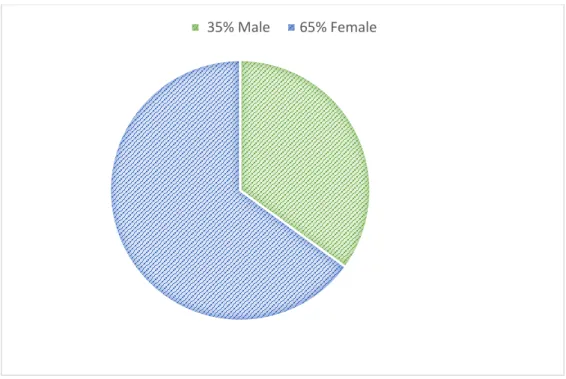
From the institutions surveyed, 35 percent of employees were male while 65 percent were female. This indicates an unbalanced representation of gender within the Namibian financial sector.
3.4.3 Average age of employees from the financial institutions surveyed
Age Group Age percentage represented in population
Under 21 years 1%
21 – 29 years 36%
30 – 39 years 34%
40 – 49 years 21%
50 – 59 years 7%
60 years and older 1%
Total 100%
Table 3.2: Average age of employees from the institutions surveyed
From the financial institutions surveyed, 1 percent of the employees were under the age of 21, 36 percent were between the ages of 21 to 29 years, 34 percent were between ages of 30-39 years, 21 percent were between the ages of 40 to 49, 7 percent were between the ages of 50-59 years while 1 percent was represented by the age of 60 years and older. This proves that most financial institutions surveyed employed millennials, between the ages of 21 to 29 years. This
27 evidences the lack of skills in the Namibian financial sector since most of the millennials are just starting with their careers and have not gained much experience in order to be specialists.
3.5Research instruments
The research instrument as annexed in Appendix A, (Employer questionnaire) and Appendix B (Universities questionnaire) were utilised to collect data. Based on the aims of the research and to establish the status of skills development within the sector, the researcher compiled a structured questionnaire. The questionnaire was used to ascertain perceptions regarding both existing and projected skills in the financial sector. It was also used to investigate the nature of strategies implemented within the financial services sector in order to address skills shortages experienced by the industry; examine development challenges encountered by the financial sector; identify critical and scarce skills within the financial industry; and investigate skills-development funding mechanisms currently utilised by employers in the financial sector in Namibia.
Ranjeet (1999) notes that scaling is a technique used to measure qualitative responses of participants, such as those based on their feelings, perceptions, likes and dislikes, interests and preferences (p. 209). A selection of responses is evaluated using a weighted scale based on differences of 5 points. Sample characteristics are selected and coded by the researcher, for example:
a) Size of your organisation/company:
Small enterprise (0 – 49 employees) Medium enterprise (50 – 149 employees) Large enterprise (150 and more employees) Micro enterprise (an informal sector business)
b) Years in existence of the organisation/company:
0 – 5 years 6 – 10 years 11 – 15 years 16 – 20 years 20 years and over
28 0 – 5% 5-10% 10% & more 2011 2012 2013 2014 2015
A database of institutions registered as Namibian banking and non-banking financial institutions was initially obtained from NAMFISA. The database encompassed all institutions that were on file. When registering for the skills levy, organisations are asked to describe their business activities and assign themselves a Standard Industrial Classification (SIC) code (FASSET, 2007). Moreover, two electronic questionnaires utilised by the Financial and Accounting Services Sector Education and Training Authority (FASSET) in South Africa entitled: “Skills development in the Financial and Accounting Services Sector” was also adapted for the Namibian context and used in this study as secondary information.
3.5.1 Employer survey
The questionnaire (see Appendix A) comprises 48 questions, arranged in eight sections. This survey elicits precise information about the workplace such as:
• How much is spent on skills development in the organisation?
• How many expatriates did the organisation employ in the last five years?
• What were their labour turnover rates for the last five years?
• Does the organisation have a bursary scheme?
• Does the organisation experience difficulties in finding suitable employees for the advertised jobs?
3.5.2 Universities survey
The Universities questionnaire (see Appendix B) is comprised of 33 questions arranged in six sections. Below are examples of the questions included in the questionnaire:
• Is the organisation accredited as training provider?
29
• Does the organisation set any restrictions on the number of students for your courses?
• Does the organisation set any targets with respect to race, gender and disabilities when admitting students to the courses?
• Does the organisation use assessment or screening procedures to admit students to their organisation?
• Does the organisation offer any bursaries, grants or other forms of financial assistance to students?
• What factors inhibit students’ access to education/training in the financial sector?
• Is the organisation involved in interventions or does it plan future interventions to develop a skills base in the sector?
• What was the organisation’s student enrolment and output (qualified) for the last five years?
3.6 Procedure
Soft copies of the questionnaire were mailed electronically to the sample, which comprised chief executive officers and human resources executives at the selected banking and non-banking institutions, and to human resource departments at the universities. The researcher informed the participants about the purpose of the study through an attached cover letter. The letter stated that the study is purely for academic purposes. Moreover, the researcher guaranteed the participants confidentiality and anonymity. After receiving responses from the participants, the researcher analysed the data and the results of such analysis are presented in Chapter 4.
3.6.1 Research ethics
Strict observance of ethical standards with regards to personal rights, privacy, and confidentiality of information was exercised throughout the study. Participants were assured that confidentiality would be maintained in processing completed questionnaires and the publishing of data supplied. Welman, Kruger and Mitchell (2005) explain that the principles underlying research ethics are universal. The following principles were observed:
i) The project was endorsed by the Ethics Committee of the University of Cape Town. ii) Participants’ rights and privacy were taken into consideration at all stages of the research
30 iii) Right to confidentiality: Information gathered in this study was treated confidentially, and no disclosure regarding sources of information was ever made. Access to raw data collected was restricted and content was stored securely. Participants were assured of this fact and the observance of confidentiality was clearly stated in the letter requesting their participation in the research. Leedy and Ormrod (2010) state that researchers must also keep the nature and quality of participants' performance strictly confidential (p.102). iv) Researcher’s responsibility and honesty: The researcher requested permission from the
participants to conduct research and acknowledged the work of secondary research (literature review) through in-text referencing and listing of sources in the bibliography. v) Informed consent: Participants were informed that participation was voluntary on a cover
page of the questionnaire. The significance of the research, why participation was important, and implications of non-participation were also explained. In short, it was elucidated for the participants that their participation was totally a matter of choice (Leedy & Ormrod, 2010).
vi) Protection from harm: Participants were assured that they would be protected from subjection to any harm due to participation in the study. This protection was guaranteed by the measure that their identity would not be revealed on the questionnaire. In addition, publishing the findings of the research would be carried out in a manner that did not identify participants.
3.6.2 Data analysis
Data was collected, summarised and analysed using a descriptive method. Information extracted from the questionnaires was collated utilising a Microsoft Excel spreadsheet. A spreadsheet is a document form that organises and displays data and other information in rows and columns (Bernard, Jackson & Randall, 2002, p.106). Bar charts from the spreadsheet were transferred to text pages in Chapter 4 of the research report. Each chart was described and interpreted.
3.6Conclusion
In this Chapter, the method utilised to conduct research was highlighted with focus on: What are the critical and scarce skills required by the industry and the reasons for the ongoing shortage of skills? What short- and long-term strategies are employed in the sector to realise
31 skills-development related objectives and strategies set out in the Namibian Financial Sector Strategy and Charter? What are the challenges concerning skills development currently faced by the sector? and What is the spending percentage of employers in the financial sector on skills development? The research design, study population, sampling, research instruments, and procedures, including research ethics and data analysis were also clarified.