International Journal of Emerging Technology and Advanced Engineering
Website: www.ijetae.com (ISSN 2250-2459,ISO 9001:2008 Certified Journal, Volume 3, Issue 2, February 2013)
269
Biometrics in Access Control System
Akanksha Bhargava
1, Dr. R.S.Ochawar
21M.Tech VLSI Design, Ramdeo Baba College of Engineering and Management, Nagpur, Maharashtra, India 2
Associate Professor, Ramdeo Baba College of Engineering and Management, Nagpur, Maharashtra, India
Abstract— This work describes an automated fingerprint authentication system fusing two different technologies viz. embedded and biometrics accessible to the persons who are authorized by the officials using bio-metric identification of finger print. The system operates in both online and offline mode. The fingerprint reader is an optical reader that captures the difference between valleys and ridges. System also employs Power over Ethernet. The goal of this project is to develop a complete system for fingerprint identification. For experimentation LM3S6965 micro-controller is interfaced with SFM3250-OP fingerprint scanner and LCD touch screen. Complete system could be connected to an access control products for applications ranging from multi door system to enterprise wide, networked systems containing thousand of entry points providing better security.
Keywords— Keil software, Biometrics, K350QVG-V1-F
LCD touch screen, LM3S6965 Microcontroller, SFM3250-OP.
I. INTRODUCTION
With threat levels ranging from common vandalism to domestic terrorism, the security of our surroundings is paramount. The system described here provides an integrated solution that can enhance perimeter protection as well as internal security. The embedded system based on biometric authentication is applied as the platform of personal identification.
Traditional system for the personal identification includes third party like Lock and Key, Personal Identification – Security Guard, Pin number Based Identification, Proximity or Smart Card based Identification which could be easily transgressed or lost or forgotten. Another possible way is devising an access control system for a secured perimeter, which allows access to only those people who are identified based on their Biometric Identity. Biometric features that can be used for identification include fingerprints, palm prints, handwriting, vein pattern, facial characteristics, iris, and some others like voice pattern and gait [1]. Many other modalities are in various stages of development and assessment. Among these available biometric traits fingerprint proves to be one of the best traits providing good mismatch ratio and also reliable. To provide perfect security and to make work easier the help of two different technologies viz. EMBEDDED SYSTEMS and BIOMETRICS is taken.
The system described here is based on granting access on the basis of fingerprint identification. Systems using a user ID/password pair can be changed to a user ID/fingerprint pair providing the higher level of security. Knowing with certainty ―who‖ the user is, allows information services and data availability to be easily tailored to that particular individual, making the security solution one that enables productivity rather than that blocks the user from getting the job done.
Focus of this research work is to employ biometrics into access control system.
II. BENEFITS OF BIOMETRICS IN ACCESS CONTROL SYSTEM
The purpose of any access control system is to allow access to authorized people into specific areas. Only with the use of a biometric one can be assured of authenticity. The security field uses three different types of authentication: something you know (a password, PIN), something you have (a card key, smart card) or something you are (a biometric trait). Of these, biometric trait identification is the most secure and convenient authentication tool. It cannot be borrowed, stolen or forgotten, and forging one is practically impossible [1]. Each human has his/her own biological identity that is different from any-one else’s, which explains the difficulty in corrupting this kind of data .A card based access system will grant access to whoever is in possession of a registered card. Systems using PINs (personal identification numbers) requires to know a specific number to gain entry. Who actually enters the code can not be arbitrated. Biometric devices authenticate a person by their unique biometric characteristic, whether it is their hand, eye, fingerprint or voice.
Biometrics can be layered with already existing access system to increase the security or can be used on its own. The true benefit of biometrics is eyes and hands are seldom lost, stolen or forgotten [1]. They also don’t wear out and need to be replaced.
III. INTERFACING
International Journal of Emerging Technology and Advanced Engineering
Website: www.ijetae.com (ISSN 2250-2459,ISO 9001:2008 Certified Journal, Volume 3, Issue 2, February 2013)
270
Access control requires the ability to authenticate a person and grant (or deny) access based on time restrictions. The system employed here can be used in different modes.
A. Fingerprint mode
Users are enrolled at the unit and their biometric template is stored in the fingerprint module memory. The actual comparison is accomplished within the unit and a lock output is energized depending on the outcome. Input points are available to monitor the door switch for ―door open too long‖ and ―door forced open‖ conditions. Outputs are provided to signal a bell or alarm panel if an alarm condition is detected by the system. All administration including enrolments, deletions and designating time restrictions are programmed.
TCP/IP, RS232/485 for communication is also employed. Here we can have a networked system as well as standalone system. Networked systems also provide for a centralized template management. This process allows a user to enrol at a single location and have their template uploaded to other locations depending on access rights. A networked system can also provide authentication at the host PC where templates are extracted at any location and final authentication is performed at the PC to include access rights.
B. Fingerprint + card mode
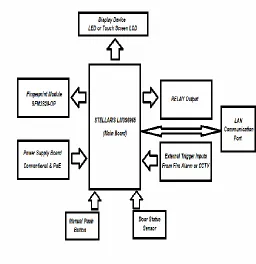
[image:2.612.321.577.147.411.2]In this type of integration, the access control software handles the template management and communications to the biometric units. In this case, the biometric template data is handled just like any other piece of card holder information and is stored inside the user’s data record at the head end. Template distribution happens through the access control system’s network topography. Templates can be sent through the network and ultimately stored in the specific biometric unit at the door or concentrated in the access control panels.
Fig 1.The hardware structure of ARM-based biometric access control system.
IV. INTEGRATION OF SUBMODULES
A. Microcontroller
International Journal of Emerging Technology and Advanced Engineering
Website: www.ijetae.com (ISSN 2250-2459,ISO 9001:2008 Certified Journal, Volume 3, Issue 2, February 2013)
271 B. Fingerprint Scanner
Biometrics the project is focused on fingerprint scanning. The first part includes to key out the scanner. For fingerprint verification implementation, the full-functioned fingerprint identification SFM 3520-OP optical module produced by Suprema inc. as a scanner is used. The Uni Finger modules are stand-alone fingerprint systems ideal for embedded system applications where biometric security is needed. There exist three buttons, three LED’s, buzzer, and relay on the interface board for standalone evaluation without PC interface. Also, 2 terminal connectors are present to help evaluation of interfacing with various external devices, such as Wiegand device or relay- controlled device. It providesfast 1:1 and 1:N matching speed (400MHz DSP), fast power-on time, Serial interface with simple protocol, User-configurable I/O and LED control. The protocol based on fixed sized packets. Only fingerprint image, template data, and user lists are transmitted as appended to the packet. Checksum functionality is supported to ensure consistency of transmitted data[3].
Fingerprint module is interfaced with RS-232 port of microcontroller.
TABLEIII PACKET SIZE
C. Display Device
k350qvg-v1-f manufactured by Kitronix is a 3.5‖
(diagonal), 320x RGBx 240dots, 262Kcolors, Transmissive, TFT LCD module. Driving IC:SSD2119, and 18-bits databus (parallel RGBinterface/8080 parallel system interface) with Touch Panel[4].
TABLEIII SPECIFICATIONS
The module works on measuring the x and y co-ordinates. These co-ordinates are then sent to the program and depending on these exactly where the touch event took place and it then relays that information to the touch-screen driver software. This gives the interactive environment to the user. Logs can be checked, modes of operation can be selected like finger only, finger + card, finger + card+ pin.
D. Power over Ethernet
Power over Ethernet (PoE) is a technology that integrates power into a standard LAN infrastructure. It enables power to be provided to the device. Category 5 cable is used in the project. Voltage range 50 to 57 for power supply equipment[5].
With the use of PoE the constraint of having AC power outlets is eliminated. This provides flexibility in placing the device in the most optimal locations instead of choosing locations where power is available enabling centralized power management.
E. LAN Communication
1) CGI and SSI
CGI stands for Common Gateway Interface and SSI stands for Server Side Include. The Common Gateway Interface (CGI) is a standard method for web server software to delegate the generation of web content to executable files. When a web page request is sent from a browser to the embedded system, which has got lwip configured with CGI and SSI, if any SSI tag is present on the web page being served, the SSI handler is called[6,7]. When the board, receives the web page request, the lwip stack knows which function to call. In the corresponding CGI handler, the parameters are extracted from the URL, by Find CGI Parameter function and Get CGI Param function, and the functions are called for setting these values. This is how data gets passed to the system using CGI through web pages. Server Side Includes (SSI) is a simple interpreted server-side scripting language used almost exclusively for the Web. Server Side Includes are useful for including a common piece of code throughout a site, such as a page header, a page footer and a navigation menu. Conditional navigation menus can be conditionally included using control directives.
2) Raw TCP/IP interface for lwIP
lwIP provides three Application Program's Interfaces (APIs) for programs to use for communication with the TCP/IP code:
* Low-level "core" / "callback" or "raw" API. * Higher-level "sequential" API.
International Journal of Emerging Technology and Advanced Engineering
Website: www.ijetae.com (ISSN 2250-2459,ISO 9001:2008 Certified Journal, Volume 3, Issue 2, February 2013)
272
The sequential API provides a way for ordinary, sequential, programs to use the lwIP stack. It is quite similar to the BSD socket API. The model of execution is based on the blocking open-read-write-close paradigm. Since the TCP/IP stack is event based by nature, the TCP/IP code and the application program must reside in different execution contexts (threads).
The socket API is a compatibility API for existing applications, currently it is built on top of the sequential API. It is meant to provide all functions needed to run socket API applications running on other platforms (e.g. unix / windows etc.).
F. Relay
A relay is an electrically operated switch. When the access is granted (or denied) the power or ground is applied to a coil, the relay clicks on or off. The result is that a power wire to a function is either closed (connected) or opened (disconnected). When the line is connected, the function is turned on and works. When the line is disconnected, the function is turned off and will not work.
V. SYSTEM SOFTWARE IMPLEMENTATION
A biometric access control system works in two models: enrollment model and verification model. In the off-line enrollment model, an enrolled fingerprint image is stored in the fingerprint module scanner memory. In the on-line verification model, the similarity between the enrolled image and the images of real-time captured fingerprint image are matched. For better security it also has provision for smart card and proximity card that would make verification easier and fast by employing 1:1 scan mode.
A. Software for system
The software Program was developed in C language for initializing the Ports, and the Program is written in Keil µVision 4. The µVision IDE from Keil combines project management, make facilities, source code editing, program debugging, and complete simulation in one powerful environment. The µVision development platform is easy-to-use and helping you quickly create embedded programs that work. The µVision editor and debugger are integrated in a single application that provides a seamless embedded project development environment [8].
International Journal of Emerging Technology and Advanced Engineering
Website: www.ijetae.com (ISSN 2250-2459,ISO 9001:2008 Certified Journal, Volume 3, Issue 2, February 2013)
273
Finger is kept on the finger print module and is matched with the already stored fingerprints. The program gets executed as per the above flow chart. Matching can be made 1:1 or 1:n depending upon the mode selected.
VII. CONCLUSION
Biometric access control system which supports various authentication media and different security combination: fingerprint, password & RF cards would be developed. It would also detect the live finger. Combining various authentication methods 1:1, 1: n and short cut ID for user convenience.
REFERENCES
[1 ] Biometric – Wikipedia, the free encyclopedia. Available: http://en.wikipedia.org/wiki/Biometric
[2 ] LM3s6965 Datasheet Available: http://www.ti.com/product/lm3s6965
[3 ] SFM3520-OP. Available:
http://www.supremainc.com/eng/Datasheet/UF_SFM3520OP_Datas heet_v1.0.pdf
[4 ] k350qvg-v1-f datasheet Available: http://elcodis.com/parts/5649070/K350QVG-V2-F.html
[5 ] Power over Ethernet -Wikipedia, the free encyclopedia. Available: http://en.wikipedia.org/wiki/Power_over_Ethernet
[6 ] CGI- Wikipedia, the free encyclopedia. Available: http://en.wikipedia.org/wiki/Common_Gateway_Interface
[7 ] SSI- Wikipedia, the free encyclopedia. Available: http://en.wikipedia.org/wiki/Server_Side_Includes