Evaluation of the Blackpool Budget
Holding Lead Practitioner Project
Livesley, J, Long, T, Murphy, M, Fallon, D and Ravey, M
Title
Evaluation of the Blackpool Budget Holding Lead Practitioner Project
Authors
Livesley, J, Long, T, Murphy, M, Fallon, D and Ravey, M
Type
Monograph
URL
This version is available at: http://usir.salford.ac.uk/13936/
Published Date
USIR is a digital collection of the research output of the University of Salford. Where copyright
permits, full text material held in the repository is made freely available online and can be read,
downloaded and copied for noncommercial private study or research purposes. Please check the
manuscript for any further copyright restrictions.
Evaluation of the Blackpool
Budget Holding Lead Practitioner Project
FINAL
REPORT
Joan Livesley
Tony Long
Michael Murphy
Debbie Fallon
Mike Ravey
[email protected]
Contact the Centre for Nursing and Collaborative Research:
Wendy Moran (Research Administrator)
Tel: +44 (0) 161 295 2768
E-mail: [email protected]
http://www.ihscr.salford.ac.uk/SCNMCR/childfamilyhealth.php
This report can be referenced as
Livesley J, Long T, Murphy M, Fallon D, Ravey M (2008) Evaluation of the Blackpool Budget-Holding Leading Practitioner Project.
University of Salford.
ISBN: 978-1-905732-52-4
Acknowledgements
The project team wishes to acknowledge the help of the following:
The families, practitioners and managers who contributed their experiences and perspectives to the research team.
Janet Berry – Blackpool Budget Holding Lead Practitioner Project Lead
Hilary Quarmy and Vicky Wells, Blackpool Council
Staff at the Brunswick and Talbot, Grange Park and Baines Children’s Centres
Stefan Cantore, Office of Public Management
Bill Crooks, Cartoonist
Section 6 – HOUSING AND HOUSING MATTERS
38
Adequate and Inadequate Housing
38
Houses Needing Repairs
43
Neighbours and Neighbourhoods
45
Summary
46
Section 7 – FINANCIAL ANALYSIS
47
Framework for costing case studies
47
Case study 1
48
Case study 2
48
Section 8 – KEY FINDINGS & MESSAGES FROM THE EVALUATION
54
Tipping Points
54
Accessing BEACh
54
Accessing the Budget
54
Early Intervention
55
Housing
55
Outcomes
55
Important Issues for Families
56
Messages from the Evaluation
57
Section 9 – CONCLUSION
58
REFERENCES
59
APPENDICES
61
Appendix 1: Professional costs
61
Appendix 2: Case study 1 – Professionals’ time
62
Appendix 3: Case study 2 – Professionals’ time
63
Appendix 4: Family information leaflet
66
Appendix 5: Family consent form
69
Appendix 6: Family interview guide
70
Appendix 7: Staff invitation
71
Appendix 8: Every Child Matters – 5 priority outcomes
72
Contents
Section 1 – CONTEXT OF THE PROJECT
7
Introduction
7
The BEACh Initiative
8
Budget-Holding Lead Practitioner Initiative
8
BEACh Project Process
8
Section 2 – METHOD
9
Evaluation aim and objectives
9
Appreciative Inquiry
9
Data collection with family participants
11
Data collection with staff participants
12
Data Analysis
12
Ethical Considerations
13
Section 3 – TIPPING POINTS & ACCESS TO THE CAF AND BHLP
14
Tipping Points
15
Accessing the CAF & BHLP
16
Home Start and SureStart Staff
16
Health Visitors
18
Social Services and Barnardos
20
Summary
20
Section 4 – CAF MATTERS
22
The Multi-disciplinary Meeting
22
Being Listened-to, Being Heard, and Joint Action-Planning
23
Language
24
Action-Planning, Targets, and Joined-up Working
26
Summary
27
Section 5 – PROCUREMENT OF SERVICES AND GOODS
29
Provision of Nursery Places
30
Procuring Goods
36
SECTION 1: CONTEXT of the PROJECT
Introduction
The inquiry into the death of Victoria Climbié (Department of Health (DH) 2003) heralded determined efforts to establish effective and efficient integrated working across the children and young people’s workforce. The green paper Every Child Matters (Department for Education and Skills (DfES) 2003), the Next Steps (DfES 2004a), the National Service Framework for Children, Young People and Maternity Services (DfES 2004b), and Youth Matters (DfES 2005a) set out the political vision which was further strengthened by the amendments to the Children Act (DfES 2004c). Combined, these initiatives provided the political and legislative spine for developing effective, integrated and accessible services focused around the needs of children, young people and their families.
Developing the necessary structures to support integrated working was not easy (Office of Professional Management (OPM) 2006), but the early vision was reiterated recently in the Children’s Plan (DCSF 2007a) and in Building Brighter Futures, the Next Steps for the Children’s Workforce (DCSF 2008). The current definition of integrated working offered by the Children’s Workforce Development Council in partnership with the Department for Children Schools and Families (DCSF 2007b) is:
“Everyone supporting children and young people working together effectively to put the child at the centre, meet their needs and improve their lives…. (p1).
According the DCSF (2008), integrated working will:
1 Provide more comprehensive approaches to prevention and early intervention in universal
settings
1 Provide services that are personalised around the needs of individual children and their
parents
1 Make sure that everyone supporting individual children, including their parents, shares high
expectations of them to succeed
1 Provide better co-ordination and a single point of contact for families
1 Reduce the likelihood that children and young people who are at risk of harm or are putting
others at risk are likely to go unnoticed by the systems
1 Start the move towards a system where it is service users, not just the services themselves,
who drive design and delivery, and where it is children, families and young people themselves who are empowered to take responsibility for their outcomes.
CWDC and DCSF suggest that this will be achieved by workers combining professional expertise, knowledge, and skills, and will be facilitated at an operational level by the adoption of common service delivery models, tools and processes (DCSF 2007c). These common tools and processes include the common assessment framework (CAF), the role of the lead practitioner (LP), information sharing, ContactPoint and e-CAF.
The statutory guidance in the Children Act 2004 (section 10; Duty to Co-operate and 11; Duty to Safeguard Welfare) sets out clear expectations for the implementation of the role of Lead Practitioner. In addition, the Lead Practitioner Good Practice Guidance (DfES 2005b) lists the aims of the role as follows:
1 Act as a single point of contact that children, young people and families can trust, and who is
able to support them in making choices and in navigating their way through the system
1 Ensure that children and families get appropriate interventions when needed, which are well
planned, regularly reviewed and effectively delivered.
1 Reduce overlap and inconsistency from other practitioners.
The Research Team
[email protected]
The evaluation was undertaken by a team with wide expertise and experience of both practice and research in health and social care with children, young people and families. All members of the research team had current CRB clearance.Joan Livesley is published in the field of children in hospital and evidence-based practice, and undertakes research into improving safety in hospital in partnership with children. Qualified in adult and children’s nursing, she leads a postgraduate programme of advanced practice in health and social care, and has a clinical background in services for children in hospital and the community, and links with a childrens walk in centre.
Dr Tony Long is Professor of Child and Family Health and leads on research with children and families. His personal research programmes are in evaluation of health and social care services for children and families, safeguarding children, excessive infant crying, and clinical research on quality of life outcomes of treatment for children.
Michael Murphy is Senior Lecturer in Social Work. A qualified social worker and counsellor, he has wide experience in dealing with substance misuse, looked after children, chaotic families, and safeguarding children, and has published widely in these areas. He acts as a training consultant to several training organisations, is Chair of Bolton Substance Misuse Research Group and was an executive member of PIAT.
Dr Debbie Fallon has a clinical background in children’s nursing, working particularly with children with disabilities resulting from neurological or metabolic disorders and their families. She has an academic interest in issues on the boundary of health and social care for children and families. Her work in the field of teenage pregnancy and adolescent risk behaviour has led to international conference presentations and publications.
Mike Ravey is Senior Lecturer in Learning Disabilities. He is experienced in family work in relation to both children and adults. He specialises in working with men who have a learning disability, and men from that group who sexually abuse others, and he has published in this field. He researches in the field of new ways of working with families.
Research With Children and Families
[email protected]
This research group includes child health nurses, social workers, midwives, public health nurses and other health and social care professionals whose focus is on children & families.
BEACh Project Process
The BEACh pilot enabled lead practitioner access to a budget of up to £1000 per child via a designated budget holding lead practitioner. The following six stage model was designed and implemented to support the initiative:
1. CAF initiated
2. Multi-agency meeting convened - lead practitioner appointed 3. Additional family and/or CYP needs agreed - Action plan written 4. Tier 2/3 needs not met through existing budget identified 5. Request for additional funding from designated BHLP 6. BHLP agrees need and releases budget
These processes were intended to enable staff to address the Every Child Matters (DfES 2003) five priority areas of being healthy, staying safe, enjoying and achieving, making a positive contribution, and achieving economic well being. Fundamental to the processes outlined was the intention to support earlier intervention, improve multi-agency working and reduce bureaucracy. The processes were also intended to enable staff to meet their obligations required in Section 10 and 11 of the Children Act 2004. The intention was to use the CAF when a child or young person was not making the progress expected or when they were likely to need support or input from additional agencies.
SECTION 2: METHOD
Evaluation aim and objectives
The aim of the evaluation was to evaluate the outcome of the BHLP pilot project for Blackpool CYPS and the families, children and young people who used the service
Objectives
1. Explore how the integrated processes of the BEACH project (CAF, LP, BHLP, action planning meetings and review) contributed to an enhanced family centred service
2. Examine the impact that access to the BHLP exerted on children, young people and their families
3. Examine the impact that access to the BHLP pilot exerted on lead practitioners
4. Make recommendations for mainstreaming successful aspects of the pilot into Blackpool as a whole
Appreciative Inquiry
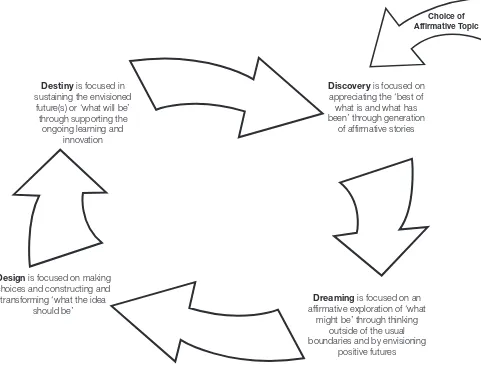
As a result of discussion and agreement with the BHLP Project Development Officer, the evaluation was framed within an Appreciative Inquiry (AI) approach (Cooperrider & Whitney 1999, Liebling et al 2001, Gergen et al 2004, Keefe & Pesut 2004, Carter 2006). Fundamental to this approach is the desire to discover ‘what works well’ in organisations/systems and ‘why it works’. It is based on a ‘4-D’ cycle: discovery, dreaming, design and destiny as illustrated by Carter (2006). (See Figure 1).
AI has been used effectively within a variety of complex organisational structures (health, prisons, and community settings). In particular, this approach has been utilised in Cumbria and Lancashire in a project that focused on multi-agency working with children with complex health care needs (Carter et al 2004). Appreciative inquiry also reflects the methodology used by the evaluation team from the Children’s Fund which collected indicators across health, social care and education, where appropri-ate and available, to help understand how service providers made decisions and what worked in which It is clear that the lead practitioner is pivotal to the success of integrated working. However, there was
considerable speculation as to whether access to a budget would further enhance the ability of lead practitioners to deliver services and goods targeted at assessed unmet needs.
The BEACh Initiative
In 2006, Blackpool was designated by the DCSF as one of 16 Budget Holding Lead Practitioner (BHLP) pilot projects and received associated funding to pilot the initiative. The BHLP pilot project was known locally as Blackpool Early Action for Change (BEACh). BEACh processes were founded on a comprehensive and inclusive purpose that set out to help children, young people and families benefit from the ethos and application of integrated working, aiming to promote more effective intervention through earlier identification of additional or unmet needs. In particular, universal services were targeted with the intention of providing a simple process for the holistic assessment of individual children’s needs and strengths, taking into account the potential impact of the role of their parents or carers and environmental factors on their development. Crucial to the project was the role of lead practitioner who would be drawn from and working alongside other members of the children’s workforce including health and social care services, local authorities, schools, voluntary, community and faith organisations, as well as police services, youth offending teams, further education, housing and probation services. In particular, the aim was to influence the health and well-being of children and young people through the delivery of child-centred services, safeguarding and promoting welfare.
The role of the BHLP built on and enhanced the lead practitioner initiative to deliver better packages of services for core groups of children and families by giving lead professionals access to a budget with which to commission services or procure goods directly from providers. The pilot project set out to test whether access to defined budgets would enable lead practitioners to achieve two main aims:
1. to ensure that children, young people and families received the services that they needed when they needed them, rather than as and when organisations granted the services to them
2. to reduce the overlap and inconsistency from other practitioners, thus reducing the costs per “episode” of intervention.
The focus of the BHLP was on early intervention support for children, young people and their families who had a number of different needs and who required integrated and co-ordinated support to help them to address those needs. The needs did not in themselves require statutory services or the involvement of a more intensive model of co-ordinated support, such as key-working, but, when considered as a whole, required a high level of input and co-ordination.
Budget-Holding Lead Practitioner Initiative
The emphasis of the BHLP pilot project was on joined-up working, with the child and the family at the hub of this experience, and built firmly on the common assessment framework (CAF) and the role of the lead practitioner. The BHLP pilot project was extended to children and young people aged 0-19 and their families living in five geographical wards in Blackpool. These wards were chosen as they had high levels of deprivation but also the necessary financial structures required to support the pilot project. Practitioners were encouraged to involve children and their families in the decisions about how the money was used. In fact, involving children and their families in decision-making was seen as part of the package of services wrapped around the child and family. Agreeing targets with children, young people and families, developing action plans, and holding review meetings were additional necessary processes.
Data Collection with Family Participants
In accordance with the project brief, participation was restricted to those families which had engaged with the CAF and BHLP initiative. Potential family participants were identified by the staff working on the BHLP project. The families were given an information sheet to read that contained details of the aims and objectives of the evaluation (see appendix 4). Those who agreed to take part then signed the consent form (see appendix 5) and their contact details were passed to the interviewer. The person named on the consent form was then contacted by telephone by a member of the research team (JL). In each case, the family member who had agreed to be interviewed was asked to indicate their preference for the location in which the interview would take place.
In all, 18 families participated in the interviews. The families were made up of 16 mothers and 2 mother-father pairs. The face-to-face narrative interviews were undertaken in 3 children’s centres. Most families expressed a desire to be interviewed without their children present. This was facilitated by extra nursery sessions or arranging the interviews in school time. While some children attended the interview at the children’s centres with their parents, they were all (except 2) babies. Two older children (one aged 3 and one aged 12) attended with their mother but chose to play rather than take part in the research interview. The 3 interviews undertaken in participants’ homes were carried out in the presence of children. Again, the children chose to play rather than to take part in the process.
The interviews, exploring ‘what had worked well’ against the family’s individual action plan and key outcomes from the Every Child Matters (ECM) initiative (DfES 2003) (see appendix 6), were audio-recorded and professionally transcribed. Using an appreciative narrative framework to elicit individual family stories of how the CAF, LP and BHLP had contributed to the outcomes detailed in ECM (DfES 2003), the families considered:
1 why and how they were first engaged in the process
1 their experiences of the CAF, multidisciplinary meeting, action plan and review 1 action planning targets
1 impact and outcomes for the family (adults, children and young people)
The interviews were focused on the participants’ experiences of engaging with the BHLP and CAF initiatives and developed in response to the participants’ disclosures. Although the interviews were framed to elicit appreciative stories, the families were encouraged to consider what else could be done to meet their perceived needs, how the process could have been improved, and what they understood to be their part in ensuring that set targets were met.
On completion of each interview a £30 gift voucher was offered as a token of gratitude for the time and good will invested in the interview process. The children were also offered a gift. The children’s gifts (toys) were selected with the children’s age and abilities in mind. This practice was consistent with guidance issued by INVOLVE (2007).
circumstances. AI is not designed to produce a detailed comprehensive evaluation, but in this case
it provided an in-depth, focused, qualitative evaluation of perceptions held by parents, children and young people, lead practitioners, budget holding lead practitioners, and other stakeholders of ‘what worked well’ in relation to the BHLP pilot project.
This study provided evaluation findings using four aspects of appreciative inquiry. These were:
1.appreciative framing of the topic/questions
2. discovery focused on the ‘best of what is and what has been’ through the generation of affirmative stories. (This aspect was the most fundamental one for this project)
3.dreaming focused on affirmative exploration of ‘what might be’ through thinking outside of the usual boundaries and envisioning positive futures.
4.destiny focused on the exploration of what staff and families felt that they could or would do in the future to help them to realise positive futures as envisioned in the dreaming phase.
[image:7.1208.69.550.395.765.2]The methods used were a mix of appreciative interviews (discovery) and group discussions (dreaming). Consultation and analysis was undertaken throughout the project.
Figure 1: The 4-D Cycle of Appreciative Inquiry
Destiny is focused in sustaining the envisioned
future(s) or ‘what will be’ through supporting the
ongoing learning and innovation
Design is focused on making choices and constructing and transforming ‘what the idea
should be’
Discovery is focused on appreciating the ‘best of what is and what has been’ through generation
of affirmative stories
Dreaming is focused on an affirmative exploration of ‘what
might be’ through thinking outside of the usual boundaries and by envisioning
positive futures
(Carter 2006)
In the first instance the analysts searched for positive experiences, mechanisms and outcomes in order to establish what worked well in the CAF and BHLP project. When complete, further interrogation of the data was undertaken to identify negative cases. This process continued until all the data had been indexed and categorised. This approach reconciled the modified framework analysis with appreciative inquiry methodology. It did so by enabling a thorough identification of what worked well alongside the possible mechanisms that enabled this to happen in particular contexts or cases. In this way the inductive analysis is reconciled with the deductive overlaying of specific questions to reach conclusions that were grounded in real life and real cases. This meant that the data analysis revealed some of the reasons for success in order that lessons from this could be learned, and that the recommendations for mainstreaming were firmly grounded in the experiences of practitioners and families alike.
Ethical Considerations
Printed information sheets were provided for participants. The project team was prepared to make information available in languages other than English if this need had been identified, though this eventually never materialised.
While written consent from some populations and for some research topics is notoriously difficult since this is associated with regulatory authorities and elements of the welfare system, all participants willingly signed a written consent form. However, the researchers ensured that individuals who wished to disengage from a discussion would be enabled to do so without embarrassment or fear of untoward consequences.
The researchers abided by the research ethics guidance offered by the British Sociological Association (2002) and the Royal College of Nursing (2007). The project team did not seek to identify individuals as NHS patients (past or present), but rather as members of a community served by a local resource, and the project did not fall within the realm of the National Research Ethics Service. However, formal approval was secured from the University of Salford Research Governance and Ethics Committee. Field work interviews were compliant with the University of Salford Centre for Nursing, Midwifery & Collaborative Research policy on field work safety.
Data Collection with Staff Participants
Staff were recruited to capture their perceptions of what was working well. Potential worker participants were identified and restricted to those working on the project. All members were sent an information sheet and an invitation to attend a half-day appreciative workshop (see appendix 7). Twenty-seven staff members attended, including lead practitioners, budget-holding lead practitioners, and other professionals involved in the pilot project. The appreciative framing of the key questions for the workshop was achieved through collaboration between the research team, project consultant and project lead. The questions were then incorporated into the 4 ‘D” process as follows;
1.The discovery activity focused on the sharing of affirmative stories to elicit ‘what had worked well throughout the BHLP pilot project’.
2.The dreaming activity focused on affirmative exploration of ‘what the world would be like for staff if what they had discovered from the affirmative stories worked all the time’. This required staff to think outside the usual boundaries and envision positive futures.
3.The design activity involved staff identifying what they thought needed to be put in place for the dream to become a reality.
4.The destiny activity required staff to decide what they would take from the workshop and implement in their ways of working in the future.
A cartoonist had been asked to develop sketches based on what was already known from the BHLP pilot project. These were placed around the room to help participants think about the project as a whole and to consider the CAF process, the impact of the lead practitioner, and access to the budget. He then spent time listening to and recording people’s thoughts which he then converted into sketches and fed back to the group (appendix 4).
Data Analysis
The mechanisms involved in the BHLP and CAF work were complex. This meant that what worked well for individual children, young people and families differed. In part, this difference was due not only to the context, culture and nature of the needs each family had, but also to the way that they constructed these in the context of services and goods available to them. Despite this, it was possible to distinguish those things that families perceived to work well in order then to identify those things that could work better.
A modified framework-analysis process (Spencer and Ritchie 1994) was applied to the data in order to elicit some of the tangible mechanisms related to both the processes inherent in the BHLP and CAF initiatives and the outcomes for the individual children, young people and families. The framework-analysis process involved the analysts (DF & JL) in;
1 becoming familiar with the data in order to gain an initial notion of key ideas, 1 identifying a thematic framework and using this to index or label the data 1 charting the data to allow for comparison across themes
The doctors calling about my dad. Just to know that I don’t have to look over my shoulder. I don’t have to worry about that knock on the door: who it’s going to be, if they’re coming for the money or the telly.
And I did a course: money management. Tell you the truth, I wasn’t looking forward to it, but it was part of the deal. It was good, though, you know. I liked the social aspect too, meeting new people and being out. Doing something for me. It makes a difference. Makes me feel a lot calmer.
I mean, I know the CAF’s not really for me; it’s there for the kids. But, that’s just it really. We’re a family. And if I feel stressed out, under pressure, you know, then so do they. They sense it. Anything that’s good for me has to be good for them. You see, I am my kids, and they’re me.
We come as a package.
Tipping Points
The families that participated in this project had complex and interrelated health, social and financial problems. Each respondent had a clear recollection of the tipping point that led to them needing additional help and support. Some needs related directly to the children and young people in the family. These included health problems, behavioural difficulties and developmental delay. Other tipping points related to the adult members of the family. These included mental health issues, domestic violence, housing difficulties and debt. Often there was an aggregation of factors that combined to leave the adult feeling unable to cope with the considerable burdens that they faced.
Tracy explained that she and her eldest daughter had significant health and social problems;
Tracy
…My two year old’s got epilepsy. She’s funded [in nursery]. I was going through post natal depression… and a few problems with my partner [drinking]...
Similarly, Brenda’s daughter had complex health care needs;
Brenda
…L has been seeing different specialists since she was about eight, nine weeks old. The neurologist is at Preston, genetics I don’t know where they are but she comes to see us at B H. Dr. T is at B H. She sees a specialist Health Visitor; we have a speech and language therapist, a portage worker, the O.T. and physiotherapist.
The burden of caring for her daughter was such that she had considered giving her away.
…I was very close to giving L away… I was living on my own with L and S and I think it was just lack of sleep, lack of support. I said to my mother one day I couldn’t cope…
For Wendy, it was the behaviour of her 3 year old son that led her to ask for help.
Wendy
…D was showing signs of belting me. He’s obviously been watching and seeing it [domestic violence]. It got to the point where I’d be cooking on the stove and I’d be juggling hot pans and he’d be coming up and booting me in my back…
Sheila lived with her own 8 children and one grandchild. She explained why she was concerned about her son’s development.
Sheila
…I was having a lot of problems with B not talking and he was slightly deaf.
Other respondents reported that their own circumstances were exerting a detrimental impact on their children. Victoria had a 3 year old son and she was concerned that he was spending too much time on his own with her in the house;
Victoria
…I was in a really bad way. My bipolar was not at all stable, and I was thinking some unsavoury
SECTION 3: TIPPING POINTS AND ACCESS TO
THE CAF AND BHLP
Composite 1 - Significant family burdens
My dad’s not very well, hasn’t been right since Mum died, but it’s got a lot worse. Throat cancer and lung cancer. Terminal.
Luke’s in nursery; my little one. He’s 17 months. He only does half days. Eleven ‘til three. That suits me though. I go to my dad’s in the morning, drop Sammie off at school first (she’s 7). Feed my dad, then come home and do my housework. Go back about half ten and make him a cuppa. Then me and my sister, she lives up that way, we take our two to the nursery together. Then I go and do him a sandwich or some soup, for lunch you know, do his shopping, his hoovering and any washing he’s got. By then it’s time to pick Luke up and Sammy, take then home and give them their tea. Then it’s baths and bed and stories, of course. Then I’ve got lunches to do for tomorrow and ironing – try to eat my own tea, too, and give my dad a quick call to see how he is. It’s all just a routine, you know. I’ve never been one of those people who’s had the choice.
I’m not on my own with the kids. My brother Jason lives here, too. I don’t mind so much. Had a bit of trouble with my ex-partner, so it’s good for security. It’s a bit cramped, with him on the couch and Sammie and Luke in together. She needs her own room now, but I can’t move at the moment – not the way things are with Dad. Jason can’t leave, either. Bail conditions. He’s had a hard time, been inside for a while – drugs – he’s clean now. Tried to cut his wrists and went through a tendon, now he’s got no feeling in his right hand. Waiting for an op but God knows how long that’ll take.
Sounds grim doesn’t it? Sick dad, criminal brother, two kids. I don’t look at it like that. It’s just life. And since we’ve had the CAF things have been better. I’d love to go back to work eventually. I really would. There’s so many things I’d like to do. With everything that’s gone on it’s hard to imagine a light at the end of the tunnel. But sitting there, around that table, with everyone who is important to the kids’ lives; all there together; only having to say things once. It just made everything seem more achievable. I’m not saying it’s all sunshine and flowers, like. It’s all still hard work. My dad’s not going to get any better; he slips a little bit more every day. Luke’s still boisterous; a handful, but I feel like there’s more options.
I had a bit of debt you see. I was paying for the nursery then, only £30 a week, but that’s a lot of money to me and I just couldn’t afford it. I was robbing Peter to pay Paul: putting off the water rates and TV licence so I could pay the nursery. Or missing the nursery to pay the electric. Got myself into a mess. I don’t mind admitting it now, but I couldn’t at the time. I didn’t know what to do, who to turn to. When you hear the word “debt” you think of all kinds don’t you? It wasn’t like I was buying fancy clothes or having nights out. Just trying to survive.
I got chatting to my health visitor one day and it all came flooding out. Crying and everything. I felt ashamed. But C (staff member) is lovely. She knew my mum when she was alive, and I think that makes a difference. She mentioned the CAF, just as an option. She said she’d help me sort it out. It’s amazing what a difference just that little bit of help can make. It’s such a small thing, but just having someone to listen... And you can tell she cares and she’s not thinking “Oh god, here she goes again”.
Anyway, we did the CAF and it’s been a big help. Paid for nursery for Luke three days a week, which, again, it’s a small thing but it makes a big difference. Just that extra half hour to wash my hair or go next door for a cuppa and have a proper conversation. And they got that, the CAF people. They really understood it.
Similarly, it was Julie’s apparent tiredness that led to intervention. A former drug addict, Julie lived alone with three children. Her eldest son, a 6 year old boy, had been diagnosed with autism. She told of his repetitive and sometimes difficult behaviour. She was concerned that her younger children were missing out as she had little time to give them the attention that she felt that they needed. She was also trying to cope with an abusive ex-partner and was struggling to have a restraining order enforced. Again, it was the nursery staff which initiated her access to support through the CAF initiative.
Julie
I was tired all the time. I was snappy and a bit under the weather or what have you, and then she said there’s a CAF we can help you with, you know, keep K in nursery for a few days. It was just someone at the nursery, one of the girls at the nursery…
Edwina had also been struggling to cope with the demands of her two young children, an ex-partner whom she described as “difficult”, and her terminally ill father who was dying from throat cancer. Edwina had agreed that her younger brother, who had a history of offending behaviour and drug addiction, could live with her in order that he could meet his bail conditions. The demands on her time meant that she was sometimes late dropping her son off at nursery. She knew that the nursery staff had noticed. They were clearly concerned about her extreme tiredness.
Edwina
The nursery teachers found that I was looking more tired… They know what’s going on with my father, and I’ve had problems with [the children’s] biological father, you know, trouble with him, and they knew that I was getting tired, or I’d turn up a bit late to drop him off, because I’d have to do something for my father, or something along them lines... They told me about it (the CAF).
May had a similar experience. She was concerned about how she would cope with her daughter who needed constant attention during the 6 week school holiday period.
May
I was just very stressed one day and I was saying what am I going to do when it’s the 6-week holidays, you know. She’s a very demanding child, and I’ve got to be around her all the time. You don’t know when she’s going to have a fit. And then J said, “I heard what you were saying before”, and she said “we could help”, you know, “we’ll put her into nursery during the holidays for you” which was a brilliant help.
Other participants recounted how they, too, had been invited to become involved in the CAF process by nursery staff.
Denise
D at Sure Start mentioned it to me. She said that I might be able to get help because I was really struggling with B’s [son] behaviour.
Brenda was offered help in order to support her coping with the complexity of her daughter’s medical problems.
Brenda
…J (nursery manager) asked me if I wanted to do this form because it would save me having to go through all the history with different people that we saw. So that was when I first did the CAF.
Debbie explained that it was the state of her house that had caused concern
Debbie
…We’re suffering at the moment. The children are unhappy, the house is a bit of a mess, its damp, I’ve had no hot water for 38 days, the boiler’s been condemned, and there’s placemats on the bedroom floor for floor boarding.
Moira lived with her young son [12 months] and her teenage son who was studying for a place at university. She had difficulties with money that led to the threat of losing the nursery place for her youngest son. Moira’s plight was not unusual as many of the interviewed families explained that being unable to pay nursery fees had led to their children losing their nursery places. It was possible that staff would not accept the payment of debt as a legitimate use of BHLP money.
However, many staff understood the importance of children attending nursery and how it often averted a family crisis.
Elizabeth (staff member)
Getting children into nursery quickly helped to overcome a crisis…
For Moira, getting her child back to nursery meant that she could continue in paid employment and ultimately become less dependent on services. Additionally, she agreed to attend a debt-management course that helped her to budget and manage her money to avoid future problems. In this way, the staff working on the Blackpool project concurred with the Department for Children, Schools and Families (2006) by putting the child’s needs at the centre of services.
Accessing the CAF & BHLP
While the families could often recall a single event which led to them seeking extra help and support, one of three distinct mechanisms was used by the families and staff to invoke CAF procedures. These included Home Start and Sure Start staff responding to behavioural cues, health visitors taking timely action in direct response to family requests for additional help, and families requesting help from social services and charitable organisations (Barnardos).
Home Start and Sure Start Staff
Receiving an invitation from a member of the Home Start or Sure Start team was a common route into the CAF and BHLP project. Families (most often mothers) were often approached by staff who suggested that additional support (services, goods or finance) could be made available through the BHLP initiative. The mothers were usually identified as being tired, stressed or unable to cope with the demands being made on them. The cues used by staff included knowledge of financial difficulties, missed appointments, late arrival at the nursery or parents simply looking tired.The staff involved appeared to anticipate the need for extra help and support and were proactive in using their initiative to take action and avert a family crisis.
Moira recounted how she had first been invited to take part in the CAF process. Her youngest son attended one of the nurseries within the geographical boundary of the BHLP pilot. Moira was in debt and had been unable to pay her nursery fees. She was employed part-time and wanted to continue to work but knew that non-payment of fees was putting her nursery place at risk. The staff at the nursery intervened.
Moira
Composite 2 - Navigating health issues
I felt like I was being fobbed off all the time with E. That’s my oldest daughter. She’s 2½. She been diagnosed with epilepsy. She’s on the medication now and she’s doing a lot better, but she doesn’t eat. I’ve got a nine month old and she’s 15lbs and E, she’s only 24lb. That’s 9lb difference and there’s more than a year between them. That’s not right is it?
She’s never eaten properly. She wouldn’t feed when she was born, but no matter who sees her they say it’s just a phase. A 2½ year phase. She just generally doesn’t eat. She picks at food and then she tries to make herself sick. She does this thing, with her throat, rubs it up and down. Like she’s trying to make herself swallow, and all the while she’s gagging on it. That’s not right is it? For a child who’s not even three to be doing that. Even with Weetabix.
Me and my fella, we’ve had a lot of problems. What with all of E’s health issues and then I had postnatal depression when I had J. That’s my 9 month old. I’m a lot better now. But it was tough going for a while. He moved out. I made him.
E’s funded ‘cause of her epilepsy so she goes to nursery every afternoon, and then I got CAF-funded for J to go once a week. It helps. I wish it was a bit more, but it is nice to have a bit more time to myself. My mum said I should have asked for more, two afternoons even three, but I don’t like to be too cheeky, really.
The CAF meeting was a proper eye-opener, though. You don’t realise ‘til they’re all in one room how many people are involved in your child’s life. Not so much for J ‘cause she’s OK, but for E. God, there was an early years worker, a health visitor, the specialist doctor from the hospital. But that’s what I was saying. I felt like I was being fobbed off all the time with E, but in this meeting I was able to say it all. You go to the hospital and they do all these tests, things you’ve never even heard of and can’t pronounce and you think, well they know what they’re doing don’t they? I come out of there thinking, why didn’t I say this or I don’t understand that. But at this meeting it was like we were all on the same footing. All there for E and I got more answers. Understood a bit more. I mean the hospital say she’s a normal happy child, but that can’t be right can it?
I know my daughter. I know when she’s not right. She’s pale all the time and she looks so drawn and tired. That’s not right for a little girl her age. I said that, and the health visitor, E (staff member), she agreed. That was amazing – to have someone listen and agree with me. It’s a long process now – but we’ve taken the first steps. We’ve done the action plan thing and I’ve just got to keep my fingers crossed and keep doing everything I can do to help E. If everyone’s working together it makes life a lot easier doesn’t it, in a nutshell. I don’t know – everything in its place. Joined up thinking, that’s what they call it isn’t it? Joined up thinking around the family.
Health Visitors
Other families came to be involved in the BHLP project by seeking help directly from health visitors. Liz explained that she and her partner, living in a 3 bedroom house with 8 children, had felt increasingly under attack from elderly neighbours. She had been sent a letter from the Council about complaints received. It appeared to Liz that the complaints were largely about the children playing and making a noise. The letter had a profound effect on how Liz felt that she could cope. She had only recently moved into the house from a hostel. She spoke of her real fear of being evicted, and was terrified that she would have to move with the children to a housing estate that she thought was wholly unacceptable because of the social problems that existed there. Liz knew that her stress was affecting her relationship with her partner and the children. She contacted her health visitor for help, who suggested that they use the CAF and BHLP project for help and support;
Liz
We started with the CAF. She (HV) came out with the CAF forms and she explained what it was about and suggested making up a list of things to do for the summer holidays...
Others explained how they had been told of the CAF project by their health visitors. The reasons for the health visitor intervention differed. Some mothers had post-natal depression;
May
…I was going through postnatal depression and a few problems at home, so the health visitor got in touch with me and did a CAF on J.
Wendy explained the impact of domestic violence on her 3 year old son.
Wendy
[I’d had] domestic violence issues, I actually called the health visitor in because my 3 year old son was, you might as well say, bullying me.
Kirsten had been thrown out of a friend’s accommodation. While she had found a room in a local hostel, her friend had denied her access to her baby’s cot and belongings. She felt that she couldn’t cope with her young son.
Kirsten
I went to my health visitor; told her what I was going through because I was, obviously, really down, and she actually told me about this…how can I say it? This scheme that’s going on that can get our children into nursery a bit sooner, without me having to pay anything…
Angela and Sam explained how they needed help because of their learning difficulties and inability to read and write.
Angela and Sam
H [HV] said because we’ve got learning difficulties it might be ideal to have a CAF meeting, put that into place. H sorted it all out so we could get a CAF, and they put lots of things in place what we needed like sorting out budgets…
While the health visitor was understandably the first person that families with young children turned to for help, not all families found their health visitor approachable.
Angela and Sam
We’ve got a new health visitor here but she won’t even come out and see us. ‘Cause she’s an awkward woman. Well she thinks she’s always too busy…
Patsy
I don’t really see my health visitor. I only really see her when I go and get their injections…
Access to the CAF and BHLP was negotiated through one of three mechanisms. Either staff responded to cues which indicated that the families, most often mothers, were struggling to cope, or health visitors suggested that BEACh processes could help to meet unmet need. Alternatively, some families made direct approaches to Social Services or Barnardos for help.
It also emerged that successful access to the CAF and BHLP pilot project relied heavily on a knowledgeable, proactive and committed staff. The workers who helped families to engage with BEACh not only anticipated or identified that additional needs existed, they also responded in a timely manner to cues (for example, missed appointments, looking tired) that indicated that families had unmet needs. The response to these cues appeared to rest on staff being sensitive to the possibility that the families were close to a crisis. This finding is consistent with the findings from the Concept of Operations Study (DCSF 2006) in that effective integrated working is founded on and sustained by strong personal relationships between staff, adoption of common models of working, language and service delivery approaches and an ability to put the chid and family at the centre of provision.
Many participants spoke about their reliance on one professional that they had worked with or had access to for many years. This relationship was an important mechanism in their ongoing ability to aspire for better things and to have hope in the future. Being available and approachable when needed was identified as the single most important mechanism in making the BHLP pilot project work. Fast and reliable access meant that other mechanisms could and would follow.
Opinion varied on the perceived response to requests for help from Social Services. Families interpreted Social Services advice to go to Barnardos as an indication of disinterest or as an inadequate response. They did not, as staff did, see this as appropriate signposting and referral. Finally, one family struggled to maintain the support that they had received previously during the time of a child’s transition to primary school. Any transition phase presents a challenge to effective integrated working that has a strong reliance on interpersonal relationships. When any child moves from one team to another, changes in personnel may cause the process to falter, and islands of good practice can turn on themselves to present another sort of silo (DCSF 2006). Certainly, it is possible that localised working may be limited by the personal sphere of influence of the team, and hence, the children with whom they work.
Social Services and Barnardos
The third mechanism that families described for accessing the CAF project was by asking directly for help from social services or Barnardos. For instance, May explained how her 14 year old had quite serious behavioural problems.
Tracy
He’s had a lot of problems in his past. He only found out a couple of years ago that his father, who he is living with now, is not his real father, but he had brought him up from being a 6 month old, but he has had quite a few problems. I think he takes a lot of it out on his younger brother J. He is J’s biological father.
His behaviour on the housing estate had led to the family being evicted under a Section 21 order. The family had been re-housed. She was pleased that the move had seemed to help her son to settle (although this move was not facilitated through the BHLP). She described how he was proud of the new house but she was still concerned about his behaviour at home and found it difficult to impose limits on him. A neighbour had suggested that she telephone Social Services for help.
Tracy
I actually phoned Social Services to start off with, and they said that there was nothing they could do unless the children are in danger. So they put me on to Barnardos and they basically followed me, followed me through and helped me and, you know, tried to do stuff with A. J (staff member) put me onto it (CAF). I met J (at Barnardos) and she’s been brilliant...
Similarly, Denise, whose son B had behaviour problems and development delay, had become reliant on the help that she had received from the Home Start team. However, with her son’s transition into primary school this had declined. She was increasingly unhappy and concerned about B’s behaviour. She decided to approach Social Services directly for help. She told of the support that she was receiving and described the difficulties that she had encountered;
Denise
I tried to do things through them, but they’re either too busy or they can’t talk…its just they’re not interested.
As with May, Social Services staff suggested that she should contact Barnardos.
Denise
[At] one stage I went to the Social Services and actually asked for their help and they turned around and said “no”. And they gave me the Barnardos phone number…
Interestingly, the families who approached Social Services perceived that they had received an inadequate response. However, this was a reflection of families’ understanding of social services and not a reflection of the service provided by social services. The families concerned had all been signposted to Barnardos where their concerns had been addressed.
Summary
However, most disappointment was expressed when those thought to hold the key to offer the families the services they needed did not attend. Gaye lived with her partner and 5 children aged between 4 months and 5 years. She explained that they had no family support in Blackpool and were struggling to manage in a 2 bedroom terraced house. During the interview she showed me how the double buggy, worth over £100, was stored outside in a tiny fenced space that separated the front window of the house from the pavement.
Gaye and her partner had decided not to declare the birth of their latest son as they felt this would prevent them from getting a larger house. They were right. They had been persuaded that declaring the birth of their youngest son would help their claim for a larger house. It did not. The housing department told them that they could no longer bid for 3 bedroom properties. The logic in this was simply that it was acceptable if they overcrowded themselves, but it would be illegal for the Council to do so. Gaye and her partner knew that there was a real shortage of 4 and 5 bedroom houses and had begun to despair of being offered anything better. Gaye was desperate for staff from the housing department to attend the multi-disciplinary meeting that followed the common assessment. Her frustration when they failed to attend on two occasions was palpable.
Gaye
…But the people from the Housing weren’t there, they just sent their apologies and said they couldn’t attend. My health visitor couldn’t attend either. I was quite disappointed, because it wasn’t what I expected. I thought that they’d come because that’s basically what it was set out for, but they never attended and I had follow up, but people never turned up again…
Given initial findings of multi-agency working that point to the need for co-location, it is possible that a disconnection between professionals is sustained rather than challenged by geographical location.
Tracy also described her difficulties in achieving attendance by selected workers at the multi-disciplinary meeting. In fact, she was surprised that one person she had expressly asked not to attend did, while others whom she had requested to attend failed to do so.
There was considerable agreement between the respondents that housing and medical staff were the least likely to attend meetings.
Being Listened-to, Being Heard, and Joint Action-Planning
When the right people attended the meeting, families reported a sense of being asked for their opinions on what really mattered to them. This was especially important and, for some, it felt like a new and different experience.
Victoria
We make a joint decision; it makes you feel like you’re not belittled, they’re talking to you as a friend…because when people listen to you, you feel, well, heard; which is obvious. You feel like they’re taking our point of view across with them and putting it into an actual activity…
Edwina agreed.
Edwina
It’s nice to have someone to listen to you and be normal, you know, [not] ‘oh she’s going on again’. It was nice that I wasn’t judged by what I was saying…
Victoria described how the meeting had been focused on what it was that she thought was needed.
Victoria
…it was a case of, what do you want, what do you think we can do? I want a nursery for S, you know, and they tried to accommodate something to help my oldest boy as well…they weren’t shoving ideas down your throat…it wasn’t like “oh we think you should be doing this, that and the next thing”…
SECTION 4: CAF MATTERS
Families were asked to talk about their individual experiences of the multi-disciplinary meeting that was held to determine the targets and actions necessary to meet their identified needs. This enabled the researchers to formulate an impression of what was really going on, what worked well and how the positive aspects of this work could be used to further design effective meetings. The respondents spoke graphically of their experiences. They were all able to discern what had worked well for their own families. Many of the respondents expressed a feeling of being listened to, being heard, and joint action planning. They also spoke of appropriate targets being identified and a feeling of joined-up working across different professional groups and different agencies. For others, the multi-disciplinary meeting was daunting and intimidating.
A potential but important barrier to family involvement was the use of the term CAF. While all respondents but one were familiar with the term CAF, none knew what it meant. There was evidence from this work that some families confused the term CAF (Common Assessment Framework), with the term CAFCASS (Children and Families Court Advisory and Support Service). The latter was associated with significant stigma for some families.
The Multi-disciplinary Meeting
Once families had expressed an interest in becoming involved in the project and engaged with the initial CAF to determine if they had additional unmet needs, they were invited to a multi-disciplinary meeting. Many families described this as a particularly positive experience. The meeting was often attended by key professionals who could procure goods or offer services for the family. The professionals came from many different professional backgrounds and agencies such as health, portage and Home-Start. Even when this was not the case, some families were offered alternatives to help them to cope while a final solution was being sought.
Brenda
A was there instead of my portage worker, P was there from early years, my health visitor was there, T from the nursery who organises the groups that the children go in, and E who did my CAF form was there...
Having the right people at this first meeting was considered by most families to be the key to success. It appeared that getting the right people to attend the CAF meeting was driven by the lead professional identifying who should be part of the team around the child. The staff who attended were different in each case. For Liz, the involvement of police officers was important given her concern about neighbour complaints.
Liz
There was a police officer, someone from Baines and someone from the Grange Park Children’s Centre… The police were there because of the neighbours’ complaints; the council were there because of the complaints, and my health visitor… I just thought for once that maybe they were actually realising they could do something for the kids…
It was nonetheless inevitable that not all professionals could attend at the same time. However, sometimes, those who could not attend sent written reports.
Brenda
…Other people sent responses saying that they wouldn’t be able to attend, the specialist HV, the speech and language…
When key people did not attend or were not asked to attend, the families expressed disquiet and disappointment.
Brenda
Angela and Sam
No, not at first, because of the name…because it’s called CAF. There’s another service out there that’s linked to Social Services what has a similar name, it’s CAFCASS. It’s where they take your kids off you…so the name of this one, we thought…when they said CAF, we thought they were changing CAFCASS to CAF, it was the same idea. So we were a bit dubious to start with…
It emerged that the similarity in terms and the popular understanding associated with CAFCASS had led other families to refuse offers of help.
Angela and Sam
Another family on the estate thought it was CAFCASS so he’s refused plain blunt… (We’ve explained) but he still said no. He doesn’t believe us. You see, he’s had problems with Social Services…
Those families which had been involved with both the CAF project and CAFCASS could distinguish between the two. An example of this emerged in the interview with Jen and Mark. Jen, who had two children from a previous relationship, both subject to a residency order that meant they lived with Jen’s sister, articulated what for her was an essential difference in how CAFCASS and the CAF worked.
Jen
...I have two other kids that are on the residential order with my sister…
Jen had been contesting the residency order and expressed her anger that the CAFCASS assessment had considered whether or not Mark constituted a threat to her children. He had been in prison (although he did not disclose the nature of his crime), and Jen was vociferous in her opinion that she, her current children and Mark should be seen as a family unit.
Jen
What it was…I don’t just come as my own, I came as a package with R and A [children] and M [partner]. We’re all the family, you know, and that’s what really annoyed me more than anything. She [her sister] can have people to see her, you know, she had boyfriends and they can, you know, but instead of checking their background it was just basically on me. And it was totally out of order. And the stuff what he (CAFCASS worker] put in was just rubbish…
Jen was no longer contesting the residency order, but, she used her experience of working with both services to determine a strong preference for the CAF and BHLP project.
Jen
…I’ve had a few bad years like with my father dying and my brother just died not far back, so it’s just been a bad year…that’s when you feel like Social Services and all that are going to come in saying you can’t cope…our last social worker, she was rubbish…every time we tried getting hold of her and all that, she didn’t even get back in contact with us…
By comparison, their concluding remarks on the CAF and BHLP were very positive
Jen and Mark
I think it is quite a good scheme to have…it’s helped a lot of people really, who don’t have the right funding to put the child into the nursery… that’s why we support the process…
It seems apparent that rethinking the name of the project may not only reduce the perceived threat and stigma associated with CAFCASS but may also help to persuade some families of the benefits that may follow.
Similarly, Brenda found that she could talk to people for the first time about what mattered to her.
Brenda
…because it felt for once I could actually say what I thought. You go and see the specialist and they’ll say right, we’ve done all these tests, this has come back, this has – and I’ve always had these things to say to the specialist…and you don’t feel you can because they’re the doctor…they know better. So yeah, it made it easier to say what you wanted to say…
Families were not used to being asked for their point of view or to express what they thought that their family needed. Kirsten found the meeting empowering. She explained that it had given her confidence;
Kirsten
It’s given me confidence, really… I think to myself, like, I go through a lot of problems in my head, you know, I’m putting myself down all the time… I’m sure everyone does that… but I’ve suffered with depression as well…I’m an ex-drug abuser as well and they’ve just helped me a lot, …when I need to talk about something that’s getting me down, I write it down on a piece of paper and it helps me relieve it…
Nonetheless, it was not surprising to learn that not all of the respondents felt able to speak for themselves at the meeting. For Liz, this was managed by her health visitor taking the lead in telling the professionals who were present what it was that Liz and her family wanted.
Liz
The health visitor asked them all and she explained what the family wanted to do and she asked them if they’d be happy with that. They agreed.
For others, the meeting was an intimidating experience. Denise understood what the purpose of the meeting was.
Denise
The way I look at it, the whole idea of the CAF meeting is to help the mother and the children… the family, as such…
However, she found the process difficult to cope with and explained why she thought that things could
be done differently in the future.
I found it quite daunting because everybody was basically staring at me. [They] have the meeting but you just write down what you want sorted out, maybe, and then you hand that over to them and leave them. I broke down quite a few times in the CAF meeting because I felt so much under pressure
Similarly, Tracy found meeting with a number of professionals to be difficult, and she was unsure if she was being judged or helped.
Tracy
I don’t know, you just feel, I don’t know, I feel easy talking now, (1:1 interview) but with loads of people looking at you, you like ... Are they looking at me to judge me or are they really there to help me? You don’t know do you?
Language