Whole genome sequence and comparative genomics analysis of multi-drug resistant 1
environmental Staphylococcus epidermidis ST59 2
3
Zhen Xu*1,†, Raju Misra‡, Dorota Jamrozy§, Gavin K Paterson**, Ronald R Cutler††, Mark A 4
Holmes‡‡, Saheer Gharbia‡, Hermine V Mkrtchyan§§1
5
6
*Department of Public Health, National Demonstration Center for Experimental Preventive 7
Medicine Education, Tianjin Medical University, Tianjin, China. 300070 8
†School of Biological and Chemical Sciences, Queen Mary University of London, London, 9
UK.E1 4NS2
10
‡Natural History Museum, Core Research Laboratories, Molecular Biology, Cromwell Rd, 11
London SW7 5BD 12
§The Wellcome Trust Sanger Institute, Cambridge, UK. CB10 1SA 13
**School of Veterinary Studies and Roslin Institute, University of Edinburgh, Easter Bush 14
Campus, Midlothian UK. EH8 9LE 15
‡‡Department of Veterinary Medicine, University of Cambridge, Cambridge, UK. CB2 1TN 16
§§Correspondence: Hermine V Mkrtchyan, School of Health, Sport and Biosciences, 17
University of East London, Water Lane, London, UK. E15 4LZ 18
19
European Bioinformatics Institute Sequence Read Archive, accession ERR387168. 20
21
G3: Genes|Genomes|Genetics Early Online, published on April 30, 2018 as doi:10.1534/g3.118.200314
© The Author(s) 2013. Published by the Genetics Society of America.
G3: Genes|Genomes|Genetics Early Online, published on April 30, 2018 as doi:10.1534/g3.118.200314
Running title: WGS analysis of S. epidermidis ST59 22
23
Key words: Staphylococcus epidermidis, antibiotic resistance, whole genome sequence, 24
comparative analysis 25
26
Correspondence: Hermine V Mkrtchyan, School of Health, Sport and Biosciences, 27
University of East London, Water Lane, London E15 4LZ, UK. 28
Tel: +44208234081; Email: [email protected]. 29
30
31
32
33
34
35
36
37
38
39
40
41
42
43
44
ABSTRACT 46
Staphylococcus epidermidis is a major opportunistic pathogen primarily recovered from 47
device-associated healthcare associated infections (DA-HAIs). Although S. epidermidis and 48
other coagulase-negative staphylococci (CoNS) are less virulent than Staphylococcus aureus, 49
these bacteria are an important reservoir of antimicrobial resistance genes and resistance-50
associated mobile genetic elements that can be transferred between staphylococcal species. 51
We report a whole genome sequence of a multidrug resistant S. epidermidis (strain G6_2) 52
representing multilocus sequence type (ST) 59 and isolated from an environmental sampling 53
of a hotel room in London, UK. The genome of S. epidermidis G6_2 comprises of a 2408357 54
bp chromosome and six plasmids, with an average G+C content of 32%. The strain displayed 55
a multi-drug resistance phenotype which was associated with carriage of 7 antibiotic 56
resistance genes (blaZ, mecA, msrA, mphC, fosB, aacA-aphD, tetK) as well as resistance-57
conferring mutations in fusA and ileS. Antibiotic resistance genes were located on plasmids 58
and chromosome. Comparative genomic analysis revealed that antibiotic resistance gene 59
composition found in G6_2 was partly preserved across the ST59 lineage. 60
61
62
63
64
65
66
67
68
69
INTRODUCTION 71
Staphylococcus epidermidis is a common human skin commensal, but also the most frequent 72
pathogen among coagulase-negative staphylococci (CoNS), causing primarily device-73
associated healthcare associated infections (DA-HAIs). Compared with more virulent S. 74
aureus, CoNS rarely produce toxins and less is known on whether the toxin genes contribute 75
to strain virulence (Otto 2013a). S. epidermidis forms biofilms on medical devices and 76
implants, from which single cells dissociate and disseminate via the bloodstream to start 77
colonization at a different site, which might lead to sepsis, meningitis and endocarditis 78
(Becker et al. 2014). In addition, S. epidermidis and other CoNS are believed to act as a 79
reservoir of resistance and virulence genes for S. aureus, contributing to the evolution and 80
emergence of successful clones of methicillin-resistant S. aureus (MRSA) (Otto 2013b). 81
Together with S. aureus and other CoNS, S. epidermidis accounts for 30% of hospital 82
associated infections (Conlan et al. 2012). These nosocomial pathogens have developed an 83
arsenal of strategies contributing to colonisation and infection of the hosts (Becker et al. 84
2014), while often being resistant to multiple antibiotics. Emergence of antibiotic resistant 85
bacteria has been mostly attributed to the healthcare-associated settings (Oliveira and Tomasz 86
2002). However, more recently, selection of antibiotic resistance has been also associated 87
with the community which has been linked to the misuse of antibiotics (DeLeo et al. 2010). A 88
typical example of this is the community-acquired MRSA (CA-MRSA) which, in addition to 89
acquiring methicillin resistance, has gradually increased the frequency of resistance 90
determinants similarly to hospital-acquired MRSA (HA-MRSA) (Chambers 2005). There is 91
an increasing evidence that horizontal gene transfer between closely related species may 92
contribute to this (Otto 2013a). Recently, Méric et al showed that S. aureus and S. 93
epidermidis share half of the genome and while homologous recombination between the two 94
metal resistance and SaPIn1 elements (Méric et al. 2015). As a result, attention is now 96
focusing on the multidrug-resistant coagulase-negative staphylococci and their rapid spread 97
as opportunistic pathogens particularly in relation to patients with an immuno-compromised 98
status (Morfin-Otero et al. 2012). Multidrug-resistant coagulase-negative staphylococci 99
(MDR-CoNS) are primarily recovered from healthcare-associated medical devices, 100
ambulatory patients and healthy animals (Becker et al. 2014). 101
Molecular approaches such as pulse field gel electrophoresis and multi-locus sequence typing 102
have been widely used to evaluate the dissemination of resistant clones of bacteria (Miragaia 103
et al. 2008). Recently, complete genome sequencing of S. epidermidis strains have been 104
reported, however these are limited to commensal and nosocomial strains ( Conlan et al. 105
2012; Gill et al. 2005; Zhang et al. 2003). Only one study has compared whole genome 106
sequences of four S. epidermidis isolated from rice seeds with that of type strain (Chaudhry 107
and Patil 2016). To our knowledge this is the first whole genome based study looking at 108
MDR-CoNS isolated from general public settings. 109
In this study, we present the genetic features of this multidrug resistant S. epidermidis (strain 110
G6_2) and compare it with six S. epidermidis reference genomes and 133 previously 111
published genomes of clinical S. epidermidis. 112
MATERIAL AND METHODS 113
Isolates analysed in this study 114
Between October 2012 and April 2013, we sampled different sites in three hotels in London, 115
UK. Permission to carry out sampling was granted by the manager/owner of each hotel and 116
the results from each hotel were reported to each manager/owner for their information. 117
Inanimate objects in 32 hotel rooms were sampled using COPAN dry swabs (Copan 118
Basingstoke, UK) and Mannitol Salt Agar plates (Oxoid Basingstoke, UK). These cultures 120
were incubated aerobically at 37°C for 24–72 h. 121
The S. epidermidis G6_2 was recovered from one of the hotel rooms in April 2013 in 122
London, UK. Preliminary identification was achieved by using Matrix-assisted laser 123
desorption ionization time-flight mass-spectroscopy (Microflex LT, MALDI-TOF-MS, 124
Bruker Daltonics, Coventry, UK) as described previously (Mkrtchyan et al. 2013). 125
For comparative genomics analysis genomes of six S. epidermidis reference strains were 126
included: RP62A (Gill et al. 2005), ASM1192v1), ATCC12228 (Zhang et al. 2003), 127
ASM764v1), SEI (Davenport et al. 2014), CP009046), 949_S8 (Biswas et al. 2015), 128
CP010942), PM221 (Savijoki et al. 2014), HG813242), and BPH 0662 (Jyh et al. 2016), 129
NZ_LT571449) together with 129 S. epidermidis genomes derived from two previously 130
published collections (Roach et al. 2015; Tewhey et al. 2014). 131
16S rRNA gene sequencing 132
Genomic DNA of S. epidermidis G6_2 was prepared using a Qiagen DNA extraction kit 133
(Qiagen, Crawley, UK). 16S rRNA amplification was performed as described previously 134
(Okazaki et al. 2009), PCR products were sequenced by Eurofins MWG GmBH (Ebersberg, 135
Germany) using ABI 3730 L DNA analyser. 136
Molecular characterization ofS. epidermidis G6_2 137
Carriage of the mecA gene was determined with PCR as described previously (Hanssen et al. 138
2004). SCCmec typing was carried out by determination of mec and ccr complexes (Kondo et 139
al. 2007). Multi locus sequence tying (MLST) has been used to determine seven 140
housekeeping genes as describe previously (Thomas et al. 2006). Sequence types were 141
Antibiotic susceptibility testing 143
The antibiotic susceptibility of S. epidermidis G6_2 was tested against 13 antibiotics (Mast 144
Group, Merseyside, UK) using disk diffusion methods according to BSAC guidelines (J. M. 145
Andrews and Howe 2011). This included penicillin (1 unit), amoxicillin (10 µg), cefoxitin 146
(10 µg), oxacillin (1 µg), cefepime (30 µg), vancomycin (5 µg), gentamicin (10 µg), 147
streptomycin (10 µg), mupirocin (20 µg), erythromycin (15 µg), tetracycline (10 µg), fusidic 148
acid (10 µg) and chloramphenicol (30 µg). In addition, the minimum inhibitory concentration 149
(MIC) of the isolate to oxacillin was determined using ‘‘M.I.C. evaluators’’ (Oxoid Ltd., 150
Basingstoke,UK). 151
Whole genome sequencing, assembly and comparative genomics 152
Genomic DNA was extracted using the MasterPure™ Gram Positive DNA Purification Kit 153
(Cambio, Dry Drayton, UK) from overnight cultures grown from single colonies in 5 ml of 154
tryptic soy broth overnight at 37 oC. Illumina library preparation was carried out as described
155
previously (Quail et al. 2008), and genome sequencing using Hi-Seq 2000 performed 156
following the manufacturer’s standard protocols (Illumina, Little Chesterfield, UK). The raw 157
fastq data was quality trimmed using trimmomatic, (version 0.35) default settings, specifying 158
a phred cutoff of Q20. Read quality was assessed using FastQC (S. Andrews 2014) and 159
Kraken (version 0.10.5-beta) metagenomic pipeline (Wood and Salzberg 2014), including 160
KronaTools (version 2.5) (Ondov et al. 2011) was used to assess library purity, that is, it was 161
not a mixed sample and ensure the species was S. epidermidis. De novo assemblies were 162
performed using assembler, SPAdes (version 3.5.0) (Bankevich et al. 2012), default PE 163
settings, from which only contigs greater than 500 bp in length were taken for further analysis. 164
Using the program, Andi (version 0.9.4-beta) (Haubold et al. 2015) the de novo assembled 165
visualised using PHYLIP (http://evolution.genetics.washington.edu/phylip.html) and FigTree 167
(http://tree.bio.ed.ac.uk/ software/figtree/). Annotations were performed using the pipeline 168
Prokka (version 1.11) (Seemann 2014). The resultant annotated genome was used for all 169
subsequent comparative genomic studies. Carriage of antimicrobial resistance and virulence 170
genes was assessed using the SRST 2 software (Inouye et al. 2014) and the ARG-ANNOT 171
(Gupta et al. 2013) and VF-DB databases (Chen et al. 2016). Pan-genome analysis was 172
performed using the Roary pipeline (version 3.4.2) (Page et al. 2015). To reconstruct 173
phylogenetic tree, short reads were mapped against the S. epidermidis ATCC12228 reference 174
genome (Zhang et al., 2003), using SMALT version 0.5.8 (http://www.sanger.ac.uk/science/ 175
tools/ smalt-0). A core genome alignment was created after excluding MGE regions, variable 176
sites associated with recombination (detected with Gubbins (Croucher et al. 2015) and sites 177
with more than 5% proportion of gaps (i.e. sites with an ambiguous base). A maximum 178
likelihood (ML) phylogenetic tree was generated with RAxML v8.2.8 (Stamatakis 2014) 179
based on generalised time reversible (GTR) model with GAMMA method of correction for 180
among site rate variation and 100 bootstrap (BS) replications. The phylogenetic tree was 181
annotated using Evolview (Zhang et al. 2012). 182
Nucleotide sequence accession numbers 183
Reads for S. epidermidis G6_2 were submitted to the European Bioinformatics Institute 184
Sequence Read Archive, accession ERR387168. 185
Data Availability 186
The authors state that all data necessary for confirming the conclusions presented in the 187
article are represented fully within the article and its tables and figures. 188
S. epidermidis has become a leading hospital-associated pathogen due to the increased use of 190
medical devices (Vuong et al. 2004). Treatment of S. epidermidis infections is challenging as 191
the bacteria are commonly resistant to methicillin and might also display multi-drug 192
resistance phenotype, which presents a serious public health challenge (Xu et al. 2015). S. 193
epidermidis, represents an important reservoir of mobilizable genes that can be horizontally 194
transferred between staphylococci species, which has likely contributed to the development 195
of antibiotic resistance in S. aureus (Otto 2013a). 196
S. epidermidis G6_2 was isolated from a hotel room in London, UK in 2013, and the species 197
were determined by MALDI-TOF MS and 16S rRNA sequencing. Initial molecular analysis 198
revealed that the S. epidermidis G6_2 strain was mecA positive, carrying SCCmec type IV, 199
and represented ST59. 200
A draft genome was assembled, comprising of 53 contigs (48 >= 1kb) for the isolated S. 201
epidermidis G6_2 genome (Table S1; Table S2 and Figure S1). The assembly comprised of 202
one chromosome (2408357 bp in length) and six plasmids, annotated as pG6_2_1 to 203
pG6_2_6 (the largest, pG6_2_1, is 10570 and the smallest, pG6_2_6, is 3426 bp in length), 204
with an average G+C content of 32.02%. It has a total (chromosome and plasmids) of 2213 205
predicted protein coding sequences, of which 21.5% were annotated as hypothetical proteins 206
and 14.3% were annotated as putative functions (Table 1). 207
Phylogenetic relationship with other S. epidermidis Isolates 208
A previously described collection of 129 whole genome-sequenced S. epidermidis isolates 209
together with 6 reference strains was used to determine the phylogenetic relationship between 210
the G6_2 strain and other S. epidermidis lineages. After removal of variable sequence regions 211
more than 5% proportion of gaps, the core genome alignment contained 4262 SNP sites. 213
Seven ST59 isolates clustered and formed a distinct clade with S. epidermidis G6_2 (Fig. 1). 214
Genotypic and phenotypic characterisation of antibiotic resistance 215
S. epidermidis G6_2, revealed 9 antibiotic resistance determinates across the chromosome 216
and plasmids (Table 2). This included aminoglycoside resistance gene aac(6’) – aph(2”), 217
beta-lactam resistance genes mecA and blaZ, fosfomycin resistance gene fosB, macrolide 218
resistance genes mphH and msrA (the latter also conferring resistance to lincosamide and 219
streptogramin B) and tetracycline resistance gene tet(K). This correlated with the results of 220
antibiotic susceptibility testing as the strain was found resistant to 11 out of 13 antibiotics 221
tested, demonstrating susceptibility to vancomycin and chloramphenicol only. Resistance to 222
mupirocin and fusidic acid was associated with point mutations in chromosomally located 223
genes, ileS and fusA, respectively. In addition to antimicrobial resistance genes, the G6_2 224
strain also carried plasmid-associated qacC gene, which encodes the multidrug resistance 225
efflux protein and mediates resistance to biocides, and a chromosomally-inserted copper 226
resistance operon composed of copZ-copA-csoR genes together with an additional copy of 227
cobalt-zinc-cadium efflux pump gene czcD. The latter was distinct from the conserved 228
chromosomal copy of czcD gene, and was previously identified on a number of CoNS 229
plasmids. 230
The G6_2 strain carried a 47-kb composite island composed of the SCCmec IV and a SCC 231
element that contained plasmin-sensitive surface protein gene pls, spermidine N-232
acetyltransferase gene speG and a copper-translocating ATPase gene copA. The full sequence 233
of this composite island was unique and did not match previously described reference 234
genomes. However, the SCCmec IV sequence shared 99% identity with SCCmec IVa from 235
2013). The SCC element matched most closely the MRSA UCI62 strain representing ST5 237
(GenBank: CP018766). Carriage of blaZ, tetK and qacC genes was associated with plasmid 238
sequences whereas other genes were inserted chromosomally. Elements carrying tetK and 239
qacC matched previously reported S. aureus plasmids. Méric et al showed that hospital 240
associated S. aureus and S. epidermidis share genes involved in pathogenicity, metal toxicity 241
resistance and antibiotic resistance. In addition they have demonstrated that high levels of 242
recombination of genes that might be successful in healthcare settings contribute to 243
proliferation of subpopulations of two species (Méric et al. 2015). 244
Comparison of resistance determinant distribution revealed that the S. epidermidis G6_2 245
strain shared a common antibiotic resistance gene composition with other ST59 isolates, 246
suggesting that the particular combination of antibiotic resistance genes found in the G6_2 247
strain is preserved across the ST59 lineage (Fig. 1). All ST59 isolates harboured aac-aph, 248
blaZ and mecA genes, and majority contained mphC and msrA genes, whereas tetK was 249
uniquely found in S. epidermidis G6_2. The G6_2 strain also shared the qacC plasmid with 250
other ST59 isolates as well as the SCCmec IV sequence but not full SCCmec-SCC composite 251
island, which was not detected in any other analysed S. epidermidis genome. 252
Functional genes uniquely found in S. epidermidis G6_2 compared with reference 253
strains 254
Pan-genome analysis of the G6_2 strain and six S. epidermidis reference genomes revealed 255
that 78 genes were unique to G6_2. After excluding genes found on plasmids, 64 256
chromosomally located genes were unique to G6_2 strain. This included a number of 257
SCCmec- and SCC-associated genes as well as some of the chromosomally inserted 258
resistance genes such as mphC, msrA, copZ-copA-csoR operon and the additional copy of 259
Comparative analysis of virulence genes 261
Pathogenicity of S. epidermidis has been linked primarily with its capacity for biofilm 262
formation. Biofilm formation occurs by initial attachment of bacteria on both biotic and 263
abiotic surfaces, which further accumulates into multi-layered cell agglomerates. This 264
facilitates the internalization and persistence of S. epidermidis species in the host cells. 265
Strains that facilitate this feature are therefore considered more virulent (Becker et al. 2014). 266
S. epidermidis carries a number of virulence determinants that have been associated with its 267
ability to attach to biotic and abiotic surfaces as well as the various phases of biofilm 268
formation. Analysis of virulence gene composition based on the VF database, revealed a 269
number of such virulence determinants that were detected in all or majority of analysed S. 270
epidermidis isolates, including the G6_2 strain. This included the autolysin gene atlE 271
(138/140), the cell wall associated fibronectin binding protein gene ebh (140/140), the elastin 272
binding protein gene ebp (135/140), the fibrinogen binding protein genes sdrG (137/140) and 273
sdrH (138/140), serine protease genes sspA (138/140) and sspB (138/140), lipase genes geh 274
(139/140) and lip (138/140), and the nuclease gene nuc (138/140). The intercellular adhesion 275
operon icaADBC, which is also associated with biofilm formation (Cramton et al. 1999), was 276
variably distributed (87/140) and absent in the S. epidermidis G6_2 strain as well as the other 277
ST59 isolates included in this analysis. This is in agreement with previous reports of clinical 278
S. epidermidis ST59 isolates that revealed a biofilm negative phenotype (Li et al. 2009; 279
Mendes et al. 2012; Miragaia et al. 2007). 280
In addition to the described biofilm formation-associated virulence determinants, majority of 281
S. epidermidis isolates carried the hemolysin-beta gene hlb (136/140), which was also present 282
in the G6_2 strain. Less common was the delta hemolysin gene hld (41/140), also detected in 283
In conclusion, this study is the first analysis of the genome of S. epidermidis isolated from the 285
general public environment and harbouring a cassette of resistance genes to an array of 286
antimicrobials. The comparison of S. epidermidis G6_2 genome with clinical reference 287
strains revealed its antibiotic resistance and virulence gene arsenal. Resistance genes were 288
carried on both bacterial chromosome and plasmids. We established that S. epidermidis G6_2 289
harbours 12 virulence genes, and delta hemolysin gene hld (41/140) is known to be detected 290
in the G6_2 strain but absent in most other ST59 isolates. In addition, 9 antibiotic resistance 291
determinants which are responsible for the resistance to 12 antibiotics, including 292
streptomycin, gentamicin, penicillin, oxacillin, amoxicillin, cefoxitin, cefepime, erythromycin, 293
fosfomycin, tetracycline, fusidic acid, mupirocin, have been identified in S. epidermidis 294
G6_2. Additional whole genome sequence and comparative genomics analysis are warranted 295
to further our understanding of the origin and evaluation of multidrug resistant isolates from 296
different ecological niches. 297
298
ACKNOWLEDGEMENTS 299
Genome sequencing was supported by Medical Research Council (MRC) partnership grant 300
G1001787/1. 301
302
303
304
Andrews, J. M., and R. A. Howe. 2011 BSAC standardized disc susceptibility testing method 306
(Version 10). J Antimicrob Chemoth. 66 (12):2726–57. 307
Andrews, S. 2011 FastQC a quality control tool for high throughput sequence data. 308
Cambridge, UK: Babraham Institute, 175–76. 309
Bankevich, A, S. Nurk, D. Antipov, A. A. Gurevich, M. Dvorkin et al. 2012 SPAdes: a new 310
genome assembly algorithm and its applications to single-cell sequencing. J 311
Computational Biol. 19 (5): 455–77. 312
Becker, K, C. Heilmann, and G. Peters. 2014 Coagulase-negative staphylococci. Clin 313
Microbiol Rev. 27 (4):870–926. 314
Biswas, R. K., M. M. Kock, T. Adelowotan, W. Strasheim, T. G. Mahomed et al., 2015 315
Draft genome sequences of five clinical methicillin-resistant Staphylococcus aureus 316
isolates and a methicillin-resistant Staphylococcus epidermidis isolate. Genome 317
Announcements. 3 (4):e00836-15. 318
Chambers, H. F., 2005 Community-associated MRSA--resistance and virulence converge. 319
New Engl J Med. 352 (14):1485–87. 320
Chaudhry, V., and P. B Patil, 2016 Genomic investigation reveals evolution and lifestyle 321
adaptation of endophytic Staphylococcus epidermidis. Sci Rep. 6:19263. 322
Chen, Lihong, Dandan Zheng, Liu Bo, Yang Jian, and Jin Qi. 2016 VFDB 2016: hierarchical 323
and refined dataset for big data analysis—10 years on. Nucleic Acids Res. 44:D694–97. 324
Conlan, S., H. H. Kong, and J. A. Segre, 2012 Species-level analysis of DNA sequence data 325
Cramton, S. E., C. Gerke, N. F. Schnell, W. W. Nichols, and F. Gotz, 1999 The intercellular 327
adhesion (Ica) locus is present in Staphylococcus aureus and is required for biofilm 328
formation. Infect. Immun. 67 (10):5427–33. 329
Croucher, N. J., A. J. Page, T. R. Connor, A. J. Delaney, J. A. Keane et al., 2015 Rapid 330
phylogenetic analysis of large samples of recombinant bacterial whole genome 331
sequences using gubbins. Nucleic Acids Res. 43 (3):e15. 332
Davenport, K. W., H. E. Daligault, T. D. Minogue, K. A. Bishoplilly, S. M. Broomall et al., 333
2014 Complete genome assembly of Staphylococcus epidermidis AmMS 205. Genome 334
Announcements. 2 (6):e01059-14. 335
DeLeo, F. R., M. Otto, B. N. Kreiswirth, and H. F. Chambers, 2010 Community-associated 336
meticillin-resistant Staphylococcus aureus. Lancet. 375 (9725):1557–68. 337
Gill, S. R., D. E. Fouts, G. L. Archer, E. F. Mongodin, R. T. Deboy et al., 2005 Insights on 338
evolution of virulence and resistance from the complete genome analysis of an early 339
methicillin-resistant Staphylococcus aureus strain and a biofilm-producing methicillin-340
resistant Staphylococcus epidermidis strain. J Bacter. 187 (7):2426–38. 341
Gupta, S. K., B. R. Padmanabhan, S. M. Diene, R. Lopez-Rojas, M. Kempf et al., 2013 342
ARG-ANNOT (Antibiotic Resistance Gene-ANNOTation), a new bioinformatic tool to 343
discover antibiotic resistance genes in bacterial genomes. Antimicrob Agents Ch. 58 344
(1):212–20. 345
Hanssen, A., G. Kjeldsen, and J. U. Ericson Sollid, 2004 Local variants of staphylococcal 346
cassette chromosome mec in sporadic methicillin-resistant Staphylococcus aureus and 347
methicillin-resistant coagulase-negative staphylococci: evidence of horizontal gene 348
Haubold, B., F Klötzl, and P Pfaffelhuber, 2015 Andi: fast and accurate estimation of 350
evolutionary distances between closely related genomes. Bioinformatics. 31 (8):1169-351
75. 352
Inouye, M., H. Dashnow, L. A. Raven, M. B. Schultz, B. J. Pope et al., 2014 SRST2: rapid 353
genomic surveillance for public health and hospital microbiology labs. Genome Med. 6 354
(11):90. 355
Jyh, L., I R Monk, S J Pidot, S Singh, C. Kyl et al., 2016 Functional analysis of the first 356
complete genome sequence of a multidrug resistant sequence Type 2 Staphylococcus 357
epidermidis. Microbial Genomics. 2 (9):e000077. 358
Kondo, Y., T. Ito, X. X. Ma, S. Watanabe, B. N. Kreiswirth et al., 2007 Combination of 359
multiplex PCRs for staphylococcal cassette chromosome mec type assignment: rapid 360
identification system for mec, ccr, and major differences in junkyard regions. 361
Antimicrob Agents Ch. 51 (1):264–74. 362
Larnersvensson, H., P. Worning, M. D. Bartels, H. L. Hestbjerg, K. Boye et al., 2013 363
Complete genome sequence of Staphylococcus aureus strain M1, a unique t024-ST8-364
IVa danish methicillin-resistant S. aureus clone. Genome Announcements. 1 (3):S69-82. 365
Li, M., X. Wang, Q. Gao, and Y. Lu. 2009 Molecular characterization of Staphylococcus 366
epidermidis strains isolated from a teaching hospital in Shanghai, China. J Med 367
Microbiol 58 (4):456–61. 368
Mendes, R. E., L. M. Deshpande, A. J. Costello, and D. J. Farrell, 2012 Molecular 369
epidemiology of Staphylococcus epidermidis clinical isolates from U.S. hospitals. 370
Méric, G., M. Miragaia, M. de Been, K. Yahara, B. Pascoe et al., 2015 Ecological overlap 372
and horizontal gene transfer in Staphylococcus aureus and Staphylococcus epidermidis. 373
Genome Biol and Evol. 7 (5):1313–28. 374
Miragaia, M, J. A. Carriço, J. C. Thomas, I. Couto, M. C. Enright et al., 2008 Comparison of 375
molecular typing methods for characterization of Staphylococcus epidermidis: proposal 376
for clone definition. J Clin Microbiol. 46 (1):118–29. 377
Miragaia, M., J C Thomas, I Couto, M C Enright, and H de Lencastre, 2007 Inferring a 378
population structure for Staphylococcus epidermidis from multilocus sequence typing 379
Data. J Bacteriol. 189 (6):2540–52. 380
Mkrtchyan, H. V., C. A. Russell, N. Wang, and R. R. Cutler. 2013 Could public restrooms be 381
an environment for bacterial resistomes? PLoS ONE. 8 (1):e54223. 382
Morfin-Otero, R., M. A. Martínez-Vázquez, D. López, E. Rodríguez-Noriega, and E. Garza-383
González, 2012 Isolation of rare coagulase-negative isolates in immunocompromised 384
patients: Staphylococcus gallinarum, Staphylococcus pettenkoferi and Staphylococcus 385
pasteuri. Annals of Clinical & Laboratory Science. 42 (2):182–85. 386
Okazaki, M., K. Ohkusu, H. Hata, H. Ohnishi, K. Sugahara et al., 2009 Mycobacterium 387
Kyorinense sp. nov., a novel, slow-growing species, related to mycobacterium celatum, 388
isolated from human clinical specimens. IJSEM. 59 (6):1336–41. 389
Oliveira, D. C, and A. L. H Tomasz. 2002 Secrets of success of a human pathogen: molecular 390
evolution of pandemic clones of meticillin-resistant Staphylococcus aureus. Lancet 391
Infect Dis. 2 (3):180–89. 392
Ondov, B. D., N. H. Bergman, and A. M. Phillippy, 2011 Interactive metagenomic 393
Otto, M., 2013a Coagulase-negative staphylococci as reservoirs of genes facilitating MRSA 395
infection: staphylococcal commensal species such as Staphylococcus epidermidis are 396
being recognized as important sources of genes promoting MRSA colonization and 397
virulence. BioEssays. 35 (1):4–11. 398
Otto, M., 2013b Staphylococcal infections: mechanisms of biofilm maturation and 399
detachment as critical determinants of pathogenicity. Annu Rev of Med. 64:175–88. 400
Page, A. J., C. A. Cummins., M. Hunt, V. K. Wong, S. Reuter et al., 2015 Roary: rapid large-401
scale prokaryote pan genome analysis. Bioinformatics. 31 (22):3691–93. 402
Quail, M. A., I. Kozarewa, F. Smith, A. Scally, P. J. Stephens et al., 2008 A large genome 403
center’s improvements to the illumina sequencing system. Nat Methods. 5 (12):1005– 404
10. 405
Roach, D. J., J. N. Burton, C. Lee, B. Stackhouse, S. M Butler-Wu et al., 2015 A Year of 406
Infection in the Intensive Care Unit: Prospective Whole Genome Sequencing of 407
Bacterial Clinical Isolates Reveals Cryptic Transmissions and Novel Microbiota. PLoS 408
Genet. 11 (7):e1005413. 409
Savijoki, K., A. Iivanainen, P. Siljamäki, P. K. Laine, L. Paulin et al., 2014 Genomics and 410
proteomics provide new insight into the commensal and pathogenic lifestyles of bovine- 411
and human-associated Staphylococcus epidermidis strains. J of Proteome Res. 13. 412
(8):3748-3762. 413
Seemann, T., 2014 Prokka: rapid prokaryotic genome annotation. Bioinformatics. 30 414
(14):2068-9. 415
Stamatakis, A., 2014 RAxML Version 8: A tool for phylogenetic analysis and post-analysis 416
Tewhey, R., B. Gu, T. Kelesidis, C. Charlton, A. Bobenchik et al., 2014 Mechanisms of 418
linezolid resistance among coagulase-negative Staphylococci determined by whole-419
genome sequencing. mBio. 5 (3):e00894-14. 420
Thomas, J. C., M. R. Vargas, M. Miragaia, S. J. Peacock, G. L. Archer et al., 2006 Improved 421
multilocus sequence typing scheme for Staphylococcus epidermidis. J Clin Microl. 45 422
(2):616–19. 423
Vuong, C., S. Kocianova, Y. Yao, A. B. Carmody, and M. Otto, 2004 Increased colonization 424
of indwelling medical devices by quorum-sensing mutants of Staphylococcus 425
epidermidis in vivo. J infect dis. 190 (8):1498–1505. 426
Wood, D. E., and S. L. Salzberg, 2014 Kraken: ultrafast metagenomic sequence classification 427
using exact alignments. Genome Biol. 15 (3):R46. 428
Xu, Z., V. M. Hermine , and R. R. Cutler. 2015 Antibiotic resistance and mecA 429
characterization of coagulase-negative staphylococci isolated from three hotels in 430
London, UK. FrontMicrobiol. 9 (6):947.. 431
Zhang, H., S. Gao, M. J. Lercher, S. Hu, and W. Chen. 2012 EvolView, an online tool for 432
visualizing, annotating and managing phylogenetic trees. Nucleic Acids Res. 40:569–72. 433
Zhang, Y., S. Ren, H. Li, Y. Wang, G Fu et al., 2003 Genome-based analysis of virulence 434
genes in a non-biofilm-forming Staphylococcus epidermidis strain (ATCC 12228). Mol 435
Microbiology. 49 (6):1577–93. 436
438
Figure legend 439
Figure 1. Core-genome mid-point rooted phylogenetic tree of 136 S. epidermidis isolates. The tree nodes are annotated with bootstrap value ranges based on 100
440
replicates. The tree is also annotated with the sequence type (ST) assignment and antimicrobial resistance gene (AMR) carriage. Gene names above the annotation are
441
grouped in accordance with the corresponding antimicrobial class (beta-lactams: blaZ, mecA; macrolides, lincosamides and streptogramines: ermA, ermC, lsaB, mphC, msrA,
442
msrD, cfrA and vgaA; aminoglycosides: aac6-aph2, aadC, aadD, aph3-III, sat4A and spc; tetracyclines: tetK and tetM; trimpethoprim: dfrG). The ST59 cluster that contains
443
the G6_2 strainis highlighted in pink.
444
655 655 655 655 655 655 655 655 655 655 655 655 655 655 655 655 655 655 655 655 655 655 655 655 655 655 655 655 655 655 655 655 655 655 655 655 655 655 655 655 655 655 655 655 655 655 655 655 655 655 655 655 655 655 655 655 655 655 655 655 655 655 655 655 655 655 655 655 655 655 655 655 655 655 655 655 655 655 655 655 655 655 655 655 655 655 655 655 1=/7 655 655 655 655 655 655 655 655 &3 655 655 &3 655 655 655 655 655 655 655 655 655 655 655 655 +* 655 655 655 * 655 655 655 655 655 655 655 655 655 655 655 655 $( 655 655 655 655 &3 0.01
TABLES 1
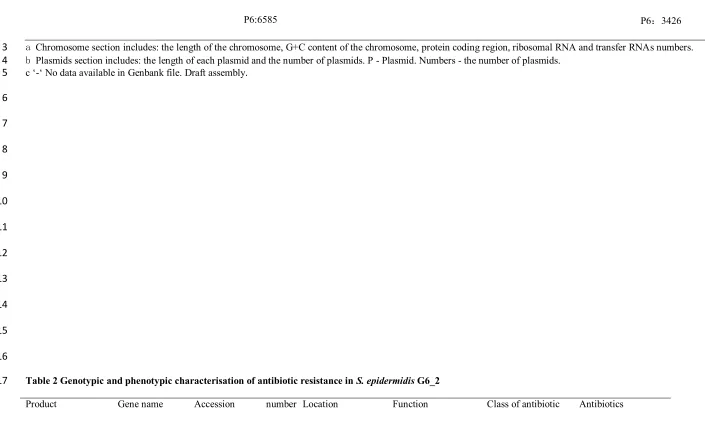
Table 1 Comparative general features of S. epidermidis G6_2 and the reference strains.
2
RP62a ATCC 12228 SEI 949_S8 PM221 BPH 0662 G6_2
Chromosomea
Length of sequences (bp) 2616530 2499279 2538314 2339868 2490012 2793003 2408357
G+C content 32.10% 32.10% 32.10% 32.00 32.10% 32.00% 32.02%
Protein coding region 2391 2419 2504 2119 2399 2699 2213
Ribosomal RNAs 4
16S 6 5 6 -c 6 5 1
23S 6 5 6 -c 6 5 1
5S 7 6 7 5 7 6 2
Transfer RNAs 59 60 58 56 59 59 60
Plasmidsb
Length of sequences (bp) P1:27310 P1:4439 P1:37688 -C P1:4439 P1:45804 P1:10570
P2:4679 P2:11152 P2:2366 P2:4909
P3:8007 P3:33094 P3:4588
P5:24370 P5:4271
P6:6585 P6:3426
a Chromosome section includes: the length of the chromosome, G+C content of the chromosome, protein coding region, ribosomal RNA and transfer RNAs numbers.
3
b Plasmids section includes: the length of each plasmid and the number of plasmids. P - Plasmid. Numbers - the number of plasmids.
4
c ‘-‘ No data available in Genbank file. Draft assembly.
5
6
7
8
9
10
11
12
13
14
15
[image:23.842.47.752.86.508.2]16
Table 2 Genotypic and phenotypic characterisation of antibiotic resistance in S. epidermidis G6_2
17
(Identity %)
Aminoglycoside-modifying enzymes
aac(6')-aph(2'') M13771 (100) plasmid Aminoglycoside
resistance
Aminoglycoside
Gentamycin
streptomycin
β-lactamase blaZ AJ302698 (100) plasmid Beta-lactam
resistance
Beta-lactam
Penicillin
oxacillin
Amoxcillin
cefepime
cefoxitin Penicillin-binding
protein 2a
mecA AB505628 (100) Chromosome Beta-lactam
resistance
Fosfomycin
resistance protein
fosA ACHE01000077 (100) Chromosome Fosfomycin
resistance
Phosphonic Fosfomycin
Macrophage
scavenger
receptors
msr(A) X52085 (98.98) plasmid Macrolide,
Lincosamide and
Streptogramin B
Microlide
resistance
Inactivating
enzymes
mph(C) AF167161 (100) plasmid Macrolide resistance
Tetracycline efflux
pump
tet(K) U38428 (99.93) plasmid Tetracycline
resistance
Tetracycline Tetracycline
Isoleucyl RNA
synthetase
ileS - - Fusidic acid
resistance Fusidic acid Fusidic acid
Elongation factor G fusA - - Monoxycarbolic
resistance
Monoxycarbolic Mupirocin
18
19
20
21
22