S T U D Y P R O T O C O L
Open Access
Chimney Trial: study protocol for a
randomized controlled trial
Elisa Mäkäräinen-Uhlbäck
1*, Heikki Wiik
1, Jyrki Kössi
2, Maziar Nikberg
3, Pasi Ohtonen
1and Tero Rautio
1Abstract
Background:Parastomal hernias (PSHs) are common, troubling the lives of people with permanent colostomy. In
previous studies, retromuscular keyhole mesh placement has been the most-used technique for PSH prevention but results have been controversial. Additionally, surgical treatment of PSHs is associated with a high rate of complications and recurrences. Therefore, it is crucial to find the most effective way to prevent PSHs in the first place without an increased risk of complications. Due to a lack of adequate research, there is no clear evidence or recommendations on which mesh or technique is best to prevent PSHs.
Methods/design:The Chimney Trial is a Nordic, prospective, randomized controlled, multicenter trial designed to compare the feasibility and the potential benefits of specifically designed, intra-abdominal onlay mesh (DynaMesh®-Parastomal, FEG Textiltechnik GmbH, Aachen, Germany) against controls with permanent colostomy without mesh. The primary outcome of the Chimney Trial is the incidence of a PSH detected by a computerized tomography (CT) scan at 12-month follow-up. Secondary outcomes are the rate of clinically detected PSHs, surgical-site infection as defined by the Centers for Disease Control and Prevention (CDC), complications as defined by the Clavien-Dindo classification, the reoperation rate, operative time, length of stay, quality of life as measured by the RAND-36 survey and colostomy impact score, and both direct and indirect costs. For each group, 102 patients were enrolled at attending hospitals and randomized at a ratio of 1:1 by browser-based software to receive a preventive mesh or a conventional colostomy without a mesh. Patients will be followed for 1 month and at 1, 3, and 5 years after the operation for long-term results and complications.
Discussion:The Chimney Trial aims to provide level-I evidence on PSH prevention.
Trial registration:ClinicalTrials.gov, ID:NCT03799939. Registered on 10 January 2019
Keywords:Parastomal hernia prevention, Abdominoperineal resection, Rectal cancer treatment
Introduction
Background and rationale
Abdominoperineal resection (APR) with permanent end-colostomy formation was introduced in the late twenti-eth century as a surgical mtwenti-ethod to treat distal rectal cancer in order to decrease the previously high incidence of local recurrence [1,2]. Despite the rising trend of sav-ing sphincter function, APR still remains the primary operation of choice for patients with low rectal cancer [3]. Even more, the low Hartmann’s procedure with per-manent colostomy is increasingly performed in older
and frailer patients who are not suitable for an anasto-moses [4].
The reported incidence of parastomal hernias (PSHs) with permanent end colostomy rises to 81% after long-term follow-up [5]. Due to increased use of minimally invasive rectal cancer surgery and better survival, an
increased incidence of PSHs might be expected [6, 7].
Many PSHs are asymptomatic, and clinical examina-tions can reveal only some of them compared with
computed tomography (CT) scans [7, 8]. Most PSHs
are diagnosed within 2 years after the construction of the stoma, but their incidence increases after longer follow-up [5,9,10].
The results of PSH repair are still unsatisfactory due to a high rate of complications [11]. Therefore, the initial
© The Author(s). 2019Open AccessThis article is distributed under the terms of the Creative Commons Attribution 4.0 International License (http://creativecommons.org/licenses/by/4.0/), which permits unrestricted use, distribution, and reproduction in any medium, provided you give appropriate credit to the original author(s) and the source, provide a link to the Creative Commons license, and indicate if changes were made. The Creative Commons Public Domain Dedication waiver (http://creativecommons.org/publicdomain/zero/1.0/) applies to the data made available in this article, unless otherwise stated. * Correspondence:[email protected]
1Oulu University Hospital, PL 21, 90029 OYS, Finland
on recent meta-analyses [18,20]. Additionally, a recently published RCT [21] reported similar rates of radiologic-ally detected PSHs at 1 year after open APR in patients with (32%) and without (34%) a prophylactic retromus-cular sublay mesh.
Polyvinylidene difluoride mesh (PVDF, DynaMesh®-IPST, FEG Textiltechnik GmbH, Aachen, Germany) is a synthetic mesh with a 4-cm-long, central, seamless tube (chimney) designed to repair and prevent PSHs. There are three case series [22–24] published on its use as a prophylactic mesh. In 2008, Berger et al. [22] found no clinically detectable hernias by CT scan at 1-year follow-up. In another trial, [23] the incidence of PSHs was clinically found 3.2% and in CT scans 6.4% at the 1-year follow-up in a case series of 31 patients. The prophylac-tic method was safe with no unexpected complications. No RCTs have been published so far. The design of the mesh with a central tube forming a stocking-like lining around the bowel may be crucial for PSH prevention [22] and blocking stomal-orifice enlargement occurring with keyhole techniques [13].
Objectives
The objective of this study is to compare prospectively in a randomized setting the feasibility and potential benefits of specifically designed, intra-abdominal, onlay mesh (DynaMesh®-IPST, FEG Textiltechnik GmbH, Aachen, Germany) with controls having conventional colostomy without mesh in patients operated on with minimally invasive surgery.
There are very few studies on specially designed PVDF mesh in PSH prophylaxis, but the concept of tight, tube-fashioned mesh surrounding the bowel and stomal ori-fice might be beneficial. We hypothesize that the high rate of PSHs seen in previous trials with retromuscular keyhole mesh is due to the central hole, and the draw-back may be avoidable with the use of specially designed PVDF mesh.
Trial design
The Chimney Trial is designed as a prospective, ran-domized, controlled, multicenter, single-blinded study of
will be regarded as unethical and will be terminated. For the same safety reasons, there will be further analyses on the effectiveness and complications when 30 patients in both groups have reached the 1-year follow-up. If the PSH rate is increased by more than 35% in the control group compared with the PVDF-mesh group or there are 10% or more complications defined by Clavien-Dindo classification 3B in either group compared with the other group, the trial will be terminated as unethical to continue. In case of terminating the trial prematurely, the data collected and potential complications are published.
Methods/design Study setting
This study is a multicenter study involving several Nor-dic hospitals. Hospitals currently participating in this study are Oulu University Hospital, Helsinki University Hospital, Turku University Hospital, Tampere University Hospital, Jyväskylä Central Hospital, and Seinäjoki Central Hospital in Finland and Västmanlands Hospital Västerås in Sweden. It is expected that hospitals from other Nordic countries, such as Norway and Denmark, will join the trial later.
Oulu University Hospital and Seinäjoki Central
Hospital began recruitment in February 2019 with other hospitals soon to following.
Eligibility criteria
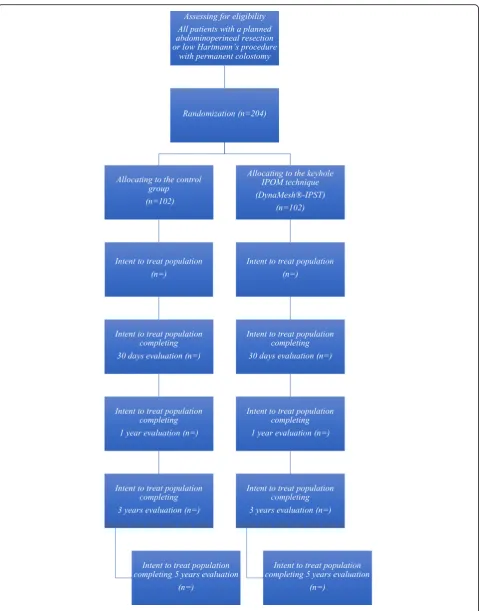
All patients who fulfill the inclusion criteria without meeting any of the exclusion criteria are considered to participate in the trial at any of the hospitals during the study period (Fig. 1). Patients are enrolled in the study in the outpatient department at a visit prior to surgery.
All patients who undergo APR or Hartmann’s procedure
for rectal adenocarcinoma during the study period in each attending hospital are recorded without identifica-tion details for later analysis of selecidentifica-tion biases.
APR or Hartmann’s resection by laparotomy or conversion to laparotomy
Complications requiring laparotomy during postoperative treatment on the surgical ward
Patient with a comorbid illness or condition that would preclude surgical treatment (American Society of Anesthesiologists (ASA) 4–5)
Patients with concurrent or previous malignant tumors within 5 years before study enrollment
Patients with grade-T4b tumors that impose a multi-organ resection
Rectal malignancy other than adenocarcinoma
Patients undergoing emergency procedures
Planned rectal surgery along with major
concomitant procedures (e.g., hepatectomies, other intestinal resections)
Metastatic disease with no possibility of curative surgery
Pregnancy or suspected pregnancy
Patients living geographically distant and/or
unwilling to return for follow-ups or comply with all study requirements
Active abdominal infection at the time of surgery
Previous surgery at the colostomy site
Language barrier or other reasons why informed consent is not possible
Interventions
Perioperative care includes the assessment and
optimization of medical risk factors, thromboprophylaxis with low-molecular-weight heparin and elastic antiem-bolic stockings, standard anesthesia and the avoidance of hypothermia. Antibiotic prophylaxis and mechanical bowel preparation are accomplished according to the hospital protocol. Postoperative treatment on the surgi-cal ward is accomplished according to standard en-hanced recovery after surgery (ERAS) protocols.
Surgical technique
PVDF mesh (DynaMesh®-IPST, FEG Textiltechnik GmbH, Aachen, Germany) is placed on the intraperitoneal surface
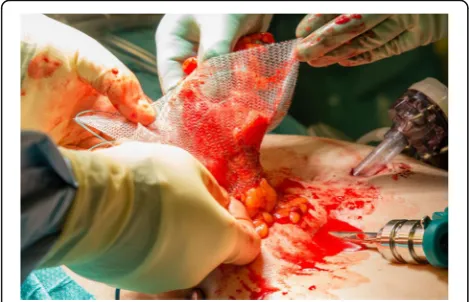
through the orifice and then through the saline lubricated tube in the PVDF mesh (Fig.4). The mesh is translocated into the intra-abdominal space with the funnel oriented dorsally and fixed in the intraperitoneal onlay position by
absorbable tackers (Securestrap™, Ethicon) using the
double-crown technique as described and pictured previ-ously by Köhler et al. [24] (Fig.5) The corners of the mesh are fixed first, then the tackers are attached every 2 cm on the outer row. The inner row is fixed at 12, 3, 6, and 9 o’clock positions. The stoma is fixed and everted with ab-sorbable monofilament sutures to the skin just above the skin level. A catalog of the operative technique will be sent to all participating surgeons to standardize the procedure.
In the control group, the colostomy is formed by the identical method as described above. The only difference is that there will be no mesh.
Outcomes
The primary endpoint of this study is the incidence of PSHs, either symptomatic or asymptomatic, detected by a CT scan during the 12 months’post-surgery follow-up. A CT scan with the Valsalva maneuver being performed is performed at the 1-year and 3-year follow-up after rectal adenocarcinoma operation as a part of routine follow-up protocol and to detect the incidence of
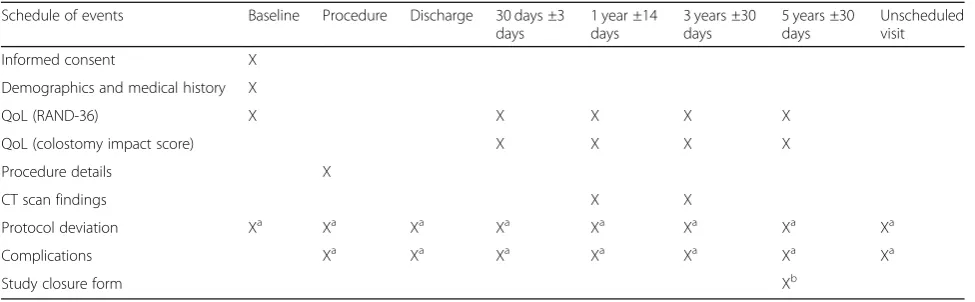
[image:4.595.306.538.545.693.2]radiological PSHs. All patients are also assessed at each
follow-up point (Table 1) by an experienced surgeon to
detect clinical PSH or complication of stoma as second-ary outcome. There will be clinical evaluation without CT scan to detect any clinical PSH as long-term follow-up at 5 years after surgery.
All CT scans are analyzed by two independent radi-ologists. Measurements are recorded of fascial defect at stoma, the size of any possible PSH sac and fascial defect of a hernia, the content of the hernial sac, the location of the stoma and other hernias. The hernias will be graded according to the European Hernia So-ciety criteria [25].
Primary outcome
PSH, either symptomatic or asymptomatic, detected by CT scan during 12 months’follow-up
Secondary outcomes
Incidence of CT-detected PSH during 3-year follow-up
Incidence of clinically detected PSH during 1-, 3-, and 5-year follow-ups
PSH-operation-free survival at 3 and 5 years
Surgical-site infection (SSI) rate
Clavien-Dindo grade I–V complications at 30 days postoperatively
Stoma-related complications and problems during long-term follow-up
Stoma-related readmissions
Reoperation rate
Operative time
Length of stay (LOS) in days
Quality of life (RAND-36, colostomy impact score)
Medico-economic sub-study including direct costs at hospital and indirect costs caused by sick leave
Radiological sub-study including definition of abdominal wall measurements and location of stoma
Radiological sub-study
Subcutaneous abdominal fat in centimeters on the contra-lateral side of the stoma
Distance of the medial part of the stoma to midline (umbilicus as the midline definition)
Area of the stoma aperture (2 cm width × height/2)
The SSI is defined and recorded per the Centers for Disease Control and Prevention (CDC) SSI defin-ition [25].
Clavien-Dindo classification is utilized for complica-tions. All related costs are analyzed in detail. The direct costs, including the meshes, resources and stay at the hospital, are monitored, and the indirect costs from losses of productivity are recorded.
Pre-intervention data
Age
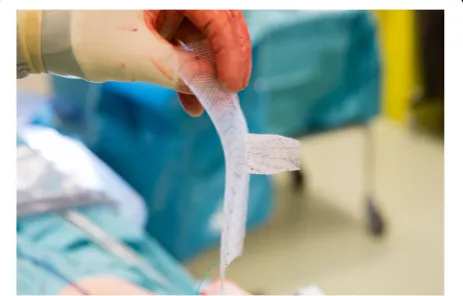
Fig. 3The funnel-shaped tube is stretched with fingers to match the diameter of the bowel
Fig. 4The bowel is brought through the funnel oriented dorsally
[image:5.595.305.540.86.237.2] [image:5.595.56.290.88.239.2] [image:5.595.56.291.563.714.2]Sex
ASA class
Weight, height
Other illnesses and medications
Smoking history
Previous hernias, either symptomatic or asymptomatic
Neoadjuvant treatment
Preoperative hemoglobin and carcinoembryonic antigen (CEA)
Quality of life defined by the RAND-36
Informed consent and patient information
Randomization
Intervention data
Antibiotic prophylaxis
Operating time
Resources used during the operation
Total blood loss
Post-intervention data
Length of postoperative ileus (POI) measured in days and defined by air in the stoma
Re-operation rate
Complications as defined by Clavien-Dindo classification
Incidence of SSI as defined by the CDC
Incidence of either clinically or radiologically detected PSHs
Quality of life at each follow-up
Problems and complications with stoma
Tumor–nodes–metastases (TNM) score
Hemoglobin and CEA at each control
Oncological adjuvant treatment given
All exceptions to the protocol are recorded and ex-plained in detail at each time point.
Sample size
To calculate a sample size needed to compare the two groups, we estimated a 6.4% rate of PSH and 34% PSH on a CT scan for the PVDF-mesh group and control
group during 12 months’ follow-up [21, 23]. Assuming
α= 0.05 and power = 90%, we would need 51 patients
per group. Furthermore, assuming a 5-year drop-out rate of 50%, 102 patients per group are needed to reach sta-tistically significant results also during long-term follow-up.
All analyses will be performed by, or under the guid-ance of, professional statisticians and following the Con-solidated Standards of Reporting Trials (CONSORT) guidelines [26].
Recruitment
All patients who will undergo laparoscopic or
robotic-assisted APR or low Hartmann’s procedure for rectal
adenocarcinoma at each study site are considered for the trial at the time of their visit to the outpatient depart-ment prior to surgery. After receiving the proper infor-mation on the possible advantages and disadvantages of the intervention, and voluntarily signing an informed consent form, the subject is enrolled in the Chimney Trial. Participating investigators are qualified colorectal or general surgeons experienced in the surgical manage-ment of patients with colorectal adenocarcinoma and either laparoscopic or robotic-assisted APR or low Hart-mann’s procedure. Each hospital’s contribution to the study is limited to no less than 20 cases. The enrollment will last for approximately 2 to 3 years in attending hospitals.
Study closure form Xb
Legend:CTcomputed tomography,QoLquality of life
a
Complete if applicable
b
[image:6.595.56.544.98.249.2]Methods Allocation
All analyses will be performed by or under the guidance of professional statisticians and following the CONSORT guidelines [26].
Patients are randomly allocated to the study group ac-cording to a computer-generated list, compiled by a bio-statistician who is not involved in the clinical care of trial patients. The randomization is performed in blocks, where the block size varies randomly between two, four, and six patients. A separate randomization list is created for each center. The software designed for the study is used to randomize the patients. After confirmation of patients’ eligibility and their willingness to participate, the randomization is completed at the outpatient visit prior to surgery and the patients are kept blinded to study technique.
Blinding
Patients are blinded to the randomization group during their primary stay at the hospital. For safety reasons, their group designation is stated in the patients’medical files for direct access in case of complications. The pa-tient has direct access to their medical records after hospitalization and, therefore, the blinding is not pos-sible to maintain. Patients are assigned at the control visits by a surgeon not involved in the study and without accessing the randomization group. The independent ra-diologists analyze the CT scan without access to the randomization group information.
Data collection, management and analysis
A dedicated electronic database and randomization soft-ware program is used to host the clinical trial data for this study. All electronic case report forms (eCRFs) are handled with a special trial ID. Access to the database is limited to the main investigators. All data requested on the eCRFs will be recorded. All missing data will be explained.
Data collection is the responsibility of the principal in-vestigator at each study site and is reviewed by the study group.
Reasons for withdrawal will be documented carefully. The investigator will attempt to contact the subjects at least three times prior to designating them as lost to follow-up. The investigator will document the date and type of attempted communication. If a subject cannot be reached during the visit window, a missed visit is re-corded; after three consecutive missed visits, a subject is considered lost to follow-up and a study exit form will be completed on the electronic database. Any data on a subject’s participation and procedures until the with-drawal will be analyzed within the research.
All complications are recorded and monitored using a specific eCRF. Data of all complications is later pub-lished as part of the trial results.
Statistical methods
The primary endpoint will be the incidence of PSHs de-tected by CT scan with 95% confidence intervals for all groups at 1-year follow-up. Secondary outcomes are the incidence of PSHs at 3- and 5-year follow-ups and the development of quality of life during the follow-ups. The analyses will be based on the intention-to-treat principle. The primary endpoint and other categorical data will be analyzed by the χ2test or Fisher’s exact test. Analysis of variance (ANOVA) will be used for continuous variables. For repeatedly measured data, the linear mixed model (LMM) will be used for continuous data and the gener-alized linear mixed model (GLMM) will be used for cat-egorical data. Multiple imputations of missing outcome data will be used for sensitivity analyses. The SPSS stat-istical programs (IBM Corp. 2016. IBM SPSS Statistics for Windows, Version 24.0. Armonk, NY, USA) and SAS (version 9.4, SAS Institute Inc., Cary, NC, USA) will be used for the analyses.
Ethics and dissemination Research ethics approval
This study follows the Declaration of Helsinki on med-ical protocol and ethics. Each participating hospital ap-plies for study permission at their unit. Central ethical approval has been confirmed from the Ethical Commit-tee at Oulu University Hospital (ref approval no. 324/ 2018) and we will not begin recruiting at other centers in the trial until local ethical approval has been obtained.
Protocol amendments
Important protocol modifications are communicated with the Oulu University Hospital Ethics Committee by amendments. All modifications are also registered at ClinicalTrials.gov.
Confidentiality
Patient confidentiality will be strictly maintained. Pa-tients will be assigned a study ID, and all data will be handled without name or personal Social Security num-ber. Access to patient records is limited to the study group and the investigator-delegated study coordinator.
Discussion
for more routine use of this prophylactic mesh.
The focus of the current study is on the incidence of PSHs at both short- and long-term follow-up.
PSHs are not only graded by European Hernia Soci-ety Classification [25], but also the exact size and content of hernias upon the Valsalva maneuver are measured as well as the development of measure-ments throughout the follow-up. Radiological risk fac-tors for PSH development will be determined as part of radiological follow-up. All symptoms caused by a stoma itself or a PSH are recorded to analyze the clinical significance of clinically or radiologically de-tected PSHs. The quality of life is measured by both RAND-36 and the colostomy impact score and re-corded throughout the follow-up period as part of defining the clinical significance of PSHs. The operation rate and operations done for PSH are re-corded in both groups.
This trial is designed as a single-blinded study for safety reasons. In the case of serious complications de-manding re-operation, it is crucial for decision-making purposes to always have instant access to all technical aspects of the surgery. Patients are blinded to the method used during their hospital stay. Unfortunately, it is impossible to blind patients beyond that time due to direct access to the national medical database including all medical records and hospital stays.
As current results from the use of the most evalu-ated keyhole technique in PSH prevention are unsatis-factory, more trials are needed to define the efficiency and safety of other methods to prevent PSH. As pre-vious research on the PVDF mesh used in this trial is limited, there are clearly predefined safety limits of PSH incidence and complications to determine when to prematurely finish the trial as unethical to con-tinue. For the same reason, the trial is designed to compare the mesh group to control group without any mesh to detect the objective efficiency and safety of funnel-shaped PVDF mesh. Since there is a lack of long-term results of PSH prevention, the sample size is estimated to reach statistically significant results at the long-term follow-up at 5 years.
Abbreviations
APR:Abdominoperineal resection; CDC: Centers for Disease Control and Prevention; CEA: Carcinoembryonic antigen; CRF: Case report form; CT: Computed tomography; ERAS: Enhanced recovery after surgery; GCP: Good Clinical Practice; LoS: Length of stay; PSH: Parastomal hernia; PVDF : Polyvinylidene difluoride; SSI: Surgical-site infection; TNM: Tumor– nodes–metastases; VAS: Visual analog scale
Authors’contributions
The study was designed by TR, HW, JK, PO, EMU, and MN. EMU was the major contributor in writing the manuscript. PO designed the statistical methods of the study. All authors read and approved the final manuscript.
Funding
The materials used within this study are funded by the hospital district. The Thelma Mäkikyrö Foundation has granted funding of€10,000 to the Chimney Trial. The funding will be used to provide the research nurse for the study and the authors’time on research.
Availability of data and materials
The datasets generated and/or analyzed during the current study are not publicly available due to Finnish laws on privacy protection but are available from the corresponding author on reasonable request.
Ethics approval and consent to participate
The Ethical Committee at Oulu University Hospital has approved the Chimney Trial and its consent to participate. Informed consent will be obtained from all study participants.
Consent for publication Not applicable
Competing interests
The authors declare that they have no competing interests.
Author details
1Oulu University Hospital, PL 21, 90029 OYS, Finland.2Päijät-Häme Central Hospital, Keskussairaalankatu 7, 15850 Lahti, Finland.3Västmanlands Hospital Västerås, 721 89 Västerås, Sweden.
Received: 11 March 2019 Accepted: 28 September 2019
References
1. Miles WE. A method of performing abdomino-perineal excision for carcinoma of the rectum and of the terminal portion of the pelvic colon (Reprinted from The Lancet 1908). CA Cancer J Clin. 1971;21:361–4. 2. Heald RJ, Husband EM, Ryall RD. The mesorectum in rectal cancer surgery:
the clue to pelvic recurrence? Br J Surg. 1982;69:613–6.
3. Yeom S, Park I, Jung S, et al. Outcomes of patients with abdominoperineal resection (APR) and low anterior resection (LAR) who had very low rectal cancer. Medicine. 2017;96(43):e8249.
5. Jänes A, Cengiz Y, Israelsson LA. Preventing parastomal hernia with a prosthetic mesh: a 5-year follow-up of a randomized study. World J Surg. 2009;33:118–21.
6. Ihnát P, Tulinský L, Jonszta T, Koscielnik P, Ihnát Rudinská L, Penka I. Parastomal and incisional hernia following laparoscopic/open
abdominoperineal resection: is there a real difference? Surg Endosc. 2018; 21.https://doi.org/10.1007/s00464-018-6453-0.
7. Hansson BM. Parastomal hernia: treatment and prevention 2013: where do we go from here? Color Dis. 2013;15:1467–70.
8. Vierimaa M, Klintrup K, Biancari F, Victorzon M, Carpelan-Holmström M, Kössi J, Kellokumpu I, Rauvala E, Ohtonen P, Mäkelä J, Rautio T. Prospective, randomized study on the use of a prosthetic mesh for prevention of parastomal hernia of permanent colostomy. Dis Colon Rectum. 2015;58:943–9.
9. Londono-Schimmer EE, Leong AP, Phillips RK. Lifetable analysis of stomal complications following colostomy. Dis Colon Rectum. 1994;37:916–20. 10. Wik TA, Hjorthaug JO, Johannessen HO, Johnson E. Sigmoidostomy-related
parastomal hernia. Scand J Surg. 2011;100:186–9.
11. Antoniou SA, Agresta F, Garcia Alamino JM, Berger D, Berrevoet F, Brandsma HT, et al. European Hernia Society guidelines on prevention and treatment of parastomal hernias. Hernia. 2017.https://doi.org/10. 1007/s10029-017-1697-5.
12. Jänes A, Cengiz Y, Israelsson LA. Randomized clinical trial of the use of a prosthetic mesh to prevent parastomal hernia. Br J Surg. 2004;91(3):280–2. 13. Lambrecht JR, Larsen SG, Reiertsen O, Vaktskjold A, Julsrud L, Flatmark K.
Prophylactic mesh at end-colostomy construction reduces parastomal hernia rate: a randomized trial. Color Dis. 2015;17(10):O191–7. 14. Lopez-Cano M, Serra-Aracil X, Mora L, Sanchez-Garcia JL, Jimenez-Gomez
LM, Marti M, Vallribera F, Fraccalvieri D, Serracant A, Kreisler E, et al. Preventing parastomal hernia using a modified Sugarbaker technique with composite mesh during laparoscopic abdominoperineal resection: a randomized controlled trial. Ann Surg. 2016;264(6):923–8.
15. Patel SV, Zhang L, Chadi SA, Wexner SD. Prophylactic mesh to prevent parastomal hernia: a meta-analysis of randomized controlled studies. Tech Coloproctol. 2017;21:5–13.
16. Brandsma HT, Hansson BM, Aufenacker TJ, van Geldere D, van Lammeren FM, Mahabier C, Steenvoorde P, de Vries Reilingh TS, Wiezer RJ, de Wilt JH, Bleichrodt RP, Rosman C. Prophylactic mesh placement to prevent parastomal hernia, early results of a prospective multicentre randomized trial. Hernia. 2016;20(4):535–41.
17. Cornille JB, Pathak S, Daniels IR, Smart NJ. Prophylactic mesh use during primary stoma formation to prevent parastomal hernia. Hernia. 2017;99:2–11. 18. Cross A, Buchwald P, Frizelle F, et al. Meta-analysis of prophylactic mesh to
prevent parastomal hernia. Br J Surg. 2017;104:179–86.
19. Pianka F, Probst P, Keller AV. Prophylactic mesh placement for the PREvention of paraSTOmal hernias: the PRESTO. Langenbeck's Arch Surg. 2017;402:949–55.
20. Chapman SJ, Wood B, Drake TM, et al. Systematic review and meta-analysis of prophylactic mesh during primary stoma formation to prevent parastomal hernia. Dis Colon Rectum. 2017;60:107–15.https://doi.org/10. 1097/DCR.0000000000000670.
21. Odensten C, Strigård K, Rutegård J, Dahlberg M, Ståhle U, Gunnarsson U, Näsvall P. Use of prophylactic mesh when creating a colostomy does not prevent parastomal hernia. Hernia. 2017.https://doi.org/10.1097/SLA.0000000000002542. 22. Berger D. Prevention of parastomal hernias by prophylactic use of a specially
designed intraperitoneal onlay mesh (DynaMesh®-IPST). Hernia. 2008;12:243–6. 23. Conde-Muino R, Diez JL, Martinez A, Huertas F, Inmaculada S, Palma P. Preventing parastomal hernias with systematic intraperitoneal specifically designed mesh. BMC Surg. 2017;17:41.https://doi.org/10.1186/s12893-017-0237-7.
24. Kohler G, Hofmann A, Lechner M, Mayer F, Wundsam H, Emmanuel K, Fortelny RH. Prevention of parastomal hernias with 3D funnel meshes in intraperitoneal onlay position by placement during initial stoma formation. Hernia.https://doi.org/10.1007/s10029-015-1380-7.
25. Smietanski M, Szczepkowski M, Alexandre JA, et al. European Hernia Society classification of parastomal hernias. Hernia. 2014;18:1–6.
26. CDC definition of surgical site infection. 2019.https://www.cdc.gov/nhsn/ pdfs/pscmanual/9pscssicurrent.pdf. Accessed 1 Jan 2019.
Publisher’s Note