THE EFFECT OF CIVIL CONFLICTS AND NET BENEFITS
ON M-GOVERNMENT SUCCESS OF DEVELOPING
COUNTRIES: A CASE STUDY OF IRAQ
1SALIH HAJEM GLOOD,2WAN ROZAINI SHIEK OSMAN,3MASLINDA MOHD NADZIR
1, 2, 3School of Computing, College of Arts and Sciences, Universiti Utara Malaysia, Kedah, Malaysia
1Computer and Mathematics Dept., University of Al-Muthanna, Al-Muthanna, Iraq
E-mail: 1[email protected],2[email protected],3[email protected]
ABSTRACT
Information and communication technologies (ICTs) are playing an important role in the advancement of society. ICTs served as one of the main resources for promoting products and services, for delivering and broadcasting information, and also for connecting organizations and communities together in terms of better interaction and better communicational possibilities. Therefore, several governments seeking to establish IS projects by exploiting the modern of ICTs. The mobile government (mG) system is one of the important IS projects provided by governments to improve the quality of life, through enhancing the delivery of information or services to citizens. The ratio of use of mG services in developing countries, especially in rural areas, is still quite low and Iraq is not an exception. Despite of Iraq is the highest mobile penetration rate amongst 34 countries, the use of mG services amongst citizens in Iraq is lower than expected compared to the amount of money spent on this projects. Moreover, providing mobile government (mG) services alone did not guarantee success of mG without releasing the benefits of using mG services, especially in rural areas. Net benefits are considered a critical phenomenon for the success of any IS, and mG is not far from this issue. Thus, this study aims to investigate the contributing factors mG success in the Iraqi context, where literature in this field of research is lacking. Quantitative data were collected from Iraqi citizens in rural areas. Structural equation modeling was used to test the relationships between constructs. Results show that information quality has appositive effect on the use of mG, whereas the use of mG has a strong effect on net benefits of mG services. The moderating effect of civil conflicts between the use and net benefits of mG is supported negatively. The results imply that service providers need to deliver quality information and quality service to facilitate the users’ post-adoption usage of mG services under stable environment.
Keywords:Civil Conflicts, Mobile Government, Net Benefits, Rural Areas, Evaluation IS Success 1. INTRODUCTION
Mobile government (mG) is considered a highly appropriate option for countries where Internet access rates are low; however, mobile phone penetration is growing rapidly, particularly in developing countries [1]. These technologies permit and enable citizens to connect with the government quickly and efficiently. Moreover, they provide timely and updated information about government services in society and to all stakeholders. Kushchu [2] defines mG as the strategy and resource to provide citizens with information and services through a mobile platform. mG enables citizens to access information whenever and wherever possible.
Ntaliani, et al. [3] stated that the utilization of mG services derives more benefits in terms of in-time information delivery, ease of use, mobility, and improvisation during emergency management. Most of these benefits are eventually handled by government researchers and are called IT opportunities. mG facilitates the accessibility of information 24/7 and also limits bureaucracy to improve the quality of services, whether in terms of time, price, or convenience. These possible benefits are not achieved if the use of these services is not optimal [4]. Thus, using mG services is deemed crucial to the success of mG projects.
Thus, net benefits of using IS system is the key pillar for IS success [5]. Delone and McLean [5] defines the net benefit as a combination of organizational, individual, and societal impacts, which may be influenced by IS activity.
The Iraqi government has recently sought to harness these technologies to provide quality service for their citizens. Mobile technologies significantly increased among the Iraqi citizens, especially after 2003. International Telecommunication UnionITU [6] reported mobile subscribers rates are forecast to a rise from 75% in 2013 to 95 by 2014 in Iraq. The reported noted that by 2014 Iraq is the highest mobile penetration rate amongst 34 countries. On the other hand, Iraqi government has invested significant amounts of money for the implementation of ICT projects, with large investments of nearly $20 billion annually in recent years. However, the percentage of usage of online services remain limited despite such efforts [7].
2. PROBLEM STATEMENT
In this modern era of globalisation and information technology, many governments in developed and developing countries have embraced new technologies in an effort to improve the way they offer public services to citizens. Iraq is a developing country that exploited wireless and mobile technologies in 2011 to provide services and information to their citizens.
The Iraqi government spends large amounts of money for the implementation of mG initiatives; however, the utilization of mG services remain low [8, 9]. Hameed, et al. [10] asserted that the use of mG services among citizens in Iraq is lower than expected, although the citizens are in dire need of these services under unstable conditions. Many scholars, such as Abdelghaffar and Magdy [11], Al-Hujran [12], and Al Thunibat, et al. [13], have measured the factors that influence utilization and adoption of mG services under stable; however, they have overlooked and ignored an important factor, namely, net benefits, which may have a significant influence on the use of mG services [14, 15]. Thus, acquiring net benefits is a critical phenomenon for the success of any IS. Therefore, this study aims to assess the success of mG services from the perspective of net benefits under unstable environment.
3. LITERATURE REVIEW
M-Government (mG) is the latest technique for governments to deliver services and information accessibility at the universal level for citizens, businesses, and other institutions by wireless and mobile technologies [16]. mG is considered a highly appropriate option for countries where internet access rates are lower but mobile phone penetration is growing rapidly [1, 6, 17, 18]. Mobile technologies provide access in areas where the infrastructure required for Internet or wired phone service is not a viable option. Therefore, mG not only enhances government performance by delivering information and services to citizens and stakeholders efficiently and economically, but also permits and facilitates citizens to interact with government services, thus fostering a more connected society. It has also improved the capacity to provide emergency information management more effectively [19, 20].
Implementation of mG is improving the quality of life of many individuals enabling convenient access to public information and services, especially for citizens who were previously digitally excluded and who cannot use eG services due to inefficient infrastructure, as well as lower income level. According to Alrazooqi and De Silva [21] mG has been identified as an efficient and ideal solution to many of the problems that farmers face in rural areas.
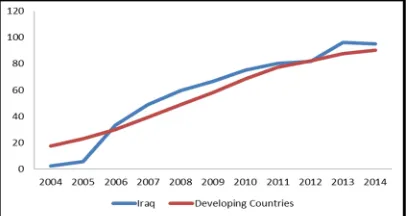
In Iraq, The mobile network infrastructure has been strong recently. According to International Telecommunication Union report in 2014, Iraq is the highest mobile penetration rate amongst 34 countries. Various Internet service providers deliver services through satellites in Iraq, such as Telecom Masarat Company, Earth Link, and Dejlah Internet Services. Companies, such as Korek Telecom, Asia Cell, Zain, Aumnia, and Itisaluna, provide mobile cellular services [22]. International Telecommunication Union in 2014, reported that in Iraq, there are 33 million mobile phone users, with the penetration rate for every 100 individuals there are 95 mobile phone subscribers, as shown in Fig. 1 below. This indicates that the mobile penetration is very high, and the mobile networks cover most regions in Iraq. A 2012 report by UNESCO shows that 40 percent of mobile subscribers use the Internet through mobile cellular devices.
Figure 1: Mobile-Cellular Penetration Rates In Developing Countries And Iraq From 2004-2014
The Iraqi government is exploiting wireless and mobile technologies to provide services and information to its citizens. The Iraqi government has announced the application of an mG initiative to provide e-government services via wireless communication networks and mobile devices.
mG services in Iraq were initiated with the initial mG service (SMS) offered in the healthcare field by Messan’s local government in 2011. Mohammad Khalaf Abdul Samad, the manager of the Ministry of Health’s visitor program in Messan province, reported that Messan’s local government in 2011 used mobile technologies by offering the initial mG service, SMS, in Iraq between government and rural residents [23]. The local government in Dhi Qar launched an SMS service for farmers in Dhi Qar to provide agricultural information, such as planting dates, delivery dates of crops, and agricultural consulting [24]. The Iraqi government announced the application of mG initiative to provide citizens with services and
information from institutions, such as the Iraq Mobile Weather Service (MW), National Investment Commission Application, Traffic Police Application, and The Ministry of Higher Education [10]. Although the Iraqi government invests heavily to implement this project, the utilization and adoption of mG services remain low. Younus [9], who conducted a survey among students in Iraqi universities, revealed that most participants do not use mG services. This finding is in agreement with [13, 20], who found that many developing countries sought to implement mG projects to meet their citizens’ requirements; however, these countries suffer from low use of mG services by their citizens. Therefore, realizing the benefits of mG services may increase the use of mG. This study sheds light on the net benefits, which may affect mG success among citizens.
4. RESEARCH MODEL AND HYPOTHESES
4.1 Information Quality
DeLone and McLean [25] defined IQ as “the quality of the information system output that the system produces, primarily in the form of reports.” Information quality is considered useful if the users view the provided information as accurate, complete, current, and formatted [26].
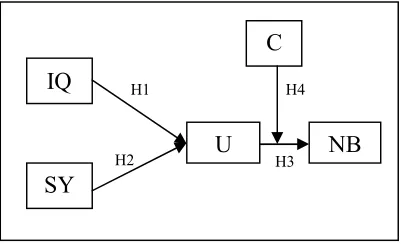
Citizens view the information quality of mG services as the quality of the content provided by these services [5]. Citizens expect to acquire relevant information anytime and anywhere when using mG services. These services are expected to be clear, accurate, current, and easy to understand and avail. Users will be dissatisfied and not avail such services again if information is inaccurate, unclear, or out of date. Searching for information is the most common reason that citizens to visit mG services. Thus, in many cases, citizens use mG services for their information needs, where they expect information to be easy to understand, clear, and well formatted. Furthermore, the use of service and its information products influence the performance of users. Thus, high-quality information is an important factor use of mG services to obtain its benefits. In this study, IQ is the degree to which users believe that the quality of the information that mG service produced is accurate, complete, current, and well formatted. Thus, the following hypothesis is proposed:
4.2 System Quality
As mentioned earlier, a significant relationship exists between IS success and benefits of an IS. According to Nelson, et al. [26] SYQ signifies systemized information processing required for production of these benefits. SYQ signifies the performance value of a particular system [5]. IQ and SYQ have been recognized as the most significantly crucial quality components for the evaluation of IS success [5]. Other studies stressed the importance of SYQ to measure IS success as well [5, 19, 26].
In mG services, SYQ denotes citizen perception of technical performance of mG services in information retrieval and delivery [27]. Technically, mG services offer simple and timely information accessibility along with consistent performance. SYQ plays a significantly crucial role in determining consumer use of a system [5, 25]. Lee, et al. [28] concluded that mobile technology must be potentially capable of providing pertinent data integration and decision sustenance to improve users’ use. Chatterjee, et al. [19] found that SYQ has a significant effect on the use of mobile technology in the m-healthcare context.
Citizens expect that mG services should efficiently provide fast and easy information retrieval and delivery, offer simple and timely information accessibility, and demonstrate consistent performance. If the service is delayed in retrieving and delivering information or users cannot access information, users may revert to traditional methods to meet their needs. The researcher [29-31] sees that advanced SYQ is likely to direct toward greater use, ultimately resulting in positive influence on individual productivity. In this study, SYQ refers to the quality of technical performance of the mG service in information retrieval and delivery. Therefore, the following hypothesis is proposed:
H2: System quality has a significance influence on the use of mG services amongst rural farmers in Iraq.
4.3 Use of A System
Delone and McLean [5] stated that ‘use of a system’ as a construct is critical to measure IS success. They also elaborated that measuring use in terms of frequency of use and usage time are good indicators of nature of usage and its effect on expected results. In addition, Kim and Malhotra [32] define ‘use’ as the utilization of IT applications and services by individuals, groups, or
organizations. The relationship between the U of a system and NB was tested and confirmed in many studies in different domains [e.g., 29, 31, 33, 34, 35].
The U of mG services is considered an important outcome in the mG success system, where the benefits of IS cannot be achieved if the use of IS is not optimal. The U of mG services by rural farmers may lead to numerous benefits, such as mobility and ubiquity, time saving, on-time information delivery, ease of use, personalized information, and improved emergency management [3, 36]. The optimal and appropriate uses of these services may bring positive developments in the lives of rural farmers. The researcher believes that the potential benefits of mG services are not realized if the usage of the services is low. Hence, the researcher postulates that the frequent use of mG service, usage time, and accessing service anytime and anywhere leads to positive benefits obtained which, in turn, leads to IS success. Therefore, the greater the U of mG services, greater the NB of mG. Based on the preceding discussion, the following hypothesis is proposed:
H3: The use of mG services has a significance influence on the net benefits of using mG services amongst rural farmers in Iraq.
4.4 Civil Conflicts
A moderator is a variable that affects the linkage between two or more variables, whereas moderation refers to the moderating effect on the linkage [37]. Furthermore, some researchers, such as Henseler and Fassott [38] and Henseler and Chin (2010), strongly recommended a future research involving a moderator because a gap exists in the literature regarding the studies with moderators.
Conflict is an integral part of the social life in different communities, and it can occur among individuals and groups as well as countries (Khan [39]. Alarmingly high CC and violence have been recorded in recent times, particularly in developing countries including India, Iraq, the Philippines, Afghanistan, Sri Lanka, and Pakistan [40, 41].
technologies with a considerably low degree as their main resources, and that activities are focused on winning the war rather than on utilizing the latest civilian technologies. Khan [43] also reiterated the significant relationship between CC in a nation and the technology adoption and utilization by the people of that nation. Researchers such as Fahmy and Kim [44] and Khan et al. [39, 45, 46] called for further studies of IS in different countries that are facing political conflicts.
The potential effects of CC on mG services have not been sufficiently explored [47]. The moderating effect of CC on the relationship between peoples’ behavior in the utilization and net benefits of government services must be further evaluated and explored as a crucial matter [43].
At the same time, little research has been conducted with respect to the effect of an unstable environment on mG success. Therefore, this study focuses on the psychological effects caused by CC on citizens’ perception regarding the NB of using mG services in Iraq. The researcher integrated CC as a moderator variable to verify the effects of CC in Iraq because of the current situation and highly intensified conflicts in Iraq. Iraq is considered the world’s most dangerous country because of these CC [48]. Furthermore, most of the previous studies examined IS success in a stable environment [29, 49], but IS success in an unstable environment have yet to be explored [47, 50]. Based on the preceding discussion, the researcher proposed the following hypothesis:
[image:5.612.89.290.536.658.2]H4: The Civil Conflict in the society moderator the relationship between use of mG services and net benefits of mG services amongst rural farmers.
Figure 2: Research model and hypotheses
5. METHODOLOGY
The Iraqi government has presented several mobile services to provide government information and services to their citizens, such as The Independent High Electoral Commission, the Iraq MWS, National Investment Commission Service, and Traffic Police Service. MWS is most commonly used mG service in Iraq [8] because it is closely linked with the lives of rural and urban citizens. According to Laith and Nidhal [8], more than 800,630 people use MWS. MWS was developed by the Iraqi Meteorological Organization and Seismology in cooperation with the Ministry of Agriculture to provide agricultural consultation for rural farmers through a new interface [24]. Therefore, the current study selected MWS, which is available in all Iraqi provinces, as an example of mG services to develop the scale [8]. This study uses citizens of the southern region of Iraq who are users of mG services. This region was selected because it is the first region in Iraq that implemented e-government services.
This study applies quantitative research methods because of the large number of respondents and wide geographical coverage. Furthermore, this study aims to investigate the interrelationship of various independent and dependent variables. In addition, this study surveys farmers who reside in the rural areas of southern region of Iraq and who are users of mG services. The sample for this study comprised 384 users of mG services. To ensure reduced margin error and potential of non-responses, the base sample size was increased [51]. Five hundred questionnaires were distributed to farmers in the southern region of Iraq. The total number of participants was 430, and 365 responses were valid.
The survey questionnaire was developed based on previous studies that reflect the constructs as identified in the research model. The research model includes five factors. Each factor was measured with multiple items, where each item was measured on a five-point Likert scale, from strongly disagree to strongly agree. All items were adapted from extant research to improve content validity. The survey items are shown in the Appendix A.
6. RESULTS AND DISCUSSION
The research model was tested by using partial least squares (PLS)-based structural equation
H3 H4
H2 H1
NB
U
IQ
SY
Q
modeling (SEM) technique. According to the rule of thumb, the minimum sample size was 140. The sample size for this model was 384, which exceeded the minimum requirement. The results of PLS-SEM analysis are reported following the widely accepted two-step approach suggested by Chin [52]. The first step is to assess the measurement model (the outer model) for validity and reliability. The second step is to assess the structural model (the inner model) and evaluate the hypothesized relationships. The following subsections discuss the outer model and inner model in detail.
6.1 Measurement Model
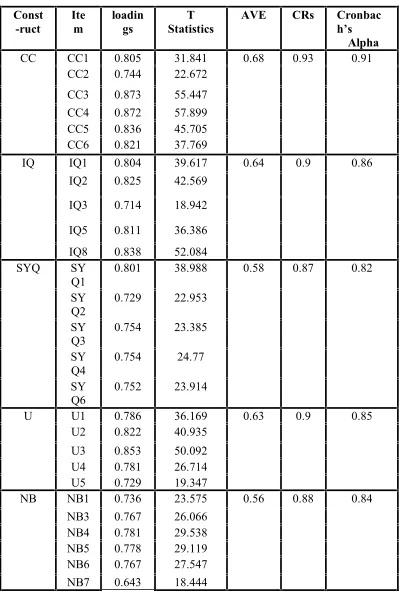
[image:6.612.89.290.416.713.2]After drawing our model, we ran Smart-PLS 2.0 for assessing reliability and validity of the model. Reliability is evaluated by composite reliability (CR) and Cronbach’s alpha [53]. The general acceptable threshold values are 0.60 for Cronbach’s alpha [54] and 0.70 for CR [55]. As shown in Table 1, all constructs had Cronbach’s alpha values that exceeded 0.60, and CRs were above the threshold values of 0.70. Results indicated the reliability of all constructs in this study.
Table 1: Measurement Properties of Constructs
Const
-ruct Item loadings StatisticsT AVE CRs Cronbach’s Alpha CC CC1 0.805 31.841 0.68 0.93 0.91
CC2 0.744 22.672 CC3 0.873 55.447 CC4 0.872 57.899 CC5 0.836 45.705 CC6 0.821 37.769
IQ IQ1 0.804 39.617 0.64 0.9 0.86 IQ2 0.825 42.569
IQ3 0.714 18.942 IQ5 0.811 36.386 IQ8 0.838 52.084 SYQ SY
Q1 0.801 38.988 0.58 0.87 0.82 SY
Q2 0.729 22.953 SY
Q3 0.754 23.385 SY
Q4 0.754 24.77 SY
Q6 0.752 23.914
U U1 0.786 36.169 0.63 0.9 0.85 U2 0.822 40.935
U3 0.853 50.092 U4 0.781 26.714 U5 0.729 19.347
NB NB1 0.736 23.575 0.56 0.88 0.84 NB3 0.767 26.066
NB4 0.781 29.538 NB5 0.778 29.119 NB6 0.767 27.547 NB7 0.643 18.444
The validity of constructs is evaluated by convergent validity and discriminant validity. To assess convergent validity, the average variance extracted (AVE) of constructs and factor loadings were used. Convergent validity is established when all constructs have an AVE value greater than 0.50 [56]. As shown in Table 1, all AVE values are above 0.50, thereby confirming the convergent validity of constructs. The absolute standardized outer loadings of items ranged from 0.62 to 0.87. [57] claims that loadings of more than 0.5 could still be acceptable if other indicators exist in the block for comparison. All items are significant at 0.001. Therefore, the convergent validity of the constructs is confirmed.
Discriminant validity reflects the extent to which constructs are significantly different from each other. The first step in assessing discriminant validity is to examine the indicator loadings with respect to all construct correlations. SmartPLS algorithm function was used to produce cross-loadings of all items. As shown in Appendix B, all items loaded on their constructs were higher than cross-loadings on other constructs. Therefore, the first assessment of the measurement model’s discriminant validity was satisfied.
[image:6.612.301.519.516.633.2]In the second step, the square root of the AVE of each construct was compared with the correlation between that construct and the other constructs. As shown in Table 2, the square root of the AVE exceeded the highest correlation between that construct and the other constructs, thereby further proving discriminant validity [56, 57].
Table 2: Discriminant Validity Values
CC IQ NB SYQ U
CC 0.83
IQ 0.37 0.8
NB 0.5 0.53 0.75
SYQ 0.36 0.68 0.44 0.76
U 0.49 0.65 0.64 0.544 0.8
6.2 Structure Model
evaluation of the structural model was investigated after establishing the appropriateness of measures in the research model. PLS-SEM does not have standard goodness-of-fit statistics, and prior efforts to establish a corresponding statistic have proven highly problematic [59]. Instead, model quality is assessed based on its ability to predict endogenous constructs. This assessment is facilitated by the following criteria: coefficient of determination (R2) and path coefficients. Therefore, this study applied PLS algorithm-style approach to obtain the R2 for endogenous variables. Bootstrapping technique was used to obtain the significances of all path coefficients between exogenous (dependence) and endogenous (independence) variables.
We assessed the predictive power of the model. The value of R2 is the main criterion by which model fit is assessed in PLS analysis (Chin, 1998). The value of R2 is normalized between 0 and 1, where a higher value represents better path model estimations. R2 of endogenous constructs are 0.55 and 0.45 for U and NB, respectively.
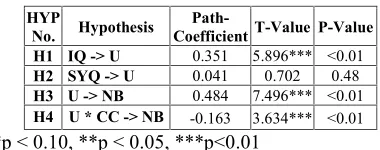
[image:7.612.316.472.239.358.2]To test the proposed hypotheses, the path coefficient between latent variables and their significance was assessed. After running a PLS model, estimates were provided for the path coefficients, which represented hypothesized relationships linking latent constructs. To test the main hypothesis, the bootstrap approach was used to assess the significance of hypothesized relationships in the path model. In the current study, 1,000 resamples were used to perform the bootstrap [57]. The number of bootstrap cases equaled the original number of observations to generate standard errors and obtain t-statistics. As shown in Table 3, the t-statistics indicated that all path coefficients are significant (T statistic > 1.96), except for H2.
Table 3: Results of Hypotheses Testing
HYP
No. Hypothesis Coefficient T-Value P-Value
Path-H1 IQ -> U 0.351 5.896*** <0.01
H2 SYQ -> U 0.041 0.702 0.48
H3 U -> NB 0.484 7.496*** <0.01
H4 U * CC -> NB -0.163 3.634*** <0.01
*p < 0.10, **p < 0.05, ***p<0.01
This study contributes to the available literature by investigating the moderator effect of CC on the relationship between U and NB, towards the success of mG in Iraq.
[image:7.612.94.284.584.659.2]The process of evaluating the moderating effect of CC is illustrated in Fig. 3. This study uses the product indicator approach. In the product indicator approach, product terms are created and built employing latent independent variable’s indicators and latent moderator variable’s indicators. The product terms are then employed as indicators of interaction term within the structural model. The moderating effect is supported when the coefficient of the interaction variable is statistically significant (t value >1.96) [38].
Figure 3: Moderating effect
The term U * CC, which is an interaction term, is included in the model. The interaction term U * CC has a significant negative effect (β = -0.163, t = 3.634, p<0.01) on the independent variable (U), as illustrated in Fig. 3. Based on this it can be said that the CC negatively moderate the relationship between U and NB of mG services amongst rural farmers. Therefore, H4 is supported negatively, as shown in Table 3.
7. DISCUSSION
The results obtained from the analysis of our model are showed in Table 3. IQ have significant effects on U, but SYQ has no effect on U, while U predicted net benefits.
The statistical results indicated that IQ has a significant effect on U at the 0.01 level of significance (β= 0.351, t=5.896, p<0.01). The finding suggests that individual use of the mG service can be improved when the quality of information is high. The result implies that the farmers in the rural areas of a southern region of Iraq would have had positive behaviours towards the usage of mG services when they found they could obtain accurate, easy to understand, clear and up-to-date information to conduct mobile weather service (MWS) at any time and from any location. If this information is inaccurate or out-of-date,
β = -0.163, t = 3.634
U NB
U*CC
users may feel annoyed and that they have a lack of control. This will undermine their usage. In addition, it is relatively difficult for users to search for information on mobiles due to the screen size. Therefore, the ability to obtain information directly without having to exert any effort to search would increase the rate of use and reuse of this service. Thus, MWs staff should present accurate, easy to understand, clear and up-to-date information to their users. This may help improve the usage rates of farmers. Indeed, individual use of mG services can be increased when the quality of information is improved. The implication of this is that information which is high quality can greatly encourage the public to engage with it, which consequently increases the net benefits of mG services. This result (H2) corresponds to the results of previous empirical studies which have provided empirical evidence of the significant positive effect of IQ on U [29, 60, 61]. Consequently, our result for H2 is better than some previous works, with β = 0.3513, comparing with Alshibly [29], and Ding [61], who generated results of β = 0.32and 0.24 respectively.
In examining the hypothesis regarding the effect of SYQ on U results, it was determined that SYQ has no effect on U (β= 0.041, t=0.702, p>0.1). Unexpectedly, this finding did not support H3 at the positive significant effect hypothesized. There are several reasons for this outcome. Firstly, due to the instability in Iraq as a result of civil conflicts, typically electric power is unstable. Power outages in either the service providers’ department or in mobile networks cause difficulties with the accessibility and availability of the service. Secondly, the mG system functions on one or more of mobile phone systems (Android, Apple IOS), which the user may not be familiar with. Previous empirical studies recommended that SYQ should play a critical role in the success IS. Conversely, SYQ may be a necessary condition, but it is not the sufficient criterion to motivate users to choose mG services in conflicts and risky environments. This result (H3) is in line with other studies such as Urbach, et al. [62] and Wang and Liao [63] who achieved outcomes of β = -.109 and β = 0.05 respectively.
In examining the hypothesis related to the relationship between U and NB, the results imply that the effect of U on the NB has a strong impact at the 0.01 level of significance (β= 0.484, t=7.496, p<0.01). Therefore, H5 is supported. This would indicate that for users in rural areas, frequency of
use of mG services increases positive user behaviour, thus increasing the benefits received. Moreover, the results also reveal that appropriate use of these services brings positive developments in the lives of rural farmers. For example, when a farmer achieves a level of comfort with accessing the service, experience levels increase, thus resulting in more benefits being gained through use of the service (such as productivity, job performance, time and cost efficiencies, on-time notifications of emergency situations, and weather status). During the data collection phase, the respondents conveyed that an unstable environment where civil conflicts, violence and many explosions occur, citizens are prevented from performing their work, which leads to a significant increase in the use of mG services remotely in order to obtain the associated benefits. Moreover, the supported result in hypothesis H5 is compatible with previous studies indicating that U influences the NB [62-66]. Consequently, the result of H5 outweighs several of the related studies’ results on the effect of U on the NB, such as Wang and Liao [63], Khayun and Ractham [64], and Hou [65] with results of 0.36, 0.30 and 0.219 respectively.
The statistical results of this study indicated that CC has a negative significant moderating effect on the relationship between U and NB of mG services (β = -0.163, t= 3.634, p<0.01). Thus, the hypothesis (HI5) is supported. The results express that CC in society has a negative effect between U and NB of mG services. This result implies that in spite of the increased use of mG services in regions with conflict, the benefit of using these services is not optimal. The primary reason of that the majority of government attention is focused on conflicts, and finding an end to them. Secondly, the majority of governmental resources are expended on conflicts. Therefore, government departments neglected to focus their attention on achieving the needs' and requirements' of users of mG services (achieving users’ transactions and requirements decreased), which resulted in a decrease of benefits. Therefore, although the frequency of use of mG services increased in an unstable environment, the benefits remained low.
8. CONCLUSION
Results indicated that IQ affect NB through U; and U affected the NB. Results imply that service providers need to deliver high-quality information to facilitate post-adoption usage of mG services. Indeed, individual use of mG services can be increased when the quality of information is improved. The implication of this is that information which is high quality can greatly encourage the public to engage with it, which consequently increases the net benefits of mG services. Results also imply that the use mG services had increased to obtain the net benefits in a stable environment more than in an unstable environment such as Iraq. Therefore, the risky conditions and level of security impact the use of mG services amongst Iraqi citizens.
This study has some limitations. First, this study was conducted in the southern region of Iraq. Whether these results could be generalized to other regions of Iraq, such as the middle and northern regions, needs further research. In addition, mG in Iraq is developing rapidly but is still in its early stage. Thus, results need to be generalized to other countries that have developed mG. Second, aside from “use” construct, other factors could affect net benefits, such as satisfaction, trust, security, and environment of usage. Future research can examine the effects of these factors. Third, this study is cross-sectional, and user behavior is dynamic. A longitudinal research may provide more insights into user behavior development. This phenomenon is considered new in Iraqi society. Therefore, more studies, whether empirical or theoretical, are needed for comprehensive understanding of factors that impede the use of mG in the public sector.
REFERENCES:
[1] N. A. Fadhil, W. R. Osman, I. T. Nather, T. A. Al-Saadi, and N. J. Al-Khafaji, "Mobile Technology in the Iraq Context: Design Mobile Application Prototype for the Election of Directors for Departments in the Ministry of Science and Technology," inProceedings of 5th SARC-IRF International Conference, New Delhi-India, 2014.
[2] I. Kushchu, Mobile government: an emerging direction in e-government: IGI Pub., 2007.
[3] M. Ntaliani, C. Costopoulou, and S. Karetsos, "Mobile government: A challenge for agriculture," Government
Information Quarterly, vol. 25, pp. 699-716, 2008.
[4] Accenture, "E-Government Leadership – Realizing the Vision," 2003.
[5] W. H. Delone and E. R. McLean, "The DeLone and McLean model of information systems success: a ten-year update," Journal of management information systems, vol. 19, pp. 9-30, 2003.
[6] ITU, "Measuring The Information Society," Geneva Switzerland2013a. [7] M. K. Faaeq, N. A. Ismail, W. R. S.
Osman, A. K. Al–Swidi, and A. K. Faieq, "A meta–analysis of the unified theory of acceptance and use of technology studies among several countries," Electronic Government, an International Journal, vol. 10, pp. 343-360, 2013.
[8] Laith and Nidhal, "primery interview," salih, Ed., ed, 2014.
[9] A. D. Younus, "Investigation of a mobile government a case study in Iraq," Near East University, 2014.
[10] A. G. Hameed, B. S. Shukur, N. J. Al-khafaji, and H. A. Al-Farhan, "Utilizing mobile applications as a channel of interaction between the citizens and the government: Design M-police in Iraq," in e-Technologies and Networks for Development (ICeND), 2014 Third International Conference on, 2014, pp. 1-7.
[11] H. Abdelghaffar and Y. Magdy, "The adoption of mobile government services in developing countries: The case of Egypt," International Journal of Information, vol. 2, pp. 333-341, 2012.
[12] O. Al-Hujran, "Toward the utilization of m-Government services in developing countries: a qualitative investigation," International Journal of Business and Social Science,vol. 3, pp. 155-160, 2012. [13] A. Al Thunibat, N. A. M. Zin, and N.
Sahari, "Identifying user requirements of mobile government services in Malaysia using focus group method," Journal of e-Government Studies and Best Practices, vol. 2011, pp. 1-14, 2011.
[15] A. Gunasekaran, E. W. Ngai, and R. E. McGaughey, "Information technology and systems justification: A review for research and applications," European Journal of Operational Research,vol. 173, pp. 957-983, 2006.
[16] S. Al-Masaeed and S. Love, "Mobile government in Jordan: Is it a step in the right direction?," International Journal of Handheld Computing Research (IJHCR), vol. 4, pp. 93-116, 2013.
[17] M. Georgescu, "Mobile government: an emerging direction,"Analele Stiintifice ale Universitatii" Alexandru Ioan Cuza" din Iasi-Stiinte Economice,vol. 2010, pp. 379-386, 2010.
[18] ITU, "The Word in 2013, ICT Facts and Figures," ITU, Geneva2013b.
[19] S. Chatterjee, S. Chakraborty, S. Sarker, S. Sarker, and F. Y. Lau, "Examining the success factors for mobile work in healthcare: a deductive study," Decision Support Systems, vol. 46, pp. 620-633, 2009.
[20] D. Mengistu, H. Zo, and J. J. Rho, "M-government: opportunities and challenges to deliver mobile government services in developing countries," in Computer Sciences and Convergence Information Technology, 2009. ICCIT'09. Fourth International Conference on, 2009, pp. 1445-1450.
[21] M. Alrazooqi and R. De Silva, "Mobile and wireless services and technologies for m-government solution proposal for Dubai government,"WSEAS Trans. Info. Sci. and App,vol. 7, pp. 1037-1047, 2010.
[22] S. M. Shareef, J. Arreymbi, H. Jahankhani, and E. Pimenidis, "Multi-channel delivery of services–initial pace towards M-Government: the case of Kurdistan region of Iraq," 2010.
[23] A.-H. Qasim. (2013). ﻲﻓ ﻰﻟوﻷا ﺔﺒﺗﺮﻤﻟﺎﺑ نﺎﺴﯿﻣ تﺎﯿﻓﻮﻟا ﺔﺒﺴﻧ ﺾﻔﺧ. Available: http://center-imn.net/1/
[24] Ministry Of Agriculture [MOA]. (2013, March 7th 2014). Iraq Rural and Agricultural Knowledge Exchange
Network. Available:
http://www.iraqagriculture.net/Pages/index 2.aspx
[25] W. H. DeLone and E. R. McLean, "Information systems success: The quest for the dependent variable," Information systems research,vol. 3, pp. 60-95, 1992.
[26] R. R. Nelson, P. A. Todd, and B. H. Wixom, "Antecedents of information and system quality: an empirical examination within the context of data warehousing," Journal of management information systems,vol. 21, pp. 199-235, 2005. [27] T. S. Teo, S. C. Srivastava, and L. Jiang,
"Trust and electronic government success: An empirical study," Journal of Management Information Systems,vol. 25, pp. 99-132, 2008.
[28] Lee, Cheng, and Cheng, "An empirical study of mobile commerce in insurance industry: Task–technology fit and individual differences," Decision Support Systems,vol. 43, pp. 95-110, 2007. [29] H. H. Alshibly, "Evaluating E-HRM
success: A Validation of the Information Systems Success Model," International Journal of Human Resource Studies, vol. 4, pp. 107-124, 2014.
[30] Chen and Cheng, "Understanding consumer intention in online shopping: a respecification and validation of the DeLone and McLean model," Behaviour & Information Technology, vol. 28, pp. 335-345, 2009.
[31] Chen, Jubilado, Capistrano, and Yen, "Factors affecting online tax filing–An application of the IS Success Model and trust theory," Computers in Human Behavior,vol. 43, pp. 251-262, 2015. [32] Kim and Malhotra, "A longitudinal model
of continued IS use: An integrative view of four mechanisms underlying postadoption phenomena," Management science,vol. 51, pp. 741-755, 2005. [33] H. Almutairi and G. H. Subramanian, "An
empirical application of the DeLone and McLean model in the Kuwaiti private sector,"Journal of Computer Information Systems,vol. 45, pp. 113-122, 2005. [34] B. Kositanurit, O. Ngwenyama, and K.
Osei-Bryson, "An exploration of factors that impact individual performance in an ERP environment: an analysis using multiple analytical techniques," European Journal of Information Systems, vol. 15, pp. 556-568, 2006.
[36] C. Z. Qiang, S. C. Kuek, A. Dymond, S. Esselaar, and I. S. Unit, "Mobile applications for agriculture and rural development," World Bank, Washington, DC,2011.
[37] J. F. Dawson, "Moderation in management research: What, why, when, and how," Journal of Business and Psychology, vol. 29, pp. 1-19, 2014.
[38] J. Henseler and G. Fassott, "Testing moderating effects in PLS path models: An illustration of available procedures," in Handbook of partial least squares, ed: Springer, 2010, pp. 713-735.
[39] Khan, Moon, Zo, and Rho, "Civil conflict, digital divide, and e-government service adoption: A Conflict Theory Approach," World academy of science, engineering and technology, vol. 66, pp. 537-549, 2010a.
[40] Heidelberg Institute for International Conflict Research (HIIK), "Conflict barometer 2008 crises - wars - coups d’e´ tat negotiations - mediations - peace settlements 17th annual conflict analysis," Heidelberg Institute for International Conflict Research at the Department of Political Science, University of Heidelberg 2008.
[41] D. Pedersen, "Political violence, ethnic conflict, and contemporary wars: broad implications for health and social well-being,"Social science & medicine,vol. 55, pp. 175-190, 2002.
[42] H. Partridge, "Redefining the digital divide: attitudes do matter!," Proceedings of the American Society for Information Science and Technology,vol. 44, pp. 1-13, 2007.
[43] Khan, "Esscys on Electronic Goveriinient in Developing Coz~ntriesA: Socio-Technical Perspective," Doctoral dissertation, Kaist University, Kaist University, 2010.
[44] S. Fahmy and D. Kim, "Picturing the Iraq War Constructing the Image of War in the British and US Press," International Communication Gazette, vol. 70, pp. 443-462, 2008.
[45] Khan, Moon, Rhee, and Rho, "E-government skills identification and development: Toward a staged-based user-centric approach for developing countries," Asia Pacific Journal of
Information Systems, vol. 20, pp. 1-31, 2010b.
[46] Khan, Moon, Swar, Zo, and Rho, "E-government service use intentions in Afghanistan: technology adoption and the digital divide in a war-torn country," Information Development, vol. 28, pp. 281-299, 2012.
[47] H. Barki and J. Hartwick, "Interpersonal conflict and its management in information system development," Mis Quarterly,pp. 195-228, 2001.
[48] Top 10 Most Dangerous Countries in the World, "Top I0 Most Dangerous Countries in the World 2013," 2013.
[49] T. Zhou, "An empirical examination of continuance intention of mobile payment services," Decision Support Systems, vol. 54, pp. 1085-1091, 2013.
[50] M. Yildiz, "E-government research: Reviewing the literature, limitations, and ways forward," Government Information Quarterly,vol. 24, pp. 646-665, 2007. [51] Sekaran and R. Bougie, "Research
Methods for Business," United Kingdom: John Wiley & Sons,2013.
[52] W. W. Chin, "How to write up and report PLS analyses," in Handbook of partial least squares, ed: Springer, 2010, pp. 655-690.
[53] R. P. Bagozzi and Y. Yi, "On the evaluation of structural equation models," Journal of the academy of marketing science,vol. 16, pp. 74-94, 1988.
[54] Hair, Black, Babin, Anderson, and Tatham,Multivariate data analysisvol. 6: Pearson Prentice Hall Upper Saddle River, NJ, 2006.
[55] R. P. Bagozzi, Y. Yi, and K. D. Nassen, "Representation of measurement error in marketing variables: Review of approaches and extension to three-facet designs," Journal of Econometrics, vol. 89, pp. 393-421, 1998.
[56] C. Fornell and D. F. Larcker, "Evaluating structural equation models with unobservable variables and measurement error,"Journal of marketing research, pp. 39-50, 1981.
[58] Hair, Hult, Ringle, and Sarstedt,A Primer on Partial Least Squares Structural Equation Modeling (PLS-SEM). Sage Publications, Inc., 2455 Teler Road, California USA., 2014.
[59] J. Henseler and M. Sarstedt, "Goodness-of-fit indices for partial least squares path modeling," Computational Statistics, vol. 28, pp. 565-580, 2013.
[60] F. Bento and C. J. Costa, "ERP measure success model; a new perspective," in Proceedings of the 2013 International Conference on Information Systems and Design of Communication, 2013, pp. 16-26.
[61] Y. Ding, "Quality in IS Research: Theory and Validation of Constructs for Service, Information, and System," 2010.
[62] N. Urbach, S. Smolnik, and G. Riempp, "An empirical investigation of employee portal success," The Journal of Strategic Information Systems,vol. 19, pp. 184-206, 2010.
[63] Wang and Liao, "Assessing eGovernment systems success: A validation of the DeLone and McLean model of information systems success,"Government Information Quarterly, vol. 25, pp. 717-733, 2008.
[64] V. Khayun and P. Ractham, "Measuring e-excise tax success factors: applying the DeLone & McLean information systems success model," in System Sciences (HICSS), 2011 44th Hawaii International Conference on, 2011, pp. 1-10.
[65] C.-K. Hou, "Examining the effect of user satisfaction on system usage and individual performance with business intelligence systems: An empirical study of Taiwan's electronics industry," International Journal of Information Management,vol. 32, pp. 560-573, 2012. [66] S. Yim and M. Shin, "Effects of system