University of Salford
School of the Built Environment
Doctor of the Built Environment (DBEnv)
Provisional Thesis
TITLE:
Explicating Excessive Financial Resource Allocation by
Building Control in Achieving Regulatory Conformity in
Domestic Extensions
Prepared by:
Peter A Irving
I
ACKNOWLEDGEMENTS ... VII
EXPLANATION OF TERMS USED ... VIII
LIST OF ABBREVIATIONS AND TERMS ... X
ABSTRACT ... XII
EXPLICATING EXCESSIVE FINANCIAL RESOURCE ALLOCATION BY
BUILDING CONTROL IN ACHIEVING REGULATORY CONFORMITY IN
DOMESTIC EXTENSIONS ... 1
1.0 INTRODUCTION ... 1
1.1BUILDING CONTROL PERSPECTIVES ... 1
1.2THE PROBLEM ... 9
1.3RESEARCH AIM ... 14
1.4OBJECTIVES ... 14
1.5CONTRIBUTION / SIGNIFICANCE ... 15
2.0 REVIEW OF THE CURRENT LITERATURE ... 17
2.1INTRODUCTION ... 17
2.2RESEARCH BACKGROUND ... 19
2.3GOVERNANCE PHILOSOPHICAL AND THEORETICAL CONCEPTS ... 20
2.4CURRENT TYPE OF REGULATION ... 21
2.5ALTERNATIVE TYPES OF REGULATION ... 22
2.6REGULATION AND DEREGULATION ... 24
2.7PRIVATE AND PUBLIC CONTROL ... 27
2.8LOCAL GOVERNMENT ... 28
2.9VARIATIONS IN PRACTICE ... 29
2.10ENFORCEMENT ... 31
2.11BUILDING REGULATIONS APPLICATION PROCEDURES ... 33
2.12CONCLUSION GOVERNANCE ... 35
2.13SOCIAL ... 36
2.14HOME OWNERS ... 37
2.15DESIGNERS ... 39
II
2.17REGULATORS ... 48
2.18CONCLUSION SOCIAL ... 50
2.19TECHNICAL COMPLICATIONS ... 51
2.20CONCLUSION TECHNICAL COMPLICATIONS ... 53
2.21OVERALL CONCLUSION ... 54
3.0 RESEARCH METHODOLOGY ... 56
3.1RESEARCH ONTOLOGY AND EPISTEMOLOGY ... 57
3.2THEORETICAL PERSPECTIVES ... 59
3.3RESEARCH STRATEGIES ... 61
3.4METHODOLOGY OF THE PRESENT RESEARCH ... 65
3.5ETHICS ... 75
3.6STUDY LIMITATIONS ... 75
4.0 PRELIMINARY EXPLORATION PHASE ... 77
4.1INTRODUCTION ... 77
4.2PRELIMINARY EXPLORATION ... 78
4.3PHASE 1PILOT CASE STUDY OF A DOMESTIC EXTENSION ... 79
4.4PHASE 2QUESTIONNAIRES AND ARCHIVAL RETRIEVAL ... 86
5.0 CASE STUDY IMPLEMENTATION PHASE ... 92
5.1INTRODUCTION ... 92
5.2CASE STUDY IN DISTRICT 1... 100
5.3CASE STUDY IN DISTRICT 2 ... 106
5.4CASE STUDY IN DISTRICT 3... 109
5.5CASE STUDY IN DISTRICT 4... 112
5.6CASE STUDY IN DISTRICT 5... 117
5.7CASE STUDY IN DISTRICT 6... 121
5.8STRUCTURAL SURVEYS ... 125
5.9PARTICIPANT DESCRIPTIONS ... 126
5.11DOCUMENTATION ... 137
5.12ARCHIVAL RETRIEVAL ... 137
III
6.1INTRODUCTION ... 143
6.2GOVERNANCE ADMINISTRATIVE AUTHORITY ... 149
6.3ADMINISTRATIVE AUTHORITY ANALYSIS ... 156
6.4GOVERNANCETYPE OF REGULATION ... 160
6.5TYPE OF REGULATION ANALYSIS... 167
6.6GOVERNANCETYPE OF APPLICATION ... 173
6.7TYPE OF APPLICATION ANALYSIS ... 177
6.8SOCIALHOME OWNERS’VIEWS ... 179
6.9HOME OWNERS’VIEWS ANALYSIS ... 181
6.10SOCIALDESIGNERS’VIEWS ... 183
6.11DESIGNERS’VIEWS ANALYSIS ... 185
6.12SOCIALBUILDERS’VIEWS ... 188
6.13BUILDERS’VIEWS ANALYSIS ... 190
6.14SOCIALBUILDING CONTROL OFFICERS’VIEWS ... 195
6.15BUILDING CONTROL OFFICERS’VIEWS ANALYSIS ... 196
6.16VIEWS TECHNICAL COMPLICATIONS ... 200
6.17TECHNICAL COMPLICATIONS ANALYSIS ... 206
6.18CROSS CASE DEVELOPING ISSUES ... 208
6.19SUMMARY OF CASE STUDIES OF PROBLEMS AND DETAILS ... 215
7.0 EVALUATION OF THE EMPIRICAL EVIDENCE ... 219
7.1THE PROBLEM ... 219
7.2CHARACTER OF EXTRA RESOURCE USE ... 219
7.3FEE SETTING FUNCTION LEGISLATION ... 220
7.4COMPETITION ... 222
7.5ENFORCEMENT OPERATIONS ... 223
7.6OVERHEAD CHARGES ... 224
7.7POLITICS ... 225
7.8ECONOMIES OF SCALE ... 226
7.9STRUCTURE OF ENFORCING AUTHORITIES ... 227
7.10BUILDING CONTROL INSTIGATED INSPECTIONS ... 228
7.11TYPE OF REGULATION (INCLUDING SELF-REGULATION) ... 229
IV
7.13HOME OWNERS ... 231
7.14DESIGNERS ... 232
7.15BUILDERS ... 233
7.16BUILDING CONTROL OFFICERS ... 234
7.17TECHNICAL COMPLICATIONS ... 236
7.18SUPPLEMENTARY PROPOSITIONS ... 236
7.19PARTICIPANTS VIEWS’ AND OPINIONS ... 237
7.20SUMMARY ... 239
8.0 SUGGESTIONS AND SOLUTIONS ... 241
8.1NON-FUNCTIONAL SOLUTIONS ... 242
8.2MOVE TO SELF-CERTIFICATION OR IN-HOUSE DESIGN SERVICE ... 243
8.3REMOVE FEE CHARGE ... 245
8.4REMOVE THE CROSS SUBSIDY RULES ... 246
8.5TRANSFER OF THE SCALE FEE CATEGORIES ... 247
8.6FUNCTIONAL SOLUTIONS ... 248
8.7FEE RECHARGES LEGISLATION ... 249
8.8BUILDING CONTROLS’ ADDITIONAL SITE INSPECTIONS COSTINGS ... 249
8.9UNEXPECTED EXTERNALITIES ... 251
8.10HOME OWNERS ... 255
8.11PROCEDURES AND PROTOCOLS OF BUILDING CONTROL ... 259
8.12DESIGNERS ... 263
8.13SUMMARY ... 271
9.0 CONCLUSION ... 272
9.1PREAMBLE ... 272
9.2FACTUAL CONCLUSIONS ... 278
9.3CONCEPTUAL CONCLUSIONS ... 281
9.4IMPLICATIONS ... 288
9.5RESEARCH CULMINATION ... 289
REFERENCES/BIBLIOGRAPHY ... 294
V
APPENDIX 1 CONSENT FORM ... 338
APPENDIX 2 LETTER REGARDING PILOT STUDY ... 340
APPENDIX 3 LETTER TO HEADS OF DEPARTMENTS ... 342
APPENDIX 4 LETTER TO PARTICIPANTS ... 344
APPENDIX 5 PARTICIPANTS INVITATION LETTER ... 345
APPENDIX 6 PERMISSION FOR ACCESS TO PROJECT FILES ... 347
APPENDIX 7 PARTICIPANT INFORMATION SHEET ... 348
APPENDIX 8 REGISTER OF BUILDERS ... 352
APPENDIX 9 STANDARD DETAILS AND REGULATIONS FOR DOMESTIC EXTENSIONS ... 354
APPENDIX10 PLANNING INFLUENCE ... 357
APPENDIX 11 FEE SCALES AND VALUE FOR MONEY ... 360
APPENDIX 12 EXTRA FEE CHARGES ... 363
APPENDIX 13 SUMMARY OF EXTRA INSPECTIONS CAUSED BY HOME OWNERS ... 366
APPENDIX 14 SUMMARY OF MISTAKES CAUSED BY DESIGNERS ... 367
List of Tables TABLE 1QUESTIONNAIRE. ... 87
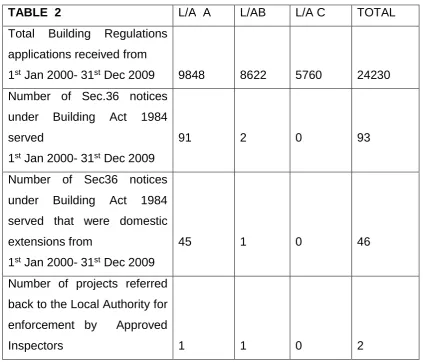
TABLE 2 ARCHIVE FIGURES ... 88
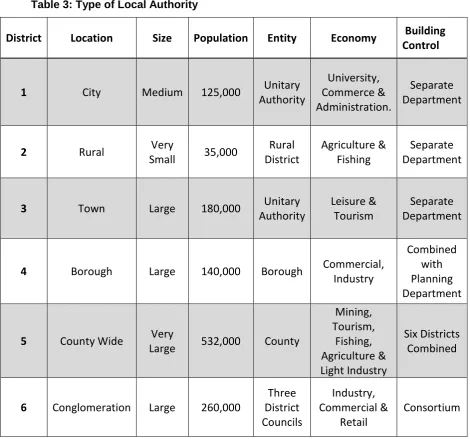
TABLE 3TYPE OF LOCAL AUTHORITY ... 93
TABLE 4PARTICIPANTS' RESPONSES REGARDING THE USE OF BUILDING NOTICES. ... 176
TABLE 5 SUMMARY OF PROBLEMS ... 215
TABLE 6INSPECTION COSTS ... 217
List of Figures FIGURE 1CATAGORIES OF WORKS. ... 5
FIGURE 2THEMES WITHIN THE LITERATURE CHAPTER. ... 17
FIGURE 3REGULATORY HARM AND BENEFITS CONFIGURATION... 26
FIGURE 4POSSIBLE INFLUENCES ON EXTRA ECONOMIC RESOURCE. ... 56
FIGURE 5DISCIPLINARY MODEL (BIGLAN,1973) ... 59
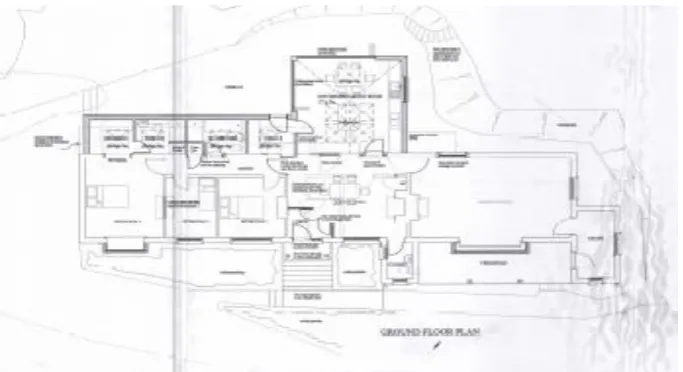
FIGURE 6PLANS OF PROJECT IN DISTRICT 2 ... 106
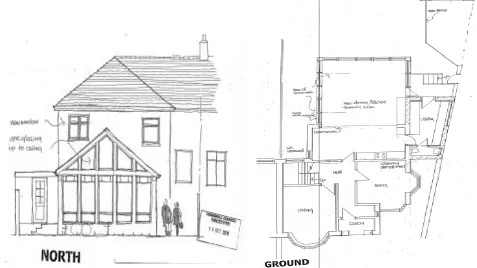
FIGURE 7PLANS AND REAR ELEVATION OF PROJECT DISTRICT 5 ... 117
VI
FIGURE 9APPROVED INSPECTORS’ SHARE OF CONSTRUCTION WORK. ... 138
FIGURE 10EXAMPLE OF THE USE OF N-VIVO CODING. ... 146
FIGURE 11:NUMBER OF SITE VISITS FOR A CASE STUDY IN EACH DISTRICT ... 153
FIGURE 12:TYPICAL BUILDING CONTROL STAFFING STRUCTURE... 155
FIGURE 13:BUILDING CONTROL OFFICERS CONTACT TIME AND OPINIONS. ... 164
FIGURE 14:REGULATORY THEORY. ... 169
FIGURE 15:EXTENSIONS INSPECTED. ... 211
FIGURE 16:NUMBER OF SITE PROBLEMS ... 216
FIGURE 17:NUMBER OF BUILDING CONTROL PROBLEMS ... 216
VII
ACKNOWLEDGEMENTS
I would like to thank everyone who has been involved over the many years this research has been ongoing, in particular, the numerous participants who took part in the research studies and will never see the final thesis. I also especially appreciate the following who helped and encouraged me during this journey.
Brodie Mc Adam, who has been a constant source of support and constructive criticism.
Paul Chynoweth and his team for the inspiration and guidance particularly in the early stages of study but also throughout the rest of the years.
Moira Mort and her colleagues for help in negotiating the way in administration aspects of the study and research programme.
Workplace friends and former colleagues for their advice and help.
VIII
EXPLANATION OF TERMS USED
A number of denominations, terms and perhaps unfamiliar words which may be described as jargon are used throughout this thesis. Sometimes these terms are idiosyncratic to Building Control, but most are usually employed in general construction vocabulary as well. It is advantageous at this point to identify some of the key terminologies though further clarification is provided on the appropriate occasions in the content.
Approved Documents Each regulation is set down, and methods of achieving conformity are described and illustrated.
Approved Inspector: The name for private sector Building Control and the surveyors working in that sector.
Building Control Officer A person authorised to inspect construction work and check plans for conformity with the Building regulations. Sometimes called Approved Inspector, District Surveyor, Building Inspector, or Building Control Surveyor.
Building Notice Submission A method of applying for Building Control inspections and approval without having necessarily to provide drawings or have them formally approved.
Competent persons A person or company that is registered with an approved association that can self-certify certain works which will then no longer require an inspection by Building Control.
IX
Full Plans Submission An application sent to a Building Control body with plans that require checking and are either approved, conditionally approved or rejected for conformity with the Building Regulations.
X
LIST OF ABBREVIATIONS AND TERMS
AI Approved Inspector AD Approved Document BA Building Act 1984 BR Builder
BRAC Building Regulations Advisory Committee BCA Building Control Alliance
BCO Building Control Officer BC Building Control
BN Building Notice
BSI British Standards Institute
CABE Chartered Association of Building Engineers CAD Computer Aided Design
CIAT Chartered Institute of Architectural Technologists CIOB Chartered Institute of Building
CIPFA Chartered Institute of Public Finance and Accountancy CITB Construction Industry Training Board
DEBA Devon Earth Building Association Dom/Ext Domestic Extension
DR Designer DIY Do it yourself
DSA District Surveyors Association
ESRC Economic and Social Research Council FENSA Fenestration self-assessment scheme FP Full Plans
HO Home Owner
HETAS Heating Equipment testing and approval scheme I Struct E Institute of Structural Engineers
I.T Information Technology
XI LA Local Authority
LABC Local Authority Building Control LGA Local Government Association MTP Microscopic, Telescopic, Periscopic
OECD Organisation for Economic Co-operation and Development PP Planning Permission
Regs Building Regulations
RICS Royal Institution of Chartered Surveyors RIBA Royal Institute of British Architects RTPI Royal Town Planning Institute SE Structural Engineer
SI Statutory Instruments TA Thematic Analysis TUC Trades Union Council UK United Kingdom
XII
ABSTRACT
1
Explicating Excessive Financial Resource Allocation by
Building Control in Achieving Regulatory Conformity in
Domestic Extensions
1.0 INTRODUCTION
1.1 Building Control perspectives
2
A detailed historical background, critical appraisal of Building Control and the legislation concerning the provision of the service has been written by Knowles and Pitt (1972). The authors were primarily concerned with the history of District Surveyors (the forerunner of present day Building Control Officers) in London, and their topic base emphasises specification standards, associated architecture, and urbanism rather than problems of implementation or finance. A different perspective is provided by Garnham-Wright (1983) who sheds light on the actual construction legislation and its influence within the United Kingdom but fails to position Building Control within a wider economic or social dimension. The work of Gaskell (1983) describes how in response to local and professional pressure bye-laws were used as a method of controlling buildings and urban development. He views Building Control from the point of view of national statutes and their influence within the local community and holds a local administrative perspective rather than a national one. Harper (1978) provides a comprehensive coverage of the Building Regulations from its rudimentary beginnings in the nineteenth century up until the early twentieth. He analyses the factors that affected Building Regulation legislation and, in turn, the influences on subsequent building forms within the UK. Similarly, Ley (2000) continues in this historical setting and brings the depiction up from the position where Harper terminated and maintained the analyses in the same vein up until the 1990s. The aspects of enforcement, costs, resource allocation, and actors’ participation lay outside the scope of their inquiries.
3
4
6
The greatest income sources for most Local Authority Building Control bodies are industrial and commercial schemes (Communities and Local Government, 2015). The revenue from these large-scale operations can be extensive and have the potential possibility of cross-subsidising smaller projects where a loss may have occurred. Category B/table 2 which includes domestic extension was based on area square meterage rather than project costs. This grouping is designated for the small works element of the three categories and includes standard charges for alterations, garages, window replacements, and service installations. However, domestic extensions are the major component of this class. Crucially Local Authority Building Control had to locate its standard charges for domestic extensions on the cost of the average time spent in checking a plan and undertaking the five statutory site inspections that are required. These pre-determined standard costs are an expediency because extensions vary in construction complexity and on-site conditions. When unexpected problems requiring extra inspections or resource allocation above those set down for the standard programme a financial deficit to the Authority is likely to occur.
7
8
Building Control finances were influenced not just by commercial forces but sometimes by Council Members who did not wish fees charged to Home Owners to rise too rapidly for reasons of political expediency (North Devon Council 2012). The enforcement function was a further potential pressure on budgets as this activity remained the sole responsibility of the Local Authority (Building Act 1984, s. 49). If an Approved Inspector is unable to achieve compliance the Approved Inspector withdraws the initial notice that was submitted on behalf of the client at the commencement of the project, and it is re-assigned to the Local Authority for legal enforcement (Building Act 1984, s. 52). Local Authority Building Control wears two hats; firstly, the professional regulating Surveyor, and secondly the enforcing bureaucrat (Clarkson, 1988). Legally, remuneration for enforcement work or any litigation action that a Local Authority Building Control discharges on its own behalf should come from the budget of the Authority’s revenue department, and not from fee income of any Building Control works (Building (Local Authority Charges) Regulations 2010, s. 5. SI. 2010/404). If Authorities’ legal departments fail to be remunerated by their finance departments they recharge Building Control units for their work which are then penalised in fiscal terms by having to bear the costs from within their own units’ budgets.
Coinciding with the liberalisation measures in 1985 of charges for the service and private competition, the building codes themselves were fully rewritten. The prescriptive based Building Regulations from the 1960s which set out exact requirements and standards for construction purposes were withdrawn. Approved Documents (Parts A-L, at that time) replaced them, and new performance-based codes were introduced. The Approved Documents set out the regulations and provided details of various ways and options of meeting their requirements. The move away from legal norms to more technical norms shifted the regulatory focus, “no longer on how
9
did they face competition for the first time but they were required to justify their income and expenditure to their respective finance departments. Moreover, Building Control Officers themselves were required to have far wider expertise and knowledge of construction processes. They were now operating in a competitive market, in an industry that was experiencing technological change, and had the additional responsibility of interpreting as well as implementing the codes. Public Building Control bodies, unlike those in the private sector, also have non-fee earning duties, to administer dangerous structures, demolitions, entertainment licences, safety in sport’s grounds, plus cinema and theatre inspections. Further, Building Control bodies are permitted to carry out building related work for other departments and agencies.
1.2 The problem
As a practitioner for over twenty years in Local Authority Building Control the author has frequently sensed there is disproportionate financial resource allocation in practice for domestic extension work compared with volume house building (sites of more than four units), conversions, industrial, and commercial projects. This assumption was held by colleagues within Building Control practice and supported tacitly when engaging with different Surveyors at seminars and conferences. It was also alluded to over a period of years in professional journals such as the Builder, Building Engineer, and the RICS Building Control (Morgan, 2013, pp. 6-7). Scrutiny of past accounts indicated that fees charged for some domestic extension projects failed to cover the actual cost of the service.
10
Building Control bodies competed in the marketplace for a share of a diminishing workload (ACAI, 2014). Regulatory practitioners have to look critically at all areas within the Building Control system where there may be financial leakage. One cause of concern was the expense of additional unprogrammed inspections combined with ensuing correspondence and communications which are key factors whether a project’s fee income covers the cost of the provision of the service. Large and complicated construction enterprises require numerous inspections, and therefore, any extra site visits can be contained within the negotiated fee for the project. Due to the magnitude of this type of work, an additional site inspection renders only a marginal difference to the total time and resources allocated to inspecting and dealing with a project (Hoffman et al., 2007). These economies of scale are not relevant to minor projects. Therefore, additional resource use has a far greater influence on budgetary outcomes. Fee scales for these small works were previously based on square meterage rather than actual construction costs. Once the fee scales for domestic extension schemes had been published and set, no adjustments or alterations were permitted to the charges laid down until they were reviewed at the end of the financial year. Consequential losses for practical purposes may have to be made up from profits from other jobs resulting in a form of cross subsidy from third party clients which are not permissible under the new legislation (Building (Local Authority Charges) Regulations 2010, SI. 2010/404) because each project should cover the actual cost of providing the service. .
11
type of minor works and Local Authority Building Control bodies base their inspection regimens on these requirements (Lane, 2007). It should be noted; there is no legislative duty on Authorities actually to inspect the works only a duty laid on the applicant to notify the Authority when a statutory phase for inspection has been reached (Building Regulations 2010, s.16, SI. 2010/2214). Once a domestic extension project commences but requires supplementary inspections and more economic resources use than those accruing from the fees, then costs are certain to overrun having regard to the stringent financial margins that Building Control bodies are legally required to operate within.
12
additional work Building Control incurred is due to their fault or negligence. This is a potential problem for Home Owners as their only remedy for reimbursement for negligence on the part of their agents is to seek civil action against them. These new powers may go some way to alleviate the resource use and cross subsidisation problems after construction commences but do not prevent the causes of additional work and the ensuing overruns.
13
14
1.3 Research aim
To formulate procedures to introduce efficiency improvements based on a comparative evaluation of the factors that at times cause additional resource overruns by English Building Control bodies during the process of carrying out statutory functions in respect of domestic extension works between 10m2 and 80m2 in area.
1.4 Objectives
1. To determine if extra financial resource allocation above that programmed for in achieving regulatory conformity in domestic extensions by Local Authority Building Control is more than a localised phenomenon.
2. To deduce the extent of extra financial resource allocation above that originally assigned by individual Building Control bodies and its extent geographically
3. To generate mechanisms that will lead to the active and positive identification of the factors and agents that cause additional financial resource use over that programmed.
4. To assess critically the significance of any identified factors and agents that cause or influence extra resource allocation in domestic extensions and ascertain the degree of potential impact and connectivity they have on the problem.
5. To furnish possible solutions that might be required to remedy the problem and provide a beneficial advantage to Local Authority Building Control.
15
1.5 Contribution / significance
A number of initiatives to modernise Building Control inspection and enforcement procedures have been investigated and/or suggested over the past few years (Communities and Local Government, 2008a). The current economic situation and the contraction of the construction industry have particularly focused the mindsets of senior management within the public sector towards encouraging the continuation of the search for cost-effective efficiencies and possible solutions (Andrews and Boyne, 2009). From tacit knowledge gained by the author, it is apparent that efficiencies in work practices, organisational procedures, and other effective improvements are actively discussed by individual Building Control unit management with their respective finance departments, executives and, councillors. However, problematic externalities cannot be addressed on an ad-hoc Authority by Authority basis, and therefore, are left to the investigation of external formative groups. These organisations are nationally based and include the District Surveyors Association, RICS Building Control group, BRAC, and the Department of Communities and Local Government. Input and suggestions emanate from the Chartered Association of Building Engineers the Building Control Alliance and similar organisations all of whom have a broader outlook than a localised Building Control body but share some common purposes.
16
further suggestions for improving performance standards. The Royal Institute of British Architects made proposals for reform of the Regulations too (RIBA, 2006). New initiatives to improve house building skills are additional recommendations advocated which could help construction processes generally and perhaps indirectly improve the inspection regime of Building Control (Building Regulations Advisory Committee, 2010).
17
2.0 REVIEW OF THE CURRENT LITERATURE
2.1Introduction
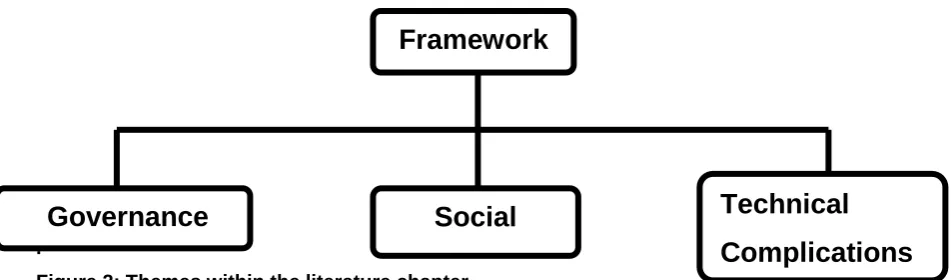
The primary purpose of transacting the literature review was to establish an approach in which to analyse and then synthesize current readings and scholarship for the research study. To achieve this goal three important themes emerged as the reading and evaluation progressed. These themes have been used as a foundation in conceptualising the review as the author strives to evaluate the literature by moving from the general to the particular. These include combining personal professional knowledge of the built environment with academic perspectives on this subject and developing this synthesised knowledge into a base on which the methodology and research could be founded. Reflecting on all these influencing sources, a picture emerged that these three broad generators which impact on project outcomes are often common to other industries that have regulatory control. Thus, the review draws on a wide spectrum of literature besides that of the Built Environment, using research and knowledge from other disciplines.
[image:30.595.81.557.525.665.2]
.
Figure 2: Themes within the literature chapter.
Framework
Governance
Social
Technical
18
The review commences by establishing the paucity of research specifically related to Building Control in England. It then proceeds to determine what has been written concerning factors that influence achieving compliance with regulations and codes, examines different styles, and types of regulation and application procedures. It looks at various regulatory industrial regimes besides construction and views the psychology and corporate behaviour of organisations of differing magnitude. These include different types of administering Authorities both within the UK and overseas. This comprehensive approach has been selected to cover a broad range of organisational establishments for comparative purposes and to focus on the dichotomy which often arises of endeavouring to achieve the goal of regulatory compliance without the problem of undue economic resource over-runs. This theme has been designated under the broad term of
Governance referring to the process of governing either by local or national governments or corporations and businesses in the private sector. There are divergences, but all have a degree of commonality in that actions, rules, and norms are generated but sustained and held to account.
19
The third theme is Technical complications. Failures of material is an illustration of how difficulties may occur that give rise to problems in achieving compliance with the regulations governing many industrial processes but lay outside the dominion of the two earlier themes. Foundation conditions, concealed elements, and the weather are further examples of issues which can be specific to construction that do not necessarily have direct cause or connection with topics concerning governance or social actions. Therefore, within the review, this third general avenue is pursued in the light that all possible and conceivable factors are investigated and explored in the quest for the discovery of the influencing constituents that cause the use of additional financial allocation in obtaining regulatory compliance.
These thematic expositions were subject to attenuation as the review proceeded because the chosen focus of the research is only on the domestic extensions segment of the construction industry (up to 80m2 as
outlined in table B fig1. P.5). The review is a dynamic analysis and a continuum covering the relevant topics over a period of some thirty years, pointing the direction and laying the foundation in which the author proceeded to embark on the research.
Only research written in English was explored.
2.2 Research background
20
not always sufficient’ Baiche et al. (2006, p. 279) though they found no evidence of systematic or purposeful non-compliance with the Building Regulations. They claim that prior to the publication of their work, no reliable proof of the scale and extent of Building Regulatory non-compliance in the U.K. was ever researched or recorded. These are surprising revelations considering the amount of research undertaken within other areas of the construction industry. As the literature is limited concerning the specific levels of building regulatory non-compliance and the Building Control function itself, alternative avenues have had to be explored. Initially, the reviews’ scope envisaged recourse to allied and related fields of regulatory procedural measures and methods for ensuring compliance in areas outside of the construction industry, and this now appears even more worthwhile. These elements are combined to form a foundation on which the research programme can be based. The relevance of working from the general to the particular from the literature surrounding the three themes already outlined will be tested by the outcome of the study.
2.3 Governance philosophical and theoretical concepts
21
British Government’s administrative ethos has changed. He reasons that reform and adoption of new dogmas and doctrines since 1979 are a continuing and ongoing mechanism but considers it is a new method by which society is governed. According to Hirst and Thompson (1996, pp.170-194), the era in which politics could be conceived in terms of processes within nation states is in transit. They claim politics has become polycentric and that nation ‘states are one level in a complex of overlapping and often competing agencies of governance.'
2.4 Current type of regulation
22
documents before the industry does not lead to successful implementation. According to Pilzer (2005) besides their impact on the regulators, performance-based regulations encourage a variety of solutions to achieve compliance with regulatees helping to promote innovation in building products, methodologies, and international trade. Similarly in the United States over thirty years ago Schodek (1976) wondered why construction professionals did not demand a more active role in shaping performance regulations as they are ‘typically part of their professional concerns.' However, in Australia, there have been serious moves to perfect the regulations (Best Practice Annual Report, 2006) by moving back to more prescriptive codes. The stated reason for this action was that minor projects do not require innovative skills, and small contractors would prefer to know how to meet the building codes explicitly expressed.
2.5 Alternative types of regulation
23
revisited by Hahn and Stavins (1991) is for Government to provide economic incentives to encourage regulatees to conform. This may work in areas such as the Clean Air Act 1956 by financially aiding people to change fuel systems, but it is hard to understand how it could be successfully implemented in the construction industry. Responsive regulations are an alternative type of regulatory action which seeks a moral commitment to abide by the law. However, Parker (2006, pp. 591-622) feels a compliance trap occurs ‘when there is a lack of political support for the moral seriousness of the law it must enforce.' If actors perceive regulatory enforcement as invalid, they lobby for change and the regulator avoids conflict by opting to enforce more leniently. In other words, large conglomerates involved in construction, for example, contractors and material manufacturers, may view certain regulations as unwarranted. They may form pressure groups to dilute or abandon certain regulations and statutory controls which in contrast may be perceived by other groups or bodies as being in the general public interest.
self-24
regulation is possible at all. An alternative view is offered by Aalders (1993) who is confident self-regulation is practical as long it is accompanied by stringent enforcement policies but omits to detail if these should be imposed within the private or public domain or both.
Whatever types of regulations are in operation or introduced certain regulatee interest groups or elements will ascertain them as contentious claiming they stifle innovation. Meacham et al. (2005) highlight the challenges in adequately defining and identifying performance based codes. Gann et al. (1998) concur with their observations by making similar comments specifically regarding regulatory instruments that they should remain valid across international borders but without compromising societal and local norms. Seall (2004) makes a similar case regarding prescriptive regulations; Knut (2012) demonstrates regulatory influences on innovation across other types of regulations especially in OECD countries. All regulatory frameworks bring their own tensions, benefits and disadvantages to varying degrees. The present research focuses on and functions within the compass of performance-based codes which are the current type of Building Regulation in operation in England.
2.6 Regulation and Deregulation
25
encourage targeting priority projects. While the Government’s commitment is to improve regulations and streamlining regulatory control, its thinking concerning alternative and different types of Building Regulations is not outlined in that document. Ongoing engagement is reflected throughout all Government departments by the establishment of a better regulation unit, a better regulation delivery office, and a better regulation executive (Better Regulation Framework Manual, 2015). The regulatory policy committee is committed to challenging red tape, review regulations, and assess regulatory impact. Government policy subscribes to performance based Building Regulations which are the codes in current operation, and there is no indication of a change to other forms of regulation.
26
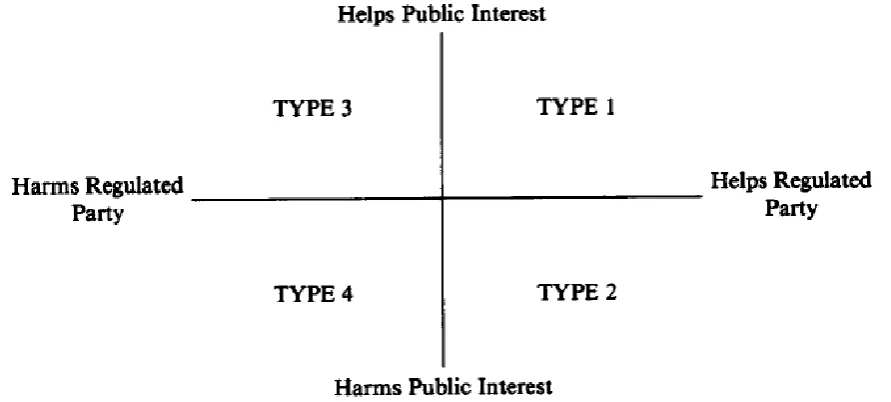
Figure 3: Regulatory harm and benefits configuration.
27
actors, contingent upon the peculiarities and limits of different states and their respective civil societies.'
2.7 Private and public control
28
possibly be more lenient and accommodating regarding their enforcement policies and less onerous in their interpretation of the legislation and rules to gain or conserve their market share of workloads. In other words by failing to introduce enforcement measures they thus avoid upsetting or alienating their client base. This argument has no foundation in any of the the literature reviewed. Varying distribution of public and private sector involvement in Building Control from country to country complicates direct comparisons between different nation states. Van der Heijden (2009b, p.3) points out governments describe their own regulatory arrangements in different ways, resulting in labelling similar arrangements differently and different arrangements similarly.
2.8 Local government
Local Government entities are often conscious of the high expectations the general public have, but are also aware of council tax payers’ distrust due to their perceived lack of efficiency (Andrews et al., 2005). The food, environment, mining, and similar industries as well as construction all experience difficulties in enforcing regulations (e.g. Fairman and Yap, 2004; May and Winter, 1999; Gunnigham, 1987; and Lobel, 2004). Some control and supervision appear inherently beyond governance. ‘The gulf between community aspiration and the perceived limits on government capacity forces each entity, industry and regulator to conduct a thorough and painstaking search for an appropriate solution’ maintain Price and Verhulst (2005, p13). Their research reveals that citizens believe government agencies are capable of achieving more than actually occurs. This is due to the public’s perception of the power of enforcing institutions and in its confidence in the corrective measures produced by the introduction of fresh legislation.
29
objectively Local Authorities have little influence compared to Central Government’ state Blondel and Hall (1967, p.323). The situation appears to have changed little since that date even though there is meant to be an ideological commitment to localism by the present Government, Lowndes and Pratchett (2012) argue that any reform process is far from coherent and is constrained by conflict. The question of the distribution of power and influence between local councils, organisations, and central authority still arises and thereby impacts on the regulatory outcomes of each Building Control body and the local Administrative Authority. The behavioural products of an Administrative Authority are greater if there is a fit between the personal motivation of councillors and the organizational environment according to Pedersen (2013). The influence of political drivers specifically on public sector Building Control management does not seem to have been explored, but Fulup et al. (2002) illuminate some of the similar and potential problems that have occurred in the National Health Service through reorganisation, particularly the negative effects on the delivery of service. No comparative studies have been located concerning private enterprise Building Control and the management or ownership of the various organisations that make up that particular sector.
2.9 Variations in practice
30
reversals (Warner, 2012). Scarce literature has been unearthed regarding how significant are the efficiency discrepancies that might occur between administrative authorities in England. However, Jas and Skelcher (2014) dispute the Dutch conclusions, finding overall that administrative practices varied much less than expected in regulatory regimes in the devolved nations of the UK. Comparing case study practices in the countries that make up the union their investigation contradicted the expected outcome based on previous research. The limited variations in practice they found were due to shared underlying assumptions of the regulators rather than the regulatory regimes themselves. McAdam and O’Neill, (2002) were reluctant to seek direct comparisons but evaluated best value of UK Building Control services through clustered benchmarking and highlighted the limitations they incurred in their research by the use of comparative performance measures in such diverse groupings. Rather than compare an autonomous administration with best practice they adopted this clustering approach as a more beneficial way of measurement. Therefore, reforms that have occurred in English Building Control should perhaps be understood in the wider context of the processes of change, such as compulsory competitive tendering and best value which first started to take place during the 1980s. This new managerialism is generalised by Clarke and Newman (1997) as a public service management and working system that adopts techniques associated with the private sector, profit orientated enterprises.
31
(Gray et al., 2003), small organisations were more performance orientated than medium or large ones. They defined small as less than one hundred employees. Few Building Control departments throughout England have staffing levels of more than thirty, but all local Administrative Authorities employ over one hundred persons. The work of Gray et al. (2003) is particularly relevant due to the research’s focus specifically on domestic extensions and Building Control units within larger corporations. Three questions are underlined here. First is the size of the department the material concern, secondly is it the size of the organisation itself, and thirdly is the influence of magnitude two-dimensional, vis-à-vis the size of the regulatee to the scale of the regulator. Interestingly an examination of the strictness of regulatory policy having a reverse effect on the market structure is underlined by Noam (1984). He discovered the strictness of local enforcement statistically correlated with the size of the firm of the regulatees. As the focus of the research will lean towards small contractors because they are usually the type of businesses that undertake domestic extension contracts, there might be an opportunity to test this observation.
2.10 Enforcement
32
departments under diverse legislation and with conflicting agendas. Prior (2000) in fact demonstrates the similarities that Planning Departments have with each other although located within different Local Authorities, stressing their unique difficulties in enforcing planning legislation compared to other corporate laws and offers remedies through changes in theory and practice. McKay et al. (2003) also provide solutions to the difficulties in enforcement, contributing to the discussion by suggesting not just training for personnel but that new legislative innovation is required. This highlights fundamental departmental differences that occur in Local Authorities because each separate unit works under its own particular legislation which is germane to its rational function. The distinctiveness and peculiarities of the separate sections of each Council as regulator is emphasised by contrast in the diverse and dissimilar character of the regulatees. Fairman and Yap (2004) found that the primary motive to improve food safety came not from within, that is the regulatees, but from the enforcement agency staff which in that study was the Environmental Health Department. They discovered that many small enterprises lacked knowledge and skill regarding food safety and thus relied on the regulator to identify and direct compliance. This middle way approach occurs in other regulatory regimes where one man traders and small companies are not always acquainted or up to date with the legislative requirements.
33
illustration, Car Park Departments issue an enforcement notice (parking ticket) as soon as a contravention is identified. Petiot (2004) advocates an even more rapid and immediate enforcement action by Local Authorities and the elimination of most contact between parties when dealing with parking offences thus emphasising the rapidity of this third way approach. However, it is the United Kingdom Government‘s policy to encourage compliance without resort to legal proceeding (Communities and Local Government, 2009b). Interestingly, at the Local Authority Building Control Conference in March 2012, only 56% of attendees agreed that the Building Regulations were being enforced (Ambrose, 2012). The conference statistics regarding attendees’ organisation of employment were not broken down by size or location so they cannot be further analysed or compared. Nonetheless, the results do provide an indication regarding the perception of Building Regulation compliance and enforcement action by the regulators themselves.
2.11 Building Regulations Application procedures
34
commence quickly with building work, subject to giving the Building Control body forty-eight hours notice of intention to start.This was viewed as a means of reducing bureaucracy and red tape. However, Brynard (1995) contests this notion and believes it is a problem of individual perception because under the Full Plans approval scheme, works can legally commence before drawings are approved, providing the work conforms to the building codes. Rather he maintains it is a system that reduces cost because it curtails the Designers’ role to only producing Planning drawings thus omitting specifications and Building Regulations details or eliminates the Design function altogether.
Besides the contention concerning bureaucracy and efficiency savings, it is still purposeful to investigate if the differences between Full Plans and Building Notice applications actually influence Building Control resource use. The results of a survey of problems concerning Building Notices (Communities and Local Government, 2008b, p.17) classified Builders lack of knowledge as 19% of the cause of contravention problems and 5% due to lack of appreciation of the complexity of the regulations. Building Control Surveyors also spent 8% of their time giving advice on these problems and an additional 11% on contravention inspections. In contrast, the survey found the time spent for extra inspections was reduced by 28% for Full Plans applications. However, office resources should be factored into the equation because of the requirement to check submitted plans under this route. The conclusion of the survey suggests Building Notices are not being used in the manner they were intended, ‘they are being used where ignorance of the requirements are high.' The survey also collated evidence to show that the length of site inspections increase by 20% on work that was supervised under the Building Notice route.
35
levels of service indicators for site inspections for each category. That there is a problem with the Building Notice scheme, which probably influences economic resource allocations, was reinforced in the Building Regulations report (Communities and Local Government, 2008a). The responses by Building Control, professional, and trade associations was overwhelmingly positive to the suggestion of limiting the scope of projects that could be covered under this scheme. The report was a nationwide enterprise but relied entirely on voluntary replies to questionnaires. There were thirteen set questions posted or e-mailed to various bodies and persons. It consisted entirely of analysis of the data obtained from one hundred and thirty-seven entities who responded to the questionnaires regarding the Building Control system in England and which covered all categories and size of construction projects. The majority of the replies were from Local Authority Building Control the sixty-one remaining respondents came from nine other groups, of these Home Owners only numbered two, Builders two, and Designers five. Six other categories made up the remaining fifty-two responses. These consisted of Manufacturers, Property Developers, Approved Inspectors, Specific Interests, Energy Sector, and others. This survey was not methodologically vigorous and primarily tends to reflect the views of the regulators. Further research and reports are to be undertaken by BRAC in the future (Communities and Local Government, 2012b) concerning further inquiry to the Building Control function.
2.12 Conclusion Governance
36
impacting on the market and the regulatees. No academic research or study has yet been identified concerning differences in outcomes specifically between private and public Building Control bodies.
The widespread adoption of performance regulations to replace prescriptive ones has been researched in many countries. Criticisms of complexity and partial return to the traditional measures have been voiced, but little action has been taken to return to previous methods. Alternative regulatory systems have been adopted in other industries but have not been found appropriate in construction. Self-regulation as a means of regulatory control has moved forward overseas faster than in England. The Governments intention is to proceed along this route but views the scheme as requiring more robust monitoring and enforcement procedures.
Little research has been undertaken to compare Full Plans and Building Notice procedures, what literature there is reveals major concerns within the inspectorate and some sensitivity within the industry of how Building Notices are being used. The intention of Government to make regulatory compliance procedures for minor works quicker and easier will be welcomed as the present Building Notice scheme has been shown to be a source of vexation to the regulator. There appears to be agreement that some works are too large or complex to be truly categorised as minor and that some Builders are not acutely aware of the requirements of the Building Regulations. The literature on this topic revealed questionnaire survey evidence only from the inspectorate and none from regulatees, no empirical evidence came to light specifically concerning differences between the two application types.
2.13 Social
37
regulatees to regulatory control whereby they strive to achieve conformity and compliance. In addition, it focuses on the reverse side of the mechanisms encompassed by the ordinances of regulation and their application by considering the actions, attitudes, and difficulties encountered by the regulators. As Cooke and Williams (2009) reason, successful projects cannot happen in a vacuum and all the actors involved in them have a direct and indirect influence on outcomes.
2.14 Home Owners
38
risks to Home Ownership than there used to be, but householders still tended to have a strong belief in home ownership and were not inclined to perceive the negative issues they might encounter. Individuals dismiss concerns of higher interest rates and job insecurities as they concentrate on more positive actions such as extending their properties.
39
Regulations. The management and skill knowledge of Home Owners is revealed as a factor in the standard of work encountered within their own dwellings (Kangwa and Olubodun, 2003). Home Owners understanding of the regulatory processes may also influence outcomes, May (2004) argues that compliance is not just achieved by enforcement and deterrence but also from a sense of obligation and shared commitments for fulfilling an implicit regulatory social contract. The downside as Haines (1997) suggests is that once inspectors have to get tough to achieve compliance, any future facilitative approach with regulatees will backfire, no matter their previous benevolence. Winter and May (2001) emphasise that knowing the rules plays a critical role, maintaining that normative as well as social motivations are as influential as calculated motivations. They found Home Owners with a high awareness of the regulations had a greater feeling of moral obligation to obey them. This reinforced their earlier findings concerning compliance regarding regulators and regulatees (May and Winter, 1999) inclining to a more nuanced view concerning cooperating with regulatees. Granmann et al. (1995) proved by laboratory experimentation that greater awareness of the codes and consequences of possible sanctions increased compliance even amongst actors with low social responsibility traits.
2.15 Designers
40
different disciplines and bodies that Designers belonged to besides the Royal Institute of British Architects (RIBA). Though there are forty-four thousand members of the RIBA it does not seem that domestic extensions are a field they have captured in a comprehensive way (Anon 2011a). This architectural claim based on the results of a future trends survey appears to provide economic rather than any professional reasons for this situation. If the assumption is correct that most Designers undertaking domestic extension work are not RIBA members, then it is reasonable to suggest that a moderate proportion are members of the Chartered Institute of Architectural Technologists who claim a membership of nine and a half thousand (CIAT, 2013). Their sphere is building science and they specialise more in small projects but do not undertake supervision of construction works. In addition Chartered Surveyors (members of RICS) also often specialise in these types of projects. The changing status of the design profession is highlighted by Foyle (2006, p.41) who refers to the protected status of the Architect and frets at the flexibility of other professional Designers’ titles. The pressures to reduce costs are ever present, and the globalisation of architectural services which can be outsourced to developing countries is underlined by Tombesi et al. (2003). The amalgamation of these factors found within the literature would suggest that competition for design work is intense, and indicates that fee reductions occur in practices under pressure to seek new commissions. However, no research has been located that establishes the proportion of Designers of domestic extensions who are unqualified, who are Architects, or chartered and whether this influences resulting outcomes.
41
certified professionals. Meacham et al. (2005) found their role within the project management team being personally responsible for regulatory conformity obviated or reduced the task of Building Control Surveyors in Vancouver. A fundamental change in the regulatory approach would have to take place in England if Designers with recognised qualifications were the only persons permitted to submit Building Regulations applications. Presuming this measure was introduced through some form of self-certification in England, there could be opposition from unqualified Designers who might be excluded from operating. Guckert and King (2002) bring attention to the errors and omissions by Architects in numerous contracts and the liabilities incurred by owners and query who pays for these mistakes. They question the value of Architects, and highlight accusations of Architects living in ivory towers, especially in the light of new information technologies. Akintoye and Fitzgerald (2000) reflect that errors in the contract documents led to problems on site because of Designers’ lack of expertise in construction processes. Hofstader (2005) challenges these charges demonstrating the value good Architects can bring, drawing on their foundations of knowledge and know-how.
42
Experience, qualifications, and competition for work are elements that affect the cost of employing a Designer. The requirement in other countries to engage only qualified Designers and who in some cases are permitted to verify their own work would be influential factors in resource use if legislative changes were made to the English Building Regulations. Nonetheless, there are forms of Design adaptation that do not include these concepts an example being the notion of participation. ‘Participatory measures’ may be formed through interactions with clients, Planning Authorities, citizens working collectively, or individually as Home Owners. Participatory design processes are being applied in planning and urban design (Sanoff, 2008) and can enhance the sense of community in a given district. Nonetheless, there appears to be an absence of reference to the importance accommodating Building Regulations in this approach. It may well be Designers emphasise those participatory aspects of design just described but fail to prioritise other important features in the process which in turn may impact on regulatory outcomes and project costings.
2.16 Builders
43
there is a problem in delivering a practical means of training that attracts small builders. He notes that training expenditure in management and supervision skills in the construction industry is well below that in other industries. The current construction labour market rests on casual self-employment, rigid trade divisions, and output based pay Clarke (2006, p. 255). The research also compared the skills level in the U.K. with other European countries and found that in Britain ‘labour is not valued according to the knowledge it incorporates.' and contrasts the sharp divide between operative and professional/technical skills. She states Labour is not rewarded for its potential but for its product. The duties placed on contractors of planning, monitoring, and managing a construction project together with consultation with the work force improves helps to improve the current labour situation (CDM 2015). Nonetheless, on larger projects there is still a greater degree of professional control in contrast to minor works which operate with higher levels of labour domination.
44
that defective work had in achieving compliance with the building codes or the impact on the inspectorates’ resource use. Nonetheless, the totality of construction defects in any given number of projects must, at least, impact to some degree on the regulatory system overall. The study by Somerville and Gosh, (2006) confirmed the findings of Soetanto et al. (2001) which similarly indicated the need for contractors to improve in most aspects of performance. Koehn and Caplan (1987) conclusions concur with these findings reflecting that though there are differences between contractors size, the potential for improvement is approximately equal. The twenty-year time frame over which these studies took place has been sufficient to identify the seriousness of the problem. Unfortunately, the evidence does not indicate any improvement in the situation even amongst firms of differing size. The question ought to be put, if researchers are identifying consistent quandaries over significant time spans, as the literature reveals, and remedies are suggested then why are there such low levels of application? Either, researchers are not offering practical explications, contractors are not implementing recommendations, or there is some type of deficiency in communication and interaction between academia and industry.
45
Builders may unwittingly be rebuked by clients for construction mistakes through no fault of their own because they are often the only actors on site and easily contactable. Third party professionals have been criticised for inaccuracies that occurred because estimators lacked the practical knowledge of construction processes, and for which Builders often received the blame (Akintoye and Fitzgerald, 2000). Additional links in the information chain is a further example of an influence on poor outcomes for which Builders sometimes stand accused. Subcontractors constrain the communication of regulatory expectations because the inspectorate does not always deal with the main contractor who may be off site (Mayhew and Quinlan, 1997). By conversing with the sub-contractor, who may not necessarily have a broad overview or knowledge of the project, not all relevant intelligence is communicated to the Building Control Officer.
46
contractors by complimenting their inherent flexibility. However, criticism of the operation of Builders and their operatives continues, Vee and Skitmore (2003) discovered instances of negligence, unethical conduct, and fraud amongst actors engaged in the construction industry in mitigation they did report that 90% of respondents subscribed to a professional code of ethics. This could be classed as good intentions rather than affirmative action.
A number of academic studies have endeavoured to address the reasons for some of the poor reputation and image of the construction industry. For example, the high attrition rates of the workforce, its male gender orientation, fragmentation, and seasonal variability. Eccles (1981) foresaw that subcontracting would have major implications for the nature of the construction industry. The transient nature of subcontracting means trade operatives lack commitment and loyalty to the principal contracting company; the avenue for apprenticeships is diminished, and quality control over the workforce decreases. These factors can be of particular relevance in domestic extension works. Webster et al. (2001) comprehensively established that there were high levels of unqualified people working as tradespeople. They found this situation was not due to lack of trained workers but due to economic reasons; employers upgrade non-trade workers to undertake skilled jobs. Those findings are disputed by Karmel and Ong (2009) who judge there is a current skill shortage and that as new entrants to the workforce are a specific demographic group, which is young men; construction is particularly vulnerable to an ageing population. However, Turner et al. (2015) found that young people view construction sceptically, being adverse to a career in the industry seemingly discouraged given its negative reputation through reports in the media. These suppositions are reinforced by other researchers (e.g. Proverbs et al., 2005 and Holt and Edwards, 2000).
47
Builders. In generating ideas to make compliance less burdensome for Builders a Government report (Communities and Local Government, 2008a), suggests extending the use of this ‘competent persons scheme.' 22 competent persons schemes are in operation at present (Communities and Local Government, 2013). However, Shahriyer et al. (2009) discovered there was little active checking on installers by scheme operators and call into question the overall competence of the operatives involved and if regulatory requirements are being met. Another evaluation of the schemes stated that higher levels of quality assurance are required (Communities and Local Government, 2009c). Due to the widespread dissatisfaction with complex codes and red tape, a campaign was organised to reform the regulations and increase the role of competent persons and self-certification (Lane, 2006). Even with the reservations regarding quality control, the Government, after consultation with the industry, is taking forward self-certification schemes and from their documentation there appears to be a general agreement this is the direction to proceed (Communities and Government, 1998). Further consultation procedures commenced in 2010 and an impact assessment whose objectives were to ensure cost effectiveness, efficiency, and compliance was published the following year (Communities and Local Government, 2011). Nonetheless, the serious question of checking the competency of the actors involved in this scheme remains unanswered. For sure this function will stay with Builders own associations and federations rather than with Building Control bodies.
48
2.17 Regulators
49
and developers calling for assistance from the inspectorate to support the depressed building industry by being more willing and open.
50
been posited. Hawkesworth and Imrie (2009, p.552) suggest ‘Partnerships and networks are part of a complexity of regulation, in which outcomes are not the products of any one professional or actor, but part of a diversity of overlapping relations and interventions.' Implying externalities and events could overtake regulators engrossed in their versions of the reality of regulatory action.
2.18 Conclusion Social
The literature reveals various rationales for Home Owners’ to extend their houses which fall into two broad categories, either enlarging to meet spatial needs or to advance opportunistic value to the property and sometimes a mixture of both. Sociological influences through changes in home ownership within society combined with Home Owners own attitudes influence construction and regulatory results. Naïve assumptions about the effectiveness of the inspectorate and the incapableness of the contractors can also colour Home Owners perceptions about the whole domestic extension construction process. Home Owners who possess high regulatory awareness are more likely to ensure they abide by the codes and feel a moral responsibility to comply. As might be expected Home Owners with a strong awareness of construction processes were also more likely to conform.
Qualifications and experience of Designers seem to vary. In advanced capitalist countries Designers with the appropriate qualifications often certify their own work something not permissible in England. Competition between Designers is increasing, and the status of the profession is altering due to new technologies and changes in social attitudes. There have been calls internationally for Designers to have a more participatory role in shaping future regulations.
51
performance. Some research found there was innovation by Builders, but overall skill levels were low in comparison with Europe and there have been problems in delivering practical training. Inquiry into Builders’ qualifications demonstrated that there was a lack of suitably qualified operatives with the correct levels of skill. Self-certification has taken place to a limited extent, but there are concerns that the checking mechanisms to ensure conformity have not been robust and the scheme has not gone forward as fast as the Government would wish.
Minimal research has emerged concerning the specific opinions and views of Building Control Officers. The literature indicates that differing enforcement styles have little bearing on outcomes, whilst the qualifications and expertise of the regulators are crucial factors in ensuring conformity. Building Control Surveyors have been operating in the private sector for three decades; their advent has influenced those in the public sector resulting in a more competitive and professional outlook.
2.19 Technical Complications