DEVELOPMENT THE A DISPUTE RESOLUTION FRAMEWORK
TO IMPROVE THE EFFICIENCY OF DISPUTE RESOLUTION IN
SAUDI CONSTRUCTION PROJECTS
Saad Alshahrani
The University of Salford
College of Science & Technology
School of the Built Environment
Submitted in Partial Fulfillment of the Requirements of the Degree of Doctor of
Philosophy
I
Abstract
The Kingdom of Saudi Arabia (KSA) has the one of the fastest growing economies in the Middle East, and the construction sector in the KSA has become the largest construction sector in the Middle East. This sector incorporates a variety of building, housing and infrastructure related projects and, over the past two decades, has witnessed an increase in the number of disputes. Such disputes impact the time, cost and quality of the work and may even cause projects to come to a halt. Resolving disputes takes a long time in Asia and Middle East, and they effect on the relationships between the parties involved. Industry reports suggests phenomenonal costs of these disputes, costing industry hugely in terms of productivity and efficiency.
However, there is a clear knowledge gap in the research, in that none focuses on dispute resolution in Saudi construction projects, including the critical success factors for alternative dispute resolutions and the barriers to using alternative dispute resolutions. Thus, the main aim of this research is to improve the efficiency of dispute resolution in Saudi construction projects through the development of a dispute resolution framework. To achieve this aim, the researcher collected data through mixed, qualitative and quantitative methods. The researcher conducted semi-structured interviews with 15 academics, arbitrators and experts in Saudi construction projects. These interviews were conducted face-to-face, by telephone and through Skype. The researcher used manual coding for content analysis and later used Survey Monkey to conduct a survey and collected data through social networks and face to face.
II
ranking and rating between factors based on the quantitative data, which conducted with 327, responds. Thirdly, the study provided CSF ISM model that contributed to the understanding of the relationship between critical successful factors for alternative dispute solutions in Saudi construction projects. Forth, Development of dispute resolution framework is to improve efficiency of dispute resolution in Saudi Construction Projects. Finally, made recommendations for both academic and industrial sectors KSA.
III
Acknowledgements
The completion of this thesis would not have been possible without the help of Allah, the Almighty, for His great blessing and His guiding me throughout my PhD research. I would also like to express my deepest thanks to my supervisor, Dr. Zeeshan Aziz, for his continuous support and advice. He has provided me along the way of my PhD with insightful comments, which are of remarkable value to me.
I dedicate my PhD thesis to my lovely mum, Thamra Alshahrani, may Allah bless her with long life. My deepest thanks go to her for her continuous supplication to finish my thesis successfully. My deepest thanks also go to my dad, Matar Alshahrani, whose prayerful supplications were a source of success.
I am really grateful to my great wife, Turkiah Alshahrani, for her constant support. My warmest thanks to her for her love, encouragement, sharing and inspiration that I would complete my PhD successfully. Special thanks to my lovely children, Ruwayna, Hamzah, and Tasneem. Their prayerful supplication to me encourage me to overcome all obstacles.
My special thanks extend to my whole family, especially my older brothers, for their support and encouragement.
My warmest thanks also extend to my friends who support and help me with good ideas and opinions.
IV
List of publications
Alshahrani, S. (2016). Empirical Analysis Causes of disputes, Avoidance and Resolution of construction project Disputes in Saudi ArabiaThe 9th Saudi Students Conference, The ICC United Kingdom, Birmingham 13 - 14 Feb 2015.
Alshahrani, S. (2016). Disputes Resolution of Public Construction Project in Saudi Arabia .2016 7th International Conference on Construction and Project Management (ICCPM 2016) August 24-26, 2016, Turku, Finland.
V
Table of Contents
Abstract ... I Acknowledgements ... III List of publications ...IV Table of Contents ...V List of Figures ... XI List of Tables ... XIV Acronyms... XV
Chapter 1. Introduction ... 1
1.1 Introduction ... 1
1.2 Research Background ... 1
1.3 Justification of Research ... 3
1.4 Research Questions... 5
1.5 Research Aim and Objectives ... 6
1.6 Scope of the Research and Limitation ... 6
1.7 Expected Contribution to Knowledge ... 7
1.8 Outline of the Research Methodology ... 7
1.9 Structure of the thesis... 8
Chapter 2. Dispute in Construction projects ... 10
2.1 Introduction ... 10
2.2 Definitions ... 10
2.2.1 Conflicts ... 10
2.2.2 Claims ... 11
2.2.3 Disputes ... 12
2.2.4 Dispute Avoidance ... 13
2.3 Impact of Disputes on Construction Projects ... 13
VI
2.5 Methods of Dispute Resolution ... 18
2.5.1 Litigation ... 19
2.5.2 Alternative Dispute Resolution ... 20
2.6 Critical Success Factors for Alternative Dispute Resolution... 24
2.7 Barriers to Alternative Dispute Resolution ... 27
2.8 Summary ... 27
Chapter 3. Overview of Disputes in the Context of Saudi Construction Industry ... 29
3.1 Introduction ... 29
3.2 Middle Eastern countries and construction project dispute resolution... 29
3.3 The background of the Kingdom of Saudi Arabia (KSA) ... 31
3.4 The Saudi economy ... 32
3.5 Saudi construction projects ... 34
3.6 Procurement systems in Saudi Arabia ... 35
3.7 Contracts in Saudi Arabia ... 37
3.8 Conflicts, claims and disputes in Saudi Arabia ... 38
3.9 Methods of dispute resolution in the KSA... 39
3.9.1 The litigation system in Saudi Arabia... 39
3.9.2 Expert determination... 41
3.10 The Saudi Council of Engineers (SCE)... 41
3.11 Summary ... 42
Chapter 4. Methodology ... 42
4.1 Introduction ... 42
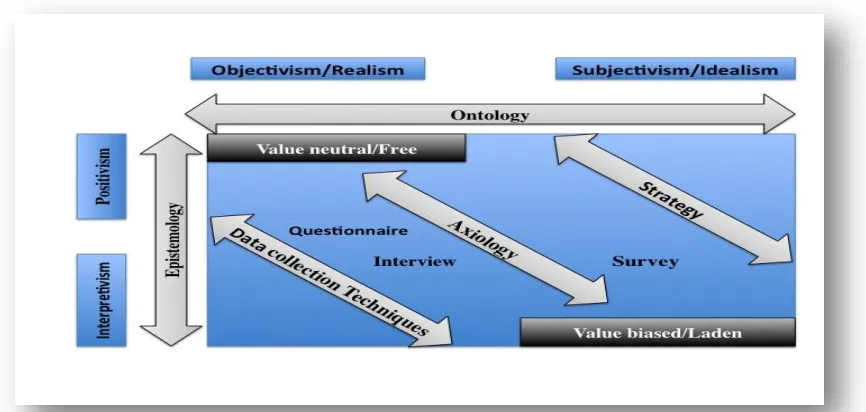
4.2 Philosophy ... 43
4.2.1 Ontology... 43
4.2.2 Epistemology ... 44
4.2.3 Axiology... 45
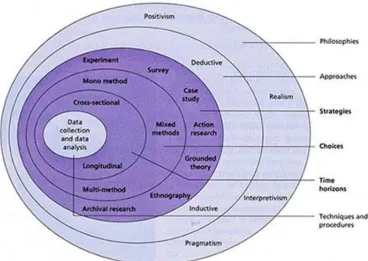
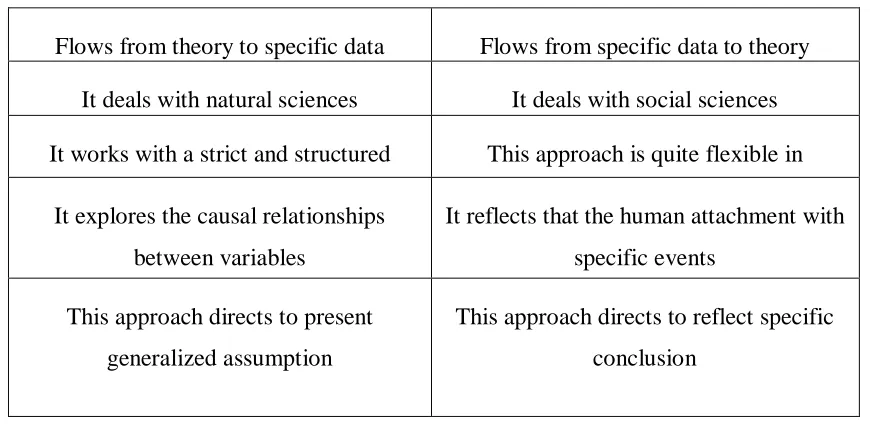
4.3 Research approach ... 46
4.3.1 Deduction ... 46
VII
4.3.3 Abduction ... 47
4.4 Strategy... 48
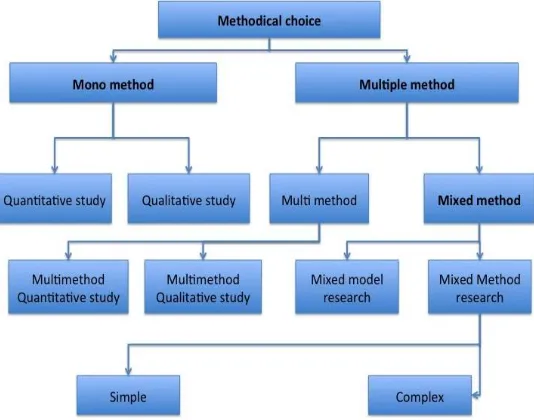
4.5 Methodological choices ... 49
4.6 Mixed method approach ... 49
4.7 Time horizon... 50
4.8 Data collection method ... 51
4.8.1 Literature review ... 51
4.8.2 Qualitative data collection... 51
4.8.3 Quantitative data collection ... 53
4.9 Data analysis ... 57
4.10 Data validity and reliability ... 58
4.11 Ethical consideration ... 59
4.12 Summary ... 59
Chapter 5. Qualitative Data: Semi-Structured Interview ... 60
5.1 Introduction ... 60
5.2 Research Interview and analysis ... 60
5.3 The impact of disputes on the Saudi construction projects ... 62
5.3.1 Dispute Impact on Time ... 62
5.3.2 Dispute Impact on cost... 63
5.3.3 Disputes Impact on Quality ... 65
5.4 Types of Disputes’ causes... 66
5.4.1 Financial disputes ... 67
5.4.2 Contractual disputes... 67
5.4.3 Owner disputes ... 68
5.4.4 Design ... 68
5.4.5 People Behaviour ... 68
5.4.6 Contractor disputes ... 69
5.4.7 Project Related ... 70
5.4.8 External Issues ... 70
VIII
5.6 Critical Success Factors for ADR in Saudi Construction Project... 77
5.7 Barriers to using ADR in Saudi Construction Project ... 78
5.7.1 Contractual dispute barriers ... 79
5.7.2 Government barriers ... 80
5.7.3 Cultural Barriers ... 80
5.7.4 Development and Rehabilitation Barriers ... 81
5.8 Summary ... 82
Chapter 6. Quantitative: Data Analysis ... 83
6.1 Introduction ... 83
6.2 Survey participants ... 83
6.3 Participants’ general information ... 84
6.4 The impact of dispute upon time, cost and quality ... 92
6.5 Types of Disputes’ causes in Saudi Construction Project ... 93
6.6 Method of dispute resolution in Saudi construction projects ... 101
6.7 Critical success factors for Alternative dispute resolution ... 106
6.8 Barriers to using ADR in Saudi construction project ... 108
6.9 Comparison between the dispute resolution method with the type causes of disputes .. 112
Chapter 7. Model of Critical Success Factors ... 120
7.1 Introduction ... 120
7.2 ISM Overview ... 120
7.3 ISM Methodology ... 121
7.4 CSF Model Development ... 122
7.4.1 Structural Self-Interactive Matrix (SSIM) ... 122
7.4.2 Initial Reachability Matrix (IR) ... 125
7.4.3 Level Partitions ... 127
7.4.4 Conical Matrix ... 129
7.4.5 ISM Model ... 129
7.4.6 Classification of Factors Using MICMAC Analysis ... 132
IX
Chapter 8. Dispute resolution framework ... 137
8.1 Introduction ... 137
8.2 Types of Disputes’ causes... 137
8.2.1 Causes of disputes ... 138
8.3 Critical success factors for alternative dispute resolution ... 139
8.3.1 Introduction ... 139
8.3.2 Critical success factors for alternative dispute resolution... 140
8.3.3 Critical success factors for alternative dispute resolutions (Speed and Economy) .. ... 140
8.4 Method of dispute resolution ... 141
8.4.1 Introduction ... 141
8.4.2 Method of dispute resolution in relation to speed ... 141
8.4.3 Method of dispute resolution in relation to economy ... 142
8.4.4 Method of dispute resolution in relation to both speed and economy ... 142
8.5 Types of Disputes’ causes and the relationship with methods of dispute resolution ... 143
8.5.1 Introduction ... 143
8.5.2 Financial disputes, contractual disputes, owner-related disputes, design-related disputes, disputes arising from people’s behaviour, contractor-related disputes, project-related disputes and external disputes’ relationship with methods of dispute resolution ... ... 144
8.6 The relationship between critical success factors for alternative dispute resolutions with method of dispute resolution ... 145
8.6.1 Introduction ... 145
8.6.2 Critical success factors of alternative dispute resolutions’ relationship with ADR . ... 145
8.6.3 Critical success factors of alternative dispute resolutions’ relationship with litigation ... 146
8.7 Dispute resolution framework ... 147
8.8 Framework validation ... 148
8.8.1 Introduction ... 148
8.8.2 Presentation ... 149
X
8.9 Conclusion... 156
Chapter 9. Discussion, Recommendation and Conclusion ... 157
9.1 Introduction ... 157
9.2 Research objectives achievement ... 157
Objective 1: To identify the impact of disputes and Types of Disputes’ causes in Saudi construction projects... 158
Objective 2: To explore the existing practice of the methods of dispute resolution in Saudi construction projects... 162
Objective 3: To investigate critical success factors for alternative dispute resolution and barriers to alternative dispute resolution usage to solve disputes in Saudi construction projects. ... 163
Objective 4: To develop a dispute resolution framework. ... 164
Objective 5: To evaluate and validate the dispute resolution framework. ... 165
9.3 Contribution to knowledge ... 168
9.4 Limitations ... 169
9.5 Future research ... 169
9.6 Conclusion... 170
References ... 171
Appendex 1 ... 183
Appendex2 ... 184
Appendex3 ... 185
XI
List of Figures
FIGURE 2-1:RELATIONSHIPS BETWEEN CONFLICT,CLAIMS, AND DISPUTES (ADAPTED FROM KUMARASWAMY 1997) 13
FIGURE 2-2:TYPES OF DISPUTES’ CAUSES (SOURCE:ACARYA AND LEE,2006). ... 16
FIGURE 2-3: INITIAL CONCEPTUAL FRAMEWORK ... 27
FIGURE 3-1:MAP OF THE KSA... 31
FIGURE 3-2:GDPGROWTH IN SAUDI ARABIA ... 32
FIGURE 3-3:SAUDI ARABIAN ASSETS... 33
FIGURE 3-4:CONTRACT PROJECT VALUE BREAKDOWN BY SECTOR IN THE KSA ... 34
FIGURE 3-5:STRATEGIES USED FOR THE PURPOSE OF CONTRACT (AGWU,2012) ... 36
FIGURE 4-1:THE RESEARCH ONION MODEL (SAUNDERS ET AL.,2012) ... 43
FIGURE 4-2:THE RESEARCH PHILOSOPHY (SEXTON,2003) ... 46
FIGURE 4-3:INDUCTIVE,DEDUCTIVE AND ABDUCTIVE APPROACH... 47
FIGURE 4-4:METHODICAL RESEARCH CHOICES (SAUNDERS ET AL.,2012) ... 49
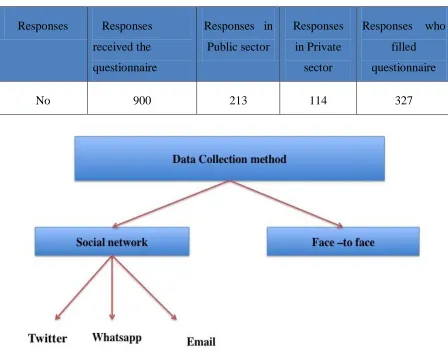
FIGURE 4-5:DATA COLLECTION METHOD ... 56
FIGURE 5-1:INTERVIEWEES’ RELATIONSHIP TO THE NUMBER OF RESOLVING DISPUTES WITH TIME ... 63
FIGURE 5-2:INTERVIEWEES IN RELATION TO THE NUMBER OF RESOLVING DISPUTES IN COST ... 64
FIGURE 5-3:INTERVIEWEES’ IN RELATIONS TO THE NUMBER OF RESOLVING DISPUTES WITH QUALITY ... 65
FIGURE 5-4:DISPUTES’ RELATION TO TIME, COST AND QUALITY ... 66
FIGURE 5-5:TYPE CAUSES OF DISPUTES IN SAUDI CONSTRUCTION PROJECT... 71
FIGURE 5-6:METHOD OF DISPUTE RESOLUTION IN SAUDI CONSTRUCTION PROJECT ... 77
FIGURE 5-7:BARRIERS TO USING ADR IN SAUDI CONSTRUCTION PROJECT ... 79
FIGURE 6-1:PARTICIPANTS’ NATIONALITY ... 84
FIGURE 6-2:DISPUTES THAT FACE PARTICIPANTS IN SAUDI CONSTRUCTION PROJECTS. ... 85
FIGURE 6-3:FREQUENCY OF DISPUTES’ RESOLUTION IN SAUDI CONSTRUCTION PROJECT ... 86
FIGURE 6-4:CLASSIFICATION OF PARTICIPANTS ACCORDING TO SAUDI CONSTRUCTION PROJECT ... 87
FIGURE 6-5:PARTICIPANTS’ EXPERIENCE IN SAUDI CONSTRUCTION PROJECT ... 87
FIGURE 6-6:CLASSIFICATION OF PARTICIPANTS ACCORDING TO BACHELOR DEGREE ... 88
FIGURE 6-7:PERCENTAGE WHICH DESCRIBES ORGANISATIONS ... 89
FIGURE 6-8:PERCENTAGE OF PARTICIPANTSS SECTORS IN SAUDI CONSTRUCTION PROJECTS ... 89
FIGURE 6-9:PERCENTAGE OF PARTICIPANTS ACCORDING TO EDUCATIONAL LEVEL IN SCE ... 90
FIGURE 6-10:PERCENTAGE OF DISPUTES DANGERS IN SAUDI CONSTRUCTION PROJECTS ... 91
FIGURE 6-11:PERCENTAGE OF PARTICIPANTS’ SATISFIED WITH METHOD OF DISPUTE RESOLUTION IN SAUDI CONSTRUCTION PROJECT ... 91
FIGURE 6-12:COMPARING THE DANGER OF DISPUTES AND THE IMPACT OF DISPUTES ON TIME, COST AND QUALITY ... 92
XII
FIGURE 6-14:PERCENTAGE OF CAUSES OF DISPUTES (CONTRACTUAL ISSUES) ... 95
FIGURE 6-15:PERCENTAGE OF CAUSES OF DISPUTES (OWNER) ... 96
FIGURE 6-16:PERCENTAGE OF CAUSES OF DISPUTES (DESIGN) ... 97
FIGURE 6-17:PERCENTAGE OF CAUSES OF DISPUTES IN SCP(PEOPLE BEHAVIOUR) ... 97
FIGURE 6-18:PERCENTAGE OF CAUSES OF DISPUTES (CONTRACTOR) ... 98
FIGURE 6-19:PERCENTAGE OF CAUSES OF DISPUTES (PROJECT RELATED) ... 99
FIGURE 6-20:PERCENTAGE OF CAUSES OF DISPUTES IN SAUDI CONSTRUCTION PROJECT (EXTERNAL) ... 100
FIGURE 6-21:RANKING OF THE CAUSES OF DISPUTES IN SAUDI CONSTRUCTION PROJECT ... 100
FIGURE 6-22:COMPARING THE PERCENTAGE OF USE DRM AND THE PARTICIPANTS WHO WORK IN THE PUBLIC SECTORC ... 101
FIGURE 6-23:COMPARING THE PERCENTAGE OF USE OF DRM AND THE PRIVATE SECTOR WORKER ... 102
FIGURE 6-24:PERCENTAGE TIME TO DURATION OF METHOD OF DISPUTE RESOLUTION ... 103
FIGURE 6-25:COMPARING THE PERCENTAGE THE COST OF DRM USED IN THE SCE AND THE LEVEL OF EDUCATION . 105 FIGURE 6-26:RANKING OF CRITICAL SUCCESS FACTORS FOR ADR IN SAUDI CONSTRUCTION PROJECTS ... 107
FIGURE 6-27:SIGNIFICANT BARRIERS PREVENTING THE USE OF ADR IN SAUDI CONSTRUCTION PROJECT (CULTURE) . 108 FIGURE 6-28:SIGNIFICANT BARRIERS THAT PREVENT THE USE OF ADR IN SAUDI CONSTRUCTION PROJECT (DEVELOPMENT AND REHABILITATION) ... 109
FIGURE 6-29:RANKING BARRIERS THAT PREVENT THE USE OF ADR IN SAUDI CONSTRUCTION PROJECT (GOVERNMENTAL, CONTRACTUAL, CULTURAL AND DEVELOPMENT AND (REHABILITATION)) ... 110
FIGURE 6-30:PERCENTAGE OF SIGNIFICANT CATEGORY BARRIERS PREVENTING THE USE ADR IN RELATION TO OWNER, CONTRACTOR AND CONSULTANT ... 111
FIGURE 6-31:COMPARING THE PERCENTAGE OF THE DISPUTE RESOLUTION METHOD FOR THE CURRENT FINANCAL CAUSES OF DISPUTES IN PRIVATE SECTOR AND BACKGROUND CLASSIFICATION ... 112
FIGURE 6-32:COMPARISON OF THE PERCENTAGE OF THE DISPUTE RESOLUTION METHOD FOR THE CURRENT CAUSES OF CONTRACTUAL OF DISPUTES IN PRIVATE SECTOR AND BACKGROUND CLASSIFICATION ... 113
FIGURE 6-33:COMPARING THE PERCENTAGE OF THE DISPUTE RESOLUTION METHOD FOR THE CURRENT CAUSES (OWNER AND DESIGN) OF DISPUTES IN PRIVATE SECTOR AND BACKGROUND CLASSIFICATION ... 114
FIGURE 6-34:COMPARING THE PERCENTAGE OF THE DISPUTE RESOLUTION METHOD FOR THE CURRENT CAUSES (PEOPLE BEHAVIOUR) OF DISPUTES IN PRIVATE SECTOR AND BACKGROUND CLASSIFICATION ... 115
FIGURE 6-35:COMPARING THE PERCENTAGE DISPUTE RESOLUTION METHOD FOR THE CURRENT CAUSES (CONTRACTOR AND PROJECT RELATED ) OF DISPUTES IN PRIVATE SECTOR AND BACKGROUND (CLASSIFICATION) ... 116
FIGURE 6-36:COMPARING THE PERCENTAGE OF THE DISPUTE RESOLUTION METHOD FOR THE CURRENT CAUSES (EXTERNAL) OF DISPUTES IN PRIVATE SECTOR AND BACKGROUND CLASSIFICATION ... 117
XIII
FIGURE 7-1:ISMMODEL. ... 132
FIGURE 7-2:CLASSIFICATION FACTORS (MICMACANALYSIS)... 136
FIGURE 8-1:TYPES CAUSES OF DISPUTES ... 137
FIGURE 8-2:THE CRITICAL SUCCESS FACTORS FOR ALTERNATIVE DISPUTE RESOLUTIONS ... 140
FIGURE 8-3::DISPUTE RESOLUTION METHODS (SPEED)... 142
FIGURE 8-4:DISPUTE RESOLUTION METHODS (ECONOMY) ... 142
FIGURE 8-5:DISPUTE RESOLUTION METHODS (SPEED AND ECONOMY) ... 143
FIGURE 8-6:THE RELATIONSHIP BETWEEN FINANCIAL, CONTRACTUAL, OWNER-RELATED, DESIGN-RELATED, PEOPLE’S BEHAVIOUR-RELATED, CONTRACTOR-RELATED, PROJECT-RELATED AND EXTERNAL DISPUTES AND METHOD OF DISPUTE RESOLUTION ... 144
FIGURE 8-7:CRITICAL SUCCESS FACTORS OF ALTERNATIVE DISPUTE RESOLUTIONS’ RELATIONSHIP WITH ADR ... 146
FIGURE 8-8:CRITICAL SUCCESS FACTORS IN ALTERNATIVE DISPUTE RESOLUTIONS’ RELATIONSHIP WITH LITIGATION 147 FIGURE 8-9:DISPUTE RESOLUTION FRAMEWORK ... 148
FIGURE 8-10:LEVEL OF UNDERSTANDING OF THE PRESENTATION ... 150
FIGURE 8-11:THE OUTCOME THE TYPES CAUSES OF DISPUTES ... 150
FIGURE 8-12:THE TYPES CAUSES OF DISPUTES ... 152
FIGURE 8-13:THE DISPUTE RESOLUTION METHOD... 152
FIGURE 8-14:THE ARRANGEMENT OF THE METHOD OF DISPUTE RESOLUTIONS ... 153
FIGURE 8-15:THE OUTCOME AND ARRANGEMENT OF THE CRITICAL SUCCESS FACTORS FOR ADR... 153
FIGURE 8-16: THE RELATIONSHIPS BETWEEN TYPE CAUSES OF DISPUTES AND METHOD OF DISPUTE RESOLUTION... 154
FIGURE 8-17: THE RELATIONSHIPS BETWEEN DISPUTE RESOLUTION METHOD AND ALTERNATIVE DISPUTE RESOLUTION ... 154
XIV
List of Tables
TABLE 1-1:GLOBAL CONSTRUCTION DISPUTES DATA (ALLEN ET AL.,2013). ... 5
TABLE 2-1: TYPES OF DISPUTES’ CAUSES (SOURCE:ADAPTED FROM FENN,1997 AND FENN,2006) ... 15
TABLE 2-2: SUMMARY CAUSES OF DISPUTES ADOPTED FROM KUMARASWAMY ET AL.,(1997) ... 16
TABLE 2-3:SUMMARY OF CRITICAL SUCCESS FACTORS FOR ADR(SOURCE:ADAPTED FROM CHEUNG AND SUEN, 2002). ... 25
TABLE 4-1: SHOWS HOW EASTERBY-SMITH ET AL.(2012) DESCRIBED THE DIFFERENCES BETWEEN POSITIVIST AND SOCIAL CONSTRUCTIONIST (INTERPRETIVIST) RESEARCH. ... 45
TABLE 4-2:INDUCTIVE AND DEDUCTIVE APPROACH:THE KEY DIFFERENCES (SAUNDERS ET AL.,2012). ... 46
TABLE 4-3:STRENGTHS AND WEAKNESSES OF QUALITATIVE AND QUANTITATIVE RESEARCH (EASTERBY-SMITH ET AL., 2012) ... 50
TABLE 4-4:QUESTIONNAIRE SAMPLE... 56
TABLE 5-1:INTERVIEWEES’ PROFILES ... 61
TABLE 7-1:STRUCTURAL SELF-INTERACTION MATRIX (SSIM). ... 124
TABLE 7-2:INITIAL REACHABILITY MATRIX ... 126
TABLE 7-3:FACTORS (10 AND 11)ITERATION 1. ... 127
TABLE 7-4:FACTORS (4 AND 9)ITERATION 2... 127
TABLE 7-5:FACTOR (5)ITERATION 3... 128
TABLE 7-6:FACTOR (8)ITERATION 4... 128
TABLE 7-7:FACTOR (7)ITERATION 5... 128
TABLE 7-8: FACTOR (6)ITERATION 6. ... 128
TABLE 7-9: FACTOR (3)ITERATION 7. ... 129
TABLE 7-10:FACTOR (2)ITERATION 8... 129
TABLE 7-11:FACTOR (1)ITERATION 9... 129
TABLE 7-12:DRIVING POWER AND DEPENDENT POWER FOR FACTORS. ... 133
TABLE 8-1:TYPES CAUSES OF DISPUTES ... 138
TABLE 8-2:DESCRIPTION OF CRITICAL SUCCESS FACTORS FOR ALTERNATIVE DISPUTE RESOLUTIONS (SPEED AND ECONOMY) ... 141
XV
Acronyms
AALCO Asian African Legal Consultative Organisation ADR Alternative dispute resolution
CEO Consulting Engineering Office DAB Dispute Adjudication Board
DRB Dispute Review Board
DRM Disputes Resolution Method
FIDIC International Federation of Consulting Engineer
GCC Gulf Cooperation Council
GDP Gross Domestic Product
ICA International Court of Arbitration
ICA International Commercial Arbitration
IMF International Monetary Fund ISM Interpretive Structural Modelling
KSA Kingdom of Saudi Arabia
LCIA London Court of International Arbitration
PWC Public Work Contract SAR Saudi Arabian Riyal
SCE Saudi Council of Engineers SCP Saudi Construction Project
UK United Kingdom
US United State
YoY Year-one Year
1
Chapter 1.
Introduction
1.1 Introduction
This chapter presents research background, rationale of research, followed by aim and objectives. Key literature is presented, in the area of disputes resolution. Need for this research is highlighted, followed by discussion on research aim and objectives. Scope and limitation of the study is also discussed. The chapter also contains an illustration of the expected research contributions and structure of the thesis and the research gap is viewed substantially in relation to the literature on dispute resolution in construction project.
1.2 Research Background
2
The construction sector incorporates a variety of divergent projects based on structure and planning. The lack of standardization and a set methodology are the prime characteristics of the industry. There are a number of technical experts and engineers involved, in the development and planning process of construction projects. Therefore, coordination, timely dispute resolution and effective teamwork play a vital role in the successful implementation of such projects. The construction of civil structures usually involves a considerable period of time, thereby affecting long-term planning and estimated demand-supply for such projects (Wood, 2001). According to Yiu and Cheung (2006), there is a likelihood of numerous disputes due to the conflicting interests of various parties involved in the project.
Disputes might adversely affect the interest of many stakeholders, resulting in decreased profitability and increase in the overall expenditure (Awakul & Ogunlana, 2002). Lack of research dominates the construction industry in Saudi Arabia with respect to disputes. Fenn (2007) has acknowledged a significant gap in terms of the knowledge available on the sources, cause and effects of disputes in the construction industry. Serious disputes concerning construction contracts have become increasingly common within KSA, where the construction industry is one of the key economic sectors (Jannadia et al, 2000). However, it suffers some major problems that affect its role in building up the national economy. Assaf et al. (1995) found and reported that contract disputes were one of the main causes of delay in large building projects in KSA.
3
In summary, research background is based on literature review. It focuses mainly on four areas of research: type causes of dispute, methods of dispute resolution, critical success factors for alternative dispute resolution and barriers from used the alternative dispute resolution. Type of disputes (Cakmak and Cakmak, 2013), causes of disputes (Kumaraswamy, 1997), methods of dispute resolution (Murdoch and Hughes, 2008), critical success factors for alternative dispute resolution (Harmon, 2001; Harmon, 2002) and barriers from used the alternative dispute resolution (Abdullah, 2015).
1.3 Justification of Research
The delay resulting from the acts of the stakeholders may cause great disputes and conflicts among the various parties in Saudi public and private sector construction projects (Assaf and Al-Hejji, 2005). The disputes, if not resolved at the early stage, may become an impediment to the effective completion of the project. Similar difficulties have been observed in the Saudi construction sector. According to Fenn (2007), plenty of valuable resources are dissipated due to the repeated occurrences of disputes during the project. Besides increasing the duration of the construction project, they also lead to an increase in the overall expenditure and disruption of healthy relationships between key project stakeholders.
The literature review deals with the rising incidence of construction disputes across the world. As reported by (Allen et al., 2013), the number of disputes in the construction sector globally is witnessing an upward trend, leading to cost and time overruns primarily due to the time involved in resolving them. It took nearly 10 months to resolve a dispute in 2011, while the time limit increased to 12 months in 2012. The trend clearly reflects the rising incidence of disputes, with an average time of 9 months to resolves disputes in 2010 Allen (Allen et al., 2013). Fortunately, though the time involved has reduced, the average value of construction disputes has fallen as well, from US $32.2 million in 2011 to US $31.7 million.
4
continue for years to come, the possibility for high volume of disputes cannot be overruled (Allen et al., 2013).
The past two decades in the construction sector has witnessed an increasing trend in the level of disputes. Huge loss of money, effort and time are the grave consequences of such disputes. The KSA construction sector presents an ideal example of the problem (Jannadia et al., 2000). Further, Fenn (2007) pointed out that there is not much research done in the subject area of dispute resolution in the construction sector, thus, increasing the scope for investigation. That could deal with disputes with the approach leads to a better solution to this by identifying the types and causes of disputes by which they can find the method of disputes resolution and identify the critical success factors affecting for alternative dispute resolution and barriers that prevent using the alternative dispute resolution.
Jannadia (2000) investigated different types causes of disputes prevalent in KSA. He concluded that disputes have become increasingly common since the 1980s. For example, in 2006, 45% of the litigation cases within the Shari’ah courts and the Board of Grievances were concerned with construction disputes or projects (Al-Rabiah, 2006). Review of cases dealt by Saudi Ministry of Justice (2014) indicates a similar trend, with an increase in the number of issues related to construction sector. According to Ministry of Justice in KSA (2014) data, 1205 disputes related to construction projects were brought forth, whereas in 2013, this number was 1074. This data related to key dispute issues in five main cities of Riyadh, Jeddah, Makkah, Madinah and Dammam (Ministry of Justice, 2014).
5
Table 1-1: Global construction Disputes Data (Allen et al., 2013).
Region Dispute values (US$ millions) Length of dispute (months)
2010 2011 2012 2010 2011 2012
Middle East 56.3 112.5 65 8 9 14
Asia 64.5 53.1 39.7 11 12 14
US 64.5 10.5 9 11 14 11
UK 7.5 10.2 27 6 8 12
Mainland Europe 33.3 35.1 25 10 11 6
Global Average 35.1 32.2 31.7 9 10 12
KSA provided a unique construction environment, with a heavy reliance on foreign contractors and immigrant workforce. Literature review indicates that there have been no clear industry-specific policies and guidelines on how construction disputes involving the State and foreign contractors should be dealt with in KSA, including no attempt to emerge with adequate explanations and solutions to deal with disputes. It can be argued within KSA construction industry, best practices to solve disputes cannot be imported as it is, from other countries due to unique working culture, polices and procedures used in KSA Also, there is dearth of published research and information to help understanding the problem and providing practical framework to help solving dispute issues in construction industry. This research study focuses on addressing aforementioned concerns, and make recommendations for effective measures to improve future performance of the construction projects leading to fewer disputes. A clearly laid out framework analysing various factors contributing to disputes will help enhance transparency in the disputes resolution process. For foreign contractors, international arbitration may not necessarily be the most cost-effective and useful means of resolving disputes. Considering and encouraging dispute resolution methods, lead to a reduction in costs and delays and the preservation of business relationships.
1.4 Research Questions
This research aim to answer following research questions:
1. What is the impact of disputes and type causes of disputes in Saudi Construction projects?
2. What is existing practice of dispute resolution within Saudi Construction Projects? 3. What are the Critical Success Factors for Alternative dispute resolution and the
challenges using the Alternative dispute resolution in Saudi Construction Project? 4. How could we improve efficiency of dispute resolution through identifying the type
6 1.5 Research Aim and Objectives
From the questions emerging from the literature review, this research aim to develop dispute resolution framework to improve the efficiency of resolving disputes in Saudi construction projects. From this, the following research objectives have been set:
1. To identify the impact of disputes and type causes of disputes in Saudi Construction projects.
2. To explore the existing practice of the method of dispute resolution in Saudi construction project.
3. To investigate Critical Success Factors for alternative dispute resolution and barriers to alternative dispute resolution usage to solve disputes in Saudi Construction Projects. 4. To develop dispute resolution framework to improve the efficiency of method of
disputes resolution in Saudi construction projects.
5. To evaluate and validate the dispute resolution framework in Saudi construction projects through ISM and academics, arbitrators and experts feedback.
6. To provide recommendations on the best method of dispute resolution in Saudi Construction Projects.
1.6 Scope of the Research and Limitation
The scope of the study is described in this section with respect to the impact of type and causes of disputes, dispute resolution method, the critical sucess factors for alternative dispute resolution and the barriers using the alternative dispute resolution, parties involved, projects and actual locations.
This research is focusing mainly on type of causes of dispute, method of dispute resolution, the critical success factors for alternative dispute resolution and the relation between them in the Saudi construction projects. The project is also considered with large project size project of the public industry. The main drives for this scope is that the main disputes occur on large project size on Saudi construction project in public and private sector.
7
a large country with several companies and government institutions, the research was focusing on Saudi Council of Engineers.
1.7 Expected Contribution to Knowledge
Existing studies on disputes don't adequately address specifics social-political problems specifics to KSA context. Where KSA legal system is different from legal systems used else where in the world. Additionally, this research helps to develop a better understanding of contemporary challenges and perspectives of the Saudi expert. The main contributions of this research are, firstly, to the field of dispute resolution practice in Saudi construction projects. The study will contribute to the body of knowledge in the field of method of dispute resolution in relation to Saudi construction projects.
The study provides descriptive data analysis on the affects of disputes on time, cost and quality. It also offers insights into existing dispute resolution processes and the causes of disputes. Method of dispute resolution framework has been developed to improve the efficiency of disputes resolution by identifying the critical success factors for alternative dispute resolution and also the barriers that prevent using the alternative dispute resolution in Saudi construction project.
1.8 Outline of the Research Methodology
8 1.9 Structure of the thesis
Chapter 1. Introduction: It is a brief overview of the research study, specifically covering the research problem, the aim and objectives and the research methodology and procedure and thus, laying the foundation for all further discussions Scope and limitation of the study is also discussed The chapter also contains the outline of the expected research contributions.
Chapter 2. Dispute in Construction projects -: This chapter deals with the literature on disputes relating to the Saudi construction project public and private sector focusing on a review on of impact and causes of disputes and method of dispute resolution and the critical success factor for the alternative dispute resolution and barriers.
Chapter 3. Overview of disputes in the context of Saudi Construction industry: It focuses on the Saudi construction project including the Middle East countries and construction, the background of Saudi, the Saudi of economy, the Saudi construction project, the procurements in Saudi, the contracts in Saudi, the conflicts, claims and disputes in Saudi, the method of dispute resolution in Saudi and finally the Saudi council of engineers.
Chapter 4. Research Methodology: The section discusses the methodology and philosophy of the research. It further elaborates the various procedures used for conducting research and justification for adopting the methods, and how data has been collected and questions answered. Chapter 5. Qualitative Data and Analysis: This stage focuses on the qualitative aspects of the conducted for the purpose of the research study. It further identifies the best practices being followed by the interviewed academics and experts and arbitrators through which focusing on the current situation in Saudi construction project.
Chapter 6. Quantitative Data and Analysis: presents the results of the quantitative of the conducted around the present state of disputes, analysing the of various of type causes of disputes and the method of dispute resolution and the critical success factors for alternative dispute resolution and the barriers parent using the alternative dispute resolution.
9
Chapter 8: Development of the Dispute resolution Framework and Validation: This Chapter focuses on the development of dispute resolution framework to improve the efficiency dispute resolution in Saudi construction project based on the analyse the quantitative and qualitative findings of the research study. This is followed by the validation of the qualitative and quantitative data obtained through the academics, arbitrators and expert feedback.
10
Chapter 2.
Dispute in Construction projects
2.1 Introduction
Herein it is proposed to focus on the examination of the process of dispute resolution in the construction projects, and as such it is necessary to review the academic literature in this area of the practical application of law to determine methods of avoidance of conflict and effective settlement. The consideration of practical approaches will outline the process by which this research is conducted, particularly into areas where there has, in the opinion of the author, been insufficient prior analysis of construction project based disputes. In the course of this examination, the limited availability of academic research into this particular field of conflict resolution has been apparent which this study can seek to assess and address. The first section of this thesis will consider the range of concepts and definitions of disputes, followed, in Section II, by an assessment of the impact of disputes on a construction project. Section III will define the differing types and causes of disputes, and, in section IV, analyse the effectiveness of current methods of dispute. Thereafter, it will be pertinent, in Section V to assess the critical success factors for alternative dispute resolution. Finally, the barriers to the use of alternative dispute resolution processes will be examined and their success in construction dispute conflicts assessed with proposals for improvement.
2.2 Definitions
Parties working in the construction sector remain confused in the identification of differences in the actual terminology related to construction conflicts (Yates et al., 2003). It is therefore attempted in this section to provide an overview of such vocabulary as conflict, claims, disputes and dispute avoidance, to facilitate understanding of how these words are generally utilised by construction professionals.
2.2.1 Conflicts
Simply, conflict can be described as the opposing interests of two or more parties in the aim and conduct of a project agreement (Whitfield, 2012). Although many are capable of resolution in a relatively harmonious manner, often by discussion and persuasion, they can be exacerbated as a result of the prior relationship difficulties between parties (Kumaraswamy, 1997). Fenn et al (1997) state that conflict and dispute resolution should be viewed as two distinct stages,
11
the intent that escalation and harm to the project is prevented. In the construction industry, Yiu and Cheung (2006) consider that conflicts will be inevitable due to the existence of inherent differences of interests between the different parties involved. Conflicts of interest are most commonly considered to be the main driver of disputes and occur when there is a difference in approach, behaviour or even time or place between the parties (Chan, 2008). This is the perspective, which is adopted by the author in the conduct of this study.
2.2.2 Claims
Claims are distinguished in the contexts of (i) “claim entitlement” and (ii) a “claim for breach of contract”; the first refers to those made within the operation of the contract, which are not disputed, generally form part of the obligations, and do not result in a dispute, and the other a breach of the agreement by one or more party (Love et al., 2008). Eaton et al., 2006 states that should a dispute result in a formal complaint or legal proceedings they will become both time-consuming and costly, emphasising the need for avoidance. Studies on the classification of construction disputes by contractors against clients in the UK, USA and Commonwealth conclude that there are two main legal bases for financial claims (Wallace, 1986; Yogeswaran, 1997). The first is described as a claim for damages for breaches of contract by the employer. These may be subdivided into (i) breaches affecting contract performance but where the project proceeds to completion, (ii) those which result in contract termination before completion, and (iii) breaches of the payment obligations of the employees. Secondly, additional payments may become due under a section of the contract provisions, where they facilitate variations, measurements in unit-price contracts, and those due under contractual miscellaneous provisions such as price variations and physical conditions (Wallace, 1986; Yogeswaran, 1997).
12
Time is a crucial factor in construction projects, in the performance of obligations, especially where they must be completed within an agreed period. In English common law, a contract condition such as a clear and specified completion date is a physical for a breach of that condition to offer a pretext for legal action (Sims and Bunch, 2003). According to Arditi and Patel (1989), a construction claim for compensation may be described as a demand by a contractor for final reimbursement for further work in addition to that initially contracted for, or costs which result from actions not foreseen in the original agreement which causes delay.
2.2.3 Disputes
Black (2009) defines dispute is a controversy or conflict of rights or claims, an assertion of a demand, right or claim by one party which is met by converse allegations or claims by another. Reid and Ellis (2007) however suggest that as a result of a lack of a definitive meaning of the term ‘dispute’, there is a gap in the necessary understanding of the concept. Yates (2003) therefore defines a dispute more simply, stating that it is a claim which is not resolved between two or more parties, and is thus escalated. This is problematic for each party involved, because, as noted by Gould et al. (1999) and Fenn (2007), such disputes are both time consuming and costly to the involved parties, and additionally jeopardise a constructive and amicable relationship between the parties.
13
Figure 2-1: Relationships between Conflict, Claims, and Disputes (Adapted from Kumaraswamy 1997)
2.2.4 Dispute Avoidance
The establishment of definitions assists in determining the most effective choice of method to avoid the development of a dispute to an expensive stage which harms the progress of the project. Kirk (2003) states that effective mechanisms are required to identify possible conflicts at early stages of potential disagreement to facilitate the control of disputes and minimise costs by avoidance. Such techniques often focus on ensuring that documentation pertinent to the disagreement is available and disclosed, schedules and costs are controlled, quality is managed and the relationship is maintained (Ng et al., 2007). Researchers have attempted to explore factors and causes of conflicts, to identify and determine the application of a variety of conflict resolution and avoidance strategies specific to the industry (Im, 2006; Stanslaus, 2011). There has been a more recent shift towards dispute avoidance and minimisation in the form of review boards and resolution advisors in the construction industry (Ng et al., 2006 ; Wall, 1994). Perhaps it can also be considered that the most adequate and efficient way of coping with the risk of disputes is through avoiding them altogether, where possible (Stets et al., 1991).
2.3 Impact of Disputes on Construction Projects
14
more simply achieved, namely their inception. The construction industry is said, amongst all industries, to lose most in terms of time as a result of industrial disputes (Gutierrez et al., 2013). Furthermore, a study in UK by (Blake et al., 2014). found that the most significant contributing factors to disputes are schedule and cost overruns. It is now evident that the Middle East is now reporting the highest levels of cost disputes in the construction industry compared to the UK, Europe, USA and Asia (Allen et al., 2012).
Unarguably, disputes in the constructive industry will result in a time consuming, unpleasant and expensive experience for all parties involved (Fenn, 2007). Researcher in the United Arab Emirates report that disputes and claims equate to 15% of a building project’s value (Zaneldin, 2002). Overall, the underlying causes of construction project disputes are related to the cost, quality, time and safety, which are often the main objectives in any project (Fenn ad Gameson, 1991; Kumaraswamy, 1998).
2.4 Types of Disputes’ causes
15
Table 2-1: Types of Disputes’ causes (Source: Adapted from Fenn, 1997 and Fenn, 2006) s
rohtuA Types of Disputes’ causes
Heath et al (1994) Contract terms, payment, variation, time nomination, re-nomination and information.
Diekmann et al (1994)
People, processes and products.
Rhys Jones (1994) Management, culture, communications, design, economics, tendering pressures, lay, unrealistic expectations, contracts and
workmanship. Bristow and
Vasilopoulous(1995)
Unrealistic expectations, contract documents, communication lack of team spirit and change.
Molenaaret al(2000) People issues, process issues and project issues. Madden (2005) Legal, technical and quantum disputes.
Edwin (2005) Contractual, cultural and legal
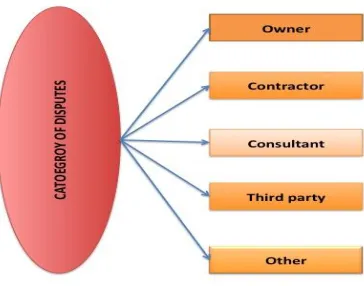
Acharya (2006) Other, owner, contractor, consultant and third party based disputes. Helen (2007) Structure, process, people, external and internal disputes. Cakmak (2013) Owner related disputes, contractor related disputes, design related
disputes, contract related disputes, human behaviour related disputes, project related disputes and external factors
Mitkus (2013) Other, owner, contractor, consultant and third party based disputes. Elziny (2015) Financial issues, Contract Management, Contract documents,
Project related issues and Other Reasons.
16
Figure 2-2: Types of Disputes’ causes (Source: Acarya and Lee, 2006).
The construction industry is one of the most active and buoyant industries in the global sphere, and disputes contain within their nature risks and threats to the availability of technology, resources, expertise et al which potentially damages the development and expansion of the industry as a whole. It is becoming increasingly difficult and complicated for constructors to attend to multiple projects due to the need for adaptation to the numerous unforeseen adjustments with which a construction team must contend (Chan et al., 2004). Much research has been conducted to identify the factors which contribute to construction industry disputes and a number of key studies from various countries have been examined to facilitate understanding of the context in which disagreements arise. Table 2-2 below is adapted from Kumaraswamy (1997) et al, to summarise the findings of the major causes of disputes arising in different jurisdictions (Cakmak, 2013).
Table 2-2: Summary causes of disputes adopted from Kumaraswamy et al., (1997)
Authors Setting Causes of disputes
Arditi et al (1985) Turkey
Trouble in payment recovery from agencies Inadequacy of material to be used in
construction
Problems of contractors
Contracting company's own reputation.
Diekmann and Nelson (1985)
USA
[image:32.595.85.551.531.761.2]17 Fenn (1991) Australia
Designs of contracts Procedural errors Variations
Issues relating to scheduled completion.
Hewitt (1991)
Hewitt (1991)
UK
UK
Change of scope Change conditions Delay Disruption
Acceleration
Termination
Watts and Scrivener
(1993) Australia
Variations Negligence Delays
Semple et al (1994)
Canada
Acceleration Restricted access Weather “cold” Increase in scope
Conlin et al (1996) UK
Payment and budget Performance, Quality Administration Delay and time Negligence
Kumaraswamy (1997)
Hong Kong
Inaccurate design information. Inadequate design information Slow client response to decision Poor communication.
Unrealistic time targets
Daoud and Azzam
(1999) Middle East
Alterations and adjustments Ambiguity.
18
Issues related to pitiful documentation Mitropolous and
Howell (2001) USA
Doubt attached with the project completion Inefficiency in the working process
Assaf and Al-Hejji
(2005) Saudi Arabia
The most common reason for delay is the lowest bid.
Zaneldin, (2006) UAE
Changes. Extra-work.
Fenn, 2007 UK
Construction and chemical processing contracts compared for impact on disputes
Rosenfeld, 2014 Israel
Premature tender documents. Changes in owners' requirements
Definitions and use of the traditional procurement method
Regarding the situation in Hong Kong, for example, Kumaraswamy (1997) determined the reasons and differentiated the root causes from other factors. Common root causes in the construction project sector claims include unfair risk distribution, culture aspects related to the industry, contract gaps and unfeasible aim in relation to budget, time and quality. The remainder are related to proximate causes that involve poor site investigation, incorrect design information, inadequate contract paperwork, inaccuracies in evaluations and modifications introduced by client during the stage of project implementation.
2.5 Methods of Dispute Resolution
19
that in order to improve the effectiveness of project organisations in general, it is vital to reduce such non-value-adding costs.
(Chong et al., 2006) argues that within a project management framework, negotiation
necessitates the choice of a resolution method to accommodate the inevitable issues of confrontation, compromise, smoothing, enforcement, or avoidance. In dispute resolution, account must be taken of the need for an action plan for the resolution of the unsettled disputes, be it mandatory arbitration or litigation or the facilitation of negotiation and mediation (Jannadia et al., 2000). Consideration will be given to the relevant advantages and problems with different methods of resolution and particularly the range of ADR mechanisms to bring about expert determination supported by conciliation, neutral evaluation and adjudication, amongst others.
2.5.1 Litigation
20 2.5.2 Alternative Dispute Resolution
ADR can be defined as “any method by which conflicts and disputes are resolved privately and other than through litigation in the public courts” (Kovach, 2004). In its various adaptable forms, it is a way of solving disputes without going to trial, and indeed almost 90 per cent of potential court cases are resolved by ADR prior to trial (Harms, 2011). A considered advantage for the parties is that ADR is a method of considering arguments in a significantly less formal manner than a court case, and less intimidating to the parties involved (Harms, 2011). Disputes tend to be determined more quickly and at considerably less expense in money and time, whilst still being assessed by experienced professional adjudicators (Harms, 2011). Where agreed by the parties, the process has potentially the same binding, considered effect as a court verdict, and indeed may be filed at court for enforcement as a final judgement (Harms, 2011). ADR is evidently has advantages in time and cost savings in a more flexible conciliatory atmosphere (Chan et al., 2006).
It is therefore logical that in recent years there has been a growth in national and global ADR bodies and processes in the commercial environment, with a consequent reduction in the need for formal litigation procedures. Gould (1999) asserts that the interest in ADR grew in the 1960s in the US, as a result of a massive increase in slow, expensive, commercial litigation. This ‘epidemic’ resulted in the development of new methods of resolving business difficulties. The popularity and growth of ADR in the UK may be attributed to the government requirement in 2001 that the court cases of government departments would only go to court as a last option, and instead would opt to resolve disputes with the use of arbitration or mediation (OGC, 2002). There developed a range of mechanisms whereby trained and expert third parties would mediate to assist in the conciliation and mediation processes to enable the parties to reach an agreement which would preserve their commercial relationship (Gould, 1999). Although relatively informal when compared to litigation and court proceedings, Mackie (2005) and Mistelis (2006) explain that ADR is structured, utilises the intervention and assistance of expert third parties, and seeks to eliminate recourse to the courts.
21
the more formal arbitration process to informal negotiations, including mediation and adjudication. The importance and significance of the variety of mechanisms can perhaps be highlighted by the fact that experts have discussed specific methods as the most effective in solving disputes, from conciliation, negotiation, adjudication, neutral evaluation, mediation, arbitration to expert determination (Kellog, 1999; Cheung et al., 2000).
Negotiation
The cultural background of those involved in a dispute is significant in determining the potential effectiveness of the process of negotiation, whereby parties deal with each other directly or through advisors to resolve relatively minor disagreements (Tinsley et al., 2011). However, should such a direct approach fail to resolve the dispute, the parties will tend to proceed mediation (Chung et al., 2009). There are advantages in time and expense savings for the parties to seek to persuade each other of the most effective way of resolving difficulties and preserving the working relationship for the sake of the project and each other’s medium term commercial benefit; good communication skills are essential (Goldberg et al., 1999). Negotiation is effective where it takes place to rectify misunderstandings, for example due to wrong preparations or miscalculations, before they escalate (Loosemore, 1999). It is a purely informal process, dependent on the parties, with no official guidelines or formulae for this mode of alternative dispute resolution.
Mediation and Conciliation
The flexible process of mediation and conciliation allows for parties to generate settlements, which can be more innovative and beneficial to the on going project than achievable by the finite nature of the orders available to the courts (Cheung, 2010). Resolution is fostered through the involvement of a trained and expert third party who facilitates clarity of communication between disputing parties, without the same emotional involvement of the parties. The outcome may be considered as voluntarily entered into, and therefore owned by the parties rather than imposed.
22
Mediation is a fairly recent development in the construction field, with many parties striving to have their problems solved by resorting to a third party rather than taking legal action (Mays, 2003). Whilst facilitating communication, the mediator is not required to provide any approach or tactic on how to solve a dispute, simply guidance to the parties in order to be able to decide for themselves and reach a mutually agreeable settlement. Indeed, in the event of litigation having been commenced somewhat prematurely, the judge may recommend parties to appoint a third party mediator at any time before or during the court proceedings (Rubin et al., 1991). Early Neutral Evaluation (ENE)
This method serves to assist in the early resolution of disputes via a confidential, voluntary, non-binding and shared process between the parties, often with the instruction of an expert third person, often an attorney, to advise on the weight of arguments. This impartial assessment by a well-informed external authority may at times shift parties away from impractical situations which jeopardise the ongoing nature of the project, or at least describe a more detailed account of the strengths and shortcomings of their cases (Lehman, 2015).
Dispute Adjudication Board (DAB)
23 Expert determination
An expert determination method to settle disputes is frequently included in the contractual dispute resolution clauses. It will generally seek to offer a ‘final and binding’ determination by an independent and experienced professional with skills and expertise in the field of the particular disputed issue, for example employee matters or specific construction materials. The parties must deliberate on the appropriate procedure for the appointment of the expert to deal with their contractual arguments, and identify the most suitable course of action to facilitate such assistance in the settlement process. According to Vozzo (2012), though, it is not clear whether parties are sufficiently adept at identifying the types of role the selected expert determination tool should be accomplishing.
Adjudication.
Adjudication aim to hasten the settlement process of disputes on a temporary or short-term basis to facilitate the continued operation of the project whilst awaiting final determination of the dispute either through arbitration or litigation (Harmon, 2003). It can be relatively more expensive than other forms of ADR due to the fact that is a part of the legal and litigation processes, but it does allow progress to be made to resolve relationship difficulties between the parties (Gould, 2003; Richbell, 2008). It enables an impartial third party, the adjudicator or adjudication panel, to order temporary solutions to construction arguments referred, based on contractual terms contained in the primary agreement or statutory stipulations; a decision should e reached within 28 days (Fenn, 2010). The project contract may indeed require that the decision of the adjudicator is binding upon parties, and as such the process is considered to be an effective method of ADR resolution (Sweet and Schneier, 2009). In the UK construction industry, adjudication has generated a number of substantial benefits which ensure disputes are speedily and economically resolved with the minimum disruption to the project’s progress, and it is common for parties to insist on the inclusion of a clause supporting the binding nature of the finding (Richbell, 2008).
Arbitration
24
(Fenn, 2010). ADR, in its various forms, has become an increasingly popular process of dispute resolution, given the increasing expense and time of court litigation, giving the parties greater control over outcomes. It is fostered, so far as the construction industry is concerned, by government initiatives such as the Housing Grants, Construction and Regeneration Act (1996) and recommendations of the Office of Government Commerce (2002) in public procurement best practice. There are two major approaches to dealing with construction disputes in the British legal system; (i) litigation in the court system and (ii) arbitration before an impartial individual or board, selected by the parties involved to study the case and suggest action plans. An increasing number of cases in relation to construction are now primarily referred to arbitration, and indeed the arbitrators have become more aware and knowledgeable about how the construction industry works, thus developing a specific expertise to match the interest of justice (Sobel, 1996).
2.6 Critical Success Factors for Alternative Dispute Resolution
Critical success factors for the increased use of ADR methods parties include speed, reduced project disruption, financial and manpower savings, flexibility of procedure and increased communication between parties with greater confidence in maintaining relationships (Harmon, 2001; Harmon, 2002). In ADR, there are seven covert factors, and five overt factors that are associated with mediation and negotiation. These include voluntary basis, flexibility, fair treatment and proceeding speed (Chong and Zin, 2012). Studies in Nigeria found that of the different ADR procedures negotiation, perhaps the simplest of the processes, has the highest degree of success, generating considerable savings in cost and time, and improvement in working relationships (Isa, Rasheed and Emuze, 2015). Lu, Zhang and Pan (2015) also found that reputation, cooperation and trust, time, judgement execution and emotion are the five main critical success factors of ADR; Cheung (1999) established low cost, relationship preservation and speedy resolution were also beneficial outcomes. In a follow up study in 2004, Cheung found little had changed in the perceived value of ADR; the preservation of the business relationship, neutrality, fairness, enforceability, cost and speed (Cheung et al., 2004).
25
including those of Brown and Marriot (1999), Cheung (1999) and Hibberd and Newman (1999) see Table 2-3 below.
Authors
CSF David
(1988)
Goldberg
et al (1992) York (1996)
Cheung (1999)
Hibberd and Newman (1999)
Brown and Marriott (1999)
Suen
(2001) Blake et al(2014)
Speedy
Cost
Flexibility
Confidentiality
Parties ability to control
Third party control on the process
Preservation of business relationships
Degree of cultural difference
Addressing power imbalance
Remedies
Enforceability
Degree of formality
Relationships between parties
Type of contract
27 2.7 Barriers to Alternative Dispute Resolution
Given the findings of the benefits to the construction industry of ADR there are still pockets of resistance to its use. Research into construction mediation in the UK list a number of barriers which can be grouped into six categories; (i) lack of social awareness, (ii) a business culture of dispute litigation, (iii) insufficient planning and preparation, concerning the awareness of ADR strategies, (iv) process barriers, (v) lack of security and trust, and (vi) the availability of adjudication processes (Abdullah, 2015). In Kuwait, the lack of mediation awareness and cultural concerns regarding its use further posed further barriers to ADR, and as such, were found to be the predominant barriers to employment mediation for construction disputes (Gharib et al., 2011).
2.8 Summary
This chapter explored the literature on the subject of the resolution of construction disputes, defining the concepts of conflict, claims, disputes and dispute avoidance and their differentiation in order to understand the research undertaken on perceived effectiveness of disputes resolution, There is occasionally an evident lack of distinction, and the terms are often used interchangeably. Disputes clearly have a significant financial impact on construction projects, in terms of money, time, and the potential loss of an effective working relationship between the parties.
28
29
Chapter 3.
Overview of Disputes in the Context of Saudi
Construction Industry
3.1 Introduction
In this chapter, an overview of the Saudi construction project including the Middle East countries and construction, the background of Saudi, the Saudi of economy, the Saudi construction project, the procurements in Saudi, the contracts in Saudi, the conflicts, claims and disputes in Saudi, the method of dispute resolution in Saudi and finally the Saudi council of engineers.
3.2 Middle Eastern countries and construction project dispute resolution
There has been a continuous rise in the number of disputes in the Kingdom of Saudi Arabia (KSA) region of the Middle East (Allen et al., 2012). The total value of disputes in the Middle East region was at its peak in 2011 (US$ 112.5 million), which has steadily reduced to around US$ 76.7 million in 2014. However, the time period for resolution has been on the rise, which can be observed by analysing the table below (Allen et al., 2015). With regards to disputes’ resources in construction contracts in the Middle East, Daoud and Azzam (1999) mentioned that “the influence of local culture on the performance of the contract parties”. Table 3-1
Table 3-1: Middle East Construction Disputes Resolution Data 2015
M
iddl
e
E
as
t Disputes value (US$ millions) Length of disputes (months) 2010 2011 2012 2013 2014 2010 2011 2012 2013 2014
56.3 112.5 65 40.9 76.7 8 9 14 13 15
30
AALCO’s endeavours contributed to the establishment of regional centres in African countries such as Nigeria and Egypt, with the main aim focused on introducing ICA into Asian and African countries.
There has been a considerable rise in the number of delayed disputes throughout Asia, the Middle East and the UK, with disputes in the Middle East taking longest to be dealt with: such cases can last up to 15 months on average, followed by disputes in Asian countries at just over 14 months. On the other hand, disputes in the USA and Europe have seen a reversing trend with cases taking less time to resolve in 2012. For example, disputes in the USA took slightly less than a year (11.9 months) to deal with. As for dispute charges, they declined in all countries except in the UK, where they kept rising (Allen et al., 2013).
A closer look at one of the most significant value disputes dealt with reveals a total sum of £660 millions, which accounts for one of the major mega-construction cases being fought. As for the UK, the average stood at £17.89 millions, with almost 13 months to decide disputes. At the top of the table, the Middle East still dominates with rates reaching more than £40 millions with approximately 15 months to arrive at a final decision. Still in the Middle East, there was a decline in the costs from a high of almost £75 millions in 2011 to £43 millions in 2012, which is a dramatic fall; however, values continue to rise to such a level that the Middle East is currently the highest in terms of value disputes based on the area. According to the same report, there is no specific cause for such decline, but this still shows the sheer size and scale of construction projects launched in the Middle Eastern region (Allen et al., 2012).
31
3.3 The background of the Kingdom of Saudi Arabia (KSA)
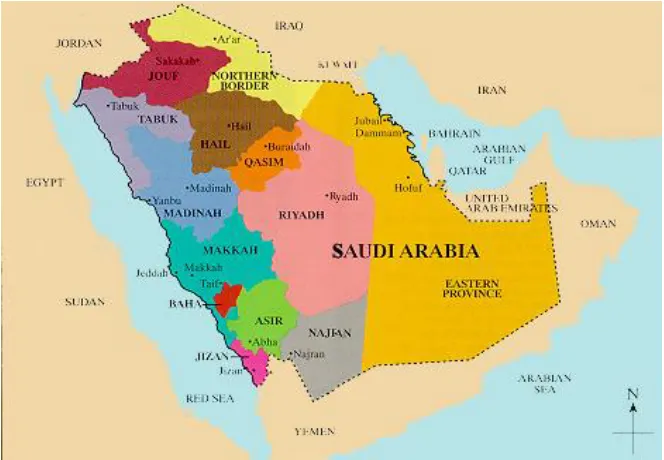
The members of the Gulf Cooperation Council (GCC) include the KSA, the United Arab
Emirates (UAE), Bahrain, Kuwait, Oman and Qatar
. Located in the Middle East, Saudi Arabia
has Iraq, Jordan and Kuwait bordering it from the north; Bahrain, Qatar, UAE and the Arabian Gulf bordering it from the east; and Oman and Yemen bordering it from the south, and finally, the Red Sea bordering it from the west. Figure 3-1.
In general, the GCC bases its culture firmly on the religion of Islam, and this is particularly true in the case of Saudi Arabia. Contrary to a wide number of societies in the world, the culture of the religion is centred on the beliefs of the religion. In Saudi Arabia, religion is considered to be a highly influential and guiding factor that impacts upon all aspects of life, and Sharia Law equates to the Kingdom’s constitution (Saudi Arabia's Constitution, 2016). Cultural awareness in Saudi Arabia is also heavily influenced by social structure and tribal traditions.
[image:47.595.85.417.486.716.2]The KSA is the second largest country of the Arab world and the largest country within the Arabian Peninsula; the population is 28 million people, and the area in kilometres squared is 2,150,000. According to OPEC (2013), Saudi Arabia possesses 18% of the world’s petroleum reserves and is the largest exporter of petroleum. It is this statistic that makes the country the fastest-growing economy of the Middle East. It can further be stated that Saudi Arabia possesses the Middle East’s largest construction sector (GCC, 2013).