P
h
.D
.T
h
es
is
S
in
n
at
h
am
by
S
rit
h
ar
ak
um
ar
20
15
Human resources information
system (HRIS)-enabled human
resource management (HRM)
performance: A business
process management (BPM)
perspective
Sinnathamby Sritharakumar
Human resources information
system (HRIS)-enabled human
resource management (HRM)
performance: A business
process management (BPM)
perspective
Sinnathamby Sritharakumar
School of the Built Environment
University of Salford, Salford, UK
Table of Contents
Acknowledgements...x
Declaration...xii
Abstract...xiii
...1
1.1 Research questions...1
1.2 Aim ...2
1.3 Objectives ...2
1.4 Scope of the research ...2
1.5 Hypotheses...3
1.6 The conceptual HRIS-enabled HRM performance model...4
1.7 Research overview...4
...7
2.1 Business process management (BPM)...7
2.1.1 Definition of BPM ...7
2.1.2 History of BPM ...9
2.2 Related topics and works of BPM ...10
2.2.1 Process vs. business process...10
2.2.2 Total quality management (TQM)...12
2.2.3 Workflow management (WfM)...13
2.2.4 Business process re-engineering/re-design (BPR) ...13
2.2.5 Business process improvement (BPI)...15
2.2.6 BPM Lifecycle...16
2.2.7 BPM Maturity...19
2.3 Conclusion ...21
...22
3.1 Human resources management (HRM) as BPM...22
3.1.1 HRM – a generic review...22
3.1.2 Human resources management (HRM): A BPM perspective ...24
3.1.3 Human resources (HR) practices...27
3.1.4 HRM performance: measured by HRM outcomes ...30
3.2 Information communication technology (ICT) and BPM ...32
3.2.2 Human resources information system (HRIS): a BPM systems (BPMS)
perspective...34
3.2.3 Implementation of an HRIS: an ICT process ...37
3.3 Conclusion ...38
...40
4.1 Impacts of HRIS implementation on HR practices...42
4.2 Impacts of the HRIS-enabled HR practices on HPM performance ...46
4.3 Conclusion ...50
...52
5.1 The research design ...52
5.2 Deductive theory approach ...56
5.3 Kendall’s tau-b correlation ...58
5.4 Ordinal logistic regression (OLR) ...59
5.5 Conclusion ...62
...64
6.1 The population and sample ...64
6.2 The sampling design ...65
6.3 Sample selection process ...66
6.3.1 First Attempt...66
6.3.2 Second Attempt ...68
6.3.3 Third Attempt ...68
6.4 Sample size ...70
6.5 Response rate ...72
6.6 Conclusion ...75
...77
7.1 The survey design ...77
7.2 Instrumentation ...80
7.3 The survey questionnaire design...81
7.4 Conclusions...87
...89
8.1 The survey logic...89
8.2 Setting up the survey questionnaire in Novi Survey...91
8.3 The pilot survey ...93
8.4 Preparing the mailing list...95
8.7 Preliminary data analysis ...98
8.7.1 STEP 1: Determining variables and testing levels of measurement...98
8.7.2 STEP 2: Data coding ...98
8.7.3 STEP 3: Entering and checking data in IBM SPSS...99
8.7.4 STEP 4: Testing Frequency Distribution: Frequency tables, Frequency polygons & Descriptive statistics...100
8.7.5 STEP 5: Exploratory factor analysis to assess evidence for validity ...116
8.7.6 Cronbach’s alpha to assess internal consistency reliability...117
8.8 Conclusion ...118
...120
9.1 Kendall’s tau-b correlation analysis...121
9.2 The impact of HRIS-enabled HR practices on HRM performance ...123
9.2.1 The impact of HRIS-enabled HR transactional practices on HRM performance 123 9.2.2 The impact of HRIS-enabled HR traditional practices on HRM performance 130 9.2.3 The impact of HRIS-enabled HR transformational practices on HRM performance...136
9.3 Conclusion ...139
...141
10.1 The Assumptions for cumulative odds ordinal logistic regression...141
10.2 Impact of organization type on HRIS-enabled HR practices and HRM performance: Ordinal logistic regression ...143
10.2.1 Section 1 - Organization type vs. HRIS-enabled HR practices results and discussion ...144
10.2.2 Section 2 - Organization type vs. HRIS-enabled HRM performance results and discussion ...166
10.3 Impact of organization size on HRIS-enabled HR practices and HRM performance: Ordinal logistic regression (OLR) ...210
10.3.1 Section 1 - Organization size vs. HRIS-enabled HR practices results and discussion ...210
10.3.2 Section 2 - Organization size Vs. HRIS-enabled HRM performance results and discussion ...232
10.4 Conclusion ...276
...277
11.1 Need for the study...277
11.2 Research outline...278
11.3 Conclusions for Research Question 1...280
11.3.2 Overall conclusion for Research Question 1 ...283
11.4 Conclusion for Research Question 2 ...284
11.4.1 Conclusion for Hypotheses 4...284
11.5 Conclusion for Research Question 3 ...285
11.5.1 Conclusion for Hypotheses 5...285
11.6 Limitations of this study and recommendations for future work...287
11.7 Contribution to knowledge ...289
11.8 Thesis conclusion...290
List of Appendices...292
Appendix A...293
Appendix B...294
Appendix C...300
Appendix D...302
List of Figures
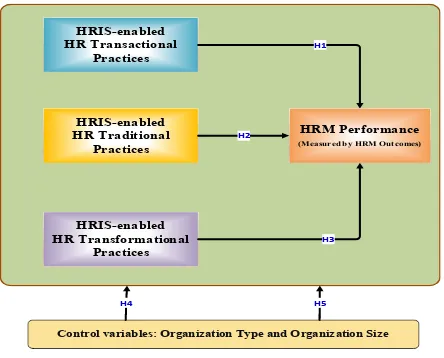
Figure 1.1 - Conceptual HRIS-enabled HRM Performance model...4
Figure 2.1 - Relationship between BPM and WfM (by van der Aalst, 2004) ...17
Figure 2.2 - BPM lifecycle (by Weske, 2007)...18
Figure 3.1 - Paauwe and Richardson (1997) Model...31
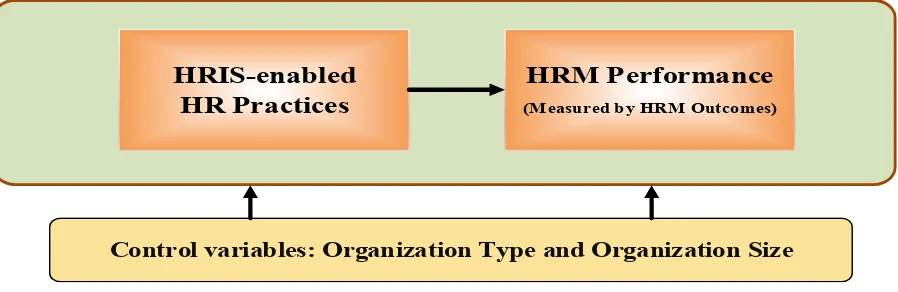
Figure 3.2 - Conceptual model (This research) ...31
Figure 4.1 - Conceptual HRIS-enabled HRM Performance model...41
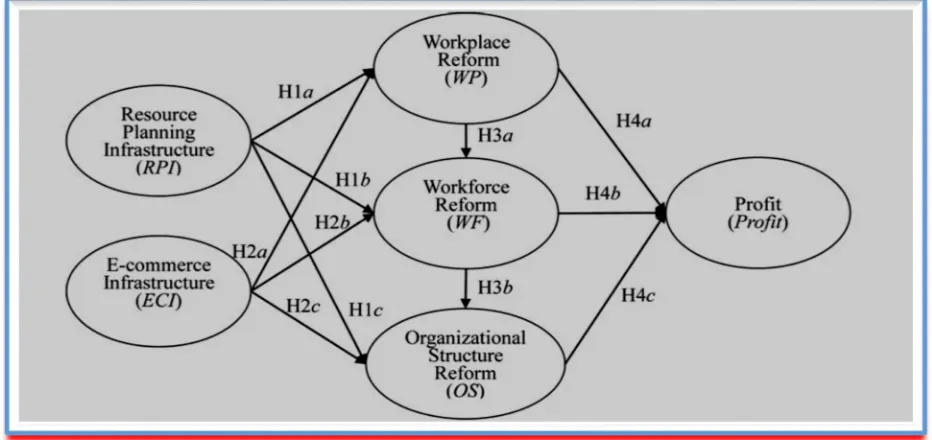
Figure 4.2 - The ICT-enabled BPM model developed by Leeet al.(2012) ...43
Figure 4.3 - Model by Leeet al.(2012) – simple diagram ...44
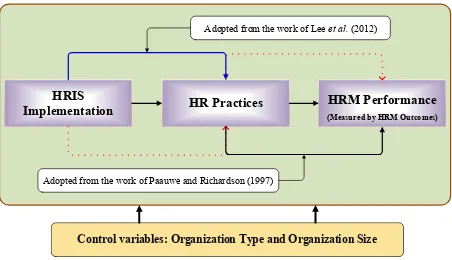
Figure 4.4 - Adapted model from Leeet al.(2012) – simple diagram...46
Figure 4.5 - Model by Paauwe and Richardson (1997) – simple diagram ...47
Figure 4.6 - Adopted model from Paauwe and Richardson (1997) – simple diagram ...47
Figure 4.7 - Adapted model from Lee et al. (2012) and Paauwe and Richardson (1997)...49
Figure 4.8 - Descriptive conceptual model for this thesis ...50
Figure 5.1 - The deductive theory sequence...57
Figure 6.1 - Response rate calculations ...73
Figure 8.1 - Reliability Statistics for HRIS-enabled HR transactional practices - HRM Performance...117
Figure 8.2 - Reliability Statistics for HRIS-enabled HR traditional practices - HRM Performance...118
Figure 8.3 - Reliability Statistics for HRIS-enabled HR transformational practices - HRM Performance...118
Figure 9.1 - HRIS-enabled HR practices – HRM performance model ...120
Figure 9.2 - Q1 & Q6 Cross Tabulation ...124
Figure 9.3 - Q1 & Q6 Symmetric Measures...124
Figure 9.4 - Statistical analysis between HRIS-enabled HR transactional practices and HRM performance (Q1 and Q6)...125
Figure 9.6 - Q1 & Q7 Symmetric Measures...126
Figure 9.7 - Statistical analysis between HRIS-enabled HR transactional practices and HRM performance (Q1 and Q7)...126
Figure 9.8 - Q2 & Q8 Cross Tabulation ...127
Figure 9.9 - Q2 & Q8 Symmetric Measures...128
Figure 9.10 - Statistical analysis between HRIS-enabled HR transactional practices and HRM performance (Q2 and Q8)...128
Figure 9.11 - Q2 & Q9 Cross Tabulation ...129
Figure 9.12 - Q2 & Q9 Symmetric Measures...129
Figure 9.13 - Statistical analysis between HRIS-enabled HR transactional practices and HRM performance (Q2 and Q9)...130
Figure 9.14 - Q3 & Q10 Cross Tabulation ...131
Figure 9.15 - Q3 & Q10 Symmetric Measures...131
Figure 9.16 - Statistical analysis between HRIS-enabled HR traditional practices and HRM performance (Q3 and Q10)...132
Figure 9.17 - Q3 & Q11 Cross Tabulation ...132
Figure 9.18 - Q3 & Q11 Symmetric Measures...133
Figure 9.19 - Statistical analysis between HRIS-enabled HR traditional practices and HRM performance (Q3 and Q11)...133
Figure 9.20 - Q4 & Q12 Cross Tabulation ...134
Figure 9.21 - Q4 & Q12 Symmetric Measures...134
Figure 9.22 - Statistical analysis between HRIS-enabled HR traditional practices and HRM performance (Q4 and Q12)...134
Figure 9.23 - Q4 & Q13 Cross Tabulation ...135
Figure 9.24 - Q4 & Q13 Symmetric Measures...135
Figure 9.25 - Statistical analysis between HRIS-enabled HR traditional practices and HRM performance (Q4 and Q13)...135
Figure 9.27 - Q5 & Q14 Symmetric Measures...137
Figure 9.28 - Statistical analysis between HRIS-enabled HR transformational practices and HRM performance (Q5 and Q14)...137
Figure 9.29 - Q5 & Q15 Symmetric Measures...138
Figure 9.30 - Q5 & Q15 Symmetric Measures...138
List of Tables
Table 2.1 - Characteristics – BPM vs. BPI...16
Table 3.1 - HR Practices...28
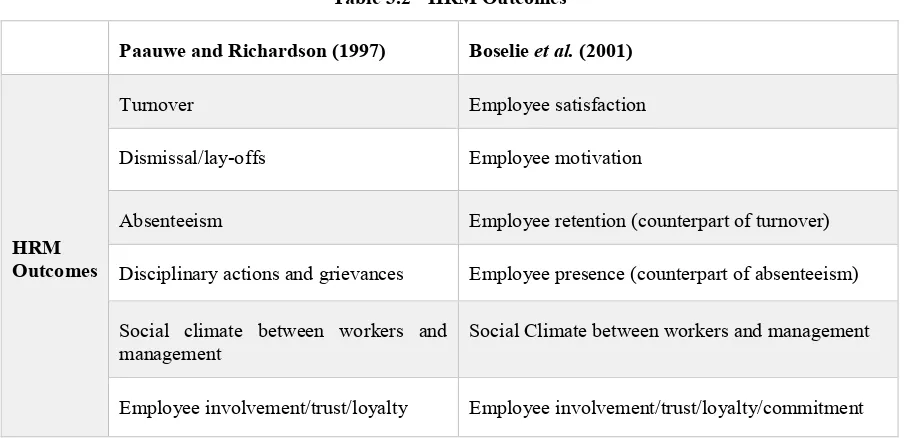
Table 3.2 - HRM Outcomes ...31
Table 4.1 - Leeet al.(2012) vs. This Research...45
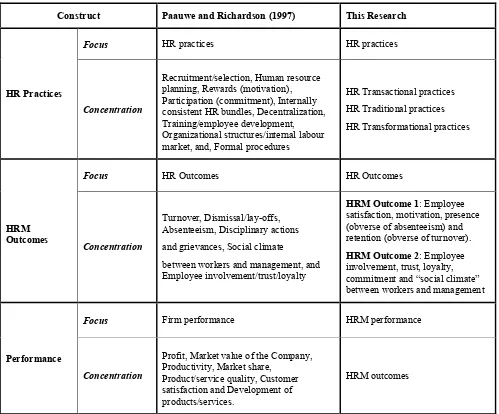
Table 4.2 - Paauwe and Richardson (1997) Vs. This Research ...48
Table 5.1 - Research Terminology ...53
Table 5.2 - Ontology and epistemology in social science ...53
Table 5.3 - Methodological implications of different epistemologies within social science ...55
Table 5.4 - Fundamental differences between quantitative and qualitative research strategies ...56
Table 5.5 - Independent variables coding in IBM SPSS ...60
Table 5.6 - Dichotomous variables based on cumulative splits of the categories of the ordinal dependent variable...62
Table 6.1 - Determining sample size (Easterby-Smith,et al., 2008, p.215) ...72
Table 7.1 - The survey questionnaire design...86
Table 8.1 - The predictor variables and dependent variables ...91
Table 8.2 - Pilot survey feedback ...94
Table 8.3 - Descriptive statistic table for nominal variables (Independent variables) ...100
Table 8.4 - Descriptive statistic table for ordinal variables (Dependent variables) ...100
Table 8.5 - Factor loadings for the Rotated Factors ...116
Table 9.1 - The impact of HRIS-enabled HR practices on HRM performance ...121
Table 9.2 - Interpretation of the strength of a relationship (effect size)...123
Table 9.3 - Results: The impact of HRIS-enabled HR transactional practices on HRM performance ...123
Table 9.5 - Results: The impact of HRIS-enabled HR transformational practices on HRM
performance ...136
Table 10.1 - The impact of organization type or organization size on HRIS-enabled HR practices and HRM performance...143
Table 10.2 - Results: Impact of organization type on HRIS-enabled HR practices...165
Table 10.3 - Results: Impact of organization type on HRIS-enabled HR performance...209
Table 10.4 - Results: Impact of organization type on HRIS-enabled HR performance...231
Acknowledgements
First and foremost, I want to thank my Lord for providing me the passion, strength, stamina, knowledge, wisdom, courage and love throughout this PhD journey.
Pursuing a PhD while having a family and working full time has been both challenging and rewarding. It is like climbing Adams Peak, step-by-step, accompanied with hardships, frustration, exhaustion, excitement, encouragement, trust, motivation and devotion. Even now, I cannot believe that I have reached the summit. This journey has only been possible because of the wonderful people who have surrounded me. I have no words to thank them, however, for the sake of formality I will acknowledge them here.
I am deeply indebted to my supervisor Andrew Fleming for his vital role in my doctoral work. It has been an honor to be his PhD student. Andy is someone you will instantly love and never forget once you meet him. He is the most caring supervisor and one of the smartest people I know. Andy provided me with every sort of guidance, assistance, and expertise that I needed during my PhD journey. He gave me the freedom to do whatever I wanted, while at the same time continuing to contribute valuable feedback, advice, and encouragement. I quite simply cannot imagine a better supervisor. In addition to our academic collaboration, I greatly value the close personal rapport that Andy and I have forged over the years, we have become very good friends. There are many future academic plans we have talked about pursuing together and hopefully we will achieve them in due course.
I am also very grateful to Dr. Phil Walsh of Ryerson University, Toronto, Canada, my local advisor, for his timely advice and knowledge and many insightful discussions and suggestions. I also appreciate the advice and encouragement rendered by Dr. Patricia Sniderman, the Chair of HRM/OB department at Ryerson University and Ms. Genevieve Farrell, the Instructor and the HRM/OB Continuing Education Coordinator at Ryerson University for their encouragement and support in completing this thesis.
My special thanks to Ms. Heather Henry, my best friend and moral support, for her relentless help in proof-reading and editing my work. At times, I have overlooked minor grammar and spelling mistakes, and Heather was always there to catch these mistakes and make me to correct them. I continue to admire her sense of scrutiny and attentiveness.
I would also like to extent my thanks to Dr. Jeyakumar Paramsothy of Massey University, New Zealand. This family friend has encouraged and motivated me whenever I felt down and stranded, especially during the data analysis period of this PhD journey.
Moreover, my heartfelt thanks goes to my loving family. All my efforts and success are, without any doubt, dedicated to my family. I am so blessed to have my mother and father witnessing their son’s greatest achievement in his life. My parents are always there whenever I needed them and I am very grateful to them forever. Next, Ashu, my eldest and teenage son, is a very understanding young man who wants me to excel in my academic life and always proud of my achievements. Pooja, my soon-to-be teenage daughter, is my loving angel and a very shrewd girl who thinks her dad is the best person in the world, but never wanted to spell this out in front of me. Then comes my little son Chenthu, a charming and a smart grade two goer whose world is nothing but me. He is actually a mirror-like person, when I am happy he is happy and when I am down he is down too, he is so cute. Over the period of last five years my kids have learned to cope with my pressures and stresses. Thank you so much to my kids. You guys have sacrificed so much for your dad, and it is now my turn to recover all the time I have missed with you.
Abstract
It is widely accepted that business process management (BPM), a contemporary management approach that focuses on managing overall business processes within an organization to accomplish the organizational goal, relies on modern information and communication technology (ICT) systems. The ICT systems that are aligned with BPM are known as BPM systems (BPMS). That said, along with the other key factors, an organization needs to employ an ICT process enabled approach to optimize the BPM outcome. Therefore, this study creates an awareness of the contribution of ICT to BPM by analyzing the linkage between impacts of human resource information systems (HRIS) on human resource management (HRM) performance.
Although there are plenty of academic discussions available on BPM and the firm performance relationship, the literature does not provide constructive information on how the adoption of ICT impacts the BPM performance. As a result, the researcher decided to conduct a study on ‘ICT adoption and BPM performance’, or explicitly, ‘HRIS adoption-HRM performance’ relationship, where HRIS is a form of BPM system and HRM is a sub-domain of BPM.
A conceptual model was developed with strong theoretical background by incorporating the works informed by Lee et al. (2012) and Paauwe and Richardson (1997) to test several hypotheses.
By nature, this study is quantitative research that comes under relativist epistemological assumptions and therefore assumes the deductive theory approach. Since the focus of this study (i.e.‘HRIS-enabled HRM performance model’ in view of business process management) is a fairly new area of research that is not found in any existing literature, this author espoused the primary data collection method by employing an online cross-sectional survey design. In this research, the target population is human resources professionals who have access to HRIS within their organizations in a Canadian context.
measure the strength of relationship between a HRIS-enabled HR practices and the HRM performance, this researcher has decided to adopt Kendall’s tau-b correlation.
Ordinal dependent variables that have natural ordering between their levels, such as Likert scale levels, can be predicted by one or more independent variables using OLR (Kleinbaum and Klein, 2002). In this study, ordinal logistic regression is used to predict the belief that the organization type and organization size impact the HRIS enabled HR practices, namely, transactional, traditional and transformational practices, and the HRM performance.
This study created an awareness of the contribution of ICT on BPM by analyzing the linkage between impacts of HRIS on HRM performance. While the organization type and size, the control variables in this study, do not add any value to the research findings, the important findings of this study are that HRIS-enabled HR transactional, traditional and transformational practices, when implemented appropriately, significantly impact the HRM performance. Specifically, this study confirms that HRIS-enabled HR traditional management practices such as performance management, rewards, career development and communication predominantly significantly impact the HRM performance. That is, the strength of relationship value is larger than typical between the aforementioned HRIS-enabled HR traditional practices and HRM performance. In other words, this study specifically encourages an organization to adopt comprehensive performance management systems (PMS), an important component of HRIS, to manage their employees effectively.
Introduction
While the demanding nature of the current global economy has placed business process management (BPM) at the centre of effective organization management, information and communication technologies (ICT) have changed the way businesses perform their BPM practices. Therefore, it is widely accepted that business process management (BPM), a contemporary management approach that focuses on managing overall business processes within an organization to accomplish the organizational goal also relies on modern ICT systems. The ICT systems that are aligned with BPM are known as BPM systems (BPMS) (Shawet al., 2007). That said, along with the other key factors, an organization needs to employ an ICT process enabled approach to maximize its BPM outcome. This study creates an awareness of the contribution of ICT on BPM by analyzing the linkage between impacts of human resource information systems (HRIS) on human resources management (HRM) performance.
Although there are plenty of academic discussions available on the BPM-firm performance relationship, the literature does not provide constructive information on how the adoption of ICT impacts the BPM performance (or in other words, particularly HRM performance in this case). As a result, this researcher would like to emphasize here that this study is not about the impacts of ‘BPM-firm performance’ relationship, rather it is about the ‘ICT adoption-BPM performance’ or explicitly ‘HRIS adoption-HRM performance’ relationship.
1.1 Research questions
That said, this research is poised to find empirical answers to the following research questions:
Research question 1 (RQ1): Does the HRIS-enabled HR practices (namely transactional, traditional and transformational) significantly impact the HRM Performance?
Research question 2 (RQ2): Does the type of an organization significantly impact the HRIS-enabled HRM performance model?
1.2 Aim
The aim of this research is to study the impacts of ‘ICT-enabled business process on BPM performance’, or explicitly ‘HRIS-enabled HR practices on HRM performance’ within Canadian context.
1.3 Objectives
Therefore, this research is focused on, (a) analyzing two theoretical models found in the literature, and (b) adopting those two models to incorporate a new conceptual model that answers the above research question. Hence, the objectives of this research is to develop a conceptual HRIS-enabled HRM performance model that:
1) investigates the impacts of the HRIS-enabled HR practices on HRM performance, and
2) examines the impacts of organization type and organization size on the HRIS-enabled HRM performance model.
1.4 Scope of the research
In this research, the target study population is restricted to human resource professionals who have access to human resource information systems (HRIS) within their organization in a Canadian context. The reasons for restricting the population and the sample to Canada are:
1. As it was learned from the literature reviews, there is no study involving the Canadian context that addresses ‘HRIS-enabled HRM performance’ from the business process management (BPM) perspective.
2. Since this is a single-researcher study with a strict timeline and resources restriction, data collection is more practical and accessible within a specific context.
1.5 Hypotheses
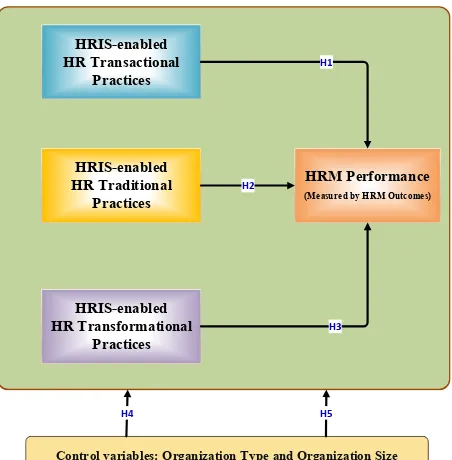
In order to find the answers to the three research questions mentioned above, a conceptual model was developed with strong theoretical background by incorporating the works informed by Lee et al. (2012) and Paauwe and Richardson (1997) to examine the following five hypotheses:
Null Hypothesis 1 (H1₀):HRIS-enabled HR transactional practices do not significantly impact the HRM Performance.
Alternative Hypothesis 1 (H1): HRIS-enabled HR transactional practices significantly impact the HRM Performance.
Null Hypothesis 2 (H2₀):HRIS-enabled HR traditional practices do not significantly impact the HRM Performance.
Alternative Hypothesis 2 (H2): HRIS-enabled HR traditional practices significantly impact the HRM Performance.
Null Hypothesis 3 (H3₀): HRIS-enabled HR transformational practices do not significantly impact the HRM Performance.
Alternative Hypothesis 3 (H3):HRIS-enabled HR transformational practices significantly impact the HRM Performance.
Null Hypothesis 4 (H4₀):Organization type does not significantly impact the HRIS-enabled HRM performance model.
Hypothesis 4 (H4):Organization type significantly impacts the HRIS-enabled HRM performance model.
Null Hypothesis 5 (H5₀): Organization size does not significantly impact the HRIS-enabled HRM performance model.
1.6 The conceptual HRIS-enabled HRM performance model
By incorporating the works informed by Leeet al.(2012) and Paauwe and Richardson (1997), this research developed a conceptual HRIS-enabled HRM performance model that investigates the main constructs of this research. Figure 1.1 below depicts the big picture of the new conceptual model developed for this study:
Control variables: Organization Type and Organization Size
H4 H5
HRM Performance
(Measured by HRM Outcomes)
HRIS-enabled HR Transformational
Practices
H3
HRIS-enabled HR Transactional
Practices
HRIS-enabled HR Traditional
Practices
H1
[image:20.595.86.530.197.555.2]H2
Figure 1.1 - Conceptual HRIS-enabled HRM Performance model
1.7 Research overview
The main focus of this research is to measure the relationship strength between HRIS-enabled HR practices and the HRM performance. Therefore, the following four variables were considered to measure the relationship between HRIS-enabled HR practices and the HRM performance (i.e. the variables of research question 1):
a) HRIS-enabled HR transactional practices, b) HRIS-enabled HR traditional practices,
c) HRIS-enabled HR transformational practices, and d) HRM performance measured by HR outcomes.
In addition, Paauwe and Richardson (1997) maintain organizationage, size, type, technology, capital intensity, degree of unionization and industry as the contingency and control variables that may affect the HRM performance. Since this thesis is partially adopting Paauwe and Richardson’s (1997)model, a survey questionnaire is designed to collect data onorganization
type and size,i.e. the two control variables of research questions 2 and 3 respectively.
The survey questions were exclusively designed based on the ‘category scales’, i.e. the questions were both nominal and ordinal. While the screening question, the personal and organization information collection sections were unordered nominal category scale, the hypotheses testing questions were formed based on the Likert scale ordinal category scale.
Data analysis of this research is based on two known approaches, namely, Kendall’s tau-b correlation and ordinal logistic regression (OLR). Since Kendall’s tau, unlike other correlation, has an intuitively simple interpretation that employs an algebraic structure, Noether (1981) suggests that Kendall’s tau is one of the best approaches to measure the strength of the relationship. Since this study has a wide range of data distribution that tries to measure the strength of relationship between a HRIS-enabled HR practices and the HRM performance, this researcher has decided to adopt Kendall’s tau-b correlation.
Ordinal dependent variables that have natural ordering between their levels, such as Likert scale levels, can be predicted by one or more independent variables using OLR (Kleinbaum and Klein, 2002). In this study, ordinal logistic regression is used to predict the belief that the organization type and organization size impact the HRIS enabled HR practices, namely, transactional, traditional and transformational practices, and the HRM performance.
Business process management (BPM) - A broad review
The purpose of this chapter is to review the literature associated with the business process management (BPM) definitions, history, and concepts that subsequently can satisfy the hypotheses constructs and answer the research question.
2.1 Business process management (BPM)
The demanding nature of the current global economy has placed BPM at the centre of effective organization management. BPM is a management system that governs business processes and conducts a set of coordinated tasks and activities within an organization to accomplish a specific organizational goal (Neubauer, 2009).
2.1.1 Definition of BPM
BPM is a management philosophy focused on managing overall business processes within an organization to accomplish the organizational goal. Gerschet al.(2011) maintain that BPM is a general approach that uses process as the core concept to understand and control business activities. Hegedus (2008) for his part further elaborates that BPM is often introduced as a totally different way of managing business through the definition of management and ongoing improvement of its processes. More specifically Weske et al. (2004, p.2) define BPM as the lifecycle approach that supports:
Business processes using methods, techniques, and software to design, enact, control, and analyze operational processes involving humans, organizations, applications, documents and other sources of information.
Taking a step further, Houyet al.(2010) contemplate that by practicing BPM, an organization can realize its goal-oriented management of business processes and the achievement of strategic and operative objectives. By the same token, Doebeliet al.(2011, p.184) emphasize that BPM is a“process-centric organizational management philosophy’ that ‘provides organisations with a means of increasing competitiveness and sustainability in times of market uncertainty, increasing globalisation and constantly changing business conditions”.
broadens the definition to ensure that BPM not only supports the business processes, strategic and operative objectives of an organization, but also focuses and delivers on customer satisfaction. Zari (1997, p.78) says:
BPM is an approach which is all-encompassing and is dependent on strategic elements, operational elements, use of modern tools and techniques, people involvement and, more importantly, on a horizontal focus which will best suit and deliver customer requirements in an optimum and satisfactory way.
Collectively, the above descriptions and definitions of BPM by Gerschet al.(2011), Hegedus (2008), Weskeet al.(2004), Houyet al.(2010), Doebeliet al.(2011) and Zari (1997) highlight the BPM terms that are cited in the work done by Doebeli et al. (2011). Acknowledging the previous works by DeBruin and Doebeli (2009a, and 2009b), in their paper Doebeliet al.(2011, p.185) identify the most common interpretations of BPM as:
• BPM as a solution for a business using software systems or technology to automate and manage processes;
• BPM as a broader approach to managing and improving processes that focus on the process lifecycle; and
• BPM as an approach to managing an organisation by taking a process-view.
While recognizing the above BPM terms, Doebeliet al.(2011) also raise the flag to alert the academic circle and argue that as a result of varying interpretations of the BPM there are two underlying concerns about BPM:
1. There is no common mechanism that facilitates an organization to implement and progress the practice of BPM.
2. There is little theory in literature to assist organizations in embedding BPM across an organization.
The Chapter 3 of this thesis will discuss such an ICT-enabled BPM conceptual model which employs human resource information system (HRIS) and human resources management (HRM).
2.1.2 History of BPM
Snabeet al.(2008) maintain that the dated ideas underlying BPM have already been elaborated and thereupon extended, based on current business ideas and available technology. Therefore, analysing the origin and evolution of process management is integral to understanding the BPM concept.
The history of BPM is long and rich, confirms Smith (2006), who expounds that historically BPM has taken up three sets of ‘waves’ in its lifetime. The roots of BPM can be traced back to Frederick Taylor’s theories of management science in the 1920s and Carl Barth’s machining slide rule technology in the industrial age (Smith, 2006). Throughout the first wave, BPM became a business driver in the early information age between 1970s and 1980s (Lusket al., 2005). In the second wave occurring in the 1990s, industrial processes were reengineered and fitted into packaged enterprise applications technology (Smith, 2006; Lusk et al., 2005; Hammer and Champy, 2001). In the third wave of BPM, extending from 2000, executable digitized processes were freed from their former image as engrained software to re-emerge as an adaptable new form of process data (Smith, 2006; Snabeet al.2008; Lusket al., 2005).
After its lengthy journey, Houy et al. (2010) consider that BPM actually has reached its maturity. They argue that the amount of currently available literature concerning BPM, the existence of noteworthy Business Process Management Journal with SJR indicator of 0,6 (SCImago Journal & Country Rank, 2013), continuously ongoing international conferences in BPM and the institutionalization of degree programs specializing in BPM at several universities are strong evidence that BPM is no longer considered a temporary trend or fad but a major approach in management science.
antecedents”. In support of Smith’s (2006) statement, Rosemann, et al. (2004, p.1) maintain that:
Business Process Management (BPM) consolidates objectives and methodologies, which have been proposed in a number of approaches including Business Process Reengineering, Business Process Innovation, Business Process Modelling and Business Process Automation/Workflow Management.
Mindful of these new capabilities to add value to the undertaken research, the next section of this paper discusses the related topics of business process management, which include business processes, TQM, WfM, BPR, BPI, BPM cycle, BPM maturity, and BPM systems (BPMS).
2.2 Related topics and works of BPM
2.2.1 Process vs. business process
A process is a series of interrelated activities that creates an end result to the betterment of a situation. According to van der Aalst and van Hee (2009), a process indicates which tasks must be performed and in what order to successfully complete a case, therefore a process technically consists a set of tasks, conditions, and sub processes.
Supplementing value to the above definition, Muller (2013, p.1) quotes the definition of process from a book calledMethod Integration; Concepts and Case Studies, written by Klaus Kronlöf (1993) as:
A process is an activity which takes place over time and which has a precise aim regarding the result to be achieved. The concept of a process is hierarchical which means that a process may consist of a partially ordered set of sub processes.
Drawing from the above quotation, Muller (2013, p.2) then extends the definition of a process by categorizing it through five attributes: ‘Purpose’ (goal to be achieved and why), ‘Structure’ (how the goal will be achieved), ‘Rationale’ (reasoning behind this process), ‘Roles’ (roles that are present and associated responsibilities; incentives that are present and the criteria for these roles) and ‘Ordering’ (phasing or sequence that is applied).
together, produce a result of value to a customer”. Davenport (1994, p.134) confirms Ittner and Larcker’s (1997) statement, and further explicates:
A process is simply structured set of activities designed to produce a specified output for a particular customer or market. It has a beginning, an end, and clearly identified inputs and outputs. A process is therefore a structure for action, for how work is done. Processes also have performance dimensions -cost, time, output quality, and customer satisfaction that can be measured and improved.
Hammer and Champy (2001), two prominent advocates of BPR, for their part, define a process as a collection of activities that intakes one or more inputs to deliver an output that is of value to the customer.
The definitions of a process by Ittner and Larcker (1997), Davenport (1994), and Hammer and Champy (2001) clearly take the notion of a process into the next level of understanding, known as ‘business processes’. When a process within an organization becomes a customer centric activity that creates value for both the organization and the customer, then it can be considered as a business process (Georgakopoulos and Hornick, 1995; Harrington, 1991).
Pointing to the views of Keen and Knapp (1996) in their book, Every Manager’s Guide to Business Processes: a Glossary of Key Terms and Concepts for Today’s Business Leaders, Goldkuhl and Lind (2008) stress that there are two views of business processes: the first one is the ‘transformative view’ that considers “process as workflow”, where input (raw material) is transformed into output (finished product). The second one is the ‘coordinative view’ that considers “process as the coordination of work”, where coordination, agreements and commitments are emphasised.
(In addition to the above definitions, there are a number of non-academic and non-business related definitions that bestow various meanings to a process. Since these definitions are not within the scope of this study, they are not taken into the consideration.)
2.2.2 Total quality management (TQM)
TQM is an integrated management philosophy that views organizations as systems of interlinked processes (Ravichandran and Rai, 2000).“TQM is a management strategy aimed at embedding awareness of quality in all organizational processes” acknowledges Snabe et al.
(2008, p.37). These two definitions are holistic in nature and therefore emphasize managing the quality on overall organizational processes.
However, limiting the definition of TQM to business processes, Lind (2006) asserts that the concept of TQM contributes to the aforementioned ‘transformative view’ on business processes: as an integrated form of “management philosophy”, TQM coordinates people, business processes and systems of an organization to achieve complete customer satisfaction at every stage, internally and externally (Department of Trade and Industry, 2009).
TQM has its roots in the postwar Japanese economic developments (Powell, 1995), and during the 1980’s TQM became a popular management approach that encouraged incremental process improvements in manufacturing and service-oriented organizations (Gunasekaran and Nath, 1997).
Following World War II, in the late 1940s and early 1950s, Japan was desperate to improve its economy. However, this outlook for Japan was completely changed in the subsequent three decades; by the 1980s, Japan was one of the richest nations in the world. One of the main reasons for Japan’s successful economic transformation was credited to the effective implementation of TQM (Hames, 1991). By observing the success story of Japan, Western countries have since realized (from the 1980s) that quality is the basis for competition, thus validating the importance of TQM and resulting in the implementation of TQM concepts in their organizations (Hellsten and Klefsjö, 2000).
al.(2005) link TQM to the first wave of BPM that took place in the information age between the 1970s and 1980s.
2.2.3 Workflow management (WfM)
The Workflow Management Coalition (WfMC, 1999, p.8) defines workflow as:
The automation of a business process, in whole or part, during which documents, information or tasks are passed from one participant to another for action, according to a set of procedural rules.
Moreover, Lind (2006), while agreeing with the WfMC’s definition of WfM, concedes that a business process is often seen to consist of sequential sub-processes or activities; and therefore the transformative business process view emphasizes the ordering of activities in the workflow, as discussed earlier in section 2.2.1.
While agreeing that automation of business processes is central to the WfM, zur Muehlen (2004) contends that WfM systems are nothing but BPM systems. Weskeet al.(2004) further echo the same sentiment and consider BPM as the next step of WfM. Caverleeet al.(2007, p. 61), for their part, confirm that, “Workflow management is the most widely accepted implementation of business process management and a critical component for successful enterprise transformation”.
By contrast, Georgakopoulos and Hornick (1995), consider the workflow concept as being closely attributed to business process reengineering (BPR) and the automation of the business process in an organization. The key point seen here is that even though BPR and BPM are not exactly the same (BPR and BPM will be further differentiated in the next section), the concept of WfM is the common underpinning to both BPR and BPM.
2.2.4 Business process re-engineering/re-design (BPR)
In the late 1980’s and early 1990’s the rapidly changing global economy pressured many organizations to become extensively dynamic and customer-centric. As a result, organizations started to revamp their old management practices by completely reengineering or redesigning their business processes (Misraet al., 2008). Hammer (1990), one of the known BPR gurus, promotes BPR as:
them and then finding imaginative new ways to accomplish work. From (our) redesigned processes, new rules will emerge that fit the times.
In their book ‘Reengineering the corporation: a manifesto for business revolution’ Hammer and Champy (2001, p.35) define“Reengineering [as] the fundamental rethinking and radical redesign of business processes to achieve dramatic improvements in critical, contemporary measures of performance, such as cost, quality, service, and speed”. In a nutshell, Hammer and Champy (2001, p.52) put this definition in two words and say,“Starting over”; starting over all business processes, so that an organization takes up a new ‘avatar’.
By the same token, Hegedus (2008) emphasizes that BPR is all about starting over an organization’s key processes by having information communication technology (ICT) as the key enabler for its change management strategy. In the same fashion, Gunasekaran and Nath (1997, p. 92) admit that, “The IT has played a vital role in the success of the overall reengineering initiatives”.
However, while agreeing that ICT plays a crucial role in BPR, Hammer and Champy (2001) insist that BPR is neither the automation of existing business processes with the help of ICT, nor software reengineering, which means recreating outdated business processes with the help of latest technology. Hammer and Champy (2001, p. 89) argue that,“Reengineering, unlike automation, is about innovation. It is about exploiting the latest capabilities of technology to achieve entirely new goals”. They also believe that organizations observing ICT through the lens of existing processes is one of the fundamental errors that could eventually lead to the failure of BPR in that organization (p. 89).
Somewhat contradictory to the stringent perception of Hammer and Champy on BPR, Chan and Land (1999) admit that ICT as an enabler of BPR for radical changes needs to be mindful of incorporating the existing processes to the proposed processes. In other words, Chan and Land (1999) advocate that even though BPR is all about‘starting over’the business processes using ICT as an enabler, organizations should be mindful of existing processes, and in certain situations, retaining the existing critical and value-added processes.
these opinions, one can say that BPR gives way to BPM, a management philosophy focused on managing overall business processes.
As said earlier, BPM focuses on managing overall business processes incrementally and continuously within an organization to accomplish the organizational goal by accommodating people, technology and information. That is to say, BPM is not merely the reengineering or redesigning of the business processes, but actually a continuous management approach that oversee the continuous business process improvement (BPI).
2.2.5 Business process improvement (BPI)
In recent years, business process improvement (BPI) has gained popularity among the business communities as an important aspect for meeting the challenges of ever growing competition and customer needs. BPI is an approach that is widely practiced by organizations to keep up the business processes intact with the changing nature of business circumstances, such as growing global competition, customer expectations, new technologies, marketing strategies, governance,etc.(Adesola and Baines, 2005).
While Siha and Saad (2008) consider that six sigma, benchmarking, BPR, and process mapping are the four major approaches to improve business processes, Adesola and Baines (2005) alternatively argue that BPI is slightly different from BPR. Adesola and Baines perceive that BPR is usually associated with much more of radical changes to the business processes, whereas BPI is a methodology that brings step-function improvements in administrative and support processes using benchmarking and BPR.
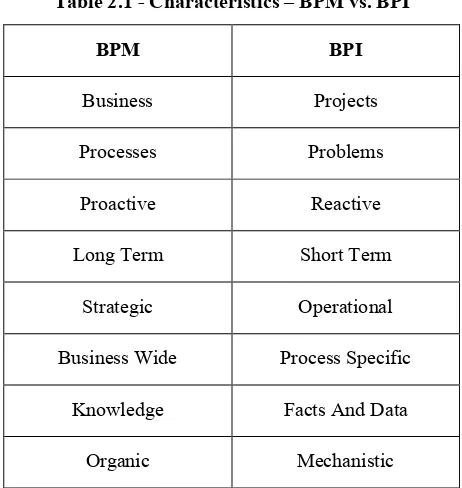
Table 2.1 - Characteristics – BPM vs. BPI
BPM BPI
Business Projects Processes Problems Proactive Reactive Long Term Short Term
Strategic Operational Business Wide Process Specific
Knowledge Facts And Data Organic Mechanistic
Referring to a survey of Northern Ireland’s “Top 100” companies conducted in 1998 by France M. Hill and Lee K. Collins, McAdam and McCormack (2001, p.115) identify three states of competitiveness that coerce managers to rigorously consider and then implement BPI:
1. a company in crisis,
2. a company in a strong competitive position, but envisaging greater competition in the future; and
3. a company in a strong position, and wanting to capitalize on that position
As is seen above, the survey ostensibly shows that regardless of their current situation, many companies want to improve their business processes to stay ahead of the competition.
Despite the fact that nearly all major organizations around the globe are striving to improve their business processes to sustain profitability, not all of these efforts are successful (Adesola and Baines, 2005). Hegedus (2008) maintains that the failure occurs when BPI and BPM were not strategically integrated.
Given the points of Adesola and Baines (2005) and Hegedus (2008), one can understand that continuous business process improvement is one of the key success factors of BPM. “This continuous improvement of business processes is typically conceptualized by a BPM lifecycle”, claim Houyet al.(2010, p.621).
2.2.6 BPM Lifecycle
consists of four phases, namely: Design & Analysis, Configuration, Enactment and Evaluation (van der Aalst, 2004, p.137; Weske, 2007, p.12).
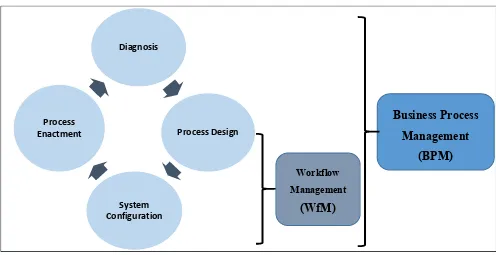
[image:33.595.63.559.187.442.2]van der Aalst (2004), a well-known expert of workflow management (WfM) and BPM, establishes the relationship with workflow management (WfM) and BPM. In terms of lifecycles approach, Figure 2.1, below depicts the relationship between BPM and WfM that was developed by van der Aalst (2004, p.138):
Figure 2.1 - Relationship between BPM and WfM (by van der Aalst, 2004)
As is seen above, WfM takes place in the lower-half of the BPM lifecycle, in that the evaluation or diagnosis phase is omitted. This is because, as van der Aalst (2004) puts it, the traditional WfM does not offer tools for evaluation or diagnosis of business process flows. This comparison concludes that BPM is a superior process management approach than the WfM (Ko,et al., 2009).
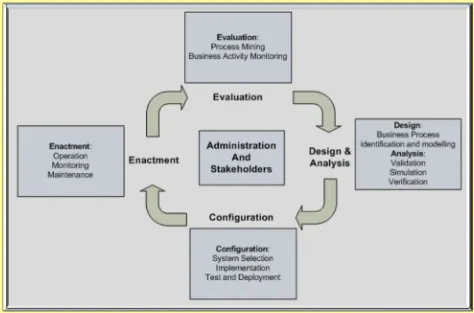
Weske (2007, p.12) depicts the BPM lifecycle in Figure 2.2 by combining the work of van der Aalst (2004, p.138). According to van der Aalst and Weske, the BPM lifecycle starts at ‘Design & Analysis’ phase and rotates clockwise to the end at the ‘Diagnosis or Evaluation’ phase. Explaining further, van der Aalst (2004, p.137) says:
1. In thedesignphase, the processes are (re)designed.
2. In the configuration phase, designs are implemented by configuring a process aware information system (e.g., a WfM system or a BPM system).
Diagnosis
Process Design
System Configuration Process
Enactment
Workflow Management
(WfM)
Business Process Management
3. Theenactmentphase starts where the operational business processes are executed using the system configured.(van der Aalst, elucidates that this phase as the use of software to support the execution of operational processes and emphasizes that is the main focus of WfM).
4. In thediagnosisphase, the operational processes are analyzed to identify problems and to find things that can be improved.
[image:34.595.95.569.244.557.2]At the end of the ‘Evaluation’ phase the cycle may re-enter into the ‘Design & Analysis’ phase so that the continuous process improvement is ensured.
Figure 2.2 - BPM lifecycle (by Weske, 2007)
Filipowska et al. (2009) inform that, although BPM experts consider that there is a lack of reliable holistic approach that guides BPM projects end-to-end, there are several BPM approaches that follow Weske’s BPM lifecycle to offer BPM tools and .
This concept [process maturity] proposes that a process has a lifecycle that is assessed by the extent to which the process is explicitly defined, managed, measured and controlled.
Taking the lead from Lockamy III and McCormack (2004), the next section will look into the concept of BPM maturity.
2.2.7 BPM Maturity
As has been seen so far in this paper, the evidence indicates that BPM has become one of the mainstays of management practices. As a result, the business processes are now treated as assets requiring investment and development as they mature, therefore, the awareness of process maturity is also becomes significant (McCormack,et al., 2009). For their part, Lockamy III and McCormack (2004, p.272) acknowledge that: “the concept of process maturity is becoming increasingly important as firms adopt a process view of the organization”.
The term ‘maturity’ in management approaches is projected as a method to evaluate ‘the state of being complete, perfect, or ready’ (Rosemann,et al., 2004). A process maturity, therefore, is achieved when the process goes through its lifecycle and meets its set goals. However, what needs to be distinguished here is the understanding that BPM maturity is not merely a business process maturity. Since BPM is a management approach that can realize an organization’s goal-oriented management of business processes and the achievement of strategic and operative objectives (Houy et al., 2010), the focus needs to be shifted from process maturity to BPM maturity.
Referring back to their idea that ‘BPR as a BPM support method’, Bucher and Winter (2009) declare that BPM support methods such as BPR and business process modelling are too generic in nature therefore do not address the situational aspects of BPM, for example BPM maturity. Based on their analysis, Bucher and Winter (2009) suggest that an organization’s BPM maturity needs to be gauged by three BPM phases:
1. Process identification, design, and modeling, 2. Process monitoring and, controlling, and 3. Process enhancements.
• Level 1: Initial - Organizations are immature. Their processes are ad hoc, and undefined, and their projects unpredictable
• Level 2:Repeatable - Organizations have started to focus on processes and have defined some of their major processes. They can repeat some processes with predictable results, while other processes are not yet well controlled.
• Level 3:Defined - Organizations have defined all their basic processes and have some degree of control over them. They have begun to emphasize the collection of data and use measures to help manage their processes.
• Level 4:Managed- Organizations have put a lot of emphasis on the management of processes. They have good process measures and gather data consistently. Their managers rely on measures and data when establishing goals or planning projects. Equally, there is a hierarchical alignment among project managers, so that the achievement of sub-process goals reliably contributes to the achievement of super process goals, and all work to achieve the organization's overall goals.
• Level 5: Optimizing -Organizations have taught their employees about processes and enlisted them in a continuous effort to refine and improve processes.
As Harmon (2004) has identified above, an effective BPM maturity is accomplished when an organization reaches and surpasses the fourth level. However, Harmon cautiously admits that only a few organizations have reached this level and have an organization-wide understanding of how processes are related and aligned with corporate strategies and goals.
Reflecting the aforesaid BPM maturity levels and Harmon’s (2004) view, Curtis and Alden (2007, p.1) describe BPM maturity models or methods as:“an evolutionary improvement path that guides organizations as they move from immature, inconsistent business activities to mature, disciplined processes”.
2.3 Conclusion
The purpose of this literature review is to track the ongoing evolution of the BPM concept, highlight its key definitions and properties, and assess the strengths and weaknesses of the various manifestations of the BPM concept with the focus of satisfying the hypotheses constructs identified in Chapter 1. These manifestations – TQM, WfM, BPR, BPI, BPM lifecycle and BPM maturity – unveil integral processes related to the BPM concept, and demonstrate the evolving ideas within the business science.
BPM is a management approach that is focused on achieving the overall organizational goal using methods, techniques, and software to design, enact, control, and analyze operational processes involving humans, organizations, applications, documents, and other sources of information. Even though the roots of BPM can be traced back to Fredrick Taylor’s theories of management science in the 1920’s, contemporary BPM has started to evolve in three phases from 1970.
TQM, one of the early manifestations of BPM, promotes quality as the key facilitator of business success, which stresses that companies providing their customers with the best quality service will advance further than competitors. Furthermore, the literature reveals that although BPM and BPR are not the same, due to its focus on procedural rules, WfM is the common underpinning of both BPR and BPM. BPR, the predecessor of BPM, that made headlines in the 1980’s and 1990’s, was focussed on making radical changes to or starting over an organization’s business processes to maximize the performance.
Additionally, since BPM is a management discipline of continual process improvement, this chapter also reviewed the process improvement concepts such as the BPI, BPM lifecycle, and BPM maturity. As a result, this comprehensive literature review leads to the next chapter in which the BPM manifestations discussed in the above sections will be concentrated and connected to the constructs of the main research question:
Does the HRIS-enabled HR practices (namely transactional, traditional and transformational) significantly impact the HRM Performance?
Business process management (BPM) - A specific review
Contemporary management practices rely heavily on, and are aligned with the provisions of modern information communication technologies (ICT). Therefore, it is widely accepted that business process management (BPM), a contemporary management approach that focuses on managing overall business processes within an organization to accomplish the organizational goal also relies on modern ICT systems. The ICT systems that are aligned with BPM are known as BPM systems (BPMS) (Shawet al., 2007). The main focus of this chapter is a comprehensive review of this ICT-BPM relationship by reviewing the literature on Human Resource Information System (HRIS) – a form of BPM system and human resources management (HRM) – a support process of BPM. As a continuation from the previous chapter, the first half of this chapter reviews the literature that connects HRM as BPM. The second half of the chapter reviews literature on the relationship between ICT and BPM by focusing on connecting HRIS as the BPM system.
3.1 Human resources management (HRM) as BPM
3.1.1 HRM – a generic review
Human resource management is an organizational function concerning the overall management of people within an organization. The roots of HRM can be traced to the employment practices associated with ‘welfare capitalist employers’ in the United States during the 1930s (Beardwell and Clark, 2007, p.6). Guest (1987) defines HRM as a management strategy that has significant roots in the theories of commitment and motivation and other concepts adopted from the field of organizational behaviour:
“Based on theoretical work in the field of organizational behaviour it is proposed that HRM comprises a set of policies designed to maximize organizational integration, employee commitment, flexibility and quality of work”Guest (1987).
1. Specific human resource practices such as recruitment, selection, and appraisal;
2. Formal human resource policies, which direct and partially constrain the development of specific practices; and
3. Overarching human resource philosophies, which specify the values that inform an organization's policies and practices
Reflecting on the third component above, Storey (1995) considers HRM in an organization as the distinctive employment relations management approach that is aimed at achieving a competitive advantage by strategically deploying a highly talented and motivated workforce. Echoing this sentiment, Boxall and Purcell (2000) emphasize that contemporary HRM should be strategically aligned with the main business goal of an organization. Adding value to this, Lepaket al.(2005) claim that HR departments once considered as bureaucratic functions within organizations are now more flexible, creative and strategic in delivering their services. They state (p.140):
“No longer can HR professionals simply focus on monitoring and updating policies and procedures or perform hiring, selecting, training, compensation in isolation. Rather, they are increasingly expected to simultaneously become much more flexible, responsive, efficient, and, ultimately, make a strategic contribution to their company”.
Referring to the work of Guest (1987) and Storey (1992), in their article, Beardwell and Clark (2007, p.5) highlight the two variants of HRM:(1) Soft HRM - approaches aimed at enhancing the commitment, quality and flexibility of employees, and (2) Hard HRM - emphasis on strategy where human resources are deployed to achieve business goals in the same way as any other resource. Beardwell and Clark (2007, p.6) further elaborate that “as the HRM debate has progressed further terms have also been introduced; for example ‘high-commitment management (HCM)’ instead of soft HRM and ‘strategic HRM’ instead of hard HRM”.The wide range of literature informs that HRM in modern organizations is a combination of ‘soft’ and ‘hard’ HRM. This combination leads to two major HRM models: (1) ‘Matching’ model from Michigan Business School – a model that is closely aligned with ‘hard’ HRM, and (2) ‘The map of HRM territory’ model developed by Beeret al.at Harvard University – a model that greatly recognizes the ‘soft’ HRM (Beardwell and Clark, 2007).
integrating and aligning HRM processes with the strategic goals and plans of an organization for better managerial decision making (2) The goal of employee commitment – to complement the goal of integration, committed employees who are satisfied with their work will be more productive and adaptive, thus contribute better to the success of the organizations, (3) The goal of flexibility/adaptability – flexible organizational structures along with flexible job descriptions and flexible employees respond swiftly and effectively to changes and sustain high utilization of human and other resources, and (4) The goal of Quality – well-defined managerial policies that ensure the recruitment and retention of high quality employees will result in high performance levels.
Even though it is very much perceived that the modern HRM is closely affiliated and associated with the concepts of strategic alignment of an organization, it is very important that one should not simply overlook the natural presence of ‘soft’ HRM within an overall HRM. It is, indeed, the right blend of ‘soft’ HRM and ‘hard’ HRM that leads to an effective HRM. Finding ground to justify modern HRM, Kavanaghet al.(2012) maintain that modern ICT play a great role in accommodating the HRM aspects such as ‘best-fit’ and ‘best-practice’ school models (Boxall and Purcell, 2000) and the aforesaid four propositions by Guest (1987).
There are plenty of HRM theories and models that have emerged and are practised within contemporary organizations. However, the focus of this paper is to investigate HRM through the lens of the BPM viewpoint. Therefore, the next section of this chapter discusses the HRM concept from a BPM perspective.
3.1.2 Human resources management (HRM): A BPM perspective
organization-wide approach”. Based on their study, Simmonset al.(1995) conclude that since TQM and HRM have many similarities and complementary contributions, they must go hand-in-hand within an organization to place great importance on adopting an organization-wide commitment to improvement. Echoing the same sentiment, McElwee and Warren (2000, p. 433) confirm,“It is the approach to HRM in the pursuit of quality that is critical to success”. Recognizing that HRM within TQM is an inevitable one, Guest (1992) stresses that committed workforce that create quality can be achieved by training the employees. Proposing that TQM is an organization-wide management approach that is focussed on customer orientation, process orientation and continuous improvement, Hill and Wilkinson, (1995, p.9 &12) also argue that TQM is relies heavily on quality HRM.
While many TQM proponents agree that TQM heavily relies on quality HRM, they also admit that there are gaps between these two (Simmonset al., 1995; McElwee and Warren, 2000; Hill and Wilkinson, 1995).
Business process re-engineering (BPR), the next manifestation of modern BPM also has a close linkage to HRM. Unlike TQM, that focuses on overall quality on internal and external processes, BPR, a radical re-design or change of existing business processes (Hammer and Champy, 2001; Hegedus, 2008; Ko,et al.,2009), is aimed at achieving dramatic improvements in critical, contemporary measures of performance, such as cost, quality, service, and speed. As was observed, in the late 1980’s and early 1990’s, the rapidly changing global economy pressured many organizations to become extensively dynamic and customer-centric, as a result, organizations started to revamp their old management practices by completely reengineering or redesigning their business processes (Misraet al., 2008). However, Willmott (1994) points out that the human factor was largely ignored by the BPR adopters.
aspects in association with BPR, namely, (1) organisational structure and culture, (2) the role of managers, (3) team working, and (4) the reward system. Their findings add a positive value to the BPR concept; the results, in fact, show that by maintaining a matrix approach (i.e.
maintaining a business model that marries functional structure and process-based structure), with little hiccups, BPR does care and support HRM.
While the two major BPM manifestations, namely TQM and BPR are to some extent associated with HRM, the overall concept of HRM is closely linked to the latest version of BPM. This is because, as discussed in detail in the previous chapter, the contemporary BPM as an umbrella of overall business processes and of continual process improvement, the process improvement concepts such as TQM, BPR, BPI and BPM lifecycle are all in certain ways attributed to modern HRM. Adopting a latent semantic analysis (LSA) approach to conduct a comprehensive literature review on business processes, Sidorova and Isik (2010) found that between the period of 1989 and 2009 there were about 75 seminal works that focused on HR in relation to business processes. Their findings conclude that, since HRM involves a variety of activities across functional units, HRM mainly falls under the ‘associated business process’ research category; that means, overall HRM is considered as a support process within BPM domain (Sidorova and Isik, 2010).
In addition to the above argument, by paying close attention to the three BPM interpretations proposed by Doebeliet al.(2011), one can see the fit that these interpretations make with the perception of modern HRM. Doebeliet al.(2011, p.185) interpret:
1. BPM as a solution for a business using software systems or technology to automate and manage processes;
2. BPM as a broader approach to managing and improving processes that focus on the process lifecycle; and
3. BPM as an approach to managing an organisation by taking a process-view.
The first interpretation acknowledges the adoption of a BPM system (or BPMS) as a solution to automate and manage processes. Going hand in hand with this interpretation, in HRM, a human resources information system (HRIS) is usually adopted to automate and manage the human resource processes. This point will be further discussed later in this chapter.
end-to-end lifecycle (Betz, 2011), HRM as a (support) process goes through its own lifecycle by implementing the HRM practices, namely transactional, traditional and transformational. These HR practices are considered as ‘processes’ by Sidorova and Isik (2010). For example, a HR practice such as ‘recruit employee’ – a traditional HR practice – starts with preparing a job description and goes on through the steps on publishing the job posting, interviewing the candidates, selecting the candidate, finalizing the job offer, conducting the job orientation, positioning the employee at the job, and then ends with evaluating employee performance in accordance with the HRM outcomes (A further discussion on HR practices and HRM outcomes are conducted in the next two sections).
Finally, the third interpretation, BPM as an approach to managing an organisation by taking a process-view can be connected to ‘HRM is a support process within the BPM domain’, an insight that is maintained by many academics in this area of study (Sidorova and Isik, 2010).
In order to fine tune the concept that HRM is nothing but a BPM concept, a further analysis is required on HRM practices and HRM outcomes.
3.1.3 Human resources (HR) practices
Human resources (HR) practices, also called HR activities are the tasks that are related to the management of human resources, such as routine bookkeeping activities, selection, recruiting, compensation, benefits administration, performance management, training programs, knowledge management, organizational development and so on (Kavanagh,et al.,2012; Wright and Kehoe, 2007; Lepak et al., 2005; Carrig, 1997). Huselid et al. (1997) maintain that HR practices influence firm performance. Adding value to this argument, Baruch, Y. (1997, pp.390-391) maintains that “HRM practices can serve as an indication for the way in which the organization takes care of its people”and concludes from his empirical study that:
“It appears that the evaluation of the HRM unit using such a process (evaluating HR practices) is better than other options, or at least can provide a feasible, reasonable and comprehensive way of assessing HRM quality. Its advantages are concerned with the achievement of greater accuracy and better reliability and validity”.
Galinec and Vidović (2005), andSidorova and Isik (2010) contemplate that since HR practices are HR management activities, HR practices can be considered as ‘(business) processes’.
The literature informs a variety of categorization of HR practices. In agreement with this, Lepak
“While researchers offer fairly similar delineations of the delivery options available to perform HR practices, there is less agreement regarding the most appropriate aggregation or categorization of HR practices. One of the reasons is the extremely large number of HR practices that firms must consider, each of which is associated with many, albeit subtle, variations. This problem is compounded when we recognize that the same HR practice can be used for vastly different purposes”.
Table 3.1 tabulates some known researchers’ categorization of HR practices:
Table 3.1 - HR Practices
Author(s) Number of HR
practices Name of the HR practices
Ulrich (1997) 06 (Six) Staffing, Development, Appraisal, Rewards, OrganizationGovernance and Communication
Paauwe and
Richardson (1997) 09 (Nine)
Recruitment/Selection, Human resource planning, Rewards (motivation), Participation (commitment), Internally consistent HR bundles, Decentralization, Training/Employee development, Organizational structures/Internal labour market and Formal procedures
Carrig (1997) 03 (Three) Transactional, Traditional and Transformational Lepak and Snell
(1998) 04 (Four) Core, Traditional, Peripheral and Idiosyncratic
Nutley (2000) 07 (Seven)
HR planning, Staffing, Training, Performance appraisals, Employee relations,
Compensation and benefits, and HR information systems.
Boselieet al.
(2001) 11 (Eleven)
Recruitment and Selection, HR planning, Rewards, Participation (consultation), Internally consistent HR bundles,
Decentralization, Training, Opportunities for internal
promotion, More Autonomy, Formal Procedures and Coaching Lepaket al.(2005) 03 (Three) Transactional, Traditional and Transformational
Tsui (1987) 08 (Eight)
Staffing/Human resource planning, Organization/
Employee development, Compensation/Employee relations, Employee support, Legal compliance, Labor/Union relations, Policy adherence, and Administrative services
Alexopoulos and
Monks (2008) 04 (Four)
Selection and Socialisation, Training and Development, Performance
appraisal, and Rewards Kavanagh,et al.