Pre´cis of
Neuroconstructivism: How
the Brain Constructs Cognition
Sylvain Sirois
School of Psychological Sciences, The University of Manchester, Oxford Road, Manchester, M13 9PL, United Kingdom
http://www.psych-sci.manchester.ac.uk/staff/SylvainSirois
Michael Spratling
Division of Engineering, King’s College London, Strand, London WC2R 2LS, United Kingdom; Centre for Brain and Cognitive Development, School of Psychology, Birkbeck University of London, Malet Street, London WC1E 7HX, United Kingdom
http://www.kcl.ac.uk/schools/pse/diveng/research/cmms/ms/
Michael S. C. Thomas
Centre for Brain and Cognitive Development, School of Psychology, Birkbeck University of London, Malet Street, London WC1E 7HX, United Kingdom [email protected]
http://www.bbk.ac.uk/psyc/staff/academic/mthomas
Gert Westermann
Department of Psychology, Oxford Brookes University, Oxford OX3 0BP United Kingdom; Centre for Brain and Cognitive Development, School of Psychology, Birkbeck University of London, Malet Street, London WC1E 7HX, United Kingdom
http://www.cbcd.bbk.ac.uk/people/scientificstaff/gert/
Denis Mareschal
Centre for Brain and Cognitive Development, School of Psychology, Birkbeck University of London, Malet Street, London WC1E 7HX, United Kingdom [email protected]
http://www.bbk.ac.uk/psyc/staff/academic/dmareschal
Mark H. Johnson
Centre for Brain and Cognitive Development, School of Psychology, Birkbeck University of London, Malet Street, London WC1E 7HX, United Kingdom [email protected]
http://www.bbk.ac.uk/psyc/staff/academic/mjohnson
Abstract: Neuroconstructivism: How the Brain Constructs Cognition proposes a unifying framework for the study of cognitive development that brings together (1) constructivism (which views development as the progressive elaboration of increasingly complex structures), (2) cognitive neuroscience (which aims to understand the neural mechanisms underlying behavior), and (3) computational modeling (which proposes formal and explicit specifications of information processing). The guiding principle of our approach is context dependence, within and (in contrast to Marr [1982]) between levels of organization. We propose that three mechanisms guide the emergence of representations: competition, cooperation, and chronotopy; which themselves allow for two central processes: proactivity and progressive specialization. We suggest that the main outcome of development is partial representations, distributed across distinct functional circuits. This framework is derived by examining development at the level of single neurons, brain systems, and whole organisms. We use the termsencellment,embrainment, andembodiment to describe the higher-level contextual influences that act at each of these levels of organization. To illustrate these mechanisms in operation we provide case studies in early visual perception, infant habituation, phonological development, and object representations in infancy. Three further case studies are concerned with interactions between levels of explanation: social development, atypical development and within that, developmental dyslexia. We conclude that cognitive development arises from a dynamic, contextual change in embodied neural structures leading to partial representations across multiple brain regions and timescales, in response to proactively specified physical and social environment.
Keywords:brain; cognition; development; constructivism; embodiment
BEHAVIORAL AND BRAIN SCIENCES (2008)31, 321 –356 Printed in the United States of America
1. Introduction
Neuroconstructivismdraws on three traditions. The first is the constructivist view of development attributed to Piaget and his contemporaries, such as the developmental bio-logist Waddington. “Neuro” introduces the second tra-dition: a commitment to view psychological development as entwined with the mechanistic and morphological aspects of brain development, from cell to brain to body. Third is computational modeling, which forces process theories to be explicit about the nature of information processing, resulting in a level of specification that
eludes traditional, verbal, descriptive theories. Two recent books brought two of these three traditions together. Rethinking innateness (Elman et al. 1996) argued for a connectionist modeling approach to under-standing brain and cognitive development. In contrast,A dynamic systems approach to the development of cognition and action(Thelen & Smith 1994) emphasized develop-ment as occurring in the context of embodidevelop-ment. In Neu-roconstructivism, volume 1: How the brain constructs cognition (Mareschal et al. 2007a), we add a focus on neural development and the development of representations.
Neuroconstructivism1 emphasizes the interrelation between brain development and cognitive development. We see constructivist development as a progressive increase in the complexity of representations, with the consequence that new competences can develop based on earlier, simpler ones. This increase in represen-tational complexity is realized in the brain by a progress-ive elaboration of cortical structures. Thus, while other constructivist theories have emphasized the notion of hierarchical integration of knowledge (e.g., Karmiloff-Smith 1992; Piaget 1970), we explore the relationship between the elaboration of knowledge and the develop-ment of new cognitive abilities. We assert that increases in representational complexity arise as a natural conse-quence of the processes of adaptation typical of complex biological systems like the brain (for related views see Mareschal & Shultz 1996; Quartz & Sejnowski 1997; Shultz 2003). Neuroconstructivism implies the
SYLVAIN SIROIS obtained a B.Sc. in Psychology from the Universite du Quebec a Montreal and a Ph.D. in Psychology from McGill University. He was a research fellow at the Centre for Brain and Cognitive Develop-ment (Birkbeck, University of London) and, since 2002, has been a lecturer at the University of Manchester. Sirois’s research focuses on mechanisms of learning and development, through a combination of neurally inspired computational modeling and empirical studies. The main focus of his current work is methodo-logical aspects of infant habituation work, specifically focusing on pupil dilation responses as a complement to looking time measures.
MICHAEL SPRATLING received a B.Eng. degree in Engineering Science from Loughborough University and M.Sc. and Ph.D. degrees in Artificial Intelligence and Neural Computation from the University of Edin-burgh. He has held research positions both in psychol-ogy and in engineering and is currently a lecturer in the Division of Engineering at King’s College London. His research is concerned with creating biologically plaus-ible computational models to investigate the function and development of the cerebral cortex and specifically the neural mechanisms underlying visual perception.
MICHAELTHOMASreceived a B.Sc. degree in psychol-ogy from the University of Exeter, an M.Sc. in Cogni-tive Science from the University of Birmingham, and a D.Phil. in Experimental Psychology (on behavioral and computational studies of bilingualism) from the University of Oxford. He is currently a Reader in Cog-nitive Neuropsychology at Birkbeck College, Univer-sity of London. His research focuses on language and cognitive development, and specifically neurocompu-tational explanations of the variability seen in typical children and in children with developmental disorders. (www.psyc.bbk.ac.uk/research/DNL/.)
GERTWESTERMANNreceived a Diploma in Computer Science from the University of Braunschweig and a Ph.D. in Cognitive Science from the University of Edinburgh. He was a Research Fellow at the Sony Computer Science Laboratory in Paris and at the Centre for Brain and Cognitive Development at Birk-beck College, University of London. He joined Oxford Brookes University in 2003 and is now a Reader in Psychology. Westermann’s research employs computational models inspired by experi-ence-dependent brain development as well as empiri-cal studies. His current work focuses on infant categorization, the development and adult processing of inflectional morphology, and early speech sound development.
DENISMARESCHALobtained his first degree in Physics and Theoretical Physics from Cambridge University. He then completed a Masters in Psychology at McGill University before moving on to complete a Ph.D. at Oxford University. He has received the Marr prize from the Cognitive Science Society (U.S.A.), the Young Investigator Award from the International Society on Infant Studies (U.S.A.), and the Margaret Donaldson Prize from the British Psychological Society. His research centers on developing mechanis-tic models of perceptual and cognitive development in infancy and childhood. He is currently Professor at Birkbeck College, University of London.
MARKH. JOHNSONis an MRC scientific team leader and Director of the Centre for Brain & Cognitive Development at Birkbeck, University of London. He obtained his first degree in Biology and Psychol-ogy from the University of Edinburgh and his Ph.D. in Neuroscience from Cambridge. In between two periods as a Research Scientist (1985–89 and 1993–98) at the MRC Cognitive Development Unit, London, he was Associate Professor of Cognitive Neuroscience at Carnegie Mellon University, Pitts-burgh. He has published over 150 papers and nine books on brain and cognitive development in human infants and other species, and is Co-Editor-in-Chief of Developmental Science. His laboratory currently focuses on typical and atypical functional brain development in human infants and toddlers using several imaging, behavioral and modeling tech-niques. Along with his collaborators, he was awarded the Queen’s Anniversary Prize for Higher Education in 2005.
creation of genuinely new cognitive abilities and not just the better use of preexisting abilities.
While our focus is on the development of mental representations, these develop in a physical and social environment. The body, which changes substantially during infancy, constrains what the infant can experience, process, and do. This, in turn, constrains possible learning and development. For example, the limited visual acuity of babies helps simplify the visual environment, and could also help with the integration of modalities as the clearest objects are those within reach. Physical constraints on action also force a “starting small” situation, whereby the child learns simpler effective behavior before being able to acquire more complex abilities. The social environment also constrains what and how the child will learn. The use of motherese, for instance, simplifies the linguistic input early in language acquisition. Indeed, most human societies engage in a process of gradually exposing infants and children to the kinds of problems that they will need to master in order to survive.
The guiding principle behind our approach is context dependence. Representations in the brain do not emerge or function in isolation, but within the context of cooccurring molecular, neural, bodily, and social events. This constrains and guides emerging representation through three mechan-isms:cooperation,competition, andchronotopy(see section 2.4). The mechanisms take different forms at the different levels of implementation, but together they enable two central developmental processes:proactivity, which is con-cerned with the role of internally generated activity in the development of function, and progressive specialization, the fact that functions exhibit a progressive restriction of fate by becoming more specific and less plastic.
We argue that the outcome of these developmental mechanisms and processes are partial representations. The brain acquires and develops multiple, fragmentary representations that are just sufficient for on-the-fly pro-cessing. The role of developmental psychology is to under-stand how and why such partial representations emerge, how they interact, and how flexibile their configuration is. One novel aspect of our approach is that our emphasis on context requires consistency among levels of expla-nation. We view cognitive functions as inextricably linked to their neural implementation and to the dynamic environments in which they emerge and operate, with interactions going both ways across levels. As far asexplaining cognitive development, we see little merit in theories or models that fit data at one level, however well, yet contradict what is known at other levels. Thus, we argue for a radical rejection of Marr’s (1982) independent levels of analysis argument. While explanations can be formulated independently at different levels of description, those levels are not themselves inde-pendent. A consequence of our focus on consistency is parsimony. If a phenomenon can be explained at different levels using a unitary framework, then this is preferable to an alternative where different and inconsistent interpret-ations are used at each level.
In the next section, we lay out the foundations of neuroconstructivism, culminating with a proposed set of principles, mechanisms, and processes. Section 3 illus-trates these ideas through the use of case studies in which the neuroconstructivist framework is applied to different domains of cognitive development. In a
concluding section, we identify future challenges and briefly discussNeuroconstructivism, volume 2: Perspec-tives and prospects.
2. Foundations
2.1. Encellment
The development of the nervous system is typically described as a two-stage process. Initially, coarse structure and connectivity is laid out, with little contribution from the electrical activity of neurons. Then, the firing of neurons becomes crucial in establishing the finer-grained details of connectivity. Therefore, to examine brain development at the cellular level, we need to distinguish between context-dependent and activity-dependent processes (Crowley & Katz 1999; Herrmann & Shatz 1995).
In the early stages of neural development, activity prob-ably plays the smallest of any role in the outcome. In neu-rogenesis, precursor cells (neuroblasts) differentiate into neurons, glial cells, or new precursor cells. The outcome of differentiation is affected both by the lineage of the cell and, crucially, by cell-cell interactions. A new neuron then migrates to its final position, either by passive displacement (i.e., being pushed by other emer-ging neurons) or with the help of radial glial cells that guide neural migration. Thus, local cellular context plays a key role in the formation of neural structures.
Neural differentiation begins during, or towards the end of, migration. Axons often traverse long distances (Purves et al. 1997), facilitated by a mixture of activity-dependent and activity-independent processes. A neurite (the neuron outgrowth that will become the axon) develops protrusions that will travel in space in response to both chemical and physical extracellular events. Particular cues guide axonal growth while others impair it, and processes can seek specific target locations with a unique chemical signature (Goodman & Shatz 1993). Once in a target area, an axon forms specific connections with dendrites through competition with other dendrites and other axons. Endogenous electrical activity also plays a role in early, presynaptic neural differentiation such that early in brain development, one observes key roles for both context- and activity-dependence.
Overproduction of cells leads to programmed cell death (Oppenheim 1991). The death of a neuron is controlled by a combination of intrinsic and extrinsic factors, whereby an internal “suicide” program will be triggered or suppressed by external chemical events involved in the guidance and competition for neural differentiation through trophic factors. Crucially, neural activity appears to have a protective effect on neurons, as it reduces cell death (Ghosh et al. 1994).
Activity-dependence is one part of a feedback loop with morphology, with each affecting the other. The activity of neurons can also alter subcellular ion channels and neuro-transmitter receptors, so that the response profile of a neuron is adaptive over time (Turrigiano et al. 1994). Gene expression, too, can be affected by neural activity (Armstrong & Montminy 1993). Activity-dependence also affects the connectivity between cells. A good example is the emergence of ocular dominance columns (ODCs): Preventing sensory input to one eye considerably reduces the space occupied by neurons responding to that eye, illustrating activity-dependent competition.
Two competing theories have been proposed to explain the emergence of cortical areas. One is theprotomapview (Rakic 1988), which suggests that neurons are predestined early in development to occupy specific functions in specific cortical areas. The second is the protocortex view (O’Leary & Stanfield 1989), which argues that func-tional areas emerge from interactions with subcortical structures and between cortical areas. Recent reviews propose a midway view in which patterns of gene expression create, at a coarse scale, cortical areas more suited to adopting particular functions as per the proto-map view. However, a protocortex account better explains the emergence of function within those poorly spatially and functionally defined areas.
2.2. Embrainment
Embrainmentrefers to the view that functional areas of the brain emerge and exist within a context of connections to and from other functional areas. This contrasts with a view of functional brain development in which regions are presumed to mature in relative isolation of their context, and with the view that particular cognitive oper-ations can be localized to individual regions in adults. In fact, there is substantial evidence that the functional prop-erties of specific brain regions are highly constrained by their past and present interactions with neighboring areas. For example, visual event-related potential (ERP)com-ponents of congenitally deaf people differ markedly from those of typical hearing participants and participants who became deaf after the age of four (Neville & Lawson 1987). Based on these findings, Neville and Lawson (1987) proposed that early (but not late) lack of auditory input allowed a reallocation of resources, such that cortical areas typically involved in auditory processing were taken over, to a degree, by visual processing. Similarly, it has been shown that the visual cortex of people blind from an early age can be activated by tactile stimuli, particularly Braille reading. In both these examples, the differentiation of the cortex into areas of functional specialization results from a developmental process and is not functionally encapsulated. If the context changes during development, then so too can the function associated with a cortical area. There are three important questions to consider when studying the etiology of brain functions. First, does develop-ment involvedeterministic epigenesis orprobabilistic epi-genesis(Gottlieb 2007)? With the former, the assumption is a unidirectional path between gene and brain function. With the latter, the relationship between genes, structure, and function is bidirectional and dynamic. Second, is there a direct mapping between brain structure and func-tion, and does this change over development? The third question concerns the nature of brain plasticity, and whether the degree of plasticity changes over development. A substantial amount of research concerned with mapping brain and behavioral development has taken a maturational viewpoint, whereby emerging behaviors are construed to reflect underlying maturing functions of iso-lated areas of the brain (see Diamond 1991). A tacit assump-tion is that the typical adult brain (and thus behavior) is prespecified in a protomap (deterministic epigenesis), with a direct mapping between structure and function. Within this view, plasticity is a special mechanism activated by brain injury. An alternative to the maturational view is the
skill-learning perspective, which proposes a continuity between infancy and adulthood in the mechanisms under-lying brain learning and plasticity. According to this view, plasticity is a long-lasting feature of the brain that appears to be reduced only within a context of the stable constraints that are more likely in adulthood.
Theinteractive specializationviewpoint proposes a middle ground between the previous two accounts (Johnson 2005). It proposes that brain regions develop within the context of other brain regions (embrainment), and that the functional development of brain regions is shaped in part by interregio-nal interactions. Specifically, cortical functiointerregio-nal brain devel-opment is characterized by a process of increased tuning, or selectivity of functions. Thus, the mapping between struc-tures and functions can and will change during development. Within this viewpoint, plasticity is retained when a function is not yet fully specialized.
Functional cortical brain development is best described as progressive localization and progressive specialization of function, through competition and cooperation between dis-tinct areas. Representations that emerge within a region are constrained by existing representations in functionally neigh-boring areas, consistent with the interactive specialization view.
2.3. Embodiment
While the distinction between mind and the physical world may have surface appeal, ethological work has revealed a much closer coupling between behavior and environment. The brain is best viewed as embedded in its environment, and not divorced from it. As at other levels of organization, the study of a specific system must involve consideration of the other systems to which it is coupled. In the case of the brain, it is unhelpful to ignore the body and the external environment.
While previous work has distinguished embodiment (the constraints of the body on the brain) from situated-ness (the constraints of the environment on the agent), we use embodiment to encompass both types of inter-action. Taking embodiment seriously can reveal simpler solutions to cognitive problems than would be achieved by nonembodied approaches (e.g., Webb 1994). Indeed, considering the contribution of both body and environ-ment can reduce the purported contribution of the nervous system (Clark 1997). For some cognitive pro-blems, parts of the solution exist in bodily constraints and environmental properties. The role of the brain is to coordinate inner and outer worlds (Ballard et al. 1997). Hence, representations are not independent from the environment; rather, they contain partial information about the environment, sufficient to support contextually specific behaviors. Representations serve to cause beha-viors rather than to mirror the environment.
an embodied perspective recognizes how elements of the environment can act as extensions of the mind, reducing cognitive load. Fifth, Clark (1997) proposes that language embeds individuals within society, allowing individuals to share representations and affect one another’s behavior. In terms of development, language provides a crucial tool to guide the experiences of infants and children (Rogoff 1998; Vygotsky 1986).
Embodied models take one of two forms. Inagent mod-eling, both the organism and the environment are computer simulations (e.g., Schlesinger 2004). Alternatively, research-ers may use realrobotsthat function in real environments. An example of this second approach is “Didabot” (Maris & te Boekhorst 1996), a simple robot that avoids objects per-ceived by sensors on its left and right sides, near the front. The robot has a blind spot immediately in front of it. When several Didabots were placed in an enclosed environment that contained cubes small enough to fall within the robots’ blind spots, the cubes ended up in heaps at the center and periphery of the arena. This apparently complex “tidying” behavior emerged from the coupling of a simple mind (avoid obstacles), body (blind spot), and environment (cubes and other robots).
Developmental embodied cognitionfocuses on the code-velopment of the nervous system and the body within a dynamic environment. This has roots in ecological psy-chology (e.g., Gibson 1979; 1982). A key concept of this earlier work is that ofaffordances, the fact that particular stimuli invite a specific range of actions in relation to the agent’s structure and skills. Recent infancy work supports the notion of action affordance in terms of representing objects (Mareschal & Bremner 2005; Mareschal & Johnson 2003). Thelen and Smith (1994) argued more generally that the interplay between thought and action is ubiquitous in infancy, consistent with Piaget’s notion of early sensorimotor development (Piaget 1952). Impor-tantly, this approach stresses how the child actively manip-ulates the environment, with dynamic consequences in respect to the stimulation encountered. Similarly, the onset of self-locomotion brings about such a major change in the infant’s effective environment that some have argued it causes a major reorganization of cognitive structures (Campos et al. 2000).
2.4. Principles, mechanisms, and processes
A core principle of the neuroconstructivist approach is context-dependence. At each level of description or analy-sis, the function of interest depends on the context in which it is realized. Furthermore, context-dependence is particularly important for thedevelopmentof those func-tions and has significant implicafunc-tions for the represen-tations that emerge.
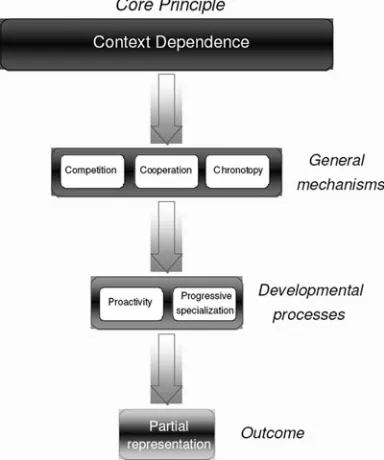
Context-dependence constrains emerging represen-tations through three domain-general, level-independent mechanisms: cooperation, competition, and chronotopy (timing). The specific implementation of these mechan-isms will vary depending on the level of analysis. The mechanisms themselves make possible two processes that underlie the development of representations: proac-tivity and progressive specialization. The outcome of these processes is the emergence of partial represen-tations(Fig. 1).
Competitionimplies that from the many initial contribu-tors to an immature function, only a subset of these will ultimately be involved in the mature function. For example, over time, the expression of gene A may prevent the expression of gene B. Similarly, inhibitory neurons or inhibitory brain structures (e.g., frontal lobe inhibition of subcortical functions) restrict competing pro-cesses from participating in a particular function. At the cognitive level, one representation of a sensory input (e.g., one view of the ambiguous Necker cube) may compete with another incompatible interpretation of the same sensory data. Overall, the purpose of competition is to allow for stable, minimal representations.
Cooperation, however, is a mechanism involved in the integration of multiple contributors to a function. For example, some genes serve as triggers for other genes, coac-tivity of neurons help build circuits, different brain systems may need to be simultaneously involved in a particular func-tion, and social behavior requires cooperation among indi-viduals. Unlike competition, but complementary to it, cooperation strives for overall efficiency through the coordi-nation of interrelated functions. Together, competition and cooperation help build a system that may be minimal but involves a degree of redundancy that makes it relatively robust to damage.
The notion ofchronotopystresses that time is a dimension of development (cf. Elman et al. 1996). Some patterns of gene expression are restricted to specific developmental times, some key aspects of neural development rely on sequences of events, and adaptive plasticity occurs at different times in different parts of the developing system. At a cognitive level, this translates to saying that children will solve restricted problems grounded within a limited domain before solving abstract general problems that span several domains. Perhaps the most important temporal aspect concerns restrictions to plasticity. Neural commitment means that
Figure 1. Principles, mechanisms and processes involved in the neuroconstructivist framework. Both the mechanisms and processes can be construed as operating at multiple levels of description.
[image:5.603.316.508.45.275.2]some circuits, once wired, may be hard to alter. Processing commitment, which is linked to neural commitment, means that functions become progressively entrenched and selective, and may lose sensitivity to inputs outside their current range. Two developmental processes operate on a larger time scale than the above mechanisms. Proactivity refers to the idea that, at least in part, representations reflect internally generated activity. For example, spontaneous neural activity helps form certain synaptic connections. Similarly, a child initiates behaviors that have effects on the environment that, in turn, affect sensory input and ensuing behavior. We view such a feedback loop, with key involvement from a proactive child, as the engine of development. There is substantial evidence that, from an early age, infants and children are selective about the information they process from the environment (Cohen 1972; Fantz 1964; Posner 1993). There is also evidence revealing a role for spontaneously generated movements on early development (Goldfield et al. 1993; Robertson et al. 2001), even in utero (Prechtl 2001; Robertson 1988). The other developmental process isprogressive special-ization. In its simplest form, the state of the system at any given time places constraints on future states of the system. Waddington’s (1957) metaphor of an epigenetic landscape captures the idea well. According to Wadding-ton, development is like a ball rolling down an uneven surface, able to take different directions as a function of its direction and inertia, and the landscape. Typical devel-opment would see most balls end up in the same general area of the landscape, and atypical development would see balls end up in different areas because of changes to initial direction, inertia, or landscape. A good example of such restriction-of-fate over time is phonological develop-ment. Although newborns can distinguish speech sounds from all human languages, the ability to discriminate non-native speech sounds drops substantially after about six months (Stager & Werker 1997; Trehub 1976). Impor-tantly, progressive specialization does not simply limit future adaptations but can also facilitate learning. In a con-structivist framework, early knowledge often provides the building blocks for further knowledge.
We argue that the outcomes of these developmental pro-cesses arepartial representations. The brain contains mul-tiple fragmentary and partial representations that are sufficient to allow successful behavior, for example, in response to a given object over a range of contexts. Each of these is able to have an independent causal effect on behavior. This view is consistent with the distributed proces-sing that takes place in the brain and is a computationally efficient solution to representation. New representations are thus acquired in the context of existing (also fragmen-tary) representations, the current effective learning environ-ment, and the current developmental state of the body.
3. Case studies
This section presents different areas of research that serve to exemplify how our approach can be applied in different domains. We use the termcase studyin the broad sense of a focused illustration. The first four case studies are con-crete examples of how the mechanisms operate. The last three cases are concerned with the notion of interactions between the different levels of explanation.
3.1. Early visual perception
Visual information processing in adults involves distinct cor-tical regions (Van Essen et al. 1992). For example, during object recognition, cortical processing begins in area V1 (the primary visual cortex) and progresses through a series of cortical regions until object identity per se is pro-cessed in the inferotemporal cortex. This portion of the visual system dealing with object recognition is known as the ventral pathway (Ungerleider & Mishkin 1982). Along this pathway early areas are involved in simpler tasks such as edge, contrast, or orientation detection (e.g., Hubel & Wiesel 1963), whereas later areas are involved in progressively more abstract representations (such as, ulti-mately, identifying an object). However, the pathway is not unidirectional but involves reciprocal connections between regions (Lamme & Roelfsema 2000). Later processes can affect earlier ones, such that the dynamics of information processing are more important than their specific anatom-ical locations (Felleman & Van Essen 1991). Each cortanatom-ical region is embedded in a network of other regions and pro-cesses information in this dynamic context.
Within each region there exists competition between cells, such as that occurring through lateral inhibition. This compe-tition occurs at each stage of processing and reflects both bottom-up stimulation and top-down biases (Desimone & Duncan 1995). Cooperation is also an important process in vision. To identify an object, it is necessary to group features of the visual input that belong to that object and to segment those from the background. This is achieved through an interactive process involving feedforward and feedback con-nections between the different cortical areas involved in object perception (Driver et al. 2001). Chronotopy is also important, as the functionality of the visual system emerges from a peripheral to central ordering over time (Johnson & Vecera 1996; Shrager & Johnson 1996). Later-developing neurons in higher-order areas can exploit the earlier, partial representations developed in lower, peripheral regions. Rep-resentations learned at each level constrain the represen-tational space of subsequent levels, allowing high-order regularities to be extracted (Clark & Thornton 1997).
The input selectivity of cells involved in visual processing can be changed through learning (Desimone 1996). More-over, experience leads to a decrease in the population of cells that respond to a familiar stimulus (Rainer & Miller 2000). Changes in performance thus reflect changes in rep-resentations, distributed across a smaller, selective popu-lation of neurons (Karni et al. 1995). Some work also reports that the cortical regions involved in a task may change as a function of expertise (Walsh et al. 1998), with fewer regions involved after learning than was initially the case (Petersen et al. 1998). This experience-dependent selectivity can enhance processing of subsets of visual inputs at the expense of other subsets. Selective attention implements a form of proactivity, whereby the child prefer-entially attends to some stimuli over others.
complex network of cortical areas that together enable object recognition.
3.2. Infant habituation
Because of the limited perceptual and motor skills of infants, researchers have devised many indirect methods to assess cognitive abilities in infants. The most popular method is the use of looking-time data (e.g., Thorpe 1956). Over the repeated presentation of stimuli, babies show a progressive decrease of interest, reflected by shorter looking times to the stimuli. They are then deemed to have habituated. However, they can show renewed interest (assessed from relatively longer looking) when presented with novel stimuli. This “novelty preference” is an example of proactive explora-tion of the environment. By careful manipulaexplora-tion of how the habitual and novel stimuli differ from each other, researchers can make claims about what infants perceive to be distinct, with implications for the nature of their underlying representations (Cashon & Cohen 2000). A common approach, owing to the pioneering work of Sokolov (1963), is to suggest that a mental representation of the habitual set of stimuli is learned, and that the progress-ive decrease in looking time reflects an increasing match between this internal represenataion and the stimuli. Novelty preference is then taken to reflect a mismatch between the internal representation and the novel stimulus. In accordance with our theme of consistency across levels of interpretation, Sirois and Mareschal (2002) argued that models and theories of habituation should reflect the two key neural mechanisms that support infant habituation. First, the hippocampus is involved in selective inhibition of high-order features such as color or shape (or feature relations, such as color-plus-shape) of the habitual stimuli (Nelson 1995; Sokolov & Vinogradova 1975). Hippocampal inhibition is short-lived. Hence, given that habituation has lasting effects (Zelazo et al. 1991), the second neural mech-anism of habituation involves long-term storage in hippo-campal-related cortical areas, notably the entorhinal cortex (Nelson 1995).
In the Habituation, autoassociation and brain (HAB) model of infant habituation (Sirois & Mareschal 2004), hip-pocampal and cortical functions are both implemented by simple autoassociator networks (see Sirois 2004); however, they use different learning rules to implement selective inhi-bition and long-term storage. Both networks are coupled through reciprocal connections and both contribute to the overall output of the system. Embedding the model in a robot and an environment illustrated how motor learning contributes to habituation performance (Sirois 2005).
The HAB model illustrates the main principles of the neuroconstructivist approach in the following ways. First, learning is driven by context, as each subsystem learns within the feedback loop of the other, antagonist subsys-tem. Moreover, as the robot work illustrated, habituation can be affected by motor learning. Behavior involves a mixture of cooperation (within subsystems, but also between them when their outputs are aggregated at the system level) and competition (the hippocampus attempts to shut down known input signals, whereas the cortex attempts to amplify them). Moreover, chronotopy was shown by the model’s ability to capture age-related changes in performance through maturation of outward
connections from the cortex (Sirois & Mareschal 2004), as observed in infant brains and in absence of prior experi-ence. The model is proactive, as it seeks maximally stimu-lating input (Sirois 2005), and exhibits progressive specialization as it shifts from an initial familiarity prefer-ence to a novelty preferprefer-ence once known inputs are well learned. The outcome is partial representations, as the behavior of the model is achieved through the activity of several interconnected units in two distinct subsystems.
3.3. Phonological development
Infant babbling, the repetition of simple speech sounds, creates a coupling between the perception and production of language. This view is relatively recent, as early work on phonological development proposed no such connection between babbling and speech (Jakobson 1941; Lenneberg 1967).
In the first year of life, there are substantial changes to the perception of speech sounds. The best known is how infants, who are initially able to discriminate speech sounds from any human language (Eimas et al. 1971), pro-gressively lose the ability to discriminate phonemes from outside their native language in the second half of the first year (Werker & Tees 1984). The importance of the lin-guistic environment is further stressed by data showing that infants’ speech discrimination ability is correlated with the clarity of their mothers’ speech (Liu et al. 2003).
Changes in speech-sound production can be observed in infant articulation. Before six months, most speech sounds consist of isolated vowels. However, around six months, most infants begin to babble. Articulation becomes progressively more complex over the next few months, and babbling becomes more specific to the infant’s native language (Boysson-Bardies et al. 1989). This is arguably a key step towards the development of a phonological inventory, used for words and subsequently more complex linguistic structures (Vihman 2002).
The central role of auditory perception for babbling has been emphasized by research on deaf infants (Oller & Eilers 1988), who babble later than hearing infants and produce different sounds. These effects are long lasting and can negatively affect later speech (Wallace et al. 1998). Auditory feedback is thus necessary for the success-ful coordination of phonatory (larynx) and articulatory (vocal tract) speech systems, essential for babbling and, subsequently, speech (Koopmans-van Beinum et al. 2001). Westermann and Miranda (2004) recently proposed a mechanistic model of the development of the link between speech perception and production. The model consists of two topographic maps, one each for articulation and perception. Within these maps, neurons responded to inputs that fell within their respective fields. The two maps were connected with Hebbian weights, such that units with high covariation between maps saw their connections strengthened and connections for units with low covaria-tion were weakened. As a consequence, strongly covarying articulations/perceptions became prototypical; these pro-totypes represented vowels that could be most robustly produced based on articulatory parameters. The model’s prototypical speech sounds reflected both internally gen-erated activity and environmental input (see Vihman 1991 for a similar interpretation called the articulatory filter hypothesis).
Context is central to the emergence of speech sound prototypes in both maps. Articulatory representations emerge from a dynamic interaction with perception and vice versa; moreover, these reflect the context of both internally generated and external inputs. Each topographi-cal map implements lotopographi-cal competition through lateral inhi-bition, but the coupling of articulation and perception requires the cooperation of both maps. Chronotopy is also important, as both maps require a synchronization of plasticity. Proactivity is vital, as babbling produces the coupling between perception and production. Moreover, as this coupling develops, the representations make the model progressively more selective with respect to environmental input. In real infants, in a real linguistic environment, this would lead to enhanced performance in the native language, at the expense of discrimination abilities for other languages (see also McClelland et al. 2002). Ultimately, this progressive specialization within and between maps leads to partial representations: speech sounds become activations patterns on both maps, and these cannot be isolated from one another.
3.4. Object representations in infants
Ungerleider and Mishkin (1982) proposed that object pro-cessing involves two separate cortical information proces-sing pathways: the dorsal and ventral streams. It was proposed that the dorsal stream, terminating in the parie-tal cortex, processes object localization (the where func-tion), whereas the ventral system, ending in the temporal cortex, performs object identification (thewhatfunction). The actual degree of independence of these two streams has recently been the object of some attention (Fellman & Van Essen 1991; Humphreys & Riddoch 2003; Merigan & Maunsell 1993; Puce et al. 1998). Our interest, though, is that both streams process different types of information and, as such, develop distinct representations. The fact that object representations are, to a large degree, segregated in functionally distinct routes, implies that there needs to be a mechanism that integrates these two sources of information when they are required by some task (such as, for example, picking up a specific object from several alternatives). Mareschal et al. (1999) proposed a model that examines how these two streams of information may be gradually integrated over the course of development, explaining why successful object retrieval by infants lags behind successful visual tracking. A key assumption of the model is that both routes (ventral and dorsal) are exposed to the same input but differ in their associative learning mechanisms. The object recognition network (ventral stream) generates a spatially invariant representation of objects, using an unsupervised competitive learning rule (Foldiak 1991). The trajectory prediction network (dorsal stream) uses a partially recurrent feedforward network to track the immediately anticipated retinal position of moving objects, a proactive process. The response inte-gration network in Mareschal et al. (1999) represents a measure of infants’ abilities to coordinate and use infor-mation about the positions and identities of objects, analo-gous to a similar prefrontal cortical function observed in primates (Rao et al. 1997).
Interestingly, young infants show some unusual beha-viors when objects are briefly occluded. For instance, infants can remember spatial properties of occluded
objects but not necessarily identity features (Kaldy & Sigala 2004; Leslie et al. 1998; Simon et al. 1995; Wilcox & Schweinle 2002; Xu & Carey 1996). Object individua-tion at 4.5 months relies on shape and size, at 7.5 months on texture, and only at 11.5 months does it involve color (Wilcox 1999). Mareschal and Johnson (2003) examined under which conditions four-month-olds would retain position or identity information during a 5-second occlusion. They found that the functional value of objects (their affordance, in Gibsonian terms) appears to drive a competition between dorsal and ventral streams for object retention. Objects that afford the possibility of actions maintain dorsally processed infor-mation, whereas objects that do not afford action maintain ventral information.
This and other evidence highlights the contextual nature of object processing, involving the child, the environment, the affordance of objects and functionally distinct neural representations. Competition and cooperation occur at different levels in the distributed system involved in object recognition. The system also exhibits progressive specialization, in that each stream excludes irrelevant sources of information (spatial or featural) to carry out its function. Ultimately, the infant brain must coordinate partial representations in distinct systems to act on specific objects (Mareschal et al. 1999; Rao et al. 1997).
3.5. Ensocialment
The importance of the social context on cognitive develop-ment has a long history (e.g., Bandura 1986; Rogoff 1990; Vygotsky 1978). Our focus is on the developing child situ-ated in an environment that includes other humans and in which development involves a collaboration between the child and those who support and nurture this development (Rogoff 2003). While these ideas are not new, it is only more recently that the importance of social behavior has made forays into the neurosciences (e.g., Adolphs 2003).
An early aspect of social brain function is the preference of newborns (as early as within the first hours after birth) for face-like stimuli (Johnson et al. 1991; Valenza et al. 1996). Although the specific cues that elicit the preference remain a source of debate (see Johnson 2005 for review), it has been suggested that three high-contrast blobs in the positions of the eyes and mouth may be sufficient (Johnson & Morton 1991; Morton & Johnson 1991). Hence, the brain does not contain, from birth, a detailed specification of a face but a skeletal, partial, representation. The preference for face-like stimulation makes the infant proactive in seeking stimulation with faces, which places the infant in a learning context in which other cortical systems will learn about faces. Hence, an initial bias ensures that later developing areas of the cortex acquire specific specialization for faces (Johnson 2005). Similarly, evidence shows that infants prefer to look at faces that show direct gaze towards them (Farroni et al. 2002). Main-taining eye contact with someone ensures foveation of the face, which may prove essential to the emergence of a cor-tical face area (Johnson 2004).
instructs the child, to private speech, whereby the child maintains an internal dialog that takes over from external instruction to guide behavior. Indeed, Berk and Gavin (1984) observed that most vocalized private speech in group settings actually takes place when a child is working alone on a difficult task.
Vygotsky (1978) further proposed that in relation to the child’s current level of development, there existed a small window of optimal stimulation within which to provoke further development: the zone of proximal development (ZPD). Infants display this spontaneously by exhibiting a preference for stimuli that are moderately discrepant from their current knowledge or capabilities (McCall et al. 1977). Teaching below this zone provides little enhance-ment as it is within the child’s current grasp. Similarly, teaching above this zone would also provide few gains as the child would fail to see the path between her current level of competence and the teaching. Thus, Rogoff (1990) proposed the notion ofguided participation, whereby pro-gress is optimal when child and teacher share a focus and purpose in learning. The main idea in terms of instruction (and, generally, pedagogy) is that it channels the child’s interaction with the environment (see also Csibra & Gergely 2006). The emphasis on joint participation once again highlights the importance of proactivity from the child.
3.6. Atypical development
In most cases, the outcome of development is relatively pre-dictable. However, how can we explain variability in devel-opmental outcome? Some variability is observed in intelligence, much more in cases of developmental dis-orders. Developmental disorders can have several causes. Disorders can stem from genetic abnormalities, such as in Down syndrome, Williams syndrome, and fragile X. They can be identified on behavioral grounds, such as in autism, Specific Language Impairment (SLI), Attention Deficit Hyperactivity Disorder (ADHD), and dyslexia. In these latter cases, some genetic influence is suspected as these conditions can run in families but the genetic basis is not fully understood. Finally, disorders can be caused by atypical environments, either biochemical (e.g., mothers taking drugs during pregnancy) or psychological (e.g., cases of deprivation or abuse). Notably, some develop-mental disorders can exhibit very uneven cognitive profiles. For example, there may be particular problems in language but less so in nonverbal areas (e.g., SLI). Some abilities can appear relatively stronger against a background of low IQ (e.g., face recognition in Williams syndrome). How should we explain these uneven profiles?
Where uneven cognitive profiles are observed in typical adults who have experienced brain damage, the usual recourse is to infer that certain parts of the adult cognitive structure have sustained damage. Some researchers have attempted to apply this explanatory framework to develop-mental disorders, inferring that isolated cognitive com-ponents have failed to develop, while the rest of the cognitive system has developed typically. Examples include a Theory of Mind module in autism (Baron-Cohen 1999; Baron-(Baron-Cohen et al. 1993) and a syntax module in SLI (Van der Lely 1997). Where the disorder has a genetic basis, there has been a further temptation to view uneven cognitive profiles as evidence for direct links between genes and particular cognitive mechanisms.
Explaining developmental deficits with reference to the typical adult cognitive system is, however, problematic. The adult structure is not prespecified but is itself a product of development. Yet strong analogies with adult brain damage produce accounts of developmental deficits with no role for development at all. In contrast empirical evidence supports the role of development in producing atypical cognitive profiles. When Paterson et al. (1999) explored the language and number abilities of toddlers with Down syndrome and Williams syndrome, they found a different relative pattern to that observed in adults with these disorders. The profile in early childhood was not a miniature version of the adult profile.
The influence of genetic variation and genetic mutation on brain development is not yet fully understood. However, current data suggest that genetic effects are typically graded and diffuse, and have not been found to co-occur with the regions of the cortex associated with specialised higher cognitive functions in typical adults. For example, the British KE family were initially identified as having a specific speech and language deficit caused by mutation to a single gene (FOXP2). However, subsequent research revealed that there were widespread structural and functional brain differences in family members pos-sessing the mutation, while cognitive deficits extended outside the domain of language to negatively affect, for example, performance on nonverbal, rapid associative learning tasks (Watkins et al. 2002a; Watkins et al. 2002b). In a comparison of a number of genetic syn-dromes, Kaufmann and Moser (2000) confirmed that diffuse effects on brain development are the norm.
The neuroconstructivist approach places the developmen-tal process at the heart of explanations of developmendevelopmen-tal dis-orders (Karmiloff-Smith 1998a). Empirically, the framework encourages researchers to focus on trajectories of develop-ment rather than static snapshots. Theoretically, disorders are viewed as cases of atypically constrained trajectories. A disordered system is still adaptive, yet it may not possess the neurocomputational constraints that are appropriate to acquire a domain. In some circumstances, apparently typical behaviors may be generated by atypical underlying processes (see, e.g., Deruelle et al. 1999; Karmiloff-Smith et al. 2004, for work on face recognition in Williams syn-drome). In other cases, the atypical constraints may producebetter than typicalperformance in a domain, such as in some aspects of perception in autism. In Waddington’s (1957) metaphor, the epigenetic landscape has changed.
Several of the core ideas of neuroconstructivism are emphasized by the study of atypical development. For example, in some casesinteractive specializationof corti-cal areas appears atypicorti-cal. Adults with Williams syndrome exhibit face recognition skills in the normal range, but examination of ERPs reveal reduced evidence of specializ-ation and localizspecializ-ation of neural activity (e.g., Grice et al. 2001). Neuroimaging data have suggested differences in the constraints ofchronotypy, in terms of the changes in connectivity (and associated plasticity) over time in dis-orders such as autism and Down syndrome (e.g., Becker et al. 1986; Chugani et al. 1999).
similarity that those representations encode, can play a material role in the ability of other brain systems to employ this information to drive other processes. It is possible that in autism, SLI, and dyslexia, for example, the consequence of atypical similarity structure in the input representations results in a processing deficit much higher up in a hierarchy of representational systems. Differences in embodiment may also impact on the trajectory of development. For example, Sieratzki and Woll (1998) proposed that in children with spinal muscular atrophy, a disorder that reduces early mobility, language development might be accelerated as a compen-satory way for the young child to control their environ-ment. Lastly, an atypical child co-specifies an atypical social environment, for example, in the expectations and reactions of parents and peers, which has also been observed to influence these children’s development.
Of course, when we place an emphasis on development as a trajectory, and atypical development as an atypically constrained trajectory, it becomes increasingly important to specify what is different about the constraints and mech-anisms of change. Herecomputational modelinghas offered exciting avenues for progress in the study of disorders (e.g., disorders of infant gaze perception: Triesch et al. 2006; disorders of language: Thomas & Karmiloff-Smith, 2003).
3.7. Dyslexia
Reading is a relatively recent human invention, going back only a few thousand years. It is highly unlikely that evol-ution has produced domain-specific constraints on the cognitive systems involved (McCandliss et al. 2003). The existence of a specialised reading system in a brain must therefore represent an adaptation of more general func-tions to reflect the specific environmental demands of cul-tures that encourage expertise in this area.
Neuroimaging suggests that reading recruits up to a dozen distinct brain areas (Dehaene 2003). One particular area, the visual word form area, shows comparably high levels of activity for words and pseudowords (seemingly plausible nonwords made up of standard letters), but not for illegal letter symbols, suggesting an area that processes visual stimuli that look like words, prior to establishing whether they have a meaning (Dehaene et al. 2002; Posner et al. 1988). The location of this area is relatively consistent across individuals and languages (and thus scripts). Because it couldn’t have been selected by evol-ution, this area must be one that happens to have appro-priate computational properties for processing words; that is, fine foveal discrimination and invariant recognition of letter- and word-sized stimuli (McCandliss et al. 2003). The emergence of reading requires a mapping to be established between the linguistic phonological discrimi-nations of the preliterate child and the letters or letter clus-ters he or she must learn: That is, the child must learn the relation between graphemes (new) and phonemes (old). Some languages, such as English and French, have incon-sistent mappings between graphemes and phonemes (e.g., the letter ‘i’ sounds different in the English words bit and bite). Compared to languages with consistent mappings (e.g., Italian and Spanish), inconsistent mappings can delay proficient grapheme-phoneme decoding by up to two years (Goswami 2002; 2003).
Reading disabilities in English affect 5 to 17 percent of school-aged children (Shaywitz & Shaywitz 1994). Two main subtypes of developmental dyslexia have been pro-posed (Castles & Coltheart, 1993; Manis et al. 1996). Phono-logical developmental dyslexia involves difficulties reading novel or pseudowords, whereassurface developmental dys-lexia describes a difficulty in reading irregular words for which the pronunciation cannot be predicted from the sounds of the individual letters (words such as aisle or yacht). Twin studies have suggested a significant genetic contri-bution to developmental dyslexia (Pennington 1999; Plomin & Dale 2000; Plomin & Rutter 1998). However, a direct mapping of gene to cognitive function is highly unlikely. Therefore, one might expect to observe more widespread effects than dyslexia alone if there is a genetic aetiology. Although there is no consensus and sub-stantial variability in the literature, especially for surface dyslexia, various concurrent cognitive deficits have been observed in individuals with dyslexia, suggesting a more general sensorimotor syndrome (Stein & Walsh 1997).
Most computational models of typical and atypical reading development assume that the domain problem constitutes learning to map between the representational codes for written words, spoken words, and word mean-ings (e.g., Harm & Seidenberg 2004; Plaut et al. 1996; Sei-denberg & McClelland 1989). Surface dyslexia has been simulated by altering the initial computational constraints so that the system’s ability to learn the mapping between orthography and phonology is reduced. (Sometimes this involves impairing a putative route to pronunciation via word meaning.) Phonological dyslexia has been simulated in two majors ways. The first method is to degrade the prop-erties of the phonological representations (e.g., Harm & Seidenberg 2004). The second method degrades the ability of the system to learn the functional linking orthogra-phy and phonology. It is notable that, in this account, similar manipulations can produce symptoms of either surface or phonological dyslexia; many people with dyslexia also show symptoms of both types (Manis et al. 1996).
Developmental dyslexia serves to illustrate the prin-ciples of neuroconstructivism in the following ways. Reading is a specialisation of a more general system, reflecting the context of a particular environment. In typical development, reading involves dynamic inter-actions between multiple functions with suitable compu-tational properties. Partial representations interact during development, as highlighted by the restructuring of phonology when the mapping to graphemes is learned. In developmental dyslexia, the somewhat hetero-geneous clusters of difficulties reflect the different ways crucial mappings between phonology, orthography, and semantics can be disrupted, as illustrated by compu-tational work. This is consistent with the suggestion of a genetic aetiology, which would be unlikely to selectively disrupt a function that evolution cannot have selected in the first place. Rather, genetic anomalies are expected to show more general, diffuse effects with differential rather than specific consequences in particular domains.
4. Conclusions
multilevel isomorphism is a radical rejection of Marr (1982). Cognition cannot be studied independently of the brain and body. Another important implication is the central role of developmental trajectories in the interpret-ation of adult cognition. There is no teleology involved in development; mature, normative cognition is an outcome of development, not a pre-specified target (Thomas & Kar-miloff-Smith 2003).
We have also argued that brain regions do not utilize complete representations. In support of this view, we dis-cussed, first, how a particular input signal is typically pro-cessed separately along distinct dimensions (e.g., shape, color, motion in object perception), and second, that func-tional brain systems are interrelated with other funcfunc-tional systems, and are located and within a body and an environ-ment. All these contexts provide varying levels and sources of information such that only fragments of information need to be represented. An implication is that cognition will be compositional and systematic (e.g., Fodor 1975; Fodor & Pylyshyn 1988) only if the context permits it.
Progressive specialization, and notions such as emer-gent modularity (e.g., Karmiloff-Smith 1998a) imply that, as a result of development, the cognitive architecture will exhibit a progressive lack of flexibility to the novel. This can be observed when emergent specialized systems have well-delineated functions (Johnson & Muna-kata 2005). These specialized systems should not be con-strued as mere imprinting from environmental pressures and regularities. The child, from birth (e.g., Robertson et al. 2004), is an active contributor to his or her develop-ment. Our emphasis on context-dependence may be taken as implying that it is impossible to make general claims about cognition. This is not the case. Instead, we argue that the key to understanding contextualised function is to identify those contexts that are central to the function of interest, while ignoring those contexts that may have a peripheral rather than central role in determining the function of interest.
A recurrent theme in our book is the need for causal theories regarding what makes complex behaviors emerge. These theories need to explain behaviors on multiple time scales. They must explain how and why behaviors unfold as we observe them in real time, as well as how they unfold in developmental time. To do this, we need more than just a very detailed description of the behaviors that can be observed at any point. Cer-tainly, such descriptions are essential for the advance-ment of causal theories of developadvance-ment, but they are unsatisfactory to the extent that they are unable to explain or predict new behaviors. The clearest example of this is with regards to explaining the behavior of chil-dren with developmental disorders. Unless one has a mechanistic theory of what is causing behaviors to unfold, and a causal theory of what is atypical in such children’s processing, it is impossible to explain or predict why one set of atypically developing children may show a delay at one behavior and excel at another, while a second set of atypically developing children will excel at the former behavior but have a developmental delay in the latter behavior.
In the companion volume, Neuroconstructivism, volume2: Perspectives and Prospects (Mareschal et al. 2007b), we invited nine research labs with objectives broadly consistent with the neuroconstructivist approach
to present their computational modeling work. The ques-tions the models are built to investigate differ both in the level of description and in time scale over which the rel-evant behaviors operate. Some models focus on relatively rapid adaptation occurring (perhaps) at the cellular level of description, whereas other models focus on relatively slow adaptation occurring at the cognitive level.
We asked all contributors to the companion volume to emphasize the following aspects of their contributions when describing their work:
What functional brain constraints operate on the process of representation development?
What embodiment or situatedness constraints operate on the process of representation development?
Ultimately, computational models are tools to help us reflect on questions of process and mechanisms. There-fore, we also asked the contributing authors to answer the following questions:
How does the model embody these constraints? What concrete predictions does the model make?
In Neurocontructivism, volume 1: How the brain con-structs cognition, we set out to investigate how the rep-resentations that underlie cognition emerge in the brain during development. We argued that the emergence of such representations is the outcome of a constructivist process involving constraints that operate at all levels from the cellular environment to the social environment. To truly understand how these representations emerge, it is necessary to locate our theories at the point where the constraints of brain, body, and environment come together.
A C K N O W L E D G M E N T S
The writing of this paper was supported by EC grants 516542 (NEST) and 029088 (NEST), EPSRC Grant EP/D062225/1, ESRC grant RES-061-23-0129, MRC grants G9715587 and G0300188, and British Academy grant SG-40400.
N O T E
1. We acknowledge that the term neuroconstructivism has been used by others previously, sometimes with a general meaning very similar to our usage (Karmiloff-Smith 1998a; Quartz & Sejnowksi 1997) and sometimes with a differing meaning (Sheridan 1997).
Open Peer Commentary
Are interactive specialization and massive
redeployment compatible?
doi:10.1017/S0140525X08004081
Michael L. Anderson
Department of Psychology, Franklin & Marshall College, Lancaster, PA 17604. [email protected] www.agcognition.org
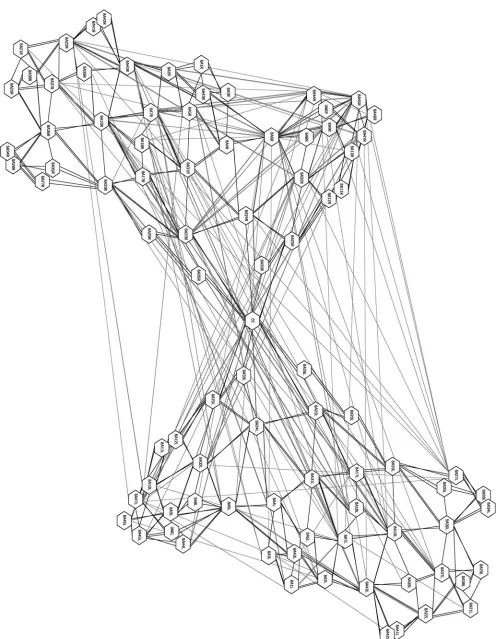
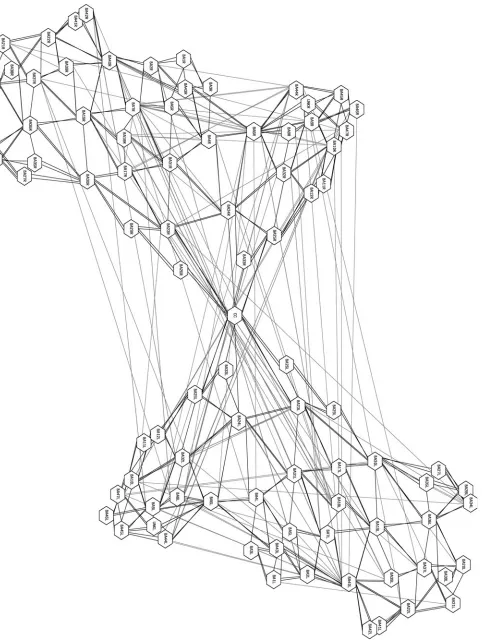
Figure 1 (Anderson). Cortex represented as adjacencyþco-activation graphs. Here the Brodmann areas are nodes, with black lines between adjacent areas and gray lines between areas showing significant coactivation. The graph on the left shows coactivations from 56 action tasks, and the graph on the right shows coactivations from 77 attention tasks. Graphs rendered with aiSee v. 2.2.
[image:12.603.73.573.57.696.2]Figure 1 (Anderson). Continued.
[image:13.603.53.539.40.680.2]brain areas cooperate in specialized ways to support cognitive functions, individual brain areas participate in many such networks, in different cognitive domains.
Much as I would love to have the time and space to comment more fully on this fascinating and comprehensive book – for example, the issues of embodied cognition in general, and embo-died representations in particular, are topics near and dear to my heart – I will conform to theBBSmold and comment on only the one aspect of the book that is most relevant to my most recent work: the framework ofInteractive Specialization(IS). In what follows I will offer: (1) a method for investigating this framework, and (2) some data that may or may not be consistent with it (depending on what is meant by “specialization”).
In contrast to localization-based approaches, which at the extreme tend to expect a 1 : 1 correspondence between cognitive functions and brain areas, the IS framework in Neuroconstructi-vism, Vol. 1: How the Brain Constructs Cognition(Mareschal et al. 2007a), treats cognitive functions as the “emergent product of interactions between different brain regions” (p. 60). For IS, the targets of functional brain mapping should be collections of cooperating neural circuits, not individual brain areas; and the focus of developmental neuroscience should be on changes in interregional connectivity, rather than on the maturation of individual regions.
I wholeheartedly applaud this shift in focus. Networks of cooperating brain regions are prima facie far more plausible targets of (high-level) functional attributions than are individual areas, so much so that I find it something of a puzzle that there hasn’t been far more effort along these lines (which is not to imply that there has been none). I think one reason is that the techniques typically used in cooperation-focused investi-gations are complex, they are hard to master, and they produce results that can be difficult to interpret. Thus I would like to take a moment to outline avery simpleanalytical technique we have been using in my lab (Anderson et al., in press).
The technique involves the simple expedient of choosing a spatial segmentation of the cortex (current analyses use Brod-mann areas, but any consistent segmentation scheme will work) and analyzing large numbers of fMRI studies in some specific cognitive or behavioral domain to identify statistically significant instances of coactivation. We recently compiled a database of fMRI studies containing 530 experiments in 18 cognitive domains, with the results of each experiment coded primarily in terms of which Brodmann areas contained post-subtraction activation(s). The baseline chance of acti-vation for each area is determined by dividing the number of experiments in which it was activated by the total number of experiments in the database. Then, for each pair of Brodmann areas, we use a chi-square measure to see if their observed degree of coactivation (in a given domain) was significantly different from what would be predicted by chance. With these coactivated pairs, we also perform a bino-mial analysis to obtain directional information. (It is some-times the case that, while area A and area B are coactive more (or less) often than would be predicted by chance, the effect is asymmetric, such that area B is more active when area A is active, but not the reverse.)
The results of such analyses are conveniently represented as a graph, where the nodes are Brodmann areas, and edges between the nodes indicate significant coactivation. Figure 1 shows the graphs from one such analysis, for a set of action and attention tasks. We hypothesize that the network of coactivated areas revealed by such analysis represent those areas of the cortex that cooperate to perform the cognitive tasks in the given domain.
With the data in this format, it becomes possible to formu-late some very simple questions, and use some well-understood methods to answer them. For instance, in graph theory a
clique is a set of fully interconnected nodes that are sparsely connected to the rest of the graph (Alba 1973). Neural cliques, which in this context represent small networks of coac-tive areas operating independently of other parts of the graph, seem likely to correspond to the neural components that support a set of closely related cognitive functions or subfunc-tions. One can also look at other features of the graphs, such as local topography, to help make plausible inferences about underlying function. For example, a hub-and-spoke pattern of coactivation may indicate broadcast or information consolida-tion funcconsolida-tions; in contrast long strings of connected nodes might indicate serial processing. Since one can also look at the emergence of such structures over time, this seems an ideal tool for investigating the IS framework. The basic data for such investigations will become increasingly available as results from more longitudinal fMRI studies are released. More generally, I think that graph theory is an underutilized tool in cognitive neuroscience, and coactivation graphs in par-ticular offer the promise of making cooperation-sensitive inves-tigations into neural function more broadly intelligible.
This brings me to some promised data. We generated coac-tivation graphs in eight cognitive domains (action; attention; emotion; language; memory; mental imagery; reasoning; visual perception) from 472 experiments in our database and evalu-ated how much edge overlap and how much node overlap there was among the various domains. In this context, node overlaps indicate Brodmann areas that support tasks in both domains, whereas edge overlaps indicate similar patterns of cooperation. Given the focus on the developmental emergence of networks of brain areas to generate cognitive functions, the IS framework would seem to predict little edge overlap, as differences in function would presumably result from differ-ences in interregional cooperation. This is just what we found; using Dice’s coefficient as our measure (D¼2(o1,2)/
(n1þn2), where o is the number of overlapping elements, andn is the total number of elements in each set) we found very little edge overlap between the domains (Mean(D)¼
0.15, SD 0.04). However, we found a great deal of node overlap (Mean(D)¼0.81, SD 0.04). It is not clear if the IS
framework is compatible with this latter finding, because Mareschal et al. do not distinguish between increasing compu-tationalspecialization in development (whereby a given region comes to have an increasingly well-defined subfunctional role in the networks in which it participates) anddomain specializ-ation (whereby increasing specializspecializ-ation of functional networks also implies increasing dedication of participating regions to a narrow and domain-restricted range of cognitive functions). The result reported is just one among a number of findings that suggests that brain regions are not domain specialized entities, but in fact typically support functions across many different cognitive domains (Anderson 2007a; 2007b; 2007c). I would welcome the authors’ comments and clarifications on this issue.
A good approach to neural and behavioural
development but would be even better if set in
a broader context
doi:10.1017/S0140525X08004093
Patrick Bateson
Sub-Department of Animal Behaviour, University of Cambridge, Cambridge CB23 8AA, United Kingdom.
[email protected] www.zoo.cam.ac.uk/zoostaff/bateson.htm