https://doi.org/10.5194/hess-23-2369-2019 © Author(s) 2019. This work is distributed under the Creative Commons Attribution 4.0 License.
Role-play simulations as an aid to achieve complex learning
outcomes in hydrological science
Arvid Bring1,2and Steve W. Lyon1,3
1Department of Physical Geography, Stockholm University, 106 91 Stockholm, Sweden 2Bolin Centre for Climate Research, Stockholm University, 106 91 Stockholm, Sweden 3The Nature Conservancy, New Jersey Chapter, Delmont, NJ 08314, USA
Correspondence:Arvid Bring ([email protected])
Received: 14 December 2018 – Discussion started: 15 January 2019
Revised: 23 April 2019 – Accepted: 24 April 2019 – Published: 16 May 2019
Abstract.Students in hydrology are expected to become pro-ficient in a set of quantitative skills while also acquiring the ability to apply their problem-solving abilities in real-life situations. To achieve both these types of learning out-comes, there is broad evidence that activity-based learning is beneficial. In this paper, we argue that role-play simula-tions in particular are useful for achieving complex learn-ing outcomes, i.e., maklearn-ing students able to coordinate and integrate various analytical skills in complicated settings. We evaluated the effects of an integrated water resources management (IWRM) negotiation simulation next to more traditional teaching methods intended to foster quantitative understanding. Results showed that despite similar student-reported achievement of both complex and quantitative in-tended learning outcomes, the students favored the negoti-ation simulnegoti-ation over the traditional method. This implies that role-play simulations can motivate and actively engage a classroom, thereby creating a space for potential deeper learning and longer retention of knowledge. While our find-ings support the utility of simulations to teach complex learn-ing outcomes and indicate no shortcomlearn-ing in achievlearn-ing such outcomes next to traditional methods aimed at quantitative learning outcomes, simulations are still not widely used to foster activity-based learning in the classroom. We thus con-clude by presenting three particularly challenging areas of role-play simulations as learning tools that serve as potential barriers to their implementation and suggest ways to over-come such roadblocks.
1 Introduction
As the societal need and student demand for science educa-tion continue to require interdisciplinarity, higher-educaeduca-tion practitioners are increasingly faced with teaching and achiev-ing complex sets of intended learnachiev-ing outcomes in the class-room. Education in water resources and hydrology is an ex-ample of such a situation as water connects across several biophysical aspects and societal problems (Di Baldassarre et al., 2013; Bring et al., 2017; Rodell et al., 2018; Strandmark et al., 2015). Hydrology students today move on to careers that span a wide spectrum of skills: some become niche ex-perts in quantitative modeling, while others end up in policy work as generalists. All hydrology students, however, should acquire a set of core quantitative skills that make them pro-fessionals in understanding the functioning of water in the Earth system (Lyon and Teutschbein, 2011).
various political, economic, and social aspects. We are in-creasingly asking our students to engage with and achieve complex and cross-disciplinary intended learning outcomes in our environmental classes (Lyon et al., 2013).
Today, the need for complex skills is strongly emphasized in the environmental science community (McClain et al., 2012; Seibert et al., 2011; Wagener et al., 2012). This em-phasis reflects a societal development since the middle of the twentieth century, in which not only teaching and learn-ing, but also the role of environmental science professionals, has been transformed thoroughly (Sivapalan, 2018). This ap-plies in particular to a discipline such as hydrology, which has evolved from its ancient roots in applied engineering to a science that is today central in Earth system science, geo-sciences and environmental geo-sciences. While the engineering perspective still remains strong in hydrology, compared with other Earth system science-related disciplines, making con-nections to the wider system context in hydrology teaching has clearly grown in importance. One aspect which reflects this is the limited use of textbooks to teach hydrology (Wa-gener et al., 2007), which may reflect the fact that they con-tain the theory but not the interdisciplinary context within which many students will work. Today, we are not only in-creasingly viewing the environment as a complex system, which requires us to revise what we teach students about how the system works, but we are also required by advances in the science of learning and behavior to revise how we view teaching and what methods best reinforce learning (DeNeve and Heppner, 1997).
1.1 Role-play simulations as a useful method to achieve complex intended learning outcomes
As the contents of environmental science curricula have de-veloped to include a broader context of problem-solving (e.g., Lyon and Teutschbein, 2011), simulations provide an opportunity to illustrate and test social and political conse-quences of environmental problems. Role-play simulations can be thought of as evolving and open-ended interactive problems where students have specific roles with responsi-bilities and constraints, and experience the effect of their ac-tions and decisions (Gredler, 2004). They create an active environment in the classroom that has been linked to higher achievement and better non-cognitive outcomes (D’Angelo et al., 2014). In particular, role-play simulations provide a condensed way to introduce natural science students to a set of aspects often not previously included in their training, such as economic considerations, the importance of political context, participatory processes, and societal trade-offs.
Role-play simulations are also used outside academia, as training tools for professional water managers and other stakeholders. In such a context, simulations can help facili-tate a process of “social learning” (Pahl-Wostl et al., 2007), in which participants together move towards a shared vision and understanding of a water management problem, and in which
their previously established views are challenged. For exam-ple, a government-employed water manager might act in the role-play simulation as a vocal “green” non-governmental activist and gain understanding for such a stakeholder’s per-ceptions and main interests. There is some evidence that stakeholder perceptions have shifted due to such simulations (Pahl-Wostl and Hare, 2004). As water resources manage-ment has moved from sectoral decision-making towards in-tegrated water resources management (IWRM), both role-play simulations and other types of participatory and col-laborative modeling approaches have become increasingly popular (Basco-Carrera et al., 2017; Lyon et al., 2018). Fur-thermore, participatory approaches in general are supported both formally by the Dublin Principles (http://www.wmo.int/ pages/prog/hwrp/documents/english/icwedece.html, last cess: 11 April 2019) and implicitly by indications that ac-tive stakeholder participation in modeling increases the like-lihood of reaching consensus (Basco-Carrera et al., 2017; Loucks and Van Beek, 2017).
Today’s learning paradigm emphasizes the importance of learners performing and practicing the tasks they are ex-pected to learn when they have completed the course. In essence, the activities of students throughout a course should be constructively aligned with the intended learning out-comes (Biggs, 2003), so that students practice the abilities specified in the course’s intended learning outcomes during the course. Also in this regard, simulations can allow for im-plicit advantages with regards to the current understanding of how learning takes place, as they allow participants the opportunity to exercise the complex skills (e.g., managing, negotiating, arguing, evaluating options, considering values) they are intended to master as per the intended learning out-comes.
The literature on simulations in teaching is growing rapidly. A Web of Science search on the topic “role-play simulations” in higher education research during the 10-year period 2008–2017 returns more than 200 publications – an increase of over 500 % over the preceding 10-year period where the count was less than 50 publications.
In environmental science, simulations as learning tools align with the system dynamics approach to conceptualizing and understanding the environment itself. In systems dynam-ics, complex environmental problems are modeled as sets of nonlinear interactions between multiple processes and states, and allow exploration of system responses to various actions (Winz et al., 2009). The similarity between a modeling tool used to understand the field’s object of study itself and role-play simulations as learning tools indicates that the latter may map well onto our understanding of the environment as a complex system and therefore be appropriate tools in edu-cation about the system.
to accept selfish (but environmentally detrimental) behavior by participants, on the grounds that everyone was acting that way. Students in the other group of response types were more troubled when confronted with the dysfunction of efforts to manage the environmental system, and were concerned about what to do about it. This illustrates that simulations are ef-fective in illuminating the complexity of environmental sys-tems, opening students’ eyes to unexpected outcomes, and reinforcing students’ abilities at navigating them. However, Bazan (1976) notes that formal evaluation of the effective-ness of the teaching method was lacking.
Perhaps less encouraging is an early experiment that eval-uated simulations against conventional instruction in schools, which showed no effect on measured learning (Fennessey et al., 1974). In fact, their review of outcomes at the time indi-cated that lectures had been more effective than simulations in teaching concepts and attitudes; however, this may reflect a lack of complex intended learning outcomes. On this point, Schnurr et al. (2013) detailed experiences from teaching an environmental negotiation simulation on biological diversity for undergraduate students. Their goals with the simulation included teaching students both the “complex and interre-lated dynamics” of international environmental agreements as well as providing them with professional skills “such as mediation, lobbying, consensus building, public speaking, as well as environmental policy writing and evaluation”. Their own experience of the effectiveness of the simulation was that it was good for producing learning outcomes separate from the traditional quantitative outcomes, and they report a 71 % agreement from students in course evaluations that the simulation was effective for learning.
Further, the experience of Rusca et al. (2012) indicated that simulation games were highly useful in fostering a “T-shaped professional”, that is, someone with a deep knowl-edge in their specific field but with good abilities to work ef-ficiently in cross-disciplinary teams. At the same time, Rusca et al. (2012) note a number of limitations with simulations, not least the demands on the teacher. Managing a role-play simulation requires strong focus of the teacher on knowl-edge construction by students themselves, and the teacher must himself or herself be an experienced T-shaped pro-fessional in order to guide students to appropriate material. This perceived extra effort has likely been a hindrance to the implementation of simulations largely across the sciences and when faced with cross-disciplinary outcomes where they may serve better than traditional siloed lecturing approaches. From this perspective, in this study we evaluate an attempt to use a negotiation simulation exercise to achieve com-plex learning outcomes in an environmental science course. Specifically, we consider an advanced hydrology course at the Department of Physical Geography at Stockholm Uni-versity. In our experiment, we evaluate the success of using an IWRM negotiation simulation while also at the same time using a suite of more traditional teaching exercises that fo-cus on the water balance and aim to provide students with
quantitative skills. Our main aim is to determine how simula-tions have been perceived by students as a learning method, compared with traditional teaching methods, and how stu-dents rate their achievement of both traditional, quantitative learning objectives as well as more integrative and complex learning objectives.
2 Methods
Our evaluation of the negotiation simulation builds on its inclusion in the introductory course in a Master’s level program in hydrology, hydrogeology and water resources (https://www.natgeo.su.se/english/education/courses- programmes/master-programmes/hydrology-hydrogeology- and-water-resources/master-s-programme-in-hydrology-hydrogeology-and-water-resources-1.53631, last access: 8 May 2019). We draw upon six independent offerings of the course over the years 2011 to 2017 to provide data in this study summarizing across some 93 students. Throughout these various offerings, the main professor responsible for the course has been the same person (Steve W. Lyon, Stockholm University). The role-play simulation was taught by Arvid Bring (experienced teacher in negotiations) in 4 years out of 6, while Johan Kuylenstierna (experienced teacher in negotiations) and Steve Lyon (novice teacher in negotiations) taught one offering each. The structuring and instruction, while not a constant, have by and large been consistent. As such, while a protentional source of error, we do not expect that the variability between offerings had a significant impact on our data.
In the following we describe the role-play simulation, which was designed to deepen students’ understanding of the complex technical, social, managerial, and environmental aspects of managing international water resources. We then contrast this simulation exercise with a more traditional ap-proach to teaching hydrology, consisting of a set of projects focusing on quantitatively estimating the water balance and hydrological flows in a catchment. Lastly, we outline the met-rics used to assess student-rated achievement of the intended learning outcomes for the course and their perceptions of the teaching methods considered.
2.1 IWRM negotiation simulation
The simulation is structured as a 10-actor negotiation role-play, with representatives from various government min-istries, local authorities, and non-governmental organiza-tions. The actors together form a temporary river basin com-mission between two fictitious countries sharing a water-course. Water quantity is not a central issue in this basin, but water quality is a major concern due to pollution from in-dustries and agriculture. The goal of the game is to negotiate an agreement on how the permanent river basin commission should be organized, in order to efficiently solve the main water problems in the basin. Key decision items for establish-ing the suggested commission include definestablish-ing the territorial scope of the commission, its guiding principles, membership and governance, immediate key actions, financing, and en-forcement responsibilities. Decisions on quantitative water allocations or water quality measures are thus not elements of the game, but qualitative discussion about such issues form the basis of negotiations on how to manage the water. After initial preparations, students carry out pre-negotiations dur-ing a full day, with one-on-one meetdur-ings under the overarch-ing supervision of one of the students, who is assigned the head of delegation of the host country and therefore chairs the meeting. The second day is devoted to 6 h of formal ne-gotiations, during which the chair and participants deliberate over the key decision areas outlined above and detailed in the student instructions. After a break during which the chair and potential rapporteur prepare to present the outcome, in the form of a text of the negotiated agreement, a 2 h debrief-ing session ends the simulation. The debriefdebrief-ing starts with a recapitulation of the outcome of the meeting, after which students form small groups and discuss their experiences for about 10 min, with ensuing discussions of the main points in plenary.
2.2 Traditional teaching approach – water balance projects
An important aim of the course is the ability to evaluate the available water resources for an area and quantitatively esti-mate a water balance. The principal teaching method to this end, next to a number of introductory lectures, is a set of two projects where students perform catchment-scale water resources assessments.
The first project is an individual assignment and starts with students identifying a basin of their own choice. Students need to characterize the region in terms of climatic setting and delineate the geographical extent. Students are then re-quired to find adequate data for quantifying precipitation, runoff, and potential and actual evapotranspiration over the basin. They need to compute the long-term average water balance, evaluate whether there are any changes in storage, and, if so, provide an estimate of those. The second project also departs from establishing a water balance, but this time as a group exercise. Students work in teams to quantify ad-ditional hydrological processes, such as agricultural,
indus-trial, and domestic water flows. Although the projects were slightly adjusted during 2011–2017, the structure was the same. The objectives have always been to establish the wa-ter balance, quantify changes in storage or climate, and es-timate numbers for additional hydrological flows impacting the basin.
2.3 Comparatively assessing teaching methods side by side
To evaluate the success of the negotiation simulation, we analyzed student surveys from six course occasions during 2011–2017 (in 2015 no course was given). The surveys have been designed to both probe student satisfaction with various components of the course and to evaluate how well the stu-dents perceive that they have reached the intended learning outcomes (ILOs).
As our analysis builds on self-reported achievements, we cannot consider the responses a metric of how well students perform against some external standard, but we nevertheless consider their own responses a relevant indicator of how well they achieve the goals. We opt for this approach as there is no possibility (due to a double-blind student evaluation approach) of directly connecting performance to individual perceptions. Although this may be a limitation in terms of determining their achievement objectively, no such limita-tion exists in measuring their satisfaclimita-tion with the teaching methods, as we sample their own impressions directly, al-beit anonymously. Ideally, we would design an experiment where one group of students is exposed to the “treatment” of the role-play simulation, while the other group only receives traditional instruction and can thus act as “control”. Unfor-tunately, such an experiment would be impractical for the teacher and require large groups of students in order to min-imize the impact of other variability in and between student groups. However, we will now start sampling “before” and “after” perceptions, to test whether the role-play simulation changes student perceptions of water management negotia-tions. Although that question is not the focus of this current study, and we have no data to evaluate yet, we could possi-bly extract more information on the impact of the negotia-tion simulanegotia-tion compared to tradinegotia-tional teaching methods in future versions of the survey.
Table 1.Questions on student surveys.
Questions on student appreciation of teaching activities Short version
(a) The integrated water management negotiation game was useful and informative. Approved of IWRM negotiation simulation.
(b) The projects on the water balance were useful and informative. Approved of quantitative project work.
Questions on student appreciation of reaching ILOs Short version
(c) In this course, I learned better how to relate physical-chemical-geographical characteristics between upstream and downstream water to national and international water resource policy, environmental policy and cooperation-conflict management.
Achieved Complex ILO.
(d) In this course, I learned how to identify, extract and combine relevant information for analysis of water availability and quality across scales
(local to global) with specific focus on constructing and constraining a water balance.
[image:5.612.60.279.255.456.2]Achieved Quantitative ILO.
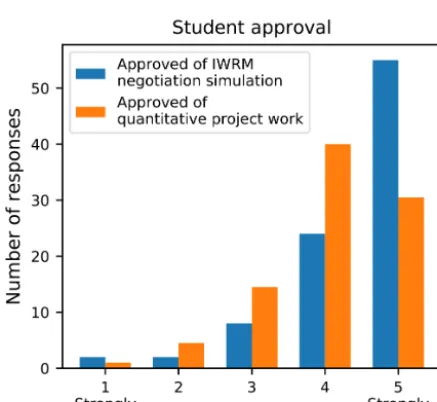
Figure 1.Student approval ratings. Distribution of pooled responses to student surveys over 2011–2017.
In Table 1, we summarize the questions we have investi-gated and a concise shorthand version we will use in the re-mainder of this paper. Students have provided answers on a five-graded scale from 1 to 5, with 1 equivalent to “Strongly disagree” and 5 equivalent to “Strongly agree”.
In addition to the specific questions, some years also had an open-ended question on what students thought was the best part of the course. Although these responses can be con-sidered anecdotal and less representative, they can still reveal impressions of students and teachers that convey relevant in-formation, and we therefore summarize these comments be-low.
3 Results
3.1 Quantitative responses
Figure 1 shows the distribution of the pooled student re-sponses (N responses =91+/−1 for all questions) across the six course occasions (patterns for individual years are largely similar). In summary, the role-play simulation is as effective at teaching complex learning outcomes as the tra-ditional teaching methods are at teaching quantitative learn-ing outcomes. The responses to questions about the project work (“Approved of quantitative project work”, orange bars in Fig. 1) show a peak at 4, indicating agreement, with the second-most common response being 5, indicating strong agreement. For responses concerning the appreciation for the simulation exercise, a rating of 5, indicating strong agree-ment, was the clearly predominant response, with 4 being the second-most common response.
Overall, for project work, 78 % of respondents were un-ambiguously positive (rating 4 or 5), while the correspond-ing figure for the simulation exercise was 87 %. The largest difference between the distribution of responses was for the rating of 5, with 60 % of respondents giving the simulation that rating, compared to 34 % for the project work. The mean of the two distributions is also significantly different (Mann– Whitney U two-tailed test, p <0.01), with the simulation rated 4.4 on average, compared with an average of 4.0 for the projects.
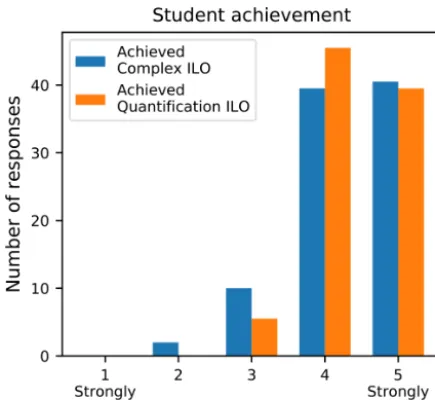
Figure 2.Student self-reported learning achievement. Distribution of pooled responses to student surveys over 2011–2017.
Compared to the approval ratings distribution, the main difference is a shift from 5 to 4 for the self-rated achievement of the Complex ILO, so that the distribution more closely resembles the distribution for the Quantification ILO. There is also a shift in the lower end of the scale (3 and below), at which level more students rate their achievement of the Complex ILO compared to the Quantification ILO.
3.2 Teacher and student reflections
In the teachers’ experience, the negotiation simulation has worked well and has become a well-integrated and appreci-ated part of the course. A strength with the role-play simu-lation is that it allows teaching of a very broad set of topics related to hydrology and water management in a brief span of time (the in-class time for the simulation is roughly two 8 h days). Another strength is that students attempt to solve what they perceive as a real-world problem. Most students tend to take the game very seriously, and work hard to act in their role and to achieve a solution for the group. The game also tends to awaken interest in the complex reality in solving wa-ter resources problems, particularly for students with natural science backgrounds, who sometimes tend to overestimate the power of rational thought and argument in solving politi-cally sensitive questions. This is useful from the perspective of the entire Master’s program. Specifically, since the nego-tiation simulation game is connected to the first course in the Master’s program, this critical thinking and interest in com-plex problems shine through (and increase engagement) in subsequent courses and final thesis projects.
A weakness encountered from the teachers’ perspective, and echoed by the students, is that the game is not based on a real-world example, which sometimes causes confusion as to whether facts and arguments about the water resources
situa-tion in the targeted basin are realistic. For example, a student group could “make up” artificial hydrological or climatolog-ical data to support their claims and another student is forced to respond. Simply put, such a situation typically breaks the “fourth wall” of the simulation and requires teacher interven-tion, which we typical seek to avoid in the real time of the negotiation simulations. Another weakness is that the vari-ous roles to be played may give students somewhat different opportunities to learn. For instance, it is more “in character” for some roles to argue and voice strong or one-dimensional opinions, whereas others may have less influence or clear perspectives. While this is by design based on the variations in stakeholder power and influence associated with water re-sources negotiation, it can bring about differentiation in the overall experience for the students. Also, we have noted that some students find the experience taxing on social interac-tions or classroom dynamics, thus creating an uncomfortable environment. To address this, we have over the years shifted the simulation to the later part of the course to help students in any cohort to get an opportunity to know each other better before participating in a role-play.
Nevertheless, students mostly give positive comments about the game in open-ended questions about the course. Specifically, the most common answer to the open-ended question “What did you like best about this course” (not posed all years,N=30) was “the negotiation simulation” (or equivalent). When details are provided, students particularly highlight that the simulation experience provided them with an opportunity to gain experience with a real-world applica-tion of problems faced in water resources management and an understanding of how difficult it is to achieve consensus across conflicting interests when not only physical aspects of hydrology are included.
Of course, although most students describe the simula-tion in positive terms, a few have voiced negative reflecsimula-tions. These comments were typically related either to the experi-ence itself, which a few students found too challenging, or to the utility of the game for achieving what they wanted to learn from the course. One student in particular expressed discontent with having to learn about fictitious countries, since there would be no benefit of having studied the ma-terial after the simulation was over.
4 Discussion: challenges and lessons learned
pos-itive around the ability of novice or inexperienced educators to incorporate simulations into the classroom – there is a gen-tle learning curve with the students.
Furthermore, our results indicate that there is no inher-ent conflict between a traditional and more guided teaching method, used to teach quantitative skills, and the indepen-dent, activity-based learning that a simulation provides. This points to the possible benefits of including learning situa-tions such as simulasitua-tions and games, as this would comple-ment and not interfere with students reaching the quantita-tive ILOs. However, a caveat is that our study only involved teaching the methods side by side. There may thus be a la-tent conflict in the possible alternative uses of the time spent in the negotiation simulation, which could have included, for instance, more in-depth training of quantitative skills. At the same time, the discourse on teaching in environmental sci-ences in general, including hydrology, has evolved in such a way that it is difficult to motivate an exclusive focus on quan-titative skills in higher education. From that perspective, our results at least indicate that some introduction of dedicated teaching methods for complex learning outcomes does not interfere with quantitative skills achievement. In summary, experience from half a decade of simulation-based learning in hydrology at Stockholm University indicates that role-play simulations can be useful tools for students to achieve com-plex learning outcomes and broaden their understanding of the importance of the context for solving environmental is-sues.
Although our results indicate that simulations are highly appreciated as learning tools, they are naturally not adequate in all situations, and even when useful, there remain several challenges with using them in teaching. From personal expe-rience, we have found three top challenges to be particularly salient. In the next sections, we provide examples of these top challenges – and suggest some possible ways to address them as lessons learned.
4.1 Acquiring theoretical knowledge through simulations
One potential problem with simulations is their adequacy for achieving theoretical knowledge. Typically, simulations are thought of as a way to master the application and use of knowledge, but not necessarily as a way to also learn facts and understand their context. There is a distinction in which the simulation process is understood as consisting of two sep-arate components: (1) acquiring the theoretical framework outside of the simulation and through other teaching meth-ods, and (2) applying the theoretical knowledge and learning how to use it in the simulation. Although not always explic-itly acknowledged, this perceived dichotomy is evident in many descriptions of simulations in the literature (DeNeve and Heppner, 1997; Rusca et al., 2012; Schnurr et al., 2013). Although simulations are often perceived – foremost at least – as ways to test and apply previously acquired
edge, we believe the incorporation of new theoretical knowl-edge can also be achieved with appropriate design. For in-stance, it may be possible to design the simulation so that acquisition of facts and theory is essential to success. This could be achieved with instructions that participants will be evaluated (possibly by their peers to facilitate active learning, e.g., Lyon and Teutschbein, 2011) on factual understanding and use of theoretical knowledge. Although such instructions may interfere with other objectives, such as a full focus on the student’s role in the simulation process, they may still be useful if the trade-off is deemed acceptable.
Another way with which factual and theoretical learn-ing could be encouraged is more in line with the sim-ulation itself. Depending on the designated roles, partici-pants could be encouraged to act as experts in their field, and that they, in order to fulfill that role, must prepare extensively by studying hard on their own. Such an ap-proach has worked well in the climate change negoti-ation exercise “World Climate Simulnegoti-ation” (https://www. climateinteractive.org/programs/world-climate/, last access: 8 May 2019). Participants could also be encouraged to seek facts to support their arguments, or seek out videos, fact sheets, or other brief and accessible material that they ac-tually use in their role to convince other students in the sim-ulation.
Yet another way uses our knowledge of learning in general to design incentives. Students could be rewarded for prepara-tion reading with quizzes, bonus exam points, or other ways to encourage their deep learning in preparations. Although this approach does not use the simulation moment itself as the mode of learning, it could be designed to integrate well with the simulation. Depending on the context, the incentives could themselves be presented as parts of the simulation.
4.2 Quality learning in student groups with mixed disciplinary backgrounds
In all groups, there is some variation in the background of students, but in some courses, this variation can be quite large, and includes students from both natural and social sci-ences (which is the case for the course considered in this re-search).
How can learning such a diverse set of knowledge and skills be effective for groups of students with various dis-ciplinary backgrounds? One possible way may be to care-fully consider the educational background of students when assigning roles and responsibilities. This can be considered on two levels: content of instructions (focus on subject mat-ters), and on mandate and formal authority. A student that should ideally learn more about politics may be placed in a role where they have to carefully study these aspects to play their role adequately. In contrast, a student with experience in political science, but less in engineering or natural science, may be assigned a role as environmental non-governmental representative or technical expert. Although this may place students outside their comfort zone, it ensures that the path of least resistance is not taken, and that students will have to engage more deeply in their preparations in order to suc-ceed. It also provides an opportunity for students to familiar-ize themselves with knowledge, arguments, and perspectives of professions other than the one they themselves are likely to end up in. This may be particularly useful as they will likely have to engage with colleagues from other professions throughout their career.
Another approach may be to allow students to choose roles themselves, deciding which aspect they would most prefer to spend effort on in developing, with the aid of descriptions of what characteristics are most important for the different roles. A risk with this option is that most students will in-deed take the path of least resistance and choose according to what they already do well. However, depending on their motivation, the approach may be justifiable if the student will then have a conscious intention to enhance and deepen their skill in a particular field.
4.3 Formative assessment in simulations
Assessment provides the fundamental feedback to the stu-dent about their learning. Assessment can be categorized into two types: formative assessment, which serves to provide feedbackduringlearning and acts as an indicator and guide to the student to help them with monitoring their learning, and summative assessment, which provides an evaluation af-terlearning of how well the student has performed in relation to set standards (see Biggs, 2003).
Although formative assessment has an important role in traditional teaching methods, its role in simulations is less clear. The simulation may be conceived as an act of formative assessment in itself, but this simplifies the problem. How can student learning be monitored and reinforced throughout the simulation, providing adequate feedback to the students?
Debriefing is one way of formative assessment. The de-briefing is both convergent, in that it evaluates student perfor-mance against some predetermined standards or objectives, and divergent, in that it encourages students to reflect on their experiences and their learning (Rudolph et al., 2008).
However, debriefing is not the only type of formative as-sessment in a simulation. Evidence indicates that activation of students’ metacognitive skills and reflection are impor-tant aspects of learning (Nicol and Macfarlane-Dick, 2006). Therefore, depending on the specific cases, there may be op-portunities to enhance such metacognitive reflections, and at the same time provide formative feedback, during the course of a simulation.
A possible way is to introduce one or several “time-outs” during the course of the simulation. Although too frequent or extensive time-out may interfere with students’ engagement in their roles, a reasonable amount of time-out could help students regain some focus on their overarching goals with participating in the exercise, in contrast to theirin-simulation
goals.
For example, during a 2-day simulation, the first day might end with a brief time-out session in which students work in pairs. Temporarily stepping out of their roles, students could be asked to identify the most important factors in the simu-lation outcome thus far, and consider whether these factors will remain the same or change during the ensuing day. Fur-thermore, students may be asked to critically reflect on what they have done well during the first day, and how they in-tend to improve during the second day, in terms of their own learning and progress towards learning objectives. Again, the focus should not be on the in-simulation goals, but on their goals for their own learning.
Yet another way to include formative assessment in sim-ulations is by designing the simulation so that progress de-pends on actions during the game, with evaluations along the way. In this manner, students would experience assessment in the form of repeated failures and successes, and hopefully improve in successive iterations. This approach, which aligns with Kolb’s theory of experiential learning cycle stages, has been applied in a recently developed water safety planning game (Ferrero et al., 2018). However, not all types of com-plex skills lend themselves well to such a repeating structure within a single role-play simulation event.
5 Conclusions
In this paper, we show that teaching a small negotiation ex-ercise in a course on water resources helps students achieve complex learning outcomes while not infringing on students’ achievement of more traditional and focused learning out-comes. We also identify a suite of three key challenges to effective teaching using simulations, and outline a number of concrete suggestions as to how these challenges can be over-come. In summary, there are clear indications that role-play simulations can help in teaching the complex skills that to-day’s students in environmental science will need, irrespec-tive of the role they eventually will fill in their future careers.
Data availability. To maintain the usefulness of the role-play de-scribed in this paper (confidentiality of instructions, actors and key elements of the game), it has not been published online, but de-tails of the simulation and the investigation of student responses are available upon request to the authors.
Author contributions. AB and SWL performed the conceptualiza-tion; funding was acquired by SWL; AB and SWL were responsible for the methodology; AB did the formal analysis; AB and SWL per-formed the investigation; AB and SWL wrote the paper.
Competing interests. The authors declare that they have no conflict of interest.
Acknowledgements. We thank the European Union Erasmus+ (project 586345-2017) WATERMAS Water Management and Cli-mate Change in the Focus of International Master Programs for par-tial support in completion of this research. The European Commis-sion support for the production of this publication does not consti-tute an endorsement of the contents, which reflect the views only of the authors, and the commission cannot be held responsible for any use which may be made of the information contained therein.
Financial support. This research has been supported by the European Union Erasmus+ (grant no. 586345-2017).
The article processing charges for this open-access publication were covered by Stockholm University.
Review statement. This paper was edited by Daniel Viviroli and re-viewed by two anonymous referees.
References
Basco-Carrera, L., Warren, A., van Beek, E., Jonoski, A. and Giardino, A.: Collaborative modelling or partic-ipatory modelling? A framework for water resources
management, Environ. Model. Softw., 91, 95–110, https://doi.org/10.1016/j.envsoft.2017.01.014, 2017.
Bazan, E. J.: Environmental Simulation Games, J. Environ. Educ., 8, 41–51, https://doi.org/10.1080/00958964.1976.9941564, 1976.
Biggs, J.: Aligning teaching for constructing learning, Higher Education, available at: https://www.heacademy.ac.uk/ knowledge-hub/aligning-teaching-constructing-learning (last access: 23 April 2019), 1–4, 2003.
Bring, A., Shiklomanov, A., and Lammers, R. B.: Pan-Arctic river discharge: prioritizing monitoring of fu-ture climate change hot spots, Earth’s Fufu-ture, 5, 72–92, https://doi.org/10.1002/2016EF000434, 2017.
D’Angelo, C., Rutstein, D., Harris, C., Bernard, R., Borokhovski, E., and Haertel, G.: Simulations for STEM learning: Systematic review and meta-analysis, SRI International, Menlo Park, 5 pp., 2014.
DeNeve, K. M. and Heppner, M. J.: Role play simulations: The assessment of an active learning technique and comparisons with traditional lectures, Innov. High. Educ., 21, 231–246, https://doi.org/10.1007/BF01243718, 1997.
Di Baldassarre, G., Viglione, A., Carr, G., Kuil, L., Salinas, J. L., and Blöschl, G.: Socio-hydrology: conceptualising human-flood interactions, Hydrol. Earth Syst. Sci., 17, 3295–3303, https://doi.org/10.5194/hess-17-3295-2013, 2013.
Fennessey, G. M., Livingston, S. A., Edwards, K. J., Kidder, S. J., and Nafziger, A. W.: Simulation, Gaming, and Conventional In-struction in the Teaching of Ecology, J. Environ. Educ., 5, 21–24, https://doi.org/10.1080/00958964.1974.10801832, 1974. Ferrero, G., Bichai, F., and Rusca, M.: Experiential
Learn-ing through Role-Playing: Enhancing Stakeholder Col-laboration in Water Safety Plans, Water, 10, 227, https://doi.org/10.3390/w10020227, 2018.
Gredler, M. E.: Games and simulations and their relationships to learning, in: Handbook of Research on Educational Communica-tion of Technology, 2, edited by: Jonassen, D. H., Lawrence Erl-baum Associates Publishers, Mahwah, NJ, USA, 571–581, 2004. Liu, J., Dietz, T., Carpenter, S. R., Alberti, M., Folke, C., Moran, E., Pell, A. N., Deadman, P., Kratz, T., and Lubchenco, J.: Complex-ity of coupled human and natural systems, Science, 317, 1513– 1516, https://doi.org/10.1126/science.1144004, 2007.
Loucks, D. P. and Van Beek, E.: Water resource systems planning and management: An introduction to methods, models, and ap-plications, Springer, Cham, Switzerland, 624 pp., 2017. Lyon, S. W. and Teutschbein, C.: Problem-based
learn-ing and assessment in hydrology courses: Can non-traditional assessment better reflect intended learning outcomes?, J. Nat. Resour. Life Sci. Educ., 40, 199–205, https://doi.org/10.4195/jnrlse.2011.0016g, 2011.
Lyon, S. W., Walter, M. T., Jantze, E. J., and Archibald, J. A.: Train-ing hydrologists to be ecohydrologists: a “how-you-can-do-it” example leveraging an active learning environment for studying plant-water interaction, Hydrol. Earth Syst. Sci., 17, 269–279, https://doi.org/10.5194/hess-17-269-2013, 2013.
McClain, M. E., Chícharo, L., Fohrer, N., Gaviño Novillo, M., Windhorst, W., and Zalewski, M.: Training hydrologists to be ecohydrologists and play a leading role in environmen-tal problem solving, Hydrol. Earth Syst. Sci., 16, 1685–1696, https://doi.org/10.5194/hess-16-1685-2012, 2012.
Nicol, D. J. and Macfarlane-Dick, D.: Formative assessment and self-regulated learning: a model and seven principles of good feedback practice, Stud. High. Educ., 31, 199–218, https://doi.org/10.1080/03075070600572090, 2006.
Pahl-Wostl, C. and Hare, M.: Processes of social learning in inte-grated resources management, J. Community Appl. Soc. Psy-chol., 14, 193–206, https://doi.org/10.1002/casp.774, 2004. Pahl-Wostl, C., Sendzimir, J., Jeffrey, P., Aerts, J., Berkamp,
G., and Cross, K.: Managing Change toward Adaptive Wa-ter Management through Social Learning, Ecol. Soc., 12, 30, https://doi.org/10.5751/ES-02147-120230, 2007.
Pathirana, A., Koster, J. H., de Jong, E., and Uhlenbrook, S.: On teaching styles of water educators and the impact of didactic training, Hydrol. Earth Syst. Sci., 16, 3677–3688, https://doi.org/10.5194/hess-16-3677-2012, 2012.
Rodell, M., Famiglietti, J. S., Wiese, D. N., Reager, J. T., Beaudoing, H. K., Landerer, F. W., and Lo, M.-H.: Emerg-ing trends in global freshwater availability, Nature, 557, 651, https://doi.org/10.1038/s41586-018-0123-1, 2018.
Rudolph, J. W., Simon, R., Raemer, D. B., and Eppich, W. J.: De-briefing as Formative Assessment: Closing Performance Gaps in Medical Education, Acad. Emerg. Med., 15, 1010–1016, https://doi.org/10.1111/j.1553-2712.2008.00248.x, 2008. Rusca, M., Heun, J., and Schwartz, K.: Water management
sim-ulation games and the construction of knowledge, Hydrol. Earth Syst. Sci., 16, 2749–2757, https://doi.org/10.5194/hess-16-2749-2012, 2012.
Schnurr, M. A., De Santo, E., and Craig, R.: Using a Blended Learning Approach to Simulate the Negotiation of a Multilat-eral Environmental Agreement, Int. Stud. Perspect., 14, 109–120, https://doi.org/10.1111/j.1528-3585.2012.00470.x, 2013. Seibert, J., Uhlenbrook, S., and Wagener, T.: Hydrology education
in a changing world, Hydrol. Earth Syst. Sci., 17, 1393–1399, https://doi.org/10.5194/hess-17-1393-2013, 2013.
Sivapalan, M.: From engineering hydrology to Earth sys-tem science: milestones in the transformation of hydro-logic science, Hydrol. Earth Syst. Sci., 22, 1665–1693, https://doi.org/10.5194/hess-22-1665-2018, 2018.
Strandmark, A., Bring, A., Cousins, S. A. O., Destouni, G., Kautsky, H., Kolb, G., de la Torre Castro, M., and Hambäck, P. A.: Climate change effects in the borderland between land and sea: an over-seen issue, Ambio, 44, 28–38, https://doi.org/10.1007/s13280-014-0586-8, 2015.
Wagener, T., Weiler, M., McGlynn, B., Gooseff, M., Meixner, T., Marshall, L., McGuire, K., and McHale, M.: Taking the pulse of hydrology education, Hydrol. Process. Int. J., 21, 1789–1792, https://doi.org/10.1002/hyp.6766, 2007.
Wagener, T., Kelleher, C., Weiler, M., McGlynn, B., Goos-eff, M., Marshall, L., Meixner, T., McGuire, K., Gregg, S., Sharma, P., and Zappe, S.: It takes a community to raise a hydrologist: the Modular Curriculum for Hydrologic Advance-ment (MOCHA), Hydrol. Earth Syst. Sci., 16, 3405–3418, https://doi.org/10.5194/hess-16-3405-2012, 2012.