CROSSING THE THRESHOLD: An inquiry
into the lived experience of Bangladeshi parents
with young children; their worries and sources of
support.
FERELYTH WATT
A thesis submitted in partial fulfilment of the University of
East London in collaboration with the Tavistock and
Portman NHS Foundation Trust Professional Doctorate in
Psychoanalytic Psychotherapy (Child & Adolescent).
ABSTRACT
Parents with young children often have concerns about some aspect of their parenting or about a feature of their child’s behaviour, and may seek support from family or local support services about this. Bangladeshi parents with young children living in the borough of Tower Hamlets, East London, were considered a vulnerable group that did not readily take up health services, such as services for under 5’s. This began to change with the advent of Sure Start and locally based Children’s Centres. As a result of clinical work in one Centre, the author was keen to explore what kinds of concerns might lead Bangladeshi parents to seek help and to whom or where they turned for such help. A purposive sample of Bangladeshi parents, mostly mothers, took part in one or more focus groups and unstructured interviews. The study took an Interpretative Phenomenological Analysis (IPA) approach, coupled with a psychoanalytic perspective, to illuminate and make sense of the respondents’ understanding of their lived experience, in relation to the phenomena in question. The use of Focus Groups in IPA research is a subject of current debate and some of the strengths and limitations of this approach are discussed. The study highlights the importance of allowing opportunities for parents from this community to have informal contexts to articulate the complexities of their lived experience, rather than simply their views. Children’s Centres are seen to play a key role in providing psychosocial support for parents, with particular significance for first time parents and immigrants. The author suggests that Children’s Centres function as an alternative ‘village’ for parents, especially mothers, who are trying to find ways of bringing together their experience of being raised in Bangladesh with their role as parents of a new generation in another country.
I declare that while registered as a research degree student at UEL, I have
not been registered or enrolled student for another award of this university
or of any other academic or institution.
TABLE OF CONTENTS
Page
Acknowledgements vii
1. INTRODUCTION 1
1.1 Origins 2
1.2 Cross-Cultural Work 4
1.3 Sure Start Children’s Centres and Early Years Intervention 5 1.4 Parenting, help seeking and seeing how it is 6
1.5 Psychoanalytic Conceptual Framework 7
1.6 Research 9
1.7 Context – Setting the Scene 11
2. LITERATURE REVIEW 15
2.1 Sources 15
2.2 Literature Search Strategy 16
2.3 Key Areas identified through searches 21
2.3.1 Parental Perceptions of Infant and Child Development 21
2.3.2 Infant Observation Method 27
2.3.3 Under 5’s services in the community 29
2.3.4 Culture and Migration 30
2.3.5 Help Seeking and Culturally Competent Services 33
2.3.6 Parenting 36
2.3.7 Government and Local Authority frameworks 37
2.3.8 Research Methods 38
2.3.9 Summary 40
3. RESEARCH METHODS 41
3.1 Research Design 41
3.1.1 Method 41
3.1.2 The setting and the research participants 46
3.1.3 Ethical Considerations 47
3.1.4 Data Collection 50
3.2 The Research Process 53
3.3 Research Protocol 56
3.3.1 Focus Groups 56
3.3.2 Unstructured Interviews 57
3.4 Data Analysis 57
4. FINDINGS 60
4.1 Introduction 60
4.2 Beginnings 63
4.3 Knowledge 67
4.3.1 Transcendental Knowledge 68
4.4 Belonging- Worries 111
4.4.1 Children’s Worries 112
4.4.2 Parental Worries 120
4.4.3 Separation & What Comes Next? 128
4.4.4 Getting it Right and Meeting the Standard. 134
4.5 The Village 145
4.5.1 Family 147
4.5.2 Back Home 155
4.5.3 The Role of the Children’s Centres 158
4.5.4 Other Sources of Help 162
5. CONCLUSION AND DISCUSSION 167
5.1. Knowledge, Thinking and Sense-making 167
5.2 Psychological Understanding and Worries 168
5.3 Mothers, the Maternal Grandmother or Maternal In-Law 171
5.4 Idealisation and Reality 172
5.5 The Parental Couple & Parenting in a Foreign Climate 173 5.6 The Nuclear Family & the Collective Family 174
5.7 Maternal Authority and Being Good Enough 176
5.8 Help Seeking – the Family and Islam 177
5.9 Children’s Centres 178
5.10 Children’s Safeguarding and Getting Things Right 179
5.11Culture, Language and Identity 180
5.12 Research Methods – Limitation, Challenges and Assets 181
6. RECOMMENDATIONS, DISSEMINATION & IDEAS 186
FOR FURTHER RESEARCH
6.1 Recommendations 186
6.1.1 Children’s Centres 186
6.1.2 CAMHS 187
6.1.3 Commissioners 188
6.2 Dissemination 188
6.3 Research 189
7. REFERENCES 190
8. BIBLIOGRAPHY 205
APPENDICES
Appendix A: Ethics permissions 210
Appendix B: Research Protocol 213
Appendix D: Focus Group C Coding A & B – A Sample 224
Appendix E: Analysis C Emerging Themes - A Sample 233
Appendix F: Map of Key Themes 237
Appendix G: Effective Islamic Parenting 240
LIST OF PICTURES
Picture 1: The Stay and Play Room at Work 13
Picture 2: De Waal "Atemwende, I" (2013). 183
LIST OF TABLES
Table 1: A Psych INFO Preliminary Search Into Mothers and Anxiety 18
LIST OF FIGURES
Figure 1: Literature Review Sources 16
Figure 2: Literature Search Process 18
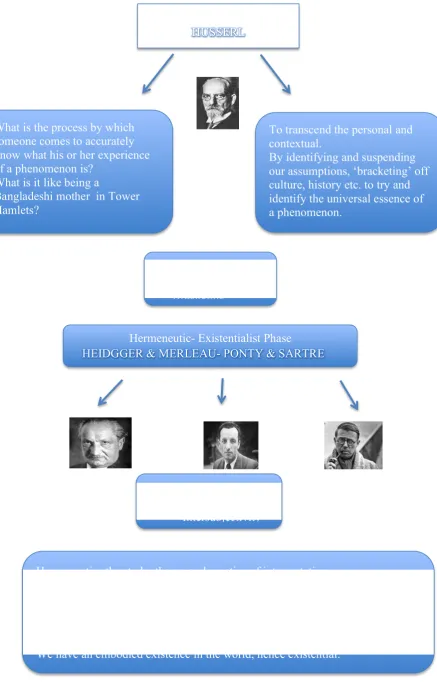
Figure 3: A Summary Chart of the Phenomenological and Existential
Influences on IPA 44
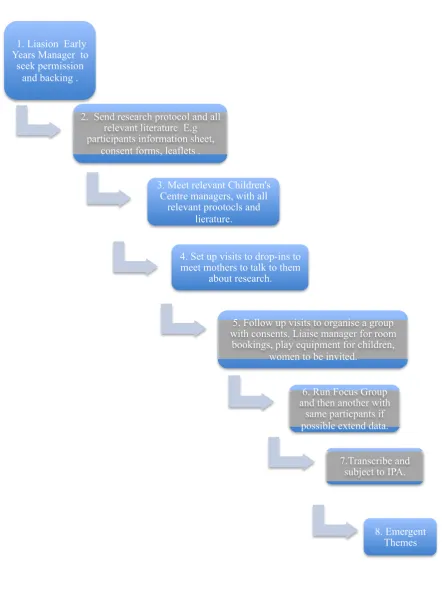
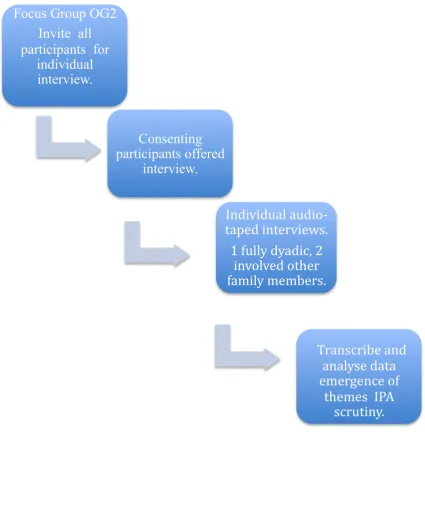
Figure 4: Methodology – Research Process Focus Group Flow Chart 54 Figure 5: Methodology – Research Process Individual Interview 55
ACKNOWLEDGEMENTS
I would like to thank all those individuals who so warmly agreed to participate in this research and share their experiences with me. In addition, my thanks to staff at Children’s Centres who made this possible, especially Lilu Ahmed and Margy Creber, Harumi Welford, Lorraine Hamilton, Tara Khanom and Lufthah Miah. My former colleagues Irfat Tarafdar, Hussein Saleh, Dr Ruma Bose, Rachel Warner and CAMHS colleague Kelly Chan, for helping me understand the nuances of the Bangladeshi community in Tower Hamlets. I am also indebted to Linda Dawson and Cathy Urwin who helped me to get Help at Hand up and running and for Cathys’ guidance and supervision, to Margaret Rustin for her tremendous generosity and patience as she sat alongside me over many years, and to Jenifer Wakelyn for stepping into this project with such warm commitment and steadiness; also to Sheila Miller and Professor Michael Rustin for their support from the wings.
CHAPTER 1 INTRODUCTION
The idea for this research topic emerged from my clinical experience as a Child and Adolescent Psychotherapist, working in an outreach service in a Children’s Centre, in the London Borough of Tower Hamlets, East London. The service was part of the local Child and Adolescent Mental Health Service (CAMHS). The service aimed to was to provide an assessment and treatment service for the mental health needs of children and young people and their families, in a culturally, ethnically and religiously diverse community. The outreach element was specifically designed to facilitate access to mental health services for the local, predominantly Bangladeshi population.
This thesis begins by setting out the research, introducing the original rationale and context for undertaking the study and the background in which it took place. Chapter 2 provides the reader with a comprehensive view of the literature and sources of information that have contributed to my thinking whilst undertaking the research. As you will see, the research is embedded in psychoanalytic and attachment theory but reference to other disciplines, such as anthropology and social sciences has resulted in a more syncretic perspective.
The Research Methodology describes how I used Interpretative Phenomenological Analysis (IPA) to explore and analyse the rich data gathered from the participants, and my reasons for using IPA follows this. Chapter 4: Findings, describes the key themes that emerged from the data and my analysis of these themes. It also illustrates the iterative nature of the research process and the importance of reflexivity. The research raised many areas for discussion and I have selected some of these for consideration in Chapter 5. In addition, there were a number of further research ideas that emerged and these are identified in Chapter 6. I have also included further relevant information that sits in the accompanying Appendices. For example, further detail about the Research Protocol in Appendix B and original and then coded transcript material in Appendix D.
Here, I set out the rationale and context for undertaking this study providing information about the background to the research and areas of particular significance that I want to draw attention to. These include background about the Bangladeshi community in Tower Hamlets and information about local and national inequalities in mental health provision, with particular relevance to the under-representation of Bangladeshi children to Child and Adolescent Mental Health Services (CAMHS). I also briefly describe the context of the Sure Start Children’s Centres initiative in the late 1990’s and the subsequent development of the comprehensive national Early Years Strategy (Allen, 2011). As this initiative was significant in the lives of the participants in this study I show an example of the application of this initiative in its local context.
I continue by outlining the significance of parenting, considering it as a major life transition with considerable implications for a person’ s identity. I go on to show how my thinking has been informed by psychoanalysis and attachment theory and how they have also influenced my understanding of the research process.
1.1 Origins
From my experience of Bangladeshi parents coming to Children’s Centres seeking help about their under 5’s, I found that parents had different lived experiences in relation to their young children's emotional development and behavior. There were also different experiences of where to seek help for any concerns that a parent might have. I was interested to explore the views of a non-clinical sample of Bangladeshi parents, about worries their children might have, the kinds of worries they have as parents about their children and their experience of seeking help about this. I hoped that this research might illuminate the meaning of these issues in the Bangladeshi community for parents with young children. I envisaged that a better understanding of this group of parents would help to inform services and staff working with under 5’s about any areas of strength and any areas requiring adaptation. I also hoped that any findings might be generalizable to other ethnic groups.
few important related empirical studies based on a small case study design, for example, Barn, 2002, Loshak, 2003 and Griffiths, 2009.
Other relevant local research considers specific projects, for example, case studies by Hardman and Harris, 1998; Marks et al., 2009 and Griffith, 2009. or research into the inequalities of mental health service provision for Black and Minority Ethnic (BME) communities and the need to change the way in which services were conceptualized and delivered. The action research or service audits by Messent and Murrell, 2003 and Dawson, 2005 have been useful and so too has the mixed study design by Hillier and Rahman, 1996. These have been complemented by national research, for example Malek and Joughin, 2005. Studies found that poor information about services, inaccessibility due to location (too far away) or lack of bilingual mental health or support service staff practitioners, and poor visibility, were key factors resulting in the central concern about the disproportionately poor uptake of mental health services for children, young people and their families from the Bangladeshi community in Tower Hamlets
Locally based research identified the issue of under–representation in referrals of Bangladeshi children and their families to CAMHS by setting up more accessible and sensitive services. For example, Bangladeshi mental health practitioners were employed; one taking a lead role in the service (Messent and Murrell, 2003).
Following the Macpherson Report (1999), there have been a number of significant national strategies over the last 20 years, to try and address these inequalities in the NHS and across the public health sector in general. Of these, Inside Out, 2003, The Children’s NSF, Every Child Matters, 2004 Building and Sustaining Specialist CAMHS, Royal College of Psychiatry Report, 2005 and Narrowing The Gap 2007-9 were of particular importance in relation to the delivery of equitable service for BME children and their families.
For example, Standard 9 (NSF, 2004) says:
1.2 Cross- Cultural Work
This study draws on my interest in cross-cultural work and the development of more culturally attuned mental health provision to facilitate more equitable and relevant services for BME children and their families. Kakar (1981) an Indian psychoanalyst writing about the application of psychoanalysis to communities in the Indian sub-continent, considered that there was:
(…) greater difficulty in spotting clues in words, dreams and behaviour when there is cultural difference’ and that while, ‘in spite of culturally distinct manifestations of the unconscious, communication and empathy between individuals belonging to different cultures is certainly possible (…) the quest for psychological truth is less encumbered when both the observer and his subjects belong to the same culture.’ (p.3)
Kakar’s point was well made and it is particularly pertinent in the context of mental health, where it behoves mental health practitioners to be especially fine tuned to their own assumptions and preconceptions, as well as to the experience of clients from cultures other than their own. This is also a consideration for researchers and featured in my own observations during data gathering.
During the period 2005-2010, I developed an outreach project for children under 5 years old and their families at a Children’s Centre in the north east of the Borough, serving a largely Bangladeshi population. This project was initiated following concerns from the Health Visiting Service, GP’s and Children Centre staff about the under-representation of children under 5’s into CAMHS services (Dawson, 2005) in this locality.
me as a clinician and as the researcher in this study. This experience was invaluable in guiding my understanding of the data that has emerged during this study.
1.3 Sure Start Children’s Centres and Early Years Intervention
In 1998, the Labour Government launched Sure Start, an initiative designed to address the growing concerns about the plethora of educational, health, social and employment inequalities facing many children and young people and their families. In 2004, Every Child Matters heralded a move from locally based Sure Start programmes to Sure Start Children’s Centres, to be controlled by local authorities as part of nationwide provision, not just in the most disadvantaged areas. The government’s target was to have 3,500 Children’s Centres in place by 2010. Tower Hamlets was part of the first and subsequent wave providers. Sure Start Children's Centres aimed to provide a universal service for all families, with particular remits to reach vulnerable or marginal families or groups within their community. Children’s Centres run integrated programmes that are sensitive and responsive to their users. They are part of the wider health and well being strategy for children and families encompassed by the Every Child Matters framework and the statutory responsibilities and targets of the local authority, health service and Jobcentre Plus (DOE, 2013).
Building on earlier reports about inequalities across the life-span Allen’s (2011) review sets out compelling recommendations for an Early Years strategy, which aimed at:
(…) rebalancing of the current culture of ‘late reaction’ to social problems towards an Early Intervention culture, based on the premise of giving all children the social and emotional bedrock they need to achieve and to pre-empt those problems. (p. xviii)
Child psychotherapistshave played an important role in the research and development of provision for parents and children 0-5 years. As a profession, they are well aware of the extensive research literature implicating the huge importance of intervention in the early years to support better health and developmental outcomes across the life span (Barrows, 2000; Allen, 2011; Child Psychotherapy Trust 2002).
1.4 Parenting, help seeking and seeing how it is
Parents inevitably come up against difficulties and at times experience worries about their young children. Parents' own experiences of being parented play a significant role in their own approach to their children, their perceptions of their child and how they respond to them. A parent’s response to the task of raising a child is also determined by external influences, of which culture is a key component. Other notable influences are poverty, housing and education. Parenting involves a profound psychological transition that may go hand in hand with other transitions, for example: from being a single person to being part of a couple; familiarity with a social and cultural context to being unfamiliar and uncertain. Parents who raise a child in a culture that is different from the one they were raised in may come up against perceptions about parenting and child development that may differ from their own and pose a challenge to them. A parent in these circumstances will inevitably find themselves looking internally to what is known, through their own experience. They will also look to their new environment seeking out aspects that are a good enough fit to maintain some sense of continuity. In addition, they will come across new things that they may be open to, and in their exploration they will create a new identity that embraces aspects of the past, as well as some of the new things from the present. Their children too will be part of the cultural field of their parents’ native country, as well as developing their identity within the social milieu of their adopted country. These processes require time, and finding ways to fit in.
emphasise the need to address the inequalities that currently exist in the provision of such services for children 0-5 years and their families, for some ethnic groups and others with poor outcomes in education, health and mental health. Bangladeshi families in Tower Hamlets are one such group.
This research is located within the context of the aforementioned under-representation within the Bangladeshi under 5’s population, and the need to pay more careful attention to the concerns amongst this group. I have taken a layered approach to looking at the kinds of concerns or worries that might result in a Bangladeshi parent with a young child seeking help from local mental health services and their views of such services. There is the apparently straightforward matter of what is a worry? Yet, this question provokes a wide range of further considerations that contextualise the answer to it. For example in what kinds of circumstance might these worries emerge? To what extent might they be related to parental experience of being parented? Do they emerge in response to external factors, such as poverty or housing? What part might culture or religion have to play? How might the experience of migration impact upon a parent’s identity and confidence as a parent? Already there is the potential for a rich discussion about the significance or otherwise of these factors, and their interplay.
1.5 Psychoanalytic Conceptual Framework
I have approached this study from the stance of the child and adolescent psychotherapist. My view is founded on a psychoanalytic and developmental model of human development. I think that there are useful parallels to be drawn between the activity of an analyst, a parent and a researcher; these are outlined below and described further in this paper.
A psychotherapist meeting a new patient faces uncertainty and not knowing, just like a mother, meeting her newborn infant. From this point, through a process of openness to what is not known, information of all kinds is gathered, and then analysed to generate meaning that guide the direction of further exploration. From a clinical perspective, the process of gathering information to ‘see what is there to be seen’ (Reid, 1997 p.1) is
and manage powerful emotions and feelings; some exquisitely touching, others disturbing or painful. This process of gathering information is also a task for the researcher; it requires patience. In this context, patience is the term that Bion used when talking about the state of mind that he thought the analyst should employ. It is a state that requires the analyst to set aside memory and desire and to be alert to aspects of the patient’s material that are ‘unknown to them both’ (1970, p.124). Bion described the attribute of waiting for meaning to emerge, by drawing on Keats’ term negative capability. This is the capability of ‘being in uncertainties, mysteries, doubts, without any irritable reaching after fact and reason.’ (ibid. p.125) until a pattern ‘evolves’ (Sternberg, 2005 p.54).
Patience is an uncomfortable, frustrating and sometimes edgy state, with an almost physical component that begs to be shrugged off, or dispersed in some way. Bion saw the necessary wait for a pattern to emerge in an analysis, as a product of ‘security’, where there is a feeling of safety and diminished anxiety. Similarly, the parent needs to manage this uncomfortable state until they have understood their infant’s communication (Bion, op.cit., p.124), helping the infant move from the paranoid-schizoid to the depressive position. This position, or state of mind, is achieved when the infant’s need to split the mother into either ‘good’ or ‘bad’ has diminished, so he can relate to the mother as both need-satisfying and frustrating. Importantly, movement between these two positions continues throughout life and at times of duress a paranoid–schizoid view of the world is more likely to dominate (Klein, 1935).
From my perspective, at the point where pattern emerges, form also emerges, and form provides us with something more multi-dimensional. From a psychoanalytic perspective three dimensionality heralds the possibility of the development of mind and the capacity for creative thought and reflexivity (Britton, 1989). In turn, multi-dimensionality allows for the possibility of time and hence reality testing.
another, to a more mental and cognitive articulation of this relationship. The mother, who for the most part does this intuitively, is facing the unknowns of her baby, whom she is just beginning to get to know. Right from the start, the first moment when the mother holds the baby, she ushers in the process whereby the infant’s psychosomatic integration becomes possible. Winnicott (1987) considered that the process of holding and handling was crucial in establishing the experience of human reliability. In turn, moment by moment, through her experience of attending to her baby’s psychic needs (internal world) and managing the uncertainties aroused in him and communicated to her, she provides her infant with an experience of containment. This process is one where meaning is made of feelings and physical states that for the infant would otherwise feel unmanageable and unknowable (Symington, 1996).
The parental task of being attuned to their baby is fundamental to the healthy development of infants and is at its best when ordinary, good-enough parents are able to get on with their job as parents without too much interference from external sources; this is particularly so for the mother, who has the bulk of this responsibility.
1.6 Research
This stance has informed my understanding of the research process and the gathering and analysis of data. I think that there are interesting and useful connections between the psychoanalytic process in a therapeutic context, the psychoanalytic understanding of the parent-infant relationship in the early years and the research processes that have guided this study and emerge during the following chapters.
This research has evolved over several years as an iterative process that has involved elaborating the research design and developing my understanding of the data. It has also involved discussing the research topic and methodology with staff and users of Children’s Centres, academic colleagues, seminar leaders and supervisors and professional colleagues.
allowed the opportunity for women to offer individual personalised accounts. In addition, the group context gave the women opportunity to talk with and listen to other women that I think had the advantage of illuminating similarities and differences within a group that provided further information about key questions. In extension, Atkin and Chattoo (2006; 2007) identified the need for the ‘reflexive practitioner’ and reflexive services. By this, they mean practitioners and services that take into account individual narratives as a way of coming to better understand the needs of individuals and groups, and then developing services that meet these needs.
I have come to think of the journey that clients make to accessing a CAMHS or other mental health service as one that requires crossing many different thresholds: internal and external, psychological, emotional, religious, familial, social and cultural. It is my view that these changes, made over time, enable a person to access and make use of help that might be available to them.
The clinician too needs to make a journey to engage any patient in a therapeutic process, but working cross-culturally places difference and diversity in the foreground. In my view, the development of cultural sensitivity in the clinician is a process that requires them to meet challenges to their personal and theoretical assumptions, to cross their own thresholds. Above all, the process for both the client and the clinician is a mutually reflexive one that allows for a number of different models to be held in mind simultaneously, each weighted with importance (Cunliffe and Jun, 2002; Bachu, 1996).
The structure of this research has been built on the need to allow for reflexivity (Cunliffe, 2002; ibid, 1996). In my view the researcher-clinician needs to be open to exposure to differing models, assumptions and beliefs about normal child development and constructs of parenting, in order that more culturally attuned child psychotherapy services can be developed.
1.7 Context – Setting the Scene
As Winnicott (1964) emphasised there is always a context. As described above, a child psychotherapist is well placed to negotiate the subtle interactions that take place between the internal world of an individual and the wider world of family or kinship group, religious affiliation and practices, local community and school. We also extend our horizon to include the socio-political, historical, cultural and spiritual components that together make up a person’s perception of the world and their relationship with it. This section outlines the general context of the Bangladeshi population in Tower Hamlets, as well as the more specific milieu of a Children’s Centre, located in the East of the Borough, as the exemplar of such Centres across the Borough.
The Bangladeshi diaspora began in the 1970’s, following the Indo-Pakistan war and the subsequent secession of Bangladesh from Pakistan and encouraged by the change in the UK immigration laws. This saw large numbers of Bangladeshis settle in London and the Midlands. The Bangladeshis came mainly from the Sylhet, a rural, agricultural region in North East Bangladesh. Although Bangladesh is a secular society, Islam plays a central role in family life, and it is very important in Sylhet (www.thhol.org.uk). This group of migrants had little education in either Bengali or English. As economic migrants they took up mainly unskilled or semi-skilled labour in the well-established textile and clothing factories. Later, they began to start their own businesses, particularly restaurants, before diversifying further as the population became more settled and better educated. Hussain (2005) noted that the Sylheti families that she worked with were:
(…) survivors from hardship, poverty, displacement, and loss through the process of migration’. [She added,] we are aware that migration creates diasporas, and the multiple losses impact on psychological health. (p.102)
The London diaspora congregated in Tower Hamlets where Bangladeshis now comprise 32% of the population, as compared with 3% across London, and as compared to 31% of white British residents in the Borough. 27.9% of the population are under 20 years (Tower Hamlets Census Data, 2013).
these ‘parent’ organizations. These were determined by a culture that promoted a relatively non-hierarchical or flat, collective structure, in which individuals and small groups were encouraged to move from dependency to independent or inter-dependent relationships with the ‘parent organisation’ (www.bbbc.org.uk).
Picture 1: The Stay and Play Room at Work
and control in the face of different values and norms.
During the last decade, the local area like many across Tower Hamlets changed as new housing stock replaced the run down blocks of council housing, more play areas and the development of more Children’s Centres. Change has always been a significant feature of Tower Hamlets. Since the mid 19th century, the Borough has been suffused with the
significant influence of the population overspill from the City of London, and subsequent waves of immigrant groups creating a rich cultural heritage. It has also had an association with overcrowding and poverty.
Both of these features still characterise Tower Hamlets, which is currently the 2nd most densely populated London borough (Tower Hamlets Research briefing 2013-12, December 2013, Tower Hamlets Population: Key Facts) and has the highest rate of income poverty across all local authorities in England and Wales and double the national average (22 per cent). Significantly, 53% of all children in the borough live in poverty, which according to the 2009 census is the highest rate in the UK (Research Briefing 2012-1, February 2012, Poverty: Key Facts: A profile of poverty in Tower Hamlets; HMRC, Child Poverty Statistics 2009).
In 2007, as part of the government’s equalities and outcomes agenda, the DCSF funded Narrowing the Gap, a 2-year research project designed to identify areas where there were poorer outcomes for vulnerable children. They identified 12 elements that they thought would be influential in reducing this gap. These ‘Golden Threads’ underpinned the thinking behind Children’s Centres across the borough. Three of these seem particularly pertinent to this study:
• It takes a community to raise a child – Recognising the power of communities to support children and adults.
• Together with parents (“you know your child, we know about children’s services, together we can help him/her better”) – Working in real partnership with parents and families and building on their strengths.
• Through the voice and eyes of the child – Ensuring children’s views are listened to and their participation is supported, and making all services more family- centred and adult services more sensitive to their clients as parents, and alert to the needs of children.
CHAPTER 2. LITERATURE REVIEW
This chapter describes the sources that I used during my research, the literature review strategy and the process of gathering relevant information. Following this there are sub-sections for each area that has been significant during the research, with specific sources identified showing their relevance to my study.
This research was developed in the context of my clinical experience in CAMHS working with Bangladeshi clients, as well as in a non-clinical community setting: the Children Centre. I chose to focus the study on the views of Bangladeshi parents, because this was the dominant ethnic group in the locality, and at the time, it was underrepresented in referrals to CAMHS (Hillier & Rahman, 1996; Messent & Murell, 2003; Dawson, 2005; Loshak, 2003; Malek & Joughin, 2005). Whilst working at the Children Centre, as well as within the CAMHS clinic, I found that there were many different views about young children's emotional development and behaviour in the Bangladeshi community. There were also different perceptions about where to seek help for any concerns that a parent might have. The area of perceptions of worry about young children has been very little researched, and studies have mainly issued in a tangential way from the perspective of Medical Anthropology and Sociology. More recently, a few papers have emerged from the perspective of psychology and child psychotherapy (Marks, et al. 2009; Urwin, 2005). Research into the area of health provision for Black and Minority Ethnic groups in the United Kingdom is available and it points to the dearth of data with respect to CAMHS and the need for further studies in this area (Malek & Joughin, 2005).
2.1. Sources
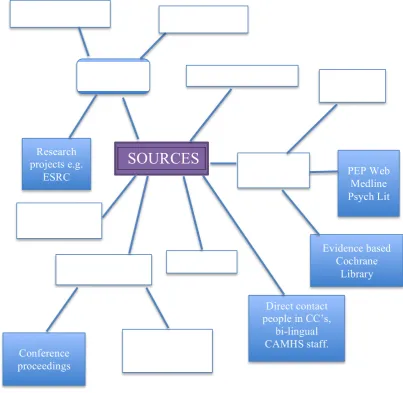
Fig 1. Literature Review Sources
2.2 Literature Search Strategy
My search started from a set of specific references that I knew of from having worked in Tower Hamlets with the authors in question, or had heard about in discussion with colleagues. These sources were Hillier and Rahman, 1996; Loshak, 2003; Urwin, 2003; Messent and Murrell, 2003. Each of these studies was based in Tower Hamlets and specifically addressed issues related to mental health amongst the Bangladeshi community and the poor uptake of mental health services for children and adolescents. These papers furnished me with references to other literature, some of which were directly relevant and others that developed my thinking or provided background information. For example Loshak (2003) beautifully describes her once weekly
SOURCES
Research Reference Lists
Databases
Citation Indexes
PEP Web Medline Psych Lit
Evidence based Cochrane
Library Grey Literature
Direct contact people in CC’s,
bi-lingual CAMHS staff. Internet
Professional written material e.g. service audit Research
projects e.g. ESRC
Conference proceedings
Hand searching
psychodynamic work with Bangladeshi teenagers, and citing Akhtar (1994), she also offered additional contextual information about the impact of migration on the Bangladeshi community, particularly on women and on the reflective capacity of mothering. Details of each of these four papers and their relevance to this study are found in the relevant sub-sections below.
This process of searching is limited by publication bias, although the scarcity of papers of direct relevance to the perceptions of Bangladeshi parents about their under 5’s, and a poor uptake of CAMHS services by this population, was a robust finding. To reduce publication bias, I have also made use of communications with professionals in the area, including Bangladeshi practitioners, both to seek out their views and also as a means of testing the resonance of the material. Whilst conducting the research other sources became available developing ideas from aspects of earlier studies. For example Marks et al., 2009 and Urwin, 2007.
I continued by expanding my searches using electronic databases such as, PEPWeb, CINHAL, SocINDEX, PsycINFO and ETHOS scrutinizing for relevancy. This process of expansion and then focus continued throughout the research, leaving me with a filter of those studies that have appeared and re-appeared as the most directly relevant.
Table 1: A PsycINFO Preliminary Search into Mothers and Anxiety
TERM RESULTS
1.Mothers exp ANXIETY 49487
2. Bangladesh *ti,ab 1192
3. (women OR women OR mother*) ti,ab 283137
4. Exp MOTHERS/ 31356
5. 3 OR 4 286015
6. 2 AND 5 (Bangladesh women or mothers) 464 7. 1 & 6 (anxiety and Bangladesh women or mothers) 2
8. worr*ti,ab 10437
9. 6 & 8 (Bangladesh women or mothers and worry) 0 10. 2 & 8 (Bangladesh and worry) 2 11. “tower hamlets”. ti,ab 32
12. london.ti,ab 7939
13. 6 & 12 (Bangladesh women or mothers and London) 21
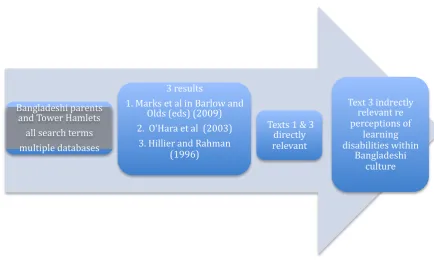
The chart below illustrates the search process for another research term with a description of the relevancy of each text outlined beneath.
Fig 2. Literature Search Process
Bangladeshi parents and Tower Hamlets all search terms multiple databases
3 results
1. Marks et al in Barlow and Olds (eds) (2009) 2. O'Hara et al (2003)
3. Hillier and Rahman (1996)
Texts 1 & 3 directly relevant
Text 3 indrectly relevant re perceptions of
learning disabilities within
[image:25.595.112.547.515.779.2]
This search across all relevant EBSCO databases revealed 3 texts, sources 1 & 3 appeared in other similar searches to indicate that there was little direct relevant material on subject of this study. There were many outliers, as exemplified by text 2 in this search. These outliers provided background material or touched on some topics that were encountered during this study, but were not its main focus, for example the cultural perceptions of learning disability amongst the Bangladeshi community. This was interesting and helped me have a more informed picture about the context of one respondent in this study, which directly raised this issue.
Text 1: Marks et al (2009) described the development of a parent education programme for Bangladeshi parents in Sure Start Children Centres in Tower Hamlets by the NHS based Primary Care Psychology and Counselling Service. The paper illustrates the way in which the idea for the project developed directly from the experience of working with Bangladeshi parents in the Borough, known to be identified with better uptake of services for Black and Minority Ethnic (BME) communities. The paper identifies the poor uptake of mental health services for BME groups in general, suggesting that this might be because people generally seek help from within their families or extended families. This issue is raised in my study and discussed in Chapter 4, Findings. The paper also raises the stigma associated with mental health problems amongst adults. This did not feature in my study, probably because the focus was primarily on children.
A further important feature highlighted in this paper, was the need to adapt service design and clinical practice in response to the particular psychological and cultural needs of the community in question. This premise informed the development of this research study and I address it further in Chapter 5, Conclusion and Discussion.
practices used in the course of parenting in rural Sylhet. It cites the use of a range of traditional, religious or spiritual practices, as well as the use of homeopathic medicine. The significant link with my own study was the importance of discussing the findings with a group of Muslim and/or Bengali speaking professionals who worked in the Borough. This element of triangulation has also been present in my research where findings have been discussed with Bengali and Sylheti speaking professionals working in Tower Hamlets, as well as with those respondents who attended the feedback meeting following the data analysis.
I found no specifically relevant sources on the topic of this study. The database searches provided some directly relevant material, most of which I was already aware of, for example citing articles drawn from mental health workers in Tower Hamlets, working with Bangladeshi parents and families, or in Children’s Centres. This process was useful in indicating that the field was saturated. Most searches cited book chapters or journal articles focusing on related subjects that I have been able to draw on. For example, Hillier and Rahman’s study (1996) provided an invaluable historical context that highlighted change over the last twenty years. I was alerted to Krause’s more directly relevant paper on the subject of the expression of meaning amongst a Punjabi community (2002).
Hand searching, through journals, for example The Journal of Child Psychotherapy and the Journal of Child Psychology and Psychiatry yielded background information, some of which was relevant to the theoretical underpinnings of this study, others touched on more clinically relevant issues, such as working cross-culturally. I also drew on a range of written material that was produced by others, and myself during my work in Tower Hamlets. None of this was published, but it was used to inform strategy documents, training materials, and conference presentations. Some of this material was also used subsequently to provide the background for published material, for example Urwin, 2003 and Loshak, 2003.
example, Irfat Tarafdar, Bi-lingual Parent Therapist made interesting observations about the difficulties facing Bangladeshi mothers, as they attempted to manage the range of different and often competing responsibilities they had to their children, their husband, especially an eldest son, their parents in law and their own parents. This was directly relevant to my study and her information helped to ensure that my understanding of the material was triangulated with experience and knowledge of the community. The research design was informed early on in discussions with Bangladeshi staff. For example Lilu Ahmed (Lead Family Support Worker, Marner Centre) helped me to formulate questions and vignettes that she thought would be of interest to the parents involved. Dr Ruma Bose has also been instructive in thinking about the meanings of self and identity in South Asian cultures. This was helpful in thinking about the issues that some of the women raised about the nature of the family as a collective, with associated advantages and disadvantages in term of support for mothers and fathers.
2.3 Key Areas identified through searches
2.3.1 Parental Perceptions of Infant and Child Development This field was guided by several questions:
• What is an infant capable of? • Does an infant/ child have a mind?
• What meaning does a child’s behaviour have for a parent?
• Is behaviour seen to have any communicative or symbolic function?
• In what ways is meaning related to cultural or belief systems and to what extent does meaning relate to developing understanding? Is there any dissonance between these?
• What is affect and is the understanding of affect culturally determined and, if so, to what extent or how is this evidenced?
human relationships is rooted in my training and subsequent clinical work as a child psychotherapist, that I have already alluded to. A key feature of this training was the Infant Observation Method (Bick, 1964). Rustin’s (2009) discussion about the Infant Observation Method and its influence on Child Psychotherapy training, succinctly describes how this method provides the backbone for the child psychotherapeutic endeavour:
Without an understanding of containment, projective identification,
splitting, unconscious phantasy, autistic phenomena, and so on, our interpretative activity would be impossible.” (p.38)
Rustin is alluding to the need for child psychotherapists to be alert to infantile anxieties that the patient cannot process and through her reverie help the patient integrate these states in a more manageable form, rather than avoid them through defensive processes. This principle has been significant to my understanding of infant development and mothering in the early years, as well as providing an important component of the methodology for analysing the data from this study. (See Chapter 3: Research Methods)
Given the wealth of psychoanalytic and attachment literature in this area of infant and child development, I have selected a range drawn from reading over the years, to include classic psychoanalytic texts, by Sigmund and Anna Freud, Klein, Bion, Winnicott and Bowlby, as well as more contemporary psychoanalytic authors, some of which have been cited in this study. These texts provide the basis for the developmental narrative that runs through this study, and serves as a framework in the analysis of the data. This narrative is based on the following ideas.
Babies are a ‘going concern’ (Winnicott, 1964)
Freud recognized that there is a connection between intra-uterine life and infancy in that just as the mother catered for the needs of the foetus, she continues to satisfy his needs ‘by a psychical-object relation’ in infancy (1926. P.138). There is a growing body of research into foetal development and the impact of external events on the infant in utero. For example Piontelli (1992) undertook a longitudinal psychoanalytic research study, using ultrasound as observation data, together with a series of interviews with parents, to add to the information already gleaned from ultrasound studies since the early 1970’s.
contemporary interest in the influence of maternal behavior and emotional state on the foetus, and the psychoanalytic view that these factors can have a profound influence on foetal development. Piontelli also took the view that the foetus was an interactive partner with the mother and played a role in its development. The idea of continuity and the interplay between the foetus and the mother was useful in the analysis of the data from my sample, where mothers had a profound sense of the continuity of their baby from conception onwards. Maiello (1995) further detailed the interactive nature of the relationship between mother and foetus through her recognition of the importance of sound and the idea of the ‘sound object’ (ibid, p.28), that she suggested heralded the threshold of the foetus’s awareness of me and not-me. This is discussed in Chapter 4, Findings- Relational Knowledge.
Babies are, in a context
Winnicott (1964) brings together the centrality of the contextual relationship between the infant with its mother, then father and wider family, to more external social relationships. Here he pays tribute to the ordinary act of mothering, acknowledging the dependency of early motherhood and the need for appropriate and timely support to help them in their task of mothering and parenting. Winnicott also identified that babies are very much a ‘going concern’ from conception, and even before in the minds of their mothers and fathers. This understanding about babies was an important feature in my understanding of the experiences of the mothers in my sample about their babies in utero, as well as the importance of the wider family and collective in the lives of their children and in their own parenting. (ibid. Ch. 3).
Infants need their parents to be mindful
By this, I mean the good enough parent who is holding their infant, in the sense of providing the reliability, predictability and continuity in emotional care and relating, to facilitate the emotional regulation and healthy development of their baby (Winnicott, 1960). Winnicott’s seminal work provided theoretical background for understanding the psychological and environmental task of ordinary parents. This background is present throughout the analysis of the findings, but particularly relevant in the sections relating to the parents’s understanding of their task. It is interesting that the concept of the child in the context of the mother and family, and then wider family and support networks, is a cornerstone of the Bangladeshi parenting model. It really supports the view that at its best, rearing or ‘growing’ a child takes place in the context of a series of interlinked systems.
The development of the infant’s thinking apparatus
The psychoanalytic perspective on this area of infantile development is rooted in Freud’s early work where he sets out the concepts of the unconscious (Freud, 1915) and primary and secondary processes (Freud, 1911). Primary process refers to the functioning of the ‘system unconscious’ where there is ‘no negation, no doubt, no degrees of certainty…’ (Freud, op.cit.p.186). This type of functioning is dominated by what Freud referred to as the pleasure principle. Secondary processing is another form of mental life that comes into play in response to a need to manage frustration and the demands of reality, the awareness of time, causality and consequences, the relationship or links between things (Diem-Wille, 2011 Ch. 4).
Theses sources, lay the ground for the discussion about the development of the infantile mind and the role of the primary carer, always the mother in this study, despite the significant influence of other adults in the child’s life. This theoretical framework is central to my understanding of the parental task of the mother and significant other(s). It also underpins my view about the growth of the mind and the capacity for linking and thinking.
The parental capacity to mentalise
Mentalisation is understood to be the capacity of the mother or father to respond in an attuned and reflexive way and so contain their infant. Freud (2011) alluded to this in his idea of ‘linking’ moving from the immediacy of sensory experience to the psychological quality of association. Later, Klein (1945) delineating the depressive position recognised the infant’s awareness of the mental state of the other. In turn, both Bion (1962a) and Winnicott (1962) stressed the significance of the carer’s psychological understanding of the infant in the emergence of the true self. The concept of reflective function has been a cornerstone of the psychoanalytic understanding of the human mind. It is understood to be central to a person’s capacity to respond in a reflexive way to another person (Fonagy, 2001 p.167). Following Fonagy’s thesis (2001) concerning the direct similarity with this model and attachment theory, the reflexive capacity of the carer is associated with security of attachment.
mother to become better able to respond in an attuned way to her child (Fraiberg et al., 1980; Fraiberg, 1975; Main, 2000; Fonagy, Steele & Steele, 1991).
These references were helpful in clearly setting out the theoretical bases for the concept of mentalisation and in making sense of the material that emerged from the respondents, for example, the ways in which the women talked about their understanding of their children’s communications. Furthermore, these texts also provided a robust framework for thinking about the impact of the mothers’ own experiences on their mothering. This was directly relevant in this study sample, as profound experiences such as migration, trauma and unresolved loss may rupture the mother’s sense of going on being, making it hard for her to regulate her own emotions and those of her infant.
I also want to note Ainsworth’s acknowledgement of the importance of the mother’s ability to ‘see things from the child’s point of view’ that has been little studied (Oppenheim and Koren-Karie, 2002 p.4). One such study reported the development of a new method designed to study this capacity, which they called ‘insightfulness’ (ibid, p.594). This aspect of insight was useful as a guide to thinking about the women’s comments about their understanding of their children.
Behaviour as a communication
Trevarthen (2011) builds upon over fifty years of painstaking work studying infantile patterns of communication, inter-subjective motivation, meaning and affect. Trevarthen’s central thesis is that ‘a newborn infant has intersubjective mental capacities’ that enable him to engage in reciprocal and sympathetic responses to another. Trevarthen sees this playful activity as the ‘driving force of cultural learning’ (p.130) and the basis for ‘a new psychology of creativity and cooperative knowing and meaning in human communities.’
such as sleeping and feeding difficulties, incessant crying, and a range of somatic presentations, such as tummy pains and headaches. Emanuel and Bradley (2008) offer a valuable collection of papers, introducing the Tavistock Under 5’s Service, with a useful presentation of the theoretical underpinnings of their approach and accounts of other child psychotherapists working in this service. I found Likierman’s paper ‘Spanning presence and absence: separation anxiety in the early years’, instructive as general background for the issues about separation that emerged during this study (ibid. pp.213-236). Likierman describes her work with three families, where the common feature in the referral was the child’s fear about being alone, especially at night-time. She considers that separation anxiety in a child less than 5 years needs to be ‘evaluated in relation to the family context’ (op.cit., p.217). Work with the families revealed that in each case the child’s behaviour was indicative of some difficulty for the parents, either individually or as a couple, particularly when there has been loss or trauma of some kind. In my study, the issue of separation re-evoked some painful feelings in some mothers about their own losses, most significantly the loss of their own mother through migration or death.
Lanyado and Horne (1999 & 2009) also bring together an interesting collection of papers providing an overview of the development of child psychotherapy as a profession, the growth of theoretical frameworks to include more recent developments in neuroscience and the application of child psychotherapy in a wide range of settings from the clinic, to residential settings and schools. This book was invaluable as a general background, helping me to stay rooted to a theoretical framework and to the centrality of reflexivity and emotional sensitivity to work, including research.
2.3.2 Infant Observation Method
Miller et al. (ibid.1989) and Reid (ibid, 1997) both describe the Infant Observation model with Reid providing a collection of papers that show developments in practice since Miller’s compilation nearly a decade earlier. The paper by Briggs (1997) describes a study using observations of 5 infants considered to be at risk, one of whom is Bangladeshi. The study itself considered the development of these infants and the role of observation as a research tool. My main interest in this fascinating study was Briggs’s description and understanding of the family patterns in relation to the parenting of the infant being observed. Briggs noted that, ‘it was important to take into account the contribution of the family members as a unit, as well as the quality of containment,’ provided by the infant’s mother. (ibid. p.210). Briggs observed what he called a ‘group culture,’ with parenting functions being interchangeable amongst the family members. Whilst I was not able to observe the family in such detail, there were many references to the involvement of the family. Some of these alluded to the family as interfering of the relationship between the mother and infant, but for the most part the women gave the strong impression that they were the primary carers and seen to be so.
Miller (2008) identifies the importance of emotionality in the observation method. She goes on to link the need for the observer and clinician to be aware of their emotional responses to material. Following Heimann (1950), Miller says, ’Correctly grasped, the emotional factor is an indispensible tool to be used in the service of understanding.’ (ibid. p.40) I made use of this idea whilst undertaking the focus groups and interviews, as well as during the analysis of the data. Noting the emotional factor in relation to the research process has also been instructive and could be the subject for another study.
These sources pay particular attention to the minutiae of interactions of human relatedness, in the mother-infant dyad, with the father and/ or significant others, such as siblings, grandparents, aunts, uncles and cousins. These observations provide a rich account of the tapestry of the unfolding development of an infant in the context of their particular family. Just as in my study I needed to pay close attention to the detail of the material gathered in my study, as well as to being alert to the unconscious feelings that emerged, often in a visceral way, as an indication of my counter-transference.
method. During the course of this research study, six child psychotherapists, a mixture of qualified and nearly qualified practitioners, undertook a weekly infant observation for 1 year. The research team separately interviewed the mothers at timed intervals. The observers and interviewers were blind to each other’s data. This was a highly productive study, from which significant findings about mothers and identity has emerged, as well as a novel development in research methodology. I will take up the latter in Chapter 3 Research Methods. The observation of a Bangladeshi infant was directly relevant to this study in thinking about the internal sense of loneliness and longing for the maternal object that mothers who have been separated from their mothers through migration or death may experience (Layton, 2007).
2.3.3 Under 5’s Services in the Community
There are many developments of the use of the Infant Observation method to inform practice with under 5’s in clinical settings. The sources below and my own experience are directly relevant to this study because they all contribute to my thinking about working in community settings, and to my understanding of the function that Children’s Centres may serve for the parents and children who make use of their services.
In my view, the work of Dilys Daws has provided the initiative and inspiration for much of the work that has followed. For example, Daws (1985), in her delightful account of work in a GP Surgery, applied Bick’s method to her therapeutic input at an ante-natal clinic, as well as using her thoughtfulness to support the work of the health care professionals. Tydeman and Sternberg (2008, p.100) use the term ‘thinking space’ to denote the containing function of such work in their account of work in a GP surgery. The importance of providing a ‘thinking space’ in a community setting had resonance with my experience of the focus groups, which I think provided the mothers with an opportunity to notice their thinking about issues and reflect upon them in an increasingly nuanced way.
community. This project was the precursor to Watt’s development of Help at Hand in another part of the Borough with a mostly Bangladeshi population. The paper presented to the ACP Conference (Urwin et al., 2008), by those involved in Help at Hand noted:
That the referral rate of under fives to the Tower Hamlets CAMHS East Team, has increased substantially since 1999 (…) representing an increase of 6.25%. This increase is largely though our decision to become proactively involved with Sure Start and other community projects.
2.3.4 Culture and Migration
Whilst this study is not specifically focused on these fields it necessarily involves some background thinking about the significance of cultural issues and the impact of migration on the sample in this study. The questions of belonging, being part of and fitting in, were important issues for many of the parents in this study. The texts outlined below, have contributed to my thinking about how they were trying to locate themselves as well as their families in Tower Hamlets and British society.
‘Culture’ is particularly difficult to define. For the purposes of this study I have positioned myself on a cultural threshold, looking at culture through different lenses, each of which offers a slightly different view of that remarkable process by which an individual develops their identity. The respondents in their subjective accounts of their children and their parenting offer the essential component of this lens. (See Chapter 4 Findings). The debate about culture is complex and there is a tendency for considerations of culture to become binary, or what Zeitlin (2010) citing Bhabha (ibid.p.95) termed ‘hybrid’, neither one thing nor another. Neither fitted well with my data or my experience and so I explored a range of literature that has informed my understanding about culture and how it develops in the space between, where the highly nuanced and subjective relationships between inside and outside, self and other, personal and collective are in dynamic relation to each other. Culture and identity evolve in an ongoing way, shaped in a reflexive way in the cultural context individuals find themselves in.
(Winnicott, 1971 p.100). Winnicott is referring to his notion of ‘transitional space’ that he conceived of as being ‘neither a matter of inner psychic reality nor a matter of external reality.’ (His italics) (ibid, p.96). Helman (1990) also put forward the idea of culture being determined at the intersection of inner and outer realities. In his classic medical anthropology text considering the cultural implications of health and illness, and the implications of culture for clinical practice, he said:
[Culture is] “ A set of guidelines (both explicit and implicit) which individuals inherit as members of a particular society, and which tells them how to view the world, how to experience it emotionally, and how to behave in it in relation to other people, the supernatural forces or gods, and to the natural environment. It also provides them with a way of transmitting these guidelines to the next generation – by the use of symbols, language, art and ritual. ‘(ibid. p.3)
Krause offers a systemic proposition that culture lies ‘both inside and outside persons’. (Krause 2002, p.17) She views the development of the coda of social convention lying in the intersection between those aspects of a culture that are internalised by the infant and those that lie externally. From a psychoanalytic and social science perspective Urwin and colleagues (2013), emphasise the ideographic and evolving components of culture suggesting:
An account of personal agency in which a dynamic, processual subjectivity will draw on as well as transform the web of relationships that a culture has to offer.’ (p.478).
A study by Liamputtong and Naksook (2003) considered the impact of migrancy upon Thai mothers in Australia. The rich data (30 mothers) identified that the process of migration and then being an immigrant, had a significant impact on their identities as mothers, and their mothering role. It was noted that motherhood is a major life event and this made more challenging by also being a migrant. These findings were relevant to my study where most of the mothers were themselves migrants and the issues of social isolation, responding to different child-care practices and the wish to preserve the Bangladeshi culture, were all themes that emerged and are discussed in my findings.
Losi (2006) brought together a selection of well-argued and accessible papers about the relationship between migration and mental and physical health that provides a conceptual framework for thinking about the many issues facing refuges and migrants. The book looks at ethnopsychiatric approaches to working psychologically with these groups and interestingly makes reference to continental European approaches that tend to be overlooked in the English literature. This approach is what Losi calls ‘ethno-systemic-narrative’, as it combines the three systems of ethnopsychiatry, systemic thinking and narrative psychotherapy (ibid. p.xiii). This approach allowed conceptual movement between the external and internal, acknowledging the impact of cultural dislocation on a parent’s capacity to contain their infant’s anxieties. This finding was directly relevant to my study in considering the ways in which migration and cultural dislocation affect the integrity of the maternal object for the mother (Losi, 2006).
2.3.5 Help Seeking and Culturally Competent Services
The Macpherson Report (1999), investigating racism in public services, raised highly important questions about institutionalized racism in all public sector services, including of course health. This issue was pertinent in this study in relation to consideration of the development and delivery of culturally competent and sensitive child mental health services. For example: the significance of language and interpretation; issues related to power, and dependency; the role of religion in the development of identity; the role of belief in constructs of health and well-being. Each of these provide challenges to a practitioner working from a psychoanalytic and developmental model of human relations based on Western and quintessentially Westernised European concepts and philosophy.
Helman’s book (1990) was helpful in general terms, in thinking about the important role that culture plays in the way in which communities understand and explain health problems. Akhtar’s (1999, 2011) books explore post-migration identity change, and most recently a much broader consideration of the impact of migration across the life span and into the next generation. I found this invaluable background to the totality of the experience of migration including its sensory and geographical elements, as well as the integral components of exploration and a wish to settle.
The exploration of attachment and parenting led me to Van Ijzendoorn and Sagi-Schwartz’s s paper (2008), on ‘Cross Cultural Patterns of Attachment’. This study is part of a compilation of authoritative papers considering the theoretical frameworks around attachment, current research and implications for clinical practice. The authors identify the mutual significance of the contextual aspects of attachment, the universality of the three basic attachment patterns, and the universal social pressure for a secure attachment pattern. This was interesting in relation to the important role played by the family and extended family in the lives of many of my sample, as well as the significance of the absence of such support and the alternative help-seeking behavior that emerged.