Evaluation of phosphorus mobility in soil using different
extraction methods
M. Kulhánek, J. Balík, J. Černý, V. Vaněk
Department of Agroenvironmental Chemistry and Plant Nutrition, Czech University
of Life Sciences in Prague, Prague, Czech Republic
ABstrAct
Soil samples (from Czech and German long-term field experiments) were used to estimate different soil phosphorus (P) fractions. More than 200 topsoil (0–30 cm) samples from different fertilizing treatments were taken. These were analyzed for P in soil solution (PCaCl
2) [0.01M CaCl2 extract], exchangeable sorbed P (Pex) [anion exchange (aE) membranes] and bioavailable P [Doppel-lactat and Mehlich 3 (PDl and PM3)]. other fractions analyzed were total inorganic (Pin), total (PM-tot) and organic (Porg) P [fractionation after Marks], P sorbed on Fe and al (PFeal) [fractio-nation after Schwertmann] and residual P (Par) [aqua regia extract]. Comparison of medians appeared to be better for evaluating extraction abilities. Phosphorus fractions were in the following order: (Par = 100%); PCaCl
2 (0.2%) < Pex (9%) < PDl (10%) < PM3 (16%) < Pin (24%) < Porg (37%) < PFeal (55%) < PM-tot (59%). low amounts of Pin, Porg and PM-tot did not verify the applicability of the Marks’ fractionation for the set of studied soils. Close correlations at P ≤ 0.001 were found for all methods for estimating the fractions of bioavailable phosphates (PCaCl
2, Pex, PDl and PM3). Statistically significant relations were observed between Pin with Par, PM-tot and PFeal.
Keywords: phosphorus; soil; bioavailability; P fractions
Supported by the Ministry of Education, Youth and Sports of the Czech republic, Project no. MSM 6046070901, and by the Ministry of agriculture of the Czech republic, Project no. QH 81202.
total P amounts, which range between 0.02 and 0.20%, depend on the composition and type of the soil (e.g. Mengel 1991, Schilling 2000, Blume et al. 2002) and are divided in different fractions. all of them may have an impact on the availability of P for plants. therefore, it is important to have a good knowledge of all P fractions to gain a better insight of processes taking place in soils.
Phosphorus concentration is normally lowest in soil solution. this fraction is usually estimated by extraction with water (luscombe et al. 1979) or with 0.01M CaCl2 (Houba et al. 1994) and rang-es between 0.8–8 mg P/kg (Marschner 1995). Exchangeable sorbed P (Pex) is another important source of bioavailable P. it is the part of soil P that is exchangeable and adsorbed on the surface of soil particles and can be easily released to the soil solution. this fraction can be estimated for example with anion resins (tiessen and Moir 1993, lewis and McGechan 2002), or recently, via anion
exchange (aE) membranes (Kuono et al. 1995, Sato and Comerford 2006).
the most commonly used methods are those for estimating total bioavailable P in soils: e.g. Mehlich 3 (Mehlich 1984), olsen (olsen et al. 1954), Cal and Doppel-lactat (Dl) (Hoffman 1991), Bray 1 and 2 (Bray and Kurtz 1945), etc. these extractions are focused on the determina-tion of potentially quickly bioavailable P, i.e. P in soil solution and weakly bound P.
with different fractionation methods, e.g., Chang and Jackson (1957), Hedley et al. (1982) or sepa-rately with the method according to Schwertmann (1964).
Several fractionation methods, e.g., Chang and Jackson (1957), Marks (1977), Hedley et al. (1982) etc., are commonly used for estimating total in-organic P (Pin). one part of these fractionations is ever estimating of total P (Ptot). Based on data from these fractionation methods, it is possible to calculate the amount of total organic P (Porg) as the difference between Ptot and Pin (olsen and Sommers 1982).
to estimate total P (Ptot) in soils many methods are available. Some of them are described in detail in the work of Kara et al. (1997). Commonly used extraction procedure is the aqua regia extrac-tion (Par). according to Crossland et al. (1995) this method correlates well with alkaline fusion. therefore, the aqua regia extraction for
estimat-ing of residual P is useful for indirect estimation of total P in soils.
the aim of this work was to evaluate selected methods used for estimating of different P forms in soil. the methods studied included 0.01M CaCl2 extraction, use of anion exchange membranes, Mehlich 3 and Doppel-lactat methods, estimating of Fe-, al-P, and fractionation after Marks (1977) and the extraction with aqua regia.
MAtEriAls And MEthods
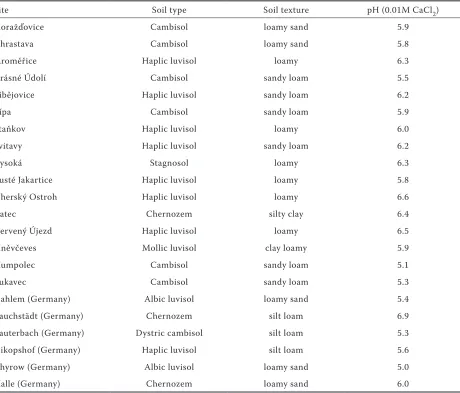
[image:2.604.79.539.369.762.2]Soil samples (0–30 cm) were taken from 22 sites of long-term field experiments in the Czech republic (16 sites) and Germany (6 sites). Characteristics of these sites are summarized in table 1. the experiments have been running for more than 20 years at the time of sampling, except lukavec, Humpolec, Červený Újezd and Hněvčeves sites,
table 1. Characteristics of the experimental sites
Site Soil type Soil texture pH (0.01M CaCl2)
Horažďovice Cambisol loamy sand 5.9
Chrastava Cambisol loamy sand 5.8
Jaroměřice Haplic luvisol loamy 6.3
Krásné Údolí Cambisol sandy loam 5.5
libějovice Haplic luvisol sandy loam 6.2
lípa Cambisol sandy loam 5.9
Staňkov Haplic luvisol loamy 6.0
Svitavy Haplic luvisol sandy loam 6.2
vysoká Stagnosol loamy 6.3
Pusté Jakartice Haplic luvisol loamy 5.8
Uherský ostroh Haplic luvisol loamy 6.6
Žatec Chernozem silty clay 6.4
Červený Újezd Haplic luvisol loamy 6.5
Hněvčeves Mollic luvisol clay loamy 5.9
Humpolec Cambisol sandy loam 5.1
lukavec Cambisol sandy loam 5.3
Dahlem (Germany) albic luvisol loamy sand 5.4
lauchstädt (Germany) Chernozem silt loam 6.9
lauterbach (Germany) Dystric cambisol silt loam 5.3
Dikopshof (Germany) Haplic luvisol silt loam 5.6
thyrow (Germany) albic luvisol loamy sand 5.0
where the samples were taken 6 years after experi-ment set up. only sites with an average pH value under 7.0 were chosen. Commonly 228 samples from different fertilizing treatments were taken. More fertilizing treatments were chosen, to get higher variability of studied samples. Samples were air-dried and passed through a 2-mm sieve.
Soil samples were analyzed for different P frac-tions. the following methods were used: 0.01M CaCl2 extraction (Houba et al. 1994) for readily available P (PCaCl2), anion exchange (aE) mem-branes (adapted after Kuono et al. 1995) for the extraction of exchangeable P (Pex), Mehlich 3 (Mehlich 1984) and Doppel-lactat (Dl) (Hoffman 1991) methods for bioavailable P (PM3 and PDl), P sorbed on Fe and al compounds (PFeal) accord-ing to Schwertmann (1964), extraction with 0.2M C2H8n2o4·H2o and afterwards digestion with H2So4 and H2o2 at 250°C for total inorganic (Pin), total organic (Porg) and total P (PM-tot) contents according to Marks (1977). to estimate Pin soil samples were extracted with 1M naoH after the Dl extraction. Five ml of 1M naoH extract were then digested with 1M H2So4 at 120°C to obtain the total P (PM-tot) content. aqua regia extracts (En 13346) were used for measuring residual P (Par). all reagents used were in per analysis quality. all extracts were measured spectrophotometri-cally after Murphy and riley (1962) with SKalar SanPlUS SYStEM. Spearman correlation test, average, median, maximal and minimal values were used for the statistical evaluation.
rEsults And discussion
the obtained data did not meet normal distribu-tion with the statistical tests. therefore, basic sta-tistical characteristics (average, median, maximal and minimal contents) were used for the evaluation of results. these are depicted in table 2.
the comparison of extraction ratios of all meth-ods yielded almost always statistically significant differences. only between Pex and PDl; PM-tot and
PFeal no statistically significant differences were obtained.
The lowest content of P was, as expected, measured in soil solution with 0.01M CaCl2 (PCaCl
2). Maximal
content of P was 8.90 mg P/kg. The value of median was only 1.70 mg P/kg. it corresponds with our previous results (Kulhánek et al. 2007), where we obtained values between 0.20 and 2.80 g P/kg.
a relatively low content of P was also measured with aE membranes (Pex) where similar values of average and median were reached, which varied around 60.0 mg P/kg. this method should estimate exchangeable sorbed P, which has the ability to easily pass to the soil solution and become avail-able for plants.
no significant differences (based on the box-plot comparison) were found between the methods Mehlich 3 and Doppel-lactat commonly used for estimating total bioavailable P. With both of them we did not reach any outlaying observations. the median of PDl was 70.3 mg P/kg and when using PM3 the estimate was about 35.5 mg P/kg higher. Both methods yielded higher values than Pex. it is also likely that with the Doppel-lactat and especially Mehlich 3 method results into nonbioavailable fractions of P. this does not, however, limit the possibility of using these methods to estimate bio-available P, because according to tiessen and Moir (1993) the Mehlich 3 and Doppel-lactat methods should not only estimate significant contents of nonbioavailable P fractions.
the fractionation after Marks (1977) was used for estimating the contents of total inorganic (Pin), organic (Porg) and total P (PM-tot). the results showed that in the analyzed soils, usually higher contents of P were bound in organic matter. the median of Pin was 190 mg/kg and 250 mg P/kg for Porg. analyzing the median values appeared to be more suitable in this case, because of the pres-ence of outlaying observations that inadequately influenced the values of averages.
[image:3.604.65.533.674.759.2]the content of PFeal averaged 446 mg P/kg. regarding the outlaying observations in the area of extremely high values, it appeared to be more
table 2. Portions of different P fractions in soils (mg P/kg)
PCaCl2 Pex PDl PM3 Pin Porg PM-tot PFeal Par
average 1.70 61.4 84.4 116 190 317 506 446 705
Median 1.30 59.1 70.3 106 162 250 397 374 676
Max 8.90 147 326 297 696 910 1440 1430 2024
suitable to use the median as well. the value of median was 374 mg P/kg.
The highest contents were obtained with the esti-mation of residual P (Par). Here the average value was 705 mg P/kg and the median 676 mg P/kg. The highest content (2024 mg P/kg) was found at the lauterbach site and the lowest (273 mg P/kg) at the Thyrow site. all of the measured values ranged between 0.02 and 0.20%. This range has been determined for total P by many authors (e.g. Mengel 1991, Schilling 2000, Blume et al. 2002, etc.). Due to the high extraction efficiency of the aqua regia extraction, it is possible to assume, that the obtained values were close to the total content of P in soil. This corresponds with the results of Crossland et al. (1995). These authors obtained very low differences between Par and total P estimated using the alkaline fusion.
[image:4.604.75.543.77.250.2]our results showed that the Marks fractionation did not probably estimate the corresponding P frac-tions. this is possible to derive from the fact that the PFeal content was very close to PM-tot. therefore almost all P was sorbed to Fe and al compounds, which is not probable. additionally, the PM-tot content was significantly lower compared to Par content. it is clear, that the Marks’ fractionation is usable only as a rough tool for estimating the ratios between Pin and Porg in the analyzed soils. a similar ratio between Pin and Porg was published by Bünemann et al. (2007) using Saunders and Williams (1957) extraction method.
Figure 1 shows the percentual distribution of different P fractions in soils based on median comparisons. according to the low contents of PM-tot, Par was chosen as 100%.
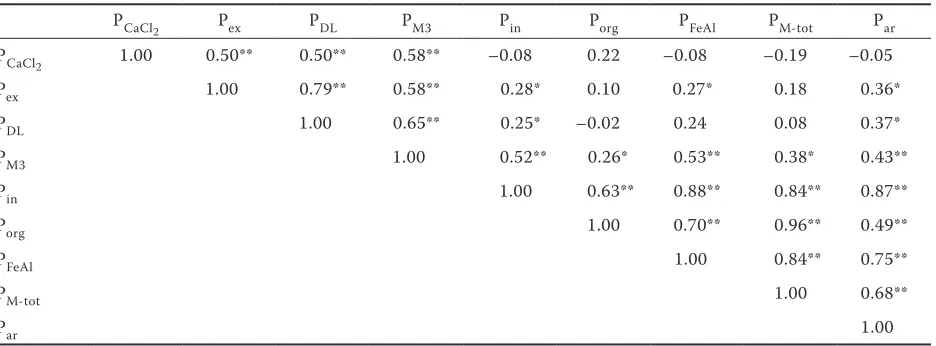
table 3. Correlations between observed P fractions (Spearman correlation coefficient r)
PCaCl2 Pex PDl PM3 Pin Porg PFeal PM-tot Par
PCaCl2 1.00 0.50** 0.50** 0.58** –0.08 0.22 –0.08 –0.19 –0.05
Pex 1.00 0.79** 0.58** 0.28* 0.10 0.27* 0.18 0.36*
PDl 1.00 0.65** 0.25* –0.02 0.24 0.08 0.37*
PM3 1.00 0.52** 0.26* 0.53** 0.38* 0.43**
Pin 1.00 0.63** 0.88** 0.84** 0.87**
Porg 1.00 0.70** 0.96** 0.49**
PFeal 1.00 0.84** 0.75**
PM-tot 1.00 0.68**
Par 1.00
[image:4.604.75.455.547.734.2]**highly significant relations at P ≤ 0.001, *significant relations at P ≤ 0.01
Figure 1. Percentage distribution of different P fractions in soils Figure 1. Percentage distribution of different P fractions in soils
0%
9% 10% 16%
24%
37%
55% 59%
100%
0 10 20 30 40 50 60 70 80 90 100
PCaCl2 Pex PDL PM3 Pin Porg PFeAl PM-tot Par
(%)
PCaCl
the lowest percentage of different fractions rep-resented P in soil solution (0.2%). Similar values of 9% and 10% were reached with aE membranes and the Doppel-lactat method, respectively. the amount estimated with the Mehlich 3 method was 16%. that corresponds well with results of many authors, that the content of bioavailable phosphates in soil is relatively low and reaches usually about 10% of total P content (Mengel 1991, Marschner 1995, Blume et al. 2002, Bünemann et al. 2007). the Porg content was about 13% higher compared to the content of Pin. More than 50% of Par constituted of phosphates adsorbed on iron and aluminum compounds.
Correlation analysis was used for comparison of different P fractions (table 3). Spearman correla-tion coefficients, which are suggested for compari-son of data with non-normal distribution, were used for the calculating of relations. the relations were calculated at P ≤ 0.01 and P ≤ 0.001.
Comparing the different methods for estimating bioavailable P fractions in soils (PCaCl
2, Pex, PDl and
PM3) led to close correlations at the P ≤ 0.001. it means that with the mentioned methods it is possible to estimate mutually dependent P fractions and in this case it shows close relations between P in soil solution and exchangeable and total bioavailable P, respectively. tightness of relations between Pex and phosphates estimated with the Mehlich 3 and Doppel-lactat methods shows that these methods probably did not estimate significant contents of nonbioavailable P. Significant relations between PM3 and Pex were obtained in the work of Zheng et al. (2003). Close correlations between P in soil solution and PM3 was also found by Magdoff et al. (1999), who reached r = 0.8 at P ≤ 0.01 in 28 noncalcareous soils. Zbíral and němec (2002) compared the PM3 and PCaCl
2 fractions using regression analysis and
obtained significant relations as well (coefficient of determination r2 = 0.56).
Close correlations at P ≤ 0.001 were obtained between PM3 and Pin. therefore, it is probable that the Mehlich 3 method estimated a significant con-tent of total mineral P. Despite the low extraction efficiency of the Marks fractionation it is possible to presume that this method did not estimate the fraction of total inorganic P, but only a fraction of it. relations between Pin with Pex, PCaCl2 and PDl were not statistically significant at P ≤ 0.001.
in most of cases, statistically significant rela-tions between bioavailable forms of P and Porg were not reached.
High correlation coefficients between Pin, Porg and PM-tot were obtained, because these fractions
originated from one fractionation. the correlation coefficient between Porg and PM-tot was even 0.96.
Close relations between PFeal and PM-tot and Par showed that a considerable content of P in noncalcareous soils can be adsorbed on Fe and al compounds.
regression analysis was used for evaluating the results of all the studied P fractions. Similar re-sults to correlation analysis were obtained. in most cases linear regression appeared to be the most suitable.
as a conclusion it is possible to state that P con-tents in different fractions in soils can be written as: PCaCl
2 < Pex < PDl < PM3 < Pin < Porg < PFeal <
PM-tot < Par.
the Marks’ fractionation probably does not estimate the corresponding contents of different P fractions. therefore, this fractionation is only usable as guidance about ratios between Pin, Porg and Ptot in the analyzed soils.
Close correlations between the methods esti-mating bioavailable phosphates (PDl and PM3) with P in soil solution (PCaCl
2) and exchangeable
P (Pex) verified the usability of the Mehlich 3 and Doppel-lactat extraction schemes in noncalcare-ous soils.
High contents of phosphates in analyzed noncal-careous soils were bound in Fe and al compounds. this was verified by the high percentage of this fraction compared to Par.
rEfErEncEs
Blume H.P., Brümmer G.W., Schwertmann U., Horn r. et al. (2002): Scheffer/Schachtschabel: lehrbuch der Bodenkunde. Spektrum akademischer verlag, Stuttgart, 607.
Bünemann E.K., Marschner P., Mcneill a.M., Mclaugh-lin M.J. (2007): Measuring rates of gross and net mineralisation of organic phosphorus in soil. Soil Biology and Biochemistry, 39: 900–913.
Bray r.H., Kurtz l.t. (1945): Determination of total, organic and available forms of phosphorus in soils. Soil Science, 59: 39–45.
Chang S.C., Jackson M.l. (1957): Fractionation of soil phosphorus. Soil Science, 84: 133–144.
Crossland a.r., Zhao F.J., McGrath S.P., lane P.W. (1995): Comparison of aqua regia digestion with sodium with carbonate fusion for the determina-tion of total phosphorus in soils by inductively cou-pled plasma atomic emission spectroscopy (iCP). Communications in Soil Science and Plant analysis,
En 13346 (2000): Characterization of sludges. Determi-nation of trace elements and phosphorus. aqua regia extraction methods.
Hedley M.J., Stewart J.W.B., Chanhan B.S. (1982): Chang-es in inorganic and organic soil phosphorus fraction inducted by cultivation practices and by laboratory incubations. Soil Science Society of america Journal,
46: 970–976.
Hoffman G. (1991): vDlUFa-Methodenbuch Band i: Die Untersuchung von Böden. verband Deutscher landwirtschaftlicher Untersuchungs- und vorschungs-anstalten-verlag, Darmstadt, 316.
Houba v.J.G., novozamsky i., temminghoff E. (1994): Soil analysis Procedures: Extraction with 0.01M CaCl2. Soil and Plant analysis, Part 5. Wageningen, 66. Kara D., Ösavaşçi G., alkan M. (1997): investigation of
suitable digestion methods for the determination of total phosphorus in soil. talanta, 44: 2027–2032. Kulhánek M., Balík J., Černý J., nedvěd v., Kotková B.
(2007): the influence of different intensities of phos-phorus fertilizing on available phosphos-phorus contents in soils and uptake by plants. Plant, Soil and Environ-ment, 53: 382–387.
Kuono K., tuchiya Y., ando t. (1995): Measurement of soil microbial biomass phosphorus by an anion exchange membrane method. Soil Biology and Bio-chemistry, 27: 1353–1357.
lewis D.r., McGechan M.B. (2002): a review of field scale phosphorus dynamic models. Biosystems Engi-neering, 82: 359–380.
luscombe P.C., Syers J.K., Gregg P.E.H. (1979): Water extraction as a soil testing procedure for phosphate. Communications in Soil Science and Plant analysis,
10: 1361–1369.
Magdoff F.r., Hryshko C., Jokela W.E., Durieux r.P., Bu Y. (1999): Comparison of phosphorus soil test extractants for plant availability and environmental assessment. Soil Science Society of america Journal,
63: 999–1006.
Marks G. (1977): Beitrag zur präzisierten Charak-terisierung von pflanzen-verfügbaren Phosphat in ackerböden. archiv für acker und Pflanzenbau und Bodenkunde, 21: 447–456.
Marschner H. (1995): Mineral nutrition of Higher Plants. academic Press, San Diego, 889.
Mehlich a. (1984): Mehlich 3 soil test extractant: a modification of Mehlich 2 extractant. Communications in Soil Science and Plant analysis, 15: 1409–1416. Mengel K. (1991): Ernährung und Stoffwechsel die
Pflan-ze. Gustav Fischer verlag, Jena, 466.
Murphy J., riley J.P. (1962): a modified single solution method for the determination of phosphate in natural waters. analytica Chimica acta, 27: 31–36.
olsen S.r., Cole C.v., Watanabe F.S., Dean l.a. (1954): Estimation of available Phosphorus in Soils by Extrac-tion with Sodium Bicarbonate. USDa Circular 939, U.S. Government Printing office, Washington D.C., 19. olsen S.r., Sommers l.E. (1982): Phosphorus. in:
Comp-ton J.E., Cole D.W. (1998): Phosphorus cycling and soil P fractions in Douglas-fir and red alder stands. Forest Ecology and Management, 110: 101–112.
Sato S., Comerford n.B. (2006): assessing methods for developing phosphorus desorption isotherms from soils using anion exchange membranes. Plant and Soil, 279: 107–117.
Saunders W.M.H., Williams E.G. (1955): observations on the determination of total organic phosphorus in soil. Soil Science, 6: 254–267.
Schilling G. (2000): Pflanzenernährung und Düngung. verlag Eugen Ulmer, Stuttgart, 464.
Schwertmann U. (1964): Differenzierung der Eisenoxide des Bodens durch Extraktion mit ammoniumoxalat-lösung. Zeitschrift für Pflanzenernährung, Düngung, Bodenkunde, 105: 194–202.
Sharpley a.n. (1995): Soil phosphorus dynamics: agro-nomic and environmental impacts. Ecology Engineer-ing, 5: 261–279.
tiessen H., Moir J.o. (1993): Characterization of available P by sequential extraction. in: Carter M.r. (ed.): Soil Sampling and Methods of analysis. lewis Publishers, Boca raton, 75–86.
Zbíral J., němec P. (2002): Comparison of Mehlich 2, Mehlich 3, Cal, Egner and 0.01M CaCl2 extractants for determination of phosphorus in soils. Communica-tions in Soil Science Plant analysis, 33: 3405–3417. Zheng Z., Simard r.r., Parent l.E. (2003): anion
ex-change and Mehlich 3 phosphorus in humaquepts varying in clay content. Soil Science Society of america Journal, 67: 1287–1295.
received on March 6, 2009
Corresponding author:
ing. Martin Kulhánek, Ph.D., Česká zemědělská univerzita v Praze, Fakulta agrobiologie, potravinových a přírodních zdrojů, Kamýcká 129, 165 21 Praha 6, Česká republika