Evaluating the implementation of the
stepped care approach Raise your
strengths in primary health care: what
lessons can be learned?
Bachelor’s thesis
First supervisor:
N.J. Peeters, MSc.
Second supervisor:
Dr. C. Bode
Noa Hegeman
University of Twente
BMS Faculty
Department of Psychology
Abstract
Background: Chronic diseases represent a growing public health problem that especially affects primary health care. Given the already high workload of general practitioners and practice nurses, it has become increasingly important that chronically ill patients contribute to their own care. In order to support these patients, the stepped care approach Raise your strengths has been developed. This intervention aims to improve the self-management and well-being of chronically ill patients by adopting a strengths-based approach. In 2018, a first pilot version of Raise your strengths was implemented in general practices. Implementation evaluations are valuable when interpreting any results and for improving interventions. There exists, however, a major gap in the literature regarding implementation evaluations.
Objectives: The present study aimed to evaluate the implementation of Raise your strengths in primary health care. Based on this evaluation, the present study further aimed to provide recommendations for future implementations of Raise your strengths in primary health care. Method: The present study explored the data of general practitioners, practice nurses (POHs) and chronically ill patients who in total participated in 12 evaluation questionnaires and 7 evaluation interviews during the pilot study of 2018. Their data was analysed within five categories: ‘Attractiveness of the intervention’, ‘Delivery of the intervention’, ‘Uptake of the intervention’, ‘Other’ and ‘Recommendation.’
Results: The implementation of the pilot version (2018) of Raise your strengths was evaluated quite positively. Raise your strengths had appealed to all general practitioners, practice nurses and chronically ill patients and had been delivered quite well. However, the threshold to implementation of Raise your strengths and especially of its first step was high due to low perceived feasibility. To improve this, participants of the pilot study (2018) recommended giving the providers of Raise your strengths more preparation time, supporting them more actively in the beginning of the implementation process, and making the materials of Raise your strengths appear less sizeable and less complex.
Table of Contents
List of Tables and Figures ... 4
Introduction ... 5
Method... 10
1. Design ... 10
2. Participants ... 10
3. Materials ... 10
4. Data Analysis ... 13
Results ... 15
1. How Did Participants of the Pilot Study of 2018 Evaluate the Implementation of the Stepped Care Approach Raise Your Strengths in Primary Health Care? ... 15
1.1 Attractiveness of the intervention. ... 15
1.2 Delivery of the intervention. ... 19
1.3 Uptake of the intervention. ... 20
1.4 Other. ... 21
1.5 Summary. ... 21
2. What Recommendations for Future Implementations of the Stepped Care Approach Raise Your Strengths in Primary Health Care Can Be Provided Based On an Implementation Evaluation of the Pilot Study of 2018? ... 22
2.1 Start. ... 22
2.2 Evaluation and feedback. ... 22
2.3 Manual and worksheets. ... 23
2.4 Format. ... 24
Discussion ... 24
Conclusion ... 29
References ... 30
Appendix A: Schematic Overview Raise Your Strengths ... 34
Appendix B: Description Worksheets Raise Your Strengths ... 39
Appendix C: Implementation Process Raise Your Strengths ... 41
Appendix D: Target Group and Inclusion- and Exclusion Criteria ... 43
Appendix E: Questions Implementation Evaluation Raise Your Strengths ... 44
Appendix F: Coding Schemes ... 53
List of Tables and Figures
Figures
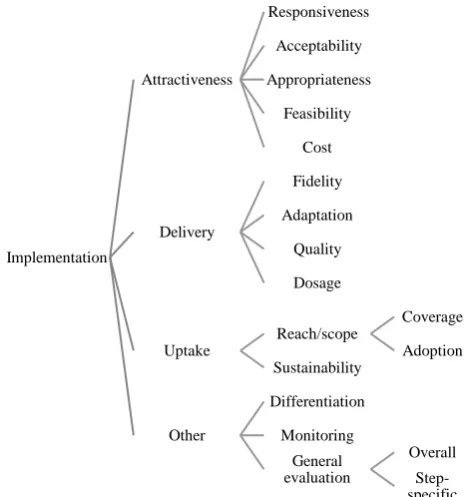
Figure 1: Proposed hierarchical overview of implementation aspects, in case of stepped care
approaches such as Raise your strengths... 7
Figure C1: Implementation process of Raise your strengths, phase 1 ... 41
Figure C2: Implementation process of Raise your strengths, phase 2 ... 42
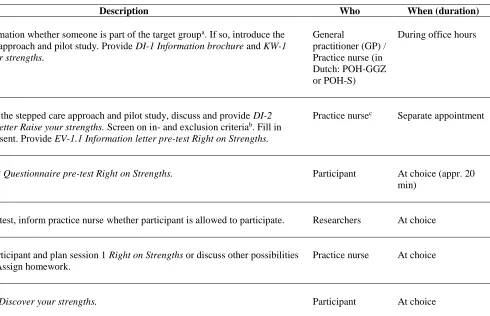
Tables Table A1: Schematic Overview of Step 1: Introduction ... 34
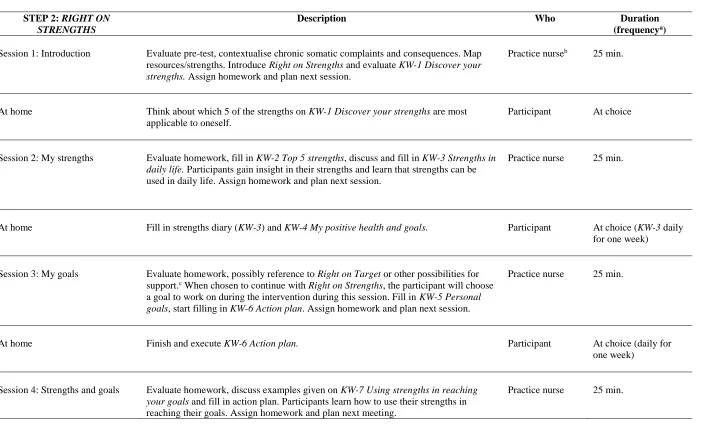
Table A2: Schematic Overview of Step 2: Right on Strengths ... 35
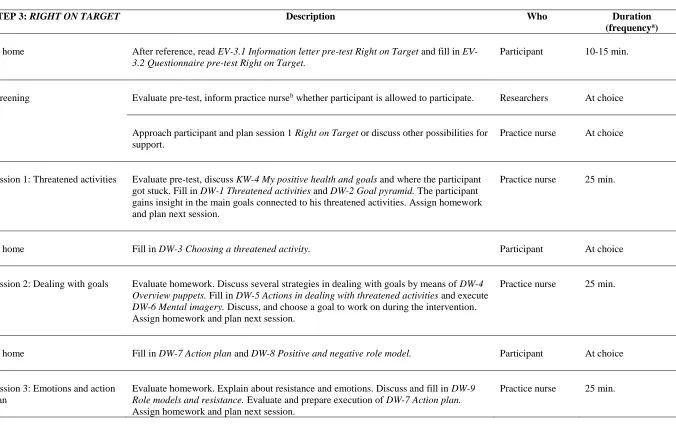
Table A3: Schematic Overview of Step 3: Right on Target ... 37
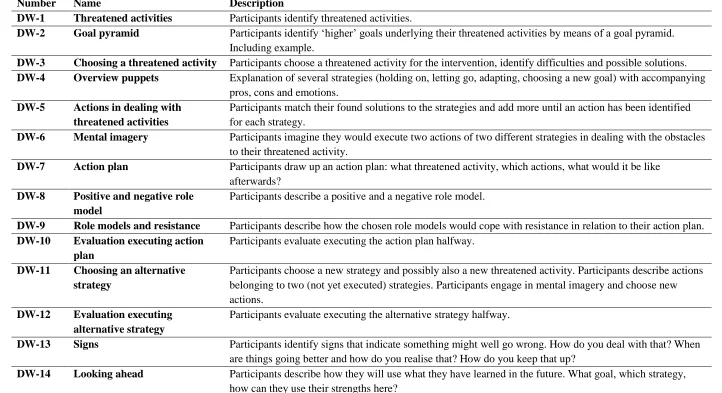
Table B1: Description of Worksheets Step 2: Right on Strengths ... 39
Table B2: Description of Worksheets Step 3: Right on Target ... 40
Table E1: Implementation Evaluation of Raise Your Strengths: Questions Asked per (Sub)dimension ... 44
Table F1: First Coding Scheme ... 53
Table F2: Second Coding Scheme ... 55
Table G1: Codes with Exemplary Quotes: Category ‘Attractiveness of the Intervention’ ... 56
Table G2: Codes with Exemplary Quotes: Category ‘Delivery of the Intervention’ ... 58
Table G3: Codes with Exemplary Quotes: Category ‘Uptake of the Intervention’ ... 59
Table G4: Codes with Exemplary Quotes: Category ‘Other’... 59
Introduction
More than half of the Dutch population has one or more chronic disease(s), and this is only expected to increase (National Institute for Public Health and the Environment, 2018). Chronic diseases cause most of all deaths worldwide, have the highest global burden of disease (World Health Organization, 2002) and lead to high economic costs for society (Suhrcke, Nugent, Stuckler, & Rocco, 2006). On the individual level, moreover, chronic diseases not only affect one’s physical condition; patients with a chronic disease also seem to experience more psychological complaints such as depression (Jansen, Spreeuwenberg, & Heijmans, 2012) and appear to have a lower quality of life (Baanders, Calsbeek,
Spreeuwenberg, & Rijken, 2003) than the general Dutch population. In short, chronic diseases represent “a major public health concern” (Grady & Gough, 2014, p.e29).
Primary health care in particular is affected by this growing problem. Chronically ill patients make use of primary health care services more often than the general population does (Jansen et al., 2012) – in view of the growing prevalence of chronic diseases, this means the pressure put on the primary health care system is increasing. As their workload is already considered too high by most general practitioners (GPs; Boekee & Hoekstra, 2018) and forms one of the main causes of their turnover (Zantinge, 2008), this development is concerning.
In order to support general practitioners and to improve quality of care, practice nurses (in Dutch: ‘POHs’) have been introduced in general practices in the Netherlands since 1999 (Lamkaddem, De Bakker, Nijland, & De Haan, 2004). These practice nurses can be
specialised in either somatic health care (in Dutch: ‘POH-S’) or mental health care (in Dutch: ‘POH-GGZ’). Both often see chronically ill patients, although the extent to which fluctuates over time (Jansen et al., 2012). Introducing them in general practices, however, has not been sufficient to reduce the workload of GPs in the Netherlands (Jansen et al., 2012; Lamkaddem et al., 2004). Consequently, chronically ill patients have increasingly come to be expected to self-manage their diseases (Bodenheimer, Lorig, Holman, & Grumbach, 2002; Holman & Lorig, 2004; Jansen et al., 2012).
for reviews, see among others Barlow, Wright, Sheasby, Turner and Hainsworth (2002). A commonality that can be found, though, is that the effects of self-management interventions are usually small to moderate and seem to fade in the long term (see e.g. Barlow et al., 2002; Cooper, Booth, Fear, & Gill, 2001; Miller et al., 2015). Considering chronic diseases last a lifetime, this is both undesired and insufficient.
Stimulating chronically ill patients’ strengths use may increase the effectivity of self-management interventions. Using one’s strengths, namely, has been found to lead to increases in well-being (e.g. Wood, Linley, Maltby, Kashdan, & Hurling, 2011) and is something people are intrinsically motivated to do (Linley, Nielsen, Gillett, & Biswas-Diener, 2010). Moreover, the positive emotions that using one’s strengths yields have been found to act as a buffer against mental disorder (e.g. depression) and to have positive effects on one’s physical health (Seligman, 2008). Yet application of the strengths-based approach in primary health care for those with a chronic disease still seems to be in its infancy. No self-management interventions for chronic diseases that make use of the strengths-based approach could be identified in the literature. Moreover, Mackenbrock (2017) found that although Dutch general practitioners and practice nurses have started to adopt the beliefs underlying the strengths perspective, they lack a thorough understanding of what it entails and the practical support (e.g. training, protocols) needed for its systematic application.
Because Raise your strengths is a stepped care approach, it is needs-based. Hence, not all patients necessarily complete all steps and its duration varies from 6 to 9 sessions. These sessions are largely provided by practice nurses and take place once every two weeks. A more detailed overview of the three steps and their sessions can be found in Appendix A, and a description of the worksheets used per step can be found in Appendix B.
Raise your strengths has been implemented in 6 general practices during a first pilot study (2018) in order to gain an insight in how general practitioners, practice nurses and patients experience the intervention in practice (see Appendix C). Implementation concerns the process of putting an intervention ‘out there’; the process of providing (‘using’) an
[image:7.595.96.331.383.632.2]intervention in the ‘real world.’ When considered as a higher-order construct, implementation (or ‘the implementation process’) could be argued to comprise four related categories which each consist of several (sub)dimensions. This new categorization is proposed here, with its (sub)dimensions in particular being based on the work of Berkel and colleagues (2011); Durlak and DuPre (2008); and Peters, Adam, Alonge, Agyepong, and Tran (2013). See Figure 1 below for a schematic overview.
Figure 1. Proposed hierarchical overview of implementation aspects, in case of stepped care approaches such as
Raise your strengths. The second column depicts implementation categories, the third implementation dimensions, and the fourth implementation subdimensions.
The first of the implementation categories proposed is labeled ‘Attractiveness of the
intervention’, and deals with the extent to which the intervention appeals to participants. Its dimensions are ‘Responsiveness’ (to what extent does the intervention stimulate the interest
Implementation
Attractiveness
Responsiveness
Acceptability
Appropriateness
Feasibility
Cost
Delivery
Fidelity
Adaptation
Quality
Dosage
Uptake
Reach/scope
Coverage
Adoption Sustainability
Other
Differentiation
Monitoring
General evaluation
Overall
and enthusiasm of the participants?), ‘Acceptability’ (to what extent do participants perceive the intervention as agreeable?), ‘Appropriateness’ (to what extent do participants perceive the intervention as fitting or relevant within a particular setting or for a particular target group or problem?), ‘Feasibility’ (to what extent can the intervention be carried out in a particular setting? Is it doable?) and ‘Implementation cost’ (what are the costs of implementing the intervention?) (Berkel et al., 2011; Durlak & DuPre, 2008; Peters et al., 2013).
The second category, ‘Delivery of the intervention’, is concerned with how the intervention was in fact provided once it has been implemented. The implementation literature has focused most often on its first dimension, ‘Fidelity’ (to what extent is the delivered intervention similar to its designed version?; program curriculum adherence). Related to this is the second dimension, ‘Adaptation’ (to what extent have the participants made changes to the intervention’s original design? Which?; particularly additions). The other two dimensions of this category deal with the ‘Quality’ (how well were the program
components provided?) and ‘Dosage’ (how much of the original program has been provided?) of the intervention’s delivery (Berkel et al., 2011; Durlak & DuPre, 2008; Peters et al., 2013).
The third category deals with how the intervention was received, namely with the ‘Uptake of the intervention.’ It firstly focuses on the intervention’s ‘Reach/scope’: to what extent are the actual participants (i.e. the providers and the target group) involved with, and representative for, the targeted group of participants? This dimension consists of two
subdimensions, namely ‘Coverage’ (to what extent does the target group actually receive the intervention?) and ‘Adoption’ (to what extent do possible providers initially decide to try to employ the intervention?). Secondly, this category focuses on the ‘Sustainability’ of the intervention (to what extent is the intervention maintained over time in a given setting?) (Berkel et al., 2011; Durlak & DuPre, 2008; Peters et al., 2013).
The last category is named ‘Other’, as it deals with implementation dimensions that do not seem to belong to any of the other categories. It is concerned with ‘Monitoring’ (to what extent did participants receive other services during the implementation process? Which?; to be judged in retrospect) and ‘Differentiation’ (to what extent is the intervention unique in its theory and practices?) (Berkel et al., 2011; Durlak & DuPre, 2008). It further deals with the ‘General evaluation’ of the intervention’s implementation. In case of stepped care approaches such as Raise your strengths, this dimension consists of two subdimensions: ‘Overall’
Evaluating the implementation of interventions is valuable. Substantive evidence that effective implementation is related to better outcomes exists (Durlak & DuPre, 2008; Mihalic, 2002), hence evaluating an intervention’s implementation provides important context for interpreting any results. Implementation evaluation, moreover, allows for identification of the intervention’s (most) effective components – which may or may not be similar to its theorized ones – as well as for identification of any adaptations made, thereby informing about the needs and preferences regarding acceptance and use of the intervention in a particular setting (Berkel, Mauricio, Schoenfelder, & Sandler, 2011; Durlak & DuPre, 2008). Finally,
especially in case of pilot studies, evaluating an intervention’s implementation enables early identification and correction of flaws in its design (Durlak & DuPre, 2008).
Despite the importance of implementation evaluation, there is a widespread lack of reporting on implementation in the literature (Berkel et al., 2011; Durlak & DuPre, 2008; Mihalic, 2002). Making a contribution to filling this gap, the present study firstly aims to evaluate the implementation of the stepped care approach Raise your strengths in primary health care based on data yielded by the evaluation questionnaires and -interviews that were part of the pilot study of 2018. Mixed methods are being used as these will give the most complete view of participants’ evaluations by allowing for an insight in, and understanding of, the data that might not be obtained otherwise (Migiro & Magangi, 2010). This was considered useful for informing both the literature regarding implementation evaluations and further development as well as future implementations of Raise your strengths. The present evaluation will be guided by the four implementation categories identified above:
‘Attractiveness of the intervention’, ‘Delivery of the intervention’, ‘Uptake of the intervention’
and ‘Other.’ For each of these, it will be explored what aspects of the implementation of the pilot version of Raise your strengths the general practitioners, practice nurses, and patients (i.e. the participants) experienced as positive or negative, and why (where possible). Further, it will be explored what recommendations participants of the pilot study of 2018 provided regarding future implementations of the stepped care approach in primary health care. Based on the findings of this evaluation, the present study secondly and consequently aims to provide recommendations for future implementations of Raise your strengths in primary health care. In other words, this study aims to answer the following questions:
2. What recommendations for future implementations of the stepped care approach Raise your strengths in primary health care can be provided based on an implementation evaluation of the pilot study of 2018?
Method
1. Design
The present study employed a mixed-methods design. It used the data yielded by the evaluation questionnaires and -interviews during the pilot study of 2018. This data was originally collected for evaluation of the feasibility and implementation of the pilot version of Raise your strengths (Van Veen, Peeters, Bohlmeijer, & Bode, 2018) as done in this study.
2. Participants
As part of the pilot study of 2018, 3 GPs, 5 practice nurses, and 4 patients filled in an
evaluation questionnaire, and 2 GPs, 4 practice nurses (2 together), and 2 patients participated in an evaluation interview. It cannot be retrieved who participated both in an interview and a questionnaire, except for two patients who did. All patients were female and between 21 and 67 years old, but no further demographics are known. The inclusion- and exclusion criteria of the pilot study can be found in Appendix D. General practices received a monetary
compensation upon participation in the pilot study of 2018. All participants signed informed consent after they had been extensively informed about the pilot study and their rights. Ethical approval for the pilot study was granted by the Medical Research Ethics Committee Twente (Dos. nr. NL65198.044.18) and ethical approval for the present study was granted by the BMS Ethics Committee of the University of Twente (Dos. nr. 190148).
3. Materials
3.1 Evaluation questionnaires.
3.1.1 General practitioners and practice nurses.
The evaluation questionnaire for general practitioners consisted out of 22 items and that for practice nurses out of 53 items. Both targeted the content, implementation and (expected) effectivity of Raise your strengths. In both versions, the questions were closed- as well as open-ended. In case of the closed-ended questions, providers had to select what their function was (GP, POH-S, POH-GGZ, other), had to indicate which step(s) of Raise your strengths they had provided (Introduction, Right on strengths, Right on target), and had to indicate on a 5-point Likert scale what they thought of, for example, the target group of Raise your
strengths (ranging from ‘not good at all’ to ‘very good’). An example of an open question is: “How many sessions would you, based on your experience with the approach, recommend per step (a, b, and c) of the stepped care approach Raise your strengths and how many minutes should these sessions last? (a = Introduction, b = Right on strengths, c = Right on target). Please explain your answer.” The questionnaires were made available to them via a link to Qualtrics. No data on their psychometrics was available. The questionnaires were in Dutch.
3.1.2 Patients.
The evaluation questionnaire for patients that was to be filled in after Right on strengths consisted out of 23 items, and the version to be filled in after Right on target consisted out of 31 items. These targeted the content, implementation, and (expected) effectivity of Raise your strengths; specifically of step 1 and 2 (the former) or of step 1, part of step 2, and part 3 (the latter). In both versions, the questions were closed- as well as open-ended. The closed-ended questions asked patients to indicate on a 5-point Likert scale to what extent they agreed with, for example, the statement “I would recommend the stepped care approach Raise your
strengths to others” (ranging from ‘totally disagree’ to ‘totally agree’). An open question was, for example, “What recommendations do you have regarding the Introduction of the stepped care approach Raise your strengths? Here you received an information brochure, Right on strengths worksheet 1, the information letter and an explanation.” The questionnaires were made available to them via a link to Qualtrics or were, as a paper-and-pencil version, given to them by the practice nurse when desired. No data on their psychometrics was available. The questionnaires were in Dutch.
3.2 Evaluation interviews.
nurses (part of step 1, and step 2 and 3) and two for patients (step 1 and 2; or step 1, part of step 2 and step 3). These will be described in the following sections.
3.2.1 General practitioners and practice nurses.
The interview schemes that were used for interviews with general practitioners or practice nurses consisted out of 3 (general practitioners) or 5 (practice nurses) parts. Both interview schemes started with the introduction, which was about practicalities (function in general practice, steps provided, number of patients referred/started in practice), the number and duration of sessions, the professional(s) most suitable to provide each of the steps, and the Introduction (materials used, screening and recruitment of patients). An exemplary question for this part is “What did you think of the information letter (in the context of the
Introduction)?” The interview schemes for interviews with practice nurses then continued with two parts that were not included in the interview schemes for interviews with general practitioners: worksheets Right on strengths and worksheets Right on target. These parts included questions about the worksheets used per step and both steps in general, such as “What did you think of the third worksheet, Strengths in daily life?” and “Do you have any recommendations regarding Right on target?” Then, both interview schemes covered the implementation of the stepped care approach. This part was about the manual, worksheets (practice nurses only), information brochure, intervision, collaboration with the research team, target group, inclusion- and exclusion criteria, and any strengths and recommendations about the provision of Raise your strengths within their general practice. One of the questions in this part was: “How did you experience the explanation about the approach (intervision) by [one of the researchers]?” Finally, a part called statements focused on the effectivity of the approach (self-management and well-being), the chosen setting (general practice), whether the approach was recommendable (to whom?) and any remarks remaining. An example is “In the evaluation questionnaire, you were asked whether you think Raise your strengths
increases the well-being of people with chronic somatic diseases. What do you think?”
Patients.
explanation they had been given by the general practitioner or practice nurse. One question was, for instance, “What did you think of the information brochure that was used during the Introduction of Raise your strengths?” The second part was called worksheets Raise your strengths, and it covered each of the worksheets the patient had used, the number and duration of sessions, guidance in the general practice, a general evaluation of the intervention and if applicable, the transition from step 2 to step 3. An exemplary question for this part is: “What did you think of worksheet 6, Action plan?” Finally, the third part, named statements,
concerned the effectivity of the approach (self-management and well-being), the chosen setting (general practice), whether the approach was recommendable to others (who?) and any remarks remaining. One of the questions here was “For whom is the approach particularly appropriate according to you?”
3.3 Probes and follow-up questions.
All questions in the interview schemes (all versions) for the evaluation interviews were in Dutch, were open-ended and could be followed up by questions such as “What was good?”, “What could be improved?”, and “Do you have a recommendation?” in order to gain more depth in the answers. Probes that could be used to encourage participants were mostly “hm-hm”, “yes”, and “okay.” As the interviews were semi-structured, there was freedom to elaborate on the interviewees’ answers.
4. Data Analysis
4.1 Categorizing the questions.
In order to structure the present implementation evaluation according to the different implementation categories and (sub)dimensions, the questions asked in the evaluation questionnaires and during the evaluation interviews were retrospectively assigned to their best-fitting implementation (sub)dimension. This was done based on a comparison of the aspects targeted by the questions with those described in the literature. A complete overview of the specific questions asked per (sub)dimension can be found in Appendix E.
4.2 Evaluation questionnaires.
shared a number of these (e.g. all targeted the information brochure). Next, in order to evaluate the worksheets in general (‘Feasibility’) a variable ‘worksheets total’ was created. This variable was computed by taking the means of all scores of the separate worksheets. Then, descriptive statistics were run. The mean, standard deviation, minimum and maximum for each of the targeted aspects were analysed. Finally, the answers to the open-ended
questions in the evaluation questionnaires were treated like the interview data (see 4.3 below).
4.3 Evaluation interviews.
Audio recordings of the evaluation interviews (N=7) that were conducted as part of the pilot study of 2018, with an approximate mean duration of 37 minutes (ranging from 20 minutes to 1 hour and 20 minutes), were first transcribed verbatim and anonymized by the present researcher. Then, two coding schemes were developed both inductively and deductively and in cooperation with the supervision team. These can be found in Appendix F.
providers’ decisions whether or not to adopt Raise your strengths. Finally, within the category ‘other’, the subcode ‘step-specific’ was changed into a code with subcodes ‘step 1/2/3.’
The second coding scheme consisted out of one category: ‘recommendation.’ It entailed the recommendations participants had provided regarding the implementation of Raise your strengths, and consisted of the codes ‘start’, ‘evaluation and feedback’, ‘manual and worksheets’, ‘format’ and ‘other.’ These were created inductively.
All interview data as well as the data of the open questions in the evaluation
questionnaires was coded with these coding schemes. This was done in ATLAS.ti (version 8.4.15), based on the method of constant comparison (Dye, Schatz, Rosenberg, & Coleman, 2000) and was continued until saturation seemed to be reached.
Results
1. How Did Participants of the Pilot Study of 2018 Evaluate the Implementation of the Stepped Care Approach Raise Your Strengths in Primary Health Care?
This section concerns what aspects of the implementation of the pilot version (2018) of Raise your strengths the general practitioners, practice nurses and patients (i.e. the participants) experienced as positive and negative, and why (where possible).
1.1 Attractiveness of the intervention.
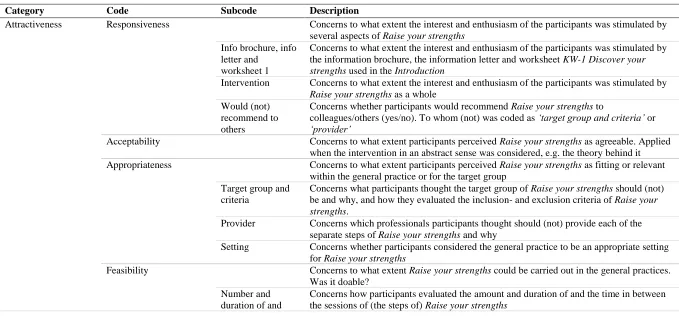
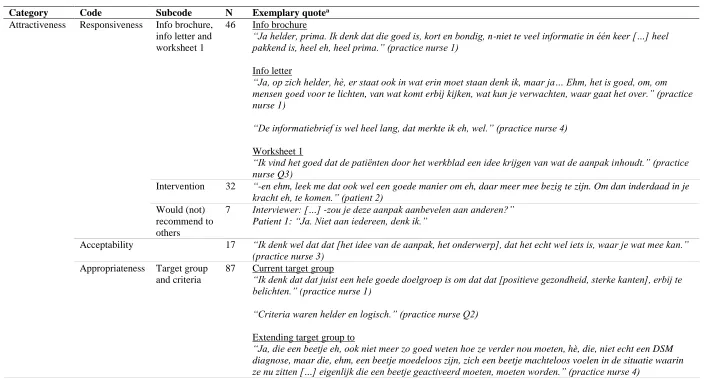
This first category concerns the extent to which Raise your strengths appealed to participants. Exemplary quotes per (sub)code for this category can be found in Table G1 (Appendix G).
1.1.1 Responsiveness.
This first code of the first category concerns to what extent the interest and enthusiasm of the participants was stimulated by several aspects of Raise your strengths.
The information brochure, information letter and worksheet 1 of Right on strengths, firstly,were evaluated positively by all participants. They considered the information
worksheet KW-1 Discover your strengths to be clear. On the questionnaires, 1 practice nurse indicated the same as the interviewees did and the worksheet was solely rated as ‘good.’
Secondly, Raise your strengths itself had appealed to all participants. This was mainly because they thought it to be helpful – either for themselves (2 patients) or for their patients, which in turn made providing the intervention enjoyable (3 practice nurses). Moreover, according to 1 general practitioner and 2 practice nurses, patients were enthusiastic and interested when Raise your strengths was introduced to them. This enthusiasm, however, seemed to diminish later on (3 practice nurses). This may have been related to the homework that was part of Raise your strengths (2 practice nurses) or to the approach being experienced as confronting by patients (2 patients, 1 practice nurse).
Thirdly, all participants would recommend Raise your strengths to others, although not to everyone (1 GP, 2 patients), or only if its implementation were to be improved (1 GP). The practice nurses seemed positive about recommending Raise your strengths to others. On the evaluation questionnaire, a mean score of 3.75 (3 = ‘neutral’, 4 = ‘agree’) was obtained on the statement that they would recommend Raise your strengths to others.
1.1.2 Acceptability.
This second code of the first category concerns to what extent participants perceived Raise your strengths as agreeable. This regarded the (importance of the) theory behind it, such as the strengths-based approach and the concept of positive health (Huber et al., 2011).
All participants were very positive about the approach on this abstract level. They frequently indicated particularly liking the theory behind Raise your strengths and
considering it important. Moreover, 1 GP and 3 practice nurses stated the approach could be very effective and 3 participants mentioned it to be a strength of the intervention.
1.1.3 Appropriateness.
This third code of the first category concerns to what extent participants perceived Raise your strengths as fitting or relevant within the general practice and for the target group.
Despite their full schedules, the providers chosen for each of the steps were considered suitable by all participants: the GP for step 1, and the practice nurse specialized in mental health care (POH-GGZ) for steps 2 and 3. The GP, namely, was said to have a natural authority that could help convince patients to participate in Raise your strengths (1 GP, 2 practice nurses), and the POH-GGZ was seen as possessing the needed capacities (knowledge, skills, therapeutic experience) for providing the sessions (2 GPs, 3 practice nurses).
The current target group, adults with chronic somatic complaints, was seen as suitable as well. This was for three reasons. Firstly, because Raise your strengths complements -current- complaint-focused chronic somatic health care (2 practice nurses). Secondly, because Raise your strengths provides these patients with the needed support in dealing with their psychological complaints, such as feelings of helplessness and a disrupted self-image (1 patient, all practice nurses). And thirdly, because patients within this target group were seen as wanting to improve their daily functioning (1 GP) and patient motivation facilitates the implementation of Raise your strengths (1 GP, 3 practice nurses). The current target group was rated with an average score of 3.88 (3 = ‘neutral’, 4 = ‘good’). Participants additionally considered the target group extendable to people with such psychological complaints as those of a burn out, anxiety, and depression as long as these were a) chronic (1 patient, 1 practice nurse) and b) not too severe (e.g. no DSM-diagnosis; 1 patient, 1 GP, 2 practice nurses).
Relatedly, the inclusion- and exclusion criteria were evaluated positively. Participants described these as clear, applicable, realistic and logical. It was indicated that the exclusion criterion regarding anxiety and depressive complaints could be higher, though.1 GP and 1 practice nurse considered Raise your strengths as additionally useful for individuals with more severe anxiety and depressive complaints than were now included.
1.1.4 Feasibility.
This fourth code of the first category concerns to what extent Raise your strengths could be carried out in the general practices. Was it doable?
regarding the number of sessions of Right on strengths and a mean score of 4 (‘good’) was obtained regarding the number of sessions of Right on target. Next, the time between the sessions of Raise your strengths was regarded as sufficient by two practice nurses.
The time general practitioners and practice nurses were given to prepare themselves for providing Raise your strengths was experienced as problematically short. Practice nurses indicated needing more time to read and grasp all materials and having to plan the sessions 1-3 months ahead. They had not been able to do this now.
The manual and worksheets were evaluated positively. This was mainly because the research protocol was clear and helpful (interviews: 1 GP, 1 practice nurse; questionnaires: 1 GP) and participants seemed content about the worksheets. However, the manual and its appendices (including the worksheets) were delivered in a box file that was often described as sizeable. This was experienced as a barrier to start with the intervention (1 GP, 3 practice nurses) and as making it less feasible to work with the materials (1 GP, 1 practice nurse). Participants further described this file as difficult to understand for both provider and patient due to the amount of references that were used within the research protocol (3 practice nurses). The manual, overall, was rated with a mean score of 3.75 (3 = ‘neutral’, 4 = ‘good’) and the worksheets with a 4 (‘good’) only.
1.1.5 Cost.
This fifth code of the first category concerns the costs of implementing Raise your strengths. Firstly, implementing Raise your strengths costs time (all participants) and, secondly, energy. The latter was mentioned in the sense of it having been demanding to implement the
intervention (1 GP, 1 practice nurse). Thirdly and finally, implementing Raise your strengths may come at the expense of what one would normally do (1 patient, 3 practice nurses).
1.1.6 Other.
1.2 Delivery of the intervention.
This second category concerns how Raise your strengths was in fact provided. Exemplary quotes per (sub)code for this category can be found in Table G2 (Appendix G).
1.2.1 Fidelity and adaptation.
This first code of the second category concerns to what extent Raise your strengths was provided as intended. It seemed the manual was adhered to quite closely. Only 1 GP indicated having passed the materials of the Introduction to the practice nurse to provide to patients (fidelity and adaptation) and having put part of the information brochure on the webcast in the waiting room for patients to see (adaptation), and 1 practice nurse stated having provided sessions with a standard duration of 45 rather than 25 minutes (adaptation).
1.2.2 Quality.
This second code of the second category concerns how well the components of Raise your strengths were provided (quality, skill). Firstly, the intervision during which one of the researchers explained Raise your strengths to its providers (per general practice) was evaluated positively by all general practitioners and practice nurses. They had been given sufficient information to be able to start (2 GPs) and the researcher had appeared accessible to them (2 practice nurses). On average, the intervision was given a score of 4 (‘good’).
Secondly, the collaboration with the researchers was evaluated as sufficient by all providers. Nevertheless, they would have liked the researchers to provide more support in the beginning of the implementation process (1 GP, 2 practice nurses). A mean score of 3.5 (3 = ‘neutral’, 4 = ‘good’) was obtained regarding the collaboration with the researchers. Thirdly, the first session of the Introduction, during which Raise your strengths was explained to patients, was evaluated positively as well. All providers of this explanation (2 GPs, 2 practice nurses) stated it had gone well, and all receivers (2 patients) stated it had been good and clear. The
explanation / first conversation was scored with a 3.75 (3 = ‘neutral’, 4 = ‘good’) on average. Finally, the guidance that patients had received in the general practice, finally, was evaluated as good (2 patients). It was rated with a mean score of 3.75 (3 = ‘neutral’, 4 = ‘good’).
1.2.3 Format.
This third code of the second category concerns the format in which Raise your strengths was delivered. Participants appreciated it that the approach was explained in a face-to-face
since patients could be provided with something on which they could reread the information given to them during the conversation at home (1 GP, 1 patient).
Further, Raise your strengths made use of homework assignments. Participants evaluated this positively: they thought the homework was in potential very effective (2 practice nurses) and did not consider the homework to be too much (1 patient). Moreover, the use of homework itself was evaluated positively (1 patient).
1.2.4 Other.
This fourth code of the second category concerns factors that did not fit the (sub)codes above but nonetheless related to how Raise your strengths was delivered. It appeared that the delivery among, and not only to, providers was important: 2 practice nurses indicated that Raise your strengths, within their general practice, had been delivered to them in a way they clearly disliked. They had experienced this as a barrier to providing the intervention.
1.3 Uptake of the intervention.
This third category concerns how Raise your strengths was received. Exemplary quotes per (sub)code for this category can be found in Table G3 (Appendix G). Providers mentioned several factors as having been of influence on their decisions whether or not to adopt Raise your strengths, which were not covered by the dimensions above. First, it appeared to be easier to adopt Raise your strengths when the concept of positive health (Huber et al., 2011) was already worked with or a strengths focus was already taken within a general practice because of a better fit between intervention and practice (1 GP, 1 practice nurse). Secondly, it had been (1 GP) or would have been (1 practice nurse) easier to adopt Raise your strengths if there was or were a(n) (enthusiastic), permanent practice nurse present to provide the
another project or a similar approach (1 GP, 1 practice nurse) were mentioned as barriers to uptake of Raise your strengths.
1.4 Other.
This fourth category concerns anything related to the implementation of Raise your strengths that did not seem to belong to the other categories. Exemplary quotes per (sub)code for this category can be found in Table G4 (Appendix G).
1.4.1 General evaluation: overall.
This first code of the fourth category concerned how participants evaluated the
implementation of Raise your strengths as a whole. Participants did not state directly how they felt about this matter, hence this code was not used.
1.4.2 Step-specific.
This second code of the fourth category concerned how participants evaluated the implementation of each of the steps of Raise your strengths separately.
The implementation of the Introduction was evaluated by participants as sufficient, but not as good. Although 1 GP and 1 practice nurse stated implementing this step had gone well, others found it confusing for both patients (1 practice nurse) and providers (1 GP, 1 practice nurse) that this step involved many different things to do. Moreover, it had been easily forgettable for general practitioners to recruit patients (1 GP, 1 practice nurse).
The implementation of Right on strengths was evaluated as having a good and logical structure (interviews: 1 practice nurse, 1 patient; questionnaires: 1 practice nurse) and actually implementing it had gone well (1 practice nurse).
The implementation of Right on target, finally, was evaluated quite positively as well. The only practice nurse who had implemented this step stated doing so had gone well, but that it had been more difficult than providing Right on strengths because patients needed more support during this third step. Finally, the criteria to refer patients from step 2 to step 3 were evaluated solely as ‘good’ on the evaluation questionnaire (3 raters) and during the interview.
1.5 Summary.
about the intervention and its underlying theory in particular, and they considered it to be relevant and fitting within the general practice and for adults with chronic somatic complaints. Moreover, it seemed Raise your strengths had been provided sufficiently well by the research team (to providers) and quite well by providers (to patients). However, the threshold for implementation of Raise your strengths had been high: within the time providers were given, it was hardly considered doable to implement the approach due to its (perceived) size and complexity in combination with providers’ full schedules.
2. What Recommendations for Future Implementations of the Stepped Care Approach
Raise Your Strengths in Primary Health Care Can Be Provided Based On an
Implementation Evaluation of the Pilot Study of 2018?
This section concerns the main recommendations the general practitioners, practice nurses, and patients (i.e. the participants) of the pilot study of 2018 provided regarding future implementations of the stepped care approach Raise your strengths in primary health care. Exemplary quotes per code for this category can be found in Table G5 (Appendix G).
2.1 Start.
One of the main barriers to the implementation of Raise your strengths during the pilot study (2018) had been lack of time. 3 of the 4 interviewed practice nurses stated needing 1-3 months if they were to prepare themselves at work (rather than at home) and added that their schedules hardly allowed them to plan sessions once every other week on a shorter term. Consequently, they recommended (to): start the implementation process of Raise your strengths 3 months before providers should offer the intervention to patients.
The second main recommendation provided within this code was: start the
implementation process of Raise your strengths with multiple providers together. Starting as a team was seen as helpful and motivating, because it would foster a sense of ‘doing it together’ (1 practice nurse) and it would stimulate providers to support each other (3 practice nurses).
2.2 Evaluation and feedback.
recommended (to): encourage/plan intermediate evaluations amongst the providers per general practice during the implementation process of Raise your strengths.
Next to supporting each other more, the providers would have liked the researchers to more actively reach out to them during the implementation process of Raise your strengths (interviews: 1 GP and 3 practice nurses; questionnaires: 1 practice nurse). Although it had been clear to the general practitioners and practice nurses that they could have contacted the research team anytime, they recommended the researchers (to): check up on providers (1) shortly before Raise your strengths is to be provided to patients (are they ready?; 2 practice nurses) and (2) after about two weeks of providing Raise your strengths to patients (how is it going?; 1 GP, 2 practice nurses). These recommendations also cover the request of one of the general practitioners to provide regular reminders for recruiting patients.
2.3 Manual and worksheets.
Another main barrier to the implementation of Raise your strengths during the pilot study (2018) had been the (perceived) size and complexity of the manual with its appendices. To improve this, firstly, the manual would have to appear less sizeable. In this regards, 1 GP recommended (to): add visual elements to the manual, so that it does not consist out of text only. Moreover, a practice nurse recommended (to): deliver the manual and its appendices in multiple binders rather than in one box file – the manual and worksheets in one, and the documents not directly needed for use in another.
Secondly, the manual would have to be less complex. Because Raise your strengths entailed many different materials and tasks, 2 practice nurses had found it difficult to maintain the oversight. They recommended (to): add a concise, clear roadmap of what actions to
undertake when to the manual of Raise your strengths. Another practice nurse indicated the same for patients regarding the Introduction, and requested a similar overview to provide to them. Further, the many references that were used in the manual had made it complex (2 practice nurses). In order to make it less of a search as to what documents were needed when, another practice nurse recommended (to): sort the documents in a chronological order.
2.4 Format.
Despite evaluating the format in which Raise your strengths had been delivered positively, participants provided additional recommendations in this regards. Firstly, 2 practice nurses recommended (to): provide exemplary materials of how Raise your strengths ought to be provided. They added such materials could take the form of a roleplay or a case to practice with, could be delivered either face-to-face or digitally (e.g. as a video) and could be executed either by providers themselves or by the research team (for providers to observe).
Last but not least, it was recommended (to): provide study materials for the providers of Raise your strengths. 2 practice nurses considered an e-learning in which the approach was explained to them during the interviews, and 1 practice nurse suggested providing refresher courses on the questionnaires.
Discussion
The present study evaluated the implementation of the stepped care approach Raise your strengths in primary health care during a first pilot study (2018). It did so by exploring the experiences of general practitioners, practice nurses and chronically ill patients for each category of a newly proposed implementation categorization. Based on the findings of this evaluation, the present study provided recommendations for future implementations of Raise your strengths in primary health care.
When considering the attractiveness of interventions, two aspects are especially important for their implementations. The first is whether its providers and target group like it; whether they are motivated to provide and to participate in the intervention. Factors such as an intervention’s acceptability are considered crucial for achieving the desired outcomes in the Quality Implementation Framework proposed by Meyer, Durlak, and Wandersman (2012), and proved essential regarding the implementation of Chronic Care Models (interventions) in the literature review of Davy and colleagues (2015). This is in line with findings from the present study: general practitioners, practice nurses and chronically ill patients seemed having been willing to implement the pilot version (2018) of Raise your strengths predominantly because they were positive about the approach itself.
to the appropriateness of the providers and setting chosen for implementation. Durlak and DuPre (2008) earlier demonstrated an intervention’s adaptability (to what extent it can be modified to fit local needs) and compatibility (to what extent it already fits local needs) to be consistently and positively related to effective implementation, and such considerations are reflected in the Quality Implementation Framework (Meyers et al., 2012) as well. The present study added to this: providers’ main doubts about to what extent it is realistic to implement Raise your strengths in primary health care regarded the feasibility of its implementation. In this regards, providers indicated their schedules had hardly allowed them to implement Raise your strengths during the pilot study (2018). This reflects the high workload in general practices identified earlier (Boekee & Hoekstra, 2018; Jansen et al., 2012; Lamkaddem et al., 2004) and underlines the importance of self-managing chronic diseases. As this is precisely what Raise your strengths aims to improve, it might be expected that the approach will reduce the workload of GPs and practice nurses in the long term. Hence, its implementation could best be facilitated. In this respect, providers recommended starting this process 3 months before they should provide the intervention to patients. Providers further indicated the (perceived) size and complexity of the manual with its appendices had made the implementation of Raise your strengths less feasible. Therefore, they recommended reorganizing these materials: the manual (excluding the protocol and worksheets) in a ring binder with added visual elements (e.g. a roadmap), and the protocol and worksheets in a separate ring binder and ordered chronologically (i.e. combined per session).
When considering the delivery of interventions, it is especially important for their implementations whether their providers receive sufficient support. This involves both support from the research team and support from fellow providers (of the same intervention). Concerning the former, it is well-known to be helpful to prepare providers for the
too little technical support during the pilot study (2018). Subsequently, they further
recommended the researchers to reach out to them shortly before Raise your strengths is to be provided to patients (are they ready?) as well as about two weeks later (how is it going?).
A lot less is known regarding provider peer support, or support from fellow providers, during the implementation process of an intervention. While a supportive social climate has been considered facilitative for implementation (Klein & Knight, 2005; Meyers et al., 2012; Smylie & Evans, 2006) and peer support has unique benefits (Repper et al., 2013), no literature could be found on whether provider peer support facilitates the implementation of an intervention (in the experiences of providers themselves). The present study, though, supported this possibility: most general practitioners and practice nurses indicated it would have been helpful for them to implement Raise your strengths more team-based than they had during the pilot study of 2018. Consequently, providers recommended starting the
implementation of Raise your strengths together with others and to plan intermediate evaluations amongst the providers per general practice during this process in order to foster this desired sense of ‘doing it together’.
When considering the uptake of interventions, it becomes clear that the three
abovementioned factors (liking an intervention, considering its implementation doable, and receiving sufficient support) can facilitate as well as hinder their implementations.
Consequently, the implementation categorization that was proposed in the present study (Figure 1, p.7) needs to be revised – which of its (sub)dimensions are part of implementation and which are facilitators for or barriers to this process?
Finally, a new asset of conducting implementation evaluations was identified in the present study: it informs about the implementation difficulty of an intervention per aspect and thereby directs efforts to improve its implementation process. In case of Raise your strengths, it appeared the Introduction had been most difficult to implement, so this step should receive most attention when preparing future implementations of the approach. This adds up to the benefits of an implementation evaluation identified earlier (p.9).
1. Strengths of the Present Study.
study is its proposed implementation categorization (Figure 1, p.7). Although in need of revision when regarded as such (i.e. as an implementation categorization), it may still be a valid framework to guide future implementation evaluations with; evaluating facilitators for and barriers to the implementation of an intervention remains useful. Thirdly, during the present research it appeared that a dimension should be added to the categorization regardless its use: ‘Format’ (Category ‘Delivery’). This dimension concerns the format in which an intervention is delivered, such as face-to-face or digitally, and appeared to influence how the implementation of an intervention is being experienced. With this new dimension included, the proposed categorization seems to cover many aspects relevant to the proper
implementation (evaluation) of any intervention. Therewith, this study provided another important contribution to the implementation literature.
2. Limitations of the Present Study and Recommendations for Future Implementation Evaluations of Raise Your Strengths.
Next to its strong points, the present study has a number of limitations. Firstly, several questions that did not explicitly target the implementation of Raise your strengths were included in the present implementation evaluation. This was most problematic in case of the closed-ended items on the evaluation questionnaires. For these questions, namely, it was impossible to retrieve whether participants answered these in view of the implementation of Raise your strengths (as intended) or whether they answered these, for instance, in general. It is suggested, therefore, to either ask participants to consider the implementation of Raise your strengths while answering or to reformulate the questions and explicitly ask what is aimed at. Secondly, the present implementation evaluation was not complete. Since the different questions asked during the pilot study of 2018 were allocated to their best-fitting
implementation (sub)dimension retrospectively, no data was available regarding some
dimensions (‘General evaluation overall’, ‘Monitoring’), and only limited data was available regarding others (‘Fidelity’, ‘Adaptation’, ‘Acceptability’, ‘Differentiation’, ‘Cost’, ‘Format’) or regarding specific aspects (e.g. homework, barriers, facilitators). Moreover, several
dimensions (‘Dosage’, ‘Reach/scope’, ‘Sustainability’, ‘Differentiation’, and ‘Monitoring’) were purposively left out of the present implementation evaluation. Asking participants about these topics should be considered for future implementation evaluations of Raise your
needs and preferences (Berkel et al., 2011), which is valuable given the importance of contextual fit (see the discussion on feasibility above). As fidelity and adaptation were not targeted by the evaluation questionnaires nor -interviews during the pilot of 2018, important information was missed now
Thirdly, the coding in the present study was carried out by one coder only. As a consequence, the present implementation evaluation may have been influenced by researcher-dependent factors. Note, however, that the coding schemes have been developed in
cooperation with the supervision team in order to reach as much intercoder agreement as was possible in the context of this bachelor’s thesis. Future implementation evaluations of Raise your strengths, though, should aim for reaching a higher intercoder reliability.
Fourthly, it could not be retrieved which general practitioners and practice nurses participated both in an evaluation interview and an evaluation questionnaire. Hence, the numbers given in the Method and Results section of the present study might be incorrect.
Relatedly and fifthly, the present study considered those who filled in the evaluation questionnaires and/or participated in the evaluation interviews as having been all participants of the pilot study of 2018. However, this was not the case and it is unknown to what extent those who participated in the evaluation questionnaires and/or evaluation interviews (nor their experiences) are representative for (the experiences of) those who did not. Therefore,
“participants of the pilot study of 2018” should be read as “participants in the evaluation questionnaires and/or evaluation interviews of the pilot study of 2018” in the present report.
3. Recommendations for Future Research.
The present study identified several possibilities for future research. Regarding Raise your strengths specifically, the recommendations of the present research should be incorporated and tested during a future implementation evaluation: do these really enhance the
implementation of Raise your strengths? Further, an effectivity analysis should be carried out: to what extent does the approach improve the self-management and well-being of chronically ill patients? It seems especially important to investigate this over time: is Raise your strengths (one of) the first self-management intervention(s) to be effective in the long term? If so, will the approach eventually reduce the workload of general practitioners and practice nurses, as is expected? (Recall the lack of effectivity in the long-term of current self-management
interventions and providers’ full schedules).
more valid as a framework for implementation evaluations? In both cases, is it complete? Should a certain (sub)dimension be added or removed? Is the hierarchy correct? Which of its (sub)dimensions are most important for successful implementation? Answers to these
questions could be found in an extensive comparison with the literature or while reflecting on its use in future implementation evaluations. Further, facilitators and barriers for
implementation should be explored – especially regarding providers. What makes it easier or more difficult for them to implement an intervention? For example, to what extent does provider peer support facilitate the successful implementation of interventions from the perspective of providers?
Conclusion
All in all, the implementation of the stepped care approach Raise your strengths appeared to have been implemented in primary health care quite well during the pilot study of 2018. General practitioners, practice nurses and chronically ill patients were positive regarding most (sub)dimensions of the newly proposed implementation (evaluation) categorization. The main points for improvement of Raise your strengths’ implementation process lie in its feasibility: providers should be given more time for implementation and should receive more support both from their peers and the researchers especially in the beginning of this process, and its materials should be given a less sizeable and less complex appearance. With these
References
Barlow, J., Wright, C., Sheasby, J., Turner, A., & Hainsworth, J. (2002). Self-management approaches for people with chronic conditions: a review. Patient education and counselling, 48(2), 177-187. https://doi.org/10.1016/S0738-3991(02)00032-0 Berkel, C., Mauricio, A.M., Schoenfelder, E., & Sandler, I.N. (2011). Putting the pieces
together: An integrated model of program implementation. Prevention science, 12(1), 23-33. doi:10.1007/s11121-010-0186-1
Bodenheimer, T., Lorig, K., Holman, H., & Grumbach, K. (2002). Patient self-management of chronic disease in primary care. JAMA, 288(19). 2469-2475.
doi:10.1001/jama.288.19.2469
Centers for disease control and prevention (n.d.). Types of evaluation. Retrieved from: https://www.cdc.gov/std/program/pupestd/types%20of%20evaluation.pdf
Cooper, H., Booth, K., Fear, S., & Gill, G. (2001). Chronic disease patient education: Lessons from meta-analyses. Patient education and counselling, 44(2),107-117.
https://doi.org/10.1016/S0738-3991(00)00182-8
Davy, C., Bleasel, J., Liu, H., Tchan, M., Ponniah, S., & Brown, A. (2015). Factors
influencing the implementation of chronic care models: A systematic literature review. BMC Family practice, 16(102). 1-12. https://doi.org/10.1186/s12875-015-0319-5 Durlak, J.A. & DuPre, E.P. (2008). Implementation matters: A review of research on the
influence of implementation on program outcomes and the factors affecting implementation. American journal of community psychology, 41, 327-350. doi:10.1007/s10464-008-9165-0
Dye, J. F., Schatz, I. M., Rosenberg, B. A., & Coleman, S. T. (2000). Constant comparison method: A kaleidoscope of data. The Qualitative Report, 4(1), 1-10. Retrieved from https://nsuworks.nova.edu/tqr/vol4/iss1/8
Grady, P.A. & Gough, L.L. (2014). Self-management: A comprehensive approach to management of chronic conditions. American journal of public health, 104(8), e25-e31. doi:10.2105/AJPH.2014.302041
Holman, H., & Lorig, K. (2004). Patient self-management: A key to effectiveness and efficiency in care of chronic disease. Public health reports, 119(3), 239-243. https://doi.org/10.1016/j.phr.2004.04.002
Huber, M., Knottnerus, J.A., Green, L., Van der Horst, H., Jadad, A.R., Kromhout, D. […] Smid, H. (2011). How should we define health? BMJ, 26(2), 1-3. doi:
Jansen, D., Spreeuwenberg, P., & Heijmans, M. (2012). Ontwikkelingen in de zorg voor chronisch zieken: Rapportage 2012. [Developments in health care for the chronically ill: Report 2012]. Retrieved from: https://www.nivel.nl/en/publicatie/ontwikkelingen-de-zorg-voor-chronisch-zieken-rapportage-2012
Jacob, K.S. (2015). Recovery model of mental illness: A complementary approach to psychiatric care. Indian journal of psychological medicine, 37(2), 117-119. doi: 10.4103/0253-7176.155605
Klein, K.J. & Knight, A.P. (2005). Innovation implementation: Overcoming the challenge. Current directions in psychological science, 14(5), 243-246.
https://doi.org/10.1111/j.0963-7214.2005.00373.x
Lamkaddem, M., De Bakker, D., Nijland, A., & De Haan, J. (2004). De invloed van praktijkondersteuning op de werklast van huisartsen: Een analyse van gegevens uit
het Landelijke Informatie Netwerk Huisartsenzorg. [The influence of nurse practice support on the workload of general practitioners: An analysis of data of the National Information Network General Practices]. Retrieved from:
https://www.nivel.nl/nl/publicatie/de-invloed-van-praktijkondersteuning-op-de-werklast-van-huisartsen-een-analyse-van
Linley, P.A., Nielsen, K.M., Gillett, R., & Biswas-Diener, R. (2010). Using signature strengths in pursuit of goals: Effects on goal progress, need satisfaction, and well-being, and implications for coaching psychologists. International coaching psychology review, 5(1). 6-15. Retrieved from:
https://www.researchgate.net/publication/281424792_Using_signature_strengths_in_p
ursuit_of_goals_Effects_on_goal_progress_need_satisfaction_and_well-being_and_implications_for_coaching_psychologists
Mackenbrock, D. (2017). What are the experiences, needs and wishes of GPs and POHs regarding the strength based approach for the care of chronically ill patients? A
qualitative analysis (Master’s thesis, University of Twente). Retrieved from:
https://essay.utwente.nl/72589/1/Mackenbrock_MA_Behavioral%2C%20Management %20and%20Social%20Sciences.pdf
Migiro, S.O. & Magangi, B.A. (2010). Mixed methods: A review of literature and the future of the new research paradigm. African journal of business management, 5(10). 3757-3764. doi:10.5897/AJBM09.082
Mihalic, S. (2002). The importance of implementation fidelity. Emotional and Behavioral Disorders in Youth, 4(4), 83-105. Retrieved from:
http://www.incredibleyears.com/wp-content/uploads/fidelity-importance.pdf Miller, W.R., Lasiter, S., Ellis, R.B., & Buelow, J.M. (2015). Chronic disease
self-management: A hybrid concept analysis. Nursing outlook, 63(2), 154-161. https://doi.org/10.1016/j.outlook.2014.07.005
National Institute for Public Health and the Environment (2018). Diseases: What diseases will we have in the future? Question 1: How many people will have a chronic disease in
the future? [graph, 2019] Retrieved from: https://www.vtv2018.nl/en/aandoeningen Peters, D.H., Adam, T., Alonge, O., Agyepong, I.A., & Tran, N.. (2013). Implementation
research: what it is and how to do it. BMJ, 347, f6753. https://doi.org/10.1136/bmj.f6753
Repper, J., Aldridge, B., Gilfoyle, S., Gillard, S., Perkins, R., & Rennison, J. (2013). Peer support workers: Theory and practice. Retrieved from:
https://www.merseycare.nhs.uk/media/1212/imroc-briefing-5-peer-support-workers-theory-and-practice.pdf
Seligman, M.E.P. (2008). Positive health. Applied psychology: an international review, 57, 3-18. doi: 10.1111/j.1464-0597.2008.00351.x
Smylie, M.A., & Evans, A.E. (2006). Social capital and the problem of implementation. In Honig, M.E. (Ed.), New directions in education policy implementation: Confronting complexity (pp. 187-206) [preview]. Retrieved from:
https://books.google.nl/books/about/New_Directions_in_Education_Policy_Imple.htm l?id=2Zict_CiRUIC&redir_esc=y
Suhrcke, M., Nugent, R.A., Stuckler, D., & Rocco, L. (2006). Chronic disease: an economic perspective [report]. Retrieved from:
https://www.who.int/management/programme/ncd/Chronic-disease-an-economic-perspective.pdf
Wandersman, A., Duffy, J., Flaspohler, P., Noonan, R., Lubell, K., Stillman, L., Blachman, M., Dunville, R., & Saul, J. (2008). Bridging the gap between prevention research and practice: The Interactive Systems Framework for dissemination and implementation. American Journal of Community Psychology, 41, 171–181. doi:10.1007/s10464-008-9174-z
Wood, A.M., Linley, P.A., Maltby, J., Kashdan, T.B., & Hurling, R. (2011). Using personal and psychological strengths leads to increases in well-being over time: A longitudinal study and the development of the strengths use questionnaire. Personality and
Individual Differences, 50, 15-19. doi:10.1016/j.paid.2010.08.004
World Health Organization (2002). The world health report 2002: Reducing risks, promoting healthy life. Retrieved from: https://www.who.int/whr/2002/en/
Table A1
Schematic Overview of Step 1: Introduction
STEP 1: INTRODUCTION Description Who When (duration) First screening Make an estimation whether someone is part of the target groupa. If so, introduce the
stepped care approach and pilot study. Provide DI-1 Information brochure and KW-1 Discover your strengths.
General
practitioner (GP) / Practice nurse (in Dutch: POH-GGZ or POH-S)
During office hours
Second screening Inform about the stepped care approach and pilot study, discuss and provide DI-2 Information letter Raise your strengths. Screen on in- and exclusion criteriab. Fill in
informed consent. Provide EV-1.1 Information letter pre-test Right on Strengths.
Practice nursec Separate appointment
At home Fill in EV-1.2 Questionnaire pre-test Right on Strengths. Participant At choice (appr. 20 min)
Third screening Evaluate pre-test, inform practice nurse whether participant is allowed to participate. Researchers At choice Approach participant and plan session 1 Right on Strengths or discuss other possibilities
for support. Assign homework.
Practice nurse At choice
At home Fill in KW-1 Discover your strengths. Participant At choice
a A description of the target group of Raise your strengths can be found in Appendix D b In- en exclusion criteria can be found in Appendix D c In the pilot the practice nurses
Table A2
Schematic Overview of Step 2: Right on Strengths
STEP 2: RIGHT ON
STRENGTHS
Description Who Duration (frequencya)
Session 1: Introduction Evaluate pre-test, contextualise chronic somatic complaints and consequences. Map resources/strengths. Introduce Right on Strengths and evaluate KW-1 Discover your strengths. Assign homework and plan next session.
Practice nurseb 25 min.
At home Think about which 5 of the strengths on KW-1 Discover your strengths are most applicable to oneself.
Participant At choice
Session 2: My strengths Evaluate homework, fill in KW-2 Top 5 strengths, discuss and fill in KW-3 Strengths in daily life. Participants gain insight in their strengths and learn that strengths can be used in daily life. Assign homework and plan next session.
Practice nurse 25 min.
At home Fill in strengths diary (KW-3) and KW-4 My positive health and goals. Participant At choice (KW-3 daily for one week)
Session 3: My goals Evaluate homework, possibly reference to Right on Target or other possibilities for support.c When chosen to continue with Right on Strengths, the participant will choose
a goal to work on during the intervention during this session. Fill in KW-5 Personal goals, start filling in KW-6 Action plan. Assign homework and plan next session.
Practice nurse 25 min.
At home Finish and execute KW-6 Action plan. Participant At choice (daily for one week)
Session 4: Strengths and goals Evaluate homework, discuss examples given on KW-7 Using strengths in reaching your goals and fill in action plan. Participants learn how to use their strengths in reaching their goals. Assign homework and plan next meeting.