Proceedings of the 2019 Conference on Empirical Methods in Natural Language Processing and the 9th International Joint Conference on Natural Language Processing, pages 3851–3861,
3851
Easy First Relation Extraction with Information Redundancy
Shuai Ma1,2 Gang Wang1,2 Yansong Feng3 Jinpeng Huai1,2 1SKLSDE Lab, Beihang University, China
2 Beijing Advanced Innovation Center for Big Data and Brain Computing, Beijing, China
3Peking University, China
{mashuai, iegwang, huaijp}@buaa.edu.cn [email protected]
Abstract
Many existing relation extraction (RE) models make decisions globally using integer linear programming (ILP). However, it is nontrivial to make use of integer linear programming as a blackbox solver for RE. Its cost of time and memory may become unacceptable with the increase of data scale, and redundant informa-tion needs to be encoded cautiously for ILP. In this paper, we propose an easy first approach for relation extraction with information redun-dancies, embedded in the results produced by local sentence level extractors, during which conflict decisions are resolved with domain and uniqueness constraints. Information re-dundancies are leveraged to support both easy first collective inference for easy decisions in the first stage and ILP for hard decisions in a subsequent stage. Experimental study shows that our approach improves the efficiency and accuracy of RE, and outperforms both ILP and neural network-based methods.
1 Introduction
Relation extraction (RE) has been extensively studied due to its crucial role for many knowl-edge based applications (Fan et al., 2012; Zhang et al., 2012; Chen et al., 2014a), such as ques-tion answering and knowledge graph. There are two types of relation extractors: local and global. The former identify relationships between en-tity pairs individually according to the local fea-tures of sentences,e.g., lexical and syntactic fea-tures (Bunescu and Mooney, 2007; Mintz et al., 2009; Surdeanu et al., 2010; Hoffmann et al., 2011;Surdeanu et al.,2012;Zeng et al.,2015;Lin et al.,2016). The latter make decisions by further considering joint features of the entire corpus (Yao et al.,2010;Li et al.,2011,2013;de Lacalle and Lapata, 2013; Chen et al., 2014a). Global rela-tion extractors are able to resolve conflict deci-sions, and to utilize the dependencies among
ex-tracted facts to improve the performance (Li et al., 2011;Chen et al., 2014a), commonly by formal-izing RE as a constrained optimization problem and solving RE with integer linear programming (ILP) (Roth and Yih, 2004; Choi et al., 2006; Roth and Yih,2007;Li et al.,2011;Ji et al.,2013; Chen et al.,2014a,b). However, global optimiza-tion remains dominated by the ILP solvers, suffer-ing from heavy time expenses.
Using integer linear programming for RE as a blackbox solver is a challenging task. First, with the increase of entity pairs and candidate relations, the variables and constraints encoded for ILP in-crease dramatically, which in return may consume too much computing time and memory. Second, redundant information needs to be encoded cau-tiously. Consider <United States, capital : 0.6, New York>, <United States, capital : 0.7, New York>and<United States,capital : 0.96, Wash-ington D.C.>in Table1. Simple statistical meth-ods, such as confidence summation, may easily lead to a wrong decision in this case.
ID Entity Pair Top-3 Candidate Relations
1 Australia, Canberra capital : 0.7 locationCity : 0.2 nationality : 0.1
2 United States, New York capital : 0.6 birthPlace : 0.35 nationality : 0.05
3 United States, New York capital : 0.7 country : 0.23 deathPlace : 0.07
4 United States, Washington D.C. capital : 0.96 country : 0.03 birthPlace : 0.01
5 Australia, Sydney locationCountry : 0.6 capital : 0.2 largestCity : 0.2
6 University of Sydney, Sydney locationCity : 0.7 locationCountry : 0.2 city : 0.1
[image:2.595.102.495.62.139.2]7 Geoff Ogilvy, Australia nationality : 0.4 locationCountry : 0.3 city : 0.3
Table 1: Example entity pairs and their candidate relations.
When making easy decisions, we keep the con-sistency among candidate relations by making use of constraints (i.e., domain and uniqueness con-straints) to eliminate conflicts directly, instead of implicitly encoding constraints in ILP (Yao et al., 2010; de Lacalle and Lapata, 2013;Chen et al., 2014a;Koch et al.,2014;Chen et al.,2014b). As a result, the number of variables and constraints to be encoded in ILP is significantly reduced, which speeds up the entire decision making process.
In short, our approach employs an easy-first strategy with information redundancies to make most confident decisions first during which con-flict candidate relations are resolved directly by domain and uniqueness constraints, and it only makes the remaining hard decisions with ILP. Our approach is an important improvement of ILP-models, and it is not a new RE model, but an effi-cient and effective approach to fully exploiting the results of (any) local RE extractors. As shown in the experiments, our approach improves the per-formance, on average (4.58%, 17.90%) more ac-curate and (21, 37) times faster than existing ILP and neural network-based methods, respectively.
In the rest, we first introduce constraints and re-dundancies in Section2, then present our detailed approach in Section 3, followed by experimental study in Section4, related work in Section5, and conclusions in Section6.
2 Constraints and Redundancies
Consider a setMof mentions and a setRof prede-fined relations{r1, . . . , rk}. For each mentionm,
a sentence level extractor produces an entity pair (subjectsand objecto) and a confidence scoreci
for each relation ri (i ∈ [1, k]), which represents
the probability thatsandohave relationri(Berger et al.,1996;Hoffmann et al.,2011). Here an NA (unknown) relation is typically included inR.
A mention mpreprocessed by a sentence level extractor is essentially a k + 2 tuple (s, o, r1 :
c1, . . . , rk : ck), as illustrated in Table 1, where
1 ≥ ci ≥ cj ≥ 0 for any i > j ∈ [1, k] and Pk
i=1ci = 1. Observe that an entity pair
(sub-jectsand objecto) with a relationr ∈ R can be treated as an SRO triple(s, r, o), and a mentionm
containskSRO triples. For convenience, given a mentionmand a relationr ∈ R, we also denote the score of relationrinmasm[r].c.
Given a set M of mentions preprocessed by a sentence level extractor, our task for relation ex-traction is to determine the set of correct relations for each entity pair inM, and our approach adopts an easy-first strategy to make fast and accurate de-cisions, by leveraging constraints and redundan-cies that are to be introduced below.
In the following, a mention is referred to the one preprocessed by a sentence level extractor.
2.1 Constraints
We consider two types of constraints: domain and uniqueness constraints, commonly used to enforce agreements on decisions for RE (Yao et al.,2010; de Lacalle and Lapata,2013;Chen et al., 2014a; Koch et al.,2014;Chen et al.,2014b).
Domain constraints. This type of constrains
en-forces constraints among the subject and object domains of relations. Given relations ri and rj
(1 ≤ i, j ≤ k), (1) anS-S domain constraint en-sures thatri andrj share no common entities
be-tween their subjects,i.e.,ri.subject∩rj.subject
=∅, (2) anO-O domain constraintensures thatri
andrj share no common entities between their
ob-jects,i.e.,ri.object∩rj.object=∅, and (3) an
S-O domain constraintensures thatri andrj share no common entities between the subject ofri and
the object ofrj,i.e.,ri.subject∩rj.object=∅.
For example, (1) relations largestCity and lo-cationCity have their subjects as countries (e.g.,
“Australia”) and organizations (e.g., “University of Sydney”), respectively. They hold an S-S do-main constraint; (2) relations locationCity and
or-# of mentions
# of entity pairs
# of subjects
# of objects
# / ratio of entity pairs mentioned multiple times
# / ratio of sub-jects mentioned multiple times
# / ratio of ob-jects mentioned multiple times
Top 3 relation precision (%)
≥3 ≥5 ≥3 ≥5 ≥3 ≥5
53162 30864 11360 9709 2754/ 8.92%
1225/ 3.97%
2914/ 25.65%
1591/ 14.01%
2442/ 25.15%
1351/ 13.91%
[image:3.595.108.489.62.115.2]DB_me: 77.3/ 11.8/ 5.0 DB_nn: 76.5/ 10.6/ 5.0
Table 2: Redundancy statistics of DBpedia - ( see Section4for details about the datasets).
ganizations andnationalityhas its objects as coun-tries. It holds anS-Odomain constraint.
Uniqueness constraints. This type of constrains
enforces the uniqueness of the subjects and objects of relations. Given a relationri (1 ≤ i ≤ k), (1)
an S uniqueness constraintensures that there ex-ist no subjectsand objectsoh6=olsuch that both
(s, ri, oh)and(s, ri, ol)hold, and (2) anO
unique-ness constraintensures that there exist no objecto
and subjectssh6=slsuch that both(sh, ri, o)and
(sl, ri, o)hold, respectively.
For example, relationcapital holds bothS and
O uniqueness constraints, since a country as the subject ofcapitalhas only one capital, and a city as the object ofcapital can only be the capital of one country.
We refer to the total set of relations with S-S
(resp. O-OandS-O) domain constraints asDCss
(resp.DCooandDCso). We also refer to the total set of relations with S(resp. O) uniqueness con-straints asU Cs(resp.U Co).
2.2 Information Redundancies
Redundancies are used to pick up hidden informa-tion (Downey et al.,2005;Banko et al.,2007;Li et al.,2011), and are very common in the corpus, as revealed by the statistics in Table2. They are es-sentially the statistical characteristics (knowledge) of the results produced by local sentence level ex-tractors, and are very important for global predic-tions. In this study, we introduce and leverage four classes of information redundancies: S-O, S-R, O-R and O-R redundancies.
S-O redundanciesare introduced to aid the
deci-sion making of the top-one relations of mentions with the same subjects and objects. For a men-tion m=(s, o, r1 : c1, . . . , rk : ck)preprocessed
by a sentence level extractor, its certainty degree ent(m)is defined as follows.
ent(m) =−
k X
i=1
cilnci. (1)
The redundancy scoreRC(s,r1,o) of the top-one relationr1 for subject sand objectoinm, based
on its S-O redundancies, is defined as
RC(s,r1,o) =
X
m0∈M
s,o,r1
αent(m0), (2)
whereMs,o,r1 is the set of mentions inM whose
subjects ares, objects areo, and top-one relations arer1, and αis a small positive number in(0,1)
(set to 0.05 by default) to enforce that αent(m0)
falls into(0,1). Informally, RC(s,r1,o) is a col-lective score based on its S-O redundancies, which makes use ofinformation entropyto judge the con-fidence, and considers both the relative confidence scores and repeated times.
S-R redundanciesare introduced to aid the
deci-sion making whether a subject meets the domain requirement of a relation. The likelihood score LC(s,r) for subjectsand relationr, based on its S-R redundancies, is
LC(s,r) =
P
m∈Msm[r].c
P m∈Ms
P
r0∈R\{N A}m[r0].c , (3) whereMsis the set of mentions with the same
sub-jects. Informally,LC(s,r)measures the probabil-ity that relationr has a subject samong all rela-tions except NA.
O-R redundanciesare introduced to aid the
deci-sion making whether an object meets the domain requirement of a relation. The likelihood score LC(o,r) for object oand relation r, based on its O-R redundancies, is
LC(o,r) =
P
m∈Mom[r].c
P m∈Mo
P
r0∈R\{N A}m[r0].c , (4) whereMois the set of mentions with the same ob-jecto. Informally,LC(o,r)measures the probabil-ity that relationr has an objectoamong all rela-tions except NA.
R redundancies are introduced to aid the
deci-sion making whether a subject and an object have a non-NA relation. The likelihood scoreLC(s,o)
for subjects and objecto, based on its R redun-dancies, is
LC(s,o) = max
m∈Ms,o
X
r∈R\{N A}
Obtain S-O
Redundancies and R Redundancies Obtain S-R, O-R,
Set of Mentions Domain and Uniqueness Constraints Input
Easy First Collective
Inference Integer Linear Programming
Stage 1
Easy Decisions Output Hard Decisions
[image:4.595.91.270.66.172.2]Stage 2
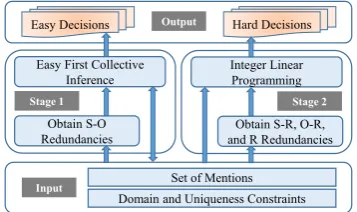
Figure 1: Framework of our approacheFIRE.
where Ms,o is the set of mentions with the same
subject s and object o. Informally, LC(s,o) se-lects prominent information from local decisions to measure the probability of having at least one non-NA relation betweensando.
As will be seen in the next section, redundancy scoresRC(s,r1,o)are used for making easy deci-sions, and likelihood scoresLC(s,r),LC(o,r)and LC(s,o)are used for hard decisions, respectively.
3 Easy First Relation Extraction
We propose a novel easy FIrst approach for Relation Extraction with information redundan-cies, referred to aseFIRE. As shown by the frame-work in Figure 1, our approach obtains S-O re-dundancies, and makes easy decisions with easy first collective inference in the first stage. Then it derives S-R, O-R and R redundancies, and makes hard decisions with ILP in the second stage. We next introduce our approach in detail.
3.1 Easy First Collective Inference
In the first stage, decisions must be highly accurate to avoid error propagation. As revealed by Table 2, the decisions produced by local extractors are only reliable for top-one relations. Hence,eFIRE first makes decisions for entity pairs using their top-one relations only. The confidences are the re-dundancy scores obtained with the S-O redundan-cies (Section 2.2). Once a decision is made, dis-agreements are resolved immediately with domain and uniqueness constraints directly (Section2.1).
Confidence computing and ordering. It
com-putes the redundancy scoresRC(s,r1,o)of all the entity pairs(s, o)with their top-one relationsr1in
mentionsM, using S-O redundancies. The higher the redundancy scores RC(s,r1,o) are, the more confident subjectsand objectohave a relationr1.
Hence, entity pairs with their top-one relations are sorted in a descending order of their redundancy
Input:a setMof mentions, a set of domain and uniqueness constraints, and a threshold.
Output:a setEof decision and updatedM. 1. E:=∅;
2. Compute redundancy scores and sort with a max-heapMH; 3. whileMH.Max()> do
4. (s, r, o, c):=MH.popMax(); 5. E:=E∪ {(s, r, o, c)};
6. Conflict resolving by updatingMHandM; 7. returnE,M.
Figure 2: Algorithm for making easy decisions.
scores. As updating operations happen very of-ten during the process of decision making, we in-troduce a max-heapMHto maintain all the entity pairs with their top-one relations and redundancy scores for the sake of efficiency.
Decision making and conflict resolving. It first
makes a decision for the entity pair (s, o) by choosing its top-one relationr1 such that the
re-dundancy scoreRC(s,r1,o)is the highest inMH. Then it resolves conflicts accordingly. (1) For any relation r ∈ R having an S-S domain con-straint withr1, all entity pairs with subjectsand
top-one relation r are deleted from MH, and for entity pairs with subjectsinM, their scores of re-lationrare set to zeroes. It is similar for O-O and S-O domain constraints. (2) If relationr1has an S uniqueness constraint, all entity pairs with subject
sand top-one relationr1are deleted fromMH, and
for entity pairs with subjectsand objecto0 6=oin
M, their scores of relationr1 are set to zeroes. It is similar for O uniqueness constraints.
The above process is repeated until the high-est redundancy score in the max-heapMHis less than a predefined threshold , which is to ensure the correctness of decisions. For the benefit of ef-ficiency, we also index mentions by subjects, by objects and by entity pairs, separately.
The intention of threshold is to distinguish easy decisions from hard ones based on S-O re-dundancies. This indeed can be reflected from the redundancy scores. Consider an extreme case when there is only one mentionminM with sub-jects, objectoand top-one relationr1whose score
is1.0,i.e.,there are no S-O redundancies for men-tion m. In this case, we have RC(s,r1,o)= 1.0. However, for cases when multiple mentions with the same subjects, objecto and top-one relation
r1, it is likely that the redundancy score is less than
little less than1.0.
Our approach makes a better use of information redundancies in the corpus to aid the decision making process. Recall the example on deter-mining whether the capital of “United States” is “New York” or “Washington D.C.” in Section 1. With the S-O redundancies, “Washington D.C.” is chosen as the capital of “United States”, as RC(United States,capital,New York) = 0.18 and RC(United States,capital,Washington D.C.) = 0.57, which justifies the rationale of introducing the certainty degreeent(m)for mentionsm.
Complete algorithm for easy first inference.
The complete algorithm is presented in Figure2. It first initializes the set E of easy decisions empty (line 1). It then computes the redundancy scores of all the entity pairs with their top-one rela-tions in menrela-tionsM, using S-O redundancies, and these entity pairs with their top-one relations are sorted in a descending order of their redundancy scores with a max heapMH(line 2). It repeatedly deals with entity pairs and their top-one relations in MH one by one until the highest redundancy score inMHis no more than(lines 3-6). Once a decision is made (lines 4, 5), conflicts are re-solved immediately by updatingMHandM (line 6). Finally, the modified mentionsM and a setE
of easy decisions are returned (line 7).
Time and space complexity analyses. The
al-gorithm runs in O(|M|2(|R| + log|M|)) time,
where |M|and|R| are the numbers of mentions and predefined relations, respectively. Observe the following. For a mention, (1) it takes O(|R|+ log|M|) time to compute the redundancy scores for all entity pairs with their top-one relations, (2) maintaining MH can be done in O(log|M|)
time, and (3) decision making and conflict resolv-ing takeO(|M|(|R|+log|M|))time. As there are in total|M|mentions, we have the conclusion.
It is easy to see that the algorithm takes a space in the linear size of the setM of mentions.
3.2 Integer Linear Programming
In the second stage, our goal is to find an optimal configuration for the remaining mentions, mak-ing use of S-R, O-R and R redundancies, solvmak-ing the disagreements by domain and uniqueness con-straints, and maximizing the overall confidence of the made decisions. This is an NP-hard opti-mization problem, and many optiopti-mization models can be used to obtain approximate solutions. The
tricky part is the design of the objective functions. Here, we adopt the ILP tool “IBM ILOG CPLEX”. More specifically, for each mentionmand each of its candidate relationsrin the setM of remain-ing mentions returned in the first stage, we define a binary decision variablevrmindicating whether re-lationris chosen for the entity pair(s, o)inmby the solver. For each mentionminM, we choose its top three relations with scores no less than0.1
as the candidate relations. As revealed by Table2, candidates beyond top-3 are very unreliable.
Our objective is to maximize the total confi-dence of all the selected candidates based on the S-R, O-R and R redundancies, and the objective function can be written as:
max X
m∈M,r∈Rm
LC(s,r)+LC(o,r)+LC(s,o)
+ X
m0∈M
m
m0[r].c vmr,
(6)
where s and o are the subject and object in m,
Rm is the set of candidate relations for sand o
inm, andMm is the set of mentions inM hav-ing the same subject and object as m. The first component is the sum of S-R, O-R, and R redun-dancies of the selected candidates, and the second one is the sum of the original confidence scores of the selected candidates. The former is designed to encourage the model to select candidates meeting the domain requirements of relations, and the lat-ter is designed to give consideration to decisions produced by sentence level extractors. That is, although the sentence level extractors may make wrong decisions, the global statistics of their deci-sions are reliable, and should be preserved.
The domain and uniqueness constraints are en-coded to avoid conflict decisions as follows.
vmrmii +vrmmjj ≤1, (7) where mi andmj have the same subject, rmi ∈ Rmi, rmj ∈ Rmj, and rmi andrmj have an S-S
domain constraint inDCss.
vmrmii +vrmmjj ≤1, (8) where mi and mj have the same object, rmi ∈
Rmi,rmj ∈ Rmj, andrmi andrmj have an O-O
domain constraint inDCoo.
Datasets Methods Running time(s)
# of ILP variables
# of ILP constraints
DB_me
baseline 52.70 12353 293361 eFIRE 1.88 8185 34931
eFIRE-1S 1.90 8185 34931 eFIRE-2S 52.35 12353 293361 CNN+ATT 69.49 - -PCNN+ATT 34.55 -
-DB_nn
baseline 15.82 11770 94498 eFIRE 1.11 9678 24314
eFIRE-1S 1.20 9678 24314 eFIRE-2S 15.81 11770 94498 CNN+ATT 69.49 - -PCNN+ATT 34.55 -
-Table 3: Efficiency ofeFIREand comparison methods.
where the subject ofmiis the object ofmj,rmi ∈
Rmi, rmj ∈ Rmj, andrmi andrmj have an S-O
domain constraint inDCso.
X
m∈Mr,s
vrm≤1, (10)
whereMr,s is the set of mentions with candidate relationr, subjectsand pairwise distinct objects, andrhas an S uniqueness constraint inU Cs.
X
m∈Mr,o
vmr ≤1, (11)
whereMr,o is the set of mentions with candidate relationr, objectoand pairwise distinct subjects, andrhas an O uniqueness constraint inU Co.
By adopting ILP,eFIREcombines the scores re-fined in the first stage and the constraints to make hard decisions. After the optimization problem is solved, together with the easy decisions obtained in the first stage, eFIREfinally produces a list of selected candidate relations for each entity pair.
4 Experimental Study
In this section, we present an extensive experimen-tal study of our easy first approacheFIRE.
4.1 Experimental Settings
We first present our experimental settings.
Datasets. The two datasets, DB_me and DB_nn,
stem from DBpedia (Bizer et al.,2009), mapping the triples in DBpedia to sentences in the New York Time corpus. We map 51 different rela-tions to the dataset. We use both a maximum entropy model MaxEnt (Chen et al., 2014a) and neural network model NN (Lin et al., 2016) as the sentence level extractors to output confidence scores, denoted as DB_me and DB_nn, respec-tively. The features of these two datasets are re-ported in Table 2. There are 53162 mentions in
each dataset, including 38654 mentions with NA relations. We learn domain and uniqueness con-straints from Freebase as knowledge base (KB).
Algorithms for comparison. To evaluate our
approach, we compare with three methods: the ILP based global method for RE in (Chen et al., 2014a) as baseline that use the global clues to help resolve the disagreements, and CNN+ATT and PCNN+ATT in (Lin et al.,2016) that are neu-ral network-based methods with attention mecha-nism to use all informative sentences.
Implementation. All algorithms were
imple-mented with C++. All experiments were run on a PC with 2 Intel(R) Xeon(R) E5´lC2640 2.6GHz CPUs and 64 GB of memory. When running time is measured, the test was repeated over 5 times and the average is reported.
4.2 Experimental Results
We next present our findings of the effectiveness and efficiency of our easy first approach eFIRE. Following previous work, we also use the preci-sion in the low recall portion of the P-R curve as the effectiveness criterion.
Exp-1: Overall performance. In the first set
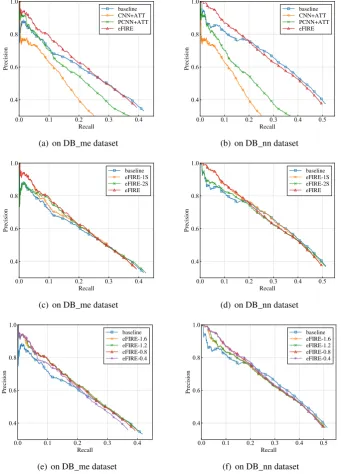
of tests, we evaluated the effectiveness and effi-ciency, and the results are reported in Figures3(a), 3(b)and Table3, respectively.
Our approach eFIRE outperforms the methods for comparison. eFIRE is on average (4.80%, 4.36%), (17.99%, 28.10%) and (7.69%, 17.82%) more accurate than baseline, CNN+ATT and PCNN+ATT on (DB_me, DB_nn) in the low-recall portion[0,0.25]of the P-R curves, respec-tively.eFIREconsistently outperforms CNN+ATT and PCNN+ATT over the entire range of recall. Whilebaselinetends to have results with a higher recall, it has a weakness of low precision, which is alleviated byeFIREthat is able to obtain more correct decisions. It is difficult to guarantee high precision and recall at the same time. For most KB population applications, only the high precision part is considered for the effectiveness evaluation. It is worth pointing out that we only compare the testing time of CNN+ATT and PCNN+ATT here.
[image:6.595.90.275.62.179.2]re-0.0 0.1 0.2 0.3 0.4 Recall
0.4 0.6 0.8 1.0
Precision
baseline CNN+ATT PCNN+ATT eFIRE
(a) on DB_me dataset
0.0 0.1 0.2 0.3 0.4 0.5 Recall
0.4 0.6 0.8 1.0
Precision
baseline CNN+ATT PCNN+ATT eFIRE
(b) on DB_nn dataset
0.0 0.1 0.2 0.3 0.4
Recall 0.4
0.6 0.8 1.0
Precision
baseline eFIRE-1S eFIRE-2S eFIRE
(c) on DB_me dataset
0.0 0.1 0.2 0.3 0.4 0.5 Recall
0.4 0.6 0.8 1.0
Precision
baseline eFIRE-1S eFIRE-2S eFIRE
(d) on DB_nn dataset
0.0 0.1 0.2 0.3 0.4
Recall 0.4
0.6 0.8 1.0
Precision
baseline eFIRE-1.6 eFIRE-1.2 eFIRE-0.8 eFIRE-0.4
(e) on DB_me dataset
0.0 0.1 0.2 0.3 0.4 0.5 Recall
0.4 0.6 0.8 1.0
Precision
baseline eFIRE-1.6 eFIRE-1.2 eFIRE-0.8 eFIRE-0.4
[image:7.595.128.470.71.546.2](f) on DB_nn dataset
Figure 3: Overall performances:eFIREvs. its variants vs.baselinevs. CNN+ATT vs. PCNN+ATT.
duces the number of variables and constraints en-coded in the ILP solver, as shown in Table3.
Note that the running time has no obvious lin-ear relationships with the number of variables and constraints among different datasets. In addition to the number of variables and constraints, objec-tive functions have a impact on the running time of ILP too. Further, CPLEX is used as a black box, which makes it hard to have a precise analysis.
These results tell us that the easy-first strategy for RE, by making use of the redundancy infor-mation embedded in the local results of sentence
level extractors, is an effective and efficient com-plement for RE using ILP solvers.
Exp-2: Performance of easy first collective
in-ference with S-O redundancies. In the second
set of tests, in order to evaluate the impacts of S-O redundancies, we implemented a variant of our ap-proach, referred to aseFIRE-1S, that makes easy decisions with the easy first collective inference, and then adopts the same ILP method inbaseline for making the rest decisions. The results are re-ported in Figures3(c),3(d), and Table3.
0.4 0.6 0.8 1.0 1.2 1.4 1.6
Threshold
1.0 1.5 2.0 2.5 3.0
Time(sec)
DB_me DB_nn
(a) The running time
0.4 0.6 0.8 1.0 1.2 1.4 1.6
Threshold
6.2 7.4 8.6 9.8 11.0
#
of
V
ar
ia
bl
es
(
×1
0
3)
DB_me DB_nn
(b) The number of variables
0.4 0.6 0.8 1.0 1.2 1.4 1.6
Threshold
10 22 34 46 58
#
of
C
on
st
ra
in
ts
(
×1
0
3)
DB_me DB_nn
[image:8.595.140.460.65.301.2](c) The number of constraints
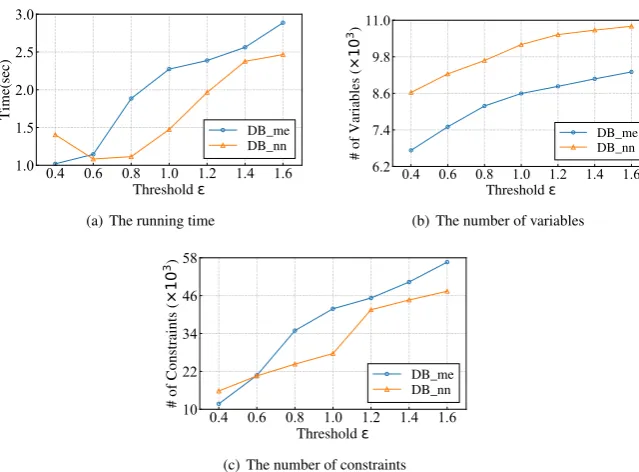
Figure 4: Impacts of thresholdon time, variables and constraints.
low-recall portions of the P-R curves on all two datasets. These results tell us that the easy first col-lective inference using S-O redundancies can not only improve the effectiveness of decision mak-ing for RE, but also improve the efficiency, as it significantly reduces the constraints and variables encoded in the ILP solver.
Exp-3: Performance of ILP with S-R, O-R and
R redundancies. In the third set of tests, to
eval-uate the impacts of S-R, O-R and R redundancies, we implemented a variant ofeFIRE, referred to as eFIRE-2S, that only consists of the second stage ofeFIRE. That is, all decisions ofeFIRE-2Sare made by the ILP solver. The results are reported in Figures3(c),3(d)and Table3.
Method eFIRE-2S outperforms baseline on all two datasets. It essentially improves the precision without sacrificing the recall. For ILP based meth-ods, their key differences are the objective func-tions. eFIRE-2Sincorporates more reliable statis-tics of sentence level extractors,i.e.,S-R, O-R and R redundancies, while baseline only uses maxi-mal scores to encourage choosing the candidates with higher individual sentence level confidence scores. So, S-R, O-R and R redundancies benefit the decision making of ILP solvers. The efficiency ofeFIRE-2Sandbaseline are comparable, which implies that the efficiency benefit ofeFIREcomes from its first stage easy first collective inference.
Exp-4: Setting verification of threshold. In the
last set of tests, to verify the setting of threshold
, we varied its values to [0.4,1.6]. The results of effectiveness and running time are reported in Figures3(e),3(f)and Figure4, respectively.
The results show that our approacheFIREis ef-fective and efficient when falls into [0.5,0.9], during which eFIRE outperforms baseline in the low-recall portion. This justifies our setting for threshold, which is typically a little less than1.0
to distinguish easy decisions from hard ones (Sec-tion3.1). Thresholdobviously has an impact on the running time, as the smalleris, the more run-ning timeeFIREhas in the first stage, and the less it has in the second stage.
Summary.From these tests, we find followings.
(1) Our approach eFIRE is both effective and efficient. It is more accurate thanbaseline in the low-recall portion [0,0.25] and CNN+ATT and PCNN+ATT consistently. eFIRE is on average (4.58%, 23.05%, 12.76%) more accurate in the low-recall portion and (21, 50, 25) times faster than baseline, CNN+ATT and PCNN+ATT, re-spectively. (2) The use of the easy-first strategy and S-O redundancies both improves the accuracy of RE and reduces the running time, and the use of S-R, O-R and R redundancies improves the accu-racy of RE. (3) The setting of thresholdis flexible in a range of[0.5,0.9]for our approacheFIRE.
5 Related Work
re-lation extractors (Mintz et al., 2009; Surdeanu et al.,2010;Hoffmann et al.,2011;Surdeanu et al., 2012;Søgaard et al., 2015) using the lexical fea-tures, syntactic feafea-tures, and other local features of sentences, and global relation extractors utilizing the corpus features and relationships among lo-cal decisions (Kate and Mooney,2010;Yao et al., 2010;Li et al., 2011;Singh et al., 2013; Li and Ji, 2014; Nguyen et al., 2017; Su et al., 2017). Global relation extractors leverage more informa-tion to resolve conflict decisions, which typically leads to more accurate decisions than local ones.
Recently, neural network-based models (Zeng et al., 2014; Ji et al., 2017) have been proposed for RE. Lin et al. (2016) proposes an attention mechanism to calculate weights for all sentences of one entity pair and selects plausible sentences from noisy sentences. Different from these are su-pervised methods that need label data for training, we propose an unsupervised method in this study. Disagreements among decisions can be re-solved by constraints. Yao et al.(2010) propose a relation extraction model that captures selectional preferences and functionality constraints to inte-grate information across documents. Fader et al. (2011) implement syntactic and lexical constraints on binary relations expressed by verbs in Open IE systems. Koch et al.(2014) impose type (or do-main) constraints to only allow relations over ap-propriately typed mentions for relation extraction. Similar to (Chen et al.,2014a), our approach uti-lizes both domain and uniqueness constraints to resolve disagreements.
Many global relation extractors use integer lin-ear programming as a blackbox solver (Roth and Yih,2004;Choi et al.,2006;Roth and Yih,2007; Li et al.,2011;Ji et al.,2013;Chen et al.,2014a,b; Wang et al., 2015). The ILP solver derives deci-sions through a well designed objective function, and resolves conflict decisions by encoding con-straints into ILP. Our easy first approach is com-plimentary to these methods with each other, as these methods can take the easy first collective in-ference of our approach for making easy decisions as a first step, and our approach can make use of any of these methods as its solution for making hard decisions in its second stage.
Redundancies in the corpus have been used to pick up hidden information. Downey et al.(2005) consider redundant extractions for judging the cor-rectness of extractions. Li et al. (2011) take
ad-vantage of redundant information to conduct rea-soning across documents based on the information network structure. We introduce four classes of in-formation redundancies: S-O, S-R, O-R and R re-dundancies, and we leverage S-O redundancies for making easy decisions, and the others to aid hard decision making.
Easy-first strategy relies on the intuition that “easy decisions should be made early, while harder decisions should be left for later when more information is available (Stoyanov and Eis-ner,2012)”. Their method makes easy decisions first for coreference resolution, and further makes use of the information from coreference clusters in the form of features to make later decisions. In this study, we propose to make easy (most con-fident) decisions first for relation extraction, and then to make hard decisions with ILP, where easy decisions are distinguished from hard ones with redundance scores based on S-O redundancies.
Data dependencies have well studied for im-proving data quality (Ma, 2011;Ma et al., 2015; Fan and Geerts,2012), which essentially make use of data redundancies and dependencies. Our ap-proach is partially inspired by these studies. In-deed, the uniqueness constraints defined in this study can be treated as functional dependen-cies (Abiteboul et al.,1995).
6 Conclusions
In this paper, we have proposed a fast easy first approach for relation extraction by making use of information redundancies, embedded in the results produced by local sentence level extractors, under domain and uniqueness constraints. We have in-troduced four classes of information redundancies to aid both easy first collective inference for easy decisions in the first stage and ILP for hard deci-sions in the second stage. Finally, using datasets processed by sentence level extractors with differ-ent models, we have experimdiffer-entally verified that our easy first approach is both effective and effi-cient compared with state-of-the-art both ILP and neural network-based methods.
Acknowledgments
References
Serge Abiteboul, Richard Hull, and Victor Vianu. 1995.
Foundations of Databases. Addison-Wesley.
Michele Banko, Michael J. Cafarella, Stephen Soder-land, Matthew Broadhead, and Oren Etzioni. 2007. Open information extraction from the web. In Pro-ceedings of the 20th International Joint Conference on Artificial Intelligence, pages 2670–2676.
Adam L. Berger, Stephen Della Pietra, and Vincent J. Della Pietra. 1996. A maximum entropy approach to natural language processing. Computational Lin-guistics, 22(1):39–71.
Christian Bizer, Jens Lehmann, Georgi Kobilarov, Sören Auer, Christian Becker, Richard Cyganiak, and Sebastian Hellmann. 2009. Dbpedia - A crys-tallization point for the web of data. Journal of Web Semantics, 7(3):154–165.
Razvan C. Bunescu and Raymond J. Mooney. 2007.
Learning to extract relations from the web using minimal supervision. InProceedings of the 45th An-nual Meeting of the Association for Computational Linguistics, pages 576–583. Association for Com-putational Linguistics.
Liwei Chen, Yansong Feng, Songfang Huang, Yong Qin, and Dongyan Zhao. 2014a. Encoding relation requirements for relation extraction via joint infer-ence. InProceedings of the 52nd Annual Meeting of the Association for Computational Linguistics (Vol-ume 1: Long Papers), pages 818–827. Association for Computational Linguistics.
Liwei Chen, Yansong Feng, Jinghui Mo, Songfang Huang, and Dongyan Zhao. 2014b. Joint inference for knowledge base population. In Proceedings of the 2014 Conference on Empirical Methods in Nat-ural Language Processing, pages 1912–1923. Asso-ciation for Computational Linguistics.
Yejin Choi, Eric Breck, and Claire Cardie. 2006. Joint extraction of entities and relations for opinion recog-nition. InProceedings of the 2006 Conference on Empirical Methods in Natural Language Process-ing, pages 431–439. Association for Computational Linguistics.
Doug Downey, Oren Etzioni, and Stephen Soderland. 2005. A probabilistic model of redundancy in infor-mation extraction. InProceedings of the Nineteenth International Joint Conference on Artificial Intelli-gence, pages 1034–1041. Professional Book Center.
Anthony Fader, Stephen Soderland, and Oren Etzioni. 2011.Identifying relations for open information ex-traction. InProceedings of the 2011 Conference on Empirical Methods in Natural Language Process-ing, pages 1535–1545. Association for Computa-tional Linguistics.
James Fan, Raphael Hoffman, Aditya Kalyanpur, Se-bastian Riedel, Fabian M. Suchanek, and Partha Pra-tim Talukdar, editors. 2012. Proceedings of the Joint Workshop on Automatic Knowledge Base Construc-tion and Web-scale Knowledge ExtracConstruc-tion, AKBC-WEKEX@NAACL-HLT 2012, Montrèal, Canada, June 7-8, 2012. Association for Computational Lin-guistics.
Wenfei Fan and Floris Geerts. 2012. Foundations of Data Quality Management. Synthesis Lectures on Data Management. Morgan & Claypool Publishers.
Raphael Hoffmann, Congle Zhang, Xiao Ling,
Luke S. Zettlemoyer, and Daniel S. Weld. 2011.
Knowledge-based weak supervision for information extraction of overlapping relations. InProceedings of ACL 2011, the 49th Annual Meeting of the Asso-ciation for Computational Linguistics: Human Lan-guage Technologies, pages 541–550. Association for Computational Linguistics.
Guoliang Ji, Kang Liu, Shizhu He, and Jun Zhao. 2017. Distant supervision for relation extraction with sentence-level attention and entity descriptions. InProceedings of the Thirty-First AAAI Conference on Artificial Intelligence, pages 3060–3066. AAAI Press.
Heng Ji, Benoît Favre, Wen-Pin Lin, Dan Gillick, Dilek Hakkani-Tür, and Ralph Grishman. 2013. Open-domain multi-document summarization via infor-mation extraction: Challenges and prospects. In
Multi-source, Multilingual Information Extraction and Summarization, pages 177–201. Springer.
Rohit J. Kate and Raymond J. Mooney. 2010. Joint en-tity and relation extraction using card-pyramid pars-ing. InProceedings of the Fourteenth Conference on Computational Natural Language Learning, pages 203–212. Association for Computational Linguis-tics.
Mitchell Koch, John Gilmer, Stephen Soderland, and Daniel S. Weld. 2014. Type-aware distantly su-pervised relation extraction with linked arguments. In Proceedings of the 2014 Conference on Empiri-cal Methods in Natural Language Processing, pages 1891–1901. Association for Computational Linguis-tics.
Oier Lopez de Lacalle and Mirella Lapata. 2013. Un-supervised relation extraction with general domain knowledge. InProceedings of the 2013 Conference on Empirical Methods in Natural Language Pro-cessing, pages 415–425. Association for Computa-tional Linguistics.
Qi Li and Heng Ji. 2014. Incremental joint extrac-tion of entity menextrac-tions and relaextrac-tions. In Proceed-ings of the 52nd Annual Meeting of the Associa-tion for ComputaAssocia-tional Linguistics (Volume 1: Long Papers), pages 402–412. Association for Computa-tional Linguistics.
Qi Li, Heng Ji, and Liang Huang. 2013. Joint event extraction via structured prediction with global fea-tures. InProceedings of the 51st Annual Meeting of the Association for Computational Linguistics, (Vol-ume 1: Long Papers), pages 73–82. Association for Computational Linguistics.
Yankai Lin, Shiqi Shen, Zhiyuan Liu, Huanbo Luan, and Maosong Sun. 2016. Neural relation extraction with selective attention over instances. In Proceed-ings of the 54th Annual Meeting of the Association for Computational Linguistics, (Volume 1: Long Pa-pers), pages 2124–2133. Association for Computa-tional Linguistics.
Shuai Ma. 2011. Extending dependencies for improv-ing data quality. Ph.D. thesis, University of Edin-burgh, UK.
Shuai Ma, Liang Duan, Wenfei Fan, Chunming Hu,
and Wenguang Chen. 2015. Extending
condi-tional dependencies with built-in predicates. IEEE Transactions on Knowledge and Data Engineering, 27(12):3274–3288.
Mike Mintz, Steven Bills, Rion Snow, and Daniel Ju-rafsky. 2009. Distant supervision for relation ex-traction without labeled data. InProceedings of the Joint Conference of the 47th Annual Meeting of the ACL and the 4th International Joint Conference on Natural Language Processing of the AFNLP, pages 1003–1011. Association for Computational Linguis-tics.
Dat Ba Nguyen, Martin Theobald, and Gerhard Weikum. 2017. J-REED: joint relation extrac-tion and entity disambiguaextrac-tion. In Proceedings of the 2017 ACM on Conference on Information and Knowledge Management, pages 2227–2230. Asso-ciation for Computing Machinery.
Dan Roth and Wen-tau Yih. 2004. A linear program-ming formulation for global inference in natural lan-guage tasks. InProceedings of the Eighth Confer-ence on Computational Natural Language Learning at HLT-NAACL 2004, pages 1–8. Association for Computational Linguistics.
Dan Roth and Wen-tau Yih. 2007. Global inference for entity and relation identification via a linear pro-gramming formulation. Introduction to statistical relational learning, pages 553–580.
Sameer Singh, Sebastian Riedel, Brian Martin, Jiaping Zheng, and Andrew McCallum. 2013. Joint infer-ence of entities, relations, and coreferinfer-ence. In Pro-ceedings of the 2013 workshop on Automated knowl-edge base construction, AKBC@CIKM, pages 1–6. Association for Computing Machinery.
Anders Søgaard, Barbara Plank, and Héctor Martínez Alonso. 2015. Using frame semantics for knowl-edge extraction from twitter. InProceedings of the Twenty-Ninth AAAI Conference on Artificial Intelli-gence, pages 2447–2452. AAAI Press.
Veselin Stoyanov and Jason Eisner. 2012. Easy-first coreference resolution. InProceedings of COLING 2012, the 24th International Conference on Compu-tational Linguistics: Technical Papers, pages 2519– 2534. The COLING 2012 Organizing Committee.
Yu Su, Honglei Liu, Semih Yavuz, Izzeddin Gur, Huan Sun, and Xifeng Yan. 2017. Global relation embed-ding for relation extraction.CoRR, abs/1704.05958.
Mihai Surdeanu, David McClosky, Julie Tibshirani, John Bauer, Angel X. Chang, Valentin I. Spitkovsky, and Christopher D. Manning. 2010. A simple dis-tant supervision approach for the TAC-KBP slot fill-ing task. In Proceedings of the Third Text Analy-sis Conference. National Institute of Standards and Technology.
Mihai Surdeanu, Julie Tibshirani, Ramesh Nallapati, and Christopher D. Manning. 2012. Multi-instance multi-label learning for relation extraction. In Pro-ceedings of the 2012 Joint Conference on Empirical Methods in Natural Language Processing and Com-putational Natural Language Learning, pages 455– 465. Association for Computational Linguistics.
Quan Wang, Bin Wang, and Li Guo. 2015. Knowl-edge base completion using embeddings and rules. In Proceedings of the Twenty-Fourth International Joint Conference on Artificial Intelligence, pages 1859–1866. AAAI Press.
Limin Yao, Sebastian Riedel, and Andrew McCallum. 2010. Collective cross-document relation extrac-tion without labelled data. In Proceedings of the 2010 Conference on Empirical Methods in Natural Language Processing, pages 1013–1023. Associa-tion for ComputaAssocia-tional Linguistics.
Daojian Zeng, Kang Liu, Yubo Chen, and Jun Zhao. 2015.Distant supervision for relation extraction via piecewise convolutional neural networks. In Pro-ceedings of the 2015 Conference on Empirical Meth-ods in Natural Language Processing, pages 1753– 1762. Association for Computational Linguistics.
Daojian Zeng, Kang Liu, Siwei Lai, Guangyou Zhou, and Jun Zhao. 2014. Relation classification via con-volutional deep neural network. InProceedings of COLING 2014, the 25th International Conference on Computational Linguistics: Technical Papers, pages 2335–2344. Dublin City University and As-sociation for Computational Linguistics.