s c a l e , g o v e r n m e n t a l i t i e s , a n d i n t e r w a r i n d i a
pr os t i t u ti o n
a n dt h e
e n d s
o fe m pi r e
© 2014 Duke University Press All rights reserved
Printed in the United States of America on acid- free paper ∞ Designed by Heather Hensley
Typeset in Minion Pro by Westchester Book Group
Library of Congress Cataloging-in-Publication Data Legg, Stephen.
Prostitution and the ends of empire : scale, governmentalities, and interwar India / Stephen Legg.
pages
Includes bibliographical references and index. ISBN 978-0-8223-5759-9 (cloth : alk. paper)
ISBN 978-0-8223-5773-5 (pbk. : alk. paper) 1. Prostitution—Government policy—India—History—
20th century.
2. Prostitution—India—History—20th century. I. Title. HQ125.I4L44 2014
364.15'3409540904—dc23 2014012188
P R E FAC E vii
I N T RO D U C T I O N
Spatial Genealogies from Segregation to Suppression 1
C H A P T E R 1
Civil Abandonment: Th e Inclusive Exclusion of Delhi’s Prostitutes 41
C H A P T E R 2
Assembling India: Th e Birth of SITA 95
C H A P T E R 3
Imperial Moral and Social Hygiene 169
C O N C L U S I O N
Within and beyond the City 239
N OT E S 247 R E F E R E N C E S 259
I N D E X 277
C O N T E N T S
In 2003 I visited Delhi as part of a postdoctoral fellowship, working toward what became my Spaces of Colonialism book on India’s interwar capital. While chasing up a building regulation in the manual Delhi Municipality: Bye Laws, Rules and Directions (1933), I came across a table listing “Prohibited areas for the residence of public prostitutes and the keeping of brothels.” Having studied the historical geographies of prostitution regulation with Philip Howell at Cambridge, this tabulation caught my eye. I chased up the reference as a complement to my interests in the landscapes of residential segregation, the police, and urban improvement in the new and old cities. Th e seam of fi les at the Delhi State Archives was incredibly rich, detailing the turn of the city against its “prostitutes.” Th is was, to a greater degree than in the other forms of po liti cal landscaping that had attracted me, a pro cess incorporating pop u lar petitioning and campaigns, voluntary groups and charities, as well as the Municipal Committee and Delhi administration. I wrote up this material as the fourth chapter to my Delhi book, focusing on the blurred boundary between the state and civil society and the sexual intersection of the individual and public body.
Th e chapter, however, didn’t work. While the other case studies on ac-commodation, policing, and urban infrastructure required national and imperial contextualization, they presented stories that could be suffi ciently
P R E FA C E
told within a Delhi frame. Many of their spatial innovations originated within Delhi though, of course, drawing upon lessons, parallels, and warn-ings from without. Prostitution policy in Delhi, however, seemed behoven to objects, people, and developments from beyond the city limits. A Suppres-sion of Immoral Traffi c Act was debated in the late 1930s, emerging near- fully formed from the legislative spaces beyond Delhi Province. Th e irrepressible voice of a female campaigner, named Meliscent Shephard, announced itself through letters, petitions, questionnaires, notes, and chits in the early 1930s, while the League of Nations and the hopes of internationalism increasingly found their way into governmental debates on the fate of Delhi’s prostitutes through the 1920s. Tracking these actors required the use of, among others, national archives in India, feminist archives in London, and international-ist archives in Geneva.
Th e last chapter of my fi rst book slowly morphed into the fi rst chapter of this one. Th at Delhi should come fi rst was obvious to me, and not merely because it was the departure point for my archival rovings. In each archive I visited, no matter how grand or global, my interest had always been in the local tolerated brothel zone, or the “red- light district.” How was it depicted? How was it managed? How did it exploit women? How did it not?
Keeping Delhi fi rst was a reminder to myself, and hopefully to the reader, that the national, the imperial, and the international are always ex-perienced at the level of the body, the encounter, and the local. But this does not, for a second, diminish the power of distant geographies. If the fi rst book faced the challenge of explaining the power relations of space, then this book would have to contemplate the power relations of scale. How, like space, was scale constructed? Who could use it? How did it collapse? How was it resisted or used? And how did scales tumble into one another? My grapplings with scale were informed by a long and complex tradition of writing, in geography and beyond, on scale itself. But each chapter progres-sively took me beyond my training in colonial urbanism to the literatures on South Asian feminism, hygiene and sexology, law and international re-lations, and, most centrally, sexuality. Each of these historiographies dealt with scale, even if not through scalar terminologies. But a recurrent focus was on infl uence: how it traveled over scale, how it was made through scale, and how scalar positioning made some people more vulnerable to being infl uenced than others.
framework of colonial governmentality studies. At the center of this book are clearly a scalar study of the tolerated brothel and a temporal examina-tion of the turn from segregaexamina-tion to suppression in the interwar years. But, and without wishing to diminish the signifi cance of the empirical material here presented or the lives of the men and women here recounted, the book also continues a broader attempt to critically examine the excesses and ne-glects of colonial power relations. Th e challenge is, therefore, to somehow reproduce the Foucauldian feat of respecting an archival story while also outlining a broader narrative regarding power, the self, and others. As Ar-nold Davidson (2006, 123) put it: “Volumes 2 and 3 of Th e History of Sexual-ity are about sex in roughly the way that Discipline and Punish is about the prison.” Michel Foucault himself put it more pointedly: “I must confess that I am much more interested in problems about techniques of the self and things like that rather than sex . . . sex is boring” (Foucault et al., 1983, 229). While one doesn’t have to agree with the latter point to accept the former, this book off ers few insights into the sexual lives of “prostitutes” and their clients in interwar India. But what it does off er is a critical apparatus with which to explore the ongoing exploitation, displacement, and silencing of women classed as prostitutes. Th e book continues a critical engagement with the work of Giorgio Agamben, appropriating his topological work on sovereignty and the in/outside. It combines this with Foucault’s thoughts on governmentalized society and the governmentalization of the state to explore the “civil abandonment” of prostitutes in cities across India. Just as
Spaces of Colonialism drew its theoretical frame from Foucault’s Security Territory Population lecture course, so here I provide a detailed reading of the Birth of Biopolitics lectures to facilitate a deeper understanding of the scalar politics of governmentalities. Th e book, in this sense, extends Foucault’s antiessentialist project to that of scale, arguing that: scales do not have natural pro cesses, whether economic, social or po liti cal; that scales are networked into existence; and that they also operate through the awesome power of naming.
conferences and seminars, and I cannot do justice to the profound eff ect of them all here. Especially formative, however, were discussions during the Spaces of Civil Society panels or ga nized by Gerry Kearns at the Eu ro-pe an Social Sciences History Conference in 2008; Anne Hardgrove’s ses-sion on “Interwar India: Th e League of Nations and Sexuality in India” at the Madison Annual Conference on South Asia in 2009; two workshops on South Asian gender (2008) and sexuality (2011) formations co- organized at Nottingham with Srila Roy and generously funded by the university and basas; two workshops co- organized with Deana Heath on “South Asian Governmentalities” at Jawaharlal Nehru University (jnu) in New Delhi (2011) and the British Academy in London (2012); and conversations had during visiting fellowships at Queen Mary, University of London, and the Jawaharlal Nehru Institute of Advanced Studies at jnu in 2011.
Jake Hodder, Reshaad Durgahee, and Ben Th orpe. Th e Nottingham cultural and historical geography research group has proved to be a brilliant home. Th ank you to Stephen Daniels, Georgina Endfi eld, Mike Heff ernan, Dave Matless, Susanne Seymour, and (especially) Alex Vasudevan and Charles Watkins for inspiring me, challenging me, supporting me, and, most hero-ically of all, putting up with me. Special awards go to my friends who have liberally allowed me to chew their collective ear over the years during the book’s long gestation: to Mitu Sengupta and Sumit Baudh’s hospitality in Delhi; in Nottingham to Gary, Jamie, Lesley, Mark, Martin, Ryan, and Srila’s patient listening; and in London to the continued love (not to mention free accommodation) of Rosy and Ed, Mark and Sacha, and Jon and Amber.
I N T RO D U C T I O N
Spatial Genealogies from Segregation to Suppression
Burma—On September 8th, 1930, the police received infor-mation to the eff ect that a Burmese girl had been thrown out of the window from a building into the back drainage space between 29th Street and Mogul Street. Th e police at once proceeded there and saw a girl about 13 years old lying on her back with a broken arm. She was speedily conveyed to the General Hospital and on examination it was found that her spinal cord was also broken. On regaining conscious-ness, she told her story, which was to the eff ect that she was seduced by a young Burman and was sold for Rs.20 to a brothel- keeper in 29th Street. She was forced to prostitu-tion and fi nally, when she refused to obey the keepers of the house, she was thrown out of the window.1
in which these women tried to escape. But in addition to not being unique, the report is also generic. It contains various discursive tropes that recur in narratives of traffi cking and violence against women in colonial India more generally (Mani 1998, 12): the heroic, rescuing authority fi gure; the das-tardly perpetrators; the naïve victim. Similarly, there is an aff ective gram-mar and vocabulary at play: the police rushed at once to the girl’s aid; she had been seduced, sold, and forced into prostitution; but she failed to obey. Her price was cheap, and the sewer she was thrown to invoked the Au-gustinian meta phorical linkage (revived by Alexandre Parent- Duchâtelet in Paris, see Corbin 1978 [1990], 62) of the prostitute as the sewer that cleansed mankind’s morality. Th e assemblage of language and narrative plays across time, chiming with aff ective dispositions against child labor, sexual exploitation, and physical abuse. But was the girl pushed, or did she jump from the window? Was she seduced, or did she voluntarily opt for life in Burma’s cosmopolitan capital port city? And why should these questions matter when her victimhood seems so complete?
Th ey matter because the horror this case induces and the contemplative methodological questions it raises are both at the center of contemporary debates in colonial historiography and at the core of this book’s attempt to understand the shift from the segregation and toleration of brothels in interwar India to their abolition and suppression. Th e seemingly transpar-ent archival window into the true experiences of prostitutes in colonial India gives way to the smoke and mirrors of subaltern feminist theory: the constructed image of the victim reveals itself to be as much a refl ection of the researcher, the governor, and the archivist, as of the historical subject herself. Th e confusions of repre sen ta tion and interpretation are just as pres-ent in the visual as the textual or the material (as Margaret Bourke- White’s photograph on this book’s cover makes clear).2
Th is occlusion is not merely a question of class; the individualized regis-tration and policing of prostitutes in Paris (Corbin 1978 [1990]) or London (Laite 2012), for instance, provide a much more detailed archival sociology of their brothels, streetwalkers, and madams. Th e insights of subaltern stud-ies, or at least the attention they draw to obscurity and occlusion, highlight how the governing of Indian prostitutes as a racialized and sexualized class was, at every stage, infl ected by questions of diff erence: of oriental bodies, of tradition, of caste, of demand, and of tropically pathological disease.
was not found in the Rangoon police archives, or in the National Archives Department of the Government of the Union of Myanmar. It was not read in the National Archives in Delhi, or the imperial repository of the India Offi ce Rec ords in London. Th e report was read in the Offi cial Publications room in Cambridge University’s Library, reprinted in a League of Nations summary of reports on the traffi c in women and children. As such, it could be read, and doubtless has been read repeatedly, in the libraries of Buenos Aires, Berlin, Tokyo, Canberra, or Mexico City. Th e report continues that while the alleged husband of the girl had absconded, a forty- eight- year- old and a twenty- eight- year- old had been charged under section 373 (buy-ing a minor) and 325 (grievous hurt) of the Indian Penal Code, which the government of India had compiled in 1860 to bring legal homogeneity to its willfully heterogeneous territories. Th e very existence of the house was a sign of the failure of the Burma Suppression of Prostitution Act (1921), under which the report indicated that two other people had been convicted in 1930 of keeping a brothel. Th is act had been modeled on Britain’s Crimi-nal Law Amendment Act of 1912, which provided powers to clamp down on areas of segregated prostitution in the hope of reducing the “white slave trade,” which so excited the salons of middle- class En gland, and so profi ted the newspaper account sheets of Fleet Street.
Th e Burmese Act turned out to be the fi rst experimental site in a legisla-tive network that eventually covered much of British India. It was designed to close down the routes through which women and girls could be traf-fi cked into and around India, and the spaces in which they could be sexu-ally exploited. During the years leading up to the First World War in India, the government accepted segregated zones of tolerated brothels as the safest way of dealing with the social and biological risk posed by prostitutes (see Legg 2012b). Broader shift s in science and society initiated a turn against the brothel, while the scandalous sites I will describe in chapter 2 discred-ited the segregationist system and spurred the development of legislation to suppress traffi cking and neutralize the prostitute’s perceived risk. In this book I set out to explain this shift from segregation to the suppression of tolerated brothels in interwar India, which approached the intimate space of the brothel as a local, national, imperial, and international problem. Th is book places scale at the heart of its methodology, showing how the most intimate spaces of desire and intercourse were forever enframed in broader scales of politics, terminology, and movement.
the report also points to diverse geo graph i cal origins: where these people originally came from, from where the laws, sentiments, and science against prostitution were derived, and the archival repositories that provide access to this event. Th at is, the report directs us to the spatial genealogy of pros-titution and its governmentalities.
Drawing on analyses of colonial rationalities, materialities, and prac-tices, this book moves beyond my previous analysis of external infl uences on state apparatuses (Legg 2007b) to examine critically the governmen-talities of local civil society, provincial governments, imperial humanitar-ian bodies, and international organizations. (For further work on (post) colonial governmentality, see Birla 2009; Chatterjee 2011; and Heath 2010.) While posing the question of imperial and international governmentalities, I will retain the urge to consider governmentalities critically, with an eye to their ethos and problematization, their excess and neglect. Th ese observa-tions serve to continue the critical dialogue with Foucault and his Euro-centric blind spots. But they also continue the critical engagement with the colonial state, which through this engagement with Foucault (and Agam-ben) is brought into focus as an agent of civil abandonment rather than of social uplift .
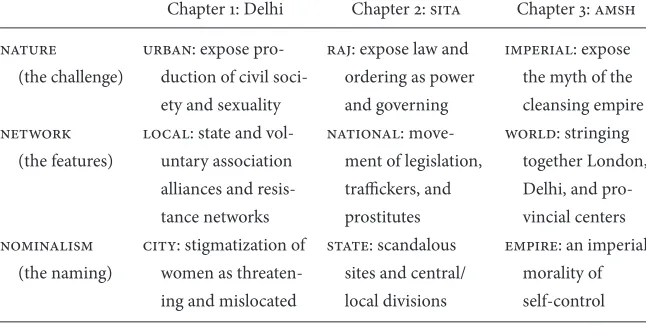
In this book I expand colonial governmentality analytics through two engagements. Th e fi rst, more theoretical engagement draws upon the con-cepts of “apparatuses” and “assemblages,” from Foucault and Gilles Deleuze, respectively, to complicate the way we think about scale, power, re sis tance, stability, and instability in colonial governmentalities. Methodologically, I draw upon an implicit logic in Foucault’s Birth of Biopolitics (1978– 79 [2008]) lecture course to suggest that we should be wary of claims to natu-ral orderliness and should challenge such claims with an analysis of the existence and eff ects of networks and nominalism. In short, I suggest that we scrutinize naturalistic claims (for instance, that economies, populations, societies, or sexualities have “natural,” and thus proper, orders) and insist that we think about scales as networks of diff ering lengths (such as intimate, local, regional, national, and imperial) and as the nominalist eff ects of naming (such as the body, the city, the province, the nation- state, and the empire).
the literature that follows, while their origins in the second of Foucault’s “governmentality” lecture courses will then emerge through the detailed reading of the Birth of Biopolitics with which this chapter concludes. Th ese lectures present a major shift in Foucault’s governmentality thinking. A de-tailed reading presents an opportunity to invigorate colonial governmen-tality analyses with the attention to scale and the social, which has been explicitly lacking in most postcolonial theory, and to continue the now widespread evaluation of the applicability of Foucault’s concepts and ob-servations to the colonial world.
Assemblage/Apparatus
In Foucault’s famously controversial History of Sexuality, volume 1: Th e Will to Knowledge (1979), he suggests that sexuality was constructed through a
dispositif (apparatus) as much as through nature, and that sexual freedoms could very well be the most intimate and persuasive forms of control. Th is conscribing of sexuality to apparatuses of control contrasts starkly with De-leuze’s situating of desire within an overarching agencement (assemblage), of which power is only a secondary eff ect (Grace 2009, 72). Foucault would later explore plea sure as a means of escaping the mind- set of sexual appara-tuses, an approach that avoids what he felt were the medico- psychological presuppositions of Deleuze and Félix Guattari’s emphasis on desire (Fou-cault et al. 2011, 389). Th is productive tension between sexuality/plea sure apparatuses and desire assemblages is just one dimension of a broader in-tellectual dialogue.
the composition of diverse elements into some form of provisional socio- spatial formation.” However, I argue that we must think of assemblages and apparatuses together, as creating the conditions for each other’s emergence and dissolution (Legg 2011a). Neither concept has a monopoly on power or re sis tance, scaling or de- scaling, stratifying or smoothing space. However, in this book I will refer to apparatuses as those governing networks with a strategic function and ordering intent, while I characterize assemblages by their gatherings, heterogeneous groupings, and emergences. I will use the relationship between apparatus/assemblage to explore the dialectics of city/ urban, government of India/Raj and empire/imperialism below. By paying attention to assemblage theory we can think beyond Foucault’s ordering categories and norms. Th ough he developed governmentality, as a concept device, with the intention of exposing and unmasking apparatuses, when we apply it we oft en reinscribe the power of those apparatuses by making our thought and investigations equally neat and containable.
Because they are also resisted and contested, we must think about sexual apparatuses (such as the regulation of prostitution) alongside assemblages of their unraveling, expansion, and dissolution. Some women labeled as “prostitutes” in Delhi, for example, refused to move from their centrally located brothels and directly petitioned the chief commissioner in person, invoking complex assemblages of artistry, rights, and precarity. Women’s reform groups campaigned at the provincial level to secure “social legisla-tion” to rescue exploited women from pimps and brothels, and interna-tional humanitarian bodies pressed the government to restrain its military and to bring tolerated brothel zones within the purview of a reluctantly in-terventionist state, mobilizing texts, theories, and statistics from sexology, hygiene science, and anticolonial nationalism. Th ese forms of re sis tance signpost a route that we can follow today to trace the colonial state’s exploi-tation and neglect of the Indian population and territory. Th is will expose a state that outsourced the regulation of prostitution to a ruthlessly reforma-tive civil society, yet refused to fund “rescue work”; that encouraged pro-vincial suppressionist legislation but refused to support it centrally; that tactically supported imperial campaigns against tolerated brothels while failing to eff ectively police military prostitution or fund preventative and curative medicine for the Indian population; and that signed international agreements against traffi cking but blocked any mea sures thought to im-pinge upon its “scalar sovereignty” (Legg 2009b).
Rather than taking a body or event and moving back through time, it takes a place (Delhi) and moves out through space to explain the shift in the in-terwar years from segregationist to suppressionist legislation and attitudes regarding the brothel. As these scales of study expand, however, the space at the center of this study does not; rather, increasing scales are used to recast the brothel as a local, national, imperial, and international space.
Histories and Geographies of Sexuality
From the Colonial Brothel to the Imperial Globe
Worldwide research into colonial prostitution, and historical studies of co-lonial Indian sexuality in par tic u lar, is still very much indebted to Kenneth Ballhatchet’s (1980) pathbreaking work on the introduction in 1868 of the Indian Contagious Diseases Acts (cdas), the forcible registration of pros-titutes serving the military, the acts’ repeal in 1888, the military regulations which preceded and succeeded them, and the politics of Eu ro pe an sexual-ity in India. In the thirty years since Ballhatchet’s publication, historical studies of prostitution have been accepted as legitimate subjects of inquiry and have moved beyond a sole emphasis on regulation. Such research has explored methodologies from social and women’s history, examining the structure and or ga ni za tion of commercial sex, to cultural and literary stud-ies that analyze the symbolic and discursive construction of the prostitute (Gilfoyle 1999). Recurring tropes in investigations of prostitution in Rus sia, Eu rope, Nairobi, and Argentina aft er 1800 include the increasing domi-nance of sexual, over companionship, relationships in prostitution as the modern age progressed. Social analysis has proff ered increasingly broad explanations for this phenomenon, while evangelical Christianity glo-balized its attack on legal brothels. Yet this literature also warns against simplistic generalizations regarding modern trends toward or away from oppression. For example, prostitution regulation in London between 1885 and 1930 increased repressive mea sures even as social purity arguments declined in force (Laite 2012). Th e criminalization and pathologization of the prostitute made her the subject of increasing control, yet defi nitions of “brothels” were worked around by prostitutes and pimps, while the police were loath to enforce the powers they acquired.
were complex variations in regulatory policies regarding prostitution in the empire before the cdas (Howell 2000), while British feminism itself was deeply imbricated with the imagined lives of Indian women (Burton 1994). Philippa Levine’s (2003) brilliantly detailed comparative work has examined contagious diseases laws and broader cultural and po liti cal prac-tices in Queensland, the Straits Settlements, Hong Kong, and India. She displays a keen awareness of each site’s complexity and refl ects at the end of the book on the landscapes and micro- spaces of selling colonial sex, yet the emphasis is very much “out” from each site toward comparison. While displaying similar interests and frames of reference, Howell’s Geographies of Regulation (2009) is sensitive to the politics of place, which inspires the methodology I follow throughout this book; his work both goes “in” to the local spatial policing of sexuality and “out” to the geopolitics of the imperial state at the global scale.
While Howell expands from Britain out to its empire, showing that the fl ow of regulation was bidirectional across the borders of the United King-dom, this book moves from Delhi to the national, imperial, and interna-tional contexts that frame the move from the segregation and toleration of brothels at the turn of the century to the abolition and suppression of brothels in the interwar period. Other scholarship has noted this shift in diff erent parts of Asia. Th e commercialization of sex in twentieth- century Shanghai mapped itself onto the specifi c cultural geographies of the treaty port (Hershatter 1997). In Malaysia the state was involved in the medical in-spection of brothels until 1907, and it was only with the international shift s in the 1920s in thinking on medical health, the protective role of the state in terms of the abuse of women and minors, and concerns over reproduction that the colonial government turned against brothels (Manderson 1996). Few investigations, however, focus on interwar prostitution in Asia. South Asian scholarship, like that of Levine and Howell, tends to end its investi-gations at the start of the First World War. Th ere has also been a broader tendency to lapse into lazy orientalist assumptions about Hindu religion as a cause of Indian prostitution (Ringdal 2004), or that brothels in the “East” had not changed in several centuries (Simon 1975, 88).
book I am concerned almost entirely with urban prostitution, not the tra-ditional courtesan or devadasi cultures that exceeded both the commercial purchase of sex and the capacities of colonial orientalist sociology to com-prehend alternative sexual economies (Kumar 1993, 35). Erica Wald (2009) has outlined the nineteenth- century naming practices through which an increasing range of women were comprehended as “prostitutes.” Rather than substituting a more contemporary term like “sex worker,” I retain the term “prostitute” throughout this book. However, the creation of the pros-titute through diff erent apparatuses of regulation will highlight how con-structed and contested this name was. In this book, as in the vast majority of documents consulted, “prostitutes” are presumed to be female. Th e League of Nations inquiry into traffi cking in the East found almost no evidence of male prostitution, although “homo- sexual prostitution” was suspected among some Indian boys in Karachi. It was suggested that some of them had been traffi cked to Basra and the pearl- fi shing islands of the Gulf for immoral purposes.3 Where homosexuality occurs within these texts, it is
usually mobilized as a fear of what might result from depriving men of their brothels (a view that was fast falling out of favor; see Legg 2012b). Th e term “brothel” was likewise constructed and contested. It was a global term that came to encompass the range of kothas (apartments), pukka (well- built) huts, and basti (slum) shops in which women worked, but which was gen-eralized to mean the prison and/or entrepôt of victimized women.
If brothels themselves have a complex nomenclature, so do the cam-paigns against them. Th e actions taken against segregated brothel zones in the interwar period built upon the successes of nineteenth- century cam-paigns against brothels that were registered, licensed, and inspected (em-bodied in the cdas in the United Kingdom and across the British Empire; for broader examples, see Limoncelli 2010). Th is “regulationism” provoked a ferocious campaign to repeal the laws, spearheaded by Josephine Butler’s Ladies National Association, which was later supplemented by the Inter-national Abolitionist Federation. Th e cdas were repealed in 1886, a year aft er the Criminal Law Amendment Act (claa) introduced “abolition-ist” legislation that increased penalties against brothels, procurement, and homosexuality. Th e campaign for such reforms continued throughout the empire.
around the new landscapes of regulation that each abolitionist victory produced. Th e expulsion of prostitutes from registered houses led to the clustering of brothels in red- light districts (Legg 2012b). Th is system of segregation was accepted by the Indian government until the years of the First World War, when a series of scandals discredited it (as I explain in chapter 2). Th e abolition of segregated brothel zones, pioneered by Bombay and Rangoon, dispersed women into un- clustered brothels, the toleration of which became the subject of abolitionist campaigns in the 1920s and 1930s. Legislation passed from 1923 banned brothel keeping and forced women into apartments, to work by themselves, or onto the street, where they were said to be more vulnerable to pimps or traffi ckers. Ironically, these powers were contained in legislative acts designed to target traffi cking itself. Th is fourth stage of abolitionism, however, took up the new mantle of “suppression.”
Th e term “suppression” was not new; there had been British campaigns for the suppression of juvenile prostitution in the 1840s, while the claa (1885) aimed to “suppress brothels.” By the turn of the century, however, the term had been appropriated by the sensationalist campaigns against the “white slave trade” (E. Bell 1909). International meetings for the “suppres-sion” of this trade were held in 1899, 1904, and 1910, and their provisions were incorporated into the League of Nations’ International Convention for the Suppression of the Traffi c in Women and Children in 1921, to which India was a cosignatory. At the insistence of Japan, the terminology of the “white slave trade” was de- racialized and replaced with that of “traffi ck-ing of women and children,” regardless of race. Th e following fi ft een years would see an occasionally heated debate regarding the extent to which brothels (licensed, segregated, or tolerated) encouraged traffi cking. Under pressure from its member states, the league classifi ed India as abolitionist because it had no registered or inspected brothels. However, the provincial acts passed in the 1920s and 1930s were explicitly suppressionist because they targeted traffi cking as well as abolishing (on paper) or even tolerated brothels.
broth-els identifi ed certain buildings to close and laws to repeal. Th e abolition of segregated zones targeted par tic u lar localities through new laws, while tolerated brothels had a much more diff use geography. Th e suppressionist phase of abolition had a relational geography that saw brothels as hubs of broader networks that had to be tackled in their entirety, which required the cooperation of organizations that could span nation- states with a con-cept and target that was more expansive than “prostitution.”
In this book I combine an awareness of international networks with a committed focus on the city. Many insightful local studies of Indian broth-els and their occupants bring to light the oral traditions and experiences of prostitutes in Calcutta (Banerjee 1998) and the shift ing forms of regulation in Madras (Raj 1993). Th e latter strays into the twentieth century, but only Ashwini Tambe (2009a) has provided a thorough microanalysis of the shift from nineteenth- century regulation to the abolitionism of interwar Bombay. Chapter 2 will examine the cases that Tambe studied, including the murder of a young woman in the brothel district in 1917 and the template- setting legislation that followed, but it will work out from this site to provide a com-parative analysis of suppressionist legislation across India in the fi ft een years that followed. Th is time period, as much as the spatial scales that will narrate the shift from segregation to suppression, demands explanation.
Interwar
“Interwar” is as unsuitable a category as “late colonial” for the period under study. Th ese categorizations teleologically tether the 1920s and 1930s to a war and to decolonization that took appeasers and die- hard imperialists, respectively, by surprise. Similarly, there is a scalar assumption that ties the interwar to the international and the late colonial to the imperial state. And despite the radical newness of the violence and technological change pro-voked by the First World War, the cultural, po liti cal, and economic legacies of the previous era were not so quick to disintegrate as is oft en assumed. Th e monumental changes wrought by the two world wars do, however, jus-tify this period as a time scale of investigation.
between feminist campaigners and military offi cials.4 Th e Second World
War would, however, see the faltering of the abolitionist drive among the armed forces and imperial campaigners, leaving the campaign to be taken forward by Indian social reformers and local groups. Th e gradual spread of penicillin as a treatment for syphilis aft er the war radically altered the perception of venereal diseases, if not the gendered and sexualized politics of policing prostitution.
Beyond policies regarding prostitution, the interwar period was also a dynamic time of rapid change and of the spectacular evolution of the spa-tial logics of imperialism, globalization, nationalism, and internationalism. India’s support for the imperial war eff ort led to expectations of reward in terms of increased self- government that were only partly satisfi ed by the Montague- Chelmsford Report of 1918 and the Government of India Act (1919). Th e resulting constitutional improvisation was termed “dyarchy” and instituted a particularly scalar divide between essential and nonessen-tial powers, associated with central and local government. While foreign policy, military, and fi nancial subjects were reserved for central govern-ment, education, health, and statistical ser vices were devolved to elected ministers in provincial government. Th e Government of India Act (1935) granted provincial autonomy, though with checks and controls for New Delhi, although the Congress Ministries resigned their posts in 1939 in opposition to the British decision to send India to war. Th e provincial geographies these constitutional reforms created were vital in providing the fi nancial and governmental spaces of biopo liti cal experimentation that the Suppression of Immoral Traffi c Acts (sitas) fi lled in regional Legislative Councils.
At the international scale, the First World War secured India’s member-ship in the League of Nations, although, again, its representative capacities were heavily curtailed (Legg 2014). Th ough the Indian National Congress was founded in 1885, and the partition of Bengal in 1905 sparked swadeshi
national, the world) and locality (between cities, provinces, and empires), as I explore below.
The City and the Urban
Current research on cities can be situated between two urges (see Legg and McFarlane 2008). Th e fi rst is to appreciate cities as relational spaces, in which global cities sit at the center of vast networks (Sassen 1991), and in which even the homeliest of places is acknowledged to be constituted by its outsides (Massey 2005). At the other extreme is the urge to recognize all cities as “ordinary cities” (Robinson 2005) that deserve to be judged on their own terms, and in all their uniqueness and specifi city. Th e happy me-dium is to attend to the specifi cities of city life while acknowledging the broader conditioning factors of city governance. A series of recent works has balanced these demands by, for instance, examining the networked port of colonial Bombay (Hazareesingh 2007), the architectural manifes-tations of British imperial power and its local hybridizations in Lahore (Glover 2008), or the municipal and local governmental eff orts to modern-ize and securitmodern-ize Mughal urban infrastructures (Hosagrahar 2005). While these apparatuses and ordering strategies are central to the management of the city, they should not be confused with the encompassing concept of the urban: “Th e urban is a myth, a desire and an ideal as well as a set of experiences; it is a kind of place, perhaps, but one that has a distinct tem-poralization; it is also a legal assemblage that has always been shot through with non- urban knowledges and powers and rationalities, both public and private” (Valverde 2009, 154). While cities perhaps lend themselves more easily to scalar delimitation— with city limits and defi nable authorities— the “urban” suggests a more radically open and enfolded assemblage, one linked to the broader world not just through capitalist accumulation or infrastructure, but through imagination, circulating ideas and designs, and mobile populations (McFarlane 2011). As such, the urban is a repre sen ta-tional as much as a materialist category, as Swati Chattopadhyay (2005) has shown for Calcutta.
encounter emergent trends in prostitution regulation as governmental technologies that moved into Delhi and were gradually taken up in local governance, whoever those governors might be.
In chapter 1 Delhi will be presented as an urban sphere of rumor, myth, and desire, where injunctions to social and moral hygiene were per sis tent ly fl aunted or ignored by a population increasingly attuned to the culture and politics of networks across national and international scales. But it was also a space that was claustrophobically penetrated by apparatuses of the colo-nial state (central, local, and municipal) as well as by civil society organi-zations of both imperial and nationalist sympathies, both of which aban-doned the prostitute in diff erent ways. Delhi was saturated with various organizations that brought demands for urban order. Th e central state was represented through the capital of British India in New Delhi; the Prov-ince was run by the Delhi administration under the command of centrally appointed Eu ro pe an chief and deputy commissioners; and the “old city” was served by a partially elected Municipal Committee. Added to this were the demands of the Army Cantonment in the Fort, the Delhi Improvement Trust, the New Delhi Development Committee, and various other branches of the state.
Th e majority of the material informing chapter 1 is drawn from the Delhi State Archives, including the fi les of the deputy commissioner, the chief commissioner, and the Confi dential Department. It was in this archive that this book project was conceived, as fi gures from ever more distant origins intruded into what I was reading about Delhi’s local aff airs: military orders from the commander in chief in New Delhi, amendments of municipal codes from the Punjab, scandals from Bombay, campaigners from London, questionnaires from Geneva. What the Delhi archives high-light is how this complex of “state” organizations was being governmental-ized by an embryonic colonial civil society. For instance, the Delhi Health and Social Ser vices Union was established in 1928 with the express support of the chief commissioner and the active participation of many members of Delhi’s social elite.5 It sought to coordinate existing organizations, like the
Th e council had been formed in 1925 and operated under the presidency of Lady Grace Glancy from the prestigious address of 10 Queensway, New Delhi. Despite this high standing, it claimed to work among rich and poor, the En glish and the Indian.6 Th is work was educational, through personal
contact, social activities, and lectures, but also practical, by supplying gar-ments for the poor and ban dages to hospitals. By the late 1930s the council was also campaigning against the traffi c in women and for a Delhi rescue home.
Th is approach to prostitution as a social and biological disease was very much opposed to that of the Delhi Women’s League (dwl), which will emerge as a decisive actor in chapter 1. It had been founded in 1926 by Rameshwari Nehru as the local body of the All Indian Women’s Council (aiwc).7 Th e latter was the predominant forum of debate regarding the
so-cial, educative, po liti cal, and economic status of women in India. Th e dwl sent a representative and between fi ve and ten delegates to each annual aiwc conference, drawing upon prominent women from Delhi’s educa-tional, po liti cal, commercial, and charitable spheres. While refusing to be dragged into the uptake of an anticolonial stance, many aiwc members were involved in the nationalist movement and, in response to inquiries being made by the chief commissioner in February 1944 the superinten-dent of police in the Criminal Investigation Department commented that the league did not “come to notice as an organisation for its po liti cal or communal aff airs although many of its workers are known for their po-liti cal views and activities.”8 In the late 1920s, however, the dwl focused
its attentions on abolishing child marriage, undermining caste prejudice, and educating women.9 In the early 1930s it or ga nized various public
the British- born representative of the Association for Moral and Social Hy-giene, who bluntly inserted the white authority of imperialism into Delhi’s dense urban apparatuses of security (see below).
In terms of the broader theoretical and methodological argument, what we will see here is the nonnatural and agonistic functioning of urban “civil society,” exposed as the product of dense and confl icting local networks that also provided the way for outside infl uence to enter and constitute the “local.” It also named the city as sexually respectable and stigmatized the prostitute, while also hosting resistant acts of naming (the refusal of the term “prostitute” in favor of “radio artistes”) and mobilization (most notably a pro cession to the deputy commissioner’s home).
Chapter 1 examines Delhi’s struggles to evict prostitutes from the walled city by, fi rst, engaging Giorgio Agamben’s work on abandonment, suggesting that this concept is more useful than abstract and nihilistic speculation over states of exception and bare life. It also helps us think about the closer imbrication of sovereign powers and biopowers in co-lonial governmentalities, in a way that is diffi cult to achieve through a simple transposition of Foucault’s concepts to India. I combine this work with literature on the supposed naturalness of civil society and the “so-cial” to present colonial voluntary organizations as agents of “civil aban-donment.” Th e fi rst section looks at the exclusion of prostitutes from the walled city of old Delhi; this involves the nominalist pro cess of their stig-matization, the petitioning against their central location, and the women’s fi ght against this “purge.” Th e second section focuses on the “rescue” of women and children and the debates between networks across the state- civil society divide to fi nd a place to put them, their inclusion back into the city through a rescue home, and the Suppression of Immoral Traffi c Act that was eventually introduced into Delhi to facilitate these inclu-sions. Chapter 2 traces the origins of the sitas in nationwide networks of scandal, experimentation, and diff usion.
The Government of India and the Raj
edifi ce of the Raj, the government of India appears as a more fragile and less comprehensive network.
While “India” was associated with a subcontinent of territory, debate continues to rage about what India was: from Immanuel Wallerstein’s (1991 [2001]) question of historiography and capitalist economy; to Manu Goswami’s (2004) study of geography, pedagogy, and fi nance. As a League of Nations– sponsored report commented, the census of 1921 had shown that India included one- fi ft h of the world’s population (320 million peoples, Hoops 1928). One- third dwelled in the “Native States,” governed by royal families who were guaranteed their qualifi ed in de pen dence in 1858. British India was divided into the nine major provinces of Bengal, Assam, Bihar and Orissa, Bombay, the United Provinces, Punjab, Madras, the Central Provinces, and Burma. Calcutta and Bombay were the largest cities, with over 1.25 million dwellers, while Madras had over half a million. Ten other cities had over 250,000 inhabitants (Delhi, Lahore, Ahmedabad, Lucknow, Cawnpore, Poona, Karachi, Rangoon, Hyderabad, and Bangalore). Th e ad-ministrative hierarchy ran from the king, to the secretary of state for India in London, to the viceroy and his six- member Executive Council in New Delhi. Under the dyarchy system following the Government of India Act (1919), the departments of local self- government, education, medical ad-ministration, public health, and agriculture were transferred to provincial administration, where they were run by Indian elected ministers, who took up further powers in the reforms of 1935. Th e Raj’s attempts to name and network this heterogeneous space into a coherent state from its capital in New Delhi were oft en in eff ec tive and became more diffi cult during dyarchy and provincial self- government, as progressive regional parties further exacerbated the contrasts between “local” governments.
information on the provinces are daunting in their range. Annual police reports, cid information briefi ngs, committee reports on proposed bills, governor summaries of provincial aff airs, letters of complaint, voluntary association reports, and statistics that were forwarded on to the League of Nations in Geneva provide a phenomenally rich archive of sexual regula-tion, but also of the attempt to network together the regions, provinces, and cities of India itself.
Th e scalar tactics deployed in this attempt were, in part, repeated in dif-ferent brands of South Asian historiography. Th e Cambridge school of im-perial history analyzed the “vertical penetration of local elites by the colo-nial state,” in contradistinction to the “horizontal affi liations of class,” while studies of economic nationalism focused on the more abstract “epic battle between forces of nationalism and colonialism” (Chakrabarty 2000, 13). Bernard Cohn even provided a scalar typology of (precolonial) Indian state forms, from the imperial/Mughal to Mughal- governed secondary states, regional spheres, and local “little kingdoms” (see Ramusack 2004, 3– 4). Subverting these scalar narratives, the subaltern studies school suggested an autonomous domain of the people, beyond the “vertical” mobilization of elite politics, and focused on “horizontal” affi liations of kinship and ter-ritory.10 Recent literature has been pursuing a “fl atter” epistemology within
India’s po liti cal networks beyond its shores. Th is asks how we can think beyond both the territory and the category of the nation to, for instance, the Indian Ocean arena (Tambe and Fischer- Tiné 2009). Such investiga-tions highlight India’s role as a sub- imperial metropolis, orchestrating colo-nial economies and administrations from west Africa to Malaysia (Metcalf 2007). But such histories are also part of a broader desire to destabilize core/periphery scalar divisions, as well as to consider links between colo-nies and empires.
draws upon the histories Durba Ghosh and Dane Kennedy (2006) outline, which are attentive to the origins and implementations of diff ering types of colonial modernity as well as to the variety of forms that colonial govern-mentalities could take, and which stress that types of freedom and collec-tive action also circulated through and across empires, that is, to India as part of a new imperial history.
Empire and Imperialism
“British space” of “World- Empire- Continent- Nation- Region- Locality” (Keith 2009). Th e forceful coherence of “empire,” conceived not as a verti-cal hierarchy, but as a series of distanced networks spanning borders and boundaries, fragments under analysis into a haphazard collage of domin-ions, the Indian Empire, sixty colonies and protectorates, mandates, and a vast empire of informal infl uence.
Th e scalar constitution of the empire underwent major shift s in the inter-war years in the face of debates over imperial overstretch, the emergence of the modern commonwealth, controversies of protectionism and economic integration, and the question of trusteeship (Butler 2002). However, to reduce imperialism to the acts of an empire would be to underestimate the diversity of its assembled parts. Trade and industry were symbiotic with the empire but in no way reducible to it, and neither were imperial social formations. Th e analysis of the latter has pushed Mrinalini Sinha (2006, 16) to “a simultaneous widening and deepening of a multiply scaled mode of analysis” that attends to how imperialism assembled diff erent societies into relationships of interdependence and interconnection, and the uneven ef-fects resulting from these connections. Th is combines an analysis of macro- political operations of empire with micro- political discourses operating within practice, that is, a “multiply scaled context” (Sinha 2006, 26). Such a framework can draw our attention to geographies of humanitarianism (Lambert and Lester 2004) or imperial feminism, both of which highlight tensions within what can still be termed an imperial project, as I will ex-amine through imperial humanitarian anti- brothel campaigns in chapter 3. Here any sense of a natural and orderly imperial domain was fractured by the feminist and racial politics of the main campaigning body, the Associa-tion for Moral and Social Hygiene (amsh).
Th e amsh was formed in 1915 by the merger of the British, Continen-tal, and General Federation for the Abolition of Government Regulation of Prostitution and Josephine Butler’s Ladies National Association, the latter of which had campaigned so eff ectively against the Contagious Diseases Acts. Th e amsh fought for gender equality through its general goals of achieving a high and equal standard of morality and sexual responsibility for men and women, the abolition of state- regulated prostitution, the sup-pression of profi teering from prostitution, and hygienic reform. Its journal, the Shield, documented its eff orts throughout the United Kingdom, but also throughout the empire and beyond.
rec ords, stored at the Women’s Library in London. As with the imperial archive in New Delhi, the amsh had to string together representatives and issues across the empire into a coherent body that could be disciplined, defended, and funded. Th e data sources in the archive are phenomenally rich, as are the intensity of friendships and loyalties formed between women working across the globe. Th e achievements of these women can also be traced in the archives of their places of work. Th e amsh appeared as a frequent correspondent in colonial archives and, in India, this left the indelible fi ngerprint of an astonishingly versatile, and controversial, fi gure. Meliscent Shephard was trained by the amsh and sent out to Calcutta in 1928 on a three- year program, but went on to represent the amsh in India until 1947. Th e infl uence and spread of the amsh in India make it the main focus of chapter 3, but this necessarily becomes a study of Shephard and her controversial networking eff orts in India.
As I will illustrate, there were also other British institutions vying for infl uence in India. Most notable of these was the British Social Hygiene Council (bshc, named the National Council for Combating Venereal Dis-ease between 1917 and 1925), which had been established to or ga nize pro-paganda and education about sexually transmitted diseases (Legg 2013). Because it was established as a result of a Royal Commission in 1917 and funded by the British government until 1929, the or ga ni za tion was more aligned to the state and to curing disease scientifi cally than the amsh was. Th e bshc established initial but unsuccessful footholds in India in the early 1920s, ultimately being outpaced by Shephard’s tireless campaigning. Both bodies were criticized for being complicit with the Indian government and of being fi rst and foremost white organizations, for which social and moral hygiene was simply a new name for an older civilizing mission. Th is was, in large part, borne out by the groups’ oft en racialist and arrogant prac-tices, their determined name association with empire and London, and their refusal and inability to network themselves successfully with Indian social reform groups. Th is was refl ected in their attachments not just to London, but also to the new experiments in internationalism emerging from Geneva.
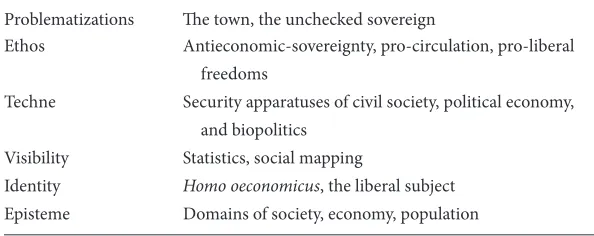
in which she accepted a stipend from the government, leading to accusa-tions of complicity with the colonial state that she had spent so long con-demning. Each period is analyzed through the problematizations, ethos, nominalistic identities, and networked technes that allowed the amsh to exert its infl uence so widely.
Relational Space, Scale, and Sexuality
Th e scalar construction of the urban, the national, and the imperial are the focus here. Th is necessarily excludes an explicit focus on other scales, which will recur throughout and have been addressed elsewhere (on the brothel see Tambe 2006; on the provincial see Legg 2012b; and on the inter-national see Metzger 2001). What is clear is that scalar terms and networks were fundamental to interwar India. But an emphasis on scale also serves as a useful corrective to an overly networked emphasis on mobility, fl ows, and transit across space. As Martin Jones (2009, 493) has stressed, the case for understanding spaces primarily through their relations with other spaces has been seriously overstated, neglecting the constraints and structuring infl uences on spatial relations. Territorial, cultural, and po liti cal strategies oft en close down these relations, lived experience is oft en woefully deprived of the chance for openness, and material and discursive eff ects of spatial permanence are powerfully enforced. But mobility and fl uidity should not be seen in opposition to territory and borders. Philip Steinberg (2009), for instance, has shown that Eu ro pe an state and territorial boundaries were solidifi ed just as sixteenth- century merchant capitalism began regularly bypassing and transgressing these very borders. How, then, should such barriers be envisaged, if they function as much through their transgression as their containment?
most consistent, if not resolved, discussion. Moving beyond scale as a car-tographic mea sure of repre sen ta tion, Peter Taylor (1982) established a ma-terialist scalar framework for po liti cal and historical geographies of global capitalism, replacing Wallerstein’s (1974) horizontal division of the world into core/semi- periphery/periphery with a vertical division into global/na-tional/urban. Th e subsequent debates about scale in geography have been phenomenally rich (Moore 2008; Herod 2011) and informed by Marxist analyses of capitalist equalization/diff erentiation and uneven development (Smith 2004). Here scale has been envisaged as relational, in that it is a pro cess that emerges through practices of capital accumulation, and as that which comes to provide a vertical and material framework linking global capital to local labor. While some have welded this vertical ontology to horizontal notions of network (Jessop, Brenner, and Jones 2008), others claim this verticalism is inseparable from scalar thought and discredits sca-lar analysis entirely (Marston, Jones, and Woodward 2005; see Legg 2009b, for further discussion). Th e suggestion is that scalar categories incorporate vertical assumptions about size or level, which map onto binaries of micro/ macro, agency/structure, or local/global. As other critics have shown, this can pose the global as powerful beyond reach (Gibson- Graham 1996) and romanticize local struggles (Escobar 2001). However, while scale as “level” should be guarded against, the value of scalar narrations of networks of dif-ferent lengths should not be dismissed (Jonas 2006), while the continued reality of scalar social constructions cannot be wished away.
Eu ro pe an privilege, involving the intense surveillance and pastoral concern for the elite population; intrusions into the sexual lives of the Dutch East Indies population (or the reasons for their absence) do not gain the atten-tion attempted in this book, and in the broader fi eld. While Stoler drew upon Foucault’s (1975– 76 [2003]) Society Must Be Defended lectures to re-read his History of Sexuality in terms of imperial circuits, I attempt a similar rereading of Foucault’s sexuality work, but through the text of the Birth of Biopolitics and the geo graph i cal register of scale.
As widely acknowledged, Foucault’s shift to a genealogical methodology brought his interest in power relations to bear directly onto the body (Fou-cault 1977b) and onto sexuality specifi cally. Bridging individual self- conduct and the reproduction of the species- body, sexuality was targeted by both disciplinary surveillance and the biopo liti cal guidance of freedoms. Th ese practices produced sexuality, rather than repressing it, through apparatuses such as sexology (explored in chapter 2 to frame the shift in approaches to the brothel in interwar India) and hygiene science (which chapter 3 intro-duces in its moral and social hybridizations). While the History of Sexuality
(Foucault 1979, 103) stressed the need to examine local geographies of sexu-ality, the book’s broader geographies were largely underdeveloped (for con-temporary work on geographies of sexuality, see Browne, Lim, and Brown 2007). As Howell (2007) has suggested, Foucault’s speculations about the Eastern practice of ars erotica are saturated with a sensual orientalism, while the geopo liti cal ramifi cations of his work are not elaborated.
the individual with the small and the social body with the large. For in-stance, the role of a father and a head of state as governing fi gures was not a representative one, nor were they projections of each other “on a diff erent scale.” Rather, they were linked through specifi c power mechanisms. Fou-cault presented the rule of “double conditioning” to address the relation-ship between local centers and overall strategy: “Th ere is no discontinuity between them, as if one were dealing with two diff erent levels (one micro-scopic and the other macromicro-scopic); but neither is there homogeneity (as if the one were only the enlarged projection or the miniaturization of the other); rather, one must conceive of the double conditioning of a strategy by the specifi city of possible tactics, and of tactics by the strategic envelopes that make them work” (Foucault 1979, 99– 100).
How, then, do we think about and narrate geo graph i cal scale within a sexual and spatial genealogy? While attuned to the networking of body politics, genealogies resist the urge to situate dynamism, meaning, and ex-planation at a larger scale, reducing local examples to mere examples of a greater logic. Embedded within Foucault’s Nietz schean turn, I suggest, is the latter’s lament regarding the tendency to place “highest” and gen-eral theories or concepts fi rst, as they oft en turn out to be the emptiest, or little more than the “last smoke of an evaporating reality. . . . Th at which is last, thinnest, and emptiest is put fi rst, as the cause, as ens realissimum” (Nietz sche 1888 [2007], 19; cited in Philo 1992, 140). Th is is not the tale of a global structural shift , with national conjunctural movements and eventful brothel closures. Th e League of Nations, the British Empire, and the gov-ernment of India are the elements, not origins, of the shift from segregation to suppression in interwar India. As such, the narrative methodology of this book stubbornly refuses to shunt the smaller scales of study, such as the city, to the back of the scalar hierarchy.
struggles to create the impression of these scalar distinctions, and, sec-ondly, the ways through which scales of diff erent lengths and of diff erent naming eff ects constantly intrude into any tidy sense of the local, national, imperial, or international, highlighting the signifi cance of the macro in the local or the pivotal role of micro events in global forms. As such, scales are used and evoked here under “erasure” (see Spivak, xiv– xv, in Derrida 1976), just as Agamben (2005, 36) spoke of the “law” to denote “the force of law without law” (cited in Coleman 2011, 129). Here, this erasure acknowledges that as a local network and a name the city has great force, but that the city is always constituted by its outsides and is a radically unstable signifi er, as are states and empires.
Th e methodological categories I employ throughout this book have emerged from a detailed engagement with Foucault’s governmentality lec-ture courses. I see this as forming part of a larger project to explicate colo-nial governmentality as a detailed analytical methodology. As a geographer, my aim is to contribute to thinking about Foucault’s spatial (and scalar) politics in light of his recently translated works. I thus present the following reading, which provides a deeper theoretical analysis of my emphasis on natures, networks, and nominalism in relation to scale, which will hope-fully be of interest to those pursuing a governmentality analysis of colo-nialisms, and to Foucauldians interested in the geographies of governance more broadly.
Scalar Governmentalities
Nature: Scale as Domain
and economy. Th e synchronic connections were split by diachronic ep-ochal ruptures between the classical age and the modern age in the early 1800s, the latter of which saw the emergence in the human sciences of “man.” Foucault returned to these themes in the Birth of Biopolitics lec-tures, but with a diff erent conception of man (homo oeconomicus) and of the historically contingent production of the belief in epistemic domains, not their use as a basis for methodological investigation. Yet, even in the volume that systematized this methodology, Foucault had begun his attack on scalar thinking in historiography, if not epistemology. In Th e Archaeol-ogy of Knowledge Foucault (1972, 10) famously insisted on the shift from total, civilizational, essentialist histories to general, dispersed, and local histories (see Philo 1992, 143).
Th is shift would eventually result in Foucault’s Nietz schean turn to power, the body, and genealogy. Th e micro- political sites it discovered have been richly mined, but such studies have been criticized for neglect-ing attention to broader scales. It was, in part, to answer such criticisms that Foucault sought to connect changes in power over bodies to broader shift s in government, although his fi rst attempts to do this retained his ar-chaeological focus on epochal shift s (see Collier 2009). In his fi rst History of Sexuality volume (published in France in 1976, translated in 1979, 25), Foucault linked changes in individuals’ understandings of their sexuality to the emergence of “population” as an economic and po liti cal problem, in relation to wealth, manpower, and resources, in the eigh teenth century. Th is domain was thought to have its own specifi c phenomena and peculiar variables (birth and death rates and life expectancy as related to diet and habitat). Sex linked these general pro cesses to the individual, making it the target of individualizing, disciplinary surveillance and general, biopo liti cal mea sures to regulate the population. Th e scalar shift in Foucault’s method-ology is explicitly described in the contemporary Society Must Be Defended
spatial diff erence. But these lectures further elaborated the signifi cance of the “emergence” of semiautonomous domains with their own logics, whose “naturalness” checked the ambitions of authoritarian governments and ushered in the conditions for liberal governmentalities.
In the Security, Territory, Population lectures, Foucault ([1977– 78] 2007, 22) suggested that in the artifi cial milieu of the town, the problem of the “naturalness” of the human species in their milieu emerged (see Terranova 2009). Here it was acknowledged that interventions in the town were nec-essary to guarantee population pro cesses. Th is logic was encapsulated more completely in physiocratic (literally rule [-crat] of nature [physio], 90) ap-proaches to the economy that, again, detected regularities and pro cesses (such as the price of grain) that demonstrated their own laws but were tied to the realities of grain (soil, climate, transport, demand; see Foucault [1977– 78] 2007, 36). In place of an archaeology of physiocratic thought, Foucault’s genealogy of their economic episteme led to technologies of power (the objectives, governing strategies, and program of po liti cal action that such thought initiated). Th is analysis of the economy inevitably led to the market, a self- curbing reality that provided a window onto the checks, balances, and laws of the economy, but which had to be maintained and protected (Mitchell 1999 [2006]). Th e domain of the economy was thus thought to be semiautonomous, to have a nature that needed sustaining. Bernard Harcourt’s (2011) exploration of the “illusion of the free market” has detailed how the physiocratic belief in natural orderliness was revised through Adam Smith and Jeremy Bentham into eventual thinking on equi-librium theory, which sustains the idea of a realm of natural, economic order, and masks the regulation and disciplining of the market by the state that this nature requires.
were the reality upon which the laws of population, economy, and society were grounded.
Stressing again the links, and diff erences, to his archaeological work, Foucault ([1977– 78] 2007, 77– 78) revisited his Order of Th ings interests armed with the concept of population and found it to be central to the shift s he had earlier described: from grammar to pop u lar philology; to evolution-ary “populations” mediating organisms and milieu in biology; to the emer-gence of the sciences of life, language, labor, and production. Th e latter shift would become Foucault’s central focus; the emergence of po liti cal economy as the science of government that instructed the sovereign to stand back, instead of intervening in the disposition of things. Th is would be the focus of the 1978– 79 lectures, but even here Foucault drew attention to the paral-lel, potentially agonistic, emergence of the social: “It is society as a natu-ralness specifi ed to man’s life in common that the économistes ultimately bring to light as a domain, a fi eld of objects, as a possible domain of analy-sis, knowledge and intervention. Society as a specifi c fi eld of naturalness peculiar to man, which will be called civil society, emerges as the vis-à- vis of the state” (Foucault 1977– 78 [2007], 349). Foucault concluded the 1978 lectures by defi ning the elements of the new governmentality as society, economy, population, security, and freedom. Liberty was the reality upon which the naturalness of the three scalar domains— analysis, knowledge, and intervention— depended; their pro cesses, and a suffi cient degree of freedom, would be guaranteed by security apparatuses whose purpose was precisely to bridge both the anatamo- and biopo liti cal poles of biopower, but also to both know and govern the multiplicity and the population. Fou-cault’s Birth of Biopolitics expanded upon the scalar arguments made in the previous lectures, but addressed them much more explicitly:
What I wanted to do— and this was what was at stake in my analysis— was to see the extent to which we could accept that the analysis of micro- powers, or of procedures of governmentality, is not confi ned by defi nition to a precise domain determined by a sector of the scale, but should be considered simply as a point of view, a method of deci-pherment which may be valid for the whole scale, what ever its size. In other words, the analysis of micro- powers is not a question of scale, and it is not a question of a sector, it is a question of point of view. (Foucault 1978– 79 [2008], 186)
quote, however, is a direct adaptation of four pages that Foucault left out of the preceding year’s lecture course, where the language was that of micro to macro, rather than of domains (see Foucault 1977– 78 [2007], 119). But if these two lecture courses are linked by the analysis of governmentality, they are signifi cantly diff erent in certain ways. Foucault (1978– 79 [2008], 2) opened his fi rst lecture by stressing that he would be moving from an analy-sis of applications of the art of government to the reasoning behind and refl ection upon government; that is, how a “domain of government” was established so as to improve governmental practice. As such, Mike Gane (2008, 361) sees the Biopolitics lectures as a top- down analysis of political- economic texts, while the Security lectures focused on a bottom- up analysis of liberalism. Collier (2009, 94), likewise, comments on the greater empha-sis on “thinkers” in Biopolitics, but stresses how Foucault’s understanding of thought had evolved. Against archaeological notions of autonomous dis-courses speaking through subjects, the later Foucault was concerned with ethical self- formation and critical thought. To understand, for instance, the “emergence of the market” in eighteenth- century thought requires a “poly-hedral” appreciation of gold and monetary supply, demographic growth, changing agricultural production, and the technicalization of government, which were inseparable from the way economic problems were being given theoretical form (Foucault 1978– 79 [2008], 33).
Th e recurrent analytical challenge in these lectures is to expose the do-mains and pro cesses that are commonly assumed to constitute the primary nature of sovereignty, the state, or civil society as historically produced practices of government. As such, the existence of universal domains em-ployed in sociology, history, or po liti cal philosophy is shown to be historical a priori, creations of a specifi c scalar imagination (Foucault 1978– 79 [2008], 3). Yet such thought acted back on the realities it described, intervening through the application of rationalities from the natural sciences to “soci-ety” and “economy” (Foucault 1978– 79 [2008], 115). Th rough recasting the