Epidemiological Study on the Evolution of Leprosy
in the Last 20 Years in Brazil
DANIELLY MARTINS FLORES1 ANA FLÁVIA RESENDE ROMANIELO
LARISSA MARTINS FLORES ANA LETÍCIA NELLER FINTA ISABELLE MARQUES MACÊDO NICOLE DE OLIVEIRA GARCIA YASMIN GONÇALVES AMARAL MICHELLE RIBEIRO DOS SANTOS ANA CLARA LENZA MARTINS Acadêmicos de medicina da Universidade de Rio verde – UNIRV Rio Verde BÁRBARA CORREIA NEVES SABINO Doutoranda em saúde, interdisciplinaridade e reabilitação
Universidade de Campinas Docente Adjunta I de Saúde Coletiva Universidade de Rio Verde-UniRV, Campus Rio Verde
LARA CÂNDIDA DE SOUSA MACHADO Mestrado em Ciências Ambientais e da Saúde pela PUC/Goiás Docente Adjunta I de Saúde Coletiva Universidade de Rio Verde-UniRV- Campus Rio Verde
Abstract
Hansen`s disease is an infectious, chronic and highly disabling disease. It is caused by Mycobacterium leprae, a bacillus that has high infectivity and low pathogenicity. Furthermore, it is classified as a serious public health problem in Brazil. The skin patches are manifested through pigmentary or dyschromic spots, plaques, infiltrations, nodes or lumps, hypoesthesia, anesthesia or even hyperesthesia. As the disease progresses, neurological manifestations
become evident, generating numbness, loss or paralysis of the affected nerve in addition to anhidrosis. The purpose of this work is to carry out an epidemiological study consulting DATASUS, analyzing data from 1999 to 2019 regarding patients who had already been diagnosed on brazilian territory with the chronic infectious disease in question. Based on this information, the number of cases was analyzed according to periodicity, age group, degree of mortality, regionality and sex in order to comprehend the evolution of Hansen`s disease in the last 20 years. Therefore, according to the study, epidemiology in Brazil showed a significant drop in the prevalence rate, reaching, in 2015, the lowest rate in the last 11 years. Even so, it is considered a country with a high burden for the disease, being second in the ranking of countries with the highest number of cases in the world, only behind India. In conclusion, the preventive actions are important in the routine of health services and should be recommended for all patients, through health education and preventive exercises.
Key words: Hansen's disease, epidemiology, Mycobacterium leprae, Infectious Diseases, Public Health.
1. INTRODUCTION
Hansen`s disease is an infectious, transmissible and chronic disease that still persists as a public health problem in Brazil.³ It affects all ages, from children to the elderly, especially the economically active population, and it`s also related to socioeconomic conditions of the population, mainly affecting communities in need of social and health assistance.¹ Constituting, clearly, a burden, both economic for the Sistema Único de Saúde (SUS) - considering that the treatment is free for the population -, and social - since for years it was commonly called leprosy, due to its physical deformities and related social stigma.
This disease requires compulsory notification and mandatory investigation⁴, which demands monitoring from public health
of the disease and foresee possible outbreaks. After diagnostic confirmation, cases must be notified, using the Notification / Investigation form from Sistema de Informação de Agravo de Notificação – SINAN.⁴ This form must be filled out by professionals
from the health units where the paciente was diagnosed. The notification must be sent weekly, containing data on attendance, medication use and reactive episodes⁴. Cases that return to the same
or another health service after noncompliance with the treatment must be reexamined to define the appropriate therapeutic approach, informed on SINAN with the "entry mode". Currently, there is three main clinical categories of Hansen's disease: Indeterminate, Tuberculoid, Lepromatous or virchowian. The indeterminate begins with the apperance of some hypopigmented blemish and little erythematousus, characterized as an initial and transient stage of the disease¹¹. In relation to Tuberculoid, its main characteristic is a multiplication of M. Leprae with more prominent lesions, asymmetrical distributions, associated with substancial inflammatory response. Finally, the virchowian, represented by the multiplication and disease progression, affecting several integuments and nerve trunks. As a result of this, it is possible to observe bad changes, hypochromic, erythematous and symmetrically distributed.¹².
According to the World Health Organization (WHO), an individual's quality of life is the result of their perception of the role they play in society, in addition to their social relationships, their physical, mental, psychological and spiritual good. In this case, it is an indisputable fact that people with the disease are socially excluded due to prejudice in the face of changes (reduced sensitivity and motor potential of the upper and lower limbs) and in relation to fear of contamination. Allied to this, there is the economic loss, based on physical disability, which increases using motor changes, making work impossible¹³. Therefore, when feeling excluded and unproductive, he has a great loss in his quality of life.
lesions and involvement of peripheral nerves. Pediatric cases requested a more intense investigation of the contacts, since these represent active transmission of the disease. In addition, in this age group, diagnosis becomes a challenge, since sensitivity tests are performed with greater difficulty. In some cases, the transmission of the diagnosis to the patient can cause an approach applied by the health team, since it can cause psychological impact, considering that it deals with a disease that carries a great social stigma. The adoption of counseling in the diagnosis can be considered strategic for the strengthening of bonds, the creation of listening spaces, the promotion of health education and the adoption of conducts to overcome vulnerabilities¹².
The treatment of Hansen`s disease, evidently, is based on a polychemotherapeutic scheme according to the characteristics of the lesions. Paucibacillary patients receive 6 doses, including 1 dose of Rifampicin 600 mg / month and Dapsone 100 mg / day. Multibacillary patients, on the other hand, receive 12 doses, adding Clofazimine, 1 dose 300 mg / month and 50 mg / day.². All doses are provided free of charge by the Ministry of Health, one of which is monthly supervised in health services. It is worth hilighting, that, due to the long duration of treatment, there are a lot of hurdles towards the adherence, which emphasizes that Hansen`s disease is a major challenge for public health.
This study masters an epidemiological, inductive, quantitative and descriptive study carried out through consultation on DATASUS. On the site, health indicators were accessed, through Sistema de Informação de Agravos de Notificação da hanseníase (SINAN). Data from 1999 to 2019 were consulted, referring to patients who have already been diagnosed in the country with the chronic infectious disease in discussion. From these preliminary data, regarding the number of cases analyzed according to periodicity, age group, degree of mortality, regionality and sex to measure the evolution of Hansen`s disease in the last 20 years. The data obtained were reorganized using the SPSS 13.0 program.
this disease in the last 20 years, showing the regions most affected by the disease, in addition to presenting a test proposal for a clinical and epidemiological profile.
2. GLOBAL STRATEGY FOR FACING LEPROSY
2.1 Preliminary information
The strategy adopted by the member countries of the World Health Organization (WHO) defined, in 1991, that leprosy would no longer be a public health problem in those countries where the prevalence rate was less than or equal to 1 case for every 10,000 habitants ⁵. However,
the disease has not yet been eliminated in the following countries: Angola, Brazil, Central African Republic, Democratic Republic of Congo, India, Madagascar, Mozambique, Nepal and the United Republic of Tanzania⁶. With that in mind, WHO still classifies Brazil
as second place in the list of countries with the highest number of cases in the world due to its high burden for the disease and the average registration of 38 thousand new cases per year, even with educational campaigns, behind only India that presented 126,164 cases. 5
As it did not reach the world goal, Brazil commited in controlling the disease⁷. Like other countries, Brazil implemented
outpatient treatment policies, campaigns and guidelines for disease control - using the political impact of the global campaign for elimination and extending the deadline until 2020. Thus, combating Hansen`s disease became a priority to the Ministry of Health, which developed the National Strategy based on the Global Strategy, with the general goal of reducing the disease burden in the country by the end of 2022.³
municipalities promoted actions such as the official implementation of polychemotherapy (MDT), diagnosis and treatment for all expected new cases. Moreover, emphasis was placed on early diagnosis (aim to diagnose 90% of new cases before the appearance of physical deformities), promoting discharge by cure in 80% of cases that started treatment and reducing the prevalence rate by 15% 20% per year in the period 2005-2015.⁷
The evolution of the disease occurs, in general, slowly and progressively, and may lead to physical disabilities. Patients diagnosed with leprosy are entitled to free treatment with multidrug therapy (MDT-WHO), available at any health facility. Treatment stops transmission in a few days and leads to a cure.⁴
2.2 Hansen`s disease data in Brazil
When we analyze the data related to the treatment and monitoring of this disease, the prevalence rata is an indicator related to the magnitude and burden of Hansen`s. When sending historical series, it allows an analysis of the evolution of the leprosy alteration process, as a public health problem. It represents the number of patients undergoing treatment for every 10,000 inhabitants.⁸ The Ministry of
Health, considers the detection coefficient of new cases diagnosed with grade 2 disability as an important parameter to be analyzed.⁷
The general detection coefficient for leprosy in 2005 was 26.86 cases / 100,000 inhabitants, being considered very high (20.00 to 39.99 / 100,000 inhabitants). In 2009, the country registered a general detection rate of 19.64 / 100 000 inhabitants, a reduction of 26.88% in 5 years. In 2015, the prevalence of leprosy cases in Brazil was 1.01 / 10,000 inhabitants - the lowest rates recorded in the last 11 years.⁷
The North and Center-West regions are more endemic, followed by the Northeast Region. The Southeast and South regions are located at the removal level, with less than 1 case per 10,000 inhabitants. The North Region showed a more significant reduction in prevalence and, in the last year of the series, the Midwest Region had a higher prevalence rate, with 4.28 cases per 10,000 inhabitants. The South Region had a small fluctuation in this coefficient, which kept it below 1 case per 10,000 inhabitants.⁸
Between the years 2005 to 2015, Brazil reduced the coefficient by 34.75%, reaching the lowest coefficient in the last 11 years (0.92 / 100 000 inhabitants). The Southeast and South regions had the best performance among the regions, with a reduction of 55.20% and 59.74% in the detection rate of new cases, respectively and, simultaneously, in the Northern region, highlighted as the only one that the rate increased, from 1.76 in 2005 to 1.83 / 100,000 inhabitants in 2015 (+ 3.98%) .⁵ Between 2008 and 2017, Brazil
recorded 1,801 deaths, the highest volume of deaths occurred : Maranhão (269), Bahia (136), Ceará (135), Rio de Janeiro (134) and Pará (126).
Besides all the data, what is observed in Brazil is that, although there is a tendency to eliminate leprosy at the national level, regional disparities result in the maintenance of the disease. The great Brazilian territorial extension and the socioeconomic inequalities between regions have been pointed out as the main reasons for this discrepancy; in fact, the poorest regions still present themselves as the most endemic. Likewise, regions with health standards comparable to those of developed countries and regions with mortality rates comparable to those of the poorest countries in the southern hemisphere are observed. Furthermore, the disparity between regions is also observed regarding the types of health problems (chronic-degenerative diseases versus infectious and parasitic diseases) ⁷.
also, difficult access to health services. In Brazil, the highest leprosy prevalence rates were observed, in decreasing order, in the Midwest, North and Northeast regions. Regional inequalities in economic and social development in Brazil are historically related to the epidemiology of infectious diseases. On the other hand the Southeast and South regions have a favorable socioeconomic level in the country. The Northeast, North and Midwest are traditionally considered to be socio-economically backward. The low prevalence of the disease in the South, therefore, coincides with its higher level of development.⁷
Studies shows, although Brazil has not reached the leprosy eradication goal in 2020, it will be reached if the same pace of strategic and political organization of the system in combat of leprosy is maintained ⁷.
Another data observed in the North and Northeast regions is that these regions show the highest proportions of leprosy cases in children for 4 consecutive years. In Brazil, there was a reduction in the proportions of cases in children of 9.4%, from 8.29% to 7.51% in the period 2007-2011. In Pará and Pernambuco, notice that more than 10% of diagnosed cases were under 15 years of age over the data series. On the other hand, less than 2% of the cases registered in the states of Paraná and Mato Grosso do Sul were children.⁸ Leprosy can
affect all age groups, reducing the number of cases of children under 15 years or the National Leprosy Control Program (PNCH) of the Epidemiological Surveillance Secretariat of the Ministry of Health, because when a disease manifests itself in childhood, especially in the age group from zero to five years, it indicates high endemicity, lack of information about the disease in this age group and lack of effective actions on health education. ⁹
Preliminary data for 2019 show that Brazil diagnosed 23,612 new cases of leprosy, of which 1,319 (5.6%) in children under 15 years.3
The increase in the number of multibacillary cases (MBs) in relation to paucibacillary cases (PBs) is a characteristic of areas in elimination, in which cases located in areas with less access to health services or those genetically predisposed to bacilliferous clinical forms are becoming ill. On the other hand, it also shows transmissible forms in circulation, as well as possible delay in diagnosis. In Brazil, there is an upward trend in the MB / PB ratio. 60% of more cases of MB leprosy were found. In 2007, that ratio was 25% more MB. Although all regions show an upward trend in the MB / PB ratio, this was higher in the Midwest and South regions with about two MB cases for each PB case. Among UFs, Acre, Bahia, Minas Gerais, Paraná, Santa Catarina, Mato Grosso do Sul, Goiás and the Federal District stand out with twice as many MBs. On the contrary, in Espírito Santo, a greater number of new PBs cases was diagnosed⁸.
Parallel to the fact that it is extremely important to analyze the data we have on leprosy by state, it becomes as important as understanding these data from the perspective of race, ethnicity and sex. Between 2014 and 2018, for example, 140,578 new cases of leprosy were diagnosed in Brazil. Among these, 77,544 new cases occur without males, or that correspond to 55.2% of the total. In the same period, sex predominantly in most age groups and years. The largest number was identified between 50 and 59 years old, totaling 26,245 new cases.3
Of the new leprosy cases diagnosed in the period from 2014 to 2018 in the country who declared their race / color at the time of notification, the highest frequency was observed among black people, with 58.3%, followed by white people, who represented 24.6%.³ In the education variable, there was a predominance of new cases of leprosy in individuals with incomplete primary education 43.3%, followed by those with complete secondary education and incomplete higher education (13.9%). It is important to notice that the proportion of new cases that do not have this data registered in the information system (Ign / Branco) is significant, with 17.6% .³
Between 2009 and 2018, 311,384 new cases of leprosy were diagnosed. The rate of general detection of new cases during this period decreased by 30%, from 19.64 in 2009 to 13.70 per 100 thousand inhabitants in 2018, with a slight increase in this indicator from the year 2016. The country remained in the parameter of high endemicity, except in the South and Southeast regions, with a “medium” parameter. All regions showed a reduction in the general detection rate of new leprosy cases between 2009 and 2018. As for the prevalence rate, Brazil also showed a reduction (26%), going from 1.99 per 10,000 inhabitants in 2009 to 1, 48 per 10,000 inhabitants in 2018, remaining in the “average” parameter in this period.
2.3 Relationship of leprosy in Brazil and the world.
country, 1,705 (5.9%) occurred in children under 15 years of age. Regarding the Degree of Physical Disability (GIF), among the 24,780 (86.5) evaluated in the diagnosis, 2,109 (8.5%) presented visible deformities (GIF2). Given this scenario, Brazil is classified as a country with a high burden for the disease, occupying the second place in the list of countries with the highest number of cases in the world, behind only India. ³
In 2018, when we looked at the Brazilian regions, Tocantins was the Federation Unit (UF) that had the highest general detection rate, 84.87 new cases per 100 thousand inhabitants, and its capital, Palmas, registered a rate 271.37 cases per 100 thousand inhabitants, the highest among the country's capitals. Mato Grosso occupied the second position, with 62.08 cases per 100 thousand inhabitants, and its capital Cuiabá registered the rate of 46.28 cases per 100 thousand inhabitants. The UF of Rio Grande do Sul and Santa Catarina, as well as their capitals, present a situation of low endemicity. ³
From the data made available by SINAN (Information System for Notifiable Diseases) that deal with the new cases of leprosy in the country in the last 20 years - period that guides the present work - we can make some specific conclusions. In relation to the total number of cases, in 1999, Brazil had 43,617 new cases, reaching 50,565 in 2004, suffering a considerable decline as a result of public policies, reaching 28,657 new cases 20 years later. In the regional analysis, given that this work has already debated the issue of socioeconomic disparity that reflects in the numbers of the disease, we can infer that all Brazilian regions have gone through periods of rising and falling data, with the Northeast region being the one that presented in the period analyzed the highest numbers found (19,324 in 2004).
Northeast, 19.1% from the Southeast, 4% from the South and 17.1% from the Center- Oeste, which, in absolute numbers, corresponds to 768,215 new cases registered in the last 20 years (1999-2018).
2.4 From prevention to physical disability
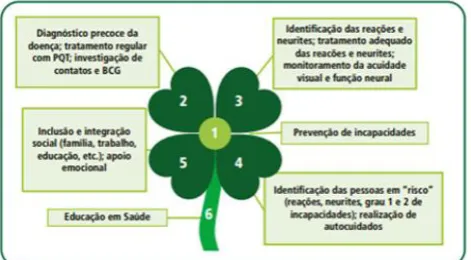
The prevention of disabilities in Hansen`s disease includes a set of measures aimed at preventing the occurrence of physical, emotional and socioeconomic damage. The main way to prevent disabilities and physical disabilities is early diagnosis. The general objective of prevention is to provide the patient, during treatment and after discharge, with the maintenance or improvement of their physical, socioeconomic and emotional condition. The prevention of (temporary) disabilities and (permanent) disabilities should not be dissociated from MDT treatment. These actions must be part of the routine of the health services and be recommended for all patients, using simple techniques (health education, preventive exercises, adaptations of shoes, adaptations of work instruments and eye care). Cases with physical disabilities that require complex techniques should be referred to specialized services or general rehabilitation services. ⁴
The patient with installed disability, presenting a clawed hand, drooping foot and lagophthalmos, as well as other disabilities such as superciliary madarosis, collapse of the nasal pyramid, fall of the earlobe or cutaneous atrophy of the face, should be referred for evaluation and indication for surgery. Rehabilitation in specialized hospital care centers, according to the following criteria: having completed the MDT treatment (paucibacillary 6 months and multibacillary 12 months) and not having reactional inflammatory state and / or using anti-reactive drugs for at least one year.⁴
In order to avoid social and individual stigma, rehabilitation recognizes the importance of meeting the needs of the affected person, whatever their disability, in order to actively include them within family and community activities, with equal citizenship, eliminating any and all exclusion barriers. ⁴
Figure 2: Components of the Prevention of Disabilities in Leprosy
3 RESULTS AND CONCLUSION
In the period from 2005 to 2015, Brazil recorded a significant drop in the prevalence coefficient, reaching, in 2015, the lowest rate in the last 11 years.⁷ Still, it is considered a country with a high burden for
the disease, being in second place in the ranking of countries with the highest number of cases in the world, second only to India.³
Although there is a tendency towards the elimination of leprosy at the national level, the large territorial extension and socioeconomic inequalities between regions are the main reasons for maintaining the circulating disease. The highest rates of leprosy prevalence were observed, in decreasing order, in the Midwest, North and Northeast regions, making clear the role of regional disparities, since they are regions traditionally considered to be socio-economically backward.⁷
through decentralization, contributing to a better access of the population to health services and a consequent improvement in the coverage of demand. Regional cultural, socioeconomic, geographic and political factors must be considered to guide decisions.⁵
Prevention actions are important in the routine of health services and should be recommended for all patients, through health education and preventive exercises, in order to avoid the social and individual stigma caused by disabilities, meeting the individual needs of each individual. Cases with physical disabilities that require complex techniques are referred to specialized services or general rehabilitation services.⁴
Studies show that, the goal established for the year 2020 will be reached in Brazil, if the same pace of strategic and political organization of the system is maintained.7 Regardless of the elimination occurring in the country until the established deadline, the endemic will remain for a longer time in microregions, at the municipal level.5 Furthermore, due to the territorial extension and irregularities of resources in the country, it is of great importance to adapt the leprosy care policy to the reality of each Brazilian region, as this contributes to a heterogeneous prevalence of such a disease.⁷
REFERENCES
1- PASSOS, Á.L.V; ARAUJO, L.F. Representações sociais da hanseníase: um estudo psicossocial com moradores de um antigo hospital colônia. Interações (Campo Grande), Campo Grande , v. 21, n. 1, p. 93-105, Mar. 2020 . Available from <http://www.scielo.br/scielo.php?script=sci_arttext&pid=S1518012202 0000100093&lng=en&nrm=iso>.
2- LASTÓRIA. J.C; ABREU, M.A.M.M. Dermatologia.Hanseníase: Diagnóstico e tratamento. 2012; 17 (4): 173 -9. Disponível em: http://files.bvs.br/upload/S/1413-9979/2012/v17n4/a3329.pdf
Hanseníase 2020.Número Especial | jan. 2020.
https://www.saude.gov.br/images/pdf/2020/janeiro/31/Boletim-hanseniase-2020-web.pdf
4- BRASIL. Ministério da Saúde. Secretaria de Vigilância em Saúde. Departamento de Vigilância e Doenças Transmissíveis. Guia Prático sobre a hanseníase. Brasília: Ministério da Saúde, 2017. 70 p. https://portalarquivos2. saude.gov.br/images/ pdf/2017/novembro/ 22/Guia-Pratico-de-Hanseniase-WEB.pdf
5- SILVA S, R.A; MATHIAS, T.A.F. Perspectivas de eliminação da hanseníase como problema de saúde pública no Estado do Paraná, Brasil. Cad. Saúde Pública, Rio de Janeiro , v. 24, n. 2, p. 303-314, Feb. 2008 . Available from
<http://www.scielo.br/scielo.php?script=sci_arttext&pid=S0102-311X2008000200009&lng=en&nrm=iso>.
6- World Health Organization. Leprosy global situation. Wkly Epidemiol Rec 2005; 34:289-96.
7- RIBEIRO, M.D; SILVA, J.C; OLIVEIRA, S. Estudo epidemiológico da hanseníase no Brasil: reflexão sobre as metas de eliminação. Revista Panamericana de Salud Pública, [s.l.], p.1-7, 2018. Pan American Health Organization. http://dx.doi.org/10.26633/rpsp.2018.42.
8- BRASIL. Ministério da Saúde, Secretaria de Vigilância em Saúde, Departamento de Vigilância das Doenças Transmissíveis. Exercício de monitoramento da eliminação da hanseníase no Brasil – LEM–2012. Brasília: Ministério da Saúde; 2015. Disponivel em: https://bvsms.saude.gov.br/bvs/publicacoes/exercicio_monitoramento_e liminacao_hanseniase_brasil.pdf
9- OMS (ORGANIZAÇÃO MUNDIAL DA SAÚDE). Global leprosy update, 2018: moving towards a leprosy free world. Weekly Epidemiological Record, Genebra, n. 94, p. 389-412, 30 ago. 2019. Disponível em:
https://apps.who. int/iris/bitstream/ handle/10665/326775/WER9435-36-en-fr.pdf?ua=1.
11- JOPLING WH & Mc DOUGALL AC. A doença. In: Manual de hanseníase, 4º ed, Atheneu Editora, São Paulo, p. 11-59, 1991. 12- SOUZA, CS. Hanseníase: formas clínicas e diagnóstico diferencial. Medicina, Ribeirão Preto, 30: 325-334, jul./set. 1997.
Disponível em :
http://revista.fmrp.usp.br/1997/vol30n3/hanseniase_formas_clinicas_d iagnostico_diferencial..pdf
13- MARINHO, F.D. Hanseníase: sentidos e facetas do convívio para adolescentes com a doença e seus familiares. Cad. Bras. Ter. Ocup. [online]. 2018, vol.26, n.4 [cited 2020-04-08], pp.837-848.
Available from:
<http://www.scielo.br/scielo.php?script=sci_arttext&pid=S2526-89102018000400837&lng=en&nrm=iso>.
14- SOUZA, E.A. Baixo desempenho de indicadores operacionais de controle da hanseníase no estado da Bahia: padrões espaçotemporais, 2001-2014. Rev. bras. epidemiol., Rio de Janeiro , v. 23, e200019, 2020 . Available from
<http://www.scielo.br/scielo.php?script=sci_arttext&pid=S1415-790X2020000100417&lng=en&nrm=iso>.