Article
Synthesis, Characterization, and Crystal Structure
Determination of a New Lithium Zinc Iodate
Polymorph LiZn(IO
3
)
3
Zoulikha Hebboul1, Christine Galez2, Djamal Benbertal1, Sandrine Beauquis2, Yannick Mugnier2, Abdelnour Benmakhlouf3, Mohamed Bouchenafa4, and Daniel Errandonea5,*
1Laboratoire Physico-Chimie des Matériaux (LPCM), University Amar Telidji of Laghouat, BP 37G, Ghardaïa
Road, 03000 Laghouat, Algeria; [email protected] (Z.H.); [email protected] (D.B.)
2Univ. Savoie Mont Blanc, SYMME, F-74000 Annecy, France; [email protected] (C.G);
[email protected] (Y.M.); [email protected] (S.B.)
3Laboratoire de caracterisation et Valorisation des Ressources Naturelles, Universite de Bordj Bou-Arreiridj,
34030 El-Anasser, Algeria; [email protected] (A.B.)
4Fundamental and Applied Physics Laboratory - Physics Departement, University of Blida 1, route de Soumaa
BP 270, 09000 Blida, Algeria; [email protected] (M.B.)
5Departamento de Física Aplicada - ICMUV - MALTA Consolider Team, Universitat de València, c/Dr.
Moliner 50, 46100 Burjassot (Valencia), Spain
* Correspondence: [email protected]
Abstract: Synthesis and characterization of anhydrous LiZn(IO3)3 powders prepared from an
aqueous solution are reported. Morphological and compositional analyses were carried out by scanning electron microscopy and energy dispersive X-ray measurements. The synthesized powders exhibit a needle-like morphology after annealing at 400°C. A crystal structure for the synthesized compound has been proposed from powder X-ray diffraction and density-functional theory calculations. Rietveld refinements led to a monoclinic structure, which can be described with space group P21, number 4, and unit-cell parameters a = 21.874(9) Å , b = 5.171(2) Å , c = 5.433(2)
Å , and = 120.93(4)º. Density-functional theory calculations supported the same crystal structure. Infrared spectra were also collected and the vibrations associated to the different modes discussed. The non-centrosymmetric space group determined for this new polymorph of LiZn(IO3)3, the
characteristics of its infrared absorption spectrum, and the observed second harmonic generation suggest a promising infrared non-linear optical material.
Keywords: iodate; crystal structure; x-ray diffraction; density functional theory; infrared absorption
1. Introduction
Metal iodates form a series of compounds potentially useful as dielectric materials and in non-linear optics [1-4]. They can also be employed for other applications like desalination and water treatment [5]. Among them, alkali-metal iodates [6], -HIO3 [7] and ammonium iodate [8] have
attracted large attention not only because of their non-linear optical properties, but also due to their piezoelectric and pyroelectric response. For instance, lithium iodate (LiIO3) has been widely used as
a piezoelectric, acousto-optic, and second harmonic generation (SHG) material [9]. However, LiIO3
crystals occasionally have OH inclusions, which reduce their transparency in the infrared (IR) region, affecting their performance [10] and their properties are known to strongly depend on the growth conditions [11]. Transition metal iodates, free of OH inclusions, e.g. Zn(IO3)2, have thus been
developed as alternative materials with high SHG efficiency [12]. It is generally accepted that the important electro- and nonlinear optical properties of metal iodates originate from the lone electron pair of iodine in the IO3- iodate anion [13]. A lot of efforts have thus been dedicated to the synthesis
of compounds containing this anion [14-19]. Iodates which combine two types of cations also
constitute a particular interesting group and for instance, attention has been devoted to the synthesis of double iodates like LiFe1/3(IO3)2 [20], which exhibit higher nonlinear coefficients than LiIO3 and
transition metal iodates [21]. Among the double iodates, another material of special significance is LiZn(IO3)3, prepared in the past by solid-state sintering [22], and reported to be an excellent ionic
conductor and to have a remarkable SHG. An orthorhombic structure was then proposed but the space group and atomic positions were not determined [22]. We report here a facile, cheap, and environmentally friendly synthesis route for anhydrous LiZn(IO3)3. A possible crystal structure is
proposed based upon powder X-ray diffraction (XRD) experiments and Rietveld refinements. The structural determination is also supported by density-functional theory (DFT) calculations. Details of the morphology and IR spectral properties of the compound are also presented.
2. Materials and Methods
2.1 Sample preparation
The compound was synthesized from an aqueoussolution of LiIO3 (Sigma - Aldrich 99%) and
ZnCl2 (Riedel - de Haën 98%). Lithium iodate was first dissolved into 65% concentrated nitric acid
obtained from Merck (4 mmol of LiIO3 in 10 ml of 16N nitric acid) and then added to an anhydrous
zinc chloride solution (1 mmol in 10 ml of 16N nitric acid). After being stirred thoroughly, the reaction mixture was slowly evaporated and maintained at 55 °C for four days leading to the formation of an amorphous white precipitate. After filtration and washing with de-ionized water the product was finally heat-treated at 400 °C for two hours in a tubular furnace.
2.2 Sample characterization
The synthesized samples were analyzed under scanning electron microscopy (SEM), powder X-ray diffraction (XRD), and Fourier transform infrared spectroscopy (FTIR). Phase purity and crystal structure of LiZn(IO3)3 crystals were evaluated by XRD from an Philips-Xpert pro
diffractometer using Cu K( = 1.54056 Å ) and K( = 1.54443 Å ) radiation (K/Kratio = 0.5), with a step size of 2θ = 0.02° and sweeping with a 0.2º per minute velocity. The structural analysis was carried out using Powdercell [23]. For the structural refinement, the background was fitted with a six-order polynomial function and the peak profiles were modelled using a pseudo-Voigt function [24], using the Caglioti formula [25] for the angular dependence of the full-width at half-maximum of Bragg peaks. On the other hand, the refinement did not include the isotropic displacement factors which were assumed to be 1.0 Å2, a typical value for lithium oxides and iodates [26-28], but adjusted
an overall displacement factor [29]. Homogeneity and chemical composition of the samples were first assessed by SEM (VEGA\TESCAN) with a Peltier cooled XFlashTM silicon drift detector (model
410 M) for energy dispersive X-ray (EDX) analysis. Secondary electron images were recorded using 20 keV primary electrons. FTIR spectra (Jasco FT/IR-4200 instrument) were acquired after dispersing the LiZn(IO3)3 powder on a KBr carrier and a strong naked-eye SHG signal was observed from a
collimated pulsed 1064 nm excitation laser (Wedge HB, Bright solutions, pulse width 1 ns, repetition rate 1 kHz) .
2.3 Density-functional theory calculations
Density-functional theory (DFT) is a quantum-mechanics calculation method that gives an accurate description of the structural and physical properties of oxides [30]. Accuracy of the results previously obtained by using DFT to different oxides [29, 31] supported its application in the case of LiZn(IO3)3. The DFT simulations here reported have been performed by using the ab initio
total-energy is converged to less than 1 eV/atom and the Helmann-Fynmann forces on each atom are converged to less 0.01 eV/Å .
3. Results and discussion
3.1 Morphology and composition
Energy-dispersive X-ray spectroscopy (EDX) was used to confirm the composition and phase purity of the prepared LiZn(IO3)3 samples. Within the limits of experimental error, EDX analyses by
both weight percent and atomic percent of Zn and I were found in agreement with their corresponding expected molar ratios (18.72(5)% and 31.60(5)%, respectively). The presence of impurities was not detectable within the resolution of the instrument. Fig. 1 shows the morphology and size of the synthesized material. As clearly evidenced from the scanning electron microscopy (SEM) micrograph, the raw powder is constituted of micron size needle-like particles. Their length
varies between 10 and 100 μm and their diameter is smaller than 2 μm.
Figure 1. SEM morphology of the LiZn(IO3)3 powder. The ruler in the bottom part corresponds to 100 m (10 m/div).
3.2 Crystal structure
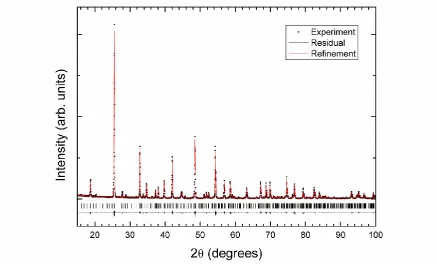
Fig. 2 shows a powder XRD pattern of LiZn(IO3)3, measured at room temperature. To obtain a
phase-pure sample with the stoichiometric composition, we found that the initial Li:Zn molar ratio has to be increased above 4:1, as stated in the sample preparation section. An excess of Li is indeed necessary to prevent the formation of Zn(IO3)2 which is otherwise obtained when the Li:Zn ratio is
typically below 2:1. It is also well noted that washing with water is required before annealing to remove any traces of the hygroscopic -LiIO3 that is also present after the evaporation step. A
homogeneous and single phase material is then readily obtained and it differs from the well-known Zn(IO3)2, ZnIO3(OH) or -LiIO3 compounds [11, 26, 27, 34]. As in EDX measurements, phase
impurities were not detected by XRD.
When analyzing the experimental XRD pattern, we found that it could not be indexed with the orthorhombic crystal structure previously reported by Sheng et al. [22]. By using the DICVOL routine, included in the FullProf Suite [35], we indexed the XRD pattern and found that the highest figure of merit corresponded to a monoclinic unit cell with parameters a = 21.747(9) Å , b = 5.201(2) Å ,
odd are absent) indicated P21 as the possible space group. This space group is the same as that of the
crystal structures of Zn(IO3)2 [26] and Zn2(IO3)4 [27] (files number 54086 and number 415821 of the
Inorganic Crystal Structure Database, ICSD) whereas ZnIO3(OH) belongs to the monoclinic space
group Cc [34], number 9 (file number 185598 of ICSD). In addition, in the case of Zn(IO3)2, the
unit-cell parameters b = 5.1158 Å , c = 5.469 Å , and = 120º, are comparable with the lattice parameters b, c, and we determined from our indexation of LiZn(IO3)3. The parameter a = 10.938 Å
of Zn(IO3)2 is however approximately half the parameter a we obtained for LiZn(IO3)3.
Figure 2. XRD pattern of LiZn(IO3)3 measured using Cu K( = 1.54056 Å ) and K( = 1.54443 Å ) radiation. Dots correspond to the experiment. The Rietveld refinement carried out assuming
DFT-calculated atomic positions are shown with a red solid line. The residuals are plotted with a black solid line. Positions of the Bragg peaks are indicated by black ticks.
Based upon the similarities between the crystal structure of LiZn(IO3)3 and Zn(IO3)2, we have
built a structural model for LiZn(IO3)3 by doubling the unit-cell of Zn(IO3)2 using the
group-subgroup transformation tool available in PowderCell [23]. We then have assumed that Li and Zn ions alternatively occupy the positions generated from the original Zn positions and that I and O ions keep the same positions as in the original structure, but with an occupation factor of 0.75 (to be consistent with the compound stoichiometry). Starting from this model we have carried out a Rietveld refinement [35] and found that only the unit-cell parameters as well as the Li and Zn positions can be accurately determined in this way. In the refinement, positions of the I and O atoms have to be fixed though to the values obtained by doubling the unit-cell of Zn(IO3)2. This refinement
procedure led otherwise to nonphysical results with some I-O bond distances too short and a reduced 2 smaller than 1. In order to optimize the above crystal structure determination we also
have performed DFT calculations [36]. By considering our structural model (with space group P21)
and the crystal structure of the other double iodates, we actually found that the above described structural model is the one leading to the lowest calculated enthalpy at ambient conditions. It is therefore the thermodynamically stable structure of LiZn(IO3)3 at ambient conditions. Additionally,
derived from XRD experiments and DFT calculations thus gives reliability to the proposed structural model of LiZn(IO3)3.
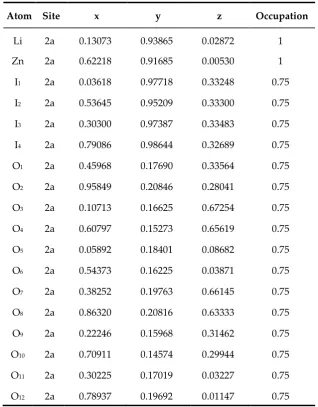
Table 1. Atomic positions calculated for the monoclinic LiZn(IO3)3 in the P21 space group.
Atom Site x y z Occupation
Li 2a 0.13073 0.93865 0.02872 1 Zn 2a 0.62218 0.91685 0.00530 1 I1 2a 0.03618 0.97718 0.33248 0.75
I2 2a 0.53645 0.95209 0.33300 0.75
I3 2a 0.30300 0.97387 0.33483 0.75
I4 2a 0.79086 0.98644 0.32689 0.75
O1 2a 0.45968 0.17690 0.33564 0.75
O2 2a 0.95849 0.20846 0.28041 0.75
O3 2a 0.10713 0.16625 0.67254 0.75
O4 2a 0.60797 0.15273 0.65619 0.75
O5 2a 0.05892 0.18401 0.08682 0.75
O6 2a 0.54373 0.16225 0.03871 0.75
O7 2a 0.38252 0.19763 0.66145 0.75
O8 2a 0.86320 0.20816 0.63333 0.75
O9 2a 0.22246 0.15968 0.31462 0.75
O10 2a 0.70911 0.14574 0.29944 0.75
O11 2a 0.30225 0.17019 0.03227 0.75
O12 2a 0.78937 0.19692 0.01147 0.75
To go further, we then performed additional Rietveld refinements by using a different strategy, namely the atomic positions obtained from DFT calculations have been fixed in the structural model. The occupancies were also constrained to the values given in Table 1. The remaining parameters (for instance: unit-cell parameters, peak-shape parameters, overall displacement factor, scale factor) were then all refined, similarly to previous studies where the atomic positions of oxygen atoms were hardly determined without a similar approach [37, 38]. The structural model given in Table 1 finally leads to the smallest residuals (the R-factors are Rp = 2.36% and Rwp = 3.18% and a reduced 2 equal to
1.145) and a good-quality fit as illustrated in Fig. 2. The unit-cell parameters obtained after the new Rietveld refinement are a = 21.874(9) Å , b = 5.171(2) Å , c = 5.433(2) Å , and = 120.93(4)º, with a fit accuracy that supports the assignment of the proposed monoclinic structure to the space group P21
[39 , 40]. It is also important to highlight here that the unit-cell volume (527.04 Å3) of LiZn(IO3)3,
which has a molar mass of 597.03 g/mol and 2 formula units per cell (Z = 2), is slightly smaller than twice the unit-cell volume of Zn(IO3)2 (265.02 Å3). This could be a consequence of the partial
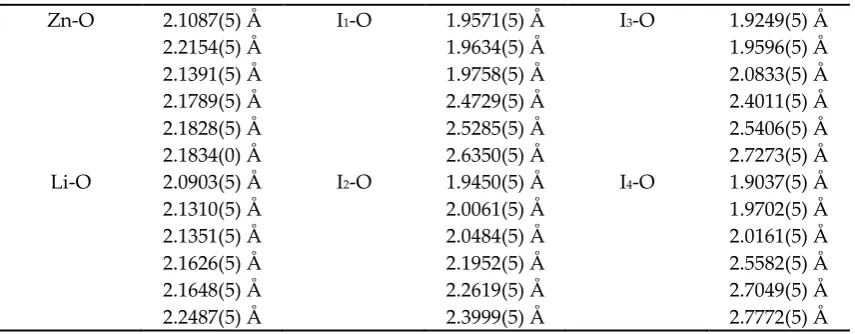
The as-obtained crystal structure of LiZn(IO3)3 is shown in Fig. 3. In Table 2 we report the
different interatomic bond distances. A structural comparison with the structures of Zn(IO3)3 and
-LiIO3 [11, 26] shows that there are many similarities regarding polyhedral units and connectivity.
In particular, the structure of the monoclinic polymorph of LiZn(IO3)3 can be described as a
three-dimensional network of molecular ZnO6 and LiO6 octahedral units that are solely connected by
monodentate iodate groups which have an asymmetric coordination. The IO3polyhedron exhibits
the expected trigonal-pyramidal configuration with three different short I−O bond distances, which slightly change from one IO3 polyhedron to another as can be seen in Table 2. These distances range
from 1.9037(5) to 2.0833(5) Å . Each iodine atom has three additional oxygen neighbors, which are on the side of the lone-pair electrons of iodide. These weakly linked oxygen atoms are at longer distances with interatomic distances going from 2.1952 (5) to 2.7772(5) Å , thus forming a highly distorted IO6polyhedron. Regarding the ZnO6 and LiO6 octahedral units, they are slightly distorted
with an average bond length of 2.168(3) and 2.155(3) Å , respectively. The quadratic elongation for the ZnO6 (LiO6) octahedron is 1.0064 (1.0052) and the distortion index is 0.01358 (0.01699). These two
parameters, that are commonly used to describe distortions within a coordination octahedron, have been calculated using VESTA according to the definitions given by Robinson and Bauer [42].
Figure 3. Schematic view of the crystal structure of LiZn(IO3)3. Zn (Li) atoms are shown in gray
(green), I atoms in violet, and O atoms in red. The site occupation of the last two types of atoms is 0.75. The different coordination polyhedra are shown.
Table 2. Zn-O, Li-O, and I-O bond distances in the different coordination polyhedral of LiZn(IO3)3.
Zn-O 2.1087(5) Å I1-O 1.9571(5) Å I3-O 1.9249(5) Å
2.2154(5) Å 1.9634(5) Å 1.9596(5) Å 2.1391(5) Å 1.9758(5) Å 2.0833(5) Å 2.1789(5) Å 2.4729(5) Å 2.4011(5) Å 2.1828(5) Å 2.5285(5) Å 2.5406(5) Å 2.1834(0) Å 2.6350(5) Å 2.7273(5) Å Li-O 2.0903(5) Å I2-O 1.9450(5) Å I4-O 1.9037(5) Å
We would like to comment here on the fact that the monoclinic structure here reported is different than the orthorhombic structure previously reported [22]. One possibility is that diverse polymorphs were obtained because of the different chemical routes used in the synthesis (starting reagents, solvent, temperature, crystallization pathways, etc.). For instance, in lithium iodate the processing parameters have a key influence on the three different crystalline structures that can be stabilized at room temperature [43]. A second option which should not be excluded is the incorrect assignment of the crystal structure in the previous study [22]. Indeed, previously only the unit-cell parameters were specified, but not the space group and atomic positions. The authors reported that the unit-cell corresponds to 4 formula units, which implies a volume per formula unit 25% smaller than in Zn(IO3)3 and LiIO3, which is unexpected since ZnLi(IO3)3 is a binary solution of them. In
contrast, as we described above, the monoclinic structure here proposed has many similarities with the ones of Zn(IO3)2 and -LiIO3. This and the consistency with DFT calculations further support the
crystal structure here reported.
In terms of functional properties, it is worth to mention that the new polymorph of LiZn(IO3)3
crystallizes in a polar space group (P21) and is therefore a potential material for SHG with similar
functionalities as LiIO3and Zn(IO3)2[44]. The P21 space group belongs to class 2 for which 8 (resp. 4)
nonzero SHG coefficients are to be considered without (resp. with) Kleinman’s symmetry. So far, an
accurate assessment of the independent SHG coefficients and overall conversion efficiency could not be obtained because of the needle-like morphology. However, a bright green spot has been observed under a 1064 nm laser excitation on powder agglomerates, suggesting that the produced SHG signal is very strong. Another interesting specificity of LiZn(IO3)3 arising from its crystal
structure is the number of vacant sites and the zig-zag polyhedral chains running parallel to the
a-axis (see Fig. 3). Ionic conductivity as well as highly anisotropic compression and thermal expansion are thus expected [45-47]. Other properties as the bulk modulus can be estimated from empirical relations, assuming that compression is dominated by the ZnO6 and LiO6 octahedra, from
the Zn-O and Li-O bond distances and the formal charge of Zn and Li [48]. The obtained value is 55 GPa. It agrees with the measured bulk modulus of -LiIO3 [49], being therefore a plausible
estimation of the bulk modulus of LiZn(IO3)3.
3.3 FTIR spectroscopy
Results of Fourier-transform infrared spectroscopy (FTIR) measurements are now discussed. Fig. 4 shows the transmission spectrum in the 4000 – 400 cm-1 region with a zoom in the 900 – 500
cm-1 range as depicted in inset to facilitate the mode identification associated to the iodate anion. In
the FTIR spectra we have automatically subtracted the CO2 bands from atmosphere absorption
although weak artifacts around 2300 cm-1 are still present in the corrected data. According to group
theory, LiZn(IO3)3 has eighty-one IR-active modes ( = 41A + 40B), which are considerable more
numerous than the fifty-one IR-active modes ( = 26A + 25B) of Zn(IO3)2. This leads to a broadening
of the IR bands of LiZn(IO3)3 due to partial phonon overlaps.
The better near-infrared transparency of LiZn(IO3)3 than that of α-LiIO3 can however be
noticed [50]. In addition, the spectral frequency range at 4000 - 3200 cm-1 is very useful to witness
the presence of OH groups [51]. Here, a very low content of residual OH bonds is observed in agreement with the acidic synthesis conditions used for the preparation of LiZn(IO3)3. On the other
hand, substitution of Li+ by H+ ions is very unlikely since the specific O-H…O vibrations of similar
intensity observed at about 590 and 730 cm-1 in Li1-xHx(IO3) are not detected [52]. The band located
from 1900 cm-1 to 1250 cm-1 could correspond to the second overtone of phonons from the 900 - 600
cm-1 band [53] or to the presence of H2O molecules [54] which is less probable after the
crystallization step at 400 °C. Between 900 and 600 cm-1, several absorption features at 607, 673, 729,
764, 803, and 877 cm-1 are noticed and denoted by ticks in the inset of Fig. 4. Additional absorption
Figure 4. FTIR spectrum of LiZn(IO3)3 in the 4000 – 400 cm-1 region. The inset shows a zoom in the
900 – 500 cm-1 range. Ticks indicate position of the absorption peaks.
Regarding assignments of the iodate IR modes, we first remind that the vibrational frequencies of the symmetrical pyramidal IO3- ion in solutions and compounds are 1 (symmetric stretching) at
780 - 630 cm-1, 2 (symmetric bending) at about 400 - 350 cm-1, 3 (asymmetric stretching) at 820 - 730
cm-1, and 4 (asymmetric bending) at about 330 cm-1 [51, 53, 54]. Here, presence of the distorted IO6
polyhedral units as evidenced by XRD is expected to induce noticeable changes in the IR absorption spectrum of LiZn(IO3)3 comparatively to those of simple metal iodates. Two additional frequencies
can be foreseen since degeneracy of the two asymmetric fundamental vibrations 3 and 4 is no
longer present [51]. By analogy with other iodates, the five absorption peaks observed between 900 and 630 cm−1 can be assigned to the I–O stretching vibrations of the IO3 polyhedron but occurrence
in the LiZn(IO3)3 structure of pyramidal IO3- ions and of IO6 octahedral units makes the IR spectra
more complicate [12]. It is therefore difficult to assign the bands unambiguously, especially as the pyramidal and octahedral geometries are distorted. Finally, the absorption bands occurring between 673 and 500 cm-1 can be ascribed to the first overtones of the iodate ion bending modes
with some lattice mode contributions involving vibrations between metal ions and IO3 as a rigid
unit.
4. Conclusions
A new polymorph of LiZn(IO3)3was synthesized by a simple low-cost co-precipitation route
and heat-treatment of the amorphous precipitate at 400°C. The combination of Rietveld refinements of the powder XRD pattern and DFT calculations results in a monoclinic crystalline lattice with the non-centrosymmetric space group P21. The unit-cell parameters and atomic positions were also
determined. We also performed EDX and SEM measurements that confirm the phase purity and demonstrate that the synthesized LiZn(IO3)3 has a needle-like shape morphology. Finally, a FTIR
analysis further supports the preparation of phase-pure LiZn(IO3)3 without occurrence of eventual
H+ ions. Because of the low symmetry of point group 2, a detailed assignment of each IR
structure as well as its wide transparency and chemical stability compared to the very hygroscopic
-LiIO3, LiZn(IO3)3 appears as a good candidate for non-linear optical applications. Besides,
nanocrystal suspensions are under preparation so as to quantitatively assess, in the near future, the averaged SHG coefficients as already reported for other oxide nanomaterials [55].
Author Contributions: All authors contributed equally to this work; being all involved in experiments, analysis, interpretation of results, and writing of the manuscript.
Funding: This work was supported by the Spanish Ministry of Science, Innovation and Universities under grant MAT2016-75586-C4-1-P and by Generalitat Valenciana under grant Prometeo/2018/123 (EFIMAT). Y.M., S.B. and C.G. gratefully acknowledge support from the French-Swiss Interreg Program (NANOFIMT project).
Conflicts of Interest: The authors declare no conflict of interest.
References
1. S. P. Guo, Y. Chi, and G. C. Guo, Recent achievements on middle and far-infrared second-order nonlinear optical materials, Coord. Chem. Rev. 335 (2017) 44 - 57.
2. L. Xiao, Y. Zhenbo, J. Y. Yao, Z. S. Lin, and Z. G. Hu, A new cerium iodate infrared nonlinear optical material with a large second-harmonic generation response, J. Mater. Chem. C5 (2017) 2130 - 2134. 3. A. H. Reshak and S. Auluck, LiMoO3(IO3), a novel molybdenyl iodate with strong second-order optical
nonlinearity, J. Alloys Compd. 660 (2016) 32 -38.
4. N. Ngo, K. Kalachnikova, Z. Assefa, R. G. Haire, and R. E. Sykora, Synthesis and structure of In(IO3)3 and
vibrational spectroscopy of M(IO3)3 (M = Al, Ga, In), J. Solid State Chem.179 (2006) 3824 - 3830.
5. D. Pathania, G. Sharma, N. Mu, and P. Vishal, A biopolymer-based hybrid cation exchanger pectin cerium(IV) iodate: synthesis, characterization, and analytical applications, Desalin. Water Treatm.57 (2016) 468 - 475.
6. K. R. Biggs, R. A. Gomme, J. T. Graham, and J. S. Ogden, Characterization of molecular alkali metal iodates by mass spectrometry and matrix isolation IR spectroscopy, J. Phys. Chem.96 (1992) 9738 - 9741.
7. K. Stahl and M. Szafranski, A neutron powder diffraction study of HIO3 and DIO3, Acta Cryst. C 48 (1992)
1571 - 1574.
8. E. T. Keve, S. C. Abrahams, and J. L. Bernstein, Pyroelectric ammonium iodate, a potential ferroelastic: crystal structure, J. Chem. Phys.54 (1971) 2556 – 2563.
9. R. A. Kumar, D. R. Babu, R. E. Vizhi, N. Vijayan, and G. Bhagavannarayana, Synthesis, growth and optical studies of Mn: α-LiIO3 single crystal, Advanced Materials Research 584 (2012) 3 - 7.
10. M. J. Bushiri, T. C. Kochuthresia, V. K. Vaidyan, and I. Gautier-Luneau, Raman scattering structural studies of nonlinear optical M(IO3)3(M = Fe, Ga, α-In) and linear optical β-In(IO3)3, J. Nonlin. Opt. Phys.
Mater.23 (2014) 1450039.
11. Y. Mugnier, C. Galez, J. M. Crettez, P. Bourson, C. Opagiste, and J. Bouillot, Low-frequency relaxation phenomena in α-LiIO3: The nature and role of defects, J. Solid State Chem.168 (2002) 76 - 84.
12. T. C. Kochuthresia, I. Gautier-Luneau, V. K. Vaidyan, and M. J. Bushiri, Raman and FTIR spectral investigations of twinned M(IO3)2 (M = Mn, Ni, Co, and Zn) crystals, J Appl. Spectrosc. 82 (2016) 941 - 946.
13. P. Hermet, First-principles based analysis of the piezoelectric response in -LiIO3, Comput. Mater. Science 138 (2017) 199 - 203.
14. S. Peter, G. Pracht, N. Lange, and H. D. Lutz, Zinkiodate–schwingungsspektren (IR, Raman) und kristallstruktur von Zn(IO3)2 · 2H2O, Z. Anorg. Allg. Chem.626 (2000) 208 -215.
15. A. L. Hector, S. J. Henderson, W. Levason, and M. Webster, Hydrothermal synthesis of rare earth iodates from the corresponding periodates: structures of Sc(IO3)3, Y(IO3)3 · 2 H2O, La(IO3)3 · 1/2 H2O and
Lu(IO3)3 · 2 H2O, Z. Anorg. Allg. Chem. 628 (2002) 198 - 202.
16. B. Bentria, D. Benbertal, M. Bagieu-Beucher, A. Mosset, and J. Zaccaro, Crystal engineering strategy for quadratic nonlinear optics. Part II: Hg(IO3)2, Solid State Sciences5 (2003) 359 - 365.
17. C. Galez, Y. Mugnier, J. Bouillot, Y. Lambert, and R. Le Dantec, Synthesis and characterisation of Fe(IO3)3
nanosized powder, J. Alloys Compd.416 (2006) 261 - 264.
19. C. F. Sun, C. L. Hu, X. Xu, J. B. Ling, T. Hu, F. Kong, X. F. Long, and J. G. Mao, BaNbO(IO3)5: A new polar
material with a very large SHG response, J. Am. Chem. Soc. 131 (2009) 9486 - 9487.
20. Y. C. Lan, X. L. Chen, A. Y. Xie, P. Z. Jiang, and C. L. Lin, Synthesis, thermal and magnetic properties of new metal iodate: (LiFe1/3)(IO3)2, J. Cryst. Growth240 (2002) 526 - 530.
21. L. Bonacina, Y. Mugnier, F. Courvoisier, R. Le Dantec, J. Extermann, Y. Lambert, V. Boutou, C. Galez and J.-P. Wolf, Polar Fe(IO3)3 nanocrystals as local probes for nonlinear microscopy, App Phys B87 (2007) 399 –
403.
22. T. D. Sheng, F. Z. Ming, and L. W. Xiu, Invesigation of the pseudo-binary system LilO3-Zn(IO3)2, Acta Phys.
Sinica30 (1981) 234 - 241.
23. W. Kraus and G. Nolze, POWDER CELL: a program for the representation and manipulation of crystal
structures and calculation of the resulting X‐ray powder patterns, J. Appl. Cryst.29 (1996) 301 - 303. 24. A. B. Garg and D. Errandonea, High-pressure powder x-ray diffraction study of EuVO4, J. Solid State Chem.
226 (2015) 147 – 153.
25. G. Caglioti, A. Paoletti. And F. P. Ricci, Choice of collimators for a crystal spectrometer for neutron diffraction, Nucl. Instrum.3 (1958) 223 – 228.
26. J. K. Liang, and C. G. Wang, Diffusion of lithium in intercalated compound LixTiO2, Acta Chim. Sinica40
(1982) 969 - 976.
27. D. Phanon, B. Bentria, E. Jeanneau, D. Benbertal, A. Mosset, and I. Gautier Luneau, Crystal structure of M(IO3)2 metal iodates, twinned bypseudo-merohedry, with MII: MgII, MnII, CoII, NiII and ZnII, Z.
Kristallogr. 221 (2006) 635 - 642.
28. J. M. Crettez, E. Coquet, J. Pannetier, J. Bouillot, and M. Durand-Le Floch, Neutron structure refinement of gamma- and beta-lithium: Comparison between alpha, gamma, and beta phases, J. Solid State Chem. 56
(1985) 133 – 147.
29. D. Errandonea, D. Santamaria-Perez, D. Martinez-Garcia, O. Gomis, R. Shukla, S. N. Achary, A. K. Tyagi, and C. Popescu, Pressure impact on the stability and distortion of the crystal structure of CeScO3, Inorg.
Chem.56 (2017) 8363 - 8371.
30. A. Benmakhlouf, D. Errandonea, M. Bouchenafa, S. Maabed, A. Bouhemadou, and A. Bentabet, New pressure-induced polymorphic transitions of anhydrous magnesium sulfate, Dalton Trans.46 (2017) 5058 –
5068.
31. R. Freccero, P. Solokha, D. M. Proserpio, A. Saccone, and S. De Negri, Lu5Pd4Ge8 and Lu3Pd4Ge4: Two
more germanides among polar intermetallics, Crystals8 (2018) 205.
32. S. J. Clark, M. D. Segall, C. J. Pickard, P. J. Hasnip, M. J. Probert, K. Refson, and M. C. Payne, First principles methods using CASTEP, Zeitschrift für Kristallographie220 (2005) 567 - 570.
33. J. P. Perdew and Y. Wang, Accurate and simple analytic representation of the electron-gas correlation energy, Phys. Rev. B45 (1992) 13244 – 13249.
34. D. W. Lee, S. B. Kim, and K. M. Ok, ZnIO3(OH): a new layered non-centrosymmetric polar iodate–
hydrothermal synthesis, crystal structure, and second-harmonic generating (SHG) properties, Dalton
Trans.41 (2012) 8348 - 8353.
35. J. Rodriguez-Carvajal, Recent advances in magnetic structure determination by neutron powder diffraction, Physica B192 (1993) 55 - 69.
36. R. Černý, Crystal structures from powder diffraction: Principles, difficulties and progress, Crystals7 (2017) 142.
37. O. Gomis, J. A. Sans, R. Lacomba-Perales, D. Errandonea, Y. Meng, J. C. Chervin, and A. Polian, Complex high-pressure polymorphism of barium tungstate, Phys. Rev. B86 (2012) 054121.
38. O. Gomis, B. Lavina, P. Rodríguez-Hernández, A. Muñoz, R. Errandonea, D. Errandonea, and M. Bettinelli, High-pressure structural, elastic, and thermodynamic properties of zircon-type HoPO4 and
TmPO4, J. Phys. Condens. Matter29 (2017) 095401.
39. B. H. Tobby, R factors in Rietveld analysis: How good is good enough?, Powder Diffr. 21 (2006) 67 - 70. 40. D. Errandonea, R. S. Kumar, O. Gomis, F. J. Manjon, V. V. Ursaki, and I. M. Tiginyanu, X-ray diffraction
study on pressure-induced phase transformations and the equation of state of ZnGa2Te4, J. Appl. Phys.114
(2013) 233507.
41. P. G. Byrom and B. W. Lucas, Structure (neutron) of high-temperature phase I potassium iodate at 523 K,
42. K. Momma and F. J. Izumi, VESTA: a three-dimensional visualization system for electronic and structural analysis, Appl. Cryst.44 (2011) 1272 - 1276.
43. J. K. Liang, G. H. Rao, and Y. M. Zhang, Polymorphism phase transition and the relative stability of various phases in the LiIO3 crystal, Phys. Rev. B 39, (1989) 459 – 456.
44. C. L. Hu and J. G. Mao, Recent advances on second-order NLO materials based on metal iodates, Coord.
Chem. Rev.288 (2015) 1 - 17.
45. Y. Mugnier, C. Galez, J. M. Crettez, P. Bourson and J. Bouillot, Dielectric characterization and ionic
conductivity of α-LiIO3 crystals related to the growth conditions, Sol. State. Comm.115 (2000) 619 - 623
46. D. Errandonea, A. Muñoz, P. Rodríguez-Hernández, O. Gomis, S. N. Achary, C. Popescu, S. J. Patwe, and A. K. Tyagi, High-pressure crystal structure, lattice vibrations, and band structure of BiSbO4, Inorg. Chem. 55 (2016) 4958 - 4969.
47. A. B. Garg, D. Errandonea, J. Pellicer-Porres, D. Martinez-Garcia, S. Kesari, R. Rao, C. Popescu, and M. Bettinelli, Crystals9 (2019) 2.
48. D. Errandonea and J. Ruiz-Fuertes, A brief review of the effects of pressure on wolframite-type oxides,
Crystals8 ( 2018) 71.
49. W. W. Zhang, Q. L. Cui, Y. W. Pan, S. S. Dong, J. Liu, and G. T. Zou, High-pressure x-ray diffraction study of LiIO3 to 75 GPa, J. Phys.: Condens. Matter14 (2002) 10579 – 10582.
50. M. S. Cafferty, Absorption of LiIO3 in the infrared for the ordinary direction of propagation, Infr. Phys.
Techn.35 (1994) 801 - 804.
51. J. M. Crettez, R. Gard, and M. Remoissenet, Near and far infrared investigations from α and β lithium
iodate crystals, Solid State Commun.11 (1972) 951 - 954.
52. M. A. Pimenta, M. A. S. Oliveira, P. Boursond, and J. M. Crettez, Raman study of crystals, J. Phys.: Condens.
Matter9 (1997) 7903 – 7912.
53. K. Nassau, J. W. Shiever, and B. E. Prescott, Transition metal iodates. I. Preparation and characterization of the 3d iodates, J. Solid State Chem.7 (1973) 186 - 204.
54. J. M. Crettez, J. P. Misset, and E. Coquet, Vibrations and force constants of the hexagonal lithium iodate crystal, J. Chem. Phys. 70 (1979) 4194 - 4198.
55. C. Joulaud, Y. Mugnier, G. Djanta, M. Dubled, J. C. Marty, C. Galez, J. P. Wolf, L. Bonacina, and R. Le Dante, Characterization of the nonlinear optical properties of nanocrystals by Hyper Rayleigh scattering, J.