University of South Carolina
Scholar Commons
Theses and Dissertations
2017
Korean Popular Music (K-Pop), Youth Fan Culture,
And Art Education Curriculum
Aelim Kim
University of South Carolina
Follow this and additional works at:https://scholarcommons.sc.edu/etd Part of theArt Education Commons
This Open Access Thesis is brought to you by Scholar Commons. It has been accepted for inclusion in Theses and Dissertations by an authorized administrator of Scholar Commons. For more information, please [email protected].
Recommended Citation
K
OREANP
OPULARM
USIC(K-P
OP),
Y
OUTHF
ANC
ULTURE,
ANDA
RTE
DUCATIONC
URRICULUMby
Aelim Kim
Bachelor of Fine Arts Hongik University, 2004
Master of Arts Hongik University, 2007
Submitted in Partial Fulfillment of the Requirements
For the Degree of Master of Arts in
Art Education
College of Arts and Sciences
University of South Carolina
2017
Accepted by:
Olga Ivashkevich, Director of Thesis
Minuette Floyd, Reader
Natalia Pilato, Reader
DEDICATION
ACKNOWLEDGEMENTS
First, I would like to thank my advisor, Dr. Olga Ivashkevich, for bringing me
into the field of art education. Her thoughtful guidance, supportive encouragement, and
endless patience allowed me to start my academic journey in the United States. She has
been the perfect role model of an intellectual scholar and passionate art educator. I
learned not only what to read and how to write but also the virtues of being a good
teacher for students. I also want to thank Dr. Minuette Floyd for creating a supportive
environment in many aspects during my study. Her classes and workshops inspired me
to broaden my views as an art educator. Moreover, as a member of my thesis committee,
she provided insightful feedback and valuable comments. In addition, I am grateful to
Dr. Natalia Pilato for her time and effort in helping me improve my thesis. I will never
forget her kindness and encouragement as a committee member. Lastly, I wish to thank
the students of the art exhibition club I worked with at Seoul Arts High School as well as
their teacher, Ho-Chan Lee. Without their participation, this project could not have been
done.
I was very fortunate to be able to study at the University of South Carolina. I met
incredible people, gained precious experiences, and started my scholarly life. I give
ABSTRACT
The advent of digital technologies has allowed the multi-directional distribution
of cultural products and blurred boundaries between national popular cultures. This
sociocultural condition opens up a global public sphere for youth so that they can actively
participate as part of a transcultural audience of popular culture and communicate with
their peers from all over the world. K-Pop (Korean popular music) is an example of
popular content that has reached across the globe and attained a worldwide fandom
through digital media platforms. The K-Pop industry proactively applied various
strategies to utilize this media condition and target global youth. Considering the cultural
-Pop can provide valuable educational opportunities in the
art classroom.
To navigate the current condition of digital media, in Chapter 1, I explore K-Pop
music videos as examples of digitally mediated popular culture that introduce a national
cultural phenomenon into the global public sphere. I also examine how K-Pop penetrates
youth culture worldwide and generates their participation. In Chapter 2, I describe a
research project that I conducted in Seoul, South Korea. The process of this project
included the following steps: (1) decoding K-Pop media texts,
own meanings through media production, and (3) sharing the finished media projects.
Chapter 3 provides the primary findings from the research project, including the
following: (1) the importance of teaching elements of media texts and digital languages,
of (Duncum, 2014), and (3) ambivalent attitudes toward critical issues
in popular media texts. Through theoretical research, its application to a curriculum, and
in a school setting, this project demonstrates how
popular media texts can be used as effective educational resources for youth in the digital
TABLE OF CONTENTS
DEDICATION ... iii
ACKNOWLEDGEMENTS ... iv
ABSTRACT ...v
LIST OF FIGURES ... ix
INTRODUCTION: RESEARCH STATEMENT AND QUESTIONS ...1
CHAPTER 1: THEORETICAL FRAMEWORK ...3
K-POP AS A GLOBAL PHENOMENON: STRATEGIES AND DIFFUSION...4
BORDER-CROSSING K-POP: TRANSCULTURAL MEDIA FLOW AND THE PARTICIPATORY FAN CULTURE OF DIGITALLY MEDIATED YOUTH ...8
IMAGES OF FEMALE IDOLS: GIRLS GENERATION AND THE COMPROMISED FEMALE IDEAL VS. THE SUBVERSIVE, POWERFUL GIRLS OF 2NE1 ...12
MONO-DIRECTIONAL WESTERNIZATION OR MULTI-DIRECTIONAL HYBRIDIZATION? ...18
GRASSROOTS YOUTH FAN CULTURE OF K-POP ...23
CHAPTER 2: DESCRIPTION OF THE SETTING AND CURRICULUM UNIT PLAN ...28
PROJECT LOCATION: SEOUL ART HIGH SCHOOL ...30
THE PARTICIPANTS ...33
CURRICULUM OVERVIEW: EDUCATING CRITICAL PROSUMERS K-POP MUSIC VIDEO AND VIDEO COLLAGE PRODUCTION...36
CHAPTER 3: ANALYSIS OF CURRICULUM OUTCOMES AND IMPLICATIONS FOR ART EDUCATORS ...51
MEDIA PRODUCTION BY YOUTH AS MART SWARMS ...54
AMBIVALENT ATTITUDES TOWARD CRITICAL ISSUES IN K-POP ...56
CONCLUSION: IMPLICATIONS FOR ART EDUCATORS ...59
REFERENCES ...63
APPENDIX A: CURRICULUM UNIT ...67
APPENDIX B: LESSON PLANS ...82
APPENDIX C: STORYBOARDS...96
APPENDIX D: ARTIST STATEMENTS ...100
LIST OF FIGURES
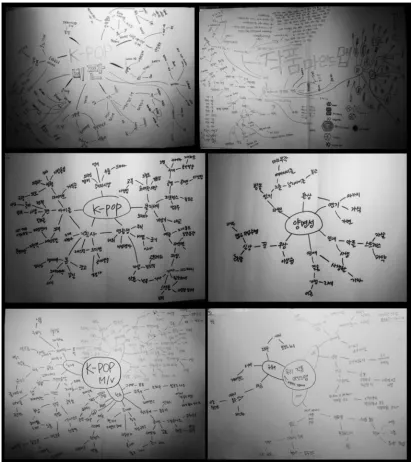
Figure 2.1 Mind maps ...40
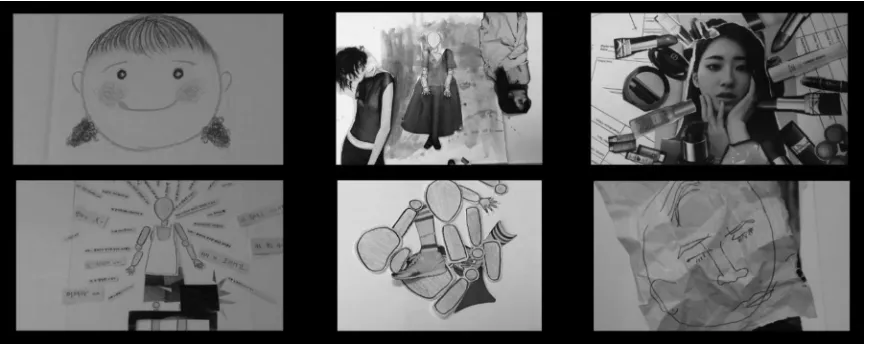
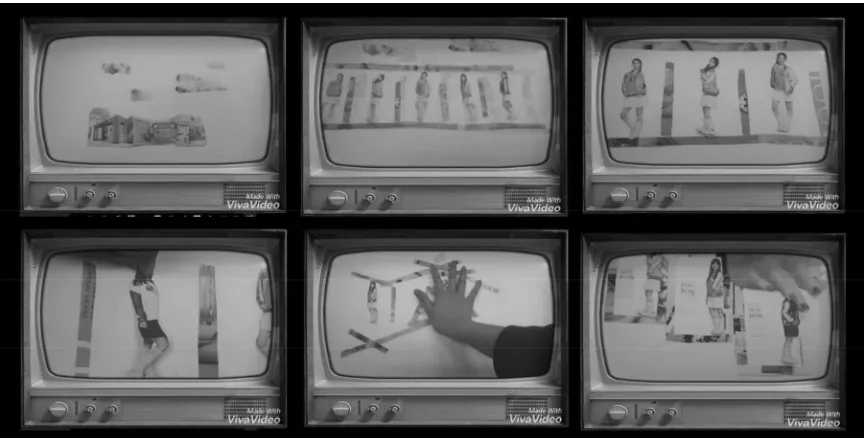
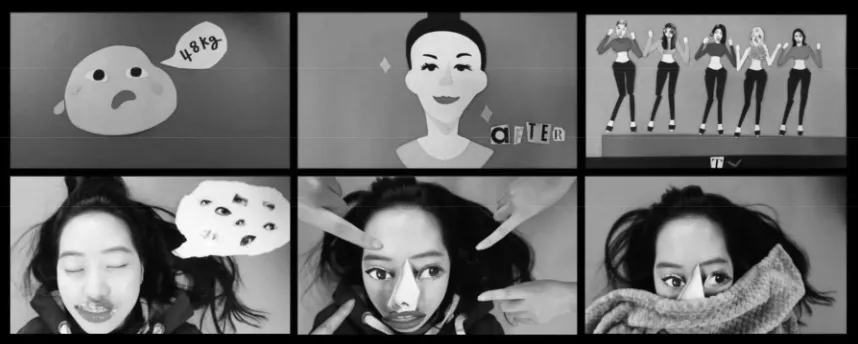
Figure 2.2 Selected frames from video by Group 1 ...45
Figure 2.3 Selected frames from video by Group 2 ...46
Figure 2.4 Selected frames from video by Group 3 ...47
INTRODUCTION: RESEARCH STATEMENT AND QUESTIONS
As various digital media platforms such as YouTube and Facebook are utilized as
popular
numerous audiovisual elements simultaneously. The music video is one of the most
The popular music industry
releases and distributes its products via YouTube to intentionally utilize the dynamic
participation of Internet users. Since youth are the most active group who consume and
produce digital media content and since they are skilled at adapting to digital
technologies and languages, those cultural products are shared and re-created, acquiring
new meanings and being understood in different contexts by global youth.
At this point, educational implications can be found regarding youth as active
prosumers in a digitally globalized world. The current Korean
popular music (K-Pop) industry is aimed at the global market, and their cultural content
has successfully reached youth around the world through digital media. Regarding the
pedagogical aspects of the interaction between popular media content and youth, the
following research questions will be examined in this thesis: (a) What characteristics does
K-Pop have as a form of global media content? (b) How has K-Pop extended its
audience across borders and built up a global fandom? (c) In which ways do youth
consume K-Pop and produce their own meanings? (d) What kinds of pedagogical
regarding these questions will be of some help in mapping popular visual culture
CHAPTER 1: THEORETICAL FRAMEWORK1
People today constantly experience elements of other cultures and communicate
with each other through digital technologies, and youth are the group who most quickly
adopt digital media into their everyday lives. According to a new study from the Pew
by the convenience and constant access
provided by mobile devices, especially smartphones, 92% of [American] teens report
going online daily . 2).
Increasingly, t more time communicating with each other through
various social networking services or social media channels, such as YouTube,
Instagram, Facebook, and Pinterest. As the global social environment of youth culture
has changed and with it, the way young people communicate and experience the world
through digital media there have also been changes in youth culture itself. Bennett
. 163) in
which interactions take place not in physical spaces, such as on the street, in clubs, or at
festivals, but in virtual spaces facilitated by the Internet.
With advances in digital technologies popular cultural signs and media images
increasingly dominate our sense of reality, and the way we define ourselves and the
. 205). That is, popular culture, as experienced
through digital media, constitutes a large part of the substance of everyday life for
1Adapted from Kim, A. (2017). Accepted by Pedagogical Globalization: Traditions, Contemporary Art,
and Popular Culture of Korea under the
. Duncum (2002) emphasizes the importance of everyday exposure to
popular imagery, which plays a major knowledge, and
. 6). He notes that
thought, feelings, and actions precisely because they are every day. It is because they are
. 6). In this sense, examining the popular
culture of the present moment through visual images can serve as a meaningful
pedagogical opportunity in art education because by doing so, it is possible to understand
how youth consume and negotiate globalized visual culture more deeply.
-Pop (Korean popular) music
videos and considers the relationship of to the
patterns of participatory fan culture among global youth. Specifically, the chapter
discusses how popular media reflect the living ,
how global youth enjoy hybridized cultural products and communicate with each other
through them, and what kind of pedagogical implications can be drawn from the global,
growing phenomenon of the transcultural popularity of such media texts.
K-Pop as a Global Phenomenon: Strategies and Diffusion
K-Pop is a genre of popular music in (South) Korea that is largely characterized
by the audiovisual marketing strategy2 of using music videos. During the initial stage of
its emergence, around the early 2000s and before the advent of digital media
technologies, K-Pop was mostly isolated within Korea. Since the mid-2000s, digital
technologies like YouTube have allowed K-Pop to cross borders and reach all over the
2 to emphasize a distinctive feature of K-Pop that it is mainly consumed
world. During the 2000s, several Korean entertainment companies tried to market their
singers to a global market.3 Their efforts led to the expansion of K-Pop listenership in
East Asia, Europe, South America, North America, and the Muslim world (Korean Wave,
n.d.). K-Pop
). The strategies employed by K-Pop producers for the creation and
dissemination of compelling material can be summarized as follows: diversity of
audiovisual content, systematic training of singers, synchronized dance formations, key
movements in the choreography, and rapid distribution via the Internet (K-Pop, n.d.).
As a prolific YouTube user has said of K-Pop
colorful chaos. 4 One aspect of his expression,
K-Pop music videos present multicultural and hybrid
elements in their music production and visualization. The French audiovisual
K-Pop
synthesized music, sharp dance routines and fashionable, colorful outfits combining
bubblegum pop with the musical elements of electro, disco, rock, R&B, and
hip-(Rousse-Marquet, 2012). In addition to these international music styles, to create
multicultural products for the global market, many K-Pop entertainment companies hire
or contract producers, composers, and choreographers from around the world (Park,
2013). To foster the ideal multicultural image seen in many idol groups, the use of
multiple languages also seems crucial. Many members are from foreign countries for
3 YG Entertainment, SM Entertainment, and JYP Entertainment are three representative entertainment
companies in South Korea. For more information about their strategies for globalization, refer to Oh (2013), Shin and Kim (2013), and Shin (2009).
4 - rtainment. Visit
example, the United States and China and are scouted from auditions abroad to become
future members of idol groups. In particular, many of them are native English speakers
who are able to more naturally and fluently sing and rap in English, which is important
for K-Pop performances, since they often blend Korean and English. This multicultural
method of production and the hybrid characteristics of K-Pop help popularize it in the
global market.
Idol groups are a dominant form of K-Pop ensembles, consisting of multiple
members who are given standardized training by entertainment companies, with each
member performing a specific role in well-ordered choreography that includes a visual
hook a repeated dance sequence that matches the melody and lyrics of the song.5
Visually captivating images of beautiful young men and women executing tightly
choreographed dances are one of the strong elements of K-Pop performances onstage and
in music videos. Many entertainment companies in South Korea initially contract
children or teens who are eager to be members of a pop idol group. These young people
are trained in a strictly regimented environment in which they learn the various practices
anguages, and
the diet and exercise to have the right look and physique (usually Westernized body
proportions are preferred). According to the Wall Street Journal,
for everything; leading talent house SM Entertainment has pegged the cost of rearing a
(Yang, 2012). To debut as a member of an idol group, budding
5 It is hard to find a proper reference that can explain why K-Pop idol groups have large numbers of
performers need to learn to conform to public tastes and mores, not only in their
appearance but also in their personality or persona. Their contracts require that they learn
how to behave in public, be fashionable, express themselves in a unique and appealing
way, and sometimes even get plastic surgery. After they debut, the company controls
every move in their daily lives. They smile the way they are taught, dance the way they
are trained, and say what they are told.
Finally, since
around the globe in 2012 via YouTube, new K-Pop songs have come to be routinely
uploaded onto YouTube to be broadcast to a worldwide audience at the same time they
are released on domestic Korean television. Often, a company officially announces that
their group will reunite and release a new album and restarts promotional activities
(Ramstad, 2012).
posters on YouTube and other websites in the same fashion as movie trailers before the
release of their official albums. These materials quickly circulate all over the world
online.
culture and, in particular, music; contemporary teenagers enjoy music not merely by
listening to it but also by viewing it through digital channels like YouTube. In addition,
they freely communicate with each other about the music, both visually and aurally.
Those in t
have produced themselves. In this respect, the consumption of K-Pop is an active rather
than passive cultural practice, furthering K-Pop
countries. Thus, an inquiry into the aesthetic and sociocultural influences of the K-Pop
digitally mediated distribution system of K-Pop, which is a key factor in the relationship
forms.
Border-Crossing K-Pop: Transcultural Media Flow and the Participatory Fan Culture of Digitally Mediated Youth
As examined in the previous section, the strategies for the promotion of K-Pop
depend on the dissemination channels opened by digital technologies that allow cultural
products to easily cross borders and be shared by fans worldwide. Oh and Lee (2013)
explore the relationship between media technologies and the birth of new music genres.
Following Hirsch (1971), they explain how FM radio stations were crucial in spreading
rock-and-roll music all over the world and how television, particularly the MTV (Music
Television) network, drove the fame of Michael Jackson, highlighting his dancing and
fashion as well as his songs. Similarly, K-Pop can be considered not only a new music
genre but also a new kind of genre based on innovative digital tools that takes advantage
. Using various digital devices,
re to the world beyond the physical
spaces where they live.
. 163). This is significant for our
ltural products, obtain pleasure from them,
and imbue them with their own meanings. Jung (2014) states that fans play a significant
role as promoters of the K-Pop industry, dovetailing with the distinctive K-Pop
distribution system through free streaming music and video platforms like YouTube,
cultural borders, and to be distributed by local youth fans in multidirectional ways. This
creates cultural divergence and ultimately disrupts the mono-directional flows of global
cultural industries previously dominated by Western culture.
Several YouTube users stated that this opportunity for multidirectional
6 One explained his
.
Other YouTube users also
strongly recognized its global aspect:
[a] surreal feeling, especially when we meet these fans, [and] they
connections w Now you have the opportunity to
just be huge because of the availability of it being all o I was like,
. And to go to a
sold-out stadium in Hong Kong is like, Wow! We are all talking absold-out the same
10-minute video on the Internet that I made in my bedroom in Canada that you
watched in Hong Kong, and then you told me that you shared it with your friend
in Singapore?7
They also rated the multi-directionality of communication on YouTube as opposed to the
just makes you
.
6 -Pop is helped massively by this global platform we all make a career
on called YouTube. How do you feel knowing people can watch your content all around the world when
-Entertainment (https://www.youtube.com/watch?v=XuSYtAsMxfY).
trapped in this physical object. 8 This reflects how international fans
pursue active, public participation in a cultural phenomenon like K-Pop and expect and
rely on a media platform that can make it possible.
of the participatory youth culture that drives online K-Pop circulation. According to her,
K-Pop has been widely circulated via new technologies such as fan-blogs, peer-to-peer
websites, video-sharing websites, micro- . 114). She
typ
. 115). Indeed, on
YouTube, there are countless videos related to K-Pop produced by youth themselves.
(1) a main character, protagonist, or personality, playing a kind of guide or MC role,9
introduces the video s/he is going to watch and shares his/her excitement; (2) s/he
displays a small screen beside her/his face and plays the video; (3) s/he shows her/his
feelings and thoughts about the video while it is playing on the small screen. This format
enables the audience to watch the music video simultaneously with another
to it, sharing emotions and thoughts among the whole community of viewers. Moreover,
the international audience can easily communicate with the producers of the reaction
videos (for example, by leaving feedback or requests for future videos). These YouTube
users are also very often interested in connecting with different people from around the
8 Excerpted from the previous video above.
9 Due to the nature of one-man media production, the producer usually also plays the role of the main
world (i.e., of different cultures, genders, ethnicities, and generations) and in their distinct
reactions to the material. Therefore, they often create specific forms of reaction videos
with titles like -K-Pop K-Pop reaction
people react to K-Pop Another famous form of youth-led
cultural practice among K-Pop fans on YouTube are Many
teenagers or young adults form their own dance teams and practice dances imitating their
favorite K-Pop groups; sometimes they dance in the classroom, showing off to their
classmates for fun, in gyms or auditoriums for events like homecoming, or even in public
as professional dancers. K-Pop dance covers have led to the emergence of phenomena
like K-Pop dance video games,10 flash mobs,11 and more broadly, dance festivals and
contests all over the world. Another example of participatory youth cultural practices in
this context includes translation teams for non-Korean-speaking fans. These teams
translate videos of their K-Pop idols into various languages through a collective work
process. This kind of active user participation further blurs national borders and language
barriers within the globalized youth culture.
K-Pop music videos can thus be regarded as a medium that reflects the conditions
eir
lived experiences. Thoroughly examining and analyzing specific idol groups and the
cultural productions related to them help to further our understanding of the K-Pop
phenomenon and the pleasures and desires of its young fans. In the next section, I briefly
10 K-Pop dance games are a kind of dance medley by a group of participants. The host plays refrains from
K-Pop songs, and the participants must follow the exact dances that they see on the music videos. To watch an example video, visit https://www.youtube.com/watch?v=yoy8EHvvfGc.
11 Flash mobs are performances by groups of fans, usually with dozens of participants. To watch the
sketch the landscape of competition among K-Pop girl groups, which is one of the most
prominent issues in the contemporary K-Pop music scene. In addition, through the
juxtaposition of the two most popular K- ion,
and their fan cultures, I examine how popular culture mirrors the life conditions and
women around the world and how global youth negotiate the
consumption of these cultural products under a transcultural media regime.
Image vs.
the Subversive, Powerful Girls of 2NE1
of the prevalent business model in the South Korean music industry that emerged in the
1990s. He argues that K-Pop groups were established in the
late 1990s when the first Korean boy band, H.O.T. by SM Entertainment, achieved great
success in the domestic market. The success of H.O.T. provided a formula for other
entertainment companies to create idol groups, and many similar boy bands and girl
groups subsequently launched.12 During this period, the so-called first generation of
. and S.E.S., attained success and stimulated the
market to mass-produce numerous latecomers that mimicked them. In the next decade,
despite the large number of girl groups on the market, they took a largely standard form
and image. Maliangkay (2015) claims that many music videos represented two typical
non-12 - ard examined
. 94).13
include, for example, members of Fin.K.L. and S.E.S., who were called yo-jeong (fairy),
implying the fantasy of an innocent, beautiful young girl presenting a pretty doll image
without sex appeal. Meanwhile, other girl groups and female singers, such as Um
Jung-Hwa, Babyvox, and Chakra, fostered images of oversexualized femmes fatales. In short,
until the mid-2000s, female images represented in K-Pop idol groups were binary and
stereotypical.
Diversification into more varied and hybridized female representations began in
the late 2000s, leaving behind the simple dichotomy of the older period and moving into
a complex and multidimensional representative economy that reflected both the desires of
and images of ideal young women tailored to public demand. Lin
. 105). They argue that most Asian
women have traditionally been under a Confucian social order that places women in a
subordinate position to men, similar to the binary system of gender roles and
relationships that is driven by the tradition of European Enlightenment. In their empirical
study of contemporary Korean drama and its Asian women viewers, Lin and Tong found
that as many Asian women as men receive higher education and participate in the wage
economy, moving beyond the traditional Confucianist framework and improving their
position compared to women of previous generations. Despite this, Lin and Tong found
from their informants that many Asian women still tend to be attracted to
. 106), such as attractive appearance and
13 Maliangkay cited this explanation of female images quoted from Kim
comforting/subtle/courteous/amiable/delicate/thoughtful personal qualities, even while
they still pursue the development of strong and independent characters. Therefore, Lin
. 109) and argue
desire of many Asian women to have the best of both worlds (i.e., career and
. 110). To explore how these ideal female images are reflected in K-Pop
when viewed as a popular cultural product, I now turn to the examination of music videos
, which represent two predominant female images in
K-Pop that have been mass produced and successfully marketed throughout Asia and the
West.
hybridized and
hyperattractive and live cosmopolitan, urban lifestyles. In the initial stage of the
career, it pursued an image of pure, cute, and passive girls who are eager for oppa 14
love. After the success of their first album, Into the New World, in 2007, they started to
diversify their characters and play a variety of stereotypical female images. The nine
,
mannequins who are waiting for thei
14 is a term that literally me
.
-hop dancers who want
. Mr.,
partying together on
s built a male fandom by speaking directly to male audiences.
In their music videos, members of the group often stare at and talk to the camera lens
(and thus the viewer) as though they are speaking to someone on the other side of the
screen. This effect removes the barrier between the fantasy space of the image and the
real world, and the audience becomes immersed in the video and the music.15
Epstein and Turnbull (2014) examined music videos from various K-Pop girl
groups and analyzed visual images and lyrics, sequence by sequence. Scrutinizing the
video
. 319) as suggested above. First, their
choreography includes several aegyo
cuteness that infantilizes those (most frequently female) who engage in it in the hope of
. 319).
pairing of football players with cheerleaders emphasizes gender differentiation a
(Epstein and Turnbull, 2014, p. 319).
members show their
confidence as beautiful and successful modern women. They highlight their femininity
15This kind of camerawork is often used in the media, including in advertisements, simulation games, and
as a key feature of their success as global stars. In the The Boys album (2011), they show
their proud, sassy, and chic attitudes via black costumes and their overtly sexual,
powerful dance. Thus, even though the members of
, sometimes they present themselves as
independent women who can take the lead in their relationships with men because they
know that their feminine attractiveness can function as a weapon and leave men
disarmed. s reflect two contradictory images:
a modern, successful, and powerful Asian woman and a traditional, cute, and submissive
female.
2NE1
-member girl group formed by YG
Entertainment in 2009, more definitively embraces a powerful, modern female image.
They display strong confidence, and sometimes even arrogance, in the use of hip-hop
16 and they embrace hip-hop as part of their musical background.17
According to the interview with Robert M. Poole (2012), Teddy Park, a
Korean-American producer of 2NE1, always wondered about the lack of Asian acts in the world
music scene, and he said he now works to make Korean hip-hop a big wave in the
mainstream music industry. In addition, Park emphasized the attitude of Korean women,
. Poole
added
16 -hop musicians and their lyrics (for example, the word
was used in rapper Jay- -rated
For more information about this word, visit http://knowyourmeme.com/memes/swag
17 YG Entertainment is one of the most predominant entertainment companies that has pursued hip-hop
such as Rihanna, Lady Gaga, and Katy Perry are wild . Even
within the strong, distinct image of 2NE1, nevertheless, the group also embodies various
personae as young, modern females who are honest about their feelings while living in a
globalized, cosmopolitan world. 2NE1 shows a far different attitude to romance and men
. They do not yearn for oppa aegyo gestures,
and do not wear excessively feminine clothes; instead, in their music, they tend to bluntly
address uncomfortable issues regarding (hetero)sexual relationships and their emotions
about them. For instance, members alternately take on the roles of an auto-racer looking
for revenge against her ex- , witches
, and
2011); in another video, they even
2009).
One unique music video from this group takes the form of a
short anime clip. In it, the group displays their characters as independent, strong women
who take on the role of bounty hunters seeking a wanted man. They find him at a pub
and fight to capture him. Finally, they shoot the fugitive, and he transforms into a
monster: His arms grow longer and attack the group until eventually one of them severs
his extended arm, another blows him up, and he dies.
extended arm might be interpreted as evoking Judith and the head of Holofernes.18 In the
music video, 2NE1 uses aggressive, conventionally masculine weapons such as swords,
guns, baseball bats, and firebombs. They ride motorcycles, race cars, and a Hummer.
18 This story is from the deuterocanonical book of Judith and describes a beautiful heroine killing a strong
. They often glare at the camera, raising their
eyebrows and exposing tattoos. They wear pants decorated with studs, rather than
conventional miniskirts. 2NE1 presents threatening and powerful female images, and
unsurprisingly, a young, female audience comprises the great majority of their fandom.
Thus, 2NE1 shows very new and unique characteristics of femininity in South Korea.
The audiovisual strategies used by these two all-female groups serve as examples
of how current conditions of media production targeting specific audiences are
intertwined and how cultural products and consumer demand are connected. The music
images of young
women in the sociocultural context of contemporary Asia. Building upon this, the
following section will use these two groups to discuss their transculturally oriented,
culturally hybridized features and the participatory cultural practices of global youth in
relation to K-Pop.
Mono-Directional Westernization or Multi-Directional Hybridization?
Central to the representations of women in the music videos considered above are
the issues of transculturality and cultural hybridization. In these videos, it is easy to
notice how members of these girl groups have Westernized features, particularly in terms
of their appearance, fashion, and cultural context. members are
frequently presented as stereotypically attractive females in the terms of Western (mainly
American) pop culture19 and are surrounded by visual elements that evoke that culture,
19 oup formed by three members of Girls'
Generation, the members act like typical female celebrities, such as Hollywood actresses, sexy rock stars,
such as the iconi
-and-black- . . Sometimes, exotic objects that
are hardly seen in South Korea are used as props for instance, a jukebox in a
1950s-style American d .
Lion Heart (2015) boasts a 1950s pin-up girl
gals rocking vintage dresses with old-school-inspired
2NE1 is also clearly influenced by Western culture but in different ways from
. They show a strong sense of the defiant attitude often associated with
Western hip- s to be looked at as queens of
fashionable society. One by absorbing
cutting-edge fashion trends into their own image and group identity. For example, in the
-forward and internationally trendy items such as retro-style
jackets with power shoulders and futuristic sunglasses are used to give the four members
their stylized visual identities.
fashion trends, the group later collaborated with Adidas on a line of shoes by American
fashion designer Jeremy Scott,20
who adopted CL, the leader of 2NE1, as his muse for the line. These kinds of hybrid
representations are not limited to these two groups: I
, used and presented in a similar manner to those in American
comic books.
20 Jeremy Scott is an American designer who has worked for Adidas and Moschino. For more information
The Westernized visual images of these two groups might seem reasonable in
terms
bubblegum pop (Benjamin, 2015) and electropop (Covington, 2014) while 2NE1 take
inspiration from American hip-hop, as mentioned above. However, these K-Pop groups
deliberately use Westernized styles to create hybrid images for global consumption and
profit, which differs from the previously Western-dominated Korean media industry.
According to Park (2013), the global marketing strategy of K-Pop is dominated by the
L
and performers, and global dissemination of musical contents through [social networking
. 28).
wor
. 20). In the same vein, Unger (2015) shows how visual presentations
by K-Pop K-Pop
(p. 27).
. 27).
Meanwhile, this blended cultural production sometimes transcends its various
elements. Iwabuchi (2002) suggests the concept of mukokuseki
explain the successful worldwide distribution of Japanese cultural products, which he
claims are also urally odorless, a quality that helps them appeal to a global market
(p. 28). discusses the
Korean cultural products by conducting empirical studies of audiences in Japan,
Singapore, and the West. She insists that the hybridity of contemporary Korean popular
culture should be understood as transculturality.
.
homogenizing tendencies of globalization and the heterogenizing aspects of local desires
. 17). In this context, mukokuseki implies the
transcultu
and hybridized K-Pop music videos are understood as cultural products targeting the
global market and transnational consumption by global youth.
Adding to the hybridized and transcultural images mentioned above, another
noticeable feature of K-Pop music videos is the use of virtual space. K-Pop videos are
rarely shot outdoors or in everyday living spaces. Spaces often look very futuristic,
suggestive of science fiction movies or iconic stage sets. Moreover, various
special effects techniques. Such unreal virtual spaces make their protagonists look like
fabulous, flawless, imaginary people who live in a fantastic fictional world beyond real
life altogether let alone any specific nationality. In the media products in which they
are represented, K-Pop stars do not look like real people but like perfect dolls in virtual
worlds. Both they and their backgrounds imply a kind of mukokuseki that allows them to
hybridize enormously disparate elements simultaneously. This strategy of blending
of cultural backgrounds, and contemporary digital youth are especially attracted to
crossing national and cultural borders.
Additional aspects of the hybridization of K-Pop videos can be seen in the work
of other idol groups: blurring borders between nationalities/ethnicities (in the
representations of performers), languages (in lyrics), and gender (with the use of
ambiguous gender expressions). For example, many male artists have feminine faces,
with makeup and pale skin, but at the same time frequently perform fierce dances to a
driving, masculine beat. Some groups have members who are visualized as epicene
beauties21 while others are hypersexualized. Many groups have foreign members from
different countries and members who speak multiple languages; they are often called by
foreign names.22 BigBang, one of the most popular boy bands, frequently casts White
women as their opposites. Bae 23 (2015), the five male
members of BigBang are initially depicted as romantically involved with five White
women, and by the end, all ten of them are portrayed wearing traditional Korean clothes
on an asteroid, under a romantic moon. This song also intentionally blends musical and
visual cultural elements. It is common for backgrounds of many music videos to evoke
while at the same time clearly
representing different cultures. For example, 2NE1 shows a denationalized virtual future
21 For example, with short hair, a boy-like voice, and a boyish attitude, Amber Liu, a female member of
f(x), offers an androgynous image unlike any other female members of the same group, who typically fill hyper-feminine roles. Liu has a multicultural background as well: Although Liu lives in South Korea, she was born in the United States to Taiwanese parents.
22 Henry Lau, for example, a Chinese-Canadian idol member of Super Junior-M, is fluent in English,
Mandarin, Korean, French, Spanish, and Cantonese.
23
backstreets with graffiti, ninjas inside Asian architecture, Amazon women in a jungle,
and dancers in virtual space. Moreover, most idol group members achieve a somewhat
transracial appearance by dying their hair unnatural colors, wearing makeup to look like
anime characters, and even undergoing plastic surgery to eliminate specific features of
the Asian face.24 Many YouTube users point out that many K-Pop stars look like manga
characters, implying that global youth accept the images of K-Pop idols as transcultural
iconic characters in a similar way to the deodorized export products of Sony Television
and internationally successful anime, such as Pokémon. As Iwabuchi (2002) suggests,
this transnational characteristic of K-Pop music videos is part of what helped K-Pop
groups penetrate the global market and win the affinity of global youth, as this
transculturality resonates youth and the
digital-technology-mediated youth culture.
Grassroots Youth Fan Culture of K-Pop
Alvermann, Moon, and Hagood (1999) emphasize the importance for youth to
become critical new media consumers and construct their own meanings by
communicating with their peers. Many K-Pop youth fans use YouTube and other social
media outlets to engage in dialogue about visual representations, narrative, aesthetics, and
other aspects of their favorite music videos. For example, some YouTube users have
discussed the use of Bae .
One such user stated
having Korean girls in Korean pop videos represent them as beautiful rather than
24 Many idol stars dye their hair unrealistic colors such as green, violet, or even rainbow colors, and they
swapping them out for the western standard of beauty like the majority of popular music
video [sic] 25 Young people from various ethnic backgrounds, countries, and genders all
over the world have expressed their opinions on this and other questions regarding K-Pop
videos, including exchanging opinions on meanings and plots. For instance, the music
. One user
. This is
just based on my opinion. The old her (the weak, sad, beaten CL) died and the new her
(independent, strong and happy CL) came which means she already move on from the
26 An unusually high number of people, 126, have responded to this comment to
agree or disagree;
27
These examples of active social interactions among YouTube users above show
how digitally mediated youth actively consume and negotiate popular culture and share
their knowledge and reactions with other youth all over the world through the web.
position in the audience, to construct their knowledge of the text genre, and to negotiate
.
30).
individual voices and identities. At the local level, in classrooms and communities,
popular culture is related to social and cultural group identities, allegiances, and
25 To see these comments, visit https://www.youtube.com/watch?v=TKD03uPVD-Q
26 To see the comment, visit https://www.youtube.com/watch?v=3yW13T2sfKg, and find the username
Kookie Llama.
ermann et al., 1999, p. 30). Various social media channels
such as YouTube, blogs, and fan websites provide youth with a space to discuss their
favorite topics related to popular culture productions such as K-Pop.
Besides actively consuming popular culture, many young people also take on the
role of digital media producers. Duncum (2011) brings the concept of prosumer (a blend
of consumer and producer) into the field of art education while examining the creative
activities of youth on YouTube. This term was first used by a futurologist Toffler (1980)
. 25). Other scholars
have also employed this term to discu
appropriate, resample, remix, and rework existing cultural artifacts, images, and
activism (Ivashkevich, 2015, p. 42).
B K-Pop produce
their own media content and share them with other fans via YouTube. Existing K-Pop
content functions as an attractive cultural resource for youth to borrow because it has a
considerable cross-cultural fan base. For example, Simon and Martina,28 a popular
YouTube channel, shows the possibilities of can
create a social sphere in which youth all over the world can meet each other and
communicate about the grassroots media content. Simon and Martina, a Canadian couple
living in Korea, create videos about various culturally relevant subjects such as food,
social issues, popular culture, and tourism, including a large number of videos about
Pop. For examp 29 Simon and Martina
talk about the strengths and aesthetics of the music video and show their own Gangnam
Style production, including playfully reenacting some scenes and creating their own
lyrics. They also the
a parodic, humorous manner. This video is a clear example of the transcultural
prosumption of K-Pop, as it is remixed and reinterpreted via Westernized lenses by a
couple who resides in Korea. Their familiarity with Korean culture allows them to grasp
own cultural
identity as outsiders in their own remake, which creates a transcultural flow of K-Pop fan
production.
However, it is necessary to address that personal media productions also can be
risky because of their ability to display unfiltered, personalized cultural biases and
stereotypes. Simon and Martina sometimes show their inevitable limitations as White
prosumers of Korean media and culture, especially when they discuss different cultural
aspects of Korea. -Dragon,30 they mock the
, making fun of his use of English in the song. In the same video, they
make jokes about G- . This example shows that without critical
attitudes toward and value of different cultures even while active participation in media
productions offer expanded channels for multidirectional communication all over the
world.
K-Pop can serve as an effective channel for bringing young people into a
cross-cultural, globalized public sphere, as it is a transnational popular culture product that
encourages spontaneous participation among youth from all around the world. However,
both K-Pop videos themselves and their playful prosumer reappropriations often contain
elements of sexism, racism, and cultural toadyism (Western cultural domination) that
need to be critically examined and addressed. In the art classroom, K-Pop pedagogy can
offer unique opportunities to engage youth in both critical analyses of K-Pop videos and
the mindful production of their own creative responses, remixes, and reappropriations of
K-Pop texts in collaboration with their peers. Therefore, in Chapter 2, the research
project that I conducted in Seoul in 2016 will be described. It will provide concrete
examples of applying the previously examined theoretical framework to youth in a school
setting.
CHAPTER 2: DESCRIPTION OF THE SETTING AND CURRICULUM UNIT PLAN As explored in the previous chapter, music videos are one of the most powerful
are surrounded by digitally
mediated visual culture. Youth actively produce as well as consume forms of popular
culture using digital devices and software, and they also share videos through the
Internet. Utilizing this spontaneous participatory fan culture, music videos became one
of the most effective media to promote cultural products in the global cultural production
industry, including K-Pop. For this reason, K-Pop music videos not only represent the
life conditions and desires of youth who are its primary consumers, but they also operate
as a platform for role models who can influence the fashion, attitudes, and tastes of youth,
as many fans follow their stars. Needless to say, this form of media production affects
youth in developing their identities, building their lifestyles, and constructing their
worldviews. Because of the tremendous influence of digital media, K-Pop music videos
can be useful pedagogical resources that are familiar to youth; furthermore, when used in
this way, they can incre participation in educational activities and improve
critical prosumption of popular media, critical media text reading, and creative
meaning-making.
Meanwhile, due to the limitation of being products that have to be commercially
consumed, music videos tend to engage in materialistic marketing strategies. To attract
violent and sexually suggestive content rather than creating something innovative or
experimental. Many researchers have mentioned various issues regarding the dark side
of K-Pop music videos, criticizing their sexism, racism, materialism, and complicity in
other social issues (Jung, 2010; Jung, 2012; Kim, 2011; Unger, 2015). Because of this
and the complicated nature of music videos as media texts composed of both visual and
auditory elements, media literacy is the key starting point for pedagogical approaches that
seek to enhance critical discussions with students in classroom settings. Students need to
be encouraged to analyze each element of a music video, including colors, lyrics,
characters, compositions, fashion, choreography, props, shots, mise-en-scéne, and
sequences. Decoded elements have to be explained verbally and understood as being
connected to the social/cultural/economic background of music video production. While
connecting cultural representations to their social contexts, students can understand the
correlation between society and the individual. Additionally, the exchange of different
opinions about the same media texts will foster a better understanding of various
socio-economic contexts from diverse perspectives. Then, the decoded interpretations can be
used to create new meaning on a personal level.
Appropriation can be an effective way for youth to create their own meanings
through consuming and producing media content, but in order for pre-existing media
texts to be appropriated in critical ways and for new contexts to be created, students must
be able to fully understanding and deconstruct dominant media texts. One artistic
technique that allows for the effective deconstruction and critical re-purposing of such
texts is collage, which utilizes pre-existing elements by mining images and remixing
field of fine art flood of information, people experience collages every day
through various media texts, including music, illustrations, graphic design, architecture,
fashion design, and film. Furthermore, with the development of digital technology, the
manipulation and replication of media texts using software programs, applications, and
other devices has become an everyday cultural practice that can also be used in the arts
education classroom. Relying on the critical interpretation of images, students can collect
video clips, digital images, and stills from various resources on the Internet to remix and
recreate their own video projects, and using these images and concepts, they can build
storyboards to convey the ideas and themes of their work and choose visual effects for
each scene.
The primary goal of the video collage production project that was conducted with
Seoul high school students in 2016 was to enhance critical media literacy by
challenging them to read and create multimedia texts that respond to the social, political,
cultural, and economic contexts of the media content as well as
technical knowledge of digital languages. Throughout this project, students practiced
how to read dominant media texts and re-create their own meanings by producing video
collages that utilized pre-existing media elements, including sounds, music, images,
videos, and phrases, all of which were found on the Internet.
Project Location: Seoul Art High School
This project was conducted with 16- and 17-year-old students at Seoul Arts High
School, a private arts high school with approximately 1,000 students. The school was
founded by Dr. H. D. Appenzeller, an American missionary, in 1953, after the end of the
and is surrounded by large mountains and a
national park. This school specializes in arts education with three departments: dance,
music, and art. The Dance Department offers three majors: Korean Dance, Ballet, and
Contemporary Dance. The Music Department allows students to have numerous chances
to enhance their skills through school programs such as orchestra, piano ensemble,
recital, and composition study as well as basic music courses like music theory, music
history, and ear training. In art first year, the Art Department provides courses
that cover the basic knowledge of art, including art theory, art history, and basic
techniques of Korean painting, Western painting, sculpture, and design; during this year,
students also explore which specific area they will choose for their university entrance
exam and career path. In their second year, students start an in-depth study of art in one
of the following areas: Korean painting, Western painting, sculpture, or design.
This school is one of the most prestigious arts high schools in South Korea, and
most students are expected to be accepted by top universities. Ironically, th
reputation and the high expectations for individual students became barriers to their
participation in my research project because my project was an extracurricular activity
that focused on popular culture and not a required subject or a project that would enhance
artistic skills for the university entrance exam. Most art school applicants in
South Korea are very busy preparing for college entrance exams that require a high level
of skill in several academic areas as well as the arts. In addition, most students commute
to school from long distances because school enrollment is not based on their places of
residence. For these reasons, it was not easy to expect students to actively participate in
school who showed an interest in the pedagogical approach of bridging popular culture
with teens. He was also an advisor of th club and conducted
extracurricular activity classes one Friday per month. We agreed that I could use the time
for my lessons. I sent him my research proposal and curriculum unit plan in spring 2016,
and we continued communicating until I visited South Korea in summer 2016.
When we met in June 2016 in Seoul, and I suggested a detailed curriculum with
four lessons. In the Korean academic calendar, the spring semester starts in March, and
the fall semester begins in September. Since summer vacation begins at the middle of
July, June is the busiest time in the spring semester because final exams and other tests
take place before the summer vacation. Furthermore, Seoul Arts High School has various
events, such as a student art exhibition, an art skills test, a music festival, and a Bible quiz
contest. Therefore, my art project could not be done during the spring semester. The
teacher and I agreed to start the project in the fall semester, and finally, I met the students
for the first time on Friday, September 9. The sessions continued once a month until
Friday, December 2.
The place where I conducted lessons was in the main building where there were
classrooms for general education, including liberal arts, social studies, and sciences.
Each department had its own building for art technique and skills classes. Unlike most
schools in South Korea, where students are assigned to one classroom, are provided a
class schedule that is followed by all students in that classroom, and do not have many
options for which classes they want to take, Seoul Arts High School provides classrooms
to teachers, and the students move from classroom to classroom. The classroom for my
about 35
a class schedule, and a large monitor that could be used to show television programs,
DVDs, schoolwide broadcasts, and the computer screen.
The Participants
The participants consisted of 20
members. club extracurricular activity supported by the school to
provide opportunities for future artists to participate in and prepare their own art shows.
Half of the students were the first-year general visual arts majors and the other half
consisted of second-year students (with three design majors, four Western painting
majors, two Korean painting majors, and one sculpture major); there were no third-year
students.
At the first session, students completed a short survey about their grade and
major, and they answered five additional questions: (1) Do you have any experiences
with courses or workshops in media education? If you have, what were they about? (2)
How long are you online per day? Which device do you mainly use? (3) What do you
do online? (4) Do you like watching music videos? What do you think about them? (5)
What kind of courses or workshops do you want to take relating to popular culture?
Nineteen students participated in this survey: 10 second-year students and 9 first-year
students. Most students did not have any experience with media education. Only 5
students answered yes to the first question; however, the courses or workshops they
took were computer skills classes for certificate exams or one-time workshops through
school broadcasting that were designed to promote the reduction of Internet usage.
devices such as laptops, tablets, and smartphones, and only 1 student used a laptop only.
Four students used the Internet 1 hour per day, and 13 students answered that they are
online 2 to 4 hours per day. One student said she is online 5 to 6 hours, and another
replied that she is online at all times, day or night. Students reported that they mostly
enjoy visual culture (e.g., YouTube, Webtoon,31 animations, movies, American TV
series) and social network services (e.g., Instagram, Twitter, Facebook, Kakao Talk32) via
the Internet. Most students showed their interest in music videos: 15 students noted that
they frequently watch music videos because music videos can be a way to understand
music well while simultaneously pleasing the eyes and ears. For the last question, many
participants expressed their interest in learning the technical skills to be proficient in
digital languages and in learning about Korean popular culture (and other cultures) in the
context of a global cultural landscape. They wanted to know more about other cultures,
including how they differ from Korean culture and what people from different countries
think about Korean culture.
The school schedule was very flexible, and each student had a different schedule
due to afterschool programs and additional art skills classes in the evenings. The only
time the school officially allowed me to conduct lessons was during the
time, which occurred once per month on Fridays; however, this class was
frequently canceled for various reasons. Also, it was difficult to contact each student
through the teacher in order to find the best times when students could attend.
31 This is a term to indicate Korean web-comics that are published online. For more information, please
refer to https://en.wikipedia.org/wiki/Webtoon.
Eventually, communicate with the
students directly.
Korean smartphone users. By uploading pictures of and short messages about their
everyday lives and communicating with each other on individual and group levels, this
application plays a role in creating the biggest cyber-society in South Korea. Beyond
simple chatting services, functions of the
in Korea, including finances, taxis, public transportation, shopping, personal blogs, and
games. Every student in the club had a smartphone, which they used actively and
regularly, and teachers did not prohibit the use of smartphones at school except during
classes. I sent friend requests to students, and I created a group chat room named
-school lecturer,
such as asking their availability for lessons, notifying them of assignments, sending
handouts/class materials/video resources, and responding quickly to their questions. The
students freely and easily contacted me via Kakao Talk.
The club had a leader who was a second-year student. The teacher introduced her
to me at the first session, She will handle everything
was cheerful and supportive. She contacted students if they did not arrive at the
classroom on time and managed student attendance. The leader also controlled the
atmosphere of the class (for example, keeping the students quiet when they made too
much noise). All the members listened to the leader, and the club had its own rules.
During the first lesson, I told them that groups would be needed for making videos.
groups. In the second lesson, I asked students how they formed their groups, and they
said they got together based on closeness; however, many first-year students were
grouped at random by the leader. Therefore, the five groups created consisted of four
members in each group, as follows: (1) Group 1: four second-year students, with two
majoring in Western Painting, one in Design, and one in sculpture; (2) Group 2: four
second-year students, with two majoring in Design, one in Western Painting, and one in
Korean Painting; (3) Group 3: four first-year students majoring in art; (4) Group 4: two
second-year majoring in Western Paining and Korean Painting, respectively, and two
first-year students majoring in art; (5) Group 5: four first-year students majoring in art.
When I observed the atmosphere of each group, even though some students were not
close to each other first, they quickly became intimate, except members of Group 5.
Curriculum Overview: Educating Critical Prosumers K-Pop Music Video and Video Collage Production
The goal of this project was to provide an opportunity for the students to
deconstruct the myths of the dominant visual culture around their everyday lives and
practice how to analyze and appropriate K-Pop music videos in critical ways. The
procedure of the curriculum was as follows: Students would (1) analyze and interpret
K-Pop music videos to develop their critical thinking skills, (2) descibe the social/ethical
issues and messages in the visual expressions of various K-Pop music videos, (3) collect
prevalent images from K-Pop music videos and other resources, such as magazines and
Internet websites, and (4) appropriate typical images from music videos and produce new
Lesson 1: Analyzing K-Pop Music Videos
I first met the students I would be working with on September 9. The teacher
who I worked with notified me to be in the classroom by 3:00 p.m. and told me that
students would come around 3:20 pm. I arrived at the school at 2:30 p.m. and went to the
office of the teachers who were in charge of social studies to prepare worksheets. I
created a PowerPoint presentation, a short survey, and a roster. I then went to the
classroom and connected my laptop to the monitor to display the prepared presentation
file.
Students came into the classroom one by one. It seemed that they were in high
spirits after class and moving from another building where they practiced art skills. They
brought backpacks, artwork, and food, and they were wearing school uniforms, which
consisted of gray skirts and white blouses. It took around 30 minutes for all students to
sit down and be ready to listen. During this time, I distributed the short survey that I
described earlier in this chapter, and the students filled it out as they chatted with each
other and played on their smartphones. Once 20 girls had arrived in the classroom, one
the teacher for K-Pop? I am the club leader. We
need to do something for our exhibition project.
Then, she hushed the noisy students.
exhibition leaflets, please bring the money to me now, she said. Students paid money,
and the club leader organized her notes and called the roll.
The teacher came into the classroom, and he introduced me. After introducing
myself, I asked the students if they like K-Pop, and the students had enthusiastic
about different K-Pop stars. I knew that most Korean students tend to be quiet in class,
even in discussion activities, but these students were vivacious when talking about their
favorite K-Pop videos.
To start the lesson through the lens of s, I
showed them two works of art: St. and
. The former was a masterpiece that included a
Renaissance icon. The latter was a work of contemporary art that had been shown at the
a collaboration with
K-Pop idol G-Dragon. Then, after viewing several contemporary works of art by
DongHyun Sohn that hybridize various elements of visual culture from the past to
present . To begin
discussing the myths and composition of the images, I showed various types of examples
such as advertisements, movie posters, and campaign posters. The students talked about
the purposes, audiences, messages, strategies, and visual elements of those images. I also
juxtaposed several works composed of appropriated images with their originals,
including two posters by Guerilla Girls Women Have to Be Naked to Get into the
Met. B
-Auguste-Dominique Ingres. The
students discussed the relationship among the three works and their re-created meanings.
Then, I briefly introduced the K-Pop phenomenon and its characteristics through a
global lens. We talked about various kinds of roles that music videos play in a digitally
connected world, and we examined several elements of music videos with suggested
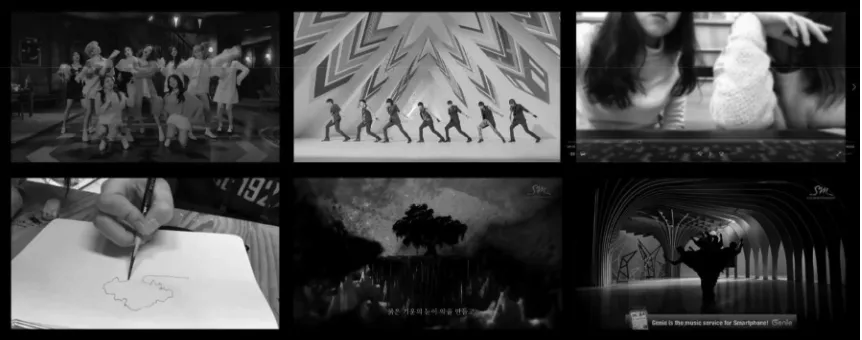
the music videos. Then, I showed typical images from K-Pop music videos that imply
violence, sexism, racism, and materialism. The students discussed which elements of the
media texts suggested those social issues and how they function as strong messages in
societies. They also watched YouTube videos that treated, appropriated, and remixed
K-Pop music videos, and they discussed the ways in which these new videos deconstructed
the original messages of the K-Pop videos as well as their effectiveness in re-creating
meaning. At the end of this session, a brainstorming assignment was announced to
encourage students to think about various elements of music videos and to find critical
social issues that they wanted to express by creating their own visual productions.
Students were asked to create two mind maps reflecting two themes: One was about their
thoughts regarding K-Pop in general, and the other was about the problematic issues
found in some K-Pop music videos (i.e., racism, sexism, materialism, etc.) that they
ultimately wanted to explore by creating their own music videos.
Lesson 2: Finding Social Issues in K-Pop Music Videos and Planning Video-Making
The second lesson was on September 23 around 3:00 p.m. The atmosphere of the
classroom was similar to the first lesson. The participants came in one by one, and it
took some time for all members to arrive. The leader checked the attendance and talked
about their exhibition for a while. After the club business was done, I started the lesson
by .
In groups, students presented the mind maps that they brainstormed together (see
consumerism, plagiarism, competition, sexual objectification, clichés, obsessed groupies,
similar themes, cultural toadyism, lookism, and the unfair contracts between stars and
entertainment companies. They created another mind map to consider the topic for their
own video-making. While their second mind map was difficult for me to understand,
worldview of EXO, their favorite boy band, because they thought this idol group was
unique and that it could be differentiated from other groups. Group 2 showed a similar
point-of-view with Group 1 about K-Pop in general, noting its excessive uniformity,
commercialization, and various negative issues surrounding entertainment companies,
trainees, and money. Then, they picked the
-.
Group 3 created a simple concept map that was not much different from the previous two
groups, suggesting a critical perspective on K-Pop idol music videos, including a
discussion of violent and sexually suggestive content and biased gender images. Group
4 built up a more extensive mind m
Hallyu Song to writing and composing,
dance music, and releasing albums; is connected to insulting comments, plastic
surgery, teenagers, stress, fandom, competition, panic disorders, and social networks.
Hallyu
tours. Then, they narrowed linked
advertisements, body exposure, and image consumption. Group 5 submitted a work very
similar to other groups but without much clear effort.
To encourage students to think about other ways they could express the ideas that
they explored through mind maps, we talked about what kinds of digital languages we
use every day and how we communicate with them. Students discussed various forms of
media culture, such as photography, text, animation, video clips, and communication