ENERGY AWARENESS DEVELOPMENT PROCESS MODEL
By Assoc. Prof Dr. Abdul Hakim Mohammed, Assoc. Prof Dr. Buang Alias and Choong Weng Wai Faculty of Geoinformation Science and Engineering
University Teknologi Malaysia.
ABSTRACT
The world should be reminded the event of oil crisis occurs in 1973 and 1978 because recently, enormous energy consumption once again become seriously while the energy resources are greatly reduce. Although new orientation have been carrying out by the governments to encourage use of alternative energy such as bio fuel, solar energy and biomass. But overall, it is too technology fixed. Practically, there are two kinds of energy saving: technological fixes and operational changes. Technological fixes is instrument base such as using motion sensor control lighting and air seal. However, technological fixes only is a temporary solution, it require no behaviour changes of the users, it mean the user still can waste energy in the same way. On the other hand, the operational changes are the soft technology that require changes of human behaviour, include both the facility manager and user. It is flexible and not so expensive compare to the previous. This research tends to explore the operational changes by examining the awareness of human being on energy conservation. The objectives of this research are to identify the factors that affect energy awareness and to develop an energy awareness conceptual and process model. Literature review and analysis will be carrying out to achieve the first and second objectives, the third objective will be achieved by using the questionnaire distribution and model evaluation. Expected output of this thesis is the energy awareness development process model. The rational of the study are possibility of the model to advance the energy management to a new level, provides a systematic energy awareness guideline to the facility manager, reduces the cost of energy conservation and ensures a better environment.
Keywords: Operational Changes, Energy Awareness, Energy Management and Process Model.
1.0 Problem Statement
The first crisis occurs in 1973, during the Arab-Israel War, when Arab oil-production country cut back oil production and embargoed oil shipment to United States and Netherlands. Although such cut back only represent loss of 7 percent in world supply, but is enough for the crisis to happen. During the crisis, the price of oil quadrupled by 1974 to nearly $12 per 42 US gallon barrel (75$/m3). The sky high oil price brings immediate global economic impact, especially in the West. In the United States, New York Stock Exchanges share lost $97 billion in value in six weeks. Furthermore, schools and office in the U.S. often closed down to save on heating oil while factories cut production and lay off workers. For noncommunist industrial world, there was a sudden inflation and economic recession. The second energy crisis follows in the wake of the Iranian Revolution in 1978 when Iranian oil production and exports dropped precipitously. Once again, the event of 1973 take place, the wild bidding of oil price seen irrepressible. By the end of 1980, the oil price stood at 19 times what it had been just ten years earlier. Although the crisis contribute to a worldwide recession but it also increase the energy awareness of the people.
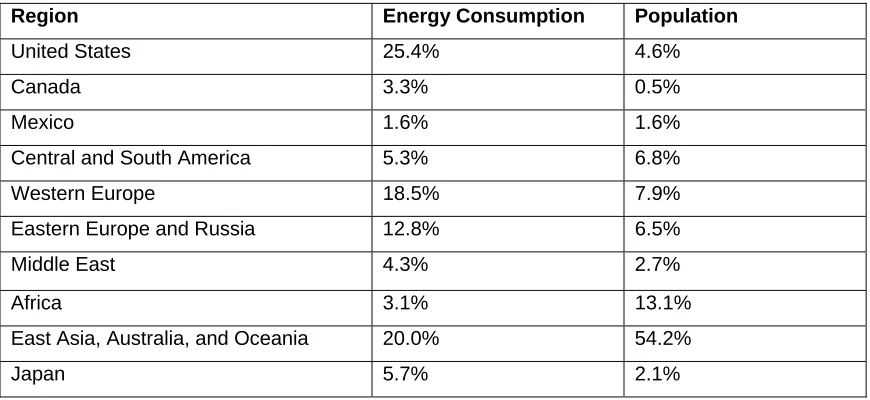
The table 1.1 shows the total world energy consumption by region in the year 1999. Attention that oil is not the only resource involved in the comparison but oil equivalents are provided to give perspective to the percentages. From the table, those industrial countries such as United States and Western Europe consume enormous energy although their population is relatively low than others region. The total energy consumption is very high in the region of East Asia, Australia and Oceania, which is about 20 percent of the total usage.
Table 1.1: World energy consumption by region, 1999
Region Energy Consumption Population
United States 25.4% 4.6%
Canada 3.3% 0.5%
Mexico 1.6% 1.6%
Central and South America 5.3% 6.8%
Western Europe 18.5% 7.9%
Eastern Europe and Russia 12.8% 6.5%
Middle East 4.3% 2.7%
Africa 3.1% 13.1%
East Asia, Australia, and Oceania 20.0% 54.2%
Japan 5.7% 2.1%
Total World Energy Consumption 381.88 quads (quadrillion Btu).World population 1999: 5,996.17 million.
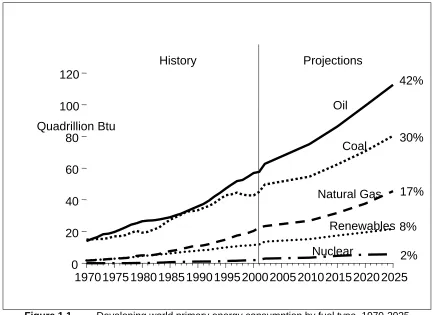
In present, energy consumption in the developing world is growing, especially in China. The increase of energy consumption rate possibility will reduce the non renewable energy resources. Figure 1.1 illustrates the developing world energy consumption by fuel type from 1970 to 2025. Based on the graph, projected oil consumption represents 42% of the world energy consumption while the renewable energy only represents 8%. In reality, although there is increase of alternative energy sources but the petroleum and natural gas still dominant the global energy market. Refer to the world energy production by source as show in the figure 1.2, 36.30% of energy in this world are produce by petroleum while 25.80% of energy are produce by natural gas. Ever since the discovery of petroleum, the share of natural gas and petroleum is becoming larger and larger. For example, in England, the proportion of petroleum is 24.8 per cent in 1960s, 49.6 per cent in 1970 and in 1980s, the proportion of petroleum had become 58.1 per cent (Jian and Bing, 2004). Nowadays, crude oil and natural gas had become the major primary energy resources of the world.
Projections
History
120
42%
Oil
100
Figure 1.1 Developing world primary energy consumption by fuel type, 1970-2025 (Source: Energy Information Administration (EIA), International Energy Outlook 2004)
1970
1975
1980 1985 1990 1995 2000 2005 2010 2015
2020
2025
0
20
40
60
80
Quadrillion Btu
30%
Coal
17%
Natural Gas
Renewables 8%
petroleum, 36.30% coal, 23.90%
other, 0.80% nuclear,
6.60% hydroelectric , 6.70%
natural gas, 25.80%
Figure 1.2 World energy productions by source in 2001 (Source: Microsoft Encarta Reference Library 2005)
Oil crisis that happen in the year 2004 once again warn the world about instability of the energy supply. “Campbell and Laherrère (1998), once estimate that oil decline will begin before 2010.” In October, 2004, the oil prices had already reaches a record high - US$52 a barrel level, continues of such high price not only bring negative effects towards the global economy and society. Moreover, in the long term, global employment also will be affected since the job and inflation effects of oil are closely related.
As well as other region, Asia as the largest of the seven continents has to confront the coming energy challenges. Asia nowadays is in the face of energy challenges. There is rapid growth of energy demand in Asia while there is also increasing dependence on imported energy (especially oil from the Middle East). In other words, there are mismatch between demand and supply within the region.
Not excluded, Malaysia also in the face of such challenge, estimation shows that when we grow towards the year 2020, our total energy requirement is expected increase to about 75,000 ktoe per annum. In terms of the capacity required to provide the electrical energy then, it is expected to be in the region of about 40,000 MW. This will require about RM 122 billion to put up the additional generation infrastructure. Such amount of massive modal is a great burden to the nation.
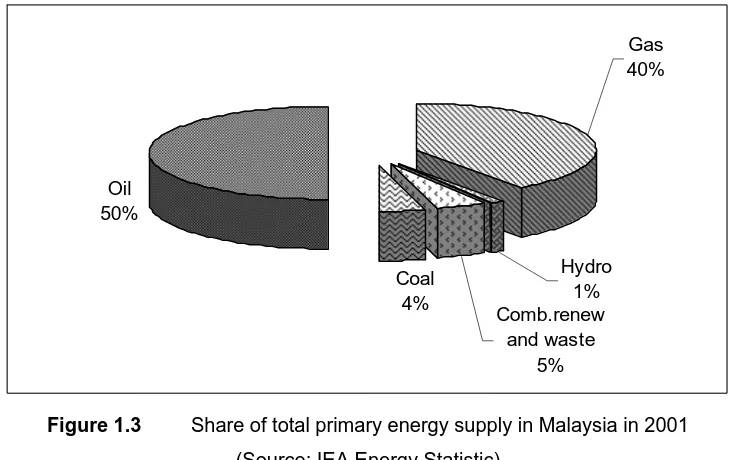
up to 80% of the primary energy supply. While Malaysia is blessed with oil and gas deposits, Malaysia could quickly become a net importer of oil, if it does not have a prudent policy on consumption and production planning…”
Coal 4% Oil
50%
Hydro 1% Comb.renew
and waste 5%
Gas 40%
Figure 1.3 Share of total primary energy supply in Malaysia in 2001 (Source: IEA Energy Statistic)
According to the World Energy Council (1993), “Malaysia is identified as the rapidly industrialising countries. Among the more obvious example are Brazil, Thailand, and Mexico. The countries within this group are gifted with substantial natural resources, however, the rate of their depletion is very high, and often the manner of their exploitation, have a roused widespread concerns. …the need for these countries to manage their industrialisation process better more mature economies, protecting their natural resource base while combating poverty and environmental degradation is particularly pressing.” Since Malaysia has a vision of becoming a fully industrialised country by 2020, further attention should be provided to the coming energy challenges.
hand, the operational changes are behaviour approach which requires the changes of human behaviour by using motivation, creating awareness and skill developing. Compare to the previous, operational changes is more economical and flexible.
As we know, facility management also involve the energy management which mainly objectives are to conserve energy. “The tasks of energy management are multiple, which include monitoring energy consumption accurately and appropriately, setting consumption targets, identifying and correcting faults, motivating staff to conserve energy through good housekeeping, identifying and implementing energy measures (Energy Efficiency Office, 1993).” Nevertheless, “facility managers and plant operators tend to be sceptical of behavioural approaches, and yet have little understanding of them and their potential (Geller, Richard and Peter, 1982).” For the reason of that, the facility manager has a tendency not pay attention to the benefits of operational changes among the building users or the staff.
In fact, behavioural approach is one of the key of success in energy management. Sheila Sheridan, chairman of the International Facility Management Association (IFMA) during an interview with Druckman (2004) giving her opinion that: “…facility management professional have growing shared responsibilities with human resources…” Nowadays, responsibility of a facility manager not only limited to manage buildings, but also the staff and building users. Human attitude is the area that should be considered in energy conservation. Yik and Lee (2002) once state that one of the key barriers to improving energy efficiency of buildings is lack of knowledge and motivation of the operation and maintenance (O&M) staff. For the reason of that, the facility manager should pay serious attention to the building users’ behaviour in carrying out energy conservation. “…being successful in saving energy is thus a question of motivating people to behave differently… (Energy Efficiency Office, 1993).” To change people behaviour so that they can conserve energy is thus a question of operational change or behavioural approach, one of the ways to doing so is through awareness development.
energy efficiency can be achieved through awareness campaign. However, the comprehensive steps to achieve it are still unknown.
In the past practice, ‘awareness’ has been utilize as the methods to conserve energy, for instance, “the Imperial College of Science, Technology and Medicine in London, has defined objectives to focus on raising staff and student awareness of energy conservation issues as one of the strategy to help protect the environment through more efficient energy use and to save money on fuel bills (Pancucci, 1998).” Even though the awareness plays an important role in the energy conservation but still, there is no related guideline of how to develop energy awareness. Nonetheless, there are limited researches on awareness development process and there is no efficient model of how to raise energy awareness.
Based on above, three research questions were formulated for this study:
1. What are the factors that affect energy awareness development process? 2. What is the conceptual framework of energy awareness development process? 3. What is the model of energy awareness development process?
2.0 Research Objectives
The objectives of the thesis are as follow:
1. Determine factors that affect energy awareness development process
2. To develop a conceptual framework of energy awareness development process 3. To develop a model of energy awareness development process
3.0 Methodology
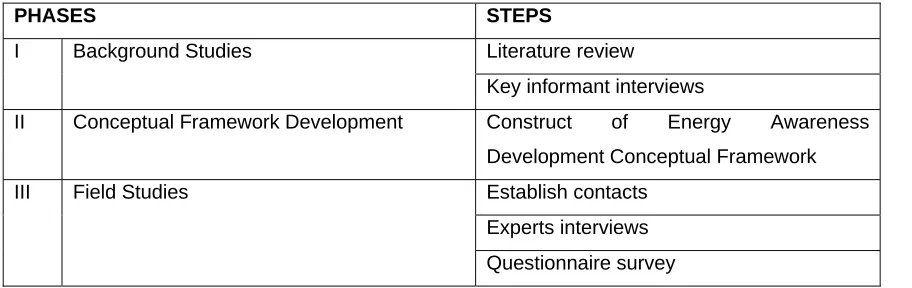
Table 3.1: Procedural flows of the research
PHASES STEPS
Literature review I Background Studies
Key informant interviews
II Conceptual Framework Development Construct of Energy Awareness Development Conceptual Framework
Establish contacts Experts interviews III Field Studies
IV Data Treatment Data analysis and interpretation V Model of Energy Awareness Development
Process
Construction of Energy Awareness Development Process Model
Establish contacts Experts reviews VI Model Evaluation
Further correction and improvements Summary of whole research
VII Conclusion and Suggestion
Recommendations (Source: researcher compilation)
3.1 Phase I: Background Study
3.1.1 Literature Review
The purpose of literature review is to provide a comprehensive background study of the current research. The review will mainly to examine the overall definition of energy awareness, energy management, related energy issue, responsibility of facility manager, types of energy conservation method and contribution of awareness in energy conservation. Furthermore, review will also highlight factors that affect energy awareness development process. The literature revealed a variety of effective awareness factors that could be adapted to energy awareness development. Existing researches, journals, reports, books, magazine, article, thesis, newspaper, pamphlets and brochures will be analysis and evaluated from a variety of supplements, include internet, library, government agency, utility companies and organization.
3.1.2 Key Informant Interview
Key informant is those people have energy management knowledge in the University - the facility manager or the energy manager. Interview will be carrying out with them to identify the major energy issue in the university. Their knowledge will assist the researcher to be more effective in coming stages, includes collect data and develop model. Interview will be design to reveal the current trends of energy usage in the university, annual energy cost, energy efficient, unnecessary energy cost, factors that contribute to unnecessary energy cost, students’ behaviour in energy consumption and previous efforts to conserve energy.
3.2.1 Development of Conceptual Model
The second phase of the research methodology is to develop the conceptual framework of energy awareness development process. Based on the related studies and research projects, each factor that affects energy awareness will be linked together and presented in chart form. Since there were no previous researches that explore the field of awareness, the energy awareness factors will be generated from others related fields, includes learning psychology, cognition psychology, information-processing theory, human resources, energy management, behaviourism, communication and more. The factors are implemented in sequence to provide a systematic framework for further development.
3.3 Phase III: Field Studies
3.3.1 Establish Contacts
The first step of the field studies is to establish the contacts list of the professional. Several energy experts will be identify and be contacts to organize the section for interview. The fields of experts have to be related to the research, which includes energy conservation, energy management, apply psychology, public awareness, communication effectiveness and more.
3.3.2 Expert Interview
Survey research will be use as the method of data collection. Appropriate survey methods will be identify based on the past researches and studies. Subsequently, interviews will be carrying out with the contact list that establish in the previous stages. The main purpose of the expert interview is to gain opinions from the experts towards the conceptual model that developed in the previous phase. Each of the experts will be request to give opinion regarding potential factor that will affect energy awareness.
3.3.3 Questionnaire Survey
questions will be emphasizing while open-ended question will be minimize to avoid potential shifts in meaning. Before the questionnaire is send out, primary pre-test will be carrying out to determine effectiveness of questionnaire and problems. The purpose of doing so is to acquire the comments and to correct the questionnaire if necessary.
3.4 Phase IV: Data Treatment
Data collected will be analysed by using the appropriate analysis methods – the quantitative and qualitative analysis regarding to different types of data. The output of the analysis will reflect the factors that influence the energy awareness development process. The comprehensive discussions for this phase are as section 2.4.
3.5 Phase V: Model of Energy Awareness Development Process
The model will developed through integrating various excellence models, resource view, ideas of experts and results of data analysis. From there, the answer will be accumulated and adopt in the previous framework to develop the Energy Awareness Development Model. According to the existing research, Engardo Esteban Agno (1980) had successfully developed the proposed model on energy education for national development of the Philippines based on interview technique and model evaluation in his phd dissertation.
3.6 Phase VI: Model Evaluation
After the model was developed, the model will be tested and evaluated by the expert. Experts from related field will be selected as the examiner to give comment about the model. Further discussion of testing and recognition are detailed in the section 2.3.
3.7 Phase VII: Conclusion and Suggestion
The final part is to summarize and conclude the previous discussion. Researches objectives will be listed and be ensuring each of them are achieved. Application suggestion also is enclose for future application.
4.1 Technology Fixed
Technology fixed is instrument base by using tools to conserve energy. Typically, the technology fixed refers to apply technology instruments and large-scale investment. These includes the introduction of new processes, change to automation systems, or installation of large energy-saving devices such as heat recovery system, new building designs, inverter, pre-heater, motion sensor, building envelope system and others. In the technology fixed, the payback is a significant issue, the ‘return of investment’ must be decide first before apply any energy conservation equipments. It is very effective in conserve energy and in the short terms, the results of can be seeing. However, the initial cost for technology fixed is very high and not suitable for the organization that have only limited budget. Moreover, one of the disadvantages of the technology fixed is it only appears as a temporary solution. “As we develop physical technologies to improve energy efficiencies, we only migrating the effects of energy use by human, not curing the energy problem we are experiencing (Kempton and Schipper, 1994).” Since technology fixed requires no behaviour changes of the users, it means the user still can waste energy in the same way. For the reason of that, technology fixed only suitable as a short term energy conservation methods, human attitudes towards energy consumption should be considered for the long term benefits.
4.2 Behavioural Approach
In energy management, behavioural approach is an alternative method to conserve energy. Energy conservation affects employees and on the other hands, the employees affect the energy conservation, “it may add to their workloads, require their cooperation, and affect their general comfort or even their pay packets (Gordon, 1980).” Nowadays, the role of the facility manager has evolve, the responsibility of a facility manager not only limited to manage buildings, but also involve manage people. It is vital to take account of human behaviour factors in the energy management. Compare to the technology approach, behavioural approach is a more simple way to conserve energy. Sometimes, the behavioural approach can be very effective and make a difference, for instance: The South Island Wood processing plant recommended routine energy management initiatives, such as staff participation in switch-off initiatives, particularly during breaks and when areas were vacated. Even these simple measure saved energy cost, with payback from savings in less than one year (Wedge, 2003).
4.3 Energy Awareness as an Energy Conservation Method
is the first steps of the behaviour changes. Without awareness, there will be no further action to conserve energy. For instance, top management would not support any energy conservation programme because they did not realize enormous use of energy is a waste; the staff would not carryout any energy conservation efforts because they did not take it as a responsibility.
4.4 Definition of Awareness
Refer to Encarta Dictionary (2005), ‘awareness’ is knowing something: having knowledge of something because you have observed it or somebody has told you about it; noticing or realizing something: mindful that something exists because you notice it or realize that it is happening; knowledgeable: well-informed about what is going on in the world or about the latest developments in a particular sphere of activities.” On the other hands, “according to Oxford Dictionary (fourth edition), the definition of ‘awareness’ is having knowledge or realization of something; well informed, interested especially in current events.” Definition of ‘awareness’ may diverse depends on the reference fields. In consciousness psychology, awareness is defined as consciousness, altered state of consciousness which include the studies of sleep and dream, meditation, biofeedback, hypnosis, and drug inducted states also calls altered state of awareness. However, in common psychology, aware is the fact that we have thoughts and feelings that we are conscious. In other words, we know what we are now. The route, procedure or method to attain, achieve or gain realization about something is call awareness process.
4.5 Information Process Theory
strong and concrete enough to sway the target’s beliefs; In warning research, if a warning is noticed, understood, and fits with a person’s beliefs and attitudes, then the remaining essential element is motivation - the incentives of doing something. A critical determinant of motivation is the cost of compliance. Cost can be any expenditure of effort, time, and money. If a person perceives the costs of complying to greater than the benefits of complying, he or she is less likely to comply than if the benefits appear to outweigh the cost. The social influence is another motivational factor affecting compliance, if people see another person comply with a warning, thus they are more likely to comply.
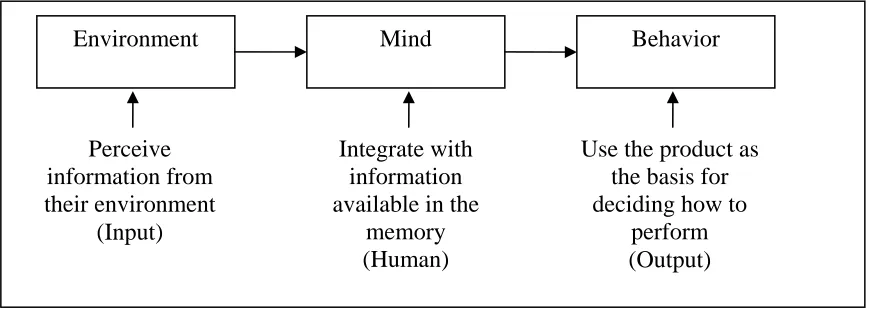
In summary, there are three important stages to develop awareness (figure 4.1). The fist stage is the environment stage where external stimuli (information) as the primary input. The theory of learning states that a person will change behaviour because of the experience with the environments. The second stage is the mind stage, perception and cognition plays important roles in this stage for handling, selecting and interpret information that they acquired. The third stage is behaviour stage where all the information that receives will reflects in the receiver behaviour. In the coming chapter, the conceptual framework of energy awareness is developing through integrating existence model and resource view.
Environment
Mind
Behavior
Perceive
information from
their environment
Integrate with
information
available in the
memory
Use the product as
the basis for
deciding how to
perform
(Input)
(Human)
(Output)
Figure 4.1 Major stages of awareness development process
5.0 Conceptual Framework
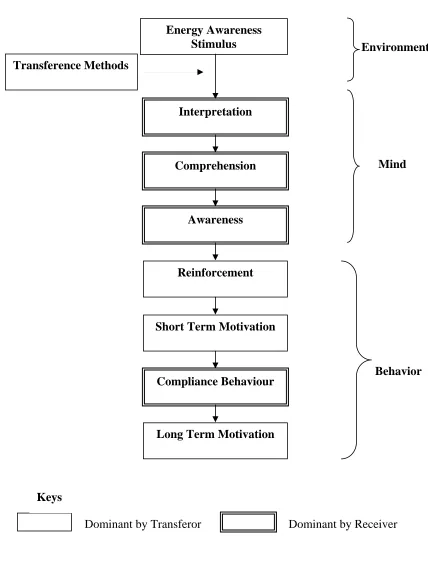
The phases that dominant by the transferor refer to the phases that can be monitored by the transferor. On the other hand, the receiver is somebody who takes or accepts the stimulus for developing energy awareness. The phases that dominant by the receiver refer to the phases that cannot be monitored by the transferor and is self-achieved by the receiver.
The first phase of the energy awareness development process is the available of energy awareness stimulus. Based on the classic stimulus-response (S-R), awareness happen response to specific stimuli. Practically, stimulus is incentives- something that encourages an activity or a process to begin, increase or develop. Stimulus can exists in various kinds of forms, such as visual, audio, taste, smell and feel. However, for the purpose of energy awareness development, only two senses are given concentration- audio and visual as other senses are not appropriate. In energy awareness development process, stimulus refers as information and should cover the criteria such as clear, understanding, interesting and strongly impress. Different community will need different kinds of stimulus, appropriate stimulus must be carefully considered before further steps are taken.
Energy Awareness
Stimulus
Environment
Figure 5.1 Conceptual framework of the Energy Awareness Development Process
Under the mind stage, the third, fourth, and fifth phase of the energy awareness development process is receiver dominant. The third phase of the energy awareness process is interpretation.
Interpretation
Comprehension
Awareness
Mind
Behavior
Dominant by Transferor
Dominant by Receiver
Keys
Transference Methods
Reinforcement
Compliance Behaviour
Short Term Motivation
Definition of interpretation is to construe, it refers as the process of how receiver explains and clarify the information that he received. Often, the receiver will operate and integrate the new knowledge by using past experience, available knowledge and believe. The fourth phase is comprehension or understanding and the fifth phase is awareness. These two phases are closely related, if the phases of stimulus and transference methods apply successfully, then the awareness probably is developed. In this case, the receiver will have the knowledge of that particular subject and realize about it.
Nevertheless, awareness that developed is not enough because awareness and behaviour is not simultaneous. “It is easier to change a participant’s knowledge about energy and conservation than it is to change their attitudes (Smith, 1978).” For instance, many smokers aware (having knowledge and realize) that smoking is harmful to their health, but they still continuous to smoke. In the similar circumstance, those who aware the importance of energy conservation and realize the energy conservation technique might not practice them. So what do the reinforcements do in this phase? Reinforcer actually strengthens the association between a response and preceding stimuli. “Barker (1997) defined the reinforcer as any stimulus whose application following a response has the effect of increasing the probability of that response.” “This S-R interpretation of learning says that reinforcement is necessary for response selection, for one response to eventually become more dominant than other equally likely responses in a particular situation (Beck, 1983).” For the reason of so, reinforcement should be carrying out to emphasize the benefit that will be gain or the hazard that can be avoid if the receiver carry out the energy conservation.
Then, motivation contributes significant roles in awareness development. Motivation is whatever includes people to act voluntarily in a certain way and then to persist in the face of difficulty. In this research, reinforcement is slightly different from motivation. Reinforcement is a technique to enhance the effect of stimulus while the motivation is to continue encourage the targets to aware and carry out energy conservation. Reinforcement offer indirect ways to influence the targets, the transferor only explain the benefit and hazard that can be obtain if doing something while the motivation is a direct ways which the transferor will provide prize or chastisement to the receivers directly.
words, complying behaviour. Definition of complying is to act in accordance with another's command, request, rule, or wish. Complying behaviour shows the early success of the energy awareness development process. By observe the receiver attitude and compare the current and previous energy bill, the transferor can know that isn’t receiver make change of energy consumption attitude.
However, this is still not enough. For the benefit of long term, long term motivation must be carrying out. Although the receiver already practices energy conservation but being continuous to practice energy conservation is thus another challenge. Transferor should offer long term motivation to the receiver so they can continuously practice energy conservation, the reward and punishment should be the main concern.
6.0 Expected Results
Energy Awareness
Development Process
Energy Management Stages
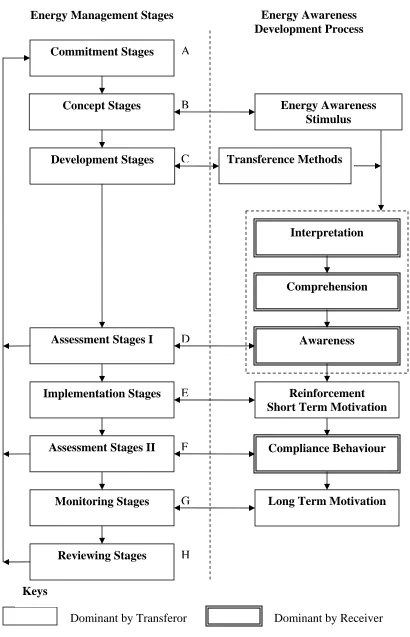
Figure 6.1 Overview of Energy Awareness Development Process Model
Energy Awareness
Stimulus
Interpretation
Comprehension
Awareness
Dominant by Transferor
Dominant by Receiver
Keys
Reinforcement
Short Term Motivation
Compliance Behaviour
Long Term Motivation
Transference Methods
Concept Stages
Development Stages
Implementation Stages
Monitoring Stages
Reviewing Stages
Commitment Stages
Assessment Stages I
Assessment Stages II
A
B
C
D
E
F
G
References
1. Barker, L. M. (1997). Learning and Behaviour (Biological, Psychological, and Sociocultural
Perspectives). Upper Saddle River, NJ : Prentice-Hall.
2. Beck, R. C. (1983). Motivation (Second Edition). New Jersey: Prentice-Hall, Inc., Englewood Cliffs.
3. Campbell, C. J. and Laherrère, J. H. (1998).The End of Cheap Oil. Scientific American.
4. Druckman, A. (2004). Facility Management for the Future. Journal of Property
Management. 69(1): 52-53.
5. Energy Efficiency Office (1993). General Information Report (Energy Management Guide). Garston: BRECSU.
6. Engardo Esteban Agno (1980). A Proposed Model on Energy Education for National Development of the Philippines with Emphasis on the Planning and Implementation Roles
of Vocational-Technical Education. The Florida State University: Degree of Doctor of
Philosophy.
7. Geller, E. S., Richard, W., and Peter, E. (1982). Preserving the Environment. New York: Pergammon Press.
8. Gordon A. P. (1980). The Energy Manager’s Handbook (Second Edition). Guildford:. Surrey: Westburry House. Page 10.
9. Hornby, A.S. (1997). Oxford Advanced Learner’s English-Chinese Dictionary (Fourth Edition). Hong Kong: Oxford University Press.
10. Jian, Z.X. and Bing, L. (2004). Study on adjustment countermeasure of an energy consumption structure. Journal of Kybernetes. 33(2): 422-427
11. Kempton, Willets and Schipper, L. (1994). Expanding the Human Dimensions Research Agenda. Proceedings of the ACEE 1944 Summer Study on Energy Efficiency in Buildings. American Concil for an Energy-Efficient Economy.
12. Microsoft Corporation (2004). Microsoft Encarta Dictionary 2005. Microsoft Corporation. (Software).
13. Microsoft Corporation (2004). Microsoft Encarta Reference Library 2005. Microsoft Corporation. (Software).
14. Mohamed El Halimi, Nadeem Biwaz, Kamaruzzaman Sopian and Mohd Yusof Hj Othman (2000). A Sustainable Energy Future for Malaysia. In: Kamaruzzaman Sopian and Mohd Yusof Hj Othman. Advances in Malaysia Energy Research 1999. Kuala Lumpur: Institut Tenaga Malaysia. 31-43.
15. New Straits Times. Strategy to Counter Oil Price Increase. October, 19, 2004. Page 1 16. Pancucci, D. (1998). Imperial College and Energy Savings. Facilities Management. 5(3):
10-11.
17. Smith, J. L. (1978). An Evaluation of A Model Energy Awareness and Conservation
Inservice Program for Oklahoma Driver Education Teachers. Oklahoma State University:
Degree of Doctor of Education.
18. Vesma, V. (2002). Power to the People Facilities Management. Facilities Management. 9(5):26
19. Wedge, R. (2003). Energy Efficiency: Key to Managing Costs. NZ Forest Industries.
20. Wogalter, M. S. and Laughery, K. R. (1996). Warning! Sign and Label Effectiveness.
Psychological Science. 5(2).
21. Wong, S.S.M. (1997). Energy Conservation and Human Behaviors: The Professional
Faculties Building in The University of Calgary. University of Calgary: Master Degree
Project.
23. Yik, F.W.H., Lee, W.L.(2002). A preliminary inquiry into why buildings remain energy inefficiency and potential remedy. Transaction, The Hong Kong Institute of Engineers. 9(1):32-36.