Western University Western University
Scholarship@Western
Scholarship@Western
Electronic Thesis and Dissertation Repository
2-14-2017 12:00 AM
Achieving Operational Integrity: A Case Study of A Long-Term
Achieving Operational Integrity: A Case Study of A Long-Term
Care Operation
Care Operation
Maryam Memar Zadeh
The University of Western Ontario
Supervisor Stephan Vachon
The University of Western Ontario Joint Supervisor Nicole Haggerty
The University of Western Ontario Graduate Program in Business
A thesis submitted in partial fulfillment of the requirements for the degree in Doctor of Philosophy
© Maryam Memar Zadeh 2017
Follow this and additional works at: https://ir.lib.uwo.ca/etd
Part of the Business Administration, Management, and Operations Commons, and the Operations and Supply Chain Management Commons
Recommended Citation Recommended Citation
Memar Zadeh, Maryam, "Achieving Operational Integrity: A Case Study of A Long-Term Care Operation" (2017). Electronic Thesis and Dissertation Repository. 4413.
https://ir.lib.uwo.ca/etd/4413
This Dissertation/Thesis is brought to you for free and open access by Scholarship@Western. It has been accepted for inclusion in Electronic Thesis and Dissertation Repository by an authorized administrator of
i
Abstract
This dissertation explores the phenomenon of operational integrity (OI), defined here as
the congruence between planned operational tasks and their execution by employees. I seek
to answer the question of “how is OI achieved in human-reliant operational systems” on
the premise that if the operational tasks are not executed as planned, the desired outcomes
(e.g., service quality) are less likely to be realized resulting in the exposure of an
organization to operational risks. To date, the literature pertaining to OI relies heavily on
the notion of reliability particularly in manufacturing settings characterized by
machine-based production systems. While few studies offer valuable insight into the execution of
planned operational tasks in service operations, the understanding of OI within a system
wherein the employees–as opposed to machines– are central to the value creation is rather
underdeveloped.
To build a greater understanding of OI and provide rich descriptive analysis of how
it is achieved, I embarked on an interpretive study to understand the phenomenon in a
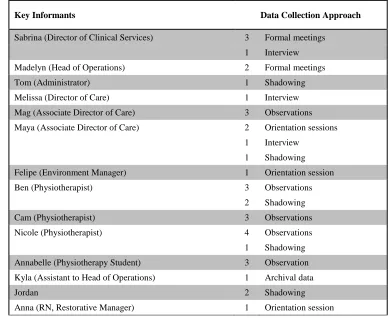
Canadian long-term care facility. During 48 episodes of visits, I spent nearly 280 hours in
the field to collect data from over 45 key informants through interviews and meetings
(seven sessions), shadowing and observation (41 sessions), and archival documents (100
pages). The findings revealed during the planning process, when planning the tasks that
are thought to reflect strategic priorities, three challenges emerge: the challenges of
cognitive barriers, insufficient resources, and interdependent decisions. These are
dampened by the organizational counteractions of tackling cognitive barriers, offsetting
insufficient resources, and coordinating the function of decision-makers. During the
execution process, where employees act on planned tasks, there are challenges resulting
from both behavioural characteristics and operational system characteristics, and the
organization reduces the negative impact of challenges through compliance-stimulant
mechanisms and completeness-restorative mechanisms.
As such, achieving OI is a multilayered, multifaceted, dynamic process in which
ii
with numerous barriers. This study expands the current understanding on executing
planned operational tasks necessary for realizing critical desired outcomes and preventing
operational risk, and opens up research avenues to scholarly efforts more attuned to
everyday operational tasks. The research also offers key insights applicable beyond the
context of study to achieving OI in human-reliant services.
Keywords
Operational integrity; planned operational tasks; compliance; qualitative methods; human
iii
Dedication
iv
Acknowledgments
When I embarked on my journey through the Ph.D. program, I was unaware that this
journey would be one of the most challenging and, at the same time, rewarding experiences
of my life. My journey has been a full steam intellectual process that has indispensably
changed the way that I view the world. During this process I realized how truly blessed I
am to be surrounded by the most supportive people. Their inspiration, encouragement, and
guidance played a significant role in shaping the trajectory of my dissertation. I owe a debt
of gratitude to these people and would like to take this opportunity to acknowledge them.
First and foremost, I would like to thank my thesis supervisors, Prof. Nicole
Haggerty and Prof. Stephan Vachon. I have been blessed in many ways to have been
co-supervised by Nicole and Stephan. Nicole, you offered me unwavering emotional and
intellectual support through the many trials that I encountered during this journey. Stephan,
you encouraged me to step out of my comfort zone and explore unfamiliar areas that
profoundly changed my thinking about my phenomenon of interest. Nicole and Stephan,
your complementary mentorship was essential to the accomplishment of this research, and
I want you to know that I will never forget your dedication through this process. I wish
someday to provide positive, creative, and passionate guidance to my own students, just as
you have provided to me.
I would also like to thank the members of my proposal examination committee:
Prof. Tima Bansal, Prof. Larry Menor, and the late Prof. David Sparling. Tima, I am
immensely grateful for your helping me through the worst times of this journey. Where I
am today would not have been possible without your enduring support throughout this
process. I am deeply grateful for your friendship and mentorship. Larry, I owe a sincere
thank you to you for what you have done for my growth through and outside the thesis
process. You graciously shared your deep knowledge of the Operations Management field
with me and helped me in the early development stages of this research. I highly appreciate
v
profound ways by indirectly teaching me about the beauty and simplicity of life’s journey.
I want you to know that I will always remember your sincerity, and know how grateful I
am for all that you have done. Finally, I would like to acknowledge and thank the late Prof.
David Sparling for engaging so enthusiastically with my emerging ideas in the early stages
of this research. David, I will always honour your memory and remember your positive
attitude and smiling face.
The Ivey community has been incredibly supportive to me as well. I appreciate the
assistance of all the people who immensely helped me during my journey: Prof. Robert
Klassen, Prof. Matt Thomson, Prof. Mark Zbaracki, Prof. Yaqi Shi, Prof. Dina Ribbink,
Prof. Alison Konrad, Prof. Claus Rerup, Prof. Chris Higgins, and Prof. Fraser Johnson:
thank you for being so supportive. The staff members in the Ph.D. program office and the
librarians have been most helpful and have also provided administrative support along the
way. My colleagues in the Ph.D. program offered their heart-warming friendship, and I am
eternally grateful to them for making the journey more joyful for me: Bahareh Tehrani,
Ambra Galeazzo, Clara (Yanfei) Hu, Ramzi Fathallah, Rida Elias, Bassam Farah, Jennifer
Jeffery, Charan Bagga, Sara Hajmohammad, Megan Zhang, Dave Barret, Meredith
Woodwark, Yamlaksira Getachew, Chya-Yi Liaw, John Lyon, Felipe Rodrigues, Hongmei
Sun, Jeannette Eberhard, Lucas Wang, Vanessa Hasse, Maya Kumar, Majid
Eghbali-Zarch, Fouad Mirzaei, Asad Shafiq, Krista Pettit, Juan Wang, and Melissa Leithwood:
thank you for being wonderful friends.
I am also indebted to the study participants at PEC Co. for making time to talk with
me, sharing your views and experiences, and fostering our friendship. I enjoyed every
single moment of my conversations with you. I would like to especially thank the managers
of PEC Co. for giving me the opportunity to study your organization. As promised, I will
keep your names confidential, but I want you know that I have always admired your
management skills as well as openness to research. I have witnessed how you and your
staff at PEC Co. maintain the highest standard of care for your residents, and as a member
of the community, I wholeheartedly appreciate your dedication to providing excellent care
vi
Last, but certainly not least, I am lucky, blessed, and fortunate to have the most wonderful
and supportive family in this world. My parents have been my best friends my entire life,
and words alone cannot express my feelings of gratitude to them. I have told you this before
and I repeat this again here: you have gone above and beyond what other parents do for
their children. You are my guardian angles. Afshin and Ashkan: thank you for being my
best consultants, trustees, friends, and brothers. I am so blessed to have you as my siblings,
and I love you.
My foremost gratitude goes to one person who was with me every step of this
journey during the last four years, my fiancé and Ph.D. colleague, Salar Ghamat. Salar, you
are my soulmate and I knew this from the very first moment I met you. You have been my
companion in happiness as well as in sadness. You taught me to not let anyone tell us we
cannot do something. You taught me to believe no dream is too big for us. I savoured every
single moment with you watching “Star Wars”, “Bridget Jones”, and “The Phantom of the
Opera”, having breakfast at Tim Horton’s while discussing our research, watching the
fireworks in the Magic Kingdom, and even grooming our fluffy kitten Anakin. Thank you
for being the most wonderful life partner. I have never felt this happy in my whole life. I
vii
Table of Contents
Abstract ... i
Dedication ... iii
Acknowledgments... iv
Table of Contents ... vii
List of Tables ... x
List of Figures ... xi
List of Appendices ... xii
Chapter 1 Introduction ... 1
1.1 Motivation for the Study ... 1
1.2 Empirical Approach ... 5
1.3 Study Findings ... 7
1.4 Study Contribution ... 8
1.5 Dissertation Outline ... 9
Chapter 2 Literature Review ... 11
2.1 Conceptualization of Planned Operational Tasks ... 11
2.2 Conceptual Development of Operational Integrity ... 16
2.2.1 Integrity Concept in Management Literature ... 19
2.2.2 Positivist View of Integrity ... 19
2.2.3 Operational Risk ... 21
2.2.4 Concluding Remarks ... 22
2.3 Positioning of OI in the Failure Literature ... 23
2.3.1 The Failure Concept in Marketing Research ... 23
viii
2.3.3 The Failure Concept in Service Safety Research ... 30
2.3.4 Concluding Remarks ... 31
2.4 Behavioural Underpinnings of Operational Integrity ... 32
2.5 Conclusion ... 35
Chapter 3 Methods ... 37
3.1 Research Design Considerations... 37
3.2 Theoretical Sampling ... 38
3.3 Field Characteristics... 41
3.4 Data Collection Process ... 43
3.5 Data Analysis Process ... 50
3.6 Notes on Rigour ... 51
Chapter 4 Achieving Operational Integrity ... 53
4.1 Planned Operational Tasks ... 53
4.2 Executed Operational Tasks and the Emerging OI Gap ... 58
4.3 Challenges in the Execution Process ... 61
4.3.1 Challenges in the Execution Process: Operational System Characteristics ... 63
4.3.2 Challenges in the Execution Process: Behavioural Characteristics ... 79
4.4 Managerial Counteractions to Reduce the Gap ... 91
4.4.1 Completeness-Restorative Counteractions ... 94
4.4.2 Compliance Stimulant-Counteractions ... 103
4.5 Conclusion ... 108
Chapter 5 Congruence in the Planning Process ... 112
5.1 Strategic Intentions ... 113
5.2 Congruence between Competitive Priorities and Planned Operational Tasks .... 115
ix
5.4 Managerial Counteractions to Reduce the Gap of Planning ... 125
5.5 Conclusion ... 134
Chapter 6 Contributions ... 137
6.1 Process of Realizing Strategic Priorities ... 137
6.2 Limitations and Future Research ... 150
6.3 Managerial Implications ... 151
References ... 153
Appendices ... 180
x
List of Tables
Table 2.1 A Summary of Management Literature in Integrity Concept………...17
Table 3.1 Description on Types and volume of Data ...…...44
xi
List of Figures
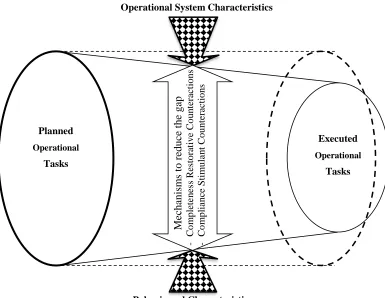
Figure 4.1Operational Integrity Lapse: Emergence of a Gap between Planned and Executed
Operational Tasks………..59
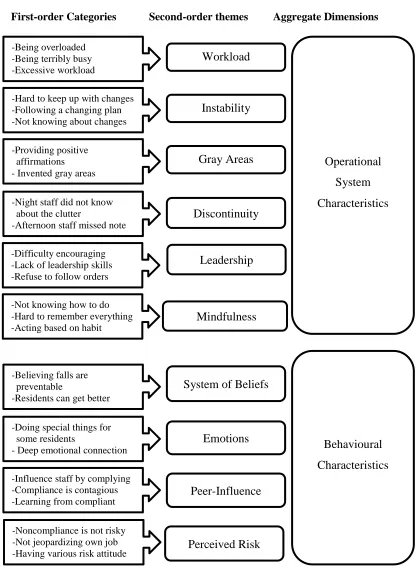
Figure 4.2 Data Structure – Challenges of Execution………..………..62
Figure 4.3 Data Structure – Counteractions of Execution………..………...93
Figure 4.4 Multilayered Operational Integrity Phenomenon………..….……109
Figure 5.1 The Emerging Gap in the Planning ………..……….115
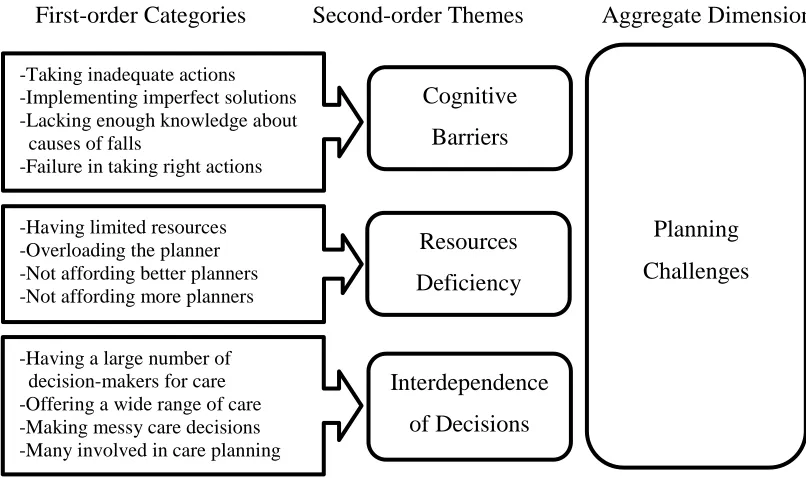
Figure 5.2 Data Structure – Challenges of Planning………..…..118
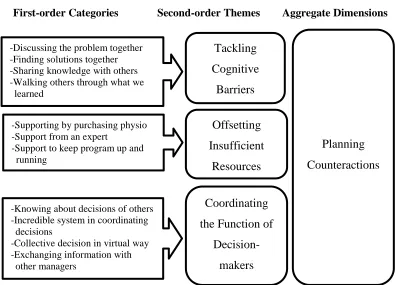
Figure 5.3 Data Structure – Planning Counteractions ...……….….126
xii
List of Appendices
Appendix A: Ethics Approval Notice ... 180
Appendix B: Detailed Visits Summary, Ordered Chronologically. ... 181
Appendix C: Execution of Planned Operational Tasks ... 186
Appendix D: Medication Adverse Incident/Reaction Reporting, the Requirement of the
Act vs. Internal policy of PEC Co. ... 195
Appendix E: Representative Data Underlying the Second-order Themes –Challenges of
Execution ... 196
Appendix F: Representative Data Underlying the Second-order Themes –Counteractions
in Execution ... 200
Appendix G: Representative Data Underlying the Second-order Themes –Planning
Challenges ... 202
Appendix H: Representative Data Underlying the Second-order Themes – Planning
Counteractions ... 204
1
Chapter 1
Introduction
1.1
Motivation for the Study
What do organizations do to ensure that their operational tasks are executed by their
employees as planned? This question became a central focus of this thesis as the result of
seeing repeated examples of gaps between planned operational tasks and executed
operational tasks. Consider the following three instances of the gap between planned
operational tasks and executed operational tasks, in an educational setting, a health care
provision center, and a police station, caused by human failure in strictly adhering to the
planned operational tasks.
In the first instance, a Limestone District School Board teacher who was supposed
to chaperone a male and a female student to a conference, failed to follow the school’s
requirements for supervising students during a field trip. Despite Limestone School’s clear
procedures for field trips, which require teachers ensure the hotel rooms are assigned to
students by gender, the teacher allowed two students of the opposite sex to share a hotel
room, and even permitted them to drink alcohol (Ontario College of Teachers, 2016). In
another example, a nurse in Glasgow’s Princess Royal Maternity Hospital was accused of
negligence and contributing to the death of a premature baby by failing to perform the
planned operational task. Allegedly, the nurse admitted that on the day of incident he forgot
to activate a humidifier designed to help the premature baby breathe normally before he
went on a break (Glasgow Live, 2016). In a different case, a murder suspect broke out of a
police station in Las Vegas, Nevada because the policemen failed to adhere to the planned
operational task of watching the live feed from a surveillance camera that was recording
the events in the interrogation room (Chia and Konstantinides, 2016). In these examples
organizations required their employees to follow predefined operational tasks, pertaining
to the provision of services, however, on occasion, employees failed to accomplish the
tasks, due to forgetfulness and other reasons such as heavy workload, or lapses in judgment.
2
of various operational risks such as compromised safety of the employees or customers,
eroded quality of service offerings, and environmental and community hazards.
As seen in these examples, while accomplishing the operational tasks might be
taken for granted, anecdotes reveal that in the day-to-day business practices of
organizations it is often possible that the employees fail to execute operational tasks fully
and correctly as planned. This phenomenon which occurs in practice provided the
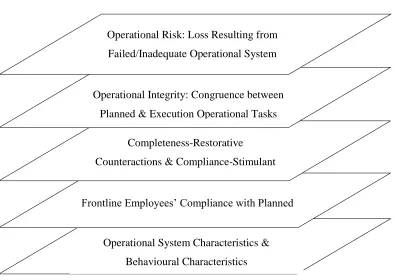
motivation for this thesis. I define operational integrity (OI) as an operating characteristic
that represents the degree of congruence between planned operational tasks and executed
operational tasks by operations employees. The premise of the study is that achieving OI
is the key to realizing desired outcomes and reducing operational risk.
When instances of OI lapses occur, such as in the examples presented here, the
operations employees have failed to strictly comply with some aspects of operational tasks
and, as a result, a planned function, which is supposedly value-added for an organization
and/or its stakeholders, is executed incompletely, incorrectly, or not executed at all. The
planned operational tasks encompass processes, procedures, or plans that are to be executed
by employees to accomplish the delivery of service offerings to the customer (Chase and
Stewart, 1994; Tucker, 2004). These tasks are designed to bring about certain operational
outcomes in terms of ensuring safety of employees and/or customers, fulfilling the
customers’ quality and delivery promises, minimizing resource usage during the
production process, hedging information security risk, and meeting the regulatory
requirements to preserve environment and community.
The OI lapses prevent organizations from realizing their desired outcomes in
creating value for the organization and its stakeholders. These OI lapses manifest
themselves in the form of additional operational risk for the organization and its
stakeholders, i.e., employees, customers, the environment, and the community. The
magnitude of operational risk resulting from OI lapses depends upon the desired outcome
of the planned operational tasks which were not executed fully or correctly. For instance,
the repercussions of the teacher’s failure in executing the planned operational tasks related
3
dissatisfaction of the students’ families. On the other hand, the failure of the nurse to
execute the planned operational task of turning on the humidifier was more severe in that
the life of the premature baby was dependent on executing this planned task. Finally, in the
third example, the failure of the policemen in executing the planned operational task of
watching the live feed of the surveillance camera allowed the murder suspect to flee, steal
a truck, and hide for a week before he was rearrested (Chia and Konstantinides, 2016).
While in the third example the only adverse outcome was stealing the truck, which was
recovered later, the OI lapses could have been potentially more hazardous to the general
community. Hence, the criticality of achieving OI emanates from the fact that the
congruence between planned operational tasks and their execution contributes to realizing
the desired outcomes of the planned operational tasks (e.g., in terms of customer safety),
and reduces operational risk.
Given the criticality of achieving OI for preventing operational risks, this
qualitative inquiry seeks to advance our understanding of achieving OI. To understand this
phenomenon, my early attempts to review operations failure literature revealed that, over
the last few decades, a large body of knowledge has emerged for addressing how system
failure is managed in highly complex operational contexts in which the lack of congruence
between planned and executed operational tasks typically has catastrophic consequences
(Perrow, 2011; Weick and Sutcliffe, 2011; Weick, Sutcliffe, and Obstfeld, 2005). A
majority of this literature falls under the banner of process reliability and risk management
research and investigates machine-based manufacturing operational systems (Chase and
Stewart, 1995; Lewis, 2003; Sutton, 2013). In these manufacturing operations, the
congruity of planned and executed tasks is achieved by preventing the failure of the system
component, using a variety of interventions such as built-in redundancies (e.g., Bergman
and Klefsjo, 2010), preventive maintenance (e.g., Flynn, Sakakibara, and Schroeder, 1994
and 1995), failure mode and effect analysis (e.g., Pari, Kumar, and Sharma, 2008), and
fault tree analysis (e.g., Labib, 2015), to name a few.
While some of these mechanisms are prescribed for preventing human failure in
service operational systems as well (e.g., Chase and Stewart, 1994), there is not much
4
where human beings – as opposed to machines– are central to the value creation. I define
human-reliant systems as operational systems in which production tasks are mainly
executed by human beings, and the role of machinery in the production process is minimal.
Examples of human-reliant system include government services, health care provision
organizations, educational institutions, hospitality services, consulting services, retail
organizations, and research institutions.
In the area of service failure, the main stream literature is focused on mitigating the
negative consequences of employees’ failures in meeting the requirements of customers
and offers suggestions on service recovery initiatives (Craighead, Karwan, and Miller,
2004; Hess, Ganesan, and Klein, 2003). While these studies provide valuable insights into
the failure phenomenon, they fail to attend to the causes of the frontline employees’ failure. Only some of the literature pays attention to prevention of frontline employees’ failures
while providing fairly simple and practical recommendations for designing and managing
error-free operational systems (Stewart and Chase, 1999; Tucker 2004). However, these
studies also suffer from an unrealistic implicit assumption that presumes employees have
the intention to execute the operational tasks exactly as planned.
Drawing on a theoretical foundation of behavioural operations research, this thesis
contends that the human actors in organizations have free will and their intentions and
actions are impacted by various environmental, cognitive, and behavioural factors (Froehle
and Roth, 2004; Hu, Dinev, Hart, and Cooke, 2012). As such, this study seeks to advance
an alternative perspective to think about the operational failure of frontline employees
when executing planned operational tasks by investigating the following research question:
Research Question 1: How is operational integrity achieved in
human-reliant systems?
Framed this way, this research question demands attention be given to how operational
integrity unfolds in a natural setting while leaving scope for understanding both why it is
and is not achieved. In addition, this broad research question requires observing and
understanding the contributing practices and factors that influence operational integrity. As
5
phenomenon, I needed to extend my research to investigate the planning process, during
which the planned operational tasks are crafted. Thereafter, the following research question
emerged from analyzing the field data:
Research Question 2: How are planned operational tasks designed?
1.2
Empirical Approach
Given our limited understanding of operational integrity in human-reliant systems, it is still
early to undertake a hypothesis-testing study. Thus, it is necessary that this study be
exploratory in nature. An interpretive single-case study approach allows the researcher to
understand a phenomenon which is in the early stages of scientific development (Benbasat,
Goldstein, and Mead, 1987; Gioia, Corley, and Hamilton, 2013). Usage of an interpretative
single-case study approach is usually appropriate if the case is: 1) revelatory in nature that
reveals insights of an understudied situation, 2) extreme or unique in describing an
exceptional situation, or 3) critical for testing a pre-formulated theory (Yin, 2003;
Eisenhardt, 1989a).
In this study, the single-case design strategy is used for revelatory purposes to
provide insights about the understudied phenomenon of operational integrity. The selected
case study is a long-term care home facility, the Private Elderly Care Company (PEC Co.,
hereafter), located in a large town in Ontario, Canada. The purpose of this study is to
understand how organizations achieve OI by designing a system in which individuals
comply with the planned operational tasks. To study the OI phenomenon, it is imperative
to select an organization that is highly human-reliant. As such, selecting a nursing home
was a strategic choice to ensure the proposed research question could properly be
addressed.
In addition, dealing with the lives of human beings makes a nursing care facility an
ideal setting to study OI. When operational integrity lapses occur, the frontline employees
have failed to execute some planned operational tasks correctly or fully. Hence, the desired
outcomes of these operational tasks are not realized as planned. When the employees fail
6
of nursing homes, the desired outcome of the task for ensuring the wellbeing of the
residents is not achieved. For example, failure of the nurses to administer the residents’
medicine on time and in the correct quantity might endanger the lives of residents. The
managers of the nursing home know that as a result of a resident’s (i.e., customer’s)
compromised safety, the organization might be exposed to major operational risk (e.g.,
exorbitant fines). To avoid this operational risk, the management at PEC Co. consciously
and dutifully works on minimizing the gap between planned and executed operational tasks
by putting various mechanisms into practice to ensure compliance of frontline staff with
the requirements of operational tasks. Thus studying PEC Co.’s operations can
substantially enrich our understanding of various aspects of the OI phenomenon.
For more error-sensitive operations, such as the administration of medication,
infection control, shift hand-offs, or fall prevention where lapses in OI might bring about
serious harm to the senior residents, the organization is particularly concerned with
achieving OI. Therefore, to narrow down the focus of study to a more manageable set of
operations, I selected medicine administration operations along with fall prevention and
management operations to conduct this inquiry.
As this study is concerned with the operations employees’ actions and decisions, I
applied an interpretive approach for data collection and analysis purposes. This approach
has allowed me to illuminate the social meanings situated at specific culture, beliefs, and
values of the individuals that shape their intentions (Roth and Mehta, 2002). My purpose
is to repeatedly observe frontline employees make sense of the challenges that they face in
adhering to planned operational tasks during the service and delivery stage. In addition, I
seek to unveil the mechanisms through which the management team supports and
encourages the frontline employees to comply with the requirements of the tasks. This
research strategy entailed triangulation of data through the shadowing of staff and
managers, observing daily service delivery work, formal and informal conversations with
individuals, and archival data. The course of data collection process occurred from June
2014 through April 2015. I spent nearly 280 hours in the field, collecting data from over
45 key informants through interviews and meetings (seven sessions), shadowing (20
7
pages). This process yielded in over 400 pages of transcribed data which was coded and
analyzed using NVivo 10 Software.
1.3
Study Findings
The result of this study reveals that frontline employees do not always execute the assigned
tasks as planned. As a result, a gap between planned and executed operational tasks
emerges. The reason for the emergence of this operational integrity gap is two-fold. First,
certain operational system characteristics create substantial challenges for the employees
and prevent them from accomplishing the operational tasks fully and correctly. Operational
system characteristics are related to particular characteristics of planned operational tasks,
service delivery processes, and the people within the system that, in combination, limit the
ability of employees to comply with the requirements of the task, despite their intentions
to perform the task as planned. Second, the presence of certain behavioural characteristic,
related to employees’ system of beliefs, emotions, risk perception, and peer-influence
impacts their decision for compliance and may result in the intentional violation of
requirements.
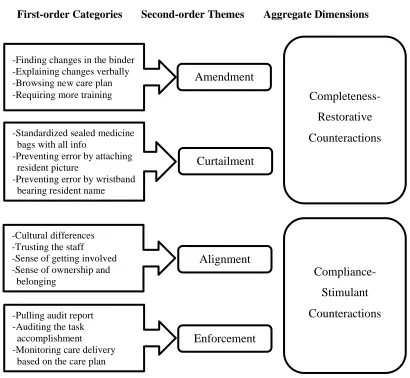
To alleviate the negative impact of operational system characteristics, managers
have developed amendment mechanisms and curtailment mechanisms for compensating
for shortages and trimming off excesses in the system. In order to reduce the negative
impact of behavioural characteristics on the congruence between planned and executed
operational tasks, alignment mechanisms are applied to align the preferences and interests
of the staff with those of organization. In addition, enforcement mechanisms are utilized to
reinforce compliance by constant and transparent surveillance of employees’ functions.
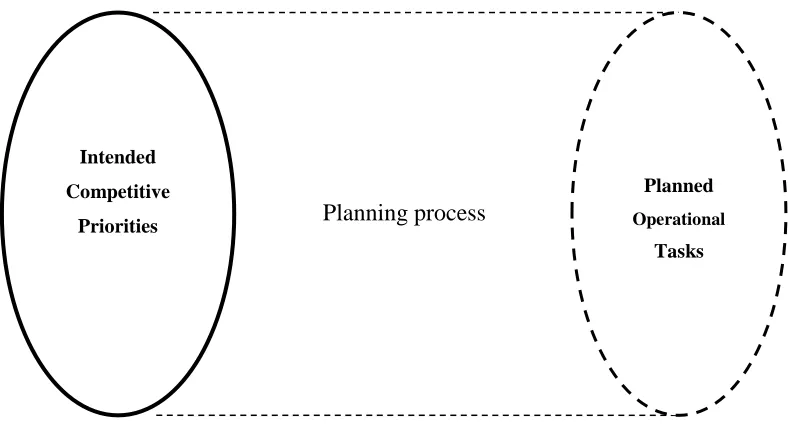
In addition to the above challenges in the execution process, there are some
challenges in the planning process which prevent decision-makers from crafting planned
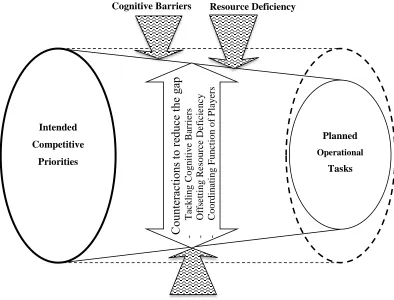
operational tasks that adequately reflect the intended competitive priorities. In other words,
my findings revealed that the full and correct execution of planned operational tasks does
not necessarily result in realizing the desired outcomes, because the tasks are not always
crafted correctly. Challenges identified in the planning process can be divided into the three
8
To reduce the impact of these challenges on congruence between intended priorities and
planned operational tasks, the managers have developed three counteractions of tackling
cognitive barriers, offsetting insufficient resources, and coordinating the function of
decision-makers. The emergent framework reveals that while achieving OI is highly
challenging, it is essential for achieving intended operational competitive priorities. In
other words, the accomplishment of planned operational tasks holds strategic importance
for the organization.
1.4
Study Contribution
The contribution of this study is three-fold. First, the findings of this research challenges
unrealistic assumptions about why employees do not execute tasks as planned. The
operations failure literature makes implicit assumptions regarding the motives and
intention of employees to comply with the requirements of the planned tasks and associates
employees’ failure in executing the tasks to cognitive factors or environmental factors
(Tucker and Edmonson, 2003; Tucker, Heisler, and Janisse, 2013; Stock, McFadden, and
Gowen III, 2007). Yet studying medicine administration and fall management operations
at PEC Co. reveals that due to behavioural characteristics, individuals sometimes
intentionally choose to deviate from the requirements of planned tasks.
Additionally, the study results offer a more complex, nuanced insight into the
congruence between planned and executed tasks by identifying challenges present in the
planning process, that contribute to the OI gap in the execution process. The planned
operational tasks designed during the planning process are highly unstable, and as a result
the frontline employees have difficulty in complying with frequently changing
requirements. Studying the planning process reveals that this instability in some extent is
the result of cognitive limitations of the decision-makers in planning operational tasks.
Uncertainties and complexities surrounding elderly care make it overly difficult for the
decision-makers, involved in the planning process, to correctly estimate the outcomes of
implementing the planned tasks. Consequently, as the outcomes of their decisions are
revealed gradually, the decision-makers find out about their mistakes and re-design
planned operational tasks. This highly dynamic environment causes substantial instability
9
frontline employees during the execution process.
The second important contribution of this study is identifying the linkage between
the executions of planned operational tasks by frontline employees and the realization of
intended operational competitive priorities. By illuminating various challenges which
contribute to gaps in the execution and planning processes, this study offers worthwhile
contributions to an emergent stream of operations strategy literature which investigates
micro-level processes of operations strategy formation (Kim, Sting, and Loch, 2014; Sting
and Loch, 2016). The findings suggest that during the planning process, presence of
challenges in the forms of cognitive barriers, insufficient resources, and interdependence
of decisions reduces the congruence between intended priorities and crafted planned
operational tasks. As a result, by executing these tasks the intended priorities that
organizations envision might not necessarily be realized. Moreover, facing the execution
challenges of the operational system characteristics and behavioural characteristics, the
frontline employees have difficulty in fully and correctly implementing the planned tasks.
Hence, the realized outcomes from implementation of the planned operational tasks might
not necessarily be aligned with the intended priorities of the organization.
Third, the extant literature in areas of human failure and safety often study
operational failures in terms of the bundle of planning failures and execution failures
(Gowen III, McFadden, Hoobler, and Tallon, 2006; McFadden, Henagan, and Gowen III,
2009). Consequently, the suggested causes of human failure and remedies for their
elimination remain at the abstract level. By unbundling planning mistakes and execution
errors, this study provides fine-grained recommendations for preventing human errors and
opens up avenues for specifying the causes and remedies with respect to each of these two
forms of failures in the literature.
1.5
Dissertation Outline
The composition of the study is as follows. In the second chapter a review of the extant
literature that informs the concept of integrity is presented. First the conceptualizations of
planned operational tasks and OI phenomenon are discussed, and then the concept of OI is
10
operations management, and service safety in operations. Finally, the behavioural
underpinnings of the OI phenomenon are discussed. In the third chapter, the methodology
of research based on the application of the case study approach to develop new insights
from the investigated nursing home is argued. This chapter entails discussions on the
processes of data collection and data analysis. The fourth chapter presents a detailed
account of my findings. It starts by providing a description of the nature of planned
operational tasks at the studied long-term care facility. Afterwards, rich narratives are
delivered to provide answers to the first research question. The fifth chapter addresses the
second research question on planning process, and the sixth chapter elaborates on
contributions to research, ending with a discussion on research limitations and future
11
Chapter 2
Literature Review
The purpose of this chapter is to ground the operational integrity (OI) phenomenon in the
extant literature. The OI phenomenon was defined as the congruence between planned
operational tasks and executed operational tasks by operations individuals. From this
definition the following research question emerged: “how is OI achieved in human-reliant
operational systems?” To provide the theoretical ground for studying the phenomenon, this
chapter reviews prior studies that inform the phenomenon of OI. To this end, this chapter
starts with laying out an argument on the nature of the planned operational tasks. The
second section presents an argument on the conceptualization of the OI phenomenon in
this study. In this section, I argue why achieving OI is important to manage operational
risk. In the third section, I specify the failure literature at the intersection of service
marketing, operations management, and service safety fields that illuminate some aspects
of the OI phenomenon. Finally, in the last section, drawing on the theoretical foundation
of behavioural operations literature, the importance of considering human intentions in
studying the OI phenomenon is highlighted.
2.1
Conceptualization of Planned Operational Tasks
In the service operations management context, Chase and Stewart (1994) are among the
earliest scholars who discuss the concept of task. The authors distinguish between tasks to
be performed, treatment of the customers in service encounters, and the tangible things in
the environment to conceptualize various forms of errors during the service delivery
process. Planned operational tasks are necessary for accomplishing the delivery of service
and represent “the work that must be done” by the employees to deliver the service.
Managing planned operational tasks is outlined in the context of traditional process
management literature such as service blueprinting, process mapping, scheduling, and
production planning (Chase and Stewart, 1994; Stewart, 2003). As such a planned
operational task can be conceptualized as a process, procedure, or plan that is executed by
employees to accomplish the delivery of service to the customer (Chase and Haynes, 2000;
Tucker, 2004). This conceptualization illustrates four major characteristics of the planned
12
to strategy, and (iv) being executed repeatedly. These characteristics are discussed below.
Value-added
First a planned operational task is value-added. Presumably, as a process, procedure, or
plan, a planned operational task has been designed to create value. From lean
manufacturing principles we know that if a planned operational task is not value-added,
technically, it should be removed from the production process, as it is considered a type of
waste (Shah and Ward, 2003). Value is a desired outcome and it is realized when the
planned operational tasks are executed.
An important caveat here is that it is possible that the planned operational tasks are
fully and correctly executed by the employees, but that the desired outcomes, i.e., the
desired values sought from the planned operational tasks are not realized. In other words,
the error might occur in the planning process not in the execution process. As Reason
(1990, 1995, 2000) argues sometimes actions are fully congruent with the plans, but the
desired outcomes are not created because of planning errors that he calls “mistakes”. In
other words, the planned operational tasks might be inadequate for realizing the desired
value. As Reason (1995, page 81) states, planning mistakes are the failures of intention:
“… the actions may go entirely as planned, but the plan itself deviates from some adequate
path towards its intended goal. Here the failure lies at a higher level: with the mental
processes involved in planning, formulating intentions, judging, and problem solving.”
Hence the plan's being correct is the key for realizing the desired outcomes of the planned
operational tasks. As such by realizing planned operational tasks, we can only increase the
likelihood of achieving the desired outcomes.
Various Desired Outcomes
The planned operational tasks might have various desired outcomes, and realizing
customer value is only one of the desired outcomes. Traditionally, the value of processes
for business organizations is assessed in terms of their contribution to the
“customer-defined value” (Blocker, Flint, Myers, and Slater, 2011; Liker and Morgan, 2006).
However, it is arguable that the desired value that organizations seek to realize by executing
13
operational tasks are not designed to create value for customers. For instance, safety
procedures that must be followed by employees are not designed to create value for the
customers. In fact, following safety procedures creates value for the organization and its
employees by ensuring the safety of individuals. Thus the desired outcomes of planned
operational tasks can have various foundations.
Some planned operational tasks are developed by organizations based on the
requirements of regulatory bodies. The regulatory bodies are the institutions that, to
minimize the risk of organizations’ operations for employees, consumers, environment,
and society, set the operational rules for an industry, monitor the organizations to ensure
their compliance with the rules, and impose sanctions in case of noncompliance (Ruef and
Scott, 1998; Scott, 2008). The purpose of regulations is increasing the transparency of
organizations and holding the decision-makers responsible for the harm that might be
caused for shareholders and stakeholders (Baldwin, Cave, and Lodge, 2012; Saleh, Marais,
Bakolas, Cowlagi, 2010). For example, in the banking industry, to enhance the banking
regulatory framework, the Basel Committee on Banking Supervision (BCBS) set out three
Basel Accord international banking regulations to mitigate the risk of credit and liquidity
risks (Alexander, 2003; McNeil, Frey, and Embrechts, 2015). A few other examples of
such requirements in Ontario include the Occupational Health and Safety Act set out by
the Ministry of Labour, the Public Hospitals Act set out by the Ministry of Health and
Long-Term Care (MOHLTC), The Long-Term Care Act, also set out by MOHLTC, and
the Fire Protection and Prevention Act set out by the Ministry of Community and Social
Services.
Organizations translate the regulatory requirements into specific sets of actions that
must be taken by various actors at various levels of organization, including at the
operational level where the products and services are produced (Rodríguez, Schleicher,
Daniel, Casati, Leymann, and Wagner, 2013). A simple example of a planned operational
task developed to address a regulatory requirement is a procedure that the employees are
required to follow when the fire alarm sounds. Another example is an incident report
procedure that most organizations require their employees to follow after an incident
14
the desired outcome of accomplishing these tasks is fulfilling the regulatory bodies’
requirements and avoiding hefty penalties.
For some planned operational tasks, the desired outcome is efficient resource usage
at the service delivery process. For instance, the desired outcome of a planned operational
task that requires nurses to place surgical instruments and tools in standard places after
each surgery minimizes the set up time for the next surgery team. Likewise, a planned
operational task that requires a hospital nurse to administer medication to a certain number
of patients during one shift has the time efficiency element embedded in it. By
administering medication to all patients, the desired outcome with respect to the time
consumed to deliver the service is realized. On the other hand, a planned operational task
that requires the employees’ responsible use of service provision goods (e.g., paper) is
designed to create value for the organization by keeping the cost of production down.
Finally, with the recent advancement in information technology over the last few
decades, organizations are conscious about information security more than ever before.
More importantly, the research reveals that employees are considered a major risk to
security of information (Herath and Rao, 2009; Bulgurcu, Cavusoglu, and Benbasat, 2010).
As a result, the information security policies of organizations require individuals at all
levels strictly comply with the planned operational tasks that are designed to ensure
security of organizational information (Hu, et al., 2012). As such, the desired outcome of
these planned operational tasks is to minimize the risk of insider abuse of organizational
information.
Connected to Strategy
Planned operational tasks are connected to the strategic priorities of organizations. As
stated in Skinner’s (1974, p.121) seminal work on focused factory, operational tasks are
the “offspring of a corporate strategy and marketing program.” Skinner’s basic assumption
was that in the absence of an alignment between the operations strategy and organizational
priorities, the frontline operations employees will lack the necessary guidance to perform
their everyday tasks. Supposedly, everyday operating decisions are made based on the
15
organization plans to compete (Hayes and Wheelwright, 1984; Wheelwright, 1984). As
such, strategic structural and infrastructural decisions establish the context for everyday
production line decisions and activities that are actually involved in production of goods
and services in various operating units (Kim, et al., 2014; Sting and Loch, 2016).
Likewise, the planned operational tasks in services are connected to the strategic
intentions of organization. In other words, the high-level strategic priorities of service
organization are translated into structural and infrastructural decisions that establish the
context for delivery of planned operational tasks. Particularly, the infrastructural decisions
that are related to the choices regarding best practices, policies, workforce scheduling, and
performance measurement (Roth and Menor, 2003; Voss, Roth, and Chase, 2008) create
the foundation of planned operational tasks by establishing the requirements for everyday
business practice. Thus, the desired outcomes of planned operational tasks that an
organization has envisioned when designing the tasks, is in fact closely related to the
strategic priorities of the organization.
Executed Repeatedly
The execution of planned operational tasks is assigned to the frontline employees. Thus,
these tasks are repeatedly executed when products and services are produced. While the
majority of the operational tasks are planned to be executed on a daily basis, some
operational plans are repeated weekly, monthly, or quarterly. For instance, a weekly
planned operational task that requires the operator to perform an autonomous maintenance
procedure is repeated regularly but not on a daily basis.
Additionally, daily planned operational tasks might be repeated a number of times
every day. For instance, a nurse who performs the planned operational task of
administering medicine, a receptionist in a hotel who performs check ins and check outs, a
clerk at a retail store who rings up the customer, or a bank teller who deposits customers’
money in their accounts all repeat their planned operational tasks over and over, as many
times as needed by their customers every day. For these individuals attending monthly staff
16
In conclusion, the planned operational tasks in this study are conceptualized as processes,
procedures, and plans which are designed to bring about certain desired outcomes in terms
of ensuring safety of employees, fulfilling the customers’ demands promises, minimizing
resource usage during the service provision process, hedging information security risk, and
meeting regulatory requirements. If an employee fails to execute a planned operational task
completely and correctly, the desired value of the task is not realized for the organization
and its stakeholders. However, even if the employee executes the planned operational task
completely and correctly, the desired outcome of the task is not necessarily realized. In
other words, the congruence between planned and executed operational tasks only
increases the likelihood of realizing the desired outcomes and desired value for various
stakeholders.
2.2
Conceptual Development of Operational Integrity
Generally speaking, the word integrity is commonly used to refer to any entity or state that
has the following characteristics: 1) completeness: being whole and undivided (Palanski
and Yammarino, 2007; Palanski and Yammarino, 2009), 2) soundness: being in an
unimpaired condition (Erhard, Jensen, and Zaffron, 2009; Clark and Fujimoto, 1990), or
3) incorruptibility: adhering to moral qualities (Brown, Treviño, and Harrison, 2005). The
last synonym, i.e., incorruptibility, is distinguishable from the first two in that it implies
adherence to virtuous codes of conduct and moral qualities. The first two characteristics do
not entail morality and ethics. In other words, a person or an organization might hold
immoral and unethical views, while functioning with integrity (Palanski and Yammarino,
2009; Simons, 2002). Accordingly, application of the word integrity in management and
organizations literature is divided into two categories of normative and positivist studies
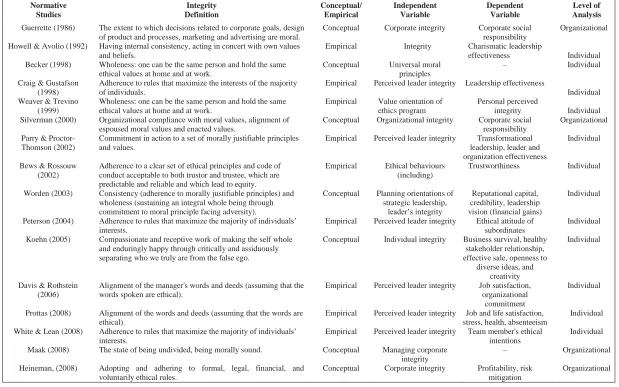
(Erhard, et al., 2009). A summary of the management literature on the integrity concept is
17
Table 2.1A Summary of Management Literature in Integrity Concept
Normative Studies Integrity Definition Conceptual/ Empirical Independent Variable Dependent Variable Level of Analysis
Guerrette (1986) The extent to which decisions related to corporate goals, design
of product and processes, marketing and advertising are moral.
Conceptual Corporate integrity Corporate social
responsibility
Organizational
Howell & Avolio (1992) Having internal consistency, acting in concert with own values
and beliefs.
Empirical Integrity Charismatic leadership
effectiveness Individual
Becker (1998) Wholeness: one can be the same person and hold the same
ethical values at home and at work.
Conceptual Universal moral
principles
– Individual
Craig & Gustafson (1998)
Adherence to rules that maximize the interests of the majority
of individuals.
Empirical Perceived leader integrity Leadership effectiveness
Individual Weaver & Trevino
(1999)
Wholeness: one can be the same person and hold the same ethical values at home and at work.
Empirical Value orientation of
ethics program
Personal perceived
integrity Individual
Silverman (2000) Organizational compliance with moral values, alignment of
espoused moral values and enacted values.
Conceptual Organizational integrity Corporate social
responsibility
Organizational
Parry & Proctor-Thomson (2002)
Commitment in action to a set of morally justifiable principles and values.
Empirical Perceived leader integrity Transformational
leadership, leader and organization effectiveness
Individual
Bews & Rossouw (2002)
Adherence to a clear set of ethical principles and code of conduct acceptable to both trustor and trustee, which are predictable and reliable and which lead to equity.
Empirical Ethical behaviours
(including)
Trustworthiness Individual
Worden (2003) Consistency (adherence to morally justifiable principles) and
wholeness (sustaining an integral whole being through commitment to moral principle facing adversity).
Conceptual Planning orientations of
strategic leadership, leader’s integrity
Reputational capital, credibility, leadership vision (financial gains)
Individual
Peterson (2004) Adherence to rules that maximize the majority of individuals’
interests.
Empirical Perceived leader integrity Ethical attitude of
subordinates
Individual
Koehn (2005) Compassionate and receptive work of making the self whole
and enduringly happy through critically and assiduously separating who we truly are from the false ego.
Conceptual Individual integrity Business survival, healthy
stakeholder relationship, effective sale, openness to
diverse ideas, and creativity
Individual
Davis & Rothstein (2006)
Alignment of the manager's words and deeds (assuming that the words spoken are ethical).
Empirical Perceived leader integrity Job satisfaction,
organizational commitment
Individual
Prottas (2008) Alignment of the words and deeds (assuming that the words are
ethical).
Empirical Perceived leader integrity Job and life satisfaction,
stress, health, absenteeism
Individual
White & Lean (2008) Adherence to rules that maximize the majority of individuals’
interests.
Empirical Perceived leader integrity Team member's ethical
intentions
Individual
Maak (2008) The state of being undivided, being morally sound. Conceptual Managing corporate
integrity
– Organizational
Heineman, (2008) Adopting and adhering to formal, legal, financial, and
voluntarily ethical rules.
Conceptual Corporate integrity Profitability, risk
mitigation
18 Positivist Studies Integrity Definition Conceptual/ Empirical Independent Variable Dependent Variable Level of Analysis
Gowans (1984) Consistency between what is believed and what is said. Conceptual Integrity Sale and advertising
performance
Individual
Kirkpatick & Locke (1991)
Correspondence between words and deeds; the virtue of having some basic principles and standing by them.
Conceptual Honesty/Integrity Effective leadership Individual
Mayer, Davis, & Schoorman (1995)
Adherence of trustee to a set of principles that is acceptable by trustor.
Conceptual Moral integrity Trust Individual
Kaptein (1999) Aligning all functions with internal and external expectations. Conceptual Organizational integrity – Organizational
Simons (1999) Employees’ perception of managers’ alignment of words and
deeds.
Conceptual Behavioural integrity (BI) Transformational
leadership, trust, creditability
Individual
Guinn (2000) Corporate compliance with regulatory requirements. Conceptual Corporate integrity – Organizational
Simons (2002) Employees’ perception of manager’s adherence to
psychological contracts, mission statements, corporate value, individual values, priorities, or management styles, and simple follow-through on expressed commitment.
Conceptual Manager’s actual
word-deed alignment
Behavioural integrity, employee trust
Individual
Dineen, Lewicki, and Tomlinson (2006)
Employees’ perception of managers’ alignment of words and deeds.
Empirical BI and supervisory
guidance
Organizational citizenship and ethical
behaviour of subordinates
Individual
Simons et al. (2007) Employees’ perception of managers’ alignment of words and
deeds.
Empirical Race and BI BI, trust, interpersonal
justice, satisfaction, commitment, and intent to
stay
Individual
Palanski & Yammarino (2007)
Congruence of an acting entity’s words and actions. Conceptual Integrity – Individual
Palanski & Yammarino (2009)
Congruence of an acting entity’s words and actions. Conceptual Integrity Trust and performance (at
all levels), employee’s satisfaction with leaders
Individual, team, organizational
Erhard et al. (2009) Honouring own words, by first keeping own words on time as
promised and second, attempting to clean up the mess that might be created as the result of not honouring the words.
Conceptual Integrity Workability, performance Individual, team,
organizational
Sutton (2010) Performing reliably as expected, at no surprise atmosphere. Book Operational Integrity
Management
– Operational
Palanski & Yammarino (2011)
Congruence of an acting entity’s words and Actions.
Empirical Leader’s and follower’s
BI, and trust
Satisfaction and performance
Individual
19
2.2.1
Integrity Concept in Management Literature
In the normative realm possessing and exhibiting integrity is evaluated subjectively based
upon adherence of individuals (Parry and Proctor-Thomson, 2002; White and Lean, 2008)
or organizations (Heineman, 2008; Maak, 2008) to principles, policies, procedures, and
plans that are designed based on ethical values and norms. The positive realm, on the other
hand, ascribes no attribute, ethical or unethical, to conduct and strictly focuses on the
congruence between actions and espoused principles, policies, procedures, and plans of
individuals (Dineen, Lewicki, and Tomlinson, 2006; Palanskiand and Yammarino, 2011)
or organizations (Erhardt et al., 2009; Guinn, 2000).
While two streams of literature are common in the level of analysis, i.e., individual
and organizational, they differ in the conception of integrity characteristic. In clarifying the
distinction, at the individual level, Simons (2002, p.19) states: “a colleague who openly
advocates self-interest, rather than the common good, as a basis for personal actions might
be despised if one does not share his values. However, such a colleague might be seen as
having high behavioural integrity if one can see clear alignment between word and deed.”
Thus, while in both views the concept of integrity is deemed to be the congruence between
actions and principles, in the normative view it is necessary to infuse the principles with
ethical values, whereas in the positivist view the principles may or may not be ethical1.
2.2.2
Positivist View of Integrity
Inspired by the positivist view of integrity, this study conceptualizes operational integrity
as an operating characteristic that represents the degree of congruence between planned
operational tasks and executed operational tasks by operations employees. While, the
positivist studies do not investigate integrity at the operational system level per se (see
Table 2.1), they provide the grounds for understanding the underpinning problem in the
instances that OI lapses occur in real world organizations, as in the examples provided in
1
20
chapter 1.
First of all, as argued above, the positivist view is not concerned with morality and
only investigates the congruence of the realized actions with the espoused principles,
policies, procedures, and plans. In the examples presented in chapter 1, the planned
operational tasks for turning on the humidifier and observing the live feed of the
surveillance camera have no associated moral aspects and are merely designed to ensure
the safety of the baby and the community respectively. On the other hand, in the example
of the Limestone School field trip, the planned operational tasks to chaperone co-ed
students are designed to address the ethics of the field trip. However, regardless of the
moral aspects of these tasks, all of them are required to be executed in accordance to the
plans, so that their desired outcomes become realized. In other words, at the operational
level all that matters is the congruence between the planned and executed operational tasks.
As such, this study views the concept of integrity at the operational level from the positivist
perspective and is not concerned with the ethics of the operational tasks.
Second, the positivist literature might facilitate understanding the causes of OI
lapses. This stream of literature introduces a variety of factors that result in individuals or
organizational integrity lapses, i.e., incongruence between actions and plans. These factors
include: unrealistic goals and plans (Erhardt et al., 2009; Simons, 1999), lack of consistent
operating priorities (Dinen et al., 2006; Simons, Friedman, Liu, and McLean Parks, 2007),
constant changes in plans (Palanski and Yammarino, 2011; Simons 2002), top-down
cascading integrity lapses in organization (Simons et al., 2007), misalignment between the
interests of internal and external stakeholders and lack of sanctions or rewards (Kaptein,
1999), and lack of knowledge and awareness of the principles and plans (Leroy, Palanski,
and Simons, 2011; Tomlinson, Lewocki, and Ash, 2014). While, these factors specifically
address the integrity lapses at either the individual or organizational level, some of those
might inform the operational integrity lapses as well.
Third, the positivist view contends that integrity, characterizing a state of being
whole, unbroken, unimpaired, and sound, brings about the capability of realizing the
21
the entity (e.g., an individual, a team or an organization) declines, the likelihood of
realizing its outcomes diminishes proportionally. Thus, for an operational system as an
entity, achieving operational integrity is a necessary condition for realizing the desired
outcomes of operations.
2.2.3
Operational Risk
As discussed in section 2.1, planned operational tasks are designed to create desired
outcomes such as ensuring safety of employees and customers, fulfilling the customers’
quality and delivery promises, minimizing resource usage during the production process,
hedging information security risk, and meeting the regulatory requirements to protect the
consumers, environment, and community. In addition, the operational tasks are linked up
to the strategic purpose of organization. Hence, lapses in OI prevent organizations from
realizing their desired outcomes and, potentially, could harm employees, customers, the
environment, and the community. Therefore, the manifestation of OI lapses is a form of
additional operational risk for the organization.
The operational risk is referred to as any potential losses (e.g., operational costs,
customer satisfaction, litigation, etc.) emanating either from failed/inadequate operational
system elements– i.e., provider elements, procedural elements, or physical elements – or
from external events (Hora and Klassen, 2013; McNeil, et al., 2015). When instances of
OI lapses occur, the provider elements of operational systems, i.e., the frontline employees,
fail to accomplish some of the operational tasks as planned. As such, some tasks which are
designed to create desired outcomes for some stakeholders (e.g., customers) are executed
incompletely, incorrectly, or not executed at all. Therefore, failure or inadequacy of the
frontline employees in accomplishing the planned operational tasks exposes organizations
to pure risk (i.e., there is no upside).
The magnitude of this risk depends upon the nature of the planned operational task
that is not accomplished fully or correctly. For instance, if a planned operational task,
designed by a research institute for process control purposes, requires the scientists to place
the experiment plates and instruments in standardized places after each use, the failure of
22
operational risk. Yet, if the same organization requires its scientists to follow certain
planned operational tasks for conducting experiments on pathogens, the failure of the
scientists to comply with the required procedures can expose the organization to substantial
operational risk. A case of such an OI lapse has actually occurred at one of the Center for
Disease Control and Prevention (CDC) labs, when a scientist failed to follow the planned
operational tasks required for sterilizing the sample plates after finishing an experiment.
While nobody actually contracted the anthrax virus, the lapse in OI exposed as many as 80
scientists and staff to it (Ford, 2014).
2.2.4
Concluding Remarks
In summary, the conceptualization of OI in this study is highly influenced by the positivist
view of integrity characteristic. The positive stream of integrity literature facilitates the
conceptualization of the operational integrity concept first by defining integrity as the
congruence between actions and plans, second by introducing the causes of integrity lapses
in individual and organizational levels, and third by identifying the consequences of lack
of integrity in terms of risk. As such, the present study conceptualizes operational integrity
as the congruence between planned and executed operational tasks by employees and
contends that the lapses in operational integrity expose organizations to additional
operational risk. Further, the magnitude of the operational risk resulting from OI lapses
depends upon the criticality of the planned operational tasks which are not executed fully
or correctly.
Finally, as previously discussed in this section, the main levels of analysis in
integrity literature are either individual or organization (see Table 2.1). The only exception
at the operational level is a book by Sutton (2010), which is a thorough reference on
operational integrity in process-based industries such as oil refineries. Sutton (2010)
defines an operational setting that operates with high integrity as one which operates as
expected without failure. Sutton also argues an array of process risk and reliability
management initiatives, such as reliability, availability, maintainability, and statistical
process control to manage operational integrity. This conceptualization of operational
integrity in terms of failure prevention guided the attention of the remainder of this chapter