Implementation of Genetic Algorithm based
Maximum Power Point Tracking for
Photovoltaic System
G.Ranjhitha 1, M.Valan Rajkumar 2
Department of Electrical and Electronics Engineering, Gnanamani College of Technology, Namakkal, India1, 2
ABSTRACT: The global demand for electrical energy is constantly increasing while the production of fossil fuel based energy is declining and therefore the obvious choice of clean energy source which is abundant and could provide security for the future development is sun’s energy. This paper presents the implementation of genetic algorithm (GA) based, maximum power point tracking (MPPT) for photovoltaic system (PV) under uniform and non-uniform irradiances. The power and voltage characteristic of PV array is non-linear and it exhibits multiple peaks including many local peaks and one global peak under non-uniform irradiances. In order to track the global peak, MPPT is the important component of PV systems. Then deduction of the required function to generate the reference values to drive the tracking system in the PV system at maximum power point (MPP) is done with the aid of Artificial Neural Network (ANN). This function deals with the more probable situations for variable values of temperature and irradiance to get the corresponding voltage and current at maximum power. The effectiveness of the proposed system is proved with the help of simulation. The simulation is performed in MATLAB/Simulink. From the simulation results, it shows that the proposed algorithm works properly to track the maximum power for PV system and to achieve high dynamic performance of the proposed system.
KEYWORDS: Photovoltaic Array (PV), Genetic Algorithm (GA), Artificial Neural Network (ANN), Maximum power point tracking (MPPT), Solar Energy.
I. INTRODUCTION
Today, the energy demand is moving on increasing toward generating power with renewable energy source that may be dispersed in a wide area, and most of them are renewable, as they have greater advantages due to their environmentally friendly nature. Photovoltaic (PV) energy has augmented interest in wide range of electrical power applications, since it is considered as a basically limitless and generally on hand energy resource with the focus on greener sources of power particularly for distant locations where utility power is engaged [1-4]. The solar can be used by all in universe which doesn’t need more investigations of producing electricity [5-7].
presented in [11] is most widely used method. It tracks the MPP by comparing instantaneous conductance to the incremental conductance.
Recently artificial intelligence methods which include Fuzzy and Neural Network have been applied to track. The fuzzy
logic controllers have the advantages of robustness, simplicity in design and it does not need accurate mathematical model. The selection of parameters and membership function in fuzzy logic is not easy as it needs expert knowledge and experimentation as discussed in [12-14]. The calculations are based on practical PV module data is explained in [15]. From all the above analysis, conclude that the new Genetic Algorithm (GA) to track MPP for Photovoltaic System under Uniform and Non-Uniform irradiances.
II. PVARRAYMODELLINGANDSIMULATION
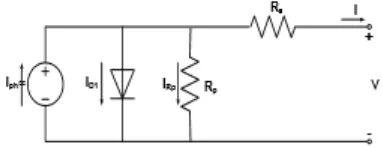
The mathematical PV module modeling depends on Schott ASE-300-DGF PV panel with the aid of MATLAB environment. The use of equivalent electric circuits makes it possible to model characteristics of a PV cell. There are two key parameters frequently used to characterize a PV cell. Shorting together the terminals of the cell, the photon generated current will follow out of the cell as a short-circuit current (Isc). Thus, Iph = Isc, when there is no connection to the PV cell (open-circuit), the photon generated current is shunted internally by the intrinsic p-n
junction diode. This gives the open circuit voltage (Voc). The single exponential model is shown in Fig 1.
Fig. 1 Equivalent circuit used in the simulations
The PV module or cell manufacturers usually provide the values of these parameters in their datasheets [15]. The ASE-300-DGF/50 is an industrial-grade solar power module built to the highest standards. Extremely powerful and reliable, the module delivers maximum performance in large systems that require higher voltages, including the most challenging conditions of military, utility and commercial installations. For superior performance, quality and peace of mind, the ASE-300-DGF/50 is renowned as the first choice among those who recognize that not all solar modules are created equal [15]. The simplest model of a PV cell equivalent circuit consists of an ideal current source in parallel with an ideal diode. The current source represents the current generated by photons (often denoted as Iph or IL), and
its output is constant under constant temperature and constant incident radiation of light.
In this model, a PV cell is represented by a current source in parallel with a diode and a series resistance, the basic current equation is given in Eq. (1).
I=Ipv, cell- I0, cell {[exp (qv/akT)]-1} (1)
where Ipv, cell is current generated by the incident light (directly proportional to sun irradiation), I0, cell is leakage current
of the diode, q is electron charge 1.6021e10-19 C, k is Boltzmann constant, T is Temperature of the PN junction, a is Diode ideality constant is explained in [16-17].
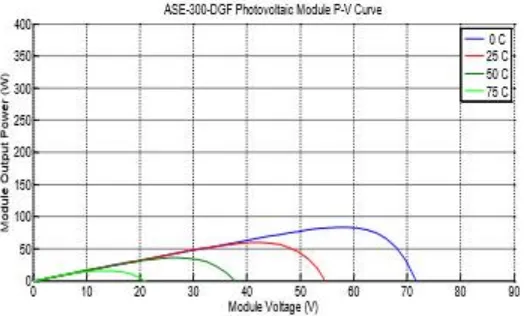
Fig. 2 P-V curves at (1KW/m2; 0, 25, 50, 75oC)
Fig. 3 P-V curves (0.75KW/m2; 0, 25, 50, 75oC)
Fig. 5 P-V curves (0.25KW/m2; 0, 25, 50, 75oC)
III.GENETICALGORITHM
The genetic algorithm is a method for solving both constrained and unconstrained optimization problems that is based on natural selection, the process that drives biological evolution. The genetic algorithm repeatedly modifies a population of individual solutions. At each step, the genetic algorithm selects individuals at random from the current population to be parents and uses them to produce the children for the next generation. Over successive generations, the population "evolves" toward an optimal solution. The application of the genetic algorithm to solve a variety of optimization problems that are not well suited for standard optimization algorithms, including problems in which the objective function is discontinuous, non - differentiable, stochastic, or highly nonlinear [18-19].
The MPPT algorithm based on GA Genetic Algorithm (GA) is an optimization system that resembles natural genetics. Using this method, an optimal set of parameters is resolute based on a “survival of the fittest” principle. In fact, there are three basic operators concerned in the look for procedure of a GA: selection, crossover, and mutation. Selection is a method which chooses a genetic material from the current generation’s population for enclosure in the next generation’s population according to their fitness. Crossover operator combines two chromosomes to produce a new genetic material. Mutation operator maintains genetic diversity from one generation of population to the next and aims to achieve some stochastic dissimilarity of GA in order to get an earlier convergence to solve this problem customized the algorithm by resetting the first population whenever it detects a variation of irradiance and cell temperature. Accordingly, the GA is reinitialized every time the following two conditions are satisfied as given in Eq. (2) and Eq. (3).
|V(K+1)-V(K)| < ∆V (2)
|[Ppv(k+1)- Ppv(k)]/ Ppv(k)|>∆P (3) The chromosomes position corresponds to the desired output voltage at iteration (k). The initial population that is composed by chromosomes parents includes four individuals which are applied successively. The initial positions of this population are given by Eq. (4).
child(k) = r.P (r) − (1 − r).P (k + 1) (5)
child(k + 1) = (r − 1).P (k) − (r).P (k + 1) (6) where, r is a random number. The relation between the output voltage and the duty cycle of the ISSBC is written as Eq. (7).
a(k) = child(k)/Voc. (7) In this work, to take into account the step of mutation regardless it impact on the convergence of the dynamic response and the apparition of oscillations, and this is due to the sequential aspect of chromosomes. Based on the GA equation MATLAB programmed and embedded in user interface function, initialized in simulation system.
IV.MAXIMUMPOWERGAFUNCTION
The aim of this function is to pick the peaks of PV power curves shown before; as the objective function and out two variables as arguments x(1), and x(2) (Vmp, and Imp). This efficient function is implemented by maximizing the power with the voltage and current as optimizing variables, and with bounds for them by the values of Voc, and Isc
from the PV module data sheet, also with nonlinear constraints with the aid of Voc, and Isc obtained from I-V curves for each irradiances, and temperatures values.
Both the objective function and constraint function are implemented using the previous modeling relations in the form of MATLAB m-files.
Function MPP = f (x)
MPP = x(1) * x(2) (8)
Function Constraints:
This optimizing variable (x(1)) is bounded by [0 VocDataSheet]. This optimizing variable (x(2)) is bounded by [0 IscDataSheet].
The nonlinear constraint:
Function [c,ceq] = f (x)
c = [z1-Voc Module (For Each Irradiance & Temperature Values);
z2-Isc Module (For Each Irradiance & Temperature Values)] (9)
ceq = [ ]
V. GENETICALGORITHMRESULTS
Fig. 6 Maximum Power relation with Irradiance and Temperature
Fig. 7 Voltage at Maximum Power relation with Irradiance and Temperature
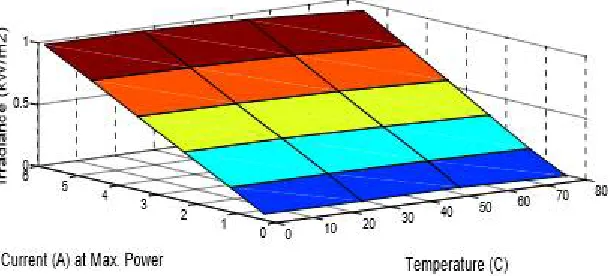
Fig. 8 Current at Maximum Power relation with Irradiance and Temperature
The neural network has the ability to deal with all previous relations as surface or mapping face, due to this technique ability for interpolation between points with each other and also curves.
VI.ARTIFICALNEURALNETWORKBASEDPV-GENETICALGORITHMWITHITSREGRESSION FUNCTION
This model uses the ANN technique with back-propagation technique which used, described and verified before in the field of renewable energy. This model uses the previous 3D graphs illustrated before as training or learning data for input and desired target. The inputs in this model are the irradiance and temperature; the outputs are: module voltage, and current at maximum power. This model with its hidden and output layers suitable neurons numbers is depicted in Fig 9. Also, the training state is presented in Fig 10 and Fig 11 respectively.
Fig. 9 ANN based Genetic PV Module Model at Maximum power point
Fig. 10 Training State ANN based Genetic PV System
The regression neural network function is deduced as follow:
The normalized inputs Gn: (Normalized Irradiance); Tn: (Normalized Temperature) are:
Gn = (G-0.5083)/(0.3368) (10)
Tn = (T-37.5000)/(28.5520) (11) The normalized outputs are:
Vn = - 0.6907 F1 + 3.0723 F2 + 2.2439 F3 + 3.2258 F4 – 123.3601 F5 + 0.4641 F6 - 3.9162 (12)
The un- normalized out puts are:
V = 17.3087 Vn + 37.2067 (14)
I = 1.9128 In + 2.7979 (15)
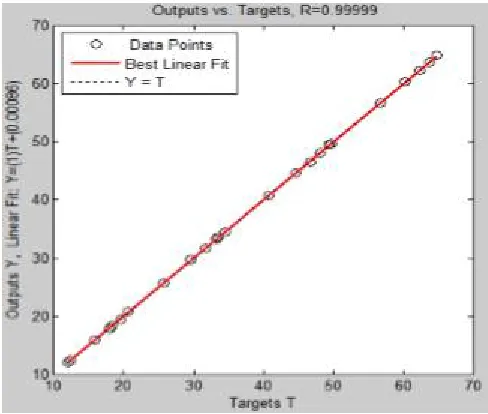
Fig. 11 Comparisons samples of actual and ANN-predicted values for Voltage Profile
VII. CONCLUSION
The genetic algorithm based maximum power point tracking for photovoltaic system under uniform and non-uniform irradiances is implemented. The configuration for the proposed system is designed and simulated using MATLAB/Simulink. Due to the importance of PV systems especially in green energy field, this paper introduces an efficient identification method for maximum power point (MPP) function for photovoltaic (PV) module using the genetic algorithm (GA). The required function to generate the reference values to drive the tracking system in the PV system at MPP is done with the aid of artificial neural network (ANN). This function uses the most probable situations for variable values of temperature and irradiance to get the corresponding voltage and current at maximum power. The mathematical PV module modelling depends on Schott ASE-300-DGF PV panel with the aid of MATLAB environment. The aim of this paper is to pick peaks of the power curves (maximum points) to make the sun tracker works efficiently. The simulation results at MPP are well depicted in 3-D figures to be used as training or learning data for the ANN model. Finally, the ANN regression function for this unit is introduced to be used directly without operating the neural model each times. The simulation result also proves the effectiveness of the proposed genetic algorithm which uses maximum power point tracking. The results clearly show that the proposed topology can effectively work as a genetic algorithm based maximum power point tracking for photovoltaic system.
REFERENCES
[1] A. Chel, G.N. Tiwari, A. Chandra, Simplified method of sizing and life cycle cost assessment of buildings integrated photovoltaic system, Energy and Buildings 41 (2009) 1172-1180.
[2] F. Blaabjerg, Z. Chen, S. Kjaer, Power electronics as efficient interface in dispersed power generation systems, IEEE Transactions on Power Electronics 19 (2004) 1184-1194.
[4] M.Valan Rajkumar, P.S.Manoharan, Harmonic Reduction of Fuzzy PI Controller based Three-Phase Seven-level DCMLI with SVPWM for Grid Connected Photovoltaic System, Journal International Review on Modeling and Simulations, Volume 6, No 3, June 2013, Pages 684-692. [5] S. Subiyanto, A. Mohamed, M.A. Hannan, Intelligent maximum power point tracking for PV system using Hopfield neutral network
optimized fuzzy logic controller, Energy and Buildings 51 (2012) 29-38.
[6] M.Valan Rajkumar, P.S.Manoharan, FPGA Based Multilevel Cascaded Inverters with SVPWM Algorithm for Photovoltaic system, Elsevier Journal Solar Energy, Volume 87, Issue 1, January 2013, Pages 229-245.
[7] Lian Lian Jiang, Douglas L. Maskell, Jagdish C. Patra, A novel ant colony optimization-based maximum power point tracking for photovoltaic systems under partially shaded conditions, Energy and Buildings 58 (2013) 227-236.
[8] X. Gao, S. Li, R. Gong. Maximum power point tracking control strategies with variable weather parameters for photovoltaic generation systems. Solar Energy, 2013,93: 357–367.
[9] M. Aureliano, L. Galotto, L. Poltroonery. Evaluation of the main MPPT techniques for photovoltaic applications. IEEE Transactions on Industrial Electronics, 2013,60(3): 1156–1167.
[10] P.Thirumurugan, P.S.Manoharan, M.Valan Rajkumar, VLSI Based Space Vector Pulse Width Modulation Switching Control in the proceedings of IEEE International Conference on Advanced Communication Control and Computing Technologies ICACCCT 2012 on August 2012, ISBN No. 978-1-4673-2045-0 (Print) (Page):366-370.
[11] K. Ishaque, Z. Salam, G. Lauss. The performance of perturb and observe and incremental conductance maximum power point tracking method under dynamic weather conditions. Applied Energy, 2014,119: 228–236.
[12] M.Valan Rajkumar, P.S.Manoharan, Space Vector Pulse Width Modulation of Three-Phase DCMLI with Neuro-Fuzzy MPPT for Photovoltaic System, World Journal of Modelling and Simulation, Volume 10, No 3, August 2014, Pages 193-205.
[13] Rajkumar, M.V., Prakasam, P. and Manoharan, P.S. (2016) Investigational Validation of PV Based DCDMLI Using Simplified SVM Algorithm Utilizing FPGA Tied with Independent Sources. Circuits and Systems, 7, 3831-3848. http://dx.doi.org/10.4236/cs.2016.711320 [14] A.Ravi, P.S.Manoharan, M.Valan Rajkumar, “Harmonic Reduction of Three-Phase Multilevel Inverter for Grid connected Photovoltaic
System using Closed Loop Switching Control”, Journal-IREMOS, Volume 5, No 5, October 2012, Pages 1934-1942. ISSN: 1974-9821 (Print), 1974-982X (Online) (Impact Factor: 1.199)
[15] Schott ASE-300-DGF PV panel data sheet. Source (Affordable Solar website); http://www.affordablesolar.com/admin/product_doc/Doc_pd-00-009-c_ase_300_20080328114646.pdf
[16] M.Valan Rajkumar, P.S.Manoharan, “Modeling, Simulation and Harmonic Reduction of Three-Phase Multilevel Cascaded Inverters with SVPWM for Photovoltaic System”, Journal International Review on Modeling and Simulations, Volume 6, No. 2, April 2013, Pages 342-350. ISSN: 1974-9821 (Print), 1974-982X (Online) (Impact Factor: 1.199)
[17] M.Valan Rajkumar, P.S.Manoharan, “Modeling and Simulation of Five-level Five-phase Voltage Source Inverter for Photovoltaic Systems”, Journal Przeglad Elektrotechniczny, Volume 10, No. 10, October 2013, Pages 237-241. ISSN: 0033-2097 (Print) (Impact Factor: 0.244) [18] G. Rudolph, 1994 “Convergence Analysis of Canonical Genetic Algorithms,” IEEE Trans. On N.N.; Vol. 5; No. 1; Jan. 1994, PP. 96-101. [19] Adel El Shahat, and Hamed El Shewy, “PM Synchronous Motor Genetic Algorithm Performance Improvement for Green Energy