Electronic Theses and Dissertations Theses, Dissertations, and Major Papers
8-31-2018
Protect Your Brain: The Impact of an Educational Intervention on
Protect Your Brain: The Impact of an Educational Intervention on
Helmet Use in Adolescents
Helmet Use in Adolescents
Daniella Mlinarevic
University of Windsor
Follow this and additional works at: https://scholar.uwindsor.ca/etd
Recommended Citation Recommended Citation
Mlinarevic, Daniella, "Protect Your Brain: The Impact of an Educational Intervention on Helmet Use in Adolescents" (2018). Electronic Theses and Dissertations. 7545.
https://scholar.uwindsor.ca/etd/7545
This online database contains the full-text of PhD dissertations and Masters’ theses of University of Windsor students from 1954 forward. These documents are made available for personal study and research purposes only, in accordance with the Canadian Copyright Act and the Creative Commons license—CC BY-NC-ND (Attribution, Non-Commercial, No Derivative Works). Under this license, works must always be attributed to the copyright holder (original author), cannot be used for any commercial purposes, and may not be altered. Any other use would require the permission of the copyright holder. Students may inquire about withdrawing their dissertation and/or thesis from this database. For additional inquiries, please contact the repository administrator via email
PROTECT YOUR BRAIN: THE IMPACT OF AN EDUCATIONAL INTERVENTION ON
HELMET USE IN ADOLESCENTS
By
Daniella Mlinarevic
A Thesis
Submitted to the Faculty of Graduate Studies Through the Department of Biological Sciences
In Partial Fulfilment of the Requirements for the Degree of Master of Science at the
University of Windsor
Windsor, Ontario, Canada
Protect Your Brain: The Impact of an Educational Intervention on Helmet Use in Adolescents
by
Daniella Mlinarevic
APPROVED BY:
______________________________________________ S. Berg
Leddy Library
______________________________________________ K. Poling
Department of Biological Sciences
______________________________________________ L. Buchanan, Advisor
Department of Psychology
Declaration of Originality
I hereby certify that I am the sole author of this thesis and that no part of this thesis has
been published or submitted for publication.
I certify that, to the best of my knowledge, my thesis does not infringe upon anyone’s
copyright nor violate any proprietary rights and that any ideas, techniques, quotations, or any
other material from the work of other people included in my thesis, published or otherwise, are
fully acknowledged in accordance with the standard referencing practices. Furthermore, to the
extent that I have included copyrighted material that surpasses the bounds of fair dealing within
the meaning of the Canada Copyright Act, I certify that I have obtained a written permission
from the copyright owner(s) to include such material(s) in my thesis and have included copies of
such copyright clearances to my appendix.
I declare that this is a true copy of my thesis, including any final revisions, as approved
by my thesis committee and the Graduate Studies office, and that this thesis has not been
Abstract
According to Statistics Canada (2016), approximately 70% of children aged 15-17 in
Ontario reported cycling over the last year. It is the law in Ontario that any cyclist under 18 wear
a helmet (Ministry of Transportation, 2016). Despite this regulation, less than half of teenagers in
Ontario report always wearing their helmet when cycling (Statistics Canada, 2016). This is a
clear cause for concern when considering the prominence of brain injury due to cycling-related
accidents (Coronado et al., 2007; Burt & Overpeck, 2001). This project attempted to address this
issue by analyzing whether an educational intervention based on the functions of the brain and its
importance in our daily lives could increase helmet use in adolescents. It was predicted that
participation in this project would lead to an increase in the perceived risk of cycling without a
helmet, thus ultimately leading to an increase in helmet use. The results supported the
hypothesis, with a main effect found between pre-test and post-test scores for helmet-related
questions in all groups who participated in the project. These results were also different from
those of a control group, who participated in a generic bike safety intervention. The results of
this project show great promise in the effectiveness of this educational intervention on helmet
Acknowledgement
I would first and foremost like to thank my thesis advisor Dr. Lori Buchanan of the
University of Windsor Psychology department. Her constant support and advice throughout this
entire process was invaluable. The metaphorical door to her office was always open whenever I
needed any assistance. She consistently allowed this paper to be my own work, but steered me in
the right the direction whenever she thought I needed it. This entire project would have been
impossible without her guidance and for that I am forever grateful.
I would also like to acknowledge Dr. Selinda Berg of Leddy Library and Dr. Kirsten
Poling of the Department of Biology at the University of Windsor as my committee members,
and I am incredibly grateful for their very valuable comments on this thesis.
In addition, I would like to thank my fellow lab members Vince, Brette, and Tara for
their input and support throughout this entire process. Their helpful feedback, thoughtful
suggestions, and assistance with statistical analyses ensured that this process was as smooth as
possible and I could not have done this without their help.
Finally, I must express my very profound gratitude to my parents and friends for
providing me with unfailing support and continuous encouragement throughout my years of
study and through the process of researching and writing this thesis. This accomplishment would
not have been possible without them. Thank you.
Table of Contents
DECLARATION OF ORIGINALITY ABSTRACT
iii iv
ACKNOWLEDGEMENTS v
INTRODUCTION 1
METHODS 11
RESULTS 15
DISCUSSION 19
REFERENCES 29
APPENDIX A 35
Protect Your Brain: The Impact of an Educational Intervention on Helmet Use in Adolescents
Introduction
For most children and adolescents, cycling can be a reliable and enjoyable form of
transportation. According to Statistics Canada (2016), approximately 80% of children in Ontario
between the ages of 12-14 report having cycled at some point over a one-year period, and this
number remains elevated for those aged 15-17, with approximately 70% reporting that they have
ridden a bicycle over the last year. It is the law in Ontario that any individual under 18 must be
wearing a helmet when cycling (Ministry of Transportation, 2016). In fact, this is the law in
almost all provinces in Canada, with the exception of Saskatchewan and Quebec (Canadian
Paediatric Society, 2017). Despite this, statistics suggest that only 42% in the 12-14 age group
and a remarkable 28% in the 15-17 age group report always wearing their helmet when cycling
(Statistics Canada, 2016). Therefore, it is likely that well over half of the adolescents in Canada
are wearing their bike helmets infrequently, if at all. With the prevalence of cycling related
injury (Burt & Overpeck, 2001; Kelly et al., 2001), this is a clear cause for concern. Finding a
solution that will encourage adolescents to participate in more safety-related behaviours while
cycling (i.e., wearing a helmet) is essential to decrease preventable head-related injuries.
The necessity of helmets when cycling has been consistently shown through research. For
example, the American Association for Neurological Sciences (2014) has demonstrated that
cycling is the number one cause of head-related injury in children under the age of fourteen,
placing it well above other high contact sports such as football and hockey. Although
helmet-safety in football has received frequent media attention recently, there is relatively little
discussion on helmet use in cycling. However, traumatic brain injuries (TBIs) are the leading
(Coronado et al., 2007). While many still argue that a helmet does little to protect in cases of
bicycle accidents (Hooper & Spicer, 2012), or that use of a bicycle helmet can actually increase
risk-taking behaviour (Gamble & Walker, 2016), most research supports the notion that bicycle
helmets, at the very least, offer some protection to the wearer. For example, Maimaris and
colleagues (1994) collected data from individuals in a local hospital who were admitted for a
bicycle-related injury. Of the approximately 1000 individuals in the study, only 114 had been
wearing a helmet at the time of the accident. The researchers concluded that helmets were
effective at protecting the head because only 4% of helmet-wearers were admitted for a
head-related injury, compared to the 11% of non-helmet wearers (Maimaris, Summer, Browning, &
Palmer, 1994). Interestingly, Thomas and colleagues (1994) discovered similar findings in a
group of children and adolescents. Their study focused more specifically on injuries acquired on
areas of the head that would have been normally covered by a helmet (i.e., the top of the head
and the upper face). They found that through use of a helmet, the risk of head-related injury was
reduced by 63% (Thomas et al., 1994). This has been further supported through investigations
on whether injury was decreased in cases with helmet use; for all non-motor vehicle crashes,
amongst all age groups studied, there was a decrease in head-related injury probability when a
helmet was worn by the rider (Povey, Frith, & Graham, 1999).
Unfortunately, the belief that helmets provide little protection in cases of accidents is
widely accepted. Many people, especially adolescents, believe that they are not at an increased
risk for injury without a helmet and that helmets are unnecessary. This misperception leads to
simple justifications for riding without helmets. For example, Finnoff, Laskowski, Altman and
Diehl (2001) surveyed adolescents between the ages of 11-19, and found that the number one
Additionally, 22% of the respondents reported not wearing a helmet because it would “mess up
their hair”. Another commonly listed reason was simply not owning a helmet at all (Finnoff et
al., 2001). A separate study showed that individuals could be positively influenced towards
helmet use if those around them, including parents and friends, were also wearing a helmet
(Secginli, Cosansu, & Nahcivan, 2014). Parental influence can also directly impact an
individual’s helmet use, but this influence has been shown to taper off around age 12 (Berg &
Westerling, 2001; Miller, Binns, & Christoffel, 1996). These findings demonstrate that there is a
social aspect that contributes to the misperception that helmets are not essential to wear, and
thus, leads to non-compliance of helmet-wearing.
A likely contributor to these arguments against helmet use posed by adolescents is the
lack of awareness about the importance of a helmet and an understanding of the risk involved
when riding unprotected. The limited value placed on safety in comparison to things such as
appearance or annoyance is likely a result of the lack of information provided to those wearing
helmets. Witte and colleagues (1993) assessed how the perception of a potential bicycle-related
injury influences helmet-wearing behaviour. They found that individuals who believe the
potential threat of injury to be higher are more likely to participate in safety and helmet-related
behaviour (Witte, Stokols, Ituarte, & Schneider, 1993). Quinne, Rutter, and Arnold (2001)
suggested that in order to increase the use of helmets in school-age individuals, it is necessary to
change their beliefs regarding helmet use and safety practices.
The Health Belief Model (HBM) describes a decision-making model an individual
subconsciously uses when choosing to participate in any behaviour related to their health
(Rosenstock, 1974). This model is based on five positive or negative factors associated with the
benefit, one’s susceptibility to the consequence of not performing the behaviour, the perceived
severity of said consequences, and potential cues to encourage the action of the behaviour
(Rosenstock, 1974). To put it in terms more relevant to this study, it could be phrased as: 1. the
perceived cost of wearing a helmet (e.g., annoying, it could ruin your hair, it costs money to
purchase a helmet); 2. the perceived benefit of wearing a helmet (i.e., the protection that it would
offer from injury); 3. how susceptible one would be to an injury related to not wearing a helmet
(i.e., how likely is it that one could fall off their bike and injure their head due to a lack of helmet
use); 4. the perceived severity of falling off (e.g., life-altering or minor); 5. a cue for one to
actually use their helmet, such as an in-class presentation or seeing someone else wearing their
helmet. After a mental calculation, an individual would weigh the result of each of the five
factors against each other to determine conclusively whether or not they should participate in the
behaviour; in this case, wearing a helmet versus going without one.
Presumably, the only way to change any weight in any of those categories externally is to
introduce a new cue to action. In this case, potential cues could be introducing a new educational
intervention related to cycling that could increase one’s perceived susceptibility to a brain-related
injury (i.e., TBI) as a result of a cycling incident, increase one’s perceived level of severity of a
head-related cycling injury, and/or subsequently increase their perceived benefit of using a
helmet. Often, perceived severity and perceived susceptibility can be thought of in unity as
“perceived threat” (Rosenstock, 1974). Witte and colleagues (1993) addressed this model in
relation to helmet use during cycling and found that by using cues to action such as
communitywide events and physician counselling, there was an increase in the perceived threat
of cycling. As previously mentioned, this perceived threat also indicated a higher likelihood of
encouraging a child or adolescent to wear the helmet, or wearing a helmet altogether (Witte,
Stokols, Ituarte, & Schneider, 1993). Research using measures related to the HBM has also
shown that an observed influence in cues to action plays a role in helmet use in skateboarders
(Peachey, Sutton, Cathorall, 2016), and cyclists (Ross et al., 2010).
Another relevant model is the Theory of Planned Behaviour (TPB; Ajzen, 1985). Born
from the Theory of Reasoned Action (Fishbein and Ajzen, 1975), this theory creates a link
between one’s beliefs and their behaviour. It relies on the assumption that behaviour is mediated
by a behavioural intention, and this intention is determined by three factors: an individual’s
attitude towards the behaviour, the subjective norm, and the perceived behavioural control the
individual has (Ajzen, 1985; Quine, Rutter, & Arnold, 1998). The first factor is the product of
one’s consideration of the positive and negative aspects of performing the desired behaviour
(Quine, Rutter, & Arnold, 1998). Attitude thus accounts for both an evaluation of the possible
outcomes as well as believed probability that each possible outcome could occur. Subjective
norm is a balance of the expectations from others related to how willing one is to comply with
these expectations. Lastly, an individual’s perceived behavioural control describes how much
control the individual believes they have over the behaviour in question (Quine, Rutter, &
Arnold, 1998). Unlike the Health Belief Model, the TPB predicts behaviour probability through
intentions (Quine, Rutter & Arnold, 1998).
Using these models as a method of developing an educational intervention that could
potentially influence one’s behaviour may encourage helmet use. While the Health Belief Model
has its merits, the TPB may be best suited for the purposes of this study for a few reasons.
Arnold and Quine (1994) found that the HBM could account for 53% of the variance found in
account for the variance in helmet use show that the TPB is actually better suited to determine
these variances (Quine, Rutter, & Arnold, 1998). Lajunen and Räsänen (2004) suggested that the
use of the TPB when examining bicycle helmet use and intentions was more effective than that
of the Health Belief Model. This means that in order to influence an individual’s helmet use and
increase their intention of using one, the most effective approach is to target their attitudes
towards the behaviour in order to lead to an increase in this behaviour. Additionally, the TPB
may be best to account for any potential social influence as a result of this project. It can be
reasonably concluded that if every student in the classroom is participating in the same
intervention, there may be some sort of horizontal influence amongst peers that was not initially
present. The present study will most directly attempt to change attitudes of the participants
towards helmet use through the introduction of increased potential risk as a possibility of riding
without a helmet.
Many attempts have been made to address the issue of helmet use and potentially
increase its prevalence amongst children and adolescents. Most of these, however, focus on
presenting general bicycle and safety information through in-class presentations, communitywide
events, or using other means (Moore & Adair, 1990; Towner & Marvel, 1992; Goldenbeld,
Boele, & Commandeur, 2016). Many countries, including most of Canada, have even begun to
mandate helmet use as a part of the law, which has met some success (Rodgers, 2002;
MacPhearson & Spinks, 2008; Coté et al, 1992; LeBlanc, Beattie, & Culligan, 2002). However,
as reported by Pendergrast and colleagues (1993), even the most intensive safety education and
training leads to limited success in terms of increased helmet use. Although there has been a
positive impact reported due to mandating helmet use (Carpenter & Warman, 2018; Rodgers,
report never wearing a helmet (Huybers et al., 2017; Statistics Canada, 2016). Many individuals
have reported that not abiding by the law is partially due to the fact that they believe helmet use
will not be as strictly enforced as other laws (Finch, 1996).
Unfortunately, very few of the interventions used actually address the importance of a
helmet beyond general statements about protection and safety, including statements such as “it
protects your head” or “it’ll stop you from getting hurt”. Presumably, most adolescent students
have little information on why they should be protecting their heads. That is, most adolescents
have limited, if any, exposure to neuroscience-related education, and thus have no knowledge on
the functioning of the brain and its crucial impact in executing our everyday behaviours. As
such, adolescents could be underestimating the importance of protecting their brain from a
preventable acquired brain injury.
Recent research done by Barnes, Maria, Hopkins and Caldwell (2012) supports the belief
that an educational intervention that involves basic neurological information could be beneficial
in increasing helmet use. Their study used an educational intervention specifically designed to
educate children on the dangers of not wearing a helmet and the impact that a brain injury could
have on one’s life. They studied children who were in the local hospital, although it was not
necessary that the participants were in the hospital for a cycling-related injury; all the
participants indicated in a demographic survey that they regularly rode their bikes (Barnes,
Maria, Hopkins, & Caldwell, 2012). The researchers used a pre-test/post-test technique to
measure differences in safety perception and subsequent helmet use before and after a five-point
intervention regarding brain injury prevention and helmet use. This included discussion of the
various functions of the brain, basic brain anatomy, a demonstration of the delicacy of the brain
simulation of how life would be with a brain injury. The control group in the study received a
bicycle helmet and safety brochure but no educational intervention. It was found that 96% of the
individuals in the experimental group reported always wearing a helmet at three month follow
up, in comparison to the 80% helmet use rate in the control group (Barnes, Maria, Hopkins, &
Caldwell, 2012). This research was influential as it introduced the importance of stimulating
children’s and adolescent’s understanding of why they should wear a helmet. Moreover, the
researchers demonstrated that an educational intervention geared towards the importance of the
brain and its functions to our daily lives could have a positive impact on the participants’
perception of safety and their frequency of helmet use. However, this study mainly used children
as participants, and limited research has been done with adolescents, who reportedly use their
helmets the least (Statistics Canada, 2016).
With the complexity of an organ such as the brain, it can be challenging to ensure that an
adolescent fully understands the functions and each of their implications in our lives. Thus, it is
important to assess the individual’s understanding of this content and ensure that they do have
some level of comprehension prior to examining the influence this content has on their lives and
their outlook on safety. If students’ safety perceptions were tested directly after a presentation of
content, it is impossible to know what influence the presented material really had on their
perceptions and to what degree this material resonated with the student. Many teachers employ
various tactics such as visual aids and hands-on experience in order to further develop the
individual’s understanding of the content beyond simple memorization. A visual aid could
include photos, movies, or demonstrations used in conjunction with the presented information. A
hands-on experience would provide the individual with the opportunity to directly apply their
processing is often achieved through semantic processing or elaboration, which is where an
individual processes the information based on its meaning and its relationship to other
meaningful information (Hirshman, 2001; Craik & Lockhart, 1972). This allows them to
integrate this information with pre-existing knowledge, which ultimately allows them to
understand it and remember it better than if they were simply asked to read it themselves (Craik
& Lockhart, 1972; Craik & Tulving, 1975). If one is attempting to educate a young student on
the functions of the brain, for example, it would be important to allow them the opportunity for
deeper processing through the use of a hands-on project and other learning aids in order to ensure
they retain the necessary information.
One primary avenue that this can be achieved in a classroom setting is through the use of
art. Art projects allow the students to express themselves and certain subjects in ways that make
sense to them, meaning that they are applying their own understanding of the information to the
project through this elaboration (Hirshman, 2001). This also allows them the opportunity to
create a visual aid for the learned information, meaning that the result of an art project based on a
certain topic should ultimately be the deeper understanding of the presented material by the
student. In addition, being given the creative freedom to relate the material directly to themselves
and their lives allows for higher-level elaboration through the self-reference effect (Klein &
Kilstrom, 1986).
As mentioned, it is possible that the most effective approach is to target an individual’s
attitude towards a certain behaviour in order to get them to participate in this behaviour. A
possible method is the use of an educational intervention that focuses on why the individual
should care about protecting their brains. This would hopefully increase not only the perceived
topic (Mlinarevic, unpublished) found promising results using a method similar to the one
proposed for this project. However, those results should be interpreted with caution as they have
low statistical power. In addition, that study used a questionnaire more specifically targeted to a
younger audience, which may have influenced the students’ responses. Finally, that study was
conducted over a shorter period of time, which may not have given the students the opportunity
to fully process all the information they had learned and thus may not have had as much lasting
power. The present study will act as a sequel to the foundational study, with an improved
questionnaire, a larger sample size, and a larger time period of study in order to hopefully
solidify the results and establish a new method of approaching the issue of helmet safety when
cycling.
Raising awareness about the brain’s role in our daily lives, the importance of protecting
our brain, and the potential consequences of acquired brain injury are key to a successful
intervention to encourage helmet use among adolescents. Research has highlighted how helmet
use consistently reduces the risk of head-related injury when cycling (Thomas et al., 1994;
Maimaris, Summer, Browning & Palmer, 1994). Considering the brain’s role in our everyday
functioning, it is important that we increase the use of helmets for a safer and more responsible
community. The next step is to design an intervention that educates adolescents to encourage
consistent helmet use and increase their willingness to wear one, as previous research was
targeted towards children. The present study aimed to improve the perception of helmet safety in
adolescents through an assessment of cycling-related health and safety perceptions both before
and after the completion of an educational intervention and subsequent art project regarding the
functions of the brain. The goal is to ultimately increase helmet use by altering their safety
intervention that does not emphasize the functions of the brain. It was predicted that following
this intervention, the attitude towards helmet use of the adolescent participants receiving the
educational intervention would change positively due to an increase in the perceived risk and that
they would ultimately indicate a higher likelihood of helmet use when cycling. While previous
results were promising, the present study aimed to confirm that targeting the students’ attitudes
towards helmet use by presenting them with new information is the best path to take to increase
helmet use. Through the use of an educational intervention, it was the hope that these students
learn the importance of the brain to our daily lives and use this information to make an informed
decision about helmet use and future safety precautions.
Methods
Participants
There were 108 participants in this study, with ages ranging from 14-17 years old.
Participants were recruited from two local high schools. They were students in the visual arts
courses at their respective schools during either their first or second semester of study in their
academic school year. Any student who indicated they did not own a bike would not be included
in the data analysis. Compensation included a chance to win movie tickets from a draw.
Materials
Questionnaires. Each participant initially received a paper copy of a demographic
questionnaire asking their age, gender, how frequently they ride a bicycle, and how often they
wore a helmet when they ride. The participants were instructed to record their responses by
The participants were also provided with two separate questionnaires, one before and one
after the art project. The pre-test questionnaire consisted of 52 items, and the post-test
questionnaire consisted of 44 items. Both questionnaires (Appendix A) drew items from a
combination of eight different measures and utilized a five-point Likert scale. The eight
measures used include the BACKIE questionnaire, designed by Morrongiello and colleagues
(2008), the Fear of Crime Scale (Boateng, 2016), the Health Survey (Janssen, 2014), the Social
Network Scales (Cole et al., 2017), the Moral Identity Questionnaire (Black & Reynolds, 2016),
the Perceived Risk of Traffic Situations Scale (Beck & Watters, 2016), the Effort-Reward
Imbalance Questionnaire (Wege et al., 2017), and the Perceptions of the Environment in the
Neighborhood Scale (Adams et al., 2013). The questionnaires for this study were designed to act
as “Student Life” questionnaires, with some key cycling and safety-related questions throughout
both surveys. While the majority of the questions were intended to be used as filler questions or
for additional analyses, there were three questions in both the pre-test and the post-test
questionnaire that were specifically intended to assess helmet use and safety perceptions towards
helmets: “I always wear a helmet when I ride my bike” (Janssen, 2014); “I don’t think I will be
badly hurt if I fall off my bike” (Morrongiello et al., 2010); and “As you get older, you do not
have to worry so much about wearing a bike helmet when you ride your bike” (Morrongiello et
al., 2010). The remainder of the questions were either health and safety-related or simply filler
questions. The questionnaires were all identified with a number in order to protect the
confidentiality of the participant. The questionnaires were collected by the researcher and
securely stored.
Helmet Project. The classrooms were given 110 helmets (55 each) provided by the
art project, the students needed paint, a gesso primer, pencils, markers, paint brushes, and any
other necessary art materials. This project was to be completed during class time.
In-Class Presentations. All groups received a presentation on either road visibility and
helmet safety (control group) or the functions of the brain (experimental group). Each
presentation was approximately 15 minutes long and was given by the researcher.
Procedure
This research project received approval from the University of Windsor Research Ethics
Board, the Greater Essex County District School Board, and the Windsor Essex Catholic District
School Board. This study used both a within-subjects and a between-subjects approach. The
participants can be classified in three groups: a control group of mean age 14, an experimental
group of mean age 14, and an experimental group of mean age 16. This was done to allow for
comparisons between age in terms of effectiveness of the intervention. The participants of one
school acted as the 14-year old control group and the 16-year old experimental group, and the
participants of the second school were all included in the 14-year old experimental group. The
first steps of the procedure were identical for both groups. They were first given approximately
one week to get consent forms signed by their parent/guardian. After one week, both classes
were given the demographic questionnaire and initial pre-test questionnaire to assess their health
and safety perceptions. This was done using a printed copy of the questionnaire and a pen or
pencil. The questionnaires were numbered with participant IDs, and a list of the students and
their corresponding IDs was created and kept by the teacher for the duration of the study. This
list was destroyed upon completion of the study and was only necessary in order to ensure that
questionnaires are collected, the researcher provided the participants with an educational
intervention. The remaining procedure for each group will be outlined separately below.
Control Group. For the control group, the educational intervention involved a
presentation on basic bike and helmet safety, including visibility and rules of the road. This
presentation was approximately fifteen minutes and mimicked those normally given to
participants during the school year, including information such as how to properly secure a
helmet, how to use hand signals when cycling, and how to maintain visibility at all times as a
cyclist. All of the information in the presentation was made available to the participants
electronically. Once the presentation was complete, each student was then given a Nutcase
bicycle helmet. The participants were instructed to design the helmet in any way they would like,
as the helmets would be donated to local children and adolescents who do not have the means to
purchase a helmet of their own. The students were encouraged to maintain their creativity
throughout the project and progress was monitored by the classroom teacher. The students had
approximately one month to complete these helmets during class time. Approximately two
weeks after the completion of the helmets (seven weeks from the initial questionnaire
administration), the researcher once again returned to the classroom for the administration of the
post-test questionnaire. The participants were given the same participant ID as they had received
at the beginning of the project. Once all the questionnaires were completed, they were collected
by the researcher and stored in a secure location.
Experimental Group. The experimental group received a fifteen-minute presentation on
the functions of the brain, including demonstrations of how certain functions are controlled by
certain areas of the brain. For example, the researcher would describe that vision is primarily
The classroom teacher made the information from the presentations available to the students
electronically. Once the presentation was complete, the researcher then provided each participant
with a Nutcase helmet and instructed the students on their task. Unlike the control group, the
participants in the experimental group were asked to apply the information they learned in the
presentation to their helmet design. These participants were asked to depict the various functions
of the brain onto the helmet; for example, including some depiction of eyes or vision on the back
of the helmet, as vision is controlled by the occipital lobe. These participants were told that the
helmets would be given to various bike stores and organizations within the community to be
used as educational tools for the promotion of helmet use. The design and painting of the helmets
took the students approximately one month to complete. Approximately two weeks after the
completion of the helmets, the participants were asked to complete the post-test questionnaire,
with the same participant ID as the one used in the beginning of the project. Once the
questionnaires were completed, they were collected by the researcher and stored in a secure
location. The procedures for both the younger experimental group and the older experimental
group were identical.
Results
There were 108 participants in this study. Nine were excluded from data analysis for lack
of signed consent forms or invalid data, and the remaining 99 were used. Ages ranged from
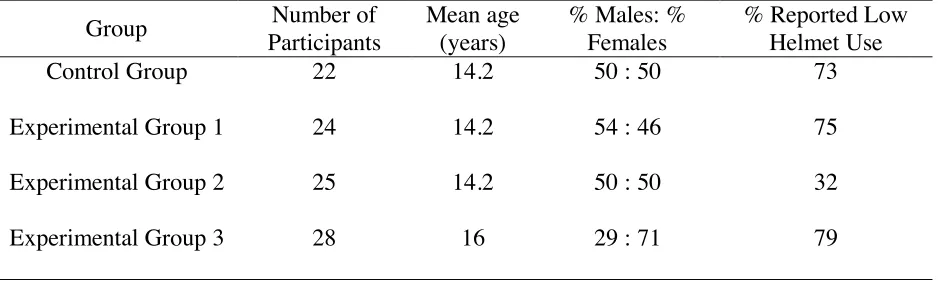
14-17. The overall group consisted of approximately 45% males and 55% females. A full
demographic summary can be seen in Table 1. Upon initial completion of the demographic
Table 1
Participant demographic information.
Group Number of
Participants
Mean age (years)
% Males: % Females
% Reported Low Helmet Use
Control Group 22 14.2 50 : 50 73
Experimental Group 1 24 14.2 54 : 46 75
Experimental Group 2 25 14.2 50 : 50 32
Experimental Group 3 28 16 29 : 71 79
There were three direct questions included in the questionnaires addressing perceptions
of safety with regard to helmet use, such as: “I always wear my helmet when I ride my bike”; “as
you get older, you do not have to worry so much about wearing a helmet when you ride your
bike”; and “I do not think I will be badly hurt if I fall off my bike”. The questions were all coded
so that a higher score indicated a higher perception of safety. The mean was then found for these
three questions for each participant on both the pre-test and post-test questionnaires, in both the
experimental and control conditions. The dependent variable was the difference in the score of
helmet perception before and after the completion of the intervention, and the independent
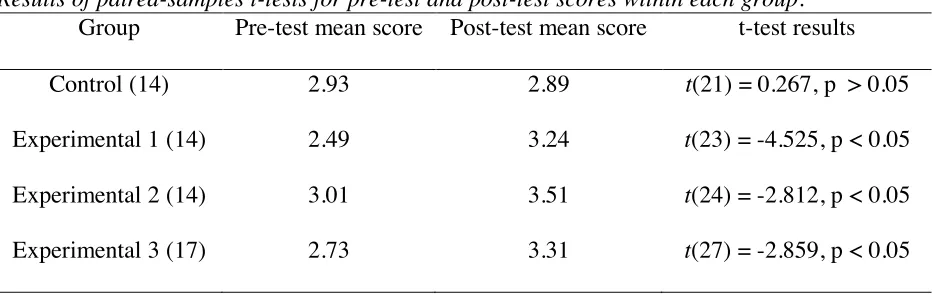
variable was the group to which the participant was assigned. First, paired samples t-tests were
completed to directly compare the means of the pre-test scores to the post-test scores within each
group. The results showed that students in all experimental groups showed a significant
difference between their pre-test and post-test scores, while the control group did not (Table 2).
While it should be noted that the pre-test helmet scores of experimental group 1 were
significantly lower than the other classes, this study aimed to examine only the change induced
However, for this reason, the two 14 year old experimental groups were analyzed separately
rather than combined into one experimental group.
Table 2
Results of paired-samples t-tests for pre-test and post-test scores within each group.
Group Pre-test mean score Post-test mean score t-test results
Control (14) 2.93 2.89 t(21) = 0.267, p > 0.05
Experimental 1 (14) 2.49 3.24 t(23) = -4.525, p < 0.05
Experimental 2 (14) 3.01 3.51 t(24) = -2.812, p < 0.05
Experimental 3 (17) 2.73 3.31 t(27) = -2.859, p < 0.05
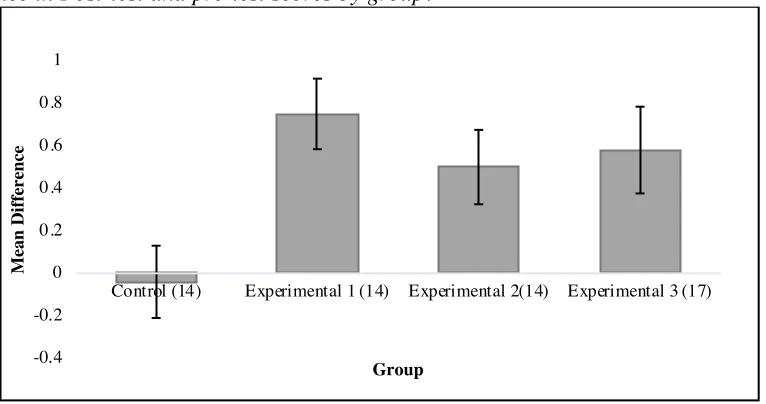
The effects of intervention (experimental group 1 vs. experimental group 2 vs.
experimental group 3 vs. control group) on helmet safety perception (difference in means
between post-test vs. pre-test scores) were analyzed with a one-way analysis of variance
(ANOVA) (Figure 1). While some of the data violate the assumption of normality, the ANOVA
has been shown to remain robust even with non-normal distributions (Norman, 2010). However,
homogeneity of the variances in each of the groups was shown (p > 0.05), thus complying with
the assumptions of an ANOVA. There was a main effect of helmet safety perception, F (3, 95) =
3.26, p < 0.05. There were no significant differences found within the responses on the other
elements of the questionnaire. Additionally, there was no correlation found between the
helmet-related questions and other questions on this questionnaire (p > 0.05 for all correlations). This
included examination of items associated with neighbourhood safety, morality, effort/reward,
driving risk, helmet perception, general safety behaviour, and social media use. There was a
although due to the small Pearson’s correlation coefficient, this should be interpreted with
caution.
Figure 1
Difference in Post-test and pre-test scores by group.
Pairwise t-tests were used to compare the differences of the means of each 14 year old
experimental group to the 14 year old control group. The results for these comparisons indicated
that the difference between post- and pre-test scores was significantly higher in the experimental
1 group than the control [t(44) = -3.3472, p <0.05]. This effect was also seen in a comparison of
the experimental 2 group and the control [t(45) = -2.2035, p < 0.05]. The older experimental
group and the control group’s mean scores were also compared, and this effect was maintained
[t(48) = -2.2800, p < 0.05]. However, as there is a difference in age, these results should be
interpreted with caution.
Finally, pairwise t-tests were completed between all the experimental groups to determine
if there was any effect of age on the outcome of the questionnaires. There was no observed
difference between experimental groups 1 & 2 (both of the same age) [t(47) = 1.0634, p > 0.05],
experimental groups 1 & 3 (14 year old group vs. 17 year old group) [t(49) = -0.634, p > 0.05],
-0.4 -0.2 0 0.2 0.4 0.6 0.8 1
Control (14) Experimental 1 (14) Experimental 2(14) Experimental 3 (17)
or experimental groups 2 & 3 (14 year old group vs. 17 year old group) [t(50) = 0.33445, p >
0.05].
Discussion
The results of this study support our hypothesis that an educational intervention on the
functions of the brain lead to a higher perception of bicycle helmet safety. The post-test scores
on helmet-related questions in all three experimental groups showed a higher perception of
helmet safety when compared to the control group. The control group, who completed a standard
helmet and bike safety intervention, showed no increase in their scores post-intervention. There
was no difference among the three experimental groups, indicating that age did not have an
impact on the effectiveness of the program. This observed change in helmet safety perception
implies that an educational intervention based on the functions of the brain and its importance in
our everyday lives has a positive impact on students’ perceptions of the importance of helmets to
our safety. Additionally, it also demonstrates how much more successful this approach is when
compared to a traditional bike safety presentation. The fact that there was no increase for any of
the other questions, including questions related to other aspects of health and safety behaviour
and perceptions (such as those related to driving risk and neighbourhood safety) indicates that
the effect exhibited in this study is limited only to cycling-specific perceptions and behaviours.
Nonetheless, these findings are extremely promising for the future of helmet safety and have
major implications with regards to helmet use in our community.
These results are consistent with previous findings in the field. Primarily, it confirms
previous results obtained using a similar method (Mlinarevic, unpublished). With the increased
questionnaire, the results still support the original hypothesis that this educational intervention
would positively impact the students’ perception of safety with regards to helmets. Similarly, it
also supports the findings of Barnes and colleagues (2012), which suggested that educating
younger individuals on the functions of the brain and increasing their awareness of its
importance led to an increased likelihood of these individuals wearing a helmet. As reported by
Witte, Stokols, Ituarte, and Schneider (1993), an increase in the perceived threat to one’s safety
could ultimately lead to an increase in the individual’s willingness to partake in some safety
behaviour (in this case, wearing a helmet), and it seems that the intervention used did just that by
demonstrating to students how important the brain is to our lives. Future research could alter the
intervention by including elements from the Barnes (2012) study (such as the demonstrations of
the fragility of the brain) to further impact their perceived threat directly.
Further, the Health Belief Model (Rosenstock, 1974) argues that an individual makes a
series of mental calculations based on the perceived weight of the potential consequences in
comparison to the potential benefit of participating in a certain health behaviour. The mental
calculation can be influenced by a cue to action, which could act to change the perceived weight
of one of the categories of the model. In this case, the cue to action is the educational
intervention provided to the students. The experimental intervention acted to increase the
perceived threat, which is the combination of the perceived possibility of injury with the
perceived severity of said injury (Rosenstock, 1974). The HBM has also been shown to support
predictions of bicycle helmet use (Ross et al., 2010). Furthermore, the influence of an increase in
the perceived threat – a component of the HBM – has been shown to be a positive predictor of
helmet use (Witte, Stokols, Ituarte, Schneider, 1993). During the initial presentation of
which may have resonated with the students and would thereby act to increase the perceived
threat of cycling without a helmet, thus changing its weight during consideration of the
behaviour. If the perceived threat were increased enough, this could be the deciding factor which
causes the student to choose to wear a helmet when they would normally ride without one.
Similar to the Health Belief Model, the Theory of Planned Behaviour also assesses
potential influences on an individual’s health-related behaviour (Azjen, 1985). However, this
model may be more suitable for this particular project, as it suggests that behaviour is modulated
by an intention to perform a particular behaviour. Behavioural intention is influenced by three
factors: attitude towards the behaviour, the subjective norm of this behaviour, and perceived
behavioural control (Azjen, 1985). First and foremost, the intervention primarily targeted the
attitudes of the participants in an attempt to change their attitude toward helmet use. According
to Azjen (1985), the attitude component accounts not only for an evaluation of the possible
outcomes, but the perceived probability of each outcome occurring. The intervention was
designed to influence both of these components – initially to introduce a brain injury as a
potential outcome, and subsequently to increase the perceived probability of its occurrence when
cycling.
However, other side effects from this intervention could have also had a positive impact
on the eventual behavioural intention. For example, a second component of the TPB is the
subjective norm of a certain behaviour, which essentially describes the expectations that others
have for one to perform the behaviour, and how willing the individual is to comply with these
expectations. Since all of the students in the classroom received the same information on the
functions of the brain, it is very likely that there could be some peer influence on a participant’s
participants, even if their attitudes weren’t particularly affected. For example, if three students all
begin to wear their helmets more often as a result of the project itself, a fourth student might be
inclined to wear their helmet because of their newly introduced social influence (Cialdini &
Goldstein, 2004). While this was not the main intention of this project, this horizontal byproduct
would only be providing further evidence for the influence this project may have on its
participants. In fact, Lajunen and Räsänen (2004) suggest that this social influence is quite
influential, and that one of the most effective ways to increase helmet use is to “influence peer
opinion”, as per the TPB. The participants on the experimental project could even act as
ambassadors for bike safety. Through various social interactions, it is possible that they would
increase helmet use in others by explaining to them what they had learned from the educational
intervention and cause a chain reaction of increased helmet use amongst their peers. Future
research should explore these hypotheses by including measures of susceptibility to social
influence and willingness to comply with others in the pre-test and post-test questionnaires.
While parental influence has also been shown to have an effect on helmet use in children and
adolescents (Berg & Westerling, 2001; Miller, Binns, & Christoffel, 1996), for the purposes of
this study, it was assumed that this influence remained constant throughout the project and thus
had no impact on the results of the experiment.
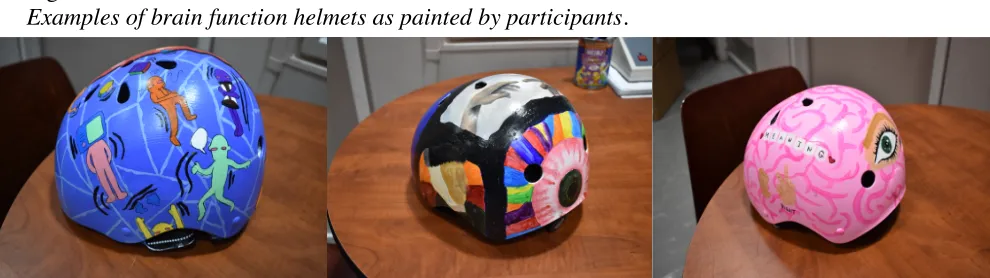
Figure 2.
While the findings of this experiment indicate a positive outcome from the educational
intervention, there are a few factors that should be considered when examining the results. One
major limiting factor on this study was the organization of the groups into experimental and
control. Ideally, each group would receive a different designation than the other classes involved
in the project; this decision ultimately depended on how the classroom teacher was willing to
divide their classes. For example, both 14 year old experimental groups came from the same
school with the same teacher. The most ideal division would be one group acting as the control
and one as the experimental, but the teacher requested that both her classes participated in the
same project in order to maintain consistency with her lesson plans. In addition, because of the
social nature of the students and their high level of interaction outside the class, it would have
been challenging to limit discussion between the groups if they were working on different
projects. A similar issue arose when attempting to match groups based on age. A control group
of age 16 would have assisted in the analysis of the older group’s results; however, only one
school was willing to integrate the project into a higher grade level class. Although previous
research (Mlinarevic, unpublished) did not suggest any significant difference in responses
between an older control group’s pre-test and post-test mean helmet scores, it would have
improved the validity of the results of this project to have an older control group to compare with
the experimental. For this reason, the results describing the differences between the control
group and the 16 year old experimental group should be interpreted with caution as the different
ages should also be considered.
In addition, there was a clear variance in starting points of helmet use (Table 1). While
three of the groups indicated a very high rate of low helmet use (by a helmet use rating of
helmet use, with only 32% of respondents reporting never using a helmet. While the difference
in the group’s pre-test and post-test scores was still positive, this variance is still quite unusual. A
potential explanation for this could be simply how high school classes are scheduled. Because of
the limited course offerings (i.e. academic- vs. applied-level courses), most highly-achieving
students will end up with similar schedules. While this may not necessarily be the case, it is
possible that the organization of the students into each period may have sorted particular
personality types into the same class period for the project. This variance should be explored and
controlled for in the future by the inclusion of more participants from a more variant population
to avoid any potential confound due to class schedule.
Another important consideration is the fact that most of the data collection for this project
was done, unavoidably, during the cooler months of the year. Due to this, it is likely that a
majority of the participants may not have ridden their bicycle throughout the duration of the
study, which may have resulted in more hypothetical responses as opposed to responses that
directly reflected their cycling activity (i.e. when asked to report how often they ride their
bicycles or how often they use a helmet when they ride). If true, the material would have
subsequently become less relevant to the student at the time, and could have influenced their
responses. Studies that build upon these results could consider conducting the project with
students enrolled in summer school, or students who live in an area which harbors proper cycling
conditions year-round, allowing for the students to answer based on more recent personal
experience rather than on hypothetical situations.
Perhaps one of the most interesting aspects of this experiment is the design of the
interventions themselves. The control intervention was a typical helmet and bike safety
intervention on the functions of the brain never once mentioned cycling, aside from the general
description in the consent forms. Primarily, it should be noted that the standard bike safety
intervention had no perceived impact whatsoever on the participants. Additionally, the fact that
the students made the connection between the information from the educational intervention and
its real life applications is a testament to the influence this particular presentation had on the
students. One key factor to consider is the fact that the canvas the students were using for their
art projects was actually a bicycle helmet, likely inducing a priming effect and allowing the
students to connect the concepts learned during the lecture to their real lives. Priming is the
process of increased activation of a certain idea due to previous exposure to a related concept (de
Wit & Kinoshita, 2015). Thus, the involvement of the helmets likely caused the students to
associate the two ideas more readily and may have led to their consideration of brain function
when responding to questions regarding helmet safety. This effect was likely not observed in the
control group as the presentation they received directly referenced helmet use and safety, thus
eliminating any potential implicit influence the canvas may have had. By the time the students
began the art project with the helmets, any additional information drawn from the helmets would
have been redundant. A probable way to examine the exact level of influence the helmets had
would be to change the medium to something less suggestive, such as paper or a fabric canvas.
Changing the medium would also allow the project to be offered to a much larger sample of
students, as helmet availability and cost was a major limiting factor in the number of participants
recruited.
The use of the art project in general provided some insight with regard to what
information was resonating the most with the students. While not included as part of the analysis
including depictions of eyes, ears, hands (to represent somatosensation), and words (to represent
language). These recurring concepts suggest that these concepts were the most readily
understood by the participants, although additional research projects could perform a qualitative
analysis of these recurring themes to identify which portions of the intervention attracted the
students the most. Interpreting the students’ artwork in this way could provide information on
how to adjust the presentation to tailor it more directly to the students’ interests. In addition,
regardless of what the end product of the art project actually looked like, many students reported
to both the teacher and the researcher a very developed understanding of various neurological
functions and how they would be represented in the brain.
While it is likely that the art project itself contributed largely to the students’
comprehension of the presented information, the use of art students specifically may make the
results of this study less generalizable to other adolescents. It is also possible that students who
share similar interests, such as an artistic interest, may share other personality types that may not
be as prevalent in students of science or literature, for example. This potential confound could be
eliminated by creating alternative forms of the “art project” that follows the educational
intervention, which could include asking the students to complete a fill-in-the-blanks on the
functions of the brain, ask the students to write a summary on the information presented, or even
designing an in-class project where the students take the presented information and format it for
presentation to a kindergarten class. The students could even be asked to perform a theatrical
demonstration of the information learned. There are many ways to promote elaborative
processing within adolescents, and each variation should ultimately lead to similar results as
The results of this project could have huge implications for the future of helmet safety
within the community. Insight into what could influence an increase in the perceived threat
associated with cycling could ultimately lead to the development of regular in-class programs to
promote helmet use. Being able to explain to students why their brains are important and why
they should be protected is evidently crucial to the students’ understanding of the risk involved
in riding without a helmet. Hopefully this could lead to an increase in helmet use and, by default,
a reduction in the risk of potential cycling-related traumatic brain injuries (TBIs) in adolescents
in the community (Maimaris, Summer, Browning, & Palmer, 1994; Thomas et al., 1994). Future
research should examine the lasting effects of this project with a third administration of the
survey after a 6-month or year-long time period. Finally, more in-depth analyses should also be
completed with the development of a questionnaire more suited to the content of this project.
This would include the addition of more questions directly related to cycling safety perception
and behaviour, as well as questions to assess how much information from the presentation the
students seemed to understand. Additionally, there could be certain measures used to allow the
researchers to determine how much of the change was due to the presentation and its influence
on their attitude, and how much was due to other influences such as those from the subjective
norm or perceived behavioural control.
Overall, the results of this study support the hypothesis that an educational intervention
regarding the functions of the brain increases the perception of bicycle safety in adolescents,
indicating a potentially higher likelihood of helmet use. The findings of this study could be used
in the development of educational programs to be incorporated into the school curriculum and
implications for the future of helmet safety, and its implementation could impact the community
References
Adams, E. J., Goodman, A., Sahlqvist, S., Bull, F. C., Ogilvie, D., & iConnect consortium.
(2013). Perceptions of the Environment in the Neighborhood Scale [Measurement
Instrument]. Retrieved from PsycTESTS. doi: http://dx.doi.org/10.1037/t25189-000
Ajzen, I. (1985). From intentions to actions: A theory of planned behaviour. In Action control
(pp. 11-39). Springer Berlin Heidelberg.
The American Association of Neurological Surgeons. (2014, August). Sports-related head injury.
Retrieved from http://www.aans.org/Patient Information/Conditions and
Treatments/Sports-Related Head Injury.aspx
Arnold, L., & Quine, L. (1994). Predicting helmet use among schoolboy cyclists: an application
of the Health Belief Model. Social Psychology and Health: European Perspectives.
Brookfield, VT: Avebury/Ashgate Publishing, 101-130.
Barnes, V. A., Maria, B. L., Caldwell, A. L., & Hopkins, I. (2012). Prevention of Traumatic
Brain Injury in Youth and Adolescents. Journal of Child Neurology,28(11), 1412-1417.
doi:10.1177/0883073812464272.
Beck, K. H., & Watters, S. (2016). Perceived Risk of Traffic Situations Scale [Measurement
Instrument]. Retrieved from PsycTESTS. doi: http://dx.doi.org/10.1037/t59518-000
Berg, P., & Westerling, R. (2001). Bicycle helmet use among schoolchildren—the influence of
parental involvement and children's attitudes. Injury Prevention, 7(3), 218-222.
Black, J. E., & Reynolds, W. M. (2016). Development, reliability, and validity of the moral
identity questionnaire. Personality and Individual Differences, 97, 120-129.
Boateng, F. D. (2016). Fear of Crime Scale [measurement instrument]. Retrieved from
Burt, C. W., & Overpeck, M. D. (2001). Emergency visits for sports-related injuries. Annals of
emergency medicine, 37(3), 301-308.
Canadian Paediatric Society. (2017). Bicycle helmet legislation. Retrieved from
https://www.cps.ca/en/status-report/bicycle-helmet-legislation
Carpenter, C. S., & Warman, C. (2018). Do 'All-Age' Bicycle Helmet Laws Work? Evidence from
Canada (No. w24644). National Bureau of Economic Research.
Cialdini, R. B., & Goldstein, N. J. (2004). Social influence: Compliance and conformity. Annu.
Rev. Psychol., 55, 591-621.
Cole, D. A., Nick, E. A., Zelkowitz, R. L., Roeder, K. M., & Spinelli, T. (2017). Social Network
Scales [Measurement Instrument]. Retrieved from PsycTESTS. doi:
http://dx.doi.org/10.1037/t59817-000
Coronado, V. G., Xu, L., Basavaraju, S. V., McGuire, L. C., Wald, M. M., Faul, M. D., &
Hemphill, J. D. (2011). Surveillance for traumatic brain injury-related deaths: United
States, 1997-2007 (p. 32). Atlanta: US Department of Health and Human Services,
Centers for Disease Control and Prevention.
Coté, T. R., Sacks, J. J., Kresnow, M. J., Lambert-Huber, D. A., Schmidt, E. R., Dannenberg, A.
L., & Lipsitz, C. M. (1992). Bicycle helmet use among Maryland children: effect of
legislation and education. Pediatrics, 89(6), 1216-1220.
Craik, F. I., & Lockhart, R. S. (1972). Levels of processing: A framework for memory research.
Journal of verbal learning and verbal behaviour, 11(6), 671-684.
Craik, F. I., & Tulving, E. (1975). Depth of processing and the retention of words in episodic
de Wit, B., & Kinoshita, S. (2015). The masked semantic priming effect is task dependent:
Reconsidering the automatic spreading activation process. Journal of Experimental
Psychology: Learning, Memory, and Cognition, 41(4), 1062.
Finch, C. F. (1996). Teenagers' attitudes towards bicycle helmets three years after the
introduction of mandatory wearing. Injury Prevention, 2(2), 126-130.
Finnoff, J. T., Laskowski, E. R., Altman, K. L., & Diehl, N. N. (2001). Barriers to Bicycle
Helmet Use. Pediatrics,108(1). doi:10.1542/peds.108.1.e4.
Fishbein, M., & Ajzen, I. (1975). Belief, attitude, intention and behaviour: An introduction to
theory and research.
Gamble, T., & Walker, I. (2016). Wearing a bicycle helmet can increase risk taking and
sensation seeking in adults. Psychological science, 27(2), 289-294.
Goldenbeld, C., Boele, M. J., & Commandeur, J. J. F. (2016). Evaluation of the bicycle helmet
campaign:”Wanna look cool, wear a helmet”' in New Zealand: Effects on helmet use
(Vol. 2016, No. 8).
Government of Ontario, Ministry of Transportation. (2016, September 29). Bicycle Safety.
Retrieved from http://www.mto.gov.on.ca/english/safety/bicycle-safety.shtml.
Hirshman, E. (2001). Elaboration in memory.
Hooper, C., & Spicer, J. (2012). Liberty or death; don't tread on me. Journal of medical ethics,
medethics-2011.
Huybers, S., Fenerty, L., Kureshi, N., Thibault-Halman, G., LeBlanc, J. C., Clarke, D. B., &
Walling, S. (2017). Long-term effects of education and legislation enforcement on all-age
Janssen, I. (2014). Crime and perceptions of safety in the home neighborhood are independently
associated with physical activity among 11–15year olds. Preventive Medicine,66,
113-117. doi:10.1016/j.ypmed.2014.06.016
Kelly, K. D., Lissel, H. L., Rowe, B. H., Vincenten, J. A., & Voaklander, D. C. (2001). Sport and
recreation-related head injuries treated in the emergency department. Clinical Journal of
Sport Medicine, 11(2), 77-81.
Klein, S. B., & Kihlstrom, J. F. (1986). Elaboration, organization, and the self-reference effect in
memory. Journal of Experimental Psychology: General, 115(1), 26.
Lajunen, T., & Räsänen, M. (2004). Can social psychological models be used to promote bicycle
helmet use among teenagers? A comparison of the Health Belief Model, Theory of
Planned Behaviour and the Locus of Control. Journal of safety research, 35(1), 115-123.
LeBlanc, J. C., Beattie, T. L., & Culligan, C. (2002). Effect of legislation on the use of bicycle
helmets. Canadian Medical Association Journal, 166(5), 592-595.
Macpherson, A., & Spinks, A. (2008). Cochrane review: Bicycle helmet legislation for the
uptake of helmet use and prevention of head injuries. Evidence-Based Child Health: A
Cochrane Review Journal, 3(1), 16-32.
Maimaris, C., Summer, C. L., Browning, C., & Palmer, C. R. (1994). Injury patterns in cyclists
attending an accident and emergency department: a comparison of helmet wearers and
non-wearers. Bmj, 308(6943), 1537-1540. doi:10.1136/bmj.308.6943.1537.
Miller, P. A., Binns, H. J., & Christoffel, K. K. (1996). Children's bicycle helmet attitudes and
use: association with parental rules. Archives of pediatrics & adolescent medicine,
Mlinarevic, D. (2017). Use Your Head: An Assessment of the Willingness to Wear a Helmet in
Adolescents. Unpublished.
Moore, D. W., & Adair, V. (1990). Effects of a School-based Education Programme on Safety
Helmet Usage by 11-to 13-year-old Cyclists. Educational Psychology, 10(1), 73-78.
Morrongiello, B. A., Cusimano, M., Barton, B. K., Orr, E., Chipman, M., Tyberg, J., … Bekele,
T. (2010) BACKIE questionnaire: A measure of children’s behaviours, attitudes,
cognitions, knowledge and injury experiences.
Norman, G. (2010). Likert scales, levels of measurement and the “laws” of statistics. Advances
in health sciences education, 15(5), 625-632.
Peachey, A. A., Sutton, D. L., & Cathorall, M. L. (2016). Helmet ownership and use among
skateboarders: Utilisation of the Health Belief Model. Health Education Journal, 75(5),
565-576.
Pendergrast, R. A., Ashworth, C. S., DuRant, R. H., & Litaker, M. (1993). Correlates of
children's bicycle helmet use and short-term failure of school-level interventions. Journal
of Safety Research, 24(2), 123-124. doi:10.1016/0022-4375(93)90008-B
Povey, L. J., Frith, W. J., & Graham, P. G. (1999). Cycle helmet effectiveness in New Zealand.
Accident Analysis & Prevention, 31(6), 763-770.
Quine, L., Rutter, D. R., & Arnold, L. (2001). Persuading school-age cyclists to use safety
helmets: Effectiveness of an intervention based on the Theory of Planned Behaviour.
British Journal of Health Psychology, 6(4), 327-345.
Quine, L., Rutter, D. R., & Arnold, L. (1998). Predicting and understanding safety helmet use
among schoolboy cyclists: a comparison of the theory of planned behaviour and the
Rodgers, G. B. (2002). Effects of state helmet laws on bicycle helmet use by children and
adolescents. Injury Prevention, 8(1), 42-46.
Rosenstock, I. M. (1974). Historical origins of the health belief model. Health education
monographs, 2(4), 328-335.
Ross, T. P., Ross, L. T., Rahman, A., & Cataldo, S. (2010). The bicycle helmet attitudes scale:
using the health belief model to predict helmet use among undergraduates. Journal of
American College Health, 59(1), 29-36.
Secginli, S., Cosansu, G., & Nahcivan, N. O. (2014). Factors associated with bicycle-helmet use
among 8–16 years aged Turkish children: a questionnaire survey. International journal of
injury control and safety promotion, 21(4), 367-375.
Statistics Canada (2016). Helmet use in recreational activities, 2013-2014. Retrieved from
http://www.statcan.gc.ca/pub/82-625-x/2016001/article/14628-eng.htm
Thomas, S., Acton, C., Nixon, J., Battistutta, D., Pitt, W. R., & Clark, R. (1994). Effectiveness of
bicycle helmets in preventing head injury in children: case-control study. Bmj, 308(6922),
173-176.
Towner, P., & Marvel, M. K. (1992). A school-based intervention to increase the use of bicycle
helmets. Family medicine, 24(2), 156-158.
Wege, N., Li, J., Muth, T., Angerer, P., & Siegrist, J. (2017). Effort-Reward Imbalance
Questionnaire--Short Version for University Students [Measurement Instrument].
Retrieved from PsycTESTS. doi: http://dx.doi.org/10.1037/t60694-000
Witte, K., Stokols, D., Ituarte, P., & Schneider, M. (1993). Testing the health belief model in a