Auditor and client commitment to audit preparation in a quality audit process
By
Stuart Marsh
A thesis submitted in fulfilment for the requirements of the Doctorate in Business Administration (DBA) at the University of Central Lancashire
1
Student Declaration
Concurrent registration for two or more academic awards
I declare that while registered as a candidate for the Doctorate in Business
Administration degree, I have not been a registered candidate or enrolled student for another award of the University or other academic or professional institution.
Material submitted for another award
I declare that no material contained in the thesis has been used in any other submission for an academic award and is solely my own work.
Signature of Candidate: ……….
Type of Award DBA
2
Abstract
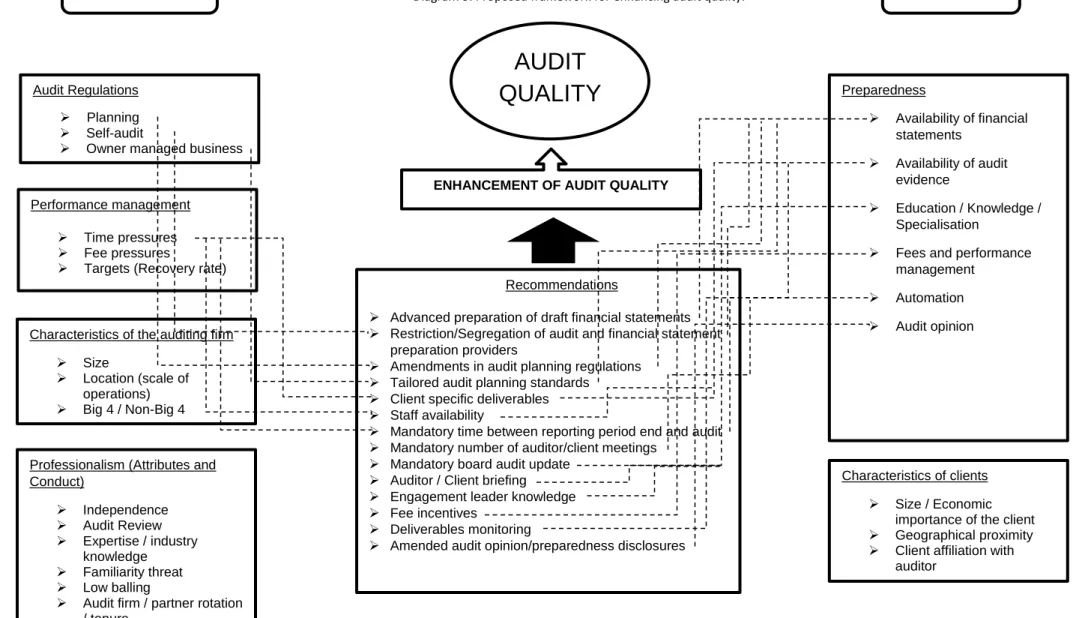
Reflecting on the growing interest from scholars and practitioners and their awareness of the necessity to appreciate the involvement of the client in an audit process (Canning, Malsch & O’Dwyer, 2017), the aim of this study is to explore the importance of audit client commitment to comprehensive audit preparation, to improve the quality of a UK financial statements audit. This research is based on a qualitative approach employing semi structured interviews as a research method. Accordingly, interviews were undertaken with audit engagement leaders from a range of auditing firms as well as with finance directors from a range of audited clients. The perspectives as to the levels of preparedness for the first day of the financial statements audit commencing from each participant group were examined and were shown to reveal interesting results.
The study unveiled the differences between what auditors and their clients perceived to be ‘ready’ for the financial statements audit. The availability of a completed set of financial statements when the auditors commence their audit has been identified as an issue that causes a significant amount of time pressures on the auditors. Additionally, the thematic analysis of data revealed that as a result of such pressures auditors were adopting practices whereby insufficient/substandard work was completed, which could potentially not only have an adverse effect on the overall quality of the audit, but also contribute to an inappropriate audit opinion being signed. Amendments to current auditing practices and the periods between a reporting period end and the audit work commencing to enhance audit quality was found to underpin the pressures on auditors when forming a time pressured audit opinion. This study of the challenges faced by auditors to plan and complete their audit with conflicting
3
targets and time scales as well as the pressures felt by audit clients, provides audit preparedness specific, evidence based implications on which these may be surmounted to enable a quality, fully documented audit and supported audit opinion to be completed.
This study addresses the pressing need to overcome the lack of theoretical discussions on the auditees’ perspectives on auditing practices, and their views on the specific factors enhancing audit quality. Based on the existing literature to date, no study has explored the “auditee” as a research object in scholarly discussions on the quality of a UK financial statements audit.
The findings of this study, along with subsequent recommendations have relevance for the key stakeholders of audit engagements and regulators concerned with the enhancement of the quality of a UK financial statements audit, and for scholars interested in broadening their understanding of the audit process as a two-sided relationship.
4
Table of Contents
Student Declaration ... 1 Abstract ... 2 ... 7 1.1.1 Introduction ... 71.2 Aim and Objectives ... 10
... 11
2.1 Literature Review ... 11
2.1.1 Introduction ... 11
2.1.2 Audit quality ... 12
2.1.3 Auditor Expertise / Engagement leader / Audit firm rotation and Audit Quality ... 13
2.1.4 The relationship between audit fees and audit quality ... 15
2.1.5 Budgets and time pressures and audit quality ... 19
2.1.6 Audit review - Effects on audit quality ... 30
2.1.7 Client Negotiations and Preparation for Audit ... 34
2.1.8 Literature Review Conclusion ... 37
... 43
3.1 Research Methodology ... 43
3.1.1 Introduction ... 43
3.1.2 Research Philosophy ... 45
3.2 Research Methodology ... 46
3.2.1 Selection of the research strategy and method. ... 56
3.3 Methods ... 56
3.3.1 Participants ... 58
3.3.2 Semi-Structured Interviews ... 59
3.4 Reliability, Validity and Triangulation ... 61
3.4.1 Reliability ... 61
3.4.2 Validity ... 62
3.4.3 Triangulation ... 63
5
... 64
4.1 Findings and Analysis ... 64
4.1.1 Introduction ... 64
4.1.2 Analysis of the Auditors responses on their client’s preparedness for audit. ... 65
4.1.3 Analysis of the Finance Director responses and their perceived preparedness for audit. ... 104
4.1.4 Consolidated analysis of auditor and their client’s preparedness for audit. ... 152
4.1.4.1 Introduction ... 152
4.1.4.2 Availability of Financial Statements ... 153
4.1.4.3 Availability of Audit Evidence... 157
4.1.4.4 Education / Knowledge / Specialisation ... 160
4.1.4.5 Fees and Performance Management ... 162
4.1.4.6 Automation / Monitoring ... 165
4.1.4.7 Audit Opinion ... 167
4.1.4.8 Audit review / Premature Sign Off ... 171
... 174
5.1 Conclusions and Recommendations ... 174
5.1.1.1 Introduction ... 174
5.1.1.2 Availability of Financial Statements ... 178
5.1.1.3 Availability of Audit Evidence... 180
5.1.1.4 Education / Knowledge / Specialisation ... 183
5.1.1.5 Fees and Performance Management ... 185
5.1.1.6 Automation / Monitoring ... 186
5.1.1.7 Audit Opinion ... 186
5.1.1.8 Audit Review / Premature Sign Off ... 187
5.1.1.9 Additional reflections on the conclusions ... 187
5.1.1.10 Limitations and Suggestions for Future Research ... 188
Bibliography ... 190
Appendix 1 ... 211
Auditor Interview Questions ... 211
Appendix 2 ... 214
6
Appendix 3 ... 217
Level 1 coding - Auditors... 217
Appendix 4 ... 239
Level 1 coding – Finance Directors ... 239
Appendix 5 ... 260
Second level coding - Auditors ... 260
Appendix 6 ... 262
Second level coding – Finance Directors ... 262
Appendix 7 ... 264
Consolidated final level coding ... 264
Appendix 8 ... 265
Participant information sheet... 265
Appendix 9 ... 268
7
1.1.1 Introduction
The external audit of UK organisations’ financial statements remains a key element of the financial reporting environment. The auditor’s report tends to be one of the key disclosures within an organisation’s annual report and financial statements upon which users of those reports (predominantly investors/providers of finance) usually place reliance and base their investment decisions upon. Indeed, after many financial scandals the first questions to be asked are normally where the auditors were and of what level of quality was the work completed by those auditors (Zeune,1999; Chetkovich,1977). Such scandals have called into question the amount of fees auditors charge and the services delivered (or the relevance of those services), whereas auditors time pressures, workloads and stresses appear to be ignored.
There continues to be ongoing debates surrounding the purpose, usefulness and quality of financial statement audits. Audit quality has been at the top of auditing firms’ agendas over recent years and in particular has more recently been a focus of academic studies. There have been numerous academic studies that have investigated differing aspects of what is deemed to be quality in terms of audit; mainly those studies have focused on topics which include: relationships between the audit team characteristics and financial reporting quality (audit inputs), industry expertise, the role of the industry structure, rules and regulations and the consequences of the outcomes arising as a result of the audit. Less importantly audit fees and the hours attributed towards completing an audit by the staff employed to complete audit
8
procedures (Laitinen and Laitinen, 2015). Such hours and fee pressures impact on the stresses and time pressures laid upon auditors and as a result impact on the quality of the audit work performed, and the quality of the final audit opinion within the financial statements.
Historically the perceptions of audit quality differ between individuals and organisations, Francis states that "audit quality can be conceptualised as a theoretical continuum ranging from very low to very high quality" (Francis, 2004, p346) and these varying levels of quality could be dependent upon the workloads and pressures experienced by auditors at various times of a year (Lopez and Peters, 2012). Reisch (2000) argues that there are potentially two major divisions of audit quality, there are those who believe a 'supply' of a quality audit is paramount in their requirements from an auditor, alternatively there are those individuals and organisations that 'demand' a quality audit as a result of (amongst other requirements) the fees that they are paying. To avoid the threat of familiarity (whereby the auditor and client become closer and as a result issues may not be reported to the relevant stakeholders of the organisation being audited) an organisations’ auditors change. Abbott and Parker (1999) are of the opinion that a change in auditor (normally as a result of mandatory auditor rotation or change in company management/ownership) constitutes a demand from the auditors to deliver a quality audit. From experience, a new audit appointment normally results in that auditor attempting to provide something new (more commonly referred to as 'added value') in the attempt to justify the decision to appoint them as successor auditors. However, an argument exists that it could take a number of audits before the auditor understands its client in order to deliver a true quality audit, thus in essence only the latter audits of an auditor’s tenure could be described as ‘quality audits’.
9
As noted by DeZoort et al (2002), external audit is a fundamental element of the corporate governance framework and as such is to some extent monitored by the Audit Committee (essentially a group of non-executive directors whom the larger listed companies employ to monitor not only the board of executive directors, but also the auditors). The audit committee have very little involvement with an actual audit until the audit is near to completion and any issues are discussed and resolved. The effectiveness of such a 'removed' approach and the effectiveness of the audit committee within this area is questioned by Turley and Zamman (2007). With the involvement of this committee being at the conclusion of the audit and thus reflecting back upon the organisations’ finance department and their head (usually the finance director), involving this committee prior to the commencement of the audit may ensure the finance department is fully prepared for their audit. As Smith (2003) notes, the audit committee (as per the Audit Committees Combined Code) should ensure that the external audit is prepared for, however this code lacks further detail as to how this should be achieved.
For the purpose of this study it is essential to understand the differing perceptions of audit quality and the factors that contribute to/compromise the delivery of a UK financial statement audit including the roles and responsibilities of all parties involved in the audit process. In addition, during the literature review, the ‘audit expectations gap’ (Dewing and Russell, 2002) between the auditors and both the audit clients and the general public will be evaluated.
10
1.2 Aim and Objectives
Reflecting on the lack of theoretical and practical debates on the importance of audit clients’ preparedness for their financial statements audit on overall audit quality, this study aims at exploring the importance of audit client commitment to comprehensive audit preparation to improve the quality of a UK financial statements audit. To support the main aim of this thesis, the following objectives were set:
• To provide a thorough critical literature review in order to identify and evaluate the concepts and factors impacting upon the improvement of the quality of the UK financial statements audit.
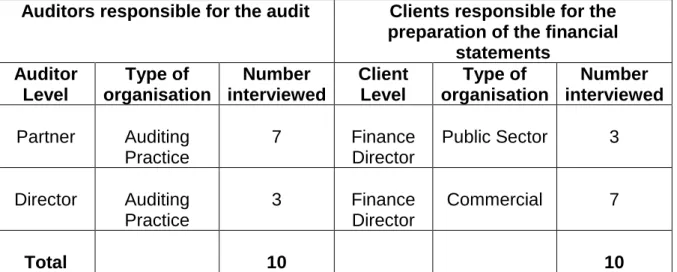
• To undertake qualitative research through the use of semi structured interviews, with a range of UK auditor partners (the registered ultimate auditor with sole responsibility for the audit) and UK finance directors (the ultimate audited body senior official responsible for ensuring auditors are supplied with high quality information).
• To develop a conceptual framework with links to professional practice for the contribution to enhance financial statements audit quality in the UK.
11
2.1 Literature Review
"To know that we know what we know, and that we do not know what we do not know, that is true knowledge." - Henry David Thoreau
2.1.1 Introduction
For the purpose of this thesis it is essential to understand the developments in the audit of financial statements and the pressures auditors face when time and budget pressures adversely affect the quality of the audit (Lopez and Peters, 2012).
The following literature review will initially focus on the relationships between the clients and their auditors, the levels of audit fees and their effect on the time constraints upon auditors and the ultimate quality of the audit (Houston, Peters and Pratt, 2005). Continuing with the fees and time pressures, the impacts of internal budgets and targets have on the reputation of an auditing firm and how reputation is perceived to impact on a quality audit (DeAngelo,1981). Additionally, pressures on auditors to potentially complete substandard audit tasks and prematurely sign off the audit (Raghunathan, 1991) in the attempt to complete tasks within a pre-determined budget is also reviewed. Concluding this literature review, the effect that the level of preparedness audit clients has on the quality of the reporting period end financial statements audit is also discussed.
12
2.1.2 Audit quality
There is no clear definition as to what constitutes a quality audit, “the problem of audit quality being in the ’eye of the beholder’ is reflected in the broad range of diverse, and sometimes divergent, definitions” (Knercel, et al, 2013, p4). Arens et al state that “Audit Quality is how well an audit process detects and reports material misstatements in the financial statements” (Arens, et al, 2011, p105). Garvin (1989) argues that the reliance on just one definition of quality could result in numerous issues and problems and the definition is not restricted to audits alone, but every product and service that is available in society today.
However alternative opinions such as those of DeAngelo (1981) implying that reputation is a key determinant of audit quality, whereas audit firm size (Francis and Yu, 2009; Monroe and Tan, 1997; Francis, 1984; ACCA, 2016; Kilgore, et al, 2014; Martinov-Bennie and Kilgore, 2015) plays a role in the perception of the provision of a quality audit.
Duff (2004) argues that audit quality can only be as good as the people delivering the audit. Duff bases such opinions on the levels of technical expertise, knowledge and interpersonal skills the auditors possess in the delivery of the best possible services to their clients.
13
2.1.3 Auditor Expertise / Engagement leader / Audit firm rotation and
Audit Quality
Size of the auditing organisation has been alluded to be a determinant of audit quality (Section 2.1.2 above), Rusmin (2010) endorses such a definition acknowledging that industry specialisation has a significant role to play when arriving at a quality audit. Additionally, it is reported that it is more likely to be that the larger suppliers of audits (the Big 4) with larger reputations that will have the resources to not only invest in developing their staff, but also to attract ‘better’ staff with the skills perceived necessary to provide audit quality (Rusmin, 2010; Krishnan, 2003). Balsam, Krishnan and Yang state that “Specialized contracts and industry specific accounting can lead to a greater demand for, and greater returns from investment in, auditor industry specialization” (Balsom, Krishnan and Yang, 2003, p93). Supporting such views, Hogan and Jeter (1999) note that auditing firms that are classified to have specialisms, increase market share over relatively short periods of time as opposed to non-audit specialism organisations. Continuing with this theme Knechel, Naiker and Pacheco found that “firms switching between Big 4 auditors experience significant positive abnormal returns when the successor auditor is an industry specialist, and they experience significant negative abnormal returns when the successor auditor is not a specialist” (Knechel, Naiker and Pacheco, 2007, p1).
Audit partners are mandated to rotate from an audit client to either another partner within their own organisation, or to pass the client to another auditing provider every five years. Zerni is noted as finding that “both engagement partner industry specialization and specialization in large, public companies are viewed by financial statement users and/or by corporate insiders as differentiation strategies resulting in fee premiums within these engagements. Overall, the results of this study support the
14
view that client firms infer audit quality at least to some extent from the characteristics of the individual audit partner in charge” (Zerni, 2012, p36). However, Chi, et al noted that “investors perceive mandatory audit partner rotation as enhancing audit quality, which, we conjecture, is due to improved auditor independence in appearance. Since perceptions are very important for audit services due to difficulty in directly observing audit quality” (Chi, et al, 2009, p36). Interestingly, there is little evidence to support changing the audit partner within the same auditing firm has any effect on the overall audit quality of an assignment (Chen, Lin and Lin, 2008). Supporting such findings Sengers (2017) noted that as a result of their research there was minimal effect on the quality of an audit by changing the audit partner every five years and suggests that a maximum of nineteen years is the cut-off point at which a long tenure could start to impact on audit quality. Concurring with such views Myers, Myers and Otley (2003) are of the opinion that the auditors place greater constraints on the financial performance which is affected by management decisions where a longer audit tenure exists, as a result current mandatory rotations time limits could be questionable.
15
2.1.4 The relationship between audit fees and audit quality
Historically there has been a socially accepted norm that the higher the price individuals pay for a product, brand or service, the greater the quality of that product, brand or service and a financial statements audit is not excluded from this hypothesis (Leavitt, 1954). The relationship between audit fees and quality (Teoh and Wong, 1993) has been the focus of many studies, who have been keen to study such relationships but also time constraints and workloads have also been noted as impacting on quality.
Gardner (1971) continues with the theme of price being a reflection of the quality of a product in a more 'general product' study, but interestingly expands the study to include the perception of brands also being a reflection of the quality of a product or service. In support of this argument (Leavitt, 1954) adds that a higher price can indeed be seen to be an indicator of better quality than those cheaper products. However this raises another question of what the people within the sample tested deem to be expensive and cheap, and thus leads back to Garvin’s (1989) comments regarding the definitions of quality and interpretations thereof. An alternative study conducted by Lowensohn, et al (2007) interestingly found that although it was noted that specialist auditors increased market share as a result of perceived client satisfaction and audit quality, the level of fees was not an indicator of audit quality.
However, when purchasing a product or a service, quality is usually recognisable from the ultimate results, with an audit the outcome is an audit opinion and many clients are unaware as to how this was derived and the work conducted in arriving at any conclusions drawn, and as Akerlof (1970) notes, it can be difficult in distinguishing between a good and inferior quality product. As such, purchasers of audit could be in
16
some cases ‘naive’ and have relative uncertainties in relation to the services they are purchasing, there could be incentives for auditors to over/under audit, and/or overcharge for the services provided and thus impact on the overall audit quality (Causholli and Knechel, 2012).
In any professional role, individuals will face certain pressures during their career and auditors are not excluded from such pressures. Auditors are faced with various pressures throughout an individual audit both internal (predominately meeting targets and budgets set by their own superiors/internal benchmarks) and external (those deadlines set by audit clients, financial markets and regulators). The results of aiming to meet all targets and deadlines could have an impact on the overall quality of the audit being delivered. However, foregoing the ever-increasing pressure on the auditors themselves to complete audits within their own internal budgets, there is always the potential for compromises to the audit work conducted and the quality of the work undertaken impaired. In light of such concerns, Asthana and Boone (2012) concluded that there is a notable decline in quality when audit fees reduce from those charged in earlier years. However, they continue to note that where the stewards (i.e. the directors) of an organisation exert pressures in the form of strong bargaining power and thus negotiate lower audit fees, independence may become an issue if the auditors succumb to such pressures. To some extent Francis (2004) can be seen to agree with these findings and notes that by including a fee structure within the engagement letter (essentially the contract between the auditor and its clients) at the commencement of an audit could potentially compliment such a continuum.
17
Fees continue to be one of the main benchmarks on which auditors base their assessment of risk, the higher the potential risk, the higher the proposed audit fee (Houston, Peters and Pratt 2005). Auditors spend the majority of their work on areas which they deem to be the most likely to consist of an element of potential misstatement or error. However, the quality of the work that is actually undertaken in such areas is no higher than the work completed on less risky areas, just more of it. It has been noted that fees can be seen to reflect quality, Lopez and Peters (2012) argued that fees and recovery rates (the percentage of costs an auditor is challenged to recover from the overall audit fee) could adversely affect the quality, subsequent findings and outcomes at the conclusion of the audit work. Such time pressures could have an impact on the level and detail of work undertaken. One interesting paper by Otley and Pierce (1996) targeted (as was then) the 'Big Six' auditing firms and they concluded that the budgets in both financial terms and time spent were at impossible levels and also that significant consideration was given to the ‘importance of budget attainability’. They continue to report that "there is a need to recognise that audit quality may be increasingly threatened by behaviours which are motivated by the performance evaluation system" (Otley and Pierce, 1996, p55).
As competition for audit assignments increases, the pressures on those auditors bidding for such assignments to propose an acceptable fee also increases. However, DeAngelo (1981) notes that some auditors will propose a significantly reduced fee, which is attractive to the decision makers within an organisation who appoint the auditors on the shareholder’s behalf without disclosing their potential hidden intentions. 'Low balling' is the term which refers to the practice of proposing a low level of audit fee with the intention of selling additional products (for example consultancy or taxation services) which carry premium charges once the audit appointment has
18
been secured (Humphrey, Moizer and Turley, 2006). However, Firth (1997) notes that the provision of lucrative non-audit services (i.e. consultancy), may have the impact of increasing the ‘economic bonding’ between the client and their auditor, and as a result such bonding could jeopardise the independence or the perceived appearance of independence of the auditors with their client’s financial statement audit.
Krishnan, Krishnan and Song (2011) reported that within the USA, Auditing Standard Number Five (AS No5) was implemented during 2007, although not directly mandatory regarding audit fees, the main objective of the standard was to identify those organisations with weak internal control systems and as a result higher fees would be incurred. With improvements in subsequent years it was envisaged that revisions to internal controls (as weaknesses will have been reported during the audit) would result in reduced fees (i.e. less risky areas to be audited). However, in the UK the professional bodies that set auditing standards (The Auditing Practices Board (APB), which is part of the Financial Reporting Council (FRC)) do not have a standard directly representative of AS No5, but have the International Standard on Auditing (ISA) number 210 (Agreeing the terms of auditing engagements). This standard highlight that within the terms of an audit engagement, the audit fee should form part of those terms and all parties should ensure that they adhere to those terms to avoid any ambiguity or disputes, as well as providing a basis upon which any unforeseen additional work outside of the control of the auditor may be charged.
As there is an absence of any regulation surrounding the fees charged, Asthana and Boone's (2012) previous findings regarding the link between reduced fees can thus equate to reduced quality, which to some extent supports those arguments with regard to 'lowballing' as put forward by Humphrey, Moizer and Turley (2006).
19
2.1.5 Budgets and time pressures and audit quality
It is common practice in the business world that to maintain a competitive advantage, organisations need to ensure that their products and services are competitively priced. Within the auditing organisations this is no exception, and with potentially reducing fees, the pressures to maintain a budget recovery rate (the internal target percentage rate at which the costs incurred by the audit firm must be recovered) increase. This recovery rate is also an unofficial key performance benchmark rendered on the audit staff on the assignment, at which the achievement of this recovery rate potentially results in rewards for those audit staff assigned to this client in terms of both financial remuneration or promotion within the organisation. The study conducted by Lopez and Peters (2012) focused on what is generally perceived to be the busiest three-month period of the audit profession. A large number of companies work to a financial reporting year to coincide with the calendar year (i.e. a 31 December year end date). With this in mind there are pressures to complete as many audit assignments as possible within the three-month period of January to March (commonly referred to as the 'busy season’ within the profession). This is acknowledged in the report from the Cohen Commission, whereby time pressures on financial statements audits led to audits that were sub-standard (Cohen Commission, 1978).
Indeed, DeAngelo (1981) noted that the quality of any audit cannot (under the majority of circumstances) be verified by those who use financial statements. Therefore, any deemed 'value' was thus based upon those reputations of the auditing firm. As noted above, time pressures may affect quality. In order to build a reputation an organisation needs to be perceived to deliver goods or services at an acceptable level of 'quality' and price. Lower fees are regarded as a potential issue due to auditors delivering their audits within ever decreasing timescales in the attempt to deter potential competitors
20
from gaining market share. Market share will increase as a result of the auditing firm building their reputations, albeit built on price or quality (Kreps and Wilson, 1982). Timescales are the time allocations (time budgets) that form the basis of the initial audit plan. All audits are conducted by an 'audit team' which consists of a number of accountants with varying levels of experience and qualifications, the hourly rates at which these individuals are charged to clients and form the basis for the calculation of the total audit fee. Those junior members of the audit team with the least experience and qualifications focus on the information gathering element of the audit; it is these junior members of staff who follow the work plans as directed by more senior members of the audit team (Willett and Page, 1996). Turley and Cooper (1991) observed that although junior staff members are deemed to do the more menial and less risky areas of an audit, it is indeed their work that provides the foundations to support the concluding audit opinion, should such work be substandard; this could lead to the resultant failure of the audit.
Time pressures on the audit staff has continued to be a significant discussion within the audit profession, as a result, little attention has been paid to this element of the audit process by those within the profession, however it is an area that has resulted is several studies being undertaken. During the evidence collection phase of the audit each junior (once they are deemed to have collected sufficient evidence) is required to conclude on individual tasks which are then subsequently reviewed and signed off by a more senior member of the audit team. There has been a notable increase on the pressures faced by auditors predominantly due to the time pressures to meet budgets, Raghunathan (1991) suggests that there is potentially a relationship between the premature signing off (basically the auditor marks an area of work as being completed, when in reality insufficient work has been carried out and/or
21
documents/evidence collected) of an audit procedure (an audit test), and audit failure. Acknowledging the previous study conducted via the Cohen Commission in relation to substandard audits potentially affected by time pressures (Cohen Commission, 1978), Raghunathan notes that this previous study reported that 58% of respondents had at some time prematurely signed off an audit procedure, and of these four fifths were due to the fact that the auditor was satisfied that sufficient work had been completed. This appears to be a potentially flawed response, as any audit programme test has a sample computed and executed in accordance with International Standards on auditing (ISA 530 Audit Sampling), therefore it could be argued that the sample was incorrectly computed during the planning phase of the audit and therefore planned inaccurately as opposed to being signed off prematurely.
As there is potentially an emerging link to audit quality and the premature signing off of audit working papers (the area within an auditors file whereby all tests and results are stored), and utilising and building upon the Cohen Commissions study, Alderman and Deitrick (1982) attempted to extend previous studies conducted by Rhode (the Rhode study: Rhode, 1978) by extending their questionnaire to cover the area of premature sign off of audit tests/procedures. In this instance Raghunathan (1991) identifies that the findings of Alderman and Deitrick reported the perceptions of the individuals surveyed as opposed to their actual own behaviours. Raghunathan continues by noting that 85% of the sample selected was identified as having signed off an audit programme test prematurely either rarely or never at all. One matter identified during this study was that the respondents indicated that they were more likely to sign off an audit programme test prematurely during the initial planning phase of the audit (this is the period of time when the auditors prepare their audit plan and
22
identify any perceived key risk areas in which to focus their audit work prior to completing the actual year-end financial statements audit), as opposed to during the audit of the financial statements.
It is quite a relevant point that was made during this survey that some 85% of the respondents indicated that it was unlikely that premature sign off occurred, with professionally qualified individuals taking part of the survey who are required by their professional bodies to act professionally and ethically. Using the Institute of Chartered Accountants in England and Wales (ICAEW) as an example, it could be argued that by breaching the regulations and ethical codes set by such institutions, as a result of their membership and threat thereon, the respondents may not have been entirely truthful in their answers to the survey questions posed. Another potential issue with this approach is that the employers of these auditors within the survey will have developed their own 'in house' quality systems, processes and protocols. Although surveys are ‘allegedly’ conducted in an anonymous manner Morrel-Samuels (2002) has reported that there remains an element of caution when surveys on employees are conducted (Morrel-Samuels, 2002), as a result of these qualified auditors taking part in the surveys the findings should be interpreted with caution, as an element of bias towards answering how their professional body would expect them to answer may exist within the results.
23
Whilst considering the links between time pressures and the impact on audit quality, those findings by Raghunathan appear to be in some part contradictory to those of Willett and Page whose study focussed on the time pressures being greater during the actual final stages of the audit when time budgets start to run out. As a result, compromises appear to be required/made, thus leading towards 'irregular auditing' (those practices which are not conventional audit procedures and would not be approved as widespread practice). In the attempt to overcome such irregular practices, the ICAEW introduced guidelines whereby each member of staff who completes any form of audit work should have that work reviewed by a more senior member of the audit team with the intention being to improve quality. As observed by Willett and Page (1996) to some extent work should even be re-performed by the audit senior member in order to substantiate the conclusions drawn from testing and that sufficient evidence has been gathered in support of those conclusions. However due to pressures on each individual’s time this is not always the case. Reperformance has been incorporated into some auditing firms audit approach. However, there is no evidence to support that such a process has actually been completed, and is therefore open to potential manipulation and thus a premature sign off occurs. As noted by Raghunathan (1991), such practice is thus potentially exposing the audit firm to the risk of litigation, or forming an inappropriate audit opinion.
As identified above, risks exist as a result of each individual auditor’s actions, within the research conducted by Willett and Page (2006) it is acknowledged that premature sign off and irregular auditing practices would indeed be a breach of regulations/ethical guidelines. As a result, the participants (to ensure they were not in breach of their employment contracts) may have taken the view that safeguarding their employment
24
took priority over providing their true attitudes and actions whilst completing the questionnaires. Unlike the questionnaires in Alderman and Deitrick's (1982) study which was targeted at all levels of auditing staff, Willett and Page targeted accountancy students (trainees), completing (or nearing) their final level professional accountancy examinations. Although within this study, such 'trainees' are deemed to have been a more suitable sample, as Turley and Cooper (1991) noted, these trainees do focus on the less risky areas of an audit and the results from Willett and Page (1996) suggest that there were some 88% of the sample answering that time pressures had increased over their training period. From this it could be concluded that reducing fees and targeted recovery rates increase these pressures. However, it cannot be overlooked that it may be that any irregular auditing practices undertaken by this 88% (who will have completed less risk focussed tests), would not have an adverse impact on the overall quality of the total audit work undertaken and subsequent reports issues.
Auditing firms place an internal emphasis on the targeted recovery rates, as with any professional services organisation, fees are derived from the amount of time staff members spend on a client project. With audit being one of such projects, a time budget is arrived at by allocating the total hours envisaged to complete various tasks by audit staff at various levels of qualifications and expertise. The amount in financial terms that such individuals are charged to a client depends upon those levels of qualification and expertise. It is customary practice that once the original audit time budget has been prepared by one of the more junior members of staff, the audit partner who will take overall responsibility for the audit and subsequent sign off/approval of the audit report will then reduce the budget to an amount that they themselves are
25
monitored by the other partners within their auditing practice. The result from this exercise is an increased amount of pressure for the more junior members of the team, thus to some extent substantiating the claims of and verifying the target sample made by Willett and Page in their 1996 study in relation to less senior staff members.
It is recognised by Emmanuel et al (1990) that targets form part of effective control systems for management. However, such targets need to be realistic and achievable. In reality, as opposed to unachievable and thus potentially un-motivational targets, staff realise that regardless of their efforts, the target may not be achieved and therefore little effort is made to meet the target, which in some way contradicts Tosi's argument that performance could improve when targets are set (Tosi, 1975). This gives rise to two potential issues, one being that the work may not be finished on time and deadlines missed, or more importantly, corners cut or time not recorded accurately.
During the study conducted by Otley and Pierce, their investigation consisted of the following two hypotheses: "H1: As budget tightness increases, audit quality reduction behaviour by audit seniors will initially increase, reach a maximum point then fall. H2: As budget tightness increases, under reporting of time by audit seniors will initially increase, reach a maximum point and then fall" (Otley and Pierce, 1996, p37). In contrast to the argument raised by Tosi (1975) whereby targets act as a motivator, Otley and Pierce pose a further hypothesis, "H3: As the perceived influence of clients over audit time budgets increases, the perceived attainability of those budgets will decrease" (Otley and Pierce, 1996, p37). This study also built on a previous study that had gathered empirical evidence to support the findings in relation to not only time
26
budgeted pressures but also the pressures faced by impending deadlines (Kermis and Mahaptra, 1985), in addition to taking into account the stresses faced by auditors in meeting such targets.
As reported by Kelley and Seller (1982) stress is now considered to be embedded within the accounting profession and it is a well-known fact that the more senior a professional becomes within an organisation the higher the levels of stress. Considering this prior research, Otley and Pierce targeted the largest accounting firms within the auditing profession, focussing their questionnaires on audit seniors (similar target sample to that of Willett and Page). The difference between the two studies was that Otley and Pierce focussed their study specifically on Irish large auditing organisations as opposed to Willett and Page who drew their sample from a wide range of organisations selecting students from a professional body examination listing.
Although these two studies have similarities in terms of target populations, the questions within the questionnaires (although the intention of both studies revolves around the ultimate quality of an audit as a result of the impact of budget and time pressures) are distinctly different. Interestingly, the response rate of 73% to the questionnaires sent by Otley and Pierce is not significantly dissimilar to the 61% of respondents from the large audit firms to Willett and Page's survey. This could potentially suggest that due to the size of these apparently 'dominant' organisations it would be expected that there would be more students available to complete the survey.
27
From an alternate perspective, it could also be interpreted that such organisations 'sweat their assets' (work their employees hard) and as a result to such a demanding employer, students’ motives in responding to these surveys could be seen to be as anonymous venting of one's anger / frustrations in the attempt to publicise these heavy work load practices.
Although as noted earlier, there could potentially be an element of bias within the respondents who are bound by their professional body rules and ethical requirements, Otley and Piece's study reported that 45% of respondents felt that time budgets were either practically unattainable or impossible to achieve. In comparison to Willett and Page who reported that in response to a similar question (albeit with the question presented as using irregular audit practices which is arguably the same question) approximately 33% of the respondents had either frequently or occasionally been engaged in irregular audit practices (for example speeding up an audit test in the attempt to save time on the budget). In an equivalent manner Raghunathan's (1991) results found that 55% of his respondents had engaged in premature sign off of audit programme steps/tests.
These three studies found that there was a problem with time budgets and pressures having adverse effects on the actual auditing procedures being conducted by the more junior members of the audit team. Interestingly, the comparison between Otley and Pierce together with Willett and Page (whose studies were reported in 1996 although an 11% difference exists between their findings) there remains a notable reduction since the 1991 study conducted by Raghunathan.
28
Prior research (as in the studies referred to above) focussed on the larger auditing firms which can be attributed to the fact that they tend to be the auditors of the larger companies which are listed on the stock exchanges across the world and appear in the media, normally when a crisis or significant event happens and are therefore more likely to be familiar to society as a whole. Rhode (1978) is of the opinion that the auditors who are most likely to be guilty of signing off audit steps and procedures prematurely are more likely to be practices within smaller firms. As a result, in the event that the quality of the audit work within those smaller firms be subject to scrutiny, they would be unlikely to suffer any significant adverse publicity.
As there appears to be evidence to suggest that there is a correlation between the audit fee, the budget derived from the audit fee and the potential short cuts, premature audit programme test sign offs and irregular audit practices that take place, audit quality would appear to be flawed. Turley and Cooper (1991) found that junior staff members were predominantly tasked with completing work on what was deemed to be less risky audit areas and the studies by Willett and Page (1996) and Otley and Pierce (1996) suggests that these are the members of the audit team that are the most likely to avoid challenging tests and potentially conduct some form of irregular audit practice or premature sign off of procedure, thus exposing an auditing firm to potential litigation. In the attempt to avoid such malpractices, the ICAEW recommends that a senior member of the audit team reviews the work completed by juniors, Alderman and Deltrick (1982) proposed that for only those tests that were deemed to have been identified as a 'risky' or 'vulnerable' element of the audit, the audit supervisor (usually the auditor classed as an audit senior and either close to professional qualification or
29
recently qualified) should make specific reference to ascertain if all the relevant information and audit work has been gathered and completed.
However, Lightener, Adams and Lightener (1982) argue that during the review process it is actually the reviewer who has encouraged junior staff members to perform irregular audit practices or cut short audit tests and reviews of that junior’s work, thus undermining the whole review process and the quality enhancement that this exercise/control is there to provide.
In such an event it could be argued that this part of the review process should be conducted by someone who is not a member of the actual audit team, but independent thereof. However, including such an experienced individual in this process will add additional resource, time and subsequent costs to the overall audit budget and could have the opposite effect of enhancing quality by being independent and inadvertently increasing the pressures on the original time and financial budgets could result in alternative irregular audit practices.
In the attempt to enhance audit quality at the review stage, Waggoner and Cashell (1991) suggest that the reviewer could re-perform the audit tests (or an element of thereof) to ascertain if the test has been completed in accordance with the planned programme, or if premature sign off has occurred. From this suggestion, a number of issues arise as to the practicalities of such a task. Firstly, there are the additional costs incurred in carrying out the task, also clients may feel that having to locate once again source documents to verify a financial balance or disclosure, is a repeat of audit work already completed and impeding on their day to day tasks (audit clients predominantly
30
see auditors as a hindrance adding unnecessarily to their normal daily tasks). Audit documents should only need to be located once and as a result this should be reflected in less time being required on the audit, leading to a subsequent reduction in the audit fee, once again adding further time pressures to the auditors with a potential quality impact.
2.1.6 Audit review - Effects on audit quality
As Raghunathan (1991) suggests, there is an element of premature sign off that exists with the audit function. In an attempt to reduce the risks to such an occurrence, the auditing companies devise their own approaches on how to audit financial statements (ensuring any mandatory regulations are adhered to where applicable). In addition to these approaches and in the absence of mandatory regulations, these auditing companies are able to develop and adopt any form of review strategy that is deemed necessary to ensure that mandatory quality standards/regulations are met.
Asare (1999) argues that with the introduction of technology within the auditing process, the review of the audit working papers (the records the auditors prepare to record the work undertaken, the evidence obtained and the conclusions drawn) is taking place remotely away from the audit team more often than when paper based audits took place. Agoglia, Hatfield and Brazel (2009) noted that senior auditors when faced with impending deadlines would only perform a superficial review of work as opposed to adopting a review by interview style approach to review as suggested by Asare (1999). Tan and Shankar state that "both research and practice argue for the benefits that a reviewer, forming an opinion independent of the work paper preparer
31
(invariably the subordinate) brings to the audit" (Tan and Shankar, 2010, p252). However as noted by Rich, Solomon and Trotman (1997) and more recently by Rich (2002) with the increased technological advancements within the audit process, reviewers may already have formed an initial opinion based on the documentation and audit evidence gathered prior to that task being completed, as a result there could be the potential for that senior (who takes responsibility for the time budget and is subsequently evaluated upon this target) to prematurely sign off that procedure and thus save time.
It could be argued that such premature audit testing working paper sign offs are not predominantly due to the saving of the time budget, but attributable to that individual senior auditor’s knowledge and experience (Gibbins and Newton, 1994). Again, this raises the issue that if the junior auditor was following the planned steps and a previously computed and justified testing sample, then the audit must not have been planned adequately during the planning phase of the audit, thus (to some extent) supporting those findings of Raghunathan (1991).
With the time pressures faced by audit teams (in particular during the 'busy season') unexpected issues may arise out of testing that were not anticipated, Kunda (1990) suggests that individuals may arrive at the conclusions previously anticipated (at the commencement of a task).
With a predetermined outcome anticipated, any sample selected from an audit test is open to manipulation should a selected item not meet the predetermined outcome, as a result such items may be replaced within a sample and as a result no issues would be noted. Although such acts question the integrity of the individual conducting the
32
test, the quality review mechanisms that are put in place to maximise audit quality would be unlikely to identify such individual practices.
As overall audit quality could be derived at from the quality of the underlying techniques undertaken and evidence gathered, the quality of the review process is therefore subject to scrutiny. As identified, there could be underlying motives into the depth and quality of the review process, working papers can be prepared in a persuasive manner. During the study by Rich, Soloman and Trotman (1997) it was noted that prior research conducted by Roebuck and Trotman (1992) focussed on the review comments (notes made on an audit file as part of the review process whereby additional work/documentation is required) made by seniors. The limitations within this study was that the review was restricted to only one auditing firm and it is also extremely rare for any review comment to remain on an audit file as these are removed once the additional work has been completed and documented, internal quality control procedures should ensure all review comments are removed prior to the archive of an audit file.
The decision to either mark an audit test as completed and reviewed to a satisfactory conclusion or if additional work is required is at the discretion/decision of the reviewer. Ricchiute (1999) alludes to the fact that seniors reviewing and signing off working papers do so in such a way as to potentially persuade an audit manager or partner's ultimate decision. One interesting matter noted by Asare and McDaniel (1996) related to that of familiarity between the preparer and the reviewer of the audit working papers. More instances of errors occurring were noted where an element of familiarity existed between the audit junior and the audit senior.
33
Libby and Trotman (1993) allude to the fact that potentially in such cases there are inconsistencies within the actual working papers and the concluding comments within those working papers, reviewers may receive a verbal (undocumented) explanation behind the rationale supporting the conclusions. However, the documentation within the working paper is not written, hence the review comment to amend the working paper accordingly. Should the reviewer (via familiarity) place undue reliance on the work documented the quality of the audit is therefore jeopardised. To some extent these findings support the comments made by Lightener, Adams and Lightener (1982), whereby an independent reviewer could be a benefit in adding value to the review process to overcome such issues arising. In a similar sample selection as previous studies, the focus once again surrounds audit seniors (excludes audit partners and directors) who are either nearing professional qualification or newly qualified.
The reviews of the audit work undertaken can be seen to be exposed to the inherent risks that lie within the integrity, motives and time pressures of the reviewer, but also the review of audit work relies upon the quality of the audit work documented. Audit files consist of the details of the evidence obtained by the junior members of the audit team. However, the recording of such documents within the audit files are dependent upon the individual audit companies audit approach and how the recording of audit evidence is retained.
Zuca (2015) identifies that International Standards on Auditing (ISA's) exist to define how appropriate and the level of quality of audit documentation should be. However, with the technology involved in modern auditing, the requirements to place actual copies of documents on the audit file no longer exist having been replaced by the recording of the identification numbers (for example sales invoice numbers) within the
34
samples tested. It is therefore possible for an auditor to merely select a sample from a listing and then document that the work has been completed in accordance with the required testing programme. Tan and Shankar (2010) question the reviewer's evaluation of subordinates’ work, the issue of an independent review could be raised once again by attempting to remove bias of judgement via familiarity as the reviewer may ask to see the documents recorded in the working paper as evidence that the testing has been carried out as planned thus removing the potential for an auditor to either just record the document without conducting the test or in extreme circumstances created fictitious document references. If the aim of the financial statements audit is to provide an 'Independent Audit Opinion', as O'Reilly et al (1998), and Yip-Ow and Tan (2000) infer, the review and subsequent opinion of the subordinate’s work should be made independently and perhaps where possible the review by interview (discussing directly with the auditor the work they have undertaken along with an element of re-performance of the work undertaken).
2.1.7 Client Negotiations and Preparation for Audit
As noted above, time pressures could be perceived to be as a result of auditors striving to meet their own internal targets in terms of recovering their costs via the fees charged to their clients. However, the fee setting process will ultimately involve an element of negotiation, not only in terms of a financial agreement, but also in relation to the audit work being performed, the result of which could be increased pressures and subsequent quality of audit work issues as auditors strive to meet internal targets. Bame-Aldred and Kida (2007) note that during any negotiation process, including those involving clients and their auditors can encounter conflicts between both parties.
35
Gibbins, McCracken and Salterio, (2005) conducted interviews with the Chief Financial Officers (CFO’s) of a small number of organisations and also the auditor partners responsible for those audits, this study focused on those negotiations involved in the resolution of conflict. Although not directly relevant to the nature of the authors research, Gibbins, McCracken and Salterio (2005) highlight that issues do arise between the auditors and their clients and it could potentially be perceived that some of the issues that result in conflict may have been avoided if the roles and responsibilities of both parties had been agreed (and documented) from the outset. Brown and Johnstone (2007) support those findings by Gibbins, McCracken and Salterio (2005), and they continue with the notion that (as noted earlier) the level of risk that an auditor is prepared to accept has a direct impact on the outcomes of any negotiations between both parties. It could potentially therefore be argued that such negotiations may have taken place prior to the commencement of the audit at the determination once more of each party’s role and responsibility. Namely what each party is required to deliver/provide prior to, during and after the completion of the audit fieldwork (the gathering of financial statements supporting documentation and subsequent testing thereon) but before the financial statements are signed.
Many auditors attempt to reduce their exposure to risk by ensuring they have collected as much supporting documentation as possible. However, this can be a time consuming and tedious task for the auditors themselves and is usually a task for the more junior members of the audit team to carry out. One method auditors use in the attempt to reduce the amount of time taken to collect as much audit evidence as is deemed necessary is to provide a ‘wish list’ of items and documents that their clients should have available for them on the first day of the actual audit fieldwork (often referred to as a deliverables list).
36
As mentioned previously, audit fees and the negotiations of those fees reflect an element of the perceived risk that the auditor is prepared to accept and are a key element of the acceptance of an audit client or the continuance of a current audit appointment (Johnstone, 2000). Bame-Aldred and Kida (2007) continue with their study on conflict to note that there is a pre-negotiation phase and this could include the roles and responsibilities of both parties and incorporate the deliverables list. PwC (one of the large global auditing firms) make available to all clients (current and potential) and ‘Audit Readiness Essentials’ document (PwC, 2015), although a generic document, it acts as an aid in client preparation for an audit and it could be argued that better prepared clients for an audit could potentially benefit from the impact on the fee negotiation process.
The majority of literature in relation to audit negotiations relate to the negotiation of the audit findings and the effects on financial statements audit report which is considered to be the vital and most important factor of both the directors and shareholders of organisations. Spathis, Doumpos and Zopounidis, (2003) argue that one of the most important performance measures of an audit is the actual audit opinion being reported. An unqualified audit opinion is the opinion that demonstrates to external users of the financial statements that those statements are a true and fair (true: materially accurate and in accordance with the facts, fair: in accordance with relevant accounting reporting standards and relevant laws/regulations) representation of an organisation for a period and at a particular point in time (normally a twelve-month year-end date). As a result, the directors of any organisation will attempt (via negotiation, if applicable) to ensure any adverse findings on an audit are minimised in the attempt to achieve an unqualified audit opinion.
37
Sanitioso, Kunda and Fong (1990) note that there will always be some form of justification for those conclusions that individuals wish to draw and that such conclusions will be as a result of a search for any information deemed relevant and that such a search will actually include an amount of bias as the required conclusions will be consistent with that information that has been gathered. Such findings are consistent with the comments by Bame-Aldred and Kida (2007) in relation to an audit whereby audit clients have an interest only in maximising income and results as well as having an awareness of their auditors’ conservatism.
2.1.8 Literature Review Conclusion
In conclusion, the auditors are recognised as being under extreme pressures to meet client expectations in terms of delivering a quality audit within the timescales that they require whilst striving to reduce the audit fees they are charged. In addition to these internal factors affecting the audit team, they are under increasing pressures to meet internal targets in terms of time and financial budgets whilst attempting to minimise the potential exposure to the risk of the audit firm providing an organisation with an incorrect audit opinion. Academic studies to date have acknowledged such issues; however, the majority of the focus of such studies appears to be on those auditors who are fluctuating around the nearly/newly professionally qualified level.
An element of the literature focuses on the pressures to reduce the level of fees that the auditors are charging and acknowledge that these then result in cuts being made in time allowances for audit tasks to be completed. As a result, irregular practices and premature sign off of audit work is being highlighted at the more junior level, however
38
such studies are limited to this employee level and there appears to be a lack of studies involving the senior members of such auditing firms. Research appears to recognise the links between fee pressures and budgeted time and targets which also leads to the implications upon an individual auditor's performance appraisal and subsequent career progression and financial remuneration.
There are a range of potential irregular audit practices that have been reported via previous studies with an emphasis on the junior auditors, gaps exist within the research as to whether such practices take place at the more senior levels within auditing organisations. It could be argued that as members of audit staff become more senior within an organisation with increased responsibility they become more aware of the implications of such irregular practices and therefore condone such activities (although research does not identify if such individuals are aware of these irregularities).
The implementation of varying degrees of the level of review of junior members of staff has been touched upon within current research and the issue of an independent reviewer has been raised. However, it is not apparent whether the potential to include such a practice and record this on the audit file has been addressed, in addition the potential for an auditor to fabricate audit evidence remains unless every auditor was to be reviewed by interview and their own work essentially tested (via means of re performance of audit tests and the production of the documents reviewed checked). Although more modern auditing techniques have been developed (i.e. clients uploading scanned documents onto a portal), it may remain to be researched to consider if the documents were actually reviewed and evidenced as such by an individual independent of the audit.
39
One further gap that remains from previous studies is that of the audit clients. Although the audit essentially belongs to the auditing firm and they are to remain independent (and safeguards must always be taken to ensure this is not jeopardised), client involvement within the review process has the potential to be explored. Current literature focuses on the process of the audit and the subsequent completion; however there are potential benefits by involving clients in the review process (whilst acknowledging that the clients have no involvement in the actual sample selection and subsequent preliminary conclusions drawn), if a client is involved in certain stages of the audit (not only the completion stage) by formally acknowledging that the documents recorded by the auditor and the conclusions from each test are reasonable, this involvement could enhance (and potentially provide additional comfort to the auditor) the overall quality of the audit.
In addition, additional research has focused on the negotiation process between the auditors and their clients. Such research focuses on the reporting of findings at the conclusion of the audit in the attempt to minimise the subsequent impact on the financial statements audit opinion. However there appears to be a lack of research into the negotiation of the roles and responsibilities (involvement of auditors and clients) at the planning stage of an audit, (for example, prior to the evidence collection stage) and how this impacts upon the time budgeted for by the auditors to perform their duties and how this could influence the amount of audit fee being proposed as well as relieving some of the time pressures on the auditors in an attempt to enhance the overall quality of the audit work being performed, documented and subsequently reported.
40
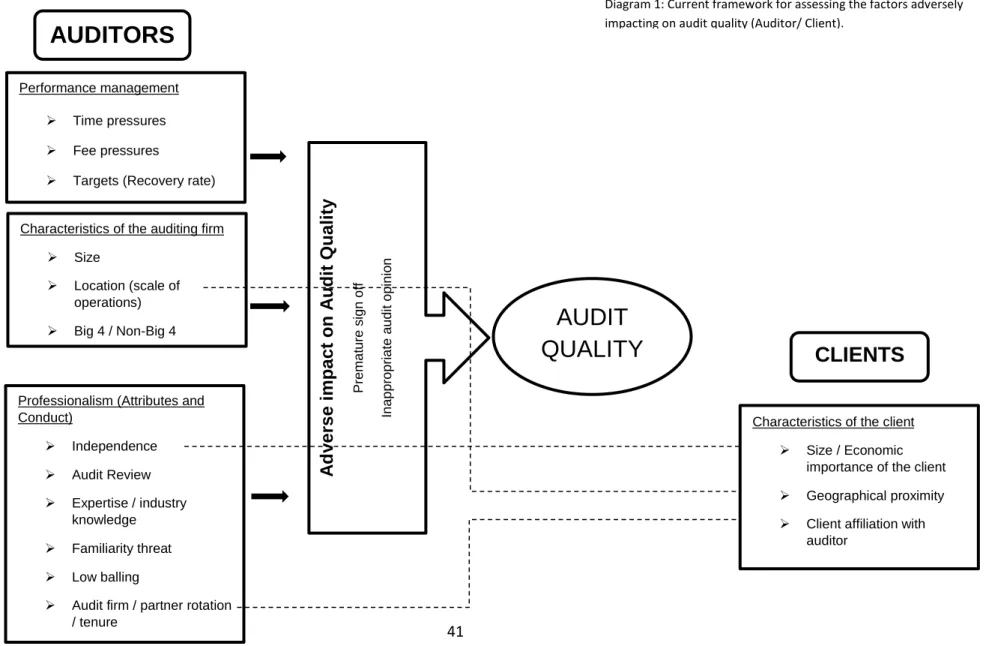
Diagram 1 illustrates the factors identified in the literature influencing the quality of audit focussing on issues associated with the auditors and specific to the clients (auditee’s).
41
AUDIT
QUALITY
AUDITORS
CLIENTS
Performance management ➢ Time pressures ➢ Fee pressures➢ Targets (Recovery rate)
Characteristics of the auditing firm
➢ Size
➢ Location (scale of
operations)
➢ Big 4 / Non-Big 4
Professionalism (Attributes and Conduct) ➢ Independence ➢ Audit Review ➢ Expertise / industry knowledge ➢ Familiarity threat ➢ Low balling
➢ Audit firm / partner rotation
/ tenure
Characteristics of the client
➢ Size / Economic
importance of the client
➢ Geographical proximity
➢ Client affiliation with
auditor A d v e rs e i mpa c t on A udit Qua li ty Pre m a tu re s ig n o ff In a p p ro p ri a te a u d it o p in io n
Diagram 1: Current framework for assessing the factors adversely impacting on audit quality (Auditor/ Client).
42
Gaps in the literature also exist in relation to the overall audit, as current literature focuses on the quality of an audit in terms of work and time pressures, internal pressures faced by auditors in terms of meeting deadlines and targets and all literature focuses predominantly on the auditor. However there appears to be a lack of research into the responsibility of the actual audit clients in order to provide all relevant documentation to the auditors in order for them to complete their work and how this performance is reported other than the overall audit opinion.
Additionally, an understanding with subsequent analysis of how both the financial statement auditors at senior levels and also the senior members of client staff (finance managers and directors) would perceive such involvement in the audit (including any benefits or barriers) would provide rich data with a view to the appreciation of assisting and enhancing audit quality for both parties.
43
3.1 Research Methodology
“If we knew what we were doing it would not be called research, would it?” (Albert Einstein 1879-1955)
3.1.1 Introduction
This chapter is intended to outline the philosophy and methodology which underpins this research and to appraise the research methods and research design deployed in order to meet the thesis aim and objectives. Whilst providing an evaluation of the alternatives, the chosen research methodology to support the adopted qualitative approach is explained. Seale (1999) notes that for any researcher, one of the most valuable mental resources is to have a “methodological awareness”, which requires appreciation of “the strategy or plan of action which lies behind the choice and use of particular methods “(Crotty, 1998, p3).
As a result, methodology therefore is concerned with not only the collection method of the data but also it originates, for what reason was it collected, when was it collected (timeliness) and subsequently analysed. Guba and Lincon provide the explanation that “methodology asks the question: how can the inquirer go about finding out whatever they believe can be known?” (Guba and Lincon, 1994, p108). Crotty indicates that there is a difference between methodology and methods, whereby “methods are the specific techniques and procedures used to collect and analyse data” (Crotty, 1998, p3). Qualitative or quantitative methods (or a combination of the two)