1. Introduction
In Indonesia, medium-carbon and carbon-manganese steels are the raw materials for military equipment (e. g., main battle tank body, etc.) and commercial users (e. g., pres-sure vessel, chain conveyor, etc.). However, because of the difficulty of quenching and tempering on 1.500×2,000 mm plates, mechanical properties were inconsistent. This means
the mechanical properties generated between the first, second, and next batches are not consistent. This results in non-uniform product characteristics, so the market’s selling value cannot compete with other steel industries. Also, the hardness and impact energy (very important in armored steel products) are not uniform.
Medium-carbon and carbon-manganese steels are the raw materials for armored steel. However, due to the
difficul-50. Troughton, S. C., Nominé, A., Dean, J., Clyne, T. W. (2016). Effect of individual discharge cascades on the microstructure of plasma electrolytic oxidation coatings. Applied Surface Science, 389, 260–269. doi: https://doi.org/10.1016/j.apsusc.2016.07.106 51. Clyne, T. W., Troughton, S. C. (2018). A review of recent work on discharge characteristics during plasma electrolytic oxidation of
various metals. International Materials Reviews, 64 (3), 127–162. doi: https://doi.org/10.1080/09506608.2018.1466492
52. Belozerov, V., Mahatilova, A., Sobol’, O., Subbotinа, V., Subbotin, A. (2017). Improvement of energy efficiency in the operation of a thermal reactor with submerged combustion apparatus through the cyclic input of energy. Eastern-European Journal of Enter-prise Technologies, 2 (5 (86)), 39–43. doi: https://doi.org/10.15587/1729-4061.2017.96721
Received date 01.09.2020 Accepted date 13.10.2020 Published date 30.10.2020
Copyright © 2020, Yurianto Yurianto, Sulardjaka Sulardjaka, Susilo Adi Widyanto, Padang Yanuar This is an open access article under the CC BY license (http://creativecommons.org/licenses/by/4.0)
COMPARISON OF THE
STRUCTURE AND PROPERTIES
BETWEEN SINGLE
QUENCH+TEMPER AND
DOUBLE QUENCH+TEMPER
OF MEDIUM-CARBON AND
CARBON-MANGANESE STEEL
Y u r i a n t o Y u r i a n t o
Doctor of Technical Sciences, Associate Professor*
E-mail: [email protected]
S u l a r d j a k a S u l a r d j a k a
Doctor of Technical Sciences, Associate Professor, Lecturer*
E-mail: [email protected]
S u s i l o A d i W i d y a n t o
Doctor of Technical Sciences, Associate Professor*
E-mail: [email protected]
P a d a n g Y a n u a r
Magister of Technical Sciences, Lecturer
Department of Mechanical Engineering
Semarang State Polytechnic
Jl. Prof. Sudarto, SH, Semarang, 50275,
Central of Java, Indonesia
E-mail: [email protected]
*Department of Mechanical Engineering
Diponegoro University
Jl. Prof. Sudarto, SH, Semarang, 50275,
Central of Java, Indonesia
Quenched and tempered steels are needed for high-ly-stressed structures in military and non-military equipment. This paper was written for studying the structure and properties (hardness and impact ener-gy absorbed) of medium-carbon and carbon-man-ganese steels before and after Quench+Temper and Double Quenched+Tempered. Because water is cheap and easy to control, it was used as a quenching medi-um. This study compares the hardness and impact energy absorbed of quenched plus tempered and dou-ble quenched plus tempered steels. The results showed that double quenched plus tempered steel hardness was higher than in quenched plus tempered steels. Besides, the grain structure is refiner than that of quenched plus tempered steel. The taking of the austenite tem-perature and holding time is essential because of the hardness at the end of the quenching process. The study aims to obtain hardness and impact energy from quenching+tempering and double quenching+temper-ing of medium-carbon and carbon-manganese steel for armor steel. In the first step, five specimens were heat-ed at 900 oC (held for 30 minutes), cooled in freshwater
and produced Q900 Steel. Then, these specimens were heated at 750 oC, 800 oC, 850 oC, and 900 oC, held for
30 minutes and provided Q900+750 Steel, Q900+800, Q900+850 Steel, and Q900+900 Steel. These specimens were tempered at 150 oC (held for 30 minutes) and
produced Q900+750&T Steel, Q900+800&T Steel, Q900+850&T Steel, Q900+900&T Steel. Martensite reached the cooling period 357 oC to 182 oC, tempered
at 150 oC (held for 30 minutes). Hardness for
dou-ble-quenching and tempering is higher than for conven-tional. The maximum impact energy of double-quench-ing and temperdouble-quench-ing heat treatment of Q900+850&T steel is suitable for armor steel used
Keywords: austenitizing, coarsening, compacting, embrittlement, hardening, holding, quenching, refin-ing, softenrefin-ing, tempering
UDC 620
ty of quenching and tempering on plates of 1.500×2,000 mm in size, mechanical properties were inconsistent – the struc-ture and properties of the first, second, and next batches are not consistent. Consistency of microstructure and proper-ties will produce the low quality of steel product character-istics like this causes the selling value in the market cannot compete with other industries.
Mechanical properties need to be consistent with the product’s demands (exceptionally high hardness and strength steels such as armor steel for military equipment), two of which are hardness and impact energy. For the manu-facture of armored steel, these two properties are indispens-able. Based on heat treatment, armored steels are produced by quench and temper (both can increase steel toughness). Quenching has hard martensite, and stress releases and expands ductility through tempering. The double quench creates a smooth quench steel structure [1].
Therefore, this study is devoted to comparing the level of hardness and impact energy absorbed in medium-carbon and carbon-manganese steels after quench+temper and double quench+temper heat treatment, the grain structure of the material is improved after double quenching. This research is a comparative study between quenched+tempered steel (used in factories) and double quenched+tempered steel (proposed) with medium-carbon steel and carbon-man-ganese steel materials. The research limitation is that the quenching medium used is water (currently used in facto-ries). Water is chosen because it is cheap, has good thermo-dynamic properties (and does not interfere with the environ-ment), and is easy to control. All parameters are the same as those used in the factory, but what is different is the double quenching heat treatment process proposed in this study.
2. Literature review and problem statement
The transformation of austenite to martensite causes the hardness increase of medium-carbon and carbon-manganese steels through the quenching process. Then tempering is carried out to increase ductility and high strength steels are obtained. When discussing high-strength steel, it is essential to realize that the definition of high strength depends entire-ly on how the steel is used [2]. The papers [3, 4] state that the strength of the martensite structures is dominated by carbon content and temperature range (martensite start-martensite finish). While Krauss wrote that to produce high-strength microstructures, low-temperature tempering has been trig-gered: hardness and standard features that depend on carbon from microstructural systems hardened in steel [5]. Marten-site is formed when the steel is aerated and cooled at a speed high enough to avoid ferrite, pearlite, and bainite [6, 7], then it is tempered. After tempering, the hardness profile becomes more homogeneous due to the microstructural tem-pering effect [8]. Here the temper function is to remove the residual stress generated by the previous quenching process. The combination of quench and temper produces strong steel and high hardness. So that in recent years there has been an increasing demand for quenched and tempered steel (Q&T Steel), used for very high-pressure structures, including applications in the construction of military and non-military equipment, due to its hardness and high energy absorbing properties, and exceptional toughness [9–11].
The heating temperature needs to consider the number of soluble solids and grain refinement [12]. Therefore, steel
that is processed by quenching and tempering is intended to obtain mechanical strength [13]. The martensite structure is formed during the quenching process, and the hardness of the full martensite structure is determined only by the steel’s carbon content (low carbon), and it is equal to the maximum hardness of the steel [14]. Meanwhile, the refinement of the grain structure of quenched and forged martensitic steels increases the strength and toughness expected, especially in everyday life [15]. The increase in strength can be due to the compaction of the microstructure. The optimum heat treat-ment parameters with a substantial effect on hardness are the austenite temperature of 900 °C and tempering temperature of 125 °C with a hardness prediction of 536.00 BHN. The optimal heat treatment parameters that strongly influence the impact energy are the austenite temperature of 900 °C and tempering temperature of 175 °C with an impact energy prediction of 30.50 Joule [16].
The researchers discussed the hardness and impact ener-gy absorbed of medium-carbon and carbon-manganese steels after experiencing a single quench plus temper with double quench and temper. This difference is quite significant, espe-cially in changes in microstructural texture. As a result, this heat treatment will affect the shape of the microstructure and properties (in this case, the hardness and impact energy absorbed). The hardness and impact energy absorbed were very high when removing the armor.
This paper discusses the study results about the change of microstructure and properties caused by single quenched and double quench continued by tempering of medium-car-bon and carmedium-car-bon-manganese steel. This heat treatment pro-duces Quenched+Tempered Steel (called Q&T Steel) and Double Quenched+Tempered Steel (called DQ&T Steel). The hardness and impact energy absorbed are essential to consider to build bullet resistant steel for armor steel.
There has been much research on medium-carbon and carbon-manganese based steels. Still, no one has yet inves-tigated the change in structure and properties (in relation to hardness and impact energy absorbed) of quenched and tempered armor steel and double quenched and tempered armor steel. The difficulty of setting the austenite to a cer-tain temperature (in the refine austenite area) results in a different grain size of austenite; therefore, it is necessary to experiment with the experience required. For this reason, it is said that this research is something new (novelty).
The study is conducted to increase the hardness and ductility of medium-carbon and carbon-manganese steels after quenching + temper and double quenching + tempered to obtain tough steel armor. Formidable here is a combina-tion of hardness and strength, and this is very relevant in the quest to obtain armor. Therefore, it is essential to set the austenite’s temperature properly so that to obtain as much martensite as possible through the austenite transformation during quenching.
3. The aim and objectives of the study
The aim of the study is to compare the structure and prop-erties between single quench+temper and double quench+-temper of medium-carbon and carbon-manganese steel.
To achieve this aim, the following objectives are accom-plished:
– to determine the period of martensite formation during quenching;
– to determine the hardness of Medium-Carbon and Carbon-Manganese Steel, Q&T Steel, and DQ&T Steel;
– to determine the impact energy of Medium-Carbon and Carbon-Manganese Steel, Q&T Steel, and DQ&T Steel.
4. Formulas used in research
From the results of the research, data processing in-cludes: Ar3 transformation temperature, martensite start and finish temperature (Ms) and (MF), and impact energy
absorbed (E) using the formula (1)–(4).
The transformation temperature (Ar3) and martensite start temperature (Ms) of low-alloy steels are shown in
Equation 1 and 2, respectively, as shown in the paper by Sampath [17],
Ar3∽(910–310C–80Mn–80Mo–55Ni–20Cu–15Cr) °C (1)
and
MS=(561–474C–33Mn–17Ni–17Cr–21Mo) °C, (2) MF=Ms–(175 °C to 265 °C). (3)
The value of the impact energy absorbed (E) using Charpy impact test is calculated using the following equation (4),
E=W×R×(cosβ–cosα), (4)
where W is hammer weight (kg); R is hammer center dis-tance (m); α (º) and β (º) are actual capacity lift angle and angle after contact, respectively.
5. Material and method 5. 1. Material
The research material used is medium-carbon and car-bon-manganese steel with a 10 mm thickness and made by the Indonesia steel industry.
5. 2. Method
Research implementation methods (including testing, data processing, and discussion of test results) were carried out in the following steps.
The first step is to make five specimens measuring 120×100×8 mm (cutting using a wire cutting machine to get a flat and smooth specimen surface).
The second step. The specimens in the first step were divid-ed into five equal sizes. The five samples were heatdivid-ed together in a heater at a temperature of 900 oC and held for 30 mi-
nutes, then cooled in freshwater. The end of cooling produced five specimens of Quenched 900 oC Steel (Q
900 Steel). Then
one of the samples was tested for metallography, hardness, and impact.
The third step. One specimen was heated to 150 oC and
cooled in the atmosphere, producing Quenched and Temper Steel (Q900&T Steel). This specimen is made using single
quenched and tempered steel.
The fourth step. The remaining four specimens were heated at 750 oC, 800 oC, 850 oC, and 900 oC held for
30 minutes, and each specimen produces Q900+750 Steel,
Q900+800 Steel, Q900+900 Steel, and Q900+900 Steel.
The fifth step. After the second quenching, each speci-men was heated to 150 oC, and produces: Q
900+750&T Steel,
Q900+800&T Steel, Q900+850&T Steel and Steel Q900+900&T
Steel.
The sixth step. Discussing and concluding the test re-sults, especially regarding the comparison of hardness and impact energy between DQ&T Steel and Q&T Steel.
5. 3. Test equipment used
The chemical composition of the research material was analyzed using the ARL 3460 optical emission spec-trometer made in Switzerland. The microstructures of the specimens were examined after conventional polishing etching using a 3 % HNO3 solution. Metallurgical optical
microscopes NIKON Epiphot have been employed for the purpose. Hardness surveys were conducted across the weld beads of all the weld coupons, ZWICK type Zhu mi-cro-hardness Vickers at 500 g testing machines were used. Wolpert type PW 30/15 impact testing machines have been conducted using a V-notched specimen and hit by a hammer with 294 Nm, and the angle was measured when the sample ruptured.
6. Research results
Table 1 shows the test results for the chemical elements contained in medium-carbon and carbon-manganese steels. Furthermore, using formulas 1, 2, and 3, transformation tem-peratures were obtained: Ar3, MS, and MF, these temperatures
determine the austenite zone closest to Ar3. The TT
tempera-ture was obtained based on the MF temperature. Tempering
temperature only reduces the residual stresses from the previ-ous quenching results, respectively, shown in Table 2.
Hardness testing on the test material is carried out before and after heat treatment and shown in the depth vs. hardness graph. These data are shown in Cartesian coordi-nates, as shown in Fig. 1.
The test results of impact energy absorbed in the materi-al before and after heat treatment are shown on the diagram bar, as in Fig. 3.
According to the heat treatment, each specimen’s metal-lography was used and shown in Fig. 4–11.
7. Discussion of the research results
Implementation of the research to completion, the results obtained in four groups of chemical elements contained; im-pact energy absorbed, hardness, and optical metallography.
7. 1. Transformation temperature
The chemical compositions contained in the specimens show low ductility and weldability of carbon and manganese. The performance of steel is improved and has slightly decreased weldability due to chromium and molybdenum. Nickel de-creases the critical cooling rate and does not form any carbide compounds in the steel. It remains soluble in ferrite, thereby strengthening and increasing the ferrite phase’s toughness in construction steel. The shallow phosphorus content (<1 %) is safe against the risk of Fe3P deposits forming, which causes
the steel to become brittle, increasing strength and machinabil-ity (also increasing corrosion resistance). The main chemical compositions present in steel are shown in Table 1.
Based on chemical elements in the material, the Ar3,
MS, and MF temperatures were calculated according to the
formulas (1)–(3), respectively, and the results are shown in Table 2.
Table 2 Transformation temperature
Temperature Ar3 MS Highest MFLowest MFAverage MF TT
oC 667 357 182 92 137 150
The content of chemical elements affects the temperature of Ar3; the carbon element is the dominant one. The higher the carbon content, the lower Ar3, and directly reduces the temperature of the austenite. The higher the austenite tem-perature (>Ar3), the coarser the austenite (the closer the temperature, the finer austenite will be obtained). If each of the conditions quenched, coarse and fine martensite is obtained respectively. However, it is not easy to obtain fine austenite by setting the austenite temperature close to Ar3. For this reason, researchers suggest performing optimization with statistical methods or computer programs. Knowing the temperature of Ar3, we can easily adjust the area of
austenite to a temperature slightly above the calculated
Ar3. The closer to Ar3, the finer the austenite (the further away from Ar3, coarse austenite is obtained). Therefore, it
is essential to specify the austenite’s fit temperature to get fine martensite.
MS to MF is martensite forming in the quenching period
(in this research is water quenching), and compression stress is left. This stress causes compaction between structures during quenching, which causes slip and promotes cracking. Because there is no transformation after MF, it can be used
as a reference to determine the tempering temperature. This temperature does not defuse martensite, and only reduces the residual compression stress due to previous quenching. Therefore, the tempering temperature is chosen below MF
to prevent the material softening due to martensite defused. Based on the carbon content and alloying elements, the steel classification is mild steel (0.15–0.30 % carbon) [18] or medium-carbon and carbon-manganese steels (C=0.25– 0.45; Mn=1–1.7; Si≤0.5) [19]. Based on the content of the specimen’s chemical elements (medium-carbon and car-bon-manganese steel), medium-carbon and carbon-manga-nese steels are classified. With a low carbon content, this steel can be treated with heat (heat treatment). This steel can be quenched safely by heat treatment (it does not leave cracks). Besides, the maximum temperature is 900 °C, and below the evaporation temperature of the elements con-tained [20].
7. 2. Hardness
The hardness depends on the austenite; the closer to Ar3, the hardness is slightly softer. The higher the austenite tem-perature, the higher the hardness value, and the more brittle it was. The transformation of austenite to martensite during quenching (MS–MF) has high hardness and brittleness. The
brittleness of martensite depends on the temperature
po-sition of the austenite. Temperature Ar3=667 °C, meaning slightly above that temperature is the austenite area. The temperature is closer to Ar3; the hardness is slightly softer. The higher the temperature of the austenite, the higher the hardness value and brittleness. Refined austenite produces finer martensite, and the toughness is higher. Coarse mar-tensite has high hardness and brittleness; its toughness is lower than in fine martensite. The martensite formation process takes place from the MS to MF period;after MF, there
is no transformation. Therefore, to avoid decomposition of the martensite structure, the tempering temperature (TT)
must be lower than MF. At the TT temperature, the residual
stress decreases. In the industry, tempering temperature to preserve as much martensite as possible is from 150 °C to 200 °C [5].
The highest hardness is achieved in the DQ&T specimen, and indispensable for military and commercial applications that demand high hardness.
The surface hardness of the quenched and tempered steel was HV 436 (average), while the double quenched and tempered steel specimen was 497 HV. These results suggest that steels retain a high surface hardness even though the reheating temperature was lowered during the secondary quenching to ensure grain refinement. The surface area of the specimen is an immediate area for the transformation of austenite to martensite.
During quenching, refine carbonitride deposits occur. Austenitization at 900 °C and tempering at 125 °C contrib-ute to a substantial effect on the hardness of Q&T Steel [16], and the closest temperature to Ar3 produced fine austenite.
The water quenching of fine austenite provides the fine martensite, reduces the friction coefficient, and is suitable for wear resistance component (armor steel) [1]. The hard-ness fluctuation occurred (Fig. 1). But for the DQ&T Steel specimens, more uniform than the Q&T Steel. Overall, the second quenching is uniform in structure and hardness di-rectly. Non-uniform hardness is due to the microstructure shapes and causes a decrease in the impact energy absorbed. Uniform hardness produces an increase in impact energy absorbed.
Fig. 1. Hardness vs Dept of half thickness
Fig. 1 shows the hardness vs. distance – hardness mea-sured from the surface to the thickness on standard (before heat treatment), Q&T, and DQ&T specimen.
Table 1 Chemical compositions of steel
Element Carbon Chromium Manganese Molybdenum Nickel Phosphorus Sulfur Silicon
wt % 0.293 0.550 1.412 0.193 0.279 0.014 0.008 0.329 301 301 290 290 281 281 281 290 281 281 425 425 443 443 443 443 425 441 441 425 484 506 484 500 500 500 500 506 484 484 250 300 350 400 450 500 550 1 2 3 4 5 6 7 8 9 10 Ha rdne ss in B HN Thicknes of plate in mm
7. 3. Impact energy absorbed
The impact survey is shown in the bar diagram of impact energy versus heat treatment type. Austenite temperatures of 900 °C and 175 °Chave a strong influence on energy. The results of the impact tests on the specimens show that the double quenched and tempered samples show the lowest values than carbon-manganese and quenched and tempered specimens – the increase in toughness caused by the marten-site structure after quenching and tempering heat treatment process. The increase of impact energy absorbed can oc-cur due to the inhomogeneous microstructure. Meanwhile, decreasing impact energy absorbed is due to inclusions (non-metal) or microvoids in the specimen.
The impact energy specimen is formed by following the standard dimensions, as shown in Fig. 2.
Fig. 2. Charpy impact test specimen [21]
Conventional and double quenching method produces brit-tleness that shows hardness increase. Therefore, ruptures can occur within a short time at a dynamic impact that exceeds the impact toughness limit. The highest impact value of Q&T and DQ&T steel is in Q900+850&T Steel specimens and reached
43 Joules. There is martensite refinement in the zone closest to the Ar3 line. The lowest impact energy absorbed was obtained for Q900+750&T Steel specimens. The low impact energy is due
to the second austenitization close to Ar3, possibly a mixture of austenite g and the eutectoid structure α, results in a decrease in hardness upon completion of quenching (since austenite is not completely transformed to martensite). The combination of hardness and strength is a specific mechanical property of steel, namely the steel’s toughness for military and commer-cial equipment. Therefore, ductility is needed to achieve good toughness, as well as small martensite grain structures.
Microstructure, hardness, and impact energy absorbed change when the austenite temperature changes. So, the most important thing is to keep the temperature constant. The se-lected austenite temperature should be as close as possible to the Ar3 line for the second quenching. Impact energy absorbed of each standard and heat-treated specimen is obtained, and drawn in Cartesian coordinate as shown in Fig. 3.
Fig. 3. Charpy impact test specimen ASTM E-23
7. 4. Metallography
The results of the metallographic observations were ap-plied to standard and heat-treated specimens. The force of the roller causes compaction between the grain structures, and flattened structures. The system’s compression causes its hardness to increase (in fact, micro-cracks occur in transgranular). Light-colored (white) with small dots in the ferrite structure has a lower hardness than pearlite and indicating the process is in the austenite zone. Dark color with a flat shape (flat and group) shows the structure is pearlite. The ferrites dominate the microstructures with a lower hardness than the pearlites; it means that the hardness tends to be ferrite. The hardness of the standard specimen (standard steel) has quite ductile. The flattened structure poses the risk of longitudinal cracking. This risk decreases after quenching heat treatment (transformation of austenite to martensite) and temper (reduction of residual stress). The combination of quench and temper gives the steel toughness. The granular structure of ferrite, austenite, and pearlite, which elongates due to the roller’s pressure during manufac-ture, is shown in Fig. 4.
Fig. 4. Standard steel (before quench and temper heat treatment)
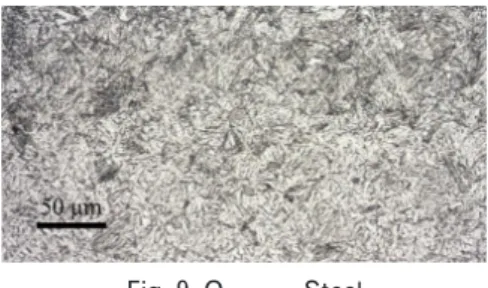
Fig. 5 shows a typical microstructure of the Q900 steel
specimen. Martensite grain size is proportional grain size before and after quenching. The austenite transformation failed because quenching is not perfect, then the hardness is not optimal. Two hardening modes during quenching are metallurgical and mechanical hardening – metallur-gical hardening caused by martensite. Meanwhile, hardness due to shrinkage (i. e., the end of the quenching process) is mechanical hardening. Steel that is hard and brittle is challenging to manufacture (the disadvantage of quenched steel). Therefore, it is necessary to increase the elasticity and slightly decrease hardness, namely by tempering at a temperature of 150 °C. A small reduction in hardness is due to the release of residual compression stress. The mi-crostructural compaction due to quenching is reduced due to the activation of tempered heat, which causes stretching between structures.
Fig. 5. Q900 Steel
The second austenitization set below the Ar3 line de-fuses martensite, and slightly above fine-grained austenite is obtained. At the end of double quenching, a martensite
2 8 ± 0. 05 45o± 0.2o R = 0.25± 0.025 27.5 ± 0.4 27.5 ± 0.4 55 ± 0.6 10 ± 0.05 10 ± 0. 05 69.67 36.67 41.33 43 31.67 22.33 0 10 20 30 40 50 60 70 80 HRP Steel Q900&T
Steel Q900/900&TSteel Q900/850&TSteel Q900/800&TSteel Q900/750&TSteel
Impac t Ene rg y (J oule)
refinement occurred. Bright colored granules indicate that the austenite has failed to turn into martensite (because the quenching process cannot produce full martensite). The second austenitization at 750 °C defuses martensite (from the first austenitization) by heating below the eutectoid temperature. Temperature close to the eutectoid tempera-ture (around 723 °C) is difficult to describe its structempera-ture. The second austenite causes the grain structure to become smaller; this is due to the diffusion of martensite when heat-ing to austenite (below the Ar3 temperature to be precise). When heating exceeds Ar3, the austenite settles down and becomes martensite when rapidly cooled. Fig. 6 shows the microstructure of the steel Q900+750 and displays refine
mar-tensite at the austenitization temperature near the Ar3 line.
Fig. 6. Q900+750 Steel
The coarser martensite is due to higher austenitization after quenching is complete – coarse martensite due to a coarse austenite zone with higher temperatures (getting closer to its melting point). The results of non-uniform austenitization in heterogeneous austenite after quenching produces non-uniform martensite (meaning the grain struc-ture is not uniform). This second quenching result has an uneven hardness, is brittle, and difficult to manufacture (so it is rarely used). So it needs a little softening. In this study, tempering heat treatment at a temperature of 150 °C is con-sidered. Tempering is a softening treatment (as long as it is below the eutectoid line) and reducing martensite and resid-ual stresses. There was a defusion of martensite from the first quenching in the second quenching when the temperature rose to the austenite zone. Because the martensite slightly defuses, the result is slightly refiner martensite. Refiner mar-tensite shows in flake shape (thin plate) and tends to absorb vibration (if used for components supporting dynamic load). The microstructure of the Q900+800 Steel specimen is shown
in Fig. 7.
Fig. 7. Q900+800 Steel
Fig. 8 shows the microstructure of the Q900+850 Steel
specimen. The microstructures of Q900+850 and Q900+800
steels are similar because the temperature difference is 50 °C; this makes a similarity in the shape of the microstructure. The second quenching converts the remaining austenite from the previous quenching (900 °C) to martensite, and the fine grain structure is obtained. This fine grain will
increase the ductility, which directly reduces the suscep-tibility to cracking. The microstructure is smaller than in Q900+800 Steel and Q900+850 steel specimen. Since the
aus-tenite temperature is similar to Q900+850 Steel, and the
structure as well. The fine microstructure of the Q900+900
Steel is extremely hard and brittle. Hardness and brittleness of steel can promote cracking, and the risk to fracture if used for construction. The martensite structure prior quenching dominates because of its hardness; it needs a little softening by tempering.
Fig. 8. Q900+850 Steel
The microstructure is coarser and similar to the Q900+800 Steel and Q900+850 steel specimen. The Q900+900
Steel is extremely strong, yet too brittle. The martensite structure dominates because of its hardness; it needs a little softening (so that the ductility increases and easy to man-ufacture process). In order to use it, it takes a little temper-ing (reductemper-ing internal stress caused by prior quenchtemper-ing). As explained above, the higher second quenching tempera-ture causes the grain structempera-ture to become too coarse. At the austenite temperature of 900 °C, it is expected that after quenching as much martensite as possible will be obtained. The increasing amount of martensite made steel too hard and very difficult to work. The residual stress contained in the steel causes increased hardness due to compaction between structures. Q900+900 steel is too hard and brittle,
rarely used because too difficult to manufacture process. For this reason, it is necessary to soften by removing a small amount of martensite and reducing residual stress by applying tempering heat treatment. Fig. 9 shows the micro-structure of the Q900+900 Steel specimen.
Fig. 9. Q900+900 Steel
Fig. 10 shows the Q900+750&T specimen. The
microstruc-ture looks smaller than with single quenching (Q900).
Tem-pering at 150 °C has the property of reducing martensite. The compressive residual stress of this steel can be relieved by the tempering process. When heating to 150 °C, a small amount of martensite defused (because the final tempera-ture of martensite formation is 92 °C). Tempering process producing hardness decreases due to martensite reduction and the residual stresses in the compression. Martensite defuses when tempering over MF, the result is softening
Fig. 10. Q900+750&T Steel
Martensite slightly defused by hot temperature acti-vation directly releases residual stress from the previous cooling process. From this, it appears that double quenching produces high hardness and brittleness; therefore, temper-ing is required. The microstructure of Q900+800&T Steel
and Q900+750&T Steel specimens is similar. The hardness and
compressive residual stress of the Q900+800&T Steel specimen
decreased by heat activation of tempering. Activation occurs when heating to the Ar3 temperature. Fig. 11 shows the
Q900+800&T Steel specimens.
Fig. 11. Q900+800&T Steel
Refinement occurs when heat activation is below the eutectoid line and coarsen in a zone far from the Ar3 line,
and residual stress relief. The second quenching refines the original microstructure of the first quenching temperature. The fine structure increases the toughness, and with a tem-perature of 150 °C, the martensite reduces slightly, and the residual stress. Fig. 12 shows the Q900+850&T Steel
speci-men’s microstructure, and the structure is refiner than in Q900+800&T Steel specimens.
Fig. 12. Q900+850&T Steel
The structure is similar to the samples before under-going tempering heat treatment. In this specimen, there was martensite diffusion and a reduction in residual stress
by activating tempering heat. The softening of the models results in stretching between microstructures (reduced compaction). Heat activation increases ductility, which directly reduces crack susceptibility. This condition facili-tates the manufacturing process. This fine microstructure increases the material’s ductility, decreases the crack-ing’s susceptibility, and facilitates the manufacturing process. The second quenching shows grain structure refinement. But tempering relieves internal stress, and it increases ductility. Martensite is also slightly defused by tempering, which reduces hardness. Fig. 13 shows the Q900+900&T Steel specimens.
Fig. 13. Q900+900&T Steel
In general, the martensite content in DQ&T Steel is refiner than in Q&T Steel. Fine martensite is due to the austenitization of the remaining first quenched austenite.
8. Conclusions
1. The formation of martensite is achieved during quenching from 357 °C to 137 °C (average value). Hardness depends on the tempering temperature used to avoid mar-tensite decomposition.
2. The average hardness of Medium-Carbon and Car-bon-Manganese Steel is around 287.7 BHN. While in the form of Q&T Steel and DQ&T Steel, it has 495 BHN and 479.7 BHN, respectively.
3. Impact energy of Medium-Carbon and Carbon-Man-ganese Steel is around 69.67 Joule, Q900&T Steel=36.67 Joule
(conventional), and Q900+850&T Steel=43 Joule.
Acknowledgments
This research was conducted using Strategical Research funds with the 2020 Annual Work Plan and Budget (Ren-cana Kerja dan Anggaran Tahunan 2020 – RKAT 2020) funds. The authors would like to thank Mr. Amung Soman-tri, General Manager Material, and Products Develop- ment, PT. Krakatau Steel (Persero), Indonesia. The late Professor Rochim Suratman, Mechanical and Aerospace Engineering Faculty, Institute of Technology Bandung, for his support to our research.
References
1. Yurianto, Y., Suprihanto, A., Suryo, S. H., Umardani, Y., Yanuar, P. (2020). Effect of austenite temperature and holding time to impact energy and wear on HRP steel. Eastern-European Journal of Enterprise Technologies, 1 (12 (103)), 45–51. doi: https:// doi.org/10.15587/1729-4061.2020.156798
2. Lee, W.-S., Su, T.-T. (1999). Mechanical properties and microstructural features of AISI 4340 high-strength alloy steel under quenched and tempered conditions. Journal of Materials Processing Technology, 87 (1-3), 198–206. doi: https://doi.org/10.1016/ s0924-0136(98)00351-3
3. Shimizu, K., Nishiyama, Z. (1972). Electron microscopic studies of martensitic transformations in iron alloys and steels. Metallur-gical Transactions, 3 (5), 1055–1068. doi: https://doi.org/10.1007/bf02642437
4. Das, S. K., Thomas, G. (1969). Structure and mechanical properties of Fe–Ni–Co–C steels. Trans. ASM, 62, 659–668.
5. Krauss, G. (1999). Martensite in steel: strength and structure. Materials Science and Engineering: A, 273-275, 40–57. doi: https:// doi.org/10.1016/s0921-5093(99)00288-9
6. Silva, E. P., Pacheco, P. M. C. L., Savi, M. A. (2004). On the thermo-mechanical coupling in austenite–martensite phase trans-formation related to the quenching process. International Journal of Solids and Structures, 41 (3-4), 1139–1155. doi: https:// doi.org/10.1016/j.ijsolstr.2003.09.049
7. Ooki, C. (2004). Improving Rolling Contact Fatigue Life of Bearing Steels Through Grain Refinement. SAE Technical Paper Series. doi: https://doi.org/10.4271/2004-01-0634
8. Luxenburger, G., Bockelmann, M., Wolf, P., Hanus, F., Cawelius, R., Buchholz, J. (2004). High strength quenched and tem-pered (Q+T) steels for pressure vessels. International Journal of Pressure Vessels and Piping, 81 (2), 159–171. doi: https:// doi.org/10.1016/j.ijpvp.2003.11.006
9. Madhusudhan Reddy, G., Mohandas, T., Papukutty, K. (1999). Enhancement of ballistic capabilities of soft welds through hard-facing. International Journal of Impact Engineering, 22 (8), 775–791. doi: https://doi.org/10.1016/s0734-743x(99)00020-2 10. Magudeeswaran, G., Balasubramanian, V., Madhusudhanreddy, G. (2008). Hydrogen induced cold cracking studies on armour grade
high strength, quenched and tempered steel weldments. International Journal of Hydrogen Energy, 33 (7), 1897–1908. doi: https:// doi.org/10.1016/j.ijhydene.2008.01.035
11. Balakrishnan, M., Balasubramanian, V., Madhusudhan Reddy, G. (2013). Effect of hardfaced interlayer thickness on ballistic perfor-mance of armour steel welds. Materials & Design, 44, 59–68. doi: https://doi.org/10.1016/j.matdes.2012.06.010
12. Lee, K. O., Hong, S. K., Kang, Y. K., Yoon, H. J., Kang, S. S. (2009). Grain refinement in bearing steels using a double-quenching heat-treatment process. International Journal of Automotive Technology, 10 (6), 697–702. doi: https://doi.org/10.1007/s12239-009-0082-5
13. Di Schino, A., Guarnaschelli, C. (2009). Effect of microstructure on cleavage resistance of high-strength quenched and tempered steels. Materials Letters, 63 (22), 1968–1972. doi: https://doi.org/10.1016/j.matlet.2009.06.032
14. Nishibata, T., Kojima, N. (2013). Effect of quenching rate on hardness and microstructure of hot-stamped steel. Journal of Alloys and Compounds, 577, S549–S554. doi: https://doi.org/10.1016/j.jallcom.2011.12.154
15. Khani Sanij, M. H., Ghasemi Banadkouki, S. S., Mashreghi, A. R., Moshrefifar, M. (2012). The effect of single and double quench-ing and temperquench-ing heat treatments on the microstructure and mechanical properties of AISI 4140 steel. Materials & Design, 42, 339–346. doi: https://doi.org/10.1016/j.matdes.2012.06.017
16. Yurianto, Pratikto, Sonoko, R., Wahyono, Bayuseno, A. P. (2018). Quenching and tempering parameter on Indonesian hot rolled plate steel for armour steel. MATEC Web of Conferences, 204, 05001. doi: https://doi.org/10.1051/matecconf/201820405001 17. Sampath, K. (2007). How to Choose Electrodes for Joining High-Strength Steels. Welding Journal, 26–28.
18. ASM Handbook (1996). Vol. 6. Properties and Selection: Irons, Steels, and High Performance Alloys. Copyright ASM Internation-al, 246–247.
19. Bailey, N., Coe, F. R., Googh, T. G., Hart, P. H. M., Jenkins, N., Pargetter, R. J. (1973). Welding steels without hydrogen cracking. Abington Publishing and ASM International.
20. Lee, H.-G. (1999). Chemical Thermodynamics For Metals and Materials. World Scientific Publishing Co Pte Ltd. doi: https:// doi.org/10.1142/p152
21. ASTM E23-07a. Standard Test Methods for Notched Bar Impact Testing of Metallic Materials (2007). ASTM International, West Conshohocken, PA. doi: https://doi.org/10.1520/e0023-07a