channeling financial resources to productive investments, and managing the inherent risks to achieve sustainable economic growth over the long term and contribute to poverty reduction. Financial Sector Development Strategy 2011–2020 reflects Cambodia’s achievements to date, provides an assessment of current challenges and constraints to financial sector development, the long-term goals, and a prioritized set of action plans for the next decade. Said strategy will enable Cambodia’s financial sector to integrate into the regional financial system and support her long-term economic development agenda.
About the Asian Development Bank
ADB’s vision is an Asia and Pacific region free of poverty. Its mission is to help its developing member countries reduce poverty and improve the quality of life of their people. Despite the region’s many successes, it remains home to two-thirds of the world’s poor: 1.8 billion people who live on less than $2 a day, with 903 million struggling on less than $1.25 a day. ADB is committed to reducing poverty through inclusive economic growth, environmentally sustainable growth, and regional integration.
Based in Manila, ADB is owned by 67 members, including 48 from the region. Its main instruments for helping its developing member countries are policy dialogue, loans, equity investments, guarantees, grants, and technical assistance.
Asian Development Bank
6 ADB Avenue, Mandaluyong City 1550 Metro Manila, Philippines www.adb.org
ISBN 978-92-9092-512-5
789290 926887 9
Printed on recycled paper Printed in the Philippines
Financial Sector
Development Strategy
2011–2020
Royal GoveRnment of Cambodia
Kingdom of Cambodia
Nation Religion King
Adopted by the Council of Ministers in
the Plenary Session on 25 November 2011
Financial Sector
Development Strategy
2011–2020
Adopted by the Council of Ministers in
the Plenary Session on 25 November 2011
ISBN 978-92-9092-688-7 (Print), 978-92-9092-689-4 (PDF) Publication Stock No. RPT124553
Cataloging-In-Publication Data Asian Development Bank.
Financial sector development strategy 2011–2020. Mandaluyong City, Philippines: Asian Development Bank, 2012. 1. Financial sector. 2. Cambodia. I. Asian Development Bank.
The views expressed in this publication are those of the authors and do not necessarily reflect the views and policies of the Asian Development Bank (ADB) or its Board of Governors or the governments they represent.
ADB does not guarantee the accuracy of the data included in this publication and accepts no responsibility for any consequence of their use.
By making any designation of or reference to a particular territory or geographic area, or by using the term “country” in this document, ADB does not intend to make any judgments as to the legal or other status of any territory or area. ADB encourages printing or copying information exclusively for personal and noncommercial use with proper acknowledgment of ADB. Users are restricted from reselling, redistributing, or creating derivative works for commercial purposes without the express, written consent of ADB.
Note:
In this report, “$” refers to US dollars. 6 ADB Avenue, Mandaluyong City 1550 Metro Manila, Philippines Tel +63 2 632 4444
Fax +63 2 636 2444 www.adb.org
For orders, please contact: Department of External Relations Fax +63 2 636 2648
iii
Contents
Foreword v Acknowledgments viii Currency Equivalents ix Abbreviations ix Executive Summary xiMajor Achievements over the Past Decade xi
Preparing for Challenges xii
Objectives and Strategies xiii
Chapter 1: Background 1
Introduction 1
Macroeconomic Management 1
The Financial Sector 3
Structure and Strategic Document Preparation 4
Chapter 2: Banking Sector 6
Banking System 6
Anti–Money Laundering and Combating the Financing of Terrorism 13
Microfinance Sector 15
Leasing 21
Chapter 3: Nonbanking Financial Sector 24
Insurance 24
Pensions 29
The National Social Security Fund for Civil Servants 30 The National Fund for Veterans 31 The Persons with Disability Foundation 33 The National Social Security Fund 34
Private Voluntary Pensions 35
Capital Market 36
Chapter 4: Governance and Infrastructure 41
Managing the Reform Process: Legal and Regulatory Framework 41 Market Infrastructure: Accounting and Auditing 43
The Payment System 44
Credit Bureau 46
Property Valuation, Estate Services, and Housing Development 46
Chapter 6: Action Plan for Financial Sector Development 2011–2020 51
Banking Sector 51
Anti–Money Laundering and Combating the Financing of Terrorism 62
Microfinance 63
Leasing 70
Insurance and Pensions 71
Capital Market 80
Governance and Infrastructure 86
Property Valuation, Estate Services, and Housing Development 94
Capacity Building 96
Appendixes
1 Key Financial Data 99
2 Composition of the Committee on Economic and Financial Policy, the Steering Committee and the Technical Working Group
for Implementing the Financial Sector Development Strategy 2011–2020 101 3 ADB Financial Sector Development Strategy 2011–2020 Team 104
v
O
ver the decade to 2010, Cambodia’s economy developed remarkably, with an average annual growth rate of 8%. Such growth was achieved by implementing an open market economy, based on the country’s competitive advantages, and by providing an environment conducive to private sector investment. Political and social stability, supported by prudent fiscal and sound monetary policies, have also been fundamental for appropriate macroeconomic management. Following adoption by the Royal Government of Cambodia (RGC) of the Vision and Financial Sector Development Plan 2001–2010, which was later updated to become the Financial Sector Development Strategy (FSDS) 2006–2015, the financial sector has also contributed to high economic growth.In 2009, the global financial crisis began to impact Cambodia’s small but open economy, exposing several structural weaknesses that the National Strategic Development Plan Update 2009–2013 is seeking to address. The government’s timely and effective response to the crisis lessened its impact on the economy and maintained financial system stability. Moreover, FSDS 2006–2015 helped the banking and financial system to continue making progress.
However, challenges remain to be addressed. To respond to these needs, and based on the request of the Committee on Economic and Financial Policy and support from Samdech Akka Moha Sena Padei Decho, Hun Sen, Prime Minister of the Kingdom of Cambodia, the government decided to update FSDS 2006–2015 as FSDS 2011–2020. After the Committee on Economic and Financial Policy carefully reviewed the FSDS 2011–2020, the Council of Ministers adopted it on 25 November 2011 as the blueprint for medium-term financial sector development.
Updating this strategic document took into account achievements from implementing FSDS 2006–2015 as well as lessons learned from past reforms, experiences from the global financial crisis, and anticipation of rapid financial market development. FSDS 2011–2020 also stresses that financial sector development has to be based on principles of good governance, which are even more important in an increasingly complex and competitive economic and financial environment.
The financial system is now entering an era of specialization, with the emergence of the money and securities markets, and continues to diversify in terms of institutions and instruments. An interbank market framework has been developed, and this market is
Foreword
expected to become operational in the near future. In addition, when conditions are favorable and the prerequisite infrastructure and regulatory frameworks for money market development have been put in place, the RGC will issue government securities. A broad-based government securities market is essential for implementing monetary policy in parallel with promotion of the Cambodian riel.
The Cambodia Securities Exchange, the market operator for the new stock exchange, has been granted a license to operate by the Securities and Exchange Commission of Cambodia and has held its official launch. The insurance sector is diversifying to include life and microinsurance. Banking intermediation is now conducted through m-banking, ATMs, and other forms of electronic transfer. Other important financial sector developments include money exchanges, trusts, leasing, pensions, pawn businesses, and collective investment schemes.
The aim of financial sector development is a competitive, integrated, and efficient financial system that is appropriately regulated and supervised to efficiently mobilize savings to finance sustainable economic growth. In line with the priorities stated in the National Strategic Development Plan, the financial sector should respond to market needs, including those of the growing middle class and emerging microentrepreneurs in hard-to-reach areas. The sector should also provide support for the critical infrastructure projects required for Cambodia’s rapidly growing population and for lessening dependence on foreign aid. As Cambodia is now part of the Association of Southeast Asian Nations (ASEAN) Economic Community, FSDS 2011–2020 takes account of the proposed financial integration of Cambodia with the other ASEAN economies.
FSDS 2011–2020 was carefully prepared, checked, and verified under the authority of the Technical Working Group and the Steering Committee for Implementing the Financial Sector Development Strategy. Support was provided by the Asian Development Bank, with contributions from a team of consultants from Maxwell Stamp. The Technical Working Group comprises members from related key ministries and agencies, including the Ministry of Economy and Finance; the Ministry of Commerce; the Ministry of Justice; the Ministry of Labor and Vocational Training; the Ministry of Social Affairs, Veterans and Youth Rehabilitation; the National Bank of Cambodia; the Council for the Development of Cambodia; and the Securities and Exchange Commission of Cambodia. This Technical Working Group reports to the Steering Committee, which is chaired by the Governor of the National Bank of Cambodia. Experts from the banking sector, securities sector, insurance sector, real estate sector, pension sector, microfinance sector, and other related entities, also provided valuable inputs to the FSDS 2011–2020.
During the updating process, the Steering Committee and Technical Working Group for Implementing the Financial Sector Development Strategy conducted research, and organized workshops and meetings to finalize FSDS 2011–2020 from January to August 2011. Along with this, a national workshop was organized on 19 July 2011; its outcomes were reviewed by the Steering Committee at a meeting on 17 August 2011 and then checked and approved at the interministerial Committee on Economic and Financial Policy meeting on 24 August 2011. On 25 November 2011, the Council of Ministers adopted the new FSDS.
We would like to express our deep gratitude to the ministries and agencies of the RGC who have contributed to the preparation of this important strategic document. We also wish to express our sincere thanks to the Asian Development Bank for its valuable technical assistance and that of related parties for their efforts and contributions to developing this FSDS 2011–2020.
Phnom Penh, 29 November 2011
Keat Chhon Chea Chanto
Deputy Prime Minister Governor
Minister of Economy and Finance National Bank Of Cambodia
viii
Acknowledgments
T
he Government of Cambodia wishes to express sincere thanks to the Steering Committee and the Technical Working Group for Implementing the Financial Sector Development Strategy, as well as all the related ministries and government agencies that contributed to the development of the Financial Sector Development Strategy 2011–2020.The government would also like to specially thank the Asian Development Bank mission team and its consultants for providing strategic and technical inputs in developing the Financial Sector Development Strategy 2011–2020.
ix
Currency Equivalents
(as of 22 February 2012)
Abbreviations
Currency Unit – riel (KR) KR1.00 = $0.000248
$1.00 = KR4,021
ADB Asian Development Bank AML anti–money laundering
CAFIU Cambodian Financial Intelligence Unit CFT countering the financing of terrorism
CIFRS Cambodia International Financial Reporting Standards CMA Cambodia Microfinance Association
CPA certified public accountant FATF Financial Action Task Force
FSDS Financial Sector Development Strategy GDP gross domestic product
GIAC General Insurance Association of Cambodia IAIS International Association of Insurance Supervisors IAS international accounting standards
IFAC International Federation of Accountants IFRS International Financial Reporting Standards
IOSCO International Organization of Securities Commissions IT information technology
KICPAA Kampuchea Institute of Certified Public Accountants and Auditors KR Cambodian riel
L-MFI licensed microfinance institution
L-MDI licensed microfinance deposit institution MEF Ministry of Economy and Finance MFI microfinance institution
MLMUPC Ministry of Land Management, Urban Planning and Construction MOC Ministry of Commerce
MOJ Ministry of Justice
MLVT Ministry of Labor and Vocational Training
MoSVY Ministry of Social Affairs, Veterans and Youth Rehabilitation MOU memorandum of understanding
NAC National Accounting Council NBC National Bank of Cambodia NFV National Fund for Veterans NGO nongovernment organization NSSF National Social Security Fund
NSSFC National Social Security Fund for Civil Servants PWDF Persons with Disability Foundation
SECC Securities and Exchange Commission of Cambodia SMEs small and medium-sized enterprises
xi
Executive Summary
C
ambodia’s Vision and Financial Sector Development Plan 2001–2010 (Blueprint) focused on the development of a sound, market-oriented financial sector that will mobilize and allocate resources to support sustainable economic growth. In 2006, the first Blueprint 2001–2010 was updated to become the Financial Sector Development Strategy (FSDS) 2006–2015.The long-term vision and strategy described in the first Blueprint and the subsequent FSDS 2006–2015 remain broadly appropriate for the country. Overall, the Government of Cambodia has achieved significant progress; however, some challenges still need to be addressed. To respond to current conditions and demonstrated needs, the government has decided to update the FSDS 2006–2015 as the FSDS 2011–2020.
The FSDS 2011–2020 reflects Cambodia’s economic achievements to date and provides an assessment of current challenges and constraints, an endorsement of the objectives in the FSDS 2006–2015, and action plans for the future. The FSDS 2011–2020 synthesizes and prioritizes the goals, strategies, and plans for each subsector of the financial system, and aligns these with the long-term vision for the financial sector as a whole. It also serves as a guide to enable development partners to coordinate the capacity building and other forms of technical assistance that they provide.
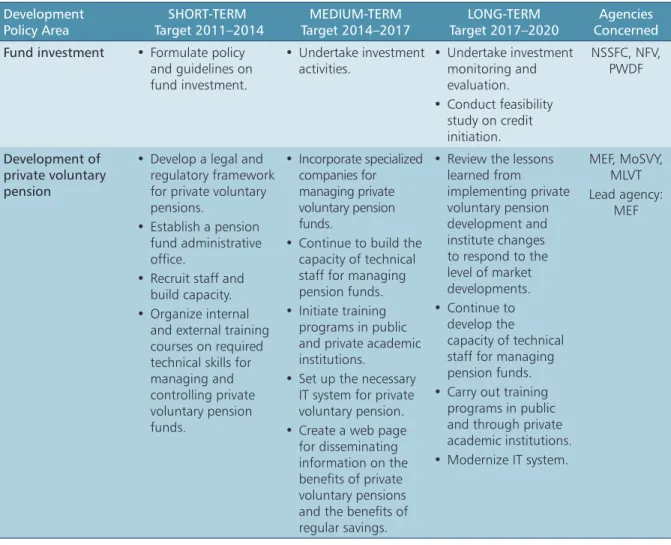
The FSDS 2011–2020 draws on the results, lessons learned, experiences, and challenges from implementing the previous strategies. (For details on the specific goals and action plans of the FSDS 2011–2020, please refer to the Action Plan Matrix that begins on page 51).
The FSDS 2011–2020 is designed to be flexible to respond to changing conditions in the economic, social, and political situation in Cambodia; to financial industry developments; and to the changes and challenges that result from Cambodia’s increasing integration into the regional and global markets.
Major Achievements over the Past Decade
The government has achieved a great deal over the past decade through the implementation of many reforms. Among the most notable are
• passage of major commercial and financial sector laws to support development of a sound and market-driven financial sector,
• restructuring of the banking sector and the strengthening of key financial institutions,
• introduction of the financial sector infrastructure necessary to support financial market activities and improve outreach to the rural poor,
• development of human resources and specialized knowledge, and
• mobilization of the domestic financial resources needed to meet the demands of a fast-growing economy.
Along with past achievements, the FSDS 2011–2020 is intended to address the following key challenges:
• emerging risks and challenges from external shocks that could jeopardize Cambodia’s achievements to date,
• internal risks caused by delays in implementing critical reforms that could impact financial stability,
• weak policy coordination that delays the addressing of gaps in the legal and regulatory framework, and the pace of upgrading institutional infrastructure to keep up with rapid developments in the industry,
• the ongoing need to upgrade financial sector human resources and sustain these improvements,
• the need to harmonize relevant legal and regulatory frameworks so they keep pace with developments in the financial sector, and
• the need for concerned authorities to collaborate in order to avoid interconnected risks that could damage the whole economy.
Preparing for Challenges
To prepare for any challenges that may arise during implementation, the FSDS 2011–2020 will require
• awareness, preparedness, and close coordination among all key stakeholders; • regular monitoring of achievements and early identification of problems in order
to address problems swiftly and in an appropriate manner;
• allocation of the resources necessary to implement this strategic plan; • ownership of this strategic plan by all relevant authorities;
• clarity about who is responsible and accountable for implementing the action plans;
• cooperation among international organizations and development partners that provide technical assistance and other forms of support, and oversight by the concerned authorities; and
• building a sound foundation for ongoing capacity development. Additional challenges worth emphasizing include
• keeping up with international standards of risk-based supervision as well as the pace of financial market development, and establishing a cooperation framework that covers all the concerned authorities;
• recognition by all concerned that designing the institutional framework required for regulating and supervising the financial sector as a whole and updating the current legal framework will take years before all has been adopted by the legislature;
• strengthening technical capacity in key new areas in order to keep up with the increasing interconnection of the banking, securities, and insurance sectors as well as new risks emerging that could threaten financial stability;
• good technical skills and well-coordinated supervision to assess and address emerging market, operational, and liquidity risks;
• developing risk awareness and the capacity to make good judgments of supervisory staff at all levels;
• incentives to retain specialized staff that have been trained by various regulatory agencies so they resist growing offers of jobs in the private sector;
• achieving compliance with international standards in order to harmonize and integrate Cambodia’s financial system with those of other countries in the Association of Southeast Asian Nations (ASEAN) region;
• effectively implementing of new regulations intended to improve data quality, transparency, corporate governance, business ethics, market disclosures, and achieve fair competition across the financial sector;
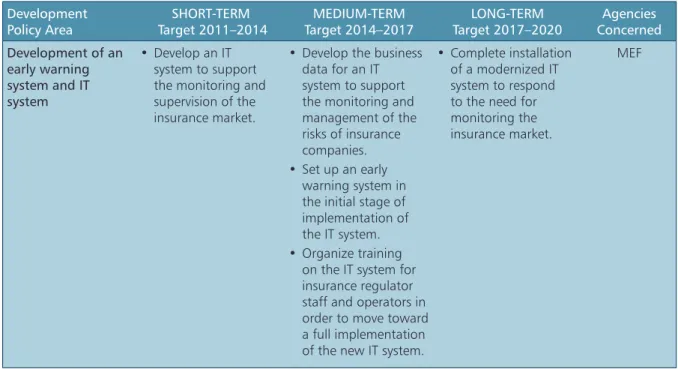
• through cooperation between regulatory authorities and concerned institutions, upgrading the existing infrastructure with a new IT system and database, prioritizing a corporate database in order to improve effectiveness in supervision, and identifying unregistered entities;
• promoting use of the national currency in the economy and monitoring the risks involved; and
• establishing an effective cooperation framework for the authorities responsible for crisis management.
Objectives and Strategies
The objective of the FSDS 2011–2020 is to develop a sound financial sector that can contribute to poverty reduction by supporting economic growth and increasing poor people’s access to finance.
Adjustments to the institutional framework need to take into account new finance industry developments. The Law on the Issuance and Trading of Non-Governmental Securities has established the Securities and Exchange Commission of Cambodia to act as regulator of the securities market and market participants. Given the interconnection between the securities market and the banking sector, to ensure effective supervision of both, an effective cooperation mechanism needs to be established among related financial sector authorities.
The revision of legal and cooperation frameworks. There are currently some inconsistencies between existing laws and international standards that need to be addressed. The problem of supervision agencies whose jurisdictions overlap in some areas also needs to be addressed.
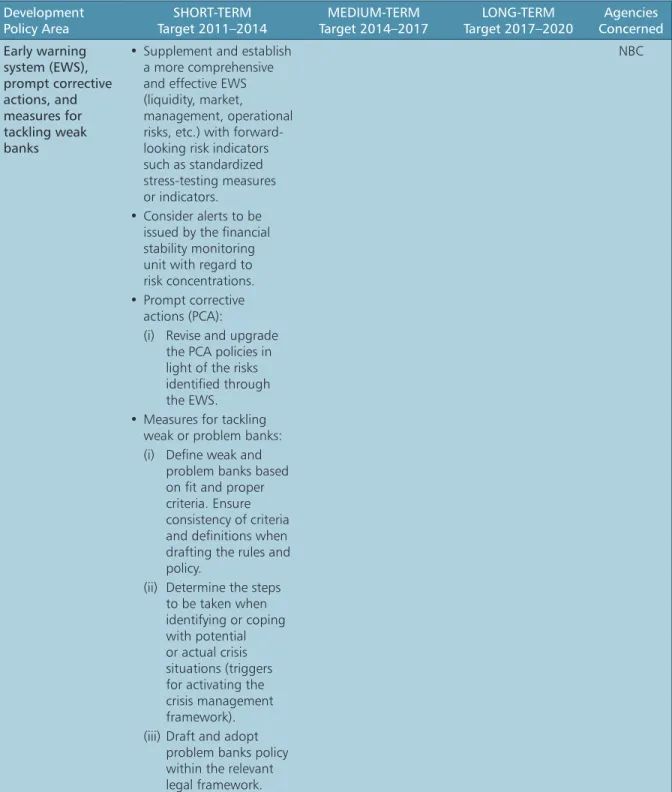
Crisis preparedness. A crisis management framework needs to be established and will require periodic testing to ensure that it suits Cambodian economic and financial conditions and addresses the new risks that may arise as a result of growing interconnections within the financial sector. Because of the high level of dollarization, it is necessary to pay close attention to the potential systemic risks. Establishing a financial stability unit within the National Bank of Cambodia and an early warning system within the banking system
will help identify potential risks. In order to establish a financial stability unit and early warning system, the concerned financial authorities should set up a national financial stability committee.
In light of the government’s long-term objective of promoting use of the riel and eventual de-dollarization, the establishment of sound monetary policy and supporting market infrastructure is imperative over the coming decade. Due to a limited range of monetary policy tools, the National Bank of Cambodia must explore new tools for ensuring financial stability and economic growth, build internal capacity, and gain greater autonomy in designing and implementing monetary policy.
The banking subsector continues to dominate the financial sector and will continue to be the sector’s most critical segment. With regard to banking, the priorities are
• maintaining monetary and financial stability,
• addressing constraints in order to accelerate sector development, and
• intensifying resource mobilization and enhancing the efficiency of resource allocation through development of a money market.
The vision for microfinance is to strengthen the sector so that it can provide the poor with affordable financial services, increased income, and reduce poverty. The goal over the coming decade is to further develop the sector so that it covers greater numbers of low-income people.
For the insurance sector, the strategy is to implement the action plan specified in the first Blueprint 2001–2010, develop new products, and enhance regulations and supervisory capacity in line with the Insurance Core Principles of the International Association of Insurance Supervisors, of which Cambodia is a member.
Steps to establish a securities market have progressed substantially. A stock market was officially launched in July 2011, and trading began in April 2012. The Securities and Exchange Commission of Cambodia will follow the core principles of the International Organization of Securities Commissions. Among others, development of a successful securities market will require supporting infrastructure and facilitation of access to the payment system.
The development and operation of the payment system must be demand-led, provide support, and facilitate market operators’ access. Early connection with the ASEAN country payment network will be necessary to achieve the goal of ASEAN financial sector integration.
The FSDS 2011–2020 provides action plans for close cooperation of the banking sector with other relevant sectors to
• build capacity for consolidated supervision and surveillance; • combat money laundering and the financing of terrorism; • promote leasing; and
• improve corporate governance, data quality, accounting, and auditing, as well as property valuation, real estate services, and the housing market.
Overall, the reform strategies and action plans for each sector stipulated in the FSDS 2011–2020 are critical and closely interconnected. Delays in attaining the goals for any sector will disrupt reform processes in other sectors. Based on the experience of implementing the previous Financial Sector Development Strategy, coordination and cooperation among competent authorities, international organizations, and development partners are critical for ensuring reform success. Therefore, the government emphasizes the need to regularly monitor the performance of reform programs as well as the challenges arising from rapid financial market development, and to take timely and appropriate actions when needed.
1
CHAPTER 1
Background
Introduction
Over the coming decade to 2020, diversification and modernization of the economy to support sustainable economic growth, improve people’s living standards, and reduce poverty are priority goals of the Government of Cambodia. To support this, the Financial Sector Development Strategy 2011–2020 (FSDS 2011–2020) is the strategic document for continuing to develop a strong financial system and market-based principles that will effectively mobilize and allocate the resources needed to achieve sustainable development. This document retains the long-term vision that was set out in the Vision and Financial Sector Development Plan for 2001–2010 and the Financial Sector Development Strategy for 2006–2015, as this vision is still appropriate for Cambodia. Over a decade of implementing this strategy, Cambodia has achieved a great deal, but significant challenges remain. These include rapid finance industry diversification, bringing regulations and supervision up to international standards, establishing a mechanism to manage in times of crisis, and assisting the financial sector to provide needed financing and financial services to the agriculture, industry, and other real economic sectors. In preparing the FSDS 2011–2020, the government built on the experiences and lessons learned from the Asian financial crisis of 1997–1998 and the recent global economic crisis, and from implementing previous strategies with regard to integrating Cambodia into the regional financial sector.
Macroeconomic Management
The FSDS 2011–2020 update takes into account three key contexts: (i) Cambodia’s economic development over more than a decade of peace, political stability, and improving social welfare; (ii) changes in the global economy, especially since the 2008–2009 global economic crisis; and (iii) the need for a new approach to ensure economic growth across all sectors of the economy where the financial sector can play a crucial supportive and integrating role.
Since the late 1990s, when peace finally came after decades of war and isolation, Cambodia has achieved rapid economic progress. Self-confidence and pride are returning for Cambodians nationwide, giving them a vision of a prosperous future that includes access to decent employment and the good living standards that come from economic development. The strategy of the government is to lead, manage, and coordinate in order to achieve this vision, especially with regard to helping Cambodia to compete regionally and globally.
In recent years, Cambodia has had one of the fastest-growing economies in the world. The national economy recovered quickly from the 2008–2009 global economic turmoil and has become an attractive country for investors. This economic achievement is the result of rapid improvements in physical infrastructure that have taken place since the general election of 1993. The government has been engaged in a broad reform program in all sectors in order to achieve economic liberalization by eliminating price controls and providing incentives to stimulate local as well as foreign investment in private enterprises. The national economy, which was previously limited to the agriculture sector, now includes thriving manufacturing and service sectors.
Since 1999, the government has focused its efforts on speeding up market-based private sector development, and has achieved impressive results. Between 1998 and 2008, Cambodia’s annual gross domestic product (GDP) averaged above 9.3% due to high growth in the garment, construction, and tourism sectors. Strong economic performance from 2004 to 2008 coincided with the launch of the government’s Rectangular Strategy that stresses public financial management reform, public administrative reform, and decentralization and deconcentration as three priority areas for reform. To this end, the government has invested heavily in infrastructure, stressing development of the provincial and rural road network. Foreign direct investment has increased substantially since 2004, and especially up to the start of the global financial crisis in 2008.
The global economic crisis had little impact on the financial sector in Cambodia, and banks in particular, but for the key economic sectors—garment manufacturing, construction, and tourism—the indirect impact was more noticeable. Cambodia’s economic growth fell sharply in 2009 but fortunately recovered quite substantially in 2010 and 2011. Also importantly, with the launch of manufacturing (primarily garments), construction, and the service sector, Cambodia’s economy has diversified from dependence on only agriculture. Management of macroeconomic conditions through prudent monetary and fiscal policies, together with financial sector reforms, have contributed to Cambodia’s economic achievements. For the medium term, Cambodia’s annual economic growth is expected to reach 6%–7%, and growth could be even higher once production from Cambodia’s offshore petroleum resources starts, which is expected in the near future.
Cambodia’s efforts toward regional integration have contributed to high economic growth in the past decade. However, in the near future Cambodia will face stiffer competition in the global market and especially with neighboring countries that are economically stronger. Recent accession of Cambodia’s competitors to the World Trade Organization and the relatively high cost of doing business in Cambodia, especially with regard to electricity and transportation, are ongoing barriers to economic development. In response to these challenges, the government recently launched a policy for the promotion of paddy production and rice exports, and is considering a policy to stimulate industrial development and modernization of the economic structure. For Cambodia to sustain the high economic growth needed to reduce poverty, focusing only on the internal market is not an option for such a small economy. Thus, it must identify new international markets for its products and scale up cooperation with all development partners to ensure that the country remains competitive in attracting foreign investors. With these goals in mind, bringing the financial system up to international standards is imperative in order to capitalize on the current and potential benefits of globalization.
For Cambodia’s highly dollarized economy, fiscal policy plays a key role in controlling the macroeconomy. From 1995 to 1998, the country experienced high inflation that reached 14.7% in 1998. This high inflation originated from external sources and high fiscal deficit. Implementing budgetary discipline has helped Cambodia maintain low inflation and avoid economic crises. Such discipline includes controlling government expenditures, improving revenue collection, ceasing deficit financing from the National Bank of Cambodia (NBC), and seeking finance only from concessional loans, primarily for needed infrastructure. Through such policies, today the amount of the country’s debt and the cost of servicing that debt are both still low and manageable. The Public Financial Management Reform Program that has been implemented since 2004 has been an important tool for modernizing and improving fiscal efficiency.
The main goal of monetary policy is to maintain price stability through macroeconomic stabilization. To this end, NBC’s monetary policy stance has been to intervene in the foreign exchange market to stabilize exchange rates and also impose the reserve requirements on banks in order to manage the level of liquidity in the banking and financial sector as a whole, while also promoting de-dollarization. NBC predicts an inflation rate of less than 5.0% in the short term and approximately 3.5% in the medium term. The economy is subject to externalities as the country depends on imports of consumer products as well as oil, and Cambodia’s foreign exchange market is still underdeveloped. Under the current monetary regime, fluctuation of exchange rates and commodity prices on the international market has an immediate impact on domestic prices and the national economy.
The country maintains a managed floating exchange rate, which is favorable for the accumulation of foreign reserves. With regard to de-dollarization, the NBC is not equipped with appropriate monetary policy tools beyond its intervention in the money exchange market and bank reserve requirements that are both prescribed by law.
In order to maintain the macroeconomic stability needed to support and sustain economic growth, coordination of monetary and fiscal policies is required. The government will continue to cautiously implement monetary policy in combination with budgetary discipline.
The Financial Sector
The financial sector of Cambodia has developed quickly and is highly competitive. The value added by the sector increased an average of 22.1% per year from 2004 to 2008, reflecting the deepening and wider scope of financial intermediation. When preparing the Vision and Financial Sector Development Plan in 2000, the ratio of money supply to GDP was only equal to 12.5%. This ratio rose to 20.5% in 2006, when the Financial Sector Development Strategy 2006–2015 was updated, and it has further increased to 38.3%. The ongoing rise in deposits and use of credit demonstrates growing public confidence in the banking sector.
The country’s banks are all privately owned and most with majority foreign shareholders. Over the last decade, the banking sector has experienced high growth. NBC supervises the banking system of the country. Despite progress in the banking sector, the financial sector is still in the early stage of development as it lacks the infrastructure to engage in all financial operations. The challenges that need to be addressed in the FSDS 2011–2020 include the high dependence on the banking system for resource
mobilization, the concentration of financial assets in a few large banks that could suffer from systemic risks, the high cost of bank intermediation, lack of long-term finance, lack of qualified human resources, lack of managerial and supervision capacity, lack of reliable credit information and related infrastructure, limited use of the national payment system, the need to strengthen supervision in the nonbank financial sector, lack of a coordinating mechanism and exchange of information between concerned regulatory bodies, and limited financial services in rural areas.
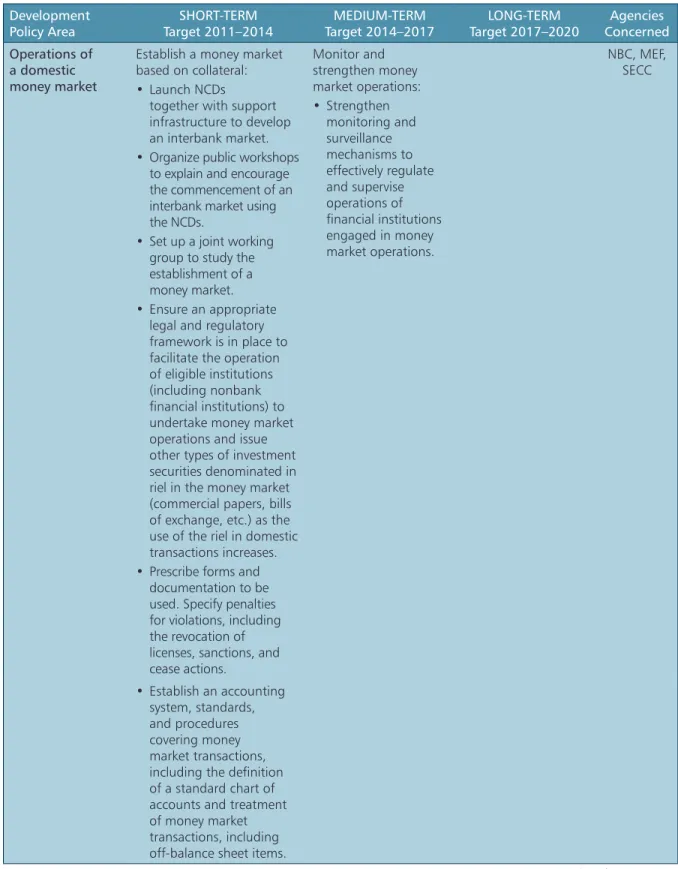
Cambodia’s financial sector is entering a stage of specialization with the development of specialized institutions and financial instruments. The government is expected to launch an interbank market and is considering issuing government securities after the necessary infrastructure and regulatory framework have been put in place. This is a major condition for establishing a domestic money market. A broad-based government securities market would enable the authorities to conduct an open market operation. This has to be implemented in parallel with promoting increased use of the riel. Cambodia’s securities market will commence trading after the key market players receive their business licenses. The growing insurance sector provides general insurance, life insurance, compulsory vehicle insurance, and microinsurance. The upgrading of the national payment system has helped implement the mobile banking market and increased funds transfer through electronic systems and the emergence of money exchange services. Other new developments in the financial sector include the establishment of trusts, leasing operations, pension schemes, pawn businesses, and collective investment schemes.
Structure and Strategic Document Preparation
To prepare the FSDS 2011–2020, broad consultation took place with the line ministries of the government, including the Ministry of Economy and Finance (MEF); NBC; Ministry of Commerce (MOC); Securities and Exchange Commission of Cambodia (SECC); Ministry of Justice; Council of Jurists; Ministry of Social Affairs, Veterans and Youth Rehabilitation; and Ministry of Land Management, Urban Planning and Construction (MLMUPC), as well as with banks and other private sector financial institutions, insurance companies, securities firms, and nongovernment organizations. Key development partners such as the Asian Development Bank, International Finance Corporation, International Monetary Fund, and World Bank were also consulted.
The data for preparing this strategy were obtained from the MEF, MOC, MLMUPC, NBC, and SECC as well as from other relevant institutions in the financial sector. Inputs for analysis and for documenting this strategy include the study on the financial sector and the discussion paper on Article IV between the government and the International Monetary Fund. In addition, a number of consultative workshops were held with the ministries and institutions of the government, regulators, supervisory bodies, financial market participants, and development partners so they could provide their comments on the draft FSDS 2011–2020.
This strategic document has been prepared to reflect the relationship between the bank and nonbank financial sectors and the infrastructure that supports financial sector development. Currently, the banking and microfinance sectors experience the highest growth in the financial sector in delivering financial intermediation services to all sectors, including financing to small enterprises and rural households. The development of the
domestic money and capital markets should offer (i) new sources of financing; (ii) the longer-term financing needed for infrastructure, manufacturing, and other forms of industry; and (iii) financing for large enterprises. The growing nonbank financial sector is another source of funds for promoting large-scale and effective financial intermediation. In the long term, the initiative to develop the infrastructure necessary to support development of the financial sector and capacity building should ensure development of both the bank and nonbank financial sectors.
The overall strategy and a large part of the action plans for reform as prescribed in the FSDS 2011–2020 are closely interconnected. The process and the strengthening of reform policy require an appropriate timeline. To effectively implement the reform program, the strategy must take into consideration challenges over the course of implementation as the majority of reform activities necessitate preconditions that are tailored to economic and political circumstances. On the other hand, any delay in achieving objectives in one sector may deter the reform process in other sectors. Based on experience gained in implementing the previous strategy for financial development, coordination and cooperation among competent authorities, international organizations, and development partners are crucial to reform success. Hence, the government pays close attention to the pace of the reforms and regularly monitors their implementation and challenges that arise due to rapid market evolution so that appropriate and timely measures can be taken.
The FSDS 2011–2020 is organized as follows: Chapter 1 provides an overview of macroeconomic management and finance industry achievements and challenges; Chapter 2 covers the banking sector, including the banking system, measures to combat money-laundering and the financing of terrorism, as well as to promote microfinance and leasing; Chapter 3 covers the nonbanking financial sector including insurance, pensions, and the capital market; Chapter 4 covers governance and the legal and regulatory framework for financial sector infrastructure, as well as accounting and auditing, the payment system, the system for recording collateral, and the credit bureau; Chapter 5 discusses capacity building needs; and Chapter 6 presents the Action Plan for Financial Sector Development 2011–2020.
6
CHAPTER 2
Banking Sector
Banking System
Background
The National Bank of Cambodia (NBC) is the supervisory authority for banking in Cambodia, and its principal mission is to formulate and implement monetary policy aimed at maintaining price stability and successful economic development. NBC’s main functions are to (i) act as the monetary authority and implement monetary policy (NBC intervenes in the foreign exchange market when deemed necessary to keep a stable exchange rate and ensure price stability), (ii) act as the sole issuer of the national currency, (iii) act as the supervisory authority for the banking and financial system, and (iv) oversee the payment system.
There were 17 banks in operation in 2003, with the number rising to 20 in 2006. At the end of 2010, there were 35 licensed banks, more than double the original number in 2003. From very few banks after the banking system was restructured in 2003, the number of bank branches rose from 35 in 2004 to 360 bank branches1 by December 2010. ATMs
have also started to proliferate and numbered more than 500 at the end of 2010. Bank assets have grown in tandem with the increase in banking institutions, with the total assets to gross domestic product (GDP) rising from about 20% at the end of 2000 to about 26% in 2006, and then jumping to 53% by the end of 2010. Total deposits to GDP followed a similar trend, rising from approximately 11% in 2000 to about 18% in 2006, and then to about 34% at the end of 2010. While total credit to GDP was approximately 6% in 2000, it rose to 12% in 2006, and then to 28% at the end of 2010.
Progress and Achievements
As the monetary and banking supervisory authority, NBC has actively participated in maintaining financial stability through further improvement of the soundness and effectiveness of the banking sector as well as development of the interbank and foreign exchange markets. NBC has regularly strengthened banking regulations and supervision, improved governance and transparency of the banking system, and developed human capacity.
NBC has (i) established the infrastructure and negotiable instruments for interbank operations, which are expected to be launched shortly; (ii) installed an integrated
accounting system at its headquarters that was rolled out to all the branches in 2011; and (iii) issued prakas (rules and implementing regulations) to regulate the operation of mobile phone payment systems.
An off-site supervision system was introduced, using the Cambodian Off-Site Bank Reporting for Prompt Corrective Action. The Asian Development Bank (ADB) has been providing technical support to help NBC upgrade the capacity of bank supervision staff and strengthen NBC’s surveillance capability.
ADB continues to support the bank’s on-site supervision while the International Monetary Fund provides a resident adviser to develop the off-site capability of NBC supervisory officials. Arrangements have also been made with the United States Treasury Department for long-term technical assistance for bank supervision. In December 2010, NBC also tripled the capital requirement for banks that are owned by nonbank entities.
Human resources in the NBC Supervision Department have been increased with the addition of 20 new staff recruited in 2010. Of this number, three have been assigned to handle functions related to monitoring financial stability, and the rest work on banking supervision. However, new staff will require training to bring them up to the required level of expertise.
With NBC’s support, a credit bureau was incorporated in 2011 under the joint ownership of the Association of Banks in Cambodia, the Cambodia Microfinance Association (CMA), and a private service provider. To facilitate access to credit for borrowers with a good credit history, the credit bureau will serve as a repository of credit histories for all participating financial institutions.
With the growing number and size of activities generated by registered money changers, NBC issued a code of conduct to be followed by these entities. NBC has conducted a series of workshops to explain the purpose of the code and the roles and obligations of each money changer. Since then, 14 large money changers have been licensed and 25 others have notified NBC of their wish to become licensed.
Cambodia has been active in pursuing financial cooperation in the region and has participated in the various forums of the Association of Southeast Asian Nations (ASEAN) and ASEAN +3.2 In July 2006, NBC became a full member of the Association of South
East Asia Central Banks.
Constraints, Challenges, and Gaps
Monetary Policy and Financial Stability. There are benefits to dollarization, such as limited exchange rate movements that promote growth in foreign investment and provide a stable environment for the implementation of prudent fiscal policy. However, the loss of seigniorage and constraints on the wider use of market-based instruments in implementing monetary policy, such as open market operations3 and foreign currency
interventions, raise serious concerns over how well a crisis would be handled, should one occur. This is exacerbated by the limited ability of the NBC to act as the lender of
2 Association of Southeast Asian Nations plus the People’s Republic of China, Japan, and the Republic of Korea. 3 When the riel becomes the dominant currency and a broad-based government securities market develops.
last resort and to provide emergency support to the financial system in the event of a systemic problem. More important than this, the lack of close coordination among ministries (particularly the Ministry of Economy and Finance [MEF]), as well as lack of a clear framework to use in resolving a crisis, are critical gaps that need to be addressed. The fiscal position of the government and adequate “headroom” are crucial for the government to be able to lend support in the event of a crisis.
Insufficient supervision. Despite progress in extending the range of on-site and off-site supervision, as well as coverage that includes all banks and microfinance institutions (MFIs), the current level of supervision is still rule-based and requirements under the Basel Core Principles are still to be fully met.
Resource/savings mobilization and allocation. Despite the rapid growth of the country’s financial sector, the level of savings mobilized has remained relatively low compared with other ASEAN countries. The savings–investment gap in the country had risen from just –0.7% in 2006 to –7% by the end of 2010. Further, analysis by the World Bank suggests a high dependence on foreign savings, which cannot be assured in the current environment. Over the medium to long term, the country will need to raise its level of savings from domestic sources.
The continued lack of reliable credit information that is based on international accounting and auditing standards, a system of disclosing information, and a database or centralized repository of borrowers’ credit histories impedes the greater flow of credit and collateral-based lending (for details, please see the Credit Bureau section in Chapter 4). This has also raised the risk premium that banks require.
These weaknesses, along with the lack of effective competition within the banking system, raise the overall cost of intermediation.
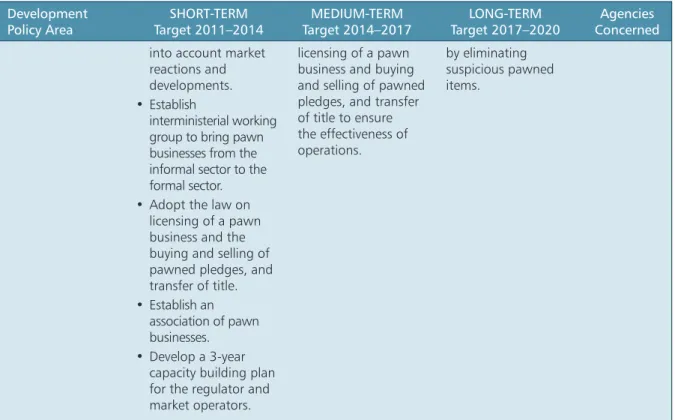
Limited range of financial products. The financial products available have continued to be limited to deposits and loans. While some nonbank financial institutions are starting to emerge with more products, money changers and pawn businesses still predominate at the low end of the financial sector.
Lack of a securities market. A securities market is still in the early stages of development in Cambodia for the following reasons: (i) the lack of tradable instruments, such as government securities, and a trading platform and framework; (ii) the absence of market makers and a network of intermediaries; and (iii) the lack of a benchmark rate against which securities could be priced when they are issued.4
Further, borrowers’ requirements for funds may not have reached a sufficient size and level to necessitate borrowing directly from the public, and the funds available in the local market are still substantially retail in character.
No functional interbank/money market. NBC has developed the framework for operation of an interbank market, including the use of negotiable certificates of deposit. However, this is still to be utilized as banks currently have excess liquidity and have found no need to borrow from the interbank market.
4 In other jurisdictions where a government securities market has not developed, alternative benchmark rates
Mismatches in the duration of funds. The current loan and deposit market in the country is basically short-term in nature, with loans usually maturing within 1 year. Some loans are extended from 2 to 5 years, and a few for housing have terms up to 20 years, but these are the exceptions. Such mismatches (long-term requirements financed through short-term loans on the part of the borrower, and short-term deposits that can be withdrawn at any time by the lender) make borrowing a considerable risk.5 It was
this mismatch between borrowers and lenders that precipitated the Asian financial crisis in 1997.
Over the medium to long term, long-term funds must be readily available for uses such as leasing or a strong secondary market that will allow greater scope for bridging when borrowed funds mature.
Loan size to market need. In terms of loan size, some banks reported on their efforts to arrange the syndication of loans for local clients with large requirements, but banks have found it difficult to form such syndicates due to inherent lack of trust among banking institutions, and also because banks may be unfamiliar with what is required.
Two examples of market need are not being adequately served and will continue to be underserved, and thus constrain economic growth. These are the demand for medium- to long-term funds and for large loans that exceed individual bank limits for single borrowers. Such needs are likely to grow as the economy further develops and market demand becomes more diversified and sophisticated.
Liquidity support. The principal means in the local market for providing liquidity support to borrowers is that of providing revolving credit (i.e., renewing loans on the date of maturity, also referred to as “evergreen loans”) in the absence of a secondary market for such funds. In this manner, banks are able to stretch the maturity of short-term loans and borrowers are able to meet their longer-term need for financing.
Future Strategy and Plan
Implementation of monetary policy and maintenance of financial system stability.
Maintaining price and financial system stability continues to be the primary concern of NBC to protect past achievements and foster rapid financial sector development.
Promotion of use of the riel and de-dollarization. Promotion of the riel has been adopted as government policy over the short to medium term, and de-dollarization as the long-term goal. However, in order to ensure investors’ confidence in using the local currency, it must be firmly anchored in credible exchange rates and stability. Despite stability of the exchange rate and the financial system, in general, over the last decade, limited progress has been made in using the local currency. Thus, vigorous promotion of the riel is required.
Measures to promote use of the riel include using the riel to quote prices for goods and services in the domestic market and for making local payments. All official disbursements by the government must also be in riel, except for foreign currency–denominated obligations. Over the medium term, other measures may include treating the US dollar and the riel differently (as is the case now for reserve requirements on deposits) and
extending payment and banking services in the local currency in rural areas, where the riel is usually used in favor of foreign currencies.
Use of the riel is said to be more prevalent in rural areas because rural people were using the riel before the dollar rose to prominence. Also, use of the riel is more practical for smaller transactions that predominate in rural areas because the smallest domination of the US dollar is the one-dollar bill (in Cambodia, no US dollar coins are in use). People are also worried about receiving fake dollar bills. If initiatives do not increase use of the riel, a tax may be imposed on domestic transfers of foreign currency.
Investment products in riel such as treasury bills and bills of longer duration may also be issued to provide an investment opportunity for Cambodians.
Role of banking supervision. The role of banking supervision will be further strengthened through greater coordination among financial sector regulators. A joint task force with representatives from each regulatory agency needs to be established to lead the discussions and a joint memorandum of understanding needs to be prepared for signing by concerned financial sector regulators. Common supervision approaches, including a risk-based consolidated approach, will be introduced to help supervise banks and financial institutions that undertake several market functions. This also highlights the crucial role that banking supervision authorities and other regulators play in maintaining financial system stability and preventing potential crises.
Compliance with the Basel Core Principles and prevailing global standards are key elements for enhancing the effectiveness of banking supervision. Currently, NBC is making good progress toward fully complying with the 25 Basel Core Principles. Some key areas where compliance has yet to be achieved concern the following: legal protection for the supervisory authority (critical for supervisory independence); moving to a risk-based approach to banking supervision (in contrast with the current rule-based approach); internal controls (concerning the role and function of corporate boards and management, and monitoring and evaluating the internal control system); auditing; abuse of financial services, such as money laundering; consolidated supervision (most banks have foreign investors); and cooperation between home and host supervisors (information sharing with other supervisory agencies).
The move to risk-based and consolidated supervision under the Basel II, in an increasingly complex environment, will entail major changes in structure and the way supervision is currently carried out. As explained above, the focus has shifted from rule-based supervision to one that stresses governance, auditing procedures, and effectiveness of risk identification and management systems. This clearly presents an improvement over current supervisory processes and procedures, but the personnel who undertake these new responsibilities will require new skills and qualifications; new standards for assessing risk management systems; a new reporting framework; and effective data collection, storage, and retrieval. The structure and organization of banking supervision will also have to be continually aligned to match changing priorities.
The readiness of the current banking system and the legal and regulatory structure will need to be carefully assessed and time lines established for compliance. Wide consultation among stakeholders will also be needed in the course of carrying this out and it will be essential to undertake pilot, risk-based examinations before fully applying the requirements.
For small banks, it may be too costly for them to comply with all requirements. Also, some risks are still not found in Cambodia, notably the market risks.
Crisis prevention and resolution. Due to the absence of market signaling systems, such as a broad-based government securities market, an early warning system and feedback mechanisms need to be established to facilitate two-way communication between financial institutions and NBC. It is also crucial to strengthen capacity for monitoring financial market developments; for producing reliable, timely, and accessible data; and for coordinating concerned regulatory agencies. Identifying market risks—including speculative bubbles such as those in the real estate market, and in the securities market— will require effective indicators, statistical analysis, and forecasting tools.
NBC and other financial sector agencies should have a joint crisis management framework that includes (i) appropriate legal authorities that can act swiftly to resolve a crisis; (ii) legal protection for the officers and staff undertaking crisis resolution functions such as taking over bank operations, but with parallel accountability to prevent them from abusing their authority; (iii) development of a memorandum of understanding regarding a coordination mechanism at the highest levels that will ensure a synchronized and credible response; (iv) a transparent action plan for taking over a problem bank or resolving a systemic risk; and (v) identification of safety nets, where possible. All could be stipulated in the memorandum of understanding for concerned regulatory authorities to jointly sign.
Safety nets. These may take the form of the liquidity reserves that NBC builds over time. These nets could include liquidity pools (which are set up by the banks themselves for extending liquidity support when banks experience liquidity problems but are still solvent) and standby lines of credit with foreign financial institutions if urgent need arises. In addition to these safety nets, there are special arrangements available, such as bilateral swaps under the Chiang Mai Initiative and other initiatives of ASEAN +3. These include the newly established $120 billion Chiang Mai Initiative Multilateralization, the Asian Bond Markets Initiative, and, more recently, the $700 million Credit Guarantee and Investment Facility for corporate bond issuers, as well as liquidity facilities that Cambodia could secure from multilateral institutions.
When conditions are favorable, NBC should consider establishing a deposit guarantee institution that would (i) administer a deposit guarantee system, (ii) set service fees, (iii) identify problem banks, (iv) pay money out to adversely affected depositors, and (v) act as the first line of defense for the banking system in containing a run on a bank or banks. The purpose of this institution would be to provide some stabilizing influence over the market and to reassure small depositors, who currently predominate and are prone to panic and could precipitate a run on the system. A deposit guarantee scheme could also help attract more depositors,6 and especially rural people, by building greater confidence in
the system. This should, however, be balanced against creating a moral hazard for banks, such as that of protecting weak banks. That said, barring concerns about contagion, a deposit guarantee safety net would allow NBC to shut down a delinquent bank.
Ultimately, the development of secondary markets for assets and securities would provide essential liquidity support to financial institutions, where asset collateral could be disposed
6 The number of depositors is still low relative to the size of the country’s population (an estimated
of without much loss in value and securities and loan portfolios can be securitized or liquidated on short notice.
Cooperation and integration with ASEAN. It is clearly in Cambodia’s interest to foster closer cooperation with ASEAN, especially in the financial sector. Since the East Asian Financial Crisis in 1997, much emphasis has been given to regional arrangements in helping individual countries to prevent financial crises. Through active participation in various ASEAN forums, Cambodia is preparing for eventual integration with its regional neighbors and greater cross-border flows.
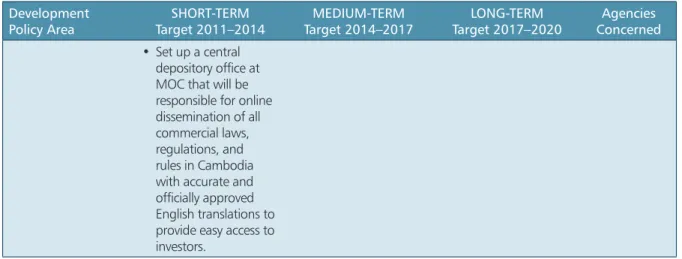
Based on the Development Action Plan, necessary reforms to achieve policy alignment and coordination with ASEAN are through developing the market and legal infrastructure for (i) accounting and auditing; (ii) the payment, clearing, and settlement system; (iii) stock market listing and securities trading; (iv) taxation of financial instruments; (v) credit rating, (vi) insolvency; (vii) secured transactions; and (viii) intellectual property. The ultimate objective is to establish a single common market where ASEAN investors may invest in each member country as if it were one market. However, achieving integration in various areas requires specialized expertise and in-depth treatment, especially where the region is concerned.
Implementation of an interbank market. While demand for using the interbank market is limited as banks have excess liquidity, there is clear need to start an interbank market because of the difficulties that banks have in covering their reserve positions and also in seeking temporary investments for their excess funds. To fulfill the need for such securities, NBC expects to introduce negotiable certificates of deposit shortly.
Nonetheless, before an active market can emerge, all banks will have to be confident that the interbank market can provide reliable backup liquidity to bridge their short-term liquidity needs. This will allow them to eventually lessen their reliance on retained deposits to meet their temporary liquidity needs.
Development of a money market. To facilitate money market development as Cambodia plans, the relevant authorities need to set up the legal and regulatory framework to allow specialized nonbank financial institutions the right to issue and use various trading instruments in the market. Once documentary credits become more prevalent in the market, this means being able to issue and use various negotiable instruments such as commercial papers and negotiable promissory notes, including bills of exchange. Repurchase agreements that cover these underlying instruments have already been addressed. Limits on how much can be issued to the public by securities firms or financial institutions themselves will have to be established and monitored. In some jurisdictions, part of the issue may require a bank guarantee (say 10% of the issue). This provides some protection for investors, as it provides a partial guarantee in case of loss and ensures that the issue will be reviewed by a bank before it is issued to the market. As the market broadens and deepens, more market players will participate so long as profits can be made. However, the market will likely develop at its own pace. The government may consider offering incentives to attract market players, especially foreign institutions that could help introduce the required technology. Once a broad and deep market for securities develops over time, financial institutions should find it attractive to securitize their loan portfolios.
For borrowers who require large loans that exceed what any individual bank can provide owing to their single-borrower limits, the sale of securities directly to investors would allow borrowers to raise the amount of capital they require. Moreover, such requirements could be syndicated, either on a private placement basis (held by the underwriting syndicate itself and not sold publicly) or through a publicly underwritten issue (sold and distributed to various investors). However, a suitable framework for syndicating loans and issuing securities needs to be established that defines the legal rights and obligations of each participant in a syndication, the terms and conditions of the loan or security to be issued, the yield on the security or offering price, the related fees, how modifications are to be handled, and the procedures to be followed in case of a lawsuit (including who will act as the paying and collecting agent, who will be the legal counsel for the syndicated loan, etc.). This is necessary, as some attempts at syndication have been made but did not succeed since banks are not accustomed to cooperating with each other.
For a capital market in debt instruments to develop (bonds and long-term commercial papers, for example), the money market must be developed first. This is because the money market serves as the secondary market where debt instruments of long duration can be sold, liquidated, and transformed into cash in the same way that a stock exchange provides secondary market support for equity instruments.
Anti–Money Laundering and
Combating the Financing of Terrorism
Background
As a member of the Asia Pacific Group on Money Laundering, Cambodia is committed to complying with international standards, and especially relevant international conventions, United Nations Security Council resolutions, and Financial Action Task Force (FATF)7
recommendations.
Progress and Achievements
Since Cambodia first underwent a mutual evaluation in February 2007, when no anti– money laundering (AML) and countering the financing of terrorism (CFT) regime existed, it has made great strides in meeting the FATF 40+9 recommendations.
The Law on Anti-Money Laundering and Combating the Financing of Terrorism was passed in 2007 and a prakas (rules and implementing regulations) was issued to define its structure, role, and functions.
Subsequently, the prakas on AML/CFT was issued for banking institutions and for all other reporting entities not regulated by NBC. The prakas requires all reporting entities to report on a regular basis and requires banks and financial institutions to establish
7 The FATF currently has 36 members: 34 jurisdictions and 2 regional organizations (the Gulf Cooperation
Council and the European Commission). Also, 27 international and regional organizations are associate members or observers of the FATF and participate in its work.
internal control systems for AML/CFT procedures that are fully in accord with the law. A prakas on AML/CFT to cover reporting entities not regulated by NBC was issued on 21 December 2010.
The Cambodian Financial Intelligence Unit (CAFIU) was established within NBC in 2008. Since its establishment, a number of prakas have been passed to support the operations of the CAFIU. Aside from the Law on Anti-Money Laundering and Combating the Financing of Terrorism, a number of other laws have been approved, such as the Counter-Terrorism Law that criminalizes the financing and provision of material support for terrorist acts, the Criminal Procedure Code, the Criminal Law, and the Anti-Corruption Law. The Law on Drug Control criminalized money laundering related to narcotics trafficking as early as 1996. The CAFIU has been working with the Ministry of Justice, the Ministry of the Interior, and other relevant ministries in taking coordinated action. For the provision of information regarding AML/CFT, it has reached an arrangement with the national police under the Ministry of the Interior.
The CAFIU has also been gradually developing its capabilities. The United States Treasury Department, in cooperation with the Ministry of the Interior, conducted two training courses on financial investigative techniques under the AML/CFT framework in June and September 2008. Bank Negara Malaysia has also conducted three workshops at separate times to develop a strategy to implement a national program and enable financial sector participants to understand their obligation to report suspicious transactions to the CAFIU and undertake AML/CFT supervision of banking and financial institutions.
Memorandums of understanding on information exchange have been signed with Bank Negara Malaysia, Bangladesh Bank, and the Central Bank of Sri Lanka.
Cambodia has also gained membership in the Asia Pacific Group on Money Laundering and has committed to comply with international standards such as relevant international conventions, United Nations Security Council resolutions, and FATF recommendations. The UN Counter-Terrorism Committee Executive Directorate also visited Cambodia and commended the government for significant progress in developing its CFT regime.
Constraints, Challenges, and Gaps
While progress in complying with international commitments is being made, Cambodia still has to fully meet its commitments under international agreements and strengthen adjudication and intermediary functions.
Based on the Asia Pacific Group on Money Laundering Annual Meeting 2010, the mutual evaluation progress report shows that Cambodia was still rated as noncompliant on all six core recommendations, partially compliant on three key recommendations, noncompliant on seven of these key recommendations, only partially compliant on 10 more recommendations, and noncompliant on 20 others.
Future Strategy and Plan
A mutual evaluation progress report was prepared by CAFIU for 2011. Except for a few areas, CAFIU has achieved compliance with most FATF recommendations, however, the actual review still has to take place. Notably, the few areas of non-compliance were development of a national risk assessment framework and completion of a strategic implementation plan, development of the legal framework to adequately criminalize money laundering and terrorist financing, establishment of adequate procedures for the confiscation of funds and assets related to money laundering, and enhancement of cooperation among Cambodian authorities and with international supervisors.
CAFIU has to be properly staffed and strengthen its staff capabilities.
CAFIU has to strengthen coordination with the MEF, NBC, the Ministry of Interior, the Ministry of Justice, and other supervisory authorities.
CAFIU has to extend coverage of inspection to cover all reporting entities and strengthen regional and international cooperation.
Microfinance Sector
Background
Importance of the microfinance sector. The government has recognized the important role that microfinance plays in socioeconomic development, particularly in the area of poverty reduction. As of 2001, Cambodia was one of more than 30 countries8 that had
developed a national microfinance strategy.9 Among these countries, the Cambodian
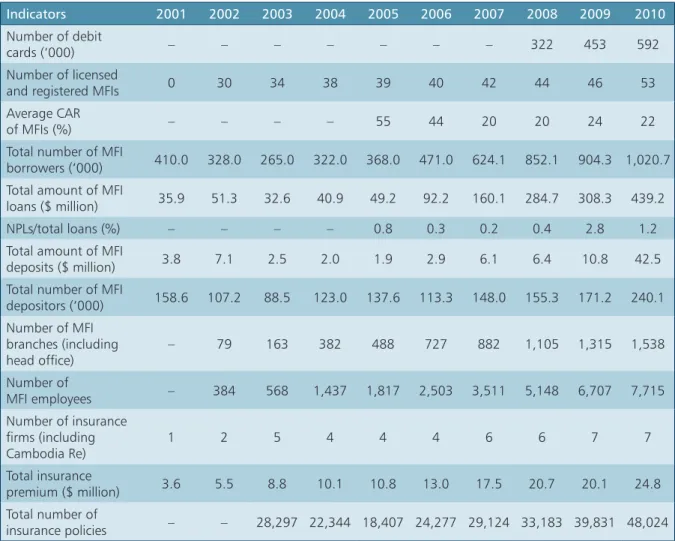
microfinance sector has developed quickly and has been internationally recognized due to an enabling regulatory and supervisory framework that governs microfinance providers. Recently, the number of MFIs has grown and they have expanded their activities to include deposit-taking so they can better serve low-income people.10
Evolution of the microfinance sector.11 Cambodia’s formal microfinance sector emerged
from a number of microcredit projects initiated by international donors, nongovernment organizations (NGOs), and other institutions in the early 1990s.12 By the end of 2011,
the 56 MFIs under the supervision of NBC had become an integral part of the formal financial sector.
Composition of the microfinance sector. The sector is composed of two important groups of institutions: (i) formal MFIs that are either licensed MFIs or registered MFIs and (ii) an estimated 60 NGO microfinance providers that are unregistered with NBC.
8 E. Duflos and J. Glisovic-Mezieres. 2008. Brief: National Microfinance Strategies. Washington, DC: Consultative
Group to Assist the Poor.
9 This strategy is included in the Financial Sector Blueprint for 2001–2010 and its updated version called
Financial Sector Development Strategy 2006–2015.
10 International Finance Corporation. 2009. Microfinance in Cambodia: Taking the Sector to the Next Level.
Business Issues Bulletin. No. 17.
11 The sector development is described in Cambodia Microfinance Association. 20