R E S E A R C H
Open Access
Advancing the application of systems thinking in
health: advice seeking behavior among primary
health care physicians in Pakistan
Asmat U Malik
1*, Cameron D Willis
2, Saima Hamid
3, Anar Ulikpan
4and Peter S Hill
4Abstract
Background:Using measles and tuberculosis as case examples, with a systems thinking approach, this study examines the human advice-seeking behavior of primary health care (PHC) physicians in a rural district of Pakistan. This study analyzes the degree to which the existing PHC system supports their access to human advice, and explores in what ways this system might be strengthened to better meet provider needs.
Methods:The study was conducted in a rural district of Pakistan and, with a cross-sectional study design, it employed a range of research methods, namely extensive document review for mapping existing information systems, social network analysis of physicians’advice-seeking practice, and key stakeholder interviews for an
in-depth understanding of the experience of physicians. Illustrations were prepared for information flow mechanism, sociographs were generated for analyzing social networks, and content analysis of qualitative findings was carried out for in-depth interpretation of underlying meanings.
Results:The findings of this study reveal that non-availability of competent supervisory staff, a focus on improving performance indicators rather than clinical guidance, and a lack of a functional referral system have collectively created an environment in which PHC physicians have developed their own strategies to overcome these constraints. They are well aware of the human expertise available within and outside the district. However, their advice-seeking behavior was dependent upon existence of informal social interaction with the senior specialists. Despite the limitations of the system, the physicians proactively used their professional linkages to seek advice and also to refer patients to the referral center based on their experience and the facilities that they trusted.
Conclusions:The absence of functional referral systems, limited effective linkages between PHC and higher levels of care, and a focus on programmatic targets rather than clinical care have each contributed to the isolation of physicians and reactive information seeking behavior. The study findings underscore the need for a functional information system comprising context sensitive knowledge management and translation opportunities for physicians working in PHC centers. Such an information system needs to link people and resources in ways that transcend geography and discipline, and that builds on existing expertise, interpersonal relationships, and trust.
Keywords:Health system, Measles, Pakistan, Primary health care, Social network analysis, Systems thinking, Tuberculosis
* Correspondence:[email protected] 1
Integrated Health Services, House 1-B, Street 50, Sector F-8/4, Islamabad, Pakistan
Full list of author information is available at the end of the article
Background
Access to information is critical for creating and maintain-ing high performmaintain-ing primary health care (PHC) systems [1]. This aspect becomes especially important when front-line health workers (such as physicians, nurses, or allied health providers) face difficulties in diagnosing cases in PHC settings where consultations are of short duration [2], they are confronted with a wide range of medical problems [3], and their information needs are motivated by the specific needs of patient care [3,4]. Davies [5] de-scribes multiple sources of information that are available to physicians for assisting clinical decision making in difficult to diagnose cases, including clinical guidelines and research papers, as well as advice provided by other professionals [5] such as peers, fellow physicians, consul-tants, and teachers [6,7].
Huth et al. [8] note that physicians often seek advice from human sources when they are looking for readily available and convenient sources of information [8], mostly related to diagnostics, management, and referral strategies [7]. Text books, research papers, and other sources of information may not be adequate to answer their questions as many times physicians are also search-ing for support, guidance, affirmation, and feedback [9], which requires a synthesis of medical knowledge, patient information, and an understanding of the context of care [4], especially in complex cases [10].
The available studies provide some insights into how physicians seek information while working in PHC set-tings [2,5,11]. However, as this literature is largely con-fined to high-income countries, there is relatively little known about how physicians in low- and middle-income countries access or use information from human sources when faced with difficult to diagnose conditions. In these settings, where access to electronic information sources is often scarce, an understanding about advice-seeking behavior from human sources becomes particu-larly important.
Applying a systems thinking lens to understanding advice-seeking behavior in Pakistan’s PHC system is a key component of the healthcare delivery system [12], with PHC physicians being main actors within a com-plex health system [13]. Their behavior, linkages, rela-tionships, and interactions influence, and are influenced by, the system and its components [14]. Understanding and informing policy processes that are also influenced by human behaviors requires evidence that reflects the behavior of key actors, such as PHC physicians, and how these behaviors interact over time within social net-works. Despite efforts to maintain consistency and uni-formity in policy implementation through hierarchical control and command systems, there remain variations in how health professionals at the ‘street-level’ imple-ment such guidance [15].
Systems thinking encourages a dynamic and inter-related perspective of system structure and function, em-phasizing the importance of relationships between parts and whole, and the unpredictability of system behaviors [16,17]. Sterman [18] describes systems thinking as an
“an iterative learning process in which we replace a re-ductionist, narrow, short-run, static view of the world with a holistic, broad, long-term, dynamic view, reinven-ting our policies and institutions accordingly”. A systems thinking lens allows us to recognize the importance of long-term change, the power of context, the role of guiding principles (rather than prescriptive control), the centrality of knowledge, and the enabling contributions made by interpersonal and inter-organizational relation-ships as vehicles for knowledge translation and exchange [19]. It is therefore a powerful lens through which advice-seeking behavior may be understood.
Using methods grounded in systems science, this paper examines the human advice-seeking behavior of PHC physicians in a rural district of Pakistan in the pub-lic health sector, analyzing the degree to which the exist-ing PHC system supports their access to human advice and exploring in what ways this system might be strengthened to better meet provider needs. It goes be-yond an analysis of what information is sought by physi-cians– the common objective of needs-based studies – to understand how and from whom that information is sought. Using a systems lens, operationalized in part through social network analysis, explores the richness of interaction through both formal and non-formal rela-tionships in the context of the PHC system and their im-plications for clinical decision making.
Research questions
The specific research questions of this study are:
To what degree does the existing structure of the PHC system in Pakistan support physicians in accessing advice from human sources on difficult to diagnose cases?
To what degree are physicians satisfied with their current access to advice from human sources on difficult to diagnose cases?
What changes, if any, do physicians recommend to improve their access to advice from human sources on difficult to diagnose cases?
Methods
In order to align the study questions with the health problems that the district health department considered a priority, targeted key informant interviews were con-ducted with five district health administratorsaand line-managersbof vertical health programs who were purpos-ively selected on the basis of their extensive knowledge of the information systems and their experience of wor-king in district health systems. Key informants were spe-cifically asked to nominate two priority health problems for use as case studies in order to map information flow mechanisms and analyze the advice-seeking behavior of physicians working in Basic Health Units (BHU). Tuber-culosis (TB) and measles were identified as key priority health problems to be used as case studies in this re-search. Despite nation-wide coverage of the National TB Control Program, TB remains a long standing problem across Pakistan, with key informants suggesting limited interest and action from BHU physicians related to TB program activities, especially the identification of new TB cases. Similarly, from January to April 2013, 192 measles cases were reported in the Attock district, largely at secondary health care facilities [21], with just three cases identified by the BHU physicians despite the fact that most of these cases were from geographical areas where they should have been reported by their re-spective BHU. Based on recommendations from the key informants, the study aims were developed:
To document the flow of informationcon diagnosis and management of TB and measles cases in the PHC system of Pakistan;
To describe the advice seeking behavior of physicians in situations with difficult to diagnose cases of TB and measles;
To explore physicians’satisfaction with their access to advice in difficult to diagnose cases of TB and measles;
To identify and describe possible changes, if any, that physicians recommend to improve their access to advice in difficult to diagnose cases of TB and measles.
In order to address these aims, with a cross-sectional study design and mixed-method approach, we employed three research methods comprising: i) mapping of exist-ing information systems; ii) social network analysis of physician advice seeking behavior; and iii) key stake-holder interviews for in-depth understanding of phy-sician experiences.
Firstly, through documentary review (official memos for policy statements, job descriptions of doctors for roles and responsibilities, and training modules and guidelines for recordkeeping and reporting of suspected cases of TB and measles) and additional information obtained from five
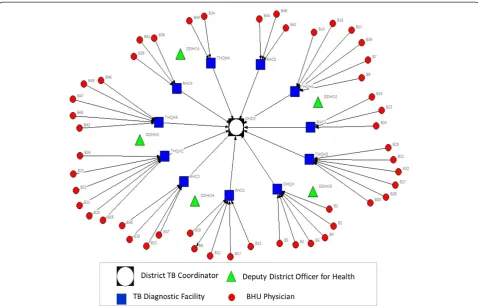
key informants, we mapped the existing flow of informa-tion system for assisting physicians in diagnosing TB and measles cases. Illustrations of formal information dis-semination systems (Figures 1 and 2) were developed in the form of information flow charts showing the direction of flow of information and roles and responsibilities for providing information/feedback at various hierarchical levels. These illustrations were validated with the res-pective district health managers and BHU physicians for accuracy.
Secondly, a semi-structured questionnaire was used to conduct a survey for mapping social and professional networks among BHU physicians. We adapted Blanchet and James methodological approach for mapping and analysis of social networks [22,23]. This approach com-prises three stages: i) defining the list of actors and members of the network; ii) analyzing the relationships between actors; and iii) analyzing the structure and dy-namics of social networks.
The survey questions were structured to identify whom each BHU physician had contacted for advice whenever faced with difficult to diagnose cases of TB and/or mea-sles. All 49 physiciansdwere invited to participate through an official intimation from the Executive District Officer for Health. With one exception, all physicians participated in the survey. Participation was voluntary and each phy-sician completed his/her questionnaire in the presence of the principal investigator. In order to develop an egocen-tric network for analysis, each physician (ego) was asked to identify and name a person (alter) whom he/she had contacted to seek advice when faced with difficult to diag-nose cases of TB and/or measles [24,25]. As the scope of this research was limited to map the social networks from a BHU physician’s view only, alters were not contacted for confirmation. However,‘name interpreter’questions were asked of the physicians, designed to elicit further informa-tion about their respective alters, primarily covering their characteristics and relationship to the focal ego [25]. All different individual actors (egos and alters) were grouped based on their positioning (institutions/job titles) in the healthcare delivery system and placed under seven specific categories (Table 1).
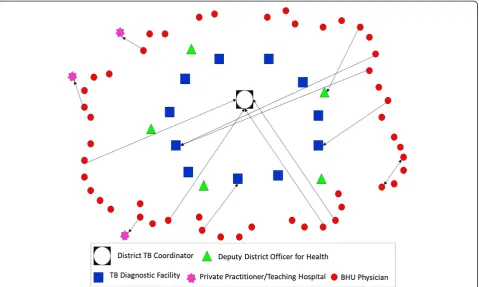
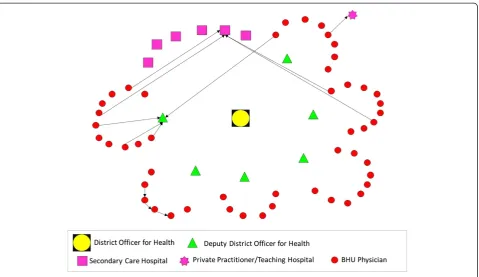
CINET software was used for generating directed-sociographs separately for TB and measles (Figures 3 and 4). A single-headed arrow indicates a directed-tie, from an ego at the tail and respective alter at the arrow-head, indicating the direction of advice seeking [25]. The different shapes represent various categories of actors (node) whereas the line (tie) connecting between two nodes indicates the presence of a relationship for advice seeking.
12 physicians, respectively). Given these findings, ana-lyses of network properties such as betweenness, cen-trality, distance, and reachability were not performed. The sociographs provided visual illustrations of the existing network for advice seeking.
Thirdly, we conducted key stakeholder interviews in order to seek clarification and insights into the socio-graphs and to better understand the experiences of BHU physicians when they were faced with a difficult to diag-nose case of TB and measles. Based on the analysis of the findings from sociographs, the BHU physicians were divided into three groups:
Physicians who sought advice from a person designated by the district health department; Physicians who sought advice from someone
other than a designated person;
Physicians who did not seek advice from any other person.
This grouping provided the basis for selecting 11 study respondents for in-depth interviews (sampled from each of the above categories). The key domains explored du-ring these interviews were reasons for seeking (or not seeking) advice, level of satisfaction under the present situation, and suggestions for improvement.
Interviews were digitally recorded and the average interview time was 20 minutes. All interviews were tran-scribed and content analysis was carried out by organi-zing coded data into categories, subthemes, and themes using an inductive process.
Results
Characteristics of BHU physicians
The study population of 48 BHU physicians comprised 41 males and 7 females. Average duration of government ser-vices was 6.7 years, ranging from 1 to 18 years. One-third (n = 16) of the study participants completed medical gra-duation overseas (mostly from Central Asian states). Fur-ther details are given in Table 2.
The formal system of information flow for diagnosing TB and measles cases
Under the National Tuberculosis Control Program (NTP), a District TB Coordinator (DTC) is responsible for ad-ministrative management of NTP activities at the district level. The DTC is also responsible for conducting trai-nings on Directly Observed Treatment Short-course (DOTS) strategy.
The District and Tehsil Headquarters Hospitals (DHQH & THQH)eand Rural Health Centersfare estab-lished as TB diagnostic centers with nomination of a TB
focal person and upgradation of laboratory services for sputum and radiological examination service.
All 61 BHUs across the district are grouped in 11 clus-ters and every cluster is attached with a TB diagnostic center on the basis of geographical proximity. This ad-ministrative change has provided a formal link between primary and secondary health care facilities but only for matters related to TB. In their monthly meetings, BHU physicians are required to meet with the TB focal person at their respective TB diagnostic facility, who is expected to provide follow-up of patients referred by BHU phy-sicians for confirmation of diagnosis, provide clinical advice and training, and advice on other programmatic issues.
The flow of information under the Expanded Program on Immunization (EPI) follows the organizational hie-rarchy of the district health care delivery system which is aligned with the geographical boundaries of district and sub-district levels. In comparison to NTP, the BHUs are not clustered around another hospital or higher level health facility, but rather the administrative office of the Deputy District Officer for Health (DDOH). In order to seek advice on issues related to the EPI (including mea-sles), BHU physicians are expected to contact their re-spective DDOH (their immediate supervisor at Tehsil level). Further, in contrast to NTP, they do not have di-rect linkage with secondary care hospitals. The DDOH
is also responsible for training on EPI, with facilitation from the District Officer for Health.
Structure of professional and social networks for advice seeking
The structure of the social network for advice seeking reveals that 27% BHU physicians (n = 13) contacted a human information source when faced with a difficult to diagnose case of TB (Figure 3).
Ideally, as per the specified criteria established by the NTP [26], all were expected to contact the TB Focal Persons at their respective TB diagnostic centers (Figure 1); however, only two physicians contacted their designated source for advice. Among those that sought advice from an alternative source, four directly approached the DTC for an expert opinion, two consulted each other, whereas one sought advice from the respective DDOH. All con-tacted someone within the district except three who pre-ferred to seek advice from a tertiary care hospital located externally to the district (Figure 3). The sociogram de-monstrates a mixed pattern of advice seeking which is not consistent with expectations under the NTP.
The structure of the social network for advice seeking for measles demonstrates that 25% of BHU physicians (n = 12) contacted a human information source when faced with a difficult to diagnose case of measles (Figure 4).
As per the departmental directions, all of the BHU physicians were expected to contact their respective DDHOs; however, only three physicians contacted their immediate supervisor. This finding was observed in one Tehsil only, with no physicians in the remaining five Tehsils seeking advice from their respective DDHOs. Four physicians preferred to contact a pediatrician in a single THQH. A similar number of physicians sought advice from another BHU physician. Only one physician contacted a private practitioner for advice. This pattern shows some differences from the advice-seeking network for TB because none of the physicians sought advice from outside the district.
The next section presents thematic analysis of the qualitative research findings from in-depth interviews.
Qualitative findings from the in-depth interviews
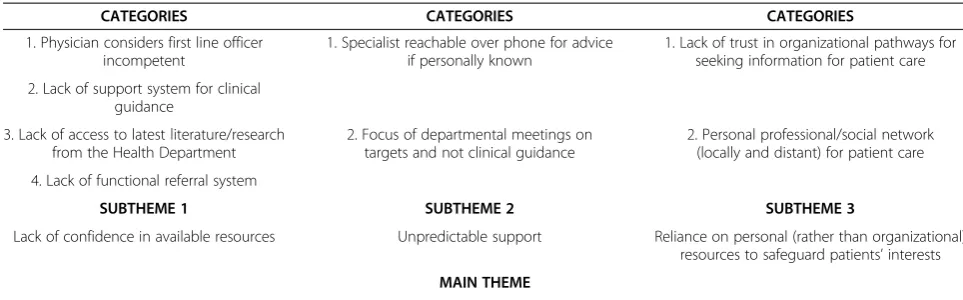
The transcripts were coded and then organized into categories from which three subthemes and one main theme were identified. The analysis process is given in Table 3. The data from qualitative research findings are presented starting with the subthemes and their relation to the categories and concludes with how they contri-bute to the main theme.
Subtheme 1: lack of confidence in available resources All physicians had been working in BHUs for at least a year and were aware of the constraints and challenges associated with the BHU environment. They lacked con-fidence in the available resources for clinical guidance within the system.
Physician considers first line officer incompetent
Among those physicians who did not seek advice in rela-tion to a complicated case of measles or TB, some sug-gested that the available experts within the district health care delivery system were not of the relevant field or lacked competence.
Table 1 Grouping of actors and institutions in seven categories
No Category Number
1 District Coordinator for National TB Control Program 1
2 Deputy District Health Officers 5
3 TB Diagnostic Health Facilities 11
4 BHU Physicians 49
5 Consultants in Secondary Care Hospitals 1
6 Consultants in Tertiary Care Hospitals 3
7 Private Practitioners 1
“First of all, the doctors posted at TB diagnostic center should be competent enough. The doctor posted presently over there is not competent; I have no faith in him. Moreover, the position of medical specialist at THQH should be filled. Presently, a doctor is available at this hospital who has done his diploma in
cardiology. Personally speaking, I don’t think he is competent enough to deal with TB patients.” Another physician reflected:
“He is not an experienced person. Sometimes, he shows an X-ray to me to seek guidance on what to do further. For example, recently, he showed me an X-ray for advice whether that patient should be put on
Streptomycin. I don’t consult him for advice because he is not that competent.”
Physicians were aware of the limitations of their reporting officers or immediate supervisors and reported seeking advice from them in administrative issues only. Four physicians felt that they had not encountered any difficulty in diagnosing any difficulty and hence, did not seek advice from anyone.
Lack of support system for clinical guidance
For clinical advice related to measles, physicians re-ported trust in the opinion of pediatricians, while for TB, physicians reported willingness to contact the dis-trict TB coordinator. The need to improve access to those with relevant expertise was expressed, as was a formal mechanism within the PHC system for facili-tating access to clinical guidance in a timely fashion. In addition, BHU physicians also reported being over-worked with organizing different campaigns and acti-vities and were left with little time for patient care:
“There should be a mechanism through which we can meet the specialists or have training session with them at least after every 2 to 3 months so that they know the BHU doctors and understand their problems. Although BHU doctors are performing their duties, it is a general perception that nothing is done at the Figure 4Network of advice-seeking for difficult to diagnose cases of measles among BHU physicians.
Table 2 Characteristics of BHU physicians in Attock district
Characteristics Proportion
(Number)
Attained medical education within Pakistan 66% (n = 32)
Employed as regular government employees 50% (n = 24)
Established private clinic besides government job 54% (n = 26)
Attended formal training on EPI* before joining service 66% (n = 32)
Attended formal training on TB DOTS** before joining service
85% (n = 41)
level of BHUs. There is no one in a BHU after 11 am. These days, BHU doctors are heavily engaged in activities like Dengue control, measles vaccination campaign, and other official meetings. There is a single doctor posted at BHU level and when he is to remain away on account of all these official engagements, who will take care of the patients?”
Lack of access to latest literature/research from health department
The main reliance of physicians for information was through other doctors and text-books:
“If I require advice then I would prefer to reach out to my seniors because they have practical experience. I have never read research papers.”
The internet was used to access information on com-plicated cases by some physicians; however, access to the internet was not available at every BHU. Other resource materials identified were pamphlets and brochures from representatives of pharmaceutical companies and hand-books on clinical guidelines. The health department did not provide such information:
“There should be some system that BHU doctors remain updated with new developments. We will keep on making our personal efforts but there should be an official system, which should facilitate our access to updated information and research.”
Lack of a functional referral system
There was also a lack of a functional referral system. As such, even when physicians consulted someone or re-ferred them to another provider within the system, there
was no mechanism in place to ensure feedback to the re-ferring physician:
“In case of diagnosis, I make a provisional diagnosis based on my clinical knowledge and books and then refer the patient accordingly. If the patients come back to my center afterwards, I get feedback from them.” Reiterating the non-functional feedback system, the physicians considered that it was more convenient to simply refer a suspected case of TB to a TB diagnostic facility without differentiating between a difficult or easy to diagnose case.
Subtheme 2: unpredictable support
Interviewed physicians suggested that the health system worked in ‘spurts’, with the fluctuating functionality of the system physicians were driven to look for alternate sources when faced with complicated cases requiring advice.
Specialist reachable over phone for advice, if personally known
Specialists at times were available and reachable over the phone for advice on management/complications. This, however, was true in cases only when they personally knew the specialists and were close enough to them to call them.
“I often contact Dr. A when I face problem in managing the treatment of TB patients. As far as history, symptoms and signs of TB are concerned, I think, I don’t have any problem with that. Further, 20–30% diagnosis is confirmed by the laboratory tests at the diagnostic center.
Dr. A is our master trainer for TB program and I Table 3 Analysis process moving from categories to themes
CATEGORIES CATEGORIES CATEGORIES
1. Physician considers first line officer incompetent
1. Specialist reachable over phone for advice if personally known
1. Lack of trust in organizational pathways for seeking information for patient care
2. Lack of support system for clinical guidance
3. Lack of access to latest literature/research from the Health Department
2. Focus of departmental meetings on targets and not clinical guidance
2. Personal professional/social network (locally and distant) for patient care
4. Lack of functional referral system
SUBTHEME 1 SUBTHEME 2 SUBTHEME 3
Lack of confidence in available resources Unpredictable support Reliance on personal (rather than organizational) resources to safeguard patients’interests
MAIN THEME
know him–that is why I often contact him for further advice.”
Moreover, the referral center had the facilities for car-rying out further tests.
“The patient presented with enlarged and matted cervical lymph nodes. I talked to Dr. B about her and then she was referred to him because we thought she might require a biopsy. They have more facilities available at the THQH level.”
Focus of departmental meetings on targets and not clinical guidance
Within the health department, most meetings focused on setting targets and achieving them. Clinical manage-ment was discussed only when a senior doctor was personally interested in clinical management and also competent to carry out such discussions. The support system to provide clinical guidance was non-existent. Thus, the system fluctuated as different doctors were appointed:
“We participate in so many monthly-meetings because we have to remain in touch with our superiors and seniors. These meetings are not focused on diagnosis and patient management, rather the stress is on achieving our targets irrespective of whether these are achievable or not. Focus is more towards paperwork but not towards practical work.”
Subtheme 3: reliance on personal (rather than
organizational) resources to safeguard patients’interests Physicians were motivated to seek advice and provide care to their patients. They realized the constraints within which they worked and had to provide best care to the patients.
Lack of trust in organizational pathways for seeking information for patient care
The physicians knew that there was no formal mecha-nism to seek advice within the system and there was a lack of trust in organizational information-seeking path-ways as well. This was based on their own experience of not finding competent physicians posted at the higher health care facilities. Through their own professional network they sought advice:
“Dr. C is a friend of mine and I can contact him easily.”
One physician described how a personal experience with illness influenced his advice-seeking behavior and the need to safeguard patient’s interest to seek care:
“Because I had suffered from the same situation myself; therefore, I directly contacted Dr. B. I had become so afraid of TB at that time because I was in my final medical year and exams were due in just a few months and my case was so much mismanaged. It is generally said that one becomes more sympathetic to a patient who shares the same experiences of suffering that a health provider has also gone through. That is why I referred this patient to a proper place so that they do not wander from place to place and get a trustworthy opinion.”
The referring physicians indicated that there were in-ternal contradictions in communicable disease reporting mechanisms: the reporting of cases of vaccine-preventable diseases, including measles, was received with some am-bivalence by the higher authorities, given that they had been reporting high vaccine coverage for many years. The consequences for communicable disease surveillance were understandable, but undesirable; physicians were inclined not to document and report such cases. In complex cases of measles, it was easier to avoid negative consequences for the referring physician by not using formal reporting channels, but instead referring them directly to a pe-diatrician, outside the PHC system:
“The more important thing is that every case of measles should be reported so that proper information is available in the health system. However, this is not the case in practice. Once you are discouraged by the high-ups that such cases are not to be reported, the doctor himself avoids reporting cases of measles so that he does not face any consequences. Being positioned at BHU level, we do not like to bear the responsibility. Therefore, if any case of measles turns up with or without complication, we do entertain him and refer him to a higher level of care but without the official reporting that is required in such a case.”
Personal professional/social network (local and distant) for patient care
Many physicians used personal links to seek information for their patients. On encountering a complicated case, physicians reported reliance on other physicians/special-ists they knew personally and could call over the phone to consult (even when specialists were present within the district health care system):
on personal relationship. For example, it is not possible to contact Dr. Z (Medical Specialist at DHQH) because he is not known to me.”
Main theme: formal organizational structures, including supervisory support and technical guidelines, not adequate
The main theme identified from the perspectives of inter-viewees illustrates how their work setting and informa-tion/advice-seeking patterns are driven by the constraints in organizational structures. It is difficult for BHU phy-sicians to ensure comprehensive responsibility to their population if their efforts are not supported by specialized services available at secondary and tertiary levels of health-care [1]. Getting their part of the system right does not help if other system components do not provide the re-quired support [27]. Non-availability of competent super-visory staff, a focus on improving performance indicators rather than clinical guidance, and the lack of a functional referral system, collectively create an environment that is non-conducive for improving patient care. In the long term, physicians develop their own strategies to overcome these constraints. Their advice-seeking patterns largely de-pend on access to information systems and their contacts with colleagues within and outside the primary health care system. Non-responsiveness of the healthcare delivery sys-tem creates an environment where they work in isolation. Ultimately, it has negative consequences both for shoul-dering responsibilities and improving quality of care.
Discussion
As noted by the WHO, the building blocks of health sys-tems (service delivery; health workforce; information; medical products, vaccines and technologies; financing; and leadership and governance (stewardship)) while in-dependently critical for system effectiveness, do not op-erate in isolation: complex relationships between the building blocks may help (or hinder) the overall ability of a system to use resources for improving health [12]. Human resources and information flow (two of the six building blocks), therefore, play critical roles in connect-ing sub-systems, promotconnect-ing ongoconnect-ing learnconnect-ing, and driv-ing performance improvement. Examindriv-ing how those within health systems share, access, and apply informa-tion is therefore important for better understanding how existing system structures and functions support or hin-der learning and improvement.
Here, we discuss the implications of this study’s fin-dings across four domains: system organizing, system networks, system dynamics, and system knowledge [13].
System organizing
The designers of the NTP and EPI have achieved the program-specific institutional arrangements that they
require at the sub-district level by clustering BHUs around TB diagnostic facilities and offices of the DDHOs, respec-tively, with additional administrative and managerial sup-port provided from the district level. These institutional arrangements have provided an organizational skeleton for administration, training, and reporting through setting rules and regulations and assigning roles and responsibil-ities. However, these efforts have focused on establishing managerial control over program activities rather than nurturing a learning oriented environment that BHU phy-sicians could rely on for advice, particularly when con-fronted by difficult to diagnose patient presentations. Consistent with previous reports from other jurisdictions [2,20,28], this study has identified non-availability of ex-pertise and lack of a functional referral system as key defi-ciencies within the exiting PHC system, exacerbated by limited interconnections between BHU physicians and those providing higher, specialist levels of care. Moreover, even where designated centers do exist (such as in TB diagnostic facilities), BHU physicians rarely perceive these as authoritative or expert learning resources. Similarly, EPI line-managers (DDHOs) were infrequently contacted for advice, primarily due to a perceived lack of clinical knowledge related to the management of measles. The ab-sence of a functional and reliable referral system further compounded this situation. Consequently, BHU physi-cians were more reliant upon their own knowledge and relationship to identify appropriate sources for advice.
Systems networks
As noted, the findings from this study demonstrate that the information-seeking behavior of BHU physicians are diverse, driven by both the context and their network of available relationships, and do not follow formal orga-nizational structures. The boundaries of information-seeking behavior do not appear to be limited by geography (district/province), type of health sector (public/private), or levels of healthcare (primary, secondary, and tertiary). Results from the qualitative investigation suggest that the presence of appropriate social ties (relationships) largely determine how physicians in this setting seek information from other human sources. In the Pakistani health system (as in other systems), specialist doctors are posted and available in the secondary and tertiary care hospitals with few formal linkages to the PHC infrastructure. Our study findings show that, while BHU physicians were aware of the human expertise available within and outside the district, their information-seeking behavior was largely in-fluenced by their informal interactions and relationships with senior specialists.
study suggested a number of ways in which such connec-tions may be fostered, such as greater in-service training events, more regular opportunities to work beside senior doctors, or even activities that build stronger connections between public and private sectors.
System dynamics
Health systems are not static and adjust and readjust over time as contexts change, feedback is provided, and histories develop. The human instrument, unlike other re-sources, has the ability to cope and adjust to its environ-mental needs. Lack of response from higher authorities, discouraging attitudes, especially in the case of reporting vaccine preventable diseases (e.g., measles), and absence of feedback mechanisms, may demoralize frontline health-care providers leading them to develop their own stra-tegies outside formal accountability systems. Despite the limitations of the existing PHC system, a number of phy-sicians in this study reported proactively using their pro-fessional linkages, experiences, and relationships to seek information and refer patients. However, there currently exists no process whereby referred patients may be followed-up in PHC centers. As a result, many physicians were not confident of the outcomes of referral under these circumstances, with patients often‘lost in the system’. Al-though patient referral was occurring, long-serving public sector physicians were skeptical that a functional referral system could or would be created.
Systems knowledge
While authority lies in knowledge [30], health system managers in this study were largely viewed as adminis-trators lacking in clinical expertise. As a result, BHU physicians’ information-seeking behavior tended to be driven by perceptions of clinical expertise rather than hierarchical positioning or seniority. With inadequate use of resources to support physician training in TB DOTS and EPI prior to joining services, and a focus on management targets rather than clinical outcomes, BHU physicians developed their own learning and improve-ment strategies. Yet, without a supportive learning cul-ture, many opportunities for better managing, sharing, and improving knowledge were missed, leading to isola-tion for many BHU physicians. In the absence of formal systems that meet their needs for clinical advice, indi-vidual physicians draw on their own networks of re-sources, and this in turn creates emergent organization that partly compensates for the gaps, but without ad-dressing their causes.
Limitations of the study
This study has a number of limitations. Firstly, the scope of the investigation was restricted to two specific dis-eases, TB and measles, in the context of a single district.
Therefore, while the results are informative, they cannot be generalized to other diseases and geographical areas. Secondly, the network data were based upon the infor-mation provided by the PHC physicians. We did not contact the respective senior doctors for confirmation of the reported ties because it was beyond the scope of this research. Thirdly, this study has been conducted in pub-lic sector PHC facilities only and does not cover private sector PHC general practitioners who are a major source of service provision in Pakistan. However, as more than half of BHU physicians also work in the private sector, it is possible that findings may be similar across practice settings. Despite these limitations, the lessons learned could potentially be used in designing studies for provid-ing comparative analyses in different contexts.
Conclusions
Through the examples of TB and measles, this study has demonstrated how and why PHC physicians seek informa-tion when confronted with difficult to diagnose cases, and the challenges of creating learning systems that support continuous improvement. Given the number and diversity of patient presentations seen each day by PHC physicians, it is possible that there exists a more generalized need for high quality, reliable, and accessible information. Yet the absence of functional referral systems, limited effective linkages between PHC and higher levels of care, and a focus on programmatic targets rather than clinical care, have each contributed to the isolation of physicians and reactive information-seeking behavior. The advice-seeking behavior observed in this study may be explained by phy-sician’s lack of confidence in available information re-sources, an unpredictable patient referral system, and a greater belief in personal rather than organizational re-sources for ensuring high quality patient care. Through interpreting these findings in partnership with those re-sponsible for system design, it may be possible to assist provincial health departments in Pakistan to review the modalities of providing support to PHC physicians, espe-cially in the country’s post-devolution phase. At this time, organizational and structural changes have a high poten-tial of being entertained and implemented. The study fin-dings underscore the need for a functional information system comprising context-sensitive knowledge manage-ment and translation opportunities for physicians working in PHC centers. Such an information system needs to link people and resources in ways that transcend geography and discipline, and that builds on existing expertise, inter-personal relationships, and trust.
Endnotes a
Published: 26 b
District Coordinator for National Tuberculosis Control Program, District Superintendent for Vaccination, Pro-gram Director for District Health Development Center, Coordinator for District Health Information System.
c
For this paper, the flow of information is defined as formal mechanism of information exchange (reporting on case detection of TB and measles, through trainings, and advice seeking) in public sector health care delivery system at district level.
d
Out of 61 BHUs in district Attock, physicians were appointed in 49 BHUs and the remaining positions were vacant at the time of survey.
e
Secondary Care Health Facilities. f
A higher level PHC facility at a level between BHUs and secondary care health facilities.
Abbreviations
BHU:Basic Health Unit; DDOH: Deputy District Health Officer; DHQH: District Head Quarter Hospital; DTC: District TB Coordinator; DOTS: Directly Observed Treatment short-course; EPI: Expanded Program on Immunization; NTP: National Tuberculosis Control Program; PHC: Primary Health Care; TB: Tuberculosis; THQH: Tehsil Headquarters Hospital.
Competing interests
The authors declare that they have no competing interests.
Authors’contributions
AUM led the research design and implementation as a principal investigator. AUM and SH conducted document review and developed illustrations of information flow mechanisms. AUM and AU conducted social network analysis whereas SH analyzed qualitative research findings. PSH contributed to thematic analysis. AUM drafted the manuscript. CDW, SH, and PSH contributed to and reviewed the manuscript. All authors have read and approved the final manuscript.
Acknowledgements
This paper is part of the Thematic Series entitled:“Advancing the application of systems thinking in health”. The Series was coordinated by the Alliance for Health Policy and Systems research, World Health Organization. The publication of the Series and the associated capacity building and dissemination activities were carried out with the aid of a grant from the International Development Research Centre, Ottawa, Canada.
The authors are very grateful to the district health managers, PHC physicians and other members of district health department who participated in our study and facilitated the data collection process.
Author details
1Integrated Health Services, House 1-B, Street 50, Sector F-8/4, Islamabad, Pakistan.2Propel Centre for Population Health Impact, University of Waterloo, 200 University Avenue West, Waterloo ON, N2L 3G1, Canada.3Health Services Academy, Prime Minister's National Health Complex, Government of Pakistan, Park Road, Chak Shahzad, Islamabad, Pakistan.4School of Population Health, The University of Queensland, Herston Road, 4006 Herston, QLD, Australia.
Received: 17 December 2013 Accepted: 4 June 2014
References
1. World Health Organization:The World Health Report 2008: primary Health
Care Now More Than Ever.Geneva: World Health Organization; 2008.
2. González-González AI, Dawes M, Sánchez-Mateos J, Riesgo-Fuertes R, Escortell-Mayor E, Sanz-Cuesta T, Hernández-Fernández T:Information needs and information-seeking behavior of primary care physicians.
Ann Fam Med2007,5(4):345–352.
3. Covell DG, Uman GC, Manning PR:Information needs in office practice: are they being met?Ann Intern Med1985,103(4):596–599.
4. Osheroff JA, Forsythe DE, Buchanan BG, Bankowitz RA, Blumenfeld BH, Miller RA:Physicians’information needs: analysis of questions posed during clinical teaching.Ann Intern Med1991,114(7):576–581.
5. Davies K:The information-seeking behavior of doctors: a review of the evidence.Health Informat Libr J2007,24(2):78–94.
6. Green ML, Ciampi MA, Ellis PJ:Residents’medical information needs in clinic: are they being met?Am J Med2000,109(3):218–223.
7. Kim G, Bartlett E, Lehmann H:Information resource preferences by general pediatricians in office settings: a qualitative study.BMC Med
Inform Decis Mak2005,5(1):34.
8. Huth EJ:“In the Balance”: weighing the evidence.Ann Intern Med1994, 120(10):889.
9. Smith R:What clinical information do doctors need?BMJ1996, 313(7064):1062–1068.
10. Cook D, Sorensen K, Wilkinson J, Berger R:Barriers and decisions when answering clinical questions at the point of care: a grounded theory study.JAMA Internal Med2013,173(21):1962–1969.
11. Bennett NL, Casebeer LL, Zheng S, Kristofco R:Information-seeking behaviors and reflective practice.J Contin Educ Health Prof2006,26(2):120–127. 12. World Health Organization:Everybody Business: Strengthening Health Systems
to Improve Health Outcomes. WHO’s Framework for Action.Geneva: World
Health Organization; 2007.
13. Savigny D, Adam T:Systems Thinking for Health Systems Strengthening. Geneva: Alliance for Health Policy and Systems Research, World Health Organization; 2009.
14. Woulfe J, Oliver TR, Zahner SJ, Siemering KQ:Multisector partnerships in population health improvement.Prev Chronic Dis2010,7(6):A119. 15. Gkeredakis E, Swan J, Powell J, Nicolini D, Scarbrough H, Roginski C,
Taylor-Phillips S, Clarke A:Mind the gap: understanding utilisation of evidence and policy in health care management practice.J Health Organ Manag 2011,25(3):298–314.
16. Plsek PE, Greenhalgh T:The challenge of complexity in health care. BMJ2001,323(7313):625–628.
17. Best A, Clark P, Leischow S, Trochim W:Greater than the Sum: Systems
Thinking in Tobacco Control. Tobacco Control Monograph no. 18.Bethesda,
MD: U.S: Department of Health and Human Services, National Institutes of Health, National Cancer Institute; 2007.
18. Sterman JD:Learning from evidence in a complex world.Am J Publ
Health2006,96(3):505–514.
19. Willis C, Best A, Riley B, Herbert C, Millar J, Howland D:Systems thinking for transformational change in health.Evid Pol J Res Debate Pract2014, 10(1):113–126.
20. Ely JW, Osheroff JA, Chambliss ML, Ebell MH, Rosenbaum ME:Answering physicians' clinical questions: obstacles and potential solutions.J Am
Med Informat Assoc: JAMIA2005,12(2):217–224.
21. System DHI:DHIS Monthly Reports: January to April 2013.Attock: District Health Department; 2013.
22. Blanchet K, James P:How to do (or not to do)…a social network analysis in health systems research.Health Pol Plan2012,27(5):438–446. 23. Blanchet K, James P:The role of social networks in the governance of
health systems: the case of eye care systems in Ghana.Health Pol Plan 2013,28(2):143–156.
24. Hawe P, Webster C, Shiell A:A glossary of terms for navigating the field of social network analysis.J Epidemiol Community Health2004,58:971–975. 25. Knoke D, Yang S:Data Collection. Social Network Analysis.2nd edition.
California: Sage Publications; 2008:15–45.
26. NTC Program:Guidelines for Diagnosis and Management of Tuberculosis in
Pakistan.Islamabad: National Tuberculosis Control Program; 2012.
27. NHS Institute for Innovation and Improvement:Quality & Service
Improvement Tools.Coventry: NHS Institute for Innovation and
Improvement; 2006.
28. Dorsch JL:Information needs of rural health professionals: a review of the literature.Bull Med Libr Assoc2000,88(4):346–354.
29. Joint Learning Initiative:Human Resources for Health: Overcoming the Crisis. Cambridge (MA): Harvard University Press; 2004.
30. Stange KC:Power to advocate for health.Ann Fam Med2010,8(2):100–107.
doi:10.1186/1478-4505-12-43
Cite this article as:Maliket al.:Advancing the application of systems
thinking in health: advice seeking behavior among primary health care
physicians in Pakistan.Health Research Policy and Systems201412:43.