R E S E A R C H
Open Access
A multifaceted implementation strategy
versus passive implementation of low back
pain guidelines in general practice: a cluster
randomised controlled trial
Allan Riis
1*, Cathrine Elgaard Jensen
2, Flemming Bro
3, Helle Terkildsen Maindal
4, Karin Dam Petersen
2,
Mette Dahl Bendtsen
5and Martin Bach Jensen
1Abstract
Background:Guidelines are often slowly adapted into clinical practice. However, actively supporting healthcare
professionals in evidence-based treatment may speed up guideline implementation. Danish low back pain (LBP) guidelines focus on primary care treatment of LBP, to reduce referrals from primary care to secondary care. The primary aim of this project was to reduce secondary care referral within 12 weeks by a multifaceted implementation strategy (MuIS).
Methods:In a cluster randomised design, 189 general practices from the North Denmark Region were invited to
participate. Practices were randomised (1:1) and stratified by practice size to MuIS (28 practices) or a passive implementation strategy (PaIS; 32 practices). Included were patients with LBP aged 18 to 65 years who were able to complete questionnaires, had no serious underlying pathology, and were not pregnant. We developed a MuIS including outreach visits, quality reports, and the STarT Back Tool for subgrouping patients with LBP. Both groups were offered the usual dissemination of guidelines, guideline-concordant structuring of the medical record, and a new referral opportunity for patients with psycho-social problems. In an intention-to-treat analysis, the primary and secondary outcomes pertained to the patient, and a cost-effectiveness analysis was performed from a healthcare sector perspective. Patients and the assessment of outcomes were blinded. Practices and caregivers delivering the interventions were not blinded.
Results:Between January 2013 and July 2014, 60 practices were included, of which 54 practices (28 MuIS, 26 PaIS)
included 1101 patients (539 MuIS, 562 PaIS). Follow-up data for the primary outcome were available on 100 % of these patients. Twenty-seven patients (5.0 %) in the MuIS group were referred to secondary care vs. 59 patients (10.5 %) in the PaIS group. The adjusted odds ratio (AOR) was 0.52 [95 % CI 0.30 to 0.90;p= 0.020]. The MuIS was cost-saving £−93.20 (£406.51 vs. £499.71 per patient) after 12 weeks. Conversely, the MuIS resulted in less satisfied patients after 52 weeks (AOR 0.50 [95 % CI 0.31 to 0.81;p= 0.004]).
Conclusions:Using a MuIS changed general practice referral behaviour and was cost effective, but patients in
the MuIS group were less satisfied. This study supports the application of a MuIS when implementing guidelines.
Trial registration:ClinicalTrials.gov, NCT01699256
Keywords:Implementation, Guidelines, Translational Medical Research, Referral and consultation, Low back pain,
General practice
* Correspondence:[email protected]
1Department of Clinical Medicine, Research Unit for General Practice in
Aalborg, Aalborg University, Fyrkildevej 7, 1.3, 9220 Aalborg, Denmark Full list of author information is available at the end of the article
Background
Low back pain (LBP) is a major cause of disability and a burden for patients. For example, in the UK, LBP and neck pain are the leading causes of disability-adjusted life years [1]. The precise aetiology underlying most cases of LBP is unknown; however, biological, psychological, and social factors may all be important [2–4]. Therefore, LBP treatment may be complex, and enhancing healthcare pro-fessionals’opportunities and competences is important to offer the best available treatment. Current evidence for LBP treatment is synthesised in guidelines to assist general practitioners (GPs) and other healthcare professionals in treating LBP and guide referrals to secondary care and supplementary treatment. However, the implementation of guidelines into practice is often slow. Therefore, know-ledge regarding how to support guideline implementation is needed [5]. In 2012, a new LBP guideline was published in the North Denmark Region which focused on the roles and responsibilities of primary healthcare providers. Treatment within the first 8 weeks of the initial consult-ation for LBP was considered particularly important for improving primary care, thereby reducing unnecessary re-ferrals to secondary care and consequently minimising healthcare costs [6]. Traditionally, regional guidelines have been disseminated using mostly passive implementation strategies, although passive diffusion of innovation is not generally the recommended method to change clinical be-haviour [7]. Rather, supporting GPs in the uptake of LBP guidelines by multifaceted implementation strategies is more likely to generate a change in clinical behaviour [8]. In this study, we investigated whether a multifaceted implementation strategy (MuIS) was more effective in changing general practice behaviour than a passive im-plementation strategy (PaIS). The aim was to reduce general practices’referrals of LBP patients to secondary healthcare within 12 weeks.
Methods
Study design and participants
This study was a two-armed, cluster randomised con-trolled trial comparing MuIS and PaIS in the North Denmark Region. The study protocol is published with open access [9]. Interventions were delivered at the prac-tice level. We based our allocation on cluster randomisa-tion at the practice level instead of the practirandomisa-tioner level because patients could be seen by different GPs and other healthcare professionals at the same general practice. Gen-eral practices in the North Denmark Region were eligible for inclusion. The latest updated list of practices in the re-gion was from October 2011. The 191 practices and 332 GPs on this list were considered eligible for inclusion. The total number of patients in the region was 579,829 with an average of 3035 listed patients per practice [10]. Ex-cluded were practices participating in pre-testing the
intervention and practices without an electronic data cap-ture module. Participating practices had a project module installed in their electronic medical record system, and GPs were encouraged to perform diagnostic coding during consultations with LBP patients. The ICPC-2 diagnostic codes L02, L03, L84, and L86 triggered a study-specific pop-up in the electronic patient record. If a patient met the inclusion criteria, the GP invited the patient to par-ticipate; however, the GP could also choose not to in-clude the patient in the study. If the patient accepted participation, consent was given by filling in the project pop-up. Patients consenting to participate were informed that completing the questionnaire was not a requirement for study participation, but they were encouraged to do so. Patients could discontinue study participation at any time and without any consequences for their treatment. The in-clusion criteria were consulting a GP for LBP of any dur-ation for the first time within 3 months, with or without associated radiculopathy, and aged 18 to 65 years. The ex-clusion criteria were pregnancy, insufficient language skills to complete the questionnaires in Danish, and serious underlying disease (e.g. signs of fracture, cauda equina syndrome, malignancy, osteoporosis, or spinal inflamma-tory arthritis). The serious underlying diseases were not within the scope of this study, as referral of patients with these conditions is generally considered appropriate.
Randomisation and blinding
Practices were randomised 1:1 to the MuIS or PaIS. Prac-tices were stratified by list size (≤2000 patients; 2001 to 5000 patients, or >5000 patients) in random permuted blocks of two, four, and six. Randomisation was performed by the statistical group at Aalborg University Hospital using Stata (SE version 11.2, College Station, TX, USA) with the Stata module RALLOC to generate the allocation sequence. After a practice signed up for participation, the coordinating secretary or the secretary’s assistant assigned it a participation number and opened the corresponding sealed envelope with the allocation information. The enve-lopes were kept at the secretary’s office, and information regarding the allocation sequence was kept in a locked safe-box until the analysis was finished. The analysis group (AR, CEJ, and MDB) was blinded to the allocation status. Patients knew that they were participating in a study, but they were not informed of their allocation status. Alloca-tion was not blinded for the general practice personnel, the outreach visitors, the researcher (MBJ) guiding the outreach visitors, and other technical staff in contact with the practices and outreach visitors, but they were all in-formed that the analysis group was blinded.
Procedures
an invitation to a regional information meeting about the guidelines, information about the guidelines described in a newsletter from The Quality Unit for General Practice in the North Denmark Region, and the opportunity to learn about the new guidelines with peers as part of the GPs’continuing medical education. Furthermore, all prac-tices were offered project-related passive activities, which included a referral opportunity for patients with psycho-social problems, guideline-concordant structured compu-terised medical record pop-ups, financial incentives to participate, and reminders about project activities.
In addition, the MuIS practices had outreach visits (before including patients) by primary care physiothera-pists who were specially trained to convey the content of the LBP guidelines to GPs [9]. During the study, the MuIS practices were offered follow-up contacts with the outreach visitor. After each practice contact, the out-reach visitor registered which topics had been discussed and the duration of the contact. The MuIS practices were also offered quality reports to reflect upon their treatment of LBP (e.g. how many patients they referred and how often they made new appointments for patients with LBP) and risk stratification tools integrated into the electronic medical record system (STarT Back Tool and screening questions regarding psycho-social risk factors) [9]. The STarT Back Tool subgroups patients according to prognosis and guides treatment pathways [11]. How-ever, the physiotherapists that the GPs could refer to were not offered any special training programme for this study, i.e. they did not receive the training programme as delivered in the British randomised STarT Back Trial [11]. GPs in the MuIS group had the STarT Back Tool embedded into a pop-up in their electronic medical rec-ord system and could use the STarT Back Tool to guide treatment as well as give this information to the physio-therapists when referring a patient. Additional questions in the pop-up addressed psycho-social barriers to recov-ery, such as pending claims or work-related problems [9]. These risk stratification tools could be used at the initial consultation or be used if the patient had not im-proved after 2 weeks with LBP.
All patients (regardless of allocation group) were in-vited to fill in a questionnaire at home after the initial consultation. They could either complete questionnaires on the Internet or fill in and return paper versions. The questionnaires were typically filled in on the date of inclu-sion. The questionnaire included the STarT Back Tool and other patient-reported outcomes (see the “Clinical outcomes”section). This information was collected by the researchers and no information or feedback regarding the patients’self-reported STarT Back questionnaire and the other patient-reported outcomes were given to the GP.
Follow-up questionnaires were sent to the patient after 4, 8, and 52 weeks; in case of no response, a reminder
was sent after 14 days. If a patient was seen again in general practice due to a LBP diagnosis within 3 months after inclusion, the pop-up appeared again and the GP was thereby prompted to fill in further information about the patient [9].
GPs in the PaIS group received incentives of 1500 DKK (~£150), and GPs in the MuIS group received 2500 DKK (~£250) for study participation. This covered downloading and installing software to restructure their electronic medical records, for time spent including pa-tients, for receiving outreach visits, and for the on-going contact with the outreach visitors. Participating practices were contacted once every fortnight to remind them of patient inclusion. Reminders were given in the form of emails, as postal letters, in newsletters for GPs on the internet, or in local newspaper articles. On a few occa-sions, the reminder included a friendly remark on remem-bering to include patients but in most cases, the practices were just informed about the study and thanked for their participation. The North Denmark Region’s ad-ministration provided data for the primary outcome, which included referrals to Danish hospitals for LBP and data on healthcare utilisation and unit costs (Additional file 1). Questionnaire data were kept and merged by an ex-ternal data manager at the North Denmark Region’s De-partment of Information Technology. Data were merged using the unique personal identification number assigned to all Danish citizens.
Clinical outcomes
satisfied). Other secondary outcomes were functional dis-ability, assessed by the Roland Morris Disability Question-naire (RMDQ) [12] (Patrick version, scale 0–23 points, higher scores indicating more disability); back pain inten-sity assessed by a numerical rating scale (0–10 points, higher scores indicating more intense pain); and general health assessed by the EuroQol visual analogue scale (EQ VAS; 0–100 points, higher score indicating a higher self-rated general health). The combined set of primary and secondary outcomes is in line with recommendations for a core set of outcomes in LBP studies [13].
The data we collected via pop-ups were stored in a national database for general practice. This included re-ferrals registered by the GPs, duration of pain, GPs’ as-sessment of improvement in patients’ symptoms, as well as tertiary outcomes which included a description of how many patients were scored with The STarT Back Tool by the GPs, how often the GPs assessed their qual-ity report, and a process evaluation (tertiary outcome) of GPs’skills, beliefs, and behaviours and the patients’beliefs and behaviours [9]. The national database closed due to legal issues and data collected via pop-ups were lost. Therefore, the primary outcome was assessed using data on referrals provided by the North Denmark Region’s administration. Data on pain duration were, however, lost together with data on tertiary outcomes [9]. This shift in the data source for the primary outcome was made dur-ing the recruitment stage and while the assessors were still blinded.
Cost-effectiveness analysis
Alongside this cluster randomised controlled trial, an economic evaluation was conducted to assess whether it was cost effective to implement the MuIS. Costs collected from a healthcare sector perspective and the probability of not being referred to secondary care within 12 weeks were used as outcome measures in a cost-effectiveness analysis. The evaluation was carried out as a within-trial assessment with a 12-week time horizon [14]. The Danish National Health Insurance Service Register, the Danish National Pa-tient Register, and the Danish National Prescription Regis-try provided individual level data on resource utilisation and unit costs (Additional file 1). The following costs were included: primary and secondary healthcare costs, publicly subsidised costs of medicine, and intervention costs [15]. Costs were adjusted for differential timing using the con-sumer price index provided by Statistics Denmark and pre-sented in British pounds (£) for the year 2015.
The base case analysis considered costs and effects ad-justed for patients’age, patients’sex, and practice size. Costs were furthermore adjusted for baseline healthcare costs within 12 months prior to inclusion. A generalised linear model with a gamma family was applied for the cost regression, while a logistic regression was applied
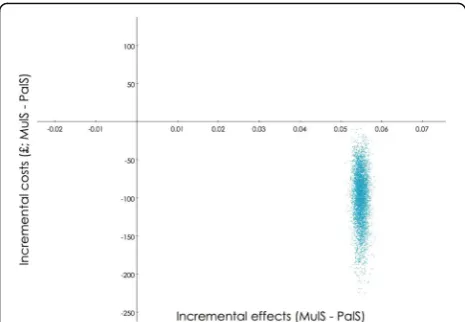
for the effectiveness measure. For the base case analysis, a probabilistic sensitivity analysis with 5000 bootstrap replications was conducted and this illustrates the com-bined uncertainty around the decision to adopt the MuIS (Fig. 2). The unadjusted results are presented in a scenario analysis.
Statistical analysis
considered statistically significant. Analyses were per-formed by the intention-to-treat principle and followed the CONSORT 2010 statement for analysing cluster ran-domised trials [18]. Analyses were performed using Stata (IC version 13.1) (College Station, TX, USA). This study was registered at ClinicalTrials.gov (registration number: NCT01699256).
Results
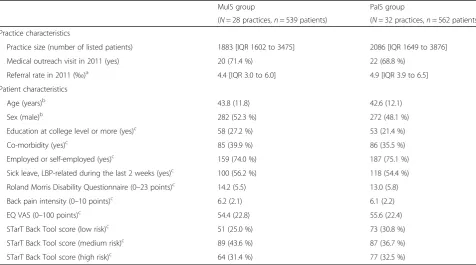
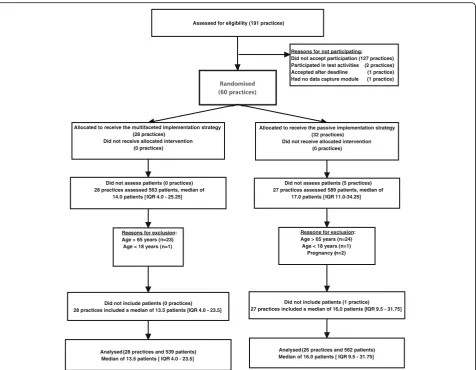
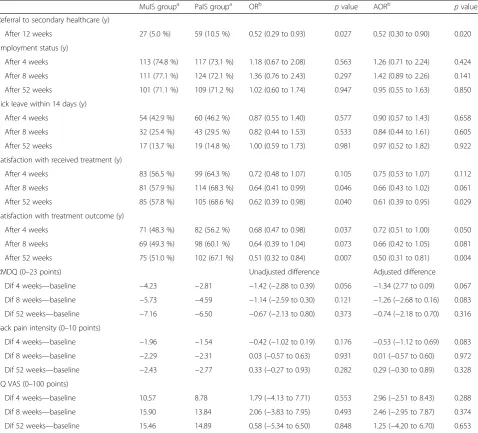
Practices were enrolled between January 22, 2013 and March 15, 2014, and recruited patients until June 30, 2014 with a subsequent 1-year follow-up until June 29, 2015. Of the 60 general practices recruited, 28 were ran-domised to the MuIS group and 32 were ranran-domised to the PaIS group (Table 1). Six practices that did not in-clude patients were lost to follow-up. Fifty-four (90 %) practices (28 MuIS, 26 PaIS) included a total of 1101 pa-tients (Fig. 1). Follow-up data for the primary outcome were available for 1101 (100 %) of the patients. Patients had an average age of 43 (SD 12.0) years, and 550 (49.8 %) patients were women (Table 1). Twenty-seven patients (5.0 %) in the MuIS group were referred to secondary care within 12 weeks vs. 59 patients (10.5 %) in the PaIS group (OR 0.52, 95 % CI 0.29 to 0.93; p= 0.027). The estimate
was similar when adjusting for patients’ age, patients’ sex, and practice size (AOR 0.52, 95 % CI 0.30 to 0.90;
p= 0.020) (Table 2). In a sensitivity analysis of the pri-mary outcome with follow-ups after 8, 16, and 52 weeks, the estimates were not significantly changed. The intra-class correlation for the primary outcome was 0.015 (95 % CIapproximate 0.011 to 0.069). There were no
sta-tistically significant differences in effect on employment status, sick leave, functional status, and EQ VAS be-tween the two groups, but patients in the PaIS group were significantly more satisfied with the treatment outcome than patients in the MuIS group (Table 2). In a base case analysis, the MuIS dominated the PaIS with higher effects achieved at a lower cost of £−52.47 (95 % CI −141.24 to 36.30). The probabilistic sensitivity ana-lysis confirmed the dominance of the MuIS (Fig. 2). The scenario analysis also found the MuIS to be dom-inant with a cost saving of £−93.20 (95 % CI−198.38 to 11.99 per patient). Details of the healthcare utilisation and costs are provided in Additional file 1. As part of the intervention, all practices in the MuIS group had at least one outreach visit with a median duration of 60 min [IQR 60 to 76.25]; the median time spent on follow-up (visits or phone calls) was 60 min [IQR 37.5
Table 1Baseline characteristics
MuIS group PaIS group
(N= 28 practices,n= 539 patients) (N= 32 practices,n= 562 patients)
Practice characteristics
Practice size (number of listed patients) 1883 [IQR 1602 to 3475] 2086 [IQR 1649 to 3876]
Medical outreach visit in 2011 (yes) 20 (71.4 %) 22 (68.8 %)
Referral rate in 2011 (‰)a 4.4 [IQR 3.0 to 6.0] 4.9 [IQR 3.9 to 6.5]
Patient characteristics
Age (years)b 43.8 (11.8) 42.6 (12.1)
Sex (male)b 282 (52.3 %) 272 (48.1 %)
Education at college level or more (yes)c 58 (27.2 %) 53 (21.4 %)
Co-morbidity (yes)c 85 (39.9 %) 86 (35.5 %)
Employed or self-employed (yes)c 159 (74.0 %) 187 (75.1 %)
Sick leave, LBP-related during the last 2 weeks (yes)c 100 (56.2 %) 118 (54.4 %)
Roland Morris Disability Questionnaire (0–23 points)c 14.2 (5.5) 13.0 (5.8)
Back pain intensity (0–10 points)c 6.2 (2.1) 6.1 (2.2)
EQ VAS (0–100 points)c 54.4 (22.8) 55.6 (22.4)
STarT Back Tool score (low risk)c 51 (25.0 %) 73 (30.8 %)
STarT Back Tool score (medium risk)c 89 (43.6 %) 87 (36.7 %)
STarT Back Tool score (high risk)c 64 (31.4 %) 77 (32.5 %)
Data are presented as the median [IQR], mean (SD), orn(%) a
Referral rate to secondary healthcare is calculated by the total number of listed patients in the practice (including patients without back pain) divided by the number of these patients referred to secondary healthcare with a back diagnosis in 2011
b
Baseline data collected by the GP at the initial consultation. Information regarding age and sex was available in 1101 (100 %) patients, representing 54 (90.0 %) of the included practices
c
to 60]. At every initial visit, practices were represented by GPs, and in five cases (17.9 %), GP trainees also par-ticipated. Discussions about the clinical examination, triage, coding of patients with LBP, general advice, im-portance of making follow-up appointments, the STarT Back Tool, questions regarding psycho-social risk fac-tors, referral in primary healthcare, and the handing-out of written material were undertaken at 28 initial visits (100 %). Discussions regarding patient history and referrals to secondary healthcare were undertaken at 27 (96.4 %) of the initial visits, and instructions on the use of the computer programme were provided at 13 (46.4 %) of the initial visits. When comparing partici-pating practices and non-participartici-pating practices in the North Denmark Region prior to this study (October 2011), we found that a similar proportion of patients in these practices were referred to secondary care with back-specific diagnoses (4.9‰IQR 3.88 to 6.48 vs. 5.2
‰IQR 3.10 to 6.97,p= 0.818). Moreover, participating
and non-participating practices were of a similar size (median 2061.5 patients [IQR 1636 to 3876] vs. 2227 patients [1642 to 3888],p= 0.957). Among participating practices, 42 (70 %) had a medical outreach visit from the Quality Unit for General Practice in the North Denmark Region in 2011 compared with 72 (55 %) among non-participating practices (p= 0.057).
Discussion
The MuIS changed general practice referral behaviour compared to the PaIS.
We used a combination of outcomes recommended for studies on LBP [13]. The patient-reported outcomes were validated measures, whereas questions regarding satisfaction with the received treatment and satisfaction with treatment outcomes were formulated to fit our set-ting. The fact that referrals to secondary healthcare could be assessed by registry data allowed a 100 % follow-up rate of the included patients for the primary outcome and for Assessed for eligibility (191 practices)
Reasons for not participating: Did not accept participation (127 practices) Participated in test activities (2 practices) Accepted after deadline (1 practice) Had no data capture module (1 practice)
Allocated to receive the passive implementation strategy (32 practices)
Did not receive allocated intervention (0 practices) Allocated to receive the multifaceted implementation strategy
(28 practices) Did not receive allocated intervention
(0 practices)
Reasons for exclusion: Age > 65 years (n=23)
Age < 18 years (n=1)
Did not include patients (0 practices) 28 practices included a median of 13.5 patients [IQR 4.0 - 23.5]
Analysed (28 practices and 539 patients) Median of 13.5 patients [ IQR 4.0 - 23.5]
Did not assess patients (0 practices) 28 practices assessed 563 patients, median of
14.0 patients [ IQR 4.0 - 25.25]
Reasons for exclusion: Age > 65 years (n=24)
Age < 18 years (n=1) Pregnancy (n=2)
Did not include patients (1 practice) 27 practices included a median of 16.0 patients [IQR 9.5 - 31.75]
Analysed (26 practices and 562 patients) Median of 16.0 patients [ IQR 9.5 - 31.75] Did not assess patients (5 practices) 27 practices assessed 589 patients, median of
17.0 patients [ IQR 11.0-34.25]
the cost-effectiveness analysis. The change in data source for the primary outcome is a limitation. Use of registry data might have introduced uncertainty in the estimates due to difference in registration practices among different hospital departments, varying completeness of registra-tion, as well as by changes in registration practice over time. However, we found it unlikely that this should have affected the two allocation groups unevenly in our study. Hence, we did not expect bias to be introduced by the change in data source. This study was powered to recruit
2700 patients from 100 practices. The recruitment for this project unfortunately coincided with a conflict between the Danish regions and the Organization of General Prac-titioners in Denmark, and this affected GPs’willingness to participate. Consequently, after 15 months, the inclusion of 60 practices and approximately 1200 patients was ac-cepted. This decision was made while assessors were still blinded and before registry data were collected. We con-sider the risk of bias caused by a smaller sample very un-likely given the large effect size (5.0 vs. 10.5 %). However,
Table 2Results
MuIS groupa PaIS groupa ORb pvalue AORb pvalue
Referral to secondary healthcare (y)
After 12 weeks 27 (5.0 %) 59 (10.5 %) 0.52 (0.29 to 0.93) 0.027 0.52 (0.30 to 0.90) 0.020
Employment status (y)
After 4 weeks 113 (74.8 %) 117 (73.1 %) 1.18 (0.67 to 2.08) 0.563 1.26 (0.71 to 2.24) 0.424
After 8 weeks 111 (77.1 %) 124 (72.1 %) 1.36 (0.76 to 2.43) 0.297 1.42 (0.89 to 2.26) 0.141
After 52 weeks 101 (71.1 %) 109 (71.2 %) 1.02 (0.60 to 1.74) 0.947 0.95 (0.55 to 1.63) 0.850
Sick leave within 14 days (y)
After 4 weeks 54 (42.9 %) 60 (46.2 %) 0.87 (0.55 to 1.40) 0.577 0.90 (0.57 to 1.43) 0.658
After 8 weeks 32 (25.4 %) 43 (29.5 %) 0.82 (0.44 to 1.53) 0.533 0.84 (0.44 to 1.61) 0.605
After 52 weeks 17 (13.7 %) 19 (14.8 %) 1.00 (0.59 to 1.73) 0.981 0.97 (0.52 to 1.82) 0.922
Satisfaction with received treatment (y)
After 4 weeks 83 (56.5 %) 99 (64.3 %) 0.72 (0.48 to 1.07) 0.105 0.75 (0.53 to 1.07) 0.112
After 8 weeks 81 (57.9 %) 114 (68.3 %) 0.64 (0.41 to 0.99) 0.046 0.66 (0.43 to 1.02) 0.061
After 52 weeks 85 (57.8 %) 105 (68.6 %) 0.62 (0.39 to 0.98) 0.040 0.61 (0.39 to 0.95) 0.029
Satisfaction with treatment outcome (y)
After 4 weeks 71 (48.3 %) 82 (56.2 %) 0.68 (0.47 to 0.98) 0.037 0.72 (0.51 to 1.00) 0.050
After 8 weeks 69 (49.3 %) 98 (60.1 %) 0.64 (0.39 to 1.04) 0.073 0.66 (0.42 to 1.05) 0.081
After 52 weeks 75 (51.0 %) 102 (67.1 %) 0.51 (0.32 to 0.84) 0.007 0.50 (0.31 to 0.81) 0.004
RMDQ (0–23 points) Unadjusted difference Adjusted difference
Dif 4 weeks—baseline −4.23 −2.81 −1.42 (−2.88 to 0.39) 0.056 −1.34 (2.77 to 0.09) 0.067
Dif 8 weeks—baseline −5.73 −4.59 −1.14 (−2.59 to 0.30) 0.121 −1.26 (−2.68 to 0.16) 0.083
Dif 52 weeks—baseline −7.16 −6.50 −0.67 (−2.13 to 0.80) 0.373 −0.74 (−2.18 to 0.70) 0.316
Back pain intensity (0–10 points)
Dif 4 weeks—baseline −1.96 −1.54 −0.42 (−1.02 to 0.19) 0.176 −0.53 (−1.12 to 0.69) 0.083
Dif 8 weeks—baseline −2.29 −2.31 0.03 (−0.57 to 0.63) 0.931 0.01 (−0.57 to 0.60) 0.972
Dif 52 weeks—baseline −2.43 −2.77 0.33 (−0.27 to 0.93) 0.282 0.29 (−0.30 to 0.89) 0.328
EQ VAS (0–100 points)
Dif 4 weeks—baseline 10.57 8.78 1.79 (−4.13 to 7.71) 0.553 2.96 (−2.51 to 8.43) 0.288
Dif 8 weeks—baseline 15.90 13.84 2.06 (−3.83 to 7.95) 0.493 2.46 (−2.95 to 7.87) 0.374
Dif 52 weeks—baseline 15.46 14.89 0.58 (−5.34 to 6.50) 0.848 1.25 (−4.20 to 6.70) 0.653
The primary outcome (referral to secondary healthcare) was measured after 12 weeks and was collected from registries with a 100 % follow-up rate, representing 54 practices. The intra-class correlation for the primary outcome was 0.015 (95 % CIapproximate0.011 to 0.069). The secondary outcomes (employment status, sick leave, satisfaction with received treatment, satisfaction with treatment results, Roland Morris Disability Questionnaire (RMDQ), back pain measured by numerical pain rating [back pain intensity], and EuroQol VAS (EQ VAS)) were measured after 4, 8, and 52 weeks. All secondary outcomes were collected from patient questionnaires. A total of 475 patients, representing 50 (83.3 %) practices, participated in the questionnaires
a
Data are number (%) or differences (follow-up—baseline) b
generalisability might be reduced. The response rate for the secondary outcomes was low, and with responders representing 50 (83.3 %) of the practices, this may harm the validity of the secondary outcomes. The probability of referral from primary care to secondary care within 12 weeks was used as an effectiveness measure in the cost-effectiveness analysis. It is a limitation in the eco-nomic evaluation. This might be considered double count-ing as costs related to primary and secondary healthcare services are included in the denominator of the incremen-tal cost-effectiveness ratio. A more appropriate effective-ness measure could be QALYs. By participating in this study, the included practices agreed to receive the interven-tion, which included an outreach visit while other practices might have declined participation because of resistance to elements within the MuIS. Subsequently, practices partici-pating in the study were generally more likely to have had an outreach visit from the regional quality unit the year prior to the study compared with the non-participating practices. This might imply that the participating practices were more likely to work with quality improvement com-pared with non-participants.
Reviews did not offer compelling evidence for the super-iority of multifaceted interventions compared to single-component interventions [19]. Several randomised con-trolled trials have studied the implementation of LBP clinical guidelines in general practice using different strategies [20, 24]. The use of physiotherapists as facili-tators in general practice was novel in our study. A pre-vious randomised study used outreach visits to raise the awareness of LBP guidelines in 24 centres with 2187 patients, but the management of patients was mostly unchanged by those outreach visits [20]. In another large cluster randomised controlled trial with 118 general
practices and 1378 patients, the effect of two multifaceted implementation strategies was compared to a postal dis-semination of guidelines. No effect on patients’functional levels was found when using an implementation strategy including four basic education modules and flyers for pa-tients versus postal dissemination of the guidelines. When adding motivational counselling to patients (each patient had up to three sessions of 10–15 min), a small signifi-cant difference was found in patients’ functional level, measured by the 12-item Hannover Functional Ability Questionnaire [21]. As with our study, these two stud-ies included outreach visits at GPs’work environments, which, in our setting, typically took place during an ex-tended lunch break. This may have contributed to a re-laxed and informal learning environment. Other studies have used workshops to implement LBP guidelines. A Dutch guideline implementation study with 67 GPs and 531 patients included a 2-h educational and clinical practice workshop in addition to a screening tool for patients with LBP and a tool for patient education. The intervention succeeded in reducing referrals from gen-eral practice to therapists (physical, exercise, or manual therapists) [22]. In the IMPLEMENT study, the researchers found a change in clinician behaviour (knowledge, atti-tudes, and intentions) among 92 general practices offering two facilitated interactive workshops in a total of 6 h with the purpose of decreasing X-ray referrals and increasing advice to stay active [23]. However, the change in behav-ioural attitude was not reflected in a difference in the ac-tual referral rate to X-ray or CT-scan amongst GPs receiving the intervention compared with GPs receiving the usual dissemination strategy (access to guidelines) [23]. An additional study with 462 GPs and their LBP patients with accepted compensation claims were unsuccessful in improving concordance with Canadian LBP guideline recommendations. The intervention consisted of a pas-sive knowledge transfer method that involved postal letters with guidelines and reminders [24]. In contrast, a successful intervention included a clinical decision support system as part of a multifaceted strategy, to-gether with quality reports and peer-to-peer consulta-tions in a large cohort study with 1200 GPs and 23,685 patients. This multifaceted strategy was found effective in reducing MRI referrals from 5.3 to 3.7 % [25]. Our study likewise found a high effect size in the rate of refer-ral following a broad MuIS that included clinical decision support, feedback (statistics regarding LBP patients), and outreach visits. Compared with the other trials aimed at GPs, our intervention dose (consultation time with clini-cians) was slightly below average. GPs in the MuIS group could use the STarT Back Tool to categorise patients into (i) low risk patients, where advice and information can stand alone, (ii) medium risk patients with extra needs for exercise treatment or manual therapy and who may
benefit from a referral to physiotherapy or chiropractic treatment, or (iii) high risk patients with an additional need for addressing psycho-social barriers for recovery. This tool has been found both effective and cost effect-ive as a tool for subgrouping LBP patients and targeting their treatment [11, 26]. The STarT Back Tool is now widely used, and as of November, 2015, it has been translated into Danish and 20 other languages [27, 28]. The STarT Back Tool was known by many physiothera-pists in Denmark and was described in the Regional LBP guideline. However, training in the stratified care management programme developed at Keele University was not generally available in Denmark. Hence, to our knowledge, none of the Regions’ GPs or physiotherapists had been trained in the stratified management programme from Keele University. The GPs’ and physiotherapists’ knowledge about the STarT Back Tool has been adapted from scientific journals, from discussions with colleagues, at conferences, from the regional LBP guidelines, and, probably most importantly, from the outreach visits at the MuIS practices. In addition to the STarT Back Tool, GPs in the MuIS group had additional questions regarding psycho-social risk factors built into their electronic medical record system regarding work problems, com-pensation claims, and psychological or social barriers to recovery. The tools available to the GPs may be viewed in the context of the coloured flags [3]. In combination, the STarT Back Tool and the questions about psycho-social risk factors incorporate biological, psychological, and social aspects. Patients with red flags (serious path-ology) were excluded from our study. Yellow flags (beliefs, emotional responses, and pain behaviour) were addressed by the STarT Back Tool. Blue flags (perceptions about the relationship between work and health), black flags (rehabilitation/compensation system or contextual obsta-cles, such as legislation and injury claim conflicts), and or-ange flags (psychiatric factors) were encompassed by the additional questions regarding psycho-social problems. Satisfaction was planned to be analysed as a continuous variable but a non-parametric distribution of data led us to dichotomise the two satisfaction variables and this may have led to loss of information regarding satisfaction. We found a reduced satisfaction among patients in the MuIS group. This discrepancy between functional outcome measures and patients’satisfaction has also been reported by Takeyachi et al. [29]. We do not know why patients in the MuIS group were more dissatisfied than patients in the PaIS group. One reason could be GPs advice to stay active regardless of patients’ pain, or that patients with low risk were recommended minimum treatment, or it could be related to unfulfilled expectations induced by GPs’information of an expected good prognosis.
Our study adds the following new knowledge to existing literature: a multifaceted implementation strategy can
significantly change the referral behaviour to secondary healthcare, be cost effective, without decreasing the qual-ity of patient care. However, patients’preferences may not necessarily support this. In the UK and many other coun-tries, LBP is a leading healthcare burden [1, 30]. There-fore, these findings may have widespread importance for primary healthcare and policymakers.
More research into the types and doses of interventions is needed to optimise strategies for changing clinical be-haviour in the future. The field of implementation science is evolving with an increasing number of possible imple-mentation tools [5]. Passive impleimple-mentation strategies, such as simply distributing a guideline might have an ef-fect on some circumstances, and multifaceted strategies are not always superior to single-component strategies [19]. However, actively involving GPs and including a suf-ficient variety of components in the multifaceted strategy can change behaviour in general practice.
Conclusions
The MuIS reduced the 12-week referral to secondary healthcare from 59 (10.5 %) to 27 (5.0 %) and was cost effective compared with the PaIS. The MuIS did not sig-nificantly change patients’ functional levels, pain levels, or self-rated health compared with the PaIS. However, patients’satisfaction with their treatment and treatment outcomes was significantly less.
Additional file
Additional file 1:Supplement to: Riis A, Jensen CE, Bro F, et al. A multifaceted implementation strategy versus passive implementation of low back pain guidelines in general practice: a cluster randomised controlled trial. (DOCX 19 kb)
Abbreviations
AOR:Adjusted odds ratio; CI: Confidence interval; CRCT: Cluster randomised controlled trial; DAMD: Danish General Practice Database; EQ VAS: EuroQol visual analogue scale; GEE: Generalised estimating equation; GP: General practitioner; ICD: International Classification of Diseases; ICPC: International Classification for Primary Care; IQR: InterQuartile range; LBP: Low back pain; MuIS: Multifaceted implementation strategy; NPR: Numerical pain rating; OR: Odds ratio; PaIS: Passive implementation strategy; RMDQ: Roland Morris Disability Questionnaire; RR: Risk ratio; SD: Standard deviation;
STarT: Subgrouping for targeted treatment; VAS: Visual analogue scale
Acknowledgements
Thanks to the North Denmark Region for supporting this project. We would also like to acknowledge the physiotherapists Anne Marie Pedersen Kjær, Jens Erik Jørgensen, Karen Thorsager, Laila Linneberg, and Marit Larsen for taking on a new role as consultants in general practice.
Funding
Availability of data and materials
Data and materials are available for reviewers upon request.
Authors’contributions
AR, MBJ, and FB were mainly responsible for the conception of the study. Formulation and planning of questionnaires were done in co-operation among AR, CEJ, KDP, HTM, and MBJ. AR and CEJ contributed equally to the data collection. AR and CEJ made decisions in consensus regarding data inspection and interpretation. AR and MDB participated in the final conception of the statistical models. AR, CEJ, and MDB were responsible for the analysis. All authors were involved in writing the manuscript and all approved the final version.
Competing interests
The authors declare that they have no competing interests.
Consent for publication
Not applicable.
Ethics approval and consent to participate
The study was approved by the Danish Data Protection Agency (registration number 2008-58-0028) and was recommended by the Committee of Multi-Practice Studies in General Practice in Denmark. The Regional Research Ethics Committee waived ethical approval for this study, since the study was not considered necessary to approve because the intervention was at the practice level, and each participating GP consented to participate. Patients’ informed verbal consent was collected at the patients’initial consultation. When assigning a specific LBP coding to the patients record a study pop-up automatically appeared in the medical record system. The GP registered the consent in the study-specific pop-up.
Author details
1Department of Clinical Medicine, Research Unit for General Practice in
Aalborg, Aalborg University, Fyrkildevej 7, 1.3, 9220 Aalborg, Denmark. 2Danish Center for Healthcare Improvements, Aalborg University,
Fibigerstræde 11, 9220 Aalborg, Denmark.3Research Unit for General Practice, Aarhus University, Bartholins Allé 2, 8000 Aarhus C, Denmark. 4
Department of Public Health, Aarhus University, Bartholins Allé 2, 8000 Aarhus C, Denmark.5Unit of Clinical Biostatistics and Bioinformatics, Aalborg University, Sdr. Skovvej 15, 9000 Aalborg, Denmark.
Received: 9 January 2016 Accepted: 10 October 2016
References
1. Newton JN, Briggs AD, Murray CJ, Dicker D, Foreman KJ, Wang H, et al. Changes in health in England, with analysis by English regions and areas of deprivation, 1990-2013: a systematic analysis for the Global Burden of Disease Study 2013. Lancet. 2015;386(10010):2257–74.
2. Hancock MJ, Maher CG, Laslett M, Hay E, Koes B. Discussion paper: what happened to the‘bio’in the bio-psycho-social model of low back pain? Eur Spine J. 2011;20(12):2105–10.
3. Nicholas MK, Linton SJ, Watson PJ, Decade of the Flags Working Group, Main CJ. Early identification and management of psychological risk factors (“yellow flags”) in patients with low back pain: a reappraisal. Phys Ther. 2011;91(5):737–53.
4. Cook CE, Taylor J, Wright A, Milosavljevic S, Goode A, Whitford M. Risk factors for first time incidence sciatica: a systematic review. Physiother Res Int. 2014;19(2):65–78.
5. Gagliardi AR, Marshall C, Huckson S, James R, Moore V. Developing a checklist for guideline implementation planning: review and synthesis of guideline development and implementation advice. Implement Sci. 2015;10(1):19. -015-0205-5.
6. The North Denmark Region guidelines. Danish, 2012. https://www.sundhed. dk/sundhedsfaglig/praksisinformation/almen-praksis/nordjylland/ patientforloeb/forloebsbeskrivelser/l-muskel-skelet-system/laendesmerter/. Accessed 28 Dec 2015.
7. Prior M, Guerin M, Grimmer-Somers K. The effectiveness of clinical guideline implementation strategies–a synthesis of systematic review findings. J Eval Clin Pract. 2008;14(5):888–97.
8. Gagliardi AR, Brouwers MC. Do guidelines offer implementation advice to target users? A systematic review of guideline applicability. BMJ Open. 2015;5(2), e007047. -2014-007047.
9. Riis A, Jensen CE, Bro F, Maindal HT, Petersen KD, Jensen MB. Enhanced implementation of low back pain guidelines in general practice: study protocol of a cluster randomised controlled trial. Implement Sci. 2013;8:124-5908-8-124. 10. Pedersen KM, Andersen JS, Sondergaard J. General practice and primary
health care in Denmark. J Am Board Fam Med. 2012;25 Suppl 1:S34–8. 11. Hill JC, Whitehurst DG, Lewis M, Bryan S, Dunn KM, Foster NE, et al.
Comparison of stratified primary care management for low back pain with current best practice (STarT Back): a randomised controlled trial. Lancet. 2011;378(9802):1560–71.
12. Roland MO, Morris RW. A study of the natural history of back pain. Part 1: Development of a reliable and sensitive measure of disability in low back pain. Spine. 1983;8:141–4.
13. Bombardier C. Outcome assessments in the evaluation of treatment of spinal disorders. Introduction. Spine (Phila Pa 1976). 2000;25(24):3097–9. 14. Ramsey SD, Willke RJ, Glick H, Reed SD, Augustovski F, Jonsson B, et al.
Cost-effectiveness analysis alongside clinical trials II—an ISPOR Good Research Practices Task Force report. Value Health. 2015;18(2):161–72. 15. Jensen CE, Riis A, Pedersen KM, Jensen MB, Petersen KD. Study protocol of
an economic evaluation of an extended implementation strategy for the treatment of low back pain in general practice: a cluster randomised controlled trial. Implement Sci. 2014;9:140.
16. Harrell FE. Regression modeling strategies. With application to linear models, logistic and ordinal regressions, and survival analysis. 2nd ed. Cham: Springer; 2015.
17. Wu S, Crespi CM, Wong WK. Comparison of methods for estimating the intraclass correlation coefficient for binary responses in cancer prevention cluster randomized trials. Contemp Clin Trials. 2012;33(5):869–80. 18. Campbell MK, Piaggio G, Elbourne DR, for the CONSORT Group, Altman DG.
Consort 2010 statement: extension to cluster randomised trials. BMJ. 2012;345, e5661.
19. Squires JE, Sullivan K, Eccles MP, Worswick J, Grimshaw JM. Are multifaceted interventions more effective than single-component interventions in changing health-care professionals’behaviours? An overview of systematic reviews. Implement Sci. 2014;9:152-014-0152-6.
20. Dey P, Simpson CW, Collins SI, Hodgson G, Dowrick CF, Simison AJ, Rose MJ. Implementation of RCGP guidelines for acute low back pain: a cluster randomised controlled trial. Br J Gen Pract. 2004;54(498):33–7. 21. Becker A, Leonhardt C, Kochen MM, Keller S, Wegscheider K, Baum E, et al.
Effects of two guideline implementation strategies on patient outcomes in primary care: a cluster randomized controlled trial. Spine (Phila Pa 1976). 2008;33(5):473–80.
22. Engers AJ, Wensing M, van Tulder MW, Timmermans A, Oostendorp RA, Koes BW, et al. Implementation of the Dutch low back pain guideline for general practitioners: a cluster randomized controlled trial. Spine (Phila Pa 1976). 2005;30(6):559–600.
23. French SD, McKenzie JE, O’Connor DA, Grimshaw JM, Mortimer D, Francis JJ, et al. Evaluation of a theory-informed implementation intervention for the management of acute low back pain in general medical practice: the IMPLEMENT cluster randomised trial. PLoS One. 2013;8(6), e65471. 24. Bishop PB, Wing PC. Knowledge transfer in family physicians managing
patients with acute low back pain: a prospective randomized control trial. Spine J. 2006;6(3):282–8.
25. Ip IK, Gershanik EF, Schneider LI, Raja AS, Mar W, Seltzer S, et al. Impact of IT-enabled intervention on MRI use for back pain. Am J Med. 2014;127(6):512–8. e1. 26. Foster NE, Mullis R, Hill JC, Lewis M, Whitehurst DG, Doyle C, et al. Effect of
stratified care for low back pain in family practice (IMPaCT Back): a prospective population-based sequential comparison. Ann Fam Med. 2014;12(2):102–11. 27. Morso L, Albert H, Kent P, Manniche C, Hill J. Translation and discriminative
validation of the STarT Back Screening Tool into Danish. Eur Spine J. 2011;20(12):2166–73.
28. Keele University homepage. Information on the STarT Back Tool. 2015. https://www.keele.ac.uk/sbst/startbacktool/translations/. Accessed 28 Dec 2015. 29. Takeyachi Y, Konno S, Otani K, Yamauchi K, Takahashi I, Suzukamo Y, et al.
Correlation of low back pain with functional status, general health perception, social participation, subjective happiness, and patient satisfaction. Spine (Phila Pa 1976). 2003;28(13):1461–6. discussion 1467.