Research article
Available online
www.ijsrr.org
ISSN: 2279–0543
International Journal of Scientific Research and Reviews
Phytochemical and Physicochemical Analysis of Three Different Types of
Apples
Ogundare C. Oyinlade*
School of Technology, Lagos State Polytechnic Ikorodu, PMB 21606, Ikeja, Lagos State, Nigeria
ABSTRACT
Consumption of diets containing fruits and vegetables has been an essential means of living a healthy life because of the constituent bioactive compounds. This investigation compared the phytochemical constituents and proximate compositions of three different types of apple in other to understand their possible mechanisms of action in addition to their role in human and animal nutrition. Syzygium malaccense (L.), Syzygium cumini and Malus sylvestris were obtained from different locations in Nigeria. Their aqueous extracts were screened for the presence of phytochemicals and nutrients. The results showed that the three understudied apples contain phytochemicals, essential nutrients and antioxidant vitamin C. S. malaccense (L.) (Malay apple) has a significantly (p<0.05) high levels of vitamin C, moisture and fiber but a significantly (p<0.05) low carbohydrate contents when compared to
S. cumini and M. sylvestris fruits. Therefore, S. malaccense (L.) may be the most ideal fruit of these three apples for the prevention and management of digestive disorder and oxidative stress related diseases.
KEYWORDS:
Diets, Phytochemicals, Vitamin C, Oxidative stress and Syzygium malaccense (L.)Corresponding Author-
Ogundare C. Oyinlade*
Biochemistry Unit, Department of Science and Laboratory Technology, School of Technology, Lagos State Polytechnic Ikorodu,
INTRODUCTION
The use of different parts of plant and their products has been of importance in nutrition and pharmaceutical management of health and diseases. In fact, fruits, stems, leave roots and vegetables of many plants have been known to possess active principles known as phytochemicals which are responsible for their various biological activities. These activities include, antidiabetes, anti inflammatory, antibiotics, antioxidant and anticancer properties 1. Effects of such active or natural compounds from fruits, vegetables and other plant materials for medicinal purposes is dependent on the ways they are extracted from natural products and the presence of antioxidants 2,3. Specifically, fruits can add important vitamins, minerals, and many other bioactive compounds to the human diet 4. They serve as appetizer, diuretic and medication for treatment of diseases like high blood pressure, inflammation and microbial infections 5. Although, Nigeria is blessed with different kinds of fruits, but the cost of apples is very high. This may be due to the fact that they are not cultivated like other tropical fruits; rather some of them are planted as ornamental plants whose fruits cannot be stored for long because they have poor shelf lives, hence, are very scarce in the Nigeria market.
Syzygium species, although classified as an underutilized fruits because of lack of promotion, little planting region and possession of some unexploited economic values, can be more useful for nutritional and medicinal purposes than many other fruits 6,7. S. malaccense (L.) formally known as
Eugenia malaccensis (L.) belongs to family Myrtaceae is popularly called Mountain or Malay apple. It is known as apple in most parts of Nigeria. It is a native of India and Malaysia. Its parts have a variety of interesting biological activities. It has been used by traditional medicine practitioners to treat ailment like diabetes mellitus, inflammation and act as antimicrobial by its ability to inhibit four species of virus and three species of fungus 8. However, the investigation in Nigeria showed that leaves of this plant contain hydrodistilled essential oil of about 61.1% monoterpenes and 30.8% sesquiterpenes 9. The plant leaves reportedly exhibited strong antioxidant activity due to a higher phenolics and flavonoids contents than aqueous extract 10. Therefore, there is a need to provide possible experimental basis for the usage of
S. malaccense (L.) through the identification of the chemical components of its fruit (Malay apple) and compare these with other common apples like S. cumini (Nigeria apple) and M. sylvestris (Golden or Delicious or Crab apple) in other to determine the most beneficial of these apples.
EXPERMENTAL SECTION
Collection of Fruit Samples
Fresh and mature samples of the three apples used in this study were gotten from different places in Nigeria. They were carefully selected in order to allow uniformity in batch and size. S. malaccense
was obtained from Lagos State Polytechnic, Ikorodu, S. cumini from a garden in Ilisan, Ogun State while M. sylvestris was obtained from Badagry market (Lagos State). These apples were washed with distilled water and kept in the refrigerator.
Preparation of Fruit Extracts
Samples of these three (3) apples were collected from the refrigerator, rinsed with distilled water and dried using Whatman number 1 filter paper. These were cut into pieces with a sterile knife and blended in a Panasonic blender of model MX- 337N. Their aqueous extracts were obtained, filtered and stored in clean sample containers in the refrigerator until needed for analysis.
Phytochemical Screening of Fruit Extracts
Presence of phytochemical constituents (alkaloids, flavonoids, saponin, tannins and phenolics) of these aqueous apple extracts was determined according to the methods of Trease and Evans, Harborne and Sofowora 11, 12, 13.All analyses were done in triplicates.
Test for Flavonoids
Two methods were used to test for flavonoids. Dilute ammonia (5 ml) was added to a portion of the aqueous filtrates of the extracts and concentrated tetra oxo sulphate VI acid (1 ml) was added. A yellow colouration that disappears on standing indicates the presence of flavonoids.
A few drops of 1 % aluminium solution were added to another portion of the filtrates. A yellow colouration indicates the presence of flavonoids.
Test for Tannins
Test for Phenolics
Ethyl acetate was used to extract 10ml of test sample. This was then filtered with Whatman filter paper. Few drops of ferric chloride reagent was added to 0.2 ml of the filtrate and observed for the development of a brown or blue black coloration. This was regarded as positive for the presence of phenolics.
Test for Alkaloids
Aqueous extract (2 ml) was mixed with 2 ml of 10% NH4OH (pH 7). The alkaloid was extracted
3 times with 10 ml chloroform. The chloroform layer was washed 3 times with 2 ml of HCl (10%). This was divided into two portions.
Mayer’s reagent was added to one portion and Draggendorff’s reagent to the other.
The formation of a cream or reddish brown precipitate respectively was regarded as positive for the presence of alkaloids.
Test for Saponins
Aqueous extract (1 ml) was mixed with few volume of distilled water in a test tube. The solution was shaken vigorously and observed for a stable persistent froth for 20 min. These was mixed with 3 drops of olive oil and then shaken vigorously and observed for the formation of an emulsion.
Proximate Analysis
Proximate analysis for the samples was carried out using the standard procedures of the Association of Analytical Chemist (AOAC) described in 2000 14. Analysis for ascorbic acid (Vitamin C) compositions was determined in triplicates by titration of the extracts with 0.2% of 2, 6- dichlorophenol indophenols. Mineral elements (calcium, iron, magnesium and potassium) contents were determined after digestion of ashes of the apple samples by means of atomic absorption spectrophotometers (AAS). The samples were analyzed in triplicates. The results of analysis were expressed in wet basis.
Statistical Analysis
RESULTS AND DISCUSSION
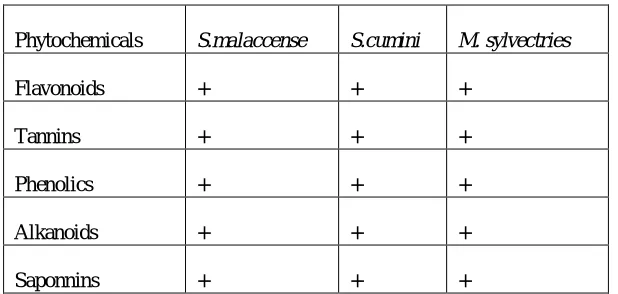
Table 1: Results Showing Phytochemical Screening of the Three Apple Samples
Phytochemicals S.malaccense S.cumini M. sylvectries
Flavonoids + + +
Tannins + + +
Phenolics + + +
Alkanoids + + +
Saponnins + + +
Where (+) indicates present.
The presence of phytochemicals in all the three (3) samples of apple [S. malaccense (L.), S. cumini and M. sylvestris fruits] is shown in Table 1. The results shows that all the screened apples contain chemical or bioactive compounds inform of flavonoids, tannins, phenolics, alkaloids and saponins like any plant materials. These chemical compounds confer various pharmaceutical activities on many plants. Phytochemicals like flavonoids and phenolics have been found to be responsible for free radicals scavenging activity of many medicinal plants15. Flavonoids specifically possess a natural tendency to modify body allergy interaction and have anti-microbial, anti-inflammatory and anti-cancer activities in many plant products 16. For example presence of Flavonoids and phenolics constituents in Pepino fruit extract was discovered to be responsible for its antioxidant activity 17.
Similarly, tannins are reasonably abundant in leafy vegetables, traditionally used to protect against wounds and hemorrhoids 18. It inhibits cell wall formation in fungi and bacteria leading to the death of the organisms, some tannins exhibit antiviral activity by selectively inhibit HIV replication 19, 20. Therefore, suggesting the antifungal and antibacterial potential of these fruits.
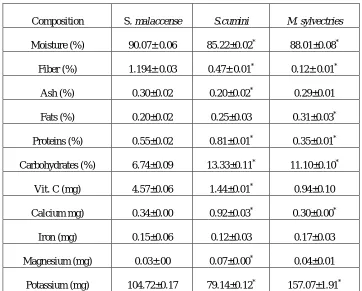
Table 2: Results showing Proximate Compositions (%) of fruits of the Apple Samples
Composition S. malaccense S.cumini M. sylvectries
Moisture (%) 90.07± 0.06 85.22±0.02* 88.01±0.08*
Fiber (%) 1.194± 0.03 0.47± 0.01* 0.12± 0.01*
Ash (%) 0.30±0.02 0.20±0.02* 0.29±0.01
Fats (%) 0.20±0.02 0.25±0.03 0.31±0.03*
Proteins (%) 0.55±0.02 0.81±0.01* 0.35±0.01*
Carbohydrates (%) 6.74±0.09 13.33±0.11* 11.10±0.10*
Vit. C (mg) 4.57±0.06 1.44±0.01* 0.94±0.10
Calcium mg) 0.34±0.00 0.92±0.03* 0.30±0.00*
Iron (mg) 0.15±0.06 0.12±0.03 0.17±0.03
Magnesium (mg) 0.03±.00 0.07±0.00* 0.04±0.01
Potassium (mg) 104.72±0.17 79.14±0.12* 157.07±1.91*
The values in the table are the Mean ±SD from triplicate determinations; where p<0.05 is significant level.
Alkaloids provide many pharmaceutical activities; they act as drug precursor and antihypertensive, antibiotic among many other therapeutic uses 22. Generally, flavonoids, tannins and saponnins are reportedly known as hypolidemic agents 23. Apart from being part of the daily diets, the analyzed samples of apple may therefore possess pharmaceutical activities like antioxidants, antidiabetes, antimicrobial and serve as enhancer of health status to their users 24, 25. Therefore, the various phytochemicals in S. malaccense (L.) provide a basis for the traditional claim for the use of this apple in the management of many neurogenerative diseases which result from oxidative stress.
Proximate analysis for moisture, crude fibre, ash, fats, proteins and carbohydrates contents of S. malaccense (L.), M. sylvestris and S. cumini fruits is shown in Table 2. All the data obtained were from wet basis and expressed in percentage (%).
moisture in the samples indicates that they all have short shelf life of which S. malaccense (L.) is the most highly perishable of the three apples although this has been a serious challenge in preservation of food. It means that an appropriate storage procedure must be adopted in other to exploit the beneficial use of fruits such as S. malaccense (L.), M. esculenta and M. nagi in the quenching of thirst during vigorous activities 26, 27.
Fiber is an essential component of many diets. It increases food bolus and enhance digestion thereby reducing the risk of constipation. It may be used as an important agent for management of hypercholesterolemia and related nutritional disorder.
The fat content in the three apples was generally low; it is within the range of 0.20% to 0.31%. This is peculiar to many fruits. However, S. malaccense (L.) fruits have the lowest fat contents than fruits of S. cumini and M. sylvestris, Dragon (Hylecereus polyhizus) and some species of Syzygium28, 29. The protein and carbohydrate contents of S. malaccense (L.) fruits were significantly difference at p<0.05 compared to other two apples. Although, it has a significantly (P<0.05) lower protein content compare to S. cumini (0.81%) but this is significantly (P<0.05) more than 0.35% protein of the common apple (S. silevestris). Some fruit’s proteins have been used as active compounds of antimicrobial agents.
S. malaccense (L.) fruits and the other two apples that were examined in this study may possess an antibacterial activity in a similar manner to which purified extract of Carica papaya fruit (pawpaw) was able to inhibit about five (5) different bacteria 30, 31.
The low carbohydrate content of fresh fruits of S. malaccense (L.) (Malay apple) makes it better than fruits of S. cumini and S. silevestris as well as fruits of Vaccinum cormbosum (L) which contains a very low protein (0.6%) but a very high amount of carbohydrate 32. Fruits with very low carbohydrate content cannot supply enough energy as required by the body physiological needs, hence, are regarded as bad source of energy or low calorie fruits like Blueberries 27, 33, but are suitable for management of nutritional disorders such as diabetes mellitus. Therefore, S. malaccense (L.) fruits may be a good source of pharmaceutical agents that may be suitable for the management of hyperglycemic related conditions like obesity and diabetes mellitus.
Although the levels of ash in the analyzed apple samples were generally low, there was a significant difference in the ash content between all the samples at p<0.05. Ash level indicates the level of trace elements and metal salts in any sample 34. However, the S. malaccense (L.) fruits that were analyzed does not contain a significantly (P>0.05) different level of ash when compared to M. sylvestris
malaccense (L.) fruits sample contains a reasonably high quantities of mineral elements especially calcium (Ca) and potassium (K) than other apples. This is similar to the report of Dike on the analysis of some fruits and vegetables in Nigeria, where fruits like Dennettia tripetala and Xylopia aethiopica were found to contain several mineral elements which include those that are found in S. malaccense (L.) fruit sample 35. Mineral elements are used in physiological building and regulatory activities; they are cofactors for many enzymatic activities. Therefore, they may be a solution to some of the nutritional challenges such as that reported by Archan and Özean in 2008 where an increasing concern was observed in the level of minerals that are found human foods 36. Hence, consumption of these apples, most especially the S. malaccense (L.) fruits can supplements the endogenous minerals that are required for healthy living.
Micronutrients include those vitamins and minerals that are required in small quantity in the diet for cellular metabolism that is necessary for normal body growth. They serve as coenzymes or cofactors for many enzymes. Therefore, their deficiency may result into many pathologic nutritional conditions inform of diabetes mellitus, obesity and other related nutritional disorders that associated with oxidative stress. Vitamins and minerals include vitamin C and E. These are referred to as micronutrients-antioxidants. The results in Table 2 also show a quantitative presence of vitamin C and mineral elements (Ca, Fe, Mg and K) in all the three species of apple that were used in this study. S. malaccense (L.) fruits contain a significantly (p<0.5) high levels of vitamin C and Ca, and non- significant (p>0.5) difference levels of Fe and Mg when compared to M. sylvestries and S. cumini. Its Ca is significantly higher than that of M. sylvestries but lower than of S. cumini. Many antioxidants enzymes or free radical defense systems of the body and several metabolic processes especially the lipid metabolism rely on these mineral elements for the remover of free radicals in order to maintain a good health 29, 37. Therefore, the aqueous extract of S. malaccense (L.) fruits (Malay apple) may be the best source for these mineral elements or nutritional supplement than the other two studied apples especially the common M. sylvestries (Crab apple); hence, an important fruit for prevention and management of nutritional disorders and attendant macrovascular complications which result from oxidative stress.
CONCLUSSION
However, S. malaccense (L.) fruits contain the highest amount of moisture, ash, fiber vitamin C than the other two studied fruits, but a mineral content that were not significantly (p>0.5) different from that of S. silvestries (crab apple) which is a more recognized apple in Nigeria. Therefore, S. malaccense (L) may be considered an appropriate apple to quench thirst, enhance digestion, supplement antioxidant vitamins like ascorbic acid and combat the effects of free radical and related nutritional disorders like diabetes mellitus and lipidemic diseases which include obesity and cardiovascular diseases. Further works on the potential of S. malaccense (L) fruits in the management of oxidative stress related diseases are in progress.
REFERENCES
1. Venkata RV and Venkata RRR. In vitro antimicrobial screening of the fruit extracts of two
Syzygium Species (Myrtaceae). Adv. in Bio. Res. 2008; 2 (1-2): 17-20.
2. Saura-calixto F and Goni I. Antioxidant capacity of the Spanish Mediterranean diet. Food Chem. 2006; 94: 442- 447.
3. Alothman M, Bhat R and Karim AA. Antioxidant capacity and phenolic content of selected tropical fruits from Malaysia, extracted with different solvents. Food Chem. 2009; 115: 785-88. 4. Vasco C, Ruales J and Kamal-eldin A. Total phenolic compounds and antioxidant capacities of
major fruits from Ecuador. Food Chem. 2008; 111: 816-823. http://dx.doi. org/10.1016/j.foodchem.
5. Mohammad MK, Amru NB, Normaniza O and Sharif ABMH. Physiochemical and phytochemical properties of Wax Apple (Syzygium samarangense [Blume] Merrill & L. M. Perry var. Jambu Madu) as affected by growth regulator application. The Sci. World Journ. 2012; 2012: 1-13.
6. Shakirin FH, Nagendra PK, Amin I, Lau CY and Azrina A. Antioxidant capacity of underutilized Malaysian Canarium odontophyllum (dabai) Miq. fruit. Journ. Food Comp. and Anal. 2010; 23: 771-781.
7. Rabeta MS, Chan S, Neda GD, Lam KL and Ong MT. Anticancer effect of underutilized fruits. Intern. Food Res.Journ. 2013; 20(2): 551-556. http://www.ifrj.upm.edu.my
9. Karioti A, Skaltsa H and Gbolade AA. Analysis of the leaf oil of Syzygium malaccence Merret Perry from Nigeria. Journ. of Essential oil Res. 2007;19: 4.
10.Rabeque C, Padmavathy S and Sundhararajan A. Invitro antioxidant activities on leaf extracts of
Syzygium malaccense (L.) Merr and Perry. Ancient Sci. of Life. 2011;30: 110–113. 11.Trease GE and Evans WC. Pharmacognosy. Bailliere Tindall: London; 1984; 184-186.
12.Harborne JB. Phytochemical methods. A guide to Modern technique of plant analysis.2nd ed. Chapman and Hill: London; 1984; 4- 18, 228.
13.Sofowora A. Medicinal plants and traditional medicine in Africa, Spectrum books limited: Ibadan, Nigeria; 1992.
14.Association of Official Analytical Chemists (AOAC). Official Methods of Analysis International.: 17th ed.Washington DC; 2000.
15.Goyal AK, Middha SK and Sen A. Evaluation of the DPPH radical scavenging activity, total phenols and antioxidant activities in Indian wild Bambusa vulgaris “Vittata” methanolic leaf extract. Journ. Nat. Pharm. 2010; 1: 40–45.
16.Aiyelaagbe OO and Osamudiamen PM. Phytochemical screening for active compounds in
Mangifera indica.Plant, Sci. Res. 2009; 2(1): 11-13.
17.Sudha G, Priya MS, Shree RI and Vadivukkarasi S. Invitro free radical scavenging activity of raw pepino fruit (Solanum Muricatum Aiton). Intern. Journ. Curr. Pharm. Res. Intern. Journ. Curr. Pharm. Res. 2011; 3(2): 137-140.
18.Vijayameena C, Subhashini G, Loganayagi M and Ramesh B. Phytochemical screening and assessment of antibacterial activity for the bioactive compounds in Annona muricata. Intern. Journ. Curr. Microbiol. and Appl.Sci. 2013; 2(1): 1-8.
19.Agbaire PO, Emudainhwo JOT and Peretiemo-Clarke BO. Phytochemical screening and toxicity studies on the leaves of Manniophyton fulvum. Intern. Journ. of Plant, Anim. and Env. Sci. 2013; 3 (1): 1-6.
20.Adekunle AA and Ikumapayi AM. Antifungal property and phytochemical screening of the crude extracts of Funtumia elastica and Mallotus oppositifolius. West Indian Med. Journ. 2006; 55 (4): 219- 219.
21.Callow HE. Plant polyphenols: Vegetable tannins revised-chemistry and pharmacology of natural products. Cambridge University Press; 1989.
23.Adeneye AA, Adeneke TI and Adeneye AK. Hypoglycemic and hypolipidemic effects of the aqueous leaves extracts of Clerodendrum capitatum in wistar rats. Journ. Ethanopharmacol. 2008; 116(1): 7-10.
24.Sabri FZ, Belarbi M, Sabri S and Alsayadi MMS. Phytochemical screening and identification of some compounds from Mallow. Journ. Nat. Prod. Plant Resour. 2012; 2(4):512-516.
25.Aguzue OC, Akanji FT, Tafida MA, Kamal MJ and Abdulahi S.H. Comparative chemical constituents of some desert fruits in Northern Nigeria. Arch. Appl. Sci. Res. 2012; 4(2):1061-1064.
26.Adeleke RO and Abiodun OA. Nutritional composition of breadnut seeds (Artocarpus camansi). African Journ. Agric. Res. 2010; 5(11): 1273-1276.
27.Arvin KG, Tanmayee M, Malay B, Pallab K and Arnab S. Evaluation of phytochemical constiyuents and antioxidant activity of selected actinorhizal fruits growing in the forests of Northeast India. Journ. of Biosci. 2013; 38(4): 797- 803.
28.Ruzainah AJ, Ahmad RBAR, Nor ZCM and Vasudevan R. Proximate analysis of Dragon fruit (Hylecereus polyhizus). Amer. Journ. Appl. Sci. 2009; 6(7): 1341-1346.
29.Lim ASL and Rabeta MS. Proximate analysis, mineral content and antioxidant capacity of milk apple, malay apple and water apple. Intern. Food Res. Journ. 2013; 20(2): 673-679.
http://www.ifrj.upm.edu.my.
30.Anibijuwon II, Oladejo BO, Adetitun DO and Kolawole OM. Antimicrobial activities of
Vernonia amygdalina Against Oral Microbes. Global Journ. Pharm. 2012; 6 (3): 178-185. 31.Anibijuwon II and Udeze AO. Antimicrobial activity of Carica papaya (Pawpaw Leaf) on some
pathogenic organisms of Clinical Origin from South-Western Nigeria. Ethano. Leaflets. 2009; 13: 850-864.
32.Rejman A and Pliszka K. Borówka. PERIL. Warszawa; 1991: 112 [Polish]
33.Katarzyna S. Chemical composition of selected cultivars of highbush blueberry fruit (Vaccinium corymbosum L.). FOLIA. Horticulturae. Ann. 2006; 18(2): 47-56.
34.Coimbra MC and Jorge N. Proximate composition of guariroba (Syagrus oleracea), jerivá (Syagrus romanzoffiana) and macaúba (Acrocomia aculeata) palm fruits. Food Res. Intern. 2011; 44: 2139-2142.
36.Arslan D and Özcan MM. Evaluation of drying methods with respect to drying kinetics, mineral content and colour characteristics of rosemary leaves. Energy Conversion and Management. 2008; 49(5): 1258-1264.