1051
Smart Attendance System Using Esp8266
A.Arunraja, Dr.G.M.Rajathi, S.Mathumitha
Abstract: Today’s academic management process, maintaining the attendance of students plays a momentous play in handling the analysis and status observation. The important task of the management system is the process of proceeding the attendance by using Wi-Fi module (ESP8266).The smart way of taking attendance for a multiple number of students is carried out in a one point process of time through Raspberry pi 3.The Wi-Fi module takes the attendance in an ascending order within a fraction of seconds and the students records are readily available that are maintained by the server database. The attendance details of students can be taken from the local host of gateway that the IP address is provided according to the various departments. Multiple files like documents, images, videos and zip files etc., can be uploaded and circulate to the students, those files can be retrieved by the students in respect to their unique IP address. It helps the students to view their attendance as well as files anywhere, anytime. This system provides the electronic attendance system for ease and securable. Therefore, Proposed system is more efficacious, consistently good in quality of recovering data compared to other existing attendance system. Thus the prospective of enhancing a private device, the management system is entrenched on a private cloud sector by internal resources which can be recurrence easily and it makes system more cozy.
Keywords : Academic management process, ESP8266, Raspberry Pi 3 IP address, private cloud, Wi-Fi Router, zip files —————————— ——————————
1. INTRODUCTION
HE combination of Networking and Automation technology is improving with time, internet and smart devices became more popular and reasonably priced, so the intension of this automation system is to develop an smart and secured way of automatic attendance management system. People’s expectancy about a smart system that has modernized productively. Modern smart attendance system is a combination various prevalent controlling devices and wireless networks. The new complicated products in electronics world brought new model of challenges to automating the attendance system. The intensive progress of attendance system has enhanced with time period, wireless sensors and required attenuators for creating the same frequency by on another name.The existing attendance management systems in many organization/institution are referred to be ineffective. They are indicating the use of accustomed method where student should tell his/her attendance in paper based form to note their present in the classroom. This type of taking attendance may led to some cons. Another disadvantage is that the data must be entered manually by the consider staff. This system is of tedious ,may tends to error and it requires manpower. According to the manual system data must not be obtained fast, accurately, precisely within the exact time period. Another is that the paper form may be lost before the data is imputed and stored into the database server. Thus may result in regulatory problem.
2.1 LITERATURE SURVEY
The work of Agus Bejo and Ricky Winata, [2018] proposes this system represent by Mi fare 1K smart card by contactless which should be tapped on the NFC card reader. It will initialize and exchange of datas between Raspberry pi and the NFC card reader. These information will be used to examine student and delivered to server for validating the attendance. Here two software applications are to be used. One for card management and another one for reader tool.In their work Sri Madhu B.M and Kavya Kanagotagi [2017] developed a Attendance System is the implementation of Internet of Things through Raspberry Pi 3 and RFID Technology in order to reduce the time consumed by the traditional system of recording daily attendance in schools and institutions. So everything here in turn gets automated.Aayush Mittal and Fatima Sartaj Khan [2017] developed the system is based on the concept of face recognition relatively for limited students. The system identifies and authenticates each student present in the class. Through this system, the attendance of group of students is carried out at a less point of time. The objective of the system is to automate the traditional way of taking the attendance on registers and to integrate the system with the cloud.Omar Abdul Rhman Salim and Rashidah Funke Olanrewaju [2018] system proposes a method of developing a comprehensive embedded class attendance system using facial recognition with controlling the door access. The system is based on Raspberry Pi and Raspberry Pi Camera. By facing the camera, the camera will capture the image then pass it to the Raspberry Pi which is programmed to handle the face recognition by implementing the Local Binary Patterns algorithm LBPs. If the student’s input image matches with the trained dataset image the prototype door will open using Servo Motor, then the attendance results will be stored in the My SQL database. Narra Dhanalakshmi and Saketi Goutham Kumar [2017] developed a system of two different approaches that are maintained to authenticate the fingerprint authentication is used in the verification process. The first approach uses data base created by the organization itself and the second approach uses the Aadhaar Central Identification Repository (CIDR). Wireless fingerprint terminals are responsible to capture and store the attendance records of the students in the device data base and updating them to the server data base. SMS Alerts to students and their parents are sent incase of their irregularity, absence or shortage of attendance.Shubhobrata Bhattacharya, Gowtham Sandeep Nainala [2018] proposed an conventional method practices in T
_______________________________
A.Arunraja, Assistant Professor (Sr.G), Department of Electronics and Communication Engineering, Sri Ramakrishna Engineering College, Coimbatore, India. Email: [email protected]
Dr. G. M. Rajathi, Associate Professor, Department of Electronics and Communication Engineering, Sri Ramakrishna Engineering College, Coimbatore, India. Email: [email protected]
1052 most of the institutions are by calling names or signing on
papers, which is highly time-consuming and insecure. This system presents the automatic attendance management system for convenience or data reliability. The system is developed by the integration of ubiquitous components to make a portable device for managing the students’ attendance using Face Recognition technology.
III. Hardware Description
The Proposed system of Smart attendance system using ESP8266 Wi-Fi module is illustrated in the Figure 1. The architecture is centered on Raspberry pi 3 mini computer which act as a main controller of the system. Initially an ESP8266 module is provided to each student, it act like a smart card which is already connected to the Wi-Fi router and it is provided with an unique IP address. It will initialize a connection and transfer the information between Raspberry pi 3 module as the host computer and the ESP8266 module.
Fig.1 System Block Diagram
In this process, required information of Student name, Student unique IP address, Student Register number are recorded in the local host of the main server. The same information is feed into the ESP8266 module for smart attendance system. These information will be used to identify student and delivered to local host server for validating the attendance. The host computer, Raspberry pi is connected to the computer via WiFi. Then the next step is Raspberry pi will transmit data consisting of student IP address and that indicates the attendance time to server. The attendance data will be stored in the database of local host server. After the attendance data is validated, web server response back the validation status to the Raspberry Pi. This response status will be displayed on the PC screen. By displaying this response status, staff knows whether their attendance is submitted successfully to the server or not Finally the entire students data or for an individual student data can be displayed and also staff can be take copy by taking printout. The additional application is that multiple files like documents, images, videos and zip files etc., can be
Fig.2 Flow graph of system
Uploaded and circulate to the students, those files can be retrieved by the students in respect to their unique IP address. It helps the students to view their attendance as well as files anywhere, anytime.
A. Raspberry Pi 3
Raspberry Pi 3 is a single board minicomputer which is very compact and portable. Figure 3 shows the Raspberry Pi 3 Model B. It has a credit card size and working on linux operating system. Raspberry Pi 3 is supported by Quad CortexA53 @1,2 GHz processor with ARMv8-A instruction-set. Wireless connectivity can be established because it already embedded with 802.11n wireless module. Moreover, 1 GB capacity of RAM makes this small computer really powerful. Because of the high-computational ability and its various features including the wireless connectivity, Raspberry Pi 3becomes a good choice for hosting the application of Smart attendance system. It can be assigned as host computer for controlling the smart ESP8266 module as well as the gate way devices for pushing the data to server.The ESP8266 is a very user friendly and low cost device to provide internet connectivity. The module can work both as a Access point (can create hotspot) and as a station (can connect to Wi-Fi) as shown in the fig 4 hence it can easily fetch data and upload it to the internet making Internet of Things as easy as possible. It can also fetch data from internet using API’s hence your project could access any information that is available in the internet, thus making it smarter. This module has 3.6V (max) I/O Voltage and 12mA I/O source current. It mainly supports
serial communication hence compatible with many
1053
IV.
EXPERIMENTAL
RESULTS
A. Experimental Setup
The Figure: 6 shows the Experimental setup of this project. Raspberry Pi 3 controller board with ARM Cortex processor is the main processing unit. Power supply to the Raspberry Pi 3 board is through the USB cable from PC. The setup has two main components one is Raspberry Pi 3 which is connected with PC and which act as a host computer. Secondly the ESP8266 module which send information to the Wi-Fi router. The Wi-Fi router act as a important role in this project. Fig 5 shows that the router transfers the information to the local host of the system. My SQL software used here to store, read, and fetch the data from database. My SQL yog software used here forvisualizing the rows and columns of the student. Finally ESP open SDK creates an OS that runs in ESP module with the help of Lua programming language.
Fig 5 Experimental Setup of Smart Attendance using ESP8266
B. Software Result
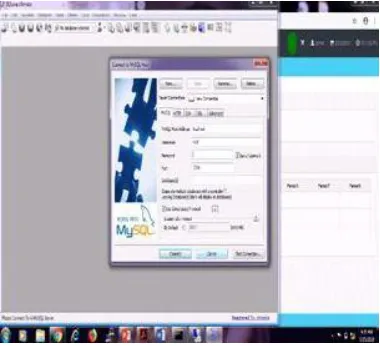
The OpenCV results are the main part of this project which enhance the procedure of connecting and processing the system.As shown in the fig 6 MySQL host is connected with PC and Raspberry Pi 3 module. This step is an initial step for this system to start.
FIG 6CONNECTING THE DEVICE TO MY SQL HOST
FIG 6CONNECTING THE DEVICE TO MY SQL HOST
The Login status is displayed in My SQL host software shown in the fig 7.
Fig 7 Login status from MySQL host
The local host page displays a login status and also it is connected to the server successfully in the fig 8.
Fig 8 Login status in local host/ece_attendance page
1054 Fig 9 Student list from local host server page
In the fig 9 the list of students with their respective register numbers are displayed.
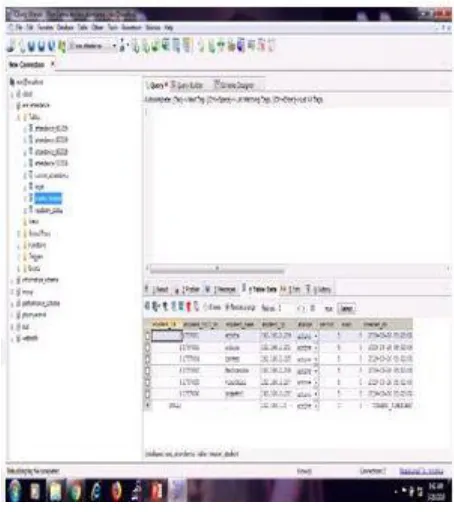
Fig 10 Master student login status from My SQL host
The fig 10 displays the master student detail with its unique IP address in the My SQL host.
Fig 11 Attendance taken for 6 students for 4 periods
The local host is replicas the master student list regarding period wise in fig 11.
C. Open CV results
The Open CV results are the main part of the project which enhanced the procedure of connecting and processing the system. As shown in the fig 12 and fig 13 the raspbian output appears according to the python language coding. It shows the period, time, student’s Id and students unique IP address for the future reference.
1055 Fig 13 Raspbian OS output from terminal window
D.Query results
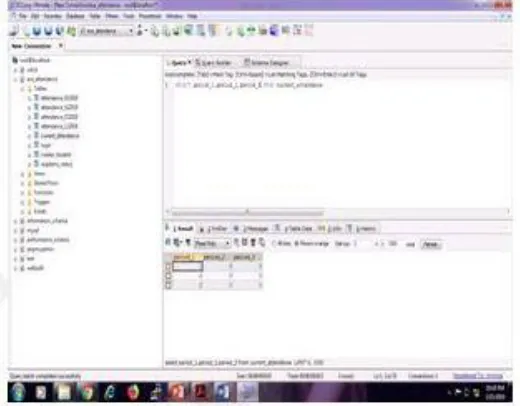
Query used here is to sort the details which is needed in the database, while action query asks for additional operation on the data, such as insertion updating or deletion. In this system two types of queries raised for sorting the tabulation in database for easy viewing purpose. In the fig 14 a query expresses for displaying a single students name from the master student login.
Fig 14 Query for viewing a single student’s name
Fig 15 .Query for viewing a initial 3 students attendance for first 3 periods
V.
CONCLUSION
An automatic attendance management system aims at solving the issues of manual methods of existing systems. A prototype of Smart attendance system based on ESP8266 smart card and Raspberry Pi 3 has been proposed. The concept of Smart attendance is to implement a system that marks the attendance of a particular person within a limited time period. We have made the device portable for easy use even when the sessions are on, without disturbing the class. There are future scopes to make a more compact ergonomics to make it a more user-friendly product and to make an impact in building a more healthier academic environment.
VI.REFRENCES:
[1] NarraDhanalakshmi and SaketiGoutham Kumar, ―Aadhaar Based Biometric Attendance System Using Wireless ngerprint Terminals‖, 2017 IEEE 7th International Advance Computing Conference, DOI 10.1109/IACC.2017.128 978-1-5090-1560-3/17 $31.00 © 2017 IEEE
[2] Omar Abdul RhmanSalim, RashidahFunkeOlanrewaju, Wasiu Adebayo Balogun―Class Attendance Management System Using Face Recognition, Motion Sensor and Android with Gesture based Controls ―2018 7th International Conference on Computer and Communication Engineering (ICCCE) Volume 8, 978-1-5386-6992-1/18/$31.00 ©2018 IEEE
[3] Sri MadhuB.M,KavyaKanagotagi ―IoTbased Automatic Attendance Management System‖International Conference on Current Trends in Computer, Electrical, Electronics and Communication (ICCTCEEC-2017), Vol. 6 978-1-5386-3243-7/17/$31.00 ©2017 IEEE
[4] K.LakshmiSudha, ShirishShinde, Titus Thomas, ArisAbdugani, ―Barcode based Student Attendance System,‖International Journal of Computer Applications (0975–8887),Volume 119–No.2, June 2015.
[5] KarthikKrishnamurthi, S. Irudaya Mary, B. N. Sumalatha,Adler Pereira, ―Fingerprint based attendance system,‖International Journal of Advanced Research in Computer and Communication Engineering, Vol. 4, Issue 3, March 2015.
1056 Journal of Advanced Research in Computer Science and
Software Engineering, ISSN: 2277 128X, Vol. 3, Issue 4, April 2013.
[7] E. Rekha and P. Ramaprasad, ―An efficient automated attendance management system based on Eigen Face recognition.‖7th
International Conference on Cloud Computing, Data Science & Engineering - Confluence, pp. 605-608, 2017.