Smart Devices for Visually Challenged People Based on IOT
N.Pavithra1, E.Princy Rebecca2, J.Pon Abiya3 and Dr.G.Raja Kumar4
1,2,3UG Scholar, Department of ECE, Francis Xavier Engineering College, Tamilnadu, India. 4Professor, Department of ECE, Francis Xavier Engineering College, Tamilnadu, India.
Article Received: 29 January 2018 Article Accepted: 26 February 2018 Article Published: 18 April 2018
1. INTRODUCTION
Globally, it is estimated that there are around 37 million people are totally blind, and over 15 million are from India.
Some have low vision and some people have occurred some kind of visual impairment. As indicated by (WHO) it is
evaluated that more than seven million individuals get to be visually impaired each year. It was reported that, 75%
of visual deficiency is avoidable, 80% of visual impairment is avoidable and 90% of people with visual impairment
live in developing countries. Most of the people with visual impairment are older and female are more at risks at
every age, in every part of the world. In this paper the proposed system enables visually challenged people to use a Braille controller embedded in their Smart device called “SMART BRAILLE REMOTE DEVICE” to detect the objects embedded with a GSM so that they have everything at their reach and at the same time, they don’t feel
depressed over their inability. The proposed solution is to make a low-cost automation system that would help them
survive at their home all alone without an aid for themselves.
Braille language plays a very big role in our project. Braille is a language which is understands by the visually
challenged people. Here Braille button is used in the transmitter side. There is 256 patterns available in the braille
button and each pattern corresponds to the separate character. Here separate character is allocated for the several
electrical appliances and gets operated based on the corresponding input given .The input is given by using the
braille button.
2. PROPOSED SYSTEM
The visually challenged persons give the information of what they want to automate through Braille characters
which comprises of the denoting letters to activate the electrical appliances in the button. The information send to
the controller via GSM which load has to activator (or) deactivate according to the input given by them. Relay is
used for the switching purpose of the load connected it to switch ON (or) OFF. We could connect many loads as
electrical appliances automated remotely through GSM according to their convenience. The information of what A B S T R A C T
Visually challenged people face lot of difficulties in their day to day life which includes handling the home appliances at their home by themselves without the aid of others .Our project titled “Smart system for visually challenged people based on IOT” is to help those people handle the home appliances by themselves .In this paper the proposed system enables visually challenged people to use a Braille controller embedded in their Smart device called “SMART BRAILLE REMOTE DEVICE” to control the electrical appliances embedded with a GSM.so that they have everything at their reach and at the same time, they don’t feel depressed over their inability. Since IOT is one of the upcoming technologies that can be used for home automation in connecting and managing remote devices of the appliances and also store the load information that the visually challenged used. The proposed solution is to make them to control the electrical appliances inside and outside their home all alone without an aid for themselves.
are the appliances used by the visually challenged person will be updated on IOT. The normal persons whom are
relations to the visually challenged persons can automated the appliances via IOT for helping them when they
supposed to be alone. Comparing the existing systems of all other previous project. This project has improved a lot
in many ways like normal persons other than visually challenged people can able to access the devices in anywhere.
And the status of the visually challenged people can be monitor by their relatives in anywhere.
Fig.1 Transmitter unit of the Proposed System
2.1. RECEIVER UNIT
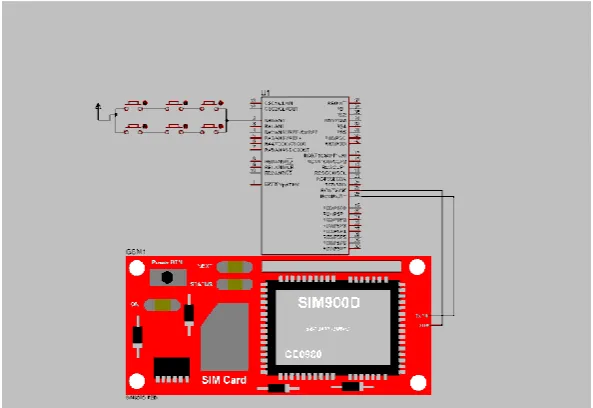
Fig.3 Circuit diagram of Transmitter unit
Fig.4 Circuit diagram of Receiver unit
3. RESULT AND DISCUSSION
Fig. 6 Diagram of Receiver unit
This is the transmitter unit of the proposed system. It consists of Power supply unit, Braille button, PIC
microcontroller, and GSM. Braille is represented in a block called Braille patterns. The block contains 256 possible
patterns of 8 – dot Braille cell, including the complete 6 – dot cell range where the corresponding representation is
given as follows. Braille is read on by touch. Here the project consists of 6 braille buttons each button is used to
perform each individual operation. For example while pressing button A then any one of the home appliances will
run and pressing the same button again the appliances will turn Off. Similarly the process will be continuing for
each appliance.
4. CONCLUSION
The conclusion of our paper, a prototype of home automation for visually challenged using IoT is presented. With
aid of the smart device, the visually challenged can easily have everything they need at their reach. This paper
demonstrates an automation concept that would aid the visually challenged people to automate every appliances
around them using the Braille controller by the Braille button. The visually challenged people could not utilize the
whole of technologies and yet this makes them feel more distressed about them. So the main idea behind our project
is to help the visually challenged people to make use of the current technologies in efficient way. Iot is used in our
project by using IoT the information of what are the appliances used by the visually challenged people will be
updated by using IoT. So every minute we can have the direct access to the concerned appliances and grab the
information about the performance. The normal person whom are relatives to the visually challenged persons can
automate the appliances via IoT for helping them when they supposed to alone.
ACKNOWLEDGEMENT
This work was supported in part by Department of Science & Technology (DST), FIST Program at Francis Xavier
Engineering College, Tirunelveli, Tamilnadu, India.
REFERENCE
[2] World health organization sheet “visual impairment and blindness: world health organization august
[2014].
[3] Muthukumaran. N and Ravi. R, 'Hardware Implementation of Architecture Techniques for Fast Efficient
loss less Image Compression System', Wireless Personal Communications, Volume. 90, No. 3, pp.
1291-1315, October 2016, SPRINGER.
[4] Muthukumaran. N and Ravi. R, 'The Performance Analysis of Fast Efficient Lossless Satellite Image
Compression and Decompression for Wavelet Based Algorithm', Wireless Personal Communications,
Volume. 81, No. 2, pp. 839-859, March 2015, SPRINGER.
[5] Muthukumaran. N and Ravi. R, 'VLSI Implementations of Compressive Image Acquisition using Block
Based Compression Algorithm', The International Arab Journal of Information Technology, vol. 12, no. 4,
pp. 333-339, July 2015.
[6] RuxandraTapu, BogdanMocanu, Andrei Bursuc, Titus Zaharia, "A Smartphone-Based Obstacle Detection
and Classification System for Assisting Visually Impaired People", 2013 IEEE International Conference
on Computer Vision Workshop(ICCVW), 2013.
[7] Muthukumaran. N and Ravi. R, 'Simulation Based VLSI Implementation of Fast Efficient Lossless Image
Compression System using Simplified Adjusted Binary Code & Golumb Rice Code', World Academy of
Science, Engineering and Technology, Volume. 8, No. 9, pp.1603-1606, 2014.
[8] Ruban Kingston. M,Muthukumaran. and N, Ravi. R, 'A Novel Scheme of CMOS VCO Design with reduce
number of Transistors using 180nm CAD Tool', International Journal of Applied Engineering Research,
Volume. 10, No. 14, pp. 11934-11938, 2015.
[9] Muthukumaran. N and Ravi. R, 'Design and analysis of VLSI based FELICS Algorithm for lossless Image
Compression', International Journal of Advanced Research in Technology, Vol. 2, No. 3, pp. 115-119,
March 2012.
[10] Manoj Kumar. B and Muthukumaran. N, 'Design of Low power high Speed CASCADED Double Tail
Comparator', International Journal of Advanced Research in Biology Engineering Science and
Technology, Vol. 2, No. 4, pp.18-22, June 2016.
[11] N. Muthukumaran, 'Analyzing Throughput of MANET with Reduced Packet Loss', Wireless Personal
Communications, Vol. 97, No. 1, pp. 565-578, November 2017, SPRINGER.
[12] P.Venkateswari, E.Jebitha Steffy, Dr. N. Muthukumaran, 'License Plate cognizance by Ocular Character
Perception', International Research Journal of Engineering and Technology, Vol. 5, No. 2, pp. 536-542,
February 2018.
[13] Aladrén, G. López-Nicolás, "Navigation Assistance for the Visually Impaired using RGB-D Sensor With
Range Expansion", IEEE Systems Journal, Vol. 10, No. 3, September 2016.
[14] Navya Amin, Markus Borschbach, “Obstacle Detection Techniques for Navigational Assistance of the Visually Impaired”, 2014 13th International Conference on Control, Automation, Robotics & Vision,
[15] N. Muthukumaran, Mrs R.Sonya, Dr.Rajashekhara and Chitra V, 'Computation of Optimum ATC Using
Generator Participation Factor in Deregulated System', International Journal of Advanced Research Trends
in Engineering and Technology, Vol. 4, No. 1, pp. 8-11, January 2017.
[16] Keziah. J, Muthukumaran. N, 'Design of K Band Transmitting Antenna for Harbor Surveillance Radar
Application', International Journal on Applications in Electrical and Electronics Engineering, Vol. 2, No. 5,
pp. 16-20, May 2016.
[17] Akhil. M.S and Muthukumaran. N, 'Design of Optimizing Adders for Low Power Digital Signal
Processing', International Journal of Engineering Research and Applications, Vol. 5, pp. 59-65, March
2014.
[18] Muthukumaran. N and Ravi. R, 'Quad Tree Decomposition based Analysis of Compressed Image Data
Communication for Lossy and Lossless using WSN', World Academy of Science, Engineering and
Technology, Volume. 8, No. 9, pp. 1543-1549, 2014.
[19] Shreya Gandhi, Bhaskar Thakker and Shreelal Jha, “Braille cell actuator based teaching system for visually impaired students”, IEEE International Conference on Recent Trends in Electronics, Information
& Communication Technology (RTEICT), May 2016.
[20] Ramiro Velázquez, “Wearable Assistive Devices for the Blind”, Wearable and autonomous biomedical