MOTION AND FORCES: A VIEW OF STUDENTS" IDEAS IN RELATION TO PHYSICS TEACHING
NILZA MARIA VILHENA NUNES DA COSTA VASCONCELOS
Thesis submitted for degree of PhD at the Institute of Education. University of London 1987
ABSTRACT
This study concerns students' ideas about the existence or otherwise of forces in several dynamical situations involving moving objects and objects at rest. It aims to contribute to a better understanding of students' ideas about dynamics. It differs from previous research [a) in covering a wider-range among students and larger variation in taught Physics background. [b) in at-tempting to tap less verbal forms of evidence and [c) in attempting to avoid 'scientifism' in terms of the way to approach students and in terms of interpre-ting results.
The empirical part of the study involved 338 students from seven different groups.
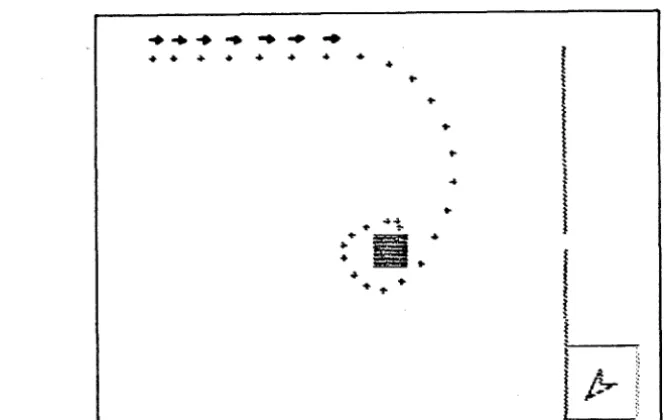
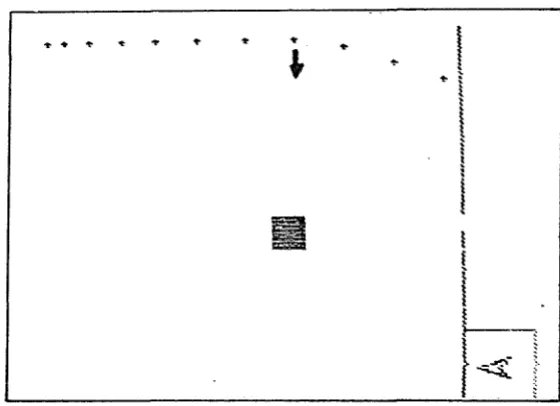
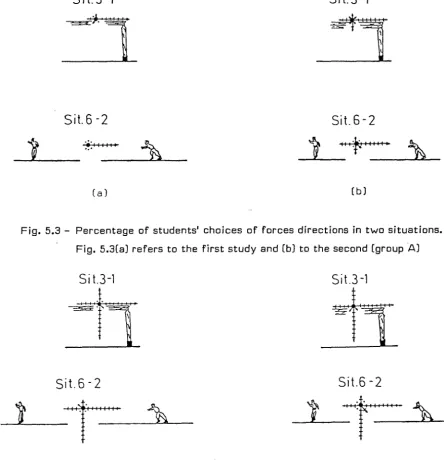
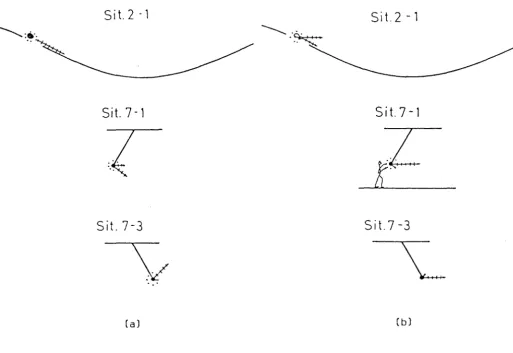
Data was collected from the above sample. using a questionnaire to which responses were simply graphic indications of the directions of expected forces. and. if possible. the giving of names to these forces. in eight situations presented diagrammatically. In addition. data was collected from a sub-sample. by means of computer games using a screen 'object' obeying Newtonian Mechan-ics. in a frictional and a non-frictional 'environment'. under the control of the subject. Difficulties in interpreting the last kind of data led to the main study being focussed on the results of the questionnaire.
Some results from the computer games are however presented. They are mainly concerned with students' performance when playing in a frictional versus non-frictional 'environment'. Results suggest a better students' performance when playing in a frictional 'environment'.
Results obtained with the questionnaire concern:
[b] names given to the different kinds of forces in various directions. Results include a difficulty found in naming forces which existed before teaching. They also give information about how scientific terms are assimilated.
To the memory of MY FATHER
and
AKNOWLEDGMENTS
Any human undertaking is the product of the efforts of a group of people who in some way contribute to its realization. A research project. a PhD thesis. are by no means an exception to this rule. The realization of this study was also made possible only by the contributions of numerous people. some who gave me practical help. others who kept me from feeling alone through the good and bad moments experienced over the years. They kept me going with constant encouragement and by believing in me even when I doubted myself. I include here particularly my friends everywhere. my family. colleagues and other members of the University of Aveiro. It is not possible to thank each individually. but I know they will recognize themselves from these words. and so I offer them my sincerest thanks.
Among these. however. there are some to whom I would like to give special mention for in some more direct or more constant way they have enable me to reach the end of this project.
Firstly I wish to sincerely thank my supervisor. Jon Ogborn. not only for all that he taught me but also for all his support and patience. To Joan Bliss also lowe a debt of thanks for the support she gave me. especially during a particularly critical period.
I am also deeply grateful to Vasco and my Mother. especially for all the support they gave my son Ricardo during my long absence.
Fundamental. also. was the contribution of Doutor Oscar Gon~alves during the final draft of the thesis. I thank him specially for having taught me to always write 'with a pencil and rubber'.
For the typing of this thesis lowe special thanks to Mrs Rosa Regina and for the diagrams. pictures and graphs to Mr Jose Januario.
CHAPTER 1 INTRODUCTION
TABLE OF CONTENTS
1.1 - Aims and Context of the Research
1.2 - Initial Orientations: Guidelines for the Research 1.3 - Outline of the Research
CHAPTER 2
LITERATURE REVIEW 2.1 - Introduction
2.2 - A Look at Some Researches in Dynamics
2.2.1 Review of researches of the 'Personal Construct' groups concerning scientific word-concepts
2.2.1.1 Motivation. Assumptions. Aims and Theoretical
10
11
13
15
17
17
Background of the researches 18
2.2.1.2 Empirical studies 21
2.2.1.3 General Comments on the trend of research reviewed 30 2.2.2 Review of Viennot's research on students' spontaneous
reasoning in dynamics
2.2.2.1 Motivation. Assumptions. Aims and Theoretical Background
2.2.2.2 Empirical Study
2.2.2.3 General comments on Viennot's research 2.2.3 Review of diSessa's research on students's actions in
controlling a computational environment
2.2.3.1 Motivation. Assumptions. Aims and Theoretical Background
2.2.3.2 Empirical study
2.2.3.3 General comments on the research reviewed 2.3 - Final Comments
31
31 32 37
37
37 38
41
CHAPTER 3
FORMULA TION OF THE PRESENT RESEARCH 3.1 - Introduction
3.1.1 General research questions
3.1.2 Two possible kinds of research to conduct 3.1.3 Some personal views on the nature of childen's
knowledge
3.2 - General Features of the Present Research and Particular Research Questions
3.3 - Minor Study: Implications for the Main Research 3.3.1 Description of the study
3.3.2 Analysis of the results
3.3.2.1 Students's behaviours in playing games in a frictional and non-frictional 'environment' 3.3.2.2 Attempt to infer students' ideas about dynamics
only through their actions 3.3.3 Final conclusions
CHAPTER ...
DESIGN OF THE SURVEY AND ITS ADMINISTRATION 4.1 - Design of the Questionnaire
4.1.1 I ntroduct i on
4.1.2 Pre-requisites of the questionnaire 4.1.3 General description of the questionnaire 4.2 - Sample
4.2.1 Pre-requisites of the sampling process 4.2.2 Description of the sample
4.3 - Administration
SUMMARY OF THE CHAPTERS 5. 6 AND 7 CONCERNING THE ANALYSIS OF THE QUESTIONNAIRE
43 43 44
44
47 49 49 51
51
52 55
56 56 57 59 61 61 61 63
CHAPTER 5
PRELIMINARY CONSIDERATIONS CONCERNING THE QUESTIONNAIRE
AND ITS ANALYSIS
5.1 - 'Validity' of the Questionnaire 5.1.1 Problematic cases
5.1.2 Uncertainty of students' responses 5.2 - Two Questionnaires or One?
5.3 - Decisions for the Analysis
CHAPTER 6
ANAL YSIS OF FORCE DIRECTIONS
6.1 - Overall Analysis
6.1.1 Graphical summary of the data 6.1.2 General properties of the results 6.2 - Analysis by Particular Force Directions
6.2.1 Comparative analysis of particular force directions 6.2.1.1 Force along the motion
6.2.1.2 Downward vertical force [gravity) 6.2.1.3 Forces of support
6.2.1.4 Forces of resistance 6.2.1.5 Impulsive forces 6.2.1.6 'Undirected' forces
6.2.2 Statistical models of students' replies concerning the force directions mostly chosen
CHAPTER 7
ANALYSIS OF NAMES GIVEN TO FORCES
7.1 - Introduction
7.2 - Preliminary Analysis of the Names for the Forces
7.2.1 Main questions addressed and nature of the data: some problematic aspects
68
69
74
75
80
83
83
92 94 94 95 98
100
104
108
112
113
139 139
7.2.2 Criteria for the analysis 7.2.3 Network used in the analysis 7.2.4 Overall results
7.3 - Analysis of Names Given to Particular Forces and to Forces in Particular Directions
7.3.1 Forces acquired by teaching 7.3.1.1 Gravity
7.3.1.2 Forces of Support 7.3.1.3 Forces of Resistance 7.3.2 'Intuitive' forces
7.3.2.1 Impulsive forces
7.3.2.2 Force Along the Motion
CHAPTER B
INTERPRETATIONS AND CONCLUSIONS
8.1 - Summary of the Results 8.2 - Possible Interpretations
8.3 - Concluding Remarks and Suggestions for Future Research
BIBLIOGRAPHY
APPENDIX I
AN EXAMPLE OF EACH VERSION OF THE qUESTIONNAIRE
APPENDIX II
CATEGORIES OF ANSWERS: EXPECTED ANSWERS AND PROBLEMA TIC CASES
APPENDIX III
SUMMARY TABLES OF THE RESULTS OF NAMES GIVEN TO FORCES AND ANALYSIS OF THE PROBLEMA TIC RESULTS
APPENDIX IV
ANALYSIS OF THE RESULTS FOUND IN SIT. 6-3 AND 8-1 CONCERNING CHOICES OF AN IMPULSIVE FORCE
141 141 145
149 149 149 157 167 189 189 195
205 210 217
222
229
293
301
CHAPTER 1
INTRODUCTION
In this opening Chapter there are three sections. The first. Aims and Context of the Research. describes the overall aims of the research and its context. The second. Initial Orientations: Guidelines for the Research. is a brief account of the preliminary steps of this work and of their influence on the formulation of the research. The last. Outline of the Research. is a brief description of the plan of the whole work.
1.1 - Aims and Context of the Research
The topic of this thesis is the investigation of students' ideas in dynamics. more specifically the existence or otherwise of forces in several situations involving moving objects and objects at rest. and how they vary with Physics teaching and age. This topic is not new in Science Education research. many studies having been conducted. over the past years. concerning the elicitation and description of students' conceptions about various scientific topics. From them. a vast amount of information is now available. However. while some researchers in the field are already engaged in developing strategies for school science teaching. which are aimed to promote a conceptual change in students' minds. others still claim that there is a certain lack of coherence in the seemingly quite disparate results. The last still seeking to achieve a deeper understanding of the object of enquiry. on the grounds that this will lead to more appropriate ways of taking into account students' conceptions within instruction. The present research shares this last point of view. Its prime aim being. then. to attempt to improve our knowledge about students' conceptions. In order to do so. the research is aimed. firstly. at the identifica-tion of some of the problematic issues which may have led to the state of the field and secondly. by taking them into consideration. to investigate further some of the existing results. Basically. the issues to be tackled concerned methodologies used and populations studied.
research is. however. also influenced by ideas on the nature of persons' everyday construction of knowledge and on how such activity is seen in comparison with the scientific endeavour (these ideas are presented in Chapter 3. sub-sec-tion 3.1.3). The relevance of this issue arises from my belief in its central role for the understanding of the nature of the ideas students often express when answering to 'academic' situations (by 'academic' situations I mean to include. in general. all situations where students are asked about curriculum topics). It also helps to question the scope of much of the existing researche. particularly in what concerns its focus mainly on students' ideas which derive from the school curriculum and the assumption it often seems to make (although not always explicit) that persons act and construct their daily life knowledge as scientists construct scientific knowledge.
1.2 - Initial Orientations: Guidelines for the Research
The formulation of the research was preceded by a stage oriented towards the understanding of existing researches in the field under study. The aim here is not to give a detailed analysis of them (this is done later. in Chapter 2) but to describe. briefly. the chronological path followed at the beginning of this work. and to present the main guidelines which emerged.
similar to those identified by Viennot. for example. the high percentage of 'uncorrect' answers and the commonality of students' responses. The comparison of the analysis done with respect to Yes/No replies and explanations brought. however. some additional information. namely the higher percentage of students' Yes/No correct replies (67%. against q7% for the explanations). and the tendency for an increase in inconsistency when students' answered by giving explanations. This raised the following questions: why do students answer more 'correctly' and consistently by just giving an Yes/No reply than when they give an explanation? Could this mean that students are more sure. and 'right'. about how things are than why they are as they are? The idea of planning a study which would avoid asking students for explanations had its roots here.
A further inspection of the explanations given by students. seemed to support my previous belief about the rather formal and academic nature of the study. Students often used expressions noticeably recognized as being school knowledge (e.g. mathematical expressions. like M d2
2x - - Kx). This led dt
me to formulate the following question: to what extent did the formal and academic nature of the situations prompt students to formalize their beliefs in school like terms? More fundamental. could it be that the nature of this approach misled. or at least restricted. the identification of students' intuitive knowledge? The idea of approaching students. at a similar school level. with less formal situations to see the patterns which might emerge. become clearer.
would come mainly from interactions with the physical world. motivated me to attempt a design which would rely less on verbal evidence and more on actions. The idea of using computer games on a large scale. for collecting data about students' actions. had its origin here. The use of this technique would also have the advantage of having a rather non-school like nature.
Another aspect of the existing research which highly influenced the plan of the study concerned the restricted range of students' age and Physics background involved in the studies done. For example. while some researchers investigated. mainly. students' conceptions of university Physics students (e.g. Clement. Viennot). others worked. mainly. at the secondary school level (e.g. the group from the University of Surrey). Nobody had. in fact. surveyed a wide range of students' age and Physics experience with the same method. If students' conceptions are fundamental and develop early. this becames essential. in particular. to find out what effect Physics teaching has. This was the other main guideline taken here.
In summary. the main guidelines derived from this preliminary stage were that of designing a study which would avoid approaching students with formal and academic situations. which would give preference to students' actions. and which would look at a wide range of students' age and Physics background with the same method.
1.3 - Outline of the Research
chosen. The questionnaire was administered to 338 students belonging to seven groups which varied from youngest students with no formal teaching
in Dynamics up to Physics training teachers.
CHAPTER 2
LITERATURE REVIEW
There are three sections in this Chapter. The first. Introduction. gives a general picture of the state of the field of research in students' con-ceptions in science. particularly the claim that there is still a certain difficul-ty in understanding its results. The second. A Look at Some Researches in Dynamics. contains a more detailed description and discussion of selected researches in dynamics and the last section. Final Comments. summarizes the problematic issues raised.
2.1 - Introduction
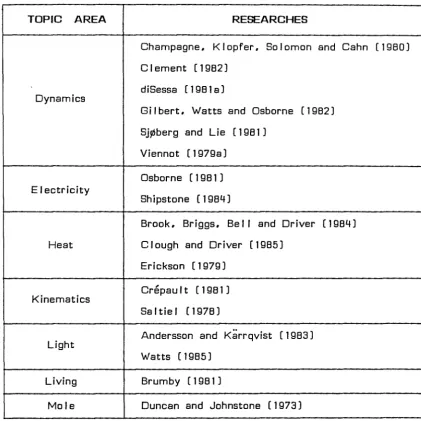
TOPIC AREA RESEARCHES
Champa 9ne • K lopfer. So lomon and Cahn (1980) Clement (1982)
diSessa (1981 a) Dynamics
Gi I bert. Watts and Osborne (1982) Sj¢berg and Lie (1981)
Viennot (1 979a) Osborne (1981) Electricity
Shipstone (1984)
Brook. Briggs. Be II and Driver (1984) Heat Clough and Or i ver (1985)
Erickson (1979)
Kinematics Crepau I t (1981) Saltiel (1978 )
Andersson and Karrqvist (1983) Light
Watts (1985)
Living Brumby (1981)
Mole Duncan and Johnstone (1973)
TABLE 2.1-Examples of researches and topics investigated in the area of
students' conceptions in Science
From the above and other studies there is now a rich collection of results supporting the claim that students have their own conceptions about scientific topics. even before they enter school. There is also a general consen-sus among researchers that these conceptions are (a] at least partially organ-ized. [b) show some consistency across populations. [el differ from school science. [d) are. sometimes. extremely resistant to change and [e) need to be taken into account if teaching is to be effective.
'[ •.• ) I feel at this point some urgency for clarification of and agree-ment about the meaning and style of this kind of research. if only to avoid being submerged and frustrated by too many un-under-standable and unusable 'research results'.'
[Guidoni. 19S5. pp 133)
In attempting to answer the above problem a more detailed analysis of some researches is given in the next section. The purpose is not to give an exhaustive review of the studies done but to select researches to illustrate and raise issues seen as being problematic. These concern. mainly. epistemolo-gical 'issues [e.g. theoretical assumptions made) and methodoloepistemolo-gical issues [e.g. approaches used). Their relevance is that they are related to the two following fundamental questions: [a] what is the nature of the knowledge acquired through experience? and [b] what is involved in being able to claim that one has discovered something about what someone else thinks?
The researches selected are all in the area of Dynamics because this is the topic of the present study. and because this topic is that where most studies have been conducted [for an extensive review see. for example. McDermott. 19SQ). The problematic issues to be raised could however also be applied to other topics.
2.2 - A Look at Some Researches in Dynamics
2.2.1 Review of researches of the 'Personal Construct' groups concerning
scientific word-concepts
2.2.1.1 Motivation. Assumptions. Aims and Theoretical Background of the researches
Most of these researches appear to have in common a problem--orientation rather than a theoretical orientation. They are. however. some-what less empirical than other approaches (e.g. Viennot. 1977) in that the theoretical basis from which they work is made more explicit.
2.2.1.1.1 Starting points seen as more problem-oriented
One of the main motivations often referred to in these researches [e.g. Osborne and Gi Ibert. 1979. Osborne. 19S0. Watts. 19S2) concerns the problem expressed by many teachers of science that students do not under-stand basic ideas of science. One important reason seen by the researchers
is that students' conceptual understandings of the words used in science often differ from those of the teacher. In this context. researchers talk about the 'gulf of understanding' between teacher and taught. and about the need to bridge the 'semantic gap' between the two [e.g. Watts. 19S2). In this vein. one purpose is to find out how students tend to use a particular word which is also used in science [e.g. force. energy). and to help teachers to make an appraisal of students' understandings of various concepts. This goal is justified by the principle that effective teaching can only take place when it is based upon what the learner already knows.
2.2.1.1.2 Starting points derived from a theoretical basis
Many of these researches share. with varying degrees of commit-ment. a theoretical starting point derived from the psychology of George Kelly. namely his theory of personal construct and his metaphor of 'man-the--scientist'. Basically. the general ideas taken from Kelly are:
[a] that each person constructs a representational model of the world. the model being subject to change over time;
[b) constructions of reality are constantly tested out and modified to allow better predictions in the future;
[c) the concern is with conscious self-regulation by a person of his own construct ions;
[d) following Kelly's metaphor of 'man-the-scientist'. people are seen as essentially inquisitive and constructively scientific.
Taken together. these ideas assume that the processes through which scientists structure their knowledge are similar to the way that people deliberately construct their own world views (Watts and Pope. 1982). It is also assumed that people can construe their environment in an infinite number of different ways; for example. Kelly is quoted as saying that events are subject to 'as great a variety of constructions as our wits would enable as to contrive' (Watts. 1982). Thus the emphasis is on the uniqueness of each person's construction of the world.
A further important theoretical assumption concerns the view taken of what a concept is. of what it is to understand a concept and of what is the key measure of concept attainment. This issue relates to the choice of methodology for investigating students' understanding of individual concepts (see. for example. Osborne and Gilbert. 1979). the Interview-About-Instances.
this process being always open to re-conceptualization through new experi-ences. Moreover. concepts are seen as multi-dimensional and as heavily con-text-dependent.
Concept understanding is seen as resulting from the interaction of four possible components (see Gi Ibert and Osborne. 19S0): (1) memory of instances associated with a term. [2) memory of a description of the con-cept. [3) memory of instances and non-instances (the word-concept becoming attached to the abstract concept of the class). ['I) induction of a description of a concept. Figure 2.1 shows these components.
Specific Instances
Descriptive Statements
Externally Classified Instances 'Externa I I y' Classified as Exemp lars and Non-Exemp lars of a Concept
Descriptive Statements of Concept Attributes Obtained from 'Externa I ' Sources
Interna I I Y Classified Instances 'Interna I I y' Classified as Exemp lars and Non-Exemp lars of a Concept
Descriptive Statements of Concept Attributes Obtained from 'Interna I ' Considerations
Fig. 2.1 - A simplified view of concept attainment (from Gibert and Osborne. 19S0)
The general idea is that understanding a concept means to be able to generalize to all possible instances that might be presented and to be able to descriminate all possible non-instances. Thus. the key measure of concept attainment is 'the ability of an individual to properly categorize instances not previously encountered as instances or non-instances. of the particular concept' (Gilbert and Osborne. 19S0).
Firstly. the theory is not intended to explain why the particular conceptions that do arise are of one kind rather than another. In other words. it does not offer a theory of the content of these conceptions. Secondly. the validity of the theory for this field of research is never questioned. These seem to me to be problematic because [a] there is not yet a general agreement in the field about the nature and construction of everyday knowledge. and
[b] there are some arguments in the I iterature [e.g. Scheweder. 1977) which question the theoretical approach followed. particularly the close parallel drawn between the processes used to acquire knowledge by everyday thinkers and by scientists.
2.2.1.2 Empirical studies
This sub-section comments on the most relevant empirical studies carried out in the area of dynamics.
2.2.1.2.1 Focus of the studies
Generally. the focus of the studies concerns basic word-concepts used in science lessons. primarily the concept of force. gravity also being investigated. and to a lesser extent friction. Table 2.11 shows the studies selec-ted to describe this research.
SPECIFIC TOPIC
FORCE
GRAVITY
FRICTION:
Osborne and Gilbert [1980a). Watts and Zylbersztajn (1981). Watts (1983). Watts and Gilbert [undated. but published after 1983). Osborne and Freyberg (1985) Stead and Osborne [1981 b). Watts (1982). Watts and Gilbert [undated. but published after 1982)
Stead and Osborne. [1981 a)
TABLE 2.11 - Examples of researches and specific topics. selected in this
It follows that these studies concern only students' concepts which have the same names as physics concepts. Although understandable from a pragmatic point of view. it seems to me problematic that one might. in this way. be restricting the scope of students' knowledge which is studied. Why should students' everyday knowledge be formulated in the same terms as those of the physicist?
2.2.1.2.2 Methodologies
2.2.1.2.2.1 The Interview-About-Instances method
These researchers developed a specific method. namely. the Inter-view-About-Instances method (I.A.I.). Although this is not the only method used. its used is central because it was fundamentally based on the theoretical approach.
In outline. the I.A.I. method (see. for example. Osborne and Gilbert. 1979) consists of tape-recorded discussions with a pupi I. using a series of picture-cards. concerned with the application of one word as a focus. Each pictucard depicts a line drawing of a situation which mayor may not re-present an example of the concept. As seen by Osborne and Gilbert (1979) the key problem in this method is how to select a necessary and sufficient set of cards which will effectively explore the dimensions and boundaries of the concept. To achieve this. it was necessary to consider: the theoretical structure of the concept. attributes of the concept. comments from experi-enced teachers on common difficulties. ideas from illustrations in textbooks. Figure 2.2 shows examples of some of the cards used by Watts (1983) for the concept of force.
Questions like. 'Do the situations represent examples of your con-cept of force?'. 'Why do you say that there is a force here?'. 'What would your example of force be?'. were often used to prompt discussion.
One may describe the situations presented as relatively informal (by contrast with other examples. e.g. Viennot. 1979a). However the questions asked are still formulated in a school-like terms (e.g. by asking about force. gravity and by requiring always explanations from students). One may ask whether or not students would give answers in terms of those school-like terms when not prompted to do so. More fundamentally. one may doubt whether students conceptualize everyday like events around the same central concepts as those used in science.
2.2.1.2.2.2 The survey approach
(a)
(b)
Fig. 2.3 - Examples of questions asked using survey techniques. about (a) the concept of force [Watts and Zylbersztajn. 1981). [b) the concept of 9ravity [Stead and Osborne. 1981 b)
It may be noted that firstly. not all the ideas identified in the interviews were checked out in the questionnaires [see. for example. Stead and Osborne. 1981 a or bJ. Further. there is not always agreement on the way of paraphrasing the alternative frameworks described in the two approaches
[see. for example. Watts and Gilbert. undated but published after 1 983). The surveys also often bring out alternative frameworks which were not identified in the I.A.I. method. Thus. overall. the surveys do not seem to constitute a systematic corroboration of the studies using the I.A.I. method.
2.2.1.2.3 Samples
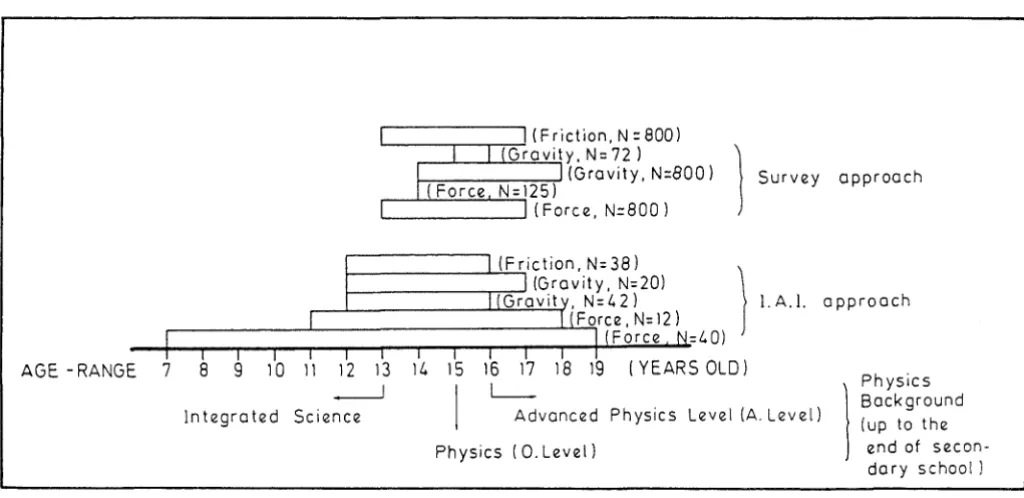
It is important to consider the age-range. Physics background and size of the samples used [though the researchers do not always give full detai Is). The general features of the samples are given in figure 2.4.
AGE -RANGE 7 8 9 10 11 12 13
- - 1
lntegrated Science
) LA.L appcaach
14 15 16 17 18 19
I
~vanced
Physics Level (A. Level)1
Physics (0. Level)
Physics Background (up to the
end of secon-dary school)
Fig. 2.4 - Characteristics of the samples of the studies reviewed
The general features of the samples can be summarized as follows:
(j) most studies covered a wide range of students' age. markedly between 12 and 17 years. The surveys involved a smaller range of ages and. particularly. involved older students:
(iii] the size of the samples varied markedly with the approach used. with many fewer students involved in the I.A.I. approach (between 12 to Lf2 students) than in the surveys (between 72 to 800 students).
The students involved come from two different countries. namely England and New Zealand. with some work in other countries (e.g. Portugal. Thomaz. 1983).
2.2.1.2." Aspects concerning the analysis of the data
With the I.A.I. approach the data to be analysed consisted of full transcripts of each individual interview. The analysis attempts to interpret students' understandings of a particular word-concept. through their use of this word. In most of these researches the aim of the analysis was to construct students' alternative frameworks. by which is meant 'a short summary descrip-tion that attempts to capture both the explicit responses made and the con-strued intentions behind them' [Gi Ibert and Watts. 1983). Moreover. alternative frameworks may be seen as 'generalised non-individual descriptions' (Gilbert and Watts. 1983). So. the frameworks described come from no one student. Rather they were pieced together from the conceptions explicitly and implicitly used. Thus. the alternative frameworks identified do not tell what a particular student thinks of that concept.
2.2.1.2.5 Main results
2.2.1.2.5.1 Patterns of students' understandings in mechanics
General patterns of students' understandings with respect to their ideas in mechanics identified in early studies [Osborne and Gilbert. 1980a. Gilbert et al. 1982) include:
a self-centred and human-centred view point - words and situations are considered in terms of human experiences and values. An example of this is when a student. asked if there is a force on a steadily moving bicycle with a man sitting still. answers 'no. because he is not pedalling or anything'.
The researchers do not make. at this stage. any statement about the comprehensiveness of the patterns identified. or their distribution amongst a population. or about the commitment of any student to only one pattern.
2.2.1.2.5.2 Alternative frameworks with respect to the topics investigated
2.2.1.2.5.2.1 Concept of force
The empirical studies of force have given rise to the identification of several distinct alternative frameworks. Watts (1983). for example. describes eight distinct alternative frameworks.
In order to understand better the rationale behind the description of such alternative frameworks. a discussion will be given of two of them.
[a] A - Affective forces. According to Watts. an appropriate description of this framework would be 'for force where objects are seen as inclined. or attempting. to produce action'. More specifically. this framework was paraphrased and illustrated by Watts. using extracts taken from tran-scripts as follows:
A1 - Forces are obligations to complete an action against some resis-tance.
Ex: 'That [ball] has to do it ••• if you hit the ball there it has to go up' [GolfballJ.
A2 - The framework conveys an inner feeling of trying to accomplish some activity - an inner drive.
A3 - Forces are also intentional.
Ex: 'If you do something ... actually physically sort of dig something up ••• then you would be causing forces ... like playing the piano'.
[b) D - Designated forces. This framework is paraphrased as follows: 'Forces are designated to those objects that are causing or will cause events to occur'. As before, this framework was illustrated:
01 - Humans are centres of force.
Ex: 'The force is coming from the man who whacks it' [GolfbaIlJ.
'There's some force there from the teacher ... his power to tell the boy off .. .' [Being told off].
02 - Forces are inside human bodies.
Ex: 'The force is in him ... striking the ball ... the movement of his arms' [Golfer].
03 - Forces in inanimate objects. Ex: 'Yes, there is force in the ball,
of the thing' [Golfer].
in the movement ... the whack
However, in other studies involving the same researchers, para-phrased frameworks are: 'Forces are to do with living things'. 'Constant motion requires a constant force', 'The amount of motion is proportional to the amount of force'. No clear statement is made about the overlaps, similarities and differences among the frameworks identified in different studies.
The prevalence of some of the frameworks identified was also investigated using survey techniques [e.g. Watts and Zylbersztajn, 1 98 1, Osborne and Freyberg, 1 985). Strong consensus was found for some views, particularly. concerning the association between force and motion.
Despite the interest of the wide catalogue of different meanings students may attribute to the concept of force. certain criticisms I would make are:
context of the two situations rather than the understanding of the idea associated with the word force behind the answer. It is not clear that the result. for both situations. concerns the physical idea of force;
[ij] in some cases. the alternative frameworks seem to be too closely
related to the context of the situation. In some cases a framework is even identified for a single situation.
2.2.1.2.5.2.2 Concept of gravity
The empirical studies of gravity have also given rise to identifica-tion of several distinct alternative frameworks. Watts (1982). for example. describes eight distinct frameworks: Gravity as being a force that requires a medium to act through (the air being the most popular candidate); Gravity as differing from weight. are just some of the ideas described.
In another study by Stead and Osborne (1981 b) other views of gravity were identified. some of them similar. for example. the idea that gravity is the result of the presence of air pushing down and that gravity increases with height.
Most of the criticisms made before would apply also here. For example. one of the frameworks described by Watts (1982) is actually formula-ted in terms of only one kind of situation. namely a ball moving upwards in the air and then falling down. Furthermore.
in
the same study. one can find one student expressing ideas belonging to contradictory frameworks: 'Gravity is constant - moving objects try. and fail. to 'conteract' gravity' and 'Gravity begins to operate when objects start to fall down and continues until they are at rest on the ground'. This raises the question: if students' own ideas are so contradictory. how can one explain their persistence with age and formal teaching in physics?2.2.1.2.5.2.3 Concept of friction
The concept of friction was only investigated in one study. by Stead and Osborne (1981 a). This work identified several views held by students about the concept of friction. namely its close association with rubbing. par-ticularly the rubbing of two solid surfaces. and with movement. wear. energy. and particularly heat energy. The prevalence of some of these views were investigated in a survey.
2.2.1.2.5.3 Main conclusions
The main conclusions seem to be:
(j) students do have their own meanings for words which are commonly used in physics lessons. and which they acquire even before they have any formal teaching in the subject. Moreover. these meanings are often at odds with orthodox physics;
[ii) for each word-concept. there is a proliferation of meanings. some
of them seeming to be contradictory. Osborne. Bell and Gilbert (1983) state that 'children are not concerned with the need to have coherent and non-contradictory explanations for a variety of phe-nomena' ;
(iii) some of those meanings are widely held among students. although
they are seen as individualized attempts to make sense of the world.
2.2.1.3 General Comments on the trend of research reviewed
The main problems I see with this line of research are:
[i] the focus of the investigations being only curriculum topics. This may miss essential aspects of students' everyday knowledge;
(ii) the emphasis on the consciousness of students' own constructions.
mil
the emphasis on the uniqueness of knowledge. seeing students' every-day conceptualizations as being individualized attempts to make sense of the world:[iv] the diversity and nature of the outcomes found in the empirical studies. with the interpretation given to the results. being rather too closely related to the data and context:
(v] the lack of a general model which could account for the content of the conceptions identified.
2.2.2 Review of Viennot's research on students' spontaneous reasoning in dynamics
This sub-section reviews important research by Viennot (1977). It is important because it was one of the earliest studies conducted in the area. is a systematic large scale study of difficulties of dynamics and because it attempts to build an explanatory model.
2.2.2.1 Motivation. Assumptions. Aims and Theoretical Background
This work can be seen as bein9 fundamentally. problem-oriented. As Viennot [1979a) writes:
'The work described here has its orIgins in practical teaching problems. and its ultimate aim is to contribute to an improvement of teaching'.
[Viennot. 1979a. pp 205)
The immediate aim was 'to attempt to understand how students actually think about some specific situations. and to describe and formulate that th inking' (Viennot. 1979a).
2.2.2.2 Empirical study
2.2.2.2.1 Focus of the study
The topic studied was elementary dynamics. that is. the relations between force. energy and motion. The topic chosen is. then. taken from the science curriculum.
2.2.2.2.2 Methodology
The technique consisted of 112 to 1 hour long penci I-and-paper questionnaires administered to classes. The design of the questionnaire was preceded by an exploratory phase where ideas for items were collected from teaching experience and interviews.
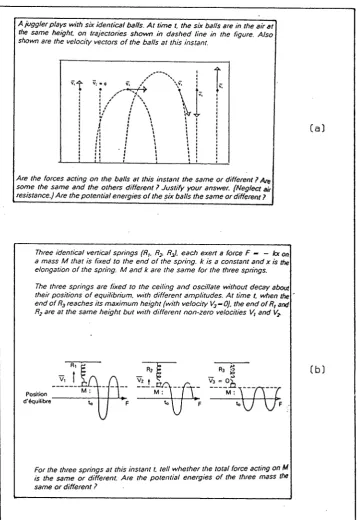
According to Viennot (197gb). good items would be those which gave evidence about the intuitive aspects of students' reasoning. Thus. for example. the motions presented in the questions were not arbitrarily chosen. but were deliberately chosen to include motions in the opposite direction to the resultant force. The questions were intended to avoid. as far as possible. other difficulties. especially mathematical ones. Information about physical relations relevant to the problems was often explicitly given.
A juggler plays with six identical balls. At time t. the six balls are in the air at the same height. on trajectories shown in dashed line in the figure. Also shown are the velocity vectors of the balls at this instant .
"t
Il
:
I!
::
: I
:
I
.... ----'
: i
v:.o - , ' .... - : t~
i/i\
!/i
\
\t:'
I I I;
:
\
i : :
::
:
\ ~::,t , ' ( ' I
:: : \ ~:!
" f t . , ,
• • • 1 t I I I t • t I I I
. : : t I : :
Are the forces acting on the balls at this instant the same or different? Ate
some the same and the others different? Justify your answer. {Neglect air resistance.} Are the potential energies of the fix balls the same or different?
Three identical vertical springs (R,. R;z. R:Jl. each exert 8 force F - - kx on a mass M that is fixed to the end of the spring. k is a constant and x is the
elongation of the spring. M and k are the same for the three springs. The three springs are fixed to the ceiling and oscillate without decay about their positions of equilibrium. with different amplitudes. At time t. when the .
end of R3 reaches its maximum height (with velocity ~-O). the end of R, and Rz are at the same height but with different non-zero velocities V, and V.,.
For the three springs at this instant t. tell whether the total force acting on M is the same or different. Are the potential energies of the three mass the
same or different?
Fig. 2.5 - Type of questions in Viennot's research
Ca)
The examples show how the questions are intended to ensure that
students will not get answers 'wrong' because of lack of physical knowledge
or because of the difficulty of the questions. Even so. these questions do
seem to be rather formal or 'academic'. They are formulated in a way
appropri-ate for students studying dynamics. One may ask whether presenting this
kind of question may guide students to formulate their answers uniquely in
school-like terms or concepts. thus limiting the extent to which the questions
2.2.2.2.3. Sample
The research involved about 1600 students. mainly French but also British and Belgian. The majority (2/3) were attending university degrees. mainly in science. though students studying science at the end of secondary school were also involved.
2.2.2.2.LJ Aspects concerning the analysis of the data
Generally. the data collected consisted of Yes/No replies and written explanations. The analysis found the percentage of students giving correct/incorrect answers. together with inferences drawing on students' explanations about common kinds of reasoning. Notice that the data is mainly based on students' verbal knowledge.
In contrast to many other researchers. Viennot proposes a model to account for the findings of her research.
2.2.2.2.5 Main results and conclusions
The main results can be described as follows:
m Commonality of students' responses - The results found show a high
frequency of similar responses. which were often in contradiction with the physicist's view. Moreover. the results also show that the types of answers varied little from one sample of students to another. This led Viennot to consider that students' difficulties in dynamics should be seen as resulting from a general and common spontaneous conceptual system acquired independently of teaching:'It appears that spontaneous reasoning can be formalized in terms of its own 'laws' I' •
(Viennot. 1979a. pp 205)
[iil Students' responses vary with the kind and nature of the situations
opposite direction to the resultant force. students often gave an incorrect answer by associating with the velocity a force which would explain the motion. To account for this result. Viennot proposes an intuitive 'law' of 'a pseudo-linear relation between force and velocity. Fa.v'.
However. in other situations students correctly associated force with acceleration and not with velocity. These cases include situations where students were presented with an equation of motion and have to calculate the force. or when students were presented with a question such as 'If the same force acts on two identical masses. are the motions necessarily identical?'
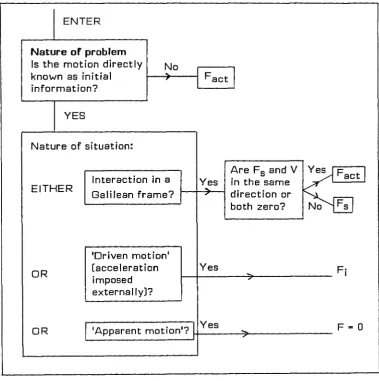
[iii] Model for spontaneous reasoning in dynamics - Viennot's model
assumes that students use different notions of force depending on the question asked. The model proposed is outlined in Table 2.111. Table 2.IV summarizes the nature and properties of two of the forces present in the model. namely the 'Force of interaction' (Fact) and the 'Supply of force' (Fs)'
ENTER
Nature of problem Is the motion directly known as initial information?
YES
Nature of situation:
No
...
,
EITHER Interaction in a Galilean frame?
Fact
I
~re Fs and V Vies Fact
I
Yes In the same....
f--t-;)O---l d i r ect ion or ~ rr=-l
1...-. _ _ _ _ _ _ ---' both zero?
I
No ~OR
OR
'Driven motion' (acceleration
imposed externa "y)?
Yes Fi
~~---~r---'Apparent mot ion'?
II-I-
Y_e_s ____ ..::;>-... __________ F =a
Force of interaction
Supply of force
Symbol Typical Physica I Loca I isation Model
formu I ation nature used
Fact Force Oriented Function Fact ~ m a
acting on (vectorial?) of
the mass position a ~
acceler-ation
Fs The force Mixed A property
of the scalar-vector: of the who I e
mass Force-energy motion: Fs = ex v
confusions spatio-tempora I de I oca I isation
TABLE 2.IV - Different notions of force in use among students (from Viennot. 1979a)
Comments on this model include the followings.
The model displays a certain 'scientifism'. That is. its formulation is in terms of rather formal and even mathematical relations. This appears to me to be a rather limited way of formulating students' own reasoning about everyday dynamics. biased towards a scientific perspective.
The model describes the empirical results rather than modelling the nature of spontaneous reasoning about everyday dynamics events. That is. its formulation is in terms of the link between the kind of situations presented and the kind of answers given.
2.2.2.3 General comments on Viennot's research
The importance of this research derives. I think. from its systematic nature. in that it provides a good basis for recognizing the scope of students' difficulties in dynamics. Also. being one of the earliest studies done in the area. it may be credited as contributing importantly to abandoning the tradi-tional perspective which considered students' difficulties as due only to mis-understandings of school learning.
Despite the above. the work is limited by the rather formal and school-like nature of the questions asked. by the population involved (mainly university students). and by the 'scientifism' of the model proposed for students' reasoning in dynamics.
Viennot's work. despite its value. is at best suggestive of how to build and test a model of thinking about motion in everyday life.
Similar issues. could be raised in connection with Clement's work (e.g. Clement. 1982). particularly the 'scientifism' of the approach to gathering and interpreting results. the limited scope of the study (e.g. topic taken from the curriculum. and the sample involving only universities physics students).
2.2.3 Review of diSessa's research on students' actions in controlling a computational environment
The work reviewed is that of diSessa at M.I.T •• The main point to be brought out in discussing it are the theoretical perspective taken. and the approach via students' actions rather than through propositional knowledge. The work of White (e.g. White. 1983). also from M.I.T •• is similar in many ways.
2.2.3.1 Motivation. Assumptions. Aims and Theoretical Background
The general assumption underlying the work is that people hold an Intuitive Physics. learned from experience with the world. and generic [diSessa. 1986).
In an early paper diSessa (1978) argues about the 'mismatch between deductive systems and the character of human thought'. Even for the expert scientist. the formal structure of her/his field is seen as being only a small and sometimes superficial part of what s/he knows:
'( ••• ) it is a great mistake to identify knowing a field with knowing a formalism'.
[diSessa. 1978. pp 253)
Great emphasis is given to 'knowledge-with in-process'. character-ized by not being generally verbalcharacter-ized. by not being easily 'accessible' and by the non-conscious process of generating it. and by its vital importance to Intuition.
diSessa considers that persons reason by analogy and by induction. formulating heuristics and developing dispositions to act in certain ways in certain circumstances. Despite lack of rigor. they learn a great deal about the world and they learn it well in a functional sense. Thus. personal 'world models' are seen as secure in that they arise from procedures which work.
More specifically. diSessa (1981 band 1986) proposes that Intuitive Physics is a system of phenomenological primitives (p-prims) which are not often explicitly explained or justified but which serve as a foundation for all thinking or knowing. P-prims are collections of recognizable phenomena in terms of which persons see the world.
2.2.3.2 Empirical study
This sub-section considers one study by diSessa (1981 a). Given the limited scope of the study. particularly. the small sample. the discussion is brief.
The technique used in the study was a computer game. in which the students had to control a graphical object. called a dynaturtle. which behaved according to Newton's laws. The dynaturtle could move on a CRT with commands typed at a keyboard. turning commands (i.e. RIGHT and LEFT. followed by a number telling how many degrees to turn) and a KICK command which gives the dynaturtle an impulse in the direction it is currently facing. The game (TARGET) has as goal to direct the dynaturtle to h it a target with a minimum speed. The initial configuration had the dynaturtle at rest aimed directly up the screen and the target positioned at bearing 45 a from the dyna-turtle (see figure 2.6).
o
Fig. 2.6 - Initial configuration of TARGET game (from diSessa. 1 981 a)
The introduction to the dynaturtle given to students was a brief description of commands together with an illustration. applying a few kicks to a tennis ball on a table. Such a game. clearly. is not school-like in character. as compared with the questions asked in some other researches.
Most of the students involved had. previously. a considerable experi-ence using the computer language. LOGO (i.e. eight weeks of roughly four hours per week).
Observations were made of students playing the games.
The sample consisted of eight sixth grade school children. aged 11 to 12 year old. who had no formal learning in dynamics. and one M.I.T. freshman student. who had already a year of highschool physics and nearly all the Newtonian mechanics in the freshman curriculum.
The analysis gives a description of the strategies used. which are abstracted and condensed into a list of students' theories and hypotheses about the dynaturtle. The end product was a 'learning paths chart'. showing the essential features of development seen in the students. The alternative strategies discussed did not appear to be spontaneous but. instead. to be often a result of the observer's intervention.
The main results were:
0] the youngest children showed a uniform common and robust 'Aristotelian' expectation that the dynaturtle should move in the direction it was last pushed. All initially used what diSessa calls 'Aristotelian corner strategy' (see figure 2.7) •
<,,s/
<"'/ ./
/ /
kickl
~-
- -. - - -8
0r9<'1expeclollOO
SIOrt
Fig. 2.7 - The Aristotelian corner strategy expectation and result (from diSessa. 1980)
Children were reluctant to abandon this strategy and showed surprised and consternation at its failure;
OJ] the M.I. T. freshman used much the same strategy. showing a marked
lack of influence of formal learning in the subject. It was known that the student knew the formalism of Newtonian Physics. that the subject matter in the task was physics and was prompted. several times. to try to explain what was happening in terms of physics. without success.
argues that intuitive and classroom physics are disconnected because. for instance. when one teaches a new concept. say the 'concept of velocity'. this is based on the logical components of its definition rather than by getting the students to interpret the naive phenomenology of motion as it relates to the 'new concept'.
are:
2.2.3.3 General comments on the research reviewed
The main interesting and innovative aspects I see in this research
m
the movement away from finding out what students know about a field by identifying what they say about a formalism. Particularly in the emphasis on students' actions and the non-schaal-like character of the technique used:[ij] the attempt to systematically explore the evolution of knowledge:
[jij] the attempt to explain students' prior knowledge in terms of more 'natural' models of human reasoning.
The main problem I see is the validity of drawing definite conclu-sions from the study. given the small number of students involved and the interventions often made by the researcher during the experiment. Arguably. a large amount of theoretical speculation rests on a very small amount of experimental work.
A few other studies (e.g. McCloskey. 19S3). in the field. were conducted using approaches with emphasis on actions.
2.3 - Final Comments
The previous section raised some issues which are seen as indicating a certain lack of cohesion. which still seems to characterize the field of re-search into students' conceptions in science. and possible problematic issues which contribute to the difficulty of understanding its results. They include:
individualized constructions. heavily context dependent. or as deriving from a rather unique model formalized in scientific terms; [ij] the variety of approaches which have been used to investigate
students' conceptions (e.g. rather formal and school-like questions administered to large samples of students mainly at the university physics level. interviews centred on less formal situations with individual students with no or little formal teaching in dynamics). Further. insufficient attention seems to have been given to the problem of how the different approaches may affect the results found;
[iii] despite of the variety of approaches. most of the researches seem to have some common threads which. as it was seen. may deserve further attention. They include. [a) focus on curriculum topics only. [b) the rather 'academic' nature of the situations presented to the students. [c) the emphasis on verbal or propositional knowledge and. particularly on students' explanatory framework. [d) the limited range of students age and physics background involved in each study. [e) interpretations given to the results in rather scientific terms;
[iy) the vast amount of information available about students' responses to particular situations but no general theory of how and why students come to have those ideas.
CHAPTER 3
FORMULATION OF THE PRESENT RESEARCH
There are three sections in this Chapter. The first. Introduction. discusses possibilities of research in the field of students' conceptions in science. and attempts to justify the kind of approach to be adopted on the basis of existing research and on some personal views about the nature of children's knowledge. The second. General Features of the Present Research and Particular Research Questions. specifies the aspects to be taken into account in the research. how they will be tackled and presents a list of the specific research questions addressed in the study. The last. Minor Study: Implications for the Main Research. describes a small scale study conducted in an attempt to assess students' ideas only through actions. and draws its implications for the main research.
3.1 - Introduction
The previous chapter argued for the need of a better understanding of the field of enquiry about students' conceptions in science. But what would it be to pursue research in this field? This issue is addressed. firstly by present-ing two research questions drawn from the literature. which are relevant to guide further research. and by considering the different kinds of researches to which they may lead. giving reasons for adopting one kind. Secondly I present my personal view of some of the fundamental issues concerning the object of analysis of this field of enquiry. this constituting the theoretical perspective which contributed to the rationale behind the formulation of the present research.
3.1.1 General research questions
1. How can one see students' conceptions of the physical world if one wants to avoid seeing them just as a collection of quite disparate and often 'wrong' ideas about topics of curriculum science? Further. can they be seen as deriving from a more general. abstract and coher-ent theory of common sense knowledge about the physical world? 2. What kind of methodology may be used to elicit students' conceptions
which would reduce the diversity in the outcomes which have emerged from previous research?
3.1.2 Two possible kinds of research to conduct
The first question may lead. if one believes (as I do) that such a theory exists. to an approach which would need to have a well-defined theory of the hypothesised structure. and which would test it in some sense. Only recently. however. have any such candidate theories been proposed (i.e. by Ogborn. 1985). and formulating one seemed to be an over-ambitious undertak-ing. So this was not the approach taken. though the present research will be. to some extent. influenced by such a theoretical perspective.
The second question leads to approaches with more modest aims. namely to investigate further some of the results found in other research as regards methodologies used. The present research is located here. More specifically. the research attempts to avoid some of the common methodologi-cal difficulties of other researches. which were seen in chp13ter 2 as being problematic.
3.1.3 Some personal views on the nature of children's knowledge
(a) Origins of students' conceptions. Speculations about the origins of students' conceptions have been explored in the literature (for a review of this issue see. Driver and Erickson. 1983). Possible kinds of origins proposed are: kinaesthetic or sense experiences. language. and verbal and physical analogies. The view taken here is that for the area of dynamics. the most important origin is persons' actions in the world (e.g. when pushing. pulling. throwing. catching. lifting objects). It is assumed that the role of language is no more than secondary. This view questions. at least to some extent. the primary emphasis given to language by some researchers in the field. Some arguments which may account for the view taken. include: the nature of the domain of knowledge. the early experiences children have with motions and how well they can often predict motions even before they can talk. the non existence of noticeable differencies in students' conceptions in dynamics derived from studies done in countries with different languages;
(b) Everyday like activities and the construction of knowledge. One question one may ask is. if students' conceptions are highly influenced by their actions in the world. what are these interactions? Further. what kind of intellectual activity do they involve? Particularly. do they always require a self-reflective. intellectual activity? Its seems to me that the answer to this last question is: not always. Indeed. even admitting the complexity of the issue. a look into interactions between persons. in their daily activities. and moving bodies. might lead one to say that persons' behaviours are not all the time a 'thought behaviour'. Rather one may say that. often. persons interact with objects in a feedback loop as indicating in the following diagram:
person
:
eventsaction
Two other features are attributed here to everyday activities and thinking. namely [1J the limited role given to consciousness in the construc-tion of knowledge structures and (2) generally. the absence of the need to look for systematic explanations. particularly for things which always happen.
The first feature is still based on Piaget when he says that the child in her/his actions is only aware of the goal s/he wishes to attain and to the result of her/his actions but not to the structures and schemes that generate the strategies for reaching the goal. This view differs from the Kellian perspective which is concerned with the Iconscious self-regulationl
(for further discussion of this issue see. Bliss. undated).
The second feature is supported. in particular. from arguments taken from a discussion by Nagel (1961) about the differences between Common Sense knowledge and Scientific Knowledge. when. for example. he writes:
1( ••• ) A marked feature of much information acquired in the course of ordinary experience is that. ( ••• ). it is seldom accompanied by any explanation of why the facts are as alleged ( ••• )1
(Nagel. 1961. pp 3)
Furthermore. persons in their everyday activities are not seen as seeking for explanations. or as recognizing factors. for things which are always present. Two possible examples being gravity and friction which. for their very presence. would be taken for granted.
The two aspects discussed above would question some researchers in the field when they claim the elicitation of studentsl
conceptions by prompt-ing answers and. particularly. explanations about scientific concepts like gravity and friction.
[cJ Some hypotheses about the content of persons' everyday knowledge about dynamics. Based on the above views. an early attempt was made (Vasconcelos. 1983) to construct some of the ideas persons may hold about everyday dynamics. They include:
(1) - unsupported objects fall (gravity taken for granted)
(3) - objects go in the direction they are pushed. on plane surfaces
It may be interesting to notice the similiraties which appear to exist between the ideas mentioned and some of the p-prims defined by diSessa (1981b).
Moreover. the view adopted here is that ideas like those mentioned above are highly structured. constituting a general. abstract and coherent view that persons hold about the dynamical aspects of the world. Possible evidence supporting this view is taken from two general results of previous researches. namely (1) the consistency which seem to characterize some of students' conceptions. despite the diversity of methodologies used to elicitate them and (2) the strong resistance that such conceptions present to change.
[d) Common Sense Knowledge and Scientific Knowledge. Following from the points discussed above one may start seeing how and why students' own concep-tions may differ from those of curriculum science. Actually. some arguments exist in the literature which point out some marked differences between Common Sense Knowledge and Scientific Knowledge [e.g. Castro. 1982. Nagel. 1961). Although researchers in the field under study do not seem to have paid much attention to such differences. and particularly to what Common Sense is. there are some exceptions [e.g. Noce and Vicentini-Missoni. 1982. Ruggiero et al. 1985) who have pointed out the importance of considering this aspect. My personal view goes also in this direction. Despite the complexity and difficulty of these questions. particularly because as Noce and Vicentini-Missoni (1982) wrote '[ ••• ) Common Sense has no history [ ••• )' I believe that. by considering it. one may start to have a better understanding of. for example. why students' ideas are so stable [see. Castro. 1982 and Nagel. 1 96 1).
3.2 - General Features of the Present Research and Particular Research Questions