1045
Volume 65 109 Number 3, 2017
https://doi.org/10.11118/actaun201765031045
EFFECT OF INTRODUCING SECOND REDUCED
RATE OF VAT ON CONSUMER PURCHASE
BEHAVIOUR WITH GLUTEN‑FREE FOOD
Daniela Šálková
1,
Petr Kučera
2, Lukáš Moravec
11 Department of Trade and Accounting, Faculty of Economics and Management, Czech University of Life Sciences,
Prague, Kamýcká 129, 16521 Prague, Czech Republic
2 Department of System Engineering, Faculty of Economics and Management, Czech University of Life Sciences,
Prague, Kamýcká 129, 16521 Prague, Czech Republic
Abstract
ŠÁLKOVÁ DANIELA, KUČERA PETR, MORAVEC LUKÁŠ. 2017. Effect of Introducing Second Reduced Rate of VAT on Consumer Purchase Behaviour with Gluten‑free Food. Acta Universitatis Agriculturae et Silviculturae Mendelianae Brunensis, 65(3): 1045–1053.
The aim of the paper is to assess the effect of introducing the second reduced rate of VAT of 10 % since 1 January 2015 on consumer behaviour when purchasing gluten‑free food. Monitoring the effect of the VAT rate reduction on selected gluten‑free food and products was a part of a research focused on gluten‑free consumer preferences when eating in restaurants (960 respondents were interviewed).
Further research which was focused on the effect of the VAT rate reduction and which surveyed the consumer criteria when purchasing gluten‑free products addressed a total of 160 respondents with a gluten‑free diet. According to the respondents’ experience, the introduction of the second reduced VAT rate of 10 % has not significantly affected the prices for the final consumers. The reason for that may be the fact that the second reduced VAT rate applies mostly to ingredients used in gluten‑free production and only a few final products. A large group of coeliacs is not even aware of or has not registered the VAT change.
Keywords: coeliac, DPH, gluten‑free diet, consumer, food, retail, consumer behaviour
INTRODUCTION
Understanding the purchase behaviour of retail customers including its individual determinants is an important part of business activities. Consumer behaviour is the behaviour of people – the final consumers – that relates to the acquisition, use and discarding of consumer products (Koudelka, 2006). The consumers behave and make decisions according to a number of factors, such as household income, structure of individual expenses, availability and quality of supply, personal preferences and other. As far as food is concerned, the decisions also reflect other aspects, such as previous experience, product origin, ingredients and quality, and health effects. The consumer decision‑making process can also be viewed as a complex of preferences which include sensorial and non‑sensorial factors, including
approach should be respected as the potential reverse changes of tax rate, applied to foodstuff and similar commodities may result in the commodities price increasing (David, 2012). It is also necessary to take into account that the same product may not always produce the same consumer behaviour and decision‑making or expected changes in consumers’ behaviour (Zimmermannová, Široký). A product may change these categories even with the same consumer since the consumer’s decision‑making is affected by a number of factors – personal, psychological, social and cultural (Vysekalová, 2004). The behaviour of Czech consumers has changed due to globalisation trends, as shows the research results of criteria most preferred by customers during purchasing decisions (Hes et al., 2008). The changes in the VAT since the Czech Republic entered the EU show that the VAT burden has been shifted to the lower‑income households which led to the more progressive taxation of consumption (Slintáková, Klazar, 2010). The efforts of lowering the current VAT rate applied to foodstuff may result in different outputs then expected by the law‑makers (David, 2007). The VAT incidence case study of the Czech Republic showed that in case of shifting the goods into the group taxed by the lower VAT rate, there are no changes in the market prices, but the prices of commodities, shifted into the group taxed by the higher VAT rate, increased (Zápal, 2014).
Purchasing quality, safe and wholesome food produced from quality ingredients is one of the components of following a healthy lifestyle which is currently preferred by a growing group of consumers (Horská et al., 2011). According to the Starzyczná et al. (2013) study, almost 17 % of Czech consumers are absolutely satisfied and 67 % of consumers are rather satisfied with the food quality which represents a very strong group of consumers (84 %). There is a broad awareness of health conditionality in the society. However, traditional medical factors affecting health and state of health play a role only in 10 % of cases. Studies on the influence of genetic factors have proven their effect on the state of health to be about 20 %. Another 20 % of the state of health is claimed to be influenced by the environmental factors. The dominant position is taken by the lifestyle – it influences the health and the state of health of an individual in 50 % (Green, 1990). An important prerequisite and also a part of a healthy lifestyle is a healthy diet. A healthy diet may be defined as a proportionate and balanced amount of essential nutrients beneficial and needed by the human organism, such as carbohydrates, fats, proteins, vitamins, minerals, and last but not least, water (Foret and Paděra, 2007). According to the Health and Food study, already in 2006 a third of the European residents (30 %) has changed its eating habits due to health and almost a fifth (18 %) due to a disease or health issues (Health and Food, 2006). Currently, the majority of EU residents views a higher intake
of fruits and vegetables (65 %), varied diet (56 %) and reduction of unsuitable fats intake (45 %) as a part of healthy lifestyle diet (Health Determinants, 2010). As Turčínková and Stávková (2009) claim, healthy lifestyle, habitual behaviour or financial reasons are decisive upon a purchase; however, it differs for different social, age and income groups.
Coeliac disease (gluten intolerance) is a lifelong autoimmune disease. It is a chronic inflammation of the mucous membrane of the small intestine and disappearance (atrophy) of intestinal villi through which nutrients are absorbed into the blood during the process of digestion. The disease is caused by fractions of hydrated prolamin (gliadin) and glutelin wheat proteins or glutelin fractions of barley proteins (hordein) and rye proteins (secalin).
There are approximately 50 to 120 thousand people (consumers) in the Czech Republic (Maňásková, 2010), corresponding to roughly 0.5 – 1.2 % of the population (the State Agricultural and Food Inspection Authority sets the prevalence of coeliac disease between 1:100 and 1:200), who suffer from this small intestine disease and cannot cope with gluten. Only 10 – 15 % of them are being treated, the rest has not yet been diagnosed. Epidemiological studies carried out during the last decade have revealed that coeliac disease is one of the world’s most common lifelong diseases (Fasano et al., 2008). A significant change in diet habits, particularly in gluten consumption, as well as in infant feeding patterns are probably the main factors accountable for these new trends in coeliac disease epidemiology (Catassi et al., 2014).
At present, coeliac disease can be effectively managed only by following a gluten‑free diet, despite the fact that multiple drugs have been tested and examined to supplement or even fully replace the gluten‑free diet (Anderson, 2008). Unless gluten is completely eliminated from the food intake, exhaustion of the immune system occurs over time and the disease affects other organs by the development of associated autoimmune diseases with numerous complications, most of which are life threatening, as stated by Možná (2008). As an alternative to grain products, one may consume corn, millet, amaranth, soybeans, chestnuts, buckwheat, rice, nuts, and also vegetables, potatoes, fruit, meat, fish, eggs, milk and dairy products, as claimed by Bass et al. (2013).
The aim of the paper is to assess the effect of introducing the second reduced rate of VAT of 10 % since 1 January 2015 on consumer behaviour when purchasing gluten‑free food.
MATERIALS AND METHODS
survey. This investigation was based on and linked to the previous research of the supply of gluten‑free foods in the Czech Republic and Slovakia which was conducted between 2012 and 2014. The research focused on selected types of retail stores and had the form of a field research, monitoring selected factors influencing the purchase of specific gluten‑free products, the determinants in assessing the quality of the purchased gluten‑free products, the perception of prices and conditions of the sale of gluten‑free foods.
Monitoring the effect of introducing the reduced VAT rate to 10 % for gluten‑free products was a part of the research focused on gluten‑free consumer preferences when eating in restaurants. The research was very extensive in terms of the focus and VAT‑connected changes were included as a part of it. In connection with this, the ratio of expenses for a gluten‑free diet and the total of expenses for food, the effect of the reduced VAT rate on the final consumer prices and consumer awareness of the products included in the reduced VAT rate were determined. The research was conducted in the time period of January to June 2016 and a total of 960 respondents were involved. Determining the gluten‑free consumer preferences in relation to the examination of selected factors that are major determinants of their demand and decisions was carried out through comprehensive comparative research with a combination of quantitative and qualitative research. First, a pilot survey was conducted on the sample of 40 respondents. After adjusting ten improperly formulated questions, the questionnaire in final form consisted of a total of 57 questions. The questionnaire was divided into six parts. The first part of the questionnaire was focused on the respondents’ profiles. The second part surveyed the coeliac behaviour in connection with their illness, the third part addressed eating in restaurants and the fourth part dealt with the activity of patient organisations. In the fifth part, the cooperation of patients with health insurance companies was monitored and the sixth part assessed the economic point of view. Twenty questions were open. Patients were approached, including coeliac patients who were either diagnosed with coeliac disease or just follow a gluten‑free diet. 48 questionnaires had to be eliminated. After the reduction of set questionnaires, the data matrix was developed. Selective statistical set of respondents (n = 960) is represented by gender: female (71 %), male (29 %); by age: up to 20 years old (19 %), 20 – 40 years old (57 %), 41 – 60 years old (19 %), more than 61 years old (4 %).
As a part of the further research of the Department of Trade and Accounting which was focused on the effect of the reduced VAT rate, the consumer criteria when purchasing gluten‑free products were surveyed. Among other, this research was determining whether the VAT reduction to 10 % for selected gluten‑free products from January 2015 caused a greater volume of gluten‑free
products purchase. Furthermore, the importance of individual criteria when deciding to purchase a gluten‑free product was surveyed. The research was conducted in the time period of September 2015 to March 2016 and a total of 160 respondents were involved. First, a pilot survey was conducted on the sample of 30 respondents. After adjusting ten improperly formulated questions, the final form of the questionnaire consisted of a total of 14 questions. The questionnaire was divided into two parts. The first part of the questionnaire was focused on the respondents’ profiles. In the second part, the decisive criteria applied to the purchase decision when buying products for gluten‑free diet were monitored. One question was open. 12 questionnaires had to be eliminated. After the reduction of set questionnaires, the data matrix was developed. Selective statistical set of respondents (n = 160) is represented by gender: female (75 %), male (25 %); by age: up to 20 years old (9 %), 20 – 40 years old (61 %), 41 – 60 years old (24 %), more than 61 years old (6 %).
The procedure of determining, how important single criteria of the purchase decision were, was based on a widely used approach by Saaty (1980, 2008). When applying this approach, the decision‑makers compare two criteria to each other and always quantify their preference of one criterion over the other using a scale of 1 (equivalent criteria) to 9 (absolute preference). Actually, these figures indicate how many times more important is one criterion than the other. Based on these comparisons, a matrix denoted by S is formed, each element sij of which is in the case of the i‑criterion preference over the j‑criterion equal to this exact value and in the opposite case it is equal to the reciprocal (inverse) value, e.g. in case of a weak preference of the i‑criterion over the j‑criterion the sijequals 3, and in case of a weak preference of the j‑criterion over the i‑criterion sij equals 1/3. The weights (importance) of single criteria are obtained as geometric means of the matrix rows and are then normalised (divided by the sum of all these geometric means) and indicate to what extent the decision‑maker should or will consider them. To avoid respondents’ lengthy comparisons of each criterion with each other criterion, they evaluated only individual criteria in the questionnaire using the 1 to 10 points of the scale. For the monitored group of respondents, the average number of points of each criterion was calculated and the ratio of these average numbers of points for the selected criteria was used in the Saaty matrix. As additional methods were used descriptive analysis, comparison, logical deduction and synthesis.
have had an experience with a gluten‑free diet. Only partial and selected results and conclusions of the research are stated in the article.
For the article were defined following assumptions: 1) expenses for gluten‑free foods are the meanings proportion of total expenditure for the purchase of food, 2) reduced VAT rate appeared to have no more significant retail prices, 3) consumer awareness of the classification of products in the second reduced VAT rate is small.
RESULTS AND DISCUSSION
Purchasing quality, safe and wholesome food produced from quality ingredients is one of the components of following a healthy lifestyle. For people who must follow a gluten‑free diet for health reasons is purchasing quality food even more important. Gluten‑free dietary compliance is often the only method of treatment of gluten intolerance. Having established a general framework for the analysis of food choice and the effect of changes in the DPH rate, the secondary and primary data analysis is aimed to answer following research questions: (1) Does the introduction of the second reduced VAT rate of 10 % since the beginning of 2015 significantly affect the consumer prices of products for a gluten‑free diet? (2) How do consumers – coeliacs view the introduction of the second reduced VAT rate?
Effect of Introducing Second Reduced Rate of VAT on Consumer Prices of Products for Gluten‑free Diet.
One of the most important factors influencing the consumers’ decisions is claimed to be cost. In almost all EU member states, more than four‑fifths (80 %) of respondents regard price as an important factor when buying food (Health Determinants, 2010). The prices of food in the retail network in connection with the disposable income significantly affect the purchasing possibilities of individual
consumers. Due to the fact that gluten‑free products regularly available at retail stores are considerably more expensive than those with gluten (Hes et al., 2014), the importance of price as a factor limiting the demand is growing, notably with people on a gluten‑free diet (Tab. I). For consumers buying celiac gluten‑free food means higher price considerable expenses. (Hes et al., 2015) The importance of price of food usually grows with the increasing age of consumers (Skořepa and Pícha, 2016). The high price, often exceeding the purchasing power of the coeliacs, is among the most criticised factors of selling gluten‑free products. To compare, only 7 % of coeliacs living in Slovakia states that the price of gluten‑free products is adequate (Nagyová et al., 2016). The price is also generally the second most important criterion of coeliacs’ purchase right after the health significance for the organism.
Food expenses usually represent a fifth of the structure of monthly household consumption expenses, specifically, it was 20.3 % in 2014 (SRÚ, 2014). In the monitoring since 1990, total food expenses have shown a decreasing trend, with the exception of last three years (Tab. II). It can be assumed that the value will be higher in the case of a household with at least one coeliac living in it (specific monitoring of expenses of people on a particular diet has not been implemented).
Three VAT rates have been introduced in the Czech Republic since 1 January 2015. In addition to the standard rate of 21 % and the reduced rate of 15 %, a new reduced rate of 10 % has been established. The first two rates have been effective in the stated amount since 2013, the second reduced rate since 2015. The 10 % VAT rate applies to medicines, veterinary medicines, books and infant food including food for people with coeliac disease and phenylketonuria. In the latter case, it concerns mainly ingredients for the production of food for
I: Price Comparison of Selected Gluten-free Products and Products Containing Gluten
Product With gluten
Gluten-free (product origin)
CZ Poland Slovakia Italy
Price P./1kg Price P./1kg Price P./1kg Price P./1kg Price P./1kg
White bread (500g) 19 38 49 98 102 204 53 106 82 164
Pasta (250g) 12 48 30 120 96 384 44 176 85 340
Sweets (100g) 10 150 32 320 53 530 32 320 48 480
Flour (1kg) 19 19 79 79 118 118 110 110 105 105
Dumpling mix (350g) 38 109 45 129 69 197 48 137 71 203
Dark bread mix (1kg) 37 37 64 64 60 60 65 65 60 60
Source: Hes et al., 2014
II: Development of Food Expenses in Czech Republic (in % from total expenses)
2006 2007 2008 2009 2010 2011 2012 2013 2014
people with coeliac disease and phenylketonuria who have to be on a special diet. (Verlag, 2016)
The use of the second reduced rate of 10 %, however, is limited. The reduced rate of 10 % does not apply to a wide range of gluten‑free products or low gluten products. It covers only products which represent basic or essential ingredients in the production of final gluten‑free products. A ready‑made mixture for food production means a product used to prepare final food ready for consumption with or without adding a minimum amount of another ingredient, such as water. These therefore include different flours (maize, coconut, buckwheat, rice etc.), dough mixes (bread, bakery products, cakes, pies, flat cakes, pancakes etc.), baking powder, semolina, breadcrumbs, which are to be used in the preparation of gluten‑free products. Finished products, such as bread, bakery products, pasta etc., are therefore excluded. (Verlag, 2016)
When comparing individual European states, the VAT rates differ significantly. The existence of three VAT rates is not exceptional in the European Union. In 2015, 13 member states, including the Czech Republic, used three rates. Other six countries have four rates; Ireland has five. Moreover, several EU countries offer a zero rate in addition to the second reduced rate. In the UK and Ireland, it
applies to most of the food, children’s clothing or books. Sweden, for example, does not tax medical supplies to hospitals, Belgium has a zero rate for newspapers and magazines. The variability in rates is due to the political power of the state, period of its entry into the EU and historical context, which altogether represents a highly variable set of rates in individual member states accompanied by a large group of national exceptions. According to the EU rules in force until 2015, the standard VAT rate had to be at least 15 percent and the reduced rate at least five percent. A rate of less than five percent (or even a zero rate) may be implemented only in member states in which these rates were established already as of 1 January 1991, this exception therefore does not apply to the Czech Republic ((European Commission, 2016)).
It is uncertain to what extent the introduction of the second reduced VAT rate will affect a reduction in consumer prices. According to CZSO statistics, the overall level of consumer prices in January 2015 increased by 0.1 % compared to December 2014. The month‑on‑month price decline in January was also influenced by the drop in fuel prices, the abolition of regulatory health fees, lower prices of clothing and footwear and lower prices of some food. The specific influence of changes in tax rules (introduction of the second reduced VAT rate
III: Decomposition of Effects on the Consumer Price Index in January 2015 (compared to December 2014)
Increase in the consumer price index compared to the previous month (in %) including: 0.081
the effect of changes in tax rules −0.050
the effect of changes in regulated prices and other administrative measures −0.104
core inflation before seasonal adjustments 0.235
including seasonal adjustments 0.252
core inflation (after seasonal adjustments −0.017
Source: CZSO
IV: Effect of Change in VAT and Consumption Taxes in January 2015 Compared to December 2014 (in % points)
effect excluded of VAT
effect inclusive of
VAT
effect of the change in VAT
0 Sum 0.146 0.081 −0.065
01 Food and non-alcoholic beverages 0.122 0.121 −0.001
02 Alcoholic beverages, tobacco 0.236 0.236 0.000
03 Clothing and footwear −0.104 −0.104 0.000
04 Housing, water, energy, fuels 0.096 0.096 0.000
05 Furnishing, household equipment, repairs 0.003 0.003 0.000
06 Health −0.166 −0.216 −0.050
07 Transport −0.283 −0.283 0.000
08 Postal services and telecommunications 0.008 0.008 0.000
09 Holidays and culture 0.147 0.133 −0.014
10 Education 0.000 0.000 0.000
11 Meals and accommodation 0.019 0.019 0.000
12 Other goods and services 0.066 0.066 0.000
and the transfer of some items between different groups) was assessed at a value of 0.050 % (Tab. III). The increase in the overall level of consumer prices was affected by higher prices of alcoholic beverages (up to 5 %), prices of winter holidays, higher prices of vegetables, potatoes, fats and chocolate in terms of food, and prices of rents, water rates, gas and heat in terms of housing. (SOCR, 2015).
In fact, it is impossible to express the effect of the introduction of the second reduced VAT rate on food and products for a gluten‑free diet because CZSO monitors changes in the consumer price level through price changes of representatives of a standardised market basket, which does not include gluten‑free products. The only food representative which has been influenced by the VAT rate reduction from 14 % to 10 % is the “Whole milk powder (Sunar)”. The effect of the change in VAT rate on food for a gluten‑free diet is not subject to any investigation.
Introduction of the Second Reduced VAT Rate from the Perspective of Customers – Coeliacs
The research implemented by the Department of Trade and Accounting in the first half of 2015, which focused on preferences of consumers with a gluten‑free diet when eating in restaurants, also monitored, among other things, the effect of the VAT rate reduction to 10 % for gluten‑free products. It can
be generally said that gluten‑free diet expenses in proportion to total food expenses constitute more than a half for 37 % of respondents and less than a half for 63 % of respondents. More detailed values in relation to age categories of the monitored group can be found in Fig. 1. In any case, it is a budget item of great importance. The extent to which gluten‑free food participates in total food expenses is greatly influenced by how strict the gluten‑free diet has to be in case of a specific coeliac. Furthermore, it is also the number of people with a gluten‑free diet in the family and the ratio of purchase of special food for a gluten‑free diet to purchase of naturally gluten‑free products.
Respondents addressed – people following a gluten‑free diet were also asked whether the introduction of the second reduced VAT rate of 10 % effective as of 1 January 2015 has affected the price of purchased products. Only 15 % of them said yes. The vast majority of this group either has not noticed a significant reduction in prices of products for a gluten‑free diet (54 %) or does not know about the change in the VAT rate (31 %) (Fig. 2).
Less than a half of coeliacs (40 %) do not know products which are included in the second reduced rate. 60 % of respondents have at least some awareness of the products included in the reduced VAT rate (Fig. 3). The little knowledge is certainly determined by the fact that the reduced VAT rate
1: Ratio of Gluten-free Food Expenses to Total Expenses
Source: Own Research
2: Reflection of Introduction of Reduced VAT Rate in Final Food Prices from Buyers’ Perspective
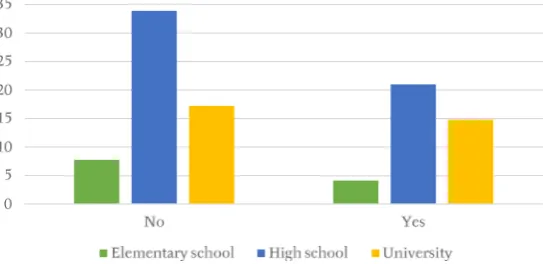
includes only products which constitute a basis for production of gluten‑free products and, in most cases, these are not finished products, such as bread, bakery products, pasta etc. Concerning the consumer awareness, the education of a specific person has no impact on the knowledge of products included in the reduced VAT rate.
Further research of the Department of Trade and Accounting which was focused on the effect of the reduced VAT rate and which surveyed the consumer criteria when purchasing gluten‑free products addressed a total of 160 respondents with a gluten‑free diet. When asked whether the VAT reduction to 10 % for selected gluten‑free products from January 2015 caused a greater volume of gluten‑free products purchase, only 14 % agreed and 86 % said no. The price change of a product intended for final consumers was in most cases so insignificant
that it has not been noticed by the majority of respondents addressed, nor it was a reason for larger purchases of gluten‑free products.
Fig. 4 shows the importance of individual criteria in terms of decision‑making on gluten‑free products purchase from the perspective of different age categories of people addressed. The main criterion which is decisive for all groups of coeliacs is previous good experience with purchased food. In addition to that, another important criterion is the impact of the food on health, which is in the case of coeliacs essential. The importance of price and purchasing opportunities is greater for coeliacs over 60. On the contrary, the importance of recommendation of another person is lower. Older people usually do not change their purchasing habits and prefer proven products.
3: Consumer Awareness of Products Included in Second Reduced VAT Rate
Source: Own Research
4: Criteria for Decision-making on Gluten-free Products Purchase
CONCLUSIONS
A high price, often exceeding the purchasing power of coeliacs, usually represents the most limiting factor for sales of gluten‑free products. In case of the monitored group of customers – coeliacs, the assumption has not been confirmed. People following a gluten‑free diet for medical reasons (not of their own will) have to purchase these products regardless of their price. According to the respondents’ experience, the introduction of the second reduced VAT rate of 10 % has not significantly affected the prices for the final consumers, which was not in line with the anticipation of the law‑makers as mentioned by David (2007), nevertheless consistent with the traders behaviour observed by the Závada (2014). The reason for that may be the fact that the second reduced VAT rate applies mostly to ingredients used in gluten‑free production and only a few final products nevertheless the main reason might found in the fact, that the traders added to their margin the difference between the previous and updated VAT rate.. This conclusion can be considered as confirmed by the fact A that a large group of coeliacs is not even aware of or has not registered the VAT change.
In fact, it is impossible to express the effect of the introduction of the second reduced VAT rate on food and products for a gluten‑free diet using specific values. CZSO monitors changes in the consumer price level through price changes of representatives of a standardised market basket, which does not include gluten‑free products. The effect of the change in VAT rate on food for a gluten‑free diet hasis not been subject to any investigation until now nevertheless it can be said, based on the research presented in this paper, that the reaction of consumers to higher price will not be considerable. This opinion can be supported by the studies showing selected unavailability of such products which potentially makes the low importance of the price.(Burden et al., 2015) and (Singh, Whelan, 2011). This article presents results basedrepresents only on the viewresponses of buyers – coeliacs and their perception of this issue. It is therefore possibleIn future it is possible to follow with a more detailed mapping of changes in prices from the point of traders views to compare the resultsof a market basket of in relation to gluten‑free productsin future investigationdeclared responses with the consumers ones.Further research could also be aimed at detecting the availability of gluten‑free products.. As the result of the current study means that changes in VAT rate applied to gluten‑free products do not reduce the price for coeliacs, the another planned research trend should follow the new tax approaches practical impact verification, as the Canadian tax deduction approach (Pinto‑Sanchez et al., 2015) or a tax abatement solution.
Acknowledgement
This article was supported by the Internal Grant Agency (IGA) FEM CULS in Prague, No. 20171014 “Optimizing distribution of food intended for special nutrition with a focus on gluten‑free products”.
REFERENCES
ANDERSON, R. P. 2008. Coeliac disease: current approach and future prospects. Internal medicine journal, 38(10): 790–799.
BASS, S. et al. 2013. Celiakie: Úspěšná léčba nesnášenlivosti lepku. Praha: Vašut, 128 p.
BURDEN, M. at al. 2015. Cost and availability of gluten‑free food in the UK: in stores and online. Postgraduate Medical Journal, 91(1081): 622 – 626.
ČESKÁ REPUBLIKA. 2016. 235/2004 Sb., Zákon o dani z přidané hodnoty, ve znění účinném k 1.9.2016. In: Sbírka zákonů České republiky.
DAVID, P. 2007. Teorie daňové incidence s praktickou aplikací. Brno: Akademické nakladatelství CERM, 111 p. DAVID, P. 2012. Distribution of the increased tax burden for agricultural products and food in the Czech
Republic. Agricultural Economics, 58(5): 239 – 248.
EUROPEAN COMMISSION. 2006. Health and food. Special Eurobarometer 246 / Wave 64.3 – TNS Opinion & Social. [Online.] Available at: http://ec.europa.eu/public_opinion/archives/ebs/ebs_246_en.pdf [Accessed: 2015, October 12].
EUROPEAN COMMISSION. 2010. Health Determinants. Special Eurobarometer 329 / Wave 72.3 – TNS Opinion & Social. [Online.] Available at: http://ec.europa.eu/public_opinion/archives/ebs/ebs_329_ sum_en.pdf [Accessed: 2015, September 2].
EUROPEAN COMMISSION. 2012. Europeans’ attitudes towards food Security, food quality and the Countryside. Report. Special Eurobarometer 389 / Wave EB77.2 – TNS Opinion & Social. [Online]. Available at: http:// ec.europa.eu/public_opinion/archives/ebs/ebs_389_en.pdf [Accessed: 2015, September 5].
EUROPEAN COMMISSION. 2016. VAT rates. European Commission, Taxation and customs union. [Online.] Available at: http://ec.europa.eu/taxation_customs/business/vat/eu‑vat‑rules‑topic/vat‑rates_en. [Accessed: 2015, July 4].
FORET, M. and PADĚRA, J. 2007 Healthy life style and food, beverages and cigarettes consumption in the Czech Republic. Acta univ. agric. et silvic. Mendel. Brun., 55(6): 215–226.
GREEN, L. W. and OTTSON, J. M. 1990. Community health. 7th Edition. St. Louis: Mosby.
HES, A. et al. 2008. Chování spotřebitele při nákupu potravin. 1st Edition. Prague: Alfa Nakladatelství, 160 p. HES, A., NAGYOVÁ, L., REGNEROVÁ, M. et al. 2014. Maloobchod s bezlepkovými potravinami. 1st Edition.
Prague: PowerPrint, 60 p.
HES, A., ŠÁLKOVÁ, D., KUČÍRKOVÁ, L. and REGNEROVÁ, M. 2015. Availability of food n the Czech market for specific groups of customers and the quality of life. In: 24th International Scientific Conference on Agrarian Perspectives – Global Agribusiness and the Rural Economy. 16th – 18th September 2015, Czech University of Life Sciences Prague, pp 159 – 167.
HORSKÁ, E., ÜRGEOVÁ, J. and PROKEINOVÁ, R. 2011. Consumers’ food choice and quality perception: Comparative analysis of selected Central European countries. Agricultural Economics, 57(10):493 – 499.
KOTLER, P. 2001. Marketing management. 10th Extended edition. Praha: Grada. 719 p.
KOUDELKA, J. 2006. Spotřební chování a segmentace trhu. Prague: The University of Economics and Management. 227 p.
MAŇÁSKOVÁ, D. c2010. Výskyt celiakie. Medicinman.cz [Online]. Available at: http://medicinman. cz/?p=nemoci‑sympt&p_sub=celiakie/c‑vyskyt [Accessed: 2010, December 31].
MIŠKOLCI., S. 2011. Consumer preferences and willingness to pay for the health aspects of food. Acta univ. agric. Et silvic. Mendel. Brun., 59(4): 167–176.
MOŽNÁ, L. 2008. Bezlepkářům od A do Z. 1st Edition. Ostrava: Ringier Print. 186 p.
NAGYOVÁ, L., KOŠIČIAROVÁ, I., RYBANSKÁ, J. and HOLIENČINOVÁ, M. 2016. Celiac disease: The situation on the Slovak market. Potravinarstvo, 10(1): 323 – 331
PINTO‑SANCHEZ, M. I. et al. 2015. Tax‑Deductible Provisions for Gluten‑Free Diet in Canada Compared with Systems for Gluten‑Free Diet Coverage Available in Various Countries. Canadian Journal of Gastroenterology and Hepatology, 29(2): 104 – 110.
SAATY, T. L. 1980. The Analytic Hierarchy Process. McGraw‑Hill.
SAATY, T. L. 2008. Relative measurement and its generalization in decision‑making. RACSAM, 102(2): 251– 318.
SINGH, J. and WHELAN, K. 2011. Limited availability and higher cost of gluten‑free products. Journal of Human Nutrition and Dietetics, 25(5): 479 – 485.
ŠIROKÝ, J., KOVÁŘOVÁ, A. and RANDOVÁ, K. 2012. The role of the value added tax on foodstuffs in the consumer basket. Agricultural Economics, 58(8): 387 – 395.
SKOŘEPA, L. and PÍCHA, K. 2016. Factors of purchase of bread – Prospect to regain the market share? Acta Universitatis Agriculturae et Silviculturae Mendelianae Brunensis, 64(3): 1067 – 1072.
SLINTÁKOVÁ, B. and KLAZAR, S. 2010. Impact of Harmonization on Distribution of VAT in the Czech Republic. Prague Economic Papers, 19(2): 133–149,
SOCR ČR. 2015. Spotřebitelské ceny v lednu 2015. Czech Confederation of Commerce and Tourism. [Online.] Available at: http://www.socr.cz/clanek/spotrebitelske‑ceny‑v‑lednu‑2015/ [Accessed: 2015, November 18].
STARZYCZNÁ, H., STOKLASA M. and SYKOROVÁ P. 2013. Behaviour of Czech customers when buying food products. Acta Universitatis Agriculturae et Silviculturae Mendelianae Brunensis, 61(7): 2801–2810.
TURČÍNKOVÁ, J. and STÁVKOVÁ, J. 2009. Consumer behavior on the market with food. Acta Univ. Agric. Silvic. Mendelianae Brun., 54(6): 199 – 208.
VYSEKALOVÁ, J. 2004. Psychologie spotřebitele: jak zákazníci nakupují. Prague: Grada. 283 p.
ZÁPAL, J. 2014. Consumption Tax Incidence: Evidence from Natural Experiment in the Czech Republic. Economic Studies and Analyses. ACTA VŠFS, 8(2): 149 – 166.
ZIMMERMANNOVÁ, J. and ŠIROKÝ, J. 2016. Economic Impacts of Cigarette Taxation Development in the Czech Republic and the Slovak Republic. Acta Universitatis Agriculturae et Silviculturae Mendelianae Brunensis, 64(6): 2191 – 2200.
Contact information Daniela Šálková: [email protected]