University of Pennsylvania
ScholarlyCommons
Publicly Accessible Penn Dissertations
1-1-2016
Stress Physiology and Behavior Problems
Ruiyun ChenUniversity of Pennsylvania, [email protected]
Follow this and additional works at:http://repository.upenn.edu/edissertations
Part of theCriminology Commons, and theCriminology and Criminal Justice Commons
This paper is posted at ScholarlyCommons.http://repository.upenn.edu/edissertations/1649 For more information, please [email protected].
Recommended Citation
Stress Physiology and Behavior Problems
Abstract
Understanding childhood externalizing problems is informative in designing interventions and reducing crime in adulthood because childhood aggression is one of the best predictors for later antisocial behavior. Childhood externalizing problems are typically studied with internalizing problems (e.g., anxiety) given their consistent correlation and seemingly opposite behavior manifestations. This dissertation examined both spectrums of behavior problems to advance our etiological understanding. Adversity and stress have been a focus in criminology research but few studies have incorporated stress physiology, the biological
underpinning of how individuals deal with adversity. This dissertation comprised three papers testing the linkage of stress physiology to behavior problems. I examined how the two components of the stress system, namely the hypothalamic-pituitary-adrenal (HPA) axis and the autonomic nervous system (ANS), interact with each other, and together interact with harsh discipline in influencing externalizing and internalizing problems. Data were drawn from a community sample of 11-12 year old children (N = 446). Saliva samples were collected in the initial assessment and later assayed for cortisol (HPA) and salivary alpha-amylase (sAA; ANS). Participants and their caregivers completed questionnaires for child behavior problems initially, 3, 6, and 12 months later. Paper 1 revealed that cortisol was negatively associated with externalizing and
internalizing problems but only at low levels of sAA. Paper 2 built on Paper 1 by including harsh discipline as an environmental factor and testing how the combined effect of cortisol and sAA contributed to our
understanding of the heterogeneous effect of harsh discipline on behavior problems. Results showed that asymmetry in cortisol and sAA may indicate biological susceptibility to the effect of harsh discipline to develop both externalizing and internalizing problems among boys. Given the similar stress physiological patterns shown in Paper 1 and 2 for externalizing and internalizing problems, Paper 3 further explored and found that the interplay of cortisol and sAA differentiated co-occurrence of behavior problems from other developmental trajectories of behavior problems over a year. Together these findings underscore the significance of stress physiology in behavior problems. Theoretical implications in relation to differential susceptibility hypothesis and practical implications for treatment evaluation and research are discussed.
Degree Type Dissertation
Degree Name
Doctor of Philosophy (PhD)
Graduate Group Criminology
First Advisor Adrian Raine
Keywords
Alpha-Amylase, Cortisol, Developmental Trajectories, Externalizing Problems, Harsh Discipline, Internalizing Problems
Subject Categories
Criminology | Criminology and Criminal Justice
STRESS PHYSIOLOGY AND BEHAVIOR PROBLEMS
Ruiyun Frances Chen
A DISSERTATION
in
Criminology
Presented to the Faculties of the University of Pennsylvania
in
Partial Fulfillment of the Requirements for the
Degree of Doctor of Philosophy
2016
Supervisor of Dissertation
______________
Adrian Raine, D. Phil.
Richard Perry University Professor Departments of Criminology, Psychology, and Psychiatry, University of Pennsylvania
Graduate Group Chairperson
______________
Charles Loeffler, Ph.D. Jerry Lee Assistant Professor Department of Criminology University of Pennsylvania
Dissertation Committee
Adrian Raine Richard Perry University Professor, University of Pennsylvania
Sara Jaffee Professor of Psychology, University of Pennsylvania
John MacDonald Professor of Criminology and Sociology, University of Pennsylvania
ii
ACKNOWLEDGMENT
I owe my gratitude to a great many people who have contributed to the
production of this dissertation and made its completion possible. Because of you, my
years at Penn have been a wonderful experience.
First and foremost, I have been amazingly fortunate to have Adrian Raine as my
advisor. Adrian, you gave me the freedom to explore on my own while providing me
with unlimited support when I faltered. Your mentorship was paramount in giving me a
well-rounded experience consistent with my long-term career goals. You encouraged
me to not only immerse myself in the interdisciplinary culture of Penn to work on
research projects with mentors from different disciplines, but also to seek out
opportunities to serve as a course instructor and a supervisor. I don’t think many
graduate students are given the opportunity that I have received from you to develop
their own individuality and self-sufficiency by being allowed to work with such
independence; and I thank you for that!
I owe my deep gratitude to the guidance and support of my dissertation
committee: Sara Jaffee, Doug Granger, and John MacDonald. Thank you all for serving
on my committee and guiding me through many crises. Sara, you taught me how to
formulate research questions, how to ground my research into the literature, and how to
best express ideas. Your patience and support lifted me out of many episodes of
self-doubt and kept me on the right track. I thank you for your constructive advice in matters
of research, career development and personal life. You broaden my horizon and I
iii
researcher and a teacher as you are. Doug, you are one of my closest collaborators. I
have never met you in person but the guidance and encouragement I have received from
you has been tremendous. I still remember my first email correspondence with you
about our manuscripts, and your enthusiasm about research is just contagious! It has
been a great pleasure to work with you, and I appreciate your insights and your sense of
humor. I am very grateful that you spared so much of your time from your hectic
schedule to discuss research with me, to comment on and edit my manuscripts and to
connect me to many other brilliant researchers and their great research projects. John,
you helped me the most to make the transition from psychology to criminology. You
are my go-to person when I need advice incorporating or bridging my work with
existing criminological theories. I owe a lot to you for your invaluable feedback on this
dissertation.
I am fortunate to be in the Department of Criminology at UPenn to complete my
doctoral training. I received enormous help throughout my time here from faculty
members Emily Owens, Charles Loeffler and Sara Heller as well as department
administrators Knakiya Hagans, Caroline Gonzalez Ciccone, Addie Métivier, and Janel
Baselice.
Thanks to my wonderful lab mates Anna Rudo-Hutt and Jill Portnoy. Anna, you
trained me to do hormone assay and skin conductance data processing, without which
this dissertation could not have been completed. You inspired much of my work, and I
iv
you for your company and encouragement, I had a fun time going through the program
with you. I am grateful to have both of you as research buddies.
I owed the most to my dear friends and family. Your love and support helped me
to get to where I am today. My deepest gratitude goes to my parents, sisters and
brothers, and special thanks to the most important person in my life, Dan Robbins:
thank you for being there for me all these years.
Lastly, several great collaborators have contributed to the published versions of
papers included in this dissertation, and I acknowledge and thank Adrian Raine, Doug
Granger, Anna Rudo-Hutt, Andrea Glenn and Liana Soyfer. Data in this dissertation
was drawn from the Philadelphia Healthy Brain and Behavior project, which was
funded, in part, under a grant from the Pennsylvania Department of Health (SAP#
4100043366, PI: Adrian Raine). The Department specifically disclaims responsibility
for any analyses, interpretations or conclusions. It was also supported by the Clinical &
Translational Research Center, Perelman School of Medicine, University of
v
ABSTRACT
STRESS PHYSIOLOGY AND BEHAVIOR PROBLEMS
Ruiyun Frances Chen, M.S.
Adrian Raine, D. Phil.
Understanding childhood externalizing problems is informative in designing
interventions and reducing crime in adulthood because childhood aggression is one of
the best predictors for later antisocial behavior. Childhood externalizing problems are
typically studied with internalizing problems (e.g., anxiety) given their consistent
correlation and seemingly opposite behavior manifestations. This dissertation examined
both spectrums of behavior problems to advance our etiological understanding.
Adversity and stress have been a focus in criminology research but few studies have
incorporated stress physiology, the biological underpinning of how individuals deal
with adversity. This dissertation comprised three papers testing the linkage of stress
physiology to behavior problems. I examined how the two components of the stress
system, namely the hypothalamic-pituitary-adrenal (HPA) axis and the autonomic
nervous system (ANS), interact with each other, and together interact with harsh
discipline in influencing externalizing and internalizing problems. Data were drawn
from a community sample of 11-12 year old children (N = 446). Saliva samples were
collected in the initial assessment and later assayed for cortisol (HPA) and salivary
alpha-amylase (sAA; ANS). Participants and their caregivers completed questionnaires
vi
cortisol was negatively associated with externalizing and internalizing problems but
only at low levels of sAA. Paper 2 built on Paper 1 by including harsh discipline as an
environmental factor and testing how the combined effect of cortisol and sAA
contributed to our understanding of the heterogeneous effect of harsh discipline on
behavior problems. Results showed that asymmetry in cortisol and sAA may indicate
biological susceptibility to the effect of harsh discipline to develop both externalizing
and internalizing problems among boys. Given the similar stress physiological patterns
shown in Paper 1 and 2 for externalizing and internalizing problems, Paper 3 further
explored and found that the interplay of cortisol and sAA differentiated co-occurrence
of behavior problems from other developmental trajectories of behavior problems over
a year. Together these findings underscore the significance of stress physiology in
behavior problems. Theoretical implications in relation to differential susceptibility
hypothesis and practical implications for treatment evaluation and research are
vii
TABLE OF CONTENTS
ACKNOWLEDGMENT ... II
ABSTRACT ... V
LIST OF TABLES ... IX
LIST OF ILLUSTRATIONS ... X
GENERAL INTRODUCTION ... 1
Background and Objective... 1
Data Summary ... 6
PAPER 1. INTERACTION OF ADRENOCORTISOL ACTIVITY AND AUTONOMIC AROUSAL ON CHILDREN’S EXTERNALZING AND INTERNALIZNG PROBLEMS ... 9
Abstract ... 9
Introduction ... 10
Methods ... 19
Results ... 24
Discussion... 26
Paper 1 Tables and Figures ... 33
PAPER 2. HARSH DISCIPLINE AND BEHAVIOR PROBLEMS: THE MODERATING EFFECTS OF CORTISOL AND ALPHA-AMYLASE ... 40
Abstract ... 40
Introduction ... 41
viii
Results ... 54
Discussion... 57
Paper 2 Tables and Figures ... 62
PAPER 3 HYPOTHALAMIC PITUITARY ADRENAL ACTIVITY AND AUTONOMIC NERVOUS SYSTEM AROUSAL PREDICT DEVELOPMENTAL TRAJECTORIES OF CHILDREN’S COMORBID BEHAVIOR PROBLEMS ... 70
Abstract ... 70
Introduction ... 72
Methods ... 79
Results ... 85
Discussion... 87
Paper 3 Tables and Figures ... 94
GENERAL DISCUSSION ... 101
ix
LIST OF TABLES
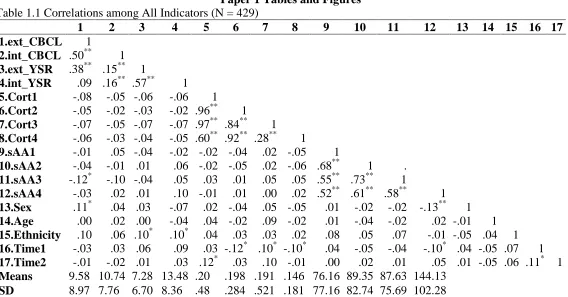
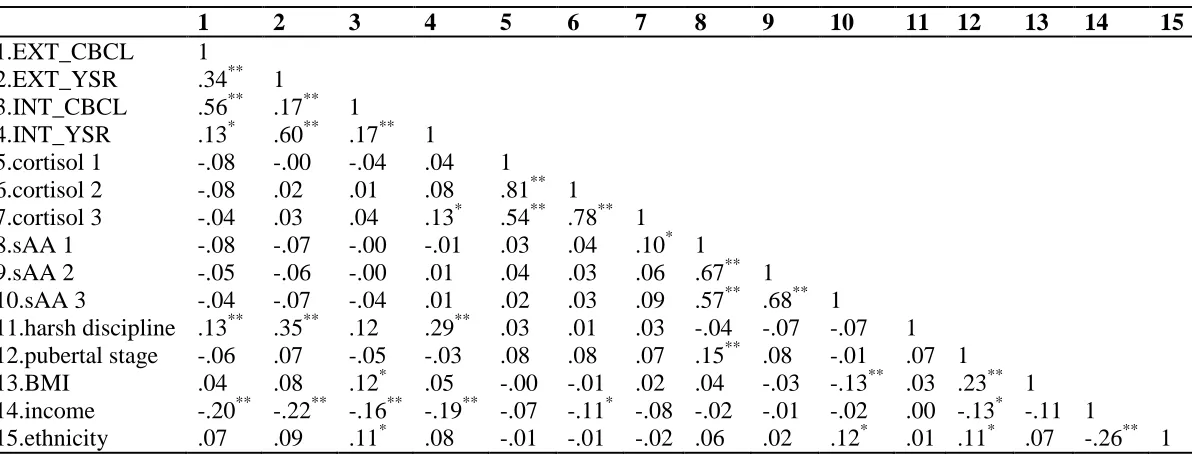
Table 1.1 Correlations among All Indicators ………...33
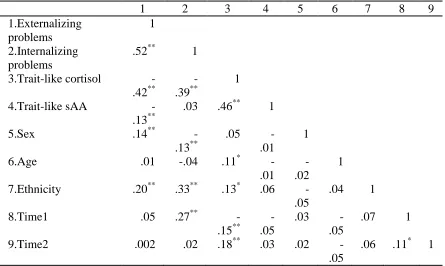
Table 1.2 Correlations among Predictors and Outcome Variables ..………34
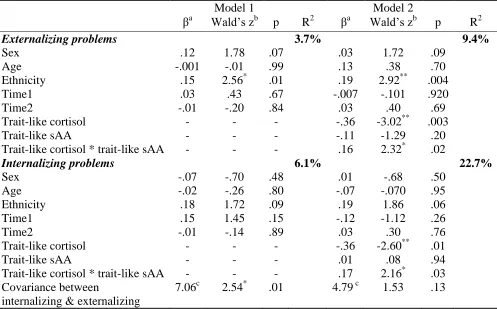
Table 1.3 Combined Effects of Cortisol and Alpha-amylase on Levels of and
Covariance between Externalizing and Internalizing problems ………..35
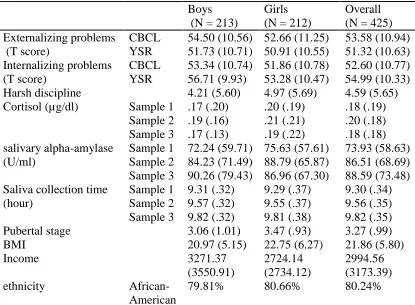
Table 2.1 Means (Standard Deviation) of All Variables in the Model…...………….62
Table 2.2 Correlations among Main Variables……….63
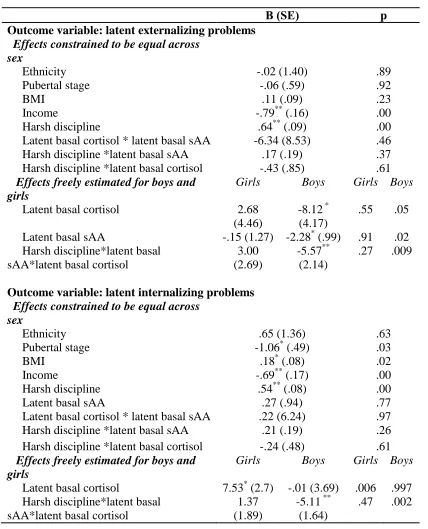
Table 2.3 Individual and Interactive Effects of Harsh Discipline, Latent Basal Cortisol and Latent Basal Alpha-amylase on Levels of Externalizing and Internalizing Problems in a Multi-group Structural Equation Model..………..64
Table 3.1 Descriptive Statistics for Main Variables ………94
Table 3.2 Comparisons of Unconditional Latent Class Growth Models with Different Number of Classes for Co-developmental Trajectories of Externalizing and
Internalizing Problems ……….95
Table 3.3 Descriptive Statistics by Five Classes ……….96
x
LIST OF ILLUSTRATIONS
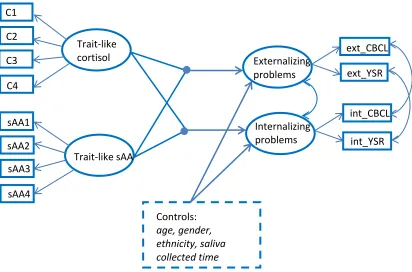
Figure 1.1 Combined Effect of Trait-like Cortisol and Trait-like Alpha-amylase on Behavior Problems ………...37
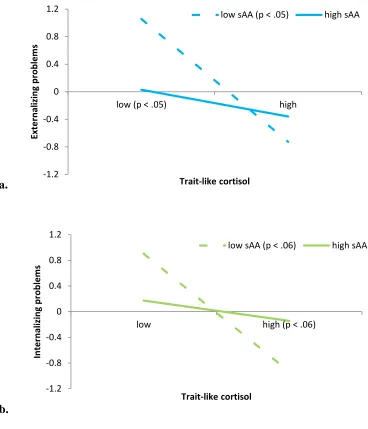
Figure 1.2 Salivary Alpha-amylase Moderates the Relation between Cortisol and Externalizing Problems (panel a) and between Cortisol and Internalizing Problems (panel
b)………...38
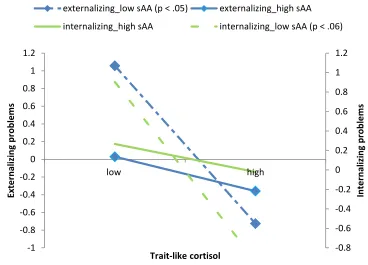
Figure 1.3 Similar Interactive Patterns of Cortisol and Salivary Alpha-amylase on Externalizing and Internalizing Problems ………39
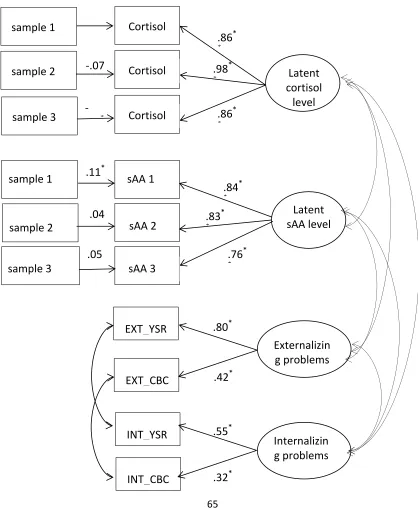
Figure 2.1 Measurement Model and Results for Latent Variable Cortisol, Salivary Alpha-amylase and Behavior problems ………..65
Figure 2.2 Individual and Interactive Effects of Harsh Discipline, Latent Basal Cortisol, and Latent Basal Salivary Alpha-amylase on Externalizing and Internalizing Problems ………..66
Figure 2.3 Latent Basal Cortisol Regions of Significance for Slopes of Harsh Discipline on Boys’ Externalizing Problems by Low (panel a) and High Levels of Latent Basal Salivary Alpha-amylase (panel
b)………...67
Figure 2.4 Latent Basal Cortisol Regions of Significance for Slopes of Harsh Discipline on Boys’ Internalizing Problems by Low (panel a) and High Levels of Latent Basal Salivary Alpha-amylase (panel
b)………...68
Figure 2.5 Effects of Harsh Discipline on Standardized Scores of Boys’ Externalizing (panel a) and Internalizing Problems (panel b) by Factorial Combination of High versus Low Latent Basal Cortisol and Salivary Alpha-amylase ……….….….69
Figure 3.1 Individual and Interactive Effects of Latent Cortisol and Latent Alpha-amylase (sAA) on Predicting Probability of Being in Different Classes that Capture the Co-development in Externalizing and Internalizing Problems ……….98
Figure 3.2 Five-class Solution of Cross-domain Latent Class Growth Analysis……..99
1
GENERAL INTRODUCTION
Background and Objective
Childhood aggression is consistently associated with adolescent delinquency and
criminality in adulthood (Coie & Dodge, 1998). A large body of research has
established that childhood aggression is one of the best predictors for later aggressive,
antisocial, and criminal behaviors (Farrington, 1991; Huesmann et al., 1984; Moffitt,
1990) due to the continuity and stability of antisocial behavior. Individuals who are
antisocial as children have been found to impose on-going financial costs to society
throughout their lives and into adulthood (Cohen, 1998; Scott, Knapp, Henderson, &
Maughan, 2001). Thus, understanding childhood aggression is informative in designing
interventions and reducing crime in adulthood for both safety and financial
consideration.
Aggressive and rule-breaking behaviors in childhood and adolescence are
widely studied in criminology, and these behaviors are commonly referred to as
externalizing problems in the psychology literature. Despite different terminology, the
same constructs, that is, delinquency/ aggressive behavior in criminology and
externalizing problems in psychology are under investigation. Another seemingly
opposite set of behavior problems, namely, internalizing problems, is investigated in
psychology research along with externalizing problems because of their moderate
degree of comorbidity (Kessler & Wang, 2008; Nock et al., 2007). Internalizing
problems refer to problems mainly within the self, including anxiety, depression,
2
Theoretical propositions have been postulated to understand these two types of behavior
problems based on their differential physiological correlates and behavior
manifestations, such as the over- and under arousal hypotheses (Kagan, 1994). Research
that examines both categories of behavior problems is needed to advance our
understanding of both the commonalities and differences of their biological and
psychosocial correlates, given their seemingly opposite symptoms yet positively
correlated relation.
Life adversity and stress such as unemployment, family disruption and
disadvantaged neighborhood have been a focus in criminology research (Farrington,
2000; McCord, 2001; Rutter & Giller, 1983; Sampson & Laub, 1993; Sampson,
Raudenbush, & Earls, 1997; Wilson & Herrnstein, 1985), but very few studies in
criminology have taken into account the stress physiology in their investigation of the
association between life adversity and antisocial behavior. Contemporary theorists in
psychology champion the role that individual differences in stress system play on
children’s behavior problems, given that stress system lays foundation to how we react
to stress and adversity (Gunnar & Quevedo, 2007; Johnson, Riley, Granger, & Riis,
2013; Kertes, Gunnar, Madsen, & Long, 2008). This dissertation focuses on the linkage
of stress physiology to behavior problems. I investigate the interplay of different
components of stress systems on behavior problems, and how this physiology-behavior
association is further conditional on environmental factors.
The two major components of the psychobiology of the stress response, the
3
produce signaling molecules that may have synergistic, opposing, and redundant effects
(Chrousos & Gold, 1992). The HPA axis and the ANS are grounded in related brain
regions (Young et al., 2005), but the two systems function differently. For example, the
HPA axis activity occurs more in situations featured emotional distress and loss of
control, when subjects become immobile/ passive (Lundberg & Frankenhaeuser, 1980;
Henry, 1993) whereas ANS activation taps more into a “defense reaction” (Folkow,
1985; Henry, 1993), an active, effortful response to challenges that are manageable and
controllable. In addition, HPA axis activity has shown habituation after repeated
exposure to stressors but ANS activation has been found generally responsive and
shown uniform activation patterns with repeated exposure to stressor (Gordis et al.,
2006; Schommer, Hellhammer, & Kirschbaum, 2003). Hence, the examination of the
combined effect of the two systems provides unique rather than redundant information.
Non-invasive measurement (in saliva) of the activity of the HPA (cortisol) and ANS
(salivary alpha-amylase, sAA) opens windows of opportunity to explore this possibility
in youth (Granger et al., 2012). Up till now, only a handful of published studies
(El-Sheikh et al, 2008; Gordis et al., 2006; Allwood et al., 2011) have examined whether
and how interactions between the HPA axis and ANS are associated with behavior
problems. In Paper 1 of this dissertation I take advantage of this technology
advancement and test the interactive nature of these two components of stress system to
further our understanding of children’s behavior problems.
Built on Paper 1, I include harsh discipline, an environmental stressor in my
4
of physical and verbal behavior towards offspring in face of conflict including corporal
punishment, shouting, and threats (Reid, Patterson, & Snyder, 2002). Studies report that
children’s exposure to these negative discipline behaviors early in life is associated with
later adjustment problems including higher rates of aggressive behavior (Gershoff,
2002; Gershoff, et al., 2012) and anxiety and depression (McLoyd et al., 2007;
Rodriguez, 2003; Wang & Kenny, 2014). Nonetheless, these effects are not universal in
that not all individuals raised in such adverse family circumstances display behavior
problems later in life—adversity places some at risk, but others are resilient (e.g., Toth
& Cicchetti, 2013). The impact of harsh discipline may conditional on individuals’
biological wiring, particularly their stress system. Investigating how these two
components interact with harsh discipline is not a new idea but only became more
feasible to carry out among the youth recently with the advances of technology allowing
non-invasive and easy-to-implement measures of both systems.
The first two papers adopt a variable-centered approach and cross-sectional
design, and additional insight could be gained on behavior problems, particularly the
co-occurrence of the externalizing and internalizing problems, through a
centered approach with follow-up data capturing behavior development. The
person-centered approach is premised on the assumption that there is unobservable
heterogeneity in the development of behavior and that the heterogeneity is linked to
different correlates (Muthén & Muthén, 2000). Previous studies on behavior problems
typically dealt with the two spectrums of behavior problems either as independent by
5
2011; El-Sheikh et al., 2008); or they include the covariance between the two behavior
problems in the model at the variable level. Few studies have put the co-occurrence of
behavior problems as the center of investigation and explore potential correlates that
differentiate different developmental courses of behavior problems.
Investigation into the co-occurrence of behavior problems and its correlates
would contribute to our theoretical construction of the physiology-behavior association.
The over- and under arousal hypotheses have been proposed to account for internalizing
and externalizing behavior problems (Bauer et al., 2005; Kagan, 1994; Raine et al.,
2005). The over- arousal hypothesis for internalizing problems postulates that some
children have over-aroused central nervous system functioning which may stem from a
lower activation threshold. As a result, they are more prone to fearfulness and anxiety
and compensate such hyper-arousal with withdrawal and avoidance. In contrast, the
under-arousal hypothesis for externalizing problems states that some children have
under-aroused central nervous system. The under-arousal state may implicate
fearlessness and result in difficulty in conditioning and socialization through
punishment or parenting (Raine, 2005); or indicate a relatively unpleasant state and
individuals may behave aggressively to seek stimulation to increase arousal levels back
to normal (Zuckerman, 1979). The over- and under-arousal hypotheses for behavior
problems are intuitive yet they cannot account adequately for the co-occurrence of both
internalizing and externalizing problems in one individual. Paper 3 is sought to further
our understanding of behavior problems with a person-centered approach. Paper 1 adds
6
behavior problems at a variable level with a cross-sectional design adjusting for the
covariance of the two spectrums of behavior problems, and Paper 3 further tests
whether physiological features of the stress system can distinguish individuals who are
clinically comorbid with externalizing and internalizing problems over a one-year
period from those with only one spectrum of behavior problems (i.e., externalizing-only
or internalizing-only).
In sum, in this dissertation I examine how HPA axis activity and ANS arousal,
indexed by salivary analytes, interact to influence the levels of behavior problems
(Paper 1), and how the interplay of HPA axis activity and ANS arousal further
condition the association between harsh discipline and behavior problems (Paper 2).
Last, I test whether the interplay of HPA axis activity and ANS arousal can predict
co-occurrence of externalizing and internalizing problems from other short-term
prototypical development of behavior problems such as externalizing-only and
internalizing-only development (Paper 3).
Data Summary
Data in all three papers was drawn from the Philadelphia Healthy Brains and
Behavior (HBB) study which was administered in 2008-2012. The project goal of the
HBB study was to identify risk and protective factors for aggression and to test the
effectiveness of the treatments for children with high levels of aggressive behaviors.
Participants were recruited by advertisements within the city of Philadelphia and
contiguous suburbs. Participants completed an initial assessment and follow-up
7
diagnoses of a psychotic disorder, intellectual disability, pregnant, a pervasive
developmental disorder or current medication use with the potential to interfere with the
measurement of salivary analytes. Participants came to university laboratories where
data were collected. The initial assessment lasted 8 hours over a two-day period with
the saliva samples, psychophysiological measures and questionnaires collected on the
first day. After the initial assessment, high aggressive participants (defined as being
diagnosed with oppositional defiant disorder (ODD) or diagnosed with conduct disorder
(CD) and/or scoring at least one standard deviation above a normed population mean on
the reactive or proactive components of the Reactive Proactive Aggression
Questionnaire) were randomized into a control group or treatment groups (i.e., cognitive
behavior therapy, nutritional supplements or the combine of the two). Participants
received treatment, if assigned, between the initial assessment and the 3-month
follow-up. A more comprehensive description of the HBB sample and recruitment can be
found in Liu et al. (2013). Caregivers gave informed consent and youth gave assent
after description of the study was given. The HBB project was approved by the
University of Pennsylvania and the Philadelphia Department of Health human subjects
boards.
The eligible sample from the initial assessment include 446 participants (51 %
male) who self-identified as White (n = 53, or 11.88%), African American (n = 358, or
80.27%), Hispanic (n = 4, or .90%), Native American (n = 2, or .45%), Asian American
(n = 2, or .45%), multiracial (n = 22, or 4.93%) and other ethnicities (n = 4, or .90%).
8
(SD = .99) on Tanner’s five stages of development. Parents/guardians accompanying
children to the lab received an average of 13.38 years of schooling (SD = 2.25), and
their monthly income was on average 1,710.46 dollars (SD = 1,692.86). Regarding their
marital status, 15.92% of the parents/ guardians were either divorced or separated,
56.50% never married, and only 24.44 % were married and still lived with their
spouses. Paper 1 and Paper 2 report results using data only from the initial assessment
while Paper 3 utilizes data from all four waves. Fifty two of the four hundred and forty
six participants enrolled too late to allow sufficient time for follow up within the time
frame of the larger project. Not all participants had complete data on behavior problems
throughout all four waves (7.62% missing at the 3-month follow-up; 15.02% missing at
9
PAPER 1. INTERACTION OF ADRENOCORTISOL ACTIVITY AND
AUTONOMIC AROUSAL ON CHILDREN’S EXTERNALZING AND
INTERNALIZNG PROBLEMS 1
Abstract
The psychobiology of stress involves two major components, the
hypothalamic-pituitary-adrenal (HPA) axis and the autonomic nervous system (ANS). Research has
revealed the association between behavior problems and the psychobiology of stress,
yet findings are inconsistent and few studies have addressed the moderate correlations
between behavior problems. This study examines the individual and interactive effects
of HPA and ANS on child behavior problems while taking into account the comorbidity
of externalizing and internalizing problems. Four saliva samples were collected from
each participant in a community sample (N = 429; aged 11-12 years; 50.49% male),
which were assayed for cortisol (HPA) and alpha-amylase, sAA (ANS). Children’s
behavior problems were assessed using parent-report and self-report versions of the
Child Behavior Checklist. Latent variables were constructed to represent trait-like
individual differences in cortisol and sAA. Low levels of HPA axis activity were
associated with higher levels of both externalizing and internalizing problems, but only
among children with low ANS arousal. The association between externalizing and
internalizing problems diminished to non-significant after taking into account the
influence of HPA axis activity and ANS arousal, which suggests that the psychobiology
10
of stress explains a fair proportion of comorbidity of behavior problems. The findings
support that interaction between HPA axis and ANS functioning has potential to clarify
prior mixed findings and advance our understanding of the child behavior problems.
Keywords cortisol; alpha-amylase; externalizing problems; internalizing problems;
comorbidity; multisystem
Introduction
Contemporary theorists champion the role that individual differences in stress
responsive and environmentally sensitive biological systems play on children’s
behavior problems (Gunnar & Quevedo, 2007; Johnson, Riley, Granger, & Riis, 2013;
Kertes, Gunnar, Madsen, & Long, 2008). The two major components of the
psychobiology of the stress response, the hypothalamic-pituitary-adrenal (HPA) axis
and autonomic nervous system (ANS), produce signaling molecules that may have
synergistic, opposing, and redundant effects (Chrousos & Gold, 1992). The complex
interconnected nature of these components suggests that a multi-system approach will
be conducive to advance our understanding of children’s behavior problems (El-Sheikh
et al., 2008; Gordis, Granger, Susman, & Trickett, 2006; Raine, 2005). This approach
has potentials to clarify the mixed finding from studies examining only one system at a
time. Up till now, only a handful of published studies (El-Sheikh et al, 2008; Gordis et
al., 2006; Allwood et al., 2011) have examined whether and how interactions between
the HPA axis and ANS are associated with behavior problems. The present study
extends these findings by taking a rigorous methodological approach. We aim to
11
on the levels of externalizing and internalizing behavior problems in late childhood
while taking into account the comorbidity of externalizing and internalizing problems.
Components of the Psychobiology of Stress
The psychobiology of the stress response has two major components. The first
involves activation of the HPA axis and the secretion of cortisol, the main
glucocorticoid in humans, into circulation. HPA stress response was sometimes termed
as “defeat reaction”, a response with features of emotional distress and loss of control,
when subjects become immobile/ passive (Lundberg & Frankenhaeuser, 1980; Henry,
1993). In line with this proposition, studies found that HPA axis response occur more
likely when the situation is uncontrollable and generates emotional distress
(Kirschbaum & Hellhammer, 1994; Lundberg & Frankenhaeuser, 1980; Peters et al.,
1998).
The second involves activation of the ANS and the release of catecholamines
(e.g., norepinephrine) into the blood stream (Chrousos & Gold, 1992). This component
facilitates quick and diffuse reactions commonly known as “fight or flight” responses
such as elevated heart rate and enhancing blood flow to muscles (Cannon, 1914). ANS
activation was referred to as “defense reaction” (Folkow, 1985; Henry, 1993), an active,
effortful response to challenges that are manageable and controllable. Consistent with
this description, studies found that the defense reaction was enhanced for controllable
stressors (Lundberg & Frankenhaeuser, 1980; Peters et al., 1998) or for individuals with
12
Frankenhaeuser, Lundberg, & Forsman, 1980). In addition, studies suggested that this
component of stress response was generally responsive and shows uniform activation
patterns with repeated exposure to stressor (Gordis et al., 2006; Schommer,
Hellhammer, & Kirschbaum, 2003).
Individual differences in the levels of HPA axis activity and ANS arousal can be
assessed non-invasively in saliva (Granger et al., 2012). Examination of HPA axis
activity through measuring salivary cortisol has been investigated and its validity has
been extensively documented (Hellhammer, Kirschbaum, & Belkien, 1987; Kirschbaum
& Hellhammer, 1994). Numerous studies and reviews have investigated salivary
alpha-amylase (sAA) as a surrogate marker for ANS activity (Granger et al., 2007; Nater et
al., 2005; Nater & Rohleder, 2009; Rohleder & Nater, 2009). Salivary alpha-amylase is
an enzyme and its release is elicited by activation of the ANS, particularly the
involvement of sympathetic nervous system. Salivary AA has been found to increase
under stressful conditions known to increase other ANS markers like heart rate, plasma
catecholamines and systolic blood pressure (Bosch et al., 2003; Chatterton et al., 1996;
Skosnik, Chatterton, Swisher, & Park, 2000). In addition, administration of the
beta-adrenergic antagonist propranolol reduced sAA (Granger et al., 2007; van Stegeren,
Rohleder, Everaerd, & Wolf, 2006).
Behavior Problems and Psychobiology of Stress
13
Both HPA axis activity and ANS arousal have been linked to externalizing
problems (Oosterlaan, Geurts, Knol, & Sergeant, 2005; Raine, 2005). Low levels of
cortisol have been found to be associated with conduct disorder (McBurnett et al., 2005;
Pajer et al., 2001) , disruptive behavior (McBurnett, Lahey, Rathouz, & Loeber, 2000),
and clinically significant levels of externalizing problems (Cicchetti & Rogosch, 2001).
The inverse association between cortisol and externalizing problems might stem from
the role that the HPA axis plays in potentiating the state of fear, generating sensitivity to
punishment, and inducing withdrawal behavior (Schulkin, Gold, & McEwen, 1998; van
Honk et al., 2004). However, a meta-analysis based on 72 studies with 5,480 subjects
(Alink et al., 2008) revealed that the relationship between the basal cortisol and
externalizing behavior problems was significant with an effect size of -0.1, much
smaller than what previous research had concluded (Azar et al., 2004; Hart, Gunnar, &
Cicchetti, 1995; van Bokhoven, Mathys, van Goozen, & van Engeland, 2005; van
Goozen, Fairchild, Snoek, & Harold, 2007; van Goozen et al., 2000). In sum, results
have not been consistent regarding the inverse relation between HPA axis activity and
externalizing problems.
Studies also reveal a relation between ANS arousal and externalizing problems
(Raine, 2005; Sijtsema, Shoulberg, & Murray-Close, 2011). Low resting heart rate has
been found to be a reliable predictor of antisocial behavior in non-institutionalized
children and adolescents (Ortiz & Raine, 2004). A meta-analysis by Lorber (2004)
showed that low skin conductance level was a correlate of children externalizing
14
fearlessness, resulting in difficulty in conditioning and socialization through punishment
or parenting (Raine, 2005). In line with this, impaired electrodermal fear conditioning at
age 3 is associated with aggressive behavior at age 8 as well as criminal behavior 20
years later at age 23 (Gao et al., 2010a, 2010b). Alternatively, stimulation-seeking
theory suggests that low arousal may be a relatively unpleasant state and individuals
may behave aggressively to seek stimulation to increase arousal levels back to normal
(Zuckerman, 1979). Nevertheless, the inverse relation between ANS arousal and
externalizing problems has not been consistent (Lorber, 2004).
Internalizing Behavior Problems and the Psychobiology of Stress
Internalizing problems have been associated with high levels of HPA axis
activity and ANS arousal, although findings are again mixed. It has been hypothesized
that some children have over-aroused central nervous system functioning which may
stem from a lower activation threshold (Kagan, 1994). As a result, they are more prone
to fearfulness and anxiety and compensate such hyper-arousal with withdrawal and
avoidance. Regarding HPA axis functioning, higher levels of cortisol have been found
to be related to withdrawn temperament, inhibited characteristics, and internalizing
emotion (Davis, Donzella, Krueger, & Gunnar, 1999; Kagan, Reznick, & Snidman,
1988; Schmidt et al., 1997; Smider et al., 2002). A recent meta-analysis found a
tendency for depressed children to have higher basal cortisol levels than non-depressed
controls (Lopez-Duran, Kovacs, & George, 2009). However, studies investigating
cortisol levels with anxiety disorder were less consistent. Some observed increased
15
normal cortisol activity (Gurguis, Mefford, & Uhde, 1991). Similarly, findings on the
association between cortisol and post-traumatic stress symptoms are inconsistent (De
Bellis, 2001; Cicchetti & Rogosch, 2001; Weems & Carrión, 2007). Generally, studies
on behaviorally inhibited and shy children have found more consistent results than those
using clinical samples (Dierckx et al., 2012).
High levels of ANS arousal have also been linked to internalizing problems.
Studies on inhibited children have found level elevation in several autonomic indicators
(Kagan et al., 1988). Other related research has suggested elevated autonomic
sympathetic reactivity for children with high levels of anxiety (Beidel, 1991).
Exaggerated ANS arousal has been found among adults with anxiety disorders (Cole et
al., 1996; Harrison & Turpin, 2003), and youth with anxiety (Klimes-Dougan et al.,
2001; Weems et al., 2005). There is also evidence that depressed youths showed
stronger ANS arousal (Nock & Mendes, 2008; Shannon et al., 2007), yet results are not
entirely consistent, with some showing an association in the opposite direction or no
relation at all (Tonhajzerova et al., 2010).
Sources of inconsistent findings
The mixed findings for the relationship between behavior problems and the
psychobiology of stress may derive from at least three sources. First, the consistent
focus on one biological stress system at a time hinders research on links between
psychobiological stress responses and behavior problems. Recently researchers have
16
Cameron, 2005). The HPA axis and the ANS are grounded in related brain regions
(Young et al., 2005), but the two systems function differently. For example, they
habituate at different rates (Schommer, Hellhammer, & Kirschbaum, 2003). In addition,
some research suggests that the HPA axis is activated by negative affect associated with
stress, including fear and frustration, whereas the ANS is valence non-specific (Lovallo
& Thomas 2000). Given that both systems are associated with behavior problems and
that results are not entirely consistent, examining the joint effects of these systems may
provide additional information about the nature of their relations with behavior
problems. For instance, El-Sheikh et al. (2008) found that the interaction of the basal
levels of the two systems was indeed associated with behavior problems, with
concurrently high HPA axis activity and ANS arousal associated with the highest risk.
Second, the methodological issue of obtaining reliable assessments of basal
HPA axis activity and ANS arousal (Granger et al., 2012) may contribute to the mixed
findings. Variability in either HPA axis activity or ANS arousal at any given moment
can derive from different sources, including basal arousal, arousal attributable to
momentary situational influences, and measurement errors (Kenny & Zautra, 2000;
Shirtcliff, Granger, Booth, & Johnson, 2005; Taylor et al., 2012). For these reasons, it
is hard to obtain reliable measures for basal levels unless a strict protocol is
implemented to obtain such well-timed single sample (Granger et al., 2012).
Alternatively, a common practice is to derive the average of multiple measures to
represent the basal level (El-Sheikh et al., 2008). This approach certainly has its merit,
17
score) is intermixed with noise (i.e., measurement errors and other sources of variability
not contributable to the “true score”). Structural equation modeling (SEM) can be used
to resolve this issue by forming latent variables to represent the “true score”. SEM
differentiates the variance of physiological measures into components of trait, state and
error variances. Isolating the variance in salivary analyte levels attributable to stable
intrinsic “trait-like” sources has been demonstrated using both cortisol (Booth, Granger,
& Shirtcliff, 2008; Kirschbaum et al., 1990; Shirtcliff et al., 2005) and sAA (Out et al.,
2011; Out, Granger, Sephton, & Segerstrom, 2013; Taylor et al., 2012). In the present
study, we employed a multiple time point assessment strategy and SEM as a tactic to
better represent individual differences in HPA axis activity and ANS arousal at the
trait-like level.
Third, the comorbidity of internalizing and externalizing problems may play a
part in the mixed findings. Previous studies tend to either examine one category of
behavior problems or treat categories of behavior problems as orthogonal. This is
surprising, because comorbidity of externalizing and internalizing problems in
childhood is the norm rather than the exception (Nottelmann & Jensen, 1995). The
National Comorbidity Survey Replication (NCS-R), a nationally representative
household survey on the epidemiology of mental disorders in the United States,
highlights the prevalence of comorbidity. For instance, seventeen other child-onset and
adolescent-onset disorders (e.g., panic disorder and anxiety disorder) were found to be
significantly associated with childhood attention-deficit/hyperactivity disorder (ADHD)
18
About 92% of the respondents with lifetime oppositional defiant disorder (ODD) meet
criteria for at least one other lifetime disorder, including internalizing problems such as
anxiety and mood disorder (Nock, Kazdin, Hiripi, & Kessler, 2007). Impulse-control
disorders (e.g., ODD, ADHD and conduct disorder) were highly comorbid with each
other and with early-onset anxiety disorder (Kessler & Wang, 2008). In addition, a
moderate correlation was consistently found between externalizing and internalizing
behavior problems (Jaffee, Moffitt, & Caspi, 2002; Reitz, Dekovic, & Meijer, 2006;
Youngstrom, Loeber, & Stouthamer-Loeber, 2000). Hence, the correlated nature of
externalizing and internalizing problems should be taken into account when examining
the relation of the psychobiology of stress and behavior problems.
Present Study
This study aims to test whether and how stable “trait-like” individual differences
in HPA axis activity and ANS arousal contribute, independently and in combination, to
children’s externalizing and internalizing problems. To address the possible sources of
the mixed findings in the field, this study examined the interaction of the HPA axis and
ANS, used SEM for more reliable assessments of the basal levels of the two systems,
and took into account the comorbidity of externalizing and internalizing problems. In
accordance to the under- and over-arousal hypothesis on externalizing and internalizing
problems (Kagan, 1994; Raine, 1993), we anticipated that concurrently low levels of
HPA axis activity (indexed by cortisol) and ANS arousal (indexed by sAA) would be
associated with high levels of externalizing behavior, whereas concurrently high levels
19
Methods
Overview
Participants in this study were enrolled from 2008 to 2012 in the Philadelphia
Healthy Brains and Behavior (HBB) project. The HBB project aims to identify
environmental and biological risk factors for aggression in childhood. Children (aged
11 to 12 years) and their caregivers were recruited by advertisements within the city of
Philadelphia and contiguous suburbs. Exclusion criteria for the larger project were
diagnoses of 1) a psychotic disorder, 2) mental retardation, 3) pervasive developmental
disorder, 4) current psychiatric treatment or treatment, or 5) current medication use with
the potential to interfere with the measurement of salivary analytes (Granger et al.,
2009). A comprehensive description of the HBB sample and recruitment can be found
in Liu et al. (2013). The data used here were collected as a component part of the HBB
study initial assessment. Participants came to a university laboratory where saliva
samples were collected and behavioral assessments were completed. Caregivers gave
informed consent and youth gave assent after description of the study was given. The
HBB project was approved by the University of Pennsylvania and the Philadelphia
Department of Health human subjects boards.
Participants
Of the original eligible HBB study participants (N =446), sixteen children who
presented as multivariate outliers were excluded (see Statistical Analysis section),
20
= .59), with 210 males and 219 female children, and the majority were
African-American (N = 343; 80.0%), or Caucasian (N = 52; 12.1%). Parents/guardians
accompanying children to the lab received 13.39 years (SD = 2.22) of schooling, and
their monthly income was 1723.33 dollars (SD = 1,704.80). About 16% of the parents/
guardians were either divorced or separated, over 55% were never married, and only 25
% were married and still lived with their spouses in the same household. Based on
parent reports on the Child Behavior Checklist (CBCL), 29.8% and 25.8% of the
participants were above the borderline clinical range on externalizing and internalizing
problems. Based on the Youth Self-Report (YSR) on behavior problems, 24.7% and
34.8% were above the borderline clinical range on externalizing and internalizing
problem.
Behavioral Assessments
Behavior problems were assessed with the Child Behavior Checklist (CBCL)
and the Youth Self-Report (YSR) (Achenbach & Rescorla, 2001). The CBCL is a
parent-report measure of children’s behavior problems and the YSR is a self-report
questionnaire modeled on the CBCL. There are 113 and 112 items on CBCL and YSR
respectively. These items are rated on a 3-point Likert scale (0 = not at all true; 2 = very
true). Both CBCL and YSR can be scored in terms of two broadband scales: one for
externalizing behavior problems, including rule-breaking behavior and aggressive
behavior syndrome subscales; and one for internalizing behavior problems, including
anxious/depressed, withdrawn/depressed, and somatic complains syndrome subscales.
21
(r=0.91 and 0.92 for CBCL, and r=0.80 and 0.89 for YSR) and internal consistency
(Cronbach’s α = 0.90 and 0.94 for CBCL, 0.90 and 0.90 for YSR; Achenbach &
Rescorla, 2001). The raw scores of externalizing problems and internalizing problems
from CBCL and YSR were used in the current study to form latent variables of
externalizing and internalizing problems.
Collection and Determination of Salivary Analytes
Across a single day, four saliva samples were collected from each participant.
Participants were instructed to refrain from food and drink (except water) prior to
sample donation (Granger et al., 2012). Following Granger et al.’s suggestions (2007),
whole, un-stimulated saliva was collected by passive drool. Three samples were
collected in the morning at 15-min intervals, and a fourth sample was collected in the
afternoon before a series of lab tasks. Between sample collections, participants
completed other behavior assessments for the HBB study. On average sample collection
times were 9:16, 9:36, 9:58 AM and 12:40 PM. Following collection, samples were
frozen at -80◦C until assay.
On the day of testing, all samples were centrifuged at 3,000 rpm for 15 minutes
to remove mucins. Following Granger et al. (2007), samples were assayed for sAA
using a commercially available assay kit for the kinetic measurement of sAA activity
(Salimetrics, State College PA). The assay utilizes a chromogenic substrate, 2-chloro-p
-nitrophenol linked to maltotriose. The enzymatic action of sAA on this substrate yields
22
a standard laboratory plate reader. The amount of sAA activity present in the sample is
directly proportional to the increase over a 2 minute period in absorbance at 405 nm.
Coefficient of variation is less than 10% for both intra- and inter-assay.
Samples were assayed for salivary cortisol using a commercially available
enzyme immunoassay (Salimetrics, State College, PA). The test used 25 µl of saliva for
singlet determinations and had a range of sensitivity from 0.007 to3 µg/dl. Samples
were all assayed in duplicate and the averages of cortisol concentration were used in the
current analysis. Coefficient of variation is less than 5% for intra-assay and less than
10% for inter-assay. Trait-like measures of cortisol and sAA were modeled as latent
variables with four corresponding sample analytes as indicators (Out et al., 2011;
Shirtcliff et al., 2005; Taylor et al., 2012).
Statistical Analyses
Univariate outliers for cortisol and sAA at each time point were defined as three
standard deviations away from the mean and they were treated as missing values.
Additionally, to eliminate multivariate outliers, we examined the Mahalanobis distance
as suggested by Tabachinick and Fidell (2012) for all the variables in the model, with a
very conservative cut-off p value (.001). This resulted in total exclusion of 16
participants (i.e., 3.6% of the incoming sample).
Two models were tested using Mplus 7 (Muthén & Muthén, 1998-2012). The
model estimation method was maximum likelihood with robust standard error (MLR).
23
The first model only had control variables (i.e., age, gender, ethnicity, and saliva
collected time) and the outcomes. The second model included control variables, main
effects, and the interaction between trait-like cortisol level and trait-like sAA level as
predictors (see Figure 1.1). Trait-like cortisol and trait-like sAA were formed with the
corresponding analytes assayed from the four samples as manifest indicators. The latent
variables of externalizing and internalizing problems were assessed by the
corresponding subscales of the CBCL and the YSR. Errors from the same reporter
sources were freely correlated due to the common method. In addition, to account for
the moderate correlation between externalizing and internalizing problems, the residual
variances of the latent variables externalizing and internalizing problems were freely
correlated as well. All predictors were centered to facilitate the interpretation.
Latent variables have arbitrary metrics, thus it is useful to present and plot
interaction effects in terms of standardized latent variables (Muthén, 2012). Significant
interactive terms were probed by testing the regression slope of the high (+1.5) and low
(-1.5) standardized values of the moderator (Aiken & West, 1991). If the slope is
significantly different from zero, it means that at this particular level of moderator there
is significant association between the independent variable and outcome (Aiken &
West, 1991; Jaccard, Wan & Turrisi, 1990). In the current study we did the probing
twice for each significant interaction, one with trait-like sAA as the moderator and one
24
Results
Descriptive statistics
The correlations among indicators are presented in Table 1.1. Indicators for
behavior problems were significantly correlated with each other across report sources
and across categories. Cortisol indicators were significantly related with each other and
sAA indicators correlated significantly with each other as well, but there were no
significant correlations between cortisol indicators and sAA indicators.
As seen in Table 1.2, there was a moderate correlation (r = .52) between the
latent variables of externalizing and internalizing problems, consistent with previous
studies (Youngstrom et al., 2000). Trait-like cortisol significantly correlated with
trait-like sAA (r = .46). Trait-trait-like cortisol was inversely related to both externalizing and
internalizing problems. In addition, African American has higher externalizing and
internalizing problems compared to Caucasian. There was a positive association
between the first sample collected time and internalizing problems, indicating that
children with more internalizing problems showed up later in the laboratory for the
study.
Interaction of trait-like cortisol and trait-like alpha-amylase on behavior problems
We tested two models, and each of them converged to an admissible solution.
Standardized coefficients are reported in Table 1.3. Model 1 only had control variables
25
internalizing problems, only 3.7% and 6.1%, respectively. After accounting for control
variables, there was still significant shared variance between externalizing and
internalizing problems. Model 2 included trait-like cortisol, trait-like sAA, and their
interaction as predictors in addition to control variables. This model accounted for
9.4% of the total variance of externalizing problems and 22.7% of internalizing
problems. As shown in Table 1.3, the interaction of trait-like cortisol and trait-like sAA
was significant for both externalizing (β = .16, Wald’s z = 2.32, p = .02) and
internalizing problems (β = .17, Wald’s z = 2.16, p = .03). The main effects of trait-like
cortisol on both externalizing and internalizing problems were significant, with lower
trait-like cortisol associated with higher externalizing and internalizing problems.
After modeling trait-like cortisol, trait-like sAA, and their interaction on
externalizing and internalizing problems, the shared variance between externalizing and
internalizing problems was no longer significant. We also tested an additional model
identical to model 2 but with only the three morning indicators to construct latent
variables for trait-like cortisol and trait-like sAA. Findings from this additional model
were very similar to that of model 2, including the significant interactive effects, main
effects of trait-like cortisol, and non-significant covariance between externalizing and
internalizing problems.
To further the examination of the interaction effects of model 2, we probed and
plotted them in terms of standardized latent variables, as revealed in Figure 1.2 panel a
and b. High and low levels of the moderator were chosen as 1.5 and -1.5. We first
26
internalizing problems, trait-like cortisol had a negative effect among children with low
trait-like sAA level, but not among children with high trait-like sAA level. We also
probed the interaction with trait-like cortisol as a moderator. There was a negative
association between sAA and externalizing problems but only among children with low
trait-like cortisol levels. In contrast, there was a positive association between sAA and
internalizing problems but only among children with high trait-like cortisol levels. As
depicted in Figure 1.3, the profiles for externalizing and internalizing problems were
very similar, except that the line of high trait-like sAA shifts higher for internalizing
problems compared to that for externalizing problems.
Discussion
This study examined the interaction of HPA axis activity and ANS arousal on
externalizing and internalizing behavior problems. The primary findings confirm prior
research at a conceptual level by underscoring the importance of a multisystem
approach. Results indicated that the interaction of HPA axis activity and ANS arousal
was associated with both externalizing and internalizing problems. Both externalizing
and internalizing problems were inversely related to HPA axis activity but only among
children with low ANS arousal. A novel observation of the current study was that after
taking into account individual differences in the independent and combined influence of
27
internalizing behavior problems was significantly attenuated, which provided additional
insights into the comorbidity issue.
Concurrently low levels of HPA axis activity and ANS arousal were associated
with externalizing problems, which is in accordance with several previous studies
(Gordis et al., 2006; de Vires-Bouw et al., 2012). This is also consistent with the
physiological under-arousal hypothesis of externalizing problems (van Goozen et al.,
2007). Children with under-arousal in both systems may have a higher activation
threshold and appear to lack of fear (Kagan, 1994). It is possible that they have altered
perceptions of stressors or threats in general which is reflected in their under-responsive
physiological levels. Individuals with such physiological features of low levels across
both systems are more susceptible to aggressive and antisocial behaviors compared to
those with a low level in just one system. As a result, children may be less sensitive to
punishment or socialization as postulated by fearlessness theory (Raine, 1993), or
attempt to reach an optimal level of arousal by seeking out excitement and stimulation
which in turn leads to antisocial behavior (Raine, 2002; Zuckerman, 1979).
In addition, above and beyond any interactive effect, HPA axis activity had a
significant main effect on externalizing problems. As shown by a meta-analysis on 72
studies (Alink et al., 2008), there was a significant inverse association between HPA
axis activity and externalizing problems but the effect size was smaller than expected.
This finding could be explained by the significant interaction and significant main effect
of HPA axis activity in the current study: ANS arousal moderates the inverse relation
28
oversampled children with high ANS arousal, the relation between HPA axis activity
and externalizing problems might be attenuated and contribute to inconsistent findings.
Nevertheless, overall cortisol has a main effect, and it is this main effect that was
revealed by previous meta-analysis. Furthermore, Shirtcliff et al. (2005) used the same
trait-like approach for HPA axis activity and found it to be negatively related to
externalizing problems. The current study confirmed Shirtcliff et al.’s (2005) findings
and provides additional insight by looking into the moderating role of ANS arousal.
Whereas the findings on externalizing problems are confirmatory (Shirtcliff et
al., 2005), the inverse association between HPA axis activity and internalizing problems
is novel and does not follow the expectations based on the theoretical formulation that
internalizing problems are associated with physiological over-arousal (El-Sheikh et al.,
2008; Kagan, 1994). Instead, internalizing problems were linked to low HPA axis
activity and this relation was moderated by ANS arousal. There were few studies that
investigated the interaction of HPA axis activity and ANS arousal on internalizing
problems with a trait-like variable approach. There have been a few studies focused on
direct basal measures or reactivity measures for HPA axis and ANS, yet findings were
mixed. For instance, Vigil et al. (2010) revealed an inverse association between basal
cortisol and internalizing problem only among children with high sAA. El-Sheikh et al.
(2008) found a positive association between cortisol and internalizing problems only
among children with high sAA. Comparisons between studies are difficult given
29
present study has several key methodological strengths and consequentially we suspect
our findings are both valid and reliable.
Low cortisol constitutes what has been termed as “hypocortisolism” (Heim,
Ehlert, & Hellhammer, 2000), a fairly common phenomenon associated with prolonged
or chronic stressors and challenges (Hellhammer & Wade, 1993). Hypercortisolism has
garnered the majority of research interest on internalizing problems (Badanes,
Watamura, & Hankin, 2011). However, the past decade has witnessed increasing
attempts to examine the psychopathology of hypocortisolism (Fries, Hesse, Hellhammer
& Hellhammer, 2005; Gunnar & Vazquez, 2001; Heim et al., 2000). Hypocortisolism
has been viewed as an indicator of maladaptation (McEwen, 1998) and reflection of
allostatic load (Gunnar & Vazquez, 2001). Low basal cortisol has traditionally been
postulated to be associated with externalizing problems (Alink et al., 2008; Raine,
1993), but a growing body of research is currently linking it to internalizing problems,
including depression (Cicchetti, Rogosch, Gunnar, & Toth, 2010; Hart et al., 1995;
Kaufman, 1991), posttraumatic stress disorder (Goenjian et al., 1996; Yehuda,
Boisoneau, Mason, & Giller, 1993) and withdrawal behaviors (Alink, Cicchetti, Kim, &
Rogosch, 2012). Badanes, Watamura and Hankin (2011) proposed that low cortisol may
be an important marker for allostatic load for children, and for psychopathological
outcomes such as depression and anxiety. The inverse link of HPA axis activity to both
externalizing and internalizing problems revealed in the current study is intriguing, as it
provides empirical support for the aforementioned theoretical formulation of
30
However, caution is warranted that hypocortisolism was not, at least in the
current study, consistently associated with child behavior problems: it was moderated
by ANS arousal. High ANS arousal appears to buffer individuals from behavior
problems in the face of hypocortisolism. This is consistent with numerous studies that
proposed the protective effect of heighten ANS arousal among vulnerable populations
(Brennan et al., 1997; Lösel & Farrington, 2012; Portnoy et al., 2013; Raine, Venables,
& Williams, 1995). HPA axis activity may augment the influence of ANS arousal on
behavioral outcome, and when both systems are at a low level, the body fails to achieve
an optimal activity level and to efficiently regulate physiological arousal (Bauer et al.,
2002). Interestingly, contradictory to our prediction, concurrently high levels of HPA
axis activity and ANS arousal was not associated with high risk for either dimension of
behavior problems. It is possible that when individuals are under-responsive
physiologically, it is a more prominent sign of maladjustment than when they are
over-responsive, and children compensate such under-arousal with maladaptive behaviors,
both self-direct (internalizing) and/or other-direct (externalizing) behaviors (Kagan,
1994; Zuckerman, 1979).
By forming more reliable measures at a latent level for HPA axis activity, ANS
arousal, externalizing problems, and internalizing problems, we revealed relations
among them that did not appear with their respective indicators (see Table 1.1 and
Table 1.2). For example, we found no significant correlation between direct baseline
measures for HPA axis activity and ANS arousal (see Table 1.2), consistent with
31
HPA axis activity and ANS arousal showed a positive correlation. It is likely that the
correlation between HPA axis activity and ANS arousal were attenuated by large
momentary fluctuations and situational influences when using baseline measures
directly, whereas a trait-like approach models out such measurement noise. The
moderate correlation between HPA axis activity (indexed by trait-like cortisol) and
ANS arousal (indexed by trait-like sAA) suggests an inherent consistency of stability
across stress response systems within individuals.
Lastly, the novel observation that HPA axis activity and ANS arousal attenuate
the association between externalizing and internalizing problems suggested that the
psychobiology of stress has the potential to account for the comorbidity of externalizing
and internalizing problems. Two competitive hypotheses have been proposed to explain
comorbidity (Bauer et al., 2002). One proposed that there was a physiological profile
that globally classifies children as “at risk”, whereas the other postulated that
comorbidity may be associated with one specific physiological pattern which
substantively differs from those associated with only one category of behavior
problems. Our findings, to some degree, support the first hypothesis. As revealed in the
results, the unexplained covariance between externalizing and internalizing problems
diminished after adding the independent and interactive effects of HPA axis and ANS,
and the interactive patterns on externalizing and internalizing problems are similar.
Hence, it may be this similar profiles in HPA axis and ANS of externalizing and
internalizing problems rather than qualitatively different physiological profiles from
32
This study has several limitations. First, it was cross-sectional and such a design
precludes strong conclusions regarding causal direction. It is unclear whether
physiological profiles (HPA axis activity and ANS arousal) predispose children to
behavior problems or the development of behavior problems alters such physiological
profiles. Second, we only had cortisol and sAA measures from a single day, which
could not account for possible day-to-day variation. Future studies are needed with data
from several days to form a trait-like measure of cortisol and sAA. Third, the
participants in this study were in a narrow age range (i.e., age 11-12), although it
provided a rather homogenous sample, the conclusion drawn from this study may not
generalize to youth of other ages.
Despite these limitations, the findings suggest the possibility of a global
interactive pattern of HPA axis activity and ANS arousal on externalizing and
internalizing problems, and underscore the importance of a multi-system approach.
Future studies may look into the interactive effects of psychobiology of stress on the
stability and developmental trajectories of behavior problems, and how they may relate
to treatment responsiveness so as to have practical implications. Research in this area is
inevitably growing both more complex and sophisticated and future research needs to
incorporate advanced analytical strategies such as growth mixture modeling to