i
DOES SETTING AFFECT ACHIEVEMENT OF STUDENTS WITH DISABILITIES: COMPARING CO-TEACHING TO RESOURCE
A Dissertation Presented to
The Faculty of the School of Education Liberty University
In Partial Fulfillment
of the Requirements for the Degree Doctor of Education
by
Sarah Yvonne Mote December 2010
Does Setting Affect Achievement Of Students With Disabilities: Comparing Co-teaching To Resource
By Sarah Mote
APPROVED:
COMMITTEE CHAIR
Connie McDonald, Ph.D.
COMMITTEE MEMBERS
Yvonne McCastle, Ed.D.
Jan Otter, Ph.D.
CHAIR, GRADUATE STUDIES
ABSTRACT
Sarah Mote. DOES SETTING AFFECT STUDENT ACHIEVEMENT: COMPARING CO-TEACHING TO RESOURCE. (Under the direction of Dr. Connie McDonald). School of Education, December, 2010).
This causal comparative study compared reading achievement of middle school students with disabilities (SWD) who were served in the resource class with the reading
achievement of middle school SWD who were served in the co-teaching class. Reading achievement of SWD in grades six through eight was statistically analyzed to measure gains made by both groups of students. The learning outcomes were compared using reading assessment scores from the Georgia Criterion-Referenced Competency Test (CRCT) and student Lexile levels. The participants were 157 sixth through eighth grade SWD. The findings suggest that SWD may benefit equally from either instructional setting. Students from each setting made similar gains in reading achievement on the CRCT and in Lexile levels.
Keywords, co-teaching, middle school, reading instruction, resource, special education, achievement
Dedication
For the support, love, and patience of my family, I can only say thank you. To my children, Danny and Dylan Mote, thank you for all of your support and love throughout this journey. I hope that I can be a model of the importance of life-long learning to you. I am proud of both of you and want you to know that you can achieve your dreams in life, no matter what they are.
To my parents, Danny and Maxine Nicholson, you have been there for me the whole time, encouraging me along the way. You instilled in me the desire to learn and have supported me in every aspect of my life. I would not be where I am today without you. Thank you for being such great parents.
Acknowledgments
I would like to thank Connie L. McDonald, Ph.D. for serving as my dissertation committee chair and providing me constant, positive guidance in this endeavor.
I would also like to thank Jan Otter, Ph.D. and Yvonne McCastle, Ed. D. for serving as my committee members and giving valuable feedback to the manuscript. Dr. Otter, I especially thank you for your constant assistance and support throughout this process. I could not have done this without your guidance.
Table of Contents
Acknowledgments... iii
List of Tables ... vii
List of Figures ... ix
CHAPTER ONE: INTRODUCTION TO THE STUDY ...1
General Background ...2
The Problem Statement ...4
Purpose of the Study ...6
Research Questions and Null Hypotheses ...6
Professional Significance of the Study ...9
Overview of Methodology ...10
Definitions of Key Terms ...12
Summary ...14
CHAPTER TWO: REVIEW OF THE LITERATURE ...16
Theoretical Framework ...16
Reading Development ...23
History of Special Education Legislation ...27
Response to Intervention (RTI) ...29
Students with Disabilities ...31
Placement ...34
CHAPTER THREE: METHODOLOGY ...43
Overview of the Study ...43
Research Questions ...44
The Research Context ...45
Research Participants ...49
Instruments Used in Data Collection ...50
Procedures ...59
Design of the Study ...60
Data Analysis Procedures ...61
Ethical Considerations ...63
Summary ...64
CHAPTER FOUR: RESULTS ...65
Demographics ...66
Data Analysis ...70
Research Questions 1 - 4 Results ...74
Research Questions 5 - 8 Results ...94
Summary of the Results ...113
CHAPTER FIVE: SUMMARY AND DISCUSSION ...116
Introduction ...116
Summary of the Study ...118
Implications...122
Limitations ...125
Recommendations for Future Research ...126
REFERENCES ...129
APPENDIX A: INSTITUTIONAL REVIEW BOARD APPROVAL ...145
APPENDIX B: SUPERINTENDENT OF SCHOOLS APPROVAL ...146
List of Tables
Table 1: Reliability Coefficients (Cronbach’s Alpha) for CRCT Reading... 54
Table 2: Frequency Table of Environment by Grade Level ... 66
Table 3: Frequency Table of Environment by Gender ... 66
Table 4: Frequency Table of Environment by Ethnicity ... 67
Table 5: Frequency Table of Environment by Economically Disadvantaged ... 68
Table 6: Frequency of Environment by Disability ... 69
Table 7: Frequency of Environment by School ... 70
Table 8: Mardia’s Test for Multivariate Skewness and Kurtosis ... 72
Table 9: CRCT Scale Score Ranges and Performance Levels ... 76
Table 10: Comparison of State, System, and SWD CRCT Reading Scale Scores ... 77
Table 11: Descriptive Statistics of CRCT Reading Scale Scores by Environment ... 78
Table 12: ANCOVA Summary for 2009 CRCT Reading Scale Scores ... 82
Table 13: Adjusted Means & 95% Confidence Intervals for 2009 CRCT Reading Scale Scores ... 82
Table 14: Descriptive Statistics of CRCT Reading Scale Scores by Environment and Grade Level ... 84
Table 15: Summary of the Manual Backward Selection Process for CRCT Reading Scale Scores: Nonsignificant Interaction Terms Removed From the Full Model ... 91
Table 16: Summary of Simple Effects Analysis Contrasting Co-teaching vs. Resource at
Each Grade Level as Measured by 2009 CRCT Reading Scale Scores ... 92
Table 17: Adjusted Group Means & Confidence Intervals for 2009 CRCT Reading Scale Scores by Environment and Grade Level ... 93
Table 18: Descriptive Statistics of Lexile Scores by Environment ... 97
Table 19: ANCOVA Summary Table for 2009 Lexile Scores ... 101
Table 20: Adjusted Means & 95% Confidence Intervals for 2009 Lexile Scores ... 101
Table 21: Descriptive Statistics of Lexile Scores by Environment and Grade Level ... 103
Table 22: Summary of the Manual Backward Selection Process for Lexile Scores: Nonsignificant Interaction Terms Removed From the Full Model ... 110
Table 23: Summary of Simple Effects Analysis Contrasting Co-teaching vs. Resource at Each Grade Level as Measured by 2009 Lexile Scores ... 111
Table 24: Adjusted Group Means & Confidence Intervals for Lexile Scores by Environment and Grade Level ... 112
List of Figures
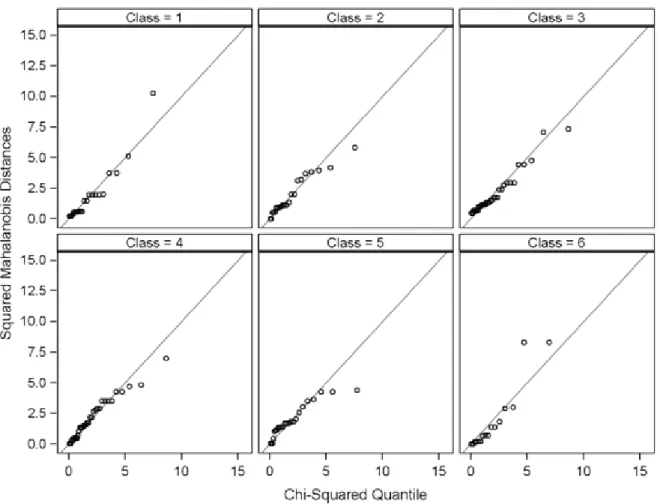
Figure 1: Mahalanobis distance values ... 73
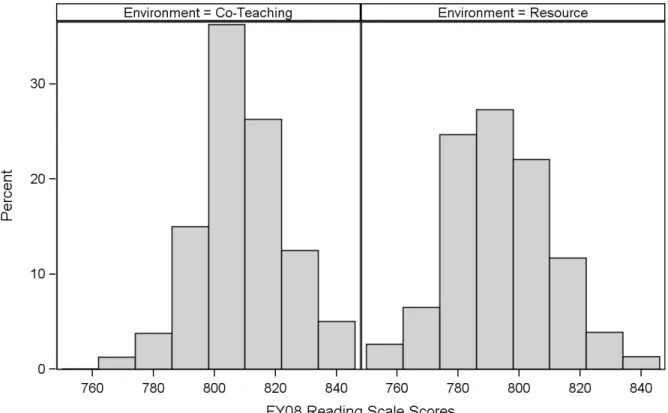
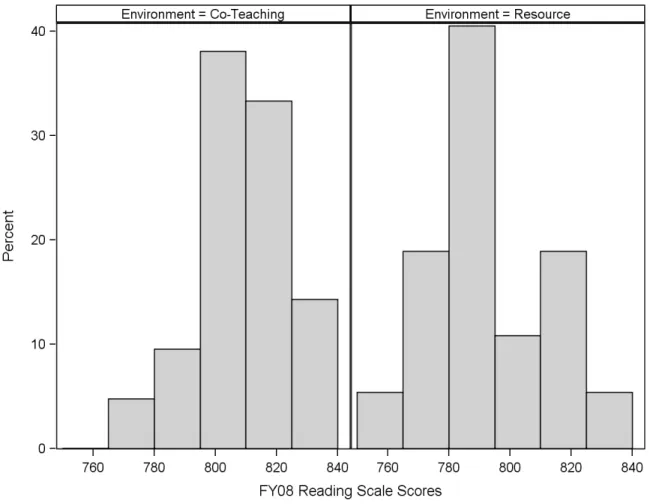
Figure 2: Histogram of 2008 CRCT reading scale scores by environment ... 79
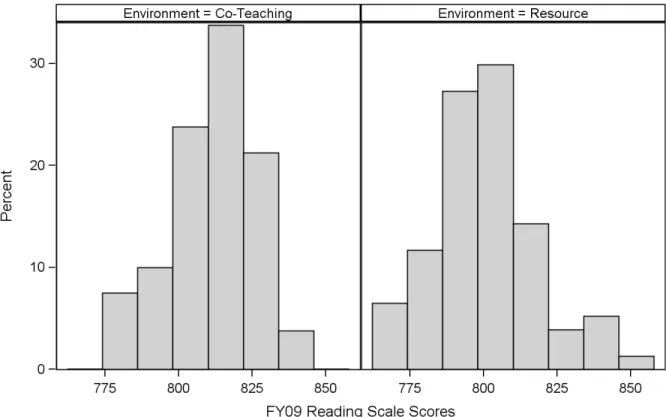
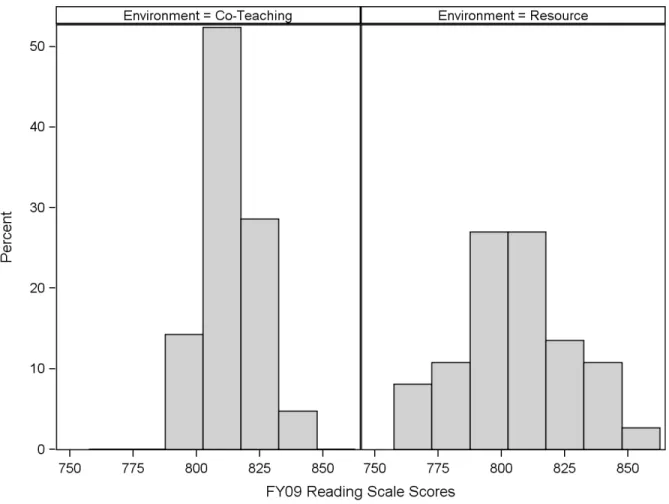
Figure 3: Histogram of 2009 CRCT reading scale scores by environment ... 80
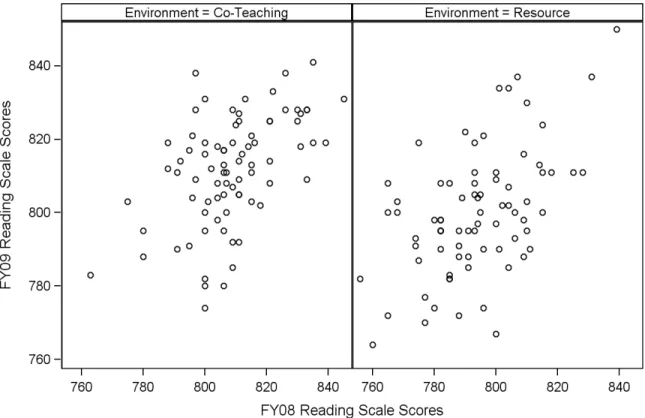
Figure 4: Scatter plot of 2008 and 2009 CRCT reading scale scores by environment ... 81
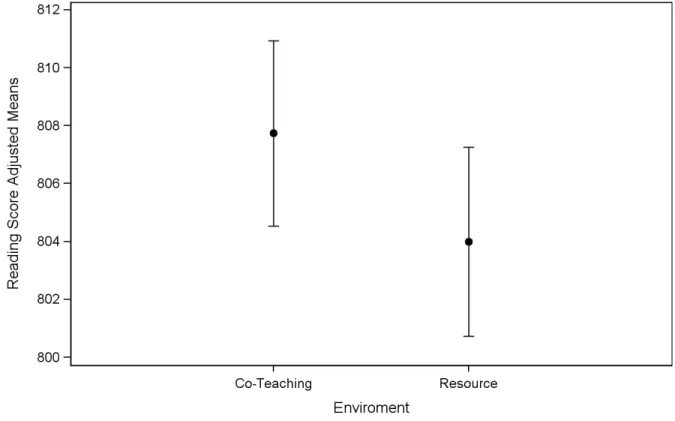
Figure 5: Plot of CRCT reading scale score adjusted means and confidence intervals by environment ... 83
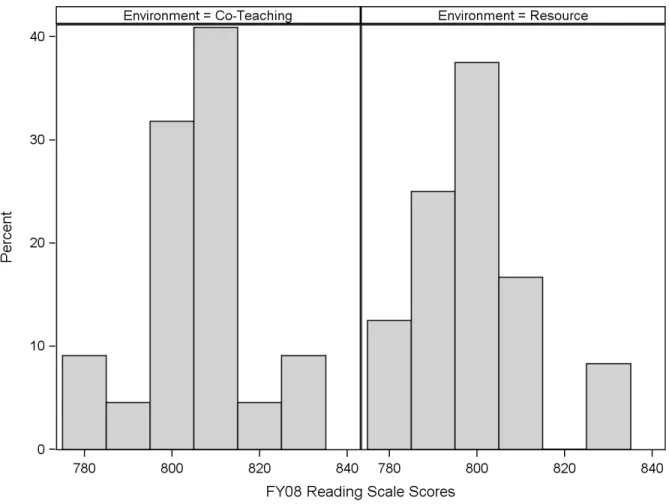
Figure 6: Histogram of 2008 CRCT reading scale scores by environment for sixth grade ... 85
Figure 7: Histogram of 2009 CRCT reading scale scores by environment for sixth grade ... 86
Figure 8: Histogram of 2008 CRCT reading scale scores by environment for seventh grade ... 87
Figure 9: Histogram of 2009 CRCT reading scale scores by environment for seventh grade ... 88
Figure 10: Histogram of 2008 CRCT reading scale scores by environment eighth grade ... 89
Figure 11: Histogram of 2009 CRCT reading scale scores by environment eighth grade ... 90
Figure 12: Plot of 2009 CRCT reading scale score adjusted means and confidence intervals by environment and grade levels... 94
Figure 13: Histogram of 2008 Lexile scores by environment ... 98
Figure 14: Histogram of 2009 Lexile scores by environment ... 99
Figure 15: Scatter plot of 2009 and 2008 Lexile scores by environment ... 100
Figure 16: Plot of 2009 Lexile score adjusted means and confidence intervals by environment ... 102
Figure 17: Histogram of 2008 Lexile scores by environment for sixth grade ... 104
Figure 18: Histogram of 2009 Lexile scores by environment for sixth grade ... 105
Figure 19: Histogram of 2008 Lexile scores by environment for seventh grade ... 106
Figure 20: Histogram of 2009 Lexile scores by environment for seventh grade ... 107
Figure 21: Histogram of 2008 Lexile scores by environment for eighth grade ... 108
Figure 22: Histogram of 2009 Lexile scores by environment for eighth grade ... 109
Figure 23: Plot of 2009 Lexile score adjusted means and confidence intervals by environment and grade levels ... 113
List of Abbreviations Adequate Yearly Progress (AYP)
Analysis of Covariance (ANCOVA)
Georgia Criterion-Referenced Competency Test (CRCT) Georgia Performance Standards (GPS)
Grindstone School District (GSD)
Individuals with Disabilities Education Act (IDEA) Iowa Test of Basic Skills (ITBS)
Learning Disabilities (LD) Literacy Passport Test (LPT)
Multivariate Analysis of Covariance (MANCOVA) National Assessment of Educational Progress (NAEP) No Child Left Behind (NCLB)
North Grindstone Middle School (NGMS) South Grindstone Middle School (SGMS) Students with Disabilities (SWD)
CHAPTER ONE: INTRODUCTION TO THE STUDY The No Child Left Behind Act (NCLB) of 2001 and the Individuals with
Disabilities Educational Act (IDEA) are two of the nation's most important federal laws relating to the education of children. While NCLB seeks to improve the education of all children, IDEA focuses on the individual child and seeks to ensure specialized services for children with disabilities. NCLB has forced schools to take a closer look at the students who struggle with academics. Under NCLB (No Child Left Behind [NCLB], 2001) the overall goal is for all students, regardless of category of disability or academic setting, to reach set proficiency standards in reading and math by the year 2014. NCLB (2001) expects schools to find ways to meet and exceed the educational standards for all students regardless of their category of disability or their academic program setting. This expectation prompted this research to examine the importance of the academic setting of special education students and the setting’s relationship to reading achievement.
Different delivery models of instruction for special education students have been implemented in schools in an attempt to meet the needs of the students who are served through special education programs. NCLB holds schools accountable for student proficiency by requiring all subgroups of students to reach the stated benchmark standards, known as Adequate Yearly Progress (AYP). Meeting AYP standards is a challenge that all schools across the nation must face.
This research examined two different delivery models used at the middle school level to provide instruction to students with special needs. The study specifically focused
on the co-teaching model and the resource model for students in grades six through eight. The research examined achievement levels of students who had been instructed in either the co-teaching class or the resource class for reading. The achievement scores from the state-mandated reading assessment, which was administered to all students, offered insight into whether delivery model influenced academic gains in reading. The research included 157 students in grades six through eight who were entitled to special education services based on the criteria established by state and federal special education
regulations. The study examined academic setting of special education students and its relationship with student performance on the reading component of the Georgia
Criterion-Referenced Competency Test (CRCT). The information obtained from this research helped to determine if there was a relationship between the reading achievement of middle school special education students and their educational placement within the Grindstone Creek School District during the 2008–2009 school year.
General Background
According to the results from the National Assessment of Educational Progress (NAEP) reading exam, struggling adolescent readers make up a significant portion of the U.S. school population (National Assessment of Educational Progress [NAEP] 2004, 2005). On the 2007 NAEP, 26% of eighth-graders could not read at the basic level. On the 2005 NAEP, 27% of twelfth-graders could not read at the basic level. What this means is when reading grade-appropriate text, they could not understand what they had read (NAEP, 2005). These adolescents could not extract the general meaning or make obvious connections between the text and their own experiences, or make simple
inferences from the text. Studies show that adolescents who are struggling readers are at high risk of dropping out of high school, graduating unprepared for college, and having limited opportunities in the workforce (National Center for Education Statistics, 2003).
Students who do not learn to read adequately in the primary grades typically have persistent reading difficulties throughout their school years (Francis, Shaywitz, Stuebing, Shaywitz, & Fletcher, 1996). The way students are grouped for instruction may affect how they perceive themselves as learners. For example, students who are grouped homogeneously in a low-ability group may suffer from social stigmatization, low motivation, and lowered student expectations for academic success (Barr & Dreeban, 1991). Direct, explicit, and systematic instruction of critical reading skills is an important part of effective teaching. Since reading is the foundational skill for all learning, children with disabilities must receive targeted and effective instruction that addresses their core weaknesses in reading (Lloyd, 2005).
Students who struggle in reading are often placed in a special education program if they meet state eligibility criteria. Placement in the special education program allows a student to get help with instruction in a variety of settings. This research examined two different instructional environments. The study specifically focused on the co-teaching classroom and the resource classroom, two popular instructional settings for reading instruction for students in a middle school special education program. State mandated criterion-referenced assessment scores and Lexile reading levels of SWD (students with disabilities) were analyzed to determine which setting, co-teaching or resource, was more effective on student achievement.
According to the Georgia Department of Education (2008a), the CRCT measures how well a student has acquired the knowledge and skills taught in the state curriculum. The purpose of the test is (a) to ensure students are learning at their grade level, and (b) to provide data to teachers, schools, and school districts in order to make better instructional decisions. Georgia’s statewide curriculum, known as the Georgia Performance Standards (GPS), sets specific academic standards or expectations for all students in Georgia’s public schools. Students are not compared to each other but are measured on their achievement in meeting the standards. Student scores are reported according to three performance levels: Does Not Meet Expectations, Meets Expectations, and Exceeds Expectations. The CRCT also serves as an accountability measure and is part of the AYP requirements of the NCLB (Georgia Department of Education, 2008a).
The Georgia Department of Education (2008a) reported that the performance on the reading portion of the CRCT is linked to the Lexile scale, a national reading measure that matches students to appropriately challenging reading materials. Tens of thousands of books and millions of articles have Lexile measures, and hundreds of publishers assign a Lexile level to their materials. Also, all major standardized tests can report student reading scores in Lexiles (Lexile framework for reading, n.d., para. 2).
The Problem Statement
Educators face the challenge of deciding upon the most effective instructional environment for students who are receiving special education services. The Individuals with Disabilities Education Act (IDEA) is a federal law enacted in 1990 and reauthorized in 1997 (Individuals with Disabilities Education Act, [IDEA], 2004). It is designed to
protect the rights of SWD by ensuring that everyone receives a free and appropriate public education, regardless of ability. IDEA governs how states and public agencies provide early intervention, special education, and related services to more than 6.5 million eligible infants, toddlers, children, and youth with disabilities (U.S. Department of Education, 2009b). IDEA requires that a student with special needs receive instruction in the least restrictive environment (LRE) (Osborne & Dimattia, 1994). According to the Least Restrictive Environment Coalition’s definition, LRE is “the educational setting where a child with disabilities can receive a free and appropriate public education designed to meet his or her education needs while being educated with peers without disabilities in the general educational environment to the maximum extent appropriate” (Karten, 2005, p. 5). Current legislation implies that all service options should be considered before a student is removed from a general education classroom.
A student’s Individualized Educational Plan (IEP) committee determines the least restrictive educational setting for the student. An IEP committee usually consists of the parents or guardians, special and regular education teachers, at least one administrator, and possibly the student or other invited guests. This study analyzed the reading achievement for SWD served by the special education program. Results of student achievement for SWD instructed in a resource class setting were compared to the achievement results of SWD instructed in a co-teaching setting. The study examined achievement scores and reading levels of SWD in grades six through eight. The researcher designed the study to answer the following question:
resource class show similar gains in reading achievement to students in the co-teaching class?
Purpose of the Study
The purpose of this study was to compare the performance outcomes of SWD in two instructional settings. The study gave a review of literature related to the skills needed to read proficiently, a review of Response to Intervention (RTI), and a review of the instructional placement for students who receive special education services. The literature about NCLB (2001) reflected the importance of teaching the general curriculum to SWD. This research defined and discussed the academic achievement of SWD and provided the educational implications of the setting for instruction. Settings used for the instruction of SWD were reviewed. In particular, this study completed an analysis on two different instructional settings and their effects on closing gaps in achievement in special education programs. A summary of the analysis included the performance scores, as measured by the CRCT and Lexile levels, and discussed issues related to the analysis. The comparison of the instructional models and their results indicated a further need for studying the instructional placement to determine their effect on outcomes for SWD. Research Questions and Null Hypotheses
In examining the CRCT scores and the Lexile levels from the CRCT from the spring of 2008 and the spring of 2009, the current study attempted to answer the following questions:
Research Question #1: Do differences in reading achievement measured by the reading portion of the CRCT for SWD between co-teaching and resource classes depend
on grade level in grades 6, 7, and 8?
Null Hypothesis (H01): There is not a statistically significant difference in reading achievement measured by the reading portion of the CRCT for SWD between co-teaching and resource classes by grade level in grades 6, 7, and 8.
Research Question #2: Is there an average difference in reading achievement measured by the reading portion of the CRCT for SWD between co-teaching and resource room classes across grade levels 6, 7, and 8?
Null Hypothesis (H02): There is not a statistically significant average difference in reading achievement measured by the reading portion of the CRCT for SWD between the co-teaching and resource room classes across grade levels 6, 7, and 8. Research Question #3: Is there an average difference in reading achievement measured by the reading portion of the CRCT for SWD across learning environments in grades 6, 7, and 8?
Null Hypothesis (H03): There is not a statistically significant average difference in reading achievement measured by the reading portion of the CRCT for SWD across learning environments in grades 6, 7, and 8.
Research Question #4: Is there an average difference in reading achievement measured by the reading portion of the CRCT for SWD who participated in a co-teaching class as compared to SWD who participated in the resource class within grades 6, 7, and 8?
Null Hypothesis (H04):_There is not a statistically significant average difference in reading achievement measured by the reading portion of the CRCT for SWD who
participated in a co-teaching class as compared to SWD who participated in the resource class within grades 6, 7, and 8?
Research Question #5: Do differences in reading achievement measured by Lexile scores of SWD between co-teaching and resource classes depend on grade level in grades 6, 7, and 8?
Null Hypothesis (H05): There is not a statistically significant difference in reading achievement measured by Lexile scores of SWD between co-teaching and
resource classes depending on grade level in grades 6, 7, and 8.
Research Question #6: Is there an average difference in reading achievement measured by Lexile scores of SWD between co-teaching and resource room classes across grade levels 6, 7, and 8?
Null Hypothesis (H06): There is not a statistically significant average difference in reading achievement measured by Lexile scores of SWD between co-teaching and resource room classes across grade levels 6, 7, and 8.
Research Question #7: Is there an average difference in reading achievement measured by Lexile scores of SWD among grade levels between the co-teaching and resource setting in grades 6, 7, and 8?
Null Hypothesis (H07): There is not a statistically significant average difference in reading achievement measured by Lexile scores of SWD among grade levels between the co-teaching and resource setting in grades 6, 7, and 8?
Research Question #8: Is there an average difference in reading achievement measured by Lexile scores of SWD who participated in a co-teaching class as compared
to SWD who participated in the resource class within grades 6, 7, and 8?
Null Hypothesis (H08): There is not a statistically significant average difference in reading achievement measured by Lexile scores of SWD who participated in a co-teaching class as compared to SWD who participated in the resource class within grades 6, 7, and 8?
Professional Significance of the Study
The focus of this research was to examine the academic aspects of SWD receiving special education services for reading instruction. This research focused on whether a student’s placement in the resource class or the co-teaching class for reading contributed to the student’s achievement in reading and reading abilities. Student instruction in both settings focused on grade level Georgia Performance Standards for reading. High expectations for learning, coupled with high levels of academic support, have been consistently related to more positive student outcomes (Wang, Haertel, & Walberg, 1994). In the present research, it was determined whether students made more progress in reading resource classes or reading co-teaching classes or if there is was no significant difference at all. The No Child Left Behind Act of 2001 and its requirements for
accountability have supported standards for all students served in the public school setting, including those with disabilities.
This research investigated whether or not a child with a disability is academically affected by educational placement for reading instruction. According to Moller (1999), children's rich perceptions of the reading process and of themselves as readers can guide educators as they support children in becoming strong, positive, and lasting readers.
Conlon, Zimmer-Gembeck, and Creed (2006) found that knowledge of children's attitudes and perceptions towards reading provided important additional information when evaluating reading skills of early adolescents. A student’s class placement may enhance or detract from his or her growth in achievement. According to Lynch (2002), children’s self-perceptions as readers are significantly related to their reading
achievement. Furthermore, continuing to build the knowledge base with learning disabled students will help to ensure the most appropriate interventions for all students with learning problems.
Whitener’s (2007) study discussed the research on perspectives of students in special education and how those perspectives can influence program development and characteristics. Research on co-teaching classes versus resource classes was examined, as well as student perceptions, student perception accuracy, and student involvement in their special education programs. Whitener (2007) found that comparison of opinions and feelings between students served through a co-teaching model or a resource model indicated relatively few differences in perceptions and opinions regarding their
involvement in their special education programs. There were also few differences in their feelings about their classes, their views on accommodations, and their attitudes towards their teachers.
Overview of Methodology
Middle school SWD receiving instruction in a resource class or a co-teaching class in a rural public school district in north Georgia during the 2008–2009 school year were the research participants for the study. The students received reading instruction on
a daily basis from a highly qualified special education teacher. In addition, the students in the co-teaching setting also received support and instruction from a highly qualified regular education reading teacher. According to the Georgia Department of Education (2009a), NCLB highly qualified teacher requirements refer specifically to the
qualifications and certification of teachers who are assigned to teach core academic content courses. Certified special education teachers are highly qualified to offer expertise in teaching SWD and to provide opportunities for those students to be
successful academically in inclusive classroom settings or in pull-out, resource delivery models. IDEA and NCLB now require that all teachers, including special education teachers, provide evidence that they are highly qualified and certified in the content subjects that they teach. Special education teachers may meet the highly qualified requirements by meeting the certification requirements to teach the core academic subjects at the required cognitive level and by being assigned to teach the content area listed on their certificates (Georgia Department of Education, 2009a).
As required by the Quality Basic Education Act of 1985, Georgia must maintain a curriculum that specifies what students are expected to know in each subject and grade. These are called the Georgia Performance Standards. The state’s curriculum is a
guideline for instruction that helps teachers, students, and parents know what topics must be covered and mastered for a particular course. The curriculum establishes the
minimum standards that must be taught in all classes. Students in both the co-teaching classes and the resource classes were taught according to these standards (Georgia Department of Education, n.d.).
As required by the Georgia Department of Education, students were given the CRCT in the spring of 2008 and the spring of 2009. All students were tested according to the guidelines set forth by the Georgia Department of Education. Reading scores and Lexile levels for all students were obtained from the 2008 and 2009 CRCT reports of the students. A causal comparative research design was used to examine CRCT reading scores and Lexile scores to quantitatively determine if students’ reading outcomes differ based upon the type of setting. The data was then analyzed to quantitatively determine if there was a significant difference in student gains in reading achievement based upon placement for instruction. The data was analyzed using a statistical analysis software program called SAS 9.2, a software system for data management and analysis.
Definitions of Key Terms
Co-teaching setting: Classroom where two (or more) educators or other certified staff share instructional responsibility for a single group of students primarily in a single classroom or workspace. The co-teaching class contains SWD and students who do not have disabilities (Sileo, 2003).
Criterion-Referenced Competency Test (CRCT): An assessment given annually to students in the state of Georgia. It was designed to assess student acquisition of
knowledge and skills which are set forth in the state’s curriculum (Georgia Department of Education Testing Division, 2006).
Individuals With Disabilities Education Act (IDEA): A law ensuring services to children with disabilities throughout the nation. IDEA governs how states and public agencies provide early intervention, special education and related services to more than
6.5 million eligible infants, toddlers, children and youth with disabilities (U.S. Department of Education, 2009a).
Least restrictive environment (LRE): The requirement that students with disabilities must be educated in the least restrictive environment in which they can succeed with support. This can include general education classrooms, special classes, special schools, home instruction, and instruction in hospitals and institutions (IDEA, 2004). Co-teaching proponents contend that for most students, this environment is the general education classroom (Friend & Bursuck, 1999).
Lexile Score: A standard score that correlates students’ reading abilities with difficulty of texts. The Lexile translates into the level of books students can read with 75% comprehension. A sixth grader who reads proficiently will have a Lexile score between 800–1000. A seventh grader who reads proficiently will have a Lexile score between 850–1050. An eighth grader who reads proficiently will have a Lexile score between 900–1100 (Georgia Department of Education, 2009c).
No Child Left Behind Act (NCLB): A reform of the Elementary and Secondary Education Act, which was enacted in 1965. It is based on four basic principles: stronger accountability for results, increased flexibility and local control, expanded options for parents, and proven teaching methods (U.S. Department of Education, 2009b).
Performance Standards: Guidelines for education that provide clear expectations for instruction, assessment, and student work. They define the level of work that
demonstrates achievement of the standards. The performance standards isolate and identify the skills needed to problem-solve, reason, communicate, and make connections
with other information (Georgia Department of Education, 2009b).
Performance Levels: A range of scores that defines a specific level of
performance as articulated in the Performance Level Descriptors of the CRCT. Each student receives a scale score and a performance level designation (e.g., does not meet standard, meets standard, or exceeds standard) when assessed on a state-mandated assessment (Georgia Department of Education, 2009b).
Resource setting: Classrooms where a special education program can be delivered to a student with a disability. The instructional setting for the student who qualifies for either a special class or regular class placement but needs some special instruction in an individualized or small group setting for a portion of the day (Friend & Bursuck, 1999).
Students with disabilities (SWD): Students with a disability who may need special instruction to meet his or her educational goals (NAEP, 2007).
Summary
Student performance expectations, as outlined by NCLB (2001), have focused a spotlight on the achievement of all students, including the subgroup labeled as SWD. Because of these expectations, research leading to the use of evidence-based practices is critical to educators working with SWD. This non-experimental, quantitative research study compared the effects of a co-teaching model of instruction to the effects of a resource classroom model of instruction on the academic achievement of middle school SWD. Achievement scores of sixth, seventh, and eighth grade students who qualified under IDEA (2004) as students with a disability were analyzed to determine differences in gains toward the mastery of the state standards in reading and the difference in gains in
reading levels of the students.
Section 2 of this study reviews the literature related to this study. Section 3 reviews the methodology utilized in this study. The data analysis and findings are discussed in Section 4, and Section 5 reviews recommendations for practice as well as recommendations for future studies.
CHAPTER TWO: REVIEW OF THE LITERATURE
A major goal of reading comprehension research has been to identify effective reading strategies that increase children’s comprehension (National Reading Panel [NRP], 2000). Recent educational initiatives have emphasized the critical role of early reading instruction in the prevention of reading difficulties. The identification and use of effective interventions is of critical concern in schools where illiteracy and academic failure are high. Given current high expectations for student achievement, it is
imperative that validated interventions containing effective instructional features are used to increase student achievement in reading skills. Currently in the United States, 12% of the student population or 6.8 million children have been identified with disabilities (U.S. Department of Education, 2009a). This literature review includes several components critical to the discussion of the academic achievement of middle school SWD.
Extensive searches, utilizing the ERIC database, Academic Search Premier, and EBSCO Host, were conducted in peer-reviewed journals, professional texts, dissertations, and public policy related to special education and how students learn to read. Particular attention was placed on the skills needed to read proficiently, on RTI, and on the best instructional placement for students who receive special education services.
Theoretical Framework
There are numerous theories of reading. The traditional view, which focused on the printed form of a text, was the beginning of reading theories. In the traditional view of reading, beginning readers acquire a set of ordered sub-skills that sequentially build
toward comprehension ability (Tracey & Morrow, 2006.) Later, the theories moved to the cognitive view that enhanced the role of background knowledge in addition to what appeared on the printed page.
Constructivism is a theory of learning that emphasizes the active construction of knowledge by individuals (Woolfolk, 1998). This theory substantiates that the process of making inferences is central to the learning process. The constructivist approach allows the reader to use meta-cognitive strategies to acquire a more extensive understanding of the material he is reading. He is using existing knowledge as a foundation on which to build new knowledge. Comprehending involves the reader, the text, and the context. The reader actively constructs meaning as he interacts with the text. The proficient reader does not decode but selects the most productive cues to predict text that will follow (Woolfolk, 1998).
Tompkins (2006) noted that Piaget described learning by students to be an
ongoing occurrence between cognitive structures and the interaction and adaptation to the environment. Piaget called these cognitive structures schemata. Schema provides the structure on which comprehension is formed (Tompkins, 2006). Piaget claimed that new information is organized with prior knowledge. The personal connection made with the text plays an important role throughout the reading process. Proficient readers actively search for and construct meaning in a fluent manner (Tompkins, 2006). The schemata that students possess can be the foundation to link new ideas and expand knowledge. Concept development is organized around schema and includes not only semantic knowledge, but also associations of time, place, context, and emotion. The speed of
encoding and retrieval of information from memory allows the reader to be proficient and fluent (Fresch, 2008).
Rasinski and Mraz (2008) have found that the reader’s prior knowledge about the topic enables compensation for poor word-level skills. Low-level readers are less able to employ automatic word decoding. Because of a lack of experience in using a decoding process, compensation is made by the reader to attempt a different strategy employing the meaning of words. The focus shifts from decoding the words to guessing words that would make sense in the context of the passage (Kuhn et al, 2006). The reader uses a combination of text and schemata in this process. The focus shifts from letters to words to meaning or from meaning to words and then letters. These processes take place interactively with the text. The constructivist theory supports the teaching of reading strategies in addition to decoding skills (Rasinski & Mraz, 2008). The Piagetian perspective of reading acquisition places focus on a child's stages of development and reflects on the concepts of reading and writing as the child has constructed them (McGee & Richgels, 1996). McGee and Richgels (1996) state, "Children’s concepts of reading and writing are shaped more by what they accomplished in preceding developmental stages than by their simply imitating adults' behavior or following adults' directions” (p. 10).
The schema theory of reading, described by Piaget, also correlates with the cognitively based view of reading. Rumelhart (2004) has described schemata as
"building blocks of cognition" which are used in the process of interpreting sensory data, in retrieving information from memory, in organizing goals and sub goals, in allocating
resources, and in guiding the flow of the processing system. With constructivism, students are allowed opportunities to construct knowledge out of their experiences and learn by doing. The constructivist view of learning holds that learning takes place through internal mechanisms that are often unobservable to the external views (Tracey & Morrow, 2006).
Constructivism has been applied directly to the study of reading as an explanation of the way in which readers construct messages, or comprehend, during the reading process (Anderson & Pearson, 1984). In the constructivist perspective, learning often results from a hypothesis-testing experience by the individual. For example, a child might not know what a word is when she is reading. According to the constructivist view, she may make a guess as to what the word is. She will try the word. If the word sounds correct she will continue reading. If the word does not sound correct, she will revise her guess and try another word.
Similar to constructivism, the socio-cultural theory explains that students extract meaning from text based on their cultural and social backgrounds (Vygotsky, 1978). Lev Vygotsky, a Russian psychologist, established the social constructivist theory. Vygotsky believed students could develop cognitive and learning skills with the support of
education. Education helps students construct the psychological functions necessary to move to the next step. Vygotsky (1986) held that the ultimate aim of instruction is to help students attain self-directedness and independence in learning. Vygostsky believed that as students interacted and received support, they would begin to master literacy concepts. He believed that students developed more quickly when they worked with
someone who was more proficient than them. He believed that people created mental tools, or “tools of the mind”, to broaden their mental abilities, which assisted people as they thought, concentrated, and recalled (Bodrova & Leong, 2007). Vygotsky taught that teachers should connect the knowledge students have with the knowledge they need to have. Vygotsky’s zone of proximal development defines the gap in knowledge (Bacon, 2005). The zone refers to a continuum of behaviors not as a certain point on a scale (Bodrova & Leong, 2007). Vygostsky’s (1986) zone is the difference between the mental age of students, also referred to as the actual developmental level, and the level that can be attained with assistance. It is the level of development of a student’s intellectual function that has been determined using various tests that students complete
independently (Vygotsky, 1978). Proximal refers to the fact that the zone is limited to the behaviors that will arise in the near future and to behaviors that will appear at any point but have not yet surfaced (Bodrova & Leong, 2007).
Vygotsky’s use of the zone of proximal development discusses the relationship between learning and development (Bodrova & Leong, 2007). It refers to the abilities that have not developed but are in the process of developing (Vygotsky, 1978). The zone of proximal development, which focuses on what students can achieve, is an important link between instruction and development (Vygotsky, 1987).
According to Vygotsky (1986), the zone of proximal development changes as students achieve higher levels of thinking. Students’ development continually adjusts zones, so students are able to learn more difficult concepts and skills. Vygotsky (1987) teaches that it is essential not to focus on what was accomplished previously but to look
ahead to what can be achieved in the future. Teachers are instructing to students’ weaknesses if students are given problems they can complete without assistance. When this happens, teachers hold students’ learning back, instead of using the zone of proximal development to direct students to new skills (Vygotsky, 1986).
Scaffolding instruction as a teaching strategy originates from Lev Vygotsky’s theory (Meyer, 1993). Use of scaffolded instruction provides a means for personalizing support to adapt to diverse needs of the students. Scaffolding occurs as teachers support students. Teachers offer the exact amount of support students need to be successful at a task by carefully observing and working with students. Scaffolding involves teachers giving a great deal of support to students in the beginning and then lessening the support as students move toward independence. The basic features of scaffolded instruction are co-participation, social interaction between teachers and students, titration of assistance by instructor, and fading of teacher support to gradually transfer responsibility for learning to students (Meyer, 1993). The aim of scaffolding is for students to achieve independent task performance. Teachers play an important part in directing learning during its initial stages through explicit modeling and feedback. They consciously provide support with an aim of “fading out” gradually so that responsibility for learning and task performance is eventually transferred to students (Puntambekar & Hubscher, 2005). In order for students to be as successful as possible, the scaffold fades away and a new one is put in place to assist in the next phase of learning (Harland, 2003). Scaffolded learning experiences may be used to support and improve the performance of students before, during, and after reading. Such experiences may help students develop essential
skills for understanding, gain meaning from text, and help raise their performance on reading comprehension assessments.
Ultimately, readers utilize the metacognition theory while reading. As first described by Flavell (1979), metacognitive knowledge refers to knowledge about cognition and is similar in structure and function to other kinds of knowledge in long-term memory. This knowledge is usually about person, task, and strategy variables and their interactions. Readers analyze their cognitive processes and employ the necessary strategies that enable them to find meaning in text. According to the metacognitive theory, students gain knowledge about when and where to use particular strategies for learning or for problem solving (Flavell, 1979). Metacognition is an important concept in cognitive theory. It consists of two basic processes occurring simultaneously: monitoring your progress as you learn, and making changes and adapting your strategies if you perceive you are not doing so well (Winn & Snyder, 1996). Ridley, Schutz, Glanz, and Weinstein (1992) reported, "Metacognitive skills include taking conscious control of learning, planning and selecting strategies, monitoring the progress of learning,
correcting errors, analyzing the effectiveness of learning strategies, and changing learning behaviors and strategies when necessary” (p. 295).
Flavell (1979) describes it as follows: "Metacognition refers to one's knowledge concerning one's own cognitive processes or anything related to them, e.g., the learning-relevant properties of information or data” (p. 907). Flavell (1979) argued that
metacognition explains why children of different ages deal with learning tasks in different ways. Caverly, Nicholson, and Radcliffe (2004) conducted research that
determined that as children get older they demonstrate more awareness of their thinking processes.
Reading Development
A necessary element in skilled reading is automaticity (Kuhn et al., 2006). Autonomy refers to the capacity to read without actively thinking about it. The reader builds automatic word recognition through extensive exposure to print. Practice with basic sight words and an orthographic pattern allows the student to become less focused on laborious letter-to-letter decoding. Word recognition practice leads to allowing students the opportunity to build automaticity with reading. The automaticity frees the reader to retrieve word meanings, which attributes to comprehension of the text (Kuhn et al., 2006).
Reading should be so effortless and autonomous that the student performs the task unconsciously to the point that when print is evident, he is compelled to read. Proficient reading takes place without intention and without interfering with comprehension. Reading involves the successful coordination of concurrent processing (Walczyk, 2000). Poor comprehension may be explained by the reader investing too much thought into the decoding aspects of reading (Harn, Stoolmiller & Chard, 2008). Reading fluency
development is a critical prerequisite to being able to comprehend (Griffith & Rasinski, 2004).
Learning to read is a complex task. Students must coordinate many cognitive processes to read accurately and fluently. Readers must be able to apply their alphabetic knowledge to decode unfamiliar words and to remember how to read words they have
read before. They must also monitor their word recognition skills to make sure that the word they read fits the meaning of the context (NRP, 2000).
The National Reading Panel (NRP) identified five essential components of reading that children must be taught in order to learn to read. These components are: (a) phonemic awareness, (b) phonics, (c) reading fluency, (d) vocabulary development, and (e) reading comprehension (NRP, 2000). Each of the five components will be outlined in this review.
First, children must be taught to hear sounds in words and to understand that words are made up of the smallest parts of sound, or phonemes (NRP, 2000). The NRP (2000) reports that phonemic awareness is the ability to recognize and use individual sounds to create words. Instruction in reading must include helping students to develop phonemic awareness. Early readers can show they have phonemic awareness in several ways, including recognizing which words in a set of words begin with the same sound, isolating and saying the first or last sound in a word, combining or blending the separate sounds in a word to say the word, and breaking or segmenting a word into its separate sounds (Strickland & Schickedanz, 2004).
The NRP (2000) declares that reading instruction must next guide students to understand phonics. The teaching of phonics is an approach to reading instruction that teaches students the principles of letter-sound relationships, how to sound out words, and exceptions to the principles. Before children learn to read print, they need to become more aware of how the sounds in words work. They must understand that words are made up of speech sounds, or phonemes. The NRP (2000) reports that children need to
be taught the sounds individual printed letters and groups of letters make. Knowing the relationships between letters and sounds helps children to recognize familiar words accurately and automatically, and "decode" new words. Decoding is the ability to apply knowledge of letter-sound relationships, including knowledge of letter patterns, and to correctly pronounce written words (NRP, 2000). Understanding this relationship gives children the ability to recognize familiar words quickly and to figure out words they have not seen before. Although children may sometimes figure out some of these relationships on their own, most children benefit from explicit instruction in decoding (Mathes, 2008). The majority of children seem to become proficient decoders regardless of how they are taught, but there are still many students that are not (NRP, 2000). Direct, explicit, and systematic instruction of critical skills is an important part of effective teaching of reading. Many studies confirm that if a student leaves first-grade behind their peers in reading, the chance of ever catching up is very slim. If a child is still behind at the end of grade 3, the chance of catching up without very intensive intervention is 0% (Mathes, 2008).
The NRP (2000) also reports that students must also be supported in increasing their ability to read fluently (Griffith & Rasinski, 2004). The NRP (2000) reports that this is the ability to read a text accurately and quickly. Children must learn to read words rapidly and accurately in order to understand what is read. When fluent readers read silently, they recognize words automatically (Pukulski & Chard, 2005). When fluent readers read aloud, they read effortlessly and with expression. Readers who are weak in fluency read slowly, word by word, focusing on decoding words instead of
comprehending meaning. It is important for students to be competent and fluent readers before they leave middle school (Kuhn et al., 2006). Their reading sounds natural, as if they are speaking. Salinger (2003) noted, “Competent readers take charge of their learning, participate fully in society, and enhance their lives through the pursuit of new information and new experiences.” Students who struggle with fluency often have difficulty with comprehension (NRP, 2000).
Fluency is important because it provides a bridge between word recognition and comprehension. Pikulski and Chard (2005) indicate that because fluent readers do not have to concentrate on decoding words, they can focus their attention on what the text means. They can make connections among the ideas in the text and their background knowledge. In other words, fluent readers recognize words and comprehend at the same time. Less fluent readers, however, must focus their attention on figuring out the words, leaving them little attention for understanding the text (Pikulski, and Chard, 2005). Shippen, Houchins, and Steventon (2003) assert, “Lack of fluent reading tends to lower a student’s motivation to continue to read” (p.175). Limited reading practice restricts a student’s vocabulary knowledge and comprehension, which results in poor academic achievement and undeveloped literacy skills (Shippen, Houchins & Steventon, 2003).
According to the NRP (2000), vocabulary development is also a necessary component of reading instruction. Children need to actively build and expand their knowledge of written and spoken words, what they mean, and how they are used. Students also need instruction in reading comprehension strategies. Rizopoulos and Wolpert (2004) found that students must have the opportunity to acquire strategies to
understand, remember, and communicate what is read in order to learn to read. Children need to be taught comprehension strategies, or the steps good readers use to make sure they understand text. Students who are in control of their own reading comprehension become purposeful, active readers. Rizopoulos and Wolpert (2005) report that literacy skills help children learn to function independently. Being able to read helps children foster relationships, develop self-esteem, and interact with society.
The identification and use of effective reading strategies is of critical concern in schools that teach struggling readers, including SWD. Given current high expectations for student achievement, it is imperative that validated interventions containing effective instructional features are used to increase student achievement for SWD. According to the NAEP (2007), 8.7 million children in grades 4-12 read below grade level. In addition, close to 70% of eighth-graders read below the proficient level, and 25% fail to read at the most basic level. Morris, Bloodgood, Lomax, and Perney (2003) discovered that,
“Students who finish third grade one or more years behind in basic reading skills are at risk in an educational system, which from fourth grade on demands grade level reading ability” (p. 94). Struggling middle school readers who continue to lag behind in reading enter secondary schools with the same reading deficiencies.
History of Special Education Legislation
Special education legislation began in 1965 with the Elementary and Secondary Education Act of 1965 according to Fletcher, Lyon, Fuchs, and Barnes (2007). This law provided the legal foundation for future laws focusing on special education. In 1965 and 1966, Elementary and Secondary Education Act amendments were passed which
established grants for the education of student with disabilities. In 1968, legislation was passed that brought additional amendments that expanded special education services.
During the 1970’s, further changes to the law occurred. In 1970, The Education of the Handicapped Act was implemented. This act included grant programs for school districts and discretionary programs. In 1974, the Education of the Handicapped Act Amendment was passed in order to address an appropriate education. In 1975, Public Law (P.L.) 94-142, the Education of all Handicapped Children Act, was passed. It put in place many of the provisions that are the basis for current special education laws and regulations. This legislation established the right to a free and appropriate public education and individual education plans, and mandated the placement of children with disabilities in the least restrictive environment (LRE). P.L. 94–142 also established due process rights and funding to help with the cost of special education services. Additional amendments were passed through the 1980s and 1990s that added transition to work programs, early interventions services for infants, and assistive technology devices and services for student with disabilities. The law is currently enacted as the IDEA as amended in 1997.
In 1997, the reauthorizations of IDEA expanded the law mandating access to the general education curriculum for all students. In 2002, NCLB was implemented and IDEA was again reauthorized in 2004. These laws address the learning of students who receive special education services. NCLB mandates that all children, including the majority of SWD, must be proficient in state standards by the 2013-2014 school year. This law requires that achievement scores from each subgroup, such as English language
learners, special education students, minorities, and children in low socioeconomic status households, be disaggregated to ensure that all students are proficient in grade level standards.
Response to Intervention (RTI)
On December 3, 2004, President Bush signed the IDEA into law (IDEA, 2004). The revised law is different from the original version in at least one important respect. While educators previously used IQ-achievement discrepancy to identify children with learning disabilities (LD), they now may use RTI (Fuchs & Fuchs, 2006). The purpose of RTI is not only to provide early intervention for students who are at risk for school
failure, but also to develop more valid procedure for identifying students with reading disabilities (Gerstan & Dimino, 2006). RTI will help to eliminate students qualifying for special education when a lack of appropriate instruction is the problem rather than a learning disability (Fuchs & Fuchs, 2006).
Much of RTI assessment is progress monitoring. Such information assists practitioners' efforts both to design early intervention and to identify special-needs children (Fuchs & Fuchs, 2006). The increasing implementation of RTI affects all students, those in general and special education (Murawski & Hughes, 2009). RTI is a method through which educators can identify students with learning disabilities while supporting students who are struggling academically in the general education classroom with a three-tier model.
In Tier I of the three-tier model, all students are provided with a scientifically based program in the general education classroom and are assessed at least three times a
year on an established benchmark (Fuchs & Fuchs, 2007). Once students fall below a predetermined point on a benchmark, they are referred to Tier II in which specific intensive instruction is provided beyond the general curriculum (Vaughn & Roberts, 2007). This means that identified students would be provided concentrated instruction that is more intensive and individually focused than that of the general reading
curriculum. According to Fuchs and Fuchs (2007), if a child fails to respond to this intensive instruction, it is recommended that educators continue the instruction for a longer period in Tier II or move the child to Tier III. Fuchs and Fuchs (2007) estimate that 5% of the school population will fall into this third, long-term intensive tier in which students may remain for months or even years. The length of the Tier III intervention is determined by the significance of the child’s needs and his response to the Tier III
intervention. It is this third tier that becomes what is now called special education (Fuchs & Fuchs, 2007).
It is important to emphasize that RTI is not a special education program. The RTI model adds support to the general education classroom using a problem-solving model, where decisions are made on a student-by-student basis (Bryant & Barrera, 2009). As RTI becomes the standard model for identifying special education students, special attention should be paid to reading instructional practices for older students who have not had the opportunity for early intervention, especially middle school students who will be graduating with the mandates of the NCLB that require them to be proficient in state standards. Fox, Carta, Strain, Dunlap, and Hemmeter (2010) indicate that RTI is a systematic decision-making process that has gained widespread popularity as a
problem-solving framework for organizing tiers of evidence-based interventions in the context of ongoing progress monitoring. RTI’s increasing implementation affects all teachers and students, in both general and special education (Murawski & Hughes, 2009).
Students with Disabilities
There are many disabilities covered under the umbrella of special education. Special education encompasses learning disabilities, mental retardation, autism,
emotional or behavior problems, physical disabilities, blindness, deafness, developmental delays, speech deficits, and other health impairments. Each one of these eligibilities has its own unique characteristics that require specialized teaching (Georgia Department of Education, 2009c). SWD generally are expected to achieve the same success as other learners, so there is an increased emphasis on educating them in the general education setting. Also, it is important to note that these students deserve teachers who have the ability, confidence, and skills to work with such a diverse group of needs all at the same time (Friend & Cook, 2007).
Federal and state law places rigorous regulations on special education programs in order to ensure the quality of education received by special needs students. Special education programs are monitored carefully by the U.S. Department of Education. Most updated information from the National Center for Education Statistics (U.S. Department of Education, 2009a), reports that in 2006, 40% of the children that received special education services in grades K -12 were learning disabled (LD). A learning disability is defined as any range of conditions that affect a person’s ability to learn new information (McCoach, Kehle, Bray, & Siegle, 2001). Even though learning disabled students
function in the average range of intelligence, students with a learning disability are often unable to function in a normal classroom because of difficulties in processing
information. Research demonstrates different findings on social functioning and academic growth for students with learning disabilities (Vaughn and Klinger, 1998; Benton and Aaron, 2003). Many perceive that students with learning disabilities who are placed in the general education setting will have a more positive self-perception
(Donaldson and Halsey, 2007). Wilson and Michaels (2006) report that special education students thought that co-taught English classes gave them a unique opportunity to gain access to the general education curriculum and develop literacy skills. Alternately, Vaughn and Klinger (1998) found that many students with LD prefer to receive
specialized instruction outside of the general education classroom for part of the school day. They also noted that there are also many students who view full-time co-teaching as a successful and necessary means for meeting their educational and social needs.
Bentum and Aaron (2003) examined the long-term effects of instruction on the reading achievement of children diagnosed as learning disabled and were taught in resource rooms. The study examined the consequences of resource room instruction on the cognitive level (IQ) of children identified as having reading disabilities. Results of their study indicated that (a) LD resource room instruction did not improve word
recognition or reading comprehension skills of children with LD, (b) students experience a significant decline in spelling scores after receiving instruction for 3 or 6 years, and (c) the children also showed a decline in verbal IQ scores after receiving LD instruction for 6 years. Bentum and Aaron (2003) concluded that current LD resource room placement
and instruction do not appear to have any significant effect on reading skills.
Elbaum (2002) found in a meta-analysis of 38 studies comparing self-concept of students with LD who received instruction in less restrictive environments versus more restrictive settings that there was no overall association between self-concept and educational placement for students in the regular class versus the resource class.
Not only do students labeled as LD demonstrate reading difficulties that cause them to need the support of the special education program for reading instruction, but students with behavioral or emotional problems have often missed crucial instruction in the primary grades and may demonstrate problems in reading. The Nationa1 Center for Education Statistics (U.S. Department of Education, 2009a) reports that in 2006, 7% of the children receiving special education services were labeled as emotional behavioral disabled (EBD). Wangsgard (2008) validates that a significant number of middle school students with EBD struggle with reading. Less is known about the reading deficits of students with EBD than their behavioral needs. Wangsgard (2008) advocates that limited research exists on reading instruction at the middle school level for students with EBD or how to effectively intervene and address the reading needs of this unique population. She (2008) revealed that students with EBD, who were struggling readers, did not have
several of the necessary reading skills identified in the literature in order to be effective readers. Even though researchers are developing effective academic interventions for students with EBD, research is currently limited in specific areas of academic mastery such as reading instruction (Ryan, Reid & Epstein, 2004).
standards that play a large role in how students with and without disabilities are educated. Tremendous pressure has been put on school districts and state agencies to address the performance and acquisition of grade level skills for all students to be proficient in state performance standards by 2013–2014 (Hardman & Dawson, 2008). Educators are now being held accountable for the performance of all students (NCLB, 2001). This is why it is important to examine all aspects of special education and especially the placement of SWD.
Hardman and Dawson (2008) believe that in the 21st-century United States, access to education for every child on an equal basis is national policy. Federal policy supporting the development of a standards-driven education system strongly influenced educational reform for SWD. Hardman and Dawson (2008) advocate that implicit in IDEA is the concern about the possibility that although SWD have access to education, it is insufficient to generate the valued outcomes of employment, independence, and community involvement that were in the original intent and spirit of the law.
Placement
Discussions about where SWD should be instructed have received more attention and generated more controversy than any other issue concerning the education of SWD, including how or what these students should be taught (Fuchs & Fuchs, 1994). Special education setting options include a continuum of placements ranging from the least restrictive, or inclusion, to the most restrictive, or seclusion. Whitener (2007) validates that at the least restrictive end of the continuum are the students who are fully integrated into a regular education classroom. These students receive no additional services
compared to their regular education peers. Next along the continuum is co-teaching where students are in regular education classes but receive additional services from an aide or resource teacher. Further along the continuum, students are included in regular education, but are provided services from a special education teacher in a resource class for a part of the day. At the segregated end of the continuum are students who are in separate classrooms, but share some of the same facilities as the regular education
students. At the end of the continuum, students can be educated in a completely separate classroom with no interaction with regular education students (Whitener, 2007).
Special education services are designed to help meet the unique needs of children with disabilities in the least restrictive environment. Improving educational experiences for children with disabilities is an essential element for both IDEA and NCLB. To effectively meet these standards, SWD in Georgia must be exposed to and held
accountable for the GPS. Ultimately, the Individualized Education Program (IEP) team’s aim is for SWD to be educated in the general classroom with supplementary aids and services to the maximum extent possible. SWD are to be educated with children who are nondisabled to the maximum extent possible. Special education services are provided at no cost to parents. They include services that are provided in the classroom, the home, hospitals, institutions, physical education, travel training, and vocational education (Georgia Department of Education, 2007).
IDEA (2004) mandates that students be served in the LRE that can provide them appropriate educational support. The co-teaching general education classroom setting is often referred to as inclusion. NCLB (2001) directs schools to be accountable for
meeting academic achievement standards in reading and math for grades 3–8. Two common instructional settings for SWD found in middle schools are the resource room and the co-teaching room.
Regardless of where services are being provided, there is an expectation that SWD continue to have access to the GPS for their grade level and that teachers maintain high expectations of their performance in meeting the standards.
Resource. In the resource setting, special needs students may receive a specially designed curriculum or the regular curriculum within a separate classroom. P.L. 94–142 (Osborne & Dimattia, 1994) requires all children be educated in the LRE, therefore many students are mainstreamed into the regular classroom for a significant part of their school day. While some students with special needs participate in the resource room program, regular students may be aware that some students leave the room for special help in elementary school or receive instruction in a small class setting during middle and high school. Regular students may also be aware that some students receive modifications on classroom assignments. The extent to which students are aware of the resource room and its perceived role in the school has not been systematically investigated. Special needs students’ knowledge and understanding of the resource room may influence their self-perception and their attitude toward involvement in the class content (Donaldson and Halsey, 2007). An increasing number of parents, professionals, and policymakers have raised concerns about the appropriateness of educating SWD in settings that are separate from the general education classroom (Fuchs & Fuchs, 1994). The resource classroom is a service delivery option for many SWD.