An interactive concept map approach to supporting mobile learning activities
for natural science courses
Gwo-Jen Hwang
a,*, Po-Han Wu
b, Hui-Ru Ke
caGraduate Institute of Digital Learning and Education, National Taiwan University of Science and Technology, 43, Sec. 4, Keelung Rd., Taipei 106, Taiwan bDepartment of Engineering Science, National Cheng Kung University, No. 1, University Rd., Tainan city 701, Taiwan
cDepartment of Information and Learning Technology, National University of Tainan, No. 33, Sec. 2, Shulin St., Tainan city 70005, Taiwan
a r t i c l e i n f o
Article history:Received 9 April 2011 Received in revised form 24 May 2011 Accepted 22 June 2011 Keywords: Teaching/learning strategies Mobile learning Concept map
Interactive learning environments
a b s t r a c t
Mobile and wireless communication technologies not only enable anytime and anywhere learning, but also provide the opportunity to develop learning environments that combine real-world and digital-world resources. Nevertheless, researchers have indicated that, without effective tools for helping students organize their observations in thefield, the mobile learning performance could be disap-pointing. To cope with this problem, this study proposes an interactive concept map-oriented approach for supporting mobile learning activities. An experiment has been conducted on an elementary school natural science course to evaluate the effectiveness of the proposed method. The experimental results show that the proposed approach not only enhances learning attitudes, but also improves the learning achievements of the students.
Ó2011 Elsevier Ltd. All rights reserved.
1. Introduction
The popularity of computer and communication technologies has been changing the notation and the way of teaching and learning in the past decade. While many studies have demonstrated the benefits of applying these technologies to learning (e.g.,Pena-Shaff & Nicholls, 2004; Tsai & Tsai, 2003), scholars have indicated the importance and necessity of conducting authentic learning activities in which students can work with problems from the real-world (Brown, Collins, & Duguid, 1989; Ogata & Yano, 2004; Wenger, 1997). That is, it is important to situate students in a learning scenario that combines both real and digital learning resources.
Recent advances in mobile and wireless communication technologies have offered an opportunity to realize this aim. With hand-held devices, students can learn in the real-world with support from the computer system via wireless communications. Moreover, the use of sensing technology further enables the learning system to detect and record the learning behaviors of the students in both the real and the digital worlds (Hwang, Tsai, & Yang, 2008).
Chu, Hwang, and Tsai (2010)conducted an experiment on an elementary school natural science course and found that, without proper support, these new learning scenarios, in which the students need to face both real-world and digital-world learning resources at the same time, might be too complex for them, such that their learning achievements might not be as good as expected. Other researchers have indicated that students’learning achievements could be disappointing unless effective learning strategies or tools can be provided (Chen & Li, 2009; Chu, Hwang, Tsai, & Tseng, 2010; Liu, Peng, Wu, & Lin, 2009).
On the other hand,Burleson (2005)has indicated that awareness and reflection can help develop students’meta-cognition to enhance their learning and creativity abilities; that is, it is important to provide feedback mechanisms to engage students in reflective thinking (Li, Liu, & Steckelberg, 2010). Various studies have shown that the provision of instant feedback is beneficial for learning achievement and motivation (Johnson, Perry, & Shamir, 2010).Panjaburee, Hwang, Triampo, and Shih (2010)further demonstrated the effectiveness of using computer technology to provide feedback to students during the learning process. Consequently, it is important to develop knowledge construction tools that can provide instant feedback to students during the mobile learning process (Narciss & Huth, 2006).
Among these tools or learning guidance mechanisms, which provide the necessary“scaffolding”for students to learn within a complex context, Mindtools have been recognized as being an effective way of assisting students in interpreting and organizing their personal
*Corresponding author. Tel.:þ886 915396558.
E-mail addresses:[email protected](G.-J. Hwang),[email protected](P.-H. Wu),[email protected](H.-R. Ke).
Contents lists available atScienceDirect
Computers & Education
j o u r n a l h o m e p a g e : w w w . e l s e v i e r . c o m / l o c a t e / c o m p e d u
0360-1315/$–see front matterÓ2011 Elsevier Ltd. All rights reserved. doi:10.1016/j.compedu.2011.06.011
一步步點出研究問題
點出資訊科技改變學習方式
進一步點出行動無線科技改變學習
說明行動無線科技在教育的相關研究
繼續說明相關研究,並且帶出在行動學習中,工具幫助學生建構知識是很重要
點出
mindtools
是有用的工具幫助學生建構知識
knowledge (Jonassen & Carr, 2000). A Mindtool is a computer-based knowledge construction tool or system which serves as“a way of using a computer application program to engage learners in constructive, higher-order, critical thinking about the subjects they are studying”
(Jonassen, 1999, p9). With proper learning design, several computer systems, such as concept maps, databases, spreadsheets, computer conferencing, hypermedia construction, computer simulation programs, expert systems and search engines, can serve as Mindtools (Jonassen, Carr, & Yueh, 1998; Peng, Chuang et al., 2009; Valcke, Rots, Verbeke, & Braak, 2007). Among the existing Mindtools, concept maps have been recognized as being an effective tool for assisting students in organizing knowledge and learning experiences (Anderson-Inman & Ditson, 1999; Horton et al., 1993; Peng, Su, Chou, & Tsai, 2009).
In this study, a mobile learning approach based on a concept map-oriented Mindtool with a remediation mechanism is proposed in this study. An experiment has been conducted to investigate the following research questions:
(1) Is the concept map-oriented Mindtool with the remediation mechanism helpful to the students in improving their learning achievement?
(2) Does the concept map-oriented Mindtool with the remediation mechanism improve the students’learning attitude? (3) Do the students think that the mobile learning system with the remediation mechanism is useful and interesting?
2. Interactive concept map-oriented mobile learning approach
Concept mapping was proposed by researchers at Cornell University for representing conceptual knowledge structures (Novak & Gowin, 1984;Novak & Musonda, 1991; Trent et al., 1998). Via qualitative and quantitative studies, researchers have shown that concept maps can promote meaningful learning, which leads to positive effects on students (Liu, Don, & Tsai, 2005). Moreover, concept maps can also be a visualized cognitive tool that helps students organize their knowledge and learning experiences, so that their self-awareness can be improved through reflective thinking (Kao, Lin, & Sun, 2008a). In this study, an interactive concept map approach is proposed to support mobile learning activities for natural science courses.
While concept maps have been recognized as being an effective tool for learning, previous experiences also reveal a critical problem of applying them; that is, an extra load is created for the teachers who have to evaluate the maps developed by individual students. Usually it takes days or weeks for teachers to complete the evaluation of students’concept maps, such that learning guidance or hints cannot be provided immediately (Ingeç, 2009). Researchers have indicated that learning improvements are difficult for those students who are not aware of their shortcomings (Kao, Lin, & Sun, 2008b), implying that the provision of immediate learning guidance or hints is needed for assisting the students in reflecting on and revising their knowledge structures. On the contrary, students are likely to lose interest in the guidance or hints and in continuing to learn if the guidance cannot be provided in time (Gibbs & Habeshaw, 1993, p. 95).Hwang and Chang’s (2011)study further shows that such a problem could be more serious for mobile learning activities since the students are in thefield and their learning tasks are likely to be interrupted if necessary guidance or hints cannot be provided instantly. Therefore, providing instant and meaningful guidance or hints for complex learning tasks, such as developing concept maps in thefield, is an important and challenging issue (Denton, Madden, Roberts, & Rowe, 2008).
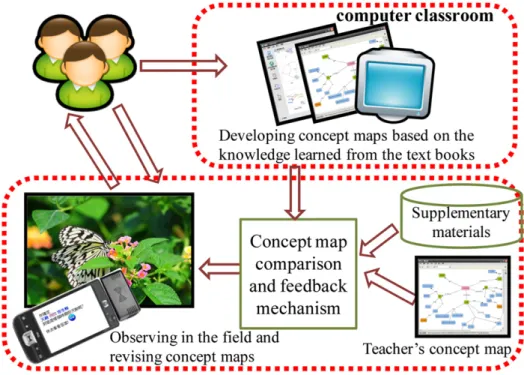
In this study, a concept map-oriented Mindtool with a remediation mechanism, ICM3(Interactive Concept Map-oriented Mindtool for M-learning), is developed to assist students in developing and revising their concept maps based on what they have observed in thefield.Fig. 1
Fig. 1.System structure of the interactive concept map-oriented mobile learning system.
再點出
concept map
是有效的
mindtools.
說明研究問題
(
研究問題需配合相對實驗方法
)
強調系統的影響、強調系統的使用、精簡系統的設計
Concept map
的影響
shows the framework of ICM3, in which CmapTools, developed by the Institute for Human and Machine Cognition (IHMC) of the Florida University System (Novak & Cañas, 2006), is adopted as the concept map editing tool to work with the assessment and feedback system in the mobile learning activities.
Before observing the learning targets in thefield, the students can develop the initial concept map based on what they have learned from their textbooks or in class. Via the PDA (Personal Digital Assistant), the students can browse and revise their concept maps in thefield. When the updated concept maps are submitted, ICM3will evaluate them based on the objective concept map provided by the teacher, and provide feedback and supplementary information to the students. The feedback includes hints or comments on the correctness of the concept map, such as“Are you sure about the relationship between Concepts A and B?”or“A missing concept related to Concept A is detected.”The supplementary information includes a set of learning materials related to the missing or incorrect concepts/connections.
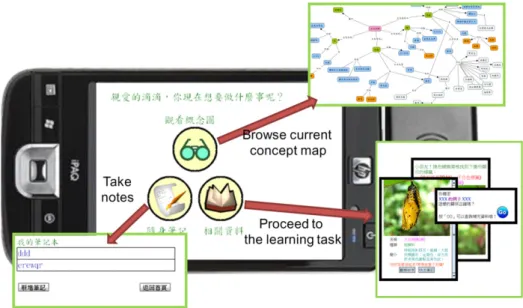
Fig. 2shows the basic functions of the mobile learning system developed based on the ICM3approach. The“Browse current concept map”
function provides the link to the latest version of the students’concept maps. This function enables the students to compare their knowledge represented in the concept map with what they are observing in thefield. The“Take notes”function allows the students to describe what they have found in thefield or to raise questions based on the observations, which could be helpful to them for making comparisons between the learning targets, such as features of plants or insects. The“Proceed to the learning task function”shows the learning missions to the students and guides them to the learning targets.
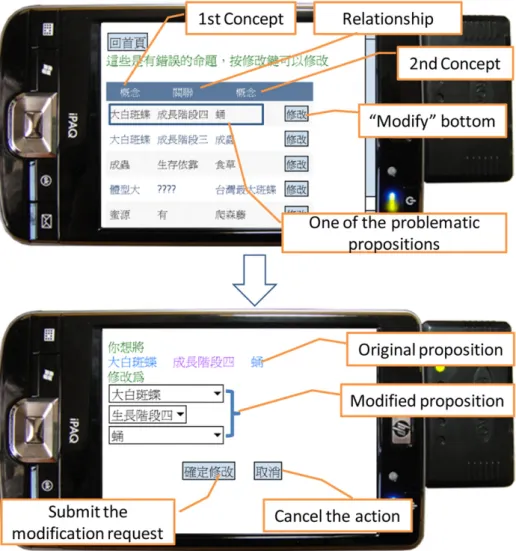
When the students browse their current concept maps andfind that they are inconsistent with what they are observing in thefield, they can modify them immediately. After receiving the updated concept maps, the learning system compares them with the objective concept map and provides instant feedback and relevant materials to the students.Fig. 3shows an illustrative example of applying the interactive concept map approach to the learning activity of an elementary school“butterfly ecology”course. The students use CmapTools to create concept maps to represent what they have learned in the class and then observe“the ecology of butterflies”in thefield. Each time the students submit a modified concept map, the mobile learning system provides hints and the links to the relevant supplementary materials. Fig. 4shows an illustration of modifying the problematic propositions. When the student selects the“List Problematic Propositions”
function, the learning system shows a list of the problematic propositions on the PDA screen, as shown in the upper part ofFig. 4. Once the student selects one of the propositions to modify, the learning system presents the modification interface, which shows the original proposition and the area for inputting the modified proposition, as shown in the lower part ofFig. 4. Furthermore, the student can change the concepts or the relationship between the concepts via the pre-defined pull-down menu, and then submit the modification request to the learning system.
3. Experiment design
To evaluate the efficacy of the proposed approach, an experiment was conducted to compare the learning achievements and attitudes of the students who participated in a mobile learning activity using computerized concept map tools. The authentic learning environment is a butterfly ecology garden located in southern Taiwan, as shown inFig. 5.
3.1. Participants
The participants were thirty students from several elementary schools in southern Taiwan. Their average age was ten. To avoid the Hawthorne effect, the participants were randomly assigned to an experimental group and a control group before the experiment, each of which includedfifteen students. Moreover, the two groups of students were arranged to learn in the same ecology environment at different times, so that they would not be affected by the other group during the learning activity.
Fig. 2.Interface of the interactive concept map-oriented mobile learning system.
3.2. Treatments
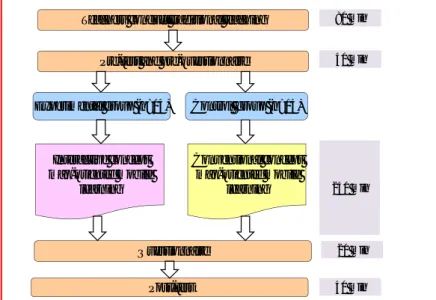
Fig. 6presents the experiment design of this study. Both groups of studentsfirst received instruction about the basic knowledge of butterfly ecology, and then took a pre-test and completed a questionnaire for analyzing their knowledge of and attitudes toward butterfly ecology before participating in the mobile learning activity.
Fig. 3.Example of providing hints and links to supplementary materials by the mobile learning system.
Fig. 4.Example of modifying the problematic propositions.
A location-aware mobile learning environment was established by setting up wireless communication networks in a butterfly ecology garden, in which an RFID tag is installed in each target ecology area. During the activity, each student holds a PDA equipped with an RFID reader, with which the learning system is able to detect the location of the students, guide them tofind the target ecology areas, and show them the corresponding learning tasks or related learning materials.
The learning mission of individual students is to develop a concept map for describing the ecology of Idea leuconoe clara, which is a kind of butterfly that that can be found all year round. The authentic learning environment is a butterfly ecology garden located in southern Taiwan. In the garden, the students can observe features and the four growing stages of Idea leuconoe clara, including eggs, larvas, pupas and imago; moreover, they can also see the various host plants of Idea leuconoe clara.
In thefirst stage of the activity, both groups of students received instruction in using the mobile devices and the concept maps. They were then asked to create their own concept maps about butterfly ecology based on what they had learned from the textbooks using personal computers in the computer classroom.
In the second stage, both groups of students were asked to observe butterfly ecology in the real-world environment and revise their concept maps via the hand-held devices. In this stage, the students in the control group were allowed to browse their concepts maps, access all of the supplementary materials, observe the authentic butterfly ecology, search for data on the Internet and modify their concept maps via the mobile devices. On the other hand, the students in the experimental group used the same equipment to learn with ICM3in the same environment; that is, when the students tried to modify their concept maps based on what they had observed in thefield, the mobile learning system evaluated the concept maps and provided hints and relevant supplementary materials immediately. The learning activity was conducted for 240 min for both groups. After the learning activity, both groups of students took a post-test; moreover, they were asked tofill in the same questionnaire to measure if their attitudes toward butterfly ecology had changed.
3.3. Measuring tools
The pre-test consists of twenty multiple-choice questions and four matching items with total scores of 80 and 20, respectively. It was designed to evaluate the students’basic knowledge concerning butterflies before the learning activity. The post-test, a detailed test about butterfly ecology, contains ten multiple-choice items, ten matching items andfive short-answer questions with total scores of 40, 30 and 30,
Fig. 5.The scenario of the mobile learning activity.
Interactive concept map-oriented mobile learning Conventional concept map-oriented mobile learning Control group (n=15) Experimental group (n=15)
Teachers conduct traditional teaching
Pre-test and pre-questionnaire
Questionnaire Post-test 240 min 80 min 40 min 20 min 40 min Fig. 6.Experiment procedure.
拍張實驗過程的照片
respectively. Both the pre-test and the post-test were developed by consulting two teachers who had taught the butterfly ecology course for more thanfive years.
The questionnaire consists of three dimensions, that is,“attitudes toward learning natural science”,“perceived usefulness of the learning approach”, and“interest in using the learning system”, which include 7, 7, and 6 items, respectively. A six-point Likert scheme is used to rate the questionnaire items, where“6” means strong agreement or positive feedback and“1” represents high disagreement or negative feedback. The Cronbach’s alpha values of the three dimensions are 0.92, 0.87 and 0.85.
Moreover, the cognitive load measure proposed bySweller, Van Merriënboer, and Paas (1998)is employed to investigate the effects of the proposed approach on the in-field performance of the students. The measure contains 2 items for themental loadand 2 items for themental effortdimensions, for which the Cronbach’s alpha values are 0.94 and 0.96, respectively.
The Similarity Index proposed byChang, Sung, Chang, and Lin (2005)is employed to score the students’concept maps. In this scoring scheme, individual students’concept maps are scored by comparing each proposition with the corresponding proposition in the teacher’s concept map. If the two propositions are the same, the weighting of the proposition pre-defined by the teacher is added to the accumulated score for the student’s concept map. If the two propositions are partially matched (e.g., the relationship between two concepts is correctly described but with an incorrect direction), only half of the weighting is added to the accumulated score. Such a scoring scheme has been shown byChang et al. (2005)to be superior to the previous scoring approaches. The Similarity Index for Student Si is (Accumulated score of Si’s propositions)O(Sum of proposition weightings in the teacher’s concept map)100.
4. Experimental results
4.1. Learning achievements
Before participating in the learning activity, the students took a pre-test for evaluating their basic knowledge about butterflies. The means and standard deviations of the pre-test scores were 68.53 and 11.04 for the experimental group, and 65.20 and 12.66 for the control group. At-test performed on the pre-test scores showed no significant difference between the pre-test results of the two groups, with
t¼0.77 andp>.05; that is, the two groups of students had equivalent knowledge about butterflies before participating in the learning activity.
After conducting the mobile learning activity, at-test was performed on the post-test scores of the two groups, as shown inTable 1. It was found that the learning achievement of the experimental group students (i.e., mean¼76 and SD¼9.92) was significantly better than that of the control group students (i.e., mean¼66.8 and SD¼13.51), witht¼2.12 andp<.05; moreover, the Cohen’sdwas 0.78, showing high effect size of thet-test (Cohen, 1988), implying that the ICM3approach was more helpful to the students in improving their learning achievement for the natural science course than the traditional concept map approach.
Furthermore, the concept maps developed by the students were rated by two teachers based on the assessment scheme proposed by Chang et al. (2005)with a perfect score of 100. The Cronbach’s alpha value of the two teachers’ratings was 0.98, showing high reliability of the concept map scores. By applying thet-test analysis, it was found that the students in the experimental group had significantly better concept map scores than the control group, as shown inTable 2. Moreover, by applying the Pearson correlation analysis, it was found that the post-test scores of the students were highly related to the concept map scores, with a correlation coefficient of 0.57 (p<.01). Such afinding further implies that the ICM3approach can improve the students’learning achievement via enhancing their knowledge structure.
Furthermore, the analysis results of the students’cognitive load also provide some interesting evidence. It is found that there is no significant difference between the two groups of students in terms of the levels of mental effort (t¼0.2;p>.05) and mental load (t¼ 0.94;
p>.05). However, by employing the Pearson correlation analysis, it is found that the learning achievement of the students was significantly correlated with mental effort, with a correlation coefficient of 0.376 (p <.05), but that there was no significant correlation with mental load.
As mental load refers to the interactions between the learning tasks, subject characteristics and subject materials, it represents the
“intrinsic cognitive load”which is highly related to the complexity of the learning materials that the students need to handle (Verhoeven, Schnotz, & Paas, 2009). In this study, the students in both groups were arranged to learn the same subject materials and face the same learning tasks; therefore, it makes sense that the mental loads of the two groups of students did not significantly differ. On the contrary, mental effort is related to the learning approaches or strategies used in the learning activities (Verhoeven et al., 2009); consequently, the significant correlation of mental effort and learning achievement further shows that the learning effectiveness is due to the use of the ICM3 approach, which has decreased the mental effort and has improved the learning achievement. Thisfinding conforms to what has been reported by previous studies, namely that learning achievement is negatively correlated with mental effort (Verhoeven et al., 2009). Table 1
t-test result of the post-test scores.
N Mean SD t d
Post-test Experimental group 15 76.00 9.92 2.12* 0.78
Control group 15 66.80 13.51
*p<.05.
Table 2
t-test result of the concept map scores rated by the two teachers.
N Mean SD t Experimental group 15 47.53 16.23 2.69* Control group 15 33.4 12.15 *p<.05.
問卷說明說明,含信度
使用
t-test
驗證兩組前側無差異
使用
t-test
驗證兩組後側的差別
使用後測分數與
concept map
分數的相關係數來佐證
使用學習成就與認知負荷的相關係數來佐證
4.2. Learning attitudes
The learning attitude questionnaire contains the 7 items: (1) The natural science course is valuable and worth studying; (2) It is worth learning those things about natural science (e.g., butterfly ecology); (3) It is worth learning the natural science course well; (4) It is important to learn more about natural science, including observing those ecology areas; (5) It is important to know the ecology surrounding us; (6) I will actively search for more information and learn about butterfly ecology; (7) It is important for everyone to take the natural science course.
Table 3shows thet-test result of the students’attitudes toward learning science before and after the learning activity. It is found that the learning attitudes of the students in the experimental group significantly improved after the learning activity, while the change in the control group students’attitude was not significant. Consequently, it can be seen that ICM3not only improved the students’learning achievements, but also their attitudes toward science learning. Thisfinding conforms to previous studies concerning technology-enhanced learning in that effective learning guidance strategies or mechanisms are helpful to students in improving their learning attitudes as well as their learning achievements (Hwang & Chang, 2011).
Moreover, for the students in the experimental group, it was found that the questionnaire items“I like to learn the natural science course via observing the real-world objects”and“I like to observe the butterfly ecology in the real-world”received the highest average ratings (i.e., 5.73 and 5.67) among the seven items after the learning activity. On the contrary, those two items received relatively low average ratings among the seven items from the students in the control group after the learning activity (i.e., 4.87 and 4.6). It can be seen that the interactive concept map approach has promoted the students’interest infield observations of the natural science course.
4.3. Perceived usefulness of and interest in using the remediation mechanism
For the perceived usefulness dimension, the mean and standard deviation of the questionnaire items were 5.73 and 0.56, showing that the students in the experimental group highly recognized the usefulness of the feedback provided by the ICM3system; in particular, the students believed that using this system in their learning enabled them to think differently about the learning content, with Mean¼5.87 and SD¼0.35, as shown inTable 4.
In addition, the students showed high interest in and devotion to using this learning system, with an average rating of 5.73 and a standard deviation of 0.56.Table 5shows the means and standard deviations of the questionnaire items for this dimension. It can be seen that the students were highly involved in using the learning system (mean¼5.93 and SD¼0.26) and were willing to use this way of learning for other courses (mean¼5.87 and SD¼0.35), indicating that the interactive concept map-oriented mobile learning was highly accepted by the students in this in-the-field learning activity.
5. Discussions
In this study, a concept map-oriented mobile learning system with an instant feedback mechanism is provided. The experimental results show that such an instant assessment and remediation approach can significantly improve the learning achievement as well as the learning attitude of students in thefield. Such afinding conforms to the studies ofBurleson (2005)andLi et al. (2010)in that the awareness of problematic concepts is helpful to students in making reflections and improving their learning performance. Thefinding also conforms to the studies ofHung, Lin, and Hwang (2010)andHsieh, Jang, Hwang, and Chen (2011)in that the provision of proper assessment tools can help students make reflections and engage in higher-order thinking in thefield. In comparison with traditional in-the-field learning, in which the assessment of students’learning tasks is usually carried out after the learning activity, the immediate assessment and feedback mechanism provides students with the opportunity to proceed with in-depth observations of the critical learning targets.
On the other hand, the experimental results also give a hint as to how to appropriately apply technology in learning situations. Although using hand-held devices to supportfield learning has been widely discussed by researchers in recent years, the learning performance of students in such learning scenarios is not always favorable. Without proper knowledge construction tools, the students might have difficulty Table 3
t-test result of the students’attitudes toward science learning before and after the learning activity.
Experimental group (N¼15) Control group (N¼15)
Mean (SD) t Mean (SD) t
Attitudes toward science learning Before 5.12 (0.64) 3.66* 4.59 (1.10) 1.14
After 5.54 (0.48) 4.90 (1.18)
*p<.05.
Table 4
Analysis of the Perceived Usefulness of the mobile learning system with the remediation mechanism.
Questionnaire item Mean SD
1. Using the feedback provided by the learning system enables me to concentrate on learning. 5.53 0.74 2. I have a deeper understanding of the learning content via the feedback provided by the learning system. 5.73 0.46 3. Using this system in learning enables me to think differently about the learning content. 5.87 0.35 4. This way of learning helps me discover my personal learning problems. 5.33 0.90 5. The feedback provided by the learning system can assist me in correcting some misconceptions. 5.27 1.28 6. The feedback offered by this learning system enables me to understand the parts I have not learned well. 5.47 1.30 7. The functions provided by the system are beneficial to my learning achievement. 5.6 0.83
使用科學學習態度問卷來佐證結果
使用知覺有用與知覺有趣問卷來佐證結果
in linking what they have observed in thefield to the prior knowledge learned from the textbooks (Hwang, Chu, Lin, & Tsai, 2011). Furthermore, without immediate assessment and feedback, the students might not be able to complete their learning missions in a satis-factory manner. Therefore, when developing a technology-enhanced learning environment, it is important to provide proper learning tools and an immediate assessment and feedback mechanism (Herrington & Oliver, 2000; Jordan & Mitchell, 2009).
It is also important to consider how such an approach can be applied to practical applications. It should be noted that PDA’s and RFID’s are not popular devices; therefore, it would be better to adopt widely used devices and technologies, such as mobile phones and QR-codes (Quick Response codes) for spreading this approach to schools. Moreover, it is difficult for most school teachers to develop their own mobile learning systems that work in the specified real-world learning environments; consequently, it is necessary to develop some
“templates”of mobile learning systems, such that the school teachers can modify the content of the selected template to meet the criteria of the real-world environment.
6. Conclusions
In this paper, an interactive concept map approach for supporting mobile learning activities is proposed; moreover, a mobile learning system with an interactive concept map mechanism, ICM3, has been implemented based on the proposed approach. ICM3assists students in re-organizing their observations in thefield by evaluating the concept maps developed by the students and giving instant hints or learning guidance. An experiment on a natural science course has been conducted to evaluate the effectiveness of the proposed approach by comparing the learning performance of the students who learned with ICM3and those who learned with the traditional concept map-oriented mobile learning approach. The experimental results showed that, with the help of ICM3, the experimental group students had significantly better performance than those in the control group in terms of learning achievements and learning attitudes.
In addition, from the measure of cognitive load, it is found that the learning achievement of the students was significantly correlated with their mental effort, indicating that the improvement in the learning achievement of the experimental group students was due to the use of an effective tool or learning strategy (i.e., ICM3). The feedback from the experimental group students in the“perceived usefulness”and
“interest in using the learning system”questionnaire dimensions also shows that most students credit their learning performance to the use of ICM3. Therefore, it is concluded that the interactive concept map approach is able to help students organize and refine their observations in thefield.
Although ICM3has benefited the students in this application, the small screen size of the mobile devices limits the display and editing of concept maps; therefore, when designing a learning task, the teachers need to consider the number of concepts to be taken into account. The use of more contemporary mobile technologies, such as iPads and Android-based devices (e.g., Samsung Galaxy tab) with bigger screens, higher resolution and easy-to-use interfaces, could be a solution to cope with this problem. Moreover, the current move toward cloud computing as well as some cooperative concept/mind mapping tools (e.g., Mindmeister) might extend the possibilities of conducting more challenging learning activities in the current project, such as cooperative knowledge construction tasks and data collecting and analyzing tasks that engage students in learning in a more interactive and meaningful manner.
In the near future, we will try to apply this approach to other mobile learning applications, including the natural science courses and local culture courses of elementary and high schools; moreover, we plan to develop other interactive Mindtools, such as a spreadsheet-oriented Mindtool and a database-oriented Mindtool to support web-based learning activities.
Acknowledgments
The authors would like to thank the Institute for Human and Machine Cognition (IHMC) of the Florida University System for providing CmapTools for use in this study. This study is supported in part by the National Science Council of the Republic of China under contract numbers NSC 99-2511-S-011-011-MY3 and NSC 99-2631-S-011-002.
References
Anderson-Inman, L., & Ditson, L. (1999). Computer-based concept mapping: a tool for negotiating meaning.Learning and Leading with Technology, 26(8), 6–13. Brown, J. S., Collins, A., & Duguid, P. (1989). Situated cognition and the culture of learning.Educational Researcher, 18(1), 32–42.
Burleson, W. (2005). Developing creativity, motivation, and self-actualization with learning systems.International Journal of Human-Computer Studies, 63, 436–451. Chang, K. E., Sung, Y. T., Chang, R. B., & Lin, S. C. (2005). A new assessment for computer-based concept mapping.Educational Technology & Society, 8(3), 138–148. Chen, C. M., & Li, Y. L. (2009). Personalised context-aware ubiquitous learning system for supporting effective English vocabulary learning.Interactive Learning Environments,
18(4), 341–364.
Chu, H. C., Hwang, G. J., & Tsai, C. C. (2010). A knowledge engineering approach to developing Mindtools for context-aware ubiquitous learning.Computers & Education, 54(1), 289–297.
Chu, H. C., Hwang, G. J., Tsai, C. C., & Tseng, J. C. R. (2010). A two-tier test approach to developing location-aware mobile learning systems for natural science course.Computers & Education, 55(4), 1618–1627.
Cohen, J. (1988).Statistical power analysis for the behavioral sciences(2nd ed.). Hillsdale. NJ: Eribaum. Table 5
Analysis of the students’interest in using the mobile learning system with the remediation mechanism.
Questionnaire item Mean SD
1. During the learning activity, I have carefully browsed the learning materials provided by the system and engaged myself in the learning tasks.
5.93 0.26
2. The way of learning is interesting and challenging. 5.73 0.46
3. I like this learning activity. 5.73 0.59
4. I hope to learn in this way for other courses. 5.87 0.35
5. I would like to use this learning system in the future. 5.6 0.83 6. I would like to recommend the learning system to peers. 5.53 0.64
說明結果
說明限制
Denton, P., Madden, J., Roberts, M., & Rowe, P. (2008). Students’response to traditional and computer-assisted formative feedback: a comparative case study.British Journal of Educational Technology, 39, 486–500.
Gibbs, G., & Habeshaw, T. (1993).Preparing to teach: An introduction to effective teaching in higher education. Bristol: Technical & Educational Services.
Herrington, J., & Oliver, R. (2000). An instructional design framework for authentic learning environments.Educational Technology Research & Development, 48(3), 23–48. Horton, P. B., McConney, A. A., Gallo, M., Woods, A. L., Senn, G. J., & Hamelin, D. (1993). An investigation of the effectiveness of concept mapping as an instructional tool.
Science Education, 77, 95–111.
Hsieh, S. W., Jang, Y. R., Hwang, G. J., & Chen, N. S. (2011). Effects of teaching and learning styles on students’reflection levels for ubiquitous learning.Computers & Education, 57(1), 1194–1201.
Hung, P. H., Lin, Y. F., & Hwang, G. J. (2010). The formative assessment design for PDA integrated ecology observation.Educational Technology & Society, 13(3), 33–42. Hwang, G. J., & Chang, H. F. (2011). A formative assessment-based mobile learning approach to improving the learning attitudes and achievements of students.Computers &
Education, 56(1), 1023–1031.
Hwang, G. J., Chu, H. C., Lin, Y. S., & Tsai, C. C. (2011). A knowledge acquisition approach to developing Mindtools for organizing and sharing differentiating knowledge in a ubiquitous learning environment.Computers & Education, 57(1), 1368–1377.
Hwang, G. J., Tsai, C. C., & Yang, S. J. H. (2008). Criteria, strategies and research issues of context-aware ubiquitous learning.Journal of Educational Technology & Society, 11(2), 81–91.
Ingeç, S. K. (2009). Analysing concept maps as an assessment tool in teaching physics and comparison with the achievement tests.International Journal of Science Education, 31(14), 1897–1915.
Johnson, E. P., Perry, J., & Shamir, H. (2010). Variability in reading ability gains as a function of computer-assisted instruction method of presentation.Computers & Education, 55(1), 209–217.
Jonassen, D. H. (1999).Computers as Mindtools for schools, engaging critical thinking. Englewood Cliffs, NJ: Prentice-Hall.
Jonassen, D. H., & Carr, C. S. (2000). Mindtools: affording multiple knowledge representations for learning. In S. P. Lajoie (Ed.),Computers as cognitive tools. No more walls, Vol. 2 (pp. 165–196). Hillsdale, NJ: Lawlence Erlbaum Associates, Inc.
Jonassen, D. H., Carr, C., & Yueh, H. P. (1998). Computers as Mindtools for engaging learners in critical thinking.TechTrends, 43(2), 24–32.
Jordan, S., & Mitchell, T. (2009). e-Assessment for learning? The potential of short-answer free-text questions with tailored feedback.British Journal of Educational Technology, 40, 371–385.
Kao, G. Y. M., Lin, S. S. J., & Sun, C. T. (2008a). Breaking concept boundaries to enhance creative potential: using integrated concept maps for conceptual self-awareness. Computers & Education, 51, 1718–1728.
Kao, G. Y. M., Lin, SS. J., & Sun, C. T. (2008b). Beyond sharing: engaging students in cooperative and competitive active learning.Educational Technology & Society, 11(3), 82–96. Li, L., Liu, X., & Steckelberg, A. L. (2010). Assessor or assessee: how student learning improves by giving and receiving peer feedback.British Journal of Educational Technology,
41, 525–536.
Liu, C. C., Don, P. H., & Tsai, C. M. (2005). Assessment based on linkage patterns in concept maps.Journal of Information Science and Engineering, 21(5), 873–890. Liu, T.-C., Peng, H., Wu, W.-H., & Lin, M.-S. (2009). The effects of mobile natural-science learning based on the 5E learning cycle: a case study.Educational Technology & Society,
12(4), 344–358.
Narciss, S., & Huth, K. (2006). Fostering achievement and motivation with bug-related tutoring feedback in a computer-based training for written subtraction.Learning and Instruction, 16(4), 310–322.
Novak, J. D., & Cañas, A. J. (2006). The origins of the concept mapping tool and the continuing evolution of the tool.Information Visualization, 5, 175–184. Novak, J. D., & Gowin, D. B. (1984).Learning how to learn. Cambridge, New York: Cambridge University Press.
Novak, J. D., & Musonda, D. (1991). A twelve-year longitudinal study of science concept learning.American Education Research Journal, 28, 117–153.
Ogata, H., & Yano, Y. (2004, March). Context-aware support for computer-supported ubiquitous learning. InPaper presented at the 2nd IEEE International Workshop on Wireless and Mobile Technologies in Education, JhongLi, Taiwan.
Panjaburee, P., Hwang, G. J., Triampo, W., & Shih, B. Y. (2010). A multi-expert approach for developing testing and diagnostic systems based on the concept effect model. Computers & Education, 55, 527–540.
Pena-Shaff, J. B., & Nicholls, C. (2004). Analyzing student interactions and meaning construction in computer bulletin board discussions.Computers & Education, 42(3), 243–265.
Peng, H. Y., Chuang, P. Y., Hwang, G. J., Chu, H. C., Wu, T. T., & Huang, S. X. (2009). Ubiquitous performance-support system as Mindtool: a case study of instructional decision making and learning assistant.Educational Technology & Society, 12(1), 107–120.
Peng, H. Y., Su, Y. J., Chou, C., & Tsai, C. C. (2009). Ubiquitous knowledge construction: mobile learning re-defined and a conceptual framework.Innovations in Education and Teaching International, 46(2), 171–183.
Sweller, J., Van Merriënboer, J. J. G., & Paas, F. G. W. C. (1998). Cognitive architecture and instructional design.Educational Psychology Review, 10(3), 251–297.
Trent, S. C., Pernell, E., Jr., Mungai, A., & Chimedza, R. (1998). Using concept maps to measure conceptual change in preservice teachers enrolled in a multicultural education/ special education course.Remedial and Special Education, 19, 16–30.
Tsai, M. J., & Tsai, C. C. (2003). Information searching strategies in web-based science learning: the role of Internet self-efficacy.Innovations in Education and Teaching International, 40(1), 43–50.
Valcke, M., Rots, I., Verbeke, M., & Braak, J. V. (2007). ICT teacher training: evaluation of the curriculum and training approach in Flanders.Teaching and Teacher Education, 23(6), 795–808.
Verhoeven, L., Schnotz, W., & Paas, F. (2009). Cognitive load in interactive knowledge construction.Learning and Instruction, 19, 369–375. Wenger, E. (1997).Communities of practice: Learning, meaning, and identity. Cambridge, UK: Cambridge University Press.