A
M
ETHODOLOGICAL
F
RAMEWORK FOR
ICT
R
OADMAP
D
EVELOPMENT FOR
R
URAL
A
REAS
A thesis submitted in fulfillment of the requirements for the degree of
Doctor of Philosophy (PhD) in Computer Science
by
Nobert Rangarirai Jere
Promoters: Prof. M. Thinyane and Prof. A. Terzoli
Department of Computer Science, Faculty of Science and AgricultureUniversity of Fort Hare, Private Bag x1314 Alice 5700, South Africa
ii
Declaration
I, the undersigned, declare that the work contained in this thesis is my own original work. I acknowledge that all references are accurately recorded and that, unless otherwise stated, all work herein is my own.
Signature:
iii
Preface
I wish that in the near future all ICT services could be available to everyone in rural areas, with access to ICT services at various sites – and encourage competent, fair and trustworthy services at reasonable costs to meet the basic ICT needs of rural individuals.
Considering this statement, this thesis proposes an innovative methodological framework for an ICT infrastructure roadmap. This roadmap framework focuses on explaining the ICT infrastructure, technologies and services that should be in place for rural areas to be able to access public services within their respective communities using available ICT devices. The roadmap framework is built based on the current state of ICTs, trends in ICTs, future technological projections and the different roles currently being played by ICT stakeholders on the African continent. The current ICT developmental plans and roadmap were analysed, and this was important in the designing of the ICT roadmap framework discussed in this thesis.
The author is very grateful for the support given by different research groups involved in this research. These were considered as the major stakeholders with the different ICT experiences necessary for the development a methodological framework for the ICT roadmap.
iv
Acknowledgements
I would like to extend my gratitude to my supervisors, Prof M. Thinyane and Prof A. Terzoli, for their critical input, guidance and support throughout this research project.
I would also like to thank the members of the Siyakhula Living Lab (SLL), in the Department of Computer Science (University of Fort Hare) where this project was undertaken, for supporting me. The project was encouraged by funding from the SLL funders, which include THRIP/NRF, Telkom, Tellabs, SaabGrintek Technologies, Eastel and Khula Holdings. To the Dwesa community, the Keiskammahoek farmers, the Alice community and all rural dwellers who shared their ideas and ICT needs and experiences – thank you all.
Thirdly, I would like to thank the Aalto University team for their hospitality during my data collection in Finland. Matti Hämäläinen (Professor) at Aalto University, SoberIT, Department of Computer Science and Engineering, Professor Marko Nieminen at Aalto University, School of Science, Department of Engineering and Management and Mikko Heiskala at Aalto University, School of Science, Department of Computer Science and Engineering, (ASF Education Coordinator) SoberIT, Kimmo and Aman – I thank you all for supporting me during my visits to Finland. To all the Finns and ICT research experts whom I met during my stay in Finland, thank you for supporting me and for your hospitality – Kitos.
To all those who initiated and funded trips and research funds during my studies, such as Telkom Centre of Excellence in ICTD – University of Fort Hare, SAFIPA, TEKES for my visits to Finland and all those who were behind this funding, I really appreciate and thank you all.
To the thesis editors, Dr Siziba and Andy Grewar, data translation expert Mr Muruviwa, the statistician Tlou, guys who proof read and helped in designing the ICT roadmap framework (Dr. Taruvinga, Sylvester Honye, Brighton Chamunorwa) – your comments were fruitful and I thank you. Family, friends, relatives and colleagues who all supported me - Be Blessed. And to my fiancée, Millicent – thanks for the support and encouragements.
Finally, I would like to thank all those who supported me, including research colleagues from Walter Sisulu University with whom I shared various research ideas towards the end of this research. Thank you all.
v
Publications related to the work reported in this thesis
1. JERE, N.R., THINYANE, M., TERZOLI, A. (2011). Factors affecting the Future of Technological ICTs Projections in Marginalised Communities. World Wide Web Applications (ZA-WWW 2011), 14– 26 September 2011, University of the Witwatersrand, Johannesburg, South Africa.
2. JERE, N.R., THINYANE, M., TERZOLI, A. (2011). Development of an ICT road map for eServices in rural areas. ITU Kaleidoscope 2011, 12–14 December 2011, Cape Town, South Africa.
3. JERE, N.R., THINYANE, M., TERZOLI, A. (2012). ICT eServices Requirements to Address Rural Users Expectations and Needs.Journal of Communication and Computer 9: 285–296.
4. DHIR, A., JERE, N.R., PUNEET KAUR, MIKKO HEISKALA, IBRAHIM A. ALBIDEWI, DANIYAL M. ALGHAZZAWI. (2012). Design Guidelines for Pervasive Computing: Implications of Technology Use in Africa.The second IEEE International workshop on social implications of pervasive computing, 2012, Lugano, Switzerland, pp. 925–930.
5. DHIR, A., MOUKADEM, I., JERE, N.R., KAUR, P., KUJALA, S., YLÄ-JÄÄSKI, A. (2012). Ethnographic Examination for Studying Information Sharing Practices in Rural South Africa. ACHI 2012: The Fifth International Conference on Advances in Computer-Human Interactions, Valencia, Spain.
6. GUMBO, S., JERE, N.R., TERZOLI, A. (2012). A Qualitative Analysis to Determine the Readiness of Rural Communities to Adopt ICTs: Siyakhula Living Lab Case Study. IST-Africa 2012 Conference and Exhibition, 09–12 May 2012, Dar es Salaam, Tanzania.
N.B. These publications have been included to show the research that the author carried out during the whole thesis preparation, but they do not represent the entire thesis content. The thesis is a complete stand-alone work, as is the tradition of South African Universities.
vi
Author’s contributions
Paper 1 – factors affecting future technological projections
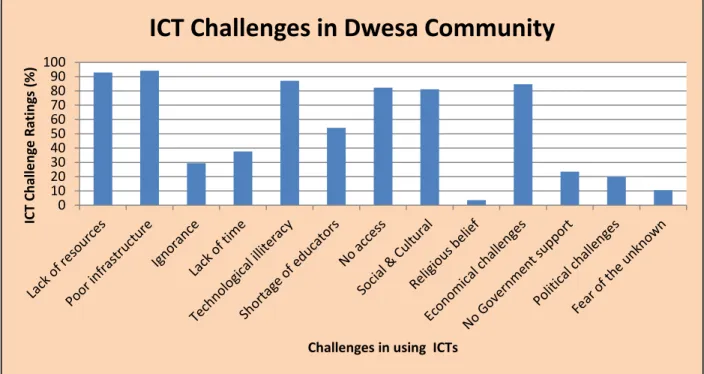
The paper focuses on identifying the future ICT projections, looking at the current literature available on future ICT projections. Then, the different factors affecting the projections, both positive and negative, are discussed. These factors are based on what rural ICT users and also ICT experts shared on how various ICT factors could influence the deployment of future projections in rural areas. Socio-cultural factors were viewed by rural users as the main factors that discourage future technological projections implementation in rural areas. For ICT experts, poor infrastructure, shortage of ICT resources and high technological illiteracy were the main discouraging factors. The main difference we noticed in explaining the factors was that the community members felt socio-cultural factors were the key factor that negatively affects the developments of ICTs. However, the ICT experts, probably since they are mainly from developed countries, felt that poor infrastructure was the main factor. In the case of Dwesa, the community members felt their community is improving in terms of infrastructure as a result of the SLL, so they could hardly say poor infrastructure was the main factor. In conclusion, we noticed that there are different efforts to improve rural communities and all of these are encouraging the future technological projections to be achieved. However, there are many factors which differ from one community to the other, and major challenges in rural areas that make it difficult to develop ICTs there.
Paper 2 - An ICT roadmap for eServices
The paper considers the future technological projections, general problems in rural areas, different ICT developments and the current status of the eServices within the SLL to propose an ICT roadmap for African rural areas. The paper proposes a strategy that addresses the current ICT challenges experienced in rural areas. The paper also explains that rural users are the important stakeholders required for ICT roadmap development for rural communities. A user-centric methodological approach is discussed as being useful for the roadmap development. The paper highlights the proposed idea to improve the sustainability of rural ICTs by preparing for the future through an ICT roadmap and gives some key components of the proposed roadmap. ICT roadmap components discussed in this paper include: future projections, users expectations, ICT services and how users access services. These components address social, economic and technological factors affecting ICT developments and how to fulfill the rural users’ expectations and how future projections could be applied in rural areas.
vii
Paper 3 – ICT services requirements – Rural users vs ICT experts
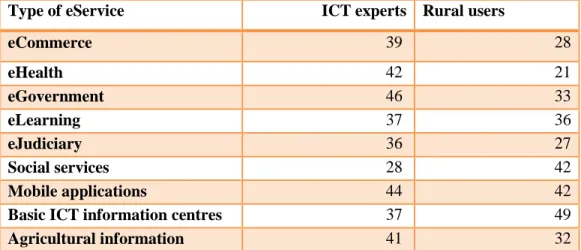
ICT end users were interviewed; these were from the Dwesa rural community. For this paper we were interested in the views of 50 different users from this community. The paper also includes the views of ICT experts’ views on ICT services expected in rural areas. The paper gives a summary of the views of ICT experts from developed nations versus those of the rural users. One of the key points to note in this paper was the differences between the views of rural users and ICT experts on each of the intended ICT services. We found that in some cases the rural users were not sharing the same opinions about some of the services that ICT experts thought are important for rural areas. The findings of the paper show that rural users expect ICT services that are available, affordable, accessible and that provide income generating opportunities. The issues of ICT training needs, proper business models for ICT service development were also raised in this paper. These services were useful in developing the ICT roadmap framework presented in this thesis. The paper highlights ideas which could be used to close the gap between the two study groups expectations by proposing a basic ICT architecture that positions the rural community users as the centre of the proposed roadmap plan.
Paper 4 – Design guidelines for pervasive computing
The author carried out studies in Alice and the Dwesa community to get an understanding of how rural people view and use ICTs. An ethnographic study was done to see how rural people share ideas using technologies. The mobile device was the main ICT device discussed. The author engaged with rural people and with other ICT experts from Finland, India and Saudi Arabia to write the papers.
This paper aimed to make recommendations on designing technologies that can help to improve rural peoples’ lives. This could be helped by gaining an understanding of the users’ requirements and expectations. One of the key findings in this paper was that there are many forms of ICTs in poor communities and most of the ICTs are not fully utilized. The idea of the paper was to understand the impacts of different technologies and the views of the rural ICT users on what they feel technology could do for them. In this paper, the feelings of the rural users on technological changes and the future were explored. Such findings were important for this thesis as they assisted in alerting on how and what ICT services and devices to provide for rural people. The paper also proved that the ICTs such as mobile phones are available in rural areas, but very few people use them to share information. Most people in rural areas still prefer oral communication and rely more on word of mouth. This was important for the thesis as one can tell the best ICT services and the plan of action that is required in rural areas for the services to benefit the community at large. The author was on the ground to collect information and arrange all meetings. The data reported in these papers were collected by the author of this thesis.
viii
Paper 5 – Ethnographic study
This paper focused on understanding how rural people share information. The idea was to find out if they use ICTs to share and exchange information. The authors wanted to know what ICT devices are available in rural areas and the ownership of ICTs. An ethnographic field study was performed in order to understand the current state of mobile phone and ICT usage in rural areas. Two poor rural communities in South Africa were chosen. One of the contributions in this paper was to identify rural ICT needs of the users dwelling in a rural context and comparing these to those in the developed world. There is a big difference between rural users’ expectations and those in developed nations.
Other, similar research has been conducted in India and China. However, in this paper, only results from two rural communities in South Africa are reported. The key objectives of this study were: first, to study how South African rural dwellers use mobile phones and other ICT devices to share information. The idea was to use the findings to help in developing a new mobile phone interface to cater for poor and low-resourced communities. The second idea was to compare the South African context to that of India and China. This made this study partially cross-cultural in nature. This paper helped in understanding the ICT device requirements for rural areas and the current ICT usage or challenges in rural areas.
Paper 6 – Rural community eReadiness
Having conducted various studies in rural areas, the author carried out an eReadiness study in Dwesa community. The focus of the paper was to identify the current state and readiness of the community to use the internet within the community. The internet was chosen after noticing the benefits that it could bring to the Dwesa community. The readiness of rural communities to use technologies and services such as Internet was surveyed. The author visited the Dwesa community to understand and check with the community members if their community was ready for ICT devices. Having conducted various studies in rural areas, the author carried out an eReadiness study in the Dwesa community. The focus of the paper was to identify the current state and readiness of the community to use the internet. The internet was chosen after realizing the benefits that it could bring to the Dwesa community. SLL researchers (including the author of the thesis) organized meetings with teachers and community members from each of the eleven schools to engage them in sharing the proposed internet service deployment to the community. An assessment of each of the schools was done and the ICT resources were recorded. The views of the community and their understanding of ICT services were noted and recorded, and presented in this paper. The final conclusion was that some of the schools still lack basic ICT infrastructure to support ICT services, but that the community is ready and willing to use ICTs to improve their lives. The community is already aware of some potential ICT benefits and ready to enjoy such benefits.
ix
For all the publications coming out of this research, the author initiated all the interviews, community engagement and workshops to get the feedback from the stakeholders involved. The involvement in data collection was important to clearly understand the ICT trends, future ICT trends and for building the roadmap framework. The publications were all important in explaining the findings that were used to develop the framework. The papers were used to build up the ICT roadmap framework as the results reported in the papers are those on which the discussed framework is based.
x
Research abstract
The use of Information Communication Technologies (ICTs) can support sustainable development within societies. ICTs have been supported by governments, private companies, non-governmental organisations, academic institutions and individuals. However, technological changes have made most ICT initiatives haphazard due to poor planning. There is no systematic plan on how to deploy services, infrastructure and devices especially in rural areas. For instance, in some cases, computers have been donated to communities in rural areas yet they are not being used, and ICT services have been deployed without the supporting ICT infrastructure. One of the solutions to addressing these ICT challenges is through the use of roadmaps to guide ICT solution implementation. This thesis proposes an ICT roadmap methodological framework to improve ICT roadmap development for rural ICT solutions.
A composite methodological approach was employed in this research. This involves the use of qualitative research techniques such as participant observation, design exercises, workshops, focus groups and individual interviews supported by ethnographic studies. The Siyakhula Living Lab in the Eastern Cape Province of South Africa was used as the case study. Studies were conducted to identify the current state of ICTs in rural areas, the future of ICTs and overview of roadmap developments. Rural users in South Africa, ICT experts in Europe and Africa, government officials and academic institutions were engaged to understand the current ICT planning, developments and needs.
The author found that there are variations in individual ICT services required by rural users but, most ICT services in need fall mainly in the areas of health, education, entrepreneurship, agriculture and employment creation for rural people. These services require ICT devices and infrastructure which include computer peripherals, mobile phones, radios, televisions and wireless infrastructure, mobile infrastructure, satellites and broadcasting infrastructure respectively. It was found that the common future ICT projections expected in rural areas include: growth of mobile usage, social networking, increase internet services and localization of services.
The roadmap framework is built based on the current state of ICTs, trends in ICTs, future technological projections and the plans currently been initiated in African continent. The ICT roadmap methodological focuses on how roadmaps could accommodate infrastructure, services and ICT devices to reach rural people. This should help rural users to be able to access public services within their respective communities using available ICT devices. ICT stakeholders could use the designed framework to improve the ICT roadmap development process for rural ICT users in Africa.
Keywords: ICTs; roadmapping; technology roadmap; roadmap framework; future projections; ICT services; infrastructure; ICT devices
xi
Table of Contents
Declaration ... ii
Preface ... iii
Acknowledgements ... iv
Publications related to the work reported in this thesis ... v
Author’s contributions ... vi
Research abstract ... x
Chapter 1: ICT DEVELOPMENTS ...1
1.1 Introduction ... 1
1.2 ICT overview ... 1
1.3 Overview of technological changes ... 2
1.4 Highlights of roadmaps ... 3
1.5 Research problem ... 4
1.6 Research questions ... 5
1.7 Research objectives ... 7
1.8 Research contribution ... 8
1.9 ICT roadmap research outline ... 8
1.10 Research background – case study ... 11
1.11 Research strategy and outcomes ... 13
1.12 Thesis overview ... 15
1.13 Conclusion ... 16
Chapter 2: ICT – CURRENT STATE OF THE ART ...17
2.1 Introduction ... 17
2.2 Overview of ICTs ... 18
2.3 Potential of ICTs ... 20
2.4 ICTs in rural areas ... 21
2.5 Current state of rural ICTs ... 23
2.6 ICT services for rural areas ... 24
2.7 ICT challenges in rural areas ... 26
2.8 ICT trends ... 31
2.9 Future ICT projections ... 34
2.10 Future projections for developed nations ... 36
2.11 Chapter summary ... 39
Chapter 3: TECHNOLOGY ROADMAP OVERVIEW ...40
3.1 Introduction ... 40
xii 3.3 Technology roadmaps ... 43 3.4 Roadmap requirements ... 44 3.5 Approaches to roadmaps ... 45 3.6 Importance of roadmaps ... 46 3.7 Characteristics of roadmaps ... 47
3.8 Challenges and factors affecting roadmaps ... 48
3.9 Roadmaps for developing nations ... 50
3.10 Summary of roadmaps ... 52
3.11 Chapter summary ... 53
Chapter 4: ICT ROADMAP METHODOLOGICAL APPROACH ...55
4.1 Introduction ... 55
4.2 Research techniques ... 56
4.3 Description of the research methodology approach ... 59
4.4 ICT roadmap methodological approach ... 60
4.5 Moving towards roadmap preparation ... 62
4.6 Roadmap methodological framework... 64
4.7 Future determination techniques... 69
4.8 General findings on current ICT trends ... 72
4.9 Study findings and the ICT roadmap framework ... 74
4.10 Conclusion ... 75
Chapter 5: ANALYSIS OF ICT ROADMAP FRAMEWORK ...76
5.1 Introduction ... 76
5.2 Overview of ICT services and challenges in rural areas ... 76
5.3 Future ICT projections ... 85
5.4 ICT usage and rural users view ... 89
5.5 Technology diffusion in rural areas ... 92
5.6 Rural community’s eReadiness ... 95
5.7 ICT roadmap development – infrastructure devices and services ... 98
5.8 Concept of ICT infrastructure ... 100
5.9 Technical requirements for roadmap methodological framework ... 103
5.10 ICT roadmap development based on studies conducted ... 104
5.11 ICT roadmap framework plan of action ... 112
5.12 Conclusion ... 114
Chapter 6: ICT ROADMAP METHODOLOGICAL FRAMEWORK DEVELOPMENT ...115
6.1 Introduction ... 115
xiii
6.3 ICT roadmap methodological framework description ... 119
6.4 ICT services ... 120
6.5 ICT services, infrastructure and device classification ... 121
6.5.1 ICT Service description ... 123
6.5.2 Description of ICT devices ... 126
6.5.3 ICT infrastructure description... 127
6.6 Roadmap methodological framework process ... 128
6.7 Explanation of ICT services & technologies ... 134
6.8 Contribution of the ICT roadmap framework ... 140
6.9 Chapter conclusion ... 141
Chapter 7: ROADMAP FRAMEWORK FINDINGS AND ANALYSIS ...142
7.1 Introduction ... 142
7.2 Findings after ICT roadmap framework development ... 143
7.3 Roadmaps for rural development... 146
7.4 ICT roadmap framework assessment using existing ICT roadmaps ... 147
7.4.1 Bangladesh roadmap ... 148
7.4.2 Pakistan – vision 2015 roadmap ... 148
7.4.3 Malaysia roadmap ... 150
7.4.4 The Philippines ICT roadmap ... 151
7.4.5 Lesotho roadmap ... 151
7.4.6 South Africa’s ICT plan ... 152
7.5 Analysis of existing roadmaps ... 153
7.6 Analysis and assessment of the roadmap framework ... 153
7.7 Roadmap success ... 157
7.8 ICT roadmap framework weaknesses ... 160
7.9 Justification of the ICT roadmap framework ... 161
7.10 Conclusion ... 163
Chapter 8: RESEARCH SUMMARY, RECOMMENDATIONS AND CONCLUSION ...164
8.1 Introduction ... 164
8.2 Research achievements ... 164
8.3 Recommendations ... 168
8.4 Successful ICT stories– applicability of ICT roadmap framework ... 169
8.5 Further research ... 170
8.6 Research conclusion ... 171
REFERENCES ...173
xiv
List of Figures
Figure 3:1 Factors affecting roadmaps ... 49
Figure 4:1 Roadmap methodological components ... 60
Figure 4:2 Methodological research plans ... 61
Figure 4:3 ICT key roadmap drivers ... 63
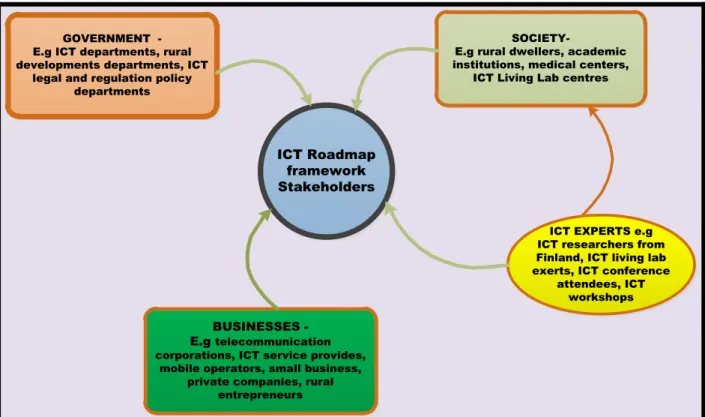
Figure 4:4 ICT stakeholders for roadmap planning ... 64
Figure 4:5 ICT roadmap methodological framework ... 65
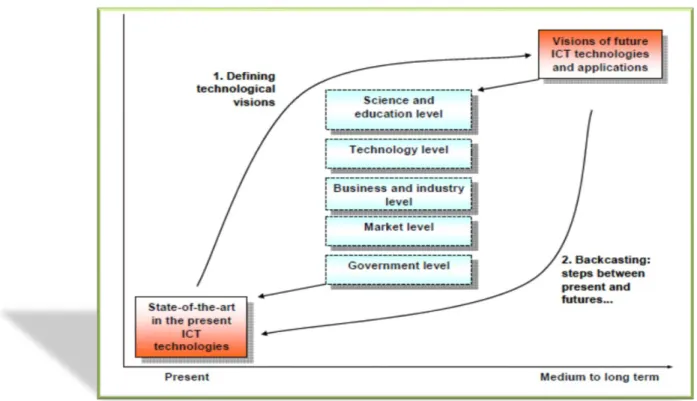
Figure 4:6 Backcasting techniques ... 70
Figure 5:1 ICT services in need ... 78
Figure 5:2 ICT challenges ... 83
Figure 5:3 SLL Current state of ICT services and partners ... 84
Figure 5:4 Future ICT projections ... 86
Figure 5:5 Ethnographic study population. ... 90
Figure 5:6 Technology diffusion: Adopted from Rogers ... 92
Figure 5:7 Roadmap of future projections ... 102
Figure 5:8 ICT technical requirements ... 103
Figure 5:9 ICT services ... 106
Figure 5:10 Future projections of ICTs ... 108
Figure 6:1 ICT services, devices and infrastructure all-in-one ... 122
Figure 6:2 ICT services, devices and infrastructure ... 130
Figure 6:3 ICT infrastructure for ICT devices and services ... 131
Figure 6:4 ICT services and devices related to infrastructure ... 132
Figure 6:5 ICT devices for services related to infrastructure ... 133
Figure 6:6 Generic ICT roadmap framework ... 134
Figure 6:7 ICT roadmap framework process ... 136
Figure 6:8 ICT roadmap process for each infrastructure ... 138
Figure 6:9 ICT roadmap framework Venn diagram ... 139
Figure 7:1 ICT roadmap framework assessment – based on existing roadmaps ... 154
xv
List of Tables
Table 1:1 Research objectives and questions matched ...………..12
Table 5:1 ICT services expected: Rural users vs. ICT experts views ... 78
Table 5:2 Characteristics of ICT services expected ... 80
Table 5:3 ICT users interviewed in rural areas ... 81
Table 5:4 ICT challenges affecting ICT services ... 82
Table 5:5 Factors promoting technological projections ... 87
Table 5:6 Factors discouraging ICT developments ... 88
Table 5:7 SLL schools current ICT state ... 97
Table 5:8 ICT devices for different Services ... 99
Table 5:9 Infrastructural roadmap plan ... 110
Table 5:10 Technologies for roadmap ... 111
Chapter 1:
ICT DEVELOPMENTS
There have been a number of very important technological changes that we have seen in the last decade. Today, using the results of the global report of the last 10 years, we can actually see that countries that have made some key decisions have succeeded in increasing access and improving competiveness and fundamentally we can identify indicators important for moving in the right direction. Now we too have also seen that technology has a very fundamental impact on development. So the impact of technology on transformation and productivity improvements is much documented. Today we are also starting to see the impact of technology on countries which are poorer and maybe the citizen population less educated.1
1.1 Introduction
This chapter explains how technologies have changed and affected ICT developments. The overall thesis highlights the current ICT trends and ICT roadmaps that are important to close the gap between rural and advanced communities. ICT developments have been facilitated by government support in many countries. Today, ICTs are important in all sectors and in enabling community improvements. ICT developments have encouraged ICT stakeholders to come up with sustainable ICT development plans, the main one being the roadmap plans which are common in many countries. At this point, in this chapter, only ICT developments are discussed in order to share with the readers an overview of the current state of ICTs.
1.2 ICT overview
According to Singh et al. (2008), the ever-presence of Information Communication Technologies (ICTs) have the power to sustain societal relations, encourage business, facilitate technical education and uplift individual developments. Madon (2000) adds that the proper ICT policies and ability to use ICTs enable the sharing of ideas through the use of the internet, leading to positive improvements in low-resource communities. In this view, African nations are coming up with ICT solutions to empower individuals and improve poor areas (Southern & Townsend, 2005) in developing and developed communities as supported by (Singh, et al., 2008). Without
1
2
ICTs, some individuals are left behind and find it difficult to benefit from some ICT capabilities, such as seeking employment, thus resulting in many rural people failing to be on par with the rest of modern South Africa (Chigona et al., 2010). However, the success of ICT projects requires stakeholders’ commitment and continuous working together to deploy and implement beneficial ICT solutions in rural areas.
1.3 Overview of technological changes
The last decade has witnessed drastic technological changes and such developments have affected communication as well as commercial transactions amongst individuals (McGowan, 2003). There is no doubt that technological changes are everywhere; they have, however, not been the same in all places. There are better ICT developments and implementations in developed nations while rural areas in Africa are still lagging behind. Of course, the technological changes have made the world increasingly advanced and one cannot predict what the future holds as changes continue in all parts of the world.
Technological development and diffusion is a key ingredient in ensuring economic convergence between developed and developing nations (EU-Africa, 2007). The integration of ICT has a profound effect on the rapid improvement of growth, competitiveness and jobs across all sectors of the economy (IPAD, 2006). The technological changes and low cost ICT services have fastened social, economic and technical developments in most parts of Africa (IPAD, 2006). The enormous developments in ICTs have been necessitated by continuous technological changes. The future is becoming an interesting area for researchers. ICT researchers and technological futurists have anticipated the future of technology and one of the proposed ideas is for instance, the growth of cloud computing, which could enable advanced web application accessibility (Jere
et al., 2011; Digital Giants, 2010). On the other hand, mobile applications are expected to grow and improve sharing of information and services. The expansion of wireless services is again projected by many technological futurists. The growth of online business transactions and the use of the web are also expected. This could encourage easy service access and social networking (Jere et al., 2011).
All these future expectations have an effect on ICT platforms and the fact is that there is a lot of work being done to improve service delivery through ICTs in developing countries. This research project analyzes current ICT developments and determines future changes required to
3
envision ICT projections. Based on all of this information, the research provides a roadmap for what is to come. Some of the various questions at this stage of this research include: Will the current ICT applications be able to suit the changes in technology? What will the next 5 to 10 years bring? Will the pace of technological advances continue to be high? What are the effects of these changes on ICT applications deployed for rural communities? Various ICT solutions are in place to provide answers to the questions raised above; one such strategy is the use of technology roadmaps.
1.4 Highlights of roadmaps
Most companies are now using the roadmap approach, mainly in developed nations. Of course, developing nations have also seen the need for roadmaps, thus making roadmaps popular in Asian countries such as India, Bangladesh, Pakistan and the Philippines. In Africa, roadmaps are now gaining popularity in many countries such as South Africa, Lesotho, Egypt and Nigeria. It is also worthwhile to note that most of the technological roadmaps in developing nations fall largely under the category of policy, government and community roadmaps. There is a slight difference in the need for roadmaps between developed nations and developing nations. For example, during the study of the existing roadmaps, the author noticed that most of those in developed nations are set to improve business growth, mainly in industry, while in the focus in developing nations is on empowering people with the required services, mainly in ICT.
Motorola came up with the technology roadmapping idea in the 1970s in order to improve its IT alignment and Motorola’s business growth (Grinnell, Richie & McQueen, 2002). From that time, several other organizations, in different sectors around the world, have tried to come up with various technology roadmaps. The aim of having technology roadmaps is to ensure flexibility and enable organizations to have an IT strategic plan that is in line with business goals supporting new ideas, long term plans and sustainable policy formulation (Blackwell et al., 2008).
Currently, there are different types of road maps available and many organizations are using them to plan for the future. This is encouraged by the fact that the roadmapping process enables all interested parties to come together to discuss, share and implement viable solutions. Successful roadmap development can allow the sharing of ideas and be used as a guideline and
4
for roadmap planning. This allows decision making and planning, both at the national and local level.
As highlighted by Bruce & Fine (2005), roadmapping has become popular as indicated in different case studies and research studies that focus on technology roadmapping. Academia, industry, government and communities all have a role to play in roadmap development (Albright, 2003; Smith, 1995). Further details on roadmaps are offered in Chapter 3.
1.5 Research problem
Technology is changing on a daily basis. Applications have been developed and are continuously being developed. Considering ICT applications which are currently being developed, and the changes in technology, it is difficult to predict the future of all of these applications. Technology seems to be moving so fast that most of the current ICT applications will become obsolete in the near future. Considering the changes in technology and the shortage of resources in rural areas where most ICT applications are deployed, it is difficult to prepare for and anticipate the technology landscape of the future. Anticipation and projections have been made for the future. These projections are even harder to make since the ICT environment is very dynamic. In addition, it is difficult to accommodate the ICT needs of different people and work with all the key stakeholders to ensure that appropriate ICT developments take place. The challenge is for ICT stakeholders to plan and manage ICT developments in rural areas, resulting in many ICT initiatives failing to benefit the targeted users. This requires proper planning and commitment of ICT stakeholders.
Roadmapping is a technique that has been used in different areas as a way to enable future planning. The roadmap development process involves taking into account the current state of ICTs, future projections that are currently suggested and ICT services expected in rural areas. The challenge is to combine the changes: ICT developments, ICT challenges in rural areas and ICT policies involving all ICT stakeholders. Technological changes affect services, infrastructure and devices. It becomes difficult to integrate these three and ICT stakeholders therefore need to plan for the integration. Currently, the available technology roadmaps focus on one or two of the components e.g. infrastructure or services, or devices and infrastructure, or services and devices. While all three components are critical for roadmapping, rarely does one find all three components discussed in one roadmap.
5
The following are therefore the key factors within the research problem of this research: Dynamic ICT environment based on technological changes
Difficulties in planning for the future ICT landscape Varied ICT needs and challenges in rural areas
No standardised and systematic way to manage ICT project Different ICT challenges in respective areas
Engagement with all the key ICT stakeholders and come up with an ICT roadmap framework that accommodates infrastructure, services and devices at the same time. The author found that there are ICT initiatives currently underway in rural areas, but there is no proper planning for ICT infrastructure and services to address the rural needs and challenges. Therefore, this thesis proposes the development of an ICT roadmap framework. This framework is based on the ICT roadmaps currently available and can be used to improve ICT roadmap development. The problems explained in section 1.5 led to the main research questions discussed in this thesis. These research questions are listed in section 1.6 below.
1.6 Research questions
The research was divided into different components so as to enable the development of an ICT roadmap methodological framework to be discussed in Chapter 6. However, the main research question is:
In order to get solutions to the main research question, some sub-questions are provided. This enabled the division of the research into different components. These components were necessary for answering the main research question. For example, the following are the questions that were raised to assist in coming up with the ICT roadmap framework. The author has included sub-sub-questions as these helped in fully getting the details about ICT trends especially in rural areas.
Main Research Question:
6
Question 1: Current state of ICTs – What are the ICT trends, developments and challenges in rural areas? The following sub-questions were covered:
Which ICT services are currently available in rural areas? Which ICT services are rural people in need of?
What are the characteristics of the ICT services expected in rural areas? Which ICT devices are used in rural areas?
What are the places of ICT access in rural areas?
Question 2: Future technological projections – Which future technological projections are applicable in rural areas? Some of the questions raised under this research question were:
What are the relevant future ICT projections?
How are the technological changes affecting ICTs in rural areas?
Question 3: ICT roadmaps – To what extent can ICT roadmaps help in ICT planning and development within rural areas? Other questions were:
What are key examples of roadmaps?
What ICT infrastructure, technologies, devices should be considered for a successful ICT roadmap?
What considerations are missing in the current ICT roadmaps?
Can ICT roadmaps address the key aspects necessary for community development?
Question 4: ICT stakeholders – What is the significance of engaging all ICT stakeholders when planning for ICT development in rural areas? Some questions include:
Who are the key ICT stakeholders?
Do the current ICT roadmaps involve all stakeholders?
The common question after considering all the above sections could be:
Question 5: What ICT services, devices, infrastructure mix is applicable in rural areas? Technological changes bring complexity to ICT developments in rural areas and make the roadmap planning process using the current state of the art a complicated process. However, if proper planning is done, ICT sustainability can be achieved; therefore, this research explains an
7
ICT roadmap framework to provide answers to all these questions. The exact solutions are indicated later in Chapter 8.
1.7 Research objectives
Having considered the past, present and future, it is clear that there have been various changes in technology. There exists a need to ensure the sustainability of ICT applications by laying a strong foundation on which future applications could be based. This is achieved through detailed analysis and experiments on ICT trends, developments and roadmaps. The research objectives are derived from the research questions that the research aims to address.
The main research objective is:
The research sub-objectives are as follows:
Objective 1: Understand the current ICT environment - this helps to find out which ICT services, infrastructure, devices are required in rural areas
Objective 2: Identify critical enabling technologies that are needed in rural areas
Objective 3: Analyse future ICT projections and indicate whether these projections are applicable in rural areas
Objective 4: Provide a systematic reference or framework to assist in ICT roadmap development
Objective 5: Specify the ICT stakeholders required for ICT roadmap development
Objective 6: Assess the ICT roadmap framework to ensure ICT development.
These research objectives provided guidance throughout the research process. The proposed framework was developed based on these research objectives and should enable ICT policy
Main Research Objective
Analyse the current ICT trends and technological changes whilst taking into consideration the future of ICTs and existing ICT roadmaps towards the development of an ICT roadmap methodological framework.
8
makers and different ICT stakeholders to plan properly when implementing continental, national or regional ICT roadmaps.
1.8 Research contribution
Clearly, great changes can be anticipated in technology. ICT applications that are developed today should be useful for the next 5 to 10 years, thus the future should be considered. This research allows preparation for what is to come as technology changes. This could enable the sustainability of ICT services in rural communities. The idea proposed aims to ensure the sustainability of ICT applications by laying a foundation on which these applications could be based. The contribution of this research, as explained in the thesis, is to develop an ICT reference methodological framework which supports ICT roadmap initiatives. The roadmap framework clearly specifies the different ICT components such as services, infrastructure and devices that should be available for successful ICT roadmap implementation. The roadmap framework educates ICT stakeholders in understanding the common ICT services in demand, the possible infrastructure required to support the services and the devices that could be used to access the services.
The roadmap methodological framework is not specific to a particular locality and therefore does not give figures, percentages and specific impacts of ICTs. It does however assist in informing ICT stakeholders of the technical ICT requirements that should be in place for successful and sustainable ICT solutions. This roadmap methodological framework is developed from an academic perspective after meeting ICT stakeholders and through rural community engagement to gain a clear understanding on the current ICT trends in rural areas.
1.9 ICT roadmap research outline
It has been noticed that there are many examples of roadmaps currently available, as will be discussed in Chapter 3 of this study. The ICT roadmap was chosen as a solution towards ensuring ICT sustainability in rural areas. The ICT roadmap methodological framework includes the following:
ICT services expected – in this regard, ICT experts shared ideas on several ICT services which they felt were important for any rural community. It was also interesting to realise what rural
9
people expected in terms of services. The differences between the views of ICT experts and rural ICT users were noted and considered for the development of the roadmap.
ICTs should be used to transform public service delivery and ensure better services to rural people (Caspary & O’Connor, 2003). This encourages ICT information sharing. ICT services should be more user-centric and integrated across all communities (Gichoya, 2005). The thesis encourages better access to information for the community, business and public sector and open government services to allow sharing and access to government information whilst encouraging online access to government where possible. The thesis also provides a common approach to the provision of ICT resources. This should ensure the most efficient and effective provision of ICT components that are common to all parts of poor communities.
The thesis recommends ICT social services for poor communities. This could be achieved by developing technical education programmes for creating digital content for electronic games. This should be geared to assist creativity, designers, writers and ICT educators in rural areas. Again, the thesis highlights ICT entrepreneurship with an emphasis on the efforts of rural entrepreneurs to provide commercial services over the internet. This could be encouraged by ICT education in support of the development of ICT software for ICT services in rural areas. This could also allow business and software engineering to be combined so as to improve ICT sustainability.
To achieve the successful development of the ICT roadmap framework, different ICT stakeholders including the government, private sector and local communities need to work together to improve the ICT infrastructure and service delivery. The availability of ICT policies and government ICT plans is also necessary for the successful implementation of this roadmap.
Current state of ICTs – Rural people, mainly from Dwesa and other rural communities such as Keiskammahoek and Alice, were included in this study (all of these communities are in the Eastern Cape province of South Africa). Old people, the youth, farmers, teachers and rural entrepreneurs were targeted, as they represent the common categories of people found in these areas. Observations, community engagement and voice recordings were used to collect the data pertinent to this study. This provided knowledge on the views of rural people on ICTs. Details of the studies carried in this research are given in Chapter 4.
10
ICT challenges – ICT experts and people living in rural areas shared their views on the ICT
challenges experienced in the respective areas. The key notable challenges include poor infrastructure and a shortage of devices.
Factors affecting ICTs – It was also important to discuss the factors that affect ICTs with various researchers. In this case, ICT experts and rural dwellers were considered. These factors include socio-cultural, economic, technological, political and government policies.
Identifying technological projections – To get future projections, ICT experts were targeted. Researchers from European countries such as Finland, the Netherlands, Italy, France and the UK were met. Other ICT experts in African countries such as South Africa, Tanzania, Kenya, Zimbabwe, Malawi, Lesotho and Nigeria were also involved in the discussions, as well as researchers from Asian counties such as China and India, who also shared their views. Research papers written during the course of this research were presented at ICT-related conferences such as ITU Kaleidscope 2011, SATNAC 2011, SACLA 2011, ZAWWW 2011 held in South Africa, and at the 2nd IEEE International workshop in Lugano, Switzerland, and ACHI 2012 in Valencia, Spain, and the feedback was used for the development of the framework. The sample of research papers is presented as Appendix B at the end of this thesis.
ICT roadmap methodological framework development plan – Workshops were conducted in
Finland involving ICT stakeholders. Community engagement and the case study approach were used to gain insight into roadmap planning. Examples of the ICT stakeholders that were consulted are: government departments; local councils and municipalities; district and provincial officials.
Assessing the ICT roadmap methodological framework – The author used the existing
literature review on current ICT roadmaps combined with ICT users’ views in order to analyse and assess the methodological framework. An analysis of the findings regarding the current state of deployed ICTs was used during the framework assessment process. This included an analysis of existing ICT roadmaps. After gathering the required data on current trends in ICTs, the author suggested that the gap between developed and developing nations, in terms of ICT roadmaps, is narrowed through the development of a roadmap methodological framework. This was to support the previously stated research objectives and provide a sustainable solution to the ICT problems, as indicated in the research problems section.
11
The ICT roadmap methodological framework is useful in assisting ICT stakeholders to develop ICT roadmaps. The framework focuses on the technical ICT infrastructure that should be available in rural areas to cater for emerging technologies and ensure the provision of ICT services. Such infrastructure includes wireless networks, broadband connectivity and mobile infrastructure. Furthermore, the infrastructure plan should be open-ended in order to accommodate future advances in technology and to allow for the standardization of communication protocols and radio frequencies. This enables the deployment of ubiquitous ICTs and allows access to digital resources anytime and anywhere within rural communities.
This section has been included in this chapter to alert readers as to what they can expect to encounter later in this thesis. In addition, readers should be aware that in order for the thesis objectives to be met, a deeper understanding of technological roadmaps is required, as shown in the next chapter. This has enabled the development of the ICT roadmap methodological framework. The issues covered under this section are explained in further detail in the ensuing chapters. However, before engaging with the literature in the next chapter, it is necessary to mention the research area used as the test bed for this study.
1.10 Research background – case study
The ideas in this research were tested within the Siyakhula Living Lab2 (SLL) in Dwesa. SLL has different stakeholders, including private, public and institutions. The project began in 2005, as a collaborative effort between the University of Fort Hare (UFH), Rhodes University (RU) and the rural community of Dwesa-Cwebe. The community is located in the Eastern Cape Province of South Africa. SLL aims to improve rural areas by deploying ICT solutions (Muyingi
et al., 2006; Tarwireyi et al., 2008). SLL wishes to design the best ICT solutions aimed at closing the gap between rural and urban areas. This idea has been supported by the deployment of a wireless infrastructure which provides internet connectivity in the community (Gumbo et al., 2011).
Wireless connectivity has been facilitated by the availability of ICT devices such as computers and mobile phones. These devices are situated at the surrounding schools in the community, i.e. Mpume, Mtokwane, Ngwane, Nondobo Junior Secondary Schools (JSS) and Nqabara, Senior
2
12
Secondary School (SSS). These schools are well linked and connected to support internet access within the community; this is enabled by the presence of fixed WiMAX/ VSAT/WiFi which were deployed in order to achieve this (Siebörger et al., 2010). The financial and technical support from one of the stakeholders, i.e. Saab Grintek, has led to the expansion of the SLL to cover other schools in the community. The expansion has added eleven other schools to the initial schools. Some of the schools in the new SLL network are: Ntubeni, Ngqeza, Lurwayizo J, Ngoma, Mevana, Hlabizulu, Nquba, Badi, Zwelidumile and Lurwayizo (Gumbo et al., 2011). SLL also promotes the sharing of ICT resources, which is noted by only two schools, i.e. Ngwane and Badi, through the hosting of a WiMAX base station and a VSAT; the rest of the schools have Customer Premises Equipment (CPE) which connects wirelessly to the respective base station (Dalvit et al., 2011).
As noted by Moshapo and Hanrahan (2004), ICTs are important in rural areas as they are critical in improving education, health and commercial transactions. This has been witnessed within the SLL through the development of e-service applications such as eCommerce, eGovernment, eHealth and eJudiciary (Muyingi et al., 2006). The current state of ICT services and infrastructure within the SLL is discussed later in this thesis. A description of the Dwesa rural community is as follows:
The Dwesa rural community is located on the southeastern coast of South Africa, Eastern Cape Province, which comprises an area spread over 235 square kilometres. The closest town to Dwesa is 50 km away. Dwesa suffers from a low human development index, i.e. 0.41 (McCann, 2006), far below the national average of 0.61 (UNDP, 2007). Dwesa also has a low literacy rate at 44.24% against the national rate of 68.5% (Statistics SA, 2004), an unemployment rate of approximately 78%, and increasing dependence on agriculture, state grants and remittances from urban areas (McCann, 2006). The working population of this region is primarily involved in farming related practices, while marginal numbers are dependent on arts and crafts for their subsistence. Due to the high percentage of youth migration to urban areas, Dwesa is left with a large elderly population and children below 20 years of age (Dalvit et al., 2008; Pade-Khene, Palmer & Khavai, 2010).
Various recreational and social activities are available in the Dwesa community, i.e. tourism enabled by the presence of an attractive beach, a nature reserve and art and craft activities
13
(Palmer, 2002; Kavhai, 2009). In Dwesa, access to ICTs is in the form of computers and people mainly utilise services such as emails, typing, printing and photocopying (Pade, Mallinson & Sewry, 2006; Pade, 2006). However, there is great potential for improving this community through ICTs as already indicated by the community members and observations noted from the SLL project’s output. The current ICT infrastructure in the Dwesa community still needs to be improved for the community to have sustainable ICT solutions. The community still relies heavily on the schools as their main ICT access points and this affects service delivery and access to ICT resources.
1.11 Research strategy and outcomes
This section gives the exact sections where the research questions and objectives are addressed in the thesis. It also shows the actual sections where the research objectives and questions are addressed. Table 1:1 shows the link between the research questions and objectives of the study:
14
Table 1:1: Research objectives and questions summary
Research objective Research question Chapter or Section which addresses the research objective and question
Objective 1: Understand the current ICT environment
How can ICT roadmapping be used to plan for future ICT services in rural areas?- main question
Chapter 2,Section 2.9, supported by the Study 1 and 2. Table 5:1, 5:4 and Figure 5:2 give a summary of the ICT environment. Summary in Figure 5:9 also explains ICT trends
Objective 2: Identify critical enabling technologies that are needed in rural areas
What are the ICT trends, developments and challenges in rural areas?
Chapter 2 and Chapter 3 supported by Study 3 on future projections– Workshops with ICT experts, focus groups in rural areas gave an understanding of rural ICTs. Chapter 5, section 5:3, Figure 5:4 and 5:10 all address the research question and the objectives.
Objective 3: Analyse future ICT projections and indicate whether these projections are applicable in rural areas.
Which future technological projections are applicable in rural areas?
Chapter 2, supported by Study 3 provided details on future ICT trends. Section 5:3, figure 5:4 and 5:10 explain future technologies.
Objective 4: Provide a systematic reference or framework to assist in ICT roadmap development.
To what extent can ICT roadmaps help in ICT planning and development within rural areas?
Chapter 3 gives roadmaps overview, Figure 3:1, section 5:7, 5:8, 5:10 Figure 5:7 and Figure 6:1 summarise the proposed roadmap. Chapter 6, Section 6.6, supported by Study 5 and 6 – and through Desktop research, discussions at ICT conferences.
Objective 5: Identify ICT stakeholders required for ICT development.
What is the significance of engaging all ICT stakeholders when planning for ICT development in rural areas?
Figure 4:2 and 4:4 explain the various ICT stakeholders. Study 6 helps in sharing the ICT stakeholders. Supported by the stakeholders theory in Chapter 7. The need for workshops explained throughout the thesis as part of roadmaps development as Chapter 3 explains is an example of stakeholders’ role.
Objective 6: Assess the ICT roadmap methodological framework to ensure ICT development.
What ICT services, devices, infrastructure mix is applicable in rural areas?
Chapter 2 on ICT services, Study 5 on ICT usage, Section 5:5, Study 6 all help to address the objective and research question. The sub sections 6.5.1 – 6.5.3 together with Figure 6:2 and 6:5 address the research question and objective.
15
1.12 Thesis overview
The thesis has seven other chapters besides Chapter One. The chapters build towards the development of the ICT roadmap framework. The summary of each chapter is as follows:
Chapter 2: ICT current state of the art – This chapter provides an ICT overview. It provides a
summary of ICT trends, challenges, benefits and the future of ICTs. It covers the subject of ICT developments in both developing and developed nations. Examples of ICT developments particular to South African rural areas are also explained in this chapter.
Chapter 3: Technology roadmap – this chapter explains the types of roadmaps currently available in the private and public sector. The approaches, techniques and importance of roadmaps are given. The chapter is concluded by outlining the challenges of roadmaps and factors that affect technological roadmaps.
Chapter 4: ICT roadmap methodological approach – this chapter shows the research techniques used during the research. The research techniques are explained using the studies that were conducted in this thesis. Future forecasting techniques, such as scenarios and backcasting are also explained. The chapter finally explains the ICT roadmap methodological framework that is referred to throughout this thesis.
Chapter 5: Analysis of the ICT roadmap developments – This chapter discusses existing ICT roadmaps. The study findings are explained in this chapter and these findings were used to develop the ICT roadmap methodological framework. It provides the possible ICT infrastructure, devices and services that are required for roadmap success. The chapter also provides the projected services, devices and infrastructure for rural areas.
Chapter 6: ICT roadmap methodological framework components – This chapter explains the exact components that were used for the development of the ICT roadmap framework. The classification of ICT services, devices and infrastructure is explained. Diagrams that represent the ICT roadmap methodological framework are displayed in this chapter.
Chapter 7: ICT roadmap methodological framework assessment and analysis – The findings after the development of the framework are explained in this chapter. The findings are compared to the existing roadmaps and the assessment and analysis of the ICT roadmap methodological framework is provided herein. The ICT methodological framework explained in Chapter 4 is also
16
used in this chapter, in order to analyse and assess the framework. The chapter concludes by sharing information regarding the overview of the developed framework.
Chapter 8: Research summary, recommendations and conclusion – This is the final chapter of the thesis. This chapter offers and explanation of the research achievements together with recommendations made after the development of the ICT roadmap methodological framework. It also provides proposals for future research and an overall conclusion for the study. After this, the reference list with the details of the references used in this thesis is given. This is followed by the appendices, section which contain samples of the research questionnaires, workshops, publications and a summary of the meetings and discussions held during the research.
1.13 Conclusion
This chapter has introduced the thesis overview and what the reader can expect in the ensuing chapters. The chapter provides an overall introduction to the other chapters. It provides the research objectives and questions; it also identifies the sections where the objectives and research questions are covered in further detail later in the thesis. The next chapter further explains ICT trends that have been highlighted in this chapter; ICT initiatives, challenges and the future of ICTs are discussed in Chapter 2. An overview of technological roadmaps and rural ICT developments is also offered in the next chapter.
17
Chapter 2:
ICT – CURRENT STATE OF THE ART
Borrowing some important foreign ICT practices can improve ICT development in developing nations. Of course, it requires involvement of all stakeholders... In the near future vast positive changes can be witnessed.3
2.1 Introduction
The literature covered in this thesis mainly looks at ICT trends, focusing on current trends and finally what is expected to come. A look at the current ICTs and some problems of different ICT eServices is also covered. Several ICT factors which determine the accomplishment of ICTs and the future of ICTs are covered here. The history and changes which are occurring in technology and their effects on ICTs are explained. The focus of the literature reviewed was on ICT usage, findings from different ICT researchers and other findings and experiences of the author of this thesis. The findings are based on a variety of studies which were done and continue to be done world over. The author is actively involved in ICT projects within rural areas, and presents experience and details on a variety of findings critical for ICT analysis, which has also been covered in this chapter.
There are currently various publications on ICT initiatives, including those for rural areas. Several authors have also written on ICT trends, ICT services, challenges and the future of ICTs (Moshapo & Hanrahan, 2007; Chigona et al., 2010). A variety of ways used to access ICTs are available and at the same time several ICT plans are in place to ensure sustainability. Thus, in this chapter ideas on ICTs which could help in developing a methodological framework are included. An understanding of the points raised in this chapter, i.e. challenges, developments, initiatives or plans, is necessary in developing an ICT roadmap methodological framework.
3
18
The understanding of ICTs was enabled by considering some definitions such as:
Definition of ICT: The Commission on Information and Communications Technology from the Phillipine, (2004) defines ICT as: the use of technological devices to gather, keep, practice and deliver information to others. ICTs are made up of electronically enabled devices, systems and telecommunications networks that include both wired and wireless infrastructure (National Computer Center, 2012).
On the other hand, Warren (2002:2) explains ICTs as: “technologies and media that capture store and disseminate data and information, and they include tools such as video, teletext, voice information systems, radio, mobile telephony, fax and computer-mediated networks important for information and service delivery”.
These definitions show that ICTs include various technologies, devices and services that are very dynamic. As a result, proper ICT planning is required for ICTs to benefit and sustain people in rural areas. Clearly, it can be noted that ICTs enable communication, exchange and sharing of information. The variations among ICTs require different ICT stakeholders to cooperate so that the benefits of ICTs can be extended to all poor communities.
2.2 Overview of ICTs
ICT stakeholders support the idea that everyone should use and access ICTs to get public services and share information at minimal charge. Many developing nations such as the Philippines government are focusing on improving service delivery to poor people in rural areas through ICTs (Ramon, 2006). According to the 2011 Millennium Development Goal (MDG) report, close to 2 billion people live on $ 1.25 a day and it is predicted that even by the end of 2015, there will be 900 million people living on $ 1.25 a day (MDG Report, 2011). The majority of these people dwell in the emerging markets within Africa and Asia. Developing nations suffer from poor infrastructure such as electricity, internet and transportation services. According to the latest estimate, current internet use is limited to about 2 billion people in this world (UNESCO Report, 2010). However, due to mobile phone penetration, with almost 90% having access to mobile phones, i.e. covering 5.3 billion people (UNESCO Institute for Statistics, 2010), internet users will continue to grow.
19
The report by ITU for 2011 indicates that the majority of new mobile users between 2007 and 2010 were in developing nations (ITU, Report, 2011). Therefore, service providers and business organizations should target developing countries as a possible market. The ITU report mentions that companies have to start considering the best ICT strategies to venture into this big market opportunity in developing nations (ITU, Report, 2011). Furthermore, this involves developing usable devices for ICTs and having business models which suit the requirements of the emerging markets. Of course, many people in developing countries are poor, but proper business models enable businesses to make profit in such areas (ITU, Report, 2011; Guislain et al 2006:8). Despite all this, African countries are all aware of the technological changes and the implications of such changes to their respective countries. Therefore, African countries are finding better ways of accessing and using this technological knowledge (Guislain et al 2006:8). Technology is required to assist in building up the African nations so that they access the global world and attain the same status as highly developed nations (World Bank, 2006a). The benefits of ICT in these countries can be slowed since internet usage in Africa is still very low at 5.7%, despite the fact that it is the second biggest continent in terms of population (Internet Users, Report, 2011). The 2011 Global Information Technology Report shows that Africa has not yet met the other continents in terms of technological advancement (Global IT Report, 2010/11). The low usage of ICTs in Africa was also a finding by other researchers such as Mosia and Ngulube, (2005) and Kweku (2006). The main reasons for poor technological improvements are: poor infrastructure, no reliable markets, high illiteracy levels, poverty and poor regulation polices (Caspary & O’Connor, 2003; Munyua et al., 2003; Richardson, 2006, Chigona et al., 2010). Nicholson (2011) noted that because of the poverty in Africa, it appears that most Africans in rural areas will never have personal technological devices such as laptops, Kindles or mobile phones (Nicholson, 2011). This means that there is need for proper planning on ICT services and devices to be used if ICTs are to benefit the rural poor. It entails that ICT stakeholders come together and ensure that ICTs are available, affordable and reach all the people including rural areas.