Florida International University Florida International University
FIU Digital Commons
FIU Digital Commons
FIU Electronic Theses and Dissertations University Graduate School
3-20-2019
Development of a Transfer of Training Measure for Law
Development of a Transfer of Training Measure for Law
Enforcement
Enforcement
Daniel CostaFlorida International University, [email protected]
Follow this and additional works at: https://digitalcommons.fiu.edu/etd
Part of the Adult and Continuing Education Commons, and the Law Enforcement and Corrections Commons
Recommended Citation Recommended Citation
Costa, Daniel, "Development of a Transfer of Training Measure for Law Enforcement" (2019). FIU Electronic Theses and Dissertations. 4051.
https://digitalcommons.fiu.edu/etd/4051
FLORIDA INTERNATIONAL UNIVERSITY Miami, Florida
DEVELOPMENT OF A TRANSFER OF TRAINING MEASURE FOR LAW ENFORCEMENT
A dissertation submitted in partial fulfillment of the requirements for the degree of
DOCTOR OF EDUCATION in
ADULT EDUCATION AND
HUMAN RESOURCE DEVELOPMENT by
Daniel Costa 2019
To: Dean Michael R. Heithaus
College of Arts, Sciences and Education
This dissertation, written by Daniel Costa, and entitled Development of a Transfer of Training Measure for Law Enforcement, having been approved in respect to style and intellectual content, is referred to you for judgment.
We have read this dissertation and recommend that it be approved.
_______________________________________ Judith Bernier _______________________________________ Hyejin Bang _______________________________________ Ellen Cohn _______________________________________ Susan Hibbard ______________________________________ Thomas G. Reio, Major Professor
Date of Defense: March 20, 2019
The dissertation of Daniel Costa is approved.
_______________________________________ Dean Michael R. Heithaus College of Arts, Sciences and Education
_______________________________________ Andrés G. Gil Vice President for Research and Economic Development
and Dean of the University Graduate School
© Copyright 2019 by Daniel Costa All rights reserved.
DEDICATION
I would like to dedicate this dissertation to my family for all of their support and efforts that have fueled my desire to achieve a higher level of education. Your
encouragement through both words and actions has inspired me to go on even when it seemed that the finish line was nowhere in sight.
ACKNOWLEDGMENTS
I would first like to express my profound appreciation to my chair, Dr. Thomas Reio, who provided me with the guidance, words of wisdom, and the opportunity to pursue my life dream of obtaining a doctoral degree. To my committee members, Dr. Judith Bernier, Dr. Hyejin Bang, Dr. Ellen Cohn, and Dr. Susan Hibbard, thank you for your continuous support and individual expertise that helped me through my dissertation process. I could not have successfully completed this endeavor if not for all of your help. I truly appreciate your time commitment and dedication to my dissertation. To all of my friends and colleagues in law enforcement, I say thank you for all of your support and help. This journey was truly made less challenging thanks to your willingness to embrace this project and support my desire to purse a doctoral degree.
ABSTRACT OF THE DISSERTATION
DEVELOPMENT OF A TRANSFER OF TRAINING MEASURE FOR LAW ENFORCEMENT
by Daniel Costa
Florida International University, 2019 Miami, Florida
Professor Thomas G Reio, Major Professor
Training in the workplace has become a valuable tool that has been linked to improved employee performance and overall organizational outcomes. The field of law enforcement is particularly impacted by the transfer of training given its complex and dynamic nature. Despite its significance, there is a lack of research in law enforcement and therefore of available instruments to measure the transfer of training. The purpose of this study was to develop and validate an instrument to assess seven components that can influence the transfer of training in law enforcement: trainees’ level of motivation/ curiosity, peer support, supervisor support, opportunity to use, perceived context validity, organization learning climate, and job satisfaction. The instrument was developed and validated using a researcher-based scale development process that consisted of four phases. The instrument underwent the process of content identification and scale generation, expert review process, instrument distribution, and lastly validation through principal components analysis with varimax rotation.
TABLE OF CONTENTS
CHAPTER ... PAGE
I. INTRODUCTION ... 1
Background of Study ... 1
Problem Statement ... 8
Purpose of the Study ... 9
Research Questions ... 9
Conceptual Framework ... 9
Significance of the Study ... 10
Definition of Terms... 11
Assumptions ... 13
Delimitations ... 13
Organization of Study ... 13
II. LITERATURE REVIEW ... 15
Training in Law Enforcement ... 15
Transfer of Training ... 20
Theories Supporting the Transfer of Training ... 30
Theoretical Framework in Transfer of Training ... 33
Validated Instruments ... 39 Summary ... 52 III. METHODOLOGY ... 53 Research Questions ... 53 Scale Development ... 53
Instrument Development Methodology ... 54
Summary ... 60 IV. RESULTS ... 61 Data Collection ... 63 Description of Sample... 64 Data Analysis ... 64 Construct Validity ... 65
Results of Reliability Analysis... 72
Summary ... 75
V. DISCUSSION ... 76
Summary of the Study ... 76
Discussion of Results ... 79
Interpretation and Analysis of Results ... 81
Limitation of the Study ... 88
Recommendations for Future Research ... 89
Implications for Practice ... 92
REFERENCES ... 94
APPENDICES...104 VITA...154
LIST OF TABLES
TABLE PAGE
1. Demographic Information (Holton et al., 2000) ... 41
2. Learning Transfer of Training Scales (Holton et al., 2000) ... 42
3. Second-OrderFactor Loading Results (Holton et al., 2000) ... 44
4. Dimension of Learning Organization Questionnaire (Marsick & Watkins, 2003) ... 48
5. Fit Indices for Dimensions of Learning Organization (Yang et al., 2003) ... 48
6. Work-Related Curiosity Scale Construct Validity (Mussel et al., 2012) ... 50
7. Work-Related Curiosity Scale 10 items (Mussel et al., 2012) ... 51
8. Scree Plot ... 67
9. Rotated Component Matrix... 67
10. Total Variance Explained ... 69
11. Six-Component Transfer of Training Model ... 70
12. Pearson r Correlation of Total Scores and Overall Training Perception ... 73
13. Spearman rho Component Correlations ... 74
LIST OF FIGURES
FIGURE PAGE
1. Holton’s (1996) Conceptual Evaluation Model ... 33
2. Baldwin & Ford (1988) Transfer of Training Model... 35
3. Measures of Organizations’ Transfer of Climate Model ... 36
4. Model of the Effects of Learning Culture and Job Satisfaction... 37
5. Learning Transfer System Inventory, Conceptual Model (Holton et al., 2000) ... 40
CHAPTER I INTRODUCTION
This study develops and validates an instrument to assess factors that can
influence the transfer of training in law enforcement agencies. This chapter provides an overview of the problem statement, purpose of study, directional hypotheses, significance of the study, and theoretical framework. This chapter also contains a conceptual model, definition of terms, assumptions, and limitations of the study, and the organization of the study.
Background of Study
From responding to potentially precarious situations to completing thorough investigations, law enforcement plays an integral part in the community, as it ensures the safety and security of its residents through the enforcement of laws and
regulations. However, due to the complex and dynamic nature of this profession, not all law enforcement encounters lead to favorable outcomes and can result in both criminal and civil liability. As demonstrated by the cases of Rodney King, such outcomes may affect an officer’s career and the community’s trust and confidence in law enforcement (Lee, Jang, IIhong, Lim, & Tushasu, 2010; Ross, 2000). Although formal law
enforcement training has come a long way since its origin over 50 years ago, the need for improved quantity and quality in police training has increased, as it must reflect the demands and challenges of the community (Birzer & Tannehill, 2001; Glasgow & Lepatski, 2012; Walker, 1999).
Training is defined as the systematic acquisition of knowledge and skills that can collectively lead to improved performance in a particular environment (Grossman & Salas, 2011). Transfer of training is defined as the degree to which trainees effectively apply the knowledge, skills, and attitudes gained in a training context to the job (Baldwin & Ford, 1988). Workplace training can result in three potential outcomes: positive, negative, and zero transfer of training (Werner & De Simone, 2001). Training outcomes have been associated with affecting employees’ skills, motivation, knowledge, and job satisfaction (Bulut & Culha, 2010; Werner & De Simone, 2001).
Researchers like Baldwin and Ford (1988) explain that for transfer of training to take place it must be generalized to the individual’s job and maintained over a period of time. Positive transfer of training is the degree to which individuals can effectively transfer knowledge and skills learned to their respective occupations (Baldwin & Ford, 1988). Baldwin and Ford (1988) explain that for transfer of training to take place it must be generalized to the individual’s job and maintained over a period of time. Yet, as reported by Garavaglia (1993), only 15% of training skills acquired are retained a year later.
Kraiger, Ford, and Salas (1992) further argue that learning outcomes are multidimensional, and their progress can affect changes in cognitive, affective, or skill capacities. Baldwin and Ford (1988) also identified three factors that can influence training input: training design (e.g., learning principles, sequencing, and content), trainee characteristics (e.g., ability, personality, and motivation) and work environment (e.g., support and opportunity to use). Learning principles, which may include behavior modeling, error management, and realistic training environment, are examples of training
designs (Grossman & Salas, 2011). Their delivery can significantly affect how the training is transferred. A trainee’s work environment can significantly predict transfer outcomes through supervisor and peer support, opportunities to apply training, and incentives and performance feedback (Grossman & Salas, 2011). A trainee’s
characteristics, such as cognitive ability or level of intelligence and ability to process complex ideas and retain information, plays a significant part in the transfer of training. Furthermore, other trainee characteristics, such as self-efficacy, motivation, and
perceived utility of training, can influence transfer of training. A trainee’s attitude and training outcomes can also be affected by prior education and training experience (Garavaglia, 1996). Past work experiences, which can be achieved through years of service, can either aid transfer (i.e., positive transfer) by building on prior knowledge or it can hinder transfer (i.e., negative transfer) if a trainee refuses to relinquish old habits (Garavaglia, 1996). Thus, Baldwin and Ford (1988) argue that evaluating transfer of training should not be one dimensional; it should be a multidimensional assessment that accounts for training design, trainee characteristics, and work environment.
Beyond transfer of training, there are other organizational factors that can affect a trainee’s performance in the field. In a study conducted by Egan, Yang, and Bartlett (2004), a correlation was found between organizational learning culture and motivation to transfer learning. Organizations that place an emphasis on learning and development yielded an increase in job satisfaction, productivity, and profitability (Egan et al., 2004). The study conducted by Egan et al. (2004) further revealed a positive correlation between organizational culture, job satisfaction, and motivation to transfer training, which in turn indirectly affected job turnover.
Motivation has been shown to be a linking factor between trainee characteristics and how they perceive the validity of the training to how they transfer training
(Grohmann, Beller, & Kauffeld, 2014). Other factors such as curiosity, which remains constant or even increases as individuals age, has also been demonstrated to be a contributing factor to intrinsic motivation (Giambra, Camp, & Grodsky, 1992; Reeve, 1992; Reio & Wiswell, 2000). How employees perceive their work environment has also been shown to influence the motivation to transfer training. In a qualitative study,
Grossman and Salas (2011) found that trainees reported an unsupportive environment to be the most salient inhibitor of transferability.
Organizational culture and climate are concepts that have been discussed by researchers for years. Culture within an organization is defined as shared basic
assumptions, values, and beliefs, which in turn create a general framework for acceptable behavior (Schneider, Ehrhart, & Macey, 2013). Conversely, organizational climate is referred to as a shared perception by employees regarding policies, practices, and procedures that are perceived as rewarded behaviors (Schneider et al., 2013). In a study aimed to identify the effects of supervisor support on transfer of training, Nijman, Nijhof, Wognum, and Veldkamp (2006) discovered a positive correlation between supervisor support and transfer of training. The results also showed that trainees who perceived the climate to be facilitating and encouraging were more likely to transfer their learning to their respective jobs (Nijman et al., 2006). Similarly, Elangovan and Karakowsky (1999) established the important role that culture plays in an organization, where an environment that fosters learning and promotes development can facilitate positive transfer of training. As described by Baldwin and Ford (1988) and Elangovan and Karakowsky (1999), to
facilitate the transfer of training there must be a relationship between the material being learned and the trainee’s work environment.
Issues in Training
When properly transferred, workplace training is a valuable tool for the
survivability of an organization and is associated with institutional theory (Yang, 2006). Institutional theory refers to the programs and practices that prevail in an organization's environment and ensure cohesiveness with similar institutions (Yang, 2006). In doing so, organizations also increase their survivability by recruiting talented personnel and adhere to legal requirements and prevailing practices (Yang, 2006). As a result, organizations in the United States collectively spend over 164 billion dollars annually on employee training (Miller, 2013). Furthermore, organizations over a span of three decades have developed training programs at a rate of 68%, an increase of almost 58% (Yang, 2006).
However, some concerns such as the transferability of training and the
applicability of knowledge by organizations have been brought to light (Saks & Belcourt, 2006). Non-profit versus for-profit organizations have also developed a disparity of over 14% for rates of adopting training programs (Yang, 2006). Research has also
demonstrated that organizations often adopt training programs without developing predetermined goals, rarely evaluate their transferability or effectiveness, and even if transferability is evaluated, unnecessarily suffer from the lack of validated tools to ensure the factors related to transfer (Yang, 2006).
Furthermore, individuals only transfer about 30% of training received to their respective jobs (Saks & Belcourt, 2006). This should be of concern for the human resource professional because improper training or the inability to transfer training can
lead to errors, injuries, and lawsuits (Grossman & Salas, 2011; Lancaster, Milia, & Cameron, 2013). Furthermore, only 62% of employees who receive formal training will immediately apply the knowledge obtained to their perspective roles (Saks & Belcourt, 2006). Additionally, these figures will decrease exponentially over time and only a third of those employees will be able to transfer their training a year later (Saks & Belcourt, 2006). Only about 15% of training skills acquired are retained a year post training (Garavaglia, 1993).
Transfer of training continues to be a prevailing problem that plagues
organizations. These issues have collectively become known as the “transfer problem” (Saks & Belcourt, 2006). This is in part due to organizations failing to understand their training obstacles and ways to overcome them (Saks & Belcourt, 2006). The inability to transfer training can be potentially costly to an organization due to injuries, civil liability, and loss of life. Consequently, organizations have paid an estimated $183 billion dollars due to injuries and deaths, which have been linked to inadequacies in the training
received (Grossman & Salas, 2011).
Specifically, the issues concerning transfer of training is of particular interest in the field of law enforcement. By virtue of their employment, which can be problematic and challenging at times, law enforcement officers are faced with a multitude of service calls that can result in effecting an arrest, engaging in high liability activities, or even the use of deadly force. Within the state of Florida, law enforcement officers encompass a large workforce as it employs over 67,000 individuals (U.S. Department of Justice Federal Bureau of Investigation, 2016). Law enforcement personnel in Florida can respond to over 88,000 part one violent crimes (i.e., murder, rape, robbery, aggravated
assaults) and apprehend over 35,000 criminals for these violent crimes in a year (US DOJ FBI, 2016).
Training issues in law enforcement. As such if the training being offered to police officers is not adequately received and transferred beyond the classrooms and training scenarios, lawsuits, injuries, and death are all potential outcomes that can affect officers and their agency. In a study of 215 police departments, costs dues to civil liability lawsuits amounted to over $4.3 billion (Ross, 2000). Training inadequacies was amongst one of the most prevalent types of claims addressed by these police departments (Ross, 2000). A 10-year study in law enforcement revealed that on average training issues amounted to approximately $450,000 in lawsuits and about $60,000 in attorney fees per case (Fishel, Gabbidon, & Hummer, 2007).
Not only are police departments civilly responsible for police officers’
wrongdoing but officers themselves might also be civilly responsible. As result, 84% of the 808 police candidates surveyed reported having fears of being sued due to
wrongdoing (Vaughn & Cooper, 2001). More importantly, a similar survey conducted with city managers in California revealed that 51% of participants believed that police department budgets were impacted by lawsuits, which in turn negatively affected police services (Vaughn & Cooper, 2001).
The case of police officer Johannes Mehserle illustrates the pitfalls of training issues in law enforcement. Mehserle was a Bay Area Rapid Transit District (BART) police officer who was charged with murder when an unfortunate chain of events cost the life of Oscar Grant (People v Mehserle, 2012). While attempting to arrest Grant, Officer Mehserle mistakenly drew his handgun instead of his newly issued Taser, fatally shooting
Grant (People v Mehserle, 2012). Despite the numerous facts and lessons that were learned from this encounter, it was revealed that Officer Mehserle had only gone through six and a half hours of training to carry his Taser, a training that was described as
minimal and in need of improvement (People v Mehserle, 2012). Despite these key features, Officer Mehserle was found guilty of involuntary manslaughter and sentenced to two years in prison (People v Mehserle, 2012). This case brought to light six other similar documented cases in law enforcement involving mishaps between guns and Tasers.
Problem Statement
As demonstrated by Officer Mehserle’s case, training is of no use unless it is adequate and capable of being transferred into the field. Training is an essential part of the law enforcement community as training inadequacies can potentially result in the loss of life and civil liability (e.g., Fishel et al., 2007; Lee et al., 2010; People v Mehserle, 2012; Vaughn & Cooper, 2001). However, even though there is a body of research on transfer of training and the effects of organizational culture and climate on non-law enforcement organizations, research on law enforcement agencies in the United States is lacking. Furthermore, even though there are instruments available in the field of transfer of training that have yielded some validity evidence (i.e., Learning Transfer System Inventory and Dimension of Learning Organization Questionnaire), they were not designed specifically to assess learning transfer in a law enforcement setting (Holton, Bates, & Ruona, 2000; Marsick &Watkins, 1993). As the roles and duties of a police officers are multidimensional and constantly evolving, it is imperative to develop an instrument that can yield reliable and valid information that can be used to lead human
resource development research and practice regarding the transfer of training among law enforcement officers.
Purpose of the Study
This study intends to develop and validate an instrument to assess factors that can influence the transfer of training in law enforcement agencies.
Research Questions
1. Does the law enforcement transfer of training self-assessment instrument yield valid inferences?
2. Does the law enforcement transfer of training self-assessment instrument yield reliable inferences?
Conceptual Framework
This section is intended to provide a brief overview of the conceptual framework for this study. Given the multidimensionality of transfer of training, the theoretical framework for the present study draws upon several theories in the field. The first theory to be utilized is that of Baldwin and Ford (1992), which identifies three types of factors that can influence training input. In this theory, it is hypothesized that training can be influenced by the training design (e.g., learning principles, sequencing, and content), trainee characteristics (e.g., ability, personality, and motivation), and work environment (e.g., support and opportunity to use) (Baldwin & Ford, 1992).
As mentioned by Egan et al. (2004), job satisfaction, productivity, and profitability can increase when an organization prioritizes learning and development. Therefore, the second conceptual model utilized is drawn upon the work of Egan and colleagues (2004) on the effects of learning culture and job satisfaction. Egan et al.
(2004) argue that an organizational learning culture can have a positive effect on an employee’s job satisfaction and in turn, this can have an effect on an organizational outcome. Examples of organizational outcome variables are described as motivation to learn and employee job turnover (Egan et al., 2004).
Although this study draws upon two different conceptual frameworks (i.e., Baldwin & Ford, 1988; Egan et al., 2004), they still have commonalities that link them to one another. The framework of Egan et al. (2004) on job satisfaction and learning
cultures will be used to examine the types of behaviors that support job satisfaction and motivation to learn. This model has been shown to be useful for predicting job
satisfaction (Egan et al., 2004). As demonstrated in their study, employee motivation to learn had a contribution to organizational culture and job satisfaction (Egan et al., 2004).
Furthermore, Baldwin and Ford’s (1988) model that links together multiple factors that can be utilized to examine the particular training designs in law enforcement to determine their effectiveness. This model will be used to measure training-input factors such as trainee design (i.e., content, sequence, and delivery factors), trainee characteristics (i.e., prior education and years of service), and work environment (i.e., norms, supervisor/peer support, training opportunity, and incentives/feedback).
Significance of the Study
The effectiveness of law enforcement agencies in controlling crime was brought into question in the 1970’s and ultimately resulted in the implementation of several policing models that are still in use today (Reisig, 2010). However, even though these models have been in existence for over 30 years, training offered to law enforcement has been slow to adapt and tends to negate the development of skills necessary to address the
evolving needs of the community. Researchers (e.g., Birzer & Tannehill, 2001; Chappel, 2008; McCoy, 2006) have called for a change in the training offered to law enforcement officers to better accompany their multidimensional role, which is constantly evolving under the theories of policing models.
The actions of officers while performing their legal duties are often scrutinized in the media and in a courtroom with disastrous side effects. As a result, it is imperative to understand what factors can affect officers’ ability to transfer such training. To
accomplish this task, it is important to develop a law enforcement specific instrument that can be used to assess the transfer of training in law enforcement setting. As such, this study aims to address this gap in the literature and contribute to both theoretical and practical implications in the field of human resource development and adult education. Lastly, a law enforcement specific instrument will aid in the efforts of theory building and will also assist in new research and knowledge geared towards the transfer of training of law enforcement officers.
Definition of Terms
Cognitive perspective- Is the set of variables related to the quantity of knowledge and its relationship amongst the elements of knowledge (Kraiger, Ford, & Salas, 1993).
Curiosity- Is the state of emotional arousal in which an individual seeks to obtain information or explore certain behaviors to answer a conflict or degree of uncertainty (Reio & Callahan, 2004).
Job Performance-Total expected value to the organization of the discrete behavioral episodes that an individual carries out over a standard period of time (Motowidlo, 2003).
Job Satisfaction- An employee’s affective reaction to a job based on the comparison of desired outcomes to actual outcomes (Egan et al., 2004).
Law enforcement Officers- Individuals who have the authority to enforce laws and maintain civil order (FDLE Manual, 2014).
Motivation- Is the desire to apply what is learned (Yamnill & McLean, 2001).
Opportunity to Use/Train- Providing trainees with resources or on-the-job tasks to enable them the opportunity to use their training on the job (Holton et al., 2000).
Organizational Climate- Shared perceptions by employees regarding policies, practices, and procedures that are perceived as rewarded behaviors within the organization
(Schneider et al., 2013).
Organizational Culture- Shared basic assumptions, values, and beliefs, which in turn create a general framework for acceptable behaviors within the organization (Schneider et al., 2013).
Organizational performance- is the effectiveness of an organization in achieving their goals (Kotter & Heskett, 1992).
Peer Support- The extent to which peers support and reinforces the use of training on the job.
Police Officer – For the purposes of this study, a police officer is a sworn law enforcement officer who is employed as a full-time officer (FDLE Manual, 2014). Supervisor support- The extent to which supervisor/manager support is present and reinforces the use of training on the job (Baldwin & Ford 1988).
Training- The systematic acquisition of skills, concepts, and attitudes that result in improved performance in the work environment (Goldstien & Gilliam, 1990).
Training Content/Validity- The degree to which a trainee judges training content to their job requirement (Holton et al., 2000).
Training Design- A combination of principles of learning, the sequencing of instruction, and training content (Baldwin & Ford, 1988).
The transfer environment or culture- Is the shared basic assumption, values, and beliefs that can lead to a general framework of acceptable behaviors (Schneider, Ehrhart, & Macey, 2013).
Transfer of Training- The degree to which trainees effectively apply the knowledge, skills, and attitudes gained in a training context to the job (Baldwin & Ford, 1988).
Assumptions
1. It is possible to develop a measure of training transfer for law enforcement. 2. Participants will cooperate with the researcher by completing the measures used
in this research completely and honestly 3. Training transfer is multidimensional.
Delimitations
Although it would be ideal to include all law enforcement workers in this research, the scope of this study will focus on law enforcement officers in Southwest Florida.
Organization of Study
This dissertation will be comprised of five chapters. Chapter 2 will explore pertinent literature with the intentions of providing an in-depth understanding of
organizational culture and climate with regards to law enforcement and how it affects the transfer of training. Chapter 3 will in turn serve to discuss in detail the methodology to
be utilized, including the participants, procedures, instrumentation, and data analysis. Chapter 4 will present the findings of the study and Chapter 5 will conclude with an overview of the study, its implications, and recommendations for future research.
CHAPTER II LITERATURE REVIEW
The purpose of this study is to develop an instrument based on over 30 years of empirical research and validate it to assess factors that can influence the transfer of training in law enforcement agencies. Therefore, this chapter will be comprised of several sections that will be used to guide this study. The first section will review the relevant literature and studies on training in the field of law enforcement. Organizational culture will be the focus of the second section and will include an overview on the literature as well as supporting theories and models. The final section will focus on reviewing the literature pertaining to the transfer of training, theories, and supporting models related to this subject.
Training in Law Enforcement
Police training in the United States can be separated into three forms of training curricula: academy recruits, field training, and in-service training or continuing education (Taylor et al., 2013). Police officers received formal training while in the police academy and then followed up by on the job field training (Taylor et al., 2013). Traditional police training prepares police officers for firearms, defensive tactics, vehicle operations, laws. Aside from classroom training, police training has also involved to incorporate the use of scenario-based training to make the learning process more interactive (Chappel & Lanza-Kaduce, 2010).
Regardless of the curriculum, a significant portion of law enforcement training is conducted at police academies or training facilities in a traditional classroom setting with strict guidelines and classroom rules (Olivia & Compton, 2010). Instructors often place
an emphasis on standardization due to mandates from the state and strictly adhere to delivering the course objectives utilizing traditional instructional methods (Oliva & Compton, 2010). Furthermore, police officers often train in a behavioral and militaristic environment that has undergone minimal change in over 50 years (Birzer, 2003).
Although strides have been made in the field of police training since its foundation in the early twentieth century, several aspects of training offered to law enforcement officers have not evolved with the times (Vodde, 2012). Since the 1960s, billions of dollars have been granted by the federal government to police agencies
nationwide to address inefficiencies in their methods of crime suppression (Reisig, 2010). In turn, the role of a police officer has shifted to not only addressing the changing crime trends, but to also meeting the needs of the community. This notion gave rise to what is known as community-oriented policing (COPS) and problem-oriented policing, which are both analogous and often employed jointly.
The main focus of community-oriented policing is to utilize a variety of strategies, some of which stem from the broken windows theory that focuses on improving the quality of life in a particular neighborhood by incorporating citizen involvement in crime prevention (Reisig, 2010). Problem-oriented policing is based on the social disorganization theory and it focuses on intervening in certain impoverished areas to determine how environmental conditions can be altered to prevent and control crime However, despite the expenditures and efforts by both the community members and law enforcement, research has proven that these models of policing have yielded inconclusive results
Since the watchman era of the 1840s, law enforcement in the United States has undergone several reforms that has evolved the roles and responsibilities of police officers in addressing the needs of society (Chappell, 2008; McCoy, 2006). Subsequently, law enforcement and the way it polices society has undergone a philosophical change that has shifted from reactionary to a more proactive form of patrolling (McCoy, 2006). This new era of policing requires police officers to be able to integrate themselves in their community and engage in conflict resolution with a
multitude of individuals from diverse backgrounds. As such, the training needs of police officers has shifted from the basics of statue, investigation, and tactics to being skilled communicators and decision makers (Birzer & Tannehill, 2001).
In an attempt to mediate potential deficiencies in their training programs, certain police departments have performed job task analysis to ensure that the training mirrors the task performed by their officers. However, these analyses rarely identify what needs to by learn by police officers to perform their daily duties (Chappell, 2008).
Consequently, police officers spend over 90% of their time carrying out training in the areas of firearms, self-defense, and first aid while only 10% is spent learning how to apply these learned skills (Chappell, 2008). Additionally, less than 3% of training
provided to law enforcement is spent on cognitive and decision-making skills that are key aspects to ensure the successful implementation of community-oriented policing and problem-oriented policing (Bradford & Pynes, 1999).
Despite the implementation of new police training curriculum that supports community policing and problem-solving models, community policing continues to present challenges as it requires academies to alter their structure and culture (Chappell &
Lanza-Kaduc, 2010). Although a paramilitary approach is essential to convey certain elements of traditional policing (e.g., defensive tactics, vehicle pursuits, and firearms), community policing requires a broader approach. Police and academy culture needs to break away from the “us” versus “them” mentality, which is counterproductive to building a relationship with the community. Secondly, police culture needs to also reexamine how it defines police work, as real police work is often synonymous with fighting crime and not building relationships with the community (Chappell & Lanza-Kaduc, 2010).
For several years, the law enforcement community has relied on traditional teacher-centered teaching methods that primarily focus on lecture and a mastery of content under undue stressful conditions (Oliva & Compton, 2010). Although the application of stress on trainees during training can potentially benefit certain aspects of their daily duties, undue stress placed on trainees can also negatively affect the learning process. The traditional teacher-centered pedagogy environment, which has been synonymous with law enforcement training, provides a fixed body of knowledge based on the trainer’s perspective that is formulated from his or her prior experiences and expertise (Mascolo, 2009). In this method of teaching, the role of the students is affected as they undertake a passive role to that of the instructor, who is active and ultimately influences the students’ ability to develop communication and interpersonal skills (Bradford & Pynes, 1999; Mascolo, 2009; McCoy, 2006).
As a result, researchers (e.g., Birzer & Tannehil, 2001; Birzer, 2003; Chapple, 2008) have called for a shift from a traditional teacher-centered approach to a learner-centered approach. Being that one of the focal points of community policing is to solve
problems through partnerships with the community, a learner-centered approach is considered to be fundamental to this process as it is associated with the development of problem solving, leadership, and communication (Birzer, 2003; Chappell, 2008). Scenario-based training is also another example of training that can assist in developing new strategies and techniques while aiding psychomotor coordination (Oliva & Compton, 2010). An analysis of curriculum-based training offered to law enforcement officers revealed a desire for more engaging and stimulating classroom settings. Scenario-based training can offer trainees an environment where they are exposed to situations they may encounter in the line of duty (Oliva & Compton, 2010).
Moreover, training of law enforcement can also be understood within the behaviorist model. In the early 20th century, Watson (1925) developed the concept of behaviorism and it evolved to be the platform for many disciplines including training programs in law enforcement (Birzer, 2003). The behaviorism instructional approach associates individuals with machines and asserts that if the training input (stimulus) is introduced to the trainee and the trainer can control how the information is processed, then the trainee will yield a predetermined output (Birzer, 2003; Watson, 1925). Although this method can be valuable when applied to technical or procedural skills, it can be counterintuitive with the principles of community policing, which requires the ability to make decisions and exhibit discretion (Birzer, 2003). Additionally,
behaviorism compares humans to machines and negates the feelings, intellect, and emotions of trainees as these aspects cannot be measured (Birzer, 2003).
In contrast, andragogy-based learning is an adult student-centered approach that can assist law enforcement officers in the process of becoming self-directed learners
(Birzer, 2003). The process of becoming a self-directed learner is an essential aspect of the modern style of community policing and can be used alongside an evolving
organization (Birzer, 2003). The concept of andragogy asserts that the role of the teacher is to facilitate learning and knowledge development (Knowles, 1990). Subsequently, students are able to formulate experiences through their journey that can provide a basis on which to relate new teachings (Knowles, 1990). Unlike teacher-centered pedagogy, which relates to learning concepts children “ought” to know, andragogy places an emphasis on concepts that adult learners “need” to know for their respective workplace roles (Knowles, 1990,). Andragogy-based curricula can also aid trainers in conveying to trainees how to identify and respond to certain issues that may arise in a community (Birzer, 2003).
Transfer of Training
Organizations have spent a considerable amount of money and time on training their employees with the goal of improving the performance of their employees and overall organization (Miller, 2003; Yamnill & McLean, 2001). The transfer of training has been defined as the degree to which a trainee can effectively apply the knowledge, skills, and attitudes gained in training to their respective roles (Baldwin & Ford, 1988). The transfer of training relates to the generalization of knowledge acquired by trainees and their ability to maintain the information acquired over a period of time (Zumrah & Boyle, 2015). Positive transfer of training, negative transfer of training, and zero transfer of training are potential outcomes of training.
An employee’s ability to effectively transfer the knowledge and skills received during training is described as positive transfer of training (Baldwin & Ford, 1988). The
less desirable outcome, which has been termed the negative transfer of training, occurs when a trainee’s job performance deteriorates due to training (Werner & De Simone, 2001). Zero transfer of training occurs when a trainee does not experience a behavioral or performance change as a result of training (Werner & De Simone, 2001). These potential outcomes relate to an employee’s job performance.
Job performance is defined by Rummler and Brache (1990) as an individual’s effectiveness in meeting his or her job goals. Workplace training has shown to improve an employee’s skills and workplace performance, as an increase in skills allows an employee to have knowledge of what skills to apply to various workplace situations (Rummler & Brache, 2012). Similarly, another goal of employee performance is to yield an increase in organizational performance. Organizational performance is defined as the effectiveness of an organization in achieving their goals (Kotter & Heskett, 1992).
When training is effective and is able to be transferred to the workplace, it has been shown to improve employee and organizational productivity and employee morale and in turn can reduce lawsuits through increased safety awareness (Salas, Wilson, Burke, & Wightman, 2006). Although certain employee and organizational outcomes can be a direct effect of performance, performance does not equate to learning (Burke & Hutchins, 2007). Burke and Hutchins (2007) found that an employee might be able to learn the material conveyed through the course, yet he or she might be unable to transfer the training and increase performance. As a result, an increase in an employee’s
performance, rather than learning, is a better predictor of the effectiveness of training (Burke & Hutchins, 2007).
Although there have been numerous studies on the transfer of training (e.g., Burke & Baldwin, 1999; Facteau, Dobbins, Russell, Ladd, & Kudisch, 1995; Grossman & Salas, 2011), only 15% of employee training is at best transferred to the workplace. Similarly, Saks (2002) revealed that 40% of training received by employees is not transferred immediately after the training and the transfer percentage decreases to 70% after one year. Moreover, only 50% of training received by employees results in either individual or organizational performance. As a result, this has been coined the “transfer problem”. The transfer problem is in part due to organizations not being able to identify and overcome training barriers (Baldwin & Ford, 1988; Saks & Belcourt, 2006).
Training design, trainee characteristics, and training environment are all factors within an environment that can come together to either facilitate or hinder the transfer process (Baldwin & Ford, 1988).
Factors Related to Training Transfer
Training design. The inability to transfer training is in part due to training designs that fail to incorporate methods to assist with the transfer of learning (Holton 1996). Transfer design is defined as the degree of the training design and its method of delivery, that provides trainees with the ability to transfer their learning back to the workplace (Holton et al., 2000). Furthermore, the content of the training material and the method of instructions also need to be comparable to trainees’ jobs to maximize the transferability of knowledge (Holton et al., 2000). Certain design factors and methodologies, such as multiple instruction methodology and post-training relapse prevention, have shown to have a positive effect on the transfer process.
A study conducted by Baldwin (1992) revealed a connection between design aspects and positive transfer of training. This study, which involved 72 students enrolled in a communication course, demonstrated that the implementation of multiple instruction methodologies, such as scenarios and model competency, resulted in students being able to apply their learned skills in comparison to those students who did not receive multiple instruction. Another example of a training design that has been shown to have a
significant impact on the transfer process is post-training relapse prevention. In a self-reported study of 81 Israeli military personnel participating in an advanced training program employing post-training relapse prevention, greater mastery of subject and utility were reported ten weeks after training completion (Tziner, Haccoun, & Kadish, 1991). Training relapse prevention programs not only provide trainees with specific and realistic work scenarios to apply their newly acquired skills, but also allow trainees the opportunity to discuss and develop ideas to apply learned principles. Additionally, incorporating feedback into training programs has also been shown to increase trainees’ ability to transfer the training into the real world and reduce their anxiety during training (Lintern, Roscoe, Koonce & Segal, 1990; Martocchio, 1992).
Learning, retention, and generalization of content by the trainee are also factors related to training activities. A self-reported study of 336 employees revealed that the design and delivery of material affected the perceived utility of training and maximized the trainee’s ability to transfer the training (Velada, Caetano, Michel, Lyons, &
Kavanagh, 2007). Furthermore, the applicability of the training and exercises selected during the course also affected the trainees’ utility of the training. This also coincides with the findings of Elangovan and Karakowsky (1999) who found that training designs
needed to incorporate material and activities that relate to the trainees’ work environment to ensure of training.
Several researchers (e.g., Baldwin & Ford, 1988; Holton, 1996; Grossman & Salas, 2011) have also demonstrated the utility of learning principles in the transfer training. Thorndike and Woodworth (1901), who in part paved the way for transfer training, asserted that to enable the transfer of knowledge there has to be a correlation between the training setting, responses, and conditions. Similarly, the principles theory suggest that training should be based upon general principles required to perform the task of the trainee (Goldstein, 1986). Under the principles theory, trainees are afforded the opportunity to gain a basic understanding of the principles and concepts surrounding their training and thus their knowledge can easily be transferred to address new challenges and unfamiliar problems.
Trainee characteristics. Baldwin and Ford (1988) asserted that trainee characteristics encompasses ability (e.g., intelligence and aptitude), personality (e.g., desire for achievement, confidence, and locus of control), and motivation (e.g., belief in training and higher self-expectancies). A trainee’s ability to process complex ideas and retain information plays a significant role in the transfer of training (Grossman & Salas, 2011). Similarly, self-efficacy and perceived utility of training also take part in the transfer of training (Grossman & Salas, 2011). Other factors include level of education, attitude, and prior training outcomes (Garavaglia, 1996).
In a training context, motivation is defined as the desire to apply what is learned (Yamnill & McLean, 2001). Level of motivation can affect a trainee’s perceived validity
of training, which in turn can affect job satisfaction and turnover intent (Egan et al., 2004). Motivation can be divided into two components: extrinsic and intrinsic. Perceived intrinsic motivation, which is considered to be a precursor to the transfer process, affects the trainees’ desire to attend training and learn (Burke & Hutchins 2007). Intrinsic variables, such as sense of recognition, were found to positively affect the
transfer of knowledge. Albeit at a lesser extent, extrinsic variables such as performance appraisals were also noted to affect transfer outcomes. Extrinsic motivation is defined as behavior which is motivated based on external rewards or for a means to an end
(Vallerand, Blais, Senecal, & Vallieres, 1992)
Reeve (1992) posited that curiosity was a fundamental stage in the development of intrinsic motivation within a learner. Curiosity is defined as a state of emotional arousal in which an individual seeks to obtain information or explore certain behaviors to answer a conflict or degree of uncertainty (Reio & Callahan, 2004). Curiosity is
considered to be a vital component of learning and development throughout an
individual’s life (Mussel et al., 2012; Reio & Wiswell, 2000). Cognitive development, academic learning, and the development of interpersonal skills and personal growth are aided by curiosity (Mussel et al., 2012; Reio & Wiswell).
Curiosity can trigger exploratory behaviors within an individual who is
confronted by a particular situation that is either unique, complex, or uncertain (Mussel et al., 2012; Reio & Wiswell, 2000). Emotions such as anger and anxiety that are
considered to be integral to learning are affected by curiosity (Reio & Callahan, 2004). In turn, curiosity may also have an effect on such emotions. Certain emotions such as anxiety, uncertainty, or annoyance can have an inverse effect on curiosity and ultimately
the learning process (Mussel et al., 2012; Reio & Callahan). As learners’ level of curiosity diminishes and anxiety rises, their attention is divided and their level of concentration is negatively impacted (Reio & Callahan).
Scholars (i.e., Mussel, 2012; Reio & Callahan, 2004; Reio et al., 2006; Reio & Wiswell, 2000) have illuminated the importance of curiosity in the workplace, as it has been associated with supporting workplace learning, problem solving, socialization, and ultimately job performance. Socialization is central is the workplace as it facilitated the adjustment and transition of new employees to their organization values and norms. The importance of curiosity has also been perceived as an important job requirement, as it can facilitate an individual’s ability to respond to and cope with changes in the workplace and within the organization. When presented with new challenges, employees with higher levels of curiosity have shown to learn more and adapt more efficiently to challenges. In turn, research has shown that an employee’s curiosity can increase task proficiency and job performance (Mussel; Reio & Callahan).
A trainee’s ability to retain and maintain information received during training is an integral component in the transfer process (Velada, Caetano, Michel, Lyons, & Kavanagh, 2007). Certain trainee traits such as cognitive ability and self-efficacy have been shown to influence the transfer process (Burke & Hutchins 2007). Cognitive perspective is defined as a set of variables related to the quantity of knowledge and its relationship amongst the elements of knowledge (Kraiger, Ford, & Salas, 1993). In particular, cognitive perspective focuses on how knowledge is acquired, organized, and applied (Kraiger et al., 1993). Kanfer and Ackerman (1989) along with Grossman and
Salas (2011) assert that trainees with higher levels of cognitive abilities are more prone to process, retain, and generalize information to their workplace.
Self-efficacy is an individual’s belief of his or her own competence and ability to perform a task, which can ultimately affect a trainee’s confidence (Bandura, 1982). Several researchers (e.g., Burke & Hutchins, 2007; Ford & Weissbein, 1997; Grossman & Salas, 2011) have cited the importance of self-efficacy on the transfer of training. Self-efficacy has been linked to increasing a trainee’s motivation, content retention, and ability to successfully complete a task (Colquitt, Le Pine, & Noe, 2000; Grossman & Salas, 2011; Velada et al., 2007). In a meta-analytic study of 256 articles spanning over 20 years of research, Colquitt and LePine (2000) found a strong relationship between self-efficacy and motivation to learn, and ultimately the transfer of knowledge.
Training environment. The transfer environment or culture has been defined as the shared basic assumption, values, and beliefs that can lead to a general framework of acceptable behaviors (Schneider, Ehrhart, & Macey, 2013). A positive organizational transfer environment is an important aspect in the transfer process as it can be a mediating factor for an individual’s job attitude and work behavior (Rouiller & Goldstein, 1993). Similarly, organizations that place an emphasis on learning have evidenced an increase in job satisfaction and productivity (Watkins & Marsick, 2003). Variables related to the transfer environment include supervisory and peer support, opportunity to use, situational cues, and follow up (Baldwin & Ford, 1998; Grossman & Salas, 2011).
As part of this culture, a trainee’s supervisor plays a significant role in the transfer process (Lancaster et al., 2013). Supervisory support has been defined as the degree to
which knowledge and skills are used by the trainee and supported and reinforced by the supervisor (Holton et al., 2000). As such, the relationship that is fostered between a supervisor and an employee is known to have an effect on a trainee’s level of motivation and satisfaction (Buckingham & Coffman, 2002). Several studies (Baldwin & Ford, 1988; Lancaster et al., 2013; Rouiller & Goldstien, 1993; Velada et al., 2007) have cited the importance of the supervisor support and its effect on the transfer process. In a quantitative study to determine the relationship between supervisory support, peer support, organizational support, and participation in a university setting, Cromwell and Kolk (2004) discovered a significant positive correlation between supervisory support and the transfer process.
Subsequently, for employees to successfully transfer their knowledge, they must be presented with opportunities to perform their learned skills in the workplace (Burke & Hutchins, 2007; Cromwell & Kolb, 2004). Supervisors can also reinforce a trainee’s learned skills by allocating resources and allowing for opportunities to apply and rehearse learned skills on the job. Researchers like Cromwell & Kolb (2004) and Grossman & Salas (2011) have asserted that lack of opportunities can inhibit the transfer of training. A study conducted by Lim and Johnson (2002) further revealed that over 64% of the participants reported the lack of opportunity to use what they learned to be an inhibitor in the transfer process. Furthermore, research also revealed that strong supervisory support led to an increase in the content being transferred, which lasted over a year.
Social support from peers has been shown to be the most significant enabling factor in an environment that significantly affects the transfer of training (Cromwell & Kolb, 2004; Colquitt et al., 2000). The ability for peers to network and share ideas and
information during and after training has shown to positively influence the transfer of knowledge and skills one year after training (Hawley & Barnard, 2005). Peer support has also been shown to affect trainees’ motivation to train (Chiaburu & Marinova, 2005). A comparison study of trainees with peer support versus those lacking such support
revealed that trainees with peer support transferred their trainings to a higher degree than those without it (Cromwell & Kolb, 2004).
Post training factors, such as situational cues, can also affect how trainees will display their learned behaviors (Baldwin & Ford 1988; Grossman & Salas, 2011). A positive transfer environment will incorporate cues that allow trainees to utilize their learned skills, incentives, and feedback. Set goal cues and task cues in the workplace provide employees with opportunities to reflect on their training and apply their
knowledge (Rouiller & Goldstien, 1993). In turn, trainees can be rewarded for properly applying their learned skills or be provided with remediation for incorrect use.
Consequences play a vital role in the transfer environment as they can ultimately determine how trainees will continue to apply their training (Rouiller & Goldstein, 1993). Positive feedback, negative feedback, punishment, and no feedback formulate workplace cues. Positive feedback as a result of training has been associated with a promotion while negative feedback has been linked to an inability to abide by agency operating
procedures. Negative feedback occurs when a trainee is mocked by supervisors or peers for attempting to apply the newly acquired knowledge. No feedback occurs when the trainee is not provided with any information on the importance of applying the
learned behaviors. In a quantitative study of 182 participants, researchers discovered that feedback was a significant contributor to the transfer of training (Velada et al., 2007).
Punishment-based feedback plays an integral part in the conditioning of an individual as it can suppress certain responses (Eysenck, 2004). Operant conditioning is based on the importance of a learner’s behavior and the environmental factors that can affect the learning process. There are two forms of punishment: positive punishment and negative punishment. Positive punishment occurs when an aversive stimulus is
introduced after an individual engages in a particular response or behavior. When paired with positive reinforcements, the effects of positive punishment have shown to have a longer lasting effect on an individual. Negative punishment occurs when a desired stimulus (e.g., a preferred tangible or person) is removed from a particular environment as a form of decreasing unwanted behavior.
Theories Supporting the Transfer of Training Goal-Setting Theory
Locke’s (1968) goal-setting theory suggests that intentions and values can cognitively affect the behaviors of an individual and guide that individual towards his or her goal. Goal setting theory is influential in the learning process as it relates to
performance goals. The level of an individual’s performance is affected by the level of the goal the individual is trying to accomplish (Locke, 1968). Latham and Locke (2007) assert that there are two factors affecting a person’s desire to obtain a goal. The first one involves the level of importance for that individual to obtain that goal. The second factor relates to the individual’s level of confidence to obtain that particular goal. Locke (1968) affirms that once a goal is accepted, trainees will continue their efforts until reaching their goal or lower and abandon their attempts to reach the goal.
Goal setting theory is organized around five basic principles that warrant consideration to achieve a goal. Goal-setting theory holds that goals must be clear (clarity); goals that are too easy or too difficult may not be motivating (challenging); the individual must be committed to work towards the goal (commitment); an individual must also see progress (feedback); and if a goal is too complicated then it must be broken down into subgroups (complexity) (Locke, 1968). Latham and Locke (2007) emphasize the importance of distinguishing the difference between performance and learning outcomes. Consequently, performance goals are summarized as goals that affect direct functions, persistence, and trainee actions (Latham & Locke, 2007).
Expectancy Theory
Expectancy theory is defined as a momentary belief concerning the likelihood that a particular act will precede a particular outcome (Vroom, 1964). Porter and Lawler (1968) expanded this theory beyond its original construct that centered on an individual’s capacity or ability. Leonard, Beauvais, and Scholl (1999) asserted that expectancy theory is based on a motivation model and it is grounded on the exchange principle of extrinsic motivators. Intrinsic rewards (e.g., accomplishment or achievement) and extrinsic rewards (e.g., increase in pay or promotion) are the two types of performance results that can also affect the transfer of training (Yamnill & McLean, 2001). Both the expectancy theory and the goal-setting theory can aid in the process of understanding how and why a trainee perceives learning goals during the various phases of training.
Identical Elements Theory
The identical elements theory asserts that to improve the transfer of learning, a correlation must exist between training setting, responses, and conditions (Thorndike &
Woodworth, 1901). A positive transfer of training will result when trainees are able to practice the final task during training and this is accomplished by relating tasks to a trainee’s work setting (Yamnill & McLeanm, 2001). Otherwise, identical elements theory states that if stimuli are not comparable and responses are different within the transfer setting, then this will result in a negative transfer of training (Yamnill &
McLeanm, 2001). Similarly, Goldstein (1986) states that the principles theory proposes that training should be generalizable to the necessary principles needed to solve problems in the trainee’s environment. Trainees must be able to understand the goals or objectives sought through training and must have an opportunity to practice and apply their newly acquired skills.
Near and Far Transfer Theory
Laker (1990) expands on the principle of the identical elements theory and postulates that a near transfer results when a training task replicates a job task. As a result of near transfer, organizations can expect to yield a positive transfer of training (Laker, 1990). Baldwin and Ford (1988) also affirm that the more a trainee practices the skill to be transferred during training the more successful outcome it will yield. When the training task does not emulate the work-related task, this yields a far transfer and can negatively affect the transfer process (Laker, 1990).
Holton’s Model of Factors Affecting Transfer
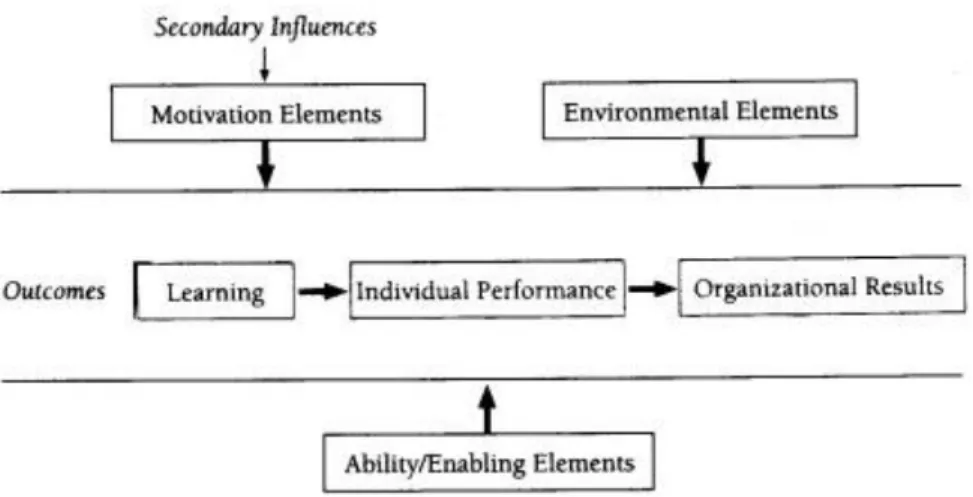
Holton’s (1996) transfer of training model (see Figure 1) posited that individual performance is based on three potential outcomes: learning, individual performance, and organizational results. Within this model, Holton (1996) proposed a connection between motivation elements, environmental elements, ability, and outcomes. Motivation
elements are described as motivation to learn and transfer and trainees’ perceptions of expected utility. Environmental elements include reaction and transfer climate, while potential outcomes are linked to learning, individual performance, and organizational results. Holton (1996) further affirmed that when a training design does not afford the ability to transfer the learning, it leads to one of the causes of failure.
The model developed by Holton (1996), which builds on the principles of expectancy theory, equity theory, and goal-setting theory, is based on several influences that affect trainees’ motivation to transfer the learned material. These influences include intervention fulfillment, learning outcomes, job attitudes, and expected utility of training. Intervention fulfillment relates to a trainee’s expectations being fulfilled by the training, while learning outcomes affects an employee’s performance that effort put forth will lead to enhanced performance. Job attitude relates to a trainee’s level of organizational commitment and job satisfaction, which affects the trainee’s drive to want to succeed. Lastly, expected utility of training explains that a trainee is more likely to be motivated to train when there is a higher payoff.
Theoretical Framework in Transfer of Training
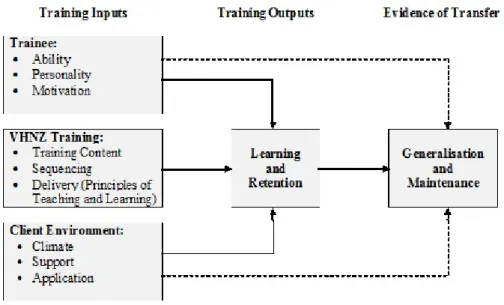
The training design in Baldwin and Ford’s (1988) theory (see Figure 2) is comprised of principles of learning, sequencing, and training content (Baldwin & Ford, 1988). This theoretical model builds upon and incorporates the concepts of training input factors, training output factors, and condition of transfer. Furthermore, Baldwin and Ford (1988) posited that training outcomes and training input factors, such as training design, training input, training outputs, and conditions of transfer, are all interconnected in the transfer process. Subsequently, due to their direct and indirect effects, this model is linked to learning, retention, generalization, and maintenance.
Baldwin and Ford (1988) also theorized that a trainee’s work environment (i.e., training input) must be both supportive and allow the opportunity to implement the training in order to have a direct effect on the transfer. A trainee’s work environment has a direct impact on generalization and maintenance and can also have a direct effect on the transfer process regardless of initial learning or retention (Baldwin & Ford, 1988). Furthermore, this model was developed to demonstrate the impact of the six linkage factors on training inputs (i.e., trainee characteristics, training design, and work environment), training output (i.e., learning and retention), and conditions of transfer (i.e., generalizations and maintenance). Although the job relevance of training is often assumed, the ability to specify and relate desired skill sets or behaviors to be learned to the trainee’s job is a critical element for training to be retained and transferred (Baldwin & Ford, 1988). Remembering the knowledge and skills is only part of the transfer
process, trainees must be able to generalize and maintain (i.e., training output) these skills to their job for the transfer process to occur (Baldwin & Ford, 1998). The training
content, sequence, and delivery factors are also all elements that make up the training design and can aid the transfer process (Baldwin & Ford, 1988).
Figure 2. Baldwin & Ford (1988) Transfer of Training Model
Organizational Transfer Climate Model
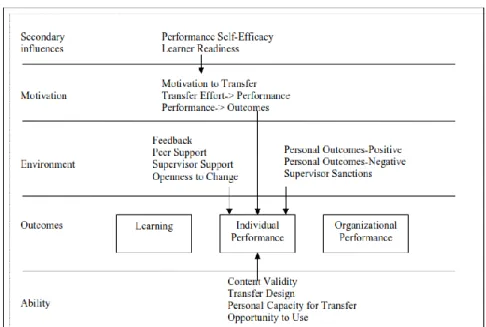
Researchers like Goldstein (1980) and Rouiller and Goldstein (1993) were among the first to note the importance of a supportive work environment and its influence on the transfer process. A climate within an organization’s dynamics is influential to the needs assessment process, as certain organizational factors and situations can inhibit or
facilitate the transfer process. Rouiller and Goldstein’s model of organizational transfer climate (see Figure 3) is comprised of situational cues and consequences. Situational cues include goal cues, social cues, task cues, and self-control cues; these serve as a reminder to trainees of their training and affords them with opportunities to apply their knowledge. Social cues are used to describe behaviors and organizational influence that are caused by supervisors and peers; task cues relate to a trainee’s specific job; and self-control cues allow trainees to apply learned behavior to their jobs.
Figure 3. Measures of Organizations’ Transfer of Climate Model (Rouiller & Goldstien,
1993)
Effects of Learning Culture and Job Satisfaction
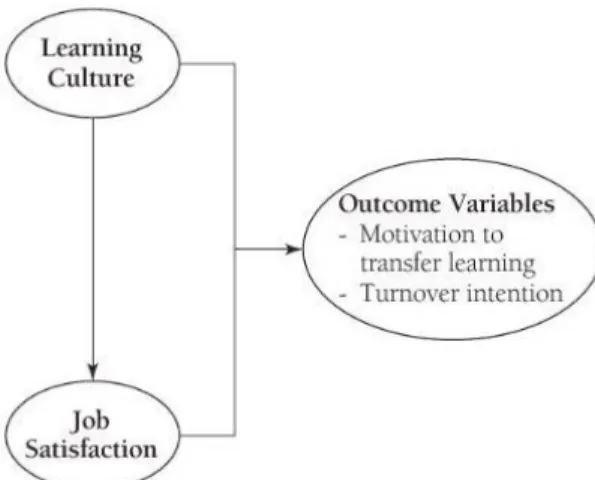
The conceptual model of the effects of the learning culture and job satisfaction from Egan et al. (2004) displays the relationship between the input factors (i.e., learning culture and job satisfaction) and output factors (i.e., motivations to transfer learning and turnover intention). As described by Egan et al. (2004), an organizational learning culture and its environment can also be an influential aspect in job satisfaction and a motivator in the transfer process. Job satisfaction, productivity, and profitability can increase when an organization places an emphasis in learning and development.
Furthermore, a trainee’s motivation, opportunity for advancement, and training rewards are all predictors for motivation to transfer learning. Due to the inverse relationship between job satisfaction and job turnover, Egan et al., (2004) argued that an
organizational learning culture can have a positive effect on motivating a trainee to transfer learning. In turn, this can indirectly influence organizational outcomes through increasing job satisfaction and decreasing job turnover, all while increasing
organizational productivity. Figure 4 illustrates the model of the effects of learning culture and job satisfaction.
Figure 4. Model of the Effects of Learning Culture and Job Satisfaction (Egan et al., 2004).
Components of Law Enforcement Training Transfer
Based on the prior research,a number of factors found to influence the transfer of training were used to develop the instrument for this study. The factors that were
identified included curiosity (Reio & Wiswell, 2000), peer support (Baldwin & Ford, 1988, 1992), supervisor support (Baldwin & Ford, 1988, 1992), opportunity to use (Baldwin & Ford, 1992), perceived context validity (Grossman & Salas, 2011), organization learning climate and job satisfaction (Egan et al., 2004).
In their seminal study, Baldwin and Ford (1988) identified multidimensional factors that can influence the transfer of training. A model consisting of six linking factors was used to examine the effects of input factor, training output factors, and condition of transfer (see Figure 2). Baldwin and Ford (1992) furthered their research and identified three factors within the input facet that influence the transfer of training. These factors were identified as training design (e.g., learning principles, sequencing, and content), trainee characteristics (e.g., ability, personality, and motivation), and work environment (e.g., support and opportunity to use). Egan et al. (2004) conceptualized a