AN EXPLORATION OF UNDERGRADUATE
NURSING STUDENTS’ EXPERIENCES OF AN
HIV/AIDS SUPPORT GROUP AND IT’S
ACTIVITIES
By
Nqabisa Lucia Sixaba
Thesis presented in partial fulfilment of the requirements for the Degree of Master of Nursing Science in the Faculty of Medicine and Health Sciences at Stellenbosch
University
Supervisor: Janet Bell
i
Declaration
By submitting this thesis electronically, I declare that the entirety of the work contained therein is my own, original work, that I am the sole author thereof (save to the extent explicitly otherwise stated), that reproduction and publication thereof by Stellenbosch University will not infringe any third party rights and that I have not previously in its entirety or in part submitted it for obtaining any qualification.
Copyright © 201 Stellenbosch University All rights reserved
ii
Abstract
The Human Immunodeficiency Virus infection (HIV) and Acquired Immunodeficiency Syndrome (AIDS) are critical concerns worldwide; this is particularly true of South Africa. The consequences of HIV infection and complications of AIDS are a challenge that extends into the nursing profession and into the community of student nurses. Support groups can form an important part in educating nursing students about HIV and AIDS, as well as in supporting nursing students through the processes of counselling, testing and managing the physical, as well as other impacts of this syndrome.
When considering the current situation at an Eastern Cape nursing college and the literature reviewed on this topic, the research question posed for this study was: ‘Why is the support offered by the HIV support group to the nursing students having such a limited effect on the students’ motivation to participate in HIV counselling and testing (HCT) and support activities to de-stigmatise HIV/AIDS?’
The aim of this study was to explore and describe the nursing students’ experiences and perceptions of the support group activities in order to improve the relevance of this initiative for students.
The objectives of this study were to
Explore and describe the student’s experiences and perceptions of the support group activities
Identify and describe the student’s expectations of the support group.
A qualitative approach with an exploratory and descriptive design was used to elicit data to answer the research question. Ethical approval was obtained from the Health Research Ethics Committee and access to the college campus was obtained through the appropriate authorities. The accessible population for this study were 1st, 2nd, 3rd, and 4th year students at one campus of the provincial nursing college in the Eastern Cape. In-depth individual interviews were conducted with eight participants who met the study inclusion criteria of having had experience of the support group
iii and its activities. Interviews were recorded and transcribed by the researcher. Content analysis was used to analyse the interview data through applying Tesch’s eight steps of analysis.
Data analysis revealed that participants did not experience the support group as helpful; although they had joined the support group they remained fearful of receiving test results and what their future may hold should they be diagnosed as being HIV positive. The participants experienced rejection and discrimination by the support group committee members; they also identified that the committee displayed hypocritical behaviours and a lack of respect for confidentiality of information which further undermined the functioning and influence of the group. Results revealed that joining the support group means one is automatically stigmatised as being HIV positive. The support group committee members were seen to be inaccessible having only limited communication with participants.
Recommendations from the study were to hold personal and group development sessions for the committee and interested students to assist them in learning how to manage ethical issues related to counselling and testing, how to conduct effective campaigns to de-stigmatize HIV/AIDS, and to determine clearly what the purpose of this particular group is that it may better meet the needs of the student group.
Limitations of this study were that the qualitative research approach that was applied limited the generalisation of the findings. The study focused only on experiences and perceptions of the undergraduate nursing students on one campus of the nursing college about the support group and its activities. Thus, the study offered an initial insight into the current negative perceptions of students towards the support group and offered a foundation for further investigation.
In conclusion, experiences and perceptions of the support group were explored and elaborated on. Currently, the support group does not offer the support the students would like to be available as the fundamental functioning of the group is compromised by a lack of trust between students and the committee members.
iv
Opsomming
Die menslike immuungebreksvirus (MIV) en verworwe immuniteitsgebreksindroom (VIGS) is wêreldwyd kommerwekkende aangeleenthede, veral met betrekking tot Suid-Afrika. Die gevolge van MIV-infeksie en komplikasies van VIGS is uitdagings wat die verpleegberoep en die verpleegstudente-gemeenskap met verreikende gevolge raak. Ondersteuningsgroepe kan ’n belangrike rol speel om verpleegstudente in verband met MIV en VIGS op te lei, asook om ondersteuning te bied deur middel van die prosesse van berading, toetsing en die bestuur van die fisiese en ander gevolge van die sindroom.
Toe die huidige situasie by ’n Oos-Kaapse verpleegkollege, asook die literatuuroorsig oor die onderwerp in oënskou geneem is, is die navorsingsvraag vir die studie gestel: “Waarom het die ondersteuning wat deur die ondersteuningsgroep aan die studentverpleegsters aangebied word so ’n beperkte effek op die studente se motivering om deel te neem aan MIV-berading en toetsing, asook ondersteuningsaktiwiteite om MIV/VIGS te destigmatiseer?”
Die doel van hierdie studie was om die verpleegstudente se ervaringe en persepsies van die ondersteuningsgroep se aktiwiteite te ondersoek en te beskryf, ten einde die relevansie van hierdie inisiatief vir die studente te verbeter.
Die doelwitte van hierdie studie was om die student se:
ervaringe en persepsies van die ondersteuningsgroep se aktiwiteite te ondersoek en te beskryf
verwagtinge van die ondersteuningsgroep te identifiseer en te beskryf.
’n Kwalitatiewe benadering met ’n ondersoekende en beskrywende ontwerp is gebruik om die data aan die lig te bring om sodoende die navorsingsvraag te beantwoord. Etiese goedkeuring is van die Universiteit van Stellenbosch se Gesondheidsnavorsingsetiekkomitee verkry en toegang tot die kollege-kampus is deur die betrokke owerhede verleen. Die toeganklike bevolking vir die studie was eerste-, tweede-, derde- en vierdejaarstudente by een kampus van die provinsiale
v verpleegkollege in die Oos-Kaap. Deurtastende individuele onderhoude is met agt deelnemers gevoer wat aan die studie se inklusiewe kriteria voldoen het en wat ondervinding het van die ondersteuningsgroep en hul aktiwiteite. Data is deur die navorser opgeneem en getranskribeer. Inhoudelike analise is gebruik om die data van die onderhoud te analiseer deur Tesch se ag stappe van analise toe te pas. Analise van die data het aan die lig gebring dat deelnemers nie die ondersteuningsgroep as behulpsaam ervaar nie. Ten spyte van aansluiting by die ondersteuningsgroep bly hulle angstig vir wanneer toetsresultate ontvang moet word en wat dit vir hul toekoms mag inhou indien hulle MIV-positief gediagnoseer word. Die deelnemers het verwerping en diskriminasie deur die ondersteuningsgroep se komitee-lede ervaar; hulle het ook skynheilige optredes en ’n gebrek aan respek vir vertroulikheid van inligting wat die funksionering en invloed van die groep verder ondermyn, geïdentifiseer. Resultate het aan die lig gebring dat aansluiting by die ondersteuningsgroep beteken dat hulle outomaties gestigmatiseer word as MIV-positief. Die komitee van die ondersteuningsgroep word gesien as ontoeganklik met beperkte kommunikasie met die deelnemers.
Aanbevelings vanuit die studie sluit in die opvoeding en die ontwikkeling van ’n komitee en belangstellende studente om etiese kwessies te bestuur wat verband hou met berading en toetsing, veldtogte om MIV/VIGS te destigmatiseer en om duidelik te bepaal watter tipe ondersteuningsgroep hierdie betrokke groep moet nastreef om te wees.
Beperkinge van hierdie studie is dat ’n kwalitatiewe navorsingsbenadering toegepas is wat die veralgemening van die bevindings beperk het. Die studie het slegs gefokus op ervaringe en persepsies van die voorgraadse verpleegstudente op een kampus van die verpleegkollege aangaande die ondersteuningsgroep en hul aktiwiteite. Sodoende, gee die studie ’n aanvanklike insig in die huidige negatiewe persepsies van studente oor die ondersteuningsgroep en bied ook ’n grondslag vir verdere ondersoeke.
Ten slotte, ervaringe en persepsies van die ondersteuningsgroep is ondersoek en daarop uitgebrei. Tans bied die ondersteuningsgroep nie die ondersteuning wat die
vi studente benodig nie, vanweë die fundamentele funksionering van die groep se gebrek aan vertroue deur studente in die komitee-lede.
vii
Acknowledgements
My sincere thanks and acknowledgement to:
Our Heavenly Father, for granting me the strength to persevere;
My supervisor Janet Bell, for her continuous guidance, support and expertise; My husband Archibald, who was my strength all the way;
My children Nontsha, Khululekile, Sakhiwo and Sinesipho for their support; My family and friends, thanks for your thoughts and inspiration.
viii
TABLE OF CONTENTS
Declaration ... i Abstract ... ii Opsomming ... iv Acknowledgements ...viiList of Tables ... xiii
List of Appendices ...xiv
Abbreviations ... xv
Definition of Terms ...xvi
Chapter 1 Orientation to Study ... 1
1.1 Introduction and background ... 1
1.2 Rationale ... 5
1.3 Problem statement ... 6
1.4 Research question ... 6
1.5 Research aim ... 6
1.6 Research objectives ... 7
1.7 Significance of the study ... 7
1.8 Research design and methodology ... 7
1.8.1 Research design ... 7
1.8.2 Population and sampling ... 8
1.8.3 Data collection ... 9
1.8.3.1 Interview guide ... 9
1.8.4 Data analysis ... 10
ix 1.10 Ethical considerations ... 11 1.10.1 Confidentiality ... 11 1.10.2 Privacy ... 12 1.10.3 Anonymity ... 12 1.10.4 Informed consent ... 12 1.11 Contribution of study ... 12
1.12 Dissemination of research findings ... 13
1.13 Study layout ... 13
1.14 Conclusion ... 13
Chapter 2 Literature review ... 14
2.1 Introduction ... 14
2.2 Selecting and reviewing the literature... 15
2.2.1 Findings from the literature ... 15
2.2.2 Nurses and HIV/AIDS ... 16
2.2.3 Student nurses and HIV/AIDS ... 18
2.2.4 University / college students and HIV/AIDS ... 20
2.2.5 Stigma ... 22
2.2.6 Support groups ... 24
2.2.6.1 Challenges experienced by support groups ... 24
2.2.6.2 Benefits of support groups ... 25
2.2.6.3 Successful support group example ... 25
2.3 Conclusion ... 28
Chapter 3 Study design & methods ... 30
3.1 Introduction ... 30
x
3.2.1 Qualitative design ... 30
3.2.2 Exploratory and descriptive approach ... 31
3.3 Research setting ... 31
3.4 Research methodS ... 31
3.4.1 Population and sample ... 31
3.4.1.1 Sampling method ... 32 3.4.2 Data collection ... 33 3.4.3 Data Analysis ... 35 3.5 Trustworthiness ... 37 3.5.1 Transferability ... 37 3.5.2 Dependability ... 37 3.5.3 Confirmability ... 38 3.5.4 Credibility ... 38 3.6 Ethical Considerations ... 38
3.6.1 The principle of respect for persons ... 38
3.6.2 Principle of beneficence ... 39
3.6.3 Principle of justice ... 39
3.6.4 Informed consent ... 40
3.7 Conclusion ... 40
Chapter 4 Data Analysis ... 41
4.1 Introduction ... 41
4.2 Data Analysis ... 41
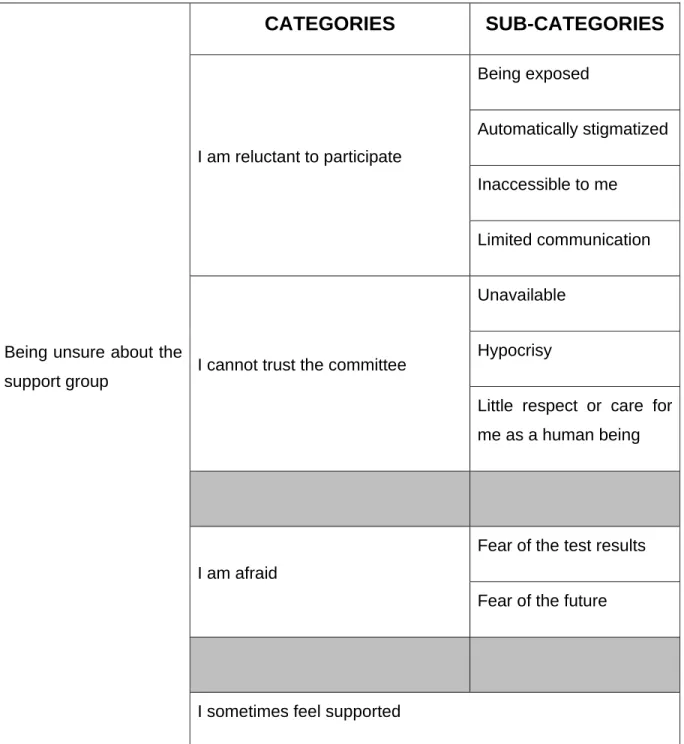
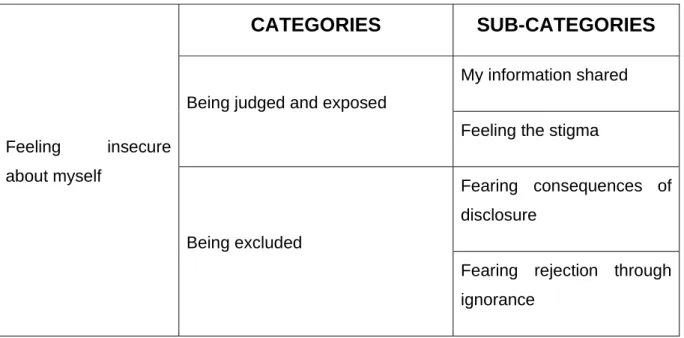
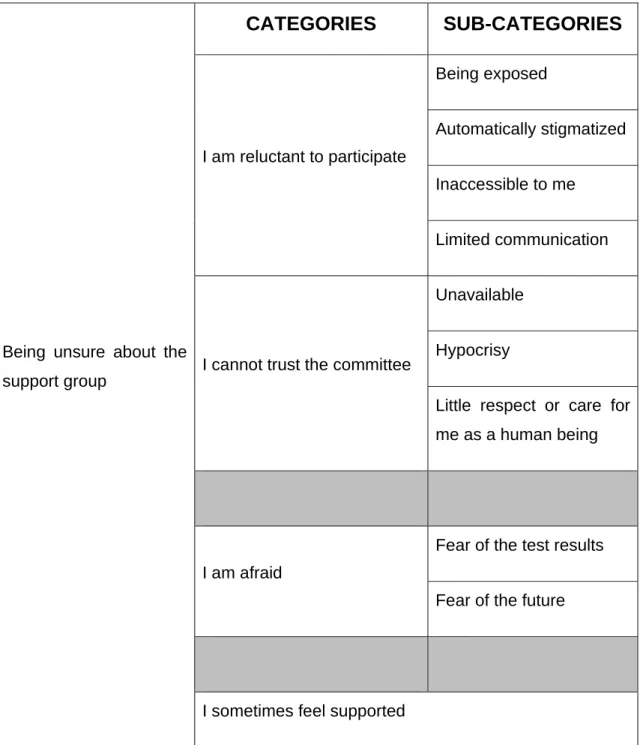
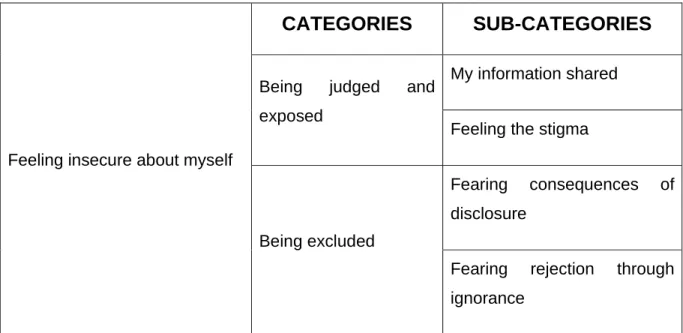
4.3 Overview of the main themes ... 42
4.3.1 Theme 1: ‘being unsure about the support group ... 44
xi
4.3.1.2 Being exposed ... 46
4.3.1.3 Automatically stigmatized ... 47
4.3.1.4 Inaccessible to me ... 48
4.3.1.5 Limited communication ... 49
4.3.2 I cannot trust the committee ... 49
4.3.2.1 They are unavailable to me ... 51
4.3.2.2 Hypocrisy ... 52
4.3.2.3 Little respect or care for me as a human being ... 52
4.3.3 I am afraid... 53
4.3.3.1 Fear of test results ... 53
4.3.3.2 Fear of the future ... 54
4.3.3.3 I sometimes feel supported ... 55
4.4 Theme 2: ‘feeling insecure about myself’ ... 55
4.4.1 Being judged and exposed ... 56
4.4.1.1 My information shared ... 57
4.4.1.2 Feeling the stigma ... 57
4.4.2 Being excluded ... 58
4.4.2.1 Fearing consequences of disclosure ... 58
4.4.2.2 Fearing rejection through ignorance ... 58
4.5 Student expectations of the support group ... 59
4.5.1 Support group must not be confined to HIV only ... 59
4.5.2 Support group should be accessible ... 60
4.5.3 Support must provide information ... 60
4.5.4 Support group should not perform HCT ... 60
xii
4.5.6 First years should not form part of the support group. ... 61
4.6 Summary ... 63
Chapter 5 Discussion, Conclusions & Recommendations... 65
5.1 Introduction ... 65
5.2 Discussion & conclusions based on the research objectives ... 65
5.2.1 Explore and describe the student’s experiences and perceptions of the support group activities ... 65
5.2.1.1 being unsure about the support group ... 66
5.2.1.2 Feeling insecure about myself ... 70
5.3 Recommendations ... 72
5.3.1 Professional services ... 72
5.3.2 Recreational support ... 72
5.3.3 Health education ... 73
5.3.4 Further recommendations ... 73
5.4 Limitations of this study ... 74
xiii
List of Tables
Table 4.1: Summary of theme 1:‘being unsure about the support group’ ... 43 Table 4.2 Summary of theme 2:‘feeling insecure about myself’ ... 44
xiv
List of Appendices
Appendix A: Interview guide 84
Appendix B: Extract from a transcript of individual interview 85
Appendix C: Ethics committee - study approval 88
Appendix D: Department of health – study approval 89 Appendix E: Study site institutional approval 90 Appenidx F: Participant information leaflet & consent 92
Appendix G: Confirmation of document edit 93
xv
Abbreviations
AIDS Acquired immunodeficiency syndrome HCT HIV counselling and testing
HIV Human immunodeficiency virus MoHSS Minister of Health and Social Services PLWHA People living with HIV/AIDS
xvi
Definition of Terms
Human Immunodeficiency Virus
It is a virus that causes suppression that leads to destruction of the human immune system (Department of Health, 2010: 9).
Acquired Immunodeficiency Syndrome
Acquired Immunodeficiency Syndrome is when the HIV-related immune-deficiency is so severe that various life-threatening, opportunistic infections and cancers occur because of weakened immune system (Evian, C. 2011:14).
HIV Counselling and Testing
It is an intervention which gives the client an opportunity to be educated and supported to explore his/her HIV status, HIV prevention and treatment combined with testing (Department of Health, 2010:9).
Nursing Student
According to the Nursing Act, 2005 (Act No. 33 of 2005), chapter 2, section 43 (2), a learner nurse is a person who is following a programme of study in a nursing education and training institution. For the purpose of this study a learner nurse is referred to as a student, student nurse or nursing student. (Nursing act no.50 of 1978 as amended by act no 33 of 2005)
Nursing college
Nursing college refers to a post-secondary educational institution which offers professional nursing education at basic and post-basic level where such nursing education has been approved (SANC Regulation no. R425:1985).
xvii
Social Support
Social support is the perception and actuality that one is cared for, has assistance available from other people, and that one is part of a supportive social network. These supportive resources can be emotional, tangible, informational or companionship and intangible (Uchino, 2004:16-17).
Support group
A support group is a group with mutual sharing of similar, difficult experiences and which usually provides members of a group with some relief (Baumann, 2007:618).
Support group activities
These are activities that are provided by support groups and the sharing of information or help people to cope with traumatic experiences (Baumann, 2007:617).
HIV Disclosure
Disclosure is a process whereby a client discloses or shares the results of his or her HIV status with their significant others (partner, family, trusted friend, community members or care givers), for the purpose of gaining support from n the significant other from an emotional perspective, as well as for healthy lifestyle choices that include active prevention of the spread of HIV either vertically or horizontally (Department of Health, 2010:7).
Stigma
Stigma is defined as those negative attitudes or perceptions by members of society towards individuals who are known or perceived to be infected by a condition such as HIV and AIDS (Department of Health, 2003:14).
1
Chapter 1 ORIENTATION TO STUDY
1.1 INTRODUCTION AND BACKGROUND
The Human Immunodeficiency Virus (HIV) and Acquired Immunodeficiency Syndrome (AIDS) pandemic continue to have a broad significant impact worldwide and in South Africa. The consequences of HIV infection and complications of AIDS are a challenge that also impacts on the nursing profession, and more specifically, the community of student nurses.
Currently 6.4 million people in South Africa live with HIV infections in sub-Saharan Africa and 18% of the global burden (South African National HIV Survey, 2012, 195). Sub-Saharan Africa remains the epicentre of the epidemic and accounts for nearly 70% of the world burden of HIV and AIDS. South Africa is the worst affected country with an estimated 6.1 million people living with HIV in 2012. This is the largest number of People Living with HIV in one country in the world. The prevalence of people living with HIV in South Africa increased from 10.6% in the 2008 HIV Household Survey, to 12.3% in 2012 (National Department of Health, South African National HIV Survey, 2012: 195). According to Shisana (2004:6), on completion of an investigation regarding HIV/AIDS prevalence among South African healthcare workers employed in all types of healthcare facilities in four South African provinces, 595 participants in a sample of 721 were living with HIV/AIDS in 2002; furthermore, there was a higher prevalence rate of 20% among younger healthcare workers between the ages of 18-35 years (Shisana, 2004:6).
Healthcare workers are dying as a consequence of HIV-related illness (Bateman, 2007:510) reports that one in seven nurses / nursing students in the public sector are HIV-positive (14.3%) and more nurses are suffering from full blown AIDS than are graduating from nursing programmes. Shisana et al (2004:6) reported that 2 745 nurses developed AIDS or opportunistic infections annually, and called for an immediate targeted national programme to prevent new infections by offering counselling, testing and ART for every health worker whose CD4 count is under 350.
2 The country has managed to increase the number of people on antiretroviral treatment (ART), which has led to a decrease in AIDS mortality and an increase in life expectancy and the key finding from the 2012 survey was that over 2 million people were on antiretroviral (ARV) treatment by mid-2012 (Johnson, Mossong, Dorrington, Schomaker, Hoffmann, Keiser, Fox, Wood, Prozesky, Giddy, Belen Garone, Cornell, Egger & Boulle (2013;UNAIDS, 2012 p xx).
The nursing college under study is located in the Eastern Cape. The college comprises five campuses in five separate towns. There were 1 929 students registered for the four year comprehensive diploma programme in nursing in the 2010 academic year. The purpose of the programme is to prepare undergraduate students over 4 years of study to meet the requirements for professional registration as a nurse by the South African Nursing Council as outlined in Regulation, No. R425, of 22 February 1985 as amended (SANC Regulation R425:1985).
HIV/AIDS among student nurses is a reality at the nursing college with nine students having died of AIDS- related complications between 2010 and 2011 (College Senate Report, 2010:1). This reality has been influenced by a number of contributing factors including financial considerations, fear of stigmatisation, and the freedom of independent living for the first time after 12 years of schooling (Strydom & Strydom, 2002:263).
Financial considerations are critical for a school-leaver choosing to enter the profession of nursing. Recruitment of student nurses can be influenced by poverty as all successful applicants receive a monthly stipend of R4 100 to cover the expenses of tuition (Eastern Cape Department of Health News, 2007:1). This stipend is influential in recruiting students from families in which either one or both parents are unemployed (Bezuidenhout, 2008:201). The poverty rate in the Eastern Cape is reported to be 68.7%, the highest poverty rate in the country that is also accompanied by a high prevalence of HIV/AIDS (Majumdar & Mazaleni, 2010:2). Student recruitment is targeted according to the healthcare needs of the Province of the Eastern Cape (Eastern Cape Department of Health News, 2007:1). In 2012 the bursary profile for academic year 2013 was approved according to Doctor Crichton.
3 .At the nursing college, bursaries were allocated based on vacancy proxies that were significantly biased to rural areas. (Eastern Cape Department of Health News, 2012: 3). Due to many factors, including HIV/AIDS, not all the students who are accepted into the programme actually either complete the programme or become professional nurses. Applicants are not required to reveal their status prior to or after acceptance into the programme. From the researcher’s personal experience of working with nursing students, successful applicants who do know their status will usually not reveal this since they fear being stigmatised by lecturers and fellow students (own experience).
Stigma has been identified as an important factor at the start of the HIV/AIDS epidemic which impacts on the rapid transmission of the disease (Akpa, Adeolu-Olaiya, Oulsegun-Odebiri & Aganaba, and 2010:19). Stigma is defined as an attribute or quality which is significantly discredits an individual in the eyes of others (The policy project South Africa, 2003). Lack of education with regard to HIV and lower economic status contribute to the development of stigma around HIV status which may result in delayed access to treatment and poor adherence to medication (Goudge, Ngoma, Manderson & Schneider, and 2009:94). Adedimeji (2009:16) noted that the main reason for non-disclosure is stigma and being frightened of the outcome of disclosing it. HIV-related stigma is multi-layered tending to build and reinforce negative connotations through the association of HIV/AIDS with already marginalised behaviours such as sex work, drug use, homosexual and transgender sexual practice (Parker & Aggleton, 2003: 7).
Stigma is often internalised by people living with HIV, for example if society is ashamed of the individual, the person feels ashamed of himself which result in decreased self-esteem, feeling dirty, ashamed, and depressed. A study conducted in Cape Town, South Africa, reported that 30% of people with HIV admitted to being depressed (Simbayi, Kalichman, Strebel, Cloete, Hendra & Mqeketo, 2007: 1829). The accommodation provided for nursing students (the so-called ‘nurses home’) has been declared a high risk environment because students often live independently from their parents for the first time in their life. Resident students practise
4 promiscuous behaviours and become infected during experimental sex with multiple partners as they do not use condoms (Kelly, 2001:10).
In response to these and other possible contributing factors, an HIV-positive student initiated a support group to inform, assist and support fellow students with regard to HIV infection and AIDS in 2003. The support group was formed in order to become a group of people who share a common objective. During the amalgamation of nursing colleges in the Eastern Cape in 2004 the various similar student groups offering support related to HIV/AIDS also amalgamated to form the current support group (Department of health, 2003:1). This support group conducted campaigns in conjunction with a local university in order to support the de-stigmatising of HIV/AIDS amongst nursing students. Other activities conducted have included candle lighting ceremonies in remembrance of those who had died of HIV/AIDS, and honouring HIV/AIDS event days, e.g. World AIDS Day. People living with HIV/AIDS (PLWHA) were invited to provide motivational speeches.
Membership of the support group is voluntary. The support group works together with the Student Representative Council (SRC). The committee of the support group comprises of twelve members. The structure of the committee comprises of a chairperson, deputy chairperson, secretary, deputy secretary, one coordinator and seven additional members. There is no treasurer because the committee is not dealing with any financial issues. The committee should meet once a month, but sometimes do not meet at all due to the challenges of the course. The support group plan their programme at the begging of the year. Community outreach is conducted with the neighbouring schools where peer group teaching is exercised. The researcher assists the committee to co-ordinate activities by inviting professional people from outside the college, conducts counselling and refers a student to a relevant facility for example psychologist with the student’s permission. She also organises condoms and HIV pamphlet information distribution at the college. She informs the campus head if there is a student who is sick or admitted to hospital. . Despite the efforts of the support group to de-stigmatise HIV and encourage voluntary testing for HIV, students at the nursing college remain reluctant to make
5 use of HCT offered, many students become infected with HIV and dying of HIV/AIDS-related conditions. For example, in 2009 the support group organised HIV Counselling and Testing (HCT) for the student body but only 3 % of students registered at the college participated in HCT, of whom three students were diagnosed as HIV-positive. Despite the campaigns organised by the support group, seven students died of AIDS – related illnesses in 2010 (College Senate Report, 2010:1), two students in 2011 (College Senate Report, 2011:1) and another two students died in 2012 (College Senate Report, 2012:1).
The lecturers at the college had also observed a high absenteeism rate which may have been due to AIDS related opportunistic infections. The prevailing morbidity rate resulted in high absenteeism due to long periods of hospitalisation and other factors. Poor academic performance was an inevitable consequence with 52 students on one campus alone failing the academic year in 2011, possibly influenced by lengthy periods of absence from class. The impact of HIV/AIDS could be felt even by the Department of Health. The local newspaper reported in 2010 that the Eastern Cape Province had the highest rate of students with HIV/AIDS (Daily Dispatch, 2010:1). The impact of HIV/AIDS amongst student nurses will affect the Eastern Cape Department of Health‘s ability to offer adequate healthcare services. If the target for student nurse enrolment and completion is not achievable due to HIV/AIDS- related diseases, there will be fewer healthy and competent registered nurses to implement the healthcare services in the Eastern Cape.
1.2 RATIONALE
In 2010 and 2011 a number of student nurses died of AIDS -related diseases at the nursing college, with the academic performance of many more students appearing to have been impacted by illness and absenteeism possibly related to HIV and AIDS. This situation exists despite HCT and support being offered by the support group programme. HIV/AIDS is no longer considered a death sentence with antiretroviral treatment (ART) and lifestyle changes positively impacting on how those infected with the virus are able to manage for their health. Effective support groups are an
6 important resource to HIV infected persons (Department of Health, 2003:92).The support programme of the support group has an important role to play in assisting and educating students at the nursing college.
1.3 PROBLEM STATEMENT
Despite the establishment of an HIV support group at a nursing college, absenteeism, morbidity and poor performance amongst students has increased over the past few years partly as a result of HIV infection. The purpose of the support group was to assist students to access valid information about HIV/AIDS, as well as any counselling, testing or assistance they needed in relation to the virus or syndrome. The support group at the nursing college claimed to have provided a reliable and trustworthy environment for students to seek assistance, but students had indicated a reluctance to engage with the services offered by the support group, or participate in the activities arranged by the group. Thus a useful structure in combatting the impact of HIV/AIDS in a student community was lost. It is necessary to understand the reasons behind the students’ reluctance to engage with the support group in order to reconfigure the support group and its activities such that it may become more effective in achieving its claimed purpose.
1.4 RESEARCH QUESTION
Based on the above discussions and problem statement, the following question is posed:
What are the nursing students’ experiences and perceptions of the activities of the support group?
1.5 RESEARCH AIM
The aim of this study was to explore and describe the nursing students’ experiences and perceptions of the support group’s activities in order to improve the relevance of this initiative for students.
7
1.6 RESEARCH OBJECTIVES
The objectives of this study were to:
Explore and describe the student’s experiences and perceptions of the support group’s activities
Identify and describe the student’s expectations of the support group.
1.7 SIGNIFICANCE OF THE STUDY
This study offered an in-depth understanding of how the student nurses perceived and experienced the activities offered by the support group. This insight can be used by the support group committee to engage with the particular concerns of the students to reconfigure and improve planned activities and support services to better achieve the purpose for which the support group was established. College management structures can use the outcome of this study to identify specific learning opportunities to develop committee members and other interested students and provide more effective support to the support group committee and by extension the nursing student body.
1.8 RESEARCH DESIGN AND METHODOLOGY
The research design refers to the research plan, essentially what the researcher did to solve the problem or to answer the research question (Brink, Van der Walt & Van Rensburg, 2012:199). The research design, population and sample, setting, the data collection and data analysis will be discussed in the following sections.
1.8.1 RESEARCH DESIGN
A qualitative design was applied in this study to explore the student’s experiences of the activities and initiatives offered by the support group. A qualitative design allowed an interactive, systematic and subjective approach to describe the experiences of students and to elaborate on the meaning of these (Burns & Grove, 2009:22). An exploratory, descriptive approach was used. An exploratory approach was appropriate because the researcher wanted to gain insight into a situation about
8 which little was known. A descriptive approach allowed the researcher to give specific details of the student’s experiences and the various relationships within these. The researcher learnt about and described the meaning of the student’s experiences by means of focussed dialogue (De Vos Strydom & Delport, 2005:252).
1.8.2 POPULATION AND SAMPLING
The population for this study was the undergraduate nursing students enrolled at a nursing college in the Eastern Cape. The accessible population for this study were 1st, 2nd, 3rd and 4th year diploma nursing students at one campus of a nursing college in the Eastern Cape. The particular campus was purposively selected because it was the largest and it was where most of the support group’s activities were implemented. A purposive sampling technique was utilised to select possible participants. Purposive sampling was relevant to this study because the researcher selected participants who gave specific insights into the concerns of this study. Specifically these were the undergraduate students with experience of the support group’s activities and who were willing to participate as they would be able to provide in-depth insight into their own experiences and perceptions of the support group (Burns & Grove, 2009:355).
In order to limit bias, undergraduate students who were committee members of the support group were excluded from the sample. The committee members were excluded because they drove the activities and behaviour of the support group that were under study, which may have resulted in a bias in the collected data.
After approval to conduct the study was obtained from the Department of Health, the college Principal and the Campus Head, students were made aware of the study by the researcher by providing an explanation to each year group during class time. After the study purpose and methodology had been outlined to the students, those wishing to participate were provided with a contact telephone number. There were eight students who were willing to participate and approached the researcher telephonically. The participation slips were placed in a, sealed letter box that would be opened by the researcher in a private office and kept in a locked cupboard. The
9 researcher contacted eight students who indicated their willingness to participate individually to arrange a date and time to conduct the interview. A final sample size of eight participants was used and this allowed the researcher to analyse and understand similarities and differences within a specific setting. The final sample size -was determined by data saturation whereby participants were included until no new data was elicited from the participants regarding the phenomenon under study (Burns & Grove, 2009:361).
1.8.3 DATA COLLECTION
Data gathering was done through conducting semi-structured in-depth individual interviews with participants. This method of data collection was appropriate for the study because it enabled the researcher to gain rich data about individual experiences but also protected the participant’s identity as the participants were vulnerable to peer pressure and possible stigmatisation through their participation in the study. The researcher’s goal was to understand the meaning of the experiences as described by the participant (LoBiondo-Wood & Haber, 2010:102).
1.8.3.1 Interview guide
An interview guide was utilised to provide structure to the interviews. The following questions were used to guide each interview:
Think about the activities organised by the support group. Which of these activities have you participated in/not participated in? Tell me about your experiences of these activities at the college.
How do you think the support group’s programme could be improved to encourage students to participate and use its services?
These questions were used to ensure that the data collected enabled the researcher to meet the study objectives and aim. Additional probing questions were used as appropriate during each interview depending on the data shared by the participant. A pre-test was done to investigate the feasibility and appropriateness of the data collection instrument (Brink, 2012:175). An in-depth interview with one
10 undergraduate student was conducted as a pre-test of the interview guide to identify any shortfalls before the actual data collection started. The interview setting, process and guide were tested for clarity, relevance, grouping and effectiveness of the questions. No changes were made to the interview setting, process or guide after the pre-test session.
The interviews were recorded on a tape recorder with a backup recorder to overcome technical problems. The room or the venue was prepared to offer a warm and friendly environment that also ensured the participants’ privacy.
The researcher took notes during the interview to inform the transcription of recordings and noted non-verbal communication that would assist in identifying specific themes. The interviews were conducted in English as this was a common language for all possible participants. The interviews were transcribed verbatim from the session recordings with accuracy. The interview questions were relevant and appropriate for the research questions and study aim, thus enabling the researcher to generate the most appropriate response from the participants and minimizing any possibility of confusion.
1.8.4 DATA ANALYSIS
Data analysis is a process of unearthing meaning to the gathered data (Burns & Grove, 2009:536).
The data was transcribed and analysed using Tech’s eight steps of data analysis as described in De Vos, Strydom, Fouche’ & Delport (2004:331). The data analysis is described in detail in chapter three. A preliminary analysis of data belonging to each category was done by assembling categories in one place. The data in each category was grouped together (De Vos et al. 2004:343).
This data analysis was done with the help of the supervisor to ensure credibility, that is, data was checked to see if re-coding was necessary. This topic has been discussed further in chapter 3.
11
1.9 TRUSTWORTHINESS
For the purpose of this study validity of the data was assured by applying the four principles of trustworthiness as described by Lincoln and Guba (1985) in De Vos et al. (2004:331). These principles include transferability, dependability, confirmability and credibility. A detailed description of how these principles were applied in this study is provided in chapter 3.
1.10 ETHICAL CONSIDERATIONS
The ethical conduct of research had been a focus since the 1940s because of mistreatment of human subjects in selected studies (Burns & Grove, 2009:184). The researcher was compelled to conduct this study in an ethical manner as failure to do so could have negative results (Brink, 2012:32).
The population in this study was considered a vulnerable population because it involved student nurses who through participation in discussing a sensitive topic may have been open to negative behaviours from other students (Meyer, Naude’ & Van Niekerk, 2004:281). The proposal was submitted to the Human Research Ethics Committee at the Faculty of Medicine & Health Sciences, Stellenbosch University for ethical approval which was granted, and no S12/11/285. Permission was obtained from the Head of the nursing college to access the student population after the ethical approval was obtained.
1.10.1 CONFIDENTIALITY
During the interviews there was no other person present other than the researcher and participant to ensure participant confidentiality. The recorded and transcribed data from the interviews was kept locked in a safe and secure place in the researcher’s permanent place of residence and will be kept for at least five years and be destroyed thereafter.
Pseudonyms were used to identify the recordings and transcripts with only the researcher having access to the list connecting participant names and pseudonyms. Only the researcher and the study supervisor had access to the recorded and
12 transcribed interviews. No names were used during publication of results. It remains the researcher’s responsibility to prevent relevant data collected during the study from being made available to other persons (Brink, 2012:35).
1.10.2 PRIVACY
The researcher respected the participant’s right to privacy as they had a right to determine which private information should be shared or withheld from others.(Brink, 2012:35). When conducting individual interviews strict conditions to ensure privacy were maintained. A private venue was used and interviews were scheduled so that participants were not at the venue at the same time.
1.10.3 ANONYMITY
Participant’s names were not used, pseudonyms were allocated. In this study only the researcher should be able to identify participants in the tape recordings (Brink, 2012:35). Participants were asked to choose a pseudonym with which their data would be identified; only the participant and researcher would be aware of that pseudonym. A venue was used so that participants did not come into contact with each other and interviews were scheduled in a way that participants did not have an opportunity to identify each other.
1.10.4 INFORMED CONSENT
In this study written informed consent was obtained from each participant before each interview, including consent to record interviews. The researcher had an obligation to ensure that each respondent was well informed through a detailed explanation of the study ensuring respondents’ right to self-determination meaning that they could withdraw at any stage without any penalty (Burns & Grove 2009:189). Permission and consent was obtained from the nursing college and the Department of Health in the Eastern Cape to conduct the study.
1.11 CONTRIBUTION OF STUDY
Results will contribute to the improvement of the support group programme to encourage students to participate and use its services. The support group may
13 become a useful resource and effective for students by creating trust and becoming better able to influence students through educating about HIV/AIDS and providing support to those living with HIV or AIDS.
1.12 DISSEMINATION OF RESEARCH FINDINGS
Findings will be presented to the support group committee and to the head of the nursing college. The study findings will also be shared with the participants. The purpose of disseminating the study findings to this audience is to create awareness about the improvements to be applied according to the undergraduate nursing students’ needs, the college head, campus head and the Eastern Cape Department of Health. Opportunities to present the study findings to a wider audience as in discussion groups or as an oral presentation will be utilised.
1.13 STUDY LAYOUT
Chapter 1: Introduction to the study Chapter 2: Literature review
Chapter 3: Research Methodology Chapter 4: Data analysis and discussion Chapter 5: Recommendations and Conclusion
1.14 CONCLUSION
The HIV/AIDS support group programme seemed not to be an effective strategy in preventing AIDS related deaths amongst the nursing college student nurses. In this study the experiences and perceptions of the activities offered by the support group were explored and described to gain understanding of how the group activities could be made more relevant to the student population to provide the needed support to students.
14
Chapter 2 LITERATURE REVIEW
2.1 INTRODUCTION
According to Burns & Grove (2005:37, 93-95), a literature review is an organized written presentation of what has been published on a topic of study by scholars. it is conducted to generate a picture of what is known about a particular situation and the knowledge gaps that exist in it. Through literature review, the researcher is able to clarify which problems have been investigated, require further investigation or replication or have not been investigated at all. its purpose in a quantitative research is to direct the development and implementation of the study by aiding the researcher in designing the study and interpreting the outcomes in comparison to prior research (Burns & grove 2005:37, 93-95).
Thus, the aim of this literature review is to offer a discussion of the relevant literature regarding HIV/AIDS, the disease and its impact within student populations, as well as the application of support groups for and within the population diagnosed with this disease.
HIV continues to have a significant influence on life since its discovery in the previous century. New research has found that HIV diversified from chimpanzees to humans and can be dated to the beginning of the twentieth century (Evian, 2010:6). Worobey and colleagues reported that the diversification of HIV-1 occurred long before the AIDS pandemic was acknowledged, this claim being made after evolutionary genetic studies were conducted on a specimen obtained from an adult woman from the Congo in 1960 (Worobey, Gemmel, Teuwen, Haselkor, Kunstman, Bunce, Kabongo, Kalengayi, Muyembe, Van Mark, Gilbert & Kolinsky, 2008:661). The Human immunodeficiency virus (HIV type 1), is responsible for the global pandemic experienced today. HIV-1 is a rapidly evolving virus (Wilson, Cotton, Bekker, Myers & Maartens, and 2008:16). The virus is mostly transmitted through sexual transmission or the sharing of drug paraphernalia by intravenous drug users (Quinn, 2008:7).
15
2.2 SELECTING AND REVIEWING THE LITERATURE
The process of reviewing literature for this study was done over a period of twenty-four months, continuously developing as new ideas were explored. The sources used in this literature search were predominantly published from 2001 to 2014. The guiding underpinning of the review was to make the researcher aware of the existing knowledge in the topic area (Brink, 2012:7). The researcher accessed a number of electronic databases during the literature search, namely: Sage, Science Direct and Pubmed. Key words used in the search were:
nurses and HIV
student nurses and / or university/college students and HIV stigma and/or stigmatism
Support groups.
The majority of the literature selected as relevant was pertinent to the nursing environment. The literature reviewed also overlapped with the social sciences which were found to be beneficial (Bezuidenhout, 2008:206). Additional resources were identified through article reference lists and text books were also utilised.
2.2.1 FINDINGS FROM THE LITERATURE
Achievements of global HIV response over the last 10 years have been extra ordinary. The incidence of HIV infection declined by more than 25% between 2001 and 2009 in 33 countries (WHO 2008a global report). At the end of 2010 more people in South Africa were receiving antiretroviral therapy in low and middle countries. South Africa is believed to be the country with the fastest growing Human Immunodeficiency Virus (HIV) epidemic in the world. (Coombe, 2002:236). The rapid spread of HIV throughout South Africa has created a burden on the already overburdened and underdeveloped public healthcare delivery system. Hospitals and tertiary care facilities are becoming increasingly unable to care for their HIV/AIDS patients (Majumdar & Mazaleni, 2010:1).
Studies have established that HIV has a prevalence of 20% amongst healthcare workers between 18 and 35 years and 15.9% in those between 25 and 35 years of
16 age (Human Resources for Health, 2009:7), This has a serious impact on the
healthcare workforce resources for future generations of South Africans.
The prevalence of HIV infection amongst healthcare workers based on CD4 count in a public health system in two hospitals in Gauteng was estimated at 16.2%; with one out of 7 nurses and nursing students in this public sector being HIV-positive. A high proportion of healthcare workers had CD4 counts below 35 cells/ul, and many were already eligible for antiretroviral therapy under South African treatment guidelines (Connelly, Veriava, Roberts, Tsotetsi, Jordan & De Silva, 2007:115). This supports findings from a study by Shisana (2004:6). When investigating HIV/AIDS prevalence among South African healthcare workers employed in all types of healthcare facilities in four South African provinces, it was found that 595 participants out of a total participant sample of 721 were living with HIV/AIDS in 2002. More concerning was the high prevalence rate of 20% among younger healthcare workers between the ages 18-35 years (Shisana, 2004:6).
The consequences of HIV infection and complications of AIDS are a challenge that also reaches into the nursing profession, and more specifically, into the community of student nurses. This also includes university and college students.
The findings from the reviewed literature are described in detail under the following sections:
Nurses and HIV/AIDS
Student nurses and HIV/AIDS
University/ college students and HIV/AIDS Stigmatism
Support groups
2.2.2 NURSES AND HIV/AIDS
HIV affects the health delivery system in various ways. Ill health and death amongst those diagnosed with HIV/AIDS have increased at all levels, thus increasing the demands of service provision and work load on other healthcare workers as the
17 disease progresses in those who are HIV positive Jackson, (2002) in Pendukeni
(2004:11).
The Ministry of Health and Social Services (MoHSS, 2003:14) also reports that healthcare workers have become overloaded with work as a result of increased number of HIV/AIDS patients and that they are unable to provide adequate nursing care to patients in public hospitals. Factors which influence this situation include an increased workload, staff absenteeism, as well as staff attrition resulting from resignation and HIV/AIDS related deaths (MoHSS, 2003:18). Apart from death and absenteeism, healthcare workers are negatively affected due to stress and burnout from stressful working conditions that hinder their performance (MoHSS, 2003:18). HIV/AIDS reduces the productivity of a nurse infected with the virus, in this way increasing workload of all other nurses in the same environment but also impacting on the human resource costs. Costs for public sector health budgets are additionally affected through staff replacement for those on sick leave and other support offered to chronically ill personnel (Human Resources for Health, 2009:30).
The ability of the Eastern Cape Government to meet service delivery needs in healthcare is limited due to many factors, but the impact of HIV/AIDS in this instance is felt when not all the students who are accepted into the programme actually either complete the programme or become professional nurses (Department of Health, 2007:1). The profitability of business enterprises is declining because of absenteeism, declining worker morale, reduced productivity of healthcare workers who experience periodic sickness, extensive costs of funerals and increasing demands for training and recruitment (Kelly, 2003:12).
It is further documented that employers and fellow employees discriminate against healthcare workers suspected or confirmed as being HIV-positive. Discrimination reduces the person’s willingness to disclose their status and reduces the potentially important sources of support, such as family and friends (Skinner & Mfecane, 2004:161).
18 Reasons for this behaviour are understood to be:
Ignorance about facts around HIV transmission and disease progression Fear of employers or superiors, of medical aid, funeral and other care cost Fear of employers, reduction in productivity and profit
Fear of stigmatization of the organization in the advent that clients get to know that healthcare workers are HIV-positive (Skinner & Mfecane, 2004:161). These reasons are also applicable to the undergraduate nursing students which include their fear of being expelled from training as nurses.
In many ways the advent of the AIDS epidemic has intensified and broadened the challenges faced by South African nurses as healthcare providers in institutional healthcare facilities. In future this may undermine the quality of healthcare offered in Africa.
2.2.3 STUDENT NURSES AND HIV/AIDS
South Africa is one of the countries hardest hit by the global HIV/AIDS epidemic, as can be observed by the impact on student nurses as well.
The findings that students nurses have the highest prevalence is most concerning because nursing students are in short supply in South Africa and are urgently needed to fill posts. This means more nursing students will need to be recruited in years to come. (Connelly, et al. 2007:115) South Africa’s Human Resources for Health (2009:7) also confirmed that the HIV prevalence rate is 13.8%, which is the same as the findings by Connelly et al. 2007:115) showing that the HIV prevalence rate is higher amongst student nurses when compared to their registered counter parts.
Undergraduate nursing students are often living independently from their parents for the first time. This relatively free environment encourages the practice of promiscuous behaviours, becoming infected during experimental sex with multiple partners as they do not reveal their status and do not use condoms (Kelly, 2001:10). The incidence of the disease is aggravated by the effect of disclosure or
19 disclosure of HIV status to sexual partners which has implications for the
transmission of the virus.
There are various reasons for individuals not to disclose; some fear they may lose their loved ones, partners, friends, or be abused by the families and husbands. Non-disclosure of HIV status may result in delayed access to treatment and poor adherence to medication (Goudge, Ngoma, Manderson, & Schneider, 2009:94). HIV is considered to be a socially degrading illness which results in stigmatization of an individual who is HIV positive (Simbayi, Kalichman, Strebel, Cloete, Hendra & Mqeketo, 2006:31).
Discrimination is another concern to HIV-positive people by families, husbands, friends and community members. Discrimination is a violation of human rights. The principle of non-discrimination, based on recognition of equality of all people, is enshrined in the Universal Declaration of Human Rights and other instruments detailing human rights (UNAIDS, 2005 :5). Discrimination can also be based on race, colour, sex, language, religion, politics and HIV/AIDS.
There is also a challenge of morbidity and mortality among student nurses. In South Africa the nursing colleges are facing a challenge of deaths of students. The Human Resources for Health (2009:30) argues that there is a need for a dramatic increase in number of nurses being trained every year to replace those that are dying of AIDS-related illnesses. Unfortunately, there is little evidence available about student deaths due to AIDS-related illness as often students who are HIV-positive terminate their study programme as they fear that they will be exposed to hostility and discrimination (Department Of Education, 2001:128). The University of Natal found that more than 30% of nurses graduating from its programme die of AIDS-related illnesses within three years of completing their study programme. This tremendous loss corroborates the estimates for South Africa’s nursing profession (Department Of Education, 2001:128). The finding that student nurses have the highest prevalence rate of HIV infection when compared to their registered counterparts is of utmost concern as competent nursing graduates are in short supply in South Africa and after
20 professional registration are urgently needed to fill vacant posts (Connelly et al.,
2007:115).
2.2.4 UNIVERSITY / COLLEGE STUDENTS AND HIV/AIDS
HIV/AIDS is a reality in colleges and universities, where illness and death have become common place (Kelly, 2003:65). In the Eastern Cape the local newspaper reported that the Eastern Cape Province had the highest rate of students in colleges and universities with HIV/AIDS (Daily Dispatch, 2010:1).
Despite the high prevalence of HIV/AIDS in the environments of universities, it does not appear that there is a universal and consistent response from these institutions of higher education. Instead there is a tendency to treat the epidemic as a student or health issue instead of integrating it into the university’s core operations of reflecting on issues affecting society, teaching, research and community engagement (Kelly, 2003:1). The universities of Kwazulu-Natal and Pretoria in South Africa were among the first to confront the broad threat that HIV/AIDS posed to their operations and to the populations they serve. Leaders in these environments stimulated university leaders across Sub-Saharan Africa to recognize the need for a holistic response to HIV/AIDS both within their institutions and across the higher education sector. Discussions were held in an effort to understand how HIV/AIDS is affecting African universities and to identify responses along with appropriate intervention mechanisms that might profitably be shared with sister institutions in similar circumstances (Kelly, 2003:3). The ‘Higher Education Addressing the HIV/AIDS Programme’, to which the Vice- Chancellors and Principals of all universities and technikons in South Africa have committed, aims to ensure a more unified higher education response to the epidemic in four focal areas, namely HCT, peer education, the world of work and curriculum development (Michel, 2003:65).
The disease continues to flourish behind a wall of silence, with the fear of stigma and discrimination preventing students from seeking help. There is denial and secrecy, while reports of ill students on campus are compiled there is less evidence about students dying (Kelly, 2003:7). When students leave their homes, they leave behind the rules and regulations of a controlled environment. In addition, they are at an age
21 where they enjoy autonomy (Strydom & Strydom, 2002:263-264). This new-found
freedom may make it easier for them to experiment with sex. On the campus students may transmit HIV as they encounter new independence, self-determination and strong peer pressure to adopt certain behaviours. (American College Health Association, 2003:1).
Researchers have realized that knowledge alone does not equate to a change in HIV risk sexual behaviour (Ross & Deverrell, 2004:200). According to Sathiparsad and Taylor (2006:117), young adults have knowledge about sexually transmitted infections and HIV/AIDS but this knowledge does not necessarily translate into safe sexual behaviour. Thom and Cullinan (2003: 47) postulate that students at tertiary institutions in South Africa are highly sexually active and this has been confirmed by Kelly (2001:32). This is relevant to this study because students enrolled in this college are in the same age group and are sexually active.
The Eastern Cape in South Africa is one of the poorest provinces with the highest prevalence of HIV/AIDS (Majumdar & Mazaleni 2010:2). South African literature makes it clear that financial status is a major risk factor, often influenced by gender. A lower economic status adds to the problem of female students having unwanted sexual relationships (Evian, 2003:204). It was found that ‘sugar daddy’ practices, unprotected casual sex, frequent partner change and prostitution are common activities in students’ lives (Kelly, 2001:30). This includes physical and psychological violence against women. This also is relevant to this study as most students are from a poor family background and are vulnerable to ‘sugar daddy’ practices that exploit them by providing financial assistance often resulting in unwanted and unplanned pregnancies with HIV infection (Evian, 2003:204).
Non- disclosure is the major problem for people living with HIV/AIDS. Individuals choose to remain silent about their status. The major reasons for non-disclosure are a desire for privacy about the diagnosis, being fearful of losing a partner, as well as fearing violent responses to sharing their diagnosis (Wong, Cotton, Bekker, Meyers, Venter & Maarteens, 2009:215). Furthermore, Visser, Neafeld, de Villiers, Makin, & Forsyth, 2007:1138) identified in their study that women are often reluctant to
22 disclose to their partners as they are financially and socially dependent on the
partners. It did emerge that in most instances, in both developed and developing countries, the action of disclosure resulted in positive outcomes, such as better support, acceptance and reduced anxiety levels. Stigma, discrimination and isolation resulting from these factors mean that people do not easily disclose their diagnosis (Duffy, 2005:16).
2.2.5 STIGMA
Stigma was identified as an important factor at the start of the HIV/AIDS epidemic which impacted on the rapid transmission of the disease (Akpa, Adeolu-Olaiya, Oulsegun-Odebiri & Aganaba, 2010:19). Stigma is often internalized by people living with HIV, for example, if society is ashamed of the individual, the person feels ashamed of himself. This results in decreased self-esteem, feeling dirty, ashamed and depressed. A study completed in Cape Town, South Africa, reported that 30% of people with HIV admitted to being depressed (Simbayi, et al., 2007:1829).
Adedimeji (2009:16) noted that the main reason for non-disclosure of HIV status is stigma and an individual being frightened of the outcome of disclosure. Stigma is defined as an attribute or quality which significantly discredits an individual in the eyes of others (The policy project South Africa, 2003) Stigmatization associated with AIDS is underpinned by many factors, including lack of understanding of illness, misconceptions about how HIV is transmitted, irresponsible media reporting on the epidemic, the perception of the incurability of AIDS, lack of access to treatment and prejudice and fears relating to a number of socially sensitive issues including sexuality, disease, death and drug use (UNAIDS, 2005:4).
In all reviewed literature this is the main cause of people to be reluctant to disclose. HIV/AIDS continues to flourish behind a wall of silence, while fear of stigma and discrimination prevents it being brought into the open by those living with the disease (Kelly, 2003:7). The disclosure of AIDS is characterized by a language of conflict and struggle that works in synergy with a language of exclusion, leading to dehumanization of affected or infected individuals and marginalization of HIV/AIDS (Kelly, 2003:6).
23 HIV-related stigma is multi-layered tending to build and enforce negative
connotations through the association of HIV/AIDS with already-marginalized behaviours such as sex work, drug abuse, homosexual and transgender sexual practice (Parker & Aggleton, 2002:7).
Images of people living with HIV in the print and visual media may reinforce stigma by using language that suggests that HIV is a ‘woman’s disease or ‘African disease’. Religious ideas of sin can also help to sustain and reinforce a perception that HIV infection is a punishment for deviant behaviour (UNAIDS, 2005:4).
The problem of being stigmatized amongst PLWHA has been identified worldwide, which includes South Africa. Fear of being stigmatised is the main cause of PLWHA being reluctant to disclose, reducing their likelihood of accessing treatment early which negatively influences their health status Wong, Van Rooyen, Modiba, Richer, Mcintyre, Schetter & Coates (2009:217) report that PLWHA take time to disclose their status due to fear of stigma. These authors identified that 13% of PLWHA never disclose their HIV/AIDS status to anyone, with 36% of their sample not disclosing to their sexual partners.
Studies have documented HIV/AIDS related stigma in many different settings, such as within the family, workplace, community and healthcare settings (Rathod, 2004:72). According to a study by Greeff, Uys, Holzemer, Makoae, Dlamini, Kohi, Chirwa, Naidoo, & Phetlhu, 2006: 12-23) three main categories of stigma were identified:
Received stigma Internal stigma Associated stigma
Received stigma, refers to stigmatizing behaviour of neglecting, fearing contagion, avoiding, rejecting, labelling, pestering, negating, abusing and gossiping about PLWHA as experienced or described by themselves.
24 Internal stigma refers to thoughts and behaviours (perceptions of self, social
withdrawal, self-exclusion and fear of disclosure) stemming from the person’s own negative perceptions about him/herself based on her/his HIV status.
Associated stigma is those incidents implemented against people who work (e.g. healthcare workers) or associate with HIV/AIDS-affected people (e.g. spouse/partner, children, family, and friends).
Gaskins (2006:38) noted that due to the fact that rural communities are more conservative, the stigmatization of HIV is amplified. The lack of education with regard to HIV and the lower economic status also contribute to the stigma of HIV. This may result in delayed access to treatment and poor adherence to medication.
2.2.6 SUPPORT GROUPS
A support group is a group of people sharing the same problem, encouraging and supporting each other to defeat the problem (Baumann, 2007:618). Support groups are very important to PLWHA as these are spaces where common problems may be shared in a relaxed inclusive atmosphere. Support groups allow for peer education on how to handle disclosure, fight discrimination and stigmatization. A functional support group also allows a safe space for intensive, focussed health education to be given on topics such as healthy living, adherence to treatment and to call medical assistance immediately when the need arises. Support group members provide hands-on support and assist PLWHA in providing spiritual, physical and emotional support. (Department of Health, 2003; 93).
2.2.6.1 Challenges experienced by support groups
It is known that it is not easy for a person to disclose their HIV-status and some people hesitate to join a support group because it is associated with HIV. Some people have different needs and expectations of the support group which can lead to conflict and disappointment (Department of Health, 2003:93). This is relevant to the nursing college support group because some join the support group for their personal gain. It is not easy to know who will attend the meeting and some situations during the meeting can create feelings of insecurity and unease.
25 People who are not living with HIV sometimes take the lead in setting up the support
group but these groups do not succeed as they do not share the same objectives as PLWHA. The leaders who are not HIV-positive are perceived to not be trustworthy because of confidential issues which may be taken out of the group and group members feeling that the leaders exclude them from decision making (Department of Health, 2003:93).
2.2.6.2 Benefits of support groups
There is mutual sharing of common difficult experiences which provides the group members with some relief within their own struggle. People have always needed one another to survive both physically and emotionally (Baumann, 2007:617). The group members feel useful and valuable to support others who are still struggling with the same problem. Unfortunately there are few students who are not making use of this opportunity because of various factors one of which is the demand of the course and stigma. They do not feel isolated because they meet people and make friends. Their meeting place is safe and they can share feelings and experiences. They get moral support and motivation and advice on positive living. Support groups enable links between people from different backgrounds and there is understanding and tolerance. They take a firm public and political voice for PLWHA (Bauman, 2007:619).
2.2.6.3 Successful support group example
The use of a group has a particular advantage because groups are therapeutic, economic, provide mutual support and therefore make the best use of limited resources available. The important requirements for the group to succeed are trust, containment and sharing of feelings or help people to cope with traumatic experiences (Baumann, 2007:617). Universities in South Africa and the Department of Health developed successful support groups which are stable and well organised. These following are the successful support groups:
26
THE FACES AND VOICES OF PEOPLE LIVING WITH HIV/AIDS IN SOUTH AFRICA. This group has various strategies to encourage positive living with HIV (Department of Health, 2003:1). It is emphasizing the importance of communication. By communicating they express who they are, their feelings, thoughts, emotions, fears, hopes, and dreams. They also explain that they are the faces and voices of the HIV/AIDS epidemic. (Department of health, 2003:1).They put an emphasis on peer education which is relevant to the nursing college as they visit the neighbouring communities and schools conducting campaigns. The undergraduate nursing students do not present themselves until it is too late. The demand of the four year programme is a contributory factor because even the scheduled monthly meetings are sometimes not attended and peer education is not stable.
The PLWHA support group advise the group about planning before communicating their status, the communication barriers, good listening skills, which leads to good communication when dealing with sensitive issues around HIV/AIDS for example disclosing or counselling (Department of Health, 2003:4). Support groups exists for new learning in different ways of coping which seem to have worked for others Baumann, (2007:618).
The nursing college support group members invite speakers from outside the college to address undergraduate nursing students about any relevant topic for example the importance of HCT and coping strategies for PLWHA. There are no training facilities for support group members.
TSHWANE UNIVERSITY OF TECHNOLOGY (TUT)
This university has an executive management structure in place that drives the mainstreaming process, namely the HIV Co-ordinating Committee (HICC). This committee has Terms of Reference according to sector recommendations (HEAIDS, 2010:124). The nursing college support group members join the group voluntarily without any conditions.