Technology (IJRASET)
©IJRASET 2015: All Rights are Reserved
202
Authentication Anonymous Secure On Demand
Routing Protocol Using Vanets
P.S.Rajeshwari1, Mr.S.A.Yuvaraj2
1
PG Scholar, 2Assistant Professor, Dept of ECE
GRT Institute of Technology, Tirutani , Tamil Nadu, India
Abstract− When an oversized variety of beacons arrive in a very short time, vehicles are at risk of computation-based Denial of Service attacks that excessive signature verification exhausts their procedure resources. We tend to propose an economical broadcast authentication theme known as Prediction-based Authentication to not solely defend against computation-based DoS attacks, however additionally resist packet losses caused by high quality of vehicles. In distinction to most existing authentication schemes, our PBA is an economical and light-weight theme it's primarily designed on symmetrical cryptography. To any scale back the verification delay for a few emergency applications PBA is meant to use the sender vehicle’s ability to predict future beacons earlier. Additionally, to stop memory-based attacks PBA solely stores shortened re-keyed Message Authentication Codes (MACs) of signatures while not decreasing security. we tend to analyse the safety of our theme and simulate PBA beneath varied transport network situations.
Index Terms− PBA, Vanet, Mac
I. INTRODUCTION
Vehicular ad hoc networks (VANETs) have Vehicular ad hoc networks (VANETs) have emerged as a distinguished technology that facilitates the exciting analysis and application space for current era of transport system. As a sub category of Mobile ad hoc Networks (MANETs), VANETs give communication by redirecting datagram over multi hop wireless links. It helps the communication among Vehicle to Vehicle (V2V) and Vehicle to Infrastructure (V2I) in wireless setting with none underlying network infrastructure. In present Intelligent Transportation Systems (ITS) vehicles area unit being equipped with embedded sensors, process systems and wireless communication capabilities. These options in sensible vehicles have opened AN ocean of prospects for safer, efficient, and cozy driving of vehicles. Some characteristics of VANETs like speedy changes in configuration and noncontiguous communication connections create a tough task to unravel the routing deficiencies. VANET technologies provides distinctive chance to develop numerous varieties of communication-based automotive applications.
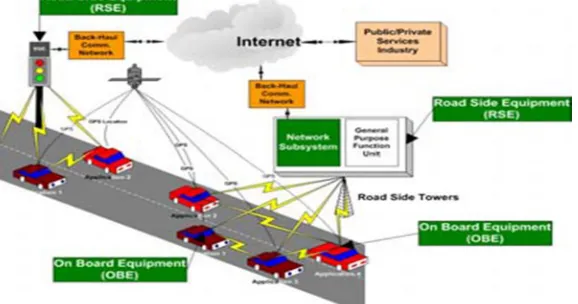
[image:2.612.165.454.543.695.2]The ITC configuration (Figure 1) uses multi-hop multicast/broadcast to transmit traffic connected data over multiple hops to a bunch of receivers. In intelligent transportation systems, vehicles would like solely be concerned with activity on the road ahead and not behind (an example of this might be for emergency message dissemination regarding a close collision or dynamic route scheduling). There are two styles of message forwarding in inter-vehicle communications: narrow broadcasting and intelligent broadcasting. In narrow broadcasting, vehicles send broadcast messages sporadically and at regular intervals.
Technology (IJRASET)
©IJRASET 2015: All Rights are Reserved
203
II. EXISTING METHODOLOGY
These works mainly 3 issues. Key or certificate management privacy preservation and economical broadcast authentication. Propose a key management theme to satisfy the safety and privacy needs in VANETs.They use fugacious keys to sign messages to preserve the OBU’s privacy, and revoke the certificate timely if the OBU’s misdeed is detected. create use of Certificate revocation Lists to distribute the revocation info in VANETs, that might facilitate a receiver OBU check the revocation standing of a sender. because the size of CRL is anticipated to be giant, they use a Bloom filter to store the certificate identifiers, which might take less memory and machine overhead to work out whether or not a certificate is on the CRL or not. to scale back the authentication delay caused by checking the long CRL, Wasef et al.employ a keyed mackintosh perform to try to to quick checking method for the OBU’s certificate.
III. PROPOSED METHODOLOGY
PBA with an objective of providing effective, efficient, scalable broadcast authentication and additionally non-repudiation in VANETs.To the simplest of our information, previous authentication schemes for V2V communications either lack non-repudiation or fail to control in high packet loss or high-density traffic eventualities. The most contributions of this work are initial, we tend to analyse the protection necessities for broadcast authentication in VANETs.And design a light-weight authentication theme known as PBA for V2V communications. Second, PBA is intended to attenuate the procedure value and storage overhead of authentication. Light-weight mackintosh and hash operations area unit largely performed in PBA to defend against computation-based DoS attacks. Signature verification is often instantly performed supported prediction outcomes from MHTs integrated into beacons ahead.
A. Module Names
Elliptic Curve Digital Signature formula
Reed-Solomon cryptography and Public Key Rebinding Prediction-based Authentication theme
1) Elliptic Curve Digital Signature Formula: RSU can verify multiple received signatures at identical time specified the overall
verification time may well be reduced. In their schemes, the procedure value is principally dominated by a number of operations of pairing and variety of operations of purpose multiplication over the elliptic curve. It is cheap for RSUs however valuable for OBUs to verify the messages. If attackers inject false beacons, it's thus onerous for the receiver to find them that these schemes also are susceptible to computation-based DoS attacks. In addition there are a unit some works that deem RSUs or alternative vehicles to realize the authentication for conveyance communication
2) Reed-Solomon Cryptography And Public Key Rebinding: A one-time signature theme named FastAuth to supply light-weight
timely and non-repudiation authentication for vehicle-to-vehicle communications. They use in chains Huffman hash trees to come up with a typical public key and minimize the signature size for beacons sent throughout one prediction interval As 1st exploits the certainty of future beacons to realize the moment authentication in VANETs.one disadvantage in FastAuth: once the receiver misses a beacon, it cannot add the remainder of this prediction interval. To affect packet losses, they add the schemes of Reed-Solomon cryptography and Public Key Rebinding. Communication overhead is needed in wireless lossy environments, as well because the procedure overhead. Is needed in wireless lossy environments, as well because the procedure overhead.
3) Prediction-Based Authentication Scheme: ECDSA signatures and TESLA-based theme to manifest beacons.TESLA theme,PBA
Technology (IJRASET)
©IJRASET 2015: All Rights are Reserved
204
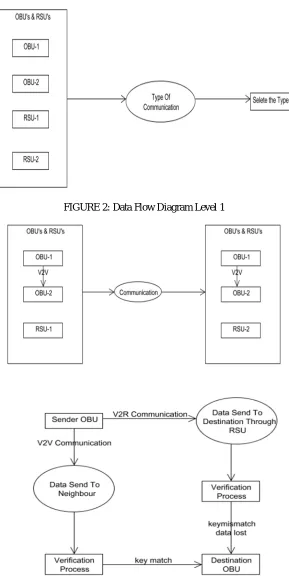
[image:4.612.162.451.105.687.2]B. Data Flow Diagram Level 0
FIGURE 2: Data Flow Diagram Level 1
Technology (IJRASET)
©IJRASET 2015: All Rights are Reserved
205
[image:5.612.266.400.109.321.2]C. Activity Diagram
Figure 5: Activity Diagram
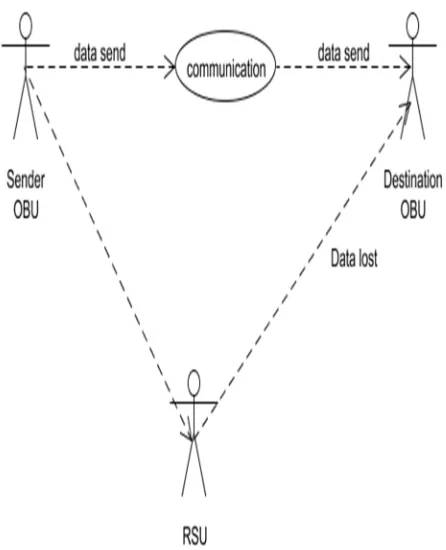
D. UseCase Diagram
[image:5.612.209.432.405.680.2]Technology (IJRASET)
©IJRASET 2015: All Rights are Reserved
206
E. Sequence Diagram
Technology (IJRASET)
©IJRASET 2015: All Rights are Reserved
207
IV. RESULTS
A. Initial Stage
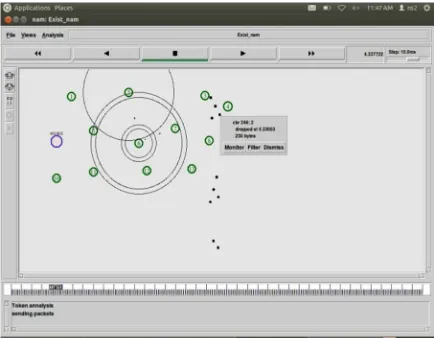
Figure 7 Initial stage access point sense to network provider
B. Data Transmission Stage
Figure 8 Data transmission stage data transmission access point toVANET nodes
C. End Of The Stage
Technology (IJRASET)
©IJRASET 2015: All Rights are Reserved
208
D. Vehicle To Vehicle To Communication
Figure 10 In the data transmission initial level find the path between source and destination
E. Data Transmission Failed
Figure 11 Due to collusion data transmission is get failed so this path is not useful for transmission
[image:8.612.197.414.290.459.2]F. Data Transmission Successfully
Technology (IJRASET)
©IJRASET 2015: All Rights are Reserved
209
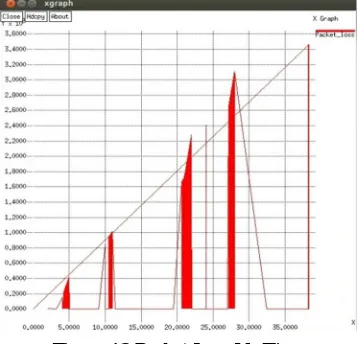
[image:9.612.217.396.103.275.2]G. Packet Loss Graph
Figure 13 Packet Loss Vs Time
V. CONCLUSION
We propose an effective, efficient and scalable broadcast authentication scheme to provide both computation-based DoS attacks resilient and packet losses resilient in VANETs. More- over, PBA has the advantage of fast verification by leveraging the predictability of beacons for single- hop based applications. To protect against memory- based DoS attacks, PBA alone keeps lesser end MACs of signatures to reduce the storage overhead.
REFERENCES
[1] P.Sheela Rani and R.Vinston Raja “Implementing Efficient Prediction Based Algorithm for Vehicular Adhoc Networks” International Journal of Innovative Research in Computer and Communication Engineering, Vol. 3, Issue 2, February 2015.
[2] N. Lyamin, A. Vinel, M. Jonsson, and J. Loo,” Real-time detection of denial-of-service attacks in ieee 802.11p vehicular networks,” IEEE Communications Letters, vol. 18, no. 1, pp. 110-113, Jan. 2014.
[3] W. Shen, P. Ning, X. He, and H. Dai, “Ally friendly jamming: How to jam your enemy and maintain your own wireless connectivity at the same time,” in Proceedings of IEEE Symposium on Security and Privacy, pp. 174-188, 2013.
[4] J. L. Huang, L. Y. Yeh, and H. Y. Chien, “ABAKA: An anonymous batch authenticated and key agreement scheme for value-added services in vehicular ad hoc networks, ” IEEE Transactions on Vehicular Technology, vol. 60, no. 1, pp. 248-262,Jan. 2011.
[5] B. Parno and A. Perrig, “Challenges in securing vehicular networks,” in Proceedings of the Fourth Workshop Hot Topics in Networks (HotNets-IV), Nov. 2005.
[6] S. John Moses and P. Anitha Christy Angelin “ Enhancing the Privacy through Pseudonymous Authentication and Conditional Communication in Vanets,” International Journal Of Engineering And Science, Vol. 2, pp 45- 49,mar 2013.
[7] Rasika Nerkar and Jagdish Pimple “A Survey on Efficient and Secure data transmission for MANET,” International Journal of Computer Science and Information Technologies, Vol. 6 (4), 2015, 3709-3711.
[8] Xiang Li, Na Ruan, Fan Wu, Jie Li and Mengyuan Li “Efficient and Enhanced Broadcast Authentication Protocols based on Multilevel μTESLA,” IEEE 978-1-4799-7575-2014.