www.impactjournals.com/oncotarget/
Oncotarget, October, Vol.2, No 10
Systemic use of tumor necrosis factor alpha as an anticancer
agent
Nicholas J. Roberts
1, Shibin Zhou
1, Luis A. Diaz Jr.
1and Matthias Holdhoff
11 Ludwig Center for Cancer Genetics and Therapeutics, The Sidney Kimmel Comprehensive Cancer Center, The Johns Hopkins University, Baltimore, MD 21231, USA
Correspondence to: Matthias Holdhoff, email: [email protected] Keywords: cancer, chemotherapy, TNF, drug combinations, oncotarget
Received: October 17, 2011, Accepted: October 26, 2011, Published: October 27, 2011
Copyright: © Roberts et al. This is an open-access article distributed under the terms of the Creative Commons Attribution License, which permits unrestricted use, distribution, and reproduction in any medium, provided the original author and source are credited.
AbstrAct:
Tumor necrosis factor-α (TNF-α) has been discussed as a potential anticancer
agent for many years, however initial enthusiasm about its clinical use as a systemic
agent was curbed due to significant toxicities and lack of efficacy. Combination of TNF-α with chemotherapy in the setting of hyperthermic isolated limb perfusion (ILP) has
provided new insights into a potential therapeutic role of this agent. The therapeutic
benefit from TNF-α in ILP is thought to be not only due to its direct anti-proliferative
effect, but also due to its ability to increase penetration of the chemotherapeutic
agents into the tumor tissue. New concepts for the use of TNF-α as a facilitator rather than as a direct actor are currently being explored with the goal to exploit the ability of this agent to increase drug delivery and to simultaneously reduce systemic toxicity.
This review article provides a comprehensive overview on the published
previous experience with systemic TNF-α. Data from 18 phase I and 10 phase II single agent as well as 18 combination therapy studies illustrate
previously used treatment and dose schedules, response data as well as the most prominently observed adverse effects. Also discussed, based on recent
preclinical data, is a potential future role of systemic TNF-α in combination with liposomal chemotherapy to facilitate increased drug uptake into tumors.
IntroductIon
TNF-α was discovered in 1975 and subsequently
cloned in 1984 [1, 2] and has been the focus of considerable
interest as an anticancer agent. Initial enthusiasm for
TNF-α as a systemic therapeutic agent stemmed from the
observation that it could induce hemorrhagic necrosis in
the tumors of bacillus Calmette-Guérin (BCG)-primed
and endotoxin treated mice [1]. Recombinant human
TNF-α (rhTNF-α) has been tested as a systemic treatment
in several phase I and phase II clinical trials. These trials,
conducted in the 1980s and 1990s, used TNF-α as both
a single agent and in combination with other cytokines
or chemotherapeutics. However, the initial enthusiasm
for the development of TNF-α as a systemic treatment
has waned in the face of significant toxicities and a lack
of evidence for therapeutic benefit. Nevertheless, these
studies have provided valuable data regarding the toxicity
profile and pharmacological properties of systemically
delivered TNF-α. More encouraging is the current clinical
use of combination TNF-α with chemotherapeutic agents
in the setting of hyperthermic isolated limb perfusion
in limb-threatening soft tissue sarcomas and in-transit
melanoma [3]. Here we review the phase I and phase II
clinical trials of systemic use of TNF-α, the toxicities
and responses observed, and highlight recent scientific
advances that hint at reduced systemic toxicities and
augmentation of the antitumor responses seen with this
agent. Specifically, the recently identified vascular effects
of TNF-α that lead to a targeted intra-tumoral enrichment
of liposomes and macromolecules through an
enhanced-enhanced permeability and retention effect (E
2PR) [4-6].
bIology of tnf-
α
the transmembrane form via proteolytic cleavage by the
metalloprotease TNF-α converting enzyme (TACE) [7].
TNF-α is primarily produced by macrophages, but also by
a variety of other cells, including NK cells, T lymphocytes,
smooth muscle cells, fibroblasts and others [8]. Release
of TNF-α occurs in response to inflammatory stimuli and
cytokines including peptidoglycan, lipopolysaccharide
and other bacterial components [9]. Two receptors
exist for TNF-α: 1). Tumor necrosis factor receptor 1
(TNFR1), which preferentially binds soluble TNF-α and
is found almost ubiquitously on the surface of cells, and
2). Tumor necrosis factor receptor 2 (TNFR2), which is
found on cells of the hematopoietic lineage and which has
specificity for the transmembrane form of TNF-α [10].
The resulting biological effect of TNF-α binding to its
receptor is depending on the type of receptor activated and
the cellular state during activation. Stimulation of TNFR1
activates downstream inflammatory mediators through
AP1, MAPK and NF-kB pathways [11]. The balance
of activation of these pathways by TNF-α is critical in
determining whether a cell undergoes apoptosis as a late
stage event in TNF-α stimulation. For instance, in acute
myeloid leukemia (AML), NF-kB dependent induction
of HO-1 underlies resistance to TNF-α induced apoptosis
[12]. Similarly, inhibition of NF-kB with concurrent TNF-α
stimulation results in caspase activation and apoptosis
[13]. Conversely, the biological role and downstream
effects of TNFR2 stimulation are more poorly understood.
TNFR2 can be up-regulated by cytokine stimulation
and also mediate a variety of downstream inflammatory
mediators [14].
PreclInIcAl evIdence for tnf-
α
As An AntIcAncer Agent
After the initial observation that TNF-α induced
hemorrhagic necrosis of tumors in mice treated with BCG
and endotoxin [1], the potential of TNF-α as a therapeutic
agent was intensely studied in
in vitro
and
in vivo
studies.
These studies highlighted the possible role of TNF-α as an
anticancer agent and galvanized support for the numerous
phase I and phase II studies that followed.
In vitro
studies demonstrated that TNF-α had a
growth inhibitory effect on SV40-tranformed human
mammary epithelia cells and a cytotoxic effect on breast
cancer cell lines. Interestingly, there was no effect on
normal human mammary epithelial cells [15]. Similarly,
TNF-α showed a cytostatic effect on hepatoma cells
while having little effect on non-tumorigenic liver cells
[16]. Intriguingly, Sugarman and colleagues showed that
the cytostatic and cytotoxic effects of TNF-α were cell
line specific, with only a proportion of tumor cell lines
responding to TNF-α [17]. Comparison of the cytostatic
and cytotoxic effect of TNF-α against a wide range of
tumor types demonstrated that approximately a quarter of
tumors (28%) are sensitive to the effects of TNF-α and
that this sensitivity was greater in colorectal and lung
cancers [18].
In vivo
, TNF-α has shown activity against
a wide variety of murine tumor types and human tumor
xenografts [19-21]. Taken together, the
in vitro
and
in vivo
data were suggestive that TNF-α had the potential to be
highly specific anti-cancer therapy, with activity against a
number of tumor types.
Preclinical evidence also suggested a synergistic
effect of TNF-α with a variety of chemotherapeutics
in vitro
and
in vivo
. TNF-α has been shown to enhance
the cytotoxicity of DNA topoisomerase inhibitors
actinomycin D, adriamycin, and etoposide against murine
bladder tumor cell line (MBT-2) in
in vitro
and
in vivo
models [22]. The enhancing effect of TNF-α was not
observed with other cytotoxic agents, such as: bleomycin,
hydroxyurea, cisplatin, mitomycin C, vincristine and
vinblastine. The timing of TNF-α treatment in relation to
chemotherapy seems important with studies suggesting
that the optimal time for TNF-α therapy is 48 hours prior
to initiation of chemotherapy [23]. Interestingly, there are
likely two mechanisms that underlie the importance of
timing in regards to TNF-α treatment. Firstly, inhibitors of
transcription, such as actinomycin D and flavopiridol, are
used before or at the time of TNF-α treatment and block
NF-kB pathway activation, sensitizing cells to the effects
of TNF-α [24]. Secondly, inhibitors of topoisomerase II
can be given at the time of, or after TNF-α and increase
the sensitivity of TNF-α resistant cancer cell lines to
TNF-α [25].
TNF-α also demonstrated enhanced antitumor effects
in vitro when used in combination with other cytokines
[26]. Induction of TNF-α receptors rather than an increased
affinity of already present receptors explained the effect
of IFN-γ on TNF-α binding [26, 27]. Similarly,
in vitro
and
in vivo
studies using the TNF-α resistant melanoma
cell line B16BL6 demonstrated that IFN-γ sensitizes
cancer cells to the effects of TNF-α, inducing necrosis
and tumor response, which were previously absent
[28]. Later, investigators showed that TNF-α induced
synergistic growth inhibition against pancreatic cancer
cell lines when combined with interferon alpha (IFN-α)
and IFN-γ [29]. TNF-α and IFN-γ act against many other
cancer cell lines as well. Orita
et al
. [30] tested TNF-α
and IFN-γ on 23 cell lines
in vitro
and demonstrated that
the combination acts synergistically, showing cytostatic
and cytotoxic effects on cell lines previously resistant to
TNF-α and IFN-γ individually.
Combinations of TNF-α with IFN-α and IL-2 also
showed synergistic cytotoxic and cytostatic effects
in vitro
and
in vivo
. Concomitant TNF-α and IFN-α in a murine
lung metastasis model significantly increased survival
[31]. TNF-α and IL-2 in murine models with leukemia,
mastocytoma, melanoma, lymphoma and sarcoma cell
lines also demonstrate combinatorial effects and systemic
immunological memory [32, 33].
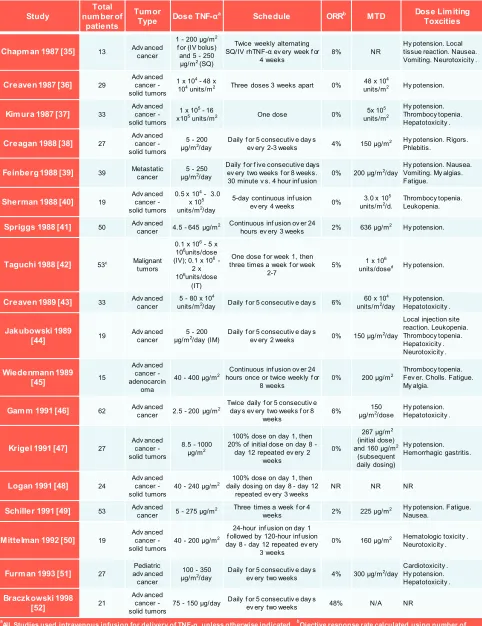
Table 1: Phase I studies with single agent rhTNF-α
Study number of Total patients
Tumor
Type Dose TNF-αa Schedule ORRb MTD Dose Limiting Toxcities
Chapman 1987 [35] 13 Adv anced cancer
1 - 200 µg/m2
f or (IV bolus) and 5 - 250
µg/m2 (SQ)
Twice weekly alternating
SQ/IV rhTNF-α ev ery week f or
4 weeks 8% NR
Hy potension. Local tissue reaction. Nausea. Vomiting. Neurotoxicity .
Creaven1987 [36] 29 Adv anced cancer -solid tumors
1 x 10⁴ - 48 x
104units/m2 Three doses 3 weeks apart 0% 48 x 10
4
units/m2 Hy potension.
Kimura 1987 [37] 33 Adv anced cancer -solid tumors
1 x 10⁵ - 16
x105units/m2 One dose 0% 5x 10
5
units/m2
Hy potension. Thrombocy topenia. Hepatotoxicity .
Creagan 1988 [38] 27 Adv anced cancer -solid tumors
5 - 200
µg/m2/day Daily f or 5 consecutiv e day s ev ery 2-3 weeks 4% 150 µg/m2 Hy potension. Rigors. Phlebitis.
Feinberg 1988 [39] 39 Metastatic cancer µg/m5 - 250 2/day
Daily f or f ive consecutive days ev ery two weeks f or 8 weeks.
30 minute v s. 4 hour inf usion 0% 200 µg/m
2/day Hy potension. Nausea. Vomiting. My algias.
Fatigue.
Sherman 1988 [40] 19 Adv anced cancer -solid tumors
0.5 x 10⁴- 3.0
x 105
units/m2/day
5-day continuous inf usion
ev ery 4 weeks 0% 3.0 x 10
5
units/m2/d. Thrombocy topenia. Leukopenia.
Spriggs 1988 [41] 50 Adv anced cancer 4.5 - 645 µg/m2 Continuous inf usion ov er 24
hours ev ery 3 weeks 2% 636 µg/m2 Hy potension.
Taguchi 1988 [42] 53c Malignant
tumors
0.1 x 10⁶- 5 x
106units/dose
(IV); 0.1 x 10⁶
-2 x
106units/dose
(IT)
One dose f or week 1, then three times a week f or week
2-7 5%
1 x 10⁶
units/dosed Hy potension.
Creaven1989 [43] 33 Adv anced cancer units/m5 - 80 x 102/day4 Daily f or 5 consecutiv e day s 6% 60 x 10 4
units/m2/day Hy potension. Hepatotoxicity .
Jakubowski 1989
[44] 19 Adv anced cancer µg/m5 - 200 2/day (IM) Daily f or 5 consecutiv e day s ev ery 2 weeks 0% 150 µg/m2/day
Local injection site reaction. Leukopenia. Thrombocy topenia. Hepatoxicity . Neurotoxicity .
Wiedenmann1989 [45] 15
Adv anced cancer -adenocarcin
oma
40 - 400 µg/m2 hours once or twice weekly f or Continuous inf usion ov er 24
8 weeks 0% 200 µg/m
2 Thrombocy topenia. Fev er. Cholls. Fatigue.
My algia.
Gamm 1991 [46] 62 Adv anced cancer 2.5 - 200 µg/m2 Twice daily f or 5 consecutiv e day s ev ery two weeks f or 8
weeks 6%
150
µg/m2/dose Hy potension. Hepatotoxicity .
Krigel 1991 [47] 27 Adv anced cancer -solid tumors
8.5 - 1000
µg/m2
100% dose on day 1, then 20% of initial dose on day 8
-day 12 repeated ev ery 2 weeks
0%
267 µg/m2
(initial dose)
and 160 µg/m2
(subsequent daily dosing)
Hy potension. Hemorrhagic gastritis.
Logan 1991 [48] 24 Adv anced cancer
-solid tumors 40 - 240 µg/m
2 daily dosing on day 8 - day 12 100% dose on day 1, then
repeated ev ery 3 weeks NR NR NR
Schiller 1991 [49] 53 Adv anced cancer 5 - 275 µg/m2 Three times a week f or 4
weeks 2% 225 µg/m2 Hy potension. Fatigue. Nausea.
Mittelman 1992 [50] 19 Adv anced cancer
-solid tumors 40 - 200 µg/m
2
24-hour inf usion on day 1 f ollowed by 120-hour inf usion day 8 - day 12 repeated ev ery
3 weeks
0% 160 µg/m2 Hematologic toxicity .
Neurotoxicity .
Furman 1993 [51] 27 adv anced Pediatric cancer
100 - 350
µg/m2/day Daily f or 5 consecutiv e day s ev ery two weeks 4% 300 µg/m2/day
Cardiotoxicity . Hy potension. Hepatotoxicity .
Braczkowski 1998 [52] 21
Adv anced cancer
-solid tumors 75 - 150 µg/day Daily f or 5 consecutiv e day s ev ery two weeks 48% N/A NR
a
less extensively studied. Investigation of the interaction
of TNF-α and radiation in 14 human tumor cells lines
demonstrated synergistic or additive cytotoxicity with
the maximum effect when TNF-α was given 4-12 hours
before irradiation [34]. The mechanism of this synergism
is thought to be due to the induction of oxygen free radical
species and resulting DNA damage.
clInIcAl trIAls of systemIc
recombInAnt humAn tnf-
α
Systemic rhTNF-α as a single agent
Numerous phase I and phase II studies have been
conducted to ascertain the toxicity profile and efficacy of
systemic TNF-α. Studies have encompassed a wide range
of tumor types in both adult and pediatric patients. In
the majority of phase I and phase II studies, TNF-α was
administered as an intravenous bolus injection or infusion.
However, a few phase I studies have evaluated TNF-α
with subcutaneous or intramuscular administration.
Phase I studies conducted with TNF-α are detailed
in
table 1
[35-52]. Eighteen phase I studies were
conducted and published with rhTNF-α as a single
agent systemic therapy, enrolling between 19 and 62
patients per study. Study design varied with single dose
of rhTNF-α, multiple dosing (daily to every three weeks)
and continuous infusion (one to five day duration) being
tested. Overall, it appears that a systemic TNF-α dose of
150-200 µg/m
2, given as a 30 minute intravenous infusion
was identified as MTD in several studies. Dose-limiting
toxicities (DLT) as well as other side effects that were
observed seemed to have been universal and in most cases
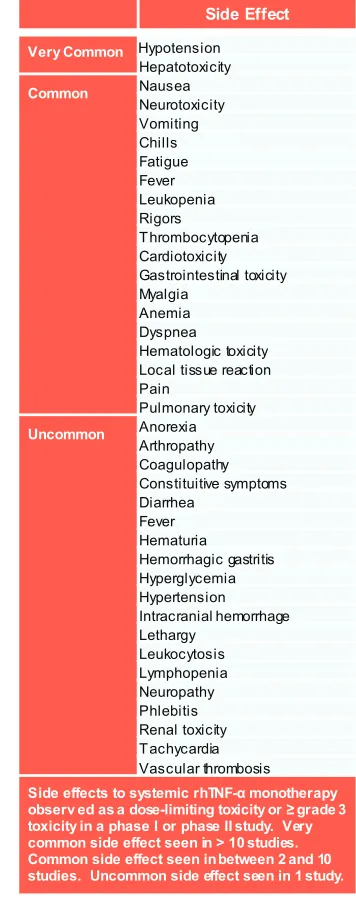
reasonably well tolerated and reversible. Common DLTs
included: hypotension, thrombocytopenia, leukopenia,
neurotoxicity, fever, nausea/vomiting, as well as general
symptoms of malaise and weakness (
table 2
). Other
pathological sequelae of a transient hypovolemic episode,
including transient elevation of liver enzymes, were
reported. Tumor responses however, when used as a
single agent, even with more intense treatment schedules,
were rare.
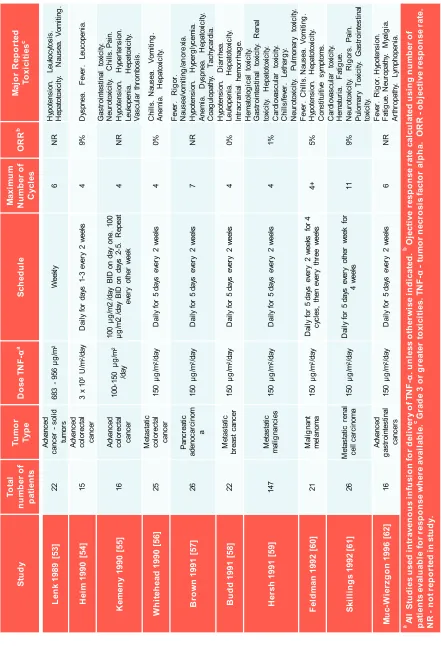
Phase II studies using systemically administered
rhTNF-α are detailed in
table 3
[53-62]. Studies typically
investigated advanced/metastatic cases of: colorectal
cancer, breast cancer, pancreatic cancer, malignant
melanoma and renal cell carcinoma. The majority of
studies involved a small number of cases (16-26), an
exception being a phase II study of various malignancies
that enrolled 147 patients [59]. Study design varied, with
150-200 µg/m
2given as a 30 minute intravenous infusion
daily for 3-5 days and repeated every 1-4 weeks being
commonly employed. In all studies, tumor responses
were rare and when they did occur, only partial responses
were observed. In the largest study of 147 cancer patients
treated with 150μg/m
2for 5 days every other week, only
1 partial remission was noted while 13% of patients
experienced a grade 4 or greater toxicity. The most serious
toxicities included respiratory failure and coagulopathies.
Other, less serious and more common side effects
reported include: hypotension (31%), leukopenia (38%),
thrombocytopenia (13%), fever / chills (69%), headache
(25%), nausea / vomiting (69%) and hepatopathy (10%).
However, compared to other phase II studies this regimen
was fairly dose-dense which may have increased the
significant toxicity observed.
Systemic rhTNF-α in combination with
chemotherapeutics
[image:4.612.80.258.279.728.2]Phase I and II studies that investigated the safety
Table 2: Side effects of single agent rhTNF-α
Side Effect
Very Common Hypotension Hepatotoxicity Common Nausea
Neurotoxicity Vomiting Chills Fatigue Fever Leukopenia Rigors
Thrombocytopenia Cardiotoxicity Gastrointestinal toxicity Myalgia
Anemia Dyspnea
Hematologic toxicity Local tissue reaction Pain
Pulmonary toxicity Uncommon Anorexia
Arthropathy Coagulopathy Constituitive symptoms Diarrhea
Fever Hematuria
Hemorrhagic gastritis Hyperglycemia Hypertension Intracranial hemorrhage Lethargy
Leukocytosis Lymphopenia Neuropathy Phlebitis Renal toxicity Tachycardia Vascular thrombosis
Table 3: Phase II studies with single agent rhTNF-α
Stu dy Tot al num be r of pa tie nt s Tum or Ty pe Dos e T NF -α a Sc he dul e M ax im um Num be r of C yc les OR R b M aj or Re por te d Tox ic iti es c Le nk 198 9 [53 ] 22 Adv anc ed canc er -sol id tum or s 683 -956 μ g/m 2 W eek ly 6 NR H ypot ens ion. Leuk oc ytos is . H epat ot ox ic ity . N aus ea. V om iti ng . H ei m 1 99 0 [54 ] 15 Adv anc ed col or ec tal canc er 3 x 10 5U /m 2/day D ai ly f or day s 1-3 ev er y 2 w eek s 4 9% D ys pnea. F ev er . Leuc openi a. K em en y 199 0 [5 5] 16 Adv anc ed col or ec tal canc er 100 -150 µ g/ m 2 /day 100 µ g/ m 2 /day B ID on day one. 100 µg /m 2 /day B ID on day s 2 -5. R epeat ev er y ot her w eek 4 NR G as troi nt es tinal t ox ic ity . Ne ur ot ox ic ity . Ch ills . P ain . H ypot ens ion. H yper tens ion. Leuk openi a. H epat ox ic ity . Vas cul ar thr om bos is . W hi teh ead 1 99 0 [56 ] 25 M et as tat ic col or ec tal canc er 150 µ g/ m 2/day D ai ly f or 5 day s ev er y 2 w eek s 4 0% C hi lls. N
aus ea. Vom iti ng . Anem ia. H epat ox ic ity . B ro w n 19 91 [57 ] 26 Panc reat ic adenoc ar ci nom a 150 µ g/ m 2/day D ai ly f or 5 day s ev er y 2 w eek s 7 NR Fev er . R ig or . N aus ea/ vom iti ng /an or ex ia. H ypot ens ion. H yper gl yc em ia. Anem ia. D ys pnea. H epat ox ic ity . C oag ul opat hy . T ac hy car di a. B ud d 1 99 1 [5 8] 22 M et as tat ic br eas t c anc er 150 µ g/ m 2/day D ai ly f or 5 day s ev er y 2 w eek s 4 0% H ypot ens ion. D iar rhea. Leuk openi a. H epat ot ox ic ity . Int rac rani al hem or rhag e. H er sh 199 1 [5 9] 147 M et as tat ic m al ig nanc ies 150 µ g/ m 2/day D ai ly f or 5 day s ev er y 2 w eek s 4 1% H em at ol og ic al t ox ic ity . G as troi nt es tinal t ox ic ity . R enal to xic ity . H ep ato to xic ity . C ar di ov as cul ar t ox ic ity . C hi lls /fev er . Let har gy . N eur ot ox ic ity . Pul m onar y t ox ic ity . Fel dm an 1 99 2 [60 ] 21 M al ig nant m el anom a 150 µ g/ m 2/day D ai ly f or 5 day s ev er y 2 w eek s for 4 cy cl es , t hen ev er y thr ee w eek s 4+ 5% Fev er . C hi lls . N aus ea. V om iti ng . H ypot ens ion. H epat ot ox ic ity . C ons tit ui tiv e s ym pt om s. Sk ill ings 199 2 [61 ] 26 M et as tat ic r enal cel l c ar ci nom a 150 µ g/ m 2/day D ai ly f or 5 day s ev er y ot her w eek f or 4 w eek s 11 9% C ar di ov as cul ar t ox ic ity . H em at ur ia. F at ig ue. N eur ot ox ic ity . R ig or s. P ai n. Pul om ar y T ox ic ity . G as troi nt es tinal to xic ity. Mu c-Wi er zgon 199 6 [62 ] 16 Adv anc ed gas troi nt es tinal canc er s 150 µ g/ m 2/day D ai ly f or 5 day s ev er y 2 w eek s 6 NR Fev er . R ig or . H ypot ens ion. Fat ig ue. N eur opat hy . M yal gi a. Ar thr opat hy . Ly m phopeni a.
a Al
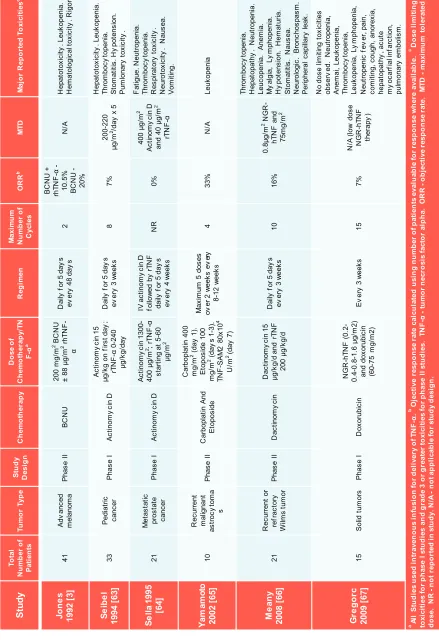
Table 4: Studies of systemic TNF-α with chemotherapy
St ud y Tot al Num be r of Pa tie nts Tum or T ype Stu dy De si gn Che m ot he ra py Dos e of Che m ot he ra py /T N F-α a Re gi m en M ax im um Num be r of C yc les OR R b MT D M aj or Re por te d Tox ic iti es c Jo ne s 1992 [ 3] 41 A dv anc ed m el ano m a P ha se II B CNU 200 m g/ m 2B CNU ± 88 µg /m 2rh TN F -α D ai ly f or 5 da y s ev er y 4 8 da y s 2 B CNU + rh TN F -α -10. 5% B CNU -20% N/ A H ep at ot ox ic ity . L euk op eni a. He ma to lo gi ca l t ox ici ty . Ri go r. Se ib el 1994 [63] 33 Pe diat ric can cer P ha se I A ct in omy ci n D A ct in om y ci n 15 µg/ kg o n fi rs t d ay ; rTN F -α 0 -2 40 µg/ kg /d ay D ai ly f or 5 da y s ev er y 3 w eek s 8 7% 200 -2 20 µg /m 2/da y x 5 H ep at ot ox ic ity . L euk op eni a. Thr om bo cy to pe ni a. S to ma tit is. Hy po te nsi on . P um lon ar y to xi ci ty . Se lla 1995 [64] 21 M et ast at ic pr os tat e can cer P ha se I A ct in omy ci n D A ct in omy ci n 130 0-400 µ g/ m2; rTN
F -α st ar ting a t 5-60 µg /m 2 IV a ct in omy ci n D fo llow ed by rT N F dai ly f or 5 d ay s ev er y 4 w eek s NR 0% 400 µ g/ m 2 A ct in omy ci n D and 4 0 µg /m 2 rTN F -α F at ig ue . N eu tr op en ia . Thr om bo cy to pe ni a. Re sp ira to ry to xi ci ty . Ne ur ot ox ici ty . Na use a. V om iti ng . Yam am ot o 2002 [65] 10 R ec ur re nt m al ig na nt as tr ocy to ma s P ha se II C ar bop la tin A nd E to po si de C ar bop la tin 4 00 mg /m 2(d ay 1) . E to po si de 100 mg /m 2(d ay s 1 -3 ). TN F -S A M 2 80 x10 4 U/ m 2(d ay 7) M ax im um 5 d os es ov er 2 w ee ks e v er y 8-12 w ee ks 4 33% N/ A Leu kop en ia M ean y 2008 [66] 21 R ec ur re nt o r re fr ac tor y Wi lms t umo r P ha se II Da ct in omy ci n D ac tino m y ci n 1 5 µg/ kg /d a nd r TN F 200 µ g/ kg/ d D ai ly f or 5 da y s ev er y 3 w eek s 10 16% 0. 8μ g/ m 2N GR -hT N F a nd 75m g/ m 2 Thr om bo cy to pe ni a. H ep at opa th y . N eu tr op eni a. Leu cop en ia . A ne m ia . M y al gi a, L y m ph op en ia . H y po te ns io n. H em at ur ia . S to ma tit is. Na use a. N eu ro lo gi c. B ron ch os pa sm . P er ip he ra l ca pi lla ry lea k. G re go rc 2009 [67] 15 S ol id t um or s P ha se I D ox or ubi ci n N GR -h TNF (0 .2 -0. 4-0. 8-1. 6 µg/ m 2) and d ox or ubi ci n (6 0-75 m g/ m 2) E v er y 3 w eek s 15 7% N /A (l ow do se N GR -h TN F the ra py ) No d os e limi tin g to xi ci tie s obs er v ed . N eu tr op eni a, A ne m ai , Le uk op en ia , Thr om bo cy to pe ni a, Leu kop en ia , Ly m ph op en ia , N eu tr ope ni c fe v er , p ai n, co mi tin g, c ou gh , an or ex ia , hep at opa th y , ac ut e m y oc ar fi al in fa rc tion , pul m on ar y em bo lis m .
a Al
l St udi es us ed i nt ra ve nous inf us ion f or de liv er y of T NF -α. b O je ct iv e re spons e ra te c al cul at ed us ing num be r of pa tie nt s ev al ua bl e for re spons e w he re a va ila bl e.
c Dos
Table 5: Studies of systemic TNF-α with other cytokines
St ud y To ta l Nu m be r of Pa tie nts Tu m or Ty pe St ud y Desi gn C yt ok in e Do se o f C yt ok in e/ TN F-α Ro ut e Bol us Inf us ion Reg im en C ycl es O RR a M TD M aj or R ep or te d To xic itie s b D em et ri 198 9 [6 8] 38 A dv anc ed canc er Phas e I IF N-γ IF N-γ (200 µ g/ m 2/24hr ); rh TNF -α (2 -205 µ g/ m 2 /24hr ) IV Inf us ion 24hr inf us ion of IF N-γ ; 24hr rh TNF -α inf us ion 12 hour s af ter the s tar t of IF N-γ NR 6% 205 µ g/ m 2of rh TNF -α Hy pot ens ion. Kur zr oc k 198 9 [6 9] 25 M et as tat ic canc er Phas e I IF N-γ IF N-γ (5 -75 µ g/ m 2/24hr ); rh TNF -α (5 -75 µ g/ m 2/24hr ) IM Bol us Dai ly f or 5 day s ev er y 2 w eek s 2 0% rT NF -α 75 µg and IF N-γ 50 µg Dy spnea. F at igue. Hy per ther m ia. Hy per tens iv e enc ephal opat hy -sei zur e. Thr om boc yt openi a. Fi edl er 199 1 [7 0] 16 Col or ec tal canc er Phas e I/II IF N-γ TN F (50 µ g/ m 2IV ); IF N-γ (100 µ g S C) IV Inf us ion Dai ly f or 5 day s ev er y w eek 4 0% N/ A A cut e r enal fai lur e. Thr om boc yt openi a. Smi th 199 1 [7 1] 36 So lid tum or s Phas e I IF N-γ IF N-γ (10 -100 µ g/ m 2; rh TNF -α (1 0 -100 µg/ m 2 /24hr ) IM Bol us IF N-γ fol low ed 5 m inut es lat er by rh TNF -α ev er y ot her day 0 NR 100 μg/ m 2of IF N-gam m a pl us 50 μg /m 2 of T NF -α Fev er . Thr om boc yt openi a. Ya ng 199 1 [7 3] 16 No n-sm all cel l lung canc er Phas e I IL -2 IL -2 ( 6 x 10 6 IU /m 2 IV ); T NF -α (2 5 -100 µ g/ m 2/day IM ) IM Inf us ion Dai ly f or 5 day s ev er y 3 w eek s 2 8% 6 x 10 6 IU /m 2 of IL -2 pl us T NF -α 50 µg /m 2 /day Thr om boc yt openi a. Sc hi lle r 199 2 [7 2] 24 A dv anc ed canc er Phas e I IF N-γ IF N-γ (100 µg/ day ); T NF -α (25 -100 µ g/ m 2/day ) IV Inf us ion Thr ee t im es a w eek 4 NR 50 µ g/ m 2 TNF -αand 100 µ
g/ m 2 IF N-γ Hy pot ens ion. Kr ige l 199 5 [7 4] 15 M et as tat ic canc er -so lid tum or s Phas e I IL -2 TNF -α (160 µg/ m
2 ); rI
L-2 ( 6-18 x 10 6IU /m 2/day ) IV Inf us ion TNF -al pha inf us ion f or 5 day s f ol low ed by rI L-2 for 5 or 7 day s ev er y 3-4 w eek s 2 14% 160 µ g/ m 2 TNF -α
and 18 x
10 6 IU /m 2/ day r IL -2 Hy pot ens ion. W ei ght los s. F at igue. Sc hi lle r 199 5 [7 5] 8 No n-sm all cel l lung canc er Pilo t St udy IL -2 IL -2 ( 6 x 10 6 IU /m 2 /day IV ); TNF -α (50µ g/ m 2/day IM ) IM Bol us IL
-2 and T
NF -α d aily for 4 day s ev er y w ee k for 3 w eek s 2 0% N/ A Pul m onar y tox ic ity . Car di ac tox ic ity . Renal tox ic ity . Neur ot ox ic ity . Sc hi lle r 199 5 [7 5] 7 No n-sm all cel l lung canc er Phas e I IL -2 IL -2 ( 6 x 10 6IU /m 2/day IV ); TNF -α (50 -150µ g/ m 2 /day IM) IM Bol us IL
-2 and T
NF -α d aily for 5 day s ev er y 2 w eek s 9 0%
< 6 x
10 6 IU /m 2 /day of IL -2
and 50 µ
g/ m 2/day of T NF -α Pul m onar y tox ic ity . Car di ac tox ic ity . Renal tox ic ity . Neur ot ox ic ity . Esk an de r 199 7 [7 6] 18 M et as tat ic canc er Phas e I IL -2 & IF N-α IF N-α (9 x 10 6IU /m 2/day IM or S C); I L-2 ( 1-3 x 10 6 IU /m 2 /day IV ); T NF -α (40 -120 µ g/ m
2 IV
) IV Inf us ion IF N-α w eek ly on day s 1,
3 and 5 f
or 3 w eek s. IL -2 w eek ly on day s 1 -5 for 3 w eek s. T NF -α on day s 1 -5 f or w eek 1 NR 0% 40 -80 µ g/ m 2/day as 2 -hour inf us ion dependi ng on regi m en Pul m onar y tox ic ity . Car di ac tox ic ity . G as troi nt es tinal to xi ci ty . Cy topeni a. aO ject iv e resp on se rat e cal cu lat ed u si ng n um ber o f p at ien ts ev al uab le fo r r esp on se wh er e av ai lab le.
c D
ose lim iti ng t oxi ci ties fo r p hase I st ud ies an d gr ad e 3 or g reat er t oxi ci ties fo r p hase II st ud ies . O R R -o bj ect iv e r esp on se rat e. M TD -m axi m um t ol er at ed d ose. N R -not re por te d in st udy . N /A -not a ppl ic abl e for s tudy de si gn. IV -in tr av en ou s. IM -i nt ram uscu lar . IF N -γ -in te rf er on g am m a. IL -2 -in te rle uk in 2
. IF
and efficacy of systemic rhTNF-α combined with
carmustine [3], actinomycin D [63, 64], carboplatin and
etoposide [65], dactinomycin [66] and doxorubicin [67]
have been reported and are detailed in
table 4
. In all
trials, intravenous rhTNF-α was given concurrently or
sequentially to chemotherapeutics on multiple days and
treatments being repeated for a number of cycles. Dose
of intravenous rhTNF-α ranged from 88-200μg/m
2and
was similar to the dose used for rhTNF-α monotherapy.
In one study of rhTNF-α and BCNU in advanced
melanoma, a response rate of 20% was seen with BCNU
alone compared to 10.5% with BCNU and rhTNF-α
[3]. Additionally, treatment of recurrent or refractory
Wilms tumor with dactinomycin and rhTNF-α resulted
in a 15.8% response rate [66]. However, while patients
in this study were previously treated with dactinomycin,
response to therapy was not conclusively due to the action
of rhTNF-α. Together, trials of rhTNF-α combined with
chemotherapeutics have failed to prove that the addition
of rhTNF-α to the treatment regimen improved outcome.
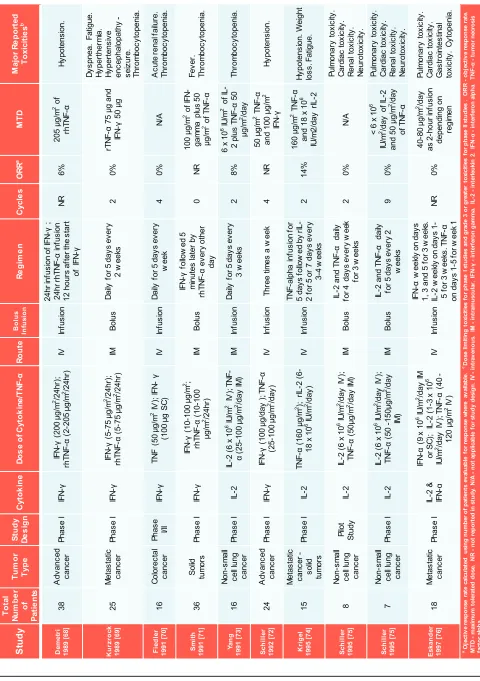
Systemic rhTNF-α in combination with cytokines
Many studies have combined systemic administration
of rhTNF-α with other cytokines such as: IFN-γ [68-72],
IL-2 [73-76] and IFN-α [76], and these are summarized
in
table 5
. In general, phase I studies showed a reduction
in the MTD of rhTNF-α when used in combination with
other cytokines for patients with advanced solid tumors.
This was largely due to the overlap in toxicities of these
cytokines, that is: hypotension, fever, thrombocytopenia,
acute renal failure, anemia, cardiac arrhythmias and
pulmonary edema. Disappointingly, few objective
responses were reported and none of the combinations
were tested in larger randomized phase II studies; most
likely because of the toxicity associated with combined
therapy and a lack of efficacy seen in the initial studies.
Systemic rhTNF-α in combination with
radiotherapy
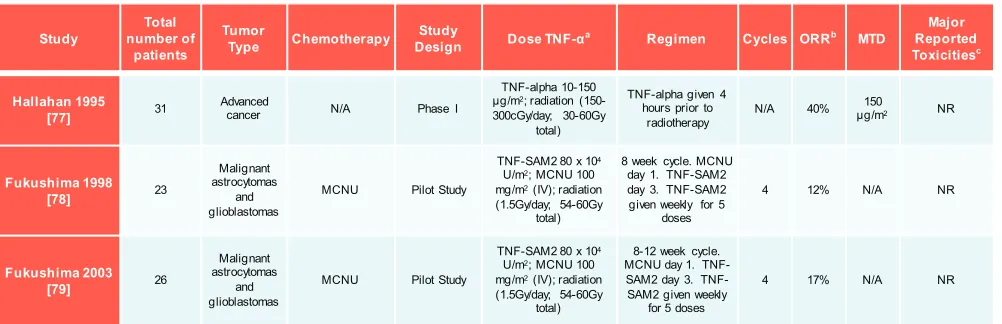
Three studies that combined rhTNF-α with external
beam radiation have also been reported [77-79] and they
are detailed in
table 6
. The most recent studies combined
radiotherapy with both rhTNF-α and the chemotherapeutic
ranimustine for the treatment of malignant astrocytoma
[79]. In these studies DLTs were not observed and
consequently, the maximum tolerated dose of this regimen
was difficult to ascertain. In addition, no synergy in terms
of objective response was noted.
future dIrectIons of systemIc
tnf-
α
Translation of systemic TNF-α from research to
clinic has been hampered by significant systemic toxicity
and a lack of efficacy at MTD [43, 46]. Future directions
for the development of TNF-α therapy rely on amelioration
of the toxicity seen with systemic therapy and thereby
increasing direct tumor response through higher TNF-α
doses. Alternatively, the exploitation of novel mechanisms
of action may increase efficacy and safety through indirect
tumor effects.
Polyethylene glycol (PEG) conjugated proteins have
shown increased retention and decreased immunogenicity
in vivo
[80]. Attempts to conjugate rhTNF-α with PEG
[image:8.612.58.559.540.702.2]has yielded a therapeutic with decreased toxicity and
increased efficacy in murine preclinical models
[81-84]. Thamm and colleagues conducted a phase I clinical
trial of PEG-rhTNF-α in dogs with spontaneously
occurring tumors [85]. Comparatively, Client-owned
dogs provide an excellent model in which to develop
novel anticancer agents. These dogs are genetically
diverse, immunocompetent, share our environment and
have similar types and size of tumors to people [86].
Interestingly, in this study the MTD of PEG-rhTNF-α
Table 6: Studies of systemic TNF-α with radiation +/- chemotherapy
Study number of Total patients
Tumor
Type Chemotherapy DesignStudy Dose TNF-αa Regimen Cycles ORRb MTD
Major Reported Toxicitiesc
Hallahan 1995
[77] 31 Advanced cancer N/A Phase I
TNF-alpha 10-150 µg/m2; radiation
(150-300cGy/day; 30-60Gy total)
TNF-alpha given 4 hours prior to
radiotherapy N/A 40%
150
µg/m2 NR
Fukushima 1998
[78] 23
Malignant astrocytomas
and glioblastomas
MCNU Pilot Study
TNF-SAM2 80 x 104
U/m2; MCNU 100
mg/m2(IV); radiation
(1.5Gy/day; 54-60Gy total)
8 week cycle. MCNU day 1. TNF-SAM2 day 3. TNF-SAM2 given weekly for 5
doses
4 12% N/A NR
Fukushima 2003
[79] 26
Malignant astrocytomas
and glioblastomas
MCNU Pilot Study
TNF-SAM2 80 x 104
U/m2; MCNU 100
mg/m2(IV); radiation
(1.5Gy/day; 54-60Gy total)
8-12 week cycle. MCNU day 1. SAM2 day 3. TNF-SAM2 given weekly
for 5 doses
4 17% N/A NR
a All Studies used intravenous infusion for delivery of TNF-α. bOjective response rate calculated using number of patients evaluable for response where available.cGrade 3 or
was found to be 26.7μg/kg (approximately 815μg/m
2) and
4 of 15 dogs treated had a partial tumor response. DLT
was similar to that observed with unconjugated TNF-α,
with hypotension and coagulopathy being observed. This
study suggests that PEG-rhTNF-α may limit some of the
undesirable toxicity seen with unconjugated TNF-α and
allow for greater antitumor responses.
Asparagine-glycine-arginine conjugated to the
N-terminus of TNF-α (NGR-TNF-α) specifically binds
the aminopeptidase N (CD13) of tumor vasculature [87].
CD13 is required for the pathological development of
vasculature in the disease and presents an ideal target
to modulate the effect of chemotherapeutics [88, 89].
Preclinical studies of NGR-TNF-α showed synergism
with doxorubicin, cisplatin, placitaxel and gemcitabine,
increasing tumor penetration of cytotoxic compounds,
anticancer efficacy and decreasing treatment associated
toxicity [90]. Interestingly, increase in efficacy was seen
in vivo
but not
in vitro
with tumor cell lines, indicating
that this synergism is due to an indirect effect of
NGR-TNF-α on host vasculature [90]. A recent Phase Ib study
of low-dose NGR-TNF-α with doxorubicin in advanced
solid tumors demonstrated that this combination is well
tolerated with no DLT observed [67]. A phase II dose of
0.8μg/m
2of NGR-TNF-α and 75mg/m
2of doxorubicin
was recommended. The study provided hope for future
development of TNF-α and doxorubicin combination
therapy with 1 of 15 patients achieving a partial response
and 10 of 15 patients with stable disease for a median
duration of nearly 6 months.
An alternative concept for the use of TNF-α in the
treatment of human cancers exists. Preclinical
in vivo
studies demonstrated that the uptake of radiolabeled
liposomes in tumors was increased by approximately 6
fold in mice that were concomitantly treated with TNF-α
[4]. The mechanism behind this enrichment is thought to
be mediated through effects on the tumor vasculature and
an enhanced-enhanced permeability and retention (E
2PR)
effect.
In vivo
experiments using the combination of
TNF-α and liposomal doxorubicin showed a significantly
increased survival benefit in tumor-bearing mice treated
with the combination in comparison to mice treated with
either TNF-α or liposomal doxorubicin alone. Although
single-agent liposomal doxorubicin alone delayed
tumor growth and led to improved survival, the tumors
eventually grew back, whereas the combination treatment
with TNF-α and liposomal doxorubicin led to a long-term
survival in 80% of the treated animals. These findings are
in accordance with previously published data showing
improved treatment outcomes in rat osteosarcoma and
murine melanoma tumor models that were treated with
low-dose TNF-α plus liposomal doxorubicin in comparison to
TNF-α plus free doxorubicin [5, 91]. The development of
low-dose TNF-α and liposomal doxorubicin may provide
unique synergy to increase efficacy and decrease toxicity
of combination therapy. Clinical studies are necessary to
establish the safety and efficacy of this approach. These
studies are worthwhile considering the novel mechanism
of synergism between TNF-α and liposomal doxorubicin.
conclusIon
TNF-α has been proven an effective anticancer agent
in
in vitro
and
in vivo
preclinical studies. Sadly, the promise
of systemic TNF-α has, as of yet, not translated to a patient
therapy and enthusiasm has been curbed due to the toxicity
profile and lack of efficacy at MTD. Combination with
chemotherapy in the setting of hyperthermic isolated limb
perfusion has proven quite successful, based not only on a
direct anti-proliferative effect of TNF-α, but also due to its
ability to increase drug penetration into tumor tissue. The
future development of systemic TNF-α as an anticancer
treatment will rely on exploring ways to reduced systemic
toxicity and exploit novel mechanisms of action to deliver
greater efficacy simultaneously with decreased toxicity. A
number of avenues are currently being explored based on
promising preclinical and early clinical data. The novel
concept of using systemic TNF-α to facilitate increased
tumor penetration of liposomal chemotherapy seems
particularly promising and worth exploring clinically.
conflIcts of Interest
The authors declare no conflicts of interest.
Acknowledgements
This work was supported by The Virginia and
D.K. Ludwig Fund for Cancer Research and the US
National Institutes of Health grants CA062924 (S.Z.) and
CA129825 (L.A.D.) and Swim Across America.
references
1. Carswell EA, Old LJ, Kassel RL, Green S, Fiore N, Williamson B. An endotoxin-induced serum factor that causes necrosis of tumors. Proc Natl Acad Sci U S A. 1975; 72:3666-3670.
2. Pennica D, Nedwin GE, Hayflick JS, Seeburg PH, Derynck R, Palladino MA, Kohr WJ, Aggarwal BB, Goeddel DV. Human tumour necrosis factor: precursor structure, expression and homology to lymphotoxin. Nature. 1984; 312:724-729.
3. Jones AL, O’Brien ME, Lorentzos A, Viner C, Hanrahan A, Moore J, Millar JL, Gore ME. A randomised phase II study of carmustine alone or in combination with tumour necrosis factor in patients with advanced melanoma. Cancer Chemother Pharmacol. 1992; 30:73-76.
robust approach to enhance tumor-selective accumulation of nanoparticles. Oncotarget. 2011; 2:59-68.
5. Seynhaeve AL, Hoving S, Schipper D, Vermeulen CE, de Wiel-Ambagtsheer G, van Tiel ST, Eggermont AM, Ten Hagen TL. Tumor necrosis factor alpha mediates homogeneous distribution of liposomes in murine melanoma that contributes to a better tumor response. Cancer Res. 2007; 67:9455-9462.
6. Brouckaert P, Takahashi N, van Tiel ST, Hostens J, Eggermont AM, Seynhaeve AL, Fiers W, ten Hagen TL. Tumor necrosis factor-alpha augmented tumor response in B16BL6 melanoma-bearing mice treated with stealth liposomal doxorubicin (Doxil) correlates with altered Doxil pharmacokinetics. Int J Cancer. 2004; 109:442-448. 7. Horiuchi T, Mitoma H, Harashima S, Tsukamoto H,
Shimoda T. Transmembrane TNF-alpha: structure, function and interaction with anti-TNF agents. Rheumatology (Oxford). 49:1215-1228.
8. van Horssen R, Ten Hagen TL, Eggermont AM. TNF-alpha in cancer treatment: molecular insights, antitumor effects, and clinical utility. Oncologist. 2006; 11:397-408.
9. Locksley RM, Killeen N, Lenardo MJ. The TNF and TNF receptor superfamilies: integrating mammalian biology. Cell. 2001; 104:487-501.
10. Balkwill F. Tumour necrosis factor and cancer. Nat Rev Cancer. 2009; 9:361-371.
11. Parameswaran N, Patial S. Tumor necrosis factor-alpha signaling in macrophages. Crit Rev Eukaryot Gene Expr. 20:87-103.
12. Rushworth SA, Zaitseva L, Langa S, Bowles KM, MacEwan DJ. FLIP regulation of HO-1 and TNF signalling in human acute myeloid leukemia provides a unique secondary anti-apoptotic mechanism. Oncotarget. 2010; 1:359-366. 13. Shirley S, Micheau O. The heme oxygenase-1 and c-FLIP in
acute myeloid leukemias: two non-redundant but mutually exclusive cellular safeguards protecting cells against TNF-induced cell death? Oncotarget. 2010; 1:317-319.
14. Aggarwal BB. Signalling pathways of the TNF superfamily: a double-edged sword. Nat Rev Immunol. 2003; 3:745-756. 15. Dealtry GB, Naylor MS, Fiers W, Balkwill FR. The effect
of recombinant human tumour necrosis factor on growth and macromolecular synthesis of human epithelial cells. Exp Cell Res. 1987; 170:428-438.
16. Motoo Y, Hill NO, Mahmoudi M, Osther K. Antitumor effect of human necrosis factor on human hepatoma cells PLC/PRF/5. Jpn J Exp Med. 1986; 56:151-154.
17. Sugarman BJ, Aggarwal BB, Hass PE, Figari IS, Palladino MA, Jr., Shepard HM. Recombinant human tumor necrosis factor-alpha: effects on proliferation of normal and transformed cells in vitro. Science. 1985; 230:943-945. 18. Salmon SE, Young L, Scuderi P, Clark B. Antineoplastic
effects of tumor necrosis factor alone and in combination with gamma-interferon on tumor biopsies in clonogenic assay. J Clin Oncol. 1987; 5:1816-1821.
19. Asher A, Mule JJ, Reichert CM, Shiloni E, Rosenberg SA. Studies on the anti-tumor efficacy of systemically administered recombinant tumor necrosis factor against several murine tumors in vivo. J Immunol. 1987; 138:963-974.
20. Haranaka K, Carswell EA, Williamson BD, Prendergast JS, Satomi N, Old LJ. Purification, characterization, and antitumor activity of nonrecombinant mouse tumor necrosis factor. Proc Natl Acad Sci U S A. 1986; 83:3949-3953. 21. Haranaka K, Satomi N, Sakurai A. Antitumor activity of
murine tumor necrosis factor (TNF) against transplanted murine tumors and heterotransplanted human tumors in nude mice. Int J Cancer. 1984; 34:263-267.
22. Alexander RB, Isaacs JT, Coffey DS. Tumor necrosis factor enhances the in vitro and in vivo efficacy of chemotherapeutic drugs targeted at DNA topoisomerase II in the treatment of murine bladder cancer. J Urol. 1987; 138:427-429.
23. Krosnick JA, Mule JJ, McIntosh JK, Rosenberg SA. Augmentation of antitumor efficacy by the combination of recombinant tumor necrosis factor and chemotherapeutic agents in vivo. Cancer Res. 1989; 49:3729-3733.
24. Demidenko ZN, Blagosklonny MV. Flavopiridol induces p53 via initial inhibition of Mdm2 and p21 and, independently of p53, sensitizes apoptosis-reluctant cells to tumor necrosis factor. Cancer Res. 2004; 64:3653-3660. 25. Kikuchi A, Holan V, Minowada J. Effects of tumor necrosis
factor alpha, interferon alpha and interferon gamma on non-lymphoid leukemia cell lines: growth inhibition, differentiation induction and drug sensitivity modulation. Cancer Immunol Immunother. 1992; 35:257-263.
26. Aggarwal BB, Eessalu TE, Hass PE. Characterization of receptors for human tumour necrosis factor and their regulation by gamma-interferon. Nature. 1985; 318:665-667.
27. Ruggiero V, Tavernier J, Fiers W, Baglioni C. Induction of the synthesis of tumor necrosis factor receptors by interferon-gamma. J Immunol. 1986; 136:2445-2450. 28. Brouckaert PG, Leroux-Roels GG, Guisez Y, Tavernier
J, Fiers W. In vivo anti-tumour activity of recombinant human and murine TNF, alone and in combination with murine IFN-gamma, on a syngeneic murine melanoma. Int J Cancer. 1986; 38:763-769.
29. Matsubara N, Fuchimoto S, Orita K. Antiproliferative effects of natural human tumor necrosis factor-alpha, interferon-alpha, and interferon-gamma on human pancreatic carcinoma cell lines. Int J Pancreatol. 1991; 8:235-243.
30. Orita K, Ando S, Kurimoto M. Synergism between human tumor necrosis factor and human interferon-alpha: effects on cells in culture. Acta Med Okayama. 1987; 41:155-160. 31. Naomoto Y, Tanaka N, Orita K. Antitumor effect of natural
transplanted into nude mice. Acta Med Okayama. 1989; 43:211-221.
32. Nishimura T, Ohta S, Sato N, Togashi Y, Goto M, Hashimoto Y. Combination tumor-immunotherapy with recombinant tumor necrosis factor and recombinant interleukin 2 in mice. Int J Cancer. 1987; 40:255-261. 33. Winkelhake JL, Stampfl S, Zimmerman RJ. Synergistic
effects of combination therapy with human recombinant interleukin-2 and tumor necrosis factor in murine tumor models. Cancer Res. 1987; 47:3948-3953.
34. Hallahan DE, Beckett MA, Kufe D, Weichselbaum RR. The interaction between recombinant human tumor necrosis factor and radiation in 13 human tumor cell lines. Int J Radiat Oncol Biol Phys. 1990; 19:69-74.
35. Chapman PB, Lester TJ, Casper ES, Gabrilove JL, Wong GY, Kempin SJ, Gold PJ, Welt S, Warren RS, Starnes HF, et al. Clinical pharmacology of recombinant human tumor necrosis factor in patients with advanced cancer. J Clin Oncol. 1987; 5:1942-1951.
36. Creaven PJ, Plager JE, Dupere S, Huben RP, Takita H, Mittelman A, Proefrock A. Phase I clinical trial of recombinant human tumor necrosis factor. Cancer Chemother Pharmacol. 1987; 20:137-144.
37. Kimura K, Taguchi T, Urushizaki I, Ohno R, Abe O, Furue H, Hattori T, Ichihashi H, Inoguchi K, Majima H, et al. Phase I study of recombinant human tumor necrosis factor. Cancer Chemother Pharmacol. 1987; 20:223-229.
38. Creagan ET, Kovach JS, Moertel CG, Frytak S, Kvols LK. A phase I clinical trial of recombinant human tumor necrosis factor. Cancer. 1988; 62:2467-2471.
39. Feinberg B, Kurzrock R, Talpaz M, Blick M, Saks S, Gutterman JU. A phase I trial of intravenously-administered recombinant tumor necrosis factor-alpha in cancer patients. J Clin Oncol. 1988; 6:1328-1334.
40. Sherman ML, Spriggs DR, Arthur KA, Imamura K, Frei E, 3rd, Kufe DW. Recombinant human tumor necrosis factor administered as a five-day continuous infusion in cancer patients: phase I toxicity and effects on lipid metabolism. J Clin Oncol. 1988; 6:344-350.
41. Spriggs DR, Sherman ML, Michie H, Arthur KA, Imamura K, Wilmore D, Frei E, 3rd, Kufe DW. Recombinant human tumor necrosis factor administered as a 24-hour intravenous infusion. A phase I and pharmacologic study. J Natl Cancer Inst. 1988; 80:1039-1044.
42. Taguchi T. Phase I study of recombinant human tumor necrosis factor (rHu-TNF:PT-050). Cancer Detect Prev. 1988; 12:561-572.
43. Creaven PJ, Brenner DE, Cowens JW, Huben RP, Wolf RM, Takita H, Arbuck SG, Razack MS, Proefrock AD. A phase I clinical trial of recombinant human tumor necrosis factor given daily for five days. Cancer Chemother Pharmacol. 1989; 23:186-191.
44. Jakubowski AA, Casper ES, Gabrilove JL, Templeton MA, Sherwin SA, Oettgen HF. Phase I trial of intramuscularly
administered tumor necrosis factor in patients with advanced cancer. J Clin Oncol. 1989; 7:298-303.
45. Wiedenmann B, Reichardt P, Rath U, Theilmann L, Schule B, Ho AD, Schlick E, Kempeni J, Hunstein W, Kommerell B. Phase-I trial of intravenous continuous infusion of tumor necrosis factor in advanced metastatic carcinomas. J Cancer Res Clin Oncol. 1989; 115:189-192.
46. Gamm H, Lindemann A, Mertelsmann R, Herrmann F. Phase I trial of recombinant human tumour necrosis factor alpha in patients with advanced malignancy. Eur J Cancer. 1991; 27:856-863.
47. Krigel RL, Padavic-Shaller KA, Rudolph AA, Young JD, Weiner LM, Konrad M, Comis RL. Hemorrhagic gastritis as a new dose-limiting toxicity of recombinant tumor necrosis factor. J Natl Cancer Inst. 1991; 83:129-131. 48. Logan TF, Kaplan SS, Bryant JL, Ernstoff MS, Krause JR,
Kirkwood JM. Granulocytopenia in cancer patients treated in a phase I trial with recombinant human tumor necrosis factor. J Immunother (1991). 1991; 10:84-95.
49. Schiller JH, Storer BE, Witt PL, Alberti D, Tombes MB, Arzoomanian R, Proctor RA, McCarthy D, Brown RR, Voss SD, et al. Biological and clinical effects of intravenous tumor necrosis factor-alpha administered three times weekly. Cancer Res. 1991; 51:1651-1658.
50. Mittelman A, Puccio C, Gafney E, Coombe N, Singh B, Wood D, Nadler P, Ahmed T, Arlin Z. A phase I pharmacokinetic study of recombinant human tumor necrosis factor administered by a 5-day continuous infusion. Invest New Drugs. 1992; 10:183-190.
51. Furman WL, Strother D, McClain K, Bell B, Leventhal B, Pratt CB. Phase I clinical trial of recombinant human tumor necrosis factor in children with refractory solid tumors: a Pediatric Oncology Group study. J Clin Oncol. 1993; 11:2205-2210.
52. Braczkowski R, Zubelewicz B, Romanowski W, Lissoni P, Brivio F. Possible biological indicators of the response to recombinant tumour necrosis factor alpha in patients with advanced neoplasms. J Exp Clin Cancer Res. 1998; 17:349-354.
53. Lenk H, Tanneberger S, Muller U, Ebert J, Shiga T. Phase II clinical trial of high-dose recombinant human tumor necrosis factor. Cancer Chemother Pharmacol. 1989; 24:391-392.
54. Heim ME, Siegmund R, Illiger HJ, Klee M, Rieche K, Berdel WE, Edler L. Tumor necrosis factor in advanced colorectal cancer: a phase II study. A trial of the phase I/II study group of the Association for Medical Oncology of the German Cancer Society. Onkologie. 1990; 13:444-447. 55. Kemeny N, Childs B, Larchian W, Rosado K, Kelsen D.
A phase II trial of recombinant tumor necrosis factor in patients with advanced colorectal carcinoma. Cancer. 1990; 66:659-663.
II trial of recombinant tumor necrosis factor in patients with metastatic colorectal adenocarcinoma: a Southwest Oncology Group study. J Biol Response Mod. 1990; 9:588-591.
57. Brown TD, Goodman P, Fleming T, Macdonald JS, Hersh EM, Braun TJ. A phase II trial of recombinant tumor necrosis factor in patients with adenocarcinoma of the pancreas: a Southwest Oncology Group study. J Immunother (1991). 1991; 10:376-378.
58. Budd GT, Green S, Baker LH, Hersh EP, Weick JK, Osborne CK. A Southwest Oncology Group phase II Trial of recombinant tumor necrosis factor in metastatic breast cancer. Cancer. 1991; 68:1694-1695.
59. Hersh EM, Metch BS, Muggia FM, Brown TD, Whitehead RP, Budd GT, Rinehart JJ, Crawford ED, Bonnet JD, Behrens BC. Phase II studies of recombinant human tumor necrosis factor alpha in patients with malignant disease: a summary of the Southwest Oncology Group experience. J Immunother (1991). 1991; 10:426-431.
60. Feldman ER, Creagan ET, Schaid DJ, Ahmann DL. Phase II trial of recombinant tumor necrosis factor in disseminated malignant melanoma. Am J Clin Oncol. 1992; 15:256-259. 61. Skillings J, Wierzbicki R, Eisenhauer E, Venner P,
Letendre F, Stewart D, Weinerman B. A phase II study of recombinant tumor necrosis factor in renal cell carcinoma: a study of the National Cancer Institute of Canada Clinical Trials Group. J Immunother (1991). 1992; 11:67-70. 62. Muc-Wierzgon M, Baranowski M, Madej K. Tumor
necrosis factor in advanced gastrointestinal neoplasms. A clinical trial with a focus on haematological effects. Haematologia (Budap). 1996; 27:85-92.
63. Seibel NL, Dinndorf PA, Bauer M, Sondel PM, Hammond GD, Reaman GH. Phase I study of tumor necrosis factor-alpha and actinomycin D in pediatric patients with cancer: a Children’s Cancer Group study. J Immunother Emphasis Tumor Immunol. 1994; 16:125-131.
64. Sella A, Aggarwal BB, Kilbourn RG, Bui CA, Zukiwski AA, Logothetis CJ. Phase I study of tumor necrosis factor plus actinomycin D in patients with androgen-independent prostate cancer. Cancer Biother. 1995; 10:225-235. 65. Yamamoto M, Oshiro S, Tsugu H, Hirakawa K, Ikeda K,
Soma G, Fukushima T. Treatment of recurrent malignant supratentorial astrocytomas with carboplatin and etoposide combined with recombinant mutant human tumor necrosis factor-alpha. Anticancer Res. 2002; 22:2447-2453. 66. Meany HJ, Seibel NL, Sun J, Finklestein JZ, Sato J, Kelleher
J, Sondel P, Reaman G. Phase 2 trial of recombinant tumor necrosis factor-alpha in combination with dactinomycin in children with recurrent Wilms tumor. J Immunother. 2008; 31:679-683.
67. Gregorc V, Santoro A, Bennicelli E, Punt CJ, Citterio G, Timmer-Bonte JN, Caligaris Cappio F, Lambiase A, Bordignon C, van Herpen CM. Phase Ib study of NGR-hTNF, a selective vascular targeting agent, administered at
low doses in combination with doxorubicin to patients with advanced solid tumours. Br J Cancer. 2009; 101:219-224. 68. Demetri GD, Spriggs DR, Sherman ML, Arthur KA,
Imamura K, Kufe DW. A phase I trial of recombinant human tumor necrosis factor and interferon-gamma: effects of combination cytokine administration in vivo. J Clin Oncol. 1989; 7:1545-1553.
69. Kurzrock R, Feinberg B, Talpaz M, Saks S, Gutterman JU. Phase I study of a combination of recombinant tumor necrosis factor-alpha and recombinant interferon-gamma in cancer patients. J Interferon Res. 1989; 9:435-444. 70. Fiedler W, Zeller W, Peimann CJ, Weh HJ, Hossfeld DK.
A phase II combination trial with recombinant human tumor necrosis factor and gamma interferon in patients with colorectal cancer. Klin Wochenschr. 1991; 69:261-268. 71. Smith JW, 2nd, Urba WJ, Clark JW, Longo DL, Farrell
M, Creekmore SP, Conlon KC, Jaffe H, Steis RG. Phase I evaluation of recombinant tumor necrosis factor given in combination with recombinant interferon-gamma. J Immunother (1991). 1991; 10:355-362.
72. Schiller JH, Witt PL, Storer B, Alberti D, Tombes MB, Arzoomanian R, Brown RR, Proctor RA, Voss SD, Spriggs DR, et al. Clinical and biologic effects of combination therapy with gamma-interferon and tumor necrosis factor. Cancer. 1992; 69:562-571.
73. Yang SC, Grimm EA, Parkinson DR, Carinhas J, Fry KD, Mendiguren-Rodriguez A, Licciardello J, Owen-Schaub LB, Hong WK, Roth JA. Clinical and immunomodulatory effects of combination immunotherapy with low-dose interleukin 2 and tumor necrosis factor alpha in patients with advanced non-small cell lung cancer: a phase I trial. Cancer Res. 1991; 51:3669-3676.
74. Krigel RL, Padavic-Shaller K, Toomey C, Comis RL, Weiner LM. Phase I study of sequentially administered recombinant tumor necrosis factor and recombinant interleukin-2. J Immunother Emphasis Tumor Immunol. 1995; 17:161-170.
75. Schiller JH, Morgan-Ihrig C, Levitt ML. Concomitant administration of interleukin-2 plus tumor necrosis factor in advanced non-small cell lung cancer. Am J Clin Oncol. 1995; 18:47-51.
76. Eskander ED, Harvey HA, Givant E, Lipton A. Phase I study combining tumor necrosis factor with interferon-alpha and interleukin-2. Am J Clin Oncol. 1997; 20:511-514.
77. Hallahan DE, Vokes EE, Rubin SJ, O’Brien S, Samuels B, Vijaykumar S, Kufe DW, Phillips R, Weichselbaum RR. Phase I dose-escalation study of tumor necrosis factor-alpha and concomitant radiation therapy. Cancer J Sci Am. 1995; 1:204-209.
18:3965-3970.
79. Fukushima T, Yamamoto M, Oshiro S, Tsugu H, Hirakawa K, Soma G. Recombinant mutant human tumor necrosis factor-alpha (TNF-SAM2) immunotherapy with ranimustine chemotherapy and concurrent radiation therapy for malignant astrocytomas. Anticancer Res. 2003; 23:4473-4481.
80. Harris JM, Chess RB. Effect of pegylation on pharmaceuticals. Nat Rev Drug Discov. 2003; 2:214-221. 81. Tsutsumi Y, Kihira T, Tsunoda S, Kubo K, Miyake
M, Kanamori T, Nakagawa S, Mayumi T. Intravenous administration of polyethylene glycol-modified tumor necrosis factor-alpha completely regressed solid tumor in Meth-A murine sarcoma model. Jpn J Cancer Res. 1994; 85:1185-1188.
82. Tsutsumi Y, Kihira T, Yamamoto S, Kubo K, Nakagawa S, Miyake M, Horisawa Y, Kanamori T, Ikegami H, Mayumi T. Chemical modification of natural human tumor necrosis factor-alpha with polyethylene glycol increases its anti-tumor potency. Jpn J Cancer Res. 1994; 85:9-12.
83. Li YP, Pei YY, Ding J, Shen ZM, Zhang XY, Gu ZH, Zhou JJ. PEGylated recombinant human tumor necrosis factor alpha: preparation and anti-tumor potency. Acta Pharmacol Sin. 2001; 22:549-555.
84. Tsutsumi Y, Kihira T, Tsunoda S, Kamada H, Nakagawa S, Kaneda Y, Kanamori T, Mayumi T. Molecular design of hybrid tumor necrosis factor-alpha III: polyethylene glycol-modified tumor necrosis factor-alpha has markedly enhanced antitumor potency due to longer plasma half-life and higher tumor accumulation. J Pharmacol Exp Ther. 1996; 278:1006-1011.
85. Thamm DH, Kurzman ID, Clark MA, Ehrhart EJ, 3rd, Kraft SL, Gustafson DL, Vail DM. Preclinical investigation of PEGylated tumor necrosis factor alpha in dogs with spontaneous tumors: phase I evaluation. Clin Cancer Res. 16:1498-1508.
86. Paoloni M, Khanna C. Translation of new cancer treatments from pet dogs to humans. Nat Rev Cancer. 2008; 8:147-156.
87. Curnis F, Sacchi A, Borgna L, Magni F, Gasparri A, Corti A. Enhancement of tumor necrosis factor alpha antitumor immunotherapeutic properties by targeted delivery to aminopeptidase N (CD13). Nat Biotechnol. 2000; 18:1185-1190.
88. Corti A, Curnis F, Arap W, Pasqualini R. The neovasculature homing motif NGR: more than meets the eye. Blood. 2008; 112:2628-2635.
89. Curnis F, Sacchi A, Corti A. Improving chemotherapeutic drug penetration in tumors by vascular targeting and barrier alteration. J Clin Invest. 2002; 110:475-482.
90. Sacchi A, Gasparri A, Gallo-Stampino C, Toma S, Curnis F, Corti A. Synergistic antitumor activity of cisplatin, paclitaxel, and gemcitabine with tumor vasculature-targeted tumor necrosis factor-alpha. Clin Cancer Res.
2006; 12:175-182.