ORIGINAL RESEARCH ARTICLE
RESEARCH UPDATE ARTICLE - CENTER FOR EXTENSION, RESEARCH AND STUDY ON CHRONIC
DISEASES (NEPEdc)
*1
Iaggo Raphael David,
1Matheus Lemos Silva,
1Beatriz Rocha Sousa,
1Danielle Soares
Silva,
1,2Thalisson Santos Rosa,
2Ravena Madalena Nascimento,
1Bianca Correia dos Santos,
1Daiseane da Silva Andrade,
1,2Felipe Oliveira Bittencourt
and
1,2,3,4Stenio Fernando Pimentel Duarte
1
Public Health Foundation of Vitória da Conquista
- FSVC
2Independent Faculty of the Northeast - FAINOR
3
Faculty of Technology and Sciences – FTC
4
Faculty Santo Agostinho – FASA
ARTICLE INFO ABSTRACT
Over time, historical facts have further strengthened the need and importance of scientific research in public health, helping to better understand demographic and epidemiological health-disease transitions, monitoring technical and technological developments, and supervising quality and access health services and the negative impacts they imply on global health. In addition, these scientific data provide information on the development of diseases, how they spread among the population, and whether the control and prevention methods used are effective or not for health promotion and disease alleviation. the objective of the project entitled "Epidemiological Profile of Chronic Diseases in the Southwest of Bahia" is to carry out epidemiological surveys related to the involvement of chronic non-communicable diseases, with an emphasis on identifying health-disease profiles so that effective actions and health interventions are developed public. It is an article demonstrating the methodologies used in the project mentioned above, as well as presenting annual updates of the data collected, changes in questionnaires and publications.
Copyright © 2019,Iaggo Raphael David et al. This is an open access article distributed under the Creative Commons Attribution License, which permits unrestricted use, distribution, and reproduction in any medium, provided the original work is properly cited.
INTRODUCTION
Over time, the historical facts further strengthened the need and importance of scientific research in the field of public health, helping to better understand the demographic and epidemiological transitions from health-monitoring technical developments and technological development, supervising the quality and access to health services and the negative impacts that they impute to global health (Almeida Filho, 1986, Aquino, 2008, Fullman et al., 2018 and Palmeira, 2000). In addition, these scientific data provide information on the development of diseases, how they spread among the population and whether the control and prevention methods used are effective or not for health promotion and disease alleviation (Fullman et al., 2018). The socioeconomic, behavioral, and dietetic patterns (Souza et al., 2018) are a
*Corresponding author:Iaggo Raphael David, Public Health Foundation of Vitória da Conquista – FSVC
result of the valorization of health, investments and advances in health medicine and technology, industrial revolution, and demographic and epidemiological transition in Brazil. It should also be noted that there were also changes in the birth and death rates, so that the population started to have fewer children and the mortality rate decreased significantly, which increased the life expectancy, with the number increase of the elderly, and modified the national population profile (Pereira; Alves-Souza; Vale, 2015; Vanzella; Nascimento; Santos, 2018). As a result of the changes mentioned above and together with the nutritional transition, there was a considerable decrease in deaths due to infectious-contagious diseases, associated to an expansion of the profile of Chronic Non-Communicable Diseases (CNNT) (Zambuja, 2012; Hunter, Reddy, 2013; Littlejohns et al., 2016, SILVA, 1992, SCHRAMM et al., 2004). The CNCD has caused a high prevalence of disability and morbidity and mortality, being responsible for approximately 60 million deaths worldwide
ISSN: 2230-9926
International Journal of Development Research
Vol. 09, Issue, 03, pp.26515-26526, March, 2019
Article History:
Received 26th December, 2018 Received in revised form 20th January, 2019
Accepted 15th February, 2019 Published online 31st March, 2019
Key Words:
Health Services Research. Epidemiologic Measurements. Epidemiology. Epidemiology and Biostatistics. Population. Public Policy. Population Characteristics.
Citation: Iaggo Raphael David, Matheus Lemos Silva, Beatriz Rocha Sousa, Danielle Soares Silva et al. 2019. “Research update article - center for extension, research and study on chronic diseases (NEPEdc)”, International Journal of Development Research, 09, (03), 26515-26526.
(Guimarães et al., 2015; Hunter; Reddy, 2013). According to the World Health Organization (WHO), chronic diseases are among the top 10 causes of death in 2016, with cardiovascular diseases with the highest number of deaths per year (WHO, 2018). The costs of health care are high, and are even higher for people with CNCDs, further burdening the resources of the public health system, thus estimating a loss of $ 47 trillion between 2011 and 2030. According to the estimate of WHO, of approximately 30 trillion will be allocated to treatment of cardiovascular diseases, cancers, chronic lung diseases and diabetes (Hunter, Reddy, 2013). Changes in behavioral and dietary patterns may be effective in improving health and reducing the burden of chronic diseases (Ezzati, Riboli, 2013, Hunter, Reddy, 2013, Minus, Yusuf, 2018, Seidelmann et al., 2018). These changes can range from a simple walk and modifications of the routine to be more active, healthy eating, health education, to greater interventions such as those made by programs that aim to prevent the involvement of chronic diseases and reduce their severity, if this is already installed (TURI et al., 2015).
In addition, due to the circumstances experienced by Brazilians, it is necessary to consider the stagnation of values sent to education and health from the proposal of Constitutional Amendment 241/2016 (PEC 241), approved by the Chamber of Deputies and in process in the Federal Senate as PEC 55, in the Temer government, which can generate negative impacts on public health (Rossi; Dweck, 2016; Vieira; Benevides, 2016). In this way, it is possible to suggest interventions in health promotion and education, in an attempt to reduce treatment costs and improve prevention management, may be an economically favorable option for the outcomes in the coming years, since prevention investments are less expensive than those for the treatment of diseases (Dzau et al., 2017). Therefore, the objective of the project entitled "Epidemiological Profile of Chronic Diseases in the Southwest of Bahia" is to carry out epidemiological surveys about NCDs, with an emphasis on identifying health-disease profiles, so that effective actions and public health interventions are developed. Some articles have been elaborated and published from the data already collected, in an interdisciplinary framework (Abreu et al., 2017, Andrade et al., 2017, Carmo, Duarte, 2017, David et al., 2018b, 2018ª) In which the effect of the enzymatic activity on the enzymatic activity of the enzyme is similar to that of other enzymes. In the present study, the results of the present study are presented in Table 1, and the results obtained are presented in Table 1 and Table 2., as well as the elaboration of books, giving back to society the information as a form of retribution the voluntary participation in the study in question.
Design of the Project and Methodology
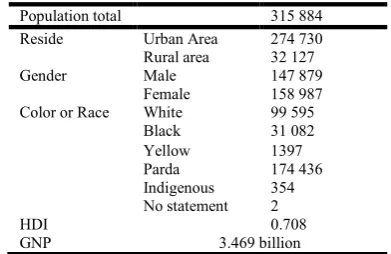
Characteristics of the study site: The Chronic Disease Epidemiological Profile project was conducted in its largest portion in the municipality of Vitória da Conquista - Bahia, Brazil (geographic coordinate latitude -14º 53 'and longitude - 40º 48'). The referred city is part of the Southwest economic region and is 509 km away from the capital - Salvador. It has the Gross Domestic Product (GDP) of 3.469 billion and the Human Development Index (HDI) of 0.708. The climate varies from subhumid to dry, with an average temperature of 20 ° and altitude of 923 m above the sea. According to data from 2012, the total population of Vitória da Conquista is 315,884 inhabitants, 274739 of which live in urban areas and 32127 in
rural areas. The women are in greater numbers with 158987 people and 147879 men. According to the color of the individuals, the distribution is as follows: white - 99,595; black - 31,082; yellow - 1.397; brown - 174,436; indigenous - 354; without declaration - 2.
Table 1. Characteristic of the resident population in Vitória da Conquista
Population total 315 884 Reside Urban Area 274 730 Rural area 32 127
Gender Male 147 879
Female 158 987 Color or Race White 99 595
Black 31 082
Yellow 1397 Parda 174 436 Indigenous 354 No statement 2
HDI 0.708
GNP 3.469 billion
Source IBGE, 2013. https://cidades.ibge.gov .br / brasil / ba / vitoria-da-conquista HDI - Human development Index; GDP - Gross National Product
[image:2.595.334.530.153.280.2]Sample: Sample have been composed of individuals residing in Vitória da Conquista and nearby localities. Up to the present moment it is constituted by 1516 participants, being of these 475 belonging to the masculine gender and 1041 to the feminine one. The distribution by age group is as follows: 350 elderly, 981 adults and 185 children and adolescents. The details of the distribution among the genera of the sample are described in Table 2.
Table 2.
Male Female
n (%) n (%)
General Population 475 31.3 1041 68.7
Elderly 108 30.9 242 69.1
Adults 280 28.5 701 71.5
Adolescent 29 33 59 67
Children 58 59.0 39 40 , 2
Source of Research, 2018.
Questionnaires Used
To obtain the data were: Biochemical analysis of blood, Hemodynamic Evaluation, Functional Evaluation, Equilibrium Test and Anthropometric Evaluation. In addition, participants were asked to answer the following questionnaires: Quality of life - Whoqol-Bref; Scale of Silhouettes; Food frequency; Feeding habit; International Questionnaire on Physical Activity (IPAQ); Socioeconomic; Questionnaire on consumption of Vitamin B12, Vitamin B9, iron and calcium; Beck Anxiety Inventory; Lipp Adult Stress Symptom Inventory.
Description of Questionnaires
aspects of life (Suárez; Tay; Abdullah, 2018). The QV is based on how the human being perceives his / her "position in life in the context of the culture and value systems in which they live and in relation to their goals, expectations, standards and concerns." In addition, it includes the physical and psychological health and social relations of an individual, as well as the characteristics of the environment in which he lives (The Whoqol Group, 1998). While most QV items only consider that physical and mental health problems affect everyday life, the World Health Organization (WHOQOL-BREF) short form of Quality of Life instrument goes beyond measuring physical health outcomes and mental health, and is also used to assess the general health status of the individual. WHOQOL-BREF covers the following domains:
● Physical health of the individual: issues of pain and discomfort, sleep and rest, energy and fatigue, mobility, daily activities and work capacity, dependence on medicinal substances and medical auxiliaries;
● Psychological health: questions about feelings, whether positive or negative, thoughts, learning, memory and concentration, self-esteem, body image and appearance, spirituality, religion and personal beliefs;
● Social relations: questions about personal relationships, sexual activity and social support;
● Environment: issues of physical security and family environment, freedom, financial resources, access to health services, social assistance, accessibility, opportunities for learning new information and skills, leisure activities, recreation opportunities, physical environment (pollution, noise, traffic, climate).
World health Organization Quality of life old - old whoqol:
The WHOQOL- OLD consists of 24 questions and responses follow the Likert scale (1 to 5) assigned to six facets, which are the sensory function; autonomy; past, present and future activities; social participation; death and death; and intimacy. Each of the facets has 4 questions, in which the answers can range from 4 to 20 (Pedroso et al., 2015). The importance of its creation is justified by the fact that there is still no efficient way of measuring the quality of life of the elderly. Previously, only the questionnaires for adults were used, and the WHOQOL group created the questionnaire for the evaluation of the elderly using the WHOQOL-100 (Fleck; Chachamovich; Trentini, 2003; Pedroso et al., 2013). The WHOQOL-OLD questionnaire was developed by Fang et al. (2012), and was developed by the World Health Organization, under the guidance of Professor Mick Power.
Pediatric quality of life inventory - pdsqltm
Pediatric Quality of Life Inventoryis an evaluation of the quality of life and health of children and adolescents with generic or specific diseases. The questionnaire described was translated and validated for the Brazilian culture and is composed of the physical, emotional, social and school domains, being developed from discussion groups, cognitive interviews and pre-test (Da Silva et al., 2018). In addition to addressing a pediatric self-assessment, in the age group 2 to 18 years, it has questions for the parents (Klatchoian et al., 2008). It must be answered by those responsible when the child presents between the ages of 2 and 4 years; by parents and children when they are between 5 and 7 years old; only for children when they are between 8 and 12 and between 13 and 18 years of age should be answered only by adolescents (Da
Silva et al., 2018). The PedsQLTM 4.0 questionnaire is composed of parallel self-assessment forms for children and also questions for parents. Self-assessment of children includes the 5-7, 8-12, and 13-18 age groups. The parents' questionnaire is answered when the child presents between 2 and 4 years old (pre-school), 5 and 7 years (small child), 8 and 12 years (child) and 13 and 18 years (adolescent), aiming at evaluate the paternal perception of the child or adolescent's HRQL. The items for each of the forms are essentially similar and differ only in terms of language appropriate to the level of development and use of the first or third person. The instructions ask how much each item described was a problem during the last month and respondents (parents and children and adolescents between 8 and 18 years old) use a five-level response scale (0 = never a problem; a problem, 2 = sometimes it is a problem, 3 = it is often a problem, 4 = almost always a problem). The score of this is made from 0-100 points (0 = 100, 1 = 75, 2 = 50, 3 = 25, 4 = 0), thus, the higher the score, the better the quality of life.
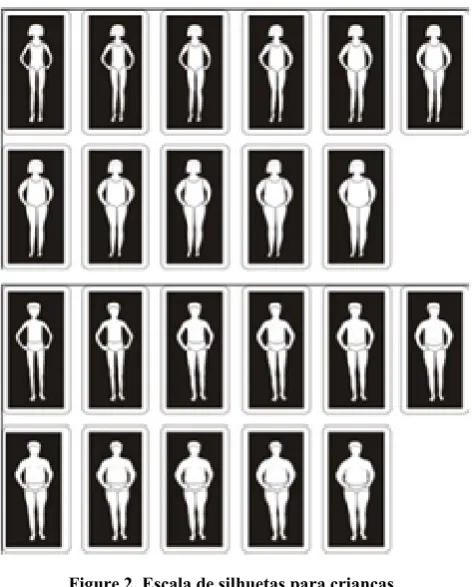
[image:3.595.313.555.515.780.2]Silhouette Scale – Kakeshita: Body image is correlated to an individual's perceptions, thoughts and feelings about his body and is a relevant association with body weight, eating disorders and image disorders. These factors can have a direct impact on the quality of life and health of individuals, as well as on the acceptance of the image itself. It is emphasized that the Scale of Silhouettes classifies the individual as being satisfied or dissatisfied in relation to their body image (Freire; Fisberg, 2017; Kakeshita et al., 2009). The scale used in the original form of Kakeshitet al (2009) (Kakeshita et al., 2009), is composed of 15 figures for adults and 11 figures for children in plastic cards of 6.5 cm wide by 12.5 cm of height, with the figure centralized in black background, contoured by margins 0.5 cm equidistant from the edges of the figure and the card, with the 15 figures arranged horizontally. It is characterized as a simple application questionnaire, in which the person only selects the image in which it is best identified. This can be found for both adults and children and the classification for adults can be expanded for use in the elderly.
Figure 2. Escala de silhuetas para criancas
Food Frequency Questionnaire: The Food Frequency Questionnaire (FFQ) is one of the most used instruments to measure dietary information (Pedraza et al., 2015). It is considered a simple evaluative method, having as advantages: a) the low cost, since it only requires an application through printed or digital form; b) speed of use, as it consists of short and objective questions; c) efficiency in the epidemiological practice, since it can confront the periodicity of the consumption of certain foods, with the existence of a certain chronic disease, for example (Brito et al., 2017). To create the instrument, a list of foods is necessary and may vary according to the purpose of the FFQ. This may be justified by the fact that some of these questionnaires are developed to identify nutrient deficiencies, so their listing should be based on foods that contain the highest nutrient content (Pufulete et al., 2002). However, if the objective is to analyze the total energy consumption of the individual, the number of foods to be listed will be higher (Slater, 2003).
Respecting the purposes of the referred study, an extensive list of foods was chosen. Of all the items that make up the Brazilian Table of Food Composition (TACO), white rice, brown rice, noodles, green corn, cassava flour, oats, pirão, morning cereal, milky flour, cooked beans, pumpkin , chuchu, okra, beetroot, carrot, zucchini, raw beet, broccoli, creamy curd, doubled, beans, linseed, butter, margarine, mayonnaise, chocolate, fruit jam, dulce de leche, honey, potato chips, boiled potatoes, cassava fried, boiled cassava, popcorn, lettuce, cabbage, peppers, tomatoes, cucumbers, peanuts, instant noodles, tapioca, white bread, whole grain bread, cheese bread, sweet biscuit, cream cracker, type Wafer Waferbiscuit, stuffed biscuit, grape, apple, papaya, banana, banana, orange, banana fried earth, guava, mango, strawberry, fried egg, boiled egg, sausage, hamburger steak, nuggechicken, Brazil nuts, chocolate (bar), salgue fried, salted roast, natural sandwich, hot dog, chicken broth, beef broth, whole milk, skim milk, whole yogurt, skimmed yogurt, fruit yogurt, coffee, natural fruit juice, soda, tea, corn couscous (chicken breast), plain chicken,
watermelon, pineapple, white cheese, mozzarella cheese, ham, mortadella, cake with stuffing, pizza, pamonha, fried chicken breast, fried fish, boiled fish, fried beef, boiled beef, fried pork, boiled pork. It should be emphasized that these food composition tables are fundamental both in the elaboration of the questionnaire and in obtaining the results, since it exposes the quantity of minerals, vitamins, total calories and fibers (Ribeiro, Cardoso, 2002). The elements that constitute the FFA are normally divided into food groups, in the research described, were divided as follows: cereals, tubers, roots and breads; vegetables; fruits; milk and milk products; Meat and eggs; oilseeds; oil and fat; sweets and sugars; drinks; and miscellaneous. The structure of the instrument considers the recording of the frequency of food consumption in units of time, the ones used in the study in question being the daily, weekly or monthly frequency of their intake. The QFA may also or may not include the value of the portions, however, as it is a qualitative-quantitative research, it is necessary to describe these values, since when these are not exposed, the questionnaire will only contemplate qualitative research (Slater, 2003). In addition, it is evident that in order to facilitate the interviewees' understanding of quantities and not to induce responses, the portions displayed were based on home measurements.
Questionnaire of Food Habits: The questionnaire described aims to evaluate the individual's eating habits in a broad way, since he searches for information such as food consumption, the frequency with which meals are made, the place, the amount of food eaten, if the individual already did some diet / reeducation food, by which means they obtained this information, what type of diet has already been made and what reasons led them to carry it out.
It is an own form, created by the research group, and based on data considered relevant. It contains 9 questions, with multiple choices, developed based on the target population, which address the following topics:
● The first question assesses how often each meal took place (breakfast, morning snack, lunch, afternoon snack, dinner and evening snack), with the following alternatives: "no time", "from time to time", "up to 2x in the week", "up to 3x or more in the week" or "every day";
● The second question evaluates the place where most meals were made, with the options: "home", "school", "third party home", "restaurant / cafeteria", "other" or "do not";
● The third question assesses the origin of foods consumed in snacks, with the following alternatives: "brought home the snack", "bought", "never launches" or "other";
● The fourth question assesses the individual's perspective on the quantity eaten in the meals, with the possibilities: "overeat", "too much", "normal", "little or very little";
● The fifth question evaluates in which period of the day a greater quantity of food is eaten, with the options: "morning", "afternoon", "night" or "dawn";
● The seventh question investigates whether the individual has ever done any type of diet, with the following possibilities: "yes" or "no". If the answer is positive, you should report on why you took the diet, with the options: "health", "aesthetics" or "influence of third parties";
● The eighth question seeks to evaluate by which means of information sought to begin the diet, with the alternatives: "professional", "media", "friends / family" or "other". If the option chosen is "other", the individual must identify the information medium;
● The ninth question investigates the types of diets made by individuals.
Anthropometric and Corporate Measures: Anthropometric measures should be performed by trained and trained persons, with the purpose of minimizing intra and interracial errors. In the project in question, the anthropometric data were collected in an own form, subdivided and carried out in two parts. First, we can cite the data obtained by the bioimpedance balance, such as: body weight (kg); percentage of body fat (%); basal metabolism (Kcal); visceral fat level (%); percentage of skeletal muscles (%); and body age (year). Bioimpedance is based on the fact that the human body is made up of water and electrically conducting ions, in which adipose tissue causes resistance to electrical conduction and the muscle mass, rich in water, is a good conductor of electricity. In the bioimpedance test a low intensity alternating electric current is conducted through the body, so it is calculated from two vectors: the resistance and the reactance (ABESO 2016). In the four-way models, the results are obtained from predictive equations, using sex, age, race, weight and height, estimating fat mass, fat-free mass, total body water intracellular and extra (ABESO 2016). It is a practical method that is independent of the examiner's ability but can be influenced by the ambient temperature, physical activity, consumption of food and drink, menopause and menstrual cycle. When performing the bioimpedance should be considered: fasting for at least 4 h, not practicing physical activities for 12 hours, presenting with alcohol withdrawal for 24 hours, preferably not to use diuretics for 7 days and women should perform the analysis between the 7th and 21st day of the menstrual cycle (ABESO 2016).
It is evident that the balance used has a variability of 0.1 kg and a maximum weight of 150 kg and that, before providing the expected results, it requires the examiner to indicate the height of the individual (in centimeters). For this, a portable stadiometer with a measurement of 115 cm to 210 cm and a graduation of 1 mm was used (Corrêa et al., 2017). As a protocol for measuring height, he requested that the person be barefoot, feet together, unadorned on the head, wearing light clothing, upright posture, and arms positioned along the body with the palm facing the leg (Porto et al., 2016). In addition, the circumferences of the body are measured with the help of an inelastic tape measure. These include: chest (cm); right arm (cm); left arm (cm); right forearm (cm); left forearm (cm); right thigh (cm); left thigh (cm); left calf; right calf (cm); waist (cm); abdomen (cm); and hip (cm). To obtain the value of the circumference of the arms the evaluated person was asked to remain standing and the arm to be measured flexed, forming an angle of 90 degrees. Then the midpoint between the acromion and the olecranon was marked, requesting after that the arm would be relaxed and the palm facing the inside of the body. Then, the arm was circumvented with the tape measure at the demarcated point and the measurement performed
without exerting pressure on the arm (Miranda et al., 2017). Waist circumference (CC) is measured in centimeters at umbilical scar level, ie between the iliac crest and the lateral costal border (midpoint between the hip and the last rib) with an accuracy of 0.1cm (Corrêa et al., 2017). The participant was instructed to stand erect, with the abdomen relaxed, arms extended along the body and feet separated at a distance of 25 to 30 cm (Madruga; Silva; Adami, 2016). The WC was assessed from the cut-off points suggested by the WHO, and the values considered as risk for obesity-related diseases, such as cardiovasculares: in women, ≥ 80 cm high risk and ≥ 88 cm very high risk; in males, ≥ 94 high risk and ≥102 very high risk. To determine the condition of the nutritional status among the selected adults, height (in centimeters) and weight (in kilograms) measurements were taken during data collection, in order to calculate the Body Mass Index (BMI) obtained by weight divided by the height squared (weight / height²). Subsequently, categorize the value obtained as follows: low weight, BMI <18.5 kg / m2; adequate weight, BMI of 18.5 to 24.9 kg / m2; overweight, BMI of 25 to 29.9 kg / m2; obesity, BMI ≥ 30 kg / m2(ABESO, 2016).The classification of nutritional status among the elderly included the following parameters: low weight, BMI <22 kg / m2; adequate weight, BMI between 22 and 27 kg / m2; overweight, BMI> 27 kg / m2 (Radovanovic et al., 2014; Brasil, 2017; Rahman et al., 2018). Measurement of the nutritional status of children and adolescents is done by means of percentiles and z score, in which they were classified as: Percentile <0.1 corresponds to accentuated thinness; Percentile 0.1 ≥ a <3, thinness; Percentile 3 ≥ a <85, eutrophy; Percentile 85 ≥ <97, overweight; Percentile 97 ≥ <99.9, obesity; and Percentile ≥99.9, severe obesity (Nobre et al., 2018). The z score is categorized as follows: eutrophy, score ≥ Z -2 and <Z +1; overweight, score ≥ Z +1 and ≤ Z +2; obesity, score> Z +2 and <Z +3; and severe obesity, ≥ Z +3 (DUMITH et al., 2018; TAVARES et al., 2016).
Functional Evaluation – Lawton: For the evaluation of the functional capacity of the individuals, the scale of instrumental activities of daily life of LAWTON was used, but in a simplified form and with more accessible language. The questionnaire was done by trained and qualified personnel, aimingreduce errors of judgment. According Lawton & Brody (1969), human behavior is seen asvariable in the degree of complexity required to run on a variety of tasks. The lowest level is called "life-sustaining," followed by the more complex levels that involve, for example, the functional health, perception-cognition of the individual. The scale created by Lawton & Brody in 1969 is widely used in research and clinical practice, which evaluates seven activities such as: telephone use, locomotion using a means of transportation, shopping, housework, meal preparation, drug use and financial management (Freitas, 2013). There are three response options: "independent", "need for partial help" and "inability to perform the task". The score varies from 1 to 3 for each item, with independence having the highest score (Freitas, 2013). When the individual is fully independent the score reached is 21.
pathologies (Collin et al., 1988, Dewing 1992, LIU et al., 2015). This was introduced in order to evaluate the motor function of the elderly, in the expectation of measuring, analyzing and evaluating the data obtained, so as to be aware of the physical health, if there is any musculoskeletal dysfunction, or any other limitation that makes it necessary of a caregiver's assistance to perform some task (Higuchi et al., 2016; Saito et al., 2017). In the present adaptation of the IB, 10 questions were used which include: feeding, bathing, hygiene, bowel control, bladder control, climbing stairs, walking, chair transfer, personal care. The score of each question varies from 0 to 2 points, in which "0" corresponds to "dependency" and "2" as "independent" to carry out the activities. The calculation used to measure IB scores was based on the original score, from 0 to 14 points, in which the lower the score, the greater the need for assistance of another person or specialized equipment (walking sticks, walker, bath bench, diapers), which represents greater dependence. In addition, the higher the score, the lower the need for care, rating them as independent. Attached is the adaptation of the Barthel Index used in the referred study.
Equilibrium Test: It is seen that the locomotor apparatus undergoes important modifications, reducing the amplitude of the movements, altering the gait characterized by short and slower steps, by dragging the feet (Freitas, 2011). In this sense, the applicability of the tests are fundamental for assessing balance and mobility in order to maintain an independent life. Functional tests were used to evaluate motor performance, Berg balance scale and Timed Up and Go (TUG). The tests were performed by the volunteers under the supervision of the researcher. Before its completion, it demonstrated how each test should be performed. In order to carry out the balance test, the following materials were used: stopwatch, pencil, tape measure, chair with support, chair without support, ruler and any object (slipper). In the test to evaluate motor performance, the following situations were analyzed:
● Balance: the elderly were asked to stand for 10 seconds keeping their feet together and their eyes open;
● Sit up and stand up:with his arms folded over his chest, he had to get up from the chair as quickly as possible, five times without pausing within 60 seconds;
● Ability to crouch and pick up a pencil: the old man got to his feet, crouched, picked up the pencil 30 centimeters ahead of the tip of his feet and stood again in the 30-second time;
● Walk: The individual had to walk on a marked path on the ground (2.44 m), at his normal speed, as if he were walking on the street;
At the end of each evaluation, the results were recorded in the questionnaire in question, including whether the elderly had difficulties to perform them or not. In the evaluation of the walk, the results were recorded in a 1st and 2nd moment and the observation of the use of gait devices for the elderly in need is included.
The next test to be performed was the BERG balance scale, addressing the following assessments:
● Sitting position for standing position: the elderly were instructed to stand up and try not to use their hands to support themselves;
● Standing without support: the elderly man stood for 2 minutes without leaning;
● Remain seated without support on the back, but with your feet flat on the floor or on a stool;
● Standing position for sitting position;
● Transfers: The chairs were arranged perpendicularly or facing each other for a pivotal transfer. The patient was asked to transfer from a chair with armrest to a chair without armrest;
● Stand, without support and with eyes closed: performed for 10 seconds;
● Stand without support, with feet together;
● Reach forward with the outstretched arm standing: the old man's arm raised at 90 °. He was then asked to stretch his fingers and try to reach forward as far as possible. (The examiner placed the ruler at the end of the fingertips when the arm was at 90 °.) When the fingers were stretched forward, they could not touch the ruler. The recorded measure was the distance the fingers could reach when the patient leaned As far as possible, the patient was asked to use both arms to prevent rotation of the trunk);
● Picking an object on the ground from a standing position: a slipper or any other item that could contemplate the task was used as object;
● Turn around and look back over right and left shoulders while standing;
● Rotate 360 degrees: the patient swung around himself, paused, and made the turn again in the opposite direction;
● Position the feet alternately on the step or stool while standing unsupported: the elderly person touched each foot alternately on the step / stool. He continued until each foot had touched the step / stool four times; ● Stand without support, with one foot in front; ● Stand on one leg;
At the end of each evaluation, the time required to perform the activity in question was recorded, or when the patient was unable to perform the activity. Before each activity was carried out, an instruction was given on how it should be done and, when necessary, the researcher himself gave a demonstration to the volunteer. The last test to be performed was the Timed Up and Go (TUG) which consisted of getting up from a chair, without the help of the arms, walking from a distance of three meters, turning around and returning. At the beginning of the test, the patient had to have his back resting on the back of the chair and, in the end, had to lean back. The patient received the "go" instruction to perform the test and the time was timed from the command voice until the moment he again rested his back on the chair backrest. The test was performed once for familiarization and a second time for taking time.
Hemodynamics: The indirect method was used to measure
measurement of blood pressure, the sounds of Phase I and Phase V, which correspond to the appearance of sounds (systolic SBP pressure) and the disappearance of sounds (PAD), respectively (PORTO et al. 2012). As a reference, the "normal" blood pressure classification was used when SBP <120 mmHg and DBP <80 mmHg; "High" when SBP is between 120-129 mm Hg and DBP <80 mm Hg; "Stage 1 hypertension" when SBP is between 130-139 mmHg and / or PAD is between 80-89 mmHg; and "stage 2 hypertension" when SBP ≥ 140 mmHg and / or DBP ≥ 90, proposed by the American College of Cardiology and the American Heart Association (ACC / AHA, 2017).
Quiz International Physical Activity (Ipaq): The International Physical Activity Questionnaire (IPAQ) was developed to facilitate the monitoring of physical activity based on a global standard, widely used in epidemiological studies to be easy to apply and low cost, validated in over 12 countries, including Brazil, and also with widely accepted reliability (Frehlich et al., 2018). There are two forms of the questionnaire, one with 31 questions (IPAQ) and one with 9 questions (IPAQ-Short Form). The reduced version is indicated for self-reported physical activity monitoring studies, including transport, leisure, walking, cycling and physical activity of mild, moderate and vigorous intensity, being performed in the last week, since it is easier for the participants to respond to (In the present work, the present invention relates to a process for the preparation of a pharmaceutical composition according to the present invention (Freyer et al., 2011). They were asked to answer the questionnaire based on the self-report of activities developed during the week and the answers were given in days and hours. With the results obtained, the subjects were classified as "very active", "active", "moderately active" and "sedentary", according to the proposed instrument. The first two categories were grouped and active".
He was classified as "active" who performed one or more of the following activities:
● Performed moderate activities on five or more days per week, with session duration equal to or greater than 30 minutes, or practiced vigorous activities three or more times per week, with a duration of 20 minutes or more, combined with moderate activity or walking performed on at least five days per week, lasting 30 minutes or more per session;
● Has exercised vigorous activity three or more times a week for a duration equal to or greater than 20 minutes per session, or moderate activity or walking equal to or greater than five days per week, lasting at or above 30 minutes per session, or total activity equal to or greater than five days per week with a total duration equal to or greater than 150 minutes per week (moderate to vigorous walk).
It was classified as "non-active" those who:
● Did not perform any physical activity for at least 10 continuous minutes during the week or one who performed any physical activity, but insufficiently to be classified as active, that is, that did not comply with the recommendations for frequency, duration or intensity.It should be noted that in order to undertake this classification, the frequency and duration of
thedifferent types of activities (walking + moderate + vigorous) was added.For classification according to age, he followed the recommendations of physical activity published by the World Health Organization, in which:
● Children and adolescents, aged between 5 and 17 years, should do at least 60 minutes of moderate intensity physical activity at vigorous daily, since physical activity of more than 60 minutes per day will provide additional health benefits.
● Adults between the ages of 18 and 64 should do at least 150 minutes of moderate intensity physical activity during the week or do at least 75 minutes of vigorous physical activity during the week or an equivalent combination of moderate intensity activity and vigorous for additional health benefits, adults should increase their physical activity from moderate intensity to 300 minutes per week.
● Individuals 65 years of age or older should do at least 150 minutes of moderate intensity physical activity during the week or at least 75 minutes of activity physique of vigorous intensity during the week or an equivalent combination of activity of moderate and vigorous intensity. For additional health benefits, they should increase moderate intensity physical activity to 300 minutes per week, or equivalent.
Socio-Economic Questionnaire: Many chronic diseases
develop as a consequence of unhealthy lifestyle and behavior, and these risk factors include the socioeconomic profile of individuals who are often associated with the onset of diseases, especially in older individuals, with low schooling and low income (MALTA et al., 2017; FRANCISCO et al., 2015). This factor evidences the importance of obtaining this information for the screening of risk profiles and to compose epidemiological data. The sociodemographic variables (age, schooling, marital status, family arrangement, employment status, family income, contribution in family income) were collected through a self-administered questionnaire, following the standards of the Brazilian Institute of Geography and Statistics (IBGE).
Description of the variables: a)age in full years; b) schooling (complete or incomplete elementary education, complete or incomplete high school, complete or incomplete higher education); c) marital status, "married or consensual", "single" (he never married or lived with partner), "widower (a) / without current partner", " separated or divorced "; d) family arrangement, number and kinship of persons living in the same residence, number of pregnancies of children living or dead; (e) employment status distributed in the following categories "full-time work", "part-time work" and "unemployed"; f) income, according to IBGE indicators; g) contribution to family income, according to the categories "totally", "partially" or "do not contribute".
Bai - Beck anxiety inventory
designated for use with psychiatric patients, but was also appropriate for the general population. The Portuguese version was used in psychiatric and non-psychiatric groups, including students and also in works involving other subjects of society. The BAI is a 21-item self-report scale that measures the intensity of anxiety and contains descriptive affirmations of anxiety symptoms. The items should be evaluated by the subject with reference to himself, in a scale of 4 points, according to the Portuguese Manual of the Beck Scales, which reflect levels of increasing severity of each symptom as: 1) "Absolutely not"; 2) "Lightly: it did not bother me much"; 3) "Moderately: It was very unpleasant, but I could bear it"; 4) "Gravely: I could hardly bear it."
Bdi (beck depression inventory): The BDI (Beck Depression Inventory) is the acronym for the Depression Inventory instrument for measuring the intensity of depression, one of the first dimensional features. It was originally created by Beck et al. (1961) and reviewed by Beck et al. (1979/1982). It was initially developed as a symptomatic scale of depression for use with psychiatric patients, and many studies on its psychometric properties were performed in the years following its appearance. This was later widely used, both in the clinical and research areas, and it was also a useful tool for the general population, as reported in the Beck and Sterr manual. It is a self-report scale of 21 items, each with four alternatives, implying increasing degrees of severity of depression, with scores ranging from 0 to 3. The items were selected based on observations and reports of symptoms and attitudes more frequent in psychiatric patients with depressive disorders, and were not chosen to reflect any theory of depression in particular.
Inventory of Symptoms of Stress for Adult Lipp (ISSL):
Inventory of Stress Symptoms for Adults Lipp (ISSL) aims to identify symptoms of stress objectively the symptoms that the patient presents, assessing the types of symptoms (somatic or psychological) and the phase that is. It presents a four-phase model of stress (alertness, resistance, near exhaustion and exhaustion) based initially on Selye's three-phase model (alert, resistance and exhaustion), but does not invalidate it, it is only an improvement of the first proposed model. The ISSL was validated in 1994 by Lipp; Guevara and has been used in research and clinical work in the area of stress and is aimed at young people and adults. This inventory is composed of three tables that refer to the last of the four phases of stress, and Table Two is used to evaluate phases two and three (resistance and near exhaustion). The symptoms listed in ISSL are typical of each phase. In the first frame, consisting of twelve physical and three psychological symptoms, the patient signals with F1 or P1 the physical or psychological symptoms they have experienced in the last twenty four hours. The second table is composed of ten physical symptoms and five psychological symptoms, the patient marks with F2 or P2 the symptoms experienced in the last week. The last table is composed of twelve physical and eleven psychological symptoms, in which the patient should indicate with F3 or P3 the symptoms that he has experienced in the last month. Some of the symptoms that appear in the first frame reappear in the third, but with different intensity. In total, the ISSL presents 37 somatic and 19 psychological items, with symptoms often repeated. (Dut et al., 2018; LIPP, COSTA, Nunes, 2017 Kutut et al., 2015).
Biochemical Analysis collected: Blood samples werefor the biochemical analysis. It should be emphasized that, as a
criterion for the examination, the patient had to be fasted for 8 to 12 hours. In the collection, the following materials were used: blood collection chair, disposable gloves, syringes, needles, cotton, alcohol, dressing, swabs of cotton soaked in 70% ethyl alcohol, vacuum tubes (Blue tube - Citrate; yellow or red - with separator gel; amber tube; purple tube - EDTA; gray tube - fluoride). It should be noted that the samples were collected by properly trained and trained people, respecting all the safety guidelines for collection, handling and disposal of biological material. After collection of the blood sample, the tubes with the biological materials were stored in a rigid, waterproof PVC container containing a recyclable ice pack in order to maintain the temperature of the samples. After the blood collection, participants were offered a snack, considering their availability to participate in the study and the fact that they were fasted for a long period of time. It is worth noting that the research carries out the following biochemical tests:
Hemogram: Total blood sample performed by the automated method in the Cell-Dyn Ruby equipment.
Glucose: Plasma or serum sample taken by the enzymatic method on the AU 680 (BECKMAN COULTER).
Vitamin D: Uses for the performance of a serum sample made by the chemiluminescence method in the UniCel DxI 800 (BECKMAN COULTER).
Ferritin: Uses to perform serum sample, made by the chemiluminescence method in the UniCel DxI 800 equipment (BECKMAN COULTER).
Insulin: Uses to perform serum sample, made by the chemiluminescence method in the UniCel DxI 800 equipment (BECKMAN COULTER).
Progesterone: Used to perform serum sample, made by the competitive enzyme immunoassay method in the UniCel DxI 800 (BECKMAN COULTER).
ACPOL: Used to perform a serum sample, done by the chemiluminescence method in the UniCel DxI 800 (BECKMAN COULTER).
B12: Used to perform serum sample, done by the chemiluminescence method in the UniCel DxI 800 (BECKMAN COULTER).
T3T: Used to perform a serum sample, done by the chemiluminescence method in the UniCel DxI 800 (BECKMAN COULTER).
Estradiol: It is used to perform a serum sample, made by the chemiluminescence method in the UniCel DxI 800 (BECKMAN COULTER).
Cortisol: Used to perform serum sample, done by the chemiluminescence method in the UniCel DxI 800 equipment (BECKMAN COULTER).
T3L: Used to perform a serum sample, performed by the chemiluminescence method in the UniCel DxI 800 (BECKMAN COULTER).
LH: Uses for the serum sample, made by the sequential immunoenzymatic method of two phases (sandwich) with specific antibodies and chemiluminescent substrate in the equipment UniCel DxI 800 (BECKMAN COULTER).
T4T: Uses for the performance of a serum sample, made by the chemiluminescence method in the UniCel DxI 800 (BECKMAN COULTER).
Testosterone: Used to perform serum sample, done by the chemiluminescence method in the UniCel DxI 800 equipment (BECKMAN COULTER).
TSH: Used to perform a serum sample, performed by the chemiluminescence method in the UniCel DxI 800 (BECKMAN COULTER).
T4L: Used to perform serum sample, done by the chemiluminescence method in the UniCel DxI 800 (BECKMAN COULTER).
Total Cholesterol: Realization serum sample, made by enzymatic colorimetric method in the AU 680 (BECKMAN COULTER).
HDL Cholesterol: Carry out a serum sample made by the enzymatic colorimetric method and the test is processed on the AU 680 (BECKMAN COULTER).
LDL cholesterol: The serum sample is made by the enzymatic colorimetric method and the test is processed on the AU 680 (BECKMAN COULTER).
Triglycerides: Carry out a serum sample made by the colorimetric enzymatic method and the test is processed on the AU 680 (BECKMAN COULTER).
Mical: Quantitative determination of microalbumin in the urine by turbidimetric analysis performed on the AU 680 (BECKMAN COULTER).
Alkaline Phosphatase: Realization of the serum sample, made by the enzymatic colorimetric method in which it uses the Thymolphthalein Monophosphate as substrate and the test is processed in the AU 680 (BECKMAN COULTER).
LDH: Serum sample made by the colorimetric enzymatic method and the test is processed in the AU 680 (BECKMAN COULTER).
Lipase: Carry out a serum sample made by the enzymatic colorimetric method and the test is processed on the AU 680 (BECKMAN COULTER).
Glucose: Serum sample made by the enzymatic colorimetric method in which hexokinase is used for quantitative determination of glucose and the test is processed in the AU 680 (BECKMAN COULTER).
Total Proteins: Serum sample made by the direct colorimetric method on the AU 680 (BECKMAN COULTER).
Albumin: Carry out a serum sample made by the colorimetric method in which the bromocresol green is used as the substrate and the test is processed in the AU 680 (BECKMAN COULTER).
• AMIL: Carry out a serum sample, made by the colorimetric method in which the CNPG3 is used as a substrate and the test is processed in the AU 680
(BECKMAN COULTER).
• BD: Serum sample made by the colorimetric method in which the DPD is used as the substrate and the test is processed in the AU 680 (BECKMAN COULTER).
BT: Serum sample made by the colorimetric method in which the DPD is used as the substrate and the test is processed in the AU 680 (BECKMAN COULTER).
Iron: Serum sample made by the direct colorimetric method on the AU 680 (BECKMAN COULTER).
Potassium: Serum sample made by the Selective Ion Electrode (ISE) on the AU 680 (BECKMAN COULTER).
Sodium: Serum sample made by the Selective Ion Electrode (ISE) on the AU 680 (BECKMAN COULTER).
Calcium: Carry out a serum sample, made by the colorimetric method in which Arsenazo III is used and the test is processed in the AU 680 (BECKMAN COULTER).
Phosphorus: Serum sample preparation, using a timed endpoint method, performed on the AU 680 (BECKMAN COULTER) equipment.
Creatinine: Serum sample preparation, done by the enzymatic colorimetric method on the AU 680 (BECKMAN COULTER).
Urea: Serum sample made by the enzymatic (kinetic) method directly on the AU 680 (BECKMAN COULTER).
Magnesium: Carry out a serum sample, made by the photocolorimetric method and the test is processed on the AU 680 (BECKMAN COULTER).
TGP: Serum sample preparation performed by the enzymatic (kinetic) method directly on the AU 680 (BECKMAN COULTER).
TGO: Serum sample preparation performed by the enzymatic (kinetic) method directly on the AU 680 (BECKMAN COULTER).
Uric Acid: Carry out a serum sample, made by the enzymatic colorimetric method and the test is processed in the AU 680 (BECKMAN COULTER).
PRQ: Serum sample made by immuno-turbidimetric method on AU 680 (BECKMAN COULTER).
CPK: Serum sample made by the enzymatic (kinetic) method directly on the AU 680 (BECKMAN COULTER).
GGT: Serum sample preparation performed by the enzymatic (kinetic) method directly on the AU 680 (BECKMAN COULTER).
Glycated Hemoglobin: Performing whole blood sample, performed by the High Performance Liquid Chromatography method using ion exchange (HPLC) on Premier Hb9210 equipment.
EAS: Urine is analyzed on LabUMat-UriSed 2 integrated equipment. LabUMat 2 is a high productivity automated chemical urine analyzer that evaluates 10 chemical parameters of LabStrip U11 Plus GL test strips and three physical parameters of urine samples. UriSed 2 is an automated urine sediment analyzer that provides full-field microscopic images of urine sediment images and detects 15 sediment particles using Ureed Cuvettes.
effective way for the recovery of health (Alves et al., 2006), and in the literature (Silva et al., 2006). Nutritional assessment consists of records of the individual's habitual food consumption, to predict nutritional status, identify nutritional disorders and risks, and their severity (Sampaio, 2014). It should be emphasized that there are several methods for collecting data on food intake, with the Food Frequency Questionnaire (FFQ) being the most used. This can be justified by the fact that the QFA is a simple and practical method, which only requires the memory to remember the ingested foods (Benedik et al., 2014, Csizmadi et al., 2016, Kristal et al., 2014). The predictive instruments for risk of disease or nutritional assessment, until then, have been made exclusively in a manual way, that is, printed. With the advent of the use of smartphones and tablets, it is possible to migrate these mechanisms from paper to applications embedded in the individual devices, allowing better reliability, cost reduction and agility in obtaining results (Probst et al., 2015, Thompson et al. Zhang et al., 2015).
Food selection: The questionnaire was based on the Food Guide for the Brazilian Population (2014) and the Brazilian Table of Food Composition (2011), both of which have the objective of improving the population's nutrition, providing information on the nutritional value, as well as composition of each food. Foods with the highest amounts of Calcium, Iron, B12 and Vitamin B9 nutrients were selected for the questionnaire, being careful not to repeat them, leaving the questionnaire more compact and more fluid in response.
Questions for the consumption of selected foods. The foods were divided as follows:
● Group 1 - cereals, tubers, roots and breads; ● Group 2 - vegetables;
● Group 3 - fruit;
● Group 4 - milk and milk products; ● Group 5 - meats and eggs; ● Group 6 - oilseeds; ● Group 7 - oils and fats; ● Group 8 - sweets and sugars; ● Group 9 - beverages; ● Group 10 - "miscellaneous".
This form was adapted following the standards imposed by the Brazilian Food Pyramid. The questions for each food are: "Do you consume daily?"; "How many servings? (0, 1, 2, 3, 4, 5, 6, 7, 8, 9, 10). "
REFERÊNCIAS
ABREU, SSS DE et al. Prevalência de Doenças Crônicas não Transmissíveis em Idosos de uma Cidade do Interior da Bahia. Id on Line REVISTA DE PSICOLOGIA, v. 11, n. 38, p. 652, 2017.
ALMEIDA FILHO, N. DE. Bases históricas da Epidemiologia. Cadernos de Saúde Pública, v. 2, n. 3, p. 304–311, 1986.
American Heart Association. Hypertension Clinical Guidelines, 2017
AMORIM, Yane Ramos; SANTOS, Kelly Santos dos; SERRÃO, Fernanda Oliveira. CONHECENDO A SAÚDE NUTRICIONAL DE IDOSOS ATENDIDOS EM UMA
ORGANIZAÇÃO NÃO GOVERNAMENTAL,
BENEVIDES / PA.Ponta Grossa, v. 13 n.3 - set./dez. 2017 ANDRADE, IS et al. Associação entre a Percepção da Imagem
Corporal com Indicadores Antropométricos em Adolescentes. Id on Line Rev. Psic., v. 11, n. 35, p. 531– 541, 2017.
AQUINO, EM Epidemiologia e Saúde Coletiva no Brasil: desafios para a formação em pesquisa. Revista Brasileira de Epidemiologia, v. 11, n. suppl 1, p. 151–158, 2008. AZAMBUJA, MIR A Influenza e uma teoria epidemiológica
evolutiva para a dinâmica populacional, alternativa à transição epidemiológica de Omran. p. 1–22, 2012. BRITO, Alessandra Page et al. Validade relativa de
questionário de frequência alimentar com suporte de imagens. Ciência & Saúde Coletiva [online]. 2017, v. 22, n. 2, pp. 457-468.
CABRERA, Marcos AS; JACOB FILHO, Wilson. Obesidade em Idosos: Prevalência, Distribuição e Associação Com Hábitos e Co-Morbidade.Arq Bras Endocrinol Metab vol 45 nº 5 outubro, 2001.
CARMO, MSAG; DUARTE, SFP Perfil das Usuárias de Anticoncepcionais de Emergência: Uma Revisão Sistemática. Id on Line Multidisciplinary and Psycology Journal, v. 11, p. 317–324, 2017.
CORRÊA, Márcia Mara; TOMASI, Elaine; THUMÉ, Elaine; OLIVEIRA, Elizabete Regina Araújo de; FACCHINI, Luiz Augusto. Razão cintura-estatura como marcador antropométrico de excesso de peso em idosos brasileiros.Cad. Saúde Pública 2017; 33(5):e00195315. DA SILVA, AAM et al. Applicability of a Generic
Questionnaire for Quality of Life Assessment for Asthmatic Children. Aplicabilidade de um questionário genérico de avaliação de qualidade de vida para crianças asmáticas., v. 36, n. 2, p. 207–213, 2018.
DAVID, IR et al. HYPERTENSION IS MULTIFACTORIAL! International Journal of Development Research, v. 08, n. 10, p. 23490–23495, 2018a.
DAVID, IR et al. IDENTIFYING CARDIOVASCULAR RISK IN ADULTS AND ELDERLY USING THE FRAMINGHAM FRAMINGHAM RISK SCORE. International Journal of Current, v. 10, n. 10, p. 2016– 2019, 2018b.
DUMITH, SC et al. Propriedades diagnósticas e pontos de corte para predição de excesso de peso por indicadores antropométricos em adolescentes de Caracol, Piauí, 2011. Epidemiologia e Serviços de Saúde, v. 27, n. 1, p. e201715013, 2018.
DZAU, V. et al. Investing in Global Health for Our Future. New England Journal of Medicine, v. 377, n. 13, p. 1292– 1296, 28 set. 2017.
EZZATI, M.; RIBOLI, E. Behavioral and Dietary Risk Factors for Noncommunicable Diseases. New England Journal of Medicine, v. 369, n. 10, p. 954–964, 2013.
FANG, J. et al. Development of short versions for the WHOQOL-OLD module. Gerontologist, v. 52, n. 1, p. 66– 78, 2012.
FERRAZ, Marília de Oliveira Silva; REIS, Luciana Araújo dos; LIMA, Pollyanna Viana. Condições de saúde de idosos portadores de Diabetes mellitus e hipertensão arterial sistêmica. Id on Line Rev. Psic. V.10, N. 33. Janeiro/2017.
FONTELLES, Mauro José et al. Metodologia da pesquisa científica: diretrizes para a elaboração de um protocolo de pesquisa.Revista Paraense de Medicina, v. 23, n. 3, p. 1-8, 2009.
FREHLICH, L. et al. Reliability of an International Physical Activity Questionnaire (IPAQ) Modified to Capture Neighbourhood-specific Physical Activity (poster). Journal of Transport & Health, v. 7, n. 2017, p. S14–S15, 2017. FREHLICH, L. et al. Test-retest reliability of a modified
International Physical Activity Questionnaire (IPAQ) to capture neighbourhood physical activity. Journal of Human Sport and Exercise, v. 13, n. 1, p. 174–187, 2018.
FREIRE, SC; FISBERG, M. Adaptação da escala de silhuetas brasileiras para uso digital. Jornal Brasileiro de Psiquiatria, v. 66, n. 4, p. 211–215, 2017.
FREITAS, VP et al. Automedicação em Universitários do curso de Graduação da área de Saúde em uma Instituição de Ensino Superior Privada em Vitória da Conquista Self-medication in University students of the Undergraduate course of Health in a Private Higher Education Institu. Id on Line Multidisciplinary and Psycology Journal, p. 25–37, 2017.
FULLMAN, N. et al. Measuring performance on the Healthcare Access and Quality Index for 195 countries and territories and selected subnational locations: A systematic analysis from the Global Burden of Disease Study 2016. The Lancet, v. 391, n. 10136, p. 2236–2271, 2018.
GANESH KUMAR, S.; MAJUMDAR, A.; PAVITHRA, G. Quality of life and its associated factors using WHOQOL- BREF among elderly in Urban Puducherry, India. Journal of Clinical and Diagnostic Research, v. 8, n. 1, p. 54–57, 2014.
GOMES, T. et al. ETHNISM AND FACTORS PREDICTING TO THE ABUSIVE USE OF ALCOHOL. International Journal of Recent Scientific Research, v. 07, p. 16490– 16493, 2017.
GUIMARÃES, RM et al. Diferenças regionais na transição da mortalidade por doenças cardiovasculares no Brasil, 1980 a 2012. Rev Panam Salud Publica, v. 37, n. 3, p. 83–89, 2015.
HUNTER, DJ; REDDY, KS Noncommunicable Diseases. New England Journal of Medicine, v. 369, n. 14, p. 1336– 1343, 2013.
JESUS, DCOMLSF DE; DUARTE, SCSFOBSFP Avaliação da Depressão em Funcionários de uma Instituição de Ensino Superior Particilar em Vitória da Conquista – BA. Id on Line Multidisciplinary and Psycology Journal, p. 392–404, 2017.
KAKESHITA, IS et al. Construção e fidedignidade teste-reteste de escalas de silhuetas brasileiras para adultos e crianças. Psicologia: Teoria e Pesquisa, v. 25, n. 2, p. 263– 270, 2009.
KLATCHOIAN, DA et al. Quality of life of children and adolescents from São Paulo: reliability and validity of the Brazilian version of the Pediatric Quality of Life InventoryTM version 4.0 Generic Core Scales. Jornal de Pediatria, v. 0, n. 0, p. 308–315, ago. 2008.
LAKSHMI RAMACHANDRAN ET AL. Integrating Bim in Railway Projects: Review & Perspectives for Morocco & Mena. International Journal of Recent Scientific Research, v. 8, n. 8, p. 1005–19008, 2017.
LAWTON MP, Brody EM. Assessment of older people: self-maintaining and instrumental activities of daily living.Gerontologist, 1969; 9(3): 179-86.
LEE, PH et al. Validity of the international physical activity questionnaire short form (IPAQ-SF): A systematic review. International Journal of Behavioral Nutrition and Physical Activity, v. 8, n. 1, p. 115, 2011.
LEE, PH et al. Validity of the international physical activity questionnaire short form (IPAQ-SF): A systematic review. International Journal of Behavioral Nutrition and Physical Activity, v. 8, n. 1, p. 115, 2011.
LIMA, LG et al. ANXIOLYTIC CONSUMPTION BETWEEN STUDENTS IN THE HEALTH AREA OF A PRIVATE HIGHER EDUCATION INSTITUTION Brenda Alves Dos Santos , 1 Luis Henrique Oliveira Souza , 1 Stifanny Faculty of the Northeast , Vitória da Conquista , Bahia , Brazil Fo. International Journal of Current Research, 2017a.
LIMA, LG et al. Qualidade de vida e depressão entre pacientes carentes em tratamento oncológico na Casa do Amor em Vitória da Conquista BA Quality of life and depression among needy patients in cancer treatment at Casa do Amor in Vitoria da Conquista Bahia Introdução. Id on Line Multidisciplinary and Psycology Journal, p. 38–43, 2017b. LIMA, TS et al. Perfil dos Pacientes Idosos Portadores de
Diabetes Mellitus Tipo II Tatiane. Id on Line Multidisciplinary and Psycology Journal, v. 11, n. 35, p. 279–289, 2017c.
LITTLEJOHNS, TJ et al. Lifestyle factors and prostate-specific antigen (PSA) testing in UK Biobank: Implications for epidemiological research. Cancer Epidemiology, v. 45, p. 40–46, 2016.
MADRUGA, Juliana Gomes; SILVA, Flávia Moraes; ADAMI, Fernanda Scherer. Associação positiva entre razão cintura-estatura e presença de hipertensão em adolescentes. Rev Port Cardiol.2016;35(9):479-484. MATTOS, GN; LIMA, LG; VIEIRA, VF Artigo Avaliação de
Coliformes Totais e Escherichia coli em Diferentes Lotes de Água Mineral Comercializadas em um Município do Sudoeste Baiano Total Coliforms and Escherichia coli Evaluation in Different Lots of Mineral Water Marketed in a Southwest Muni. Id on Line Multidisciplinary and Psycology Journal, p. 566–572, 2017.
MENTE, A.; YUSUF, S. Evolving evidence about diet and health. The Lancet Public Health, v. 2667, n. 18, p. 9–10, 2018.
MIRANDA, ozinéia de Nazaré Alberto; CARVALHO, Elenilce Pereira; OLIVEIRA, Camila Maciel de ; ULBRICH, Anderson Zampier; NEVES, Felipe Silva; DIAS, Fernando Augusto Lavezzo; HORIMOTO, Andréa Roseli Vançan Russo; KRIEGER, José Eduardo; ALVIM, Rafael de Oliveira . Association between anthropometric indicators of adiposity and hypertension in a Brazilian population: Baependi Heart Study. PLoS One. 2017; 12(10): e0185225.
NOBRE, R. DE S. et al. Indicadores antropométricos como preditores da síndrome metabólica em adolescentes. Texto e Contexto Enfermagem, v. 27, n. 1, p. 1–8, 2018.
OLIVEIRA, B. DE et al. ANTHROPOMETRICAL INDICATORS AND SOCIAL VARIABLES AMONG ENDERLY WITH HYPERTENSION AND DIABETES. International Journal of Development Research, v. 07, n. Md, p. 16005–16015, 2017.