ORIGINAL RESEARCH ARTICLE
CURRENT POTENTIAL OF EXPERIENCES WITH MINDFULNESS IN ELDERLY PEOPLE:
INTEGRATIVE REVIEW
1
Rosely Almeida Souza,
1Adaiele Lúcia Nogueira Vieira da Silva,
2Ordylette Gomes Penque
1
Adriano Menis Ferreira and
3Márcia Regina Martins Alvarenga
1
Nurse, Federal University of Mato Grosso do Sul, Campo Grande, Mato Grosso do Sul, Brazil
2
Mindfulness Instructor, Certified by MENTE ABERTA – Brazilian Center for Mindfulness and Health Promotion
(“Centro Brasileiro de Mindfulness e Promoção de Saúde”, in Portuguese language), Campo Grande, Mato Grosso
do Sul, Brazil
3
Nurse, State University of Mato Grosso do Sul, Dourados, Mato Grosso do Sul, Brazil
ARTICLE INFO ABSTRACT
Mindfulness-Based Interventions (MBI) have had positive results with elderly people, thus the purpose of this study was to analyze the scientific publications on the effects of Mindfulness on the elderly population. It is an integrative literature review based on the following steps: development of the guiding question; search for studies in databases; selection of papers; data extraction; evaluation of the selected studies; analysis and synthesis of the results; and review presentation. The guiding question was: What does the scientific literature evidence about Mindfulness intervention in the elderly? Data were collected in the databases: National Library of Medicine (PUBMED), Medical Literature Analysis and Retrieval System Online (MEDLINE), and Latin American and Caribbean Health Sciences Literature (LILACS). The keywords were: Mindfulness, aged, Cognitive Therapy. The main effects found were: reduction of depressive symptoms; reduction of blood pressure, stress, and anxiety; acceptance of the disease and disabilities; improvement in sleep quality; relief of dyspnea; control of pain; and attenuation of cognitive decline. Despite the important findings, other follow-up studies are needed for this intervention and comparison between the age groups.
Copyright © 2019,Rosely Almeida Souza et al. This is an open access article distributed under the Creative Commons Attribution License, which permits unrestricted use, distribution, and reproduction in any medium, provided the original work is properly cited.
INTRODUCTION
In 2015 the population over 60 years old was about 700 million people and, by 2050, it is expected to rise to 2 billion (United Nations, 2015). This phenomenon is driven by improvements in living and health conditions and the control and eradication of endemic diseases, associated with the decrease in the birth and infant mortality rates(Zieliński, 2013). The main challenges for this phenomenon are to promote quality aging facing demographic, sociological, political, and economic problems. Longevity is determined by some factors, such as living conditions, food quality, access to health and social services, as well as by different risk behaviors(Zieliński, 2013).
*Corresponding author: Rosely Almeida Souza
Nurse, Federal University of Mato Grosso do Sul, Campo Grande, Mato GrossodoSul, Brazil
Old age is characterized by a period of losses ranging from changes in skin texture, physiological changes, and loss of spouse, friends, physical functionality, and social status. To deal with the challenges of this phase, it is necessary to develop resilience, control the depressive symptoms, and
preserve the cognitive capacity (Wosiack et al., 2017;Fayyaz
et al., 2018). In this perspective the deterioration of the
elderly’s health is the main concern of different models of health. In addition to the major diseases typical of the aging process, the elderly population is also vulnerable to excessive
worry, anxiety disorders, and depression (Andrade et al, 2010).
The prevalence of severe depression is of 4.6% to 9.3% in patients over 75 years old and increases to 27% in those over 85 years old, being among the largest causes of disability in
the world (Meeks et al., Volkert et al., 2013).In Brazil,
depression in individuals aged 50 years old or over is the second cause of hospitalization, which corresponds to
ISSN: 2230-9926
International Journal of Development Research
Vol. 09, Issue, 01, pp.25103-25108, January, 2019
Article History:
Received 11th October, 2018
Received in revised form 21st November, 2018
Accepted 09th December, 2018
Published online 30th January, 2019
Key Words:
Mindfulness, Aged, Cognitive Therapy.
Citation: Rosely Almeida Souza, Adaiele Lúcia Nogueira Vieira da Silva, Ordylette Gomes Penque Adriano Menis Ferreira and Márcia Regina
Martins Alvarenga. 2019. “Current potential of experiences with mindfulness in elderly people: Integrative Review”, International Journal of Development
Research, 9, (01), 25103-25108.
18.6%(Melo-Silva et al.2018). Drug treatment has been the most widely used option for these purposes; however, it should be considered that the elderly person takes several medicines daily for various morbidities, and both the excess and the interaction of these medicines contribute to adverse reactions. A US study has shown that the use of antidepressants, regardless of dosage and/or period of use, increases the risk of
falls in the elderly (Marcum et al.,2016). Benzodiazepines
frequently used to treat anxiety and insomnia increase the risk
of cognitive impairment and delirium (Oliveira et al., 2017). It
is emphasized that new strategies are necessary to offer
complementary assistance to these elderly people.
Mindfulness-Based Interventions (MBI) have had positive results in different contexts. Mindfulness has its origins in the
Buddhist teachings, being a word derived from the Sati in the
Pali language, which means to remember or recollect its object
of attention (Martí et al., 2016).
Jon Kabat-Zinn(2003) brought this knowledge to the scientific community, used before only in Buddhism and other religions. In 1979, he created the first stress reduction program, the Mindfulness-Based Stress Reduction (MBSR), supporting the creation of other programs for the most diverse clinical situations, such as: the Mindfulness-Based Cognitive Therapy (MBCT) for relapses of depression; Mindfulness-Based Relapse Prevention (MBRP) for prevention of addictive behaviors, and Mindfulness-Based Approaches to Pain and
Illness (MBPI) for pains and diseases (Martí et al., 2016). The
MBI protocols integrate body and mind, including postures, breathing, movements, and meditation. The development of an introspective consciousness, rescuing and directing the thought
to the present moment, is strongly required (Martí et al.,2016).
The MBIs encompass self-regulated attention and an orientation to experience. The intervention is based on the establishment of anchors, such as breathing; from this moment all sensory perceptions must be directed to this point. When initiating the process of distancing from the anchor, the individual needs to self-regulate to its anchor, being this a cyclical process. With daily practice the individuals can experience the benefits of Mindfulness in the most diverse
situations of their daily life (Jon Kabat-Zinn, 2003; Martí et
al., 2016; Dermazo et al., 2015). Thus, this study aimed to
analyze the scientific publications about the potential of Mindfulness with the elderly population.
MATERIALS AND METHODS
It is an integrative literature review based on the following stages: development of the guiding question; search for studies in databases; selection of papers; data extraction; evaluation of
the selected studies; analysis and synthesis of the results; and
review presentation (Soares et al, 2014). The guiding question
was: What does the scientific literature evidence about Mindfulness intervention in the elderly?
Data were collected in the databases: National Library of Medicine (PUBMED), Medical Literature Analysis and Retrieval System Online (MEDLINE), and Latin American and Caribbean Health Sciences Literature (LILACS). The keywords used to carry out the research were: (Mindfulness), (aged), (Cognitive Therapy).
The inclusion criterion were: research with human beings that investigated population over 60 years old, full texts in English, Portuguese, and Spanish, and free and open access texts. The exclusion criteria were: papers that, despite presenting the selected terms, did not answer to the guiding question and duplicate studies between the bases. This review was not based on studies carried out in a determined time period, thus seeking a greater analysis of papers published since the validation of the technique in the scientific environment. After applying the inclusion and exclusion criteria, a form was used as a tool to gather information referring to: databases, authors, country, and year, goals, methodological description, main results, and level of evidence.
The studies were classified in seven levels: (I) evidence from a systematic review or meta-analyses of randomized controlled clinical trials or clinical guidelines based on systematic reviews of randomized controlled clinical trials; (II) evidence from at least one well-designed randomized controlled clinical trial; (III) evidence from well-designed non-randomized clinical trials; (IV) evidence from well-designed cohort and case-control studies; (V) evidence from a systematic review of descriptive and qualitative studies; (VI) evidence from a single descriptive or qualitative study; (VII) evidence from the opinion of authorities and/or report of expert committees. According to this classification, levels I and II are considered strong evidence, III and IV, moderate, and from V to VII, weak (Melnyk e Fineout-Overholt, 2011). The processes to identify, select, and include the studies happened in three stages: exclusion of duplicate articles, reading of titles and
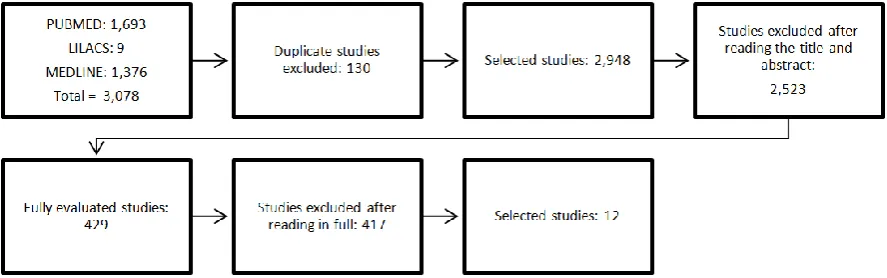
[image:2.595.79.523.569.708.2]abstracts, and finally a full reading of the articles in order toanswer the guiding question. Figure 1 illustrates the article selection process of this review.
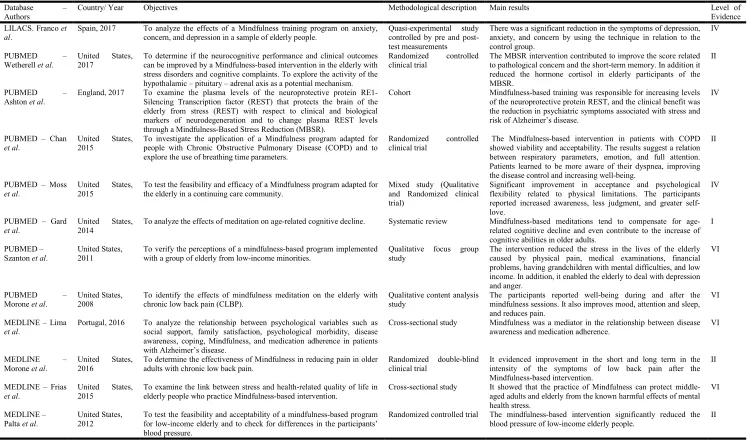
Table 1. Distribution of the studies according to database, authors, country and year, goals, methodological description, main results, and level of evidence – Campo Grande, MS, Brazil, 2018
Database – Authors
Country/ Year Objectives Methodological description Main results Level of
Evidence LILACS. Franco et
al.
Spain, 2017 To analyze the effects of a Mindfulness training program on anxiety, concern, and depression in a sample of elderly people.
Quasi-experimental study controlled by pre and post-test measurements
There was a significant reduction in the symptoms of depression, anxiety, and concern by using the technique in relation to the control group.
IV
PUBMED –
Wetherell et al.
United States, 2017
To determine if the neurocognitive performance and clinical outcomes can be improved by a Mindfulness-based intervention in the elderly with stress disorders and cognitive complaints. To explore the activity of the hypothalamic – pituitary – adrenal axis as a potential mechanism.
Randomized controlled clinical trial
The MBSR intervention contributed to improve the score related to pathological concern and the short-term memory. In addition it reduced the hormone cortisol in elderly participants of the MBSR.
II
PUBMED –
Ashton et al.
England, 2017 To examine the plasma levels of the neuroprotective protein RE1-Silencing Transcription factor (REST) that protects the brain of the elderly from stress (REST) with respect to clinical and biological markers of neurodegeneration and to change plasma REST levels through a Mindfulness-Based Stress Reduction (MBSR).
Cohort Mindfulness-based training was responsible for increasing levels of the neuroprotective protein REST, and the clinical benefit was the reduction in psychiatric symptoms associated with stress and risk of Alzheimer’s disease.
IV
PUBMED – Chan
et al.
United States, 2015
To investigate the application of a Mindfulness program adapted for people with Chronic Obstructive Pulmonary Disease (COPD) and to explore the use of breathing time parameters.
Randomized controlled clinical trial
The Mindfulness-based intervention in patients with COPD showed viability and acceptability. The results suggest a relation between respiratory parameters, emotion, and full attention. Patients learned to be more aware of their dyspnea, improving the disease control and increasing well-being.
II
PUBMED – Moss
et al.
United States, 2015
To test the feasibility and efficacy of a Mindfulness program adapted for the elderly in a continuing care community.
Mixed study (Qualitative and Randomized clinical trial)
Significant improvement in acceptance and psychological flexibility related to physical limitations. The participants reported increased awareness, less judgment, and greater self-love.
IV
PUBMED – Gard
et al.
United States, 2014
To analyze the effects of meditation on age-related cognitive decline. Systematic review Mindfulness-based meditations tend to compensate for age-related cognitive decline and even contribute to the increase of cognitive abilities in older adults.
I
PUBMED – Szanton et al.
United States, 2011
To verify the perceptions of a mindfulness-based program implemented with a group of elderly from low-income minorities.
Qualitative focus group study
The intervention reduced the stress in the lives of the elderly caused by physical pain, medical examinations, financial problems, having grandchildren with mental difficulties, and low income. In addition, it enabled the elderly to deal with depression and anger.
VI
PUBMED –
Morone et al.
United States, 2008
To identify the effects of mindfulness meditation on the elderly with chronic low back pain (CLBP).
Qualitative content analysis study
The participants reported well-being during and after the mindfulness sessions. It also improves mood, attention and sleep, and reduces pain.
VI
MEDLINE – Lima
et al.
Portugal, 2016 To analyze the relationship between psychological variables such as social support, family satisfaction, psychological morbidity, disease awareness, coping, Mindfulness, and medication adherence in patients with Alzheimer’s disease.
Cross-sectional study Mindfulness was a mediator in the relationship between disease awareness and medication adherence.
VI
MEDLINE – Morone et al.
United States, 2016
To determine the effectiveness of Mindfulness in reducing pain in older adults with chronic low back pain.
Randomized double-blind clinical trial
It evidenced improvement in the short and long term in the intensity of the symptoms of low back pain after the Mindfulness-based intervention.
II
MEDLINE – Frias
et al.
United States, 2015
To examine the link between stress and health-related quality of life in elderly people who practice Mindfulness-based intervention.
Cross-sectional study It showed that the practice of Mindfulness can protect middle-aged adults and elderly from the known harmful effects of mental health stress.
VI
MEDLINE – Palta et al.
United States, 2012
To test the feasibility and acceptability of a mindfulness-based program for low-income elderly and to check for differences in the participants’ blood pressure.
Randomized controlled trial The mindfulness-based intervention significantly reduced the blood pressure of low-income elderly people.
RESULTS AND DISCUSSION
The final sample consisted of 12 papers, being the oldest from 2008 and the most current from 2017. In Figure 2 we can verify that nine (75%) studies were carried out in the United States, and only one (8.3%) in Spain, England, and Portugal. Studies addressing the MBIs for the elderly population are scarce; however, the literature shows that its benefits are positive for this public in different countries. Scientific production has pointed out that internationally the number of researches on MBI involving elderly has called the attention of many researchers, gradually increasing each year. The findings evidenced the concern of developed nations with the construction of complementary models in the care of the elderly population, considering that the substantial increase of this portion of the population is already a reality in these countries. It is noteworthy that five (41.6%) studies of evidence I and II and seven (58.3%) of evidence IV and VI were found. Among the results, the literature has shown that there is a wide variety of situations and diseases, which are recurrent concerns of both the elderly and their family members, and the use of Mindfulness alone and/or associated with another technique has significantly contributed to the improvement of the health conditions of the study population. A study carried out in 2017 pointed out that the practice of Mindfulness decreased the symptoms of depression in the
elderly population (Franco et al, 2017). In addition, the
intervention helped to mitigate the concern and reduce the harmful effects of stress (Frias e Whyne, 2015).
Several morbidities cause discomfort for both the elderly individuals and their family members, and some of them have
no cure such as COPD(Chan et al., 2015), Hypertension (Palta
et al., 2012), and Alzheimer (Gard et al., 2014). However, they
are likely to be mitigated from the perspective of mental health promotion through the MBIs. This review allowed us to identify the potential of Mindfulness in relation to: depressive symptoms; stress and anxiety; systemic hypertension; chronic obstructive pulmonary disease; chronic pain; cognitive decline; reduction of the hormone cortisol; improvement in memory; and increase in the neuroprotective protein RES. Moreover it contributes to acceptance of preexisting diseases, medication
adherence, and improvement in mood and sleep (Franco et al.,
2017; Wetherell et al., 2017; Ashton et al., 2017; Chan et al.,
2015; Moss et al., 2015; Gard et al., 2014; Szanton et al.,
2011; Morone et al., 2008; Lima et al.; 2016; Morone et al.,
2016; Frias et al., 2015; Palta et al., 2012). The results showed
that Mindfulness training program reduced the symptoms of
depression in the elderly(Franco et al., 2017). One of the most
well-known Mindfulness programs for depression is MBCT, which main strategy is to help individuals to ease recurrent thoughts through attention(Kabat-Zinn, 2003). In this program the attention is fixed in anchors that provide an alternative to not return to the suffering. This process must take place based on the present moment, on the acceptance without judgments of what may arise mentally. Mindfulness programs usually take approximately eight weeks to complete and last two hours. In the meetings the participants are instructed not to judge their experience, to act consciously, and to observe the internal and external experiences(Siegel e Barros, 2018).
At the weekly meetings, the individuals are instructed to do exercises at home to develop their practices. However, this methodology may not have immediate results, so that any individual who may try this intervention should be warned not
to create expectations in order to avoid more suffering (Martí
et al., 2016). A research carried out in 2015 pointed out that
the state of Mindfulness is a strategy that can be used to protect the elderly from the harmful effects of stress (Frias e Whyne, 2015). Stress can negatively impact the well-being and
mental health of the elderly, leading to illness (Oliveira et al.,
2016). Among the factors that cause stress in the elderly are feeling of social disconnection, cognitive impairment, coexistence with chronic diseases, and physical disabilities
(Conejero et al., 2018). In this context, Mindfulness can
protect the elderly’s brain by increasing a neurotransmitter referred to as repressor element 1-silencing transcription factor (REST), considered to protect the aged brain from the stress
(Ashton et al., 2017). After learning through the
Mindfulness-based program, the individuals begin to recognize a stressful situation, and gradually modify the negative pattern of thinking, thus reducing the impact of stress and its physical effects. One of the main mechanisms responsible for the positive effects of Mindfulness is the result of changes in behavior after the learning process, or even a change of perspective. It may also be related to the attentional, cognitive,
emotional, and body awareness mechanisms (Martí et al.,
2016; Hölzel et al., 2012).
Regarding the chronic obstructive pulmonary disease, it was
observed that Mindfulness exercises improve dyspnea (Chan et
al., 2015), and help to decrease blood pressure levels (Palta et
al., 2012). The MBIs act as facilitators in understanding the
relationship between mind and body, and it is emphasized that the result of this intervention is linked to self-observation and the detection of irrational thoughts that cause some kind of
suffering (Martí et al., 2016). Regarding pain control, the
mental state of Mindfulness changed the way individuals relate to their pain experience and decreased the associated
psychopathological symptoms (Morone et al., 2008, Szanton et
al., 2011; Morone et al., 2016). In addition, Mindfulness can
compensate for cognitive decline related to age (Lupien et al.,
2007). The results of Mindfulness and the benefits in cognitive areas are still scarce with the elderly; however, what is known so far is that these benefits are linked to the preservation of
normal brain functioning (Gard et al., 2014). A pilot study
with 14 participants between the ages of 55 and 90 years old with mild cognitive impairment identified that, after the intervention with MBSR, the participants showed increased functional connectivity in the brain regions between the posterior cingulate cortex, the bilateral medial prefrontal cortex, and the left hippocampus. Suggesting that Mindfulness intervention has the potential to delay cognitive impairment
(Wells et al., 2013). Against this prerogative, a controlled
clinical trial aimed to investigate the changes in gray matter concentration in participants of an MBSR program using magnetic resonance imaging. It showed that after eight weeks of training it was possible to notice an increase in gray matter in regions of the brain that are involved in the process of
learning, memory, and emotional regulation (Hölzel et al.,
2012). It is important to highlight the findings regarding the awareness of the disease, acceptance of physical limitation, and awareness of adherence to drug therapy. Individuals who develop the mental state of Mindfulness begin to adopt conscious postures, develop acceptance, a non-judgmental ability that allows them to live with their illness without suffering or denial (Siegel e Barros, 2018; Martí, 2016). Another skill that can be developed during and after Mindfulness programs is compassion, which involves looking at yourself with more love and understanding, and even though
it is an innate characteristic of a human being, it is poorly developed throughout life (Kabat-Zinn, 2003). It is important to stress that Mindfulness is not the solution to all health problems, it will always act as a complement. The results are positive as evidenced in this study; however, the elderly needs to show interest in participating in the programs. Older people who are “open” and “kind” are more likely to do the exercises, as they are curious and more receptive to adhering to the
instructions given at the meetings (Barkan et al., 2016).
Conclusion
The potentials found were: attenuation of depressive symptoms, stress, and anxiety; management of hypertension; relief of dyspnea in COPD; improvement in pain and immediate memory; acceptance of health conditions; awareness of adherence to drug treatment; increased self-love and cognitive abilities; elevation of serum REST protein levels in the aged brain. The limitations of the study reside in the sources researched, where the searches were carried out based on the keywords mentioned in the description of the method, which requires other studies and an expansion of the databases searched as well as of the age group regarding the definition of the elderly population used in each country and/or continent. Although the studies show important contributions of the MBIs in the elderly, it is necessary to carry out follow-up studies such as the cohort study, since this intervention needs to be developed daily by the elderly after understanding it.
"This study was financed in part by the Coordenação de Aperfeiçoamento de Pessoal de Nível Superior - Brasil (CAPES) -Finance Code 001"
REFERENCES
Andrade FB, Ferreira Filha MO, Dias MD, Silva AO, Costa ICC, Lima EAR, Mendes CKT. 2010. Promoção da saúde mental do idoso na Atenção Básica : as contribuições da
terapia comunitária. Texto Contexto Enferm. 19:129–136.
Ashton NJ, Hye A, Leckey CA, Jones AR, Gardner A, Elliott C, Wetherell JL, Lenze EJ, Killick R, Marchant NL. 2017. Plasma REST: a novel candidate biomarker of alzheimer’s disease is modified by psychological intervention in an
at-risk population. Translational Psychiatry. 7:1-8.
Barkan T, Hoerger M, Gallegos AM, Turiano NA, Duberstein PR, Moynihan JA. 2016. Personality predicts utilization of mindfulness-based stress reduction during and
post-intervention in a community sample of older adults. The
Journal of Alternative and Complementary Medicine.
22:390–395.
Chan RR., Giardino N, Larson JL. 2015. A pilot study:
mindfulness meditation intervention in COPD.
International Journal of COPD. 10:445–454.
Conejero I, Olié E, Courtet P, Calati R. 2018. Suicide in Older
Adults: current perspectives. Clinical Interventions in
Aging. 13: 691–699.
Dermazo MM, Cebolla A, Garcia-Campayo J. The implementation of midfulness in healthcare systes: a
theoretical analysis. General Hospital Psychiatry. 37:
166-171.
Franco C, Amutio A, Mañas I, Gásquez JJ, Pérez-Fuentes MDC. 2017. Reducing anxiety, geriatric depression and worry in a sample of older adults through a mindfulness
training program. Terapia Psicologica. 35:71–79.
Frias CM, Whyne E. 2015. Stress on health-related quality of life in older adults: the protective nature of mindfulness. Aging & Mental Health. 19:201–206.
Gard T, Hölzel BK, Lazar SW. 2014. The potential effects of meditation on age-related cognitive decline: a systematic review. Annals of the New York Academy of Sciences. 1307:89–103.
Hölzel, B. K. et al. 2012. ‘Meditation pratice leads to increases
in regional brain gray matter density’, Psychiatry Res.19:36–43.
Kabat-Zinn, J. 2003. Kabat-Zinn J. Mindfulness-based stress reduction (MBSR). Constructiv Hum Sci.8:73-107
Lima S, Gago M, Garrett C, Pereira MG 2016. Medication adherence in Alzheimer’s disease: The mediator role of
mindfulness. Arch Gerontology Geriatri. 67:92–97
Lupien SJ, Maheu F, Tu M, Fiocco A, Scharamek TE 2007. The effects of stress and stress hormones on human cognition: implications for the field of brain and cognition. brain and Cognition. 65: 209–237.
Madiha F, Mehran R, Alia N, Awan SJ. 2018. A systematic
review of aging and its causes. International Journal of
Development Research. 08:23904–23908.
Marcum ZA, Perera S, Thorpe JM, Switzer GE, Castle NG, Strotmeyer ES, Simonsick EM, Ayonayon HN, Phillips CL, Rubin S, Zucker-Levin AR, Shorr RI, Kang Y, Cinzento SL, Hanlon JT (2016). Antidepressant use and recurrent falls in community-dwelling older adults:
findings from the health ABC study. Ann Pharmacother,
50:525–533.
Martí AC, Garcia-Campayo JG, Demarzo M. 2016. Mindfulness e ciência: da tradição à modernidade (organizadores), tradução Kato DS, Athena, São Paulo, Brasil.
Meeks TW, Vahia IV, Lavretsky H, Kulkarni G, Jeste DV 2011. A tune in “a minor” can “b major”: a review of
epidemiology, illness course, and public health
implications of subthreshold depression in older adults. J
Affect Disord., 29:126–142.
Melnyk MB, Fineout-Overholt E. 2011. Evidence-based practice in nursing e amp; Healthcare - a guide to best practice. Second edition-be.mWolters Kluwer Health/ Lippincott Williams & Wilkins. USA.
Melo-Silva AM, Mambrini JVM, Souza junior PRB, Andrade FB, Lima-costa MF. 2018. Hospitalizações entre adultos mais velhos : resultados do ELSI-Brasil. Rev Saude Publica. 52:1–11.
Morone NE, Greco CM, Moore CG, Rollman BL, Lane B, Morrow LA, Glynn NW, Weiner DK. 2016. A mind-body program for older adults with chronic low back pain a
randomized clinical trial. JAMA Internal Medicine.
176:329–337.
Morone NE, Lynch CS, Greco CM, Tindle HA, Weiner DK 2008. "I felt like a new person." the effects of mindfulness meditation on older adults with chronic pain: qualitative
narrative analysis of diary entries. J Pain. 9:841–848.
Moss AS, Reibe DK, Greeson JM, Thapar A, Bubb R, Salmon J, Newberg AB. 2015. An adapted mindfulness-based stress reduction program for elders in a continuing care retirement community: quantitative and qualitative results
from a pilot randomized controlled trial. J Appl Gerontol.
34:518–538.
Oliveira CP, Moraes MA, Moura TC 2016. Intervenções cognitivo comportamentais para manejo de estresse em
pacientes oncológicos: uma revisão sistemática.
Oliveira MG, Amorim WW, Oliveira CRB, Coqueiro HL, Gusmão LC, Passos LC. 2017. Consenso brasileiro de medicamentos potencialmente inapropriados para idosos.
Geriatr Gerontol Aging. 10:168–181.
Palta P, Page G, Piferi RL, Gill JM, Hayat MJ, Connolly AB, Szanton SL. 2012. Evaluation of a mindfulness-based intervention program to decrease blood pressure in
low-income African-American older adults. Journal of urban
health. 89:308–316.
Siegel P, Barros NF 2018. Mindfulness y Ciencia. de la tradición a la modernidad. Ciênc. saúde coletiva. 23:339– 341.
Soares C, Hoga LAK, Peduzzi M, Sangaleti C, Yonekura T, Silva DRAD 2014. Integrative review: concepts and
methods used in nursing. Rev. esc. enferm. USP. 48: 329–
39.
Szanton SL, Wenzel J, Connolly AB, Piferi RL. 2011. Examining mindfulness-based stress reduction: Perceptions from minority older adults residing in a low-income housing facility. BMC complementary altern med. 31:11-44
United Nations, Department of Economic and Social Affairs, Population Division 2015. World Population Ageing. pp. 1-151.
Volkert J, Schulz H, Härter M, Wlodarczyk O, Andreas S 2013. The prevalence of mental disorders in older people in
Western countries – a meta-analysis. Ageing Res Rev.
12:339–353.
Wells RE, Yeh GY, Kerr CE, Wolkin J, Davis RB, Tan Y, Spaeth R, Wall RB, Walsh J, Kaptchuk TJ, Press D, Phillips RS, Kong J (2013). Meditation’s impact on default mode network and hippocampus in mild cognitive impairment: pilot study’, Neurosci lett. 556;15–19.
Wetherell JL, Hershey T, Hickman S, Tate SR, Dixon D, Bower ES, Lenze EJ. 2017. Mindfulness-basead estress reduction for older adults with stress disorders and
neurocognitive difficulties: a randomized controlled trial. J
Clin Psychiatry.78:734–743.
Wosiack RMR, Berlese DB, Barcelos ARG, Cunha GL, Santos GA. 2017. Relationsships of SIRT1 and 8-OHDG with resiliense, depression and cognition in the elderly.
International journal of Development Research. 07:14045–
14051.
Zieliński A. 2013. Ageing individuals and ageing populations.
Przegl epidemiol. 68:207–212.