2017 2nd International Conference on Computer, Mechatronics and Electronic Engineering (CMEE 2017) ISBN: 978-1-60595-532-2
Research on Assistant Decision-making of Logistics Message Priority
Distribution Based on Information Value
Yun-ping AI
Hefei Vocational College of Finance and Economics
Keywords: Information value, Priority distribution, Sorting, Sending cache.
Abstract. The dramatic increase in the volume of commodity logistics information presents a challenge to a limited number of communication systems. Based on the information value as a quantitative standard, direct insertion method and multi-stage transmission buffer method are used to send the priority order of the logistics message. The message priority distribution aided decision- making program is designed to ensure the real-time value of message distribution. It provides new ideas and methods to improve the efficiency of logistics information and communication system.
Introduction
One of the advantages of modern logistics is the increase in the amount of information and information sharing to expand, but it also brought some new problems, one of which is to solve a lot of information, dynamic communication channel with limited resources and contradictions.
In modern logistics, information is usually transmitted in the form of messages. According to the order generated by the distribution of messages in traditional way, higher value of the message can not be sent and utilized in a timely manner, and the efficiency of logistics information systems is reduced. Message distribution is usually automatically implemented by the hardware processing system. Therefore, it is necessary to solve the problem of priority assignment decision-making of information. This includes two aspects. First, how to obtain the information value as the basis for judging the priority of information transmission; Followed by how to sort real-time, preferred distribution of information, improve system efficiency.
Logistics Information Value Evaluation
In the process of commodity logistics, the message can be realized only when it is used. Therefore, this article regards the logistics information value of message as the standard of its sending order. In order to facilitate quantitative analysis of the value of information, it is further broken down into a number of indicators.
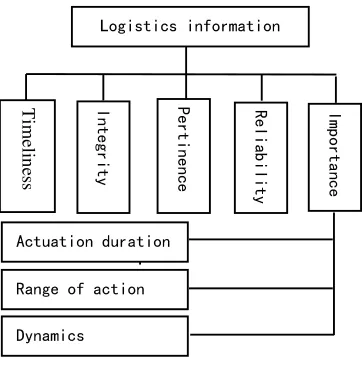
For the same information, whether it can be utilized or utilized, the results are different, and their value is different. Accordingly, we first decompose the four indexes which are timeliness, integrity, pertinence and reliability from the value of information. Timeliness refers to the extent to which information users obtain information and to formulate policies and measures to control the occurrence and development of things. Easy access to information produces idle information, and the possibility of further change is relatively large. Too late to get information will have a devaluation or failure. Integrity refers to the number and distribution of information elements which can reflect the true face of things. Little information will produce distortion or erroneous results. Pertinence refers to the situation of information reflection and the interest of decision maker. The same information has different uses for different users. Reliability refers to the extent to which the information reflects the elements of the situation in line with the objective reality.
is defined as the size of the role in the logistics, including the length of action, the scope of action, the size of the action. The value of information after being utilized that may have a long effect on the occurrence and development of something is higher than the information of short time. The value of information after being utilized that influences the scope of the information is higher than the information of the smaller scope. The value of information that influences the thing is much stronger than the information with small influence is higher.
According to the above analysis, the index system of information value is obtained, as shown in Figure 1.
Figure 1. Logistics information value index system.
On this basis, analytic hierarchy process is used to calculate the value of each information. Among them, according to different stages of information needs, the index scales are used to calculate the weight of each index.
Algorithm Selection of Message Sorting
After quantifying the value of each message, the message sorting is carried out based on the information, and the priority of the information is determined. There are many kinds of algorithms used for computer sorting, but the classification of them according to the classification principle can be broadly divided into five major categories: insertion sort, swap sort, select sort, merge sort and Radix sort. Each sorting algorithm has its own advantages and disadvantages, and none of them is absolutely optimal. Information dissemination requires fast algorithm and less processing delay for information transmission. Therefore, the time complexity should be chosen as the basis. However, there are many factors that affect the efficiency of sorting, and the algorithm with the best average time complexity does not always have the optimal time when some real data is sorted. The algorithm with lower average time complexity may be more suitable for some specific situations. Therefore, the appropriate sorting algorithm should be selected according to the actual application conditions.
According to the different time conditions of information generation, sorting is divided into static sorting and dynamic sorting. Static sorting means that the amount of information to be distributed has been determined and stored in a database in unordered order, waiting for a unified sort. This is generally applicable to the distribution of historical data and has less implementation in commodity logistics. This article does not study this. Dynamic sorting refers to the amount of information to be distributed increasing with time (usually without considering reduction), and to be sorted according to the changed situation. This applies to real-time information distribution. In dynamic sorting, the rational sorting method is based on the temporal order of the information generated with edge sorting and distributing. Whenever new information is generated, it is reordered with other scheduled information that has been sorted. As a result, direct insertion sort algorithm can be used. The
Logistics information T im el in es s In te gr it y Im po rt an ce Re li ab il it y Pe rt in en ce Actuation duration
Range of action
[image:2.612.208.389.167.352.2]algorithm is very sensitive to the order of data. In the case of adding new data to the old ordered sequence, it is the optimal choice, and the average time complexity is 0(n).
When using direct insertion sort algorithm, the whole information to be sorted is divided into two parts. The left side is the sorting area, and the right is the unordered area. The sorting process is: searching the location of the insertion in the ordered area, stopping at equal or less than the value of the information; then moving other information to free the space and inserting new information in the unordered area. In order to facilitate the shift, the content of the information is not recorded and ordered, but the storage address is sorted.
Send Cache Design
The order of the information can be obtained by sorting the values. But in the actual information distribution, when the amount of information is large, we still need to solve the problem of sending cache design.
First, the number of send caches should be determined. The easiest way is to design only one cache and send the message in first in first out (FIFO) mode. However, when the amount of information is large, it is possible to shift a lot of information backwards one by one. It's time consuming, and for most of the information, their movement is redundant. Therefore, combining the idea of fast sorting algorithm, we improve it by dividing the multi segment sending cache and defining the cache by priority correspondence. The more the priority number, the better it is in theory, but this will lead to slower search, resulting in send delay problems. Therefore, the number of priority can not be increased to increase the complexity of analysis, and can not be reduced to reduce the discriminative power of Message level. The commonly used level of urgency is referred to logistics information. It can be divided into: general, generally urgent, urgent, and extra urgent. Accordingly, the 4 segment send cache is divided. The priority is determined by the value of the information. Since the information value can be normalized, it can be determined that the entire priority range is [0, 1]. On this basis, the dividing index of each priority is determined. The simple method is to divide the value range at all levels evenly, but that does not accord with the objectivity of the judgment of the 4 grades. Moreover, in logistics, the probability of the 4 levels of information is also different. Usually generally urgent and urgent information is more than other two levels of information. Therefore, using the index scale method, the scale was 9 (1/K), K as the standard parameters. 3 dividing point obtained of 4 grades were 0.208, 0.4327 and 0.9. Each cache is searched in the order from high to low priority. Then the message is sent in FIFO mode.
If the priority is determined directly according to the value of the information, it can send the highest value of the current information to a single logistics to meet the real-time requirements of single information. But in the case of queuing, the delay of the subsequent high value information should be considered due to the large amount of information and the limited channel transmission capacity, which may reduce the average real-time performance of the system. The key is to distinguish between long and short messages. The aim is to avoid sending long messages and delaying subsequent higher value messages. The so-called "long" is a relative concept. In an information distribution network, the number of transmissions received by a communication device in a short time is very small. Therefore, this paper is based on the number of single data transmitted by the communication device.
long and short two segment buffers, so that the short message is sent preferentially under the same priority condition.
The Design of Assistant Decision-making of Logistics Message Priority Distribution
According to the above research methods, assistant decision-making of logistics message priority distribution is designed. The program is a non visual software module, Using C language programming. According to the hardware environment of the actual information and communication system, it can be integrated in the software environment of the information processing computer or integrated into the software environment of the communication processor.
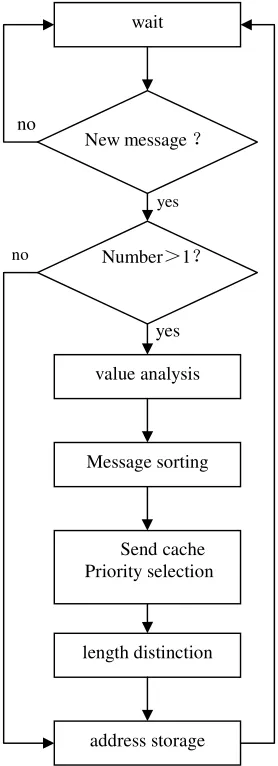
[image:4.612.195.469.220.306.2]The structure and composition are shown in Figure 2.
Figure 2. Structure and composition of assistant decision-making of logistics message priority distribution.
Send cache Priority selection New message ?
Number>1?
value analysis
length distinction
address storage no
no
Message sorting
yes
yes wait
Receive Message Sort Search distribute
sorting
Send cache
Message sending
Message storage
[image:4.612.233.372.334.717.2]In Figure 2, receiving new message, on the one hand it is stored in the message memory, on the other hand it is sorted. A sequence of cache addresses of outgoing message on Cache at all levels is got. When a message is sent, the cache is searched, and the message is read from the message memory at the address of the currently sent message, which is then distributed to the user.
In Figure 2, the workflow of the message sorting subroutine is shown in Figure 3.
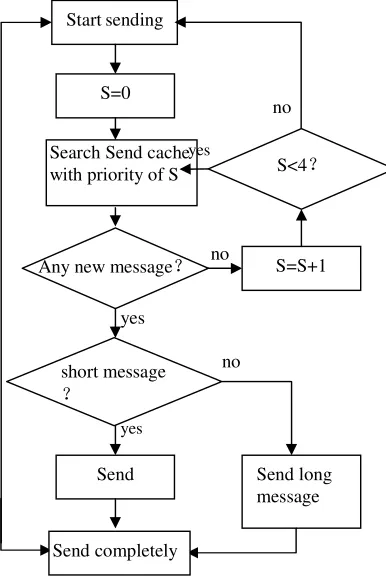
[image:5.612.207.400.181.472.2]Through the process shown in Figure 3, the sending order of each message is determined. Then, the message sending process is designed, as shown in figure 4. In Figure 4, S is the transport priority. From 0 to 3 in the corresponding level is general, generally urgent, urgent, and extra urgent.
Figure 4. Workflow of message sending.
Conclusion
By means of analytic hierarchy process (AHP) and exponential scaling, the information value system of commodity logistics is established. Quantitative analysis of the information value of logistics messages is taken as the basis for priority distribution. Then direct insertion is used to sort messages. At the same time, a multistage send cache is designed for the problem that the number of packets is long and the message is easy to delay. Finally, assistant decision-making of logistics message priority distribution is designed. The structure and composition of the message and the workflow of the main modules are determined. This paper provides a breakthrough for the solution of the contradiction between limited information resources and limited channel resources. Priority is given to the delivery and utilization of high-value information. It helps to improve the efficiency of logistics message distribution and provides technical support for the improvement of the final logistics efficiency.
Acknowledgements
[Teaching and research project]: teaching and research project of An Hui province. Number: [2016jyxm0789].
S<4? Start sending
S=0
Search Send cache with priority of S
Send Send long message
S=S+1 Any new message?
yes
no no
yes
yes
no short message
?
Reference
[1] Tan Yang. AHP index scale and rank preservation research [D]. Nanning: Guangxi University, 2002. 05.
[2] Liu Shu-li, Han Zhong-geng, Gu Yu. Measurement of military intelligence information value [J]. Military Operations Research and Systems Engineering, 2006.12: 52-56.
[3] Fang Bin, Deng Lixia. Experimental analysis of time performance of six sorting algorithms [J]. Journal of Yun yang Teachers College, 2005.12: 22-24.
[4] Wang Jianfeng, Fang Jiqian, Liu Allison. Study on target value evaluation indexes of [J]. Beijing Surveying and Mapping, 2008.02: 9-11.