Learning Conflict Duration:
Insights from Predictive Modelling
Gokhan Ciflikli
A thesis submitted to the International Relations Department of the London School of Economics for the degree of Doctor of Philosophy,
Declaration
I certify that the thesis I have presented for examination for the MPhil/PhD degree of the London School of Economics and Political Science is solely my own work other than where I have clearly indicated that it is the work of others (in which case the extent of any work carried out jointly by me and any other person is clearly identified). The copyright of this thesis rests with the author. Quotation from it is permitted, provided that full acknowledgement is made. This thesis may not be reproduced without my prior written consent.
I warrant that this authorization does not, to the best of my belief, infringe the rights of any party.
Abstract
Why do some conflicts last longer than others? Previous work on conflict duration posits information asymmetries and credible commitment problems can cause protracted civil wars. The bifurcated nature of conflict studies, based on the notion that civil and interstate wars are qualitatively different, has so far prevented studies from including both types of conflict in the same dataset. Thus, empirical evidence is lacking as to whether the explanations apply to both types of conflict, or they are indeed separate phenomena.
This dissertation expands on the Cunningham and Lemke (2013) study on combining civil and interstate wars by including a large number of predictors taken from the rich civil war literature. The proposed framework unpacks the bargaining failure framework into three components governing power projection over distance, which I argue to be the main determinant of duration: material capability, politics, and geography. In doing so, I do not discriminate between the ‘types’ of war and provide a general theory of conflict duration.
Acknowledgements
My PhD experience in London had a rough start. I flew in the day before the course was scheduled to start, and promptly got my wallet stolen on my way to my new place. Luckily, there was someone waiting for me in the flat, so I could at least get in. Next day, without a working cell phone, I followed the path an offline Google Maps charted for me. Not being familiar with London, it took me about 1hr 45mins to walk from Peckham to Aldwych, where the LSE is located. It was a good ice breaker though, as my story quickly made the rounds in the department.
The rest of my PhD journey was a breeze in comparison.
During my first summer, I attended the ICPSR summer program at Ann Arbor, Michigan. Glad to have spent that time with my partners-in-crime: Calla Hummel, Chris Schwarz, and Andrew Brooks—you will all do well in your careers. A big shout-out to our awesome instructors: Daniel Martin Katz, Chris Zorn, and Jim Morrow.
The conference gang that I believe I was a late comer to: Luke Abbs, Corinne Bara, David Brenner, Kaisa Hinkkainen, and Rob Nagel. You made the acronym-soup conferences way more entertaining than they should be.
The Security, Conflict and Peace Studies Workshop at LSE, headed by David Rampton—talk about unorthodox teaching. It was a pleasure to be a part of the module while it lasted.
I spent two months in Sierra Leone for fieldwork, and I probably have way too many people to thank for it. I can say I owe most of it to Kieran Mitton, who more or less set up all my initial contacts and prepped me for what’s to come. Konstantin Born, it was invaluable having a reliable person on the ground. Finally, another Uppsala run-in—Sayra van den Berg. I think I like us more when we both reside in the same country, because both of us are terrible at keeping in touch.
We hosted the first Computational Social Science Hackathon at the LSE! The credit goes to the LSESU CSS Society board members: Kiran Phull, Pilar Elizalde, and Sebastian Mueller. I would like to thank LSE Annual Fund (AF) for their generous starter grant, along with LSE Social and Economic Data Science (SEDS) research unit (and its director Ken Benoit in particular) and GitHub for matching the AF grant to make it all possible.
Folks at the Alan Turing Institute: Kirstie Whitaker, Chanuki Seresinhe, and Merve Alanyali—thanks for hosting us. Also, my awesome Data Study Group (DSG) mates working on the U.K. Cabinet Office challenge—Jack Blundell, Haziq Jamil, and Kaisa—we did well!
For the more technical parts of this project, I am grateful to those who took their time to read and comment on the earlier versions of this manuscript: Karsten Donnay, David Muchlinski, and Julian Wucherpfennig. Konstantinos Travlos, my favourite Greek (high praise), thank you too for your sustained feedback over the years.
A later addition to that mix was Mihai Catalin Croicu, a welcome development in Turco-Romanian relations at large. Last but not least, my favourite person, Kristine Eck—tough times, tough people.
I have spent considerable time at UCL attending the Conflict Analysis Lab (COALA). The usual suspects during the time I was most frequently attending were Hannah Smidt, Sarah Leo, Altaf Ali and of course Nils Metternich, our convener. I have learned a lot during our discussions and they definitely made their mark in my work, including this one.
I have taught various courses at LSE. Departments of Government, Management, and Mathematics—thank you for giving me the opportunity to try out different subjects and teaching styles. Special thanks to Paul Mitchell, who trusted me to teach IR201 at the LSE Summer School for three years in a row. I owe the International Relations Department for all the financial support they have made available to me in the last four years—summer school, PhD exchange, fieldwork, and numerous conferences. I especially would like to acknowledge the Michael Leifer Estate, which provided my scholarship. Last but not least, I am grateful to Peter Trubowitz for agreeing to supervise me and for his continuous support and encouragement throughout my PhD.
Thanks to everyone who develop open-source applications—chiefly R and LATEX—,
make their code/data publicly available, and take their time to help others on Twitter, Stack Overflow, and GitHub. Special nod to Max Kuhn and Yihui Xie, as
without caret and bookdown, this project would have taken so much more time.
Pilar and Moritz—I would not dare demoting you to mere flatmates—it was so kind of you to share your home with me. Finally, I would be remiss not to mention Evelyn Pauls, whose companionship was dear to me throughout our PhD journeys.
Contents
1 Introduction 15
1.1 The Puzzle . . . 15
1.2 The Answer Writ Short . . . 18
1.3 Structure of the Dissertation . . . 20
1.4 Contribution . . . 22
2 Theoretical Framework 24 2.1 Introduction . . . 24
2.2 Bifurcated Study of War . . . 29
2.3 A Unitary Framework . . . 31
2.3.1 A Model of Limitations . . . 32
2.3.2 Material Capabilities . . . 38
2.3.3 Non-Physical Constraints . . . 40
2.3.4 Physical Constraints . . . 42
2.3.4.1 The Paraguayan War 1864-1870: An Example. . 45
2.4 Empirical Expectations . . . 50
2.5 Conclusion. . . 54
3 Research Design 57 3.1 Methodology . . . 58
3.1.1 Triangulation vs. Integrative Multi-Method Research . . . 58
3.1.3 Forecasting in Conflict Research. . . 67
3.1.4 Case Selection after Quantitative Research . . . 71
3.2 Data . . . 76
3.2.1 Replication Studies . . . 76
3.2.2 Case Study Interviews . . . 79
4 A Quantitative Assessment of Duration Studies 82 4.1 BTSCS Studies on Conflict Duration . . . 85
4.1.1 Brief Review . . . 85
4.1.2 Replication Procedure . . . 87
4.2 Exploratory Data Analysis . . . 88
4.2.1 Summary Statistics. . . 89
4.2.2 Further Diagnostics . . . 91
4.3 Predictive Modelling with Feature Selection . . . 94
4.3.1 Recursive Feature Elimination . . . 96
4.3.2 Genetic Algorithms. . . 97
4.3.3 Simulated Annealing . . . 99
4.4 Model Training . . . 102
4.4.1 Elastic Net . . . 102
4.4.2 Variable Importance . . . 104
4.4.3 Performance Metrics . . . 106
4.4.3.1 In-Sample Performance . . . 107
4.4.3.2 Out-Sample Performance . . . 109
4.4.4 Top Predictors Across All Studies . . . 111
4.5 Conclusion. . . 114
5 Machine Learning using Combined Data 117 5.1 Shallow Learning . . . 119
5.1.1 Baseline Study . . . 120
5.1.2 New Covariates . . . 121
5.1.4 ROC, Sensitivity, and Specificity . . . 127
5.2 Ensemble Models . . . 129
5.2.1 Simple Linear Ensembles. . . 130
5.2.2 Meta-Model Ensembles. . . 131
5.3 Predictive Accuracy . . . 131
5.4 Deep Learning . . . 135
5.4.1 Neural Nets with Keras . . . 136
5.4.2 MultiLayer Perceptron (MLP) for Binary Classification . . 138
5.4.3 Performance Metrics . . . 140
5.4.4 Local Interpretations of Model-agnostic Explanations . . . 141
5.5 Conclusion. . . 147
6 Analysis 149 6.1 Predictive Modelling . . . 150
6.1.1 Material Capabilities and Non-Physical Constraints . . . . 153
6.1.2 Physical Constraints . . . 154
6.1.3 Time Effects . . . 156
6.1.4 Variable Importance . . . 157
6.1.5 Case Explanations . . . 161
6.1.6 Theoretical Implications . . . 164
6.1.7 Conclusion . . . 165
6.2 Shadow Case Study . . . 166
6.2.1 Conflict Parties . . . 167
6.2.1.1 Domestic Powers . . . 167
6.2.1.2 International Powers . . . 169
6.2.2 Dynamics of Capability Shifts on the Ground . . . 171
6.2.3 Insights from Integrative Mixed-Methods . . . 180
6.2.4 Conclusion . . . 184
6.3 Conclusion. . . 186
7.1 What Have We Learned? . . . 189
7.2 Predictive Performance of Machine Learning . . . 192
7.3 Implications for Future Research . . . 195
8 Appendix 197 8.1 Chapter 4 . . . 198
8.1.1 Replication Studies . . . 198
8.1.2 Performace Metrics . . . 205
8.2 Chapters 5 & 6 . . . 206
8.2.1 Random Forest Performance based on Sub-sampling . . . 206
8.2.2 Random Forest: Original Model Specification . . . 208
8.2.3 Random Forest Explained: Duration . . . 209
8.2.4 Random Forest Explained: Civil War Dummy . . . 215
8.2.5 NHST Replication: Logistic Regression . . . 217
8.2.6 NHST Replication: Survival Analysis . . . 219
List of Tables
3.1 Quantitative studies on armed conflict duration (n = 46) as
identified by the LSE Library keyword search . . . 81
4.1 Example non-BTSCS data subset . . . 85
4.2 Example BTSCS data subset . . . 86
4.3 Descriptive statistics of the replication studies . . . 89
4.4 Recursive feature elimination results . . . 97
4.5 Genetic algorithm results. . . 98
4.6 Simulated annealing results . . . 101
4.7 Elastic net selected hyper-parameters and ROC . . . 105
4.8 Random forest selected hyper-parameters and ROC . . . 106
5.1 Multilayer perceptron external performance metrics . . . 140
List of Figures
2.1 Bargaining space, as illustrated in Lake 2003. Settling is always
preferable to fighting given the costs associated with war. . . 34
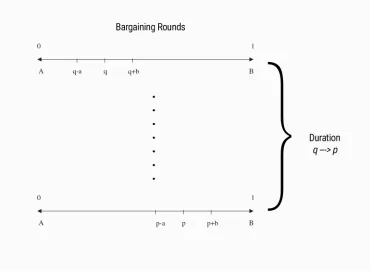
2.2 Conflict duration as a function of multiple-round bargaining. . . . 35
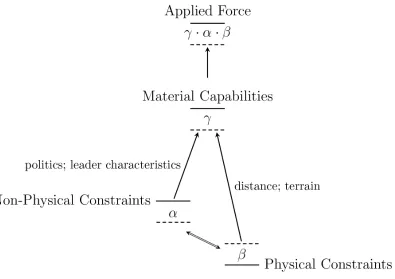
2.3 Illustration of the limitations on the amount of force application.
Baseline material capabilities of an actor are subject to physical and
non-physical constraints when projected away from the power base.
All three components are dynamic and their values can change
drastically over the course of the conflict. . . 37
2.4 Boulding’s loss of strength gradient concept, taken from Sakaguchi
2011 . . . 43
2.5 The region of Platine in 1864 showing the conflict parties of the
War of the Triple Alliance and the location of contested territories 46
3.1 Significance and p-values, taken from Turkheimer et al. 2004 . . . 62
3.2 Twelve common p-value misconceptions by Goodman 2008 . . . . 63
3.3 Cross-validation and data splitting procedures . . . 65
3.4 Map of Sierra Leone . . . 73
4.1 Correlation analysis of Cunningham and Lemke 2013 . . . 92
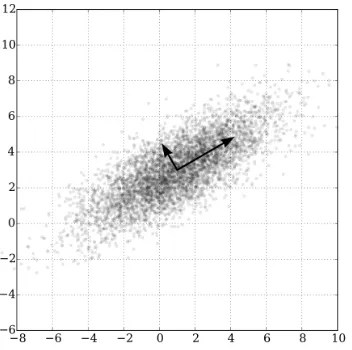
4.2 Example of a principal component analysis of a multivariate
Gaussian distribution . . . 93
4.3 Recursive feature elimination algorithm . . . 96
4.5 Simulated annealing algorithm. . . 100
4.6 Elastic net vs. LASSO and ridge regression . . . 103
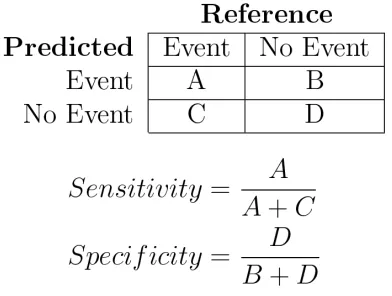
4.7 Confusion matrix statistics . . . 107
4.8 In-sample performance metrics . . . 108
4.9 Out-sample (prediction) performance using separation plots . . . 110
4.10 Top predictors of conflict duration . . . 112
5.1 Correlation plot of Cunningham and Lemke 2013 with added covariates . . . 125
5.2 In-sample performance metrics . . . 128
5.3 Meta-model ensemble relative influence graph . . . 132
5.4 Variable importance after model fit . . . 134
5.5 Example multilayer perceptron architecture . . . 137
5.6 Multilayer perceptron training evaluation . . . 139
5.7 Illustration of a local interpretation according to the LIME framework142 5.8 Explaining positive MLP predictions . . . 143
5.9 Explaining negative MLP predictions . . . 144
6.1 Random forest: directionality of the predictors . . . 152
6.2 Random forest multi-way importance plot: tree structure metrics 158 6.3 Random forest multi-way importance plot: predictive covariates . 159 6.4 LIME Random forest: ten randomly selected case explanations (civil wars). . . 162
6.5 LIME random forest: ten randomly selected case explanations (interstate wars). . . 163
6.6 LIME Random forest: Sierra Leone Civil War Predictions 1991-2000182 8.1 Correlation analyses of all replicated BTSCS studies . . . 204
8.2 Random forest sub-sampling performance . . . 207
8.3 Variable importance for Cunningham and Lemke 2013 without cubic splines . . . 208
8.5 Relations between rankings according to different measures . . . . 211
8.6 Distribution of minimum depth and its mean . . . 212
8.7 Mean minimal depth for 30 most frequent interactions . . . 213
8.8 Interactive predictions for different values of distance and CINC . 214 8.9 Multi-way importance plot for civil war dummy . . . 216
8.10 Logistic regression coefficient plot . . . 217
8.11 Logistic regression variable effects . . . 218
8.12 Cox-PH fit stratified by war type . . . 220
8.13 Cox-PH estimates for Cunningham and Lemke 2013 . . . 221
8.14 Cox-PH estimates for Cunningham and Lemke 2013 with added covariates . . . 222
8.15 Schoenfeld residuals for Cunningham and Lemke 2013 with added covariates . . . 223
8.16 Cox-PH diagnostics (estimated change) for Cunningham and Lemke 2013 with added covariates. . . 224
Chapter 1
Introduction
1.1 The Puzzle
Why do conflict scholars study civil and interstate wars separately? In the literature at large, theories of conflict onset, duration, and termination differ by conflict type. For example, decades of formal work on bargaining1 is built on
state actor interactions and firmly situated in international relations. The divide in conflict scholarship is not confined to the theoretical realm; even when a theory crosses over from one realm to the other, as the work on civil war bargaining did in mid 2000s, the scope of empirical analyses continues to be limited to only one type of conflict. As a result, our understanding of conflict processes become conflict type-dependent: we do not entertain holistic applications to conflict research.
More specifically, even though there are empirical studies on both civil and interstate war duration, the great temporal variation found in war is exclusively studied in civil war settings. We ask why some wars last longer than others, but what we mean is why some civil wars last longer than others (Fearon, 2004). Simple descriptive statistics of war duration provide ample justification for this
decision: on average, civil wars do tend to last longer than interstate wars.2
Yet, this scholarly divide prevents us from realising the true explanatory and predictive powers of our existing models. Why do civil wars last longer than interstate wars in general? Civil wars differ from their interstate counterparts in many aspects. First, there is an inherent asymmetry between the actors in civil wars in terms of international recognition and coercive power infrastructure (Driscoll, 2012; Clayton, 2013). Both factors are relatively more balanced in interstate war dyads. Belligerents in civil wars are geographically more constrained compared to state actors (Fearon and Laitin, 2003), whereas state actors can fall back to their sovereign territories. Further, rebel factions face more severe commitment issues as they are expected to fully demobilise during peace talks, while defeated state actors retain some levels of fighting capability (Walter, 1999).
However, they also share a multitude of commonalities. Both state and non-state actors behave strategically to achieve political goals (Atran et al.,2007). All actors require material capabilities (e.g. manpower, resources) to wage war (Bennett and Stam, 1996; Wood, 2010). Similar political and leadership issues play a crucial role in all wars (Cunningham,2006;Weisiger,2016); logistics matter (Kane,2012), geography matters (Buhaug and Gates,2002;Buhaug et al.,2009). Still, because we do not study them together, we cannot ascertain the level of empirical support for these commonalities between civil and interstate wars.
Further complicating matters, in some cases, the line between a state and a non-state actor can be blurred. One example is actor capabilities, which display a great amount of variation. Some rebel organisations are considerably more capable than the state actors they fight (for example the NFLP in Liberia), either
locally (PKK in South-eastern Turkey) or even nationally (Houthis in Yemen since 2016). The annual income of certain rebel organisations rival that of the states. The FARC was estimated to be worth $200m to $3.5 billion at its peak,3 such that
the high estimate would make it wealthier than 33 countries in terms of Gross Domestic Product.4
Some governments are fragile and fractured (Somalia) to a degree that most material capability advantages reserved for state actors hardly apply. In contrast, certain rebel organisations display strong central command and act as quasi-states (EFLP against Ethiopia prior to Eritrean independence). Rebels are sometimes pictured as being ‘stuck’ in their country in comparison to two sovereign state actors that can fall back to the protection of their own borders. However, some countries suffering from civil war are so vast in size (e.g. Mali, Sudan) that the distance between the capital (government power base) and the conflict zone (rebel power base) could be further apart than the average distance between two warring state actors.5
In cases like above, where does one draw the line? Do limited interstate wars behave more like civil wars than large-scale interstate wars? Conversely, do civil wars featuring militarily-strong governments and highly-capable rebels have more in common with interstate wars than small-scale civil wars? We do not have answers to such queries because conflict scholars specialising in either type of war do not talk to each other; and even if they try, they lack combined datasets to empirically test their claims.6
To test whether there are indeed empirical commonalities pertaining to war longevity, I posit a unitary framework for modelling conflict duration using a model of limitations on capability projection. Building on the rationalist concept 3The Economist (2014) The FARC’s Finances: Unfunny money. [online] Available at: https: //www.economist.com/the-americas/2016/04/14/unfunny-money[Accessed 7 Jul. 2018].
4World Bank (2018). World Bank National Accounts Data. [online] Available at: https: //data.worldbank.org/indicator/NY.GDP.MKTP.CD[Accessed 7 Jul. 2018].
of bargaining, I propose a conflict-type agnostic model of limitations on power projection consisting of three components: baseline material capabilities in conjunction with physical and non-physical limitations acting upon them.
Baseline material capabilities refer to human, economic, and military capital of conflict actors—e.g. population, Gross Domestic Product, troop size. These represent the existing capabilities on an ideal level; in many conflicts actors do not mobilise completely (Wagner,2000). The latter two components are modelled as constraints on the sustainability of applied force; i.e. negative force multipliers. For example, political factors such as veto players or a divided executive and geographical constraints such as vast distances and rough terrain can be thought of in this way: they can diminish the existing capabilities of an actor.
Finally, I expose the proposed unitary model to empirical testing by employing algorithmic predictive modelling to find out whether common patterns exist in each of the three components across both types of war. Instead of using a Null-Hypothesis Significance Testing (NHST) framework that looks backwards (favouring in-sample explanation), I employ a forward-looking forecasting approach that puts premium on out-of-sample predictive accuracy. The misuse and misinterpretation of NHST have been frequently criticised in political science (King, 1986; Gill, 1999; Gerber et al., 2008). Using predictive heuristics is one of the recommended solutions for addressing the over-deterministic nature of the traditional models that rely on statistical significance (Ward et al., 2010).
1.2 The Answer Writ Short
longevity also predict interstate war duration. Furthermore, excluding a handful of exceptions, the findings show that the direction of the predictors also hold across conflict types; if a covariate has a prolonging effect in civil wars, it also makes interstate wars longer.
More specifically, many operationalisations of material capability are ranked as top predictors of conflict duration. States with higher CINC7 scores and
Gross Domestic Product per capita (GDP p.c.) tend to fight longer than those with lower capabilities. Increasing total population and troop sizes, as well as increased military expenditures, are also consistent predictors of prolonged conflicts. Natural resources in certain forms—hydrocarbons (crude oil and natural gas) and gemstones—affect conflict duration: access to oil has a shortening effect while mining gems has a prolonging effect.8
Several political factors also play a crucial role as determinants of war duration. Politics in this context is conceptualised as non-physical limitations on the head executive regarding the continued application of military force. Both democracy as a regime type and the amount of political constraints on the head executive (Henisz, 2017) are the most influential covariates of this component that are associated with shorter wars. On the other hand, conflicts associated with coup d’etat have a slight prolonging effect on duration.9
Thirdly, time-dependency is also a robust predictive factor for both types of conflict. This is a topic of contestation in the literature—whether conflict is duration dependent or not—given the contradictory findings (Vuchinich and Teachman, 1993; Bennett and Stam, 1996). This project shows that
7Composite Index of National Capability (CINC) of a state is measured as an index using six indicators of material capacity: total population, urban population, military expenditure, military personnel, iron and steel production, and energy consumption (Singer,1972).
8For a structured comparison of the effect of various natural resources on conflict intensity, seeLujala(2009).
time-dependency exists in war, further, it behaves similarly regardless of conflict type. Modelled as cubic splines, time t displays a slight shortening influence on both types of war. However, both the squared t2 and cubic t3 time are associated with longer conflicts. Taken together, this suggests the time-dependency of conflict has a specific functional shape that is consistent amongst both types: initially and up to a point, increasing duration is positively associated with conflict termination. However, as wars get more and more protracted, they become less likely to end. This can explain why we observe fewer protracted interstate wars in comparison to civil wars—actors with high baseline capabilities and projection capacity might cluster in time periodt and rarely progress beyond (terminated early). Conversely, actors with low initial capabilities and projection
rates are more likely to achieve their aims in time t and continue fighting.
1.3 Structure of the Dissertation
The rest of the dissertation is structured as follows. In Chapter Two, I lay out the theoretical framework guiding the project. I posit a general theory of conflict duration, primarily drawing on robust empirical findings borne out of the rich civil war literature. If the underlying data generating mechanism is indeed similar for both types of conflict, we should expect important predictors of civil war duration to perform well in interstate wars as well. Building on the extant literature, I describe a model of constraints revolving around the limitations and difficulties of sustained use of force. Using three main components—material capabilities, political and societal constraints, and geographical factors—I highlight the ways in which baseline fighting capacity can be hindered through projection.
modelling with an emphasis on out-of-sample prediction accuracy is likewise more apt than the Null-Hypothesis Significance Testing (NHST) approach. Third, I briefly cover the three most prominent approaches to conflict forecasting and situate the project in algorithmic modelling. Finally, I explore how case selection after quantitative analysis using extreme and deviant cases can lead to discoveries beyond what numbers can achieve. In the latter part of the chapter, I explain the data procedures undertaken for the large-n component of the project. Finally, I briefly summarise the semi-structured interview process and the respondent selection strategy.
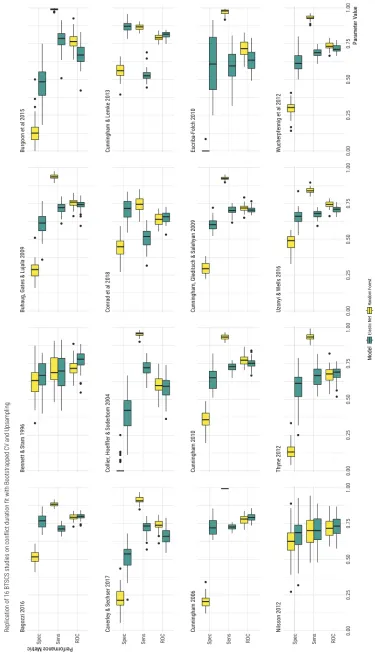
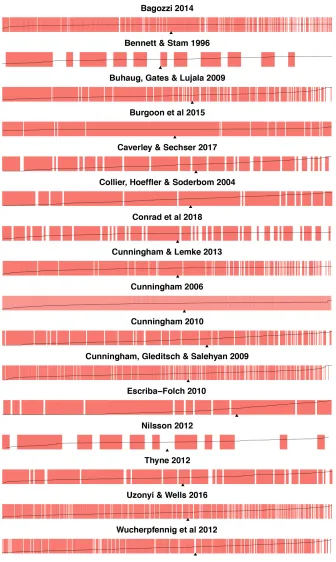
Chapter Four is the first of the three inter-linked empirical chapters. It consists of a quantitative assessment of the conflict duration literature. First, I replicate 16 studies using Binary-Time-Series-Cross-Section (BTSCS) data on conflict duration that include time-varying covariates recorded at yearly intervals. Next, I run various feature selection algorithms to identify which covariates are highly predictive. Then, I run logistic regression, elastic net, and random forest models using out-of-sample cross-validation to see whether feature selection and predictive modelling findings overlap. Finally, I conclude with a list of top predictors of armed conflict duration.
Chapter Five offers the first machine learning application to conflict duration using data that includes both civil and interstate wars. I build on the Cunningham and Lemke (2013) study, to which I add the most predictive variables identified in Chapter Four. For this purpose, I select six machine learning algorithms using a distance-metric that maximises model diversity. Next, I fit linear and meta-model ensembles of the aforementioned models. Finally, using the state-of-the-art Keras infrastructure running a TensorFlow back-end, I employ deep learning to capture the complex non-linear interactions between the covariates.
of the Sierra Leone Civil War. The first section of the chapter focuses on the most robust findings of Chapter Five. Using the Local Interpretations of Model-agnostic Explanations (LIME) framework, I unpack the ‘black box’ findings of the complex machine learning algorithms. Doing so enables me to provide directionality of the results, making them more interpretable. In the second part of the chapter, I provide five pathways that can shift the material capabilities of an actor beyond the large-n findings.
Finally, Chapter Seven provides the conclusion of the project. First, I summarise the empirical findings of the predictive modelling enterprise. Next, I discuss the forecasting performance of the models. As the field moves towards a more predictive direction, it is important to provide performance metrics to which future work can be benchmarked against. I conclude by offering direction for future research and the need to collect more inclusive data to avoid empirical bottlenecks that can be caused by theory and tradition.
1.4 Contribution
Overall, this project makes three explicit contributions to the conflict literature. First, on a theoretical level, I provide a general theory of conflict duration. This conflict type-agnostic framework captures the commonalities of power projection that apply to both state and non-state actors by shifting the focus on actor capabilities. The proposed framework expands the mainstream bargaining approach to war by making it less prone to certain theoretical blind spots such as perpetual conflict and total war. A model built on material capabilities and constraints on power projection helps bound the theoretical implications of failed bargaining.
identifying the most consistently accurate predictors of conflict duration. I find that factors usually included in models as controls—democracy, GDP per capita, population, ethnic fractionalisation—have immense predictive power in both types of conflict. Two, I enrich the only existing combined dataset (featuring both types of war) by adding 20 more covariates to the original Cunningham and Lemke(2013) study. Doing so will allow other researchers to identify further variables that are robust to conflict type, as well as paving the way for replicating and expanding on the findings of this project.
Taken together, a general theory of conflict duration tested on a combined dataset answers the question of whether there are commonalities in conflict that can be captured without categorising wars. A unitary approach to modelling war duration reveals that instead of binning conflicts into binary types and studying them separately, one can treat actor capabilities on a continuous scale and investigate them in unison. The implication is that actors with similar material and projection capabilities—regardless of whether they are state or non-state—also do behave similarly. This opens up new avenues for the unitary forecasting of conflict onset, duration, and termination.
Chapter 2
Theoretical Framework
2.1 Introduction
Why do some wars last longer than others? Further, to what extent do structural factors—absolute baseline material capabilities and their relative projections—govern armed conflict duration? In an attempt to answer these questions, I develop a general theory of conflict duration. I focus on three parameters of longevity: material capabilities in conjunction with non-physical (e.g. politics) and physical (i.e. geography) constraints that act upon them. I conceptualise material capabilities as a ‘resource pool’ (i.e. military capital) that can be spent on power projection. In other words, I model conflict duration as a function of the actors’ sustainability of force projection.
Doing so allows me to put forward a general theory of duration that is applicable to and testable in both interstate and civil war settings. Most features differentiating civil wars from interstate conflicts can be attributed to differences in material capabilities.1 Further, it extends the applicability of bargaining theory
to duration studies by going beyond the established information asymmetry and credible commitment problem frameworks: a duration model built around projected material capabilities alleviates some of the existing theoretical blind spots of the bargaining approach (i.e. perpetual conflict, total war) to war.
The great temporal variation found in war has not escaped the scholars of conflict. From a bargaining perspective,2 the rationalist arguments for why some wars last
longer mirror their explanations of war occurrence: information failure, credible commitment problems, and issue indivisibility (Fearon,1995). The informational approach posits that rational actors may go to war as long as they have incentives to misrepresent their own strength, or when the actual power distribution is not common knowledge. This type of unilateral miscalculation, or mutual optimism, is cited as the main reason for why parties go to war (Fey and Ramsay, 2007;
Slantchev and Tarar, 2011).
Fighting loses its informational value once the belligerents agree on the actual distribution of power (Slantchev, 2003), which then leads to a negotiated outcome. Assuming wars erupt because of information issues, and recurrent fighting rectifies information asymmetries by offering non-manipulable3 evidence
from the battlefield, the rationalist theory postulates that actors are better off settling as soon as possible after the actual power distribution is known by all parties involved (Powell, 2004). In other words, they should not make the same mistake twice: at least one party has already miscalculated its chances and decided to wage a costly war instead of settling (Powell, 2006).
Consequently, one would expect an empirical examination of war duration to highlight this learning mechanism at work. However, when applied to protracted conflicts, the information failure explanation gives a skewed reading of history:
defeated state actors (post-WWII) keep their army intact (Walter,1997).
2The conceptualisation of conflict as a bargaining problem can be traced back to Schelling (1960). SeePowell(2002) for a survey of formal approaches to bargaining.
After several years of fighting, both sides have gathered enough information regarding their opponents’ resolve and capabilities, but the fighting rarely ends afterwards (Powell, 2006). This observation has led to the view that civil wars are typically driven by problems of credible commitment (Fearon, 2004). Commitment issues arise when parties prefer a settlement that is beneficial to both, but they cannot credibly commit to uphold the agreement as the powerful side will have future incentives to renege on the terms of the deal once it has been signed.
The scholarly investigation of commitment problems in war has led to a multitude of explanations in the literature. Fearon (1995) provides three: pre-emptive war, preventive war, and conflict over issues that affect future bargaining power.4
According to Fearon, either the winning or the losing side can be the instigator of the commitment problem.5 Similarly, Walter (2002) claims that commitment
problems arise because of the treacherous demobilization process that follows negotiated settlements, and agrees with Fearon that both sides can initiate the commitment problem.
Later studies further examine commitment issues in an attempt to pinpoint which faction is more likely to create the commitment problem. Svensson (2007) argues that there is a rebel-sided commitment problem: As the government6 is
a recognized international actor, formal talks with the previously unrecognised rebel faction will prompt the rebels to renege on the deal once their standing in the international arena is improved. In contrast, Powell (2012) asserts that state consolidation is the most likely exogenous shock to power distribution in civil wars, which suggests that the faction who controls the government creates the commitment problem.
4As Fearon himself readily admits, he does not claim to be first to draw attention to such mechanisms. Indeed, the foundations of both arguments can be traced back to the classical works ofBlainey(1973) andWaltz(1979).
The arguments put forth by Fearon and other leading rationalists have contributed greatly to our understanding of underlying conflict mechanisms. However, the rationalist literature on war still suffers from several critical shortcomings. First, on a theoretical level, although commitment issues explain how parties fail to locate a mutually-beneficial agreement ex-ante or during hostilities,7 they do not
tell us much about how conflicts terminate endogenously. With the exception of attrition as a military strategy (Bennett and Stam, 2009; Langlois and Langlois,
2009), solutions to commitment issues usually involve the introduction of some exogenous factor into the equation. For example,Walter(1997) posits third-party guarantees can alleviate such problems by acting as a commitment device. While she offers empirical support in favour of her theory, it does not explain how conflict parties can overcome commitment problems by themselves.
More problematic is the hidden implication of perpetual conflict. If commitment issues are indeed so salient, actors only have two options once a conflict is under way: termination via complete annihilation of the opponent or suffer a never-ending war.8 This deduction is again at odds with the empirical track
record: 55% of all interstate wars (Walter, 1997) and 40% of all civil wars (Hartzell and Hoddie, 2007) end in negotiated settlements. Theories based on commitment issues thus fail to inform us about how nearly half of all conflicting parties eventually find a way to credibly commit to peace, nor do they shed light on how conflict duration is affected by this process.
Moving from theory to empirics, even when an effort is made to integrate conflict termination in the theoretical framework, it has only been tested in civil war settings. More specifically, the scholarly literature focuses on why some civil wars last longer than others.9 The question of why civil wars as a whole last longer
7For a study on whether war is still inefficient ex post, seeChiozza and Goemans(2004). 8Wagner (2000) addresses this theoretical drawback of relying on commitment problems by differentiating between ‘absolute war’ (war-in-theory) and ‘real war’ (limited wars that we usually observe in reality). With that said, the formation of the conceptual divide stretches back to Clausewitz’s seminal workOn War (Clausewitz,1832).
than interstate wars, however, appears to be understudied. Only most recently, such an attempt has been made byCunningham and Lemke (2013).
A theory build around baseline material capabilities and their limited projections, by design, less prone to extreme logical conclusions such as perpetual conflict or total war. Power projection in this context can be conceptualised as usage rate, with the baseline material capabilities acting as the main resource pool.
War-as-attrition approaches in many scientific fields mimic this logic: animal contestation in biology (Bishop and Cannings, 1978), firm competition in economics (Bulow and Klemperer, 1999), and World War II tank warfare in operations research (Peterson, 1967). The main commonality across all these studies is the winning strategy—attrition warfare emphasises the gradual wearing down of the opposition via sustained casualties.
Higher usage rates, unless coupled with high baseline material capabilities, indicate shorter conflicts on average. In contrast, low usage rates even with moderate material capabilities can be sustained for longer periods of time. Certain edge cases—e.g. the current (legal) status of war between North Korea and South Korea since the 1953 armistice—will still be predicted as protracted conflict due to the infinitesimal usage rates and massive capabilities on both sides.10 However, a capability-spending model makes bounded predictions for all
cases of armed conflict (both interstate and civil) without relying on exogenous factors. In the next three sections, I make a case for why we should tackle conflict from an unitary perspective; posit a general duration model of limitations by extending the bargaining approach; and outline empirical expectations of such a model.
2.2 Bifurcated Study of War
Existing models of conflict are bifurcated on the basis of theory-driven war ‘types’ (Cunningham and Lemke, 2013). Conflict scholars formulate exclusive theories
and perform separate empirical tests depending on whether we study interstate or civil wars. Case in point, a common way of motivating a duration study is to provide descriptive statistics on conflict duration stratified by type (see Fearon,
2004). However, once it is established that civil wars (either on average or in the extreme) last significantly longer than interstate wars—a well-established empirical fact—the authors then proceed to limit their analyses to civil wars only.
By limiting our analyses to certain subset of wars, however, we lose the opportunity to develop general theories of conflict. This has implications in both domains—theoretical and empirical. On theoretical grounds, we develop frameworks aiming to explain the temporal variation found in civil wars. Empirically, we only test our theories within the type of war we study. In other words, we have no way of knowing whether they will hold across war types. Indeed, if there are vast differences between interstate and civil wars, we should not necessarily expect that the findings will hold. On the other hand, if we had empirical evidence showing determinants of long civil wars do not overlap with that of interstate wars, this would make a strong case for the justification of the separate study of wars.
to interstate wars rather than small-scale civil wars? It is difficult to answer such questions because we consider them categorically different phenomena.
Instead, civil wars became the dominant focus as they possess a higher risk of running into commitment problems for a multitude of reasons in the literature. For instance, Walter (2002) suggests that the duration of civil wars can be drastically shortened if credible and potent third-party intervention is guaranteed. Svensson (2007) provides empirical evidence that the commitment problem caused by the rebel groups can be alleviated when mediators are biased in favour of the government. Yet, as stated above, both studies concern themselves only with a subset of all wars, rendering their findings incommensurable to the literature at large.
In sum, in the past two decades, the rationalist literature on war longevity is built upon civil war, both theoretically and empirically.11 Commitment problems have
come to be associated with civil wars to a degree that they are seldom applied to interstate wars, which is problematic. We rarely discuss deploying peacekeepers or sending mediators to alleviate commitment problems in interstate wars as we would in similar civil war settings.
To give an example, the US War on Terror has exceeded the median duration of interstate wars by tenfold, and the power distribution between the US and the Afghan Taliban has been common knowledge to both parties for many years. They would be better off if they located a mutually beneficial agreement, which always exists given the costs of fighting. The obstacle then, one might argue, is the inability to credibly commit to upholding the terms of such a settlement.12 Yet,
the conflict between the US and Taliban has not been labelled as a commitment failure in the literature, even after when Taliban opened a short-lived ‘diplomatic’
11A curious development, given that the initial theorisation that led to the formation of concepts such as information failure and commitment problem focused solely on state actors and interstate wars. For example,Fearon(1995) does not mention civil wars or non-state actors once in his seminal article.
office in Qatar.13
Altogether, the absence of empirical validation14 relating to war duration begs
several critical questions: What is the true nature of the relationship between the longer duration of civil wars and commitment issues? How do parties eventually overcome commitment problems and terminate hostilities? Is it even feasible for interstate actors, such as the most powerful ones like the US, to commit to war for decades? Do civil wars last longer than interstate wars because domestic opponents are somewhat less credible than their international counterparts? Or is it that civil wars are characterized by commitment problems because structural factors constraining the longevity of interstate wars do not apply fully to civil conflict?
2.3 A Unitary Framework
To this end, I provide a unitary model of conflict duration. The main motivation behind this undertaking is to unpack—both theoretically and empirically—what constitutes the variation in civil war duration and make those factors the main parameters of the model. Put simply, I aim to identify the structural determinants of conflict duration. Doing so gets rid of the notion that wars have unique characteristics depending on whether there is zero, one, or two state actors involved in it (Cunningham and Lemke, 2013). Instead of categorising conflicts into two based on whether ‘Side B’ is a government actor or not, I take conflict as it is and let the actor parameters (capabilities) dictate the outcome (duration).
The rest of the chapter is structured as follows. First, I offer a model of 13Taliban and Afghan officials hold ‘reconciliation’ talks in Qatar,” The Guardian, May 2, 2015. Accessed May 5, 2015, http://www.theguardian.com/world/2015/may/02/ taliban-and-afghan-officials-hold-reconciliation-talksin-qatar
constraints that acts as a unitary model of armed conflict duration inspired by the standard rationalist model of conflict bargaining. The unitary nature of the proposed framework is based on the idea that one should be able to draw on the expanded civil war literature to identify the most important variables of both types of conflict. The implication is that if the process is really unitary—the underlying mechanism is structurally similar for both interstate and civil wars—the established findings from one domain should transfer to the other. The general model is characterised by three main components: limitations on physical ability, commonly thought as material capabilities of an actor; limitations on the use of such power, as political constraints on the head executive; and the loss of strength gradient, the waxing and waning of military force as it is projected over distance. Finally, I conclude by making explicit the empirical expectations borne out of the proposed theoretical framework.
2.3.1 A Model of Limitations
In this section, I parameterise a general theory of conflict duration. As the idea is to build a framework that does not rely on categorical labels such as interstate or civil war to capture the temporal variation, the theoretical parameters are designed to proxy the underlying commonalities between the two types of war.
General theories are important in empirical domains that rely on cumulative progression. International relations as a discipline also heralded the imminent unification. David Lake provided the following conjecture on the interstice of international relations and internal conflict as early as 2003 (Lake,2003, pp. 81):
Nonetheless, considerable progress has been made.”
Fifteen years later, we are not any closer to a general theory of conflict. Even though considerable progress has been made since 2003—both in our understanding of conflict dynamics and conflict data collection efforts—these innovations have remained exclusive to the type of conflict under scrutiny. To this end, I utilise the classic rationalist framework of bargaining space (Fearon,
1995) and expand on it to provide a general model of conflict duration. Figure
2.1 illustrates the conventional bargaining space approach demonstrated in a conflict dyad.
For simplicity, assume a one-shot game in which two conflict parties, denoted here as A and B, have well-defined preferences over the division of an issue (for example, a disputed territory). Both actors prefer to control all the territory, as this would maximise their gain. Without loss of generality, projected on a single dimension and bounded in respect to [0,1], the ideal point for A is all the way towards 1; conversely, B’s ideal point is located at the very far left at 0. The division of the issue is determined according to the outcome of the contest q—representing war—which could be actual or expected. If the actors choose to fight over in order to alter this division, they incur costs a and b, respectively. As such, their net gain (as opposed to settling) obtained by fighting becomes q−a for A and q+b
for B.
Figure 2.1: Bargaining space, as illustrated in Lake 2003. Settling is always preferable to fighting given the costs associated with war.
Thus, even though one side becomes more powerful and the old status quo (q) is no longer satisfactory, both parties still have an incentive to settle rather than wage war.
The rationalist bargaining space approach can be transformed into a duration framework by disaggregating the distribution of capabilities p into separate parameters. Indeed, many earlier interstate duration models have implicitly utilised this approach (Wittman, 1979; Morrow, 1985; Vuchinich and Teachman,
1993; Stam, 1996;Bennett and Stam,1996).
The main assumptions of such frameworks are as follows. Once a conflict is under-way, rational utility-maximising leaders periodically make a decision to whether continue fighting or to settle. The conflict ends when no actor chooses to fight in a given period. The decision to terminate fighting is conceptualised as a function of expected benefits and costs. Different types of actors have different material—and even political—capacities that might affect their cost-benefit calculus. It follows that the duration function can be modelled using parameters that capture the actors’ abilities to obtain war benefits and absorb accumulating costs of conflict.
Figure 2.2 offers a simple demonstration of this concept. Recall that in Figure
Figure 2.2: Conflict duration as a function of multiple-round bargaining.
drive home the implication that given the costs of fighting, there always exists a mutually-beneficial agreement—even in the case of power shifts such as q → p. However, these shifts need not happen instantaneously. Instead, significant changes affecting the power distribution in a dyad take place over time.
Assume q represents the distribution of power at onset and p denotes the configuration at the time of conflict termination. In other words, belligerents start fighting based on the information (i.e. power parity) revealed by q, and cease fighting when the information is updated to p. Thought this way, the duration of a dyadic conflict becomes a function of the length of the iterated bargaining game between two players. For a conflict dyadi, such phenomena can be modelled as
Based on this formulation, the function Ωi maps the two crucial states of war—onset and termination. Duration, then, becomes the length of time it takes for this state transformation. As the success of bargaining depends on credible power projection, the quantity (and the perturbations in such capacity) of force used—i.e. applied power—should act as a proxy for the underlying process.
In the next three subsections, I provide the parameters of this general duration model function Ω. The scope of the theoretical components is not constrained to those borne out of the bargaining literature. Instead, I cast a wide net to identify empirical regularities in the conflict literature at large. If these determinants of conflict duration are truly transcendent, one should observe their manifestations in both civil and interstate wars.
I identify three main components proxying the cost-benefit calculus of rational decision-makers: baseline material capabilities (population, troop size), non-physical (e.g. leader characteristics, issue salience) and physical (i.e. logistics, geography) limitations on power projection. Each component acts as an umbrella category that brings together a multitude of empirical findings from the civil war literature. Next, I provide a real life example of the War of the Triple Alliance as a stylised illustration of the proposed framework. Finally, I highlight the expected directionality of the empirical findings of such a model and how it can be tested using a predictive modelling framework.
Figure2.3 demonstrates the generation of the force use as a function on material capability subject to limitations. The baseline material capabilities of an actor is denoted by γ. There are two possible constraints on this baseline; politics (non-physical)α and those relating to the nature of power projection (physical)β.
adopted in the rationalist literature. Below, I unpack the main determinants of power projection as they relate to conflict duration Ω.
2.3.2 Material Capabilities
The first component of the general model encapsulates physical capacity to use force. This is the broadest category of the model, stretching from absolute and relative capabilities on one side of the spectrum to natural resources and other exploitables on the other.15 This is not surprising; the study of power is often
referred as the crux of international relations (Kennedy, 1987).
The fighting capabilities of the rebel organisations are found to affect civil war longevity. States are often unable to achieve a decisive victory against weaker rebel groups, as they often choose to engage in irregular warfare. In contrast, stronger groups are found to be more likely to receive concessions from the government (Cunningham et al.,2009;Lujala,2009;Thomas,2014), which results in relatively
shorter conflicts.
Access to lootable natural resources (Stedman, 2001) as a means of increasing fighting capacity (Ross,2004)—as well as providing a different set of incentives for the belligerents other than achieving military victory (Addison et al., 2002)—has been heavily studied since the earlier debates on greed vs. grievance (Collier and Hoeffler, 2002, 2004). Hydrocarbons16 (Fearon, 2004), gemstones (Ross, 2004;
Gilmore et al., 2005; Lujala, 2009), drug cultivation (Lujala, 2009), contraband (Fearon, 2004), primary commodity exports (Doyle and Sambanis, 2000), and smuggling (Conrad et al.,2018) are common independent and sometimes control variables included in civil war duration studies. Finally, natural resources may also aggravate existing commitment problems between the government and the rebel forces (Walter, 1997; Wagner, 2000).
15SeeHendrix (2010) for a sensitivity analysis of various definitions and operationalisations of state capacity.
Material capabilities can be enhanced through external interventions (Elbadawi and Nicholas,2000;Balch-Lindsay and Enterline,2000;Regan,2002;Cunningham,
2010; Escribà-Folch, 2010). However, it is argued that its not the sanctions themselves, but the military force that usually accompanies them that creates the desired effect (Pape, 1997, 1998).
Moving the focus from non-state actor capabilities to that of state-actors, one of the most well-known power proxies in the literature is the Composite Index of National Capability (CINC) score (Singer, 1972). The CINC score of a state consists of six indicators of material capability: total population, urban population, military expenditure, military personnel, iron and steel production, and energy consumption. The six components are measured yearly in units relative to the system total, while the composite index score itself is the average of six components. In other words, they are indicators of relative material capabilities. However, the CINC score by itself or as a ratio has yet to show much significance as a reliable predictor in the literature (Maoz, 1983; Carroll and Kenkel, 2016).
In contrast, certain relative material capability indicators regularly do turn out to be statistically significant predictors of war duration. Population ratio (Vuchinich and Teachman, 1993; Hegre and Sambanis, 2006) and the balance of forces17 (Bennett and Stam, 1996, 2009; Nilsson, 2012) are commonly cited
as important covariates. Furthermore, in some cases absolute versions of the aforementioned variables—total population (Cunningham et al., 2009), geographic size (Buhaug et al., 2009), and total troop size (Bennett and Stam,
1996)—are found to be influential factors pertaining to conflict duration. Finally, military technology—such as the questionable effectiveness of conventional armies against irregular warfare (Lyall, 2009,2010), the nullification of air-superiority in certain conflict settings (Kocher et al., 2011; Allen and Martinez Machain,2017), and the efficacy of combined warfare (Caverley and Sechser, 2017)—also affect
the longevity of violent conflict.
Military strategy and ‘technologies of war’ (Balcells and Kalyvas,2014)—conventional, irregular, and symmetric non-conventional—also hold explanatory power in the literature. Bennett and Stam (1996) find that the interaction of strategy (maneouver, attrition, and punishment) and doctrine (offensive or defensive) is a strong predictor of interstate war duration, a finding that is also replicated by
Nilsson (2012). Balcells and Kalyvas(2014) show that civil wars characterised by irregular (i.e. guerilla) fighting last longer than conventionally-fought civil wars.
However, I do not explicitly include strategy in the theoretical model as a main component. A general model is foremost focused on the core causes, not by-products. One of the commonly cited differences between the two types of war is that some civil wars are more likely to be fought in an irregular fashion,18 even
though there are cases of irregular interstate fighting as well; e.g. the Vietnam ‘quagmire’ (Krepinevich, 1986). Such, I expect the aforementioned material capability variables and their interactions to capture the empirical exposition otherwise explained away by technologies of war.
2.3.3 Non-Physical Constraints
The second component of the general model is the effect of non-physical constraints on the use and application of force. If material capability is conceptualised as force, non-physical constraints can be thought as a moderator. In other words, the latter can dampen or enhance the former. There is a wide range of factors that can be consolidated under this heading; the next three sub-sections briefly summarise some of the most commonly studied variables.
Politics
Regime type is one of the most-studied variables of conflict (Maoz and Abdolali,
1989; Maoz and Russett, 1993; Russett, 1994; Filson and Werner, 2004). Specifically, democracies are shown to be more pacific (Benoit, 1996; Weeks,
2008) than their autocratic counterparts when studied dyadically;19 however
the methodological validity of the so-called democratic peace findings is now challenged (Dafoe, 2011; Dafoe et al., 2013) or some of its explanatory power further unpacked into pre-existing socio-economic factors (Hegre,2014). Recently, more nuanced parameters than categorical regime type are generated for the study of conflict. Political constraints is a CINC-like composite index that aggregates a multitude of political pressures on the head executive (Henisz,2017). As the use of military force in a conflict is a top-down decision, we should expect regime type and political constraints to be important predictors of duration.
In bargaining, the number of veto players (Tsebelis and Yataganas,2002) is shown to prolong civil wars by acting as a barrier to peaceful settlement (Cunningham,
2006). In the same vein, the number of actors in a conflict is also widely included in duration models (Cunningham et al., 2009). Internal cohesion of rebel groups (Elbadawi and Nicholas, 2000;Collier, 2000b; Bakke et al., 2012) as well as their fragmentation (Driscoll, 2012; Pearlman and Cunningham, 2012; Akcinaroglu,
2012; Fjelde and Nilsson, 2012; Brenner, 2015) can alter the number of conflict parties drastically. It must be noted that even though conflicts with more actors might run into coordination problems and thus influence war duration through executive decision-making, they can also work by affecting the material capability equation of the conflict—it is included here for theoretical coherence.
Societal Factors
The role of ethnicity is another important factor in conflict studies (Horowitz,1985;
Licklider,1995;Kaufmann,1996,1998;Rose,2000;Van Evera,2001;de Rouen Jr and Sobek, 2004;Fearon, 2004; Kaufman,2006;Cunningham et al.,2012). With
that said, ethnic diversity or ethnic fractionalisation are not found to be significant predictors in various studies at the rebel-organisation level of analysis (Collier,
2000a; Fearon, 2004; Collier et al., 2004b; Cunningham, 2006; Brandt et al.,
2008; Cunningham et al., 2009; Cunningham, 2010).20 However, Wucherpfennig
et al. (2012, p.111) empirically show that “ascriptive ethnicity and state-enacted exclusion along such categorical lines” indeed do lead to longer conflicts.
Leader Characteristics
Finally, leader characteristics can also greatly influence conflict dynamics (McGillivray and Smith, 2000, 2004; Chiozza and Goemans, 2004;Wolford, 2007;
Gibler, 2008). Studies on leader tenure (Thyne, 2012), replacement (Tiernay,
2015;Weisiger,2016), culpability (Prorok,2018), and previous combat experience (Fuhrmann and Horowitz, 2014) show that leader characteristics and their priors (i.e. information) can have an effect on termination and duration dynamics.
2.3.4 Physical Constraints
The final component of the general model pertains to power projection, distance, and geography. If the non-physical component can be thought as a possible set of constraints on the use of force via ‘soft’ means (e.g. decision-making), this heading covers factors capturing the ‘hard’ constraints on existing material capabilities caused by its projection over distance.
more capable actors can project further due to their higher baseline capabilities. Distance is cited as the most punishing penalty on power projection (Russett and Oneal, 2001). Further, government investment in power projection capabilities is found to help explain the historical polarity in international relations (Markowitz and Fariss, 2018).
Even though it was developed with state actors in mind, the LSG framework has been applied to civil wars as well. Buhaug (2010) finds that when the government possess high material capabilities, conflicts take place far away from the capital. Ruggeri et al. (2016) study where UN peacekeepers are deployed within the countries they have been sent. Finally, Tollefsen and Buhaug (2015) explain how various dimensions of inaccessibility influence the risk of localised conflict.
Furthermore, distance can be thought as a medium that can create or break power parity between actors. For instance,Gartzke and Braithwaite (2011) show that violent conflicts are more likely to occur at proximities where both states’ capabilities are roughly equal to one another after applying a penalty for distance. Coupled with the above, we should expect distance and proximity indicators to hold predictive power on conflict duration as a modifier of material capability.
Various other impacts of geography on conflict are also well-studied. Terrain characteristics—such as dense forests and mountains—can act as another force multiplier for material capabilities (Fearon and Laitin,2003;Buhaug et al.,2009). Research shows that conflicts last significantly longer when the rebel group operates in close proximity to remote international border areas, which may allow them to regroup outside the grasp of the government forces (Buhaug et al., 2009;
2.3.4.1 The Paraguayan War 1864-1870: An Example
This calculus can be seen on display during the Paraguayan War 1864-70. Also known as the War of the Triple Alliance, named after the opposing bloc consisting of Brazil, Argentina, and Uruguay fighting against Paraguay, it is the most devastating war in the history of South America (Bethell,1996). Several theories have been posited on the causes of the war; namely the colonial aftermath of the centuries long Portuguese-Spanish power struggle in Latin America (Whigham,
2002), the contested territories surrounding the fertile Platine basin that had already led to the Platine War (1851-52) in Uruguay (Box, 1967), and the conflicting interests of the regional hegemons (Brazil and Argentina) and the countries that they exercise influence over (Paraguay, Uruguay) (Centeno, 2002). Figure2.521 shows the contested territories in the region and the configuration of
the belligerents just before the onset of the war.
Further, the distribution of material capabilities across actors displays great variation. Brazil (10 million), Argentina (1.5 million), and Uruguay (200-350,000) were up against a total population of 300-400,000.22 However, Paraguay actually
enjoyed military superiority at the beginning of the war, and they were the initial aggressors (Hooker, 2008). With a standing army size estimated to be in the range of 28,000 and 57,000 plus about 25,000 reserves, virtually the whole male population of Paraguay mobilised for war (Bethell, 1996). The combined might, in terms of military troops that can be sent abroad,23 of Brazil
(17-20,000), Argentina (10-15,000) and Uruguay (5,000) was at best a match for Paraguay, but probably inferior. The Paraguayan army was also better-trained
21Vectorised map by Hoodinski, distributed under a CC BY-SA 3.0 license.
22Population estimates of Paraguay prior to the war is hotly contested in the literature. This mostly stems from the fact that initial reports put the total population of Paraguay about 1.3 million (Chartrain, 1972), making the post-war loss ratio closer to 90%. Later studies (Reber, 1988,2002) corrected the pre-war population estimate to a more conservative 300-400,000; which is line with other studies claiming Paraguay lost about half of its population in a span of five years (Kleinpenning,2002).
and better-equipped than its neighbours at the onset (Clodfelter,2002).
After the initial Paraguayan offensive successes, however, the tide had quickly turned against them on the battlefield. More specifically, after the defeat of the Paraguayan navy by Brazil at the Battle of the Riachuelo taking place at the Paraná River on June 11, 1865, any threat to Argentina from Paraguay was neutralised. In the next three years, the Allies pushed towards interior Paraguayan territory, although opposition put up by Paraguayan soldiers greatly hindered their progress (Hooker,2008). The Allied army finally entered Asunción in January 1869. Nevertheless, the end of the war did not come. Known as the ‘Campaign of the Hills’, the defeated Paraguayan president López retreated to the mountains where he led 9,000 resistance fighters against the occupying Allied forces (Esposito and Rava, 2015). The war finally ended when López was killed in the Battle of Cerro Corá on March 1, 1870.
The aftermath of the war was especially devastating for Paraguay. It is estimated that the immediate post-war population of Paraguay was around 150–160,000; of whom only 28,000 were adult males (Whigham and Potthast, 1999).24 Still,
even the estimated loss of 50-70% of their population puts Paraguay above Germany or Russia during World War II in terms of sheer magnitude, and it would take Paraguay 50 years to reach its pre-war population again (Clodfelter,
2002). Finally, Paraguay was also forced to cede 55,000 square meters of land to the victorious Allies, setting back their subsequent post-war reconstruction even more (Bethell, 1996).
Bartolomé Mitre, the Argentinian president and the supreme commander of the Triple Alliance forces, famously quipped that the Allies will be in Asunción in three months25 (Rosa, 1968). However, it took four years for the Allies to
24It should be noted that at the time, infectious disease was as, if not more, deadly than the enemy itself (Clodfelter,2002).
25“…My fellow countrymen, I promise you: in 24 hours we shall be at the barracks. In two
enter the Paraguayan capital and another year fighting against the guerilla warfare campaign put up by the loyalists. How come it took the Allies this long to subjugate Paraguay, a landlocked country—sharing vast borders with both Argentina and Brazil no less—slightly larger than Germany with a population of 400,000? The following account sheds some light on why the Triple Alliance—which was essentially reduced to Brazil after the first year of the war—had to fight a longer than anticipated war in which they enjoyed superiority in both material capability and military power for the vast majority of the conflict (Bethell, 1996, pp. 8):
“…Brazilian governments faced enormous logistical problems, first organising, then transporting their troops thousands of kilometres either overland or by sea and up river, and finally supplying their troops. And breaking down Paraguay’s excellent land and river defence was not an easy task. But it is also true that Brazilian commanders demonstrated a high degree of strategic and tactical ineptitude. On the other hand, the Paraguayan troops, indeed the Paraguayan people, remained loyal to Solano Lopez and fought with extraordinary tenacity and in the end, when national survival was at stake, heroically. This, and the Allied determination to pursue the war to the bitter end, also explains why the war was so bloody.”
The limitations on power projection, as they were applicable to Brazil in the Paraguayan War, overlaps greatly with the existing theories on civil war duration.26 The effect of distance (Buhaug, 2010), terrain (Fearon,
2004), and geography (Buhaug et al., 2009) in general; the advantages obtained by having larger populations (Hegre and Sambanis, 2006), military personnel/rebel combatants (Cunningham et al., 2009), and strong central command (Wucherpfennig et al., 2012); and leader characteristics (Uzonyi and
Wells, 2016) and technologies of war (Balcells and Kalyvas, 2014) are shown to be influential factors affecting civil war duration.
More specifically, the components of the proposed power projection model as a duration framework can be directly observed in this conflict. Even though the Triple Alliance had possessed impressive material capabilities on paper, they were never able to mobilise them to a great extent. The enormous combined landmass of Brazil and Argentina, coupled with the manpower available to Brazil, provided the Triple Alliance many advantages against the much smaller and less populous Paraguay. However, most of these advantageous features could not be translated into battlefield success. Even though they had high-capacity, the Alliance saw their power projection drastically dampened by political and non-political constraints.
First, the political situation in both Argentina and Brazil was not conducive to power projection. As alluded earlier, the Argentinian president was not popular at home, and he was forced to maintain a large contingent of the army garrisoning the capital against a potential putsch. The effect of this was two-fold: