© 2017, IRJET | Impact Factor value: 5.181 | ISO 9001:2008 Certified Journal | Page 663
Brainwaves Signaling System during Accident
Shivam Garg
1, Nikhil Keswani
21
Student, Department of Mechanical Engineering
Sri Ramaswamy Memorial University, Delhi-NCR campus,
Delhi, India
2
Design Engineer Trainee, at The West India Power Equipments Pvt Ltd, Jagdishpur Industrial Area, India
---***---Abstract -
The main objective of this concept is to convertthe waves produced by our brain into incident detecting signal. Our brain is battery, a collection of approximately 80 billion batteries and this is due to neurons. Waves produced in our brain are produced regularly depending on our activities and situations we are tackling at that time. During any road accident on Highways, sometimes no one cares about it and many times could not contact to the family of the injured person. This concept works on the brainwaves, produced during accident or higher production of Beta waves and converting it to call signals via GSM/GPRS SIM900 Arduino circuit to inform the family of injured person automatically.
Key Words: Brain Waves, Brain potential difference, Electrodes, Transmitter/Receiver Circuit, GSM/GPRS SIM900 Arduino.
1. INTRODUCTION
At the root of our thoughts, emotions and behaviours is the communication between neurons within our brains. Brainwaves are produced by synchronized electrical pulse from masses of neurons communicating with each other. These Brainwaves can be detected using sensors placed on the scalp. They are divided into bandwidths to describe their function.
Brainwave speed is measured in Hertz (cycles per second) and they are divided into bands delineating slow, moderate, and fast waves.
1.1
Infra-Low (˂ 0.5 Hz)
Infra-Low Brainwaves (also known as slow cortical potentials), are thought to be the basic cortical rhythms that underlie our higher brain functions. Very little is known about infra-low brainwaves. Their slow nature make them difficult to detect and accurately measure, so few studies have been done. They appear to take a major role in brain timing and network function.
1.2
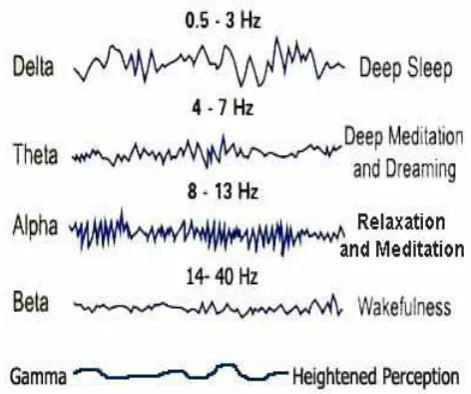
Delta Waves (0.5 To 3 Hz)
Delta Brainwaves are slow, loud brainwaves (low frequency and deeply penetrating, like a drum beat). They are generated in deepest meditation and dreamless sleep. Delta waves suspend external awareness and are the source of enthalpy. Healing and regeneration are stimulated in this state, and that is why deep restorative sleep is so essential to the healing process.
1.3
Theta Waves (3 To 8 Hz)
Theta Brainwaves occur most often in sleep but are also dominant in deep meditation. It acts as our gateway in deep meditation. It acts as our gateway to learning and memory. In theta, our senses are withdrawn from the external world and focused on signals originating from within. It is that twilight state which we normally only experience fleetingly as we wake or drift off to sleep. In theta we are in a dream; vivid imagery, intuition and information beyond our normal conscious awareness. It’s where we hold our ‘stuff’, our fear, troubled history, and nightmares.
1.4
Alpha Waves (8 To 12 Hz)
Alpha Brainwaves are dominant during quietly flowing thoughts, and in some meditative states. Alpha is ‘the power of now’ being here. Alpha waves aid overall mental coordination, calmness, alertness, mind/body integration and learning.
1.5
Beta Waves (12 To 38 Hz)
Beta Brainwaves dominate our normal waking state of consciousness when attention is directed towards cognitive tasks and the outside world. Beta is a ‘fast’ activity, present when we are alert, attentive, engaged in problem solving, judgment, decision making and engaged in focused mental activity.
© 2017, IRJET | Impact Factor value: 5.181 | ISO 9001:2008 Certified Journal | Page 664
way to run the brain, as it takes a tremendous amount ofenergy.
1.6
Gamma Waves (38 To 42 Hz)
Gamma Brainwaves are the fastest of brain waves (high frequency, like a flute), and relate to simultaneous processing of information from different brain areas. It passes information rapidly, and as the most subtle of the brainwave frequencies, the mind has to be quiet to access it. Gamma was dismissed as ‘spare brain noise’ until researchers discovered it was highly active when in state of universal love, altruism and the ‘higher virtues’. Gamma is also above the frequency of neuronal firing, so how it is generated remains a mystery. It is speculated that gamma rhythms modulate perception and consciousness and that a greater presence of Gamma relates to expanded consciousness and spiritual emergence.
Evoked Potentials
Evoked potentials or event-related potentials are significant voltage fluctuations resulting from evoked neural activity. Evoked potential is initiated by an external or internal stimulus. ERPs are suitable methodology for studying the aspects of cognitive processes of both normal and abnormal nature.
Our Activities and sudden incident plays very effective role for evoking local potential. When we are struggling with sudden incident situations, in our mind neurons speed up and the local potential touches its peak and the wave formation increases rapidly. Normally, our mind generate different waves of different frequencies but at the time of sudden incident, our mind starts generating very high frequency waves. This change in local potential can be used as signal to inform the family of a person.
2. Working
During driving a two wheeler vehicle (motorcycle), the driver is active, fresh and focused on the road but due to many factors sometimes incident may happen, which may result in accident. On highways when any accident take place, no one cares for it and it became very hard to make contact with the family of the injured person. People near the injured person, even try to contact the family but due to lacking contact details of the injured person it become impossible.
On this issue, our brainwaves and potential difference generated in our brain may play very advance role in order to get in touch with the family members. Our brain continuously generate waves of different frequencies depending on the situations we are facing. And when we are highly active at the time of accident or trying to protect our self from any accident, high beta waves are generated in the brain having
the frequency ranging (28 To 38Hz). A neuron is an electrically excitable cell that processes and transmits information through electrical and chemical signals. Due to this, there is a potential difference generated across our brain. As the brain became more and more active, more the information transmitted between the neurons and higher will be the potential difference.
The brain during relaxation time produces delta wave and theta wave. At the peak, when the mind is highly active start producing the Higher Beta brainwaves and the potential difference starts rising due to higher activity of neurons. This developed potential difference do not generated easily but only when we are highly concentrating and trying to escape or protect our self from accident during driving. Hence, this developed potential difference is enough to generate a signal that can send the information automatically to the family member regarding if there is any sudden incident that happen. Also, along with signal it will automatically send the location where the incident took place so, that it will be easy to get in touch with the injured person as soon as possible. The whole setup designed is new and the output results are very appreciative. When the brain produces Higher Beta waves, there is higher potential difference generated across the brain. Before any sudden incident, still there is potential difference but the magnitude and the strength is low. As any incident take place or we get highly active suddenly more information transfer between neurons take place and potential difference across our brain start rising. The potential difference can be measured by the electrodes and these electrodes are placed at five major location at right head side, left head side, fore head side, back head side and top (In rider’s Helmet).
As the electrode get electric signal, after that there is a diode that only allows the signal of higher frequencies 23Hz and more to pass through it. Only the signal of ranging 23Hz to 100Hz can pass through the filter applied in the circuit. After that the signal is amplified. The amplification of the signal is done to increase the magnitude and make it suitable to get better output for any load and device. This amplified signal is used as input for transmitter.
© 2017, IRJET | Impact Factor value: 5.181 | ISO 9001:2008 Certified Journal | Page 665
This ways getting in touch with the family at the time of anyincident take place become easy.
3. Description of components
3.1
Electrodes with conductive media
Electrodes read the signal from the head surface, amplifiers bring the microwave signals into the range where they can be digitalized accurately. In conductive media Electrode, the proper function are critical for acquiring appropriately high quality data for interpretation. Many types of electrodes exist, often with different characteristics basically, there are following types of electrodes:
- Disposable (gel-less, and pre-gelled types)
- Reusable disc electrodes (gold, silver, stainless steel or tin)
- Head bands and electrode caps - Saline-based electrodes - Needle electrodes
For multichannel montages, electrode caps are preferred, with number of electrodes installed on its surface. Commonly used scalp electrodes consist of Ag-AgCl disks, 1 to 3 mm in diameter, with long flexible leads that can be plugged into an amplifier. AgCl electrodes can accurately record also very slow changes in potential.
These electrodes are fitted on a cap, this cap is engaged with the rider’s helmet comfortably.
3.2
Amplifiers and filters
The signal ranges from 0 to 100 Hz and only selective region of voltage is required for the detection of any sudden incident, which ranges from 23 Hz to 60 Hz. Hence, a filter is introduced in the circuit in order to pass only certain bandwidth of potential difference through it. This filter only give route the potential difference above 23 Hz frequency before it there will be no output through it.
Now, the main works come for an amplifier. The signals need to be amplified to make them compatible with devices such as Transmitter/receiver or A/D converters. Amplifiers adequate to measure these signals have to satisfy very specific requirements. They have to provide amplification selective to the physiological signal, reject superimposed noise and interference signals, and guarantee protection from damages through voltage and current surges for both the rider and the vehicle.
Note that this will increase the load on rider’s helmet or may be uncomfortable but the location for small battery required can be fitted on the rider’s jacket.
Electrodes have the weight of 0.5-0.6 grams and cap is also light made up of cotton fiber. The filter has the weight of 0.8-0.85 grams and that of amplifier is 5-8 grams. Wiring weight can be neglected as very little wiring is required but the battery weight will be around 12-15 grams. Transmitter should have around 4-10 grams weight. The overall weight increase in around 30 – 35 grams only in the helmet.
3.3
Transmitter/Receiver
Transmitters and Receivers are at the heart of wireless communication. Radio stations, Television remotes, and even door bells, radio transmitters and receivers have a variety of applications.
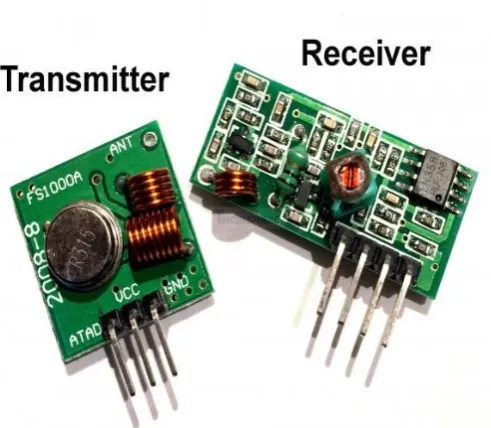
Here, a Transmitter is used in order to transmit the signal generated by the brain and these signals are transmitted in the form of radio waves. Transmitted signal is detected by the receiver, which is attached to Arduino system in the two-wheeler vehicle. The Range of Transmitter and receiver circuit varies according to quality of the circuit used but always use such a range that the circuit can detect the signals even some distance away from two-wheeler vehicle.
3.4
GSM/GPRS SIM900 Arduino
Now a days, GSM is used in all the projects for wireless data transmission or alerting and messaging system. GSM/GPRS SIM900 Arduino is a hardware with works on the commands given to it. It can make a call, send sms, send location and many more things according to the code feed in the Arduino system. It detects the signal if the signal and work on it.
In our concept the GSM/GPRS SIM900 Arduino is placed after the receiver system in the vehicle and there is a slot to insert sim card in the Arduino module. SIM900 is used because in India only the frequency range 900 MHz and 1800MHz works, in different countries different-different frequencies are used. The frequency list of different countries can be obtain from the internet.
Basic requirement for GSM/GPRS SIM900 Arduino are: - Arduino Uno Board
- Sim900 GSM module - Connecting wires - Bread Board
SIM900 GSM Module interfacing to Arduino module - GSM Module is powered using 12 Volts DC adapter. - Arduino is powered using USB cable/ Adapter. - 2nd pin of Arduino is connected to Tx pin in GSM
Module.
- Arduino GND is connected to GSM GND.
© 2017, IRJET | Impact Factor value: 5.181 | ISO 9001:2008 Certified Journal | Page 666
Codes that can be uploaded in the Module:}
void SendMessage( ) {
mySerial.print1n(‘AT+CMGF=1”) delay (1000)
mySerial.print1n(“AT+CMGS=\”+91xxxxxxxxxx\”\r”) mySerial.print1n(“I am in trouble!!! Got Injured” This will be sent at delay(100))
mySerial.print1n(Still in trouble contact me!! This will b send at delay(1000))
}
void ReceiveMessage( ) {
mySerial.print1n(“AT+CNMT = 2 , 2 , 0 , 0 , 0”)
Significance;
mySerial.print1n(‘AT+CMGF=1”); - Sets the module in text mode.
Delay(1000); - Delay of 1000 milli seconds.
Replace “+91xxxxxxxxxx” with the mobile no. delay(1000). mySerial.print1n(“AT+CNMT = 2 , 2 , 0 , 0 , 0”); - to receive sms.
The calling codes and Location sending codes are different and can be uploaded to the module together with by combining them all. All Arduino Module codes can be downloaded internet.
Booting the GSM Module!
- Insert an activated SIM card to GSM Module and lock it.
- Connect the adapter to GSM Module and turn it ON! - Now wait for some time (say 1 minute) and see the
blinking rate of ‘status LED’ or ‘network LED’ (GSM Module will take some time to establish connection with the mobile network)
- Once the connection is established successfully, the status/network LED will blink continuously every 3seconds.
Now the working of the GSM/GPRS SIM900 Arduino will start.
After the Module receives the signal it start working on the commands. The Module will itself call the contact number provided to it in coding and will send the link of location if we want it too by adding the coding. As a text message is send to the family saying “I am in trouble!!! Got Injured”. And second message saying “Still in the trouble contact me!” we can directly get in touch even if we are not able to tell them about our location or situation.
4. Future concept
- This concept can be used to inform directly to nearby hospitals also, by providing all hospitals detail and making online “hospital forum” of all hospitals. It will work on the same principle, only one thing will be added i.e., GSM/GPRS SIM900 Arduino will send an email to the Email-Id of the Hospital online forum provided in the codes with a link of the location, where the incident take place. This mail will confirm that he/she has got injured and the Hospital online forum will send a mail to all nearby hospitals by probing the injured person contact details and location.
Online Hospital forum will be made by registration of all the hospitals available in a particular country.
After this, the Hospital facility staff will contact to the injured person and will get in touch with him as soon as possible. Also the injured person contact detail will be uploaded to the Hospital online forum site at the time of installation of the whole system in the two-wheeler vehicles. At the time of incident the mail will be send by the SIM card inserted in Arduino module and this number could not be contacted till the person is having a microphone and speaker facility attached to the Arduino system.
Hence at the time of purchase, one contact no. will be provided to the seller. Who after getting it will upload to the online forum by providing the customer’s Number that will always be there with the rider, along with the Arduino SIM900 contact details. So, that hospital service can contact him.
[image:4.595.311.547.518.715.2]5. FEATURES
© 2017, IRJET | Impact Factor value: 5.181 | ISO 9001:2008 Certified Journal | Page 667
Graph 1- Brain potential difference v/s Time.Fig. 2- Electrode cap (inserted in the Rider’s helmet).
[image:5.595.311.557.351.565.2]Fig. 3- GSM/GPRS SIM900 Arduino System.
Fig. 4- Transmitter and Receiver System.
6. CONCLUSIONS
[image:5.595.35.287.382.611.2]© 2017, IRJET | Impact Factor value: 5.181 | ISO 9001:2008 Certified Journal | Page 668
REFERENCES
[1] Niedermeyer E, Lopes da Silva F (2004),
Electroencephalography: Basuc principles, Clinic Applications, and Related Fields, Lippincot Williams and Wilikins.
[2] The university of Sydney, Fundamentals of Biomedical
Engineering, Electoencephalogram, notes at
http://www.eelab.usyd.edu.au/ELEC3801/notes/Electr oencephalogram.htm
[3] Effects of Electrode
placement,http://www.focused-technology.com/electrod.htm, California.
[4] G. F. Knoll, Radiation Detection and Measurement (John
Wiley & Sons, Inc., New York, 1979).
[5] H. Seyfarth, A. M. Hassan, B. Hrastnik, P. Goettel, and W.
Delang, “Efficiency Determination for some Standard Typ Ge(Li) Detectors for Gamma Rays in energy Range from .04 to 11 MeV,” Nuclear Instruments and Methods 105, 301 (1972).
[6] Brekelmans and Johannes Hubertus Antonius, ‘LC
Oscillator, “ U.S patent 7,176,766, Aug. 8, 2003.
[7] B. neely, “RFID and Sensors Illustrate Art’s Impact on
People,”August 2009. [Online]. Available:
http://www.rfidjournal.com/article/articleviews/5170 /1/1/.
BIOGRAPHIES
My name is Shivam Garg pursuing B. Tech in Mechanical Engineering from SRM University, India. Having always been passionate about Motorsports, I am a part of College Formula Student Team and working as Powertrain & Drivetrain Lead engineer for last 3 years. Also I founded my Team Panthers Racing, designing and fabricating Electric bike.
Contact no. (+91)-8755760751
My name is Nikhil Keswani. I completed my B.Tech in the Automobile Engineering from SRM University, India. During my B.Tech tenure I founded my Team AeroX Motorsports, designing and fabricating Go Karts and Formula Race Car for various National Events. Lead the team as Captain and Race Driver for 3 years. Now I am working as a Design Engineer, at The West India Power Equipment (P) Ltd, India.