© 2016, IRJET | Impact Factor value: 4.45 | ISO 9001:2008 Certified Journal | Page 20
A Proposed Human Computer Interaction (HCI) Model Through The
Use of Computerized Speech Laboratory (CSL)
Dr. Rolou Lyn R. Maata
1, Dr. Severa Pagcaliwagan
21
Lecturer, Faculty of Computing Sciences, Gulf College, Muscat, Sultanate of Oman
2
Assistant Professor, Centre for General Education, AMA International University, Kingdom of Bahrain
---***---Abstract –
Modern world is incomplete without the active
use of technology, specifically the use of computers. Computers defined as a machine that takes instructions, perform computations and operations in order to meet the expected output of the users. Currently, there are huge numbers of computer applications being offered and used in the computer world. Speech recognition is widely used nowadays in the area of Education. With the help of this technology, students are able to communicate and study mode changed enormously. The computerized speech laboratory known as CSL is a software package that provides students and users an ability to record, play, analyze, process, display and store speeches in the so-called CSL system. In relation to this, the researchers examined how speech faculty members and students interact with the CSL considering the two factors: (1) CSL Design Interfaces (2) CSL hardware and software. The result of the observation was the basis for human computer interaction (HCI) model of the physical interface of CSL. Hence, the development of the model simply gives visualization of the user options and the interface responses to user action.
Key Words
: HCI, CSL design, HCI model
1. INTRODUCTION
Speech Laboratory nowadays is considered as one of the most effective tools or means for younger generation to practice their skills in speaking, listening, note-taking and other host skills. The use of Computerized Speech Laboratory (CSL) maximizes the student’s ability to communicate effectively and express his thoughts and ideas in a proper platform. There are various trainings and related activities conducted to improve communication skills. This technology gives student’s an opportunity to become speaker and effective communicators. Aims of computerized speech laboratory helps student’s develop their communication skills, deepen their God’s given talent through practical exercises and activities, and produce students to become an effective and competitive communicators.
AMA International University Bahrain offers degree programmes namely: Computer Science (BSCS), Engineering Informatics (BSEI), Mechatronics Engineering (BSME), International Studies (BSIS) and Business Informatics (BSBI). In order to strengthen the curriculum of the above-mentioned programmes, the university incorporated the use of Computerized Speech Laboratory (CSL) to simply enhance the capability of the students to communicate effectively. It is universally acknowledged that CSL technology can replace the traditional way of evaluating speeches of students.
The installed devices located in one of the computer laboratory rooms able to perform speech analysis of the voice samples that has been used for teaching and research. These samples serve as the basis for speech faculty members to evaluate the performance of their students inside the classroom. However, there is no clear indication that the users (faculty and students) are expert on the use of the CSL and its functions.
1.1 Statement of the Problem
This research mainly focuses on the development of a human computer interaction model through the use of Computerized Speech Laboratory (CSL).
Specific:
1. Does the interface design improve reading and speech experience of the users?
2. How do we measure effectiveness in different speech situations?
3. Does the interface decrease, increase or maintain level of accuracy?
© 2016, IRJET | Impact Factor value: 4.45 | ISO 9001:2008 Certified Journal | Page 21
1.2 Conceptual Framework of the Study
This research study is conceptualized to design a human computer interaction model based on the users’ responses and performances with the use of Computerized Speech Laboratory (CSL).
The framework is composed of two variables, namely: independent and dependent variables. The independent variables are the users’ activities on the system such as students’ presentations, teachers’ lectures and discussions wherein dependent variables are the set of variables classified as the evaluation of users’ experience through the use of CSL.
2. LITERATURE REVIEW
The researchers have found numerous literature and studies to strengthen the research study.
(Fakhreddine, K., et.al, 2008) discussed that “the growth in human computer interaction (HCI) field has not only been in quality of interaction, it has also experienced different branching in its history. Instead of designing regular interfaces, the different research branches have had different focus on the concepts of multimodality rather than unimodality, intelligent adaptive interfaces rather than command / action based ones, and finally active rather than passive interfaces.”
According to (Acharya, et.al, 2011) that “to achieve dependable, usable and well-engineered interactive devices in healthcare requires applied human computer interaction (HCI) research and awareness of HCI issues throughout the lifecycle, from design through to procurement, training and use”.
Human Computer Interaction (HCI) traditionally had a narrower focus, being “concerned with the design, evaluation and implementation of interactive computing system for human use and with the study of major phenomena surrounding them” (ACM SIGCHI, 1992, P.6).
(Grudin, 1990) has argued that Human Computer Interaction (HCI) underwent many stages, in fact, in early 1990’s it focused on a discussion between humans and the
computers are focused on a work setting. This was supported by the research conducted by (Norman, 1990) and (Suchman, 1990) that the main emphasis of usability was in the low-level of HCIissues that progressed to focus on tasks wherein a single user may interacts with a desktop computer in a work setting. The focus of human computer interaction is divided into three major design frameworks such as interaction design, community-centered design and socio-computing.
The concept that has become the focus on interaction design is the user experience. This simply describes how the product performs and how it is being used by the people in the community. As mentioned by (Jesse Garrett, 2003), “every product that is used by some has a user experience: newspapers, ketchup bottles, reclining armchairs, cardigan sweaters”. More specifically, it’s about how people deal with the product, how they feel with the product and what pleasure and satisfaction they are getting in using the product. It includes the overall impression of how perfectly good it is. Like for example, how smoothly a switch rotates or the sound of a click and the touch of list a button when pressing it. This is totally describes users’ experience and interaction with the device that the users are currently using.
Designing interactive products to support the way people communicate and interact in their everyday and working lives, is simply called interaction design. In other words, this refers to the improvement of user experiences on the ways how people will communicate, work, live, and of course how to deal with it. (Winograd, 1997) describes it as “designing spaces for human communication and interaction.” (Thackara, 2001) concluded that “the why as well as the how of our daily interactions using computers”.
There are many terms used to highlightof what you should design and how you should design it, such designing an appropriate user design namely: (software design, user-centered design, product design, web design, experience design and interactive system design).
The umbrella term for all these designs covering all aspects are included in an Interactive design. Ten years ago, many practitioners and designers described the ways on how they design their own interface or interactive system but nowadays they are promoting what they can improve in interaction design.
Voice user interface or speech interface refers to a person those talks with a system that has a spoken language application. Example, train timetable, travel planner, etc.
© 2016, IRJET | Impact Factor value: 4.45 | ISO 9001:2008 Certified Journal | Page 22
listen to the given interface rather than typing or writingyour message on the screen. There are many commercially available speech-based applications that are being used by organizations, corporations as well as institutions for educational purposes. Speech technology has an advanced application that can be used by people with disabilities including speech recognition word processors, page scanners, web readers and even speech recognition software for operating home control system.
Theoretically, speech interfaces become more sophisticated and accurate than the first generation of speech systems which was created in 1990s. The speech systemthat are well-known nowadays are much friendlier, more convincing and pleasant than the artificially sounding synthesized speech that was typically used in the early systems. In the field of business, one of the most popular uses of speech interfaces or speech recognition is for call routing.
The speech system follows a certain conversational mechanisms that enable people to coordinate their talk with one another, allowing them to know how and when to start and stop. There are certain rules to be followed, enabling people to know when to listen and when to speak. A cue is given when it is your time to speak or to stop talking. (Sacks et al., 1978) – who are famous for their work on conversation analysis – describe these in terms of three rules:
Rule 1: present speaker selects another speaker by asking an opinion, question or request. Rule 2: another person decides to start speaking Rule 3: the current speaker continues talking
The rules are definitely assumed to be applied in that order given above, so that whatever there is an opportunity for a change of speaker to occur then rule 1 is applied. If the listener to whom the question or opinion is being addressed doesn’t accept the offer to take the floor, then rule 2 is applied.
Another way in which conversation is coordinated and given coherence is through the use of adjacency pairs (Shegloff and Sacks, 1973). Utterances are assumed to come in pairs in which the first part sets up an expectation of what is to come next and directs the way in which what does come next is heard.For example, A may ask a question to which B responds appropriately. Sometimes adjacency pairs get embedded in each other, so it may take some time for a person to get a reply to their initial request or statement.
3. RESEARCH METHODOLOGY
The main focused of this study was to propose a human computer interaction (HCI) model that would help to assess and evaluate users’ responses and performances through the use of Computerized Speech Laboratory (CSL) located at one of the computer laboratories in the university.
In computer science, one of the most effective ways of evaluating the effectiveness of software processes is through the use of model methodology. The researchers used model methodology to understand the CSL system and used the designed model to evaluate and assess the CSL users’ performances. (Amaral, J., 2002) stressed out in his research paper that “the action of building a model, called modeling, is driven by the study that will use the model. There is no single modeling approach applicable to all systems. Hence, computer scientists build models that capture important aspects of a system”. With this, the researchers designed a model that effectively evaluates the users’ performances using CSL in terms of its user interfaces, hardware and software. .
Specifically the study used a combination of experimental and model methodologies. Experimental methodology was able to evaluate new solutions for the problems encountered by the users that helped them enhanced the whole process of interaction using computerized speech software. The results of the experimental method was considered the main input into the human computer interaction model of the CSL system. This model will surely be the solution of how the users should interact properly with the CSL system. (Fakhreddine, K., et.al, 2008) stressed out that “the actual effectiveness of a system is achieved when there is a proper balance between the functionality and usability of a system”.
4. INSTRUMENTATION AND DATA COLLECTION
Collection of data was conducted with the help of the faculty members from the Center for General Education (CGE) teaching speech communication for 2nd trimester, School Year 2015-2016. In addition, the researchers personally observed how classes being conducted using computerized speech laboratory and how users’ interact with the system.
5. RESULTS AND DISCUSSIONS
© 2016, IRJET | Impact Factor value: 4.45 | ISO 9001:2008 Certified Journal | Page 23
The model presented in this study notably contributed tothe field of human computer interaction that represents voice analysis and real evaluation of oral speaking with the use of computerized speech laboratory (CSL). The data were taken with the permission of AMA International University Bahrain (AMAIUB) as the locale of the study through observation and identification of data flow from the workstation of the concerned faculty member to the students. Further, the study proposed a complete model that would definitely explain the proper implementation of CSL.
This study is divided into four (4) parts:
a.Presentation of CSL Design Interfaces and specifications;
b.Presentation of CSL Hardware and software;
c.Overall evaluation of the users in terms of CSL interfaces, its effectiveness and accuracy; and
d.HCI model through CSL
Part A. Presentation of CSL Design Interfaces and specifications
The latest generation of computerized speech laboratory (CSL) design interfaces includes input / output recording device for a personal computer (PC). The university prepares students to use CSL design interfaces to monitor their performances on speech activities given by their professor.
There is only one (1) computerized speech laboratory available in the university which is located at Computer Laboratory 107 (CL-107). The design interface is user-friendly and it produces accurate voice signal that captures clear voice messages of professors and students.
Calabo Ex Client is one of the most popular inventions of Japan in terms of Computer-Assisted Language (CAL) Laboratory system. It has achieved a notable reputation from various customers all over the world. It also becomes the de facto standard for digital language laboratories available today. With the help of Calabo ex client, the university (professors/students) can create computer-assisted language learning setting wherein it includes high quality video, audio and other available multimedia resources.
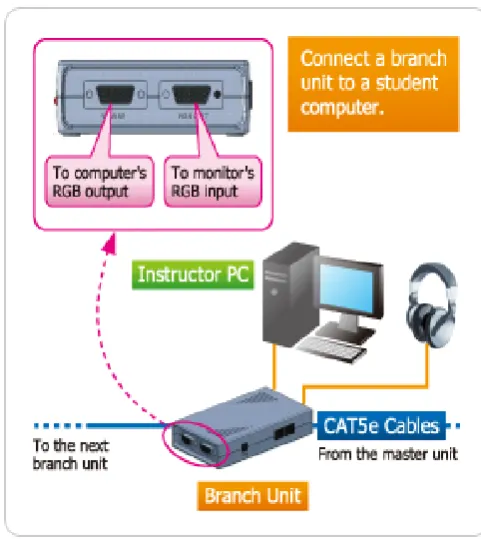
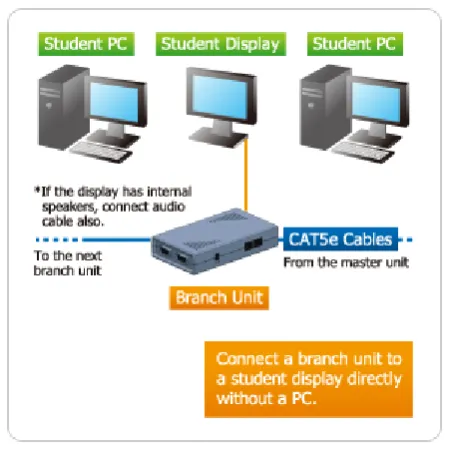
[image:4.595.318.566.57.329.2] [image:4.595.320.561.377.649.2]The diagram below shows the system’s flow of Calabo ex client in two sides (instructor and student/s):
Figure 2. Instructor’s Guide for CSL
(adapted from http://www.chieru.com/product/s300-av-control-system/avcontrol.html)
Figure 3. Student’s side (Connect to Students’ PC) (adapted from
© 2016, IRJET | Impact Factor value: 4.45 | ISO 9001:2008 Certified Journal | Page 24
Figure 4. Student’s side (NO student PC connection)(adapted from: http://www.chieru.com/product/s300-av-control-system/avcontrol.html)
Part B. Presentation of CSL Hardware and Software
The Calabo ex client allows instructors to perform and display high quality video and audio including high-definition graphics for students. In this device, the instructor can take control of any AV device in the classroom from an integrated control panel.
Figure 5. CSL hardware specifications in CL-107 are given below:
Part C. Overall evaluation of the users in terms of CSL interfaces, its effectiveness and accuracy.
After the observation and testing made by the researchers in the conduct of ENGLO3D speech communication classes, the researchers were able to identify the main problems encountered by the users in terms of the interface. Each user was disappointed on the slow pace of the interaction due to many users connected to the interface. Most of the users thought that the computer gave very slow feedback. Sometimes inappropriate feedback and unclear message organization are the common observation during the conversation process of students and professors. However, the technique in graphical presentation and interface turned out to be an excellent part of speech interface. It gives excellent impression that graphic interface is user-friendly.
In this study, the main objective was to propose a human-computer interaction model to illustrate clearly how and why do we need to evaluate the existing computerized speech laboratory used in the university for the benefit of the professors teaching the course and the students who are enrolling the course as well.
Based on thorough observation and testing, the researchers came up with the following results:
Participant/s Utterances Time (minutes)
Group A 60 16.72
Group B 60 15.00
[image:5.595.291.565.60.302.2]Group C 60 12.50
[image:5.595.55.280.95.320.2]© 2016, IRJET | Impact Factor value: 4.45 | ISO 9001:2008 Certified Journal | Page 25
Each group was consists of two persons speaking about acertain topic with the same content of speech. The data being gathered did suggest several developments. As per table shown above there is a consistent decrease in the amount of time required to complete the specific tasks from one cycle. On the other hand, group A of users took 16.72 minutes to complete the task assigned compared to group C which took for only 12.5 minutes (see table 1 above).
Participant/s Accuracy of the speech
Effectiveness of the system
Group A 90% 75%
Group B 87% 65%
[image:6.595.324.558.111.345.2]Group C 85% 75%
Table 2. Evaluation of the users’ performance in terms of accuracy of the speech and effectiveness of the
system
At the start of the observation, the users were aware that the state of the art in the speech recognition technology was not really about the traditional conversational applications. One of the research questions was to determine if certain assigned task of the activity will definitely answer (1) accuracy of the speech (2) effectiveness of the system using the Calabo ex client. Table 2 shows the rating of users’ performances in the two indicated criteria: accuracy and effectiveness. The participants showed that the higher the amount of time allotted for them to execute a certain task the higher the accuracy and effectiveness rate they will get.
[image:6.595.49.274.204.340.2]Part D. Human Computer Interaction Model through Computerized Speech Laboratory (HCI model)
Figure 6 shows the seven steps user activities involved in the performance of computer-based task (based on Norman, 1986). This model can be used as the basis in the development of the HCI model for CSL. The model presented in Figure 6 clearly defined growth of cognitive modeling in HCI wherein it can also be a good reference in developing HCI model for CSL.
Figure 6. Growth of cognitive modeling in HCI
[image:6.595.334.564.401.717.2]© 2016, IRJET | Impact Factor value: 4.45 | ISO 9001:2008 Certified Journal | Page 26
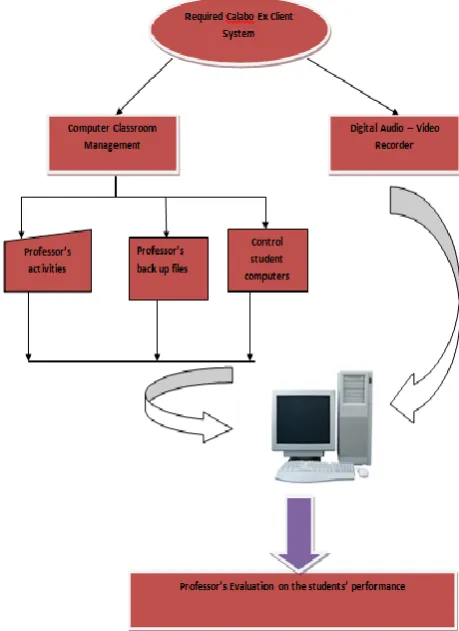
Students and professors are mandatory to use the calaboex client for speech communication activities. The initiative is coming from the professor who is responsible for the monitoring and uploading of speech activities in the system. Computer classroom management was divided into three main parts. First, the professor should have student display icon in his desktop to monitor and evaluate each student for a given activity. Second, professor must send and collect back task files digitally to maintain databases of the activities. And lastly, professor has all the rights to control student computers and activities.
On the other hand, digital audio-video recorder is the commonly used recorder for speech communication activities. Use of digital video and audio for the model materials are also available to assist the professors and students. At the end of every activity, the professor is required to submit his feedback and evaluation on students’ performances in the system.
7. CONCLUSION AND RECOMMENDATIONS
In this research study, the researchers evaluated the existing performance of Calabo ex client in the speech laboratory of the university and presented a model that will be used in conducting appropriate speech activities and its evaluation and monitoring. The model helps professors and students to be organized, efficient and be able to perform activities with high-quality output.
The researchers suggest that dominant methods of the future for the implementing Calabo Ex client software must be conducted.
8. REFERENCES
[1] Rogers, Y., Sharp, H., & Preece, J., “Interaction Design:
Beyond Human-Computer Interaction, 2nd edition, John Wiley & Sons, 2007.
[2] Hewett, T.T., et.al, “ACM SIGCHI Curricula for
Human-Computer Interaction, ACM SIGCHI.”, 1992.
[3] Garette, J.J., “The Elements of User Experience: User
centered design for the web”,. Easy Riders, London, 2003.
[4] Winograd, T., “From computing machinery to interaction
design. In P. Denning and R. Metcalfe, Beyond Calculation: The Next Fifty Years of Computing. Springer-Verlag, Amsterdam”, 1997.
[5] Thackara, J., “The design challenge of pervasive
computing”, 2001.
[6] Sacks, H., Schegloff, E., and Jefferson, G., “A simplest
systematics for the organization of turn-taking for conversation”, 1978
[7] Grudin, J., “The computer reaches out: the historical
continuity of interface design in conference proceedings on empowering people: Human factors in computing system: special issue of the SIGCHI Bulletin, ACM Press, p. 261-268”, 1990
[8] Norman, D.A., “Why Interfaces Don’t Work in The Art of
Human-Computer Interface Design, Addison-Wesley Publishing Company, p. 209-219.”, 1990
[9] Suchman, L.A., “Plans and Situated Actions. Cambridge
University Press”, 203, 1997
[10] Preece, J., H.Sharp, and Y. Rogers., “ Interaction Design:
Beyond Human-Computer Interaction. John Wiley & Sons, Inc.”, 2002
[11] Winograd, T., From Computing Machinery to Interaction
Design, in beyond calculation: The next fifty years of computing. Stringer-Verlag, Amsterdam, Netherlands.
[12] Karray, F., Alemzadeh, M., Saleh, J. and Arab, M.
“Human-Computer Interaction: Overview on State of the Art”, University of Waterloo, Canada, 2011.
[13] Cairns, P. “People and Computers XXI – HCI… but not as