https://doi.org/10.5194/hess-23-4891-2019 © Author(s) 2019. This work is distributed under the Creative Commons Attribution 4.0 License.
Spatial variability of mean daily estimates of actual evaporation
from remotely sensed imagery and surface reference data
Robert N. Armstrong1,2, John W. Pomeroy1, and Lawrence W. Martz1 1Centre for Hydrology, University of Saskatchewan, Saskatoon, S7N 1K2, Canada
2Queensland Alliance for Agriculture and Food Innovation, The University of Queensland, Gatton Campus, Gatton, 4343, Australia
Correspondence:Robert N. Armstrong ([email protected]) Received: 30 November 2018 – Discussion started: 12 December 2018
Revised: 2 October 2019 – Accepted: 16 October 2019 – Published: 29 November 2019
Abstract.Land surface evaporation has considerable spatial variability that is not captured by point-scale estimates calcu-lated from meteorological data alone. Knowing how evapo-ration varies spatially remains an important issue for improv-ing parameterisations of land surface schemes and hydrologi-cal models and various land management practices. Satellite-based and aerial remote sensing has been crucial for captur-ing moderate- to larger-scale surface variables to indirectly estimate evaporative fluxes. However, more recent advances for field research via unmanned aerial vehicles (UAVs) now allow for the acquisition of more highly detailed surface data. Integrating models that can estimate “actual” evaporation from higher-resolution imagery and surface reference data would be valuable to better examine potential impacts of local variations in evaporation on upscaled estimates. This study introduces a novel approach for computing a nor-malised ratiometric index from surface variables that can be used to obtain more-realistic distributed estimates of actual evaporation. For demonstration purposes the Granger–Gray evaporation model (Granger and Gray, 1989) was applied at a rolling prairie agricultural site in central Saskatchewan, Canada. Visible and thermal images and meteorological ref-erence data required to parameterise the model were obtained at midday.
Ratiometric indexes were computed for the key surface variables albedo and net radiation at midday. This allowed point observations of albedo and mean daily net radiation to be scaled across high-resolution images over a large study region. Albedo and net radiation estimates were within 5 %– 10 % of measured values. A daily evaporation estimate for a grassed surface was 0.5 mm (23 %) larger than eddy
covari-ance measurements. Spatial variations in key factors driving evaporation and their impacts on upscaled evaporation esti-mates are also discussed. The methods applied have two key advantages for estimating evaporation over previous remote-sensing approaches: (1) detailed daily estimates of actual evaporation can be directly obtained using a physically based evaporation model, and (2) analysis of more-detailed and more-reliable evaporation estimates may lead to improved methods for upscaling evaporative fluxes to larger areas.
1 Background and introduction
“Actual” evaporation is the water vapour physically trans-ferred from a surface (e.g. plants, soil, or water) to the at-mosphere over a given time period (e.g. hourly or daily). Re-liable estimates of actual evaporation are often needed over large spatial scales for applications such as water resource management, agriculture, ecology, and forecast modelling of weather and climate. However, estimates (or measurements) are often calculated at point scales with footprints that can range from centimetres to several kilometres or more (Brut-saert, 1982). Consequently, point-scale footprints in hetero-geneous landscapes may contain large variability that needs to be considered more appropriately.
local surface energy fluxes. As a result, “scaling” evapora-tion estimates over large areas must consider a potential loss of information due to upscaling processes. The potential im-pacts of spatial variability on larger-scale estimates of evap-oration are still not well understood, and previous estimation and scaling methods have not examined this issue in detail.
For example, hydrologic and atmospheric modelling ap-plications often require large- to regional-scale evaporation estimates, but the underlying variability is difficult to exam-ine practically (e.g. Avvisar and Pielke, 1989; Baldocchi et al., 2005; Brutsaert, 1998; Claussen, 1991, 1995; Klaassen, 1992; Klaassen and Claussen, 1995). Courault et al. (2005) and Gowda et al. (2007) have also reviewed remote-sensing approaches which integrate surface images to derive key vari-ables needed to parameterise various energy-balance-type evaporation models. This generally results in estimates at moderate scales of input images (e.g. Bisht et al., 2005). Purely empirical methods have also correlated evaporation with vegetation indices (e.g. Nagler et al., 2005).
A common remote-sensing method has been to calculate evaporation indirectly as a residual of a simplified energy balance (e.g. Jackson et al., 1977; Seguin et al., 1989; Bus-sières et al., 1996). In such cases surface temperatures de-rived from thermal imagery is a critical input. More com-plex resistance-type formulations also exist based on devel-opments by Monteith (1965), e.g. Norman et al. (1995), An-derson et al. (1997, 2007), Boegh et al. (2002) and Houborg and Soegaard (2004). However, such approaches are compu-tationally intensive and parameterising the resistance terms is difficult without detailed data.
Colaizzi et al. (2006) reviewed scaling approaches based on an evaporative fraction determined through complex solar-radiation modelling. Mu et al. (2007) and Fisher et al. (2008) discuss advanced methods for deriving global-scale estimates based on expert knowledge and detailed data sets obtained from the AmeriFlux network in association with the global FLUXNET (Baldocchi et al., 2001). As an alternative to more complex methods, Granger (2000) inte-grated a complementary feedback approach with Penman’s combination model and remote-sensing imagery that can di-rectly estimate actual evaporation, even in data-sparse re-gions.
Previous remote-sensing methods have been valuable for integrating generalised representations of moderate- to larger-scale variability. However, most methods fail to in-clude fundamental interactions governing the evaporation process which can be more realistically captured with an en-ergy balance and aerodynamic combination model approach. More importantly, few (if any) have addressed the issue of how detailed surface variability may impact upscaled evap-oration estimates over larger areas. The acquisition of high-resolution imagery from a plane (or even unmanned aerial vehicles; UAVs) combined with new methods of obtaining detailed surface information could be valuable for examining the spatial variability of point-scale evaporation estimates.
Such analysis could then help advance understanding how the underlying surface variability may impact upscaling of point evaporation estimates to larger areas.
The goal of this study is to examine the spatial variability of key surface variables driving point-scale evaporation esti-mates and their impact on upscaled evaporation estiesti-mates to larger areas, and this includes two objectives. The first is to use the spatial variability captured from high-resolution one-time-of-day visible and thermal images taken at midday to scale (i.e. distribute) energy-balance factors that drive combi-nation evaporation models. This objective required the devel-opment of a scaling method that derives a ratiometric index of surface variables from the midday images. The resulting information can then be used to distribute a measured value of mean daily net radiation which can be used as an input for deriving detailed estimates of evaporation. The second ob-jective is to examine impacts of variations of the key surface variables on daily estimates of evaporation, including point-scale and larger areal estimates.
Methods applied here integrated high-spatial-resolution images with an initial pixel size of less than 5 m taken during a flight on 5 August 2007 over a rolling prairie agricultural landscape. It also included point measurements of surface reference data, a physically based evaporation model, and analysis using ArcGIS (v9.x) software. Estimates of mean daily actual evaporation were calculated with the Granger– Gray complementary feedback model (G–D) (1989). The model is a useful alternative to more complex methods that require resistance parameters and is well suited for a vari-ety of Canadian environments (e.g. agricultural, prairie, and boreal).
2 Study area
Figure 1. Photo of the study area at St. Denis National Wildlife Area taken during the flight on 5 August 2007 and locations of mi-crometeorological measurement stations.
3 Data and methods
3.1 Granger–Gray evaporation model (G–D model) Granger and Gray (1989) developed the G–D model from the complementary relationship of the combination model of Bouchet (1963) and Penman (1948). The G–D model extends the potential evaporation model to non-saturated surfaces us-ing the relative evaporation term,G. This is defined as a ra-tio of actual to potential evaporara-tion which depends on the relative drying power of the air,D. The underlying theory is based on the reduction of water availability as a surface dries, but the “potential” evaporation increases due to a subsequent rise in surface temperature.
The development of G eliminated the need for obser-vations of surface temperature and vapour pressure. As a result, estimates of actual evaporation were obtainable for non-saturated surfaces with atmospheric data alone (Granger, 1989). The general form of the equation is
E=1G Q
∗−Q
g+γ GEA
1G+γ . (1)
The available energy term is driven by net radiation, Q∗ (W m−2), calculated as a sum of the net shortwave and longwave radiation components and the ground heat flux, Qg(W m−2), and the slope of the saturation vapour pressure curve,1.
The aerodynamic term includes the psychrometric con-stant,γ, and “drying power of the air”,EA, calculated using a Dalton-type formula.
EA=f (u) e∗a−ea
, (2)
where f (u) is a vapour transfer function, and the atmo-spheric vapour pressure deficit at 2 m height is derived from
ea∗(saturated) andea(actual). Pomeroy et al. (1997) empiri-cally derivedf (u)as a function of wind speed and aerody-namic roughness length andZ0(m) from extensive field data collected for prairie, boreal forest, and northern cold-region environments in western Canada.
f (u)=8.19+22Z0+(1.16+8Z0) u, (3) whereuis the mean daily wind speed (m s−1).
The G–D complementary feedback method is driven by the non-linear relationship betweenGand the relative drying power of the air,D.
G= 1
0.793+0.2e4.902D+0.006D, (4) whereD is a function of the humidity deficit and available energy is given by
D= EA
EA+( Q∗−Q
g) λ
, (5)
andλis the latent heat of vaporisation (kJ kg−1).
The feedback model approach is generally applicable for regions indicated above and can be used when detailed soil moisture information is lacking, except under conditions of severe moisture stress. Armstrong et al. (2008) evalu-ated point-scale evaporation estimates obtained with the G– D model over mixed grasses at the same study area under conditions of non-limiting soil moisture using field data col-lected during 2006. Estimates obtained with the G–D model compared well with eddy covariance (EC) measurements and was less data intensive than the Penman–Monteith model, which also performed well in that study.
Armstrong et al. (2010), however, found that the use of appropriate soil moisture constraints was required to obtain reliable estimates with the G–D model when applied under drought conditions to a mixed-prairie site at Lethbridge, Al-berta, Canada.
3.2 Field observations
Air temperature, humidity, wind speed, incoming radiation, and surface temperature were recorded as 15 min averages. Incoming and outgoing shortwave and longwave radiation were measured with a CNR1 net radiometer (Kipp & Zonen, Delft, the Netherlands). Air temperature and humidity were measured at 2 m height using a shielded Vaisala HMP45C (Campbell Scientific, Inc., Logan, Utah, USA). A shielded Exergen infrared (IR) temperature sensor (IRTC; Exergen, Watertown, Massachusetts, USA) was used to measure sur-face temperature.
Canopy spectral reflectance was independently sampled on 21 August 2007 for validating albedo estimates derived from the visible images taken on 5 August. Canopy re-flectance was collected according to the methods of Disney et al. (2004) and Zhang and Guo (2007). Samples were taken at 4.5 m intervals along a site transect at 1 m height at the nadir (25◦ field of view) with an ASD FR Pro spectroradiometer (Analytical Spectral Devices, Inc., Boulder, Colorado, USA); the spectral range was 350–2500 nm with a 1 nm resolution. Samples were taken between 12:00 LT (local time) and so-lar noon. Reflectance was recalibrated every 10 min using a white Spectralon reflectance panel (Labsphere Inc., North Sutton, New Hampshire, USA).
Eddy covariance observations were sampled at approxi-mately 2 m height with a CSAT3 three-dimensional sonic anemometer (Campbell Scientific, Inc., Logan, Utah, USA) and a KH20 ultraviolet krypton hygrometer (Campbell Sci-entific, Inc., Logan, Utah, USA). The raw EC data were re-ported as 15 min averages and post-processing was done with MATLAB (Mathworks, Natick, Massachusetts, USA) which included flux corrections using a standard planar-fit axis ro-tation algorithm (Wilczak et al., 2001). Data filtering indi-cated there were no missing or bad data values on the study day, and station positioning was not considered to be an is-sue. EC data collected at the validation site were used for a comparison against a mean estimate obtained from the G– D model upwind of the EC station.
Given the higher frequency of flux reporting (15 min aver-ages), axis rotation, and data filtering applied, and a potential mismatch in measurement footprints, no further corrections were used to force an energy balance closure on the 15 min averages.
3.3 Surface reference meteorological parameters
At midday, reference observations of the shortwave, K↓
(835 W m−2), and longwave, L↓ (320 W m−2), irradiance and albedo (0.153 over grass) were obtained from the CNR1. Both K↓ and L↓ were assumed to be uniform over the field given the images used for calculations were cloud free. The reference values were used in the calculation of midday normalised ratiometric indexes for albedo and net radiation. A mean daily reference value of 155 W m−2 was obtained for Q∗ which was the input for distributing the final
esti-mates of the mean daily net radiation using the ratiometric index (discussed in Sect. 3.4).
The daily ground heat flux measured at two locations was relatively small, 8 and 2 W m−2, due to the continuous and tall grass canopy cover. For this study the ground heat flux was ignored, in part due to the small measured values, but this was also to limit errors introduced from using a numer-ical solution to estimate ground heat flux, which would re-quire more-detailed cover information at each image pixel. To standardise the parameterisation of the G–D model for calculating the mean daily estimates of evaporation, the ref-erence values of mean daily air temperature (19.6◦C), hu-midity deficit (1.1 kPa), and wind speed (3 m s−1) were also taken to be uniform. Differences in mean daily air tempera-ture between the measurement locations were approximately 1◦C.
Potential impacts of assuming uniform humidity and wind speed for parameterising the aerodynamic term was also con-sidered. This was done by examining G–D evaporation es-timates derived from 2006 field data collected over differ-ent surfaces at the same study area (Armstrong et al., 2008). During 2006 a fixed station obtained continuous measure-ments over a mixed-grass upland, and a portable EC station was moved periodically to obtain concurrent measurements over different land covers. Meteorological observations from the fixed station were initially used to estimate evaporation with the G–D model. Another estimate was obtained after substituting observations of humidity and wind speed taken from the portable EC station. This resulted in only minor variations in the respective evaporation estimates (root mean square deviation (RMSD) of 0.02 mm) derived from the con-current measurements of humidity and wind speed taken from the different sites.
Implications of neglecting the ground heat flux and treat-ment of the meteorological parameters (above) with respect to modelling uncertainty are given in the discussion. 3.4 Deriving key surface variables from
one-time-of-day images
3.4.1 Theoretical basis for a normalised ratiometric index for surface properties
Remotely sensed images contain valuable information that characterise highly variable surface properties (e.g. re-flectance, temperature, RGB (red–green–blue) and greyscale digital numbers (DNs), etc.). Theoretically, relative varia-tions in these properties can be quantified using a “nor-malised” ratiometric index. For example, consider the “evap-oration ratio” (ER), defined simply as the ratios of individual evaporation rates at different spatial locations (Ei) to a refer-ence rate obtained at a specified location (Eref).
ER= Ei Eref
At the reference locationERis 1 and will be the same at any other locations whereEi=Eref, but it will vary from unity at all other spatial locations.
For obvious reasons the theory integrates well for compu-tations with pixel-based images. Subsequently, an evapora-tion rate measured at the reference pixel could be scaled to all other pixels by multiplication with the value ofERat each pixel. The concept may be extended to other surface variables (e.g. albedo, net radiation, etc.) required to parameterise an evaporation model.
3.4.2 Distributing surface variables using a normalised index of relative surface ratios
Methods described here assume spatial variations in surface variables driving net radiation (and driving evaporation) are near their maximum around solar noon. This is likely to be valid within 2 h from the actual time of solar noon (Colaizzi et al., 2006). Net radiation is the major component needed to determine available energy for the conversion of water to an equivalent depth of water vapour. Net radiation is deter-mined from the shortwave and longwave radiation compo-nents measured in the electromagnetic spectrum between ap-proximately 0.3 and 4 and 4 and 14 µm, respectively (Zoran and Stefan, 2006).
Traditionally, radiative terms needed for estimating evapo-ration are derived from satellite-based imagery, e.g. Landsat, AVHRR (Advanced Very High Resolution Radiometer), and MODIS (Moderate Resolution Imaging Spectroradiometer). However, satellite-based methods are often limited by cloud contamination, varying spatial and temporal resolutions, and sensor footprint mismatches. Under clear skies it can be as-sumed shortwave and longwave irradiance are uniform over an agricultural field area. Very-high-resolution images taken near the surface could be used to derive the much more vari-able surface-reflected shortwave and emitted longwave radi-ation components.
For example, normalised ratiometric indexes for albedo, αR, emitted longwave,L↑R, and roughness length,Z0R, can be calculated at every pixel location within visible and ther-mal images using
αR= αi αref
, (7)
L↑R= L↑i
L↑ref, (8)
Z0R= Z0i Z0ref
, (9)
where the subscript “i” is an individual value at each pixel and “ref” is the value at the reference pixel. Incoming short-wave (K↓) and longwave radiation (L↓) components can reasonably be assumed to be uniform over the field under clear skies, soαRandL↑Rcan be further integrated to de-rive a ratiometric index of the midday net radiation,Q∗R.
Q∗R= Q
∗ i
Q∗ref =K↓(1−αRαref)+L↓ −L↑RL↑ref (10) Subsequently, single measured values of albedo and mean daily net radiation taken at a reference pixel can be scaled (i.e. distributed) across all other pixels via multiplication with the surface ratios derived forQ∗R. The next section il-lustrates the indexing method for deriving accurate estimates of albedo.
3.4.3 Ratiometric-index method for albedo estimates from digital visible images
Surface albedo (α) represents a crucial radiation loss term for radiative transfer calculations and surface–atmosphere en-ergy and mass exchanges (Sellers et al., 1997; Liang, 2000; Lucht et al., 2000; Roberts, 2001; Liang et al., 2003; Disney et al., 2004). Its calculation can be complex and is typically a major source of uncertainty (Yang et al., 2008).
In this case, a measured value of broadband albedo ob-tained at a reference pixel location could be scaled to every other pixel within a high-resolution visible image. In 2007, digital photos were taken with a Canon PowerShot A70 cam-era with a maximum resolution of 2048×1536 pixels, a CCD (charge-coupled device) imager, and a DIGIC (Digital Imag-ing Core) processor. This resulted in very-high-resolution (<1 m pixels) “visible images” without cloud cover issues.
While digital cameras may not cover the full visible and near-infrared spectrum of advanced measurement sensors, the imaging techniques are based on the same principles. Corripio (2004) demonstrated how accurate estimates of snow albedo could be obtained from digital images using a linear scaling technique applied to a measured albedo at a reference pixel location. A key step for our analysis was to transform an RGB digital photo to a single-band 8 bit greyscale image with DNs ranging from 0 to 255.
This resulted in higher DNs associated with more-reflective surfaces (i.e. brighter) and lower DNs with less-reflective surfaces (i.e. darker) in accordance with the prin-ciples for calculating albedo. The resulting albedo map was aggregated to a pixel size of 5 m for a practical analysis and georectified to 100 GPS ground control points. The study area included some dried wetlands and others containing open water. This allowed for application of a simple dark-object subtraction (DOS) method to correct potential atmo-spheric effects (Song et al., 2001; Liang, 2000).
Applying Eq. (11) made it possible to accurately estimate albedo at individual pixel locations, αi, from a measured broadband value taken at the reference location,αref, and a ratiometric index for DNs calculated at each pixel.
αi=αref DNi DNref
Figure 2.Reflectance spectra collected at four sample points over mixed-grassland vegetation at the upland area on 5 August 2007. Reflectance values affected by noise at corresponding wavelengths were removed.
where DNiis the digital number of an individual pixel and DNrefis the reference pixel value.
Angular measurements of broadband albedo from 0.3 to 3.0 µm with a hemispherical CNR1 directly accounted for bidirectional reflectance properties of the mixed grassed sur-face. Therefore, the point observations satisfied the bidirec-tional reflectance considerations related to albedo estima-tion techniques (Nicodemus et al., 1977; Lucht et al., 2000; Roberts, 2001).
Figure 2 shows a sample of measured reflectance values from a grassed upland area. The spectral reflectance from the mixed grasses was virtually identical to the response for healthy (green) winter wheat (see Disney et al., 2004). For wheat, they concluded reflectance was directionally invari-ant and reasonably could be assumed to behave as a Lam-bertian surface (i.e. scattering light equally in all directions). The field-measured spectral reflectance over the grassed sur-face was therefore treated similar to a Landsat-measured re-flectance and divided into respective wavelengths for Landsat wavebands 1, 3, 4, 5, and 7.
An empirical linear approximation for narrow-to-broadband albedo conversion applicable to Landsat imagery (see Liang, 2000) was then applied to the field-measured spectral reflectance data. This allowed for a direct com-parison of albedo estimates and measurements along the sampling transect shown in Fig. 3. Due to the 4.5 m sampling distance some pixels contained a single value, whilst others contained two values, in which case the mean value was used for comparison.
3.4.4 Surface temperature (emitted longwave radiation)
For the case of surface temperatures the indexing method was not needed because high-resolution observations were obtained directly with a handheld forward-looking in-frared (FLIR) ThermaCAM P20 imaging radiometer. The
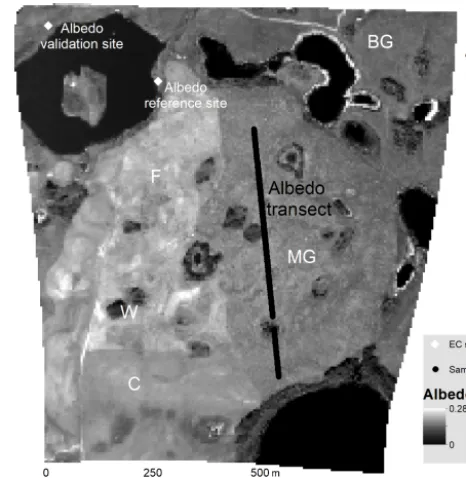
Figure 3.Albedo map (5 m resolution) derived from visible im-ages taken at midday. Also shown are the location of reference and validation sites; letter codes indicate major land cover types: fal-lowed (F), mixed grass (MG), brome grass (BG), cultivated (C), and wetlands (W).
P20 used a focal plane array uncooled microbolometer with a maximum image resolution of 320×240 pixels, a 24◦×18◦ field of view, and a spatial resolution of 1.3 mrad. The spec-tral range was 7.5–13 µm, which is similar to traditional satellite sensors (e.g. Landsat, MODIS, and AVHRR with a spectral range of 10–12.5 µm and ASTER with a spectral range of 8–12 µm).
A standard emissivity of 0.98 was assumed for the cover types encountered, and ambient air temperature and humid-ity and the distance between the surface and camera detec-tor were set based on observations. The Stefan–Boltzmann equation was applied to transform surface temperatures into values of outgoing longwave radiation needed to estimate the net radiation. For the flight height of approximately 1 km the FLIR produced a surface pixel resolution of approximately 3 m. The longwave radiation map was then aggregated to a 5 m resolution and georectified using the resulting map of albedo estimates as the reference.
3.4.5 Surface roughness length
[image:6.612.312.545.67.306.2]energy through interactions with the different surface types and roughness.
Variations in the aerodynamic roughness length, Z0, and wind speed are important factors considered in the turbulent transfer function used for calculating the aerodynamic terms of the G–D model (Eqs. 2 and 3). Previous developments (e.g. Pomeroy et al., 1997) have considered boundary layer (friction velocity) and surface parameters (roughness length) estimated from EC measurements and wind profiles over bo-real forests and Canadian Prairie land covers such as bare soil and C3-type crop and grasses.
Due to the general surface complexity at the study area, roughness classes for Z0 were needed to adjust the vapour transfer function to reflect potential increases or decreases in turbulent exchanges as result of variations in surface proper-ties and local roughness. For example, lower values of Z0 associated with fallowed areas and crops would imply in-creased wind speeds near the ground and a reduction in tur-bulent energy. In contrast, largerZ0 values associated with taller dense grasses, shrubs, and trees would effectively re-duce wind speeds and increase turbulent exchanges.
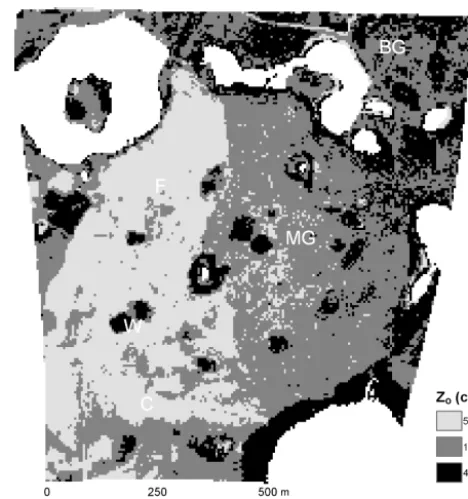
For the purposes here, a roughness length classification map forZ0was derived from the 8 bit grayscale image used for estimating surface albedo. This was achieved based on knowledge of the various land covers at the site and seg-mentation analysis using the IDRISI Kilimanjaro surface analysis tool (Clark Labs, Clark University, Worcester, Mas-sachusetts, USA). Greyscale DNs were initially classified into 13 zones of similarity, and a segmentation analysis was applied. The method computes a standard deviation for each pixel using a 3×3 moving window filter. The standard devi-ation and associated DN for each pixel are then sorted (low to high), and a bin range is assigned. A class width toler-ance was set for pixels having similar standard deviations, and all values within a specified range were assigned to the same class. Where pixel values were outside the range, but class boundaries overlapped, a midpoint was determined and a new class was created.
The initial 13 classes were manually reclassified into three general classes (fallowed/cropped, grass, and trees) based on the extents of the dominant land cover types observed in the original and classified images. Characteristic roughness lengths,Z0, were then selected for each class based on values reported for similar surface types (Brutsaert, 1982). In this case, a value of 0.05 m was used for the fallowed/cropped class, and 0.10 m was used for the taller- and denser-grass class. Narrow rings of shrubs and trees around wetlands were also dense and much taller than the surrounding cover with heights varying from 3 to 10 m. Brutsaert (1982) reported roughness lengths between 0.2 and 0.4 m for similar type sur-face elements. The value of 0.40 m was chosen to reflect an expected increase in roughness and turbulent exchange due to a likely reduction in wind speed compared to the surround-ing cover types.
3.5 Exploratory analysis of surface variables and evaporation estimates
Exploratory analysis of key surface variables and evapora-tion estimates was conducted using the R software environ-ment (Grunsky, 2002). Data analysis consisted of boxplot summaries giving the 25th and 75th quartiles (i.e. the in-terquartile range) defined by the box, and an inner solid line indicating the median value was also given. Data points were plotted with jitter to reflect the density of outliers greater than 1.5 times larger or smaller than the interquartile range with the upper and lower limits defined by box whiskers.
4 Results and discussion
Calculating detailed daily evaporation estimates and exam-ining spatial scaling issues required the midday inputs and temporal-scaling function to be computed first. Analysis of midday inputs are described in Sect. 4.1–4.4. Section 4.5 and 4.6 discuss the sensitivity of the G–D model to the mid-day evaporation ratio and the temporal transfer function re-quired for scaling a single measured value of mean daily ra-diation across a midday image. Section 4.7–4.9 discuss the accuracy of the resulting evaporation estimates, variations in statistical distributions of key driving components, and scal-ing implications for larger-scale evaporation estimates. 4.1 Validation of albedo estimates
At midday on 5 August 2007 a reference albedo ofαref= 0.153 was obtained from observed irradiance and the re-flectance of shortwave radiation over the mix of green grasses. The albedo map resulting from Eq. (11) and loca-tions of reference and validation points is shown in Fig. 3. Vegetation was similar at both EC station locations, and the scaled albedo estimate (0.164) agreed well with the measured value (0.167) at the validation site.
The validation of the mean and range of albedo estimates obtained for major land covers in Fig. 3 is summarised in Table 1. Estimates of albedo from the image compared well with values expected for grasses, agricultural crops, decid-uous trees, and bare soils reported in Brutsaert (1982). The root mean square error (RMSE) of albedo estimates from the pixels and measured albedo values was approximately 3.5 %, which is within an expected error of 2 % to 5 % for research purposes (Liang, 2000).
Table 1. Approximate mean values and ranges of albedo for the major land cover types.
Land cover Mean Range
Wetland vegetation (W) 0.11 0.05–0.16 Brome grass (BG) 0.15 0.13–0.17 Mixed grass (MG) 0.17 0.15–0.19 Cultivated (C) 0.18 0.17–0.20
[image:8.612.52.280.95.450.2]Fallowed (F) 0.20 0.17–0.23
Figure 4.Surface-emitted longwave radiation (W m−2) map (5 m resolution) derived from a thermal image taken at midday.
are expected to impact evaporation estimates through rela-tive increases at pixels with relarela-tively lower values of albedo, which results in an increase in the available energy, whereas relatively higher values will reduce the available energy and estimates of evaporation.
4.2 Validation of longwave radiation estimates
Figure 4 shows the resulting map of emitted longwave radiation, L↑, derived from the image of observed sur-face temperatures, with estimates ranging between 380 to 480 W m−2. At the two EC station locations a comparison was made among the midday surface longwave measure-ments from the P20 camera, a narrow-beam Exergen infrared thermocouple (IRTC) radiometer, and surface-emitted long-wave values obtained from the CNR1.
The P20 measurement compared well with the IRTC val-ues with differences less than −12 W m−2. Compared with the CNR1 values, the differences were slightly larger at
Figure 5. Classification map of aerodynamic surface roughness length derived from a visible image taken at midday and typical values found in Brutsaert (1982).
−30 W m−2but was still within 8 % error. Generally, the dif-ferences were small considering relative changes in midday surface net radiation, and the magnitude of incoming radi-ation components is considerably larger. The variable foot-prints of the different measurements and absorption prop-erties of water vapour, which can reduce the signal, are likely sources of error. Also, dust and heating of the CNR1 downward-facing pyrgeometer may introduce another source of error.
For estimating evaporation, the smaller emitted longwave values resulting from lower surface temperatures will in-crease the available energy relative to larger values which imply reduced water availability and evaporative cooling. 4.3 Surface roughness length map
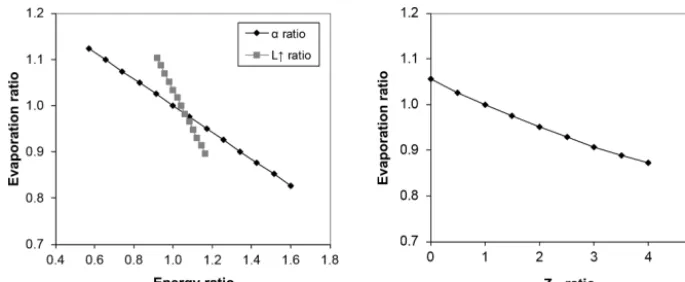
Figure 6.Sensitivity of the evaporation ratio to key inputs at midday. The measured range of input values is shown to demonstrate potential variation in this case study.
4.4 Sensitivity of the evaporation ratio to key variables at midday
Normalised indexes for albedo, surface temperature, and roughness were considered to examine the relationships of variations in these variables compared to the evaporation ra-tio. Figure 6 shows the expected physical behaviour of these variables within the G–D model. Only the actual range of values computed for the ratiometric index was considered so that the physical variations could be shown more clearly. In this case, the impacts of relative changes in the apparent in-verse linear relationships betweenERandαRandL↑Rand slight non-linear relationship betweenERandZ0Ron evapo-ration estimates can be computed. The results can be used to illustrate the impacts of required changes in key driving vari-ables to produce notable changes in the evaporation ratio.
For example, a relative increase in the surface temperature viaL↑Rof 0.18 (or 18 %) was shown to reduceERby 10 %. By comparison, an increase in reflected shortwave radiation viaαRof 0.30 (or 30 %) reducedERby only 5 %. In the case of surface roughness, an increase of 250 % was needed to re-duceERby 10 %. Consequently, a relative reduction in evap-oration rates may be expected where albedo, surface temper-ature, and surface roughness tend to be larger. In the latter case, step changes in surface roughness would increase the relative drying power,D, but the relative evaporation,G, sults in a relative decrease due to the inverse non-linear re-lationship. The increased sensitivity of ERtoL↑Ralso in-dicates that detailed spatial variations in surface longwave radiation is an important factor for estimating evaporation. 4.5 Temporal transfer function: normalised
ratiometric radiation index
Net radiation is known to vary dynamically on a sub-daily basis. Equation (10) shows how a radiation ratio, Q∗R, can be used as a temporal transfer function to scale estimates of mean daily net radiation over an image. In order to scale the normalised net radiation ratios from a temporal “point” at
midday to a mean daily value, it was necessary to examine whether a stable proportionality existed between measured values at midday and mean daily net radiation. Verification of a proportionality under clear skies would eliminate the need for an empirical scaling function.
Historical records were examined for a period from 1 May to 1 September at three Canadian Prairie locations at sim-ilar latitudes (49–52.2◦). The analysis included two field seasons at the SDNWA study site (2006–2007). Archived data were also obtained at two short grass prairie loca-tions, an AmeriFlux network site at Lethbridge, Alberta, Canada (1999–2004), and Kernen Farm located at Saskatoon, Saskatchewan, Canada (1999–2000). Figure 7 shows a mod-erately strong relationship at each location even with they intercept set to 0, andr2is equal to 0.54–0.62.
This result confirms that a general proportionality exists and suggests that daily net radiation,Q∗d, could be scaled to all pixels across an image from a single measured refer-ence value,Q∗dref, as a function of the normalised ratio index forQ∗Rat midday, stated here as
Q∗d=Q∗drefQ∗R. (12)
Q∗dref was assigned a daily measured reference value of 155 W m−2, which was obtained from the CNR1 at the ref-erence station. Q∗R was derived from Eq. (10) using the measured reference values of incoming shortwave and wave radiation components, and albedo and emitted long-wave maps are used as inputs. The resulting mean daily net radiation map and a comparison of estimated and mea-sured Q∗d at two validation locations are shown in Fig. 8. The main validation site was equipped with a CNR1 and a second independent site maintained by Environment Canada was equipped with an NR Lite radiometer (Kipp & Zonen, Delft, the Netherlands).
Figure 7.Relationship between the midday and mean daily net radiation for a range of years at two Canadian Prairie sites and one Parkland site for the period 1 May through 1 September.R2values shown for fitted line with theyintercept set to 0.
Figure 8.Resulting input map of mean daily net radiation derived from the normalised index of midday net radiation and a single ref-erence value of mean daily net radiation (155 W m−2). Also shown are the location of validation sites for comparing measured and es-timated values of mean daily net radiation.
error) compared to the NR Lite observation. These results in-dicate that accurate estimates of net radiation can be scaled across detailed midday images from a single measured value of mean daily net radiation. More importantly, detailed accu-rate estimates of net radiation would be valuable for improv-ing point-scale evaporation estimates.
4.6 Calculating direct estimates of actual evaporation with the G–D model
The mean daily net radiation map derived from Eq. (12) was supplied as input to the G–D model to estimate the mean daily actual evaporation at every land surface pixel. The ref-erence humidity and wind speed values (discussed earlier) and the surface roughness length map were used for calculat-ing the aerodynamic terms in Eqs. (2) and (3). An estimate of mean daily evaporation was then calculated at every pixel location based on Eq. (1).
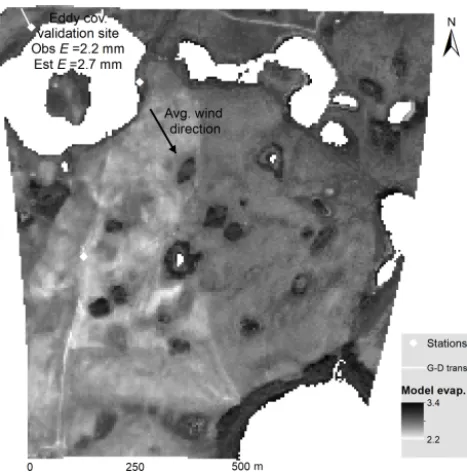
[image:10.612.51.286.375.617.2]tempera-Figure 9.Map of distributed estimates of mean daily evaporation at a 5 m pixel resolution.
tures were lower, which can be attributed to increased water availability and evaporative cooling.
The prevailing wind direction for the day (Udir) was from a north-northwest direction. A mean evaporation estimate of 2.7 mm was obtained along a linear transect for pixels con-taining a brome grass surface immediately upwind of the EC station (Fig. 9). The estimate of 2.7 mm was 0.5 mm or 23 % higher than the EC-measured mean evaporative flux of 2.2 mm d−1. Based on the cumulative flux model of Schuepp et al. (1990), it is expected that 80 % of the cumulative flux would come from within an upwind distance of 100 m from the EC station along a similar path to the linear transect. The estimate of 2.7 mm d−1 might be lower if ground heat flux was found to be a factor for reducing the available energy. However this would need to be reliably accounted for at ev-ery 5 m pixel.
On the study day the mean daily energy fluxes in W m−2 (including latent (LE) and sensible heat (HE)), and the ra-tio of the energy balance closure at the validara-tion site was (LE+HE)/(Q∗−Qg)=(63+55)/(144−2). This results in an energy balance closure of approximately 83 %. The result-ing Bowen ratio of 0.87 was reasonable for the dryresult-ing con-ditions and later timing in the growing season for the grasses in this semi-arid region. In this case it is expected there will be uncertainty in both estimated and measured EC fluxes due to modelling and measurement errors and different footprint scales. For instance, it is possible that LE and HE could be under-measured or the ground heat flux could be more vari-able upwind of the EC station than estimated.
Measured evaporation rates were not available for trees (dominated by aspen) in 2007, but the G–D estimates were compared against archived values from Boreal Ecosystem– Atmosphere Study (BOREAS) data for an old-aspen site from August 1996. The G–D mean daily values in the or-der of 3 mm were reasonable compared to evaporation from similar trees reported by Hogg et al. (2001).
In general, the results are instructive because the G– D method has been demonstrated to provide a reasonable es-timate of evaporation from the remote-sensing images taken over a complex landscape. Armstrong et al. (2008) have also shown similar accuracy for daily and multi-day periods from meteorological data alone during the 2006 field season at the same study area. More importantly, the ratiometric-index method of scaling may be valid for distributing surface ra-diation components across remote-sensing imagery obtained from satellites, planes, or near-surface aerial platforms such as UAVs.
4.7 Distributions of evaporation and driving surface variables
The following sections briefly discuss the statistical distribu-tions of the driving variables obtained from the images used for estimating evaporation and their impacts on the result-ing evaporation estimates. The benefit here is the statistical distributions of evaporation and key driving factors are con-sidered to be physically meaningful.
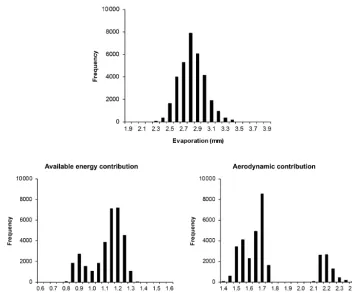
Figure 10 shows the frequency distributions of evapora-tion estimates and relative contribuevapora-tions for the energy bal-ance and aerodynamic components. G–D model evapora-tion estimates appear normally distributed with a mean of 2.8 mm d−1and a relatively low coefficient of variation (cv of 0.07). Distributions for the energy and aerodynamic terms were notably different due to interactions among the driv-ing variables and different roughness classes. For the energy component, the distribution was continuous with a mean of 1.1 mm and a cv of 0.11. The distribution mean for the aero-dynamic term was 1.7 mm and was bimodal due to the differ-ences in magnitude of the discrete roughness classes used.
[image:11.612.52.286.66.302.2]Figure 10.Distribution of daily evaporation estimates over the field area and relative contributions of evaporation for the energy and aero-dynamic terms.
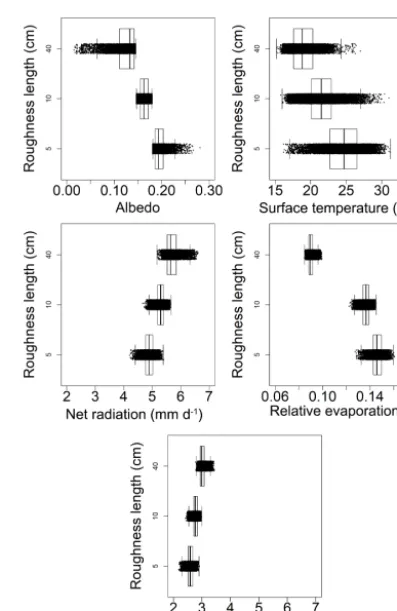
Ts,Q∗, andEwere close to the median values shown within the boxes depicting the interquartile ranges.
The resulting boxplot forGand the plot ofGagainst net radiation reflects the interaction across the discrete rough-ness length classes. The statistical distribution ofGwas not continuous due to the larger step change in roughness length from 10 to 40 cm. Plots ofGagainst net radiation resulted in three distinct linear relationships which can be attributed to using a uniform mean daily wind speed and humidity deficit for calculating the drying power of the air,EA. In this case, the potential variability ofGassociated with the relative dry-ing power, D, is limited to variations in roughness length, but this may vary more with changes in wind speed and the humidity deficit.
Generally, despite the larger variability of key factors driv-ing the energy component the complex interactions within the G–D model appear to reduce the overall variability of evaporation estimates.
Spatial variations within roughness length classes
Boxplots shown in Fig. 12 further characterise the spatial variability of α,Ts, Q∗,G, andE within the three rough-ness length classes. In general, the plots depict notable shifts in the interquartile ranges of the distributions across the classes. Results of paired Kolmogorov–Smirnov tests for
each variable showed statistical differences among the distri-butions for each roughness class were highly significant (p value<0.001). General increases in albedo and surface tem-perature are clearly shown across the 20 to 40 cm and 10 cm roughness length classes.
Consequently, there was a notable reduction in net radia-tion and similar reducradia-tion in evaporaradia-tion estimates moving from the higher to lower roughness length classes. Figure 12 also clearly shows evidence of a non-linear, inverse relation-ship betweenGand net radiation across the roughness length classes. In this case, the interaction betweenGandQ∗ ap-pears to offset the potential increase in mean estimates ofE associated with increases in available energy. As a result, a large reduction in the variability of the evaporation estimates is clearly evident when compared to the same plot for net radiation.
4.8 Scaling implications
Figure 11.Distribution of key surface variables, mean daily evap-oration estimates, and relative evapevap-oration over the field area and the relationship between G and net radiation within the roughness classes.
of evaporation estimates obtained for each roughness length class. This is similar to the mosaic approach used within land surface schemes based on fractional land cover areas. The mean daily evaporation rates for the 5, 10, and 40 cm roughness length classes increased with each step change in roughness class as 2.6, 2.8, and 3.0 mm d−1, respectively. The distribution of land area associated with each roughness class was 48 % (10 cm roughness), 30 % (5 cm roughness), and 22 % (40 cm roughness). The weighted areal evapora-tion (Eareal) can be obtained as
Eareal=(0.30·2.6)+(0.48·2.8)+(0.22·3.0)=2.78 mm d−1. (13) In this case there was only a small difference in areal esti-mates obtained based on the distribution mean or a weighted mean based on fractional areas of each roughness class. This may be partly due to the relatively small variation in evapo-ration rates across the roughness length classes and the level of detailed variability captured by the 5 m pixel resolution. Earealwas recalculated using Eq. (13) with different combi-nations of the fractional areas, which only produced a minor difference of±0.1 mm. In other words, in order for there to
Figure 12.Distributions of albedo, surface temperature, net radi-ation, evaporradi-ation, and relative evaporation within each roughness class.
be a larger difference between the areal estimates, greater variability may either be required in the evaporation esti-mates distributed over the field or among the mean rates for each roughness class.
The mean areal estimate,Earealof 2.8 mm d−1for all pix-els, was also 0.3 mm higher than a G–D model estimate of 2.5 mm d−1 obtained from station meteorological observa-tions of net radiation, air temperature, humidity, and wind speed. Variations among the estimates and measurements vary by approximately 22 % to 27 %, which is not surprising given the differences in calculation techniques and potential mismatches in associated footprint scales.
An upscaled areal mean estimate of evaporation can also be obtained from mean values of the key factors driving the energy and aerodynamic terms. The general form of Eq. (1) can be restated to derive the individual components more di-rectly as
E= 1GQ
∗
1G+γ + γ GEA
1G+γ. (14)
[image:13.612.70.263.62.394.2]Table 2.Areal evaporation estimates within each roughness class from the G–D model and for the entire area based on mean values. E_energy and E_aero are the contributions from the energy and aerodynamic components, and E_total is the combined total. The mean value of the distributed estimates is given in the column “Expected”, and the difference between the total and expected is given in the column “Diff”.
Z0 1 G Q∗ γ EA D E_energy E_aero E_total Expected Diff
cm kPa mm d−1 kPa mm d−1 mm d−1 mm d−1 mm d−1 mm d−1 mm
5 0.134 0.132 4.88 0.063 12.99 0.73 1.07 1.34 2.40 2.59 −0.18
10 0.134 0.124 5.27 0.063 15.13 0.74 1.10 1.48 2.58 2.77 −0.19
40 0.134 0.085 5.69 0.063 27.97 0.83 0.87 2.01 2.88 3.02 −0.14
Eareal 0.134 0.113 5.28 0.063 18.70 0.77 1.03 1.71 2.73 2.77 −0.03
aerodynamic terms are provided in Table 2. For the differ-ent roughness length classes, the range of evaporation es-timates attributed to E_energy was only 0.2 mm d−1 and nearly 0.7 mm d−1 for E_aero, and the difference in total evaporation, E_total was 0.5 mm d−1. A bias toward larger evaporation estimates might be expected given the increase in energy availability and enhanced turbulence with an in-crease in roughness. However, the potential bias was offset by the interaction ofGandQ∗and alsoGandEA.
Table 2 also compares evaporation estimates calculated from only mean values of G andQ∗, and EA to the “ex-pected” rates for each roughness length class. Expected rates were calculated from the mean values for all pixels assigned within each roughness length class. Evaporation rates de-rived from the mean input values alone were only between 0.14 and 0.2 mm less than the expected mean rates for each roughness length class. Upscaling the driving factors to the entire area also had no impact on the resulting estimate as the difference was just 0.1 mm.
4.9 Examining spatial covariance among key variables Whether evaporation estimates might be influenced by a spa-tial covariance between driving factors was also examined. The Pearson correlation coefficient,r, was used to evaluate correlations among the driving factors distributed over the field area. By definition, Pearson’s correlation is the ratio of the covariance (the numerator) between two variables nor-malised by the product of their standard deviations as fol-lows:
r=
P Xi−X
Yi−Y
n r
P Xi−X2
n r
P Yi−Y2
n
, (15)
whereXi andYi are the respective values of the variables, the overbar denotes the mean value, andnis the number of pairs. A strong correlation between two variables might sug-gest the existence of covariance that could influence upscaled estimates of evaporation. Given that the roughness classes used represent discrete data and there is a lack of more de-tailed meteorological data to parameterise the aerodynamic term, further evaluation related to climate factors would not
be meaningful. Therefore only an examination of the factors driving the energy term are considered here.
In this case, a potential covariance between G (dimen-sionless) and Q∗ (expressed in mm d−1) can be consid-ered directly. By rearranging Eq. (15) the covariance can be obtained by multiplying the correlation coefficient and the product of the standard deviations ofQ∗(0.34 mm d−1) and G(0.021 mm d−1). The correlation betweenQ∗andGover the field area produced a coefficient,r= −0.67.
When multiplied in series (r= −0.67)·0.34·0.02 this results in a covariance of approximately−0.0049 mm d−1. This suggests interactions betweenQ∗ andGfor the meth-ods applied here would have no further statistical influence on upscaled evaporation estimates. Unfortunately, no com-ment can be made regarding covariance betweenGand the turbulent flux component in the G–D model. Such analysis would require more detailed observations of air temperature, humidity, and wind speed and possibly a more sensitive com-bination model. Nevertheless, the impact of combined inter-actions within the G–D model effectively reduced the overall variability of point-scale evaporation estimates and also up-scaled estimates derived from different computation methods for parameterising the model.
4.10 General uncertainty of the methods applied
Implications of general modelling assumptions and the un-certainty of the methods applied are briefly discussed here. The daily ground heat flux was considered to be negligible for the study day as the mean daily flux was relatively small at the two stations where there was good canopy coverage. Where local cover properties are similar (e.g. brome grass and mixed-grass areas) the ground heat flux may be of a sim-ilar magnitude, but it would be greater where surface cover is less dense or where water availability is limited, due to differences in the surface properties.
further reduction in the energy available for the evaporation estimate.
C3-type vegetation was at the study area, but the model behaviour may differ for C4 plants and may require new vapour transfer equations for surface types and plants other than which the G–D model was developed on. In the current study representative roughness lengths were selected based on reported values for surfaces of a similar type and height. A larger uncertainty in evaporation estimates may be expected for the roughness length class associated with the shrub/tree areas which could result in variable changes in wind speed and enhanced turbulence associated with larger roughness lengths.
5 Summary and conclusions
This study examined spatial associations and physical inter-actions amongst key surface variables driving actual evap-oration estimates and impacts of their variations on various methods of upscaling estimates to a larger area. The meth-ods applied demonstrate how measured reference values of albedo and mean daily net radiation can be scaled accu-rately across a large field area for the purpose of deriving point-scale estimates of evaporation at each pixel. This was achieved by computing a normalised ratiometric index of sur-face radiation from highly detailed midday visible and ther-mal images. At two validation sites estimates of daily net radiation showed good agreement with measured values to within 4 % and 8 % error.
Estimates of mean daily actual evaporation were calcu-lated at 5 m resolution with the G–D model. The daily evap-oration rate estimated for a transect upwind of the EC station was 2.7 mm for 5 August 2007 which was 23 % larger than the EC measured flux of 2.2 mm. Offsetting interactions be-tween the relative evaporation term and key surface variables effectively reduce the spatial variability of evaporation esti-mates. As a result, differences amongst computed areal evap-oration estimates were relatively small regardless of the dif-ferent methods used to derive representative average values of driving factors to parameterise the model or the average evaporation rate derived from detailed estimates across the field. There was no evidence of a spatial covariance between the spatial distributions of net radiation andG, so no correc-tion factor was identified for improving upscaled evaporacorrec-tion estimates.
The scaling methods applied to the energy terms using ra-tiometric indexes derived from detailed images could gen-erate useful diagnostic information at other study locations and potentially over much larger areas. The methods applied here may also be instructive toward improving techniques for upscaling evaporation estimates to larger areas via tradi-tional remote sensing or climate modelling or using a differ-ent combination model. It is expected that the methods can be applied to visible and thermal images taken from cameras
and sensors on a variety of sensing platforms (e.g. satellites, planes, and UAVs).
Data availability. Data used for this study can be accessed at https://doi.org/10.20383/101.0192 (Armstrong et al., 2019).
Author contributions. RA conducted the field investigation and modelling under the co-supervision of JP and LM. RA prepared the paper with contributions from all co-authors.
Competing interests. The authors declare that they have no conflict of interest.
Special issue statement. This article is part of the special issue “Understanding and predicting Earth system and hydrological change in cold regions”. It is not associated with a conference.
Acknowledgements. We would like to extend our gratitude to the reviewers for their valuable feedback and suggested edits.
Review statement. This paper was edited by Sean Carey and re-viewed by two anonymous referees.
Financial support. This research has been supported by the Cana-dian Foundation for Climate and Atmospheric Sciences through the Drought Research Initiative (DRI), the Natural Sciences and Engi-neering Research Council of Canada through its Discovery Grants, and the Canada Research Chairs (CRC) programme.
References
Anderson, M. C., Norman, J. M., Diak, G. R., Kustas, W. P., and Mecikalski, J. R.: A two-source time-integrated model for esti-mating surface fluxes using thermal infrared remote sensing, Re-mote Sens. Environ., 60, 195–216, 1997.
Anderson, M. C., Kustas, W. P., and Norman, J. M.: Upscaling flux observations from local to continental scales using thermal re-mote sensing, Agron. J., 99, 240–254, 2007.
Armstrong, R., Pomeroy, J., and Lawrence, M.: Evapora-tion modelling gridded data and meteorological staEvapora-tion data for a case study at a rolling prairie landscape at St. Denis National Wildlife Area, Saskatchewan, Canada, https://doi.org/10.20383/101.0192, 2019.
Armstrong, R. N., Pomeroy, J. W., and Martz, L. W.: Evaluation of three evaporation estimation methods in a Canadian prairie landscape, Hydol. Process., 22, 2801–2815, 2008.
Avissar, R. and Pielke, R. A.: A parameterization of heterogeneous land-surface for atmospheric numerical models and its impact on regional meteorology, Mon. Weather Rev., 117, 2113–2136, 1989.
Baldocchi, D., Falge, E., Gu, L., Olson, R., Hollinger, D., Running, S., Anthoni, P., Bernhofer, C., Davis, K., Evans, R., Fuentes, J., Goldstein, A., Katul, G., Law, B., Lee, X., Malhi, Y., Meyers, T., Munger, W., Oechel, W., Paw, K. T., Pilegaard, K., Schmid, H. P., Valentini, R., Verma, S., Vesala, T., Wilson, K., and Wofsy, S.: FLUXNET: A new tool to study the temporal and spatial variabil-ity of ecosystem-scale carbon dioxide, water vapour and energy flux densities, B. Am. Meteorol. Soc., 82, 2415–2434, 2001. Baldocchi, D., Krebs, T., and Leclerc, M. Y.: ‘Wet/Dry
Daisy-world’: A Conceptual Tool for Quantifying Sub-Grid Variability of Energy Fluxes over Heterogeneous Landscapes, Tellus B, 57, 175–188, 2005.
Bisht, G., Venturini, V., Islam, S., and Jiang, L.: Estimation of the net radiation using MODIS (Moderate Resolution Imaging Spec-troradiometer) data for clear sky days, Remote Sens. Environ., 97, 52–67, 2005.
Boegh, E., Soegaard, H., and Thomsen, A.: Evaluating evapotran-spiration rates and surface conditions using Landsat TM to es-timate atmospheric resistance and surface resistance, Remote Sens. Environ., 79, 329–343, 2002.
Bouchet, R. J.: Evapotranspiration réelle et potentielle: Significa-tion climatique, General Assembly, Berkeley, Int. Assoc. Sci. Hydrol., 62, 134–142, 1963.
Brutsaert, W.: Evaporation into the Atmosphere, D. Reidel, Hing-ham, Massachussetts, 299 pp., 1982.
Brutsaert, W.: Land-surface water vapor and sensible heat flux: Spa-tial variability, homogeneity, and measurement scales, Water Re-sour. Res., 34, 2233–2442, 1998.
Bussières, N., Granger, R., and Strong, G.: Estimates of Regional Evapotranspiration using GOES-7 Satellite Data: Saskatchewan Case Study, July 1991, Can. J. Remote Sens., 23, 3–14, 1996. Claussen, M.: Estimation of areally averaged surface fluxes,
Bound.-Lay. Meteorol., 54, 387–410, 1991.
Claussen, M.: Flux aggregation at large scales: on the limits of va-lidity of the concept of blending height, J. Hydrol., 166, 371–382, 1995.
Colaizzi, P. D., Evett, S. R., Howell, T. A., and Tolk, J. A.: Compar-ison of five models to scale daily evapotranspiration from one-time-of-day measurements, Am. Soc. Agr. Biol. Eng., 49, 1409– 1417, 2006.
Corripio, J. G.: Snow surface albedo estimation using terrestrial photography, Int. J. Remote Sens., 25, 5705–5729, 2004. Courault, D., Seguin, B., and Olioso, A.: Review on estimation of
evapotranspiration from remote sensing data: From empirical to numerical modelling approaches, Irrig. Drain. Syst., 19, 223– 249, 2005.
Disney, M., Lewis, P., Thackray, G., Quaife, T., and Barnsley, M.: Comparison of MODIS broadband albedo over an agricultural site with ground measurements and values derived from Earth observation data at a range of spatial scales, Int. J. Remote Sens., 25, 5297–5317, 2004.
Fisher, J. B., Tu, K. P., and Baldocchi, D. D.: Global estimates of the land-atmosphere water flux based on monthly AVHRR and ISLSCP-II data, validated at 16 FLUXNET sites, Remote Sens. Environ., 112, 901–919, 2008.
Gowda, P. H., Chavez, J. L., Colaizzi, P. D., Evett, S. R., Howell, T. A., and Tolk, J. A.: ET mapping for agricultural water man-agement: present status and challenges, Irrig. Sci., 26, 223–237, 2007.
Granger, R. J.: A complementary relationship approach for evapo-ration from nonsaturated surfaces, J. Hydrol., 111, 31–38, 1989. Granger, R. J.: Satellite-derived estimates of evapotranspiration in
the Gediz Basin, J. Hydrol., 229, 70–76, 2000.
Granger, R. J. and Gray, D. M.: Evaporation from natural nonsatu-rated surfaces, J. Hydrol., 111, 21–29, 1989.
Grunsky, E.: R: A data analysis and statistical programming en-vironment – an emerging tool for the geosciences, Comput. Geosci., 28, 1219–1222, 2002.
Hogg, E. H., Price, D. T., and Black, T. A.: Postulated Feedbacks of Deciduous Forest Phenology on Seasonal Climate Patterns in the Western Canadian Interior, J. Climate, 13, 4229–4243, 2001. Houborg, R. M. and Soegaard, H.: Regional simulation of ecosys-tem CO2and water vapor exchange for agricultural land using NOAA AVHRR and Terra MODIS satellite data. Application to Zealand, Denmark, Remote Sens. Environ., 93, 150–167, 2004. Jackson, R. D., Reginato, R. J., and Idso, S. B.: Wheat canopy
tem-perature: a practical tool for evaluating water requirements, Wa-ter Resour. Res., 13, 651–656, 1977.
Klaassen, W.: Average fluxes from heterogeneous vegetated re-gions, Bound.-Lay. Meteorol., 58, 329–354, 1992.
Klaassen, W. and Claussen, M.: Landscape variability and surface flux parameterization in climate models, Agr. Forest Meteorol., 73, 181–188, 1995.
Liang, S.: Narrowband to broadband conversions of land surface albedo: I. Algorithms, Remote Sens. Environ., 76, 213–238, 2000.
Liang, S. L., Shuey, C. J., Russ, A. L., Fang, H. L., Chen, M. Z., Walthall, C. L., Daughtry, C., and Hunt, R.: Narrowband to broadband conversions of land surface albedo: II. Validation, Re-mote Sens. Environ., 84, 25–41, 2003.
Lucht, W., Schaaf, C. B., and Strahler, A. H.: An algorithm for the retrieval of albedo from space using semiempirical BRDF mod-els, IEEE T. Geosci. Remote, 38, 977–998, 2000.
Monteith, J. L.: Evaporation and environment, Symp. Soc. Exp. Biol., 19, 205–234, 1965.
Mu, Q., Heinsch, F. A., Zhao, M., and Running, S. W.: Development of a global evapotranspiration algorithm based on MODIS and global meteorology data, Remote Sens. Environ., 111, 519–536, 2007.
Nagler, P. L., Cleverly, J. R., Glenn, E. P., Lampkin, D., Huete, A. R., and Wan, Z.: Predicting riparian evapotranspiration from MODIS vegetation indices and meteorological data, Remote Sens. Environ., 94, 17–30, 2005.
Nicodemus, F. E., Richmond, J. C., Hsia, J. J., Ginsberg, I. W., and Limperis, T.: Geometrical considerations and nomenclature for reflectance, Report, National Bureau of Standards, Washington, D.C., p. 67, 1977.
Norman, J. M., Kustas, W. P., and Humes, K. S.: Source approach for estimating soil and vegetation energy fluxes in observations of directional radiometric surface temperature, Agr. Forest Me-teorol., 77, 263–293, 1995.
Pomeroy, J. W., Granger, R. J., Pietroniro, A., Elliott, J. E., Toth, B., and Hedstrom, N.: Hydrological Pathways in the Prince Albert Model Forest, Final Report to the Prince Albert Model Forest Association, NHRI Contribution Series No. CS-97004, Environ-ment Canada, NHRI, Saskatoon, p. 154+appendices, 1997. Roberts, G.: A review of the application of BRDF models to infer
land cover parameters at regional and global scales, Prog. Phys. Geogr., 25, 483–511, 2001.
Schuepp, P. H., Leclerc, M. Y., McPherson, J. I., and Desjardin, R. L.: Footprint prediction of scalar fluxes from analytical solutions of the diffusion equation, Bound.-Lay. Meteorol., 50, 355–374, 1990.
Seguin, B., Assad, E., Freaud, J. P., Imbernon, J. P., Kerr, Y., and Lagouarde, J. P.: Use of meteorological satellite for rainfall and evaporation monitoring, Int. J. Remote Sens., 10, 1001–1017, 1989.
Sellers, P. J., Dickinson, R. E., Randall, D. A., Betts, A. K., Hall, F. G., Berry, J. A., Collatz, G. J., Denning, A. S., Mooney, H. A., Nobre, C. A., Sato, N., Field, C. B., and Henderson-Sellers, A.: Modelling the exchanges of energy, water, and carbon between continents and the atmosphere, Science, 275, 502–509, 1997. Song, C., Woodcock, C. E., Seto, K. C., Lenney, M. P., and
Ma-comber, S. A.: Classification and Change Detection Using Land-sat TM Data: When and How to Correct Atmospheric Effects?, Remote Sens. Environ., 75, 230–244, 2001.
van der Kamp, G., Hayashi, M., and Gallén, D.: Comparing the hydrology of grassed and cultivated catchments in the semi-arid Canadian prairies, Hydrol. Process., 17, 559–575, 2003. Wilczak, J. M., Oncley, S. P., and Stage, S. A.: Sonic anemometer
tilt correction algorithms, Bound.-Lay. Meteorol., 99, 127–150, 2001.
Yang, F., Mitchell, K., Hou, Y.-T., Dai, Y., Zeng, X., Wang, Z., and Liang, X.-Z.: Dependence of Land Surface Albedo on So-lar Zenith Angle: Observations and Model Parameterization, J. Appl. Meteorol. Clim., 47, 2963–2982, 2008.
Yates, T. T., Si, B. C., Farrell, R. E., and Pennock, D. J.: Probability distribution and spatial dependence of nitrous oxide emission: temporal change in a hummocky terrain, Soil Sci. Soc. Am. J., 70, 753–762, 2006.
Zhang, C. and Guo, X.: Measuring biological heterogeneity in the northern mixed grassland: A remote sensing approach, Can. Ge-ogr., 51, 462–474, 2007.